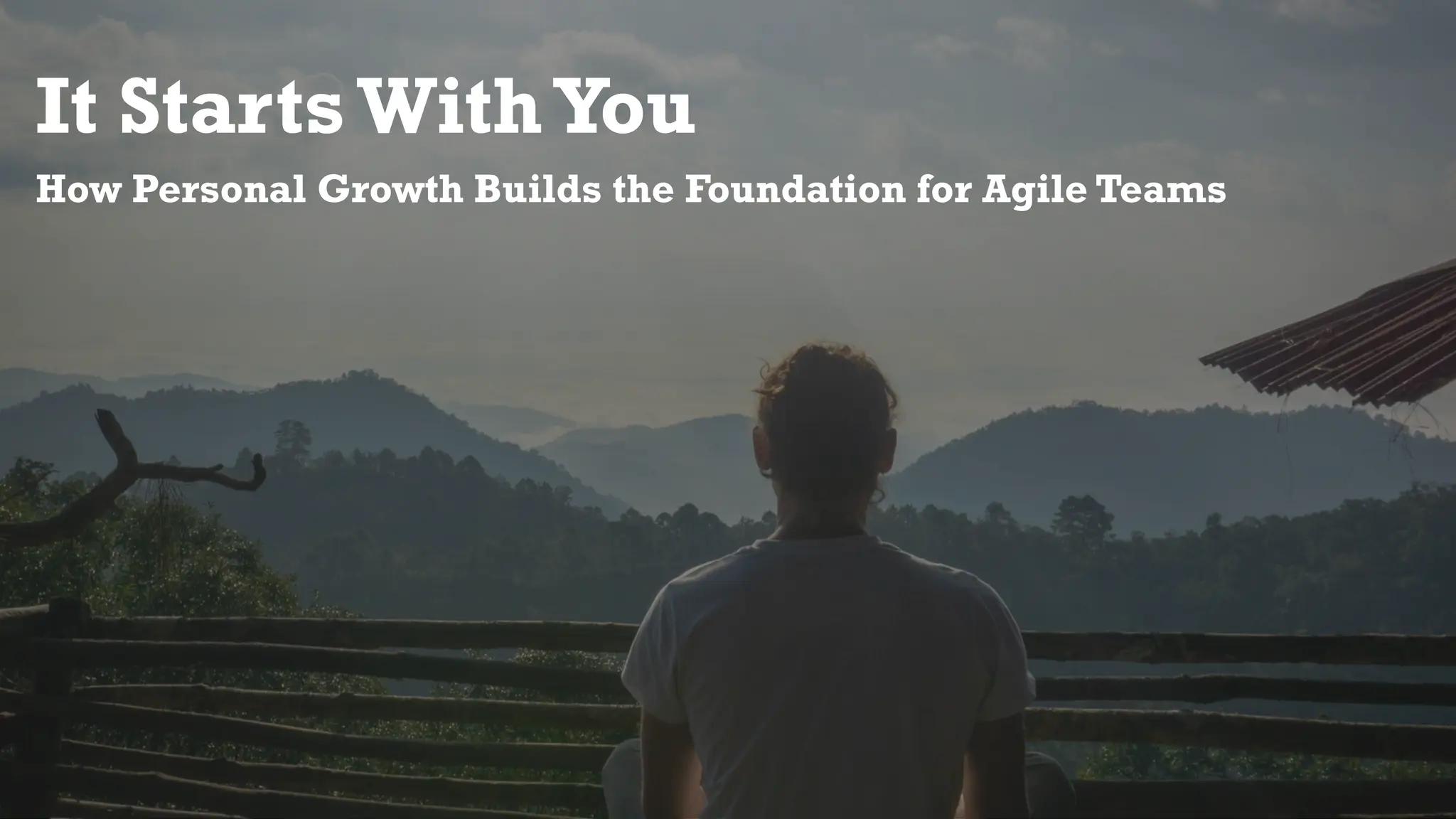
It StartsWithYou
How Personal Growth Builds the Foundation for Agile Teams
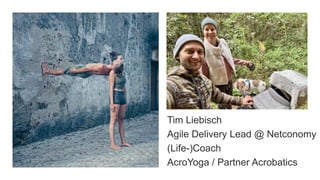
Tim Liebisch
Agile Delivery Lead @ Netconomy
(Life-)Coach
AcroYoga / Partner Acrobatics
Stand up
The Software of Life
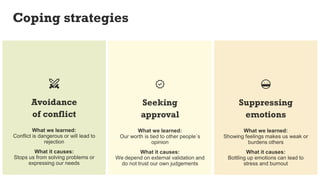
Coping strategies
How can I change now?
Recognizing your strategies is the first step,
changing them the next.
Through this awareness and
YOUR DECISION
to change
real personal growth begins.
Be patient
with yourself.
Your strategies once helped you.
Change takes time.
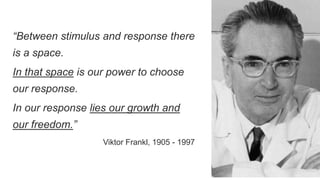
“Between stimulus and response there
is a space.
In that space is our power to choose
our response.
In our response lies our growth and
our freedom.”
Viktor Frankl, 1905 - 1997
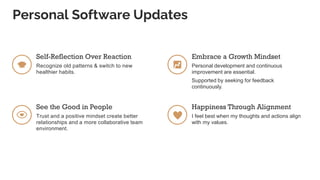
Personal Software Updates
Self-Reflection Over Reaction
Recognize old patterns & switch to new
healthier habits.
See the Good in People
Trust and a positive mindset create better
relationships and a more collaborative team
environment.
Embrace a Growth Mindset
Personal development and continuous
improvement are essential.
Supported by seeking for feedback
continuously.
Happiness Through Alignment
I feel best when my thoughts and actions align
with my values.
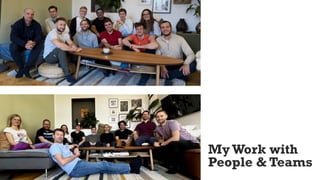
My Work with
People & Teams
Personal development is not one-size-fits-all,
it is a deeply personal journey.
What I can do is to create an environment where
personal development is encouraged.
Building Connections
Sharing Knowledge for Growth
How to Master Feedback
Introducing Continuous Improvement
What I Do
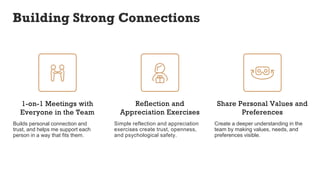
Building Strong Connections
1-on-1 Meetings with
Everyone in the Team
Builds personal connection and
trust, and helps me support each
person in a way that fits them.
Reflection and
Appreciation Exercises
Simple reflection and appreciation
exercises create trust, openness,
and psychological safety.
Share Personal Values and
Preferences
Create a deeper understanding in the
team by making values, needs, and
preferences visible.
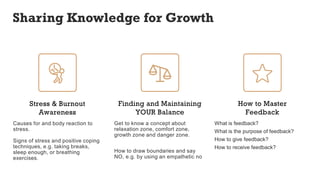
Sharing Knowledge for Growth
Stress & Burnout
Awareness
Causes for and body reaction to
stress.
Signs of stress and positive coping
techniques, e.g. taking breaks,
sleep enough, or breathing
exercises.
Finding and Maintaining
YOUR Balance
Get to know a concept about
relaxation zone, comfort zone,
growth zone and danger zone.
How to draw boundaries and say
NO, e.g. by using an empathetic no
How to Master
Feedback
What is feedback?
What is the purpose of feedback?
How to give feedback?
How to receive feedback?
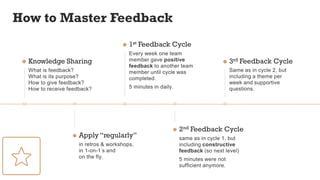
Knowledge Sharing
Apply “regularly”
1st Feedback Cycle
2nd Feedback Cycle
3rd Feedback Cycle
How to Master Feedback
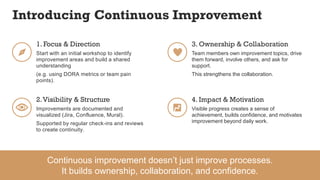
Introducing Continuous Improvement
1. Focus & Direction
Start with an initial workshop to identify
improvement areas and build a shared
understanding
(e.g. using DORA metrics or team pain
points).
2.Visibility & Structure
Improvements are documented and
visualized (Jira, Confluence, Mural).
Supported by regular check-ins and reviews
to create continuity.
3. Ownership & Collaboration
Team members own improvement topics, drive
them forward, involve others, and ask for
support.
This strengthens the collaboration.
4. Impact & Motivation
Visible progress creates a sense of
achievement, builds confidence, and motivates
improvement beyond daily work.
Continuous improvement doesn’t just improve processes.
It builds ownership, collaboration, and confidence.
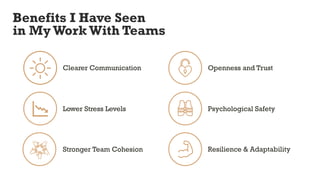
Clearer Communication
Stronger Team Cohesion
Psychological Safety
Lower Stress Levels
Openness and Trust
Resilience & Adaptability
Benefits I Have Seen
in My Work With Teams
Stronger focus on delivery and
outcomes
Less time for hands-on team facilitation
More focus on prioritization and
trade-offs
Broader scope and growing
responsibilities
Using fewer tools, but more intentionally
Delivery is a prerequisite for our role
Current Challenges
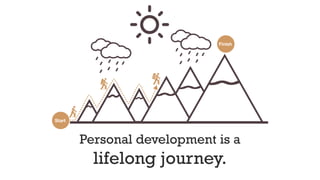
Personal development is a
lifelong journey.
It does not start with
a framework,
a role,
or a process.
It starts with you!
When individuals grow, teams grow.
That’s how real agility is built.
It StartsWithYou
ThankYou ☺
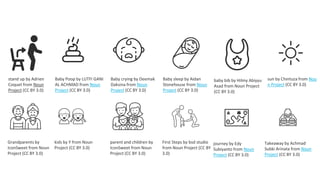
stand up by Adrien
Coquet from Noun
Project (CC BY 3.0)
Baby Poop by LUTFI GANI
AL ACHMAD from Noun
Project (CC BY 3.0)
Baby crying by Deemak
Daksina from Noun
Project (CC BY 3.0)
Baby sleep by Aidan
Stonehouse from Noun
Project (CC BY 3.0)
baby bib by Hilmy Abiyyu
Asad from Noun Project
(CC BY 3.0)
Grandparents by
IconSweet from Noun
Project (CC BY 3.0)
kids by Y from Noun
Project (CC BY 3.0)
parent and children by
IconSweet from Noun
Project (CC BY 3.0)
First Steps by bsd studio
from Noun Project (CC BY
3.0)
journey by Edy
Subiyanto from Noun
Project (CC BY 3.0)
Takeaway by Achmad
Subki Arinata from Noun
Project (CC BY 3.0)
sun by Chintuza from Nou
n Project (CC BY 3.0)
Photo by Joshua
Clay on Unsplash
Photo by Amber Kipp on
Unsplash
Photo by Dex Ezekiel on
Unsplash
https://upload.wikimedia.
org/wikipedia/commons/
f/fe/Viktor_Frankl2.jpg
Photo by Chang Duong on
Unsplash
sun by Chintuza from Nou
n Project (CC BY 3.0)

AAC2026_Liebisch_It Starts With You - How Personal Growth Builds the Foundation for Agile Teams.pdf

  • 1.
    It StartsWithYou How PersonalGrowth Builds the Foundation for Agile Teams
  • 2.
    Tim Liebisch Agile DeliveryLead @ Netconomy (Life-)Coach AcroYoga / Partner Acrobatics
  • 3.
  • 5.
  • 8.
  • 9.
    How can Ichange now?
  • 10.
    Recognizing your strategiesis the first step, changing them the next.
  • 11.
    Through this awarenessand YOUR DECISION to change real personal growth begins.
  • 12.
    Be patient with yourself. Yourstrategies once helped you. Change takes time.
  • 13.
    “Between stimulus andresponse there is a space. In that space is our power to choose our response. In our response lies our growth and our freedom.” Viktor Frankl, 1905 - 1997
  • 14.
    Personal Software Updates Self-ReflectionOver Reaction Recognize old patterns & switch to new healthier habits. See the Good in People Trust and a positive mindset create better relationships and a more collaborative team environment. Embrace a Growth Mindset Personal development and continuous improvement are essential. Supported by seeking for feedback continuously. Happiness Through Alignment I feel best when my thoughts and actions align with my values.
  • 15.
  • 16.
    Personal development isnot one-size-fits-all, it is a deeply personal journey. What I can do is to create an environment where personal development is encouraged.
  • 17.
    Building Connections Sharing Knowledgefor Growth How to Master Feedback Introducing Continuous Improvement What I Do
  • 18.
    Building Strong Connections 1-on-1Meetings with Everyone in the Team Builds personal connection and trust, and helps me support each person in a way that fits them. Reflection and Appreciation Exercises Simple reflection and appreciation exercises create trust, openness, and psychological safety. Share Personal Values and Preferences Create a deeper understanding in the team by making values, needs, and preferences visible.
  • 19.
    Sharing Knowledge forGrowth Stress & Burnout Awareness Causes for and body reaction to stress. Signs of stress and positive coping techniques, e.g. taking breaks, sleep enough, or breathing exercises. Finding and Maintaining YOUR Balance Get to know a concept about relaxation zone, comfort zone, growth zone and danger zone. How to draw boundaries and say NO, e.g. by using an empathetic no How to Master Feedback What is feedback? What is the purpose of feedback? How to give feedback? How to receive feedback?
  • 20.
    Knowledge Sharing Apply “regularly” 1stFeedback Cycle 2nd Feedback Cycle 3rd Feedback Cycle How to Master Feedback
  • 21.
    Introducing Continuous Improvement 1.Focus & Direction Start with an initial workshop to identify improvement areas and build a shared understanding (e.g. using DORA metrics or team pain points). 2.Visibility & Structure Improvements are documented and visualized (Jira, Confluence, Mural). Supported by regular check-ins and reviews to create continuity. 3. Ownership & Collaboration Team members own improvement topics, drive them forward, involve others, and ask for support. This strengthens the collaboration. 4. Impact & Motivation Visible progress creates a sense of achievement, builds confidence, and motivates improvement beyond daily work. Continuous improvement doesn’t just improve processes. It builds ownership, collaboration, and confidence.
  • 22.
    Clearer Communication Stronger TeamCohesion Psychological Safety Lower Stress Levels Openness and Trust Resilience & Adaptability Benefits I Have Seen in My Work With Teams
  • 23.
    Stronger focus ondelivery and outcomes Less time for hands-on team facilitation More focus on prioritization and trade-offs Broader scope and growing responsibilities Using fewer tools, but more intentionally Delivery is a prerequisite for our role Current Challenges
  • 24.
    Personal development isa lifelong journey.
  • 25.
    It does notstart with a framework, a role, or a process.
  • 26.
  • 27.
    When individuals grow,teams grow. That’s how real agility is built.
  • 28.
  • 29.
    stand up byAdrien Coquet from Noun Project (CC BY 3.0) Baby Poop by LUTFI GANI AL ACHMAD from Noun Project (CC BY 3.0) Baby crying by Deemak Daksina from Noun Project (CC BY 3.0) Baby sleep by Aidan Stonehouse from Noun Project (CC BY 3.0) baby bib by Hilmy Abiyyu Asad from Noun Project (CC BY 3.0) Grandparents by IconSweet from Noun Project (CC BY 3.0) kids by Y from Noun Project (CC BY 3.0) parent and children by IconSweet from Noun Project (CC BY 3.0) First Steps by bsd studio from Noun Project (CC BY 3.0) journey by Edy Subiyanto from Noun Project (CC BY 3.0) Takeaway by Achmad Subki Arinata from Noun Project (CC BY 3.0) sun by Chintuza from Nou n Project (CC BY 3.0)
  • 30.
    Photo by Joshua Clayon Unsplash Photo by Amber Kipp on Unsplash Photo by Dex Ezekiel on Unsplash https://upload.wikimedia. org/wikipedia/commons/ f/fe/Viktor_Frankl2.jpg Photo by Chang Duong on Unsplash sun by Chintuza from Nou n Project (CC BY 3.0)