Download to read offline

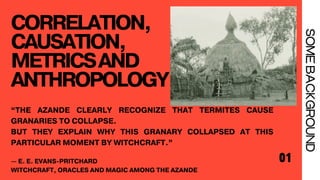
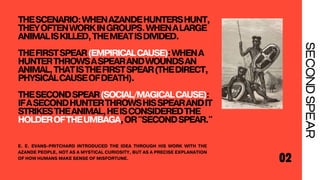
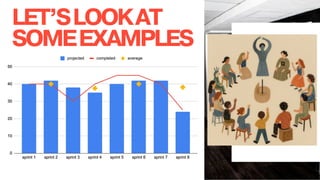
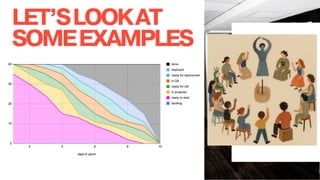
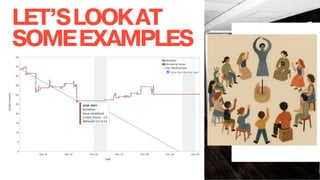
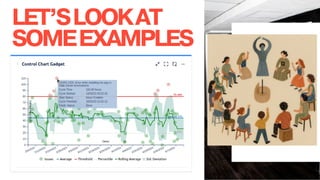
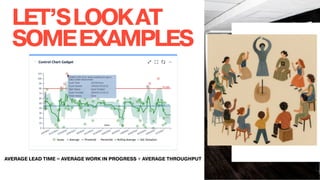
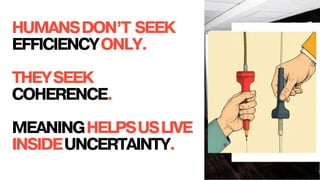
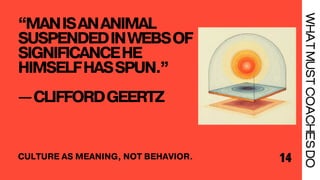

Agile began as a courageous response to environments filled with change, risk, and unknowns. But over time, many of its practices have become strangely familiar, predictable, standardized, even theatrical. This talk invites you to look at agility through a different lens: not as a delivery system, but as a cultural phenomenon. Drawing from anthropology and coaching, it asks: what if our agile rituals aren’t failing because they’re wrong, but because they’ve become symbolic stand-ins for action? The talk builds on the work of anthropologist E.E. Evans-Pritchard, who described how the Azande explained misfortune using a “second spear” – an invisible, spiritual reason layered on top of the physical cause. If the first spear wounds the prey, the second spear is the hidden reason it died. It offered emotional logic, not rational explanation: a way to restore meaning in a chaotic world. Agile teams, too, often wield “second spears”: Velocity charts that suggest progress but not value delivered Sprint rituals that feel necessary, yet go unquestioned Boards and metrics that become sacred even if impact is unclear. This isn’t unique to agile. Anthropologist Bronisław Malinowski showed how rituals emerge precisely where outcomes can’t be guaranteed. The more unpredictable the environment, the more we turn to symbolic order. And that’s where agility becomes vulnerable, not because it’s weak, but because it can be co-opted by our desire for certainty. This talk will help you: Recognize when rituals become comfort mechanisms instead of change enablers Understand the difference between adaptive structure and symbolic habit Identify the illusion of control (Ellen Langer) in your team’s tooling, metrics, and planning Bring awareness to rituals you can keep, reshape, or retire We’ll explore: Why fear, not just strategy, drives ritualization in teams How agility slowly morphs into bureaucracy-with-posters What leaders and coaches can do to help teams reconnect ritual with purpose Agility isn’t dead. But many of its forms are overdue for reflection. This talk offers a way forward: practical tools for coaching teams out of ritual and back into meaningful, embodied agility.


