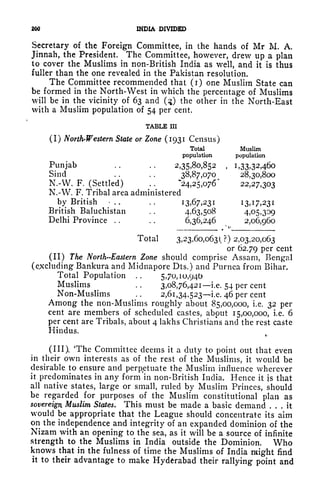
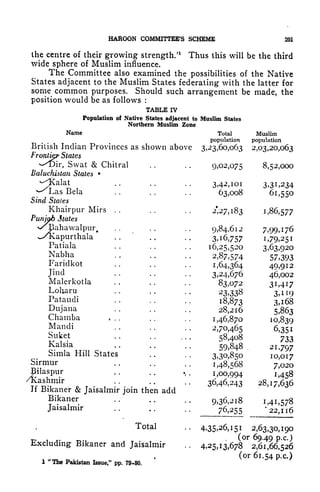
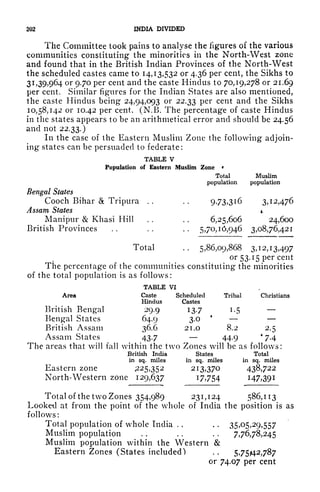
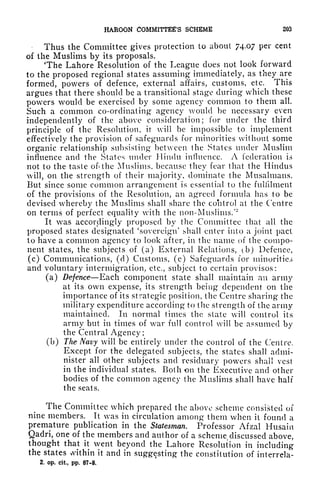
TIGHT BINDING BOOK
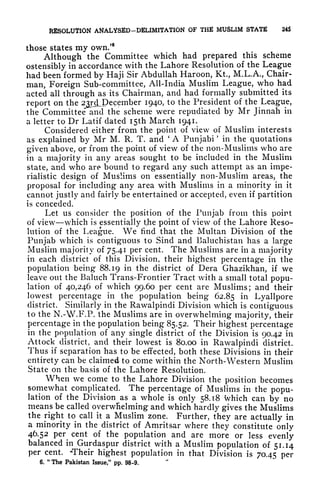
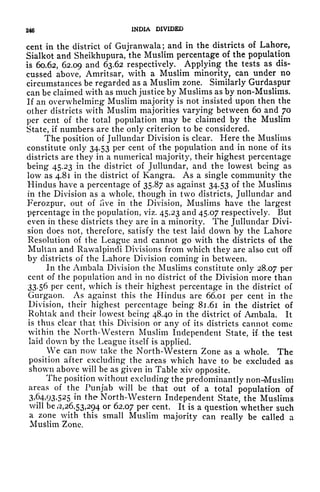
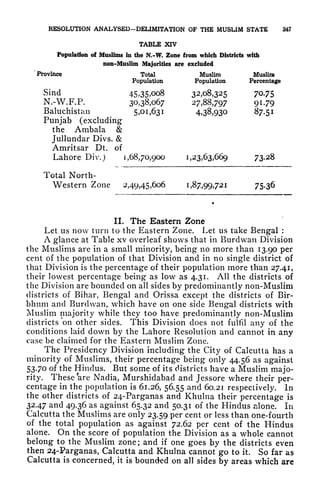
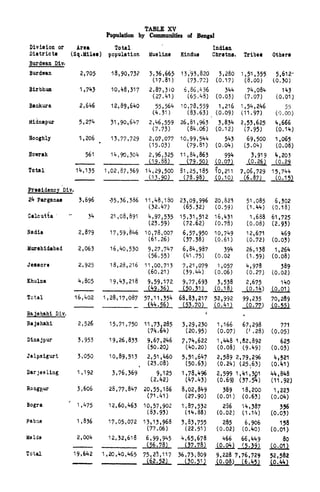
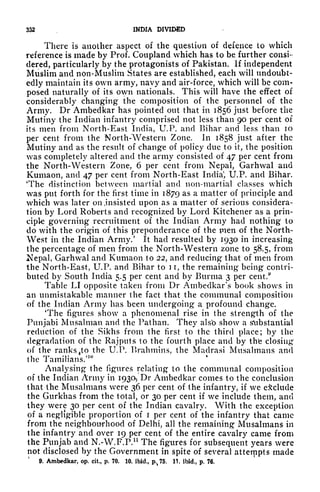
Damage Book
66021 >
INDIA DIVIDED
PART I
THE TWO NATIONS THEORY
INDIA DIVIDED
BY
RAJENDRA PRASAD
THIRD EDITION
HIND KITABS LTD.
PUBLISHERS : : BOMBAY
Rs. 10-8
First Published, January 1946
Reprirtecl, May 1946
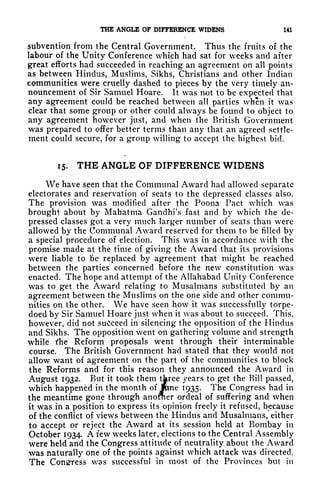
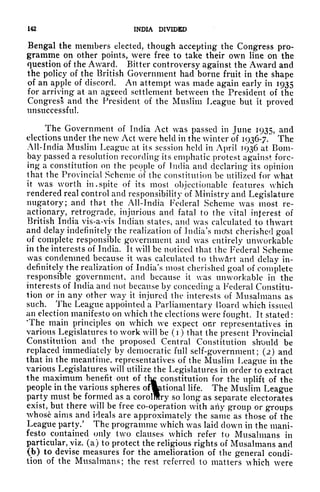
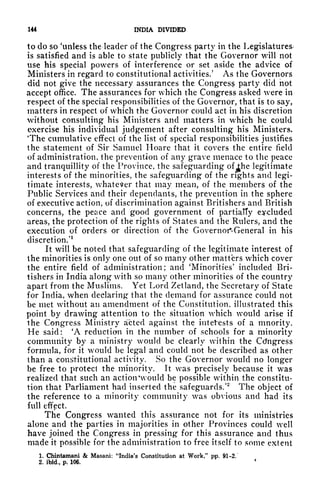
Thud Edition Revised, July 1947
COPYRIGHT
Printed by G, G. Pathare, at the Popular Printing
Press, 103 Tardeo Road, Bombay 7, and Published by
V. Kulkarm, Hind Kitabs Ltd., 261-263 Hornby iRd., Bomlay
SACRED TO THE MEMORY
OF
MAZHAR-UL-HAQUE
A DEVOUT MUSLIM, A STAUNCH NATIONALIST
AND A PASSIONATE PATRIOT
WHO PREFERRED SERVICE AND SACRIFICE
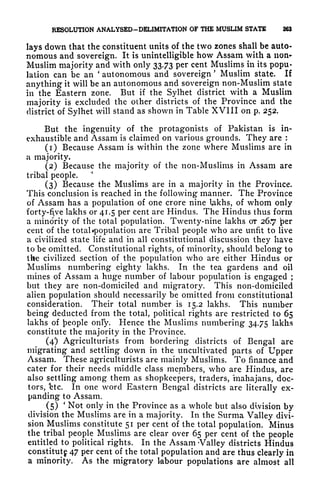
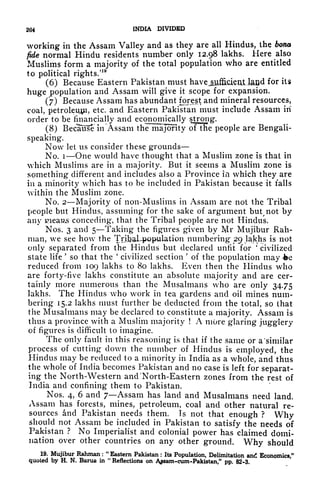
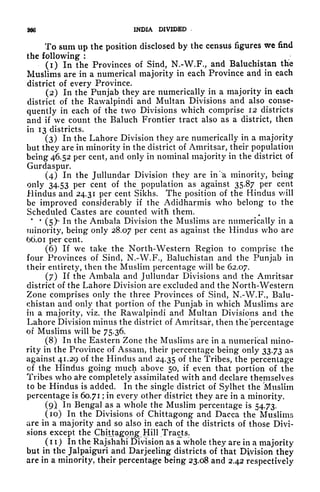
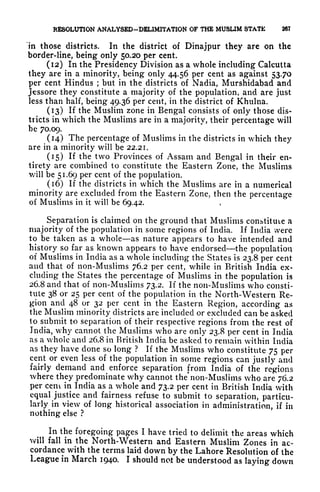
TO EASE AND COMFORT, POVERTY* TO PLENTY,
PRISON TO PALACE, AND SADAQAT ASHRAM
TO SIKANDAR MANZIL.
RAJENDRA PRASAD
PREFACE TO THE THIRD EDITION
Since a reprint of India Divided was published in May 1946,
events have moved with tremendous rapidity in India. It has not
been possible for me to revise the text or to incorporate the matter
that was given as an Addendum in the reprint into the body uf the
book. But I have brought the discussion of the subject vjp to date
by extending the Addendum, I trust it will he found useful as
giving a connected account of a most important aspect of Indian-
politics. Some typographical mistakes, which had crept into pre-
vious editions, have been corrected.
New Delhi RAJKNDRA PRASAD
JOth June 1947.
PREFACE TO THE FIRST EDITION
The question of partition of India into Muslim and Hindu
zones has assumed importance since the All-India Muslim League
passed a resolution in its favour at Lahore in March, 1940. Much
has been written on it and a literature has grown round it. But f
believe there Is room for another book which tries to discuss the
question in all its aspects. In India Divided I have made an attempt
to collect in a compact form information and material likely to help
the reader ia forming an opinion of his own. I have expressed my
own opinion on the basis of the material so collected but I believe
I have placed the material apart from any conclusions 1 have drawn
therefrom and it is open to the reader to ignore my conclusions and
draw his own inferences, if he can.
The book is divided into six parts. "Part 1 deals with the
theory of Hindus and Muslims of India being two nations. While
showing that the theory is as unsupported by history and facts of
every-day life, as by the opinion of distinguished and representative/
Musalmans, it points out that even if it be assumed that the Musal-
mans are a separate nation, the solution of the Hindu-Muslim
problem in India should, on the basis of experience of other
countries and on the strength of the latest and most authoritative
writers of international repute on the subject, be sought in the
formation of a multinational State in which a powerful political
union guarantees cultural autonomy to different national groups;
viii PREFACE
and not in the creation of national States which will not only leave
the problem of national minorities unsolved but will also create
more new problems relating to questions financial, economic,
industrial and political, and military defence and strategy than
it will solve,,
Part H discusses at length how the Hindu-Muslim problem
has arisen and grown to its present proportions and how with the
lengthening of the base of the communal triangle, the angle of
difference between the communities has become wider and wider.
JPart III gives the summary of a number of schemes of parti-
tion which* have appeared.
Part IV, points out the vagueness and ambiguity of the Lahore
Resolution of the All- India Muslim League and the difficulty which
faces any one trying to consider it on its merits. It analyses the
Resolution and, giving their natural meaning to the words used in
the Resolution, it fixes the boundaries of Pakistan.
Part V deals with the resources of the Muslim States and
shows how the scheme of partition is impracticable.
Part VI gives various proposals put forward by persons or
bodies for solving the Hindu-Muslim problem.
Parts I, HI, IV, V and VI of the book were written in the
Bankipur jail and during intervals of comparatively good health.
They, therefore, naturally bear the inevitable marks of work done
under some limitations. Since my release I have bem able to find
time to write Part II but none to revise the portion written pre-
viously. The difficulty of getting books in jail was removed to a
considerable extent by the kindness of Dr Sachchidananda Sinha
who freely allowed books to be lent out of the Sinha Library and of
Sir Rajiva Ranjan Prasad Sinha, President of the Bihar Legislative
Council, who lent some books from the Library of the Bihar Legis-
lature. Shri Shanti Kumar Morarji of Bombay supplied me with a
number of books andsome statistics. My thanks are due to all these
gentlemen. 1 am thankful to Shri K. T. Shah of Bombay and Pro-
fessor Balkrishna of the Birla College, Pilani, for some valuable
suggestions and to tlie Birla College for a free use of its library.
Typed copy of the portion written in jail was prepared there and
my thanks are due to Shri M. John, Secretary, Tata Workers
1
Union, -Jamshed pur for making the .typed copy and to Shris S. H.
Razi, M. D. Madan and M. K. Ghosh for comparing the typed copy.
I dm grateful to the Government of Bihar for permitting Shri John
to prepare the typed copy. Shri M. K. Ghosh of the Tata Research
Laboratory, Jamshedpur, kindly checked the figures and prepared
the graphs and I owe him a debt of thanks. My thanks are due
also to Shri "Mathura Prasad and to Shri Chakradhar Sharan for
help of various kinds in preparing Part II and for seeing the book
through the press,
PREFACE ix
1 have acknowledged my indebtedness wherever I have taken
any statement or quotation from others.
Sadaqat Ashram, 1
Dighaghat, Patna, V RAJENDRA PRASAD
1
5th December, 1045. J
PREFACE TO THE MEW IMPRESSION
It has not been possible to revise the text of the book for a
reprint. But an addendum has been made bringing tho discussion
of the subject up to date.
26th April, 1946.
R. P.
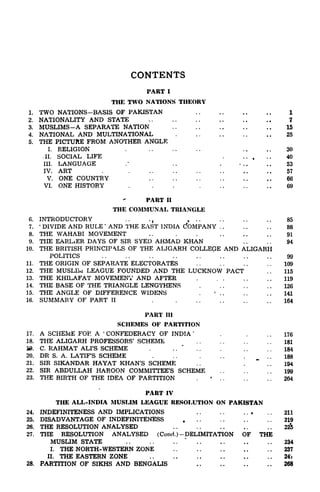
CONTENTS
PART I
THE TWO NATIONS THEORY
1. TWO NATIONS-BASIS OF PAKISTAN 1
2. NATIONALITY AND STATE 7
3. MUSLIMS-A SEPARATE NATION 15
4. NATIONAL AND MULTINATIONAL . 25
5. THE PICTURE FROM ANOTHER ANGLE
I. RELIGION . ,, ..30
,11. SOCIAL LIFE . .. , .. 40
III. LANGUAGE .* .. . ... ..53
IV. ART . 57
V. ONE COUNTRY .. .. ,. 66
VI. ONE HISTORY . . . . . . . , 69
PART II
THE COMMUNAL TRIANGLE
6. INTRODUCTORY ..
., ... .. .. .. 85
7.
'
DIVIDE AND RULE '
AND THE EAST INDIA dOMPANY . . . . . . 88
8. THE WAHABI MOVEMENT .. . . .. .. .. 91
9. THE EARLiER DAYS OF SIR SYED AHMAD KHAN . . . . 94
10. THE BRITISH PRINCIPALS OF THE ALIGARH COLLEGE AND ALIGARH
POLITICS .. .. .. .. .. 99
11. THE ORIGIN OF SEPARATE ELECTORATES . . . . . . . . 109
12. THE MUSLIlvi LEAGUE FOUNDED AND THE LUCKNOW PACT . . 115
13. THE KHILAFAT MOVEMENT AND AFTER . . .. ..119
14. THE BASE OF THE TRIANGLE LENGTHENS . . . . . 126
35. THE ANGLE OF DIFFERENCE WIDENS .
*
.. .. .. 141
16. SUMMARY OF PART II . . .. .. .. ..164
PART III
SCHEMES OF PARTITION
17. A SCHEME FOR A '
CONFEDERACY OF INDIA '
. . 176
18. THE ALIGARH PROFESSORS' SCHEME . . . . . . . . 181
10. C. RAHMAT ALI'S SCHEME . . .
*
. . . . . . . 184
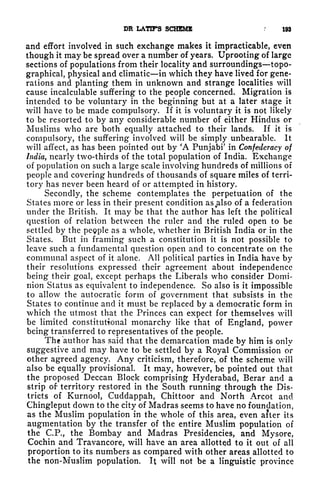
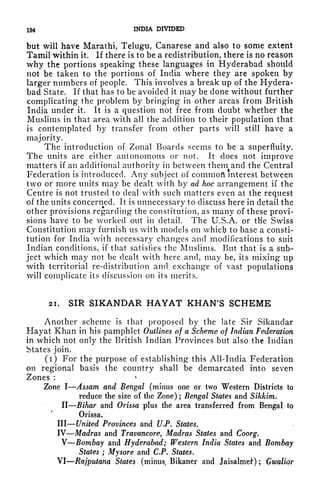
20. DR S. A. LATIF'S SCHEME . . . . . . . . . 188
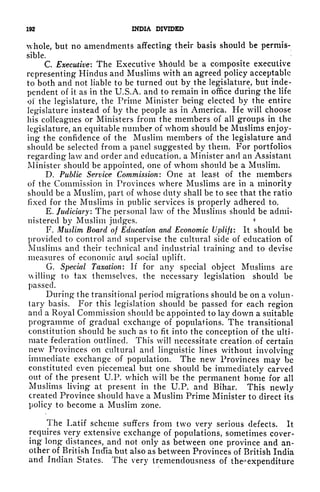
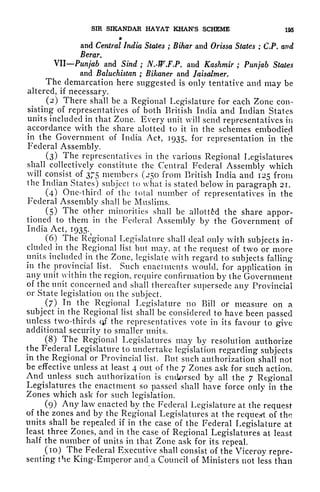
21. SIR SIKANDAR HAYAT KHAN'S SCHEME . . 194
22. SIR ABDULLAH HAROON COMMITTEE'S SCHEME .. .. .. 199
23. THE BIRTH OF THE IDEA OF PARTITION . . . . . . . 204
PART IV
THE ALL-INDIA MUSLIM LEAGUE RESOLUTION ON PAKISTAN
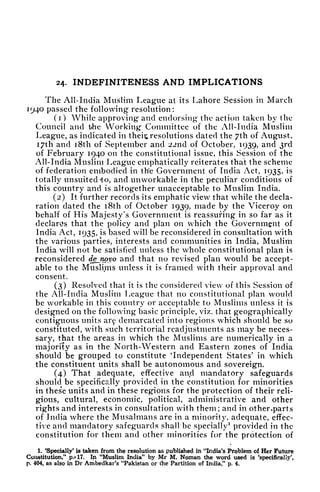
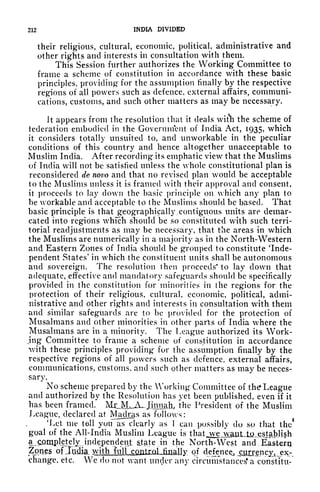
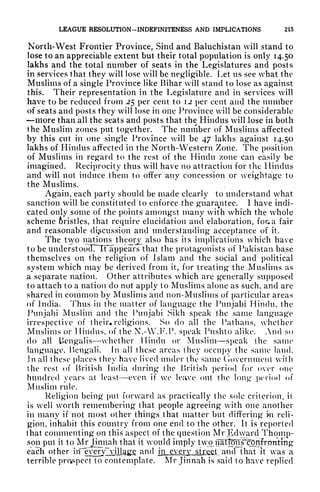
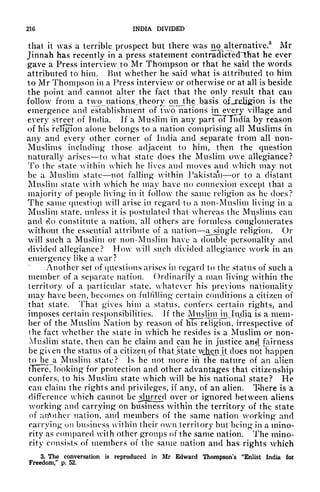
24. INDEFINITENESS AND IMPLICATIONS . . . . ... . . 211
25. DISADVANTAGE OF INDEFINITENESS . . . . 219
26. THE RESOLUTION ANALYSED . . . . . . . . . . 22^
27. THE RESOLUTION ANALYSED (Cond.)-DELIMITATION OF THE
MUSLIM STATE
"
234
I. THE NORTH-WESTERN ZONE . . 237
II. THE EASTERN ZONE 24i
28. PARTITION OF SIKHS AND BENGALIS 268
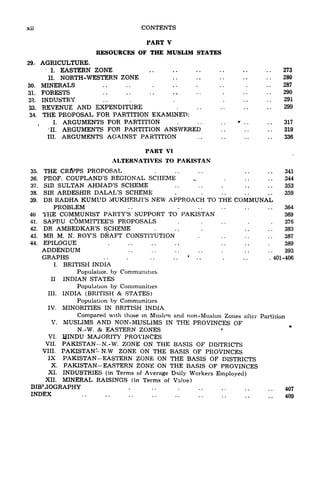
xii CONTENTS
PART V
RESOURCES OF THE MUSLIM STATES
29. AGRICULTURE.
I. EASTERN ZONE 273
II. NORTH-WESTERN ZONE 280
30. MINERALS .. .. . .. . .. . ..287
31. FORESTS 290
32. INDUSTRY .. . . 291
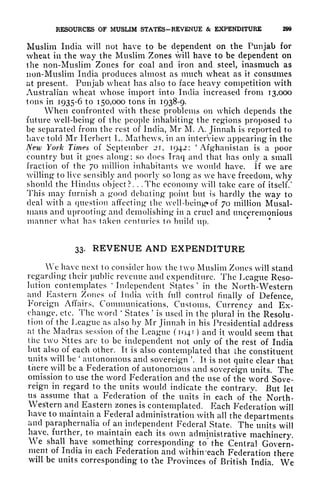
33. REVENUE AND EXPENDITURE 299
34. THE PROPOSAL FOR PARTITION EXAMINED:
I. ARGUMENTS FOR PARTITION * . . . . 317
II. ARGUMENTS FOR PARTITION ANSWERED 319
III. ARGUMENTS AGAINST PARTITION 336
PART VI
ALTERNATIVES TO PAKISTAN
35. THE CRflPPS PROPOSAL .. ..341
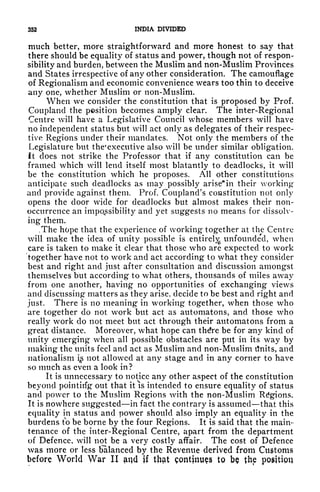
36. PROF. COUPLAND'S REGIONAL SCHEME ^ 344
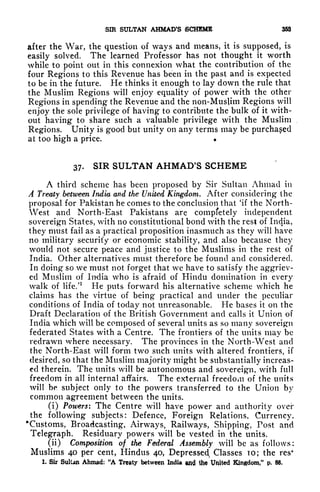
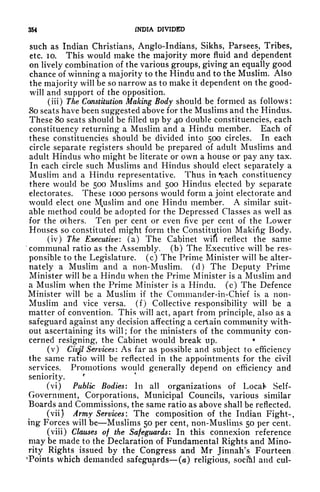
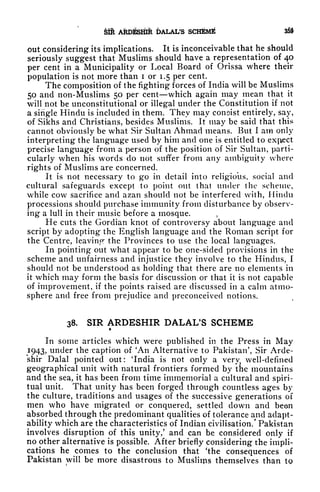
37. SIR SULTAN AHMAD'S SCHEME . . 353
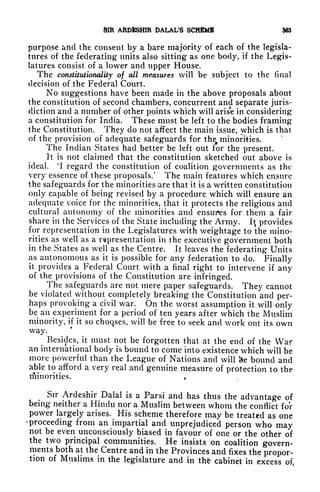
38. SIR ARDESHIR DALAL'S SCHEME . . . . . . 359
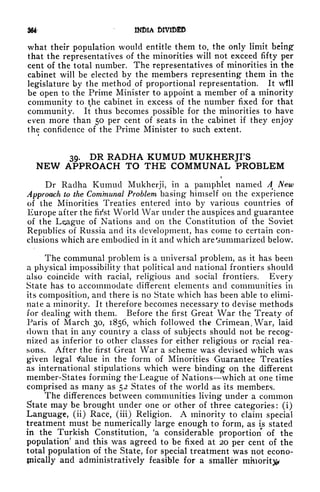
39. DR RADHA KUMUD MUKHKRJI'S NEW APPROACH TO THE COMMUNAL
PROBLEM ., 364
40 THE COMMUNIST PARTY'S SUPPORT TO PAKISTAN 369
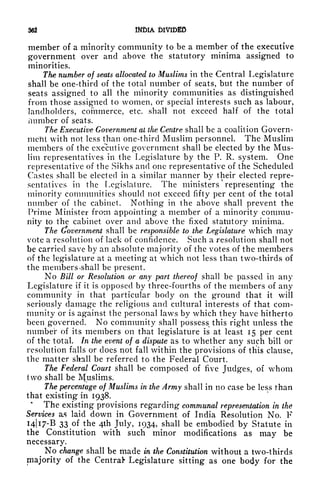
41. SAPRU C6MMITTEE'S PROPOSALS . . .. . .376
42. DR AMBEDKAR'S SCHEME . .. . .. ..383
43. MR M. N. ROY'S DRAFT CONSTITUTION . 387
44. EPILOGUE 389
ADDENDUM .. ..393
GRAPHS . . . . .
4
. . . . . . 401-406
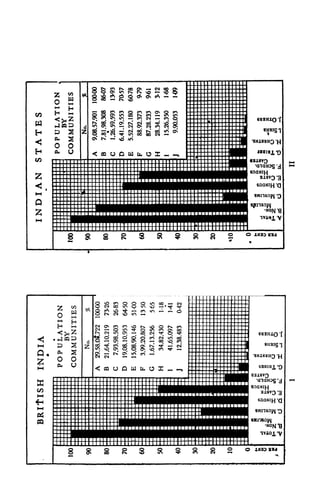
I. BRITISH INDIA
Population by Communities
II INDIAN STATES
Population by Communities
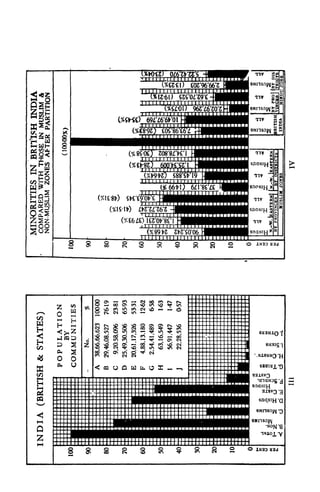
III. INDIA (BRITISH & STATES)
Population by Communities
IV. MINORITIES IN BRITISH INDIA
Compared with those in Muslim and non-Muslim Zones after Partition
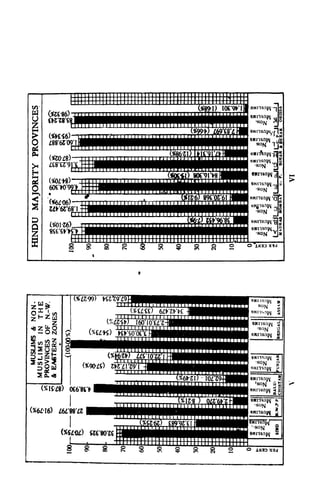
V. MUSLIMS AND NON-MUSLIMS IN THE PROVINCES OF
N.-W. & EASTERN ZONES
VI. HINDU MAJORITY PROVINCES
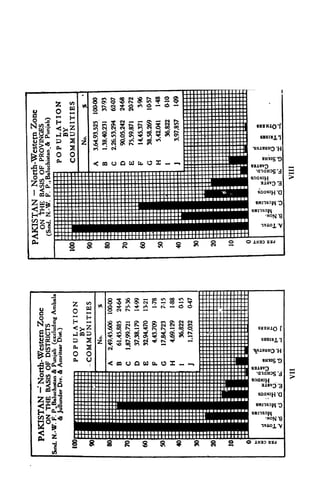
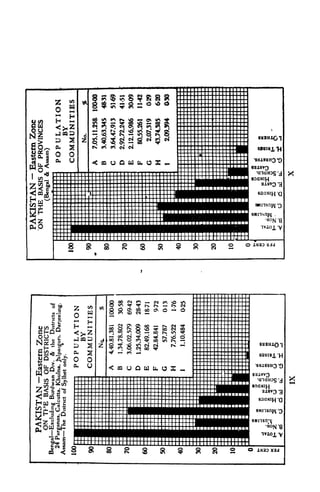
VII. PAKISTAN-N.-W: ZONE ON THE BASIS OF DISTRICTS
VIII. PAKISTAN- N.W ZONE ON THE BASIS OF PROVINCES
IX PAKISTAN-EASTERN ZONE ON THE BASIS OF DISTRICTS
X. PAKISTAN-EASTERN ZONE ON THE BASIS OF PROVINCES
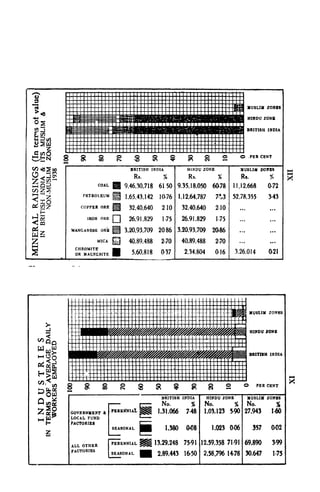
XI. INDUSTRIES (in Terms of Average D^ily Workers Employed)
XII. MINERAL RAISINGS (in Terms of Value)
BIBMOGRAPHY ...... 407
INDEX ;; 409
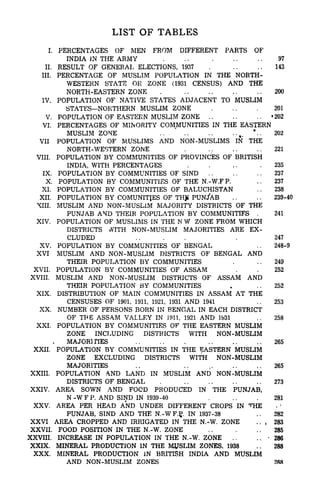
LIST OF TABLES
IN THE
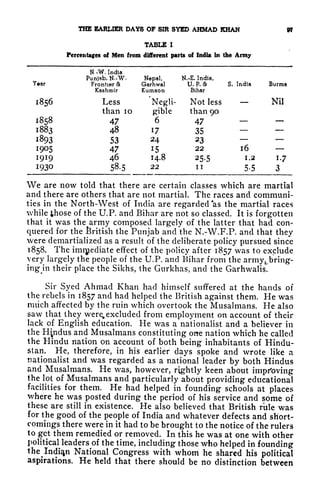
I, PERCENTAGES OF MEN FROM DIFFERENT PARTS OF
INDIA JN THE ARMY . . .
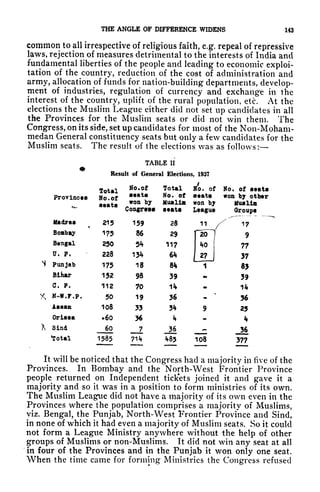
II. RESULT OF GENERAL ELECTIONS, 1937
III. PERCENTAGE OF MUSLIM POPULATION IN THE NORTH-
WESTERN STATE OR ZONE (1931 CENSUS) AND THE
NORTH-EASTERN ZONE .
IV. POPULATION OF NATIVE STATES ADJACENT TO MUSLIM
STATES NORTHERN MUSLIM ZONE
V. POPULATION OF EASTERN MUSLIM ZONE
VI. PERCENTAGES OF MINORITY COMMUNITIES IN THE EASTERN
MUSLIM ZONE ..
*
..
VII POPULATION OF MUSLIMS AND NON-MUSLIMS
NORTH-WESTERN ZONE .
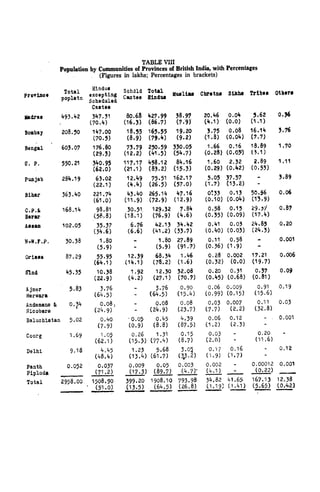
VIII. POPULATION BY COMMUNITIES OF PROVINCES OF BRITISH
INDIA, WITH PERCENTAGES
IX. POPULATION BY COMMUNITIES OF SIND
X. POPULATION BY COMMUNITIES OF THE N.-W.FP.
XL POPULATION BY COMMUNITIES OF BALUCHISTAN
XII. POPULATION BY COMUNITJES OF TH$ PUNJAB
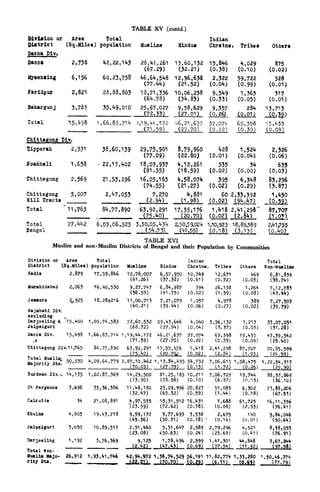
XIII. MUSLIM AND NON-MUSLIM MAJORITY DISTRICTS OF THE
PUNJAB AND THEIR POPULATION BY COMMUNITIES .
XIV. POPULATION OF MUSLIMS IN THE N W ZONE FROM WHICH
DISTRICTS vVITH NON-MUSLIM MAJORITIES ARE EX-
CLUDED ....
XV. POPULATION BY COMMUNITIES OF BENGAL
XVI MUSLIM AND NON-MUSLIM DISTRICTS OF BENGAL AND
THEIR POPULATION BY COMMUNITIES
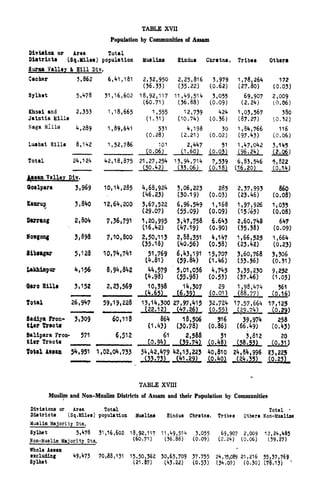
XVII. POPULATION BY COMMUNITIES OF ASSAM
XVIII. MUSLIM AND NON-MUSLIM DISTRICTS OF ASSAM AND
THEIR POPULATION BY COMMUNITIES
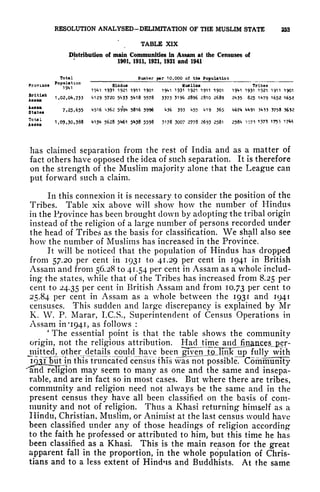
XIX. DISTRIBUTION OF MAIN COMMUNITIES IN ASSAM AT THE
CENSUSES OF 1901, 1911, 1921, 1931 AND 1941
XX. NUMBER OF PERSONS BORN IN BENGAL IN EACH DISTRICT
OF TPE ASSAM VALLEY IN J911, 1921 AND 1931
XXI. POPULATION BY COMMUNITIES OF THE EASTERN MUSLIM
ZONE INCLUDING DISTRICTS WITH NON-MUSLIM
. MAJORITIES
XXII. POPULATION BY COMMUNITIES IN THE ^ASTERN MUSLIM
ZONE EXCLUDING DISTRICTS WITH NON-MUSLIM
MAJORITIES
XXIII. POPULATION AND LAND IN MUSLIM AND NON-MUSLIM
DISTRICTS OF BENGAL .
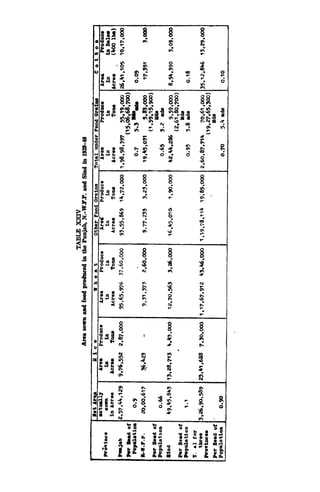
XXIV. AREA SOWN AND FOOD PRODUCED IN THE PUNJAB,
N -W F P. AND SIND IN 1939-40
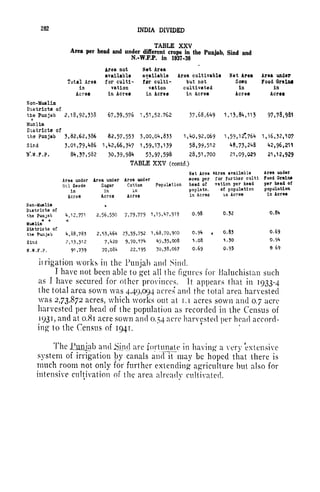
XXV. AREA PER HEAD AND UNDER DIFFERENT CROPS IN ^HE
PUNJAB, SIND AND THE N.-WF.g. IN 1937-38
XXVI AREA CROPPED AND IRRIGATED IN THE N.-W. ZONE
XXVII. FOOD POSITION IN THE N.-W. ZONE
XXVIII. INCREASE IN POPULATION IN THE N.-W. ZONE
XXIX. MINERAL PRODUCTION IN THE MVSLIM ZONES, 1938
XXX. MINERAL PRODUCTION IN BRITISH INDIA AND MUSLIM
AND NON-MUSLIM ZONES
97
143
200
201
'202
202
221
235
237
237
238
239-40
241
247
248-9
249
252
252
253
258
265
265
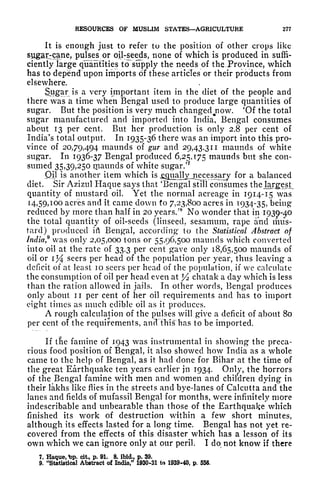
273
281
j
282
283
285
286
288
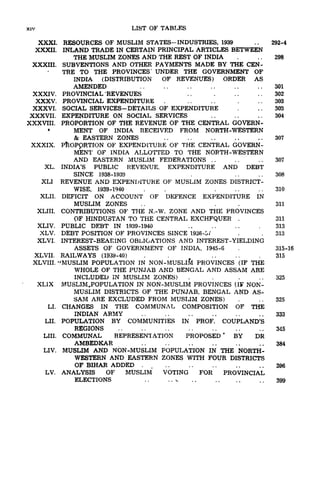
xiv LIST OF TABLES
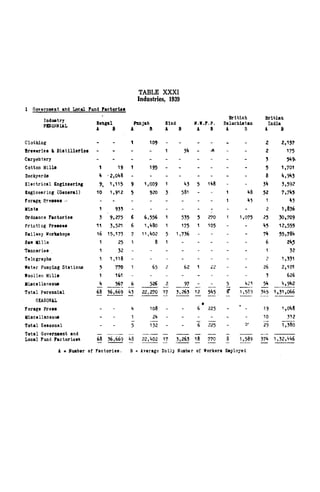
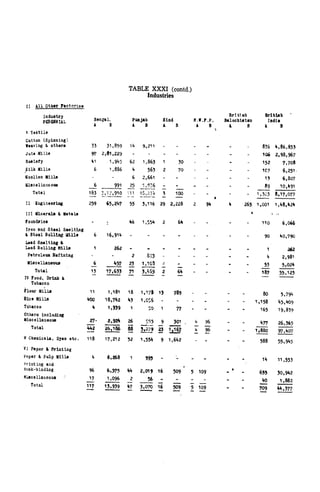
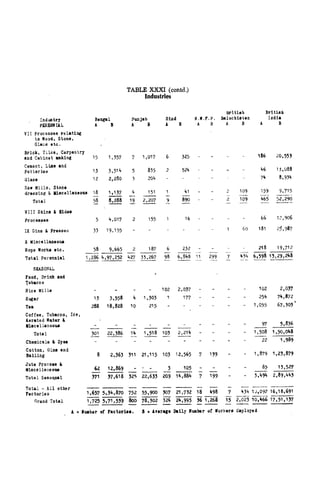
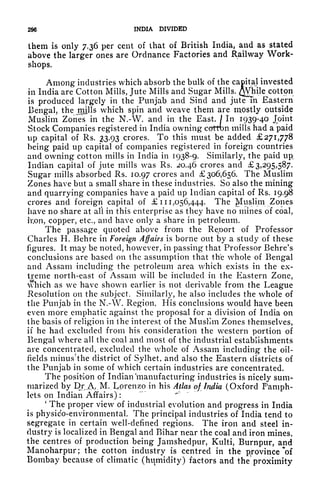
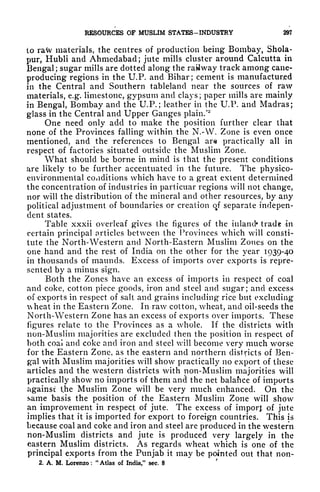
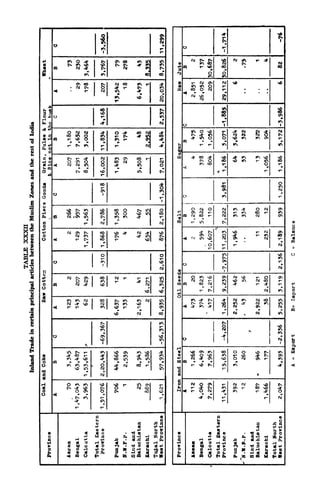
XXXI, RESOURCES OF MUSLIM STATES-INDUSTRIES, 1939 . . 292-4
XXXII. INLAND TRADE IN CERTAIN PRINCIPAL ARTICLES BETWEEN
THE MUSLIM ZONES AND THE REST OF INDIA . 298
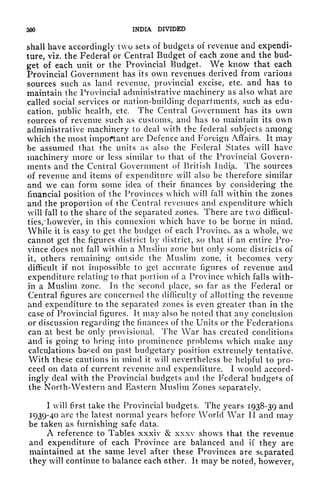
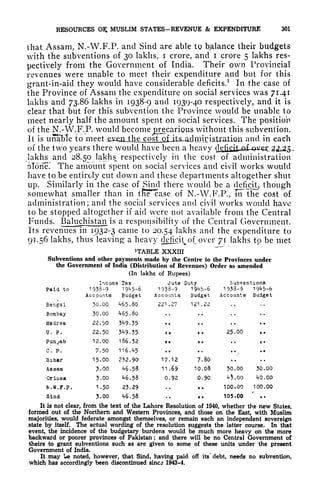
XXXIH. SUBVENTIONS AND OTHER PAYMENTS MADE BY THE CEN-
TRE TO THE PROVINCES* UNDER THE GOVERNMENT OF
INDIA (DISTRIBUTION OF REVENUES) ORDER AS
AMENDED 301
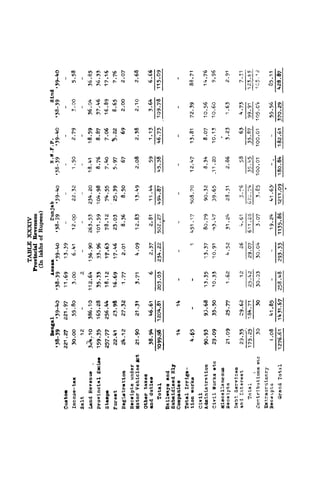
XXXIV. PROVINCIAL 'REVENUES >. 302
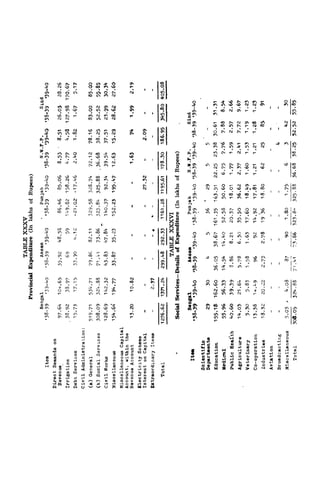
XXXV. PROVINCIAL EXPENDITURE . . . . . . 303
XXXVI. SOCIAL SERVICES-DETAILS OF EXPENDITURE . 303
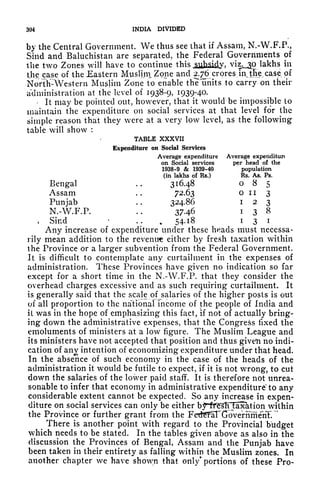
XXXVII. EXPENDITURE ON SOCIAL SERVICES 304
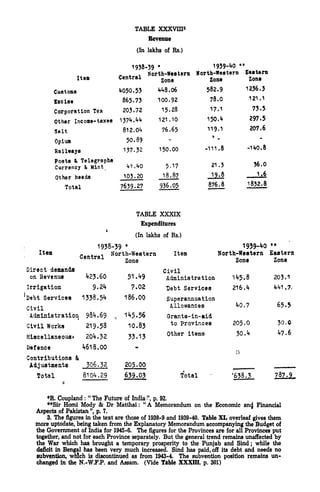
XXXVIII. PROPORTION OF THE REVENUE OF THE CENTRAL GOVERN-
MENT OF INDIA RECEIVED FROM NORTH-WESTERN
& EASTERN ZONES .. .. .. ., .. 307
XXXIX. PfcOPpRTION OF EXPENDITURE OF THE CENTRAL GOVERN-
MENT OF INDIA ALLOTTED TO THE NORTH-WESTERN
AND EASTERN MUSLIM FEDERATIONS .. .. .. 307
XL. INDIA'S PUBLIC REVENUE, EXPENDITURE AND DEBT
SINCE 1938-1930 . .. ..308
XLI REVENUE AND EXPENDITURE OF MUSLIM ZONES DISTRICT-
WISE, 1939-1940 . . . .. ..310
XLII. DEFICIT ON ACCOUNT OF DEFENCE EXPENDITURE IN
MUSLIM ZONES .. . . 311
XLIII. CONTRIBUTIONS OF THE N.-W. ZONE AND THE PROVINCES
QF HINDUSTAN TO THE CENTRAL EXCHEQUER . 311
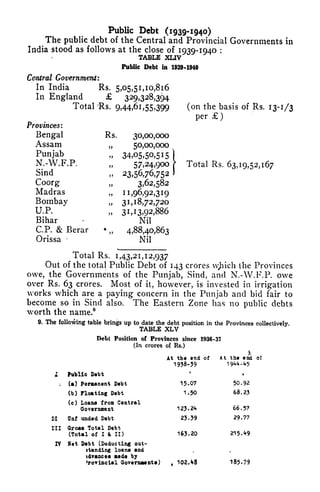
XLIV. PUBLIC DEBT IN 1939-1940 .. .. .. . 313
XLV. DEBT POSITION OF PROVINCES SINCE 1936-5 / . . 313
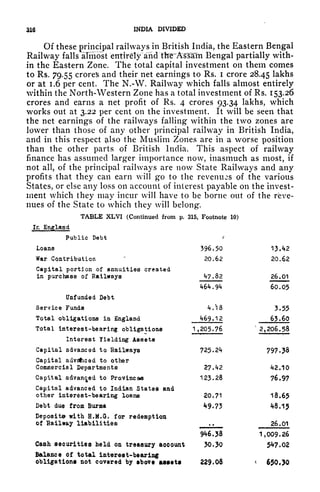
XLVI. INTEREST-BEARING OBLIGATIONS AND INTEREST-YIELDING
ASSETS OF GOVERNMENT OF INDIA, 3945-6 , 315-16
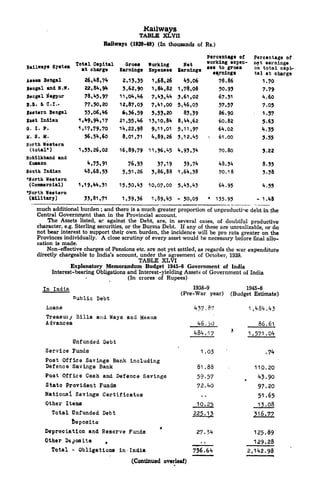
XLVII. RAILWAYS (1939-40) . . 315
XLVIII. J
MUSLIM POPULATION IN NON-MUSLIM PROVINCES (IF THE
WHOLE OF THE PUNJAB AND BENGAL AND ASSAM ARE
INCLUDED IN MUSLIM ZONES) . . . 325
XL1X MUSLIM,POPULATION IN NON-MUSLIM PROVINCES tIF NON-
MUSLIM DISTRICTS OF THE PUNJAB, BENGAL AND AS-
SAM ARE EXCLUDED FROM MUSLIM ZONES) . 325
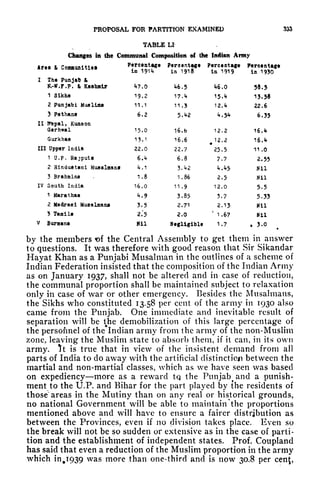
LI. CHANGES IN THE COMMUNAL COMPOSITION OF THE
INDIAN ARMY ., .. .. .. .. ..333
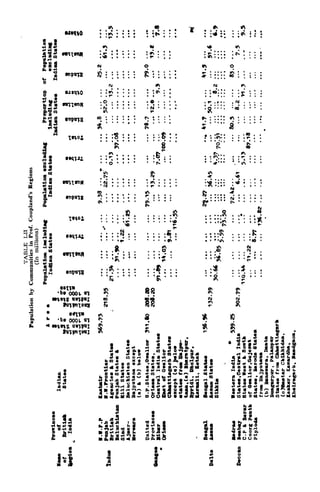
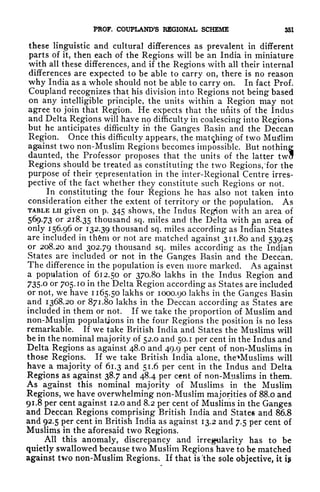
LII. POPULATION BY COMMUNITIES IN PROF. COUPLAND'S
REGIONS 345
LIII. COMMUNAL REPRESENTATION PROPOSED* BY DR
AMBEDKAR .. .. .. .. .. ..384
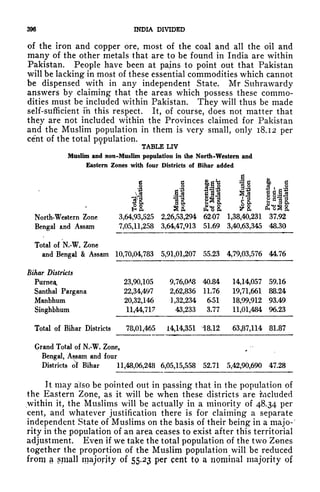
LIV. MUSLIM AND NON-MUSLIM POPULATION IN THE NORTH-
WESTERN AND EASTERN ZONES WITH FOUR DISTRICTS
OF BIHAR ADDED . . . . . . . . . . . 396
LV. ANALYSIS OF MUSLIM VOTING FOR PROVINCIAL
ELECTIONS . . . . w . .
399
i. TWO NATIONS BASIS OF PAKISTAN
The proposal to divide India into separate Muslim and non-
Muslim Zones, each such Zone being constituted fojto in indepen-
dent sovereign state, is based on the theory that Hindus and Musal-
mans constitute two separate nations.
'
Musalmans are a nation/
said Mr M. A. Jinnah in his Presidential Address at the Lahore
session of the Muslim League which adopted a resolution favouring
such division,
'
according to any definition of a nation, and they
must have their homelands, theirt territory and their state/
1 '
It is
extremely difficult to appreciate* why 'our Hindu friends fail to
understand the real nature of Islam and Hinduism. ^They arfe not
religions in the strict sense of the word, but are, in fact, different and
distinct social orders, and it is a dream that the Hindus and Mus-
lims can ever evolve a common nationality, and this misconception
of one Indiau Nation has gone far beyond the limits and is the cause
of most of our troubles and will lead India to destruction if we fail
to revise our notions in time. The Hindus and Muslims belong to
two different religious philosophies, social customs, literatures.
They neither intermarry nor interdine together, and, indeed, they
belong to two different civilizations which are based mainly on
conflicting ideas and conceptions. Their aspects on life and of life
are different. It is quite clear that Hindus and Musalmans derive
their inspiration from different sources of history. They have diffe-
rent epics, different heroes, and different episodes. Very often the
hero of one is a foe of the other and, likevnse, their victories and
defeats overlap. To yoke together two such nations under a single
state, one as a numerical minority and the other as a majority, must
lead to growing discontent and final destruction of any fabric that
may be so built up for the government of such a state.'
2
*
A Punjabi
'
who has written a book named Confederacy of India
has based his thesis on the same theory
:
'
From our previous if$-
cussions we find that the Hindus and Muslims are two absolutely
different entities. Their civilizations are pronouncedly individua-,
listic, and although they may have influenced each other, yet they
cannot suffer absorption into each other. Their habits and customs/
social systems, moral codes, religious, political and cultural ideas,
1. "Recent Speeches and Writings of Mr Jinnah", p. 155.
2. ibid., p. 153.
J
2 INDIA DIVIDED
traditions, languages, literature, art and outlook on life are abso*
lutely different from, nay hostile to, one another. These hetero-
geneoits essentials of their respective lives are not the elements
which go to the formation of a single nation. They always create
mutual distrust and misunderstanding. The basic differences
between the communities, the memories of their past and present
rivalries, and the wrongs they registered against each other during
the last one thousand years form an unbridgeable gulf between
them. s we have already observed the only thing common between
them for {he last few centuries has been the common yoke of a
foreign rule. AS soon as the cord which binds them in a common
allegiance to a foreign state snaps, they will disintegrate and their
mutual differences, which are not felt at present as acutely as they
should, wil!t show themselves more glaringly/
3
Profs. Syed Zafrul Hasan and Mohamad Afzal Husain Qadri of
Aligarh who have written a pamphlet in which they have worked
out a scheme of division of India are not less emphatic than
'
A
Punjabi'. They say :
'
Its [of the Government of India Act of
1935] fundamental fault is that it does not recognize the undeniable
fact that the Muslims of India are a nation distinct from Hindus,
vitally opposed to the latter in their outlook and aspirations and
incapable of being merged into any other so-called nation, Hindu or
non-Hindu/ Again:
*
We are convinced that we, thj Muslims of
India, must insist persistently and strenuously on among other
things that the Muslims of India are a nation by themselves.
They have a distinct national entity wholly different from the
Hindus and other non-Muslim groups. Indeed, they are more diffe-
rent from the Hindus than the Sudeten Germans were from the
Czechs.'
El. Ilamza has written a book Pakistan A Nation for tne purpose
of showing (i) that India is not one country but several countries,
with widely different human environments, and (2) that the diver-
sity of race and culture of its inhabitants is so great that they can-
not be regarded as one nation (in the modern political sense of the
word '
nation') but must be considered as belonging to several
nations.
4
In showing these differences he has become rapturous,
idyllic
'
Hinduism is of the monsoon as Islam is of the desert.
' 5
'
Probably the individuality of the North-West is indicated by no
other single fact in so striking a manner as by the distribution of
tfamelst over India.'
6 '
Our associations with the camel in different
directions of thought geographical, historical and philosophic
are so multitudinous that the history of an epoch in the evolution
of civilization can be read in their light. The camel may be taken
3. "Confederacy of India", by 'A Punjabi', pp. 150-t
4. El. Hamza: "Pakistan-A Nation ", p. 7..
5. ibid., p. 45.
6. ibid., p. 70.
TWO NATIONS-BASIS OF PAKISTAN 3
as the symbol of that great transformation in the historical process
which, proceeding from south-western Asia as a spontaneous race*
urge, took in its sweep all the known world. Living several hundred
years after, we see the brilliant colours of Arab greatness in distant
and blurred magnificence; and throughout this pageant of centuries
the caravans of conquest move on camels' backs against a back-
ground of Simoom-blown sands. The days of Arab greatness are
past, but the camel is still the associate of man in a world distinct in
its arid vastness and the essential uniformity of religion and culture
of its inhabitants. The land of the camel is still the land of scimitars
and tambourines, mosques and muezzins, and domes and minarets/
7
Only, the writer does not appear to appreciate the incongruity of
argument based on the camel and such-like things for separation of
the north-western region which has its camels in common with
Arabia no less than with another part of India like Rajputana which
is not
'
the land of scimitars and tambourines, mosques and muez-
zins and domes and minarets '. If this argument were to prevail,
there should be no ground for the 'separsftion of the eastern zone
which is tropical in its fauna and flora, its green fields and prolong-
ed and terrific monsoon. Nor should there be any Muslims in the
other tropical countries like the Malaya Peninsula.
The weakness of the argument in favour of a north-western
Pakistan based on the topographical diversity and such-like things
has not been missed by Mr F. K. Khan Durrani who in his bbok
The Meaning of Pakistan holds that
'
All Muslims, whether they live in
Pakistan or Hindustan, constitute one nation, and we of Pakistan
must always treat our co-religionists in Hindustan as flesh of our
flesh and blood of our blood/
8
Dealing with the argument of El. Hamza he writes :
'
The
author of Pakistan- -A Nation bases his whole argument on the geo-
graphical peculiarities that distinguish the north-western provinces,
the Punjab, Kashmir, the N.-W.F.P., Sind and Baluchistan, from
the rest of India. Some provinces get heavier rains than do the
others. The staple food of some provinces is wheat ;
of others rice.
Vegetation in the lands of the monsoon is rank and lush ;
in others
it is scanty. The flora and fauna of the provinces differ consi-
derably. The dry lands of the ^orth-West are the natural home of
the camel, while the wet lands of the South and Assam and Bengal
produce the unwieldy elephant. The dry lands of the North-Wejt
have given birth to a racial type which in many respects is different
from the softer and darker types met with elsewhere. In a large
country like India, inhabited as it is by peoples of many races,
enclosed within many degrees of latitude and longitude, and expos-
ed to a variety of influences of sea, mountain and desert, such diver-
7, Hamza, op. tit, p. '72.
a F. K. Khan Durrani; "The Meaning of PUdstan", p. viii.
4 INDIA DIVIDED
sities of peoples and produce are natural and unavoidable, and to
the politics of Muslim India they are wholly irrelevant ; for were
we to follow this line of argument, we of the North-West will have
of necessity to wash our hands of the larger portion of the Muslim
population of India who live in lands other than those of Pakistan,
dress differently and eat food which is not exactly the same as ours.
t
We would have to treat them as aliens, with whom we can have no
community of life or interests, a proposition which no Muslim of
Pakistan would care to maintain even for a minute, which in fact
every Muslim of the Punjab would dismiss forthwith as un-
thinkabfc.'
9
To prote the thesis others notably Dr B. R. Ambedkar in his
book Thoughts^ on Pakistan have taken pains to collect together
passages from books on history to show how Muslim invaders and
rulers of India desecrated and destroyed thousands of Hindu
temples and broke into pieces images installed in them and convert-
ed them into mosques or removed their building materials like posts
and pillars to be used in the construction of Muslim mosques in
other places ; how they offered to Hindus who came under jtheir
sway the alternative of the sword or the Quran and how thousands
of Hindus were tortured or slaughtered on their refusal to accept
the Muslim faith. The inference that is drawn is that the Hindus
have not forgotten and cannot forget these atrocities and they have
indelible marks burnt on their memory ^hich cannot be obliterated.
It is further asserted that Hindu-Muslim riots due to some minor
cause such as music before a mosque or the sacrifice of a cow
give further point to the argument that the old hostility persists,
and common subjection to the British, and a strong rule by the
latter have not succeeded in bringing about a reconciliation between
the two communities.
Now, it is somewhat difficult to understand this line of argu-
ment for carving out portions of India to be placed under Muslim
rule, which after all, is the subject of those who advocate such divi-
sion of India into Hindu and Muslim Zones.
Is it suggested that Islam sanctioned and encouraged those
acts of sacrilege and vandalism sacrilege from the point of view of
the non-Muslim and vandalism from the point of view of art ? If
it sanctioned and justified those acts, then can it be said that it has
Cfased to sanction and encourage such acts ? What evidence is
"there that there has been a change in the attitude of Islam in these
respects ? If they were acts of barbarity done by ambitious men
professing Islam who took cover under Islam in pursuit of their aim
which had nothing to do with the faith of the Prophet of Arabia,
what chance or expectation is there that people professing Islam
will not arise in the future with similar ambitions and will not
9. Durrani, op. cit., pp, 1-2.
TWO NATIONS-BASIS OF PAKISTAN 5
utilize the power that they will enjoy in the same way ? Is it sug-
gested that Muslim rule should be established in the segregated
portions so that the same atrocities may be committed and per-
petuated on those non-Muslims who may have the misfortune to
be left there ? If that is so, then none should expect a non-Muslim
to be a party to any such scheme.
If all that is not the teaching of Islam and is in fact opposed to
its fundamental tenets of peace and tolerance, is it desirable to rake
up old history and place those instances before the Muslims and
non-Muslims today? Can it be done without reviving bitter memo-
ries which had better be forgotten for the good of all for* 'the sake
of Muslims as a shameful chapter in the history of MuSalmans who
defiled their faith by such acts in the name of Islam when it did not
sanction or justify them and when they committed then* for their
own aggrandizement and not for the propagation of Islam which
depended and depends upon purer and nobler methods for its propa-
gation ;
and for the sake of non-Muslims so that the nightmare of
a religion which can perpetrate such atrocities for its propagation
may be lifted and the era of goodwill and reconciliation may
continue and prosper ?
If what is sought to be made out by such quotations is even
partially accepted by Muslims and non-Muslims as a part of Muslim
rule, then Muslims have to acquire the right to perpetrate and per-
petuate them by the same methods by which those who perpetrated
them in the past acquired the power to do so. The same sources
which furnish these instances and quotations will'also show that the
Muslims of those days never got that right or power by agreement
or consent of their non-Muslim contemporaries. If the passage
of centuries and all that has happened in the world during these
centuries and world conditions of today have not brought about
any change in the attitude of Muslims of India towards the non-
Muslims of India and vice versa, why should it be expected that the
non-Muslims should change in this one respect and agree to the
perpetration of wrongs and atrocities, which are condemned by all
civilized persons all the world over, including the Muslims of
India ? Either such acts are a part of Islamic law and faith or they
are not. If they are, no non-Muslim can agree to anything which
gives the least opening for their repetition by the establishment of
an
'
ideal Islamic state with the ultimate ideal of a world revolution
on purely Islamic lines
' 10
an Islamic state which on the assump-
tions made above is exhypothesi out to repeat its history as disclosed
in such quotations. If they are not, no useful purpose is served by
reviving their memory. They can only further exacerbate the feel-
ings of non-Muslims, and whether one approves of a division or
not, further exacerbation of feelings can hardly be the object of
10. 'A Punjabi'', op. oft., pp. 269-270. ,
6 INDIA DIVIDED
any one. If it is intended to show that Hindus and Muslims cannot
on account of such dealings in the past agree to live together and
must therefore agree to separate, it is worth while remembering
that just the opposite effect may be produced. The Hindus may not
agree for this very reason to leave millions of their co-religionists
in the Muslim area for a repetition of the same deeds against
them. Such citations and quotations have thus no value or use in
considering the question in a practical way.
Now, the object or utility of such quotations apart, it does not
require much industry or acumen to cull together such passages
from dr^-as-dust books written in the distant past or modern times.
Books on history until recently dealt commonly and very largely
only with kings and conquerors, their doings and misdoings, their
wars and-, victories, the magnificence of their courts and the in-
trigues of their palaces. Not much attention was paid by the
writers of these books to the common man who was content to lead
his hum-drum life in a quiet and peaceful manner, earning his liveli-
hood by the sweat of his* brow* either in the field with his plough
and spade, or in his home with his spinning wheel and loom orjidze
and chisel or sickle and hammer or needle and> thread, and a host of
other instruments used in cottages in small industries. The lives
and doings of priests and pious men, of savants and sages, of learn-
ed men and social reformers, poets and philosophers, painters and
musicians have not been given the importance they deserve in the
life history of a people. The writers of such books have been not a
little influenced by a false notion that the religious zeal of a Muslim
king or conqueror could be proved only by such deeds against Kafirs
and they owed a duty to these kings and conquerors whose cour-
tiers they used to be in most cases and to Islam, to record such
incidents with circumstantial details to serve as examples to other
rulers to follow and to the conquered people to be frightened by.
One need not discount the incidents that are related as exaggerated
or false* Only, one must remember that such incidents were not
the only incidents Worth recording ; and if an equally detailed
account of other incidents showing how Hindus and Muslims lived
together sharing one anothers' sorrows and joys for hundreds of
years, how the Saints and Sadhus of each influenced and moulded
the customs and rites, the lives and
c
environment of the other, how
tip* rites and festivities observed in many Muslim houses in con-
nexion with births and .marriages tally with those observed in
Hindu homes, how the same rites and customs differ among Mus-
lims living in different Provinces of India as much as they differ
among the Hindus, how it was Muslim saints to whom the credit
for conversion of large numbers of Hindus should go more than to
the fire and sword of the Muslim conquerors and kings, the
space occupied by such accounts would be infin?>ely more than that
NATIONALITY AND STATE f
taken up by the accounts of the oppression and tyranny of the
Muslim kings and conquerors. The number of pages taken in writ-
ing such a history would bear the same proportion to the pages
occupied by the books from which quotations are made and on
which textbooks on history are based, as the common people of the
country bear to the number of kings and their courtiers, their
generals and governors, their harems and their palaces. It bears
the same proportion as the days of peaceful life and deeds of good-
will and charity, fellow-feeling and tolerance bear to those of strife
and conflict, of riots and hooliganism, of murder, arson ami loot
committed by members of the one community against those of the
other. And yet even today the space occupied in 'newspapers by
the latter is out of all proportion as compared with that of the
former; and if one were to write a history after 500 years, based on
such newspaper reports or to quote only these reports, one could
easily prove on their basis that there was hardly a day of peace in
India even during the prevalence of the Pax Britannica. For com-
parative lack of appropriate material it is, therefore, not easy to
write a complete and comprehensive book dealing with social and
cultural movements, their deep and abiding effects on -the life, and
their intangible and invisible moulding of the make-up of the people
concerned.
2. NATIONALITY AND STATE
Since the demand for the establishment of separate and inde-
pendent Muslim States in the North-West and East of India is
based on the theory that Muslims constitute a separate nation
separate from the Hindus and all others who inhabit the geogra-
phical entity w? call India, it is necessary to understand clearly
what is meant by a nation. The fact of geographical unity of India
cannot be denied, for the simple reason that geography cannot be
altered by man. Indeed Mr F. K. Khan Durrani says distinctly :
4
1 agree on the contrary, with Dr Beni Prasad, that
"
there is no
country marked out by the sea and the mountains so clearly to be
a single whole as India." From thfe Sulema'n Range to the hills of
Assam and from the Himalayas to the sea, in spite of all its variety
of races, climes and topographical details, India is one geographical
unity/
1
^

What then is a nation ? What constitutes a nation,? Tile
question has been posed and answered by the supporters of the
scheme for partition, and learned authors have been quoted in sup-
port of the answer given. Mr Durrani who has dealt with the point
at great length comes to some conclusions which it is worth while
1. F. K. KJun Durrani:
"
The Meaning of Pakistan ", p. ?
* INDIA DIVIDED
recording :
'(i) Though geographically India is one unity, its
people are not, and in the making of states and nations it is the
people that count and not geography. . . . The living spirit of man
cannot be enslaved, in the words of Renan,
"
by the course of rivers
or the direction of mountain ranges ".
"
The land ", says Renan,
"
provides a substratum, the field of battle and work ;
man provides
the soul : man is everything in the formation of that sacred thing
which is called a people. Nothing of material nature suffices for it.
11
'. . .
(2) In fact, race too, like geography is not a determining factor
either <for or against the formation of nations . . .
(3) Hindu leaders
have beenoropagating the idea for two decades that religion should
not be mixed with politics, and that a united nation should be form-
ed on the basis of politics alone. Now is it possible to create a nation
on the basis of politics alone ? Political philosophers think that
purely political ties do not suffice to create a nation.
52
He quotes
Lord Bryce and Prof. Sidgwick in support of his thesis. Sidgwick
writes :
'
A political society is in an unsatisfactory and compara-
tively unstable condition when its members have no consciousness
of any bond of unity among them except their obedience to the
same government. Such a society is lacking in the cohesive fofce
required to resist the disorganizing shocks and jars which foreign
wars and discontents are likely to cause from time to time. Accord-
ingly, we recognise that it is desirable that the members of a state
should be united by the further bonds vaguely implied in the term
"
Nation ".'* Further, Sidgwick writes :
<r
What is really essential
to the modern conception of a state which is also a Nation is merely
that the persons composing it should have, generally speaking, a
consciousness of belonging to one another, of being taiembers of
one body, over and above what they derive from the fact of being
under one government, so that, if their government were destroyed
by war or revolution, they would still tend to holdifirmiy together.
When they have this consciousness, we regard them as forming a
"
Nation ", whatever else they lack/
4
Again, Lord Bryce defines
nationality as
'
an aggregate of men drawn together and linked to-
gether by certain sentiments ', and says :
'
The chief among these
are Racial sentiment and Religious sentiment, but there is also that
sense of community frhich is 'created by the use of a common
language, the possession of a common literature, the recollection
of common achievements or sufferings in the past, the existence of
cottf/mon customs and habits of thought, common ideals and aspira-
ti$hs. (
Sometimes all these finking sentiments are present and hold
the members of the aggregate together ; sometimes one or more
may be absent. The more of these links that exist in any given
case, the stronger is the sentiment of unity. In each case, the test
is not merely how many links there are, but how strong each parti-
2. Durrani, op. cit, ppL 4-6. 3. ibid., p. 7. 4. ibid., p. 9.
NATIONALITY AND STATE 9
cular link is.'
5
After quoting some others Mr Durrani comes to the
conclusion that
'
nationality is in fact a matter of consciousness
only, a mere psychological condition/
6
and in this he is supported
by Dr Ambedkar whom he quotes :
'
It is a feeling of conscious-
ness of a kind which on the one hand binds together those who have
it so strongly that it overrides all differences arising out of economic
conflicts or social gradations, and, on the other severs them from
those who are not of their kind/7
The final conclusion of Mr Durrani, therefore, is :
'
(4) There
is absolutely no group-consciousness or consciousness of kind be-
tween the Hindus and the Muslims. They cannot sit together at
the same dining table ; they cannot intermarry. The food of one is
abomination to the other. The Hindu gets even polluted by the
Musalman's touch. There are no social contacts between them to
make possible the birth of a common group-consciousness. It is,
indeed, psychologically impossible for the two groups to combine
to form a single united whole.'
8
Now this conception of nationality^ comparatively speaking a
modern and recent conception which has been developed during the
last two or at the most three centuries or so. While the elements*'
mentioned by Lord Bryce or Prof. Sidgwick are found more or less
in all these groups which are regarded as constituting a nation, it is
not correct to take each item by itself and see whether, and to what
extent, it is present in any particular group and determine there-
from whether that particular group can be called a nation. It is
the resultant of the totality of these various. elements acting and
reacting upon one another, and the historical setting in which they
have so acted and reacted that determines nationality. As Stalin
has pointed out,
'
a nation is primarily a community, a definite com-
munity of people
'
which is not necessarily
'
racial or tribal '. It is
not also a casual or ephemeral conglomeration
'
but a stable com-
munity of people '. A common language is one of the characteristic
features of a nation. And so is also a common territory another
characteristic feature of a nation. Community of economic life
economic cohesion is one more characteristic feature. Apart from
these a nation has its own specific spiritual complexion, its own
psychological make-up or what" is otherwise called national
character which manifesto itself in a distinctive culture. 'A
nation
'
according to Stalin
'
is a historically evolved, stable com-
munity of language, territory, economic life, and psychological
make-up manifested in a community of culture.'
We must also draw a distinction between a State and a Nation:
They are not always conterminous and we have had in tire past and
have got in the present living examples of multinational States or
5. Durrani, op. cit, p. 8. 6. ibid., p. 11. 7. ibid., p. 12. 8. ibid., p. 13.
9. J. Stalin*: ''Marxism and the Question of Nationalities*, p. 6.
10 INDIA DIVIDED
States comprising more than one nation. Thus the English' and the
French in Canada, although belonging to two different national
groups, constitute one State. The English and the Boers of South
Africa, after a bloody war, by agreement constituted one State. In
the United States of America, people belonging to many nationali-
ties have settled down as members of one State. The Soviet Re-
public of Russia comprises many nationalities which enjoy admini-
strative autonomy and have the right to secede from the Union
guaranteed by the Constitution. The administrative autonomy of
the constituent Republics now extends as far as the maintenance of
their own armed forces and the right to enter into direct relations
with foreign States, conclude agreements with them, and exchange
diplomatic and consular representatives. The Swiss furnish the
classical illustration of peoples bearing national affinity to three
nations by whom they are surrounded, viz. the French, the German
and the Italian, and yet constituting one single State.
'
It is more
accurate to say that the word nationality can refer to either one of
two sentiments ', says G, A. Macartney,
10 '
which in their origin and
their essence are absolutely'distinct, although in practice the one
rommonly identifies itself with the other. It is unfortunate that the
accident of historical development in England has tended to make
them in fact almost identical in that country, and the English
language, reflecting the slovenly realism of its users, makes do with
one term for the two. Nevertheless, nationality meaning the feeling
of appurtenance to a nation, is fundamentally different from nationa-
lity in the sense of membership of a State. They spring from
different causes ; and it is perfectly possible for them to be directed
towards different objects.
'
The former, which may for convenience be called the sense of
personal nationality, is founded on characteristics which are per-
sonal, often inherited, and usually objective. These chaiacteristics
exist in the individual quite independently of the locality in which
he may be domiciled, whether the majority of the inhabitants shdre
them or no, and independently of the political regime under which
he may live, whether this be in the hands of persons possessing the
same characteristics or no. The body of persons possessing these
) characteristics constitutes the nation.'
11
The characteristics on
which this consciousness is based vary greatly, but broadly speak-
ing, they are covered by the trinity of the Minority Treaties: race,
lanfrlage and religion.
'
In themselves, it must be repeated, they are
absolutely devoid of political significance. A German of Austria,
Czechoslovakia, Brazil, or Honolulu is every bit as much a German
as is a citizen of Berlin.
'
Entirely different in its basis and true purpose is the State,
10. C. A. Macartney: "National States and National Minorities".
11. ibid, p. 6.
NATIONALITY AND STATS 1:
The State is the organ by means of which the common affairs of a
number of people are administered and (usually) protected ;
the
people who collectively compose the State being, unfortunately,
known in England by the same name "
nation
"
as is also applied to
the quite different natural unit discussed above. The extent to
which their affairs are regarded as being of common concern, and
thus falling within the competence of the State to regulate, varies
enormously, not only from age to age but also from country to
country. In some cases it goes hardly beyond defence; in others it
covers most aspects of life beyond purely private relationships. It
is, however, worth remarking that those cultural attiibutes which
go to make up the idea of personal nationality ate among the very
last to which most States have turned their attention and that even
today they are largely considered as being no matter, for State con-
trol . . . On the other hand, most of the duties performed by the
State are entirely unrelated to questions of personal nationality.
The defence of the common home, the maintenance of public order,
the prevention and punishment of cijimeVthe construction of com-
munications, the preservation of the public wealth, the equal impo-
sition and collection of taxes, are matters of equal concern to every
inhabitant of the State, whether he acknowledges Christ or Maho-
met, whether his mother-tongue be English, Welsh or Yiddish. All
must contribute towards these political and social activities which
are the true functions of the State, and all alike benefit from them/12
Thus while personal nationality is an important factor in the
formation of a State, it is not always the sole or even the dominant
factor. On the other hand, while it may be conceded that purely
political ties do not suffice to create a nation, it cannot be denied
that they do constitute an important factor. If a group is subject
to external pressure, then that
'
pressure from without ', in the
words of Julian Huxley,
'
is probably the largest single factor in
the process of national evolution/ So it has happened in India
but of this later.
The question of National States has been subjected to intensive
study since the end of the first World War and much literature has
grown round it. This study has been pursued after the publication
in 1934 of C. A. Macartney's authoritative book from which I have
quoted at length in the preceding pages. The result of all this study
has been to confirm the conclusions he arrived at, namely.^ that a
distinction should be made between, personal nationality and poli-
tical nationality, that a State need not be conterminoas with a
nationality, that in fact the attempt to establish national States has
ended in failure and created new problems, that the experience of
national States and their treatment of national minorities within
them has not been happy or encouraging, that the guarantee even of
12. Macartney, op. cii, pp. 11-12.
12 INDIA DIVIDED
the League of Nations for enforcing the Minority Treaties against
national States has proved, in many cases, ineffective and futile,
that the solution of the question of minorities does not lie in the
direction of establishing national States which is impossible of
attainment on account of the impossibility of getting a completely
homogeneous State eliminating all heterogeneous minorities and
that the solution should be sought in a multinational State which
allows freedom for all national minorities to develop their special
personal nationality.
Friedmann points out that nationalism and the modern State
are
'
two for6?s neither identical nor necessarily parallel or allied V8
His conclusion is *:" What this brief survey has attempted to demon-
strate is the inherent self-contradiction of the ideal of the sovereign
State based on national self-determination, and the impossibility of
a satisfactory solution as long as the sovereign national state re-
mains the ultimate standard of value. It seems that all serious
students of the problem agree on this point. After a searching study
of the problem, Macarttfey cpmmends, on the basis of the expe-
rience of Soviet Russia and Great Britain, the multinational State.'
14
He quotes with approval from The Future of Natiors by Prof. Carr,
p. 49 :
'
The existence of a more or less homogeneous racial or lin-
guistic group bound together by a common tradition and the culti-
vation of a common culture must cease to provide a prima facie case
for the setting up or maintenance of an independent political unit,"
15
and from Europe, Russia and the Future by D.*H. Cole, p. 14 :
(
But
nationalities can no longer in this twentieth century provide a basis
for the State/
16
His further conclusion is that the national State, particularly
if it happens to be a small State, is impossible under the present
technical and mechanical development in the world. ]> is impossible
for such a State to defend itself against aggression, even if it be
able to provide more or less adequately for the necessities of life
within its borders.
'
But modern defence implies much more than
that. It implies the comprehensiveness of resources and reserves
in men and materials, which has greatly accentuated the inequality
between big powers and small national States/
17
He summarizes
his conclusion thus :
'
The analysis has revealed that the predo-
minant trend of the political, economic ^nd social forces of today
leads ^way from the national State . . . The alliance between Na-
tion^lsm and the State reaches a crisis when both Nationalism and
the modern State begin to overreach themselves An alternative
solution of the dilemma of national self-determination is the
13. W. Fricdmann : "The Crisis of the National State" (1943), p. 9.
14. ibid., p. 40.
15. ibid., p. 133.
16. ibid., p. 9.
17. ibid., p, 140.
NATIONALITY AND STATE IS
national State in which' a powerful political union guarantees
cultural autonomy to different national groups, but demands the
sacrifice of political, military and economic sovereignty/
18
^
Mr A. Cobban's study on National Self-determination was
issued in 1945 under the auspices of the Royal Institute of Inter-
national Affairs. His conclusions are the same as those of Macart-
ney and Friedmann quoted above, as the following extract^from
his
book will show :
*
The nation as a political unit, or State, is a utili-
tarian organization, framed by political ingenuity for the, achieve-
ment of political, with which may be included economic* ends.  Poli-
tics is the realm of expediency, and the measure of its 'success is the
degree to which the material bases of the good life law and order,
peace and economic welfare are realized. The nation as a cultural
conception, on the contrary, is normally regarded ai a good thing
in itself, a basic fact, an inescapable datum of human life. It belongs
to the realm of the activity of the human spirit, its achievements
are in the field of art and literature, philosophy and religion. . . .
The distinctness of the ends proposed for the two developments
which both, unfortunately, are described by the same word natioji,
is fundamental. That this is not merely a theoretical differentia-
tion can easily be f hown.'
19
He cites the example of the French and
British Canadians having a common political nationality without
abandoning- their personal nationality and of the various States of
Spanish America having the same cultural background but divided
into a number of separate political states.
*
Many other illustrations
of the failure of cultural and political nationality to coincide might
be found, and where the attempt has been made in modern times, to
force them both into the same mould, the result has usually been
disaster/
20
-
He further points out that nationality as a criterion of state-
hood furnishes only a variable standard inasmuch as nationality
v,aries Jrom period to period, from country to country and even
from individual to individual. It also implies homogeneity in the
population of the State which is patentfy not true, as the world
cannot be divided into homogeneous divisions of the human race.
His final conclusion is :
'
In the Old World where a tabula rasa can-
not be made of the pre-existing complex of cultural nations and
political states, there is an evident necessity of abandoning the be-
lief that the Nation-State is the one and only model, for a Vound
political community. The multinational State must re-enter the
political canon from which, as Acton many years ago declared,. it
should never have been expelled . . . The history of the recent past,
as well as of the last century is far from teaching the necessary
18. Friedmann, op. cit., pp. 163-4.
19. A. Cojb^an: "National Self-determination", p. 60. ,
20. ibid., p. 60. 4 j
14 INDIA DIVIDED
identity of the political state and the nation in any other sense. We
found ourselves indeed forced to the conclusion that in most cases
they cannot possibly be made to coincide. , .
,
The attempt to make
the culturally united Nation-State the one and only basis of legiti-
mate political organization has proved untenable in practice. It
was never tenable in theory.'
21
The confusion that has arisen between the two distinct entities,
Nation and State, is due to the setting up of National Self-determi-
nation a? an absolute dogma according to which every cultural
group ipso fapto is entitled to claim a separate independent State for
itself. But it cannot be denied that there can be no such absolute
principle and that National Self-determination is just as limited as
the freedom allowed to an individual in a society by various consi-
derations.
1
In short/ asks Cobban,
'
are there not geographical, historical,
economic, and political considerations which rule out national self-
determination in the fornj of the sovereign State for many of the
smaller nationalities of the wbrld ? Even if the majority of mem-
bers of a natiojn desire political independence, circumstances rnayt
prohibit it, and the mere desire, of however many people, will not
alter them. In the words of Burke
"
If we cry like children for the
moon, like children we must cry on."
>22
I may add that all these considerations prohibit any partition
of India, particularly because it is impossible to draw any boundary
line separating the partitioned States without leaving at least as
large a minority in the partitioned Muslim States as the Muslims
constitute in the whole of India. The economic and military condi-
tions of India dictate its continuance as a large political State and
forbid its break-up into smaller independent national units. Seces-
sion is a work of destruction and can be justified not ixS the first but
as the last step in an extreme case when all else has failed. Even if
that condition has been reached in India and no group except the
Muslim League has asserted anything approaching such an extreme
proposition separation of any particular area will not solve the
problem as there will be no less than 200 or 300 lakhs of Muslims
left in Hindu India and no less than 479 or 196 lakhs of non-Muslims
left in the Muslim States according as areas with non-Muslim majo-
rities are included in or excluded from the Muslim State as shown
later //n. We must, therefore, think of a solution which is in
keeping with modern thought, which does not cut across the history
of^centuries,
which does not fly in the face of geography, which does
not make the defence of the country infinitely more difficult if not
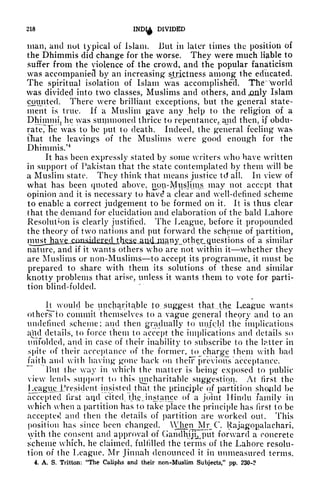
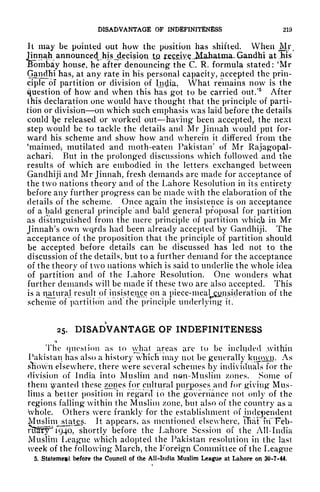
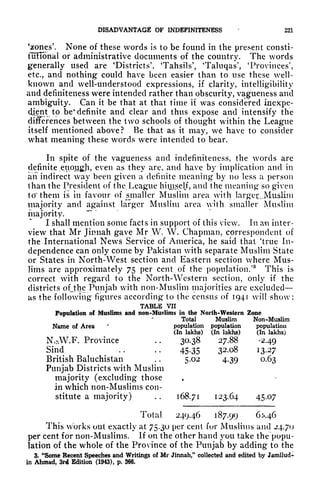
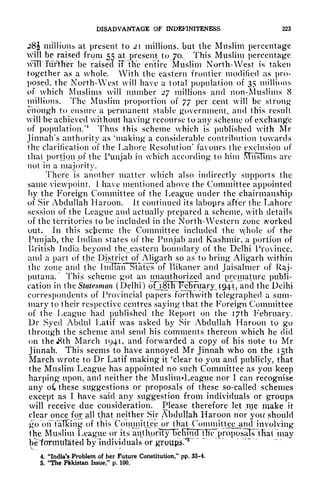
impossible in the present-day conditions of the world, which does
not place a burden on the separated States that they will not be
21. Cobban, op. cit, pp. 62-3.
22. ibid., p. 74.
MUSUMS-A SEPARATE NATION 15
able to bear, which does not condemn in its result the common man
in the new States to a life of misery and squalor for an indefinite
period, which does not create the problem of irredentism alike in
the Muslim and the Hindu states, and which has not been conceived
in frenzy and does not prepare the ground for perpetual conflict.
3. MUSLIMS-A SEPARATE NATION
?
To prove the case for partition it is not enough to show that
Hindus and Musalmans do not constitute a nation. .It rr/ust further
be shown that the Musalmans constitute a nation and need a sepa-
rate State. Mr Durrani is explicit in his views : The ancient
Hindus were not a nation. They were only a people, a mere herd.
'
The Muslims of India were none better. Islam, indeed, be-
came a state in the lifetime of its Founder himself. It has a well-
defined political philosophy : I should say Islam is a political philo-
sophy I do not at all mean tha't the 1'slamic State is a theocracy.
. . . The Islamic State is a democracy, for whose maintenance every
individual Muslim is responsible. La Islam ilia be Jamaet-hu
"
There
is no Islam without an organized society/
5
says Omar the Great.
Unfortunately, the Islamic State did not endure long enough.
The Omayyc*ds and the Abbasids destroyed it and turned it into
mulk or autocratic, despotic, hereditary monarchy. ... It was under
these two autocracies that two more elements entered into the
Muslim society to vitiate and corrupt its political life, namely,
theology and Sufism. . . . These two things combined to pervert the
Muslim's conscience and changed Islam from an ethico-political
philosophy into a sort of
"
religion ", a something which political
slogan-mongers ball private relation between the individual and his
God. ... At the time the Muslims conquered India the divorce of
religion and politics had become the accepted creed of the Muslims
throughout the world. The men who conquered India were not the
national army of a Muslim State but paid mercenaries of an impe-
rial despot. The State they established in India was not a national
Muslim State, but held, maintained and exploited in the interests of
an autocrat and his satellite.6
,. The Muslim Empire in India was
Muslim only in the sense that the man who wore the crown pro-
fessed to be a Muslim. Through the whole length of their ruux in
India Muslims never developed the senSe of nationhood. . .
^
So ifc*
had two peoples, Hindus and Muslims, living side by side in equal,
servitude to an imperial despotism, and both devoid of any national
feeling or national ambition.
'
Much has been written on the irreconcilability of the religious
conceptions, beliefs and practices of the Hindus and Muslims. . . .
Yet, in spite of them all. there Is something in their respective
16 INDIA DIVIDED
faiths which enabled the two peoples to live amicably together for
many centuries, and which, if what they have learnt and suffered
under British Rule could be washed out of their minds and the same
old religious mentality could be recreated in them which inspired
their fore-fathers of a century ago, would enable them again to live
amicably together as good neighbours and citizens of the same
State. That something is the spirit of tolerance inculcated in both
religions. ... If these relations between the two communities had
continued uninterrupted, in due time a nation, united in mind and
soul, would have been born on the soil of India, Can those days
ever possibly come back ?
n
'
So, in spite of their centuries of close association and sympa-
thetic intercourse the Hindus and the Muslims remained separate.
The two streams could not mix. They were two nationalities, so
utterly different indeed that if at any time the sentiment, which the
political philosopher calls national consciousness, were to awaken
in them and become dynamic, they could not but react differently ;
they could not but grow into two separate nations. 3^or nationalism
or nationhood is nothing but the consciousness of separate natio-
nality become dynamic.JThis is what has happened to the Hindus
and the Muslims.'
2 '
Tne two peoples have become self-conscious
nations, and not until they readjust their relations in the light of
this new consciousness will there be any peace between them/8
Mr Durrani then proceeds to inquire how this consummation
has taken place and comes to the conclusion that,
'
in a word, it
was one of the direct results of the British policy of discrimination
and favouring one community at the expense of the other.'
'
The nationalism of the Hindus and the Musalmans has been
of slow growth and no definite date can be assigned as to when it
ripened definitely. It showed itself at first in the f^rm uf economic
rivalry, especially with respect to Government employment, which
later turned into political rivalry and finally into national animo-
sity/
3
Among the many things which helped to depress and ruin tKe
Musalmans under the British he mentions: (i) the ruin of industry
and commerce in Bengal; (2) the Permanent Settlement of Bengal
by which the lower Hindu revenue collectors were made landlords
and the higher Muslim revenue officers were thrown on the rub-
bisVheap and replaced by European officers ; (3) the resumption
di rent-free grants upon which the Muslim system of education
depended, causing its decay ; (4) with their educational system
ruined, the Muslims could not but lose their place in Government
services leading to a Hindu monopoly of official preferment, which
1. F. K. Khan Durrani :
"
The Meaning of Pakistan ", pp. 34-44,
2. ibid., p. 47.
3. ibid., p. 48.
MUSLIMS-A SEPARATE NATION 17
monopoly has been maintained by low trickery and petty intrigues
these communal inequalities in the services forming a large part
of India's politics and contributing in no small degree to the embit-
terment of communal relations.
Side by side there has been a growth of aggressiveness on the
part of the Hindus and of distrust and political rivalry between the
two communities, particularly in Bengal and in Northern India as
witnessed by (i) the spirit underlying the song of Bandemataram ;
(ii) the estrangement which followed immediately after the Mutiny
of 1857 started by the Hindus and the Muslims throwing in their
lot with them, and which being quelled, the Hindus turned traitor
to their erstwhile comrades in arms and became informers, the
whole wrath of the Government thus falling upon the Muslims,
thousands perishing in the massacres that followed the suppres-
sion, their properties confiscated and their orphaned children hand-
ed over to the Christian Missionaries ; (iii) the Hindu agitation
started in 1867 by leading Hindus of Benares that Urdu which had
grown up to be the common language should be replaced by Brij-
bhasha and the Arabic characters by Devnagri characters with the
result that
'
for three quarters of a century the Hindus have been
trying to unlearn Urdu and replace it by Hindi, until Mr Gandhi,
who bespeaks the Hindu mind in such matters more faithfully than
any other, says unashamedly that
"
all those words must be ex-
punged from Hindustani, which remind the Hindus of the Muslims
having once ruled over the country and naturally also of their
presence in it;
" *
(iv) the interest of Hindus in their historical past
which supplied the 'one very important element whose absence
had prevented the race from becoming a nation
'
although this
interest grew out of the system of education introduced by the Bri-
tish prescribing textbooks of history written by British civilians or
Christian Missionaries and 'purposely so designed as to instil
poison and create hatred and enmity in the hearts of the Hindus
against Muslims ;
'
(v)
'
the anti-cow-killing movement started by
that Mahratta fanatic Bal Gangadhar Tilak, founder of a new
Sivaji cult ', and '
a Congress leader of the front rank '.
'
These were the various factors .which determined the policies
of Sir Syed Ahmad Khan and led him to counsel his co-religionists
to keep aloof from the Congress,
'
and in this he was not a little
influenced by
'
the attitude of the Hindu press of Bengal which
painted the Muslims as rebels and .urged that on this account th*y
should be kept out of Government services/
7
Thus from 1857 onwards the Hindus and the Muslims never
felt as one people and
'
Sir Syed Ahmad Khan warned the Govern-
ment as well as the public that representative institutions were
suited only to those countries which had homogeneous populations
4. Durrani, op. cit, p. 67. 5. ibid., p. 68. 6. ibid,, p. 74. 7. ibid., p. 70.
2
18 INDIA DIVIDED
but that in India, whose population was extremely heterogeneous,
parliamentary institutions could not be introduced without grave
socio-political risks.
' 8
But when it became known that popular
councils were going to be established in 1906 a deputation of Mus-
lims asked for and got separate representation for the Muslim
community.
'
Absence of separate electorates would certainly not have
created a united homogeneous nation. It would have simply result-
ed in the dominance of the Hindus over the Muslims/9
lthough Hindu revivalism had preceded political awakening,
till 1906^7 the Hindus had not developed the Gandhian ideology of
supercommiwial nationalism and everybody was frankly a Hindu
or Muslim, and communalism had not yet become a term of abuse,
cird the Hindus and Musahnans could afford to deal with their
rivals wit
l
h courtesy, tolerance and sympathetic understanding.
This was reflected in both the Hindu Sabha, which was founded
first in the Punjab in 1907 and later became an all-India organiza-
tion, and in the All-India Muslim League which was formed in
December 1906.
'
The Muslim policy under Sir Syed Ahm?-d Khaij's leadership,
dictated by sheer fear of British oppression, had been one of loyalty
and abject flattery. This policy was inherited by what is called the
Aligarh School as a matter of tradition, though the conditions that
inspired it had ceased to exist.
no
The Muslim loyalty received jolts
from (i) Italy's invasion of Tripoli in 1911 and the British Govern-
ment's share in it ; {ii) repeal of the Partition of Bengal in Decem-
ber, 1911 ; (iii) the attack on Turkey by the Balkan States in the
autumn of 1912 with the full moral support of Britain ; (iv) the
massacre of Muslims at Cawnpore for their opposition to a road-
building scheme ;
and all this effected a fundamental change in the
outlook of the Muslim League which declared tne attainment of
responsible self-government as its political goal and thus brought
it in line with the Congress. The two organizations began to hold
their annual sessions at the same place, until in 1916 they conclud-
ed the famous Lucknow Pact which was incorporated in the Go-
vernment of India Act, 1919. The Pact did less than justice to the
Muslim community but is of far-reaching importance in its impli-
cations in that
'
by that Pact the Congress acknowledged the fact
that the Hindus and the Muslims were two separate nations, and
th'tt while the Congress itself was the representative of the Hindus,
tne Muslim League represented the Muslim community,
'
from
which position the Congress has now resiled, claiming to represent
the whole of India.
11
World War I was the outcome of an exaggerated sense of
nationalism and only made the sentiment fiercer and inoculated
8. Durrani, op* dt, p. 78. 9, ibid., p. 79. 10. ibid., p. 83. 11. ibi'd.,' pp. 84-5.
MUSL1MS-A SEPARATE NATION 19
with it peoples who had been hitherto free from the virus. It
'
created a passionate desire among the peoples of India to be free
from the foreign yoke and it was this fierce passion for freedom
that made Hindu-Muslim unity possible in 1919-22**
'
But Mi-
Gandhi and his co-workers let themselves be carried away by the
charming spectacle of territorial nationalism/
'
The Congress
Pandits declared that religion must not be allowed to intrude into
politics/ and
'
the Congress sought to build a united Indian nation
on the basis of geography, politics and economics. In fact it presum-
ed that the nation was already in existence. The presumption' was
palpably false ;
the bases were wrong and the edifice of nationalism
which the Congress had sought to build crashed in less than three
years. . . . The Mahatma went to jail and the show of Hindu-
Muslim unity broke up. Swami Shraddhanand and Pandit Madan
Mohan Malaviya came out of jails and launched an open and un-
ashamed propaganda against the Muslims. The All-India Hindu
Mahasabha was reorganised in 1923. . .The policy enunciated in
1907 and 1915 of looking after (he Hintfu interests without pre-
judice to the interests of other communities was thenceforward
abandoned and a n^w ideology was evolved, namely, that India
was the Holy Land o* the Hindus, that the Hindus were a nation
in their own right in which Muslims, Christians and Parsis had no
place, and that the political goal of the Hindus was Hindu Raj.'
13
In 1925 a piece of Hindu writing called Mere Vichar by the
late Lala Hardyal which he called his political testament reached
India and was published throughout the country by the Hindu
Press. Mr Durrani quotes some passages from it on the authority
of Mr Indra Prakash who has quoted them in his book Where We
Differ and of Dr Ambedkar who quotes them in his Thoughts on
Pakistan. I may jist summarize them in the words of the original.
The State should belong to the Hindus and the Mohammedans
may live there. But the State cannot be a Muslim State nor can
it be a jointly Hindu-Muslim administered State ... To attain
Swaraj we [Hindus] do not need the Muslim assistance nor
is it our desire to establish a Joint Rule The future of
the Hindu race of Hindustan and the Punjatf rests on these four
pillars :
(i) Hindu Sanghattan, (ii) Hindu Raj, (iii) Shuddhi of
Muslims, and (iv) the Conquest and Shuddhi of Afghanistan and
the frontiers.
14
This has been the ideology that has governed the
policy of the Hindu Mahasabha from 1923 to this day and in su>-
port Mr Durrani quotes at great length from the statements of
Mr Savarkar as saying that
'
India cannot be assumed today to
be a Unitarian and homogeneous nation ; but on the contrary, there
12. Durrani, op. cit., p. 90. 13. ibid., pp. 91-3.
14. Speech of Mr V. D. Savarkar at the Ahmedabad Session of the Hindu Mahasabha
in 1937, quoted in Durrani, op. cit, p. 102.
20 INDIA DIVIDED
are two nations in the main, the Hindus and the Muslims in India.
5
Mr Durrani proceeds :
'
Mr Savarkar's thesis is wholly in accord
with facts of history and with political theory, and it is not possi-
ble to quarrel with it. The quarrel arises when he becomes incon-
sistent with his own thesis. The political scientist will say that
when two communities have developed the consciousness of being
separate nations, as the Hindus and the Muslims have in this
country, it is time that in order to avoid inner tensions, civil wars
and the like, they parted company and established separate national
Governments of their own. That is also the contention of the All-
India Mtislim League. Mr Savarkar, however, having once repu-
diated the territorial basis of nationhood with considerable acumen,
falls back on the geographical motif and claims the whole of India
as a
heritage
of the Hindu nation by calling it the Holy Land of
the Hindus. He therefore visualises a single government for the
whole of India dominated by the Hindus in which the Muslims will
have a subordinate and subservient position. In other words the
Hindus will be the ruling race ;
the Muslims a subject people/
15
The Indian National Congress is in no better position.
'
The
birth of the Congress was a culmination of H;
ndu revivalist move-
ment. In fact, it marked the birth of the Hindu nation. It is true a
few Muslims were also associated with the Congress in the earlier
days of its history. But it never lost the character, except for a very
brief period, of being a Hindu organisation, and bears its birth-
mark on its face, if anything more markedly, to this day.'
16
This
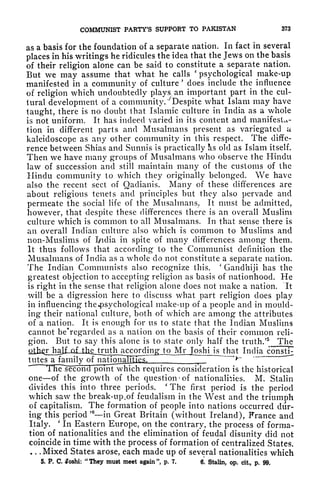
was frankly admitted by the Congress when it entered into the
Lucknow Pact in 1916. The brief period was the period of non-co-
operation movement under the leadership of Mr Gandhi and the
AH Brothers. But the movement was a colossal failure and the
Musalmans lost heavily in the process. Even during that period
there were fissures visible under the facade of Hindu-Muslim unity.
'
Mr Gandhi has a deep insight into the workings of the Hindu
mind. . . .He has never had the courage to flout Hindu public opi-
nion even when he kn6w that the latter was wrong. He is too clear-
headed to have any respect for the common Hindi! superstitions,
such as cow-worship. But to humour the Hindu public he has had
to declare more than once that Swaraj was not worth having if it
did not protect the cow from slaughter/
17
-
After the reorganization of the Hindu Mahasabha in 1923 a
.tjvee-fold programme was launched for the realization of its aim
of establishing a Hindu Raj. Though the Muslims are in minority
they have always enjoyed a prestige for their military prowess, and
Hindus, in spite of their huge numbers, have been but sheep before
them/18 '
The Hindu Mahasabha, when it adopted its new ideology
in 1923, struck upon a novel plan for creating the spirit of aggres-
15. Durrani, op. cit.,-p. 105. 16. ibid., p. 109. 17. ibid., pp. 110-111. *18. ibid., p. 113.
MUSUMS~A SEPAKATE NATION &
siveness among the Hindus and killing the fear that the name of
the Musalman inspired in the Hindu's breast. It started a series of
well-planned riots through the length and breadth of the country,
staging small battle-fields in the streets of cities where the Hindu
could learn how to face the Muslim in the game of bloodshed ....
So long as the Hindu retained a wholesome fear of the Musalman
there could be no riots. The riots were the course of training by
which the Hindus were to be militarised/
19
Pandit Malaviya was
the person chiefly responsible for organizing them, as a reference
to his itineraries published in newspapers of those years will show,
*
Pandit Malaviya's visit to a town being followed a few weeks later
by a bloody riot in the town.
19
When Mr Gandhi came out of
jail in February 1924 he found the country in the grip of Pandit
Malaviya's gangster politics, but had not the courage to face the
situation. . .the Mahatma did nothing- to quench the lires and left
the evil genius of Malaviya to direct the political life of Hindu
India for five long years ( 1923-27).
'~
The Hindus wanted to boy-
cott the Simon Commission and desired that the boycott should
be a united Hindu-Muslim affair.
'
Accordingly, as is their wont,
Hindu leaders met in secret and decided to call off the anti-Muslim
campaign of terrorisation and the riots came to an abrupt end/21
'
Mr Gandhi kept mum and did not raise his little finger to check the
gory drama that was being played all over India by Pandit Mala-
viya, Lala Lajpat Rai and other Mahasabhaites, and when he did
emerge from retirement towards the close of 1928, he did so not as an
all-India leader of both the Hindus and the Muslims as he had been
before his incarceration and retirement but as a leader of the Hindu
community alone. With the Mahatma's conversion to the Mala-
viyan ideology of Hindu nationalism and Hindu Raj, Pandit Mala-
viya himself left the stage and gradually sank back into private
life. Since then Mr Gandhi has been a leader of the Hindu commu-
nity only, which he has confessed on several occasions and the
Congress has been in its policies and almost completely in its mem-
bership a purely Hindu national organisation/
22
There is exchange
of workers between the Mahasabha and the Congress. The A.I.C.C.
threw out a resolution at Bombay in 1938 which would have pre-
vented members of the Congress becoming members of the Maha-
sabha and vice versa
'
though the ban against the Muslim League
remained strictly in force'.
28 '
From 1924 to 1928 was his
period of
incubation at the end of which he [Mr Gandhi] emerged as a leaclV
of the Hindu community pure and simple/ and launched his civil
disobedience movement from which the Muslims as a community
held completely aloof. Before he left for the Round Table Confe-
rence in 1931 an effort was made to bring the two communities to
19. Durrani, op. cit, p. 114. 20. ibid., pp. 115-116. 21. ibid., p. 116. 22. ibid., p. 117.
23. ibid* p. 118. '
INMA DIVIDED
some agreement but Mr Gandhi torpedoed the effort and required
that Muslims should come with a unanimous demand, knowing that
the handful of so-called nationalist Muslims whom he carried in
his pocket would not agree.
24
'
After the 1935 Constitution the Muslim League resolved to
co-operate with the Congress in working the new constitution and
Mr Jinnah expected in view of the sameness of the professed creeds
of the League and the Congress that the latter would not oppose
the League in the elections. . . But the Congress threw the gaunt-
let, *et up candidates against the League and Pandit Jawaharlal
Nehru, <he Congress President, replied that there were only two
parties in the country the Congress and the British Government.'
The Congress success was overwhelming in the 1937 elections but
it was confined mainly to Hindu constituencies. Out of the 482
Muslim seats the Congress ventured to contest only 58 of which it
lost 32. On account of the success their heads got swollen beyond
all proportions and they began to demand that the Muslim League
should be wound up or at least should cease to function as a political
organization. The Muslim mass contact movement was launched
and Muslims were asked to enter. the Congress as individuals leav-
ing their communal labels behind. The appeal was addressed to
Muslims alone and Hindus could be members at once of the Con-
gress and the Hindu Mahasabha.25
The Congress refused to form
Governments in the Provinces where it had a majority
'
except on
the condition that a guarantee were given them that the Governors
would not exercise the special powers vested in them under the
constitution for the protection of minorities and other special inte-
rests/
20
In view of impending war clouds to purchase peace the
Government surrendered, gave the guarantee demanded by the
Congress and betrayed the Muslims once again. The Congress on
entering office declared firstly that it was tinder no obligation to
take Muslims into the Cabinets. Accordingly, the Orissa Cabinet
had no Muslim member and occasion was soon found to rid the C.P.
Cabinet of its Muslim Minister. Secondly, the Congress declared
that it would take Muslims into its Cabinets provided they resigned
from their parties and signed the Congress pledge/
27
'
But the fact stands that the Congress rule was extremely
unjust and oppressive to the Muslims The Hindus of the pro-
vinces in which they are in majority felt and began to behave as if
Finclu Raj had come... The Congress ministries issued orders
that the Congress flag should be flown on all public buildings and
schools They ordered or permitted the singing of Bandemata-
ram, the symbol of the restoration of Hindu sovereignty and haired
of the Muslims, on all public occasions. Even some Assemblies in
the Congress-governed provinces began their proceedings with the
24. Durrani, op. cit^ p. 120. 25. ibid., pp. 123-4. 26. ibid., p. 126. 27. ibid., pp. 127*8.
MUSUMS^A SEPARATE NATION M
Bandemataram song/
28 '
The campaign of mass terrorisation of
Muslims and planned riots which Pandit Malaviya had carried on
so vigorously in 1923-27 was revived/ the details of which may be
found in the two volumes of the Sharif Report, Mr Fazlul Huq's
statement and K. S. Abdul Rahman Khan's Report.
29
The technique adopted by the Congress Governments to pro-
tect Hindu offenders consisted of :.
(i) encouraging subordinate
officials to bring about a compromise whereby Muslims agreed to
give up their right of cow-slaughter and apologized, and (ii) allow-
ing the police to delay investigation so that culprits might go scot-
free in the absence of evidence. Magistrates were transferred and
punitive police posted in Muslim quarters.
Mr Durrani then proceeds to quote at great length from the
judgement of the High Court acquitting the accused in the Chan-
dur Biswa case in which some Muslims had been sentenced to death
and some to transportation for life for the murder of a Hindu. The
Sessio'ns Judge by the by was an Englishman. Mr Durrani's com-
ment is :
'
Had the Premier of the C. P. some sense of shame, he
would have committed suicide or at least retired from public life
for good. Mr Yusuf Sharif was dismissed for releasing* a prisoner
who had served almost the whole of his sentence. But the Congress
did not call Pandit Shukla [the Premier] to account for this abo-
minable conspiracy against the lives of citizens. . . . Mr Gandhi, the
Congress dictator and Pandit Shukla's patron, is eternally chat-
tering about truth and non-violence and his inner voice. I am sure
God Almighty never speaks to such hypocrites and Mr Gandhi's
inner voice must be somebody else's. In any case with such in-
stances of justice and good government before them, the Muslims
of India can never agree to being put in a position of subjection to
the Hindus/30
He goes on to recount further the atrocities of the Congress
Governments : 'The Muslims were forbidden at places to call the
"
Azan "
or kill cows for their food. Their mosques and graveyards
were desecrated without hope of redress. Bat the most subtle and
thoroughgoing plan to cle-Muslimise the Muslims, to destroy their
cultural and social unity. . .was the Wardha. scheme of education
which was to be imposed compulsbrily upon all alike under the
future Congress Government of India and a foretaste of which was
administered in the C.P. in the shape of the Viclya Mandir
Scheme.'81
After all this the resignation of the Congres's Govern-
ments naturally came as a great relief to the Muslims. Then follow-
ed the individual civil disobedience movement and the Cripps offer
the terms of which were generous, with only one fly in the ointment,
viz. the provision of the possibility of the secession of Muslim India
and the establishment of an independent Muslim State which the
28. Durrani, op. cit, pp. 129-130. 29. ibid., p. 131. 30, ibid., pp. 134-5. 31. ibid., 135-6.
24 INDIA DIVIDED
Congress could not swallow.
The '
open rebellion
'
resolution of the A.LC.C. of August 8,
1942
'
was an open invitation to Japan, whose armies were waiting
on the other side of the border, to cross over and occupy the coun-
try. Viewed thus, the August resolution was an act of blackest
treachery to India, but especially to the Muslims who have no such
affinity with Japan as Hindus claim to have/
52 '
For once in his long
Viceroyalty Lord Linlithgow's Government acted promptly and
effectively, and Mr Gandhi's melodrama was blanketed in the first
act. % Muslim India was once again saved from the mercies of
Hindu Raj/
33
'
Though Islam is but an ethico-political philosophy, the Indian
Muslims have been as a whole poor political thinkers. But the
world in which they were placed would not leave them alone, and
the
"
total*' war which the Hindus had declared against them shook
them profoundly. In 1937 we find them shaken and amazed. In
1938 we find signs of growing recognition among the Muslirrts that
there was no place fop them in a common Hindu-Muslim nationa-
lity, and towards the close of the year voices began to be audible
all over India that there were two nations in India, that the &Ius-
iims were a nation in their own right/
34
and therefore*the Pakistan
resolution of the All-India Muslim League in its Lahore Session in
March 1940
'
was but an expression and adoption by the League
of what had already been their political faith/
35
If was thus in
1938 that according to Mr Durrani the Muslims of India realized
the consciousness of being a separate nation and set their hearts
on Pakistan
'
which has put the Muslim imagination afire. They
see strange, undreamed of, limitless possibilities in it. They ima-
gine Pakistan to be a state in which men shall be free from oppres-
sion, injustice and exploitation, and free from selfish greed, covet-
ousness, and fear of poverty. . .in which, though, c/ rather because,
it will be an Islamic state, there will be no distinction of Muslim
and non-Muslim among its citizens in the matter of civic rights
and economic benefits* . . .
They call it Hukumat4-Ilahi or the
Kingdom of God which some people in their ignorance have trans-
lated into theocracy.. But the Islamic state is not a theocracy. . . .
The Islamic state is a democracy, whose citizens feel and have the
right to declare
"
We are the state.;'
J3
I have quoted at such great length from Mr Durrani not be-
cause I accept his statements or conclusion many of them are so
obviously ridiculous and outrageously false but because he gives
in a systematic manner how the two nations theory has taken shape
and because he claims that he was one of the earliest to have pub-
lished a definite
'
thesis of the Hindus and the Muslims being not
32. Durrani, op. cit, pp. 139-140. 33. ibid., p. 141. 34. ibid., pp. 153-4. 35. ibid., p. 157.
36. ibid., pp. 158-9.
NATIONAL AND MULTINATIONAL &
merely two communities but twr
o nations, that they being two
nations, a pact could not bring forth a single united nation out of
them and that the natural and rational solution of the Hindu-
Muslim problem was that one community should either absorb or
extinguish the other community or otherwise render it harmless.
. . .
Being a member of the Muslim nation, naturally I contended
that Muslims should strive to reconquer India for Islam and make
that their political goal. I am still of the same mind, for I believe
the ultimate political salvation of India lies in Islam only/*
7
4. NATIONAL AND MULTINATIONAL
'
What we are more immediately concerned with is, whether,
assuming for the sake of argument the main thesis that since 1938
the Musalmans of India have realized the consciousness of being
a separate nation, the creation of separate Hindu and Muslim States
will serve the problem and place the minorities in the two kinds of
national States in a better position. In this connexion it is profitable
to study the history of the West and learn, if possible, a lesson
from what has happened there in the recent past. It is well known
that at the end of the first World War a number of new States
were created out of the wreckage of the Central European Empires.
An attempt v/as made as far as possible to create homogeneous
States. In the result many nationalities which had been minorities
before the War found themselves as majorities in the new States
which were named after them, and members belonging to the for-
mer majority in the old dismembered States along with others
became minorities in the new States. As it was apprehended that
on account of ill-treatment of minorities, the peace of the world
might be discdrb^d, the treatment of minorities came to be regarded
as a matter of international concern and most of the new States
were required to enter into treaties for the protection of the mino-
rities within them. These treaties are known as
'
the Minority
Treaties
'
and the League of Nations became their guarantor.
The object of partition is to have separate Muslim and Hindu
States just as national States werrf created after the first World
War in Europe so that both Muslims and Hindus may have an
opportunity in their respective States to develop their cultural,
spiritual, economic and political life in accordance with their otyn
genius and shape their own future desfiny. There is no need to
quarrel with this object if it can be attained. The Hindu and
Muslim^populations
are so spread and intermingled with each other
that it is impossible to have a homogeneous State of either the
Hindus or the Muslims in any part of the country without a consi-
37. Durrani, op. cit, p. 146.
9* INDIA DIVIDED
derable minority of the other community in it. Hindu and Muslim
States created especially and openly on the basis of the religion of
the majority of their inhabitants are bound to become what are
called national states of Hindus and of Muslims ; and having been
so created, it would be impossible for them to escape the inevitable
psychology and philosophy that dominate a national State. In the
words of Macartney,
'
so long as the majority nations which have
assumed command of the different States [in India it will be Mus-
lims in the Muslim States and the Hindus in the Hindu State]
persist in their theoretically absurd and practically unattainable
endeavour to make of those States the exclusive instruments of
their own national ideals and aspirations, so long will the minorities
be placed in a position which no system of international protection
can render tolerable/
1
A national State and national minorities are
incompatible. There are two ways of dealing with the problem :
One is to get rid of the minority it may be done, either (a) by
adjusting the boundaries of the State so as to eliminate the mino-
rity ; or (b) by exchange of population.
2
The other is to change the
basis of the State and make it an unnational or multinational State.
The Hindus and Muslims are spread over the whole of India in
such a way and have got so intermingled witn one another in the
population of the country that it is impossible to cut out any por-
tion and convert it into a State which will not have a considerable
minority left. This is admitted by all and therefore ine suggestion
is not for a purely Muslim State but for States with Hindu and
Muslim majorities each having a minority belonging to the other
community. Homogeneity by any division of the country is thus
1. C. A. Macartney :
"
National States and National Minorities ", (1934) p. 421.
2. Dr Ambedkar who has supported the creation of Pakistan says :
'
The best solution
of the communal problem is not to have two communities facing each other, one a majority
and the other a minority, welded in the steel-frame of a single government' and if this cannot
be attained by redrawing the boundaries of the provinces excluding the portions with non-
Muslim majorities from Pakistan and by exchange of populations, then the scheme of
Pakistan does not eradicate the evils which lie at the heart of the communal question. And
he therefore suggests both the redrawing of the boundaries and the exchange of populations
both of which he considers practicable so far as Pakistan is concerned. But for Hindustan,
he too has no method of makin% it a homogeneous Hindu state without a Muslim minority of
considerable size. He has to be content with pointing out that the Extent of the problem
will be greatly reduced and the Hindus should find it on the whole advantageous to have
the problem so reduced. vide Dr B. R.. Ambedkar: "Pakistan or the Partition of India",
Chap. VI, sections 2 and 3, pp. 95-107.
Now so far as redrawing boundaries is concerned, I have considered at length what the
boundaries can be on a fair interpretation of the'League resolution, but Mr Jinnah at the
time of the conversations with Mahatma Gandhi in 1944 is reported to have insisted on the
prejent Provincial boundaries. As regards exchange of population it is enough to state that
with boundaries suggested by Dr Ainbedkar the number of non-Muslims to be transferred
from tht Muslim states in the North-Western and Eastern zones will be more than 61 lakhs
and 1 crore 34 lakhs respectively. I do not know where Dr Ambedkar gets that
'
exchange of
population in Turkey, Greece and Bulgaria* involved 'the transfer of some 20 million
people from one habitat to another/ The figure of the entire population of the three states
given by Macartney is a little over 25 millions. The minorities of all kinds in- the three states
numbered just over 3J millions. Macartney also mentions that the Commission appointed to
deal with exchange between Bulgaria and Greece had to deal with only 154,691 persons and
similarly the number of persons dealt with between Greece and Turkey came to 545,551.
NATIONAL AND MULTINATIONAL ?
impossible.
Can homogeneity be attained by exchange of population ? No
one except Dr S. A. Latif and Dr Ambedkar has suggested it. Mr
Jinnah said in his Presidential address at the Lahore session of tht
League in March 1940, that
'
exchange of population, however, on
the physical division of India as far as practicable will have to be
considered/
8
Others have considered it impracticable on account
of the magnitude of the numbers involved and the consequent cost
and inconvenience as also of the strong attachment to their lands
of the inhabitants both Hindus and Muslims who will have to
be shifted. In this connexion the experience of minorities in Europe
may be noted :
The voluntary exchange and compulsory exchange of popula-
tions were both tried under the Peace Treaties. Macartney says
that
'
the genuine voluntary emigrants were thus few indeed
'
and
that
'
the genuine voluntary and reciprocal emigration which the
Convention was designed to effect never occurred at all except on
a minute scale/
4
There is no reason to think that the case will be
otherwise in India. A compulsory exchange was, however, carried
through between Greece and Turkey. Summarizing his conclusion
Macartney says :
'
Such experience as we possess of the exchange
of population as a means of solving the minorities problem is not,
therefore, calculated to encourage a repetition of the experiment.
It may be argued that conditions in Turkey and the Balkans after
the War were quite abnormal, and that neither the physical hard-
ships nor the financial losses would recur under more settled condi-
tions. The answer is that the method is ex hypothesi a drastic one.
If conditions are settled and the relations between minorities and
majorities happy, exchange is unnecessary, and an appeal for volun-
tary exchange will meet with no result. A compulsory exchange,
against the wilL of the individuals concerned, is admittedly a bar-
barous act ;
but experience has shown that a voluntary exchange
simply does not take place, except under conditions which amount,
in reality, to compulsion. It seems, therefoie, that the operation is
inseparable from hardships ; the only question is whether these are
to be inflicted in hot or in cold blood.'
5
Macartney, therefore, comes
*
to the conclusion that 'all
attempts to solve the minority problem by getting rid of the mino-
rity have thus proved thoroughly discouraging. . . .It seems, there-
fore, that states of mixed population m^ust reconcile thefnselve^ to
the continued pressure of their minorities. . . .The troublesof our
day arise out of the modern conception of the national state ;
out
of the identification of the political ideals of all the inhabitants of
the state with the national-cultural ideals of the majority in it. If
3.
"
Speeches and Writings of Mr Jinnah ", Third Edition, p. 158.
4. Macartney, op. cit, pp. 440-1. 5. ibid., pp. 448-9.
28 INDIA DIVIDED
once this confusion between the two things which are fundamen-
tally different can be abandoned, there is no reason why the mem-
bers of a score of different nationalities should not live together in
perfect harmony in the same state, and not even the smallest of
them need suffer from the moral degradation which today attends
the lot of the national minority. Even today there are certain states
in Europe which have refrained from the attempt to constitute
themselves as national states, and in which, in consequence, no
true minority problem exists/ And he mentions the example of
the ^oviet Union. He has cast a glance at the problem in India
also.
'
It may, however, be suggested that not only the British
rulers in India, but also the native population of India itself, would
lose nothing *by considering the history of the minorities struggle
in Europe. In the Indian situation today there are two quite dis-
tinct conflicts. There is the conflict of the native against the Eng-
lishman, and that of the Hindu against the Mahomedan (not to
mention the endless complications of the minor races). Since the
English in India are ot so much a dominant, indigenous race as
the representatives of a foreign administrative authority, the for-
mer struggle resembles fairly closely that waged by the Magyars
against the House of Habsburg ;
and the support given to British
rule by the Mahomedans of India recalls the alliance so often made
between the Habsburgs and the Germans and Croats of Hungary.
And just as the conflict between the Magyars and the "Nationali-
ties" in Hungary did not reach its climax until the Habsburgs had
practically abdicated their right to intervene in Hungary's internal
affairs, so the presence of the English in India is postponing the
true clash between the native races. As India acquires more real
self-government, so that clash will come to resemble more closely
sundry of the internal conflicts which have rent the states of
Eastern Europe. . .. one may pray that those who read the history
will have the wisdom to learn the lessons.'
7
One such lesson he has
mentioned earlier in the book, which we in India will do well to
bear in mind. When open conflict broke out between the Magyars
and the Habsburgs, the Croats and almost all the other minorities
sided with the Crown and the Magyars were overcome. Hungary
came to be ruled from Vienna by a centralized and Germanizing
bureaucracy giving satisfaction neither to the Magyar nor to the
Slavonik ambition. This evoked from a witty Magyar the com-
ment to a Croat friend that
'
you have got as reward what we have
got as punishment/
8
Instead, therefore, of seeking a solution of the Indian problem
in the creation of national States of Hindus and Musalmans, in each
of which there will remain a considerable minority of the other
community, is it not better to allow India to continue as an un-
6. Macartney, op. cit, p. 450. 7. ibid., pp. 480-1. 8. ibid., p. 118.
THE PICTURE FROM ANOTHER ANGLE 29
national State that she is and has been ? The desire expressed by
the League to have separate national States of Musalmans is not
even 6 years old, and, as we shall see, cuts across the history of
more than as many hundred years. The ob'ject therefore should be
not the creation of national States but the strengthening of the
unnational State in India, removing from it all those aspects and
features which detract from its unnational character.
I cannot do better than conclude this discussion with a quota-
tion from Lord Acton (who has been quoted by the protagonists of
the two nations theory) with which Macartney ends his book -1-' If
we take the establishment of liberty for the realisation of duties to
be the end of civil society, we must conclude that those states are
substantially the most perfect which. . .include various distinct
nationalities without oppressing them. Those in which no mixture
of races has occurred are imperfect ;
and those in which its efforts
have disappeared are decrepit. A state which is incompetent to
satisfy different races condemns itself ; a state which labours to
neutralise, to absorb, or to expel them, destroys its own vitality ; a
state which does not include them is destitute of the chief basis of
self-government/
5. THE PICTURE FROM ANOTHER ANGLE
We have seen much in the foregoing pages that tends to show
that Hindus and Muslims are separate and the twain shall never
meet. But there is another angle from which the picture can be
viewed. Let us turn to it for a while.
'
Very many human activities, aspirations, and emotions have
contributed, either naturally or artificially to build up the great
synthesis that we term a
"
nation
"
; language, religion, art, law,
even food, gesture, table-manners, clothing, and sport all play
their part/ says Julian Huxley.
1
Again,
'
The special form of group
sentiment that we call
"
nationality ", when submitted to analysis,
thus proves to be based on something much broader but less defin-
able than physical kinship. The occupation of a country within
definite geographical boundaries, climatic conditions inducing a
definite mode of life, traditions that gradually come to be shared
in common, social institutions and organisations, common religious
practices, even common trades or occupations these are among tlie
innumerable factors which have contributed in greater of less
degree to the formation of national sentiment. Of very great im-
portance is common language, strengthened by belief in a fictitious
"
blood tie ". But among all the sentiments that nurture feelings
of group unity, greater even than the imaginary tie of physical or
9. Macartney, op. cit., p. 501. 1. Julian Huxley: "Race in Europe", p. 3.
30 INDIA DIVIDED
even of historic relationship, is the reaction against outside inter-
ference. That, more than anything else, has fostered the develop-
ment of group-consciousness. Pressure from without is probably
the largest single factor in the process of national evolution/
2
Let us take some of the more important of these elements and
see how they have influenced the Hindus and Muslims of India.
i. Religion
Let me begin with Religion. It is true that the Hindus and
Musalmans of India follow different religions and that their social
life derives from these religions. It is also true that some of the
religious rites and customs differ very materially and to all out-
ward appearance are irreconcilable. But in some of the most funda-
mental things the differences among them are no greater than they
are amoifg followers of faiths g'oing under one comprehensive
name and who are admittedly living peacefully and amicably as
members of one nation. The austere simplicity of the inside of a
Muslim mosque with only prayer mats and water pots contrasts
with the decorated images and paraphernalia of worship of tfce in-
side of a Hindu temple no more than the inside of a Protestant or
Presbyterian Church with nothing but seat for the worshippers
and a pulpit for the preacher contrasts with the magnificent deco-
ration and image and painting and candle and what not of the
Roman Catholic Church. Even among Musalmans the orthodox
Sunni looks upon the pomp and paraphernalia of the Moharram
celebrations the Tazias and Taboots, the Separs and the Alams,
the Paiks and Bahishti of the Shiyas with something akin to the
horror with which he looks upon the procession of the image of
Durga of the Hindus. And yet no one has claimed that the Protes-
tants and Catholics of England do not constitute a nation or that
the Sunnis and Shiyas are two different nations. Among the
Hindus also there are sects that are as critical of temples and images
and of many of the rites and ceremonies of others also called Hindus.
Apart from outward signs and symbols, rites and ceremonies,
forms and exercises of religion and worship, people have known
philosophers of both faiths who have dived deep into the mysteries
of life and death and life after death, and who have proclaimed the
same faith in the Oneness of God, the immortality of the Soul, the
ephemeral character of all material things, and the eternal value of
things spiritual. The Vetfantic philosophy of the Hindus and the
Sufisw of the Muslims, whether or not they have derived inspira-
tion from each other or from a common source in the ultimate
experience of the human soul in its quest after the eternal verity,
have tended to converge towards a single point. A person learned
in both the lores like Dr Bhagwan Das can easily cull together
2. Huxley, op. cit, p. 15.
THE PICTURE FROM ANOTHER ANGLE-RELIGION SI
parallel passages from the standard works of both religions.
'
The third foreign source of Muslim mysticism was Indian. It
has been pointed out in an earlier chapter that India and the Persian
Gulf had a close commercial intercourse ;
with trade, undoubtedly
ideas were exchanged. It stands to reason that if things of material
use like Indian steel and swords, and Indian gold and precious
stones, and if things of artistic value like the painted arch and the
bulbous dome, reached Persia and Iraq, Indian philosophical ideas
should have travelled there too. Many Indians held posts in the
financial department at Basra under the early Umayyads *,
the
Caliph Muawiya is reported to have planted a colony of them in
Syria, especially at Antioch and Hajjaj, and to have established
them in Kashgar. The black-eyed and olive complexioned Hindus
were brushing their shoulders against those of the Muslims in the
cities of the Caliphate. The eastern dominions of the empire, that
is, Khorasan, Afghanistan, Sistan and Baluchistan were Buddhist
or Hindu before they were converted/ Balkh had a large monastery
(Vihara] whose superintendent was known as the Bararnak. His
descendants became the Barmakide Vizirs of the Abbaside Caliphs.
'
Then the Arab^ familiarized themselves from early times with
Indian literature and sciences. They translated Buddhist works in
the second century of the Hijra : for instance, Kitabal-Bud and
Bilawhar wa Budasif, treatises on astronomy and medicine called
Sindhind (Siddhanta) and Shushrud (Susruta) and Srak (Charaka) ;
story books like Kalilah Damnah (Panchatantra) and Kitab Sindabad;
ethical books of Shanaq (Chanakya) and Bidpa (Hitopadesa) ; and
treatises on logic and military science.
'
They were exceedingly keen on informing themselves of the
customs, manners, sciences and religions of the people with whom
they came into contact. Al-Kindi wrote a book on Indian religions,
Sulaiman and Masudi collected information in their travels which
they, used in their writings. Al-Nadim, Al-Ashari, Al-Biruni Shah-
rastani and many others devoted chapters in their books to describe
and discuss Indian religions and philosophic systems.
'
The legend of Buddha entered into Muslim literature as the
type of the saintly man, and Muslim hagiologists assimilated the
stories of Ibn Adham to the Buddhist legend. Indian ascetics tra-
velling in pairs and staying not more than two nights at one place
were directly known to the Muslim adepts, who took from thegn
their four-fold vows of cleanliness, purity, truth and poverty
and the use of the rosary. What wonder then tfiat the conception
of Nirvana, the discipline of the eight-fold path, the practice of jog
and the acquaintance of miraculous powers were appropriated in
Islam under the names of Tana, Tariqa or Saluk, Moraqabah and
Karamat or Mujiza.'
3
3. Dr Bhagwan Das quoted in TarachandV "
Influence of Islam on Indian Culture
1
',
pp. 67-70.
32 INDIA DIVIDED
'But the man who produced the greatest stiMn the Islamic
world by the boldness of his doctrines was Husain-bin-Mansoor Al-
Hallaj He travelled about in many lands, among them India,
and thrice visited Mecca. At last his activities became so obnoxious
that he was arrested in A.D. 922.'* Kabir, Dadu, Nanak and other
Indian saints used the language of Muslim Sufism.
Mansoor's theories were later worked up in the systems of
Ibn-al-Arabi and Abdul Karim Jili and in the poetry of Ibn-al-Farid
and Abri Said Ibn Abulkhair and their influence spread to far off
countries including India.
'
Jili was acquainted with Hindu religion, for among the ten
principal seats he noted the Brahima (Brahman). About them he
says that they worship God in His absolute aspect, without refe-
rence to prophet or apostle. The scriptures of the Brahmina accord-
ing to him were revealed to them not by God but by Abraham
(Brahma); they contained five books, the fifth on account of its
profundity was unknown to most of the Brahmans but those who
read it invariably becamg Muslims. Apparently Jili's fifth book is
the Vedanta whose monistic philosophy in the eyes of Jili m?de it
indistinguishable from Islam/5 '
The Muslim mystic who sets out
upon the path of union (wasl) of absorption (fana) always needs a
spiritual guide, "for if a man has no teacher his Imam is Satan."
The guide or the preceptor (Pir or Shaikh) is the priest round
which the whole machinery of Sufi monachism moves. ...The dis-
ciple is advised to keep his Murshid constantly in mind, to become
eventually absorbed in him through constant meditation and con-
templation of him, to see him in all men and in a*l things, and to
annihilate his self in the Murshid. From this state of self-absorp-
tion in the Murshid the master leads him on through several stages
at last to absorption in the Deity. Muhammad taught surrender to
God (Islam), Sufism surrender to the teacher who is the represen-
tative of God upon earth.'
Haji Waris AH Shah was a Sufi saint in nothern India. His
tomb is at Dewa Shaiif in Barabanki district (U.P.). His disciples
add
'
Warisi
'
to their names and are said to be most numerous.
He has summarized the Sufi teachings in a few Persian verses
which may be quoted here as illustrative :
Mun hameen go-em ke pir-e-man khudast,
Pesh-e munkir een sakhun guftan khatast ;
Ek swalay meen kimum ai marduman,
Pas jawab *oora dehund ai mominan
Hezum under nar choon shud sokhta
Rishta under jame shud choon dokhta
Pas wara hezam bagoem ya ke nar
Rishta ra jama bagoem ya ka tar
4. Tarachand, op. cit, pp. 69-70, 5. ibid., pp. 77-8. 6. ibid, p. 81.
THE PICTURE FROM ANOTHER ANGLE-RELIGION 38
Choon key pir-e-mun fana fillah shud
Ruft bashriyat hama Allah shud
Pas be paye oo kunum hardam sajood,
Waqf kardam dar rahush jan o wajood ;
Ashqi az jutnle alam bartar ast
Zan ke een millat Khudai akbar ast.
Translated as follows :
I say Pir is my God. To say this before a munkir (non-believer)
is a mistake. O man, I ask one question. O believers, answer it.
When fuel gets burnt in fire, when thread gets woven into cloth,
then should I call it fuel or fire, then should I call the thread cloth
or thread ? So when my Pir got absorbed in God, the human being
disappeared all became God. I therefore bow to his feet every
moment and have dedicated my life and being to his path Love is
superior to all the worlel inasmuch as it is the millat (bhakti) of
God the Great.
Hindu scripture abounds in references to the necessity of a
Guru or preceptor who is to guide the disciple through the difficult
and rigorous discipline he has to go through, and without such
Guru progress is practically impossible. In fact 'the Guru is
Brahma, the Guru is Vishnu, the Guru is Maheshwar, the Guru is
Para-Brahma Himself and to that Guru I bow '
is a common
every-day prayer. It is the duty and ambition of every Hindu to
have a Guru and to be initiated by him.
'
In the Pantha (way, sect) of Kabir, the Guru holds the same
position as in any other Sufi order. If it is true of the Sufis that
"
among them the worship of God is the same as the worship of
man "
it is equally applicable here, for says Kabir
'
Consider the Guru as Govinda (God).
'
Nay more
'
If Hari becomes angry still there is some chance, but if the
Guru is angry then there is no chance whatever/
And as among Sufi orders so in Kabir-Pantha,
'
The real meditation (dhyana, dhiker) is of the Guru's form,
the real worship is of the Guru's feet. The redl boat is the Guru's
word, which in essence and feeling is true
'
and '
in the three worlds
and nine regions none is greater than the Guru/7
'
Like all Sufis Nanak taught that in the soul's journey, towards
God it was necessary to be guided by a Guru. In his system the
preceptor occupies the same position as in that of Kabir/8 *
The names of Kabir and Nanak will thus spring to the mind of
every Hindu of northern India as those of persons who were deeply
influenced by Islam and Hindu Vedanta alike. The Sakhis of
Kabirdas and his devotional songs are repeated by innumerable
7. Tarachand, op. cit, p. 158. 8. ibid., p. 176.
34 INDIA DIVIDED
Hindus and sung at the time of prayers morning and evening in
countless Hindu homes.
'
Thus did Kabir turn the attention of India to a religion of
the universal path ;
a road was laid out on which both could tread
together. No Hindu or Muslim could take exception to such a
religion. This was the constructive part of Kabir's mission. But it
had a destructive side also. It was impossible to build a new road
without clearing awr
ay the jungle which obstructed the ancient
foot-paths. Kabir therefore attacked with fearless indignation and
in trenchant language the whole apparatus of externalia which
obscured the truth or separated the Indian communities from one
another. He spared neither the Hindu nor the Musalman.
'
He asked the Hindus to give up what every reformer since the
days of Buddha had insisted upon ceremonial, sacrifice, lust for
magical powers, lip worship, repetition of formulae, pilgrimages,
fasts, worship of idols, gods and goddesses, Brahmin supremacy,
caste differences, prejudices concerning* touchability and food. . . .
He asks the MusalmUns Jto give up their exclusiveness, their blind
trust in one Prophet and his book, their externalism in th$ per-
formance of rites pilgrimage to Mecca, fasts, and regulated
prayers, their worship of saints (aulia aryd pirs) *and prophets
(paighambar).
'He asks both Hindus and Muslims to have reverence for all
living creatures and to abstain from bloodshed. He asks them both
to give up pride whether of birth or of position, to give up extremes
of asceticism and worldliness and to consider life as a dedication.
. . .He repeats again and again that Hindus and Muslims are one,
they worship the same God, they are children of the same Father,
and they are made of the same blood/
9
Every one knows that the entire teaching of Guru Nanak is
nothing but a synthesis of the fundamental principles of both the
religions.
'
The mission of Nanak was the unification of the Hindu
and the Musalman. He realised that in order to heal the wounds
of society it was essencial to end the conflict of religions.'
10 '
Nanak
shows little mercy to himself and he is naturally not very tender
when he deals with others. 9
With a mind definite, clearcut and
keenly alive to the sharp distinctions between good and evil, he
condemns with Semitic vehemence the superstitions and forma-
lism of Hinduism and Islam/11
Kabir was a Muslim and Nanak
a
c
Hindul3y birth and yet they are both the products of that fusion
which was going on despite the continuance of all outward separa-
tion and isolationism.
It was not only in the realm of philosophic an'd religious
thought that this rapprochement proceeded. In actual practice any
number of instances may be found of Muslim Kings endowing
9. Tarachand, op. cit, pp. 163-5, 10. ibid,, p. 16. 11. ibid., p. 172.
THE PICTURE FROM ANOTHER ANGLE-RELIGION 35
temples and
'
maths
'
and granting Jagirs to pious Hindus and
Pandits learned in the Hindu lore. It would be a useful service if
some scholar could bring together in a compact form a list of the
numerous endowments and grants made by Muslim Kings to Hindu
temples and religious shrines such as has been done of those dese-
crated and destroyed by them.
*
If there had been no cultural co-operation as a rule, why were
sanads granted by Muslim rulers to Hindu seats of worship and
learning and vice versa? Students of the history of South India
must have come across innumerable instances of such grants, made
to Brahmins by Adil Shahi, Kutub Shahi and Asaf Shahi dynasties.
Likewise such endowments were made to Muslim places of wor-
ship by Maratha Rulers even after the political strife with Delhi
Emperors.'
12
I may mention two instances in Bihar. The nucleus
of the large Zamindari of the Mahant of Bodh Gaya whose yearly
income runs into lakhs was a grant by Mohammad Shah of Delhi,
who by a firman granted the village of Mustipur Taradih to Mahant
Lai Gir who was the fourth in succession from the founder. Simi-
larly the great Zamindari perhaps the greatest Zamindari in India
of Darbhanga owes its origin to a grant by the Mughal Emperor
Akbar to the ancestor of the present Brahmin Maharajadhiraj for
his learning and piety.
'
To encourage education among his Hindu
subjects he [Sher Shah] granted them wakfs and allowed them a
free hand in their management. For this liberal policy he was liked
by his subjects of all castes and creeds/18
A few other instances supplied to me by Doctor Syed Mahmud
may be mentioned here :
Sultan Zainulabdin of Kashmir used often to visit Amarnath
and Sharda D^vi'c temple, and had houses built there for the com-
fort of pilgrims.
The Pathans of Najibabacl ruled over Harclwar about 1780.
The Nawab built big houses for the comfort of Hindu pilgrims
which are still in existence and in possession of Hindus.
In 1588, Guru Arjun Dev dug a tank at Amritsar and in the
same year proposed to build tne temple there for worship. They
got the foundation of Harmandir laid by a Musalmanof piety
named Mian-Peer alias Bala Peer.
From The History of tlie Darbar of Amritsar, by Sirdar Udham Singh
Munshi Sujan Rai of Batala, the famous historian of the time of
Alamgir, mentions in his KhulastulTawarikh, a village Depalival
12. Atulananda Chakravarti :
"
Call It Politics?" p. 44.
13. Ishwari Prasad :
"History of Muslim Rule in India/' D. 339.
$6 INDIA DIVIDED
which is near Kalanur and where the tomb of Shah Shamshuddin
Uaryayi is situated. This tomb is visited by a large number of
people. He writes :
'
Both Hindus and Musalmans have a great
faith in Shah Shamshuddin. But a Hindu named Deepali has prov-
ed superior to both Hindus and Musalmans in his faith. After Shah
Daryayi's death Deepali was appointed the first trustee and keeper
of the tomb with unanimous consent of both Hindus and Musal-
mans although he was not a Musalman by religion.... Some years
ago the Musalmans tried to get the Hindu keepers dismissed, so
much so that religious reasons were urged for this. But the Alam-
giri Hukumat did not allow the agitation to succeed. At the time
of writing this book in the third year of Alamgir's rule the Hindus
are the keepers of this tomb.
5
Everi^oday in Hyderabad (Deccan) a Brahmin family conti-
nues to be the Mutwalli of the dargah of a famous Buzurg (pious
man). The Nizam has granted a big Jagir to this dargah and the
public also make offerings. Musalmans tried to get the Hindu
Mutwalli dismissed but the Nizam did not allow this.
*
Even today there is a grant on behalf, of the' Nizam to the
temple of Sitaram in the town of Hyderabad and to another temple
at Mahor (Adilabad), the annual income from whici comes to 50
or 60 thousand. The Jagir granted by the Nizam to the Gurdwara
of Sikhs at Nander has an annual income of 20 thousand.
Some sanacls in Persian for a grant may be quoted. One is
dated 1167 Hijri and was granted by Ahmad Shah Bahadur Ghazi :
'
Be it known to the Zamindars and cultivators of Kasba Ach-
nera in the district of Akbarabad that seventeen bighas of muafi-
land (land free from rent) are granted
"
Punyartlr^as a religious
act) to Sheetal Dass Bairagi, for the expenses of bJwg and naived
of Shri Thakurji, so that with the income from the said land, the
said Bairagi may meet the expenses and perform the rites of Shri
Thakurji.
'
Be it known to the Choudhri of the Bazar of Achnera thai he
should give twenty bhar (measures) of grain to Shri Thakurji. The-
aforesaid Bairagi should not be deprived of it. Dated 3rd Ramzan,
1139, Fasli/
c t
Another is from Shahabuddin Khan granting a Jagir for the
expenses of the famous temple of Ganesh at Chinchwad.
Qaulnama
In the name of Moraya Gossain of Chinchwad appertaining to
Pergannah Poona, about whom Khan-e-Hikmat Nishan Nahar
Khan has informed that he wants Qaul (binding words) of grant.
THE PICTURE FROM ANOTHER ANGLE-RELIGION 37
So it is given in writing that he should dwell with his own people
and connexions in this village and strive to make the lands prospe-
rous and productive. May no hardship or injury befall him through
the'will of Allah the Great. The date of Qauliyatnama for this pur-
pose is the I2th of Zeqad 1326 Hijri.
There are two firmans of similar grants in Allahabad. One of
these is in favour of the priests of the famous temple of Maheshwar
Nath. It was granted by Aurangzeb.
Aurangzeb made grants to Girdhar, son of Jagjiwan of sakin
Mouza Basti (resident of village Basti) in the district of Benares,
Jadu Mishra, resident of Maheshpur Pergannah Haveli, and to
Pandit Balbhadra Mishra, who were all priests.
Aurangzeb made a grant of a monetary allowance of a hundred
rupees to Mishra Kalyandas for the temple of Tutlamaee in Multan
which is still in existence vide Settlement Report of the District
of Multan by Hukmchand, Extra Assistant Commissioner.
Sultan Mohammad Murad Bakhsh in 1153 Hijri made a grant
that four seers of ghge be given every day from the stores of Ujjain
so that the temple of jVIahakal may be illuminated every night.
It may bp stated in a general way that many of the Muslim
kings and rulers were great patrons of learning and encouraged the
study not only of Persian and Arabic but also of Sanskrit and In-
dian literature and sciences. It is not possible even to summarize all
that they did for the promotion of learning in India.
'
Under the
imperial patronage several Sanskrit books dealing with diverse
subjects were translated into Persian and Arabic. Besides, there
were scores of Muslim chiefs who themselves studied Sanskrit and
patronised it wiihout stint. Many of them translated Sanskrit
works into Persian in order to put the treasures of Hindu lore with-
in the reach of the Muslim world and encouraged others in this
direction. Often Sanskrit works were included in the courses of
study for Hindu students. In short Sanskrit was encouraged in
every possible way/
14
Dr. James H. Cousins, writing about educa-
tion in Muslim India says :
'
Muslim "Kings and Princes themselves
became students and included^ Hindu culture in their intellectual
interests. Muslim literary education intermingled as freely with
Hindu literatures as Moghal painting with Rajput painting. *Hin3u
classics were translated into Persian and as a consequence Persian
culture influenced Hindu culture/
15
The Hindus are seen even now assembling in as large numbers
as Muslims at the dargah or tomb of a Muslim saint or on the
14. S. M. Jaffar :
"
Education in Muslim India," p. 15.
15. ibid, p. 15, quoted from "
Eastern Times "
dated 7-6-1935.
38 INDIA DIVIDED
occasion of Urs fairs from all over India at a place like Ajnier
Shareef and from within the Province of Bihar at Bihar Shareef,
Maner Shareef and Phulwari Shareef. Many Hindus have actual-
ly a sort of relationship with Muslim divines akin to that of gfuru
and chela or preceptor and disciple.
The participation by masses of Hindus in the Muslim celebra-
tions of the Muharram is well known all over northern India,
There used to be a time not long ago when perhaps the number of
Hindus joining them exceeded that of the Muslims for the simple
reason that the former are more numerous than the latter. It was
not only in the processions that the Hindus joined. They actually
observed Mijharram as Muslims did in their homes as days of
mourning and prayer when no festivities could be indulged in and
no auspicious act, such as a marriage or entry into a new house
could be celebrated. Many Hindus had their own tazias and separs,
and Hindu boys fully became paiks and bahishtis donning the
green dress and badge (badhis as they are called in Bihar) and
carrying the water washak. Hindu akharas vied with Muslim
akharas in displaying 'their feats with sword and scimitar, gadka
and lathi and a host of other instruments. Better still, very often,
perhaps oftcner than not, these akharas w^re not fhe exclusive
akharas of either Hindus or Muslims but joint akharas of both.
There used to be no objection to the very noisy music of the*
Muharram processions even when they passed by mosques, and
there used to be no breaking of heads and worse as so often
happens now-a-days on account of Hindu music before mosques. It
is a curious thing that in most cases the music accompanying Hindu
processions that is objected to by Muslims in some places is played
mostly by professional Muslim musicians. Similarly the cow whose
sacrifice on the Bakrid day by a Muslim is so often the cause of a
flare-up among Hindus (who tolerate her slaugfcttf 'from day to
clay for meat and hide in almost every town of any importancejand
particularly in cantonments) has very often been the property *of a
Hindu who has sold her to a Muslim for money, well knowing the
use to which she would be put by the purchaser. On the other hand,
we have instances of. Muslim rulers from Babar downwards laying
stress on the desirability of respecting the Hindu feeling by not
slaughtering cows, if not actually prohibiting cow-slaughter alto-
gether, and there are innumerable respectable Muslim families
among whom beef is never used out of regard for the feelings of
Hindi? neighbours.
'
On tlie occasion of Id it appears the cow was
not sacrificed, for we are told :
"
On that day [Id] every one who
is able will sacrifice a goat in his house, and keep the day as a great
festival."
>1G
ML Ishwari Prasad :
"
A Short History of Muslim Rule in India," p. 738, quoting Pelsaert
"""' j**t
THE PICTURE FROM ANOTHER ANGLE-RELIGION 39
It is worth while reproducing the secret will of Zahiruddin
Mohammed Badshah Ghazi (Babar) to Prince Nasiruddin Muham-
mad Humayun :
'
Oh Son ! the Kingdom of India is full of different religions.
Praised be God that He bestowed upon thee its sovereignty. It is
incumbent on thee to wipe all religious prejudices off the tablet of
thy heart, administer justice according to the ways of every reli-
gion. Avoid especially the sacrifice of the cow by which thou canst
capture the hearts of the people of India and subjects of this country
may be bound up with royal obligations.
*
Do not ruin the temples and shrines of any community which
is obeying the laws of Government. Administer justice in such a
manner that the King* be pleased with the subjects and the subjects
with the King. The cause of Islam can be promoted more by the
sword of obligation than by the sword of tyranny.
'
Overlook the dissensions of the Shiyas and the Sunnis, else
the weakness of Islam is manifest.
*
And let the subjects of different beliefs* harmonise in confor-
mity with the four elements (of which the human body is harmo-
niou*sly composed) o that the body of the Kingdom may be free
from different dissensions. The memoirs of Timur, the master of
conjunctions, (the fortunate,) should always be before thine eyes so
that thou mayest become experienced in the affairs of administra-
tion. First J&maicliulawal 935 A.H/17
Some instances of tolerance by Muslims may also be mentioned
here, given to me by Dr Syed Mahmud :
The famous Portuguese historian Fari Souza writes in his
Dakkhan-Ki-Halat:
'
Hindus and Musalmans served one another and
Muslim kings used to appoint Hindus to high posts and confer on
them high ramtG.
1 '
In other words, there was no discrimination
against Hindus, and they used to perform their religious rites and
cereYnonies without hindrance. The Musalmans used to show great
consideration for the religious feelings of the Hindus.
Sir Alfred Lyall writes in Asiatic Studies, p. 289 :
'
But so far
were they [Muslim rulers] from converting India, that among the
JVlohammadans themselves, their own faith never acquired an entire
exclusive monopoly of the higfy officers of administration/
Aurangzeb recommended to Shah Jahan and his ministers
many able Hindus for appointment. For example, when there w*as
a vacancy in the post of Diwani of Ellichpur, he strongly recom-
mended a Rajput officer named Ramkaran but for some reasons
Shah Jahan did not accept the recommendation. Aurangzeb wrote
a second time that a better man could not be found. (Ruqaat-
17. Translation of the will of Babar, a copy of which used to be in possession of the late Dr
Balkrishna, Principal, Rajarcm College, Kolhapur; published in "The Searchlight," dated
30-5-1926.
40 INDIA DIVIDED
Alamgiri, Vol. i, p. 114.) Many instances of such recommendations
may be found in Ruqaat-Alamgiri, and Adab-e*Alamgiri.
-
It is generally believed that Aurangzeb forcibly converted
Hindus to Islam. But a curious incident may be described here
which shows his attitude. Shah Jahan had imprisoned the Raja
Indraman of Wandhera for his repeated acts of disobedience of
orders. When Aurangzeb was appointed Subedar of the Deccan he
strongly recommended his release to Shah Jahan. But Shah Jahan
was so displeased with Indraman that he turned down Aurangzeb's
recommendation and wrote to him that Indraman had repeatedly
caused him displeasure, but he might be set free if he became a
Musalman. Aurangzeb strongly protested against this and wrote
to Shah Jahan that this condition could not be acted upon and was
impolitic and short-sighted, and that if he was to be released, he
should be ^released on conditions offered by himself. Aurangzeb's
letter to Shafaullah Khan, the Prime Minister, on this subject is to
be found in the Adab-e-Alamgiri.
*
II. Sdcial Life
The influence exerted by the Hindu on Muslim social life
and custom and vice versa was no less remarkable.
'
This can be
illustrated easily by reference to the rites ancrceremonies connected
with the three most important and significant incidents in human
life, viz. birth, marriage, and death. I shall mention h&re some com-
mon or similar rites and customs observed by middle class Hindus
and Musalmans in Bihar.
It is a common custom that at the time of the birth of a child,
particularly if it happens to be a male child, songs are sung which
are known locally as sohar. Women from neighbouring houses
assemble and join the singing and other festivitieV^t the door of
the room of confinement fire is kept burning and a piece of iron and
a thorny plant of the cactus class known as muthiasij and certain
other articles are kept to keep out evil spirits. On the sixth day
after the birth the mother and baby are washed and this ceremony
is known as chhathi or sixth day ceremony and the mother, taking
the baby in her arms, looks at the sky and counts the stars. There
are other ceremonies on the twentieth and fiftieth day known as
bistouri and chlieella respectively. During the period of confinement
up to thq sixth day in particular the mother is considered to be
impure and is not permitted to touch food to be taken by others.
Both ^the idea of spirits haunting houses and of untouchability of
food are foreign to orthodox Islam and so also is the idea of bath
on fixed days after the birth of a child but they are prevalent and
acted upon in practice in Muslim households.
Removing the hair with which a baby is born from its head is
THE PICTURE FROM ANOTHER ANGLE-SOCIAL LIFE 41
another rite of some importance both among Hindus and Musal-
mans. It is known as mundan among Hindus and as aqiqa among
Musalmans. It may have some religious significance but the simi-
larity of rites is remarkable.
In Islam marriage is a contract in the legal sense of the term.
The bridegroom and the bride agree to live together as husband
and wife and like other contracts the agreement has to be attested
by witnesses and requires consideration to be passed. It is also
dissoluble but like other contracts the dissolution is subject to. pay-
ment of damages. The damages are ascertained and are fixed at
the time of the marriage, that is, of the contract itself,.the payment
of which is deferred till the dissolution of the marriage. The more
essential part of the marriage ceremony is a very short business and
consists practically of agreement by the parties concerhed in the
presence of witnesses and takes but a few minutes. This is the nikah
proper and may be separated from the festivities which are known
as shadi. In Hinduism marriage is a sacrament and is accordingly
indissoluble in theory. The vow that is taken is a religions vow and
is witnessed not only by human beings but also by the sun and the
moon, fire and the earth, water and stone the symbols of existence
that last till the separate human soul is merged in the Eternal at
the end of a cycle. The ceremony when duly performed takes a
long time. It would thus seem that the two differ fundamentally
from each other. But as a>matter of practice, while the fundamen-
tal ceremonies are observed by both the Hindus and Muslims
according to their religious precepts, the other rites which are not
essential have Become assimilated to one another to a considerable
extent. The pomp and procession, the feasts and festivities, the
songs sung by women, the presents, the practical jokes and playful
practices are^rikalike. Islam forbids all pomp ; Hinduism neither
enjoins nor forbids it ; but in both communities today one sees
things happening- on the occasion of marriage which are hardly
distinguishable.
A detailed description may be of some interest.
. The rites and ceremonies and festivities connected with mar-
riage which are prevalent among Musalmans in Bihar have been
greatly influenced by similar rites, ceremonies and festivities com-
mon among Hindus. As stated above, nikah is the essential cefe-
mony for a Muslim marriage. It is often'made coincident with what
is known as shadi which is the festivity part of it. But it is some-
times separated from the shadi, which takes place at a different time
and place. At the time of shadi the bridegroom's party wh'ich
varies in splendour, pomp and paraphernalia with the wealth and
social status of the bridegroom's family goes to the house of the
42 INDIA DIVIDED
bride and is lodged ordinarily not in: the house of the bride's father
but in another house and often in tents. For some days prior to
the arrival of the party some rites are performed at the houses of
the bridegroom and the bride. One rite is known as rat faga when
the women keep awake at night and prepare a kind of pudding. On
another day the ceremony of mandwa is performed when a sort of
tent or canopy is fixed in the courtyard of the inner apartments on
tall bamboos. On a third day the rite of kandoori is performed
when food is cooked and distributed in the name of dead persons.
This. food can be taken only by Syed women. On a fixed day the
party or barat starts and reaches the bride's home. For some days
before the rq,arriage, the bride has to observe what is known as
mayun or manja when she has to keep indoors and so no one except
some selected women of the family can see her during the period.
She is an6inted with ubtan (a preparation of turmeric and some
other things) every day, and she comes out only on the day of
marriage.
Among the Hindus the mandwa or mandap is made on an
auspicious day one or two days before the marriage which is rper-
formecl in the mandap. There is a particular religious ceremony
whereby dead ancestors arc invited to witness and bless the mar-
riage and to take the new couple within their fold of kinsmen. The
girl is anointed with turmeric which is considered a vqry important
ceremony and the saying goes that this ceremony of anointing with
turmeric cannot be performed twice on a girl, that is to say, there
cannot be a second marriage of a girl, if one husband dies. She is
kept secluded for a number of days before the marriage when she
may not see anyone and what with the anointment and what with
the abstinence from bath on those days she looks emaciated and
dirty ; just a day or two before the marriage she Ijas to take a bath
with ceremony. Feeding Brahmins on every important occasion is
a common thing among all Hindus throughout India. The barat
or marriage processions of Hindus ancl Muslims are indistingui-
shable in their pomp u great parade of elephants, horses and now-
a-clays motor cars, and if at night with lights of all kinds, music,
etc. Both among Hindus ancl Musalmans, the bridegroom's party
is usually accommodated at another house or in tents, chiefly
because the bride's father is unable cto find accommodation in his
own house for such large crowds as constitute it.
^
Among Hindus in Bihar the procession goes to the house of
the brjcle where the bridegroom is received by the women of the
bride's family who sprinkle a little water and scatter rice over the
bridegroom, put the tilak on his forehead, and wave a light in front
of him. The father of the bride also receives him with ceremony
and makes some present. The other guests are received and offered
drinks ancl light refreshments. The whole party then proceeds to
THE PICTURE FROM ANOTHER ANGLE-SOCIAL LIFE 43
its lodgings. This is known as parichawan. Soon after, the bride's
party accompanied by some women with water and eatables ap-
proach the bridegroom's party at the latter's lodgings and invite
them formally to dinner. Presents are made to the bridegroom's
elders. This is known as dhurchak.
A little later the bridegroom's party proceeds to the bride's
house when the bride is seated in the mandap and the elder brother
of the bridegroom presents to her clothes and ornaments, and
sweets and scents carried in a specially made basket which looks
like a temple with a broad base and a tapering top. This is the only
occasion when an elder brother of the bridegroom is supposed or
expected to see or touch the bride. This is known as kanyanirikshan
(seeing the bride). Next is the ceremony of marriage proper. The
bridegroom and bride are brought together in the mandap the
bride with clothes and ornaments presented by the bridegroom's
party, and the bridegroom with the clothes presented by the bride's
party and after worship of God, the parents of the bride make a for-
mal gift of the girl to the bridegroom with -due ceremony. Some
of the near relations of the parties are present. In Bihar, on account
of strictness of the wirdah, men of the bridegroom's party except
the priest and such other persons as have to officiate and participate
in the ceremonies, are not allowed to attend this ceremony, as the
ladies of the bride's family are present. All who join the party are
supposed to 6e witnesses and the ceremonies include invocations
to^God
and the sun, the moon, fire, water, earth and stone, etc. to,
witness and bless the union, and a repetition by the bridegroom
and bride of certain mantras promising to be true and faithful to
each other. The pair then goes round the fire and the ceremony
is completed with the bridegroom besmearing the forehead of the
bride with vermilion. This is known as sindwrdan or gift of vermi-
lion. This vcJFfcwiion mark is the sign of the woman's good fortune
and she puts it on so long as her husband is alive.
Among^the Musalmans after the arrival of the bridegroom's
party there is a ceremony of what is known as bari when people of
the bridegroom's party proceed from their lodgings to the bride's
house with clothes, oil, sweets, fruits, etc. accompanied by music.
In front is carried what is known as sohagpura which is a kind of
basket with a broad base and a tapering top containing spices,
fruits, sweets, coloured yarn, rice, etc. exactly like that of the Hin-
dus.
^
When these presents have been received by the bridVs people
they in their turn present clothes etc. known as khilat for the*bride-
groom. He wears the clothes so presented. The nikah or essential
marriage ceremony if it has not taken place already is performed
at^this
time. The bridegroom puts sandal-paste on the head of the
bride as vermilion in the case of Hindus and the ceremony is known
as nwngbhari. At this time pieces of poetry suitable to the
44 INDIA DIVIDED
occasion are repeated and songs are sung. The Hindus also on the
occasion of the dhurchak and kanyanirikshan have the custom of
repeating verses and discussions among the younger folk and learn-
ed Pandits, in earnest as also in fun. On each and every occasion,
both among Hindus and Musalmans, the women folk sing suitable
songs which are similar in tune and substance.
The marriage party generally departs from the bride's house
after a day's stay. On the second day the bridegroom is taken to
the mandap and some ceremonies in which the women participate
are performed. These have no religious significance but are custo-
mary and vary from place to place. Among the Hindus the boy is
anointed with ubtan to which he consents only if a present is made
to him. In the evening the women take him to the bride's r^m and
perform what is known as the kohbar ceremony. Before the party
departs the ceremony of muhdekhi (seeing the face) is held when
the bridegroom and bride are seated together and the bridegroom's
relations are supposed to see the girl's face and to make presents.
And lastly there is the bidai, or farewell ceremony. In between, the
bridegroom's party is fed by the bride's party. Among Musaltpans
also the bridegroom is taken to the mandwa a.md the ceremony of
runumai (face seeing*) is held when the husband and ivife see each
other's face in a mirror. At the time of the departure of the bride-
groom and bride for the former's house presents are^ made to the
bridegroom both among* Hindus and Musalmans, which are mostly
articles of household utility and may include clothes, beddings,
utensils, conveyance like a palki in which the bride is taken. Among
Hindus a cow is often presented and those who can afford it present
a horse or an elephant and now-a-days a motor car.
Among Musalmans the bride on arrival is not taken straight
to the bridegroom's house but is stopped at some place like a dargah
where the women of the bridegroom's family come~with water and
twigs of mango and perform some rites. On arrival at the house
of the bridegroom the husband of the bridegroom's sister stops the
conveyance and does not allow it to enter the house before a present
is made to him. Among' the Hindus also the sister's husband is
offered a present for a similar symbolic obstruction, and the boy
and the girl are taken round to places of worship like a temple or
Kaliasthan. .
There is thus a close similarity in the ceremonies and rites of
boih Hindus and Musalmans, and this in spite of the fact that
Islam tdoes not prescribe any of them and some of them may appear
to orthodox and puritanical Musalmans to be even opposed to its
tenets.
Hinduism as generally understood does not permit dissolution
of marriage not only in life but even after death and hence there
can be no remarriage for a widow. Islam does nothing of this sort
THE PICTURE FROM ANOTHER ANGLE-SOCIAL LIFE 45
and indeed remarriage of a widow has the high authority of the
Prophet himself who married widows. Yet Hindu customs and
environment have cast such great influence on Muslims that in
northern India at any rate remarriage of a widow though not pro-
hibited, either socially or as a matter of religion, is not looked upon
with favour in respectable Muslim families.
The essential funeral ceremonies are also performed by the
Hindus and Musalmans as prescribed by their respective religions.
Among Musalmans before the burial, prayers are offered ; later
again prayers are offered and food distributed to the poor on the
third or fourth and again on the tenth and fortieth day.for the bene-
fit of the departed soul. I do not know if these observances on
fixed clays after death are prescribed by Islam but there is no doubt
that they look very much like those of the Hindus on prescribed
days the second, the seventh, the tenth and the twelfth or thir-
teenth or thirtieth day, when they also after offering water and
pinda (oblation) to the departed soul fce/1 the poor and distribute
,
Even th caste system has not left the Indian Musalmans un-
touched and unaffected. The Syed, the Shaikh, the Pathan, the
Malik, the
M^min, the Mansoor, the Rayeen, the Qasab, the Raki,
the Hajjam, the Dhobi and a host of other caste names may be
mentioned to show the division among Musalmans. Some of these
are the result of the profession followed, while others are based on
birth and hereby. As in the case of widow marriage, while mar-
riages of members of one with those of another are not prohibited
socially or as a matter of religion, they often if not in very many
cases, take place^within the group to which both parties belong.
But more thalT^marriage, one can almost feel while moving and
living intimately among them that these groups have developed to
a considerable extent the exclusiveness and that indefinable cons-
ciousness of separateness from other groups which is so characte-
ristic of castes among Hindus. One need only mention the Muslim
Bhangi who has no higher status in^ Muslim society than a Hindu
untouchable of that class among Hindus. Not that Islam sanctions
any of these things. It is thejinfluence of the environment, which
the Muslims of India have not been able to withstand.
It is necessary in this connexion also to mention fhat large
communities among Musalmans who have been converted to*Islam
from among Hindus have carried with them, and still maintain,
many of their Hindu usages and customs even after a long lapse of
time since their conversion. One need only mention that the Mai-
kana Rajputs, an unsuccessful effort for whose conversion back to
Hinduism made about twenty years ae-o led to so much bad blood,
46 INDIA DIVIDED
still observe and maintain many old rites and ceremonies which
they used to observe as Hindus. Doubtless there are other groups
who have similarly not given up their old customs.
It is also a well-known fact that many large groups of Muslims
retained till recently even the laws of inheritance which they used
to have before their conversion to Islam, in spite of the fact that
Jslam lays clown its own laws. The Khojas and the Cutchi Memons
and Boharas are rich Muslim communities in Sindh, Gujerat and
Bombay. They have trade and business not only in other parts of
India but also in many foreign countries like South and East Africa,
Arabia, Persia, Malaya, etc. Many of them till 1937 retained not
only many Hindu customs but also the Hindu law of inheritance.
Similarly Baluchis and some Punjabi Musalmans have had their
own customary law. The Moplahs are governed by the Marumak-
kathayam law. It was only in 1937 that an act was passed wr
hereby
Shariat was made applicable to Musalmans any custom or usage
not incorporated in a statute to the contrary notwithstanding.
Hindus have undoubtedly always refused to dine with Mjisal-
inans. But all Hindus do not dine with one another. This taboo has
existed and exists even today not only as between Hindus and Mu-
salmans but also as between different castes and even sub-castes
among Hindus themselves. Thus a Brahmin does not dine
with a Rajput, and a Rajput does not dine with a Baniya or Ka-
yastha. Even among Brahmins a Sakadwipi Brahmin does not
dine with a Sarjoopari or a Dakshini Brahmin with a Bengali or
Maithili Brahmin and vice versa. Sarjoopari Brahmins do
not dine with one another unless they are related,* nor
does a Srivastava Kayastha dine with Ambastha or Kama
Kayastha. If a non-Hindu wishes to go into^ details of these
taboos he will find himself absolutely and completely be-
wildered in their mazes. Not only is there a distinction between
caste and caste and the sub-castes of a caste but taboo
extends to various kinds of food and the way it is cooked. In Bihar,
bread if fried in ghee may be eaten, even if touched by a man of
another caste, but not if it is baked on fire ; it is not so in Bengal.
Some vegetables cooked without salt may be eaten but not if salt
is mixed. These distinctions differ also from province to province,
from caste to caste, and from article to article. No one who has not
been bornand brought up in the system can know much less under-
stand these taboos or the principles, if any, on which they are based.
It is therefore not surprising if, say, a Kayastha hardly ever feels
hurt^or
humiliated if, say, a Rajput refuses to take food touched
by him and vice versa. They all take it as a matter of course and
feel no sense of humiliation or inferiority. Even the so-called un-
touchables until recently accepted their fate without bitterness
THE PICTURfi FROM ANOTHER ANGLE-SOCIAL LIFE 47
and malice. What I have said above applies to the ordinary mass
of Hindus and is not true of those who have received modern educa-
tion or come under the influence of caste conferences and reform
movements like that of the Brahmo Samaj or Arya Samaj or the
levelling influence of Mahatma Gandhi. These educated or reform-
ed Hindus have in many cases dropped and given up in their own
lives many of these taboos, and many who still stick to them in
practice, give no intellectual appreciation or support to them.
The Musalmans who have come in close contact with the
Hindus and their society with its caste system have not failed sym-
pathetically to understand these taboos and have not in actual
practice resented them, as they know that they imply no inferiority
but are only just a custom which has come down and has been
accepted as such by the Hindus. They have therefore frejely joined
Hindu festivities in connexion with marriages, chilcl-births, etc.
when invited, and have invited Hindus on similar occasions to their
own houses and families. Food has not stood in the way of free and
cordial social relationship. The Hindu has 'provided food to his
Muslim guests, observing his own caste rule, and the Muslim has
fed and entertained his Hindu guests without in any way interfer-
ing with their* caste prejudices. Here again what t have said applies
to the ordinary unsophisticated Musalman and not to all educated
and modern IVluslims. What I have stated above is not in justifi-
cation of the caste system or in extenuation of its evils. I have only
stated facts as they have been ; but times have changed and with
them views and attitudes too. While therefore it is highly desirable
to remove and abolish as many of these distinctions and differences
as possible and that as soon as possible, especially when an ever-
increasing number of persons both among the Hindus and Musal-
mans have begun jto resent them, it is not right to attach too much
importance to'TJrem as factors standing in the way of conciliation,
goodwill and fellow-feeling between the two communities whether
in the past or at present
In a village where both Hindus and Musalmans liveand that
is the case in innumerable villages both in provinces where Muslim
population preponderates and in provinces where Hindus form a
majority of the population it is a common experience to see a real
and genuine friendship and neighbourliness established and a
Hindu as unabashedly calls a Muslim neighbour as bhaCor chaclia
or kaka as a Muslim does a Hindu neighbour. Indeed there are
many names which are common to members of both communities,
particularly among the lower strata of society, and Hindu names
have been adopted or retained by Muslims And Muslim names have
been taken by many Hindus. This is true not only of the surnames
and titles which imply distinction of posts and professions but also
48 -
INDIA DIVIDED
of the real and particular names of individuals. Not only men but
also villages, towns, tanks in fact everything which can bear a
name has a Hindu or a Muslim name or a name which is half
Hindu and half Muslim, irrespective of the fact whether they are
inhabited or owned by Hindus or Muslims or as is more frequently
the case, by both.
The old village life is being gradually disrupted and broken up.
Being born and bred up in a village in Bihar and not having cut
myself off from village moorings I make bold to describe the general
life there as it existed not long ago when I was a youth and which
has not disappeared even now. Every village was more or less a
self-contained unit in many respects. It had its own land which
was cultivated by the village people, its own pasture land and its
own complement of workers and artisans and people of various
grades and professions. Thus in a typical village one would find
peasants and labourers, Zamindars and Brahmins, and in many
places both Hindus and Musalmans. Each village had its carpenter
and blacksmith, barb'er a^d washerman, potter and bangle-seller
(churihar), grain-parcher and oil-presser. There were alscv the
mehtar or bhangi (sweeper) and chamar and dwne. Each of these
had his utility in the social and economic life pf the viflage and was
in most cases paid in kind at the time of harvest by each peasant.
Most of them had a part to play on ceremonial occasions such as
child-birth, marriage, death, for which he got some special reward
or perquisite according to the status arid financial position of the
person to whom he rendered service. Now, some of these might be
Musalmans, but nevertheless they rendered the same service as their
Hindu compatriots and were remunerated in the same way. The
barber, for example, is a very important person in connexion with
many ceremonies among Hindus. Thus in the ceremony of chura-
karan (first shaving of head) which goes mostly whn the ceremony
of giving the sacred thread to a boy among Hindus of higher castes,
he is a principal performer. On the occasion of marriage and in
fact practically in all ceremonies he has some part or other to play.
In connexion with funeral rites, again, shaving is an important
item among Hindus of all cac
stes and the barber is naturally in
demand and does a lot of other things in connexion with the offer-
ing of oblations and pinda at the time of shraddha. There are many
villages where there is no Hindu barber. The Muslim barber does
all the things that a Hindu .barber does except offering eatables and
water. The Hindu does not object to accepting his services as being
against his religion or custom, nor does the Muslim barber object
to rendering his services which in many instances are more or less
of a religious nature and thus may be repugnant to the strict tenets
of Islam. Wearing of bangles is regarded as an indispensable requi-
site for every Hindu woman whose husband is alive. Those who
THE PICTURE FROM ANOTHER ANGLE-SOCIAL LIFE 49
supply bangles at the time of marriage and other auspicious occa-
sions when they are required to be changed, as also for ordinary
everyday use, are invariably Muslims whose women folk have
access for this purpose to the ladies of even well-to-do Hindu fami-
lies who observe strict purdah. Similarly the washerman or the
bhangi may be a Hindu or Muslim and does his ordinary work as
also his special part on ceremonial occasions irrespective of the fact
whether he is a Hindu or Muslim. Another caste is that of mails
ho are expert gardeners and rear flowers. Their function is to
supply flowers not only for ceremonial purposes but also for all
religious functions and for daily worship. The mail, too, does this
service irrespective of the fact whether he is a Hindu or Musalman.
The Hindu does not object to receiving flowers from a Muslim
mail for offering them to his God, nor does the MusHui mail object
to supplying flowers intended for being offered to an idol in'a temple
or in connexion with any other religious ceremony. All this has
been going on for hundreds of years and must have been the pro-
duct of intimate contact between the members of the two commu-
nities.
*
Dress
Dress is influenced more than anything else by the climatic
conditions of the place where the wearers live. It is therefore not
surprising that*dress in India differs from province to province and
to a considerable extent according to the means of the wearers.
Among the lower strata of society and the poorer people there is
not much difference and similarly among the people more or less
at the top of the* social ladder there is not much difference. The
difference in fact is more between the rich and well-to-do on the
one hand and the poor on the other. No foreigner could ordinarily
notice a different, between the Indian costume of a Pandit Motilal
Nehru, Sir Tej Bahadur Sapru, Dr Sachchidananda Sinha, or Pan-
dit JaVaharlal Nehru or Kumar Ganganad Sinha, President of the
Bihar Provincial Hindu Mahasabha, and that of Nawab Muham-
mad Ismail or Chaudhri Khaliquzzaman, shining lights in the
Muslim League, or Sir AH Imam, or for that matter, of Qaed-e-
Azam Jinnah. Similarly he would not find a distinction between
the dress of Sardar Sardttl Singh Caveeshar or Sardar Mangal
Singh who are Sikhs and of M&ulana Zafar AH or Maulana Abul
Kalam Azad expect for the head dress of the Sikhs. If he,went t#
a village in Bihar or Bengal or the Punjab or the U.P. where the
Muslim kisan is busy cultivating his field, he would not find* him
wearing a dress which would distinguish him from his Hindu com-
v
patriot engaged in the same occupation. I take no notice of the
Fez-cap which is not Indian and is only a recent introduction and
donned bv some Muslims, particularly among- the educated classes
50 INDIA DIVIDED
in some places in imitation of Turkey which has now given it up.
Pyjamas are worn by Muslims more largely than by Hindus
and may thus be considered as peculiar to them in some places but
the number of Hindus wearing pyjamas is not small, and the pyjama
is not worn by the vast majority of Musalmans. The dhoti whose
very name is derived from Sanskrit and is a peculiarly Hindu
dress is actually worn in one form or another by the vast majority
of Muslims of India, as any one who has seen villages and come
in contact with the masses of Musalmans both in towns and villages
but more largely in villages can easily testify.
The assimilation of articles of personal adornment has passed
even into the zenana in spite of the purdah. Many ornaments worn
by women are common to both Hindus and Musalmans and many
of them have their names derived either from a Hindu or Muslim
source and continue to bear those names irrespective of the fact
that they are worn by Hindu or Muslim women. Similarly the sari
is the most common dress of women all over India. It 'is worn by
both Hindu and Muslim women, and where pyjamas are worn by
women as in parts of the north-western region, they are worn not
only by Muslim women but by Sikh and Hindu women as Wfell. In
the hills pyjamas are commonly worn by all on -account of the
severe cold of the locality.
Purdah
One social institution which will sitike every foreign visitor to
India is the institution of purdah, or gosha as it is called in some
places. It is purely an Islamic institution, although in India it has
developed its own technique independently. I am told that accord-
ing to Islamic shariat, women are not prohibited from going out of
their homes, only they must cover their faces like other parts of
their bodies with a veil or burqa. In India they^g^enerally are not
permitted to go out of their houses. This is possible only in the
case of those who can afford to keep within doors. The poorer
people who cannot Afford it have perforce to go out for various
kinds of business.
The ancient Hindu custom does not recognize or encourage
purdah at all. In "fact Sanskrit literature is full of references to
women who freely came out and joined their husbands in all their
undertakings in which women could participate. The modern
Custom pf observing purdah is entirely borrowed from Musalmans
and is enforced with the greatest rigour in places which have come
most under Muslim influence. It is not prevalent in the South
where Muslim influence did not penetrate to the extent it did in
the North except among some of the classes which imitated the
Muslim rulers. Today reform for abolishing purdah makes easier
headway among Hindus than among Musalmans, because it has
THE PICTURE FROM ANOTHER ANGLE-SOCIAL LIFE 51
some sort of sanction in Islam which it lacks in Hinduism.
It will thus appear from the above discussion that there has
been considerable influence exerted by the two communities on each
other and they came to live together in peace and harmony in spite
of their religious differences which undoubtedly had shaped their
social institutions also separately and in different moulds. It is
nevertheless true that the two never coalesced and neither was able
to absorb the other completely. It was not to be expected that this
would happen. The mere fact that Islam was a religion which had
its origin in a foreign land and had a complete code for governing
and regulating the life of its adherents based on a different back-
ground would make it difficult, if not impossible, for it to be absorb-
ed by Hinduism or to absorb Hinduism in itself. Hindu literature,
philosophy and religion are highly developed and command the
reverence and adherence of millions of people. Hinduism has ab-
sorbed all protestant sects which rose and grew on the Indian soil
in course of time. Professor Rhys Davids venting about the rela-
tion of Hinduism with Buddhism says that
'
Hinduism permits the
mosf complete freedom of thought and expression which the world
has yet witnessed.'
187
This has come down from the earliest days of
the Vedas and the Upanishads and explains the development of
various schools of thought and philosophy. There is, therefore, no
formula of fakh which a Hindu must accept. But Hinduism insists
upon certain rules of personal and social conduct which have varied
from time to time and from place to place to suit exigencies and
contingencies. There is therefore extensive room for social reform
among Hindus &nd it is this elasticity which has helped the Hindu
society not only to adapt itself to changing circumstances but also
to assimilate a host of others who did not have the same sort of
philosophical a-^ct religious background of long standing. In ab-
sorbing its own protestant sects it was helped not a little by this
socikl adaptability and freedom of thought which did not hesitate
to apotheosize even the founders of these pyotestant sects as was
the case with Buddhism. Buddha was accepted as one of the
Avatars, although one can quote passages from books denouncing
the Buddha, which vas symptomatic of the conflict that was going
on during the period of assimiliation. And today Buddhism that is,
its philosophy and code of moVals and conduct has been so com-
pletely absorbed in Hinduism that there is practically no.Buddlyst
left in the land of the birth of Buddhis^n. Buddhism was an off-
shoot of Hinduism and the whole background of its philosophy is
Hindu in conception and expression. It was therefore easily ab-
sorbed in Hinduism in India but flourished as a separate religion
in other countries where there was no sucn opportunity for either
18. Rhvs Davids: "Buddhist India," p. 258.
52 INDIA DIVIDED
its absorbing or being absorbed by any other religion or philosophy.
It is, therefore, not surprising that with such background Hinduism
did not and could not absorb or get absorbed in Islam. But the fact
that the two lived and flourished side by side has, I believe, been
for the good of both and I do not think it is doing service to either
to rake up old and forgotten incidents and episodes in their long
history of association for proving their separateness or, what
amounts to the same thing, for creating rivalries and bad blood
among them. It is more profitable and certainly much more
honourable to recognize the fact that both have lived together for
hundreds of years mostly on terms of amity and goodwill and,
what is more important, that there is no escape for either from
this association in future.
1 cannot do better than close this section with quotations from
two Professors of History one a Hindu, Dr Tarachand whom we
have quoted frequently, and the other a Muslim, Mr Salahuddin
Khodabaksh, Profess9r of Law and Islamic History, Calcutta Uni-
versity.
Writes Dr Tarachand:
'It is hardly possible to exaggerate the extent c*f Muslim in-
fluence over Indian life in all departments. But nowhere else is it
shown so vividly and so picturesquely as in customs, in intimate
details of domestic life, in music, in the fashions oi* dress, in the
ways of cooking, in the ceremonial of marriage, in the celebration
of festivals and fairs, and in the courtly institutions and etiquette
of Maratha, Rajput and Sikh Princes. In the days of Babar, the
Hindu and Muslim lived and thought so much alike that he was
forced to notice their peculiar "Hindustani way"; his successors so
gloriously adorned and so marvellously enriched this legacy that
India might well be proud today of the heritage Wlr'ch they in their
turn have left behind."
10
Mr Salahuddin Khodabaksh writes:
'We are constancy told that Mohammedans are a distinct
people, as unlike the Hindus as the Semitic is unlike the Aryan;
that there are differences penetrating to the very root of life; diffe-
rences of habit, temperament, social customs, racial type ;
that these
differences are so vital and so enormous that fusion between the
two is a hopeless impossibility, an impracticable dream. Now I am
not at all sure that this argument is sound. Admitting that the
Mohammedans came to India as foreign conquerors as utterly dif-
ferent to the Hindus as the British are different to us both, we
cannot forget that for many centuries they have lived side by side,
freely mixing with the people of the land, naturally influencing each
other, taking Indian women as their wives, adopting local customs
19, Tarachand ;
"
Influence of Islam on Indian Culture," pp. 141-2.
THE PICTURE FROM ANOTHER ANGLE-LANGUAGE 53
and local usages: in fine, permeated and pervaded through and
through by local characteristics and local peculiarities. The most
infallible proof of this we find in the marriage ceremonies, which
are entirely Hindu ceremonies, in the customs of the women folk,
such as the use of the vermilion mark, the symbol and token of
wedded life, the restrictions imposed upon the dress and diet of
widows, the disapproval, nay, condemnation, of widow marriages
and indeed in a thousand little practices behind the zenana. All
this indicates somewhat more than mere superficial connexion
between the two communities which mainly divide the Indian popu-
lation. A yet clearer proof is the unity of language, and the simi-
larity of dress. Moreover, say what you will, a large number, in
fact the largest portion of the Mohammeda'n population, are Hindu
converts to Islam. It rests upon no unwarranted assumption, but
upon well-ascertained facts, that Hinduism and Mohammedanism
have acted and reacted upon each other, influencing social institu-
tions, colouring religious thoughts with their mutual, typical and
religious hues ;
these being conspicuous* illustrations of the union
of tJie two streams of Hinduism and Islam which, since Muslim
conquest, have flowed side by side in India/
20
Is all this beautiftil warp and woof which has been woven into
the most delicate and exquisite fabric of our social life by unintend-
ed action or ^conscious effort of innumerable men and women
Hindu and Muslim in the course of centuries to be torn to pieces
by the cruel and undiscerning hand of ununderstanding politics?
III. Language ,
The language that is spoken and understood in northern India
now, by whatever name we may call it, has undoubtedly been
greatly influenced by, if it is not the product of, the joint efforts of
Hindus and Musalmans. Its origin is surely to be sought in the
Sanskrit language and its offshoots Prakrit and Pali which became
current after Sanskrit had ceased to be the spoken language of the
masses. The language of the Muslim invaders and conquerors dif-
fered according to the tribe to which they belonged, influenced and
affected as that language was by Arabic and more largely by Per-
sian. During the period of Muslim rule Persian became the court
language and was largely stfldied by the higher classes of the
Hindus also, particularly such of them as came in close coutact with
the State and the ruling people. But it never became, as it
%
could
never have become, the language of the masses. As the bulk of
Musalmans of India were Indians by birth, the Persian language
was never the language of the vast majority of Musalmans even
of those days. A language which could be used as medium of
20. Quoted by Dr Sachchidananda Sinha in his
"
Some Eminent Bihar Contemporaries."
pp. 185-6.
54 INDIA DIVIDED
intercourse between the foreign Muslim rulers and the Indians
both Hindus and Musalmans was therefore a necessity. Both
joined in developing it and as early as the days of Amir Khusro, it
had become so far advanced as to be used by him for his verses
which are popular even to this day. The protagonists of both Urdu
and Hindi as understood today admit the contribution of both
Hindus and Musalmans to the growth of the literatures of both
if they are treated as separate languages. As Hindus looked to
Sanskrit literature for religious inspiration and the Muslims to
Arabic and Persian it was only natural and to be expected that they
would import words derived from the one or the other, leaving the
structure of the language intact. That structure which is the real
framework of a language is still common to both forms of the
language known as Hindi and Urdu. The difference mainly is in
respect of a portion of the vocabulary only. It is therefore that in
northern India there is one language that is understood and spoken
by both Hindus and. Musalmans, although educated people in
writing it use more or less words of Sanskrit and Persian or Arabic
according to the education and training they have received. It is
unfortunate that a controversy has been raised eveif in regard to
what can and ought to be justly claimed as a common heritage of
both Hindus and Musalmans.
The protagonists of Hindi cannot forget or ignore the very
valuable contribution made by Musalmans to the growth of that
language and its literature right from the days of Amir Khusro to
the present day. One has only to turn to a selection of poems
written by Musalmans from time to time contained in one of the
volumes of Kabita Kaumudi compiled by Pandit Ramnaresh Tripathi.
There we find that not only is the language employed by the Mus-
lim poets what writers of Hindi claim to be Hindi
w
btit there are also
devotional songs the very theme of which is Hinduistic. It is well
known that Sita Ram and Radha Krishna furnish themes for the
bulk of the literature q,f the Hindus. A small volume comprised in
the series of five volumes published by the Gita Press of Gorakh-
pore contains devotional hymns composed by Musalmans only, and
no devotee can fail to be elated and inspired' by them. The dohas of
Rahiman are household property all over northern India like the
sawaiyyas of Giriclhar for their wit aiid wisdom. Kabir has already
bepn mettioned as the devotee philosopher who brought down the
lofty teachings and philosophy of the Upanishads and Vedanta
from fheir high pedestal to the level of understanding of the com-
mon man and the village dragged them out of the secluded
cloisters and forest and mountain ashramas of Yogis, and introduc-
ed them into the huts and hamlets of the peasants. What Tulsi-
das did in northern India and Mahaprabhu Chaitanya in Bengal
and Orissa for popularizing the calt of Bhakti, Kabir did in northern
THE PICTURE PROM ANOTHER ANGLE-LANGUAGE 55
India for popularizing Yoga and Vedanta.
Similarly who can deny the contribution made to Urdu lite-
rature by Hindus and who can say that Hindus even today do not
constitute a very considerable proportion of the people interested in
and devoted to Urdu language and literature? It is thus not only
against facts of history but also a denial of facts of everyday life
and occurrence to make the question of language a bone of conten-
tion between Hindus and Muslims.
But it was not only Hindi or Urdu that owed a debt to Muslim
rulers for its growth and development. Other Provincial languages
were also helped and owed not a little to the encouragement given
by Muslim rulers. 'In the north Hindi, in the west Marathi, and in
the east Bengali developed into literary languages, and Hindus and
Musalmans share in the glory of their achievements. Above all, a
new linguistic synthesis takes place : the Muslim gives up his Tur-
kish and Persian and adopts the speech of the Hindu. He modifies
it like his architecture and painting to his needs and thus evolves
a new literary mediumthe Urdu. Again, 'both Musalmans and
Hindus adopt it as their own and a curious phenomenon occurs,
Hindi Bhasha is employed for one kind of literary expression, the
Urdu for another; aird thus whenever the creative impulse of the
Muslim or the Hindu runs in one channel he uses Hindi and when
it drives him into the other he uses Urdu . . . Muslim influence upon
Hindi as such was deep and is seen in fts vocabulary, grammar,
metaphor, prosody and style; and what is true of Hindi is true of
Marathi and Bengali and more so of Punjabi and Sindhi/
21
'
The efforts of the rulers of Bengal were not confined to the
promotion of Mohammedan learning alone, for they also directed
their fostering care for the advancement of letters into a new chan-
nel which is of ^particular interest to the Bengali-speaking people.
It may seem to them an anomaly that their language should owe
its elevation to a literary status not to themselves but to the Mo-
hammedans. ... It was the epics the Ramayan and the Mahabha-
rat that first attracted the notice of the Mohammedan rulers of
Bengal at whose instance they were translated into Bengali, the
language of their domicile. The first Bengali rendering of the
Mahabharat was ordered by Nazir Shah of Bengal (A.D. 1282-1385)
who was a great patron of the*vernacular of the province and whom
the great poet Vidyapati has immortalised by dedicating Jo him pnc
of his songs. ... It is doubtful whether a Muslim ruler of Bengal
or the Hindu Raja Kans Narayan appointed Kirtibas to translate
the Ramayan into Bengali. Even if the latter story be true it is
undoubted that Muslim precedents influenced the action of the
Raja. . . .
Emperor Husain Shah was a great patron of Bengali.
Haldhar Basu was appointed by him to translate +h ni at
21. Tarachand, op. cit, pp. 139-140.
56 INDIA DIVIDED
Puran into Bengali. ... Paragal Khan, a general of Husain Shah,
and Paragal's son Chhuti Khan, have made themselves immortal
by associating their names with the Bengali translation of a portion
of the Mahabharat.'22
The question of language has to be considered from another
point of view. So far as the two nations theory is concerned it does
not at all help the protagonists of partition. Language differs from
area to area and not from community to community. Thus Bengali
is the language of both Hindus and Musalmans of Bengal. So is
Gujrati of Gujerat and Punjabi of the Punjab and Hindi or Urdu
(or Hindustani or by whatever other name one chooses to call it) of
northern India including the whole area from the borders of the
Punjab to the borders of Bengal on the one side and from the foot
of the Himalayas to the borders of the Marathi-speaking and
Telugu-speaking Provinces in Central and Southern India. These-
languages differ from the South Indian languages like Telugu,
Tamil, Kanarese and Malayalam and have their own local varia-
tions and dialects which are used by the common folk. There is no
division of the population in any part of India which coincided both
in respect of language and religion. The distribution of languages
is territorial and not communal or religious. If the common
language of both Musalmans and non-Musahnans among whom
the vast majority is Musalman in the north-eastern* /-one of India
is Bengali, if the common language of Hindus, Sikhs and Muslims
of the Punjab is alike Punjabi, there is no language which is com-
mon to all the people comprised in the four or five divisions of the
North-West which are sought to be included in the north-western
zone. Punjabi is at least as different from Pushto or Sindhi or
Baluchi as Hindi is from Bengali, and as Pushto is from Sindhi or
Kashmiri. It is thus clear that if the question ofi]#tionality has to
be determined on the basis of language, then the Bengalis whether
Muslim or Hindu have to go together as they have one corrflnon
language and equally ^clearly
the Punjabi, the Sindhi, the Pathan
and the Baluchi cannot go together as forming one nation as their
languages differ from one another as much as they differ from
Bengali.
The religious literature of Hindus and Muslims derives its in-
spiration from Sanskrit and Arabic respectively which are their
fountain-heads. A Bengali-speaking Hindu draws that inspiration
from Sanskrit just as the Tamil-speaking or Sindhi-speaking Hindu
does. *
Similarly a Punjabi-speaking Musalman turns to the same
fountain-head of Arabic as does the Musalman of the South or the
East. While thus Hindus and Musalmans have different sources
for their religious inspiration and ideals, sources which are not the
common or spoken language of the people of any part of this
22. N. N. Law: "Promotion of Learning in India during Muhammadan Rule," pp. 107-110.
THE PICTURE FROM ANOTHER ANGLE-ART 5?
country, they have both a common language of speech and inter-
course whose literature in some parts is quite rich and extensive,
irrespective of their religious faith, although this common language
differs from province to province or territorially.
If Hindi and Urdu are different languages, the one of the
Hindus and the other of the Muslims, and if after the partition of
India* into Hindu and Muslim zones, each zone is free to develop
itself on the lines considered best by itself subject to provision of
safeguards for the protection of the rights of the minorities includ-
ing their language, what large and inspiring future can Urdu have,
since it will not be the language of the people of any Muslim zone
and will have either to be forced or at least supported and nurtured
as an exotic in the North- Western and Eastern zones (of neither
of which it is the spoken language) and will only be protected as
the language of a minority in the Central zone where non-Muslims
(who ex hjpothesi have a different language) predominate ?
If also they are really two separate languages let them be deve-
loped on their own independent lines leaving a common language
which is loaded neither with pure Sanskrit nor pure Arabic and
Persian words to grow and prosper as a national language for the
whole country.
IV. Art
Among arts the most important are architecture, sculpture,
painting, music and dancing. Each of these had. like Sanskrit and
some provincial literatures, attained high development in India
before the arrival of the Musalmans. It was therefore not to be
expected that they would be absorbed by corresponding Muslim
arts and this is just what happened. They assimilated whatever
was suitable an$ -assimilable and like the language of northern
India developed a sort of new synthesis and in fact in some respects
great-ly influenced Islamic culture.
Architecture
Indian architecture of the Muslim period differs considerably
from that of the Hindu or Buddhistic period in Indian history. But
it cannot be said to be altogether an exotic brought from outside
and planted in a foreign environment. It is hard to imagine that
Hindu architects and skilled artisans had absolutely no., hand in
the building of the Taj or that Muslim workers had nothing to do
with the building of Hindu temples erected during the Muslim
period. In northern India today it is very largely Muslim masons
and workmen who are employed in
building
not only houses of
Hindus but also their temples. Experts and specialists in archi-
tecture have pointed out the special features representing a combi-
nation of Hindu and Muslim art in pome of the most famous pieces
58 INDIA DIVIDED
of architecture of the Muslim period.
The buildings erected by the Musalmans for religious, civil,
or military purposes were not purely Muslim-Syrio-Egyptian, Per-
sian or Central Asian, nor were the Hindu buildings, temples or
palaces or cenotaphs purely Hindu. The simple severity of the
Muslim architecture was toned down, and the plastic exuberance
of the Hindu was restrained. The craftsmanship, ornamental rich-
ness and general design remained largely Hindu ; the arcuated
form, plain-domes, smooth-faced walls, and spacious interiors were
Muslim super-impositions. The artistic quality of the buildings
erected since the thirteenth century whether by Hindus or by Mus-
lims is the same, although differences are introduced by considera-
tions of purpose and use, and styles are varied according to diffe-
rences of local traditions and regional peculiarities.
' "
In all the Indian Mohammedan styles of Furgusson's
academic classification at Delhi, Ajmer, Agra, Gaur, Malwa, Gttj-
rat, Jaunpur and Bjjapur whether the local rulers were Arab,
Pathan, Turk, Persian, Mongol or Indian, the form and construc-
tion of the domes of mosques and tombs and palaces as well 'as the
Hindu symbols which crown them; the mihrabs made to simulate
Hindu shrines; the arches Hinduised often in construction, in
form nearly always ; the symbolism which underlies the decorative
and structural designs all these tell us plainly that to the Indian
builders the sect of the Prophet of Mecca was only one of the many
which made up the synthesis of Hinduism; they could be good
Mohammedans but yet remain Hindus/'23
Havell has so brilliantly
sustained this thesis in his work on Indian art that it is hardly
necessary to expatiate upon it/
24
The influence of the style spread
in the eighteenth century to all parts of India. Even far-off Nepal
did not escape the contagion/
25
The palaces, cenotaphs and
temples of the nineteenth century, whether built in the west at
Jamnagar, or the east at Calcutta or in the Punjab by the Sikhs or
in Central India by the Jains are all in the same style of the Hindu-
Muslim architecture/
26
'And not only did this Hindu-Muslim style
become dominant in the monumental art of India but it also acquir-
ed the same hold over all utilitarian architecture houses, streets,
landings and bathing places (ghats)/
27
The residential house of
a Hindu docs not differ in construction and plan from that of a
Muslim, although there are considerable differences due to climate
between the houses of otie province and another.
Sculpture
Sculpture is an art which was highly developed in India on
account of the importance and prevalence of images and idols for
23. Havell: "Indian Architecture," p. 101. 24. Tarachand, op. cit, pp. 243-4.
25. ibid., p. 255, 26. ibid., p. 256. 27. ibid,, p. 257.
*,*.
THE PICTURE FROM ANOTHER ANGLE-ART 59
Hindu temples. Idols and images and their worship are condemned
by Islam and it was therefore not developed in Islamic countries
and has had practically no effect on Indian sculpture, although
'following the example of Persian Kings, the Muslim Rulers of
India, especially the Great Moghals, sought the aid of the sculptor's
(quite as much as of the painter's) art for the beautification of their
buildings, palaces and pleasances/
28
Painting
Painting of human figures and music, especially instrumental
music and dancing are also not encouraged by Islam, if they are not
tabooed. It is in painting and music that a most far-reaching assi-
milation between Hindu and Muslim arts has taken place, and that
notwithstanding Islam's attitude of indifference, if not of" positive
discouragement to them. 'The art of painting did not receive the
attention and encouragement which other arts did at the hands
of the early Muslim kings of India. This was njainly because it was
tabooed in the early days of Islam on accoufit of its close association
with idolatry. It was only occasionally that the Muslim kings and
nobles broke away from the general convention and practised this
art, but in view of the fact that a large number of Hindus among
whom painting had long been popular, had embraced Islam, but
had not given lip their old habits and hobbies altogether, it may
reasonably be conceded that the art was not neglected by the then
Muslims of India quite as much as it is believed to have been. A
large majority of the new Muslims and their descendants must have
resorted to it, and the Muslims who came from outside and had
imbibed Persian ideas and inspiration must also have pursued this
art though not quite so zealously and with the same object as their
contemporary Hmdus did. Thus it appears that while the rulers
were indifferent, if not actually averse to it, the people in general
cultivated it to a great extent.
The Mughals, however, stood on a different footing. They
had their own ideas about art, which they loved and patronized in
all its forms and phases. Babar brought with him all the choicest
specimens of painting which he was able to obtain from the library
of his ancestors the Timurids who were noted for their love of
and proficiency in the art of paifiting. These specimens were trea-
sured by the Mughal Emperors of India as their most precious ami
proud possessions.'
29
Tre-Muslim Indian paintings Hindu, Jain, or Buddhist-
have a character of their own. The vision of reality which inspires
them and gives significance to their form is
Jheir own. They are
the aesthetic expression of a culture which grew out of the synthesis
28, 8. M. Jaffar : "Cultural Aspects of Muslim Rule in India," p. 110.
29. ibid., pp. 125-6.
GO INDIA DIVIDED
of the racial experience, a synthesis which implies a balance
between opposing tendencies joy and sorrow, pleasure and pain,
success and failure, wordliness and other-worldliness, attachment
to life and renunciation of life, domination by sense and control of
sense, ambition, activity and passion, and satisfaction, passivity
and calm serenity. . . . The frescoes of Ajanta are almost the only
surviving remains of the Indian art as it was practised in the ancient
period. . . . Scholars have discovered references to the art in the pre-
Christian literature, for instance, in the Vinaya Pitaka and in later
Hindu poetry, Mahabharat, Ramayana, Sakuntala and so forth.
There are actual fragments of paintings belonging to great anti-
quity existing in various caves, but the only adequate remains which
truly reflect the character of the art which at one time was spread
widely all over India and was extremely prolific in its output, are
found at Ajanta. The paintings adorn the ceilings and walls of the
temples excavated out of living rock. . .
They were excavated dur-
ing the first six centuries of the Christian era. . . . The wealth of
kings and merchant princes must have been poured out in order to
create the works in which both ambition and piety were satisfied.
730
'
When Babar conquered India the star of Bihzad was in its
zenith, his style was the standard of perfection ; naturally the con-
noisseurs of art, Babar and his companions, and afterwards on the
return of Humayun from his enforced exile from Persia to India,
the Chaghtai nobles set Bihzad before Indian painters as the master
in whose footstep they should follow and whose paintings they
should copy. Bihzad and his school thus became the exemplars of
Indian painters and the elements of the Timuride School were
engrafted upon the traditions of Ajanta: The character of this art
is its intense individualism. This art is not interested in masses
and crowds, it has hardly any direct interest in Composition. It sees
things limned in clear light and in definite outline, it looks at every
detail of the individual figure and takes infinite pains with' it, it
feels the urge of life with tremendous force and it communicates
this passionate energy to what it delineates/
31
'As in the case of
Ajanta so here the line is the medium of expression. Yet what a
vast difference between the character of the two lines! . . . The
elements which combine to make these paintings are very different
from those found in the work of Ajanta.
132
The meeting of those
two art^ consciousnesses under the fostering care of the Mughal
emperors was productive of a new style. Upon the plasticity of
Ajanta were imposed the new laws of symmetry, proportion and
spacing from Samarqand and Herat^ To the old pomp new splen-
dours were added, and to the old free and easy naivete of life a new
sense of courtly correctness and rigid etiquette. In the result a
certain amount of the energy and dynamic of both the Hindu and
30. Tarachand, op cit, pp. 258-9. Sl.ribid., pp. 265-6. 32. ibid,, p. 268.
THE PICTURE FROM ANOTHER ANGLE-ART 61
Muslim were sacrificed, and a stiff dignity was acquired, but along
with it a marvellous richness of colour and subtlety of line. The
evolution of the new style was rapid. Probably Babar introduced
the models of the Timuride School to the Hindu and Muslim artists
of India at Agra. ... It is interesting to find even in this early
school called the school of Humayun by Clarke an unmistakable
Indian feeling. . .The later artists of Akbar must have been train-
ed in this school, probably under the four Muslim masters mention-
ed by Abul Fazl Furrukh Qalmak, Abdus Samad of Shiraz, Mir
Syyid AH of Tabriz and Miskin. The pupils who were Hindus were
in all likelihood painters who had acquired proficiency in
traditional methods and were possessed of sufficient repute to
be summoned to the Imperial Court. They had only to transfer
their talents to the services of their new masters and paint the
pictures that pleased them. This explains why so early irrAkbarV
reign the new Hindu-Muslim school made its appearance fully
developed. The names of Daswant, Basawan, Keso Lai, Mukuncl,
Maclho, Jagannath, Mahes, Khem Karan, Tara, Senwalah, Han-
bans and Ram are recorded in the Ain-i-Akbari. Many other Hindu
names'
4
appear on the paintings of the period.. .
.Among the illus-
trations of the manuscripts now preserved in the Khuda Bakhsh
Library at Bankipur occur the names of Tulsi, Surjan, Surdas, Isar,
Sankar, Ram Asr, Banwali, Nand, Nanha, Jagjivan, Dharmadas,
Narayan, Chata'rman, Suraj, Deojiva, Saran, Ganga Singh, Paras,
Dhanna, Bhim, etc. In some cases the place from which the artists
came is denoted and it is interesting to find only Gwalior, Gujarat
and Kashmir mentioned. These then were pre-eminently centres
of Hindu culture during the early medieval period, and the fact
that the painters of Akbar came from these places confirms the
tradition that the Hindu art continued to flourish after Ajanta; it
also clearly establishes the contention that the Mughal art was not
altogether an offshoot of Central Asian and Persian styles, but a
development of the ancient art under new impulses/
33
'Of this Hindu-Muslim style, related , on the one hand
with the mural art of Ajanta, and with the true miniature painting
of Samarqand and Herat on the other, there were many offshoots
differing in their character as they approached the one or the other
pole of this style. The Rajput and Pahacli styles of Jaipur, Kangra
and the iTindu states of the Hinlalayan hills had a greater inclina-
tion towards the ancient Hindu ; the Qalams of the Deccart, Luck-r
now, Kashmir, Patna gravitated more towards the Muslim;, the
Sikh Qalam was somewhere between them. They are all, however,
sub-styles derived from the parent stock which is the style of the
Court at Delhi or Agra/
34
Mr P. C. Manuk of Patna who is the proud possessor of a most
33. Tarsfehand, op. cit, pp. 268-271. $4. ibid., t. 272.
62 INDIA DIVIDED
valuable collection of Indian paintings and is himself no mean con-
noisseur, in a paper on Pictorial Art of India, after dealing with
the development of the art of painting in the Mughal period, says :
'To the orthodox Mohammedan the depicting of the human figure
or anything that had life was declared "haram" or sinful by the
edicts of his religion the old Mosaic law "Thou shalt not make
unto thyself any graven image" carried to its extreme interpreta-
tion. True, under the enlightened Shah Abbas of Persia and the
liberal early Mughals, the followers of Mahomed broke away from
these edicts, but wonderful as their productions are in the delight
they give to the eye and senses, they rarely appeal to the soul. No
such prohibition stood in the way of their Hindu disciples and col-
leagues to whom their Gods and Goddesses were very real beings,
assuming traditional shapes and forms and this may be the reason
why the Hindu artist was more able to appeal by his productions
to the soul of man, which is after all the supreme test of high art.
It must be remembered that Art and Religion have been closely
connected for long ages and most of the masterpieces of the Euro-
pean Renaissance depict religious subjects or quasi-religious sub-
jects culled from the mythology of Ancient Greece and Rome.'35
Music
Modern Indian music owes not a little to Islamic influence and
inspiration and although it was a highly developed.science and art
in India and was not encouraged by orthodox Islam it is a structure
of Hindu and Muslim contribution, with a base which is Hindu
and with decorations and fringes which are the result of a synthesis.
If a history of the origin and development of the very numerous
musical instruments were to be written I doubt not that many of
them will be found to owe their present form and perfection to joint
efforts of both Hindus and Muslims, the contribution of Muslims
being very considerable in many cases and even exclusive in some.
Similarly the modern rags and raginis have also been developed in
course of time with considerable contributions by Muslim artists.
'In the early clays of Islam music suffered in the same way as
painting, not so much on the same ground but probably because it
tended to dominate the human mind so much as to render it incapa-
ble of thinking of anything else.. . .It was perhaps on account of
its too powerful attractions that music was discouraged in the
beginning. Despite this discouragement, however, human nature
proved too strong and the art began to be cultivated in the same
way and with the same if not greater zeal as painting. The contact
of Islam with Iran, where music was most popular, and the in-
fluence of Sufis (Muslim mystics) who believed in the efficacy of
music as a means of elevating the soul and as an aid to spiritual
35. "The Searchlight," Patna-Anniversary Number, 1926, p. 15.
THE PICTURE FROM ANOTHER ANGLE-ART 63
progress, brought about a great change in the attitude of Mugai*
mans towards this art and went a long way in wiping off the stigma
attached to it. The position was further simplified when^Musalmans
settled down in India and found music occupying a high place in
th6*scheme of Hindu social and religious life. The result was that
though divine service in mosques continued to be performed on
orthodox lines, without aid of music, either vocal or instrumental,
the art became so popular tjiat musicians began to lodm large on
almost all festive occasions. The Sufi's fondness for music brought
into vogue the practice of holding semi-religious congregations
where songs of divine love called Qawwalis were sung by profes-
sional singers called Qawwals.'
80
'Music in short was most popular
in Muslim India more than we are led to believe. One reason for
its popularity may be found in the fact that a vast majority of
Indian Muslims were originally Hindus or offsprings ok Hindus,
who were too fond of it to give it up after embracing Islam, with
the result that the art imperceptibly permeated Muslim ranks and
became widely popular. It may also be noted t
here that music, like
other fine arts, opened a new channel of 'intercourse between the
Hindfts and Muslims of India. The process of co-operation and
intermutation began right from the advent of Muslims in India and
it was distinctly manifest how the two communities borrowed from
each other the precious stores they possessed and thus enriched
each other/
37
The sister art of music obtained also a great encouragement
from the Emperor and reached a high excellence in his reign. There
were numerous musicians at his court Hindus, Iranis, Turanis,
Kashmiris, both men and women.... The world renowned singer
Mian Tansen, a Hindu convert to Islam whose tomb at Gwalior
has become a place of pilgrimage to the Indian musicians, was a
court singer of Ajsfear. There flourished at the time the great singer
Haridas, the master of Tansen and Ramdas, the second Tansen
who hailed from Lucknow and received, it is said, on one occasion
a present of a lakh of rupees from Khan-i-Kj^anan. . . .At the time
of Akbar the art of music reached i'ts noonday splendour. The
vocal music with its various rags and raginis many of which have
now been forgotten for want of cultivation received a good deal of
attention, while instrumental music with its various musical instru-
ments was equally cared for. In the domain of music it is very per-
ceptible how the Hindus and the Muhammadans were borrowing
from one another, each community enrrching the other with the
precious store it possessed. This process of intermixture was not
new in the time of Akbar but dated from a long time back. The
history of Indian music after the advent of the Muhammadans
unfolds a chapter of co-operation and interc6urse between the two
36. Jaffar, op. cit, pp. 155-6. 37. ibid., pp. 164-5.
64 INDIA DIVIDED
communities socially and politically. Kheyal, for instance, which is
associated with the name of Sultan Husain Sharqui of Jaunpur as
its inventor has become an important limb of Hindu music, while
Dhrupad has engrafted itself on Muhammadan music; the state of
Indian music in former times no less than its present eclectic condi-
tion testifies a good deal to this intermixture taking place through
centuries.. ..It was not merely the Emperor or the chiefs of the
Provinces who turned their attention to this fine art but the nobles
also entertained themselves and their families by this means of
diversion.'
88
'Shah Jahan was a great patron of Music and, it
seems, could himself sing well. His two great singers were Ramdas
and Mahapattar/
If a complete list of the best living exponents of the art were
made there would doubtless figure on it Musalmans whose number
would, perhaps, be larger than their proportion in the total popu-
lation and perhaps also larger than that conceded to Musalmans for
representation in Legislatures. A casual visit to any respectable
music conference which has been convened by people who know
something of the art and the living artists in India will give to the
sceptic the most convincing proof of the amalgam which may in
one word be called Indian culture as represented by Indian music
as distinguished from any communal or parochial music, if this last
at all exists in any part of India.
Summarizing the effort of intercourse between Hindus and
Muslims, Mr S. M. Jaffar writes in his book Some Cultural Aspects of
Muslim Rule in India :
'The Musalmans who came into India made it their permanent
abode and naturalised in it. For them it was'impossible to live in
the land of the Hindus in a state of perennial hostility. Living to-
gether led to mutual intercourse and mutual understanding. In
course of time the force of circumstances compelled them to find
out a via media whereby to live together as friendly neighbours.
They evolved out a new language out of the warp and woof of
Persian and Sanskrit and the current of common culture, Hindu-
Muslim, abandoned its ancient beds and began to flow through this
new channel, Urdu. The culture that was thus evolved was neither
purely Muslim nor exclusively Hindu but a happy union of both.
The Muslim Kings and Chiefs encouraged Hindu arts and litera-
ture, sciences and philosophy, and opened the doors of their schools
and seminaries to all and sundry without any restrictions of rank,
race, or religion. Like Saints and Sages they, too, in their own
spheres tried to bring about an approximation between the Hindus
and Muslims. The result was an almost complete reconciliation of
38. Law, op. cit, pp. 155-8.
39. ibid., p. 183.
THE PICTURE FROM ANOTHER ANGLE-ART 65
the two. It need not occasion surprise, therefore, if the Hindus
offered sweets at Muslim shrines, consulted the Quran as an oracle,
kept its copies to ward off evil influence, and celebrated Muslim
feasts and the Musalmans responded with similar acts. . . . Since
a vast majority of Indian Muslims were drawn from the masses of
the Hindus, their social position and culture did not change all at
once, though they undoubtedly improved in many ways. They had
changed their religion no doubt but they still retained their ancient
customs and practices, habits and hobbies. The change of religion
did not change their environments and atmosphere which were per-
meated through and through with social isolation, superstitious
ideas and caste restrictions. The result was the Indo-Muslim
society which incorporated a number of Hindu social features/
40
Culture is a most complex thing and its contents are as difficult
to define as those of a nation. Yet one born and brought up in a
particular culture cannot fail to distinguish it from any other. And
even within the same cultural zone or group there may be sub-zones
or sub-groups and yet belong to and form partof the same culture.
Any culture which represents the result of a combination of
varyifig and even conflicting social, religious and other forces that
go to create a*culture cannot fail to have such sub-groups or sub-
zones. That does not negate the existence of the over-all culture
which belongs to all the sub-groups or sub-zones any more than
that of the sub-groups or sub-zones themselves. Whenever we have
to compare one culture with another the right method would be
to compare the over-all culture of one group or zone with that of
another and not to compare the sub-groups or sub-zones as among
themselves. They of course differ among themselves and still have
many things in common which distinguish them from any other
culture. The Hindus, Muslims, Christians, Parsis, Sikhs of India
differ as among thbmselves in many respects and yet they all have
something in common which distinguishes them from a foreigner,
say a'European. To any one who doubts this proposition, the posi-
tion of Indians in British Colonies, Protectorates and Dominions
ought to furnish a complete and unrebuttable refutation of the
claim that Hindus and Muslims of India represent two altogether
different cultures. To the South African or Australian or Canadian
European or to the European in Kenya the Indian, irrespective of
the fact whether he is a Hindu or Mttsalman or Sikh or Parsi or
Christian, is the same person who has to be kept in his place and
not allowed to defile European culture or lower its standard of
living. Not only is that the case with the Indian who belongs to a
subject race and can therefore be dealt with as an inferior person.
Even the Chinese who are an independent people, and the Japanese,
who until World War II were regarded with the greatest consi-
40. Jaffer, op. cit., pp. 206-7.
66 INDIA DIVIDED
deration if not respect, could not escape similar treatment at the
hands of these custodians of European culture and standard of liv-
ing in both the Hemispheres. That discrimination has been based
on difference in culture of Asia and Europe. It is thus clear that in
spite of all differences and distinctions that exist between Hindus
and Muslims it is idle to deny that both have laboured and lived to
develop a joint culture which is the Indian culture and which at
once distinguishes an Indian from any foreigner coming from the
West or the East, whether from other continents and countries of
the Old World or the New World. With the long history of asso-
ciation and joint enterprises in works of war no less than in those
of peace, it could not in the very nature of things be otherwise. If
two independent saplings of mango have been joined together or
if one sapling has been grafted on a branch of another tree the result
is an improved variety of the fruit that the tree bears. It is wrong
and cruel to tear them asunder, and what is even more important to
bear in mind, it is not easy either to do so after such a long lapse of
time in the course of. which the new tree has weathered many a
storm and gained strength and cohesion in the process. If the
attempt succeeds it can do so at the expense of both, making each
weaker aqd more exposed to danger and attack from all sides.
V. One Country
There is a great variety in climate and physical Contours of the
country in India which extends from the cold snow-clad mountains
of the Himalayan Range in the North to a point almost near the
equator in the South. We have also a large inland space which is
altogether cut off from the sea, while we have a coast-line of some
four thousand miles. We have the deserts of Rajputana and Sind
and the evergreen plains of Bengal and Assam. We have an im-
mense record of annual rainfall both in the north-eastern Province
of Assam and in the south-western spurs of the Western Ghats ;
and against this we have practically no regular rainfall wort'h the
name in the deserts of Rajputana and Sind and some parts of the
Ceded Districts of Andhra. We have also extremes of cold and heat
at some places inland, particularly in the Punjab and N.-W.F.P.
and no winter or summer properly so called on the sea-coast in the
southern portions of the Peninsula. As in so many other matters,
this variety and difference in climatic and topographical conditions
does not. coincide with any division of the population on religious
or communal lines. The cold and arid North-West and the wet,
tempestuous and evergreen East and North-East differ from each'
other in every climatic and topographical respect, but they have
bpth^a very large Muslim population which enables a demand for
division of India on communal basis to be made.
All this variety in climate and toooerraohv has had its effect
THE PICTURE FROM ANOTHER ANGLE-ONE COUNTRY 6T
on the development of the people inhabiting the different parts, on
their dress and the kind of houses in which they live, on many of
the social customs, and on their life generally. But ;
n spite of these
differences India is one whole country designed by nature to be
separated from other adjoining countries by almost insurmountable
natural barriers like high mountains and seas. Every invader, con-
queror and Emperor of India, whether during the Hindu period
or Musalrnan rule, has accordingly attempted with varying success
to extend his empire to the whole of this country. It has been the
ambition of every ruler to bring the whole of it under his suzerainty
if not under his direct rule. There has been a certain region in the
north-western corner which has always been a sort of no-man's
land, changing its rulers, now being under an Indian ruler and now
under an outsider or non-Indian. The British Government has only
followed the age-old practice of the Hindu Chakravartis and Mus-
lim Emperors in gaining suzerainty over the whole of this country.
There have been kingdoms just as there are provinces now, which
sometimes quarrelled with one another. But* there is no evidence
that any one living* in or ruling one of those kingdoms regarded
himself as anything but an Indian and his part of the country as
anything but a pcirt of India as distinguished from, say, China or
Persia or Turkistan or Arabia or even perhaps Burma. On the
other hand every Hindu who performs his sandhya has to repeat
a sloka in the sankalpa in which he pictures the country as a whole
and imagines the waters of the Sindhu, the Ganga, and the Cauvery
to be mingled together in the water of his small water pot. And
this has gone on not only during the period of Hindu rule when
occasionally a Chakravarti claimed suzerainty over the whole
country but also during the period when there were different kings
uiling in different parts of the country, when Muslim Emperors
ruled at Delhi and when small Muslim kingdoms were established
in different parts of the country. It is repeated even today when
British suzerainty spreads over the whole Peninsula. There are
four places of pilgrimage which are known as the four Dhams, a
.visit to which is said to earn the greatest virtue for n Hindu. They
are : Rameshwaram in the southern tip of the Peninsula, Badrik-
ashrama deep in the Himalayas at a height of some 15,000 feet,
Jagannath Puri on the east coast in Orissa, and Dwarka on the
western sea-coast in Kathiawar. / It cannot be denied that irres-
pective of who ruled and what were the administrative or political
divisions of the country, the Hindus have never conceived of India
as comprising anything less than what we regard as India today.
1
The Muslim and British rulers have simply accepted the Hindu'
traditional delimitation of the country.
On the other hand until the two nations theory was proclaimed
the other day, the Musalmans also never treated or thought of any
68 INDIA DIVIDED
part of v present-clay India as anything but a part and parcel of
India. JSTo Muslim conqueror of India ever thought of annexing
any part of India to the foreign country from which he came. > Who-
ever was able settled down in India and tried to bring the portions
of India which did not accept his suzerainty under his sway. The
fact that on the border there was a fringe which fell on the one or
the other side of the natural boundary line does not in any way
affect the validity and correctness -of the above statement.
Not only as rulers but even during the period of British Rule
Musalmans of British India no less than those of the Indian States
never until the other day treated or claimed any part of the soil of
India as anything but a part of India. I do not know if even the
Muslim League claims that the north-western and eastern zones
which it desires to have constituted into independent States are
outside India or as being anything but parts of India. So far as I
am aware, Mr C. Rahmat Ali, who is the Founder President of the
Pakistan National Movement, is the only person who has openly
proclaimed that
'
to 'accept the territorial unity of
"
India
"
is to
fasten the tyrannical yoke of
"
Indianism
"
on the
"
Millat "/ and
has called upon his co-religionists
'
to live to sever all ties with
"
India
"
and to save the
"
Millat
"
from
"
Indianism
"
and to serve
"
Pax-Islamica ".
J4
! He falls foul of the All-India Muslim League
for its name' for its very name bears the stamp ofv
"
Indianism
"
and so belies our struggle against
"
Indianism ". "it breeds the
spirit of
"
Indianism
"
and thus betrays our Millat to
"
Indianism
"
Let us not minimise the effect and importance of names. They are
the distinguishing marks ; and, as such, establish the identities of
their bearers. More than that, they are the moral symbols ; and
as symbols, the sources of inspiration The mistake has certainly
cost us dear. It has compromised our nationality, labelled us as
"
Indian ". I say this, not because there is anything- wrong with the
word "
Indian
"
which, in itself, is as respectable as any other name;
but because we are not "Indian", and therefore, for us to style our-
selves or our institutions as
"
Indian ", is nothing but an act of
renegation.'
42
Mr Rahmat Ali after the realization of this fact gave
the
'
five north-western strongholds
'
of Islam the name of Pakistan
in I933> and in 1937 to Bengal-Assam the name of Bang-i-Islam and
to Hyderabad-Deccan the name of 4 Usmanistan, the three regions
which he regards as the three Milli strongholds arbitrarily included
in the bmational sub-continent of
'
India '.
48
So it is only since
1933 .that India has begun to be treated as a sub-continent com-
prising different countries by Mr Rahmat Ali and the Pakistan
National Movement. I do not know if there is any other organiza-
41. 'The Millat of Islam and the Menace of
"
lidianism
"
'-being a letter addressed by
C. Rahmat Ali to the Supreme Council of the Pakistan National Movement p ?
42. ibid,, p. 15. 43. ibid., pp. 1 and 16.
THE PICTURE PROM ANOTHER ANGLE-ONE HISTORY 69
tion or individual of note who has followed his lead in this respect
up to now.
4
Divisions for administrative purposes may be made but
I do not know if countries have been or can be created by men in
this way. Whenever an attempt has been made in Europe to cut up
a country the result has been a legacy of hate and bitterness result-
ing in sanguinary wars, including the global one that has just been
devastating the world. That ought to furnish us a lesson and serve
us as a warning.
VI. One History
The invasions of India by Muslims started with the landing
of Mohammad Bin Kasim on the shores of Sind in the ninth century
A.D. and went on till the eighteenth century when Ahmad Shah
Abdali made his last assault. It is doubtful if any ona of these
invasions extending over about eight or nine hundred years was a
purely religious invasion undertaken by religious fanatics or enthu-
siasts for spreading Islam. Like all conquests they were actuated
by temporal and material motives rather than by religious zeal.
The ^arliest
ones were naturally resisted by the Hindus who alone
then inhabitedt
the country, and took the shape of conflicts between
the Hindus and Musalmans. But from early times the ambition of
these invaders was to settle down in India, and from the time of
Shahabuddin ,phori in the eleventh century downwards Musalman
invaders whether they were Pathans, Tartars', Turks, Mughals or
Afghans who came from outside India assumed suzerainty over
parts of India and in course of time extended the area of their suze-
rainty. As their kingdom extended it became difficult, if not im-
possible, to rule the whole of it from Delhi, their capital seat, and
they had to appoint governors in the more distant parts. These
governors were npt slow to take advantage of any weakening of
the Centre and to establish themselves as independent kings in the
provinces to which they had been posted. We thus have two kinds
of war in the long history of Muslim rule in India. There were wars
by the Muslim kings to extend their kingdom, and in the earlier
period they were naturally against Hindus who still ruled in the
parts sought to be conquered and annexed to Delhi. But it was not
long before independent Muslim kingdoms had grown up and many
of the wars which the Muslim Emperors of Delhi had to wage and
many of the expeditions which they had to lead were not against
Hindu kings but against Muslim kings who had established them-
selves, or against their own governors who had revolted. In 'these
wars and expeditions Hindus fought on both sides. All the Muslim
invaders who came from the North-West after the Ghoris had to
and in fact did invade a Muslim kingdom in India and had to and
did figty and defeat a Muslim ruler who had established himself
on the throne at Delhi. The invasions of Timur and Nadir Shah
70 INDIA DIVIDED
were not against Hindu kings but against Muslim kings of Delhi
and were resisted by them. Babar had to fight and defeat not a
Hindu king of Delhi but Ibrahim Lodi, a Muslim king, at the battle
of Panipat, before he could establish the Mughal Empire. When
Babar fought Rana Sanga of Mewar the latter was assisted not only
by Rajputs but also by Hassan Khan of Mewat and Sultan Maho-
mud Lodi, a son of Sikandar Lodi, who had been acknowledged
king of Delhi by Sanga and it was after defeating- this combined
force of Rajputs and Musalmans at the battle of Kanwah in 1527
that his empire became established. Humayun, the son of Babar,
lost the Empire for a time to Sher Shah, a Muslim Pathan, and
when it was recovered after Shcr Shah's death, Akbar after him
had to fight Muslim rulers for strengthening the foundations of
that Empire. Much of the time and energy of the Mughal Empe-
rors from Akbar right down to Aurangzeb was taken up in sup-
pressing the revolts of Muslim Governors of Provinces or in con-
quering independent Muslim kingdoms. It is well known how
Aurangzeb spent many years in the South conquering the King-
doms of Bijapur and Golkoncla and that he died there. Many of
these expeditions and wars were led on behalf of the Emperors at
Delhi by Hindu generals like Man Singh and Bhagwandas in the
time of Akbar and by Jaswant Singh and Jay Singh in the time of
Aurangzeb, conquering and suppressing not only Muslim rulers and
governors but also fiindus who were ruling at the time in parts of
the country. It is thus clear that the wars and expeditions of India
and in India during the long period of Muslim rule were actuated
by the same temporal and mundane motives which have actuated
all wars and conquests at all times, viz. personal ambition, dynastic
rivalries and a desire to extend and consolidate an Empire, and
acquire the honour and glory which conquest and empire are sup-
posed to confer.
The history of India for 600 years beginning with the* thir-
teenth century when Qutbuddin Aibak established the Sultanate in
1206 down to the end of the eighteenth century when the British
power had succeeded in firmly establishing itself is therefore not a
history of continuous conflictand wars between Hindus on the one
side and Muslims on the other. This is not the place nor is there
space here to show that during this long period there were more
conflicts between Muslims and Muslims in India than between
Muslims and Hindus. Only a bird's eye view may be attempted.
The period may be divided into two parts, the first covering
the period when the Sultans reigned at Delhi and the second the
period of the Mughal rule. The first saw not only the establishment
of Muslim rule in India and its expansion covering practically the
whole length and breadth of tti
country from the foot of the Hima-
THE PICTURE FROM ANOTHER ANGLE-ONE HISTORY 71
layas down to Rameshwaram and from the western frontier to the
east coast of Orissa and Bengal, but also the establishment and
growth of a number of small independent or semi-independent
kingdoms under Muslim rulers. There were also changes of ruling
dynasties at Delhi. The Sultans of Delhi were most of the time
busy not only conquering portions of India from Hindus but also
suppressing the rebellions of their own subordinates, sometimes
trying to reconquer what the latter had converted into independent
kingdoms and sometimes trying to defend their own position on
the throne. Between 1193 and 1526 there sat on the throne of Delhi
no less than 35 Sultans belonging to no less than five dynasties.
Each of these dynasties professed Islam and each was replaced in
its turn by another Muslim dynasty. Of the 35 monarchs who sat
on the throne no less than 19 or a majority were killed or assassi-
nated not by Hindus but by Musalmans.
Among the independent or semi-independent kingdoms which
grew up may be mentioned Bengal, Jaunpur, Gujerat, Malwa,
Khandesh, and the Bahmani kingdom which was split up into five
kingdoms of Berar, Ahmadnagar, Bijapur, Golkonda and Bidar.
Each of these kingdoms had an independent history of its own
a history of wars with other neighbouring Muslim kingdoms and
with the King of Delhi, if
occasionally also with Hindu Rajas who
still held sway in parts of the country.
The Indian Muslim rulers had also to meet attacks on India by
Musalmans who came time after time from the North-West, so
much so that from the time of Allauddin onwards a sort of frontier
fortifications with special arrangements for meeting invasions from
that side had to be maintained.
After Babar had defeated Ibrahim Lodi at Panipat in 1526 and
laid the foundation of the Mughal Empire, the throne of Delhi was
no bed of roses for his successors. His son Humayun had to fight
his own brother Kamran, who n<ft content with Kabul and Qanda-
har captured Lahore and brought the whole of the Punjab under
his sway. Humayun had also to fight his other brothers, Hindal
and Mirza Askari. Hindal was killed in a fight, Kamran was taken
prisoner and deprived of his eyesight. Askari was captured but
allowed to proceed to Mecca. ,
Humayun had to be constantly fighting to retain his position
in Upper India. He had to lead a fight against Bahadur Shah of
Gujerat but was unable to hold Gujerat on account of the revolt of
Sher Khan, Afghan chief of Bihar to whom he ultimately lost the
throne of Delhi and was a fugitive outside India seeking- the helo
of the Shah of Persia. *
Shgr Shah was followed on the throne by his son Salim Shah,
who, unable to control the Afghan nobles, had to imprison or put to
7* 1HDIA DIVIDED
<death several of them. The governor of the Punjab rebelled but
y/as defeated, and fled to Kashmir where he was killed.
Salim Shah was succeeded by his son Firoz Khan who was
soon murdered by his maternal uncle Mubariz Khan who ascended
the throne under the title of Muhammad Shah. His affairs were
managed by a Hindu named Hemu. Rebellions of nobles broke
out and Delhi and Agra were seized by Ibrahim Sur who was
defeated by Sikandar Sur. Humayun who had been waiting for an
opportunity, taking advantage of the chaotic condition of Hindu-
stan advanced with an army and defeated Sikandar Sur at Sirhind
and got back his throne in 1555 and died soon after.
Akbar succeeded Humayun. His younger brother Muham-
mad Hakim remained in possession of Kabul which was nominally
regarded, as a dependency of Hindustan. Akbar v;as young and
under the guardianship of Bairam Khan. His first serious danger
came from the Surs whose Hindu minister Hemu had marched on
Delhi and inflicted a defeat on the Mughal General Farid Beg who
was put to death by* Bairam Khan for his incompetence. Hemu
after his victory assumed the title of Vikramaditya and made^a bid
for the Empire but was defeated at Panipat and taken prisoner and
put to death by Bairam Khan. Sikandar Sair thereafter also sur-
rendered and the sovereignty of the Sur dynasty came to an end
in 1556.
Akbar became impatient of the tutelage of Bairam Khan and
in this he was encouraged by his mother Hamida Begum and
Maham Ankah, his foster-mother and her son Adham Khan. Akbar
dismissed Bairam Khan in 1560 who submitted and started for
Mecca. Suspecting that he might rebel, Akbar sent a force under
Pir Muhammad to hasten his departure. Being thus annoyed he
rebelled and proceeded towards the Punjab followed by Akbar him-
self. He ultimately submitted and in recognition of his past ser-
vices was allowed by Akbar to proceed again to Mecca. On the
way he was murdered by a private enemy at Patan in Gujerat.
Akbar's generals Pir Muhammad and Adham Khan conquered
Malwa from the Muslim king of that place with much cruelty.
Akbar had to suppress t
t
he rebellions (i) of Abdullah Khan
Uzbeg who had superseded Pir Muhammad in Malwa, (2) of Khan
Zaman who had revolted in Jaunpo^e and (3) of his brother Mirza
Hakim who, encouraged by Uzbegs, claimed the throne. Akbar
irtarched' towards the Punjab and Hakim beat a hasty retreat.
Khan Zaman was defeated in battle and killed and his brother cap-
tured and beheaded. Other rebels were severely dealt with.
Akbar completed the conquest of Gujerat from Muzaffar Shah
in 1573 and annexed it to his Empire. This was an important epoch
in Akbar's history. ,.
Bengal was held by Afghan Chiefs in the time of Sher Shah'
THE PICTURE PROM ANOTHER ANGLE-ONE HISTORY W
but in 1564 Sulaiman Khan of Bihar occupied Gaur and became the
ruler of the two provinces. After his death Bayazid, his son, suc-
ceeded him but he was murdered by his ministers who placed his
younger brother Daud on the throne. Daud incurred the Emperor's
wrath by seizing the fort of Zamania. Akbar sent Munim Khan, his
general, and also himself marched against him and Daud was finally
defeated and killed in battle in 1576. Bengal and Bihar became
parts of the Empire. Orissa was annexed later in 1592.
Muzaffar Khan Turbati was made Governor of Bengal. His
harsh measures and injustice in assessment of revenue incensed the
local chiefs. Taking advantage of the unpopularity of Akbar's reli-
gious policy of universal tolerance, Sulh-i-Kul, resented by the
Ulema who, under the Qazi of Jaunpore, issued a falwah declaring
it lawful to take up arms against the Emperor, the Qaqshals, an
important Chagtai tribe under Baba Khan, advanced upon Gaur.
Todarmal, a Hindu, was sent by Akbar to restore order. Muzaffar
Khan was killed. The whole of Bengal and Bihar fell into the
hands of the rebel Qaqshals. Ultimately, however, the rebellion
was suppressed.
Hakim again invaded the Punjab but was defeated by Akbar.
After his death* in i585,Kabul was annexed to Delhi and the govern-
ment of the country entrusted to Raja Man Singh, a Hindu. The
tribes on the frontier were also suppressed. The Muslim King of
Kashmir was forced to submit and Kashmir annexed to the Empire,
and so was Sind from its ruler Mirza Jani. Qandahar was annexed
in 1595.
Having made himself master of the whole of Hindustan, and
the Afghan regions beyond the Hindukush, Akbar turned towards
the Deccan. He annexed the Kingdom of Ahmadnagar in 1600
after overcoming its gallant defence by Chand Bibi, the sister of
Burhan Nizam Shah. He then attacked Burhanpur and took Asir-
garh from Miran Bahadur, the ruler of Khandesh in 1601.
When Akbar left for the Deccan he placed his son Salim in
charge of the capital, with instructions to Commence operations
against Mewar with Man Singh and Shah Quli Khan. But the
Prince rebelled and declared his independence. Akbar returned
from the South. Salim set up an independent kingdom at Allahabad
but subsequently begged pardoji of Akbar and a reconciliation was
effected. A conspiracy was, however, made by the nobles to deprive
Salim of his succession and to put his eldest son Khusru on the
throne. But it failed and on Akbar's death in 1605 Salim became
Emperor as Jahangir.
Jahangir had first to meet and suppress the conspiracy in
favour of his own son Khusru who escaped from Agra and with
the help^of many nobles raised a revolt. He was defeated, arrested
and brought in chains before the Emperor. He was imprisoned and
74 INDIA DIVIDED
his followers were punished with severity. His charming manners
made him again a centre of intrigue and a plot was laid to murder
the Emperor and to proclaim him Emperor. The plot was discover-
ed, Khusru was blinded and kept a solitary prisoner in a dungeon
for years. In 1616 he was entrusted to the custody of his mortal
enemy Asaf Khan who made him over to his rival brother Shah
Jahan who had him murdered in 1622. After his death his father
relented and he was given a second burial at Allahabad in what
is still known as Khusru Bagh. Shah Jahan had as his rival and
opponent another person Shahriyar, who was son-in-law of Nur
Jahan. Shah Jahan too revolted against his father and remained
in that condition from 1622 till about the death of his father. After
spending several years with varying fortunes he ultimately sur-
renderedt
and had to send his sons, Dara and Aurangzeb, as hostages
to the Court. Jahangir had also to suppress the rebellion of
Afghans in Bengal and of his own nobles like Mahabat Khan who
once made him and Nur Jahan prisoners. Jahangir's two important
actions against Hindus yvere the conquest of Kangra in 1620 and
the forced submission of Mewar which had resisted the Mughal
Empire since the days of Akbar. The Empire lost Qanclahar which
was captured by the Persians after a siege*.
On Jahangir's death Shahriyar made a bid for the throne but
i'ailed. He was imprisoned and blinded and Shah Jafcan became the
Emperor after
'
sending his rivals to the other world '
with the help
of his father-in-law Asaf Khan who had the Princes of the royal
family butchered ruthlessly. Many ladies committed suicide. Shah
Jahan's original name was Prince Khurram. He had got the title
of Shah Jahan from his father for his campaign against the Muslim
kingdoms of the Deccan. On coming to the throne in 1628 Shah
Jahan had to meet the rebellion of the Bundelji Chief which was
suppressed. In 1629 he had to meet the rebellion oi Khan Jahan
Lodi, Governor of the Deccan, who was finally defeated. His* head
was cut off and a hundred of his followers suffered the same fate.
Akbar had conquered Khandesh (1599) and Ahmadnagar
(1600) and annexed them to the Empire but Ahmadnagar had
never been effectively brought under his control. During Jahangir's
reign no substantial progress had been made on account of
the resistance of Malik Ambar. Shah Jahan's triumph had proved
short-lived and the Sultans of the Deccan were nor subdued. The
Kingdom of Ahmadnagar finally came to an end in 1633. Bijapur
and'Golkonda remained unconquered. On account of the help
v/hich Bijapur had given to Ahmadnagar and also because Shahji
had set up a Nizam Shahi boy as King of Ahmadnagar, the Empe-
ror's wrath was roused. He sent generals to chastise them and
forced the King of Golkonda to make his submission. ,
Bijapur
also acknowledged the suzerainty of the Emperor. After this
THE PICTURE FROM ANOTHER ANGLE-ONE HISTORY 75
Aurangzeb was appointed Viceroy of the Deccan. The peace was,
however, only short-lived and action was again taken some years
later. Bidar was captured. Bijapuris were defeated at Gulbarga
and the fort of Kalyani captured after a siege in 1658. Apart from
political reasons the two southern kings Were Shias and that was
another reason for the Sunni Emperor to seek to suppress them.
Qandahar had been seized by the Persians during the time of
Jahangir. Repeated attempts were made during the time of Shah
Jahan to recover it. It was recovered in 1639, as AH Mardan Khan,
the Persian governor, being suspected by his own Shah and fearing
foul play at his hands, sent word to the Emperor of Delhi whose
forces marched and easily acquired possession of it. The Persians
did not give it up and recaptured it in 1649. Several expeditions
were led on behalf of the Emperor of Delhi and Qandahar was
besieged but Delhi ultimately failed after having spent 12 crores
on the enterprise.
Shah Jahan attempted the conquest of Balkh and Badakhshan,
Prince Murad was sent with a large force and, 'taking advantage of
a dispute between Naz Muhammad Khan, ruler of Bokhara, and
his rebellious son, he entered Balkh without opposition in 1646,
Naz Muhammad having fled. Murad, however, left for Hindustan
and a second expedition had to be organized under Aurangzeb. At
first there wa^ no pitched battle but ultimately the Uzbegs fled
from the field when the Mughals and Rajputs opened fire and
Aurangzeb entered Balkh in triumph and placed it under the com-
mand of the Rajput Chief Madhu Singh Hada. Aurangzeb proceed-
ed further but had to face much difficulty and had at last to yield.
On his way back his army suffered much and the Rajputs who had
been left behind died without food and shelter. The enterprise
failed dismally an4 cost nearly 4 crores.
Shah Jahan fell ill in September 1657 and this led to rumours
of his death, causing public disquietude and leading to a war of
succession. It is well known how Aurangzeb waded to his father's
throne through the blood of his own brothers Dara, Shuja and
Murad. It has also been mentioned already how he had to carry on
prolonged wars against Bijapur and, Golkonda which were ulti-
mately conquered and annexed after an eventful career of over
250 years.
If in his wars Aurangzeb employed Hindu generals, his Hindu
rival
'
Sivaji also had in his employ quite a number of Musfim mili-
tary officers. Some of them held important positions, like the
Generals Siddi Hullal and Nur Khan. In Sivaji's Navy there were
at least three Muslim Admirals Siddi Sambal, Siddi Misri and
Daulat Khan/44
44. Mehta Sc Patwardhan :
"
The Communal Triangle ", p. 18.
76 INDIA DIVIDED
I have strayed into this rather long historical discussion not to
show that the Muslim rulers of India did nothing more than fight
amongst themselves. They in fact did a great deal more. They
consolidated an Empire which reached the height of glory. They
encouraged arts and were instrumental in the long run in evolving
what may be called a national State of India as States were in
those days. I have mentioned these instances only to show that
Muslims fought Muslims more than they fought Hindus and that
it is a wrong and one-sided view of history to imagine, as has been
done by some persons, that during the long period of over six
hundred years they were constantly engaged in wars against the
Hindus whom they were oppressing all the time, leaving a legacy
of hate and bitterness, the effects of which have not been and can-
not be obliterated or forgotten.
In more recent times Indian soldiers in the British army have
been sent out of the country to fight wars for the British Empire in
China, in Malaya, in Burma on the East, and in Arabia, in Persia,
in Afghanistan, in Egypt, in Turkey, in Cyrenaica, in Tripoli and
even in Europe on the West. Musalnian soldiers have fought and
helped in the destruction of the Empire of Turkey.t
The fact that
some of the powers and countries against which they fought were
also Musalman has not stood in their way. There is nothing sur-
prising in all this. The history of Islam outside Indi^i is replete with
instances in which Muslims have fought Muslims, and one Muslim
country or king has fought, defeated and conquered another Mus-
lim country or king.
The Prophet had enjoined Muslims not to kill Muslims, and
on some occasions in his lifetime when a person, even in the course
of a battle declared himself to be a Muslim, and the question was
raised whether such a person who professed to ]be a Musalman but
about whose honesty of profession doubts were entertained should
be killed or spared in battle, he directed that once the man declared
himself converted, he should not be killed and his life should be
spared. But soon after his passing away the injunction appears to
have been forgotten even by those who had had the privilege of
direct association with the Ptrophet himself or with those who had
had such association with him. Hazrat Usman, who was not only
the third Caliph but very closely .related to the Prophet, having
married two of his daughters, was killed by Musalmans who had
rebelled against him. The fourth Caliph Hazrat AH, who was a
cousin as also another son-in-law of the Prophet, had to fight a
battle with Hazrat Ayesha, a widow of the Prophet and also shared
the fate of Hazrat Usman was murdered by Musalmans. The
sons of Hazrat AH were also killed by Musalmans who supported
the claim of the Omayyad Yezid to the Caliphate. If such was the
case within a few years of the Prophet's death and with those who
THE PICTURE FROM ANOTHER ANGLE-ONE HISTORY 77
had been amongst the earliest of Muslims Hazrat Ali was the first
youth to accept Islam at the hands of the Prophet himself and his
lifelong- associates, it is easy to understand that the later Muslims
could also fight other Muslims.
In the later wars between Muslims, certainly, if not even in
these early ones, Islam as a religion or its propagation and protec-
tion played no more part than it did in the numerous wars and
expeditions against or in India. After conquest and consolidation
of his power, every conqueror, king, or emperor carried on the
administration as he considered best and safest in the circum-
stances of the country and the people among whom his lot was cast*
Islam undoubtedly influenced the administration and the lives of
the people both the rulers and the ruled. But that is something
very different from saying that the propagation or protection of
Islam was the object of any of these temporal rulers either in India
or outside. In India particularly, Musalman rulers, and indeed all
Muslims generally, formed what may be described as small islands
which had grown and were constantly growing in size and extent
by accretion. The number of foreigners who came as invaders or
conquerors and settled down in India was indeed small compared
with that of ntfn-Muslipis. The present-day Muslim population is
composed very largely in fact overwhelmingly of Indians who
adopted Islam as their religion and the descendants of such con-
verted persons
1*
who must have been Hindus.
When we find so much of confidence, fellow feeling and joint
action in matters military, it is only reasonable (o expect that there
would be even more of it in civil administration and in the ordinary
life of the people at large, and this expectation is well founded in
facts furnished by history.
'
The employment of the Hindus was a necessity of their rule.
Mahmud of Ghazni had a numerous body of Hindu troops who
fought for him in Central Asia and his Hindu Commander Tilak
suppressed the rebellion of his Muslim general Niyaltgin. When
Qutub-uddin Aibak decided to stay in Hindustan, he had no other
choice but to retain the Hindu staff which was familiar with the
civil administration, for without it all government including the
collection of revenue would have fallen into utter chaos. The Mus-
lims did not bring with them from beyond the Indian frontiers
artisans, accountants and clerks. Their buildings were erected by
Hindus who adapted their ancient rules to newer conditions, their
coins were struck by Hindu goldsmiths, and their accounts were
kept by Hindu officers. Brahmin legalists advised the king on the
administration of Hindu law and Brahmin astronomers helped in
the performances of their general functions/4
?
'
One noteworthy
fact of the reign of Ibrahim Adil Shah I (A.D. 1534-1557) was that
45. Tarachand :
"
Influence of Islam on Indian Culture ", pp. 136*7.
78 INDIA DIVIDED
public accounts began to be kept in Hindi instead of in Persian and
many Brahmins were appointed in charge of the accounts so that
they soon acquired a great influence in the government. In the
reign of Yusuf Adil Shah the Hindus had also been admitted to
the exercise of considerable powers in his revenue department/
40
Sultan Muhammad Tughlak
'
had many Hindus in his employ.
One of the highest officers of his Finance Department was a Hindu
by name Ratan. Akbar's celebrated Finance and Revenue Minister,
Raja Todar Mai, introduced far-reaching changes in administra-
tion and was reckoned among the highest dignitaries of the State.
Aurangzeb's Finance Minister, Ragh Nath, was also a Hindu/47
Even today in Indian States Hindus and Musalmans are
appointed to the highest posts irrespective of their religion. It is
enough to cite the instances of Maharaja Sir Kishen Prasad of
Hyderabad and Mirza Sir Mohammad Ismail of Mysore and now
of Jaipur.
The Revolt of 1857 against the British was a joint enterprise
of Hindus and Muslims who had both rallied round Bahadur Shah,
the titular Emperor of )elhi. Had it succeeded, it would h^ve re-
established and consolidated the Empire of Bahadur Shah, as
surely as its failure resulted in his imprisonment antt exile and the
destruction of the great house of the Mughals as Emperors of
India.
During the years immediately following the kevolt of 1857
Muslims came in for a great deal of repression at the hands of the
British Government. The Ulema particularly never wholeheartedly
submitted to the rule of the British. With their long historical
background, the reaction of the Musalmans against outside inter-
ference of the British was great. Such
'
pressure from without is
probably the largest single factor in the
process^
of national evolu-
tion
'
in the words of Julian Huxley quoted above ;
4S
and no wonder
all these have combined in forging an Indian nation. Musalmans
no less than Hindus were emphatic in asserting the existence of
this Indian Nation, albeit with distinct religions of which two were
the most important as being followed by the largest numbers of the
population. Sir Syed Ahmad Khan, who is credited with having
kept large bodies of Musalnians from joining the Congress, held
this belief in his earlier days. He regarded the Hindus and Mus-
lims as the two eyes of a maiden, and you could not injure one with-
out injuring the other. It is unnecessary to cite quotations from the
speeches and writings of Musalmans who have been associated
with the Indian National Congress.
I shall close this discussion of the two nations theory witK some
46. N. N. Law :
"
Promotion of Learning in India during Muhammedan Rul* ", p. 93.
47. Mehta' & Patwardhan, op. cit, p. 19. 48. Julian Huxley :
"
Race in Europe ", p. 3.
THE PICTURE FROM ANOTHER ANGLE-ONE HISTORY 79
quotations from distinguished Musalmans of India. First and fore-
most I shall give two passages from the speeches of Sir Syed
Ahmad Khan and end with citations from two living distinguished
Muslims of our day. In a speech delivered at a gathering at Gur-
daspur in 1885 Sir Syed spoke as follows :
'
From the oldest times the word Nation is applied to the inha-
bitants of one country, though they differ in some peculiarities
which are characteristic of their own. Hindu and Muhammadan
brethren, do you people any country other than Hindusthan ? Do
you not inhabit the same land ? Are you not burnt and buried in
the same soil ? Do you not tread the same ground, and live upon
the same soil ? Remember that the words
"
Hindu "
and
"
Muham-
madan "
are only meant for religious distinction, otherwise all
persons, whether Hindu, Muhammadan, or Christian, who reside in
this country belong to one and the same nation. Then all these
different sects can only be described as one nation ; they must each
and all unite for the good of the country which is common to all/
49
On another occasion he spoke about the same thing at Lahore:
'
In the word Nation I include both Hindus and Muhamma-
dans Because that is the only meaning which I can attach to it.
With me it is not so much worth considering what is their religious
faith, because we do not see anything- of it. What we do see is that
we inhabit the same land, are subject to the rule of the same
government, tlfe fountains of benefits for all are the same and the
pangs of famine also we suffer equally. These are the different
grounds upon which I call both these races which inhabit India by
one word, i.e. Hindu, meaning to say that they are inhabitants of
Hindusthan. While in the Legislative Council, I was always
anxious for the prosperity of this nation.
5
(Indian Nation Builders
Sir Syed Ahmad Khan, pp. 41-2 )
49
In his Forewcfrd to Sj. Atulananda Chakravarti's Hindus and
Musalmans of India Sir Shafaat Ahmad Khan, no mean historian,
after a bird's eye view of social and cultural development of India
during the ages, has come to the following conclusion :
'
In almost every sphere of our national activity, there was
greater solidarity and rapport between the two communities than
is generally supposed. The history of Indian culture shows con-
tinuous reciprocity of feeling and solidarity of sentiment between
the masses no less than the classes of the two communities and the
classics of Indian languages give us a more complete embodiment
of the national spirit than can be shown by any other nation in
Asia. This understanding which purified the tastes and instincts
of the aristocracy and the populace, has penetrated and refined the
whole nation. Whatever our political differences may be and I
shall be the last to minimise them the fac't remains that in the
49. Quoted in "Pakistan Examined", by Rezaul Karim, p. 117.
80 INDIA DIVIDED
temper of their intellect, their traditions of life, their habits, and
the circle of their thought, there is a powerful tradition of unity,
which has been forged in the fires and chills of nearly a thousand
years of a chequered period, and is indestructible and immortal/50
What is needed, to quote Sir Shafaat once again, is that 'the
myopia which sees social phenomenon as merely political pheno-
menon, and regards the ailments of a national body as political
disorder must be corrected by the intensive study of Hindu-Muslim
culture and a deeper understanding of the forces which have mould-
ed Indian thought and aspirations in our splendid past.'
51
^
Sir Sultan Ahmad is no less emphatic in his opinion :
'
The
Hindu-Muslim differences of today threaten to undo the historic
fellowship between the two communities that, beginning under the
Moghuls, has existed for centuries. It is seldom realized that to
disunite 'Hindustan would be to work against the one constructive
factor of the history of Muslim rule in this country. The Indians
of today certainly possess far more knowledge than their ancestors,
but the picture of their ideas is dwarfed by the large canvas on
which is imprinted the Aryan-Saracenic conception of unity. In-
dian leaders and thinkers of a remoter age sought to establish har-
mony between the two religions. Prince Dara Shfckoh compared
them to two confluent rivers, Majma-ul-Bahrein; Kabir and Nanak
tried to fuse them together and imported into their prayers the
names of both
"
Allah the Bountiful and Ram ". The Hindu and
Muslim masters were inspired to bring into existence common arts
and crafts that touched the souls and satisfied the utilitarian needs
of both Hindus and Muslims. Common notions of joy and beauty
were evolved. The Indian of today is out to destroy the edifice built
for him by the hand of history. Unable to appreciate that history,
he gives it a bad name.
'
It is strange that Hindu-Muslim unity should be going to
pieces in spite of the existence of so many common points between
the Hindus and Muslims. It should have been our duty to use* these
points for broadening the basis of unity. A common cultural heri-
tage in music and literature, painting and architecture, was not
the only treasure bequeathed to us ;
a common political destiny
too was evolved as the Hind*u and the Muslim fought together in,
many a battle. In social life, again, the traditions and practices of
the two communities were interwoven one with the other. Com-
mon ways of life were already in evidence even as early as the days
of tfce Emperor Babar, who facetiously described them as the
"
Hindustani ways ", in which both Hindu and Muslim traits were
found freely mixed up. Then came the Urdu language, beginning
as the language of the camp. Even in religion, in those days the
50. Atulananda Chakravarti :
"
Hindus and Musalmans of India *', pp. xix-xx.
51. ibid., p. xvi.
THE PICTURE FROM ANOTHER ANGLE-ONE HISTORY SI
most cherished of -all things, the two influenced each other. The
Muslim gave a new turn and a new tinge to the religion of the mass
of Hindus; his own in turn took on an Indian complexion. This
change was noted by his ultramontane co-religionists.
'The Muslim in India became the son of the soil. This course
was irrevocably decided for him when Qutbuddin separated the
Sultanate of Delhi from the Ghaznivite Empire. That a Muslim
king should not discriminate against any section of his subjects
vas an injunction, clear and definite, for he was enjoined to "re-
gard all sects of religion with the single eye of favour, and not
bcmother some and bestep-mother others". It is interesting to
trace the growth of the love for India as the mother country as
we compare Babar's Memoirs and Abul Fazl's Ain-i-Akbari. The
founder of the Empire complains "Hindustan is a country that
has fewr
pleasures to recommend it/' But gone was this newcomer's
attitude by the time that Akbar came to the throne, whose historian
is carried away by the "beauties of Hindustan" and apologises for
a digression which proceeded from "the love of my native
counUy'V
52
52. Sir Sultan Ahmad :
"
A Treaty between India and the United Kingdom/' pp. 60-1.
PART II
THE COMMUNAL TRIANGLE
6. INTRODUCTORY
We have seen how during the long period of Muslim connexion
with India persistent efforts had been made alike by the Muslim
rulers, artists, faqirs and others to assimilate as much as possible
of the Hindu culture. This had been reciprocated to a remarkable
extent by the Hindus on their side. Although the two had not
coalesced and become one, the points of contact and common inte-
rest had increasingly grown and what may be called a Hindustani
culture had developed in course of time. In politics this was bound
to create a nation in the modern sense of the term and this happen-
ed particularly after the establishment of British rule in India to
which both the Hindus and Muslims became subject. We have
quoted authoritative Muslim opinion to show that Musalmans, no
less than Hindus, treated both Hindus and Muslims as constituting
a nation. At the same time we know that the All-India Muslim
Leagite and its spokesmen are equally emphatic today in declaring
that they, the, Muslims, constitute a nation separate from the
Hindus. What can be the explanation of this phenomenon ? An
answer to this question requires an examination of some historical
facts. t
The attitude of the Muslim conquerors had, on the whole, been
one of toleration, and in spite of the fanatical zeal manifested by
some of them at times, it may be safely asserted that there had been
a continuous attempt from the earliest clays to deal with the Hindus
fairly. One early instance may be quoted. When the people of
Brahmanabad which had been conquered by Mahommad bin
Qasim implored him to grant them freedom of worship, he referred
the matter to Hajjaj, the Governor of Iraq who sent him the follow-
ing reply: 'As they [the Hindus] have made submission and have
agreed to pay taxes to the Khalifa, nothing more can be properly
required from them. They have been taken under our protection
and we cannot in any way stretch our hands upon their lives or
property. Permission is given them to worship their gods. Nobody
must be forbidden or prevented from following his own religion.
They may live in their houses in whatever manner they like/
1
This
was in keeping with the teachings of the Prophet and the principle
which governed the conduct of the early Caliphs who treated in
this way non-Muslims who had submitted and agreed to pay jeziya.
The rulers were not slow to take an independent line of their
own, irrespective of what the Muslim divines might consider neces-
sary or proper, thus making the State independent of religion.
1. Ishwari Prasad :
"
A Short History of Mus'im Rule in India," p. 46.
88 INDIA DIVIDED
Allauddin Khilji, whose empire embraced the whole of the north
and south* of India, was opposed to interference of the Ulema in
matters of State and laid down that the law was to depend upon the
will of the monarch and had nothing to do with the law of the
Prophet. He upheld the royal prerogative of punishment and justi-
fied the mutilation of dishonest and corrupt officers, though the
Qazi declared it contrary to common law. He explained to the
Qazi his doctrine of kingship in significant words: 'To prevent
rebellion in which thousands perish I issue such orders as I consider
to be for the good of the State and benefit of the people. Men are
heedless, disrespectful and disobey my commands. I am then com-
pelled to be severe to bring them into obedience. I do not know
whether this is lawful or unlawful; whatever 1 think to be for the
good of the State or suitable for the emergency, that I decree; and
as for what may happen to me on the approaching clay of judge-
ment, that I know not/
2
This is what benevolent autocrats haw
always claimed and shows complete separation between the func-
tions of the monarch as the ruler of peoples following different reli-
gions and customs, and as the follower of a particular faith
The testamentary injunction of Babar already quoted at
length was followed by the Mughal Emperors, resulting in the ex-
pansion of their Empire. Departure from it created conditions
which ultimately led to its disruption. Foreigners also notice the
consideratiomshown to Hindu sentiment. 'On the occasion of Id
it appears the cow was not sacrificed, for we are told, "On that day
[Id] everyone who is able will sacrifice a goat in his house and keep
the day as a great festival."
'
8
No wonder that the communities
lived side by side amicably, although they never coalesced and
never became merged one in the other.
Mr F. K. Khan Durrani has summarized .the position and I
cannot do better than quote a pretty long extract here:
'The ancient Hindus were not a nation. They were only a
people, a mere herd.
'The Muslims of India were none better. Islam, indeed, be-
came a State in the lifetime of its Founder himself. It has a well-
defined political philosophy. .
I shall say Islam is a political philo-
sophy. , . . The Islamic State is a democracy for whose maintenance
every individual Muslim is responsible La Islam ilia be Jamaet-hu:
There is no Islam without any organized society/' says Omar the
Great. Unfortunately, the Islamic State did not endure long
enough. The Omayyads and the Abbasids destroyed it and turned
it into mulk or autocratic, despotic, hereditary monarchy.
4
'At the time the Muslims conquered India, the divorce of
religion and politics had become the accepted creed of the Muslims
2. Ishwari Prasad, op. cit., p. 126. 3. ibid., p. 698, quoting Pelsacrt, p. 74.
4. F. K. Khan Durrani :
"
The Meaning of Pakistan," pp. 34-5.
THE COMMUNAL TRIANGLE-INTRODUCTORY 87
throughout the world. The men who conquered India were not the
national army of a Muslim State but paid mercenaries of an impe-
rial despot. The State they established in India was not a national
Muslim State, but held, maintained and exploited in the interests
of an autocrat and his satellites. The Muslim Empire in India was
Muslim only in the sense that the man who wore the crown pro-
fessed to be a Muslim. Through the whole length of their rule in
India Muslims never developed the sense of nationhood. Imperial
policy from beginning to end was inimical to the growth of that
sense. . . .
5
'So we had two peoples, Hindus and Muslims, living side by
side in equal servitude to an imperial despotism, and both devoid of
national feeling or national ambitions. . . .
'Much has been written on the irreconcilability of the reli-
gious conceptions, beliefs and practices of the Hindus and the Mus-
lims. . . . Yet in spite of them all, there is something in their respec-
tive faiths, which enabled the two peoples to live amicably together
for many centuries and which, if what they haVe learnt and suffered
uncles British rule could be washed out of their minds and the same
old religious mentality could be recreated in them which inspired
their forefathers of a Century ago, would enable them again to live
amicably together as good neighbours and citizens of the same
State. That something is the spirit of tolerance inculcated in both
religions/
6
Now Divide et Impera Divide and rule is a maxim hoary with
age and has been adopted by all conquerors in all countries and in
all ages. Once the validity of foreign rule is admitted no special
blame attaches to the foreign ruler for having recourse to it. The
British cannot, therefore, be blamed if they have not risen superior
to other foreign conquerors and have followed the advice given b
Moimtsluart Klpfiinstone: 'Divide et Impera was the old Roman
motto and it should be ours/ It is the sanctimonious pose that
whatever they do in India is actuated by lofty idealism and unadul-
terated altruism that irritates. The present seemingly irreconcilable
differences between the Hindus and Muslims are in no small
measure the result of a deliberate application of the policy of divide
and rule. It started in the clays of the East India Company when
the British were just establishing themselves as rulers of India and
can be easily seen working in the latest statements made by the ex-
Secretary of State for India, Mr L.S. Amery, and other high placed
Britishers connected with the Government of India, This is*what
makes so difficult the recreation of that old mentality which 'would
enable Hindus and Muslims to live amicably together as good
neighbours and citizens of the same State/,
The Communal question in India is thus not a question
5. Durrani, op. cit., pp. 35-6. 6. ibid., pp. 36-7.
88 INDIA DIVIDED
between the Hindus and Musalmans who can solve it as they like,
if they will. There is a third party, and in some respects a most
important party, that is, the British Government. We have thus
what has been very expressively termed a communal triangle, with
Hindus and Muslims as its two sides and the British Government
as the base. As this base has grown in size it has simultaneouly
widened the angle of difference between the two sides.
7.
'
DIVIDE AND RULE '
AND THE EAST INDIA
COMPANY
While the East India Company was engaged in carving out an
Empire in India in the disturbed times of mutual strife and conflict
among those who had set themselves up as independent rulers in
the declining days of the Mughal Empire, the fundamental policy
of the Governors appointed on behalf of the Company in India was
to take advantage of such conflicts and strifes and to see to it that
Indians did not combine against the British. It was one of the
objectives of the Company's officers to prevent a combination be-
tween the Mahrattas, the Nizam and the Nawab of Carnatac, and
later between Hyderabad and Tippoo Sultan. 'It is true', says W.
M. Torrens, 'to use the words of Malcolm, that "Hindustan could
never have been subdued but by the help of her owirchildren." At
first it was Nizam against Arcot and Arcot against Nizam, then
Mahratta against Muslim, and Afghan against Hindu/1
The dif-
ferences among the Mahrattas themselves were in no small mea-
sure the result of British intrigue at the Mahratta Court.
'
In Mah-
ratta history there are two central figures round which are to be
traced the rise and decline of the Mahratta Empire. The valour
and genius of Shivaji laid the foundation of the Empire; the im-
prudence and intrigue of Raghunath Rao precipitated its fall/*
'Mr Mostyn writes Grant Duff, 'was sent to Poona by the
Bombay (loveniment for the purpose of using every endeavour by
fomenting domestic dissensions or otherwise to prevent the Mahrat-
tas from joining Hyder AH or the Nizam/3
He helped Raghoba who
became a tool in his hands. He made him wage war with the Nizam
and Hyder AH without gaining any advantage for the Mahratta
Empire. Nana Farnavis soon discovered that Raghoba was merely
a tool in the hands of the Bombay Government and that the end of
the Mahratta Empire would not be far off if Raghoba continued to
hold the Pesh vaship. Raghoba finding that Nana Farnavis and
other ministers were opposed to him fled to Gujerat and sought the
1. W. M, Torrens :
"
Empire in Asia/
1
p, 19.
2. B. D. Basu :
"
Rise of Christian Power in India," p. 209.
3. Grant Duff
"
History of the Mahrattas/' p, 340.
'DIVIDE AND RULE' AND THE K I. COMPANY 89
assistance of the President and Council of Bombay who were only
too willing to render him assistance so that the Mahratta Empire
might be weakened and they might get advantages for the East
India Company on the west coast, and particularly the cession of
the islands and peninsula of Salsette and Bassein.
'In this policy no distinction was made between Hindus and
Mussalmans on religious basis, and Mussalmans were set up
against Mussalmans as much as against Hindus, just as Hindus
were set up against Hindus as much as against Mussalmans. The
result aimed at was to defeat and suppress each with the help of
the others who in their turn were similarly treated. An illustration
of this is furnished by the treatment given to the Rohillas during
the time of Warren Hastings. The Rohillas occupied a territory on
the border of the territory of the Vizier of Oudh. They were locally
ruled by their own chiefs and magistrates, but they enjoyed more
than ordinary freedom and consequently more prosperity than
many other communities. The Rohillas, like the Swiss, sedulously
cultivated the arts of peace. Their territory lay between Oudh and
the recent conquest of the Mahrattas and when the Mahratlas
menaced the Vizier's territory and offered advantageous terms to
the Rohillas fof allowing them passage through their country, they
refused the terms and thus exposed themselves to the ravages of
Mahratta inroads because they had a treaty of mutual alliance with
the Vizier whith had been entered into at the express instance of
the English and under their solemn guarantee. When once the
Mahrattas had been repelled there was secret conspiracy between
the Vizier and the Governor-General for annexing the territory of
the Rohillas. Hastings induced the Vizier to employ the subsidiary
force within his dominions professedly to defend him against
foreign enemies but to be officered and commanded exclusively by
the Company. In* ret urn the Vizier was to pay a stipulated sum
which was a source of profit and revenue to the Company. It was
with A view to increase of their profit that the sale of Rohilkhand
was agreed to A secret treaty was, therefore, entered into
between the Subedar and the Governor-General whereby the Com-
pany engaged, whenever a suitable pretence should be found or
made, in consideration of a sum of 40 lakhs of rupees and payment
of all expenses to be incurred on the business, in concert with the
troops of Oudh to crush the Rohillas and to add their country to
the dominions of the Vizier/
4
Various pretences were, of course,
found and Rohilkhand was invaded and after brave resistance the
Rohillas were defeated. 'Seldom, if ever, have what are called the
rights of victory been more inhumanly abused. "Every man who
bore the name of Rohilla was either put to death or forced to seek
safety in exile/' But this did not exceed the stipulation of the
4, Adapted from Torrens, op, cit, pp. 100-101.
00 INDIA DIVIDED
treaty; for by Hastings's own letter it appears fhat in its provi-
sions there was the specific agreement that, if necessary "the Ro-
hillas should be exterminated/' The language is his own/5
In the
result, says Torrens, Hastings pocketed twenty thousand pounds
as a private present for signing the treaty and the public treasury
was replenished to the extent of four hundred thousand pounds.
The turn of Nawab Vizier soon came. More money was need-
ed. The Nawab pleaded poverty. 'Negotiations took place which
resulted in the memorable device for replenishing the exchequer of
Calcutta without exhausting that of Lucknow. "It was
11
, says
Lord Macaulay, "simply this, that the Governor-General and the
Nawab Vizier should join to rob a third party, and the third party
whom they determined to rob was the parent of one of the
robbers/'
'
The persons to be robbed were the mother and widow
of the late Vizier who were supposed to have vast treasures and the
spoil was reckoned at 1,200,000.
Hastings had set the precedent of 'hiring out to the Princes of
Hindustan, permanent bodies of British troops under the designa-
tion of subsidiary forces, and thereby was a means established of
sapping the authority and independence of every one of them.
Hastings avows that in establishing such ;i force in Ouclh, he de-
signed to weaken the native Government and reduce it to depen-
dency; and how soon his accomplice found that he had sold himself
with his prey, subsequent events clearly set forth/*
It is unnecessary to cite further instances of the working of
the British policy of setting one Indian ruler against another and
ultimately defeating each in turn. This policy has not been con-
fined to India but has been applied elsewhere also with the same
devastating efifect.
By the beginning of the nineteenth century not only was the
power of the Mughal Emperor completely broken but the various
independent kingdoms which had arisen as a result of the Mughal
Empire's dismemberment were also either completely destroyed
or emasculated so as to leave the East India Company the indis-
putable ruler or overlord of the country as a whole. Some of the
Indian kingdoms still retained their independence real or nominal
and the same policy was continued until they succumbed. Thus
by the end of the first quarter of the nineteenth century the Mab-
ratta Empire had been completely liquidated and such of the Mah-
ratta Princes as were allowed to continue their rule in parts of the
country had become feudatory chiefs. The kingdom of Oudh was
still nominally independent but incapable of holding out against
any serious onslaught by the British. This onslaught came some
years later and Oudh was annexed. Tipoo Sultan had already
been defeated and killed and his kingdom annexed. Th(
e Nizam
5 Torrens, op. cit., p. 102. 6. ibid., p. 116. 7. ibid., p. 101.
THE WAHABI MOVEMENT 91
had become an ally and ceased to be a source of clanger or anxiety
to the British. The Sikhs had established their kingdom in the
Punjab and North-West and were not looked upon without suspi-
cion. The Mughal Emperor was Emperor only in name and had
practically ceased to rule any large tract of the country.
8. THE WAHABI MOVEMENT
Although Musalmans had lost their position as a great political
power in the country, they were still not looked upon with favour.
There arose also among them men fired with religious zeal for
reform. They attributed their fall from political power to their fall
from the ideals of Islam and exhorted them to go back to the early
teachings of Islam and get rid of many customs and rites which
had grown up in course of time but which were not strictly speak-
ing sanctioned by Islam. One of the early reformers was Moulvi
Shariatullah of Bahadurpur in the district of Faridpur in Bengal
who l^id spent some twenty years in Arabia and after his return
had established in the first decade of the nineteenth century a sect
known as
4
Frafzi His son Dudhu Mian succeeded him and esta-
blished his headquarters at Bahadurpur and carried on his move-
ment amongst the peasants not only for religious reform but also
for protecting them against the oppression of the zamindars.
Some years later a movement was started by Syed Ahmad of
Rai Bareili which had its branches all over India and played a great
part in the first half of the nineteenth centrury. He was born in Rai
Bareili and received his education in Delhi and acquired a great
fame not only for his learning but also for his piety. Many of the
learned Ulema of the time accepted him as their leader and he
carried on a great agitation against social evils like drinking and
prostitution. lie sent his disciples and agents to distant places like
Hyderabad and places further south and to Bengal. He became the
centre of jehad against the Sikhs of the Punjab, who, it is said, ill-
treated the Musalmans, prevented them from fulfilling their reli-
gious obligations and desecrated their places of worship. He, there-
fore, declared their state as Darul-Harb and decided to lead jehad
against them. Although the Mahrattas had also established their
rule, they had not interfered with the religion of the Musalmans
had allowed them to perform their religious duties and even allowed
Muslim Qazis to function, and the Musalmans regarded their State
as also that of the Rajputs as Darul-Islam and not Darid-Harb. Syed
Ahmad Brelvi made preparations for jehad against the Sikhs and
his disciples spread all over the country to Qollect men and money
for it. He himself had some experience of fighting and took the
lead of the army so collected. The British authorities were kept
32 INDIA PIVIDED
informed of the preparations but did not interfere, as the prepara-
tions were directed against the Sikhs whose power was tolerated
but looked upon with disfavour by them. Sir Syed Ahmad Khan
wrote about these preparations as follows:
'In those days Musalmans used publicly to ask Muslim masses
to carry on jefiad against the Sikhs. Thousands of armed Musal-
mans and a large incalculable store of war materials were collected
for jehad against Sikhs. But when the Commissioner and the magi-
strate were informed of it, they brought it to the notice of the Go-
vernment. The Government clearly wrote to them not to interfere.
When a Mahajan of Delhi misappropriated some money of the
jefiadis, William Eraser, Commissioner of Delhi, gave a decree for
it which was realized and sent to the Frontier/
1
'There is no
doubt', says Muhammad Jafar Saheb in Sawanat Ahmadia, p. 139,
that 'if the Sarkar [British Government] were against Syed Saheb,
then no help could reach Syed Saheb from Hindustan, But the
British Government in those clays heartily desired that the power
of the Sikhs should be diminished/
2
In the result Syed Ahmad led
an army through Sind and the Bolan Pass into Afghanistan and
then attacked the Punjab through the Khyber Pass in 1824 and
continued his Avar with varying success until he captured Peshawar
in 1830. Sultan Mohammad Khan, who was the Governor on behalf
of the Sikhs, swore allegiance to him and was continued in his post.
Moulvi Mazhar AH was appointed Qazi. He thus succeeded in
securing religious freedom to the people of the Frontier tracts. But
there were old feuds between Sultan Mohammad Khan and Qazi
Mazhar AH. After Syed Ahmad had left Peshawar Sultan Moham-
mad got Qazi Mazhar AH murdered in open Durbar. In conspiracy
with local leaders he also got persons who had been appointed col-
lectors by Syed Saheb murdered. This so much upset Syed Saheb
that he left the Frontier towards the end of 1830 with a number of
his followers and was ultimately killed in a battle in 1831 at the age
of 45.
Although his army dispersed after his death, the jehadis had
established their headquarters at Sittana in the Swat valley in the
Frontier, from where they continued their fight with the help they
received from Hindustan. The British Government connived at
this until the Punjab was conquered, as will appear from the fol-
lowing quotations from Sir William Hunter's Indian Mussalmans:
'They perpetrated endless depredations and massacres upon their
Hinciu neighbours before we annexed the Punjab, annually recruit-
-ing their camp with Mahommadan zealots from the British dis-
tricts. We took no precaution to prevent our subjects flocking to
1. Translation of an extract from an article of Sir Syed Ahmad Khan published in the
Institute Gazette of 8th September 1871 -Quoted by M. Tufail Ahmadi in "Musalmanon Ka
Roshan Mustaqbal," p. 102.
2. ibid., p. 103.
THE WAHABI MOVEMENT 93
a fanatical colony which spent its fury on the Sikhs, an uncertain
coalition of tribes, sometimes our friends and sometimes our
enemies. An English gentleman who had large indigo factories in
our North-Western Provinces, tells me that it was customary for
all pious Musalmans in his employ to lay aside a fixed share of their
wages for the Sittana Encampment. The more daring spirits ent
to serve for longer or shorter periods under the fanatic leaders. As
his Hindu overseers now and then begged for a holiday for the
-annual celebration of their fathers' obsequies, so the Mahommadan
bailiffs were wont between 1830 and 1846 to allege their religious
duty of joining the crescentaders as a ground for a few months'
leave/
3
'Upon our annexation of the Punjab/ continues Sir Wil-
liam Hunter,
4
the fanatic fury, which had formerly spent itself
upon the Sikhs, was transferred to their successors. Hindus and
English were alike Infidels in the eyes of the Sittana Host, and as
such were to be exterminated by the sword. The disorders which
we had connived at, or at least viewed with indifference, upon the
Sikh Frontier, now descended as a bitter inheritance to ourselves/
4
Their followers were found preaching sedition in different parts of
the country so far apart as Rajshahi in Bengal, Patna in Bihar, and
the Punjab Frontier. Throughout the whole period the fanatics
kept the border tribes in a state of chronic hostility to the British
Power. A single
fact will speak volumes. Between 1850 and 1857
the Frontier disorders forced us to send out sixteen distinct expe-
ditions,^ aggregating 33,000 Regular Troops; and between 1857
and 1863 the number rose to twenty separate expeditions aggre-
gating 60,000 Regular Troops, besides Irregular Auxliarics and
Police/5
It is
unnecessary to go into further details of the doings of the
Mujahids beyond stating that the disciples of Syed Ahmad Brclvi
continued helping the jehadis. Two of the principal disciples, the
brothers Moulvi Wilayat AH and Moulvi Enayat Ali, belonged to
Patna. After the conquest of the Punjab the British compelled the
Indian Mujahids to return to Hindustan and Moulvi Wilayat Ali
came back to Patna with his followers. He had to give an under-
taking that he would not go to the Frontier for some years, after
the expiry of which he and his brother sold their property and
undertook hijrat to Sittana and thus started a movement for hijrat
which lasted for a pretty long time and received an impetus after
the rebellion of 1857. When the British started their forward policy
in the Frontier in 1864 it became necessary that all connexion
between the Frontier people and the people of India should be cut
off and during 1864 and 1870 five cases of rebellion were instituted
against Indians among whom some of the most important accused
3. W Wt Hunter ;
"
Indian Mussalmans," p. 20, quoted in Tufail Ahmad, op. cit, p. 110.
4. ibid., pp. 21-2, quoted Do. 5. ibid., p. 24, quoted Do.
94 INDIA DIVIDED
were of the Patna family and from amongst their disciples. The
charge against them was that they had continued correspondence
with their relations on the Frontier and had helped them with
money. Some of them were given death sentences which were
reduced to transportation for life! It may be noted that these
persons had done nothing more or worse than what the British
Government had not only connived at since 1824 but actually en-
couraged by realizing hundis on behalf of the Mujahids and remit-
ting the same to them on the Frontier. This movement started by
Syed Ahmad Brelvi and carried on after his death by his followers
and disciples has been given the name of the Vahabi Movement.
Among their teachings about social and religious reform, the Wa-
habis also preached the great doctrine of jehad. India, having conic
under the rule of the Christian British, became Dand-Harb against
which jehad was obligatory. 'Throughout the whole literature of
the sect this obligation shines forth as the first duty of regenerate
man/ If jehad was impossible, then hijrat was the alternative.
The situation oreated by the Wahabi movement was met by
two-fold action of the Government. On the one hand, th<?, great
State Trials broke up the organization of the Wahabis, and on the
other, counter-propaganda against their teaching was started and
Fatwas against jehad were obtained and circulated. Sir William
Hunter says: 'It has always seemed to me an inexpressibly painful
incident of our position in India that the best men are not on our
side. . . . And it is no small thing that this chronic hostility has
lately been removed from the category of imperative obligation.'
7
The whole episode is illustrative of the policy of 'divide and
rule'. So long as the Sikhs were a thorn in the side of the British,
the Musalmans were encouraged to carry jehad against them. Once
the Sikhs had been defeated and the Punjab conquered, the jehadis
were declared rebels against the British and convicted and
sentenced to transportation for life and their entire OFgan|zation
broken up.
9. THE EARLIER DAYS OF SIR SYED AHMAD KHAN
L
The revolt of 1857 was the result of causes which had been
operating and accumulating for a pretty long time. It is not neces-
sary to, go into its causes or follow its course here. One thing is
certain. Both Hindus and Musalmans joined it and both rallied
round the Emperor of Delhi. Both suffered heavily. But the atti-
tude of the British had been more hostile to the Musalmans from
whom they had conquered a great part of the country. Lord Ellen-
borough had written in 1848:
'
It seems to me most unwise when
6. Hunter, op. cit., pp. 64-5. 7. ibid., p. 144.
THE EARLIER DAYS OF SIR SYED AHMAD KHAN 95
we are sure of the hostility of one-tenth, not to secure the enthu-
siastic support of the nine-tenths who are faithful. 1 cannot close
my eyes to the belief that this race [Muslims J is fundamentally
hostile to us and therefore our' true policy is to conciliate the Hin-
dus/
1
The policy had not been quite successful as the Hindus no
less than the Muslims had enthusiastically joined the revolt of
1857; but the rulers had not evidently lost faith in it in spite of
their experience, as the following extracts will show:
'Besides the charge brought by Lord Kllenborough against
Lord Canning, the European inhabitants of Calcutta sent in a
petition to the proper authorities demanding the recall of Lord
Canning. The charge brought against Lord Canning by them was
that he did not support the anti-Muslim cry raised by the European
community in India after the Sepoy Mutiny.' The protest went
home and had its effect and as Sir William Hunter wrote: 'After
the mutiny the British turned upon the Musalmans as their real
enemies/ The heavy hand of reprisal ruined many families which
had enjoyed both pelf and power. A deliberate policy of depressing
them was followed in all departments of Government. Musalmans
had held the highest posts not only in the civil administration of
the country but* had been even more prominently associated with
the army. Two causes combined to deprive them of their predo-
minance in the former. There was the policy of the British Govern-
ment working Against them. It was reinforced by the attitude of
the Musalmans themselves who after their sad experiences sulked
in their tents and for some time did not take advantage of English
education which had been introduced and without which Govern-
ment employment had progressively become more and more diffi-
cult to obtain.
A change in the Go eminent policy came about 1870, parti-
cularly after the publication of Sir VV. Hunter's book refened to
above. He concludes his book as follows:
'The foregoing chapters establish the two great facts of a
standing rebel camp on the frontier and a chronic conspiracy with-
in the Empire. The English Government can hold no parley with
traitors in arms. Those who appeal to the sword must perish bv
the sword.. . .But while firm towards disaffection we are bound to
see that no just cause exists for discontent. . . .
This, however, it
can do only by removing the chronic sense of wrong which has
grown in the hearts of the Musalmans under British rule.'
58 '
He then goes on to recount at great length how the Musal-
mans, especially in Bengal, had been suppressed under the British
Government, how they had been deprived of power and position,
and how they had been impoverished, how .their education had
1. Quoted by Alulananda ChWcravarti in
"
Call It Politics?," p. 35.
2. W. W. Hunter :
"
Incjian Mussalmans," p. 147.
96 INDIA DIVIDED
been starved, how their educational endowments had been despoil-
ed. He pleads for justice to them and specially for a system of
education which would suit them better, and concludes: 'We
should thus at length have the Mohammedan youth educated on
our own plan. Without interfering" in any way with their religion,
and in the very process of enabling them to learn their religious
duties, we should render that religion perhaps less sincere, but cer-
tainly less fanatic. The rising generation of Mohammedans would
tread the steps which have conducted the Hindus, not long ago the
most bigoted nation on earth, into their present state of easy tole-
rance/
8
This was the precursor of a change in the Government
policy. The encouragement given to the Aligarh Educational
Scheme resulted from this policy. The British Principals of the
Aligarh College drew inspiration, and the College, full material
benefit from it.
The Indian army of the British before the revolt of 1857 had
been a cosmopolitan army in which Hindus and Musalmans. Sikhs
and Poorbiahs were mixed up. Its common effort in 1857 which
had resulted from a growing sense of national unity against the
foreign rulers opened their eyes and the subsequent policy was
directed towards breaking up this solidarity. Sir John Lawrence
wrote: 'Among the defects of the pre-mutiny army, unquestion-
ably the worst, and one that operated most fatally against us, was
the brotherhood and homogeneity of the Bengal Army and for this
purpose the remedy is counterpoise of the Europeans, and secondly
of the native races/
4
The result was a reorganization of the army based on tribal
sectarian, and caste distinctions so arranged that the groups retain
their^
tribal or communal loyalties and balance the characteristics
and influences of one another. As the BengaJ army, which was
composed largely of men from what are Bihar and the U. P. of the
present day, had taken a prominent part in the Revolt of 1857 and
as the newly conquered Punjab had come to the rescue of the
British, the former were progressively eliminated and the latter
made more and more predominant in the composition of the army,
as the following table giving the percentages of men from different
parts of India in the army quoted by Dr Ambedkar from articles by
Mr Chowdhry in the Modern Review will show:
3. Hunter, op. cit, p. 214.
4. Quoted by Mehta & PatwaJ^dhan in
w
The Communal Triangle," p. 54.
THE EARLIER DAYS OF SIR SYED AHMAD KHAN 97
TABLE I
Percentages of Men from different parts of India in the Army
We are now told that there are certain classes which are martial
and there are others that are not martial. The races and communi-
ties in the North-West of India are regarded *as the martial races
while those of the U.P. and Bihar are not so classed. It is forgotten
that it was the army composed largely of the latter that had con-
quered for the British the Punjab and the N.-W.F.P. and that they
were demartialized as a result of the deliberate policy pursued since
1858. The immediate effect of the policy after 1857 was to exclude
very largely the people of the U.P. and Bihar from the army^b'ring-
ingjn their place the Sikhs, the Gurkhas, and the Garhwalis.
Sir Syed Ahmad Khan had himself suffered at the hands of
the rebels in 1857 and had helped the British against them. He was
nuich affected by the ruin which overtook the Musalmans. He also
saw that they were, excluded from employment on account of their
lack of English education. He was a nationalist and a believer in
the
Hindus and Musalmans constituting one nation which he called
the Hindu nation on account of both being inhabitants of Hindu-
stan. He, therefore, in his earlier days spoke and wrote like a
nationalist and was regarded as a national leader by both Hindus
and Musalmans. He was, however, rightly keen about improving
the lot of Musalmans and particularly about providing educational
facilities for them. He had helped in founding schools at places
where he was posted during the period of his service and some of
these are still in existence. He also believed that British rule was
for the good of the people of India and whatever defects and short-
comings there were in it had to be brought to the notice of the rulers
to get them remedied or removed. In this he was at one with other
political leaders of the time, including those who helped in founding
the
^
Indian National Congress with whom he shared his political
aspirations. He held that there should be no distinction between
98 INDIA DIVIDED
Europeans and Indians on the ground either of race or colour in
the matter of Government employment, social intercourse, and
political or constitutional rights. He accordingly supported the
Ilbert Bill as a member of the Viceroy's Council and on the occa-
sion of the Durbar at Agra walked out from it as in the seating
arrangement the chairs for Europeans were placed on the platform
and those for Indians down below. He established the Scientific
Society of which Hindus, Musalmans and Europeans became mem-
bers and in which papers were read. He wrote in Tahzibul AkJdaq
as follows :
'
No nation can acquire honour and respect so long as it does
not attain equality with the ruling race and does not participate in
the Government of its own country. Other nations can have no
respect for Musalmans and Hindus for their holding the position
of clerks or other similar petty posts. Rather, that Government
also cannot be looked upon with respect which does not give to its
subjects due respect. Respect will be commanded only when my
countrymen will be holding positions equal to those of the ruling
race. The Government have in sincerity, good faith and justice
given the right to their subjects in every country t
to attain such
position of equality. But for Indians there are many difficulties
and obstacles. We must work with determination and perseverance
and should not keep back on account of the fear of any trouble
befalling us/5
In 1853 when the Local Self-Government Bill was before .the
Council he suggested that, as there were people following different
religions and rites and customs in India, it was necessary that some
places on the boards should be filled by nomination and it was
decided that one-third of the seats should be so filled, so that people
who represented the interests of particular classes but who were
not elected could be nominated by the Government to remove this
deficiency. It is
noteworthy that he did not demand that, seats
should be reserved for Musalmans or that there should be separate
electorates for them. Indeed he could not have made this demand
when he held that Hindus and Musalmans constituted one nation,
as the following extracts from his writings will show :
'
The word nation (Qaum) applies to people who inhabit a
country . . . Remember that Hindu and Musalman are religious
words; otherwise, Hindus, Musalmans and even Christians who
inhabit this country all constitute, on this account, one nation.
Whtn all these groups are one nation, then whatever benefits the
country, which is the country of all of them, should benefit all ...
Now the time is gone when only on account of difference in religion
the inhabitants of a country should be regarded as of two different
*" ^r
}f
latio
^ ,
of_
<luotation g^en by M. Tufail Ahmad in "Musalmanon Ka Roshan
l^ pp. 28X-2.
THE BRITISH PRINCIPALS OF ALIGARH COLLEGE 99
nations.'
6
On another occasion he said: 'Just as the Aryan people are
called Hindus, even so are also Musalmans Hindus, that is to say,
inhabitants of Hindustan/1
Addressing the Hindus of the Punjab he said:
(
The word
Hindu that you have used for yourselves is in my opinion not cor-
rect, because that is not in my view the name of a religion. Rather
every inhabitant of Hindustan can call himself a Hindu. I am
therefore sorry that you do not regard me as a Hindu although I
too am an inhabitant of Hindustan/8
No wonder that Hindus, no less than the Musalmans, regarded
him as their leader. No wonder that in 1884 he organized a meeting
for Surendranath Bannerji to address about simultaneous examina-
tions for the Civil Service and himself presided over it. No wonder
that he was a great admirer of the Bengalis who were the torch-
bearers in the national movement.
It is an interesting and intriguing question how such a perso-
nage, holding such views, could only a few years later advise the
Musalmans to keep away from the national movement which found
its expression jn the Indian National Congress founded in 1885
with the help of a European member of the Civil Service, Mr A. O.
Hume. The answer is to be found in the influence which the Eng-
lish Principals *>f the Aligarh M. A. O. College came to acquire, and
the history of Muslim politics of the following 15 or 20 years is a
history of the activity of these shrewd Englishmen who managed
to create the gulf, which with some interruptions has gone on
widening ever since.
10. THE BRITISH PRINCIPALS OF THE ALIGARH
COLLEGE AND ALIGARH POLITICS
As stated above Sir Syed Ahmad was very keen about the
English education of Musalmans and he founded in 1875 a school
which developed into the Mohammedan Anglo-Oriental College
and later into the Muslim University, of Aligarh. One Mr Beck
became its Principal in 1883 and continued in that position till his
death in 1899. He came in right good time. English education
which had spread among Hindus had brought with it ideas of
freedom and democracy which were finding vocal expression. Na-
tionalism had been growing apace. The British realized that to
counteract this growing nationalism, the time had arrived to draw
under their protecting wings the Muslims who had so far been
6. Tufail Ahmad: "Musalmanon Ka Koshan Mustaqbal," p, 283, quoted from "Majmua-
i-Lectures Sir Syed Ahmad," p. 167.
7. ibid., !>. 283, quoted from "
Sir Syed ke Akhri Mozamin," p. 55.
8. ibid., p. 283, quoted from
"
Safarnama Punjab Sir Syed Ahmad," p. 139.
NX) INDIA DIVIDED
looked upon with disfavour. Mr Beck carried this policy through
with missionary zeal.
'
Mr Beck assiduously tried to wean Sir Syed
away from nationalism, to transfer his political attachment from
the British liberals to the conservatives and to evoke in him enthu-
siasm for a rapprochement between the Muslims and the Government.
He was singularly successful in his objective/
1
One of the first
things he did was to secure editorial control of the Institute Ga-
zette which was being conducted for years by Sir Syed. Unlike
European professors who had been in the College before him, Mr
Beck used to mix very freely with the Muslim students and became
very popular among them. Other English professors took their
cue from him and helped in starting various organizations and
activities within the College. On account of their influence the
district officers also began to associate themselves with the acti-
vities and sports of the College, so much so that in 1888 Sir Auck-
land Colvin, the Lieutenant Governor of the Province, compared
the students of the College with those of the public schools and
universities of England. Sir Syed Ahmad Khan was a great ad-
mirer of the English way of living and tried to introduce a standard
of living among the students which was regarded l)y several of his
co-workers and supporters as too high and too expensive for a
comparatively poor country. But this very fact, coupled with the
influence the British Principal and Professors had vr
ith the Govern-
ment and the change in the Government policy, helped in securing
Government posts and employment for the students of the Aligarh
College. All this could not fail to have its effect on Sir Syed Ahmad.
The policy of the Institute Gazette under the editorial control
of Mr Beck, but still under the nominal editoYship of Sir Syed
Ahmad, underwent a change. Sir Syed was in those days a great
admirer of Bengalis.
'
Till then there was a great impression on
Sir Syed about the bona fides of Bengalis. He thought that on
account of them there had been great improvement in education,
and ideas of freedom and patriotism had spread in the country.
He used to say that they were the head and crown of all the com-
munities of India and he was proud of them/2 '
Mr Beck began to
write in the Institute Gazette editorial articles against the Bengalis
and their movement which were attributed to Sir Syed, and the
Bengalis began to criticise Sir Syed. In this way an open conflict
began .with the Bengalis/
8
It was at this juncture, when Mr Beck
had succeeded in creating an atmosphere against the Bengalis, that
the first session of the Indian National Congress was held in Bom-
bay in December 1885 under the presidency of Mr W. C. Bonnerji,
a Bengali.
There was nothing ih the objects of the Congress to which
1. Mehta & Patwardhan, op. cit, p. 58. 2. Tufail Ahmad, op, cit, p. 291.
3. ibid., p. 292*
THE BRITISH PRINCIPALS OF ALIGARH COLLEGE 101
objection could be taken by an Indian. The resolutions passed at
the first Congress demanded the election of the Secretary of State's
Council, an increase in the number of elected members in the Pro-
vincial Legislative Councils, establishment of such Councils in the
Punjab and U.P., simultaneous Civil Service Examinations in India
and England, that there should be no increase in the military ex-
penditure and that there should be no annexation of Upper Burma.
The two resolutions regarding simultaneous examinations for
Civil Service and the extension of Legislative Councils dealt with
matters which had been discussed by Sir Surendranath Bannerji in
his speech at a public meeting at Aligarh in 1884 which had been
organized and presided over by Sir Syed Ahmad himself, These
subjects had evoked opposition from Anglo-Indian newspapers to
which Mr Beck contributed articles. Sir Syed Ahmad did not say
anything at the time but in December 1886 at the time of establish-
ment of the Muhammedan Educational Congress which later came
to be known as the Muslim Educational Conference, he said that
he did not agree with those who thought that the Musalmans would
rnake^progress by taking up discussion of political matters and
that he rather thought that education was the only means for their
progress.
The second session of the Congress was held in Calcutta in
December 1886 under the presidentship of Mr Dadabhai Naoroji
and it passed resolutions demanding trial by jury, separation of
judicial and executive functions and enrolment of volunteers for
defence purposes. None of the resolutions passed at the first two
sessions of the Congress contained anything which was opposed to
Muslim interests. Sir Syed himself had supported simultaneous
examinations for Civil Service. The demand for separation of
executive and judicial functions was in keeping with the practice
followed during the Muslim rule in which there had been such
separation in force. The two functions had been combined during
the time of the Company and after a period of separation again
combined in 1858 after the mutiny. The demand for the increase
of the elective element in Legislative Councils and their establish-
ment in the Provinces where they did not exist had also received
his support in earlier days, although in 1883 he had expressed his
difference about the method of election. So there was no reason
why Sir Syed Ahmad should oppose the Congress. But some offi-
cials looked upon the Congress movement as a revolutionary move-
ment and he could not help being influenced by the idea which was
impressed upon him, particularly by Mr Beck, that the education
of Musalmans had not yet reached a stage when they could be
trusted to confine themselves to constitutional agitation and that
if they were roused they might once again express their discontent
in "the way they had done in 1857; and he was fully convinced
102 INDIA DIVIDED
that their participation in political agitation would be to their detri-
ment. Mr A. O. Hume wrote an open letter to Sir Syed Ahmad
which was published in the Institute Gazette of I2th December
1887 with Sir Syed's reply.
The third session of the Congress was held in Madras in
December 1887 and was presided over by Mr Badrudclin Tyabji
and attended by a large number of Muslims. The higher officials
of the Government had not yet adopted a hostile attitude and the
Governor of Madras gave a party to the delegates of the Congress.
The resolutions of the Congress demanded the appointment of
Indians to commissioned posts in the Army, the establishment of a
Military College in India, the amendment of the Arms Act, exemp-
tion of incomes of less than a thousand a year from the Income
Tax, and encouragement of technical education. The Muham-
meclan Educational Congress was held at Lucknow about the same
time as the Congress and it was at a public meeting held after this
session that Sir Syed Ahmad delivered his first speech against the
Congress. It is surprising how Sir Syed Ahmad who had always
insisted on equality between Indians and Englishmen could^go so
far as to insist that members of Legislatures should not be appoint-
ed by election because it might bring in men from the common
ranks who are unfit to be addressed as
;
My honourable colleague
'
by the Viceroy and who could not be allowed to sit at the same table
with Dukes, Earls and other noblemen at social" dinners or in
assemblies, although they might have attained B.A. and M.A.
degrees and were otherwise quite capable. The Government, there-
fore, could not be blamed for npminating Raises (Aristocrats) to
the Councils. He opposed simultaneous examinations for Civil
Service on the ground that although as a result of examinations in
England any one, whether he belonged to an aristocratic family or
happened to be the son, say, of a tailor could ciiter the service, but
as here in India this fact was not known, the people submitted to
their rule; but the aristocratic people of India would never* agree
to be ruled by lower classes among their own people with whose
origin they were acquainted.
Mr Badrudclin Tyabji wrote to Sir Syed Ahmad that if the
Muslim delegates were opposed to any matter being considered by
the Congress then it would not be taken up. Sir Syed Ahmad
replied that because the Congress was a political body there was
no political question which would not be opposed to the interest of
the Musalmans. We thus see that Mr Keck had completely suc-
ceeded in misguiding and converting Sir Syed Ahmad. No wonder
that Sir Theodore Morrison asserts in his history of the Aligarh
College that as a result of Sir Syed's speech the Musalmans alto-
gether left the Congress and began to oppose the introduction of
representative institutions in India. In March 1888 Sir Auckland
THE BRITISH PRINCIPALS OF ALIGARH COLLEGE 103
Colvin visited the Aligarh College and in his reply to an address
extolled the institution and its students as no one had done before.
In the following April Sir Syed Ahmad delivered his second speech'
against the Congress at Meerut The Congress was to be held at
Allahabad in the following December, 1888, and Sir Auckland
Colvin and his Government did their best to prevent the session
but it was held in spite of them. Lord Dufferin who had encourag-
ed Mr A. O. Hume to establish the Congress had by this time
become opposed to it.
A movement had been started about this time for cow-
protection of which advantage was taken by pro-Government Mu-
salmans and they held a meeting at Allahabad in which they passed
resolutions not only against cow-protection but also against Mus-
lim participation in the Congress. Some persons issued a Fatwa
against Musalmans joining the Congress. Against this Moulvi Ab-
dul Qaclir Luclhianwi obtained and got published Fatwas under the
signatures of Ulema of Ludhiana, Jullundcr, Iloshiarpur, Kapur-
thala, Amritsar, Chapra, Gttzrat, Jaunpur, Ferc/zpur, Kasur, Muzaf-
farnagar, Delhi, Rampur, Bareilly, Moradabad and even Madina
Manauara and Baghdad Sharif. Many of those who had signed
these Fatwas were famous Ulema and divines of the time. The
Fatwas stated that in worldly matters it was allowable for Muslims
to work in
conciliation with the Hindus in the Congress. We thus
see that while on the one hand there was the great personality of
Sir Syed Ahmad opposed to the Congress, on the other hand the
Musalmans of Bombay and Madras under the leadership of Messrs
Tyabji, AH Mahommad Bhimji and Rahmatullah Sayani were in
favour of it and noted Ulema sanctioned Muslim participation
in it.
In August i8$8 was established the United Indian Patriotic
Association at Aligarh in which both Hindus and Musalmans join-
ed. Tjie objects of the Association were: (i) to inform the mem-
bers of Parliament and the people of England through newspapers
and tracts that all the communities of India, the aristocracy and the
Princes were not with the Congress and to contradict its state-
ments; (2) to keep the Parliament and the people of England
informed about the opinions of Hindu and Muslim organizations
which were opposed to the Congress; and (3) to help in the main-
tenance of law and order and the strengthening of the British rule
in India and to wean away people from the Congress. This whole
scheme was the result of Mr Beck's efforts and he and Sir Syed
were put in charge of it. A branch of the Association was opened
in England at the house of Mr Morrison who subsequently became
the Principal of Aligarh College after Mr Beck's death. It was
decided to appoint princes as patrons of the Association. Many of
the big Hindu and Musalman landlords and some Europeans joined
104 INDIA DIVIDED
the Association. Raja Sheoprasad proposed in the Taluqdar Asso-
ciation of Oudh that an Indian Loyal Association should be esta-
blished and that the Patriotic Association should become a branch
of it. He also proposed that the Government should be requested
to stop speeches and writings in Indian languages which were likely
to create trouble and revolt. The object was that the Congress
should be suppressed. In spite of all this opposition of the Govern-
ment, the United Indian Patriotic Association and men like Raja
Sheoprasad, the Allahabad session of the Congress was attended
by 1248 delegates as against 607 who had attended the previous
session; and it was pointed out by the Muslim delegates that the
increase in their attendance was directly the result of the oppo-
sition of the leaders of Aligarh. It is worth noting that the Con-
gress session at Allahabad against which so much opposition had
been engineered passed resolutions supporting temperance, de-
manding increased expenditure on Education, extension of Perma-
nent Settlement, and opposing the Salt Tax.
In 1889 Mr Bradlaugh introduced a Bill in Parliament with
the object of establishing democratic institutions in Indi$. Mr
Beck prepared a memorandum against it, in which it was stated
that democratic institutions were unsuited to India becaruse there
were different communities inhabiting it. He obtained a large num-
ber of signatures on the Memorandum through the^instrumentality
of the students of the Aligarh College who were sent out in batches.
One such group went to Delhi under the leadership of Mr Beck him-
self.
'
He himself sat at the door of Jama-e-masjid and the students
under his instructions secured signatures from those going in for
prayers by representing that the Hindus wanted to stop cow-
slaughter and this was the petition to be sent to the Government
against this move. This statement is made by Walait Hussain
Saheb in the Conference Gazette of Aligarh. However, having
secured 20,735 signatures in this way in Delhi alone this marvellous
petition was sent to be presented to the Parliament in England in
J890.'
4
The United Indian Patriotic Association continued to oppose
the Congress in the name of Musalmans for some years but in 1893
a new organization under the name of Mahomedan Anglo-Oriental
Defence Association of Upper India was founded. The objects of
the Association were: (a) to place the opinions of Musalmans be-
fore Englishmen and the Government of India and to protect their
political rights; (b) to prevent political agitation from spreading
among the Musalmans; (c) to adopt all such means as would be
helpful in strengthening the British rule and maintaining law and
order and creating sense of loyalty among the people. It would
appear that the Patriotic Association was a joint organization of
4. Tufail Ahmad, op. cit., pp. 311*12.
THE BRITISH PRINCIPALS OF AUGARH COLLEGE 105
Hindus and Muslims. Mr Beck could not tolerate their joint action
even in strengthening the British rule and he, therefore, got the
Defence Association established in which Musalmans were separat-
ed from other Indian communities but joined the reactionary Eng-
lishmen and even gave it the name of a
'
Defence Association'.
This name was borrowed from the Anglo-Indian Defence Asso-
ciation which had been established against Lord Ripon in 1883 but
which had ceased to exist after completing its work. Mr Beck
became its Secretary.
In his opening speech at the first session of the Association he
pointed out that although the Patriotic Association had secured
signatures against Mr Bradlaug'h's Bill, it suffered from two serious
defects. It was a joint organization of Hindus and Musalmans and
had many other organizations affiliated to.it. In the second place
it used to hold public meetings and thus create public agitation.
The Defence Association would be an association of Musalmans
from which Hindus were excluded and it would not hold public
meetings or create agitation; nor would it affiliate institutions. It
would have a Council and the entire work of the Association should
be entrusted to the Council and should not be left in the hands of
the general members. It is worth while quoting a significant pas-
sage from this opening speech of Mr Beck.
'
For the last few years
there are two Jdnds of agitation which have been gaining strength
in the country one is the National Congress and the other is the
movement against cow-slaughter. Of these the first is entirely
opposed to Englishmen and the second movement is against the
Musalmans. The object of the National Congress is that the poli-
tical power of the English Government should be transferred to
some groups amongst the Hindus, the ruling* race should be
weakened, the people should be given arms, the army should be
weakened and the cost on it be reduced. The Musalmans can have
no sympathy with these objects. The object of the movement of
cow-slaughter is to prevent Musalmans from cow-sacrifice and to
prevent both Englishmen and Musalmans from slaughtering cows
for food. To prevent cow-slaughter they boycott their opponents
to starve them into submission. This has resulted in bloody riots
in Bombay, Azamgarh, etc. The Musalmans and Englishmen have
become the targets of these two movements. It is therefore neces-
sary that Musalmans and Englishmen should unite in opposing
them and that the establishment of democratic political institutions
shouitl he opposed as they are not suited to this country. We-must,
therefore, carry on propaganda in favour of true loyalty and unity
of action/
5
We have already seen how Mr Beck had sent up a representa-
tion agjtinst Mr ifradlaugh's Bill with some 50,000 signatures. He
5. Tufail Ahmad, op) cit, p. 315.
106 INDIA DIVIDED
got another representation sent with Muslim signatures against
simultaneous examinations for Civil Service. When news was re-
ceived that the request contained in the representation had been
accepted the Defence Association passed a thanks-giving resolu-
tion, adding that to hold simultaneous examinations would be
detrimental to the stability of British rule in India, that the Govern-
ment would be weakened, and that there would be difficulty in
protecting life and property on which the moral and material
prosperity of India depends.
Mr Beck also engineered opposition to appointments being
made in India by competitive examinations and suggested that
the Musalmans should rather depend on their loyalty to the British
Government to secure appointments. The Defence Association
carried on propaganda in England also where Mr Beck himself
delivered a lecture in 1X95. The thesis of (his lecture was that
Anglo-Muslim unity was possible but Hindu-Muslim unity was not
possible and that parliamentary institutions were entirely unsuited
to India. If they were established the Musalmans being the mino-
rity would be overpowered by the Hindus who are in a majority.
In this lecture he sometimes patted the Muslims on the back and
sometimes threatened them with dire consequences if
they did not
behave and followed the policy of the Hindus.
The British GovcrnnuMit at that time was thinking of pushing
on its forward policy on the Frontier and wanted to increase the
military expenditure which was opposed by the Congress. Mr Beck
in his annual report of the Defence Association, 1896, emphasized
that for the stability of the Government it was necessary that the
army and the navy should be strengthened and Sir Syed Ahmad
himself placed a resolution to the effect that the Association was
opposed to any decrease in the military expenditure. In proposing
this resolution he said that in his opinion the number of English
soldiers was very small and that he had impressed upon, Lord
Dufferin on one occasion that the army was insufficient for the
defence of the Frontier.
6
As against this the Congress passed reso-
lutions opposing the forward policy of the Government on the
Frontier and suggesting that a friendly policy towards the Frontier
people should be followed and the heavy expenditure on the Swat
Valley should be stopped. It is worth noting that the Congress
was opposing the forward policy which was responsible for the
death and destruction of the Frontier people who were all Musal-
mans, while the Mohammedan Defence Association was demanding
increased expenditure and a larger army for that purpose.
All this could not fail to cause a searching of hearts amongst
many Muslims who found themselves torn betwen loyalty to Sir
Syed on the one hand and loyalty to the true interests of Musal-
6. Tufail Ahmad, op. cit, p. 330.
THE BRITISH .PRINCIPALS OF ALIGARH COLLEGE 107
mans on the other, as appears from what Nawab Waqar-ul-mulk
wrote a few years later, in 1907.
4
Seeing all this, those who had
the interest of the community at heart became anxious and consul-
tations began to take place. Ultimately some of the trustees in spite
of the pover, prestige and greatness of Sir Syecl Ahmad, whose
peer will not be found for a long time, came to the conclusion that
they should keep in view only the interest of the community and
set aside any consideration which they had for the great Leader.
It was decided to publish a series of articles in Paisa Ikhbar of
Lahore. These articles were not to be anonymous but were to have
the signature of men like Nawab Mohsin-ul-Mnlk, Shamshul-
Ulema Moulvi Khwaja Altaf Husain Hali, and my humble self was
also to be a signatory. The first of the series was written by me
and was sent to Nawab Mohsin-ul-Mulk Bahadur and Shamshul-
Ulema Moulvi Hali Saheb, who were probably living at Aligarh
during those clays, for their signatures. Suddenly news of the
death of the Leader reached me and I immediately wired to Nawab
Mohsin-ul-Mulk to return the articles because after his death we
had n<j other thought except of his goodness and matchless quali-
ties. As the idea of writing that series of articles was given up
at that time arid no complaints could any longer be harboured, 1
am making these facts known today only for the good of the
College/
7
'
After Sir Syed's death in 1898 Mr Heck continued his policy
but he too died in the following year 1899.
In the words of Sir Arthur Slrachey, Chief Justice of Allaha-
bad High Court, he was one of those Englishmen who were
engaged in different parts of the world in building up the Empire
and he died like a soldier doing his duty.
Mr Theodore Morrison became the Principal of the College
after Mr Beck. It* will be recalled that it was at Mr Morrison's
house in England that a branch of the Patriotic Association had
been formed and it was natural that he should take Mr Beck's place
not only as the Principal of the Aligarh College but also as his
representative in politics. Certain events happened which helped
the work of alienating the Musalmans from the Hindus in which
the English Principals of the Aligarh* College were engaged, In
April 1900 the Government of the United Provinces issued a reso-
lution which led to the Urdu-Nagri agitation in the Province ;
the Hindus supported the Government move for permitting'thc use
of Nagri script in courts and iKe Musalmans opposed it. For many
years the Hindus had been agitating for the use of Nagri script
but on account of the opposition of Sir Syed they were un-
successful. In 1900 an epidemic of plague appeared in the
Province^
and the Government adopted measures of segregation
7. Extract from "Waqar-i-Hayat," p. 420, quoted by Moulvi Tufail Ahmad, op. cit. D. 334.
103 INDIA DIVIDED
which led to riots in some towns in which both Hindus and Musal-
mans joined. One such riot took place in Cawnpore on the ist
April 1900 and caused trouble and anxiety to the Government and
within a fortnight of this incident the resolution sanctioning the use
of Nagri script in courts and offices of the Government came out.
The result was a conflict between Hindus and Musahnans. A meet-
ing of protest was held at Aligarh in May 1900 under the president-
ship of the Nawab of Chhatari. Nawab Mohsin-ul-mulk delivered
a strong speech, and a resolution requesting the Government to
withdraw the resolution was passed. This brought upon the Pre-
sident the displeasure of the Government and he resigned his presi-
dentship. Then Nawab Mohsin-ul-mulk became the President and
delivered some speeches about it. The Lieutenant Governor him-
self visited Aligarh, saw the trustees of the College and told them
that Nawab Mohsin-ul-mulk must choose between remaining the,
President of the Urdu Conference and working as the Secretary of
the College. He could not carry on political agitation while continu-
ing as Secretary of the College. In view of the importance of the
College work he had to give up the Presidentship of the Urdu Con-
ference under pressure of the trustees. The work of the Patriotic
Association and the Mohammedan Defence Association was to
oppose the Congress and to oppose the introduction of parliamen-
tary institutions into India, simultaneous examinations for the Civil
Service, reduction of military expenditure, abolition of Salt tax,
amendment of the Arms Act, etc. etc. But all this was not consi-
dered as political work and not only the Secretary of the College
Sir Syed Ahmad Khan but also its principal Mr Beck had been
permitted and even encouraged by the Government to carry it on.
But Nawab Mohsin-ul-mulk was not permitted to continue as
President of the Urdu Conference because it was considered poli-
tical work. The reason is obvious. The former suited the Govern-
ment, the latter did not.
Mr Morrison saw that the agitation against Nagri script among
the Musahnans could be suppressed with difficulty and he, there-
fore, advised them that it was not desirable to have any political
organization at all.
*
He pointed out to them the harmful effect of
democratic institutions and wrote in a letter published in the Insti-
tute Gazette in 1901 that
'
democratic rule would reduce the mino-
rity to the position of hewers of wood and drawers of water/8
He
also opined that it was not desirable to have a separate organization
of Musahnans, as the big men of thecommunity for fear of Govern-
ment displeasure would not join it, and this would create differences
amongst the Musahnans themselves. He, therefore, concluded:
'
In my opinion a political organisation instead of being benefical
would be injurious to the interests of Musahnans, because during'
8. Tufail Ahmad, op, cit, p. 349.
&
THE ORIGIN OF SEPARATE ELECTORATES 109
the last twenty or twenty-five years the Government has been
showing concession to them. If like the Congress they also started
an organisation and demanded their right and the Parliament were
to appoint a Commission the Musalmans would not derive as much
benefit from it as they would if they were to leave their fate in the
hands of Sir Anthony Macdonell.'
9
He also pointed out that Go-
vernment officials used to show preference to Musalmans which
would cease if they also made political demands. He, therefore,
suggested that Musalmans should have only a Council with an
office manned by able men and equipped with political literature, to
advise members of legislatures. His further advice was that the
Musalmans should pay more attention to economic than to political
questions.
The proposal was never implemented because funds could not
be raised and all political movement amongst the Musalmans was,
in the words of Moulvi Tufail Ahmad, buried under the ground for
the time being.
Although the Government were opposed to the Secretary of
theXtollege participating in the Nagri-Urdu controversy because
of its
political^nature, they did not hesitate to use the College and
its students for political purposes. In those days Russia and Eng-
land were rival powers courting the goodwill of Persia. In 1902
Lord Curzon Considered it desirable to have some boys from Persia
educated at the Aligarh College. Mr Morrison proposed that a
deputation from the College should be sent to Persia. When Nawab
Mohsin-ul-mulk objected to the cost of the deputation being paid
out of the College funds Mr Morrison forced his hands and he had
to yield. A deputation did go to Persia and some boys of noble
families of that country became students of the Aligarh College.
All Musalmaps were not prepared to accept the lead of Mi-
Morrison, and Nawab Mohsin-ul-mulk started in 1901 an organiza-
tion Ijnown as the Mohammedan Political Organization and worked
hard to make it successful. The objects were moderate but all its
efforts proved unavailing as the Government officials did not -ip-
prove of it. It was not until the Government needed a political
organization of the Musalmans that one could be started and work-
ed successfully, as we shall presently see.
ii. THE ORIGIN OF SEPARATE ELECTORATES
Bengal was the earliest Province to come under the rule of the
East India Company. English education made its first appearance
in that Province. The Bengali Hindus were quick to take advantage
of it. The Musalmans, in pursuance of the policy then in vogue,
9. Tufail Ahmad, op. cit, p, 350.
110 INDIA DIVIDED
were deliberately kept back by the Government. The Hindus not
only filled Government posts in all departments but also produced
great reformers, great lawyers, medical practitioners, scientists,
public speakers, writers and men who had drunk deep from the
fountain of English literature and had acquired a great admiration
for British institutions, particularly the British Constitution. It
was not to be expected that such a community could long remain
satisfied with posts in the lower rungs of the Government service
ladder. Many showed a growing desire for the introduction of
progressive institutions on the British model. They contributed to
a very great extent to the awakening amongst the educated classes
of the country as a whole and were in no small measure responsible
also for the establishment of the Indian National Congress, over the
first session of which a Bengali, Mr W. C. Bonnerji, presided. They
had naturally won the esteem and admiration of all men of progres-
sive thought, and, as has been stated above, Sir Syed Ahmad Khan
was one of them. But for the very same reason they became suspect
in the eyes of British officials who did not conceal either their con-
tempt or their fear of them. They had by their ability and demotion
to duty earned the admiration of Sir Anthony Macdonell, who was
(hen the Lieut. Governor of Bengal, for their work as Municipal
Commissioners of the Municipality of Calcutta. Lord Curzon with
his masterful personality was not to be expected to tolerate the
rising influence of the Bengalis. One of his first acts was, therefore,
to attack the Municipality of Calcutta, by reducing the number of
elected members. There was to be an official Chairman and thus
the Municipality came under the controlling power of the Govern-
ment. This attack on the premier city which was the centre and
source of nationalism in northern and eastern India at least, if not
in the whole country, was naturally resented. This incensed Lord
Curzon still more and in December 1903 he adumbrated a scheme
for cutting out the Chittagong and Dacca Divisions from Bengal
and tacking them to Assam. There was great agitation against it.
Even Nawab Salimullah Khan of Dacca regarded it as a 'beastly
arrangement '. Lord Curzon came into further conflict with the
public opinion of India on account of his address at the Convocation
of the Calcutta University in which he said that orientals had no
regard for truth. There were protests against this speech. These
constant protests further enraged Lord Curzon. He went to Dacca
and in a public meeting he told the Musalmans that his object in
ptirtitioning Bengal was not only to reduce the burden on the
Lieutenant Governor who had in his charge such a big area as
was then comprised within the Province of Bengal, but also to
create a Muslim Province in which they would have a preponderat-
ing voice. Many Musalmans were taken in by this. Nawab Sali-
mullah of Dacca who had been opposed to the plan of partition
THE ORIGIN OF SEPARATE ELECTORATES 111
became one of its ardent supporters, although his brother Khwaja
Atiqullah continued his opposition to it. It is said by Mr Gurumukh
Nihal Singh that the support of Nawab Salimullah of Dacca was
won by advancing a loan of about 100,000 at a low rate of interest,
vsoon after the partition.
1
In face of the unanimous opposition of
the Hindus and a great many Musalmans led by Mr A. Rasool and
Khwaja Atiqullah, the Province was partitioned.
'
The object of
the measure', in the words of Sir Henry Cotton, vas 'to shatter
the unity and to disintegrate the feeling of solidarity which are
established in the Province. It was no administrative reason that
lay at the root of this scheme. It was a part and parcel of Lord
Curzon's policy to enfeeble the growing powers and to destroy the
political tendencies of a patriotic spirit/ In the words of the
Statesman the object was '
to foster in Eastern Bengal the growth
of Mohammedan power, which, it is hoped, will have the effect of
keeping in check the rapidly growing strength of the Hindu com-
munity/
2
Lord Curzon left India the legacy of a very bitter controvetsy
over the partition question in which not only Bengalis but people
from other parts of the country also joined. It very often happens
that plans mad<? by men of little minds go awry. And so it was in
India. What was intended to suppress political life served as a
great inspiration. The anti-partition agitation roused the counlry
as a whole as nothing else had done since 1857.
When Lord Minto became Viceroy in November 1905 after
Lord Curzon's retirement, he was face to face with a very tense
situation and within a few months of his taking office he wrote to
Mr John Morley: 'As to Congress . . . we must recognize them
and be friends with the best of them, yet I am afraid there is much
that is absolutely disloyal in the movement and that there is danger
for the future. ... I have been thinking a good deal lately of a
possible counterpoise to Congress aims. J think we may find a
solution in a Council of Princes or in an elaboration of that idea :
a Privy Council not only of native Rulers, but a few other big men,
to meet say once a year for a week or a fortnight at Delhi for in-
stance. Subjects for discussion and procedure would have to be
very carefully thought out, but we should get different ideas from
those of Congress, emanating from men already possessing great
interest in the good government of India. . . /
8
Mr Morley wrote on the 6th of June following, to Lord Minto:
'
Everybody warns us that a new spirit is growing and spreading-
over India: Lawrence, Chirol, Sydney Low, all sing the same song:
"
You cannot go on governing in the same spirit; you have got to
1. Gurumukh Nihal Singh : "Landmarks in Indian Constitutional and National Deve-
lopment, p. 319.
2. From 'tndia in Transition" quoted by Mehta & Patwardhan in "Communal Triangl*"
p. 64. 3. Lady Minto : "India Minto and Morley," pp. 28-9.
112 INDIA DIVIDED
deal with the Congress party and Congress principles, whatever
you may think of them. Be sure that before long the Mohamedans
will throw in their lot with the Congressmen against you
"
and so
on and so forth/
4
The idea of establishing a Council of Princes to act as coun-
terpoise to Congress and generally to every national upsurge did
not fructify at the time. But another and a more effective method
was found. Lord Minto soon began to elaborate, in consultation
with his Council, a plan for reforms which he hoped would satisfy
at least the moderate elements in India. In this connexion while
on the one side the scheme was being elaborated, on the other an
attempt was made to wean away the Muslims from the politics of
the country. Moulvi Syed Tufail Ahmad Mangalori writes:
'
On
the 3Oth July 1906 Haji Mahommad Ismail Khan Sahib, Rais Ali-
g'arh, who was at Nainital and had access to officials, sent a draft
of representation to Nawab Mohsin-ul-mulk Bahadur, Honorary
Secretary of the College, that the Musalmans should also demand
their rights. And generally speaking the educated Musalmans
turned their attention to this. In those clays Mr Archbo[,d, the
Principal of the College, was at Simla on account of the long vaca-
tion and used to meet the high officials there. He had a talk with
the Private Secretary of the Viceroy about a proposed deputation.
The letter which Mr Archbold wrote on the loth August 1906, after
the talk, to the late Nawab Mohsin-ul-mulk was printed and distri-
buted to the members of the deputation. It appears from a sum-
mary of this letter which is given below how the Principals of the
Aligarh College used to guide the details of the political policy of
the Musalmans and how they occupied the position of a resident of
the Government at Aligarh. Every word of this summary deserves
careful study:
' "
Colonel Dunlop Smith [Private Secretary to the Viceroy]
now writes to me that the Viceroy is prepared to receive the depu-
tation of Musalmans and intimates me that a formal petition be
submitted for it. In this connection the following matters require
consideration.
'"The first question is ?
that of sending the petition. To my
mind it would be enough that some leaders of Musalmans, even
though they may^not have been elected, should put their signatures
1o it. The second is the question as to who the members of the depu-
tation Should be. They should be representatives of all the pro-
vinces. The third question is of the contents of the address. In this
connection my opinion is that in the address loyalty should be ex-
pressed, that thanks should be offered that in accordance with the
settled policy steps are going to be taken in the direction of self-
government according to which the door will be opened fqr Indians
4. Minto, op. dt, p. 30.
THE ORIGIN OF SEPARATE ELECTORATES 113
to offices. 'But apprehension should be expressed that by introduc-
ing election injury will be done to Musalman minority and hope
should be expressed that in introducing the system of nomination
or granting representation on religious basis the opinion of Musal-
mans will be given due weight. The opinion should also be given
that in a country like India it is necessary that weight should be
attached to the views of zemindars.
*
"My personal opinion is that the wisest thing for Musalmans
to do would be that they support the system of nomination because
the time for introducing election has not yet come. Besides it will
be very difficult for them if the system of election is introduced to
secure their proper share.
'
"But in all these matters I want to remain behind the screen
and this move should come from you. You are aware how anxious
I am for the good of the Musalmans and I would, therefore, render
all help with the greatest pleasure. I can prepare and draft the
address for you. If it be prepared in Bombay then I can revise it
because I know the art of drawing up petitions in good language.
But Nawabsaheb, please remember that if within a short time any
great end effective action has to be taken then you should act
quickly."
' 5
Nawab Mohsin-ul-mulk accordingly, in the words of Lady
Minto, 'engineered' the Mohammedan deputation. The address
was prepared apd the deputation under the leadership of His High-
ness the Agha Khan waited on the Viceroy on October I, 1906.
Lady Minto writes in her journal of that date:
This has been a very eventful day: as some one said to me,
"an epoch in Indian history". We are aware of the feeling of unrest
that exists throughout India, and the dissatisfaction that prevails
amongst people of all classes and creeds. The Mohamedan popu-
lation which numbers 62 millions, who have always been intensely
loyal, resent not having proper representation and consider them-
selv6s 4 slighted in many ways, preference having been given to the
Hindus. The agitators have been most anxious to foster this feeling
and have naturally done their utmost to secure the co-operation of
this vast community. The younger generation were wavering,
inclined to throw in their lot with advanced agitators of the Con-
gress, and a howl went up that the loyal Mohamedans were not to
be supported, and that the agitators were to obtain their demands
through agitation. The Mohamedans decided, before taking action,
that they would bring an address before the Viceroy, mentioning
their grievances. The meeting was fixed for today and about 70
delegates from all parts of India have arrived. The ceremony took
place this morning in the Ball-room. The girls and I went in by a
side door to hear the proceedings while Minto advanced up the
5. M, Tufail Ahmad: "Roshan Mustaqbal," pp. 360-1. 6. Minto, op. cit., p. 56.
114 INDIA DIVIDED
room with his staff and took his seat on the dais. The Agha Khan
is the spiritual head of the Khoja Moslem community. He claims
to be descended from AH and is their Ruler by divine right, but
without territory. The Prince was selected to read the very long
but excellent Address stating all their grievances and aspirations.
Minto then read his answer which he had thought out most care-
fully "You need not ask my pardon for telling me that 'respresen-
tative institutions of the European type are entirely new to the
people of India
1
or that their introduction here requires the most
earnest thought and care. I should be very far from welcoming all
the political machinery of the western world among the hereditary
tiaditions and instincts of Eastern races.. . .Your address, as I
understand it, is a claim that, in any system of representation,
whether it affects a Municipality, a District Board, or Legislative
Council, in which it is proposed to introduce or increase an electoral
organisation, the Mohamedan community should be represented
as a community. You point out that in many cases electoral bodies,
as now constituted, cannot be expected to return a Mohamedan
candidate, and that if by chance they did so, it could only be at the
sacrifice of such candidate's views to those of a majority opposed
to his own community, whom he would in no way represent, and
you justly claim that your position should be estimated not merely
on your numerical strength but in respect to the political impor-
tance of your community and the service it has rendered to the
Empire. I am entirely in accord with you.. . .1 am as firmly con-
vinced as I believe you to be, that any electoral representation in
India would be doomed to mischievous failure which aimed at
granting a personal enfranchisement, regardless of the beliefs and
traditions of the communities composing the population of this
continent."
'
7
On the same day Lady Minto further writes in her journal:
'This evening I have received the following letter from an official:
'*! must send your Excellency a line to say that a very very big
thing has happened today. A work of statesmanship that will affect
India and Indian history for many a long year. It is nothing less
than the pulling back of 62 millions of people from joining the
ranks of the seditious opposition/
3 '
Very much the same view wr
as
taken at Whitehall. Mr Morley, after receiving an account of the
proceedings wrote: 'Morley to Minto "October 26 All that you
tell me of your Mohamedans is full of interest, and I only regret
that I c.ould not have moved about unseen at your garden party.
The whole thing has been as good as it could be, and it stamps your
position and personal authority decisively. Among other good
effects of your deliverance is this, that it has completely deranged
the plan and tactics of the critical faction here, that is to say it has
7. Minto, op. cii., pp. 45-7.
MUSLIM LEAGUE FOUNDED AND THE LUCKNOW PACT 115
prevented them from any longer representing the Indian Govern-
ment as the ordinary case of bureaucracy versus the people, I hope
that even my stoutest Radical frknds will now see that the problem
is not quite so simple as this."
' 8
Buchan, Lord Minto's biographer, says: The speech undoubt-
edly prevented the ranks of sedition being swollen by Moslem
recruits, an inestimable advantage on the day of trouble which is
dawning/
9
and he describes it as a Charter of Islamic Rights.
Moulvi Tufail Ahmad writes that things had been so arranged
that the deputation should receive a good press in England. The
deputation was to wait on the Viceroy on the ist October, 1906 and
in the London Times appeared on the same day a long article in
Ahich the wisdom of Musalmans was extolled. It was said that
the Musalmans were never enamoured of representative councils
on the European model, that there was no nation in India as in
England and that there were various religions and so on. Other
papers also wrote similar articles. 'It appears from these articles
how the English press looked upon Indians being one nation with
a sense of shock and heart-burning and how pleased they were to
see it broken into pieces and how proud they felt in setting the
Indians against. one another on the basis of religion and of creating
lasting hostility between them/10
It took time for the Scheme to
be worked out and a lot of correspondence passed between the
Viceroy and th Secretary of State and ultimately as a result sepa-
rate electorates for Musalmans were established.
12. THE MUSLIM LEAGUE FOUNDED AND
THE LUCKNOW PACT
The All-India .Muslim League was established in the wake
of the Muslim deputation to the Viceroy. On November 9, 1906
Nawa]? Salimullah issued a circular in which he suggested thcit an
organization to be known as All-India Muslim Conference should
be established and ultimately in the following December a Confe-
rence was held at Dacca attended by representatives and leaders
from all over India. Nawab Waqar-uJ-Mulk presided and the All*
India Muslim League was established. Nawab Waqar-ul-Mulk was
appointed the Secretary and Nawab Mohsin-ul-Mulk the joint
secretary but unfortunately the latter passed away soon after. One
of the resolutions supported the partition of Bengal and oppdsed the
boycott movement. The establishment of the League was welcom-
ed by the Times of London. It is curious to note that the Hindu
Mahasabha was also established in the same year. Mr Ramsay
8. Minto, op. cit, pp. 47-8. 9. Buchan. "Lord Minto," p. 244, quoted by G. N, Singh, op. cit,
10. M. Tyfail Ahmad, op. cit., p. 363.
116 INDIA DIVIDED
Macdonald in The Awakening of India wrote about the part played by
officialdom as follows: 'The Mahomeclan leaders are inspired by
certain Anglo-Indian officials, and these officials have pulled wires
at Simla and in London and of malice aforethought sowed discord
between Hindu and Mahomedan communities by showing the Mus-
lims special favour/
1
The result of separate electorates has been
not only to create a gulf but also to widen it progressively.
The Muslim League began to meet in annual sessions and
pass resolutions in support of partition of Bengal and separate elec-
torates to be introduced not only for the Legislative Councils but
also in the local bodies and demand representation of Muslims not
only in the Services but also in the Privy Council. His Highness the
Agha Khan presided over the session of the League held in January
1910 at Delhi and expressed satisfaction over the Reforms which
had been introduced and sounded a warning that there should be
no opposition to them lest the Government should withdraw them.
An incident occurred which throws a flood of light on the Govern-
ment policy. It wijl be recalled that in the time of Sir Anthony
Macdonell, Nawab Mohsin-ul-Mulk, who was the Secretary of the
Aligarh College, was pulled up by the Lieutenant Governor for
taking a prominent part in the Urdu-Nagri controversy and had
to give up his presidentship of the organization known as Anjuman-
i-Himayat Urdu on the ground that the Secretary of the College
should not be associated with a political organization. The Lieute-
nant Governor went so far as to order the title of Nawab which had
been conferred upon him by the Nizam should not be used in Go-
vernment correspondence. The Government, however, did not
object to his engineering the Muslim deputation and to his becom-
ing the Joint Secretary of the All-India Muslim League while he
continued to be the Secretary of the College. Nawab Waqar-ul-
Mulk, who presided over the Conference at Dacca where the League
was established, and was appointed its General Secretary, became
the Secretary of the College after the death of Nawab Moh'sin-ul-
Mulk. He continued to participate in the Muslim League, the head
office of which was established at Aligarh and remained there till
1910. Some difference arose between Nawab Waqar-ul-Mulk and
the English Principal of the College. The Governor sided with the
Principal. There was public agitation among the Musalmans in
support of the stand taken by Nawab Waqar-ul-Mulk. The Lieute-
nant Governor was forced to withdraw his orders but he was not
to be beaten. He had his revenge. The head office of the Muslim
League was shifted by His Highness the Agha Khan who was its
President from Aligarh to Lucknow in the hope that the League
would get out of the influence of Aligarh. The unexpected result
of this move, however, was that the policy of the League got out
1. Quoted by Mehta & Patwardhan: "The Communal Triangle," p. 66.
MUSLIM LEAGUE FOUNDED AND THE LUCKNOW PACT 11?
of the control of the Principals of the College.
The announcement of the annulment of the partition of Bengal
by the King at the Delhi Durbar in December 1911, came as a rude
shock to many Musalmans and was so heart-breaking for Nawab
Salimullah that after presiding over the session of the League
which was held in Calcutta in March 1912 he announced his with-
drawal from all public activities and died shortly afterwards.
Other events were happening which had considerable influence
on the Musalmans. Moulvi Shibli Naumani had the reputation of
being among the most learned Musalmans of the time and has
written the standard work in Urdu on the life of the Prophet as
also a life of Sir Syed Ahmad Khan. He was the founder of the
Academy at Azamgarh which has been publishing works of great
historical value under the guidance of Moulana Sulaiman Nadvi
after his death. He had been a life-long co-worker of Sir Syed
Ahmad but had, towards the latter part of his life, begun to doubt
the wisdom of his policy and attitude towards the Congress. He
had been drawing the attention of the Musalmans to the more fun-
damental question of India's freedom and advising them not to be
content with the role of being mere critics of the Congress. In the
course of an article published in the Muslim Gazette of Lucknow
dated 9th October, 1917, he said, after discussing the politics and
the policy of the Muslim League: 'A tree is judged by the fruit it
gives. If our politics had been serious politics they would have
evoked a zest for struggle and a readiness to suffer and sacrifice
for an ideal/
2
Other events were happening which influenced the Muslim
mind considerably. 'The working of the reformed councils was
beginning to demonstrate the community of interest between the
different communities and the essential unity of all Indians. And
above all the nationalist movements in distant countries, specially
in Turkey and Persia, were infusing a more national spirit in the
minds of the Muslim youth in the country. . . . The policy followed
by Great Britain towards Turkey during the Tripoli and Balkan
wars showed the British in their true colours and demonstrated to
Indian Musalmans the hollowness and insincerity of British profes-
sions of friendship. On the other hand Moslem hearts were touched
by expressions of brotherly sympathy in the Indian nationalist
press for them in their grief over the treatment meted out to
Turkey by the European nations/
3
In 1912 Dr M. A. Ans^ri orga-
nized and led a medical mission to Turkey. Maulana Zafarali,
editor of the Zamindar, went himself to present a purse to the Vizier
at Constantinople which had been raised for the Turkish Red
2. Tufail Ahmad: "Roshan Mustaqbal," p. 389; and Mchta & Patwardhan, op. cit, p. 30.
3. Guiumukh Nihal Singh: "Landmarks in Constitutional and National Development,"
pp. 490-1.
U8 INDIA DIVIDED
Crescent. Maulana Abul Kalani Azad started the Al-Hilal which by
its inspiring style of writing no less than by its high ideals of na-
tionalism, freedom and sacrifice made an appeal unsurpassed by
any other paper in Urdu. Moulana Mohammad AH was conducting
the Comrade in English and the Hamdard in Urdu which helped to
swell the mighty current in favour of nationalism. The League
could not remain unaffected and its constitution was amended at its
session at Lucknow in March 1913 presided over by Sir Ibrahim Ra-
himtullah. The object of the League was defined among other mat-
ters to be the attainment under the aegis of the British Crown
of a system of self-government suitable to India, through con-
stitutional means by bringing about, amongst others, a steady
reform of the existing system of administration, by promoting
national unity, by fostering public spirit among the people of India,
and by co-operating* with other communities for the said purpose,
The object of the League was thus brought in line with that of the
Indian National Congress and paved the way for communal unity
and common action which followed soon.
In August 1914, the first world war commenced. There was
excitement amongst Indians and some people, amongst whom
Musalmans were prominent, planned daring schemes for an Inde-
pendent Republic of India. Sheikhul-Hind Maulana Mahmudul
Hassan with his colleagues Maulana Hussain Abused Naclvi and
Moulvi Aziz Gul was arrested and interned at Malta. Moulanas
Mohammad Ali, Shaukat Ali, Azad and Hasrat Mohani were all
interned for their sympathy with Turkey which had joined the war
against the Allies and for their outspoken nationalism. In Decem-
ber 1915, the League and the Congress both held their sessions at
Bombay. Many Congress leaders including Pandit Madan Mohan
Malaviya, Shrimati Sarojini Naidu and Mahatma Gandhi attended
the League session. His Highness the Agha Khan resigned as per-
manent President of the League. The League appointed a Com-
mittee to prepare a scheme for India in consultation with theton-
gress. At Lucknow the League and the Congress again held their
annual sessions at the same place and time. In the year which had
intervened between the Bombay and Lucknow sessions the Com-
mittee had prepared the scheftie. The Congress was strengthened
by the bridging of the breach between the moderates and progres-
sives which had occurred nine years before at Surat and so it was
attended, not only by the Moderate leaders like Sir Surendranath
Bannerji and Pandit Madan Mohan Malaviya but also by Loka-
manya Tilak. An agreement was arrived at between the Congress
and the League which accepted separate electorates for Musalmans
and allowed them representation much in excess of their proportion
of population in the Provinces except in the Punjab and Bengal. It
further provided that no Bill or any clause thereof nor any resolu-
KHILAFAT MOVEMENT AND AFTER lift
tion introduced by a non-official member affecting one or the other
community in the Legislative Council concerned shall be proceeded
with if three-fourths of the members of the community in the parti-
cular Council, Imperial or Provincial, opposed the Bill, any clause
thereof, or the Resolution. Apart from this Pact between the Con-
gress and the League the plan elaborated a scheme of reforms and
it was demanded that a definite step should be taken towards self-
government by granting the reforms contained in the scheme and
that in the reconstruction of the Empire India should be lifted from
the position of a dependency to that of an equal partner within the
Empire with the self-governing dominions. Mr M, A, Jinnah was
the President of the session of the League and, on the Congress
side, all the leaders including Lokamanya Tilak approved of the
Pact. Other resolutions were on the same lines as those of the
Congress and it seemed that a concordat between the Congress and
the League was established.
The Muslim League thus became an ardent supporter of the
political programme which the Congress had adopted. The new
spirit* was seen in the following session which elected Montana
Mohammad AH, who was then in internment, as its President.
Like the previous two sessions this session was also held at the
same time and place as the Congress in December 1917, in Calcutta.
Mahatma Gaijclhi and Shrimati Naiclit attended the League session
and participated in the proceedings of the League by supporting a
Resolution demanding the release of the Ali Brothers.
13. THE KHILAFAT MOVEMENT AND AFTER
By the time the next session of the League met in December
1918, in Delhi wh'ere the Congress also held its session, much had
happened in the country and in the world. Mr Montagu had visit-
ed India and in conjunction with Lord Chelmsford the Viceroy,
prepared his report about reforms in pursuance of the declaration
of British policy made in August 1917. The War had ended in
fax our of the Allies and against Germany and Turkey. The defeat
of Turkey had brought into prominence certain problems which
affected the Mttsalmans of India. While the War was going on,
British spokesmen had given assurances that Turkey would be
fairly treated after the War and nothing would be done which
would adversely affect the Muslim Holy Places in Arabia and
Mesopotamia. Although it was not yet quite clear what the terms
to be imposed on Turkey would be, the Musalmans were agitated
over the incidents which had occurred in Arabia under British insti-
gation resulting in the Arabs asserting their independence of Tur-
key. Other incidents like the suppression of riots with a strong
120 INDIA DIVIDED
hand at Cawnpore and the proscription of the speech of Dr M. A.
Ansari as Chairman of the Reception Committee of the Delhi ses-
sion of the League, had served only to exacerbate Muslim feelings.
The Ulema re-appeared on the political stage of Indian Musalmans
and began to take a leading part in their political movement. The
League demanded the application of self-determination to India.
The peace proposals falsified the promises held out to Indian
Musalmans about the Khalifa, his territories, and his power. The
Holy Places of Islam appeared to come under the control of non-
Muslims as a result of weakening of the Khilafat. The Khilafat
movement in India was a movement of protest against the Allies,
particularly the British, and in support of the Khalifa. The Hindus
under the guidance of Mahatma Gandhi lent their whole-hearted
support to the Khilafat movement. The anti-Turkish policy of the
British Government alarmed even Mr Montagu, the Secretary of
State for India; and Lord Reading the Viceroy in a telegram urged
the evacuation of Constantinople, the suzerainty of the Sultan over
the Holy Places and the restoration of Ottoman Thrace and
Smyrna. The publication of this telegram at a time when negotia-
tions were going on resulted in the resignation of Mr Montagu.
The feeling in India became more and more embittered and with a
view to concentrating attention on the subject the Central Khilafat
Committee was formed, with branches all over the Country. The
Ulema under the leadership of Matilana Mahmudul Hassan
Sheikhul-Hincl established Jamait-ul-Ulema-i-Hind. Deputations
vere sent to England to impress upon the authorities the strength
of Indian Muslim sentiment in favour of the Khilafat and to plead
that nothing should be clone to bring about its dismemberment or
to weaken its position as a power for the protection of the Holy
Places of Islam. The failure of the deputation and the progress of
the peace negotiations, making it
abundantly clear that the Allies
were not to be deterred by the Muslim sentiment from their dpter-
mination to impose a harsh treaty on Turkey even against pledges
given, made a countrywide upheaval inevitable. The Khilafat Con-
ference and the Jamait-ul-IJlema-i-Hind hereafter became the most
active and influential organizations of the Musalmans and conti-
nued leading them for some /ears. The League used to have its
session side by side with the session of the Congress and these
organizations used to be presided over by the most progressive
nationalists amongst the Muslims like Hakim Ajmal Khan, Dr M.
A. Ansari, Maulana Hasrat Mohani and the Ali Brothers.
The Khilafat agitation coincided in time with the agitation
against the Government for enacting what were known as the
Rowlatt Bills. It is not necessary to go into the details of these
measures which roused such fierce opposition throughout the
country amongst all communities. In a word, they were the* result
KfflLAFAT MOVEMENT AND AFTER 121
of recommendations of the Sedition Committee presided over by
Sir Sydney Rowlatt and intended to perpetuate in a modified form
some of the obnoxious provisions of the Defence of India Act which
was to cease to operate after the War. The agitation against these
Bills roused the country as a whole as nothing else had done and
there were riots in the Punjab and Bombay Presidency and Delhi
and some other places. The hand of repression fell heavily and
wr
hat has come to be known as the Jallianvvalla Bagh tragedy was
enacted at Amritsar followed by a regime of Martial Law in the
Punjab. The misdeeds committed during the Martial Law regime
came to the knowledge of the public only some time after they had
been perpetrated and particularly in course of the enquiry which
the Government had ordered, by a Committee presided over by
Lord Hunter. The Congress also held a separate enquiry. When
the reports of these two Committees were published there was
great indignation throughout the country. This, coupled with the
Muslim resentment over the Khilafat question, brought about joint
action between the Congress on the one hand and the Muslim
organizations on the other. A common line of action was decided
upon and non-vjolcnt non-co-operation became the joint pro-
gramme. The Jamait-ul-Ulema issued the Fatwa which was signed
by 925 eminent Muslim divines and sanctioned the programme of
non-violent non-o-operation. Many of the Ulenia were lodged in
jails. The feeling was so strong that a large number of Musalmans
took to Hijrat and suffered indescribable miseries.
The Congress at a special session held in Calcutta in September
1920 adopted the resolution in favour of non-violent non-co-opera-
tion which was confirmed at the annual session at Nagpur in the
following December. The year 1921 was a year of intense activity
and unprecedented ccyoperation between all communities and joint
political action for securing Swaraj and redress for the Punjab and
Khilafat, wrongs. Thousands of men and women belonging to all
communities were imprisoned even before a scheme of civil disobe-
dience and non-payment of taxes was adopted. Moulanas Moham-
mad Ali and Shaukat AH, Htissain Ahmad, Abul Kalam Azad,
Deshbandhu Das, Pandit Motilal Nehru, Lala Lajpat Rai and other
prominent leaders and a very large number of Congress and Khi-
lafat members and workers were imprisoned towards the closing-
months of the year. But the annual sessions of all these organiza-
tions were held amidst scenes of unprecedented enthusiasm at
Ahmedabad. A programme of non-payment of taxes and civil dis-
obedience was adopted. But before it could be launched there were
serious riots at Chauri Chaura and the programme was called off.
The arrest and sentence of Mahatma Gandhi for ^ix years followed.
The movement then came to a standstill. Attempts were made to
re-organize it but proved ineffectual.
122 INDIA DIVIDED
The session of the Muslim League held at Ahmedabad in
December 1921 was the last session which was held at the same
place and time as the Congress. Although Maulana Hasrat Mohani
was its President, the League as a body showed that it was unable
to keep pace either with the Congress or the Khilafat Committee
or the Jamait-ul-Ulema. It did not adopt any resolutioa in favour
of civil disobedience as was done by the other bodies. For seven
years it had gone on parallel lines with the Congress, and changed
its constitution; but when civil disobedience was adopted it ceased
to have annual sessions with the Congress, the Khilafat Committee
and the Jamait-ul-Ulema.
Moulvi Syed Tufail Ahmad writes: 'Now the question is,
why did the Muslim League fall behind its contemporary organi-
sation? The answer to the question is contained in the writings of
Maulana Shibli the substance of which is as follows: "The first
foundation stone of the League was the Simla deputation and
whatever constitution may be given to it in the future the spirit
of the Simla deputation will continue in it. The first brick of thfc
foundation of the League was wrongly laid, and whatever Structure
is raised on such a foundation is bound to fall out of the line. The
politics of the League is only this whatever rights and places are
won by the Hindus, the share of the Musalmans in them must be
fixed. This is not real politics. Real politics is cancerned with the
demand of the people as against the Government and in this respect
politics is as powerful as religion. On account of the lack of this
strength a member of the Muslim League cannot be prepared to
suffer any injury and docs not find in himself any high determina-
tion or courage/'
n
The flame of enthusiasm could not remain at white heat for
an indefinitely long period and after the withdrawal of civil disobe-
dience and Mahatma Gandhi's imprisonment there was weakening
and frustration. The Muslim League suffered more than any other
organization and its session at Lucknow in 1923 had to be abandon-
ed for want of a quorum. The subsequent sessions of 1924, 1925
and 1926 showed that the difference between the League and the
Congress was growing wider.
When the relations between the Hindus and Musalmans were
of the best in 1921, when at the time of (he Bakrid of that year
Musalmans of their own accord gave up the sacrifice of cows in
many places, and when the participation of Hindus in the Khilafat
agitation appeared to have firmly established Hindu-Muslim unity,
certain incidents happened which created a rift in the lute. The
Khilafat agitation was very strong in the Malabar district where
there is a large population of Muslims who are known gis Moplahs.
1. M. Tufail Ahmad: "Roshan Mustaqbal," p. 410.
KHILAFAT MOVEMENT AND AFTER 123
The Hindus of the place joined the Khilafat agitation as Hindus
had done everywhere. The lesson of non-violence had not been
imbibed even to the extent it had been in other places. The agita-
tion took a violent turn. Moulana Mohammad AH was proceeding
to Malabar. If he had been permitted to reach the district, he would
undoubtedly have controlled the situation. But the Government
had him arrested on the way and also prevented other leaders from
going there. The masses went out of control and as always happens
in such cases Government repression was severe and unsparing.
Although some of the Hindu leaders were given as stiff sentences
as any Moplah there were reports that the Moplahs perpetrated
atrocities.against the Hindus whom they suspected of Having gone
over to the Government side or at least not being on their side.
Forciblejronversions to Islam were alleged. All this created bitter-
ness "amongst the Hindus, even in Northern India, who were in-
fluenced by reports of incidents which were undoubtedly exaggerat-
ed. But the situation remained under control so long as the leaders
and particularly Mahatma Gandhi were out of prison. Swami
Shraddbanaiid, who was one of the leaders of the non-co-operation
movement and who had won the confidence and esteem of the
Musalmans by his bold and courageous action to such an extent
that they invited him to deliver an address at the Juma Masjid of
Delhi, was deeply stirred. After his release he started the Shuclclhi
movement.
The Shuddhi movement of Swami Shraddhanand has come in
for a great deal of criticism both from the nationalists and Musal-
mans. Whatever one may have to say about its opportuneness at
that particular moment, it is difficult to understand how Christians
and Musalmans can object to it on merits. They are constantly
engaged in their proselytizing mission and in converting Hindus
to their own faiths. If the Hindus on their side also start converting
non-Hindus to their faith, it is no business of non-Hindus to object
especially if they are themselves engaged in the work of conver-
sion. The Hindus must have the same right of propagating their
faith as others have. But men are ndt always guided by logic or
by a sense of justice and fairness. And there was much bitterness
among Musalmans against the Shuddhi, movement and against
SwanjLShraddhanand" personally as a result of which he felfa
victim to a Muslim^ assassin^ some tune 'later. ""Musalmans on their
side started the TabliglTand Tanzim movements.
Towards the latter part of I92ther j .occurred serious riots in
Multan in which Hindu places orworship were desecrated, manv
Hindus were killed and many Hindu houses were looted and burnt.
This was the first of a
laiS^BinilL^ o^orriinunal riots which con-
tinued for
seve^al^a^^ p^rts of
the country. Congress and Khilafat workers and all nationalists
124 INDIA DIVIDED
whether Hindu or Muslim, felt much disturbed and did their best
to stem the tide but found themselves helpless. There can be no
doubt that there were forces working behind the scenes, Some
protagonists of Pakistan have attributed all these riots to the ex-
cesses of the Hindus. Some have gone so far as to suggest that they
were actually organized by Hindu leaders, if for nothing else, at
least as an exercise and training for the Hindus to stand up against
the Musalmans before whom they had always behaved as mere
sheep. This explanation over-simplifies the problem and is ob-
viously made to serve as a link in the argument in favour of Paki-
stan. It has no foundation in fact. If the history of the communal
riots, say during the last thirty years or so, is studied without pre-
judice, it will be found that these riots show a knack of appearing
at critical moments in the political history of the country. We iind
them occurring whenever the demand for transfer of power from
British to Indian hands has become insistent and strong, and
whenever the two major communities of India have shown unity oi
purpose and action. We have seen that there was a concordat
between the Congress and the League in December 1916, followed
by an intensive agitation for Home Rule in 1917. Towards the
latter part of 1917 there occurred serious riots in the district of
Shahabad in Bihar in which Musalmans suffered heavily at the
hands of the Hindus and the Hindus in their tivrn suffered even
more heavily at the hands of the Government. In the following
year 1918 there were equally serious riots at Katarpur in the United
Provinces with similar results. The Khilafat and the Punjab wrongs
had brought about an almost complete unity between the two com-
munities between 1919 and 1922. Hindu-Muslim riots re-appeared
in 1922 and continued for some years.
When Mahatma Gandhi was released hi, 1924 before serving
out his sentence of six years fully on account of his very serious
illness, he was deeply touched by the orgy of riots which were
having their toll of death and destruction all round and he under-
took, as is his wont, a fast of 21 days. The object was to appeal
to the hearts of the Hindus and Musalmans to arrest the progres-
sive deterioration in the communal situation by putting a stop to
this fratricidal conflict. A onfcr_erice of representatives of all com-
munities and leading men from all over the country was hurriedly
convened by Moulana Mohammad AH who was the. .
Presidgtji jof
iTie "Congress at .the tjms. If waSTsiicVessful in so far asTt was able
to pass a set of just and fair resolutions defining the rights and
obligations of religious communities and suggesting a course of
conduct in situations which led to conflicts. It was hoped that this
would ease the situation and if its decisions had been given the
publicity they deserved and acted upon with sincerity, there is no
doubt the situation would have been brought under control. It is
KHILAFAT MOVEMENT AND AFTER 125
no use blaming any Denticular community for being entirely and
alone in the wrong. {TJie fact is that communal riots in many cases
have a_j>olkicarba^ although apparently they are caused
by religfouFlanatias^ When once a riot has occurred it leaves a
legacy of bitterness and suspicion behind and itself becomes the
cause of further trouble. The atmosphere gets so vitiated that it
becomes difficult even for otherwise steady and level-headed men to
keep. their equilibrium and to probe into the causes and the inci-
dents and to adopt measures of conciliation. So devastating is the
aftermath of these riots that even an attempt to bring about recon-
ciliation is often misunderstood and misinterpreted. It is obvious
to any one who applies his mind to the question that it serves no
useful purpose to prolong a bitter controversy about a riot or to
keep the memory of its incidents green. The effect of protracted
investigation by the police and courts, which sometimes lasts for
years,
is to keep up and maintain the tension, because not only the
plrti'es but also the witnesses are divided on communal lines and
people are not wanting who come forward as champions of their
respective communities. Yet attempt at conciliation by private
efforts And involving withdrawal of prosecutions has been con-
demned as tactics for saving the miscreants. The fact very often
is that many of the miscreants, particularly those who are respon-
sible for creating the tense atmosphere and preparing the ground
by rousing passions which result in these riots, are clever enough
to escape unharmed in the riots, and unmolested by the police and
the courts. It is only the simple, unsophisticated masses who get
involved in these prosecutions and who having acted in the heat of
the moment are soon able to steady themselves and to repent of
what has happened. There is nothing wrong morally or otherwise
in trying to save such men, specially when it serves also the purpose
of removing the tension and re-establishing fellow feeling and
goodwill all round. And yet it has been seriously suggested that
this is one of the tactics employed by Hindus to save themselves.
It need hardly be pointed out that those who suggest and take such
conciliatory steps do not ple^cl for the members of any one parti-
cular community but urge the cause of both and in cases arising
out of such communal riots very often. there are counter cases in
which members of both communities are accused and a settlement
accrues to the benefit of them all. It has been found as is apparent
from reports of enquiry into the causes of some of these riots, that
a firm handling of the situation by the Government would not only
prevent these riots but also check their progress if they have
actually begun. There were serious riots in Bombay resulting in
the death of 89 Hindus and 54 Mohammedans, "i European and i
Parsi and injury to 643 persons. An enquiry was held and the Riots
Enquiry Committee wrote: 'We are of opinion that there is a
126 INDIA DIVIDED
considerable force in the contention that the Commissioner of
Police should have proposed the calling out of the Military some-
what earlier than he did. At any fate the expeiTence of tlie recent
riot shows that it is desirable to call out a strong force of the Mili-
tary and to take other drastic measures at an early stage. . . .'
There were serious riots in Qawnpore in 193^ The report of
the Commission of Enquiry into the causes of Cawnpore riots says:
4
There is a general feeling/' said a witness before me, "thajt the
local authorities did not choose to take immediate and stringent mea-
sures because they were displeased with businessmen for helping
the Congress activities, and they wanted to show that without the
help of the authorities they cannot protect their life and properties/'
This attitude of the Police during the riots was reprehensible and
inexcusable. Every class of witness agreed in this one respect
that Police showed indifference and inactivity in dealing with
various incidents in the riot. These witnesses include European
businessmen, Moslems and Hindus of all shades of opinion, military
officers, the Secretary of the Upper India Chamber of Commerce,
representatives of the Indian Christian Community and even In-
dian officials. It is impossible to ignore such unanimity of eVidence,
. . . There is no doubt in our mind that during th^ first three days
of the riot the Police did not show that activity in the discharge of
their duties which was expected of them. . . A number of witnesses
have cited instances of serious crimes being committed within view
of the Police without their active interest being aroused. . . We
are told by a number of witnesses and the District Magistrate has
said so in his evidence, that complaints about the indifference and
inactivity of the Police were made at the time. It is to be regretted
that no serious notice was taken of these complaints/
2
14. THE BASE OF THE TRIANGLE LENGTHENS
Just before the Congress session of Gauhati^ in December,
1926, Swami Shraddhanand was murc)ered in cold bloocTon his sick
bed in his house in Delhi by a Muslim fanatic, who had sought an
interview with him. This naturally sent a thrill' of horror all
through the country and it was felt that further efforts should be
made for settling the political as well as the social and religious
differences between the Hindus and Musalmans. It may be noted
here that on the introduction of the Montagu-Chelmsford Reforms
of 1920 the Indian National Congress and the Khilafat Committee
boycotted the Legislative Councils and took no part in the elections
of 1920. After the virtual withdrawal of the civil disobedience
movement in 1922 differences arose amongst the leaders of both the
2. K. B. Krishnan: "The Problem of Minorities," pp. 272-3.
BASE OF THE TRIANGLE LENGTHENS 127
organizations and as a result the boycott was lifted and Congress-
men and Khilafat workers participated in the elections which were
held towards the end of 1923 and in subsequent elections. The
Congress was functioning in the matter of its work in the Legisla-
tures through the agency of the Swaraj Party which had been
established. The Swaraj Party was not in favour of working the
reforms but of non-co-operating with the Government through the
Legislatures. Congress members, therefore, put forward resolu-
tions in the Central Legislature demanding a revision of the Consti-
tution and also rejected the Finance Rill, forcing the hands of the
Governor-General to get supplies, not with the sanction of the
Legislature but by the use of extraordinary powers. Many of the
Muslim members of the Legislature who did not belong to the
Congress joined the Congressmen in this action. It is thus clear
that while there was this tension in the country there was a certain
amount of co-operation between the Hindu and Muslim members
of the Central Legislature.
The British Government had resolutely resisted all proposals
for any advance in constitutional matters. Hut ft was felt that the
Government could not continue its resistance long and no advance
was possible without some sort of communal settlement. The
Gauhati Congress, therefore, authorized its Working Committee
to take immediate steps in consultation with Hindu and Musal man
leaders to devisef
measures for removal of the present deplorable
differences between the Hindus and Musalmans. Some informal
conferences with Hindu and Muslim leaders and members of the
Central Legislature were held by the Congress President, Shri
Shrinivas lyengar. Towards the end of Marcli 1927 some promi-
nent Muslim leaders met together in Delhi and put forward what
came to be known as the Muslim proposals. They expressed their
preparedness to agree to joint electorates for Provincial and the
Central Legislatures, provided (a) Sincl was made into a separate
Province; (b) the North-West Frontier Province and Baluchistan
were treated on the same footing as the other Provinces; (c) in
the Punjab and Bengal the proportion of Muslim representation
was^in accordance with their population; (d) and in the Central
Legislature it was not less than one-third of the total. At two meet-
ings held in the following May and October the All-India Congress
Committee passed resolutions substantially accepting the Muslim
proposals and also laying down certain rules dealing with the reli-
gious and social aspects of the question. The next annual session
of the Congresswji^ held in Madras and it passed a resolution on
the lines Tafd^down earlier in the year by the All-India Congress
Committee. By another resolution it authorized the Working Com-
mittee to confer with similar Committees to be appointed by othei
organizations in the country and to draft a Swaraj C
128 INDIA DIVIDED
India on the basis of a Declaration of Rights and to place the same
for consideration and approval before a special Convention of the
All-India Congress Committee, the leaders and representatives 6f
the other organizations, and the elected members of Provincial
and the Central Legislatures. The Muslim League met in Calcutta
in the same week and passed a Resolution authorizing its Council
to appoint a Sub-Committee to confer with the Working Commit-
tee of the Congress and other organizations for drafting a Consti-
tution for India and to take part in the National Convention as
suggested by the Congress. It reiterated the points of the Muslim
proposals mentioned above, emphasizing that separate electorates
could be abandoned by the Musalmans only in case the other de-
mands mentioned were fulfilled. The Resolution further incorpo-
rated the Madras Congress settlement regarding liberty of con-
science, religious legislation, the cow and music questions, and
conversion. It may be noted here thaf a" split had occurred in the
All-India Muslim League, one section holding the session in Cal-
cutta and the other at Lahore under the presidentship of Sir Mian
Muhammad Shafi.' It was the Calcutta session which passed the
above resolution under the presidentship of Moulvi Mohammad
Yaqub. Mr M. A. Jinnah was its leading light apd guiding spirit.
It is worth while recording here some facts which had brought
about this rapprochement between the Congress and a section of the
League on the one hand and the split in the League itself on the
other. It has been stated above that the Government had opposed
all proposals for constitutional advance. LordJBirkenhead was the
Secretary of State at the time. On December icT," 1925, "he wrote to
the Viceroy Lord Reading about advancing the date of the appoint-
ment of the Statutory Commission provided for in the Government
of India Act 1920, for reporting on the working of the Reforms at
the end of ten years at the latest from the tinje of commencement.
He wrote as follows:
'I should, therefore, like to receive your advice, if at guy time
you discern an opportunity for making this [the Statutory Com-
mission] a useful bargaining counter or for further disintegrating
the Swarajist Party ... If such an acceleration affords you any
bargaining value, use it to the full, and with the knowledge that
you will be supported by the Government/1
His hands were, however, forced by the situation in England
in 1927. 'Forecast of the coming general election at home was
ominous. A Labour Government was in sight. He could not afford
to "run the slightest risk that the nomination of 1928 Commission
should be in the hands of our successors. . . Colonel Wedgewood
and his friends". . . That would upset his plan for "further disintc-
1
"Birkenhead^The Last Phase," Vol. II, p. 25 quoted by K. B. Krishnan in his
'Problem of Minorities," p, 307.
BASE OF THE TRIANGLE LENGTHENS 129
gratiftg the Swarajist Party."
' 2
He announced the appointment of
the Statutory Commission in November 1927. The *
Commission
was to consist of seven members including Sirjohn Simon as
Chairman. There was to be no Indian member~on it. The Central
Legislature was to be invited to appoint a Joint Select Committee
which would place its views before the Commission for examina-
tion. The exclusion of Indians from the Commission altogether
was treated by Indians as an insult and a humiliation, and a boycott
of the Commission was decided upon not only by the Congress but
also by a large group of Muslims outside the Congress and the
Khilafat Committee and even by the Liberals who were believed to
hold very moderate views on matters political and who alone of
all political groups in the country had tried to work the Montagu-
Chelmsford Reforms when the Congress had boycotted them.
The split in the All-India Muslim League had occurred on the ques-
tion of co-operation with the Simon Commission and the question
of separate electorates. Lord Birkenhead was fully conscious of
the value of antagonism between the different groups in India and
'as Secretary of State for India he communicated his advice to
the Viceroy, Lord Reading: "The more it is made obvious that
these antagonisms are profound, and affect immense and irrecon-
cilable sections of the population, the more conspicuously is the
fact illustrated ^hat we, and we alone, can play the pSrt of com-
poser/* 'f
When the Commission was boycotted in India he wrote
again to the Viceroy Lord Irwin: 'We have always relied on the
non-boycotting Moslems, on the depressed community, on the bust-
ness interests, and on many others, to break down the attitude of
boycott. You and Simon must be the judges whether or not it is
expedient in these directions to try to make a breach in the wall of
antagonism, even in the course of the present visit/
4
He wrote again" to the Viceroy, a few days later in February
1928: 'I should advise Simon to see"at all stages important people
who are not boycotting the Commission, garti^^lx^p.slems and
the depressed classes. I should widely advertise all his interviews
with representative Moslems. The whole policy is now obvious.
It is to terrify the immense Hindu population by the apprehension
that the Commission having been got hold of by the Moslems, may
present a report altogether destructive ojLthe Hindu position, there-
by securing a solid Moslem support and leaving Jinnah high and
^- -
' '
" ~
No wonder Sir Mohammad Shafi organized a separate meeting
of the League in Lahore while Mr Jinnah was left 'high and dry
9
Z. Birkenhead, op. cit,, Vol. II, pp. 250-1, quoted by Atulanand Chakravarti in his "Call
It Politics?" p. 58.
3. ibid., pp. 245-6, quoted Do. p. 57.
4. ibid., p.254, quoted Do.
5. ibid., p. 255, quoted by Krishnan, op. cit, p, 308.
130 INDIA DIVIDED
to guide the lawful League which met in Calcutta in December
1927 at the same time as the Shaft League in Lahore.
The joint action of the Congress, the All-India Muslim League
and the other organizations in the beginning of 1928 in drafting
a constitution for India was thus the result of the humiliation heap-
ed on Indians by the appointment of the Simon Commission and a
challenge thrown out by Lord Birkenhcad to India to produce a
constitution acceptable to all. The All Parties Conference which
met in pursuance of the above resolutions proceeded" witfi (lie work
of constitution-framing and after doing a substantial part of it left it
to a Committee of which Pandit Motilal Nehru was the Chairman.
The Committee prepared a report
r
which"came to' be Known as the
Nehru Committee Report. It was discussed and adopted with modi-
fications at a meeting" of the All Parties Conference at Lucknow and
was ultimately placed before an All Parties Convention held in
Calcutta in the last week of December 1928, Other forces had been
working in the meantime and differences had arisen with the repre-
sentatives of the All-India Muslim League. These differences boil-
ed clown to only three points, namely: (i) That the Muslijii repre-
sentation in the Central Legislature should not be less than one-
third; (2) That in the event of adult suffrage not
1
being granted as
proposed in the Nehru Report, the Punjab and Bengal should have
seats on a "population basis and no more, subject to re-examination
after ten years; (3) That residuary powers should vest in the Pro-
vinces and not in the Centre. .These were placed in the form of a
resolution by Mr Jinndh before the Convention. They were dis-
cussed at great length in a Committee meetirfg appointed for the
purpose sitting till the small hours of the morning but no -agree-
ment was reached and they were rejected by the Convention. The
League thereafter practically withdrew from the Convention, and
its session which was being held in Calcutta 'about the same time
was adjourned to meet later to consider the position.
The other wing of the League which had held its session at
Lahore in the previous year was not sitting idle. It had at that
session rejected the Congress Resolution passed at its Madras
session and appointed a Committee to devise a constitutional
scheme and to collaborate with other organizations in framing a
constitution on the principle adopted at the Lahore session for pre-
senting the same before the Statutory Commission. It also passed
a resolution authorizing the President to convene a Round Table
Conference of Muslims with a view to uniting the different elements
amongst them. A Muslim All Parties Conference was accordingly
convened to meet in Delhi on the 3ist December 1928; H. H. the
Agha Khan^who had led the Muslim deputation in 1906 to Lord
Minto, was invited to preside and he responded to the invitation
The proceedings of the All Parties Convention in Chlcutta had
BASE OF THE TRIANGLE LENGTHENS ^ 131
embittered some Musalmans and some of them among whom the
most prominent were Moulana Mohammad AH and Moulvi Shafi
Datidi attended the Conference. The All-India Muslim League in
Calcutta had refused to accept the invitation to the Muslim All
Parties Conference. The Conference passed a resolution to the
following effect :
(a) The only form of government suitable to
Indian conditions is a Federal system with complete autonomy and
residuary powers vested in the constituent states, the Central Go-
vernment havirig control only over such matters of common interest
as may be spe/ially entrusted to it by the constitution; (b) No bill,
resolution, motion, or amendment regarding inter-communal
matters should be moved, discussed, or passed by any legislature,
Central or Provincial, if three-fourths majority of the members of
the community affected thereby opposed it; (c) The Musalmans
should have their representatives in the Legislature and other statu-
tory self-governing bodies through their own separate electorates,
of which they should not be deprived without their own consent;
they should have their clue share in the Central and Provincial
Cabinets; their majorities in the Legislative Councils in Provinces
where they were in a majority in the population should not be
affected and irt Provinces where they were in a minority, they
should in no case have a representation less than that enjoyed by
them under the existing law; their representation in the Central
Legislature should be thirty-three and one-third per cent; (d)
Sind should be created into a separate Province; and (e) The
North-West Frontier Province and Baluchistan should have the
same constitutional reforms as other Provinces; they should have
adequate representation in the services; there should be adequate
safeguards for the protection of Muslim culture and for the promo-
tion of Muslim education, language, religion, personal law, chari-
table institutions, and for a due share in grants-in-aid.
The resolution emphatically declared that no constitution by
whomsoever proposed or devised would be acceptable to Indian
Musalmans unless it conformed with the principles of this Reso-
lution,
An attempt vas made by Mr Jinnah to bring about a recon-
ciliation between the two groups in the Muslim League and the
Muslim All Parties Conference. Mr Jinnah after consulting lead-
ing men prepared a draft resolution on the basis of which a settle-
ment could be made. It was in this draft resolution that he formu-
lated his Fourteen Points as necessary for safeguarding the rights
and interests of Musalmans. These Fourteen Points may be
summarized :
1. The form of the future constitution *
should be Federal,
with the residuary powers vested in the Provinces.
2. A uniform measure of autonomy for Provinces.
132 INDIA DIVIDED
3. All Legislatures and other elected bodies should be consti-
tuted on the definite principle of adequate and effective represen-
tation of minorities in every Province without reducing the majo-
rity in any Province to a minority or even equality.
4. In the Central Legislature Muslim representation shall
not be less than one-third.
5. Representation of communal groups to be by separate
electorates provided that it shall be open to any community at any
time to abandon its separate electorate in favour of joint electorate.
6. Any territorial redistribution not in any way to affect
the Muslim majority in the Punjab, Bengal and the N.-W.F.
Province.
7. Full liberty of belief, worship, and observance, propa-
ganda, association and education shall be guaranteed to all
communities.
8. No Bill or Resolution or any part thereof shall be passed
in any Legislature or any other elected body if three-fourths of the
members of any community in that body opposed it as being inju-
rious to the interests of that community.
9. Sind to be separated from the Bombay Presidency.
10. Reforms to be introduced in the Frontier Province and
Baluchistan as in other Provinces.
11. Adequate share for Musalmans to be provided in the
constitution in all services, subject to requirements'of efficiency.
12. Adequate safeguards for the protection and promotion of
Muslim culture, education, language, religion, personal laws, and
charitable institutions and for their due share in the grants-in-aid.
13. No Cabinet either Central or Provincial to be formed
without at least one-third of the ministers being Muslims.
14. No change of the constitution by the Central Legislature
except with the concurrence of the States constituting the [ndiau
Federation.
It may be noted that in the League of which Mr Jinnah was
the President, nationalist Muslims had a predominant voice. The
Shafi League was sticking to its Lahore Resolution and had practi-
cally become a part of the Muslim All Parties Conference. Mr Jin-
nah's draft resolution formulating the fourteen points became the
demand of the Muslims outside the nationalist group. These four-
teen points have an importance of their own as they were adopted
practically in their entirety by Mr Macdonald's Communal decision
or award. The difference between the nationalist Muslims and the
Muslim All Parties Conference was on the question of the accep-
tance of the Nehru Report, the former holding that the Report
should be accepted.
The Calcutta Congress in December 1928 had resolved that in
case the British Government did not accept the Nehru Report,
BASE OP THE TRIANGLE LENGTHEN^ 133
which provided that India should have the status of a Dominion
within a year by the 31 st December 1929, the Congress would give
up the Report and insist on Independence. The year 1929 saw a
great awakening in the country. On the 31 st of October 1929 the
Viceroy, Lord Irwin, who had in the meantime visited England for
consultation, made an announcement that when the Simon Com-
mission had submitted their Report, the British GoMernmenfe would
invite representatives of different parties and interests in British
India and Indian States to meet in a Round Table Conference for
discussion of the Indian problem. The announcement further
declared : 'I am authorized to state clearly that in their judgement
it is implicit in the declaration of 1917 that the natural issue of the
Indian constitutional progress as there contemplated is the attain-
ment of Dominion Status/ As this part of the declaration left in
doubt whether the Conference was to meet to frame a scheme ol
Dominion Constitution for India, clarification of the point was
sought by a Leaders' Conference which met at Delhi to consider
the announcement. Mahatma Gandhi, Pandit Motilal Nehru, Pie-
sident Patel, Sir Tej Bahadur Sapru and Mr'Jinnah met the Vice-
roy on 231x1 December on the eve of the Lahore session of the
Indian National Congress, in this connexion. The Viceroy was not
prepared to give the assurance that the purpose of the Con-
ference was to draft a scheme for Dominion Status. The
Congress in pursuance of the Resolution passed at its session
in Calcutta declared that the word Swaraj in Article i of
the Congress Constitution shall mean Complete Independence
and that the entire scheme of the Nehru Committee's Report
had lapsed. It authorized the All-India Congress Committee
to launch a programme of civil disobedience including non-
payment of taxes. The civil disobedience movement was started
in the following March and continued for one year. The Simon
Commission Report was submitted about the middle of 1930 and
the First Round Table Conference was convened in the following
autumn and met in London. The Congress was not represented.
The Round Table Conference comprised representatives from
British India among whom were Musalmans, and from the Indian
JJtatps. It decided in favour of a Federal Constitution for India
comprising Provinces of British Inclia as well as such States or
groups of such States as elected to join it. It decided in favour of
the creation of Sincl as a separate Province and introduction of
Reforms in the North-West Frontier Province. Opinion on the
question of joint or separate electorates was expressed and appear-
ed to be in favour of maintaining separate electorates and not abo-
lishing them without the consent of the parties enjoying them. The
powers to be exercised by the Federal Government and the Units
were considered in detail and allocated to them in separate lists but
134 INDIA DIVIDED
*
the question of the residuary powers was not fully decided nor was
any decision takeii on the quantum of Muslim representation in the
Federal Legislature.
After the First Round Table Conference a truce was made
between Lord Irwin for the Government of India, and Mahatma
Gandhi on behtlf of the Congress, which opened the way for the
Congress to join the Second Round-Table Conference which was
t
to meet in the autumn of 1931. Just about this time serious Hindu-
'
Muslim jiots occurred in Benares, Cawnpore and otKeFptaces. The
cluef difference between the Nationalist Muslims who had become
organized as Muslim Nationalist Conference and the Muslim
All Parties Conference which had practically absorbed, so far as
the programme was concerned, the All-lndia'Muslim League and
the Khilafat Conference was on the question of the electorates,
the former favouring joint electorates, and the latter insisting on
separate electorates. The Muslim Nationalist Conference held
its session under the Presidentship of Sir AH Imam at Lucknow in
April 1931 at which Ke declared that although he himself belonged
at one time to the school of political thought which laid great Stress
on separate electorate and was in fact a member of the Deputation
that waited on Lord Minto, he had after careful study come defi-
nitely to the conclusion that separate electorate was not only a
negation of Indian nationalism but also positively harmful to
Muslims themselves. The Conference passed a resolution that in
the constitution there should be a declaration of Fundamental
Rights guaranteeing protection of culture, language and personal
laws, etc., that it should be a Federal Constitution vesting residuary
powers in the federating units, that appointment to the Services
should be made by a Public Services Commission according to a
minimum standard of efficiency without depriving any community
of a fair share in the services and that Sincl should be constituted
into a separate Province and the North-West Frontier and Baluchi-
stan should have the same form of Government as the other Pro-
vinces. As regards the measure and method of representation in
the Federal and the Provincial Legislatures the resolution laid
down that there should be universal adult franchise, joint electo-
rates and reservation of seats on a population basis for minorities
of less than 30 per cent with a right to contest additional seats. An
attempt was made to bring about a settlement between the Muslim
All Parties Conference and the Muslim Nationalist Conference but
it ultimately failed. A joint conference was to be held at Simla for
considering the various proposals for compromise on the 22nd June
1931. With regard to it Dr M. A. Ansari made a public statement
that 'on arrival here we found that the Simla atmosphere was verv
inauspicious for any compromise. Our apprehensions have, alas,
BASE OF THE TRIANGLE LENGTHENS 135
turned out to be only too true. The unfortunate Simla surround-
ings and influences, by now too well known to the public to require
specific mention, proved too strong for the forces working for unity,
and all efforts to find a formula that would unite the two parties
were set at naught/
6
Mahatma Gandhi was deputed 011 behalf of the Congress as its
sole delegate to the Second Round Table Conference, The British
Government had nominated Indians from British India including
many Musalmans but rejected Mahatma Gandhi's suggestion to
invite Dr Ansari. One of the Committees appointed by the Round
Table Conference was the Minorities Committee to which was
entrusted the task of dealing with the question of minorities. The
Committee failed to come to any agreed solution and the Second
Round Table Conference was concluded without any final decision
on the point and consequently also on many other points. No
Indian was surprised at the failure. There were forces working
behind the scenes which made any such settlement impossible. Mr
Edward Thompson writes: 'During the Round Table Conference
there was rather arTobvious understanding a*nd alliance between
the mftre intransigent Moslems and certain particularly undemo-
cratic British political circles. That alliance is constantly asserted
in India to be the real block to progress. I believe I could prove that
this is largely true. And there is no question that in former times
we frankly practised
^
divide and rule'
7
method in India. Prom
Warren Hastings' time onwards, men made no bones of the plea-
sure the Hindu-Muslim conflict gave them; even such men as
Elphinstone and Malcolm and Metcalfc admitted its value to the
British/
7
'Mr Ramsay Macdonald, the Prime Minister, in winding up
the proceedings of tthe Second Round Table Conference announced
that the British Government held to the principle of a responsible
Fedenal Government subject to certain reservations and safeguards
through a period of transition,^ that the Governors' Provinces of
the future were to be responsibly governed units enjoying the
greatest possible measure of freedom from outside interference and
dictation in carrying out their own policies
in their own sphere;
that the North-West Frontier Province should be constituted a
Governor's province of the same status as other Governor's Pro-
vinces, and that Sind should be constituted a separate Province if
satisfactory means of financing it could be found. About the com-
munal problem he said that the communal deadlock constituted a
formidable obstacle in the way of progress but that His Majesty's
Government 'are determined that even this disability should not be
6. Annual Register for 1931, p. 305.
7, Edv*ard Thompson: "Enlist India for Freedom," p. 50.
m INDIA DIVIDED
permitted to be a bar to progress. This would mean that His
jesty's Government would have to settle for you, not only your
problems of representation but also to decide as wisely and justly
as possible, what checks and balances the constitution is to contain,
to protect the minorities from unrestricted and tyrannical use of
the democratic principle expressing itself solely through the majo-
rity power.'
8
(After this declaration the Communal Award was the natural
outcome, and it was given in August 1932. The scope of this scheme
was purposely confined to the arrangements to be made for the
representation of the British Indian communities in the Provincial
Legislatures, consideration of representation to the Legislature of
the Centre being deferred for the time being, as it involved the
question of representation of Indian States which needed further
discussion. 4
The hope was expressed that once a pronouncement
had been made upon the basic questions of the method and propor-
tions of representation the communities themselves might find it
possible to arrive at a modus vivendi on the communal problems.
If, before the new Government of India Act had passed into law,
the Government were satisfied that the communities concerned
were mutually agreed upon an alternative scheme, they would be
prepared to recommend to Parliament that the alternative should
be substituted for the provision outlined in the Communal Award.
By the Award Mohammedans, Europeans and Sikhs were given
the right to elect their representatives through separate communal
electorates. Seats were reserved for Mahrattas in certain selected
general constituencies in Bombay. The depressed classes were
given seats which were to be filled by elections from special consti-
tuencies in which they alone could vote. They would also be en-
titled to vote in the general constituency. Indian Christians were
also allotted seats, to be filled by voters voting iji separate commu-
nal electorates and so also Anglo-Indians. A number of seats were
allotted specially to women which were divided between the various
communities. Then there were special seats allotted to Labour to
be filled from Labour constituencies. Special seats were given to
commerce and industry, mining and planting, to be filled by
Chambers of Commerce and other associations. Similarly seats
allotted to Landholders were to be filled by Landholders
1
consti-
tuencies. It will thus be seen that the principle of dividing the popu-
lation into communal groups which had been adopted in the Mor-
ley-Minto Reforms had been considerably extended, even beyond
what had been done by the Montagu-Chelmsford Reforms. VThe
electorate in 1919 was broken up into ten parts; now it is frag-
mented into seventeen unequal bits. Separate electorates were
thrust, against their wishes, on women and Indian Christians. The
8. Annual Register, Vol. II, 1931, p, 446.
BASE OP THE TRIANGLE LENGTHENS 137
Hindu Community was further weakened by giving separate repre-
sentation to the scheduled classes. Divisions on the basis of reli-
gion, occupation and service were made. Every possible cross divi-
sion was introduced/
9
r The distribution of seats among* the various communities was
no less remarkable. In all discussions about the communal problem
Bengal and the Punjab presented difficulties.^
In both these Pro-
vinces the Musalmans are in a majority; but the majority is a small
one about 55 per cent. In both these Provinces it was demanded
on behalf of the Musalmans that there should be both separate elec-
torates and reservation of seats for them although they happened to
be in a majority. In Bengal the position was complicated by the
desire of the British Government to give a very heavy weightage
to the Europeans, while in the Punjab the non-Mohammedans were
divided into Hindus and Sikhs. The Sikhs insisted that, if there
were to be separate electorates and reservation of seats, they as an
important minority community should be given weightage as Mu-
salmans had got in other Provinces where they. were in a minority.
The Communal Award maintained with a small variation the pro-
portion of seats given to Musalmans by the Montugu-Chelmsford
Reforms in all the Provinces except Bengal and the Punjabi JLn
Benga^^ per cent of the total
populationr The^ were given pnlj^ 80 out of jyo_se^ts, i.e. only 32
per "cent oT the iotak. The Mussalmans wHb were 54.8 per cent of
tlie population were given 119 seats, i.e. 47.6 per cent of the total.
The Europeans who were .01 per cent of the population were given
25 seats, i.e. 10 per cent of the total number of seats. It will thus
appear that the Musalmans Avho were in a majority were reduced
to a minority in the representation and J;he Hindus who were in a
minority were deprived even of their clue proportion in order to
give a very heavy wpightage of 1,00,000 per cent to the Europeans.
What is note-worthy is that although the representation of both
Muslims and Hindus was reduced, the cut was greater in the Hindu
representation. In other words, unlike other Provinces weightage
was given to the smallest community not out of the majority com-
munity alone but out of another minority which was required not
only to give up any weightage which ijt
might feel entitled to as a
minority but also to make a greater sacrifice proportionately than the
majority community. In the Punjab also to give weightage to the
Sikhs the Hindus were required to give up a portion of their repre-
sentation, although they were in a minority and would be entitled
to weightage according to ordinary canons of fairness and justice.
It may also be noted that in both these Provinces the Award re-
duced the Muslim representation to such an extent as to make it a
minority of the total, although they still constituted the largest
9. Mehta ^ Patwardhan: 'The Communal Triangle," p. 72.
138 INDIA DIVIDED
group in the Legislative Assembly and had those seats reserved for
them to be filled through separate electorates. No wonder the
Award was assailed with great vehemence by the Hindus who were
required to make sacrifices in the Provinces where they were
in a majority and also in the Provinces where they were in a mino-
rity, >and in Bengal the sacrifice that was imposed on them was
proportionately much greater nearly double than that required
of the majority community. The Government anticipated opposi-
tion and the communique issued by the Government of India in
this connexion said: 'In so far as each party to the dispute has put
forward demands for greater representation than the other could
agree to, it is inevitable that the terms of the settlement should fall
short of what they require. Indeed, the more equitable the settle-
ment is, the more likely is it to prove disappointing to all concerned
in it. But since the British Government is entirely disinterested,
and !in making the Award is doing its utmost to solve the most
difficult problem in the best interest of all, it hopes that Indians will
accept it in the spint it is made, and will honestly try to make it
work. Finally it may be mentioned that the Secretary of State has
promised that if, before the new Government of India Act is'jpassed,
the various Indian Communitities can reach a general settlement of
their own which differs from his, he will willingly accept it/
*
The British Government is 'entirely disinterested' forsooth !
It was this ^disinterestedness which induced it *o penalize the
Hindus everywhere, to cut down their representation even though
they were in a minority in Bengal and cut it down to a greater ex-
tent than it did in the case of the Muslims,iand that for the purpose
of giving weightage to Europeans of "1,00,000 per cent! This
disinterestedness in them induced them to refuse to the Sikhs the
quantity of weightage in the Punjab which they had granted to
Mnsalmans in other Provinces and to allow not only separate elec-
torates but also a reservation of seats for the Musalmans even
where they were in a majority. Having created conditions which
made any communal settlement impossible, the Government pro-
mised willingly to accept any alternative settlement which the
communities could reach amongst themselves!
As between British India and the States, the Act of 1935 is
generous to the Princes at the cost of British India. The population
of the States is only 23 per cent of the population of India, but their
rulers are given 33 per cfnt of the voting power in the Lower and
40 per cent in the Upper House of the Federation. It should be
remembered that the power of sending representatives to the Fede-
ral Legislature is not given to the people of the States but to their
Rulers. Thus has been preserved for the Federation the system of
nomination through the States to the extent of 33 per cent of the
Lower House. It is difficult to conceive of a more ingenious method
BASE OF THE TRIANGLE LENGTHENS 139
of taking away with the one hand what has been apparently given
by the other.
X
An effort was, however, made for a communal settlement in
India even after this Award and it was almost accomplished when
the British Government once more intervened and made it impos-
sible of accomplishment as the following narrative of events will
show. The Communal Award was announced on i6th August,
1932. After Mahatma Gandhi's fast and an amendment of the
Award affecting the depressed classes in pursuance of the Poona
Pact, negotiations* were started between Pandit Malaviya and
Maulana Shaukat Ali for working* out a substitute for the Com-
munal Award. The preliminary talks appeared promising. Mau-
lana Shaukat Ali appealed to the Viceroy to release Mahatma
Gandhi, or at least to afford facilities for interviews with him to
help in the negotiations on the 6th of October 1932. On the 7th
of October 1932 a statement was issued on behalf of the President
of the Muslim All-Parties Conference to the effect that it was highly
inopportune to re-open the question of separate versus joint electo-
rate and that the Muslim community was not prepared to give up
this safeguard biU it would be prepared to consider definite propo-
sals comprehending all the vital issues involved if initiated by the
majority community. The statement was issued from Simla. On
the 9th of October the Viceroy's Private Secretary replied to
Maulana Shaukat Ali's telegram: 'The first step will be for you
to assure yourself that in the action you contemplate you have the
support of the Muslim community in general. In this connexion
attention is invited to the statement issued to the Press on the /th
October by the President of the Muslim All-Parties Conference and
others.'
10
it hardly requires to be pointed out that the telegram
of Maulana Shaukat Ali of the 6th October was not answered by
the Private Secretary of the Viceroy till the statement on behalf
of the Muslim All-Parties Conference had had time to be published
on the 7th and was actually referred to in the reply sent on the 9th.
When on the 26th of October Maulana Shaukat Ali reiterated his
request and asked the Viceroy to use his influence with all concern-
ed so that there could be a peace that would benefit all, the reply
promptly given on the 27th of October was that so long as Mr
Gandhi did not definitely dissociate himself from civil disobedience
his request could not be acceded to. A subsequent request for
interviews with Ganclhiji only elicited the reply that the letter of
the 27th October was intended to convey that interviews also could
not be granted.
Undeterred by the attitude of the Government, an All Parties
Muslim Conference was convened on the i6th October at Lucknow
, 10. Mitra's Annual Register, 1932, Vol. II, pp. 281-2.
140 INDIA DIVIDED
and unanimously passed a resolution welcoming the suggestion
of Pandit Madan Mohan Malaviya for the appointment of
a Committee of the Conference to meet representatives of Hindus
and Sikhs and actually a Committee was appointed to negotiate an
agreed solution of the Communal Problem. The Unity Conference
began its sittings at Allahabad on the 3rd of November, 1932. It
was attended by 63 Hindus, ii Sikhs, 39 Muslims and 8 Indian
Christians. The Conference appointed a Committee of 10 for bring-
ing about an agreement and to report to the Conference. This
Committee sat from day to day and passed a number of resolutions
dealing with most of the points about which differences did or could
arise. Even on the much-vexed question of Bengal and the Punjab
an agreement was reached so far as the Hindus and the Muslims
were concerned, the Hindus agreeing to reservation of 51 per cent
of the seats to Musalmans to be filled by joint electorates. A for-
mula was evolved which satisfied all parties on the question as to
whether residuary powers should vest in the Centre or in the
Federating Units. M Another formula accepted joint electorates but
made it incumbent on candidates to secure at least 30 per cent of
the votes polled of their own community, failing which the candi-
dates securing the highest number of votes of .their community
were to be returned. There was an agreement also on the question
of Muslim representation in the Central Legislature which was
fixed at 32 per cent. Both parties had yielded on some points while
they had gained on others.
There was one point, however, on which agreement between
Hindus and Musalmans alone would not suffice and that was the
huge weightage given to the. Europeans in Bengal. Under the
agreement arrived at, the Hindu and Muslim representatives would
take up between themselves 95.7 per cent of the seats and thus the
Europeans could not get the 10 per cent of the seats that had been
given to them. Jt was, therefore, decided that both the Hindus and
the Muslims should discuss the question with the Europeans in
Calcutta and the Conference was accordingly adjourned after
finishing its session in Allahabad.
It will be recalled that the Communal Award had left the
question of Muslim representation in the Central Legislature over
for subsequent decision and had made the separation of Sind subject
to satisfactory means of financing it being found. While Pandit
Malaviya was on his way to Calcutta along with Muslim represen-
tatives to have a talk with the Europeans about their weightage
the newspapers published the news that Sir Samuel Hoare had
forestalled him by announcing that His Majesty's Government had
decided to allot 33-1/3 per cent of British Indian seats in the Central
Legislature to Muslims, and not only to constitute Sind into a
separate Province but also to provide it with adequate,,finances as
THE ANGLE OF DIFFERENCE WIDENS 141
subvention from the Central Government. Thus the fruits of the
labour of the Unity Conference which had sat for weeks and after
great efforts had succeeded in reaching an agreement on all points
as between Hindus, Muslims, Sikhs, Christians and other Indian
communities were cruelly dashed to pieces by the very timely an-
nouncement of Sir Samuel Hoare. It was not to be expected that
any agreement could be reached between all parties when it was
clear that some group or other could always be found to object to
any agreement however just, and when the British Government
was prepared to offer better terms than any that an agreed settle-
ment could secure, for a group willing to accept the highest bid.
15. THE ANGLE OF DIFFERENCE WIDENS
We have seen that the Communal Award had allowed separate
electorates and reservation of seats to the depressed classes also.
The provision was modified after the Poona Pact which was
brought about by Mahatma Gandhi's fast and by which the de-
pressed classes got a very much larger number of seats than were
allowed by the Communal Award reserved for them to be filled by
a special procedure of election. This was in accordance with the
promise made at the time of giving the Award that its provisions
were liable to be replaced by agreement that might be reached
between the parties concerned before the new constitution was
enacted. The hope and attempt of the Allahabad Unity Conference
was to get the Award relating to Musalmans substituted by an
agreement between the Muslims on the one side and other commu-
nities on the other. We have seen how it was successfully torpe-
doed by Sir Samuel Hoare just when it was about to succeed. This,
however, did not succeed in silencing the opposition of the Hindus
and Sikhs. The opposition went on gathering volume and strength
while die Reform proposals went through their interminable
course. The British Government had stated that they would not
allow want of agreement on the part of the communities to block
the Reforms and for this reason they announced the Award in
August 1932. But it took them tferee years to get the Bill passed,
which happened in the month of
jKine 1935. The Congress had in
the meantime gone through anofner ordeal of suffering and when
it was in a position to express its opinion freely it refused, because
of the conflict of views between the Hindus and Musalmans/ either
to accept or reject the Award at its session held at Bombay in
October 1934. A few weeks later, elections to the Central Assembly
were held and the Congress attitude of neutrality about the Award
was naturally one of the points against which attack was directed.
The Congress was successful in most of the Provinces but in
142 INDIA DIVIDED
Bengal the members elected, though accepting the Congress pro-
gramme on other points, were free to take their own line on the
question of the Award. Bitter controversy against the Award and
the policy of the British Government had borne fruit in the shape
of an apple of discord. An attempt was made again early in 1935
for arriving at an agreed settlement between the President of the
Congress and the President of the Muslim League but it
proved
unsuccessful
The Government of India Act was passed in June 1935, and
elections under the new Act were held in the winter of 1936-7. The
All-India Muslim League at its session held in April 1936 at Bom-
bay passed a resolution recording* its emphatic protest against forc-
ing a constitution on the people of India and declaring* its opinion
that the Provincial Scheme of the constitution be utilized for what
it was worth in* spite of its most objectionable features which
rendered real control and responsibility of Ministry and Legislature
nugatory; and that the All-India Federal Scheme was most re-
actionary, retrograde, injurious and fatal to the vital interest of
British India vis-a-vis Indian states, and was calculated to thwart
and delay indefinitely the realization of India's mcfst cherished goal
of complete responsible government and was entirely unworkable
in the interests of India. It will be noticed that the Federal Scheme
was condemned because it was calculated to thwftrt and delay in-
definitely the realization of India's most cherished goal of complete
responsible government, and because it was unworkable in the
interests of India and not because by conceding a Federal Constitu-
tion or in any other way it injured the interests of Musalmans as
such. The League appointed a Parliamentary Hoard which issued
an election manifesto on which the elections were fought. It stated :
'The main principles on which we expect our representatives in
various Legislatures to work will be (i) that the present Provincial
Constitution and the proposed Central Constitution should be
replaced immediately by democratic full self-government; (2) and
that in the meantime, representatives of the Muslim League in the
various Legislatures will utilize the Legislatures in order to extract
the maximum benefit out of
th|
constitution for the uplift of the
people in the various spheres ofwational life. The Muslim League
party must be formed as a corolmry so long as separate electorates
exist, but there will be free co-operation with any group or groups
whose aims and ideals are approximately the same as those of the
League party/ The programme which was laid down in the mani-
festo contained only two clauses which refer to Musalmans in
particular, viz. (a) to protect the religious rights of Musalmans and
(b) to devise measures for the amelioration of the general condi-
tion of the Musalmans; the rest referred to matters which were
THE ANGLE OF DIFFERENCE WIDENS 143
common to all irrespective of religious faith, e.g. repeal of repressive
laws, rejection of measures detrimental to the interests of India and
fundamental liberties of the people and leading to economic exploi-
tation of the country, reduction of the cost of administration and
army, allocation of funds for nation-building departments, develop-
ment of industries, regulation of currency and exchange in the
interest of the country, uplift of the rural population, etc. At the
elections the Muslim League either did not set up candidates in all
the Provinces for the Muslim seats or did not win them. The
Congress, on its side, set up candidates for most of the Non-Moham-
medan General constituency seats but only a few candidates for the
Muslim seats. The result of the elections was as follows:
TABLE II
Result of General Elections, 1937
Provinote
Madras
Bombay
Bengal
U. P,
1 Punjab
Bihar
C. P.
X N-W.y.p.
Assam
Orissa
X Sind
Total
Total
No. of
Muslim
ats
28
29
117
6k
6k
39
36
k
36
No. of
atat*
won by
Leagu*
2-j
20
<tO
108
No. of seats
won by other
Muslim
Groups
9
77
37
85
39
1*
36
25
k
Ji
377
It will be noticed that the Congress had a majority in five of the
Provinces. In Bombay and the North-West Frontier Province
people returned on Independent tick'ets joined it and gave it a
majority and so it was in a position to form ministries of its own.
The Muslim League did not have a majority of its own even in the
Provinces where the population comprises a majority of Muslims,
viz. Bengal, the Punjab, North-West Frontier Province and Sind,
in none of which it had even a majority of Muslim seats. So it could
not form a League Ministry anywhere without the help of other
groups of Muslims or non-Muslims. It did not win any seat at all
in four of the Provinces and in the Punjab it won only one seat.
When the time came for forming Ministries the Congress refused
144 INDIA DIVIDED
to do so 'unless the leader of the Congress party in the Legislatures^
is satisfied and is able to state publicly that the Governor will not
use his special powers of interference or set aside the advice of
Ministers in regard to constitutional activities/ As the Governors
did not give the necessary assurances the Congress party did not
accept office. The assurances for which the Congress asked were in
respect of the special responsibilities of the Governor, that is to say,
matters in respect of which the Governor could act in his discretion
without consulting his Ministers and matters in which he could
exercise his individual judgement after consulting his Ministers.
'The cumulative effect of the list of special responsibilities justifies
the statement of Sir Samuel Hoare that it covers the entire field
of administration, the prevention of any grave menace to the peace
and tranquillity of the Province, the safeguarding of^he legitimate
interests of the minorities, the safeguarding of the rights and legi-
timate interests, whatever that may mean, of the members of the
Public Services and their dependants, the prevention in the sphere
of executive action, of discrimination against Britishers and British
concerns, the peace and good government of partially excluded
areas, the protection of the rights of States and the Rulers, and the
execution of orders or direction of the Governor-General in his
discretion/
1
It will be noted that safeguarding of the legitimate interest of
the minorities is only one out of so many other matters which cover
the entire field of administration; and 'Minorities' included Bri-
tishers in India along with so many other minorities of the country
apart from the Muslims. Yet Lord Zetland, the Secretary of State
for India, when declaring that the demand for assurance could not
be met without an amendment of the Constitution, illustrated this
point by drawing attention to the situation which would arise if
the Congress Ministry acted against the intef*ests of a mnority.
He said: 'A reduction in the number of schools for a minority
community by a ministry would be clearly within the Congress
formula, for it would be legal and could not be described as other
than a constitutional activity. So the Governor would no longer
be free to protect the minority. It was precisely because it was
realized that such an action 'would be possible within the constitu-
tion that Parliament had inserted the safeguards/
2
The object of
the reference to a minority community was obvious and had its
full effect.
The Congress wanted this assurance not for its ministries
alone and the parties in majorities in other Provinces could well
have joined the Congress in pressing for this assurance and thus
made it possible for the administration to free itself to some extent
1. Chintamani & Masani: "India's Constitution at Work," pp. 91-2.
2. ibid., p. 106.
THE ANGLE OF DIFFERENCE WIDENS 145
from the possibility of interference by the Governor in the constitu-
tional activities of the Ministers. But they did not, and formed
their ministries without any such assurance. The Congress waited.
The discussion which followed made it clear that interference with
the constitutional activities of the Congress Ministries would not
be at any rate easy or frequent. It is one of those curious expe-
riences of politics in which what has been called the irrational
plays such an important part. This demand for assurance
although claimed for all popular ministries has been described as a
demand which would benefit the Congress Ministries alone. The
Secretary of State insinuated that the Congress Ministries might
use their powers against a minority, and that has been accepted by
the Muslim League as the only object for which the assurance was
needed. The League has gone further. Its protagonists have said
that the assurance was wanted to enable the Congress Ministries
to use their powers against the Muslim minority for oppressing it.
The entire field of administration minus this small corner in respect
of which the asssurance was demanded has been left out of account
altogether by the propagandists on behalf of th'e League. In actual
fact, however, there were occasions where the Congress Ministries
forced the hands of Governors to act according 'to their advice by
resignation or threat of resignation, but no single occasion arose
where the rights of a minority were sought to be in any way affect-
ed by any action of any Congress Ministry where the Governor's
hands were forced.
Later on in July 1937, the Congress decided to form Ministries
as a result of the discussions which had taken place in the mean-
time. The question then arose whether it should form coalition
Ministries with the Muslim League. Any such coalition was out
of the question in Provinces where the League had no member at
all, viz. Bihar, Orisa and the Central Province. In the United
Provinces and Bombay an effort was made, which, however, did
not bear fruit. The Congress had gone to the Assemblies with a
definite programme and in furtherance of a definite policy; and it
could not, without being false to the electorate, admit into the
Ministry persons who did not accept that policy and that pro-
gramme. The programme, too, was not such as could be objected
to on communal grounds, although there might be classes compris-
ing all religious groups and communities who might raise objec-
tions to certain items in it. It was therefore not a communal
programme on which differences could arise with the Muslims as
such. It was a political and economic programme and Musalmans
who accepted that programme did not cease to be Musalmans for
that reason. The Congress naturally preferred such Musalmans
to those who did not accept its programme. The Congress decided
to stick to the well-known and well-understood constitutional
146 INDIA DIVIDED /
principle of having homogeneous Ministries composed of its own
members among whom Musalmans were, of course, included. It
accordingly cho*e Muslim Ministers from among those who were
members of the Congress party. This was the head and front of
the offence of the Congress. The hint given by Lord Zetland has
been used for propaganda purpose to the fullest extent.
*In the matter of appointments to the Ministries the Musal-
mans as such, and the other minorities had more than their propor-
tionate share. Of the 71 Ministers of the eleven Provinces, 26 were
Muslims, 10 of the other minority communities and 35 Hindus; of
the 35 Ministers in the "Hindu Congress Provinces", 6 were Mus-
lims and 5 of the other minority communities. Some time later the
Congress formed coalition Ministries Ui two more Provinces, the
North-West Frontier Province and Assam. That increased the
number of Muslim Ministers still further. In the North-West Fron-
tier Province three out of the four Ministers including the Prime
Minister, Dr Khan Saheb, were Muslims, while in Assam there
were three Muslim and five non-Muslim Ministers. These figures
easily disprove the "Sweeping and fantastic assertions made by the
League apologists/
3
*>
The Congress took office about the middle of July 1937, and had
hardly been in offce for eight months when on 2Oth March 1938,
the Council of the All-India Muslim League passed a resolution
to the effect that whereas numerous complaints had reached the
Central Office of the hardship, ill-treatment and injustice that were
meted out to the Muslims in various Congress Government Pro-
vinces and particularly to those who were workers and members of
the Muslim League, the Council resolves that a special Committee
be appointed consisting of the [following] members to collect all
information, to make all necessary enquiries and to take such steps
as may be considered proper and to submft its report to the
Council from time to time. The Committee which was presided
over by the Raja of Pirpur submitted its report on the I5th Novem-
ber, 1938. It is not possible here to go into the details of the com-
plaints mentioned in the Pirpur Report. It may be mentioned that
after its publication the Congress Ministries made enquiries into
the allegations and issued communiques giving detailed replies. Some
of them were discussed also in their respective Legislatures. The
charges have never been put to the test of impartial investigation.
Mr Fq.zlul Huq, who was then a leading member of the League,
threw out a challenge to Pandit Jawaharlal Nehru and Pandit
Nehru agreed to go round with Mr Huq, as the latter had suggest-
ed, to ascertain the truth but Mr Huq did not fulfil the engagement.
In October 1939, the writer of this book, who happened to be at
3. Mehta & Patwardhan: "The Communal Triangle," p. 114.
THE ANGLE OF DIFFERENCE WIDENS 147
that time the President of the Congress, wrote to Mr Jinnah to
have the complaints investigated by an impartial authority and
suggested the name of Sir Maurice Gwyer, the Chief Justice of the
Federal Court, for the purpose. Mr Jinnah, however, refused to
accept this suggestion. He wrote in reply: "The matter is now
under His Excellency's [Viceroy's] consideration and he is the
proper authority to take such action and adopt such measures as
would meet our requirements and restore complete sense of security
in those Provinces where the Congress Ministries are in charge of
the administration.
1
Neither His Excellency the Viceroy nor any
of the Governors of the Provinces where Congress Ministries
functioned, nor Lord Zetland, who remained the Secretary of
State for India during the whole period the Congress Ministries
functioned, ever raised any question of Congress atrocities against
Musalmans or against any other minorities. We are not aware that
the Viceroy took any action on the representation of Mr Jinnah to
which he referred in his reply quoted above, nor are we aware that
Mr Jinnah himself pursued the matter any* further with the
Viceroy. Later Mr Jinnah came out with a demand for a
Royal Commission to enquire into the charges but that was not
acceptable to the*Government and the matter was left there. The
Congress Prime Ministers, before their resignation, were asked by
the Congress Parliamentary Board to invite the Governors of the
Provinces to point out any policy or act of their Ministries which
adversely affected the minorities and particularly tl^e Muslim mi-
nority. In not a single case was any Governor able to point out an
instance. Indeed after retirement Sir Harry Ilaig, the Governor of
the United Provinces, who did not suffer from any evil reputation
of having a soft corner for the Congress, testified to the scrupulous
care of the Congress ministries to deal fairly and justly with the
Musalmans. The so-called atrocities, therefore, have remained
mere allegations of a complainant which have never been tested
and puUto the proof. They have, nevertheless, been a principal
plank of the League programme and utilized for propaganda
purposes.
I might just mention some of the prominent points in the
charges. The Bandemataram song was regarded as one of the
causes of conflict between the two major communities. It may be
mentioned that the song was composed in the eighties of th$ last
century and has remained popular since the early years of the
present century not only in Bengal but even in other Provinces.
It has been sung in Congress and other Assemblies almost regu-
larly since then. Mr Jinnah himself was a promjnent member of
the Congress for at least fifteen years when it used to be sung there
and never .found anything objectionable in it from the Muslim
L48 INDIA DIVIDED
point of view. It was sung in innumerable gatherings in the days
of the Khilafat agitation when Congress had the support of Mus-
lims in its fight as never before or since, but it was never objected
to in those clays. Yet it was made one of the major grievances and
causes of conflict after the Congress Ministries were established
and is mentioned as the very first in the Pirpur Report. The Con-
gress Working Committee, however, to meet all possible objections
and to remove all possible misunderstanding directed that only
the first two stanzas of it should be sung. The possible objection
on what may be called the religious aspect of it was thus removed.
It was said, however, that the Musalmans could not forget the
background of the story in which the song occurs. It may be
safely asserted that not one in a thousand outside Bengal knew
anything about the story until it became necessary to requisition it
as a justification for objecting to the song.
The second item is the tri-colour flag*. This flag came into
prominence during the clays when the Congress was being support-
ed by the Musalmims during the Khilafat agitation. It wr
as accept-
ed as a national flag by the Hindus and Musalmans in those days.
Like the Bandemataram song it had drawn against itself t lie wrath
of the British Government which regarded both, the song and the
flag as revolutionary symbols and tried to suppress them. It had,
therefore, won the distinction of having* been defended by many
Hindus and Muslims who had suffered imprisonment, lathi charges,
or even death, in its defence. Musalmans as such had never raised
any objection until the Congress Ministries came into office. It
may be added that it is not the Hindu flag*.
Another item of the Congress programme which is regarded
as an attack on the Muslims is mass contact. The Congress has, at
least for the last 25 years, become a mass movement as the various
Satyagraha movements have proved. At its call, masses have come
forward to suffer for the sake of freedom. It is unnecessary to
go into any details of these movements. Musalmans joined these
movements and suffered. It is difficult to understand how it be-
comes an offence on the part of the Congress if it tries to reach
the Muslim masses also, unless it be assumed that the Muslim
League alone has the right to speak to a Muslim in India and no-
body else Hindu, Muslim, or other can approach them and speak
to them about political, economic, or any other matter of general
interest. In every free country every individual or group has or
ougfit to have the freedom to place before the people his or its
own ideals and programme of action ;
and it is to be hoped that even
in Pakistan this right will not be denied to its citizens. The Con-
gress, and for that matter any other body national or communal,
religious or social, political or economic cannot give up this right
and the hue and cry against it betrays a lack of appreciation of
THE ANGLE OF DIFFERENCE WIDENS 14d
the right of free speech and free association. The communal sepa-
rate electorates have divided the communities on religious and
communal lines; theii; effect has been to emphasize the communal
and religious differences. This has been recognized even by Mu-
salmans and a split in the League itself occurred on the question,
Mr Jinnah leading the group opposed to separate electorates. But
others <jid not accept his lead and he had to give in. If the Con-
gress still holds to the opinion that communal electorates are bad
in principle and mischievous in operation, how can any one blame
it? And yet, what is now demanded is that not only should sepa-
rate electorates be continued and the voters prevented from voting
for men of another community, and the candidates from seeking
and receiving the suffrage of people belonging to another faith, but
that non-official organizations should not have any contact with
the Muslims at all. It is a demand which not only extends the
mischief of separate electorates to activities not connected with
elections, but makes impossible for Musalmans to come in contact
with people of any other community. The situation has only to be
visualized to be rejected outright.
Another item which has come in for a great deal of criticism
on the part of the League is the Wardha Scheme of Basic Educa-
tion. The fundamental principle of that scheme is that education
should be imparted not through books so much as through crafts.
Psychologists and educationists in the West have adopted this
method and it has been accepted basically by the Sargent Scheme.
The Committee which worked it out at Wardha was presided over
by Dr Zakir Hussain, an educationist of no mean repute. He was
assisted in this work by Khwaja G. Sayyedain who was at one time
connected with the Aligarh University and later became the Direc-
tor of Public Instruction, Kashmir. It is difficult to understand
how a scheme which has been prepared by two distinguished
Muslim educationists can be part of a programme hatched by
Hindus* to injure Muslim interests. Its only fault is that it was
Mahatina Gandhi who placed the idea before the public and was
responsible for convening the Conference which prepared it. This
scheme has been given practical shape and is being worked out in
Jame-Millia of Delhi under the direct guidance of Dr Zakir Hus-
sain. I am not sure if it has been tried so successfully anywhere
else in the country and yet it is one of the items in the Congress
atrocities.
I may mention here that special objection was taken to* what
came to be known as the Vidya Mandir Scheme of the Central
Province. A conference of Muslim members of the Legislative
Assembly of the Province was convened by the Prime Minister on
the 7th February 1939, and was attended by Nawabzada Liaqat
Ali Khan^ the Secretary of the All-India Muslim League, on
150 INDIA DIVIDED ~
invitation. The Viclya Mandir scheme was explained by the Prime
Minister, who emphasized that it was intended to remove illiteracy
in the rural areas irrespective of caste and creed and that it rested
on endowments of land and money by private donors. A private
Association was registered, for this purpose and the Government
was to give financial assistance to the Association to supplement
its own resources. He said that he would welcome the formation
by the Muslims of a similar separate Association if they so desired.
The Nawabzada said that the Muslims would call the Association
Madinatul-ilm and the scheme Madinatul-ilm Scheme. The Prime
Minister promised the same help to this Association and Scheme as
to the other. The complaints, not only about the Vidya Mandir
scheme but all others, were gone into in detail and settled to
the satisfaction of the Muslim members of the Provincial Assembly
and the Secretary of the All-India Muslim League in an atmosphcie
of cordiality. The terms of settlement were signed by the Prime
Minister and Nawabzada Liaqat AH Khan, and the Satyagraha
started by some Muslims was in consequence withdrawn and so
also were the prosecutions arising out of it. On the ic;th February
1939 the Government issued a communique on the subject. The
Vidya Mandir Scheme, however, continued to furnish an item to
the catalogue of atrocities of flic Congress. When Mr Fazlul
Huq revived it, the gentleman's agreement signed by the Nawab-
zada and Pandit Shukla, the Prime Minister, was published by the
Government in December 1939 with the consent of the Nawabzada,
more than a month after the Congress Ministry had resigned and
can be read in the Hitavada of Nagpur dated 22nd December 1939.
Another important item against the Congress Ministries is that
there were Hindu-Muslim riots. Unfortunately these riots do
occur in the country and they did so before the Congress Ministries
were constituted and also after they had ceased to function. It
cannot also be denied that they have become more wide-spread and
progressively more frequent since separate electorates wero intro-
duced with the Morley-Minto Reforms. It is not possible to deal
with particular cases and such of them as went to the courts must
have been dealt with by them. Mr Durrani has, however, laid
special stress on one case which happened in Berar and has quoted
some remarks from the judgement of the High Court on the basis
of which he has called upon the then Prime Minister of the Pro-
vince 'to commit suicide or to retire from public life'. Certain
facts i'n connexion with the case may, therefore, be mentioned. A
prominent Hindu was murdered and some others were injured.
The investigation of the case was held under the supervision of a
European D.I.G. of Police, Mr K. G. Taylor. The trial was held
not in the District where the incident occurred but at Nagpur
at the request of the accused. The Sessions Judge who tried the
THE ANGLE OF DIFFERENCE WIDENS 151
case was a European member of the Indian Civil Service, Mr M. N.
Clark. He was evidently an experienced judge as he was soon
after raised to the High Court Bench at Nagpur. The trial was
held after the Congress Ministry had resigned and the judgement
of the Sessions Court and also of the High Court were delivered
months after the resignation of the Congress Ministry. It is an
every day affair in Courts that the judgement of a judge is upset
by the judgement of an appellate court and so it happened in this
case. There is one thing which has been made much of against
the Prime Minister. He delivered a speech which is said to have
prejudiced the investigation of the case. It must be remembered
that it was made on an adjournment motion in the Assembly and
purported to give 'the facts of the case as reported'. The debate
was raised only three days after the incident and before the matter
had been taken cognizance of by any court. The Prime Minister
had, on account of reports of serious communal tension, visited the
place of occurrence and had taken care to take with him three
Muslim members of the Assembly, one of whom was K. S. Abclur
Rahma*1
Khan, the Secretary of the Provincial Muslim League.
He had also addressed a public meeting at Khamgaon. The com-
plaint against him was that in the debate he described the crime
while the matter was still under investigation as a carefully planned
murder ruthlessly carried out. In the debate Muslim members
also described the offence as murder and condemned it in very
strong terms. As regards the conduct of the Prime Minister, K. S.
Abclur Rahman Khan, in the course of that very debate, spoke ap-
preciatively in the following words:
4
I was so pleased to hear the
Hon'ble Premier in Khamgaon. 1
only wish my friends had only
followed him in the noble sentiment he has expressed and the lead
he has given.'
4
As the High Court had made adverse remarks
against the conduct <5f the investigatipn of the case, the Government
appointed Mr Justice A. S. R. Macklin, a judge of the Bombay
High Court, to examine the conduct of the police investigation
into the case and the preparation of the case for trial in the courts,
and to report what persons were responsible for the defects and
irregularities, if any. It appears that allegations of ill-treatment of
the Musalmans were made and Mr Justice Macklin says that the
Government of the Central Province at once interested itself in the
allegation of ill-treatment and immediately ordered an enquiry
which was held by Mr Hill, the District Magistrate, and tlje allega-
tions were found by him to be without foundation. Mr Justice
Macklin was satisfied that the complaints of ill-treatment were not
true. He also found that the Police were not responsible for bring-
ing up false evidence in the case and absolved thp Police from all
blame in this respect. Administration would become impossible
4. C. P. Legislative Assembly Proceedings, 1939, pp. 307-8.
152 INDIA DIVIDED
if a Prime Minister was to be held responsible for every prosecution
that succeeds in the first court, but is reversed by the appellate
court. There is no suggestion that the Sessions Judge was open
to be influenced by the Prime Minister specially when the trial took
place after the Prime Minister had resigned and had become a
mere citizen.
The Hindi-Urdu controversy has been brought in as another
instance of Congress atrocities. This is an old controversy and
still continues. There is nothing that the Congress Ministries did
to aggravate it so far as the Musalmans were concerned. In fact
whatever they did was for bringing about a reconciliation. But
before anything effective could be accomplished they resigned.
The subsequent history of the communal problem from 1937
up to date is one of repeated attempts on the part of the Congress
to have a settlement and of mounting demands by the Muslim
League, now supported indirectly by the British Government and
now discouraged, t'hus keeping the country on tenter-hooks. We
have seen how the atrocity scare has been developed. n 1938
efforts were made by Mahatma Gandhi and by Shri Subhas Chandra
Bose, -the then President of the Congress, to get from the League
an idea of what would satisfy it so that the Congress and the
country might consider the demands and meet them if possible.
This was necessary because the Fourteen Points of Mr Jinnah had
been practically conceded by the British Government and incorpo-
rated in the Constitution Act of 1935. The negotiations betweeg
Mr Jinnah and the then President of the Congress (author of this
book) early in 1935 took place before the Act had been passed and
proceeded on the basis of joint electorates. After the Act had
been passed and not only separate electorates but other points had
been conceded, it was hardly to be expected that the League would
agree to give up separate electorates or concede any of the other
points. In spite of all the safeguards that the League had demand-
ed and obtained, in spite of the fact that Muslim Ministries w^ere
functioning in the Muslim Majority Provinces, e.g. the Punjab,
Sind, North-West Frontier Province, Bengal, and off and on in
Assam, the League came to the conclusion that the Muslims were
being oppressed and that all the safeguards and above all the pro-
mise of the British Government to safeguard their interests through
the spec^l and reserve powers of the Governor had proved in-
effective and unreliable. Either the conclusion was a correct con-
clusion or a false imaginary complex of fear and distrust. If it was
the former then even separation from India of the Provinces with
Muslim majorities and the establishment of independent states in
them would not provide any safeguards for the Muslims .of those
Provinces, where the Muslims were in a minority as we shall see
THE ANGLE OP DIFFERENCE WIDENS 153
later. But if the latter, there is no remedy except time which may
wear off the distrust. The League has, however, gone on adding
to its demands and making any settlement impossible. The pro-
longed correspondence and negotiations between Mahatma Gandhi,
Shri Subhas Chandra Bose and Pandit Jawaharlal Nehru on the
one hand and Mr M. A. Jinnah on the other did not proceed beyond
the stage of scrutinizing the credentials of the negotiating parties
to arrive at a settlement. Mr Jinnah insisted that the League
should be recognized as the one and single body that represents
the entire Muslim community and that the Congress should speak
on behalf of the Hindus. The Congress was unable to concede any
of these points and indeed it could not. The negotiations did not
succeed even in getting a formulation of the demands of the
Muslim League.
It cannot be forgotten that there are other Muslim organiza-
tions in the country and they do not admit the claim of the League.
I may mention the Nationalist Muslims organized under different
names from time to time; the Ahrars who have shown grit and
undergone sacrifices; the Jamait-ul-Ulema who have consistently
fought and suffered in the cause of national freedom and possess
an influence of *heir own which is derived from their position as
divines and representatives of Muslim learning; the Shias who
have a separate Conference of their own and have demanded sepa-
rate safeguards for their rights even as against the League and
that in spite of the fact that Mr Jinnah and some other leading
members of the League are also Shias; the Momins who constitute
a very large proportion, if not a majority, of the Muslims, who are
organized in a separate Jamait of their own, and who have openly
and repeatedly repudiated the Muslim League claim; the Nationa-
lists of Baluchistan, organized as Khuddam-e-Watan (servants of
the mother country*) ;
the Khudai-Khidmatgars of the North- West
Frontier Province; the Krishak Praja Party of Bengal; and last,
though not least the Khaksars led by Allama Mashraqi who do
not see eye to eye with the League on many questions. The
strength of these parties is variously estimated, their supporters
claiming majority among the Musalmans, the Leaguers to the
contrary.
The Congress could not concede that it was a Hindu organiza-
tion that would be denying its own past, falsifying its history, and
betraying its future. It has claimed to represent Indians of all
faiths and communities in so far as the urge for political ancf econo-
mic independence is concerned. It does not represent the Hindus
as such in so far as Hindus may have any separate interest vis-a-vis
Musalmans and other communal or religious groups. It could not
therefore accept the position of a communal organization of the
Hindus alone. In not admitting the League's point of view the
154 INDIA DIVIDED
Congress only stated facts. It was nevertheless prepared to ex-
plore avenues of settlement of the communal question with the
Muslim League but that did not satisfy Mr Jinnah and the nego-
tiations were barred in limine.
To support the above contention a few citations will suffice.
Writing to Mahatma Gandhi on March 3, 1938, Mr Jinnah said:
4
We have reached a stage when no doubt should be left. You
recognize the All-India Muslim League as the one authoritative
and representative organization of Musalmans in India, and on the
other hand you repres^pt the Congress and other Hindus through-
out the country. It is on that basis we can proceed further and
devise a machinery of approach/
5
In course of negotiations with
Shri Subhas Chandra Bose Mr Jinnah suggested a formula in the
following words: 'The All-India Muslim League, as the authori-
tative organization of the Indian Muslims and the Congress as the
authoritative representative organization of the solid body of Hindu
opinion have hereby agreed to the following terms by way of pact
between the two major communities as a settlement of the Hindu-
Muslim question/ This was, after further consideration, Altered
by him as follows:
4
The Congress and the All-India Muslim League, as the autho-
ritative and representative organization of the Musalmans of India,
have hereby agreed to the following terms of a Hindu-Muslim
settlement by way of a pact/ The Executive Committee of the
All-India Muslim League passed a resolution to the effect that 'it
is not possible for the All-India Muslim League to treat and nego-
tiate with the Congress the question of Hindu-Muslim settlement
except on the basis that the Muslim League is the authoritative
and representative organization of the Musalmans of India/ Mr
Jinnah, writing to Shri Subhas Chandra Bose on August 2, 1938,
went further and said: 'The Council wishes to point out that it
considered undesirable the inclusion of Musalmans on the Com-
mittee that might be appointed by the Congress because it 'would
meet to solve and settle the Hindu-Muslim question/ When Sir
Tej Bahadur Sapru suggested to Mr Jinnah in February 1941 that
he and Mahatma Gandhi should meet for settling the Hindu-
Muslim differences, Mr Jinnah wrote to him in reply on the I9th
of February 1941 : 'I have always been ready and willing to see
Mr Gandhi or any other Hindu leader on behalf of the Hindu com-
munity and do all I can to help the solution of the Hindu-Muslim
problem/
That this demand was a new one is apparent from the fact
that it had never been made before. The conversations which led
to the Lucknow Pact went on without assigning the status of the
authoritative and representative organization of the Muslims to
5. "Unity Talks," p. 28.
THE ANGLE OF DIFFERENCE WIDENS 155
the League and a similar status of being the authoritative and re-
presentative organization of the solid body of Hindu opinion to the
Congress. In the conversations the then President of the Congress
had with Mr Jinnah in 1935, the question was never raised and
indeed Mr Jinnah was not prepared to have an agreement with the
Congress without its endorsement by Pandit Malaviya on behalf
of the Hindu Mahasabha and as a matter of fact the negotiations
fell through because the Congress President could not undertake
to secure such endorsement by the Hindu Mahasabha.
Further, as stated above, the League not only insisted upon the
recognition of its own status and assuring the status of a Hindu
organization to the Congress but also wanted to determine
who should constitute the Congress delegation for any Conference
for settling the Hindu-Muslim question with its representatives, as
is apparent from the passage quoted above. When Mahatma
Gandhi wanted to have Maulana Abul Kalam Azad with him in his
talks with Mr Jinnah the latter said no to it.
Pandit Jawaharlal Nehru made many attempts in the course
of conversations and long correspondence with Mr. Jinnah to ascer-
tain the points which, the Muslim League considered, required dis-
cussion and settlement, but he failed. In reply to an earnest appeal
made by him to enlighten him on the points requiring discussion
and settlement Mr Jinnah said in his letter dated i/th March
3938: 'Perhaps you have heard of the 14 points
1
and he referred to
an article in the Statesman elated I2th July 1937 under the heading
'Through Muslim Eyes' and an article in the New Times dated ist
March 1938 mentioning and showing the various suggestions which
would have to be considered. When Pandit Jawaharlal Nehru in
hih letter dated 6th April 1938 analysed the points mentioned there-
in and explained the Congress viewpoint with regard to them Mr
Jinnah turned rouixl and in his letter dated uth April 1938 said:
'You have formulated certain points in your letter which you
fasten *upon me to begin with, as my proposals/ And naturally
no one was any the wiser about the points which the League would
have the Congress consider.
When the War broke out in September 1939, another attempt
was made by Mahatma Gandhi and Pandit Jawaharlal Nehru but
without any effect, and Pandit Nehru in despair was compelled to
write on the i6th December 1939: 'Unfortunately we never seem
to reach even the proper discussion of these problems as various
hurdles and obstructions in the shape of conditions precedent come
in our way. . . . As these hurdles continue and others are added to
them I am compelled to think that the real difficulty is the difference
in the political outlook and objectives/
The JLeague and its President while unwilling to formulate
156 INDIA DIVIDED
the points of difference for discussion with the Congress were not
equally undisposed towards disclosing some of them to the Viceroy
from time to time. The British Government too, on its side, was
not unwilling to take advantage of the differences that existed
for which purpose it was necessary to help the League to strengthen
its position in the country. It will b recalled that it was the
Muslim All-Parties Conference which had insisted upon a Federal
Scheme for India. But by the time the Act of 1935 had devised
such a scheme the League and particularly Mr Jinnah had under-
gone a complete change in their outlook and the Federal part of
the Constitution had become the chief target of their attack. The
Viceroy announced on the nth of September, 1939, that prepara-
tions in connexion with the introduction of Federation would re-
main in suspense during the pendency of the War. The Working
Committee of the All-India Muslim League passed a resolution
appreciating the suspension and expressing a wish that the Federal
Scheme should be abandoned completely, urging the British Go-
vernment to revise tJie entire problem of India's future constitution
de novo and asked 'for an assurance that no declaration regarding
the question of constitutional advance for India should be made
without the consent and approval of the All-India Muslim League
nor any constitution be framed and finally adopted by His
Majesty's Government and the British Parliament without such
consent and approval/
Lord Linlithgow replied on the 23rd December, 1939, that
'His Majesty's Government are not under any misapprehension as
to the importance of the contentment of the Muslim community to
the stability and success of any constitutional development in
India. You need therefore have no fear that the weight which
your community's position in India necessarily gives their views
will be underrated/ Mr* Jinnah had an interview on the 6th
February 1940 with the Viceroy and the Government communique
issued after the meeting stated: 'His Excellency assured Mr
Jinnah that His Majesty's Government were fully alive to the
necessity for safeguarding the legitimate interest of all minorities
and that he need be under no apprehension that the importance of
those subjects will be lost sight of/ This, however, did not satisfy
the Muslim League and explaining the view of the Working Com-
mittee of the League after quoting the passage mentioned above,
Mr Jinnah wrote to the Viceroy in his letter dated 23rd February
1940: 'I regret to say this does not meet the point raised by the
Muslim League, because it still leaves the position of 90 millions in
India only in the region of consultation and counsel and vests the
final decision in the hands of Great Britain to determine the fate
and future of British India. We regret that we cannot accept this
position/ He insisted upon a definite assurance that 'no commit-
THE ANGLE OF DIFFERENCE WIDENS 157
ment will be made with regard to the future constitution of India
or any interim settlement with any other party without our
approval or consent/ The British Government made another
attempt through the Viceroy and the Secretary of State made a
statement in the House of Lords on the ist April 1940 which the
Viceroy communicated to Mr Jinnah in another letter, it was as
follows: 'The undertaking given by His Majesty's Government to
examine the constitutional field in consultation with the represen-
tatives of all parties and interests in India connoted not dictation
but negotiation. Admittedly a substantial measure of agreement
amongst the communities in India is essential, if the vision of
United India which has inspired the labours of so many Indians
and Englishmen is to become a reality; for I cannot believe that
any Government or Parliament in this country would attempt to
impose by force upon, for example, 80 million Muslim subjects of
His Majesty in India a form of constitution under -which they
would not live peacefully and contentedly/ The Working Com-
mittee of the League was not satisfied with this further clarification.
Mr Jinnah had another interview with the Viceroy on the 25th
June 1940 and submitted a note to him of the points which he had
discussed with, him, in his letter dated ist July 1940. That note
contained the following points:
(1) That no pronouncement or statement should be made by
H.M.G. which would in any way militate against the basic and
fundamental principles laid down by the Lahore resolution about
the division of India and creating Muslim States in the North-
West and Eastern zones.
(2) That His Majesty's Government must give definite and
categorical assurance to the Musalmans of India that no interim
or final scheme of constitution could be adopted by the British
Government without the previous approval and consent of Muslim
India.
(3) That intensification of War efforts, and mobilization of
Indian resources can only be achieved provided the British- Govern-
ment are ready and willing to associate the Muslim Leadership as
equal partners in the Government both at the Centre and in all the
provinces. In other v/ords, Muslin] India's leadership must be
fully trusted as equals and have equal share in the authority and
control of Governments, Central and Provincial.
(4) Provisionally and during the period of the War the follow-
ing steps should be taken :
(a) The Executive Council of the Viceroy should be enlarged
within the framework of the present constitution, it
being under-
stood that the Muslim representation must be equal to that of the
Hindus if the Congress comes in, otherwise the Muslims should
have the majority of 'the additional members as the main burden
158 INDIA DIVIDED
and the responsibility will be borne by the Musalmans in that
case;
(b) A War Council should be established of not less than 15
members including the Viceroy as its President. The representa-
tion of Muslim India on it must be equal to that of the Hindus if
the Congress comes in, otherwise they should have the majority;
(c) Finally the representatives of the Musalmans on the pro-
posed War Council and the Executive Council of the Governor-
General and the additional Advisers of the Governors should be
chosen by the Muslim League.
The Viceroy could not fail to appreciate that the demand was
really for transfer of power to the Muslim League and in his reply
dated 6th July 1940 he said that while he readily accepted the
importance of securing adequate representation of Muslim interests
there was no question of 'responsibility' falling in greater or less
degree on any particular section. 'Responsibility', he said, 'will
be that of the Governor-General in Council as a whole. Again it
will be clear that under existing law and practice it must remain in
the Secretary of Sta'te in consultation with the Governor-General,
to decide upon such names as he may submit to His Majesty the
King for inclusion in the Governor-General's Council and such
persons cannot be the nominees of political parties, however im-
portant.' He said further: 'I ought, 1 think, to make it clear that
it would be constitutionally impossible for the choice of Muslim
gentlemen to be appointed to my expanded Executive Council or as
non-official advisers to rest with the Muslim League. But in the
contingency envisaged you need not fear that any suggestion you
may put forward would not receive full consideration/
On the 7th of August 1940, the Viceroy issued a statement
declaring the Government's policy. After referring to the Govern-
ment's previous declarations relating to the examination of the
entire Act of 1935 in any review of the constitution of India, he said
that the Government could not contemplate the transfer of their
responsibilities for the peace and welfare of India to any system
of Government whose authority is directly denied by large and
powerful elements in India's national life, nor could they be parties
to the coercion of such elements into submission to such a Govern-
ment. He promised on behalf of the Government the setting up,
after
^the
conclusion of the War, of a body representative of the
principal elements in India's national life to devise the framework
of a ney constitution. He also announced the Government's inten-
tion to invite a certain number of representative Indians to join the
Governor-General's Executive Council and to establish a War Ad-
visory Council. Mr Amery in the course of the discussion of
the Viceroy's offer in the House of Commons underlined the dif-
ferences in India. He said: The constitutional deadlock jn India
THE ANGLE OF DIFFERENCE WIDENS 15*
is not so much between His Majesty's Government and a consen-
tient Indian opposition as between the main elements of India's
own national life. It can, therefore, only be resolved not by the
relatively easy method of a bilateral agreement between His Ma-
jesty's Government and representatives of India but by the much
more difficult method of a multilateral agreement in which His
Majesty's Government is only one of the parties concerned/ Among
the other parties he mentioned the Muslims, the Scheduled Castes,
and the Indian Princes. At the same time he also said that
India is a self-contained and distinctive region of the world and
that it can boast of an ancient civilization and of a long history
common to all its people. We thus see the third side of the triangle
gradually but nonetheless steadily expanding. On the one hand,
while democratic principles are given lip-homage the 'elements in
the national life of India' are patted on the back or on the face as
it suits the occasion. Substantial measure of agreement for any
constitutional advance is insisted upon and the deadlock is described
to be not between India and Britain but between different groups
or interests of Indians themselves. When the Muslim League
demands previous approval and consent to any constitutional mea-
sure and the sole right to nominate the Muslim representatives to
various bodies tfie first demand is evaded by a general declaration
and the second by a more specific refusal. When it demands sepa-
ration of the North-West and North-East Zones, India is reminded
that it is a self-contained and distinctive region of the world and
has an ancient civilization and a long history common to all its
people. The Working Committee of the League considered the
Viceroy's declaration, so far as it related to the future constitution,
to be satisfactory, but the specific offer regarding the expansion of
the Executive Council as most unsatisfactory. The Viceroy's offer
to appoint two members to the Executive Council out of a panel
of four to be submitted by the League did not commend itself to
them nor did a similar offer regarding the Advisory Council. Fresh
negotiations did not carry matters further and Mr Jinnah came
out with a statement on the 29th September 1940 before a meeting
of the Council of the All-India Muslim League that the British
Government appeared to have no intention to part with power and
that they were trifling with 90 million Muslims who were a nation.
Thus the effort to have what Mr Jinnah called a War contract
between the Government and the Muslim League failed for the
time being.
Later in the year the Congress started what is called the
individual civil disobedience movement for vindicating the right
of free speech. It was obvious that the movement had nothing to
do with the Musalmans or the League and the right for which it
was started would accrue to the benefit as much of the Musalmans
ISO INDIA DIVIDED
as of anybody else. Yet the Muslim League treated it as being
directed against the Muslims. The Council of the All-India Mus-
lim League adopted a resolution stating that they 'have no doubt
as to the real motive and object of Mr Gandhi in launching and
pursuing vigorously his movement of Satyagraha' and drew 'the
attention of the British Government that if any concession to the
Congress is made which adversely affects or militates against the
Muslim demand it will be resisted by the Muslim League with all
the power it can command and the Muslim League desires to place
it on record that if the situation demands it would not hesitate to
intervene and play such part in this struggle as may be necessary
for the protection of the rights and interests of the Musalmans of
this country.'
The following" session of the Muslim League was held in
Madras in April 1941 and the constitution of the League was so
amended as to embody the attainment of Pakistan in the creed.
The next stage in the process of bargain between the British
Government and the Muslim League was what has been called the
Cripps offer. In March 1942 Sir Stafford Cripps, a member of the
War Cabinet of Britain, came to India with a declaration of the
Government's policy and proposal. It contemplated the creation
of a new Indian Union which should form a Dominion equal in
status to the other Dominions of the Crown. It laid down the
procedure for the framing of a new constitution for India and His
Majesty's Government undertook to accept and implement the
constitution, subject to the rights of any Province in British India
that was not prepared to accept the new constitution, to retain its
constitutional position, provision being made for its subsequent
accession if it so decided. Further, His Majesty's Government
would be prepared to agree upon a new constitution for the non-
acceding provinces giving them the same status as to the Indian
Union. The declaration further contained an invitation to Indian
leaders to participate in the counsels of the country, retaining the
control and direction of the defence of India in the hands of the
Government of India.
The declaration thus conceded the right of secession to any
Province of British India from the All-India Union and practically
accepted the demand of the Muslim League for the creation of
Muslim States independent of the Indian Union. The Congress
Working Committee did not reject the offer, as it could have done,
on the ground that it contemplated a break-up of the Indian unity.
On the other hand it made it clear that it 'cannot think in terms
of compelling the people in any territorial unit to remain in an
Indian Union against their declared and established will but point-
ed out that any break-up of that unity would be injurious to all
THE ANGLE OF DIFFERENCE WIDENS 161
concerned/ It rejected the offer on the other ground that the offer
kept the defence out of the sphere of responsibility and reduced
it to a farce and nullity. The Muslim League Working Committee,
however, waited until the decision of the Congress Working Com-
mittee rejecting the offer had become known, and then passed a
resolution that the proposals in the present form were not accept-
able. It expressed gratification at the fact that the possibility of
Pakistan was recognized by implication and expressed its convic-
tion that it was neither just nor possible in the interests of peace
and happiness of the two peoples to compel them to constitute one
Indian Union composed of the two principal nations Hindus and
Muslims which appeared to be the main object of the declaration,
the creation of more than one union being relegated only to the
realm of remote possibility and purely illusory. It also objected to
the machinery for the creation of the constitution-making body
as being a fundamental departure from the right of the Musalmans
to elect their representatives with separate electorates. It even
objected to the procedure for obtaining the vetdiet of a Province
for or against accession. It laid down that the plebiscite in the
Provinces in which the Musalmans are in a majority should be
not of the whole adult population hut_of the Musalmans alone.
Otherwise it would be denying them the "Inherent" right to self-
determination. It thus becomes clear that when the British Go-
vernment has conceded the right of a Province to keep out of the
Indian Union and lays down that this should be decided by the
Legislative Assembly by a majority of 60 per cent and in case such
majority is not available then on a demand being made by the
minority, by a plebiscite of the male adult population, the League
insists that the vote of the Assembly cannot be a true criterion of
ascertaining the real opinion of the Musalmans of those provinces
and insists that the plebiscite should be confined to the Musalmans
alone, $nd the minorities even though they may happen to be
something in the neighbourhood of 45 per cent as is the case in
Bengal and the Punjab should be ignored altogether and should
have no voice at all in deciding a vital question involving the break-
ing-up of the unity of India and cutting the minorities off from
the rest of their countrymen with whom they have been associated
from time immemorial.
The Cripps Mission having failed, the All-India Congress
Committee at its meeting held in Bombay on 7th and 8th August
1942, passed its memorable resolution which has come to be known
as the
'
Quit India' resolution. On the eve of the meeting as on
various previous occasions declarations had been made on behalf
of the Congress that it did not want power for itself byt for the
people of India and that it would-be contentJfjjie. Muslim League
^ook office with real power. But wlieji fKe Working Committee of
162 INDIA DIVIDED
the Muslim League met from i6th to 2Oth August 1942 it passed a
resolution which contained the following :
'
It is the considered opinion of the Working Committee that
this movement is directed not only to coerce the British Govern-
ment into handing over power to a Hindu oligarchy and thus dis-
abling themselves from carrying out the moral obligations and
pledges given to the Musalmans and other sections of the peoples
of India from time to time but also to force the Musalmans to
submit and surrender to the Congress terms and dictation. . . /
After making an offer to the British Government that the League
was prepared to take up responsibilities on a footing of equality pro-
vided its demands were met, the Working Committee of the League
called upon the Musalmans to abstain from any participation in
the movement initiated by the Congress. Thereafter the movement
was regarded as one directed against the Muslims and League
propagandists insisted on the withdrawal of the August Resolution
of the All-India Congress Committee before the release of Con-
gressmen from prison and before any negotiations with the Con-
gress for settling the deadlock could be initiated. Th^y have
persisted in their charge that the Congress was in league with
Japan even after the British Government has repudiated such
charges.
Mahatma Gandhi's prolonged conversations with Mr Jinnah
in September 1944 proved junfruitful and did not succeed even in
eliciting from Mr Jinnah aTcomplete picture of his Pakistan with
its boundaries demarcated, constitution foreshadowed and safe-
guards for the minorities in it defined.
The Wavell proposals for a provisional, interim settlement
without* any prejudice to the future constitution which would be
devised after the War were made in June 1945. One of the funda-
mentals of the proposals was that there should be parity of repre-
sentation in the Viceroy's Executive Council between Hindus other
than the Scheduled Castes and the Musalmans. Thus what the
League had been insisting upon, viz. equality of representation in
the Provisional Government with the Hindus was conceded. The
Muslim League and Mr Jinnah have since 1937 taken the minorities
of India under their special protection and care and while pressing
their cwn demands have never failed to impress upon all concerned
that the Hindu majority and particularly the Congress which had
been
'
the authoritative and representative organization of the solid
body of Hindu opinion ', were out to
'
oppress and suppress the
minorities '.
They have treated the Depressed Classes as apart from
the Hindus and as a minority requiring their protection.. The Bri-
tish Government has been anxiouscto keep the League on the right
THE ANGLE OF DIFFERENCE WIDENS 163
side as the only counterpoise to the growing strength of the masses
of India represented by the Congress and has gone on making
concession after concession to satisfy thje^eyer-expanding demands
of the League, and this last offer of a parity between the Muslims
and the Hindus other than the Scheduled Castes was in keeping
with their policy of appeasement. But as on previous occasions
it failed to appease and Mr Jinnah's insistence that he should nomi-
nate all the Muslim members to the Council ami none else, brought
about a failure of Lord Wavell's offer who, however, took upon
himself the
'
responsibility
'
for such failure, as in truth it was. But
another curious development came out as a result of the Simla
failure. It brought about the emergence of a further demand from
the Muslim League which in effect amounts to a claim that the
Muslim League should have a parity not only as against the Hindus
other than the Scheduled Castes but also against them and all
others including all other minorities combined. Mr Jinnah said at
a Press conference after the Simla Conference on I4th July 1945 :
'
Next in the proposed Executive we woujd be reduced to a
minority of one-third. All the other minorities such as the Sche-
duled Castes, Sikhs and Christians have the same goal as the
Congress. They have their grievances as minorities, but their goal
and ideology is and cannot be different from or otherwise than
that of a united India. Ethnically and culturally they are very
closely knitted to the Hindu society. I am not against full
justice being done to all the minorities. They should be fully
safeguarded and protected as such, wherever they may be. But
in the actual working and practice invariably their votes will be
against us and there is no safeguard for us except the Vic^roj^s
.veto, which, it is well known to any constitutionalist, cannot be
exercised lightly as everyday business against majority decisions
with regard to the policy and the principles that will have to be
laid down and measures adopted both administrative and legisla-
tive/ It is clear, therefore, that there can be no protection for a
minority unless it is converted into a majority or at least to an
equality with all the rest. It may be noted in passing that Mr
Jinnah here gives up the pretence of protecting the other minorities,
regards the Congress goal and ideoldgy as being the goal and
ideology of not only the Scheduled Castes whom he still treats as a
minority and the Sikhs but also of the Christians, and apprehends
that in actual working and practice their vote will invariably be
with the Congress and against the League. The Viceroy's veto
which alone will constitute a safeguard for the Muslims will prove
to be ineffective and illusory. It would be difficult to conceive of a
greater condemnation of the policy and ideology of the League
than that it cannot expect support from anybody else in India, not
even front Musalmans not nominated by itself.
i6. SUMMARY OF PART II
We have gone at considerable length into the history of the
communal problem with particular reference to the Muslim ques-
tion and the part the British Government has played in it. We
may here summarize the long discussion by dividing it into several
parts. i
First we have the period when the East India Company was
acquiring power and was establishing the British Rule in India.
Its policy was frankly based on the age-old maxim of divide and
rule and consisted in taking the side of one Indian Prince against
another and preventing their combining against the foreign Com-
pany, By the end of the first quarter of the nineteenth century
almost all the independent Indian Princes had been either subju-
gated or brought e
under alliance and the Mughal Emperor had
become a powerless puppet at Delhi. Those that remained were
soon liquidated.
The next period witnesses many annexations on one pretext or
another and the firm establishment of the Company's rule. There
was discontent, deep and wide-spread, against foreign rule. Musal-
nians felt keenly not only the loss of power and prestige but also
of material prosperity. A movement for reform was started but it
took the form of a jehad against the Sikhs who were then ruling in
the Punjab. The British Government connived at the jehad if it
did not actually encourage it, so long as the Sikhs were an inde-
pendent power on the North-West of British territory; but after
the conquest of the Punjab from the Sikhs the movement was
suppressed with a heavy hand.
Discontent which had been smouldering burst out in 1857 in
the form of a rebellion in which Hindus and Muslims both joined
and rallied round the old Emperor at Delhi. The rebellion failed
and the Mughal Empire was brought to an end and the sovereignty
of India passed to the Queen of England. The rebellion was follow-
ed by sevete pleasures from which Musalmans^ suffered greatly. It
took a few years for the country to recover from the repression that
had followed the rebellion.
Hindus had taken advantage of English education which had
been introduced but the Musalmans had sulked and thus lagged
behind. Sir Syed Ahmad Khan started the movement for the educa-
tional uplift of Musalmans and established the Aligarh College.
On the political side the Indian National Congress came into
existence in 1885 and furnished a platform for all English educated
Indians from all Provinces to meet and discuss questions of public
SUMMARY OF PART II 166
importance and offer suggestions to the Government for removing
grievances. One Mr Beck became the Principal of the Aligarh
College and took charge not only of the students but practically
also of Muslim politics. Sir Syed Ahmad Khan under his influence
advised the Musalmans to keep aloof from the Congress. Many
Musalmans, however, continued their association with the Congress
but the influence of the Aligarh College continued to be exercised
in favour of alliance with conservative elements in England and
reliance on officials here for the advancement of the Musalmans.
The Patriotic Association and the Mohammedan Defence Associa-
tion were established and worked under the inspiration and gui-
dance of Mr Beck and Mr (afterwards Sir) Theodore Morrison,
Principals of the Aligarh College.
In the first decade of the twentieth century Lord Curzon
partitioned Bengal ostensibly for creating a province with a majo-
rity of Muslim population. This led to a bitter agitation and
created, as was expected, bad blood between the Hindus and
Musalmans of Bengal although there were maYiy Musalmans of
note who were opposed to the partition. Lord Minto became the
Viceroy of India after Lord Curzon's retirement and he in colla-
boration with Lord Morley the Secretary of State for India worked
out a measure of reform. In anticipation of the proposals of reform
a deputation of Muslims was organized under the advice of Mr
Archbold, the then Principal of the Aligarh College, who had
been in touch with the Private Secretary of the Viceroy. In res-
ponse to the deputation of the Muslims led by the Agha Khan,
the Viceroy recognized the special claims of the Musalmans and
gave them representation in the Legislative Council through sepa-
rate electorates. In British circles both here and in England this
was regarded as a grt
eat service by the Viceroy as it was nothing
less than keeping back the Musalmans from joining the ranks of
the seditjonists. Thus the seed was sown which has now grown
into a tree with deep roots and wide- spread branches, to the great
detriment of India and the lasting benefit of Britain which has
succeeded in thus blocking the way to Indian Independence.
Not only did the Congress accept separate electorates though
reluctantly but offered to the Muslims, in those Provinces where
they were in a minority, representation much in excess of their
proportion in the population. The Lucknow Pact was entered into
between the Indian National Congress and the All-India Muslim
League in December 1916 and a joint demand was put before the
British Government comprising two parts, one dealing with sepa-
rate electorates and representation of Musalmans in Legislatures
and the other with political demands of a mild nature for a share
in the government of the country to be enjoyed by its people. The
British Government declared itself in favour of the progressive
iw INDIA DIVIDED
realization of self-government by the people of India. In the actual
working out of the reform proposals associated with the names of
Mr Montagu the Secretary of State, and Lord Chelmsford the
Viceroy of India, the separate electorates part of the demand was
accepted in its entirety but the political part was ignored and substi-
tuted by what came to be known as dyarchy in the Provinces.
Events in Europe and India continued to bring about a great
awakening amongst Indians of all castes and creeds. The Punjab
tragedy and the Khilafat wrongs brought the Hindus, Musalmans
and others together in a mass upheaval and the Congress, the Khi-
lafat Committee, the Jamait-ul-Ulema and other organizations
worked together with a common programme and were, in the
words of Lord Lloyd, within an ace of succeeding. The Viceroy
was '
puzzled and perplexed '. After many of the most prominent
Hindu and Muslim leaders had been clapped in jail and the move-
ment of civil disobedience withdrawn as a result of violence by
mobs against Police, Hindu-Muslim riots appeared and continued
to deface the country for many years. The inspiring scenes of
fraternal co-operation and collaboration gave place to fratricidal
feuds and conflicts. The programme of non-violent non-co-
operation which had been jointly adopted and acted upon by the
Congress and Muslim organizations weakened and lapsed.
After the Gauhati Congress an effort was made to bring about
a solution of what had already become the Hindu-Muslim problem.
Early in 1927 there was an exchange of thought between Hindu
t} nd Muslim leaders and some prominent Muslim leaders formulat-
ed what came to be known as
'
Muslim Proposals '. There were
four points in it. Thoughtful Indians had realized the mischief of
separate electorates and the Muslim proposals contemplated their
abolition, provided the four points mentioned in them were con-
ceded, namely :
(i) creation of Sind into a province, (ii) introduc-
tion of reforms in North-West Frontier Province and Baluchistan
as in other provinces, (in) representation of Musalmans in Legis-
lative Councils of Bengal and the Punjab in proportion to their
population, and (iv) their representation in the Central Legislature
to be not less than one-th^rd of the total.
As a result of consideration and further consultation a settle-
ment between the Congress and the League looked very much like s
being achieved when the Madras session of the Congress was held
in December 1927.
The Reforms introduced in 1920 Had been boycotted by the
Congress and the Muslim organizations and had satisfied no party
in the country but had been worked by moderate elements. A
demand had been insistently made for their revision and persis-
tently refused by the British Government until towards the end
of 1927 it decided to appoint: a Statutory Commission to report on
SUMMARY OF PART II 16?
their working. This Commission had no Indian on it arid naturally
caused resentment which was shared alike by Congressmen, Mus-
lim Leaguers, Liberals and others. The Congress and the Liberals
decided to boycott the Commission. There was a split in the
Muslim League on the question of the boycott of the Commission
and the abolition of separate electorates. In pursuance of a reso-
lution passed by the Congress at Madras a committee in collabo-
ration with other groups and committees framed a scheme of
constitutional reforms for India and its report known as the Nehru
Committee Report was placed before an All-India Convention of
all parties in Calcutta. Some amendments to the proposals in the
report were moved on behalf of the League demanding that the
Muslim representation in the Central Legislature should not be
less than one-third, that in case of adult franchise not being granted
Bengal and the Punjab should have seats on population basis and
the residuary powers should vest in the Centre. These not being
accepted, the League withdrew. The Muslim All-Parties Confe-
rence came into existence and in course of tiqie the two wings of
the League became merged in it and the Fourteen Points of Mr
Jinnah became the Muslim demand.
Two of the principal items in the Muslim demand were that
the form of the Constitution of India should be Federal and that
the Legislatures and other elected bodies should be constituted
on the definite principle of adequate and effective representation of
minorities in every Province without reducing the majority in any
Province to a minority or even equality. The First Round Table
Conference accepted Federation. The Minorities Committee of
the Round Table Conference having failed to achieve agreement
Mr Macdonald gave what has come to be known as the Communal
Award in which he practically conceded most of the other items of
the Fourteen Points, reserving the question of Muslim representa-
tion in the Centre for future decision and making the creation of
Sind hito a separate Province subject to its being financially able
to maintain the administration. The award is unjust to the Hindus
and Sikhs. It maintained the weightage given to Musalman repre*
sentation in the legislatures in. Provinces where Musalmarts are in
a minority. Instead of giving weightage to Hindus in Bengal it
gave them only 32 per cent of the seats when they constituted 44.8
per cent of the population in order to be able to give the very high
weightage of 10 per cent of the seats to Europeans when tljey were
only o.oi per cent of the population. It cut down the representation
of the Musalmans also but the cut in the case of the Hindus was
greater than that of Musalmans* In the Punjab too the Hindus
instead of getting weightage as a minority had their representation
cut down to give some weightage to the Sikhs. The Sikhs also
failed to* get the weightage that Musalmans got in other Provinces,
iaa INDIA DIVIDED
The Award was naturally opposed by Hindus and Sikhs but was
incorporated in the Act of 1935. Attempts to find a substitute for
it by the Unity Conference of Allahabad were sabotaged by the
British Government and the agreement reached was nullified.
After the Act of 1935 was passed the Muslim League took a
somersault and became the most determined opponent of the Fede-
ral Scheme which it, along with the Muslim All-Parties Conference,
had persistently demanded and which had been conceded by the
British Government and embodied in the Act of 1935. At the elec-
tion that followed under the Act of 1935 the League was unable to
secure any seats in four Provinces and a majority of even Muslim
seats in the Provinces where Muslims are in a majority in the
population. It could not therefore form any ministry in any Pro-
vince without combining with other groups and the Congress was
unable to have a coalition with it in other Provinces, in some of
which it had no representatives at all and in none, except one, of
which it had a majority even of Muslim seats. This enraged the
League against the ^Congress and it became bitterly hostile to it.
Hardly had the Congress Ministries been in the saddle when it
came out with its list of acts of tyranny and oppression committed
by the Congress Ministries against Musalmans. Itmay be pointed
out that not one of the Governors with whom rested the responsi-
bility of protecting minorities did once, even when invited by the
Congress Ministries, point to any injustice done by them to Musal-
mans and they indeed eulogized their administration both while
they were in power and alter they had resigned. An effort by the
Congress to have the charges investigated by an independent and
impartial person like the Chief Justice of India was rejected by
Mr Jinnah. Efforts by the Congress to discuss and settle, if pos-
sible, the points of difference between it and the League were barred
in liminelyy the League demand that the Congress should recognize
the League as the sole representative of the Muslims of India, thus
throwing overboard not only the Musalmans who were In the
Congress but also other Muslim organizations, and that the Con-
gress should treat itself as the representative of the Hindus. On
the start of World War II the Congress Ministries resigned
and the Muslim League celebrated the event by observing a day
of deliverance. The British Government, while rejecting the Con-
gress demand for clarification of the War aims as applicable to
India and a promise of independence after the War and establish-
ment of national government during the War, suspended the
Federal part of the Act of 1935 in response to the League demand
and declared that no constitutional proposals would be furthered
which did not command the approval and consent of important
elements in the national life of India, including among them the
Princes, the Musalmans, the Scheduled Castes, etc. Notcontent
SUMMARY OF PART II 169
vith this the League adopted the Desolation for Pakistan at its
Lahore session in March 1.940, and made its attainment a part of
Its creed at the following annual session at Madras.
Till then the League as all other Muslim organizations had
been content to regard the Muslims as a minority community in
India whose interests needed to be safeguarded. Various sugges-
tions for safeguarding them, beginning with separate electorates
and weightage in representation and ending with the Fourteen
Points, were made, and adopted from time to time by the British
Government. One of the most important of these proposals was
that the Government of India should be of the Federal type and this
too was accepted. All this did not satisfy the League and it decided
to have independent Muslim States in the North-Western and
Eastern Zones of India where Muslims were in a majority. In the
course of the negotiations which took place during the Second
World War between the League and the British Government, the
League demanded (i) that Pakistaii^]iyoald^ and that
in any case nothing should be said or done in* the interim which
would nrejudice it when the constitutional problem was finally
settled, (ii) that in the interim expansion of the Viceroy's Execu-
tive Council the 'Muslim representation should be equal to that of
the Hindus in case Congress representatives were taken but that
the Muslims should be in a majority if the Congress did not join,
and (iii) that the Muslim members should be nominees of the
Muslim League and no others. The Muslim League posed as the
champion and protector of rights of other minorities against the
tyranny of Hindus and the Congress. It treated the Scheduled
Castes as separate from the Hindus and as a minority. The British
Government practically accepted the first demand by conceding to
Provinces the right of secession from the Indian Union. It did not
accept in so many words the second demand but conceded it in
action by appointing an equal number of Hindus and Musalmans on
the Executive Council. Curiously enough the Hindu Mahasabha
in this position allowing its representatives to join the
Executive Council. The British Government did not accept the
third demand and preserved intact its right to appoint whomsoever
it liked. The Congress was insistent that the independence of
India should be assured and that there should be a present transfer
of power to Indians in all matters except in regard to the actual
conduct of the War. The British Government's rejection of these
demands led to the All-India Congress Committee resolution passed
at Bombay on 8th August 1942, sanctioning civil disobedience,
the sudden arrest of Congress leaders and the events that followed
it. The Muslim League treated the August resolution as being
directed against the Muslims and insisted on its withdrawal. The
British Government, however, came forward with fresh proposals
170 INDIA DIVIDED
known as the Wavell proposals and released the members of the
Congress Working Committee to enable them to consider the pro-
posals. Lord Wavell convened a Conference to which were invited
leaders of the Congress and the League and the leaders of parties
in the Central Legislature and Prime Ministers of Provinces. In
the proposals a fundamental item was that in the Executive Council
there would be parity of representation between Muslims and
Hindus exclusive of the Scheduled Castes. As stated above this
parity has been in action since 1941 but was now accepted by the
British Government as an essential part of the proposals. The
Conference failed. The Muslim League insisted that only its
nominees and no others should be appointed as the Muslim repre-
sentatives on the Council. Mr Jinnah was dissatisfied further be-
cause in the proposed Executive the Muslims would be reduced to
a minority of one-third inasmuch as
'
all the other minorities such
as the Scheduled Castes, Sikhs and Christians have the same goal
as the Congress
'
and
'
in the actual working and practice invariably
their votes will be against us [Muslims] and there is no safeguard
for us except the Viceroy's veto which, it is well known to any
constitutionalist, cannot be lightly exercised/ When parity
between Hindus and Musalmans is acted upon in practice and con-
ceded in terms, Mr Jinnah would insist on parity between Musal-
mans on the one hand and the Hindus who are the majority and
all other minorities put together on the other. Indeed, even such
a parity may not provide a sufficient safeguard and a majority for
Muslims may become the next demand.
We have thus since 1930 three stages in the evolution of the
Muslim League demands and British concessions. In the first stage
Federation and effective and adequate representation in Legisla-
tures for minorities are insisted upon. Sincfe in some Provinces
Musalmans are in a majority and other communities constitute mi-
norities, and the latter may demand the same weightage as'is given
to Muslims in Muslim minority Provinces, effective and adequate
representation of minorities is limited by the proviso that in
no case should a majority be reduced to a minority or even to
equality in any Province. The British Government accepts Fede-
ration. It concedes heavy weightage to Muslims in Provinces
where they are in a minority. It refuses such weightage to Hindus
in Bengal and in the Punjab where they are in a minority and in
Bengal it gives them less representation than their proportion in
the population and indeed imposes upon them a larger cut than
on Muslims for providing extra representation to Europeans*
In the second stage the League rejects Federation as soon as it
is conceded by the British Government and embodied in the Act of
r
935' and demands creation of independent Muslim States in the
SUMMARY OF PART II in
North-Western and Eastern zones of India. It gives up its insis-
tence on the proviso that in no case should a majority be reduced
to a minority or even equality, when that applies to the non-Muslim
majority and demands that there should be equality between the
Hindu majority and the Muslim minority, if the Congress co-
operates, but if the Congress does not co-operate, then the Hindu
majority should be reduced to a minority and the Muslim minority
given a majority. The British Government suspends Federation
and promises that no constitutional scheme would be accepted
which did not secure the approval of Muslims. It accepts equality
of representation between Hindus and Muslims in practice.
In the third stage the British Government accepts parity
between Hindu and Muslim representation as an essential part of
its proposals. .The League rejects the Government proposals be-
cause it is not allowed to nominate all the Muslim representatives
and further points out that the majority community of the Hindus
and all other minorities like the Scheduled Castes, Sikhs and
Christians will always act together and the 'Muslims would be in
a minority and unable to safeguard their interests. The interests
of the Muslim minority cannot be safeguarded unless that mino-
rity is given a majority in the Executive as against not only the
Hindu majority but as against the Hindu majority and all other
minorities combined together.
In this race between Muslim League demands and British
Government concessions the League is always ahead of the British
Government by a few lengths, and the Hindu majority and all other
minorities cannot have even an entry. No wonder the base of the
Communal Triangle lengthens and the angle of communal diffe-
rences widens.
PART III
SCHEMES OF PARTITION
We have considered at some length the thesis that Hindus and
Musalmans constitute two separate nations and we have seen how
during the long period of Muslim rule in India a culture which was
neither exclusively Hindu nor exclusively Muslim but a Hindu-
Muslim culture a Hindustani way was developing as a result of
conscious effort on the part of both Muslims and Hindus and of
the reaction of economic, political, social, and religious factors
which were operating all through the period. We have also seen
that the two nations theory has been improvised only during the
last few years to support the proposal for division of India into
Muslim and non-Muslim states. There is, however, no denying the
fact that the All-India Muslim League has resolved more than
once since 1940 to achieve this division, and the All-India Muslim
League does represent a great many Musalmans. It is therefore
necessary to consider the proposal on its merits, apart from the
argument by which it is supported. A great deal has been spoken
and written for and against the proposal. On both sides passionate
pleading has be*en indulged in and not a little sentimentalism
brought into play. Sentiment has its value and should not be
lightly cast off. Nor can it be nonchalantly brushed aside. But
it can certainly be checked and regulated in the light of hard reali-
ties and facts which have a knack of asserting themselves at most
critical moments and upsetting many a plan which has ignored
them. I propose therefore to place some facts for the consideration
of all those who are interested in the problem, whether as sup-
porters or opponents: But before proceeding to do that I may
summarize the variqjus proposals for the division of India into inde-
pendent states or for the redistribution of her various component
Provinces and States, on a cultural basis and for cultural purposes.
It is necessary to do so as the All-India Muslim League has not
yet published any detailed plan and has contented itself with laying
down some general principles on which the proposed division should
be based. Many plans were published before the All-India Muslim
League passed its first resolution on the subject at its annual ses-
sion at Lahore in March 1940; but the League, instead of adopting
any of them or formulating a separate plan of its own, thought fit
to resolve only on principles, leaving the plan to be workfed out
later. It has not published any plan up to this moment, although
five years have elapsed since the general principles were enunciated.
Any one wishing to consider the League proposal on its merits is
thus put at a disadvantage and has to consider the various plans
published from time to time by individuals or by groups who do
not and cannot claim any authority on behalf of the League. It
176 INDIA DIVIDED
may also be pointed out at this stage, as will be seen from the
discussion that follows, that none of the schemes so far published
coincides with, or can be legitimately said to fulfil, the basic prin-
ciples which the League has laid down in its resolution, It is never-
theless useful to summarize these schemes and to point out in what
respect they fail to satisfy the tests laid down by the League.
The schemes which have been published from time to time
fall into two categories, viz. (i) Schemes for creation of independent
Muslim and non-Muslim states, and (ii) Schemes for re-distribution
of Provinces and States from a cultural point of view and for
cultural purposes. The main and fundamental difference between
the two sets of schemes lies in the fact that those included in the
first category contemplate completely independent Muslim and
non-Muslim states, each having its own arrangement for defence,
foreign policy and development, and definitely discarding any
Central authority having even limited power on the different parts;
those in the second class while conceding considerable autonomy
to each part contemplate a Central or Federal authority with some
power, however limited, over the whole country.
17. A SCHEME FOR A '
CONFEDERACY OF INDIA '
This is a scheme by
'
A Punjabi
'
published in a book bearing
that name and is worked out in some detail. According to this
scheme the present sub-continent of India can be split up into
various countries on the following lines and reassembled in a Con-
federacy of India :
(i) The Indus Regions
9
Federation with the Punjab (minus its
Eastern Hindu tracts comprising the Ambala Division, Kangra
District and Una and Garhshankar Tahsils of the Hoshiarpur Dis-
trict), Sind, the North-West Frontier Province, Baluchistan,
Bahawalpur, Amb, Dir, Swat, Chitral, Khairpur, Kalat, Las Bela,
Kapurthala, and Malerkotla as its federal units. The author has
calculated that this Federation of the Indus Region, which he
proposes to name as
'
Indus-stan
'
will comprise an area of 3,98,838
sq. miles with a population of about 3,30,00,000, of whom about 82
per cent will be Muslims, about 6 per cent Sikhs, and about 8 per
cent Hindus.
(ii) The Hindu India Federation with the United Provinces,
the Central Province, Bihar with some portions of Bengal, Orissa,
Assam, Madras, Bombay and the Indian States, other than Rajistan
and Deccan States included in the Deccan States' Federation, as its
federal units. He has not worked out the area and population of
these units except the Bengal Federation but they will be as
follows :
SCHEME FOR A 'CONFEDERACY OF INDIA' 177
Area . . . . . .
7,42,173 sq, miles
Population .. .. 21,60,41,541
Percentage of Hindus . .
83.72
Percentage of Muslims . . n.o
.
(iii) The Rajistan Federation with the various states of Raj-
putana and Central India as its federal units. The area and popu-
lation will be as follows:
Area . . . . . .
180,656 sq. miles
Population .. .. 1,78,58,502
Percentage of Hindus . .
86.39
Percentage of Muslims . .
8.09 .
(iv) The Deccan States
9
Federation comprising the Hyderabad,
Mysore, and Bastar States. Their area and population are as
follows:
Area .
5
. . . . ,
1,25,086 sq. miles
Population .. .. 2,15,18,171
Percentage of Hindus . .
85.82
Percentage of Muslims . .
8.90
(v) The Bengal Federation The promiifent Muslim tracts
of Eastern Bengal and Goalpara and Sylhet districts of Assam as
its provincial injits and Tripura and other States lying within the
provincial unit or cut off by its territories from Hindu India as its
State units. The area and population of this Federation will be as
follows :
Area . . . . . .
70,000 sq. miles
Population . . . .
3,10,00,000
Muslims . . . . . .
2,05,00,000 or 66.1 per cent
Hindus .. .. .. 1,01,00,000 or 32.6 per cent
'A Punjabi' admits that not being familiar with the conditions
prevailing in this area his suggestion is subject to adjustments
which local Muslims may consider necessary. His figures, too, do
not appear to be quite accurate, although they roughly represent
the percentages. The districts of Bengal which he includes in this
Federation are Dinajpur, Rangpur, Malda, Bogra, Rajshahi, Mur-
shidabad, Pabna, Mymensingh, Nadia, Jessore, Faridpur, Dacca,
Tippera, Noakhali, Bakarganj, Khulna, and Chittagong.
'
Thus of the five Federations into which India would be dmded
according to this scheme, two will be Muslim Federations with
Muslim majorities and the remaining three will be Hindu Federa-
tions in which the population will be overwhelmingly Hindu. It is
noteworthy, however, that in the Indusstan Federation tftere will
be a Hindu population of 8 per cent and Sikh population of 6 per
cent or a non-Muslim minority population of 14 per cent ;
while
in the Bengal Federation the Hindus will be no less than 32.6 per
cent. In the three Hindu Federations the Muslims who will be
the minority will form n, 8.09 and 8.9 per cent.
12
17* INDIA DIVIDED
The five Federations will be assembled in a Confederacy. In
a confederation of India on the lines chalked out above each fede-
ration joining it can have a governor-general with governors of its
provincial units under him, responsible to the central confederal
authority in relation to the confederal subjects and matters relating
to the rights and obligations of the Crown in respect of the Indian
states within the federation. The confederal authority can be
vested in the Viceroy assisted by a confederal assembly consisting
of members drawn from the various Indian Federations. The
'
number of such members to be drawn from a federation can be
fixed according to its importance judged from the point of view of
its significance to the confederacy as regards its geographical
situation in the sub-continent, population, area, economic position,
etc. Foreign relations, defence, matters relating to water-supply
from the common natural sources, and rights aiul obligations of
the Crown in relation to the Indian states (which may join any of
the British provinces' Federations), can be entrusted to their
governor-generals who will be responsible to the Viceroy. The
various federations "joining the confederacy can either directly
contribute towards the revenues of the confederacy or assign some
portions of their revenues from some specific heads towards its
expenses/
1
'Under no circumstances should the Muslims of North-
West consent to assign customs as a source of the confederal reve-
nues/1
The author is at pains to point out two things. In the first
place this quinquepartite confederation "does not mean breaking
up the geographical unity of the Indian sub-continent by tearing it
up into pieces and assigning them to the communities on a popula-
tion and cultural basis. It simply means internal partition effected
between the various members of a joint family without breaking
their mutual bond of relationship. Consequently, separation means
assigning different parts of the sub-continent to different commu-
nities on cultural basis and their reunion in a confederacy/
2
In the
second place 'we should also make it clear to those Muslim sepa-
rationists who want separation in order to link their destinies with
states outside the Indian sub-continent, that in demanding sepa-
ration we should not be inspired by any such extra-territorial ideals,
ambitions, or affinity. We , should be separationists-cum-federa-
tionists, and, if the Hindus disagree with the idea of a confederacy
of a Hindu India and a Muslim India, then we should be simply
separationists, demanding secession of our regions from Hindu
India without any link between them. . . . The foreign element
amongst us is quite negligible and we are as much sons of the soil
as the Hindus are. Ultimately our destiny lies within India and
not out of it. And it is for this reason that we have abstained from
using the word "Pakistan" and have instead used the word
1.
"
Confederacy of India," by
'
A Punjabi ', pp. 12-13, 2. ibid., p. 15.
SCHEME FOR A '
CONFEDERACY OF INDIA '
170
"Indusstan" to denote the North-West Muslim block/
3
But that
this is not going to remain the final objective is apparent from the
following in the last pages of the book: 'It is necessary to make
it clear that the separation of our regions from Hindu India is not
an end in itself, but only a means for the achievement of an ideal
Islamic state. The proposed separation will undoubtedly lead to
our ejpiancipatipflL from the economic slavery of the Hindus. But
us our object is the establishment of an ideal Islamic state, it also
denotes complete independence. After independence has been
achieved, it would be impossible for us to maintain for long in an
un-Islamic world, our ideal of an Islamic state. As such, we shall
have to advocate a world revolution on Islamic lines. Consequently
our ultimate ideal is a world revolution on purely Islamic lines.
Separation, emanciption from the economic slavery of the Hindus,
and freedom from the constitutional slavery of the British, are only
some of the means for the achievement of our ultimate ideal of a
world revolution on completely Islamic lines.'
4
The author does
not like exchange of population and says: 'We would prefer sepa-
ration of the predominant Muslim regions from Hindu India with-
out any exchange of population. Indus Regions minus the Ambala
division and other Hindu tracts of the Punjab in the North-West
and Chittagong, Dacca and Rajshahi Divisions of Bengal with the
Districts of Goalpara and Sylhet of Assam in the East can be
easily separated from India and constituted into two separate
states. In this sense, separation will help 2,57,14,657 Muslims of
the Indus Regions and about 2,30,00,000 of Bengal and Assam to
escape Hindu domination, while 2,89,63,343 Muslims will remain
in Hindu provinces/
5
In other words, about 63 per cent of the Mus-
lims will, to use the author's expression, 'escape Hindu domina-
tion' and just more thap 37 per cent will remain under that domi-
nation.
*
This scheme differs fundamentally from the Muslim League
proposal in that it contemplates a confederacy. There will be a
confederal or central authority which will deal with confederal
subjects including 'foreign relations, defence and matters relating
to water-supply from the common natural sources and rights and
obligations of the Crown in relation to the Indian states/ Accord-
ing to the scheme the Muslim Regions will not be completely inde-
pendent states, with full control finally of defence, foreign affairs,
communications, customs and such other matters as may be- neces-
sary. In its essence it is a scheme not for creating completely
independent Muslim States and non-Muslim States but one for
redistribution of the various parts of the country into five zones,
each of which will have several subordinate zones.* The subordinate
3. 'A Punjabi
1
, op. cit., p. 17. 4. ibid., pp. 209-70. 5. ibid., p. 204. 6. ibid., p. IS,
180 INDIA DIVIDED
zones will be more or less autonomous and will constitute federa-
tions. These federations will be assembled into a confederacy of
the whole country.
The Muslim League resolution says nothing, as will be seen
later, about Indian states; but this scheme includes all the states
"and places them under one federation or another.
It frankly does not contemplate independence of India or any
part of it from the British Empire and bases itself on the conti-
nuance of the offices of the Governor-General, the Viceroy and the
Governors. i
It tries roughly to satisfy the test of the Muslim League reso-
lution that 'the area in which the Muslims are numerically in a
majority as in the North-Western and Eastern Zones with such
territorial readjustments as may be necessary', should be grouped
to constitute independent states. In doing so it-excludes certain
areas from the Punjab and some from Bengal in which Muslims
are in a minority, but in working this out it is not quite correct, as
some other areas also should be excluded from the Muslim State
on the same basis. 'For example, the whole of the Jullundar Divi-
sion ought to be excluded from the Indusstan Federation as Mus-
lims are in a minority in each of the Districts of that Division, the
Hindus and the Sikhs forming a majority. If we take the three
principal communities separately District by District of that Divi-
sion, the Hindus form an overwhelming majority in the Districts
of Kangra and Hoshiarpur. There are more Sikhs than Muslims
in the District of Luclhiana. In the Districts of Jullundar and
Ferozepur alone the Muslims are more than the Hindus and Sikhs
taken singly, but less than the Hindus and Sikhs taken jointly. In
the Amritsar District of the Lahore Division also the Hindus and
Sikhs jointly constitute a majority, the Muslims being in a mino-
rity, the proportion of non-Muslims to Muslims being approxi-
mately 54 to 46. In the Bengal Federation also he is not justified
in^ including the^
District of Goalpara where the Muslims are in a
minority as against the non-Muslims. As the separation is to be
for creating Muslim units, there is no reason why any area in
which Muslims are in a minority as compared with non-Muslims
should be included in the Muslim unit.
Apart from other criticisms to which all schemes of separation
are open and which will be dealt with later, the scheme of 'A
Punjabi' lends itself to certain comments which are peculiar to
itself. *
The five federations into which the country is to be divided
do not appear to be based on any intelligible principle except that a
majority of the inhabitants of the two Muslim Federations are
Musalmans. The Hindu Federation comprises no fewer than six
regions separated each, from others by other federations interven-
ing. It spreads from the Himalayas to Cape Comorimand from
ALIGARH PROFESSORS* SCHEME 181
the north-eastern corner of lildia bordering on China and Burma
to the Arabian Sea. Several corridors have to be provided to con-
nect one^portion with another. Several tracts are torn from their
natural surroundings and tacked on to others from which they are
separated by long distances. Within this vast area all the languages
that are spoken in the whole of India except Sindhi, Baluchi and
Pushto will be found to be spoken. Similarly the inhabitants of
this area will be found to follow each and every religion of the
country, only their numbers and proportions will be different. It
will contain portions of British India and Indian States. If this
can form one federation with more than two crores of Muslims and
all the other differences and diversities within it, there is no reason
why the whole of India cannot form one federation. If the Raj-
putana and Central India Agency States .form one federation, there
is no reason why Bastar which naturally by language belongs to
the Chhattisgarh or Orissa States should be torn from them and
attached to the Hyderabad Federation. Similarly there is no reason
why Travancore and Cochin, which are more or less contiguous to
Mysore, should be attached to the Hindu Federation and torn
away from the Deccan States' Federation. Within the Hyderabad
State three languages are spoken by the inhabitants, viz. Marathi,
Telugu and Kanarese apart from Urdu which is the language of
the Ruler. The addition of Mysore and Cochin and Travancore
will add only one more language to the Federation, viz. Malayalam
which is spoken in Cochin and Travancore, the language of Mysore
being Kanarese.
There was an outline of a scheme suggested by Mr M. R. T.
published in the Eastern Times which is reproduced m -India's Problem
of her Future Constitution. As it follows more or less closely the
scheme of division 'suggested by 'A Punjabi' it is not given here
separately.
18. THE ALIGARH PROFESSORS' SCHEME
The second scheme is that proposed by Professors Syed Zafrul
Hasan and Mohammed Afzal Husain Qadri of Aligarh. It is to
divide India into several wholly independent and sovereign states
as follows:
(i) Pakistan comprising the Punjab, N.-W.F.P., Sind, Balu-
chistan, and the states of Kashmir and Jammu, Mandi,
Chamba, Sakit, Sumin, Kapurthala, Malerkotla, Chitral,
Dir, Kalat, Loharu, Bilaspur, Simla-Hill states, Bahawal-
pur, etc.
Population 3,92,74,244 Muslims 2,36,97,53860.3 per
cent
182 INDIA DIVIDED
(ii) Bengal (excluding Howrah and Midnapur Districts),
Purnea District (Bihar), Sylhet Division (Assam)
Population 5,25,79,232 Muslims 3,01,18,18457.0 per
cent
(iii) Hindustan comprising the rest of India and Indian States
(excluding Hyderabad, Pakistan, Bengal and the States
included therein)
Population 21,60,00,000 Muslims 2,09,60,0009.7 per
cent
(iv) Hyderabad comprising Hyderabad, Berar and Karnatak
(Madras and Orissa)
Population 2,90,65,098 Muslims 21,44,010 7.5 per
cent
(v) Delhi Province including Delhi, Meerut Division, Rohil-
khund Division and the District of Aligarh (Agra
Division)
Population 1,26,60,000 Muslims 35,20,000 28 per cent
(vi) Malabar Province consisting of Malabar and adjoining
areas, i.e. Malabar and South Kanara
Population 49,00,000 Muslims 14,40,000 27 per cent
Further, all the towns of India witji a population of 50,000 or
more shall have the status of a Borough or Free City, with a large
measure of autonomy. These will have a Muslim population of
13,88,698. The Muslims in the rural areas of Hindustan must be
persuaded not to remain scattered in negligible minorities as they
do at present but to aggregate in villages with a preponderant
Muslim population.
The aforesaid three states of Pakistan, Bengal, and Hindustan
should enter into a defensive and offensive alliance on the following-
basis:
(i) Mutual recognition and reciprocity.
(ii) That Pakistan and Bengal be recognized as the homeland
of Muslims and Hindustan as the homeland of Hindus, to which
they can migrate respectively, if and when they want to do so.
^
(iii) In Hindustan tlje Muslims are to be recognized as a
nation in minority and part of a larger nation inhabiting Pakistan
and Bengal.
(iv) The Muslim minority in Hindustan and non-Muslim mi-
nority in Pakistan and Bengal will have (a) representation accord-
ing to population and (b) separate electorates and representation
at every stage, together with effective safeguards guaranteed by
all the three states. Separate representation according to popula-
tion may be granted to all considerable minorities in the three
states, e.g. Sikhs, non-caste Hindus, etc.
(v) An accredited Muslim political organization will be the
sole official representative body of the Muslims in Hindustan.
AL1GARH PROFESSORS' SCHEME 183
Each of the three independent States of Pakistan, Hindustan
and Bengal will have separate treaties of alliance with Great Britain
and separate Crown representatives, if any. They will have a joint
court of arbitration to settle any dispute that may arise between
themselves or between them and the Crown.
Hyderabad commands a position which is exclusively its own.
It is recognized as an ally by the British Government. In truth it is
a sovereign State by treaties. Berar and Karnatak were taken from
it by the British for administrative reasons and so they must be
restored. Hyderabad with its restored territories should be recog-
nized expressly as a sovereign State, at least as sovereign as Nepal.
With Karnatak restored it will have a sea-coast and will naturally
become the southern wing of Muslim India.
The scheme is open to most of the objections to which Pun-
jabi's scheme is open and in many respects in an aggravated form.
It does not even attempt to fulfil the Muslim League test of includ-
ing only areas with Muslim majorities within the Muslim states,
thus including the Division of Ambala with a clear and overwhelm-
ing Hindu majority as also the Division of Jullundar with an
equally clear non-Muslim majority, in Pakistan. In the Eastern
Zone it includes districts of Bengal which have a Hindu majority
and of Assam with clear non-Muslim majorities. It includes even
the District of Eurnea of Bihar which has a large Hindu majority.
It creates Hyderabad with Berar and Karnatak added to it as
a sovereign Muslim state. It is not clear why it should be treated
as a Muslim country when the population is so overwhelmingly
Hindu the Muslims being only 10.4 per cent of the population. If
the fact that the ruler is a Muslim is the decisive and only point for
making it a Muslin) country, there is no reason why Kashmir which
has a Hindu ruler should be tacked to Pakistan.
Ii seeks to intensify the division by creating so many separate
and independent 'free cities' all over India. Since the authors
have compared Hindus and Muslims to Czechs and Sudeten Ger-
mans, one may compare these cities to Danzig and one can only
hope that it is not intended that hisfory should repeat itself and
India see a war for the conquest of the Czechs (the Hindus) and
of Hindustan (Czecho-Slovakia) on the pretext of the Indian
Czechs' the Hindus' ill-treatment of the Indian Sudetns the
Muslims, and to free the so-called free cities the Danzigs of India.
The authors contemplate mutual recognition and reciprocity
as between Hindu and Muslim states. When defining the bases of
'defensive and offensive alliance' between them, they claim that
in Hindustan the Muslims are to be recognized as a nation in mino-
rity and "part of a larger natipn, but they make no mention of a
similar right to be given to Hindus living in Pakistan and Bengal,
184 INDIA DIVIDED
Again, they claim that an accredited Muslim political wganization
will be the sole official representative body of the Muslims in Hin-
dustan but give no such right to the Hindus and other minorities
in Pakistan and Bengal to have an accredited political organization
of their own to be their sole official representative.
In short, it is a scheme for creating separate independent
Muslim States based on only one intelligible principle which runs
through the whole scheme, viz. heads you lose, tails we win.
19. C. RAHMAT ALI'S SCHEME
The third scheme is the one contained in a pamphlet by
Chaudhry Rahmat AH entitled The Millat of Islam 'and the Menace of
'Indianism. It was written in 1940. The writer is the Founder-
President of the Pakistan National Movement which he started in
1933. Originally it^was confined to the formulation of a demand
for Pakistan, that is, for separation of the five constituent parts
which give to the whole zone the name of Pakistan, viz. Punjab,
^fghania (North-West Frontier Province of which the inhabitants
are mainly Afghans), Kashmir, Sind and Baluchisfcz/i. In 1940 he
felt that the reception which had been given to his scheme 'en-
courages us not only to continue our labours in that sphere but
also, to initiate the second part of the programme, the part pertain-
ing to Bengal and to Usmanistan (Hyderabad-Deccan).'
1
'For in
all human certainty, if once we agree to remain within '"India",
we shall, for ever, rot in subjection to "Indianism" which is
solemnly canonised into a new cult by its clever devotees the
Indian nationalists, cringingly accepted by its miserable creatures,
the Muslim careerists and cruelly supported 'by its self-seeking
patrons the British Imperialists.
1
"1
He finds fault with'the All-India
Muslim League for its name 'the All-India Muslim Leagu'e, who,
at long last now claim for the Millat nationality distinct from the
"Indians" but still cling to "India" and call her their "common
motherland"/
8
'To accept the territorial unity of "India" is to
fasten the tyrannical yoke
c
of "Indianism" on the Millat/
4
'Let
them be conclusive and abandon "India". That is, live to sever all
ties with "India", to save the Millat from "Indianism" and to
save "Pax Islamica"/5
The author insists upon sovereign states
of Pakistan, of Bengal and of Usmanistan. Assam is only a hinter-
land attached to Bengal and this area is to be known as Bang-i-
Islam.
4
It is advisable to state the pivotal fact that we derive our
right to Usmanistan from those canons of International Law from
which other nations deduce their claims to their domains, that this
<,
1. Ch. Rahmat All: "The Millat of Islam and thte Menace of Indianism/' p. 1, 2. ibid p 4
3. ibid., p. 6. 4. ibid., pp. 11-12. 5. ibid., p. 14.
C. RAHMAT ALI'S SCHEME 185
right includes her de jure sovereignty which is solemnly acknow-
ledged in the treaties originally entered into between the British
Government and the Ala Hazrat of Usmanistan, the "Faithful
Ally"; and that this State is unique in the sub-continent in that no
other state enjoys it, in the same sense and to the same extent, as
does Usmanistan.
1
'When that is done, we must and we will
build on solid and secure foundations of Pakistan, Bengal and
Usmanistan, three independent nations which will be larger, bigger,
and more powerful than any that ever existed in history/ 'If we
really wish to rid ourselves of "Indianism", to re-establish our
nationhood as distinct from "India'* and to link our national
domains to one another as South Asiatic countries, we must scrap,
the All-India Muslim League as such and create instead an alliance
of the nations of Pakistan, Bengal and Usmanistan.
'For this alone would set the final seal on our separation from
"India", inspire the Millat and impress the world as nothing else
would. That clone we would have stood the test and made the
choice, we would have achieved the supreme unity of purpose, plan
and effort in our strongholds and given a new birth to our sacied
cause in South Asia. And then inspired by the solemn conviction
in our historic mission and united under the "crescent and stars"
we would carry through our fight to final victory/
7
The author is thus a most uncompromising protagonist of the
two nations theory, or rather of Muslim States wherever they can
be established. Such details as the area*s to be included in them
and the rights, if any, of non-Muslims living in them and of Mus-
lims living in 'India' do not appear to him to be deserving of
discussion, when he wrote this pamphlet. He is inspired by a pro-
phetic vision and is not disturbed by such petty considerations. If
Muslim states are once established, all will be right; if
they are
not established, nothing can be right.
Mr Rahmat AH was not satisfied with his scheme for the
establishment of Pakistan, Bangistan and Usmanistan. lie inaugu-
rated in 1942_what he calls Parts III, IV, VI and VI f of the Pak
Plan The Seven Commandments of Destiny for the seventh
Continent of Dinia' are contained in the pamphlet under the cip-
tion of The Millat and The Mission. They are :
(i) Avoid Minorityism.
(ii) Avow Nationalism.
(iii) Acquire proportional territory.
(iv) Consolidate the individual nations.
(v) Co-ordinate them under the Tak Commonwealth of
Nations'.
(vi) Convert India' into 'Dinia'.
(vii) Organize 'Dinia' and its dependencies into 'Pakasia'.
6, Rahmat All, op. cit., p. 15. 7, ibid., p. 16.
186 INDIA DIVIDED
(i) Avoid Minorityism The commandment means that we
must not leave our minorities in Hindu lands, even if the British
and the Hindus offer them the so-called constitutional safeguards!'
(ii) Avow Nationalism 'This commandment is complemen-
tary to the previous one and means that we must assert and demand
recognition of the distinct national status of our minorities in the
Hindu majority regions of Dinia and its Dependencies and reci-
procally offer to g'ive similar status to the Hindu and Sikh mino-
rities in Pakistan, Bangistan and Usmanistan! The command-
ment is inspired by the truth that nationhood is to people what
majority or manhood is to individuals. ... It is true that until 1940
there were colossal difficulties in the way of making such a demand
for our minorities, but now they have been removed by the Sikh
claim to separate national status in Pakistan.
'
So we must make
the most creative use of the claim and, on the principle of propor-
tional territory, offer to meet it as met it can be in the area of
the three Sikh states of Patiala, Nabha and Jhind, on the absolute
condition that our demand for similar status for our Minorities ii*
the seven Hindu Majority Regions of Dinia and its Dependencies
(Sidcliqistan, Faruqistan, Haideristan, Muinistan and Maplistan,
Safiistan and Nasaristan) is met simultaneously by the sup-
porters of the Sikhs, i.e. the British and the Hindus who, by holding
out a threat of Sikh claim, have throughout the past eighty-five
years tried 'to stifle our aspirations/
8
(iii) Acquire proportional territory to create Siddiqistan, Faru-
qistan, Haideristan, Muinistan, Maplistan, Safiistan and Nasa-
ristan. This commandment means 'that we should acquire our
.share of the territories of the continent of Dinia and its dependen-
cies and convert it into countries for our nation . . . for instance, in
the Hindooistan (United Provinces of Agra and Oudh) our mino-
lity forms about 15 per cent of the population and we are therefore
entitled to 15 per cent of her area. That is about 17,000 square
miles, which we must acquire and convert into Haideristan.. . .In
the same way the proportional area for our minorities in the
Central Provinces, Bundelkhand and Malwa, Behar and Orissa,
Rajistan, the Bombay Presidency and South India, Western Ceylon
and Eastern Ceylon must be claimed and converted into our new
national countries of Siddiqistan, Faruqistan, Muinistan, Map-
listan, Safiistan and Nasaristan respectively/
9
(iv) Consolidate the individual nations. The commandment
means 'that as it is dangerous to leave dispersed our minorities in
the Hindu majority regions of Dinia and in Ceylon, we must unify
and consolidate them as Nations in the countries that will comprise
the proportional areas acquired under the previous command-
ment/10
8. Rahmat All: "The Millat and the Mission," pp. 12-13. 9. ibid., pp. 13-14. 10. ibid., p. 16.
C. RAHMAT ALI'S SCHEME 187
(v) Co-ordinate the nations under a Pak Commonwealth of Nations.
This commandment means 'Uiat we must bring together in an
international organisation at* least our ten countries', viz. the
-istans which the author has visualized as constituting Dinia.
(vi) Convert the sub-continent of India into Dinia. This command-
ment means 'that we must "Liberate the soul and soil" of
"India" from the domination of "Indianism" into the domain of
"Dinianism" and thereby restore her to her original and rightful
position in the world. So we must redeclicate ourselves to our age-
old ideal, and as a token of rededication, concentrate on three
fundamentals. First we must write "finis'' to the most deceptive
fiction in the world that "India" is the sphere of "Indianism",
second, we must record the most significant truth in the world,
that "India" is the domain of "Dinianism". And, third, we must
proclaim the most solid fact to the world that the sub-continent of
India is the continent of "Dinia"/11
(vii) Organize the continent of Dinia and its Dependencies into the
orbit of fakasia.
Mr Chaudhry Rahmat AH would not only create the three
independent states of Pakistan, Bangistan, and Usmanistan but
would also have seven Muslim Nations settled in the Hindu region
in their own territory which would be proportionate to their popu-
lation and all these would constitute the Pak Commonwealth. Even
the name of India should disappear and the sub-continent should
be converted into a continent called 'Dinia' which comprises the
same letters as 'India' and the Pak Commonwealth will then come
into the orbit of Pakasia.
Mr Rahmat AH being the originator of the idea of Pakistan
and its name and having been first to put forward the claim for
independent Muslin! states as a protest against the betrayal by the
Muslim delegates to the Round Table Conference of the cause of
the MiJlat by accepting a Federal Constitution, he claims that the
Muslim League has been partly converted to his views. Who knows
that in course of time the other parts of his scheme already publish-
ed and yet to be published will also be not accepted by the League
and thus Indians must be prepared to look forward for the clay
when the very name India will have disappeared and, the Millat
being. established all over, the continent will
name of Dinia.
11. Rahmat All, op. cit, p. 18.
20, DR S. A, LATiF'S SCHEME
Dr S. A. Latif is the author of another scheme which he has
elaborated in his book The Muslim Problem in India. It is not a sepa-
ratist move involving endless complications but claims to be a
scheme for unification of India on natural lines and is, therefore,
entirely Indian in outlook. It seeks to have a federation of cultu-
rally homogeneous states for India to form a nation of at least the
type of Canada where two different races work together for a com-
mon country, while living in separate zones of their own. It claims
to be a scheme for unity and not for disruption/
According to this scheme, 'India may be divided into four
cultural zones for the Muslims where homogeneity may be intro-
duced, and at least eleven for the Hindus. The Indian states inter-
spersed all over tbe country may be distributed between the dif-
ferent zones in accordance with their natural affinities. Efich such
zone will form a homogeneous state with a highly decentralized
form of Government within, wherever more than a unit should
compose the zone, but fitting along with similar states into an all-
India Federation/*
Muslim Cultural Zones:
(i) North-West Block consisting of Sind, Baluchistan, the Pun-
jab, N.-W.F. Province and the Indian States of Khairpur and
Bahawalpur converted into a single autonomous state on the basis
of federal relationship between the six units, thereby allowing over
25 millions of Muslims a free home of their own.
(ii) North-East Block comprising Eastern Bengal which will
include Calcutta and Assam of over 30 million Muslims who may
be assigned a free political existence.
(iii) Delhi-Lucknow Block. In between the two above-mentioned
blocks the Muslims are unevenly distributed. Those of this
aiea living close to each of the two blocks should be attracted
for naturalization to the one nearer to them. The rest, the great
bulk, belonging at present to the United Provinces and Bihar num-
bering about 12 millions may be concentrated in a block extending
in a line from the eastern border of Patiala to Lucknow rounding
up Rampur and including Agra, Delhi, Cawnpore and Lucknow
but leaving out great Hindu religious centres like Benares, Har-
dwar, Allahabad and Muttra.
(iv) The Deccan Block comprising Hyderabad, Berar and a
strip of territory restored in the south running through t,he districts
of Kurnool, Cucldappah, Chittoor, North Arcot and Chinglepul
1. S. A, Latif: "Muslim Problem in India," pp. 28-38. 2. ibid., p. 30.
DR LATIF'S SCHEME 189
down to the city of Madras providing an opening to the sea. The
Muslims of the Peninsula the Central Province, the whole of the
Bombay and Madras Presidencies, Mysore, Cochin and Travancore
will be gathered in this block. The surplus population of Muslims
from the North-East and Delhi-Lucknow blocks may also be settled
in this. Besides the above four blocks the Muslims living in Raj-
putana, Gujerat, Malwa and Western India States will need to be
concentrated in the territories of the Muslim States of Bhopal,
Tonk, Junagadh, Jaora and others and in the nearby constituted
free city of Ajmer, on the basis of the exchange of population.
Hindu Cultural Zones:
(i) Portions of Bengal extended into a part of Bihar which has
affinity with Bengal will form a zone for the Bengali Hindus.
(ii) Orissa comprising all Oriya-speaking people.
(iii) West Bihar and U.P. up to the line of Lucknow-Delhi
Block extending from the Himalayas down to the Vindhyas and
including some of the Central India States. This will be Hindustan
proper with a rejuvenated Hindi probably supplying a fresh inspi-
ration.
(iv) The Rajput States of Raj putana.
(v) Gujerat with the Hindu Kathiawar principalities where
Gujerati culture may pursue its own life.
(vi) Mahrattas.
The Dravidian group of cultures, viz. (vii) the Canarese, (viii) the
Andhra, (ix) the Tamilian, and (x) the Malayali, will have their
separate existence.
(xi) A Hindu-Sikh Block including a portion of Kashmir in
the North-West Muslim Block. The Districts of Kashmir with pre-
dominant Muslim population may by mutual agreement be trans-
ferred to the Punjab proper and in return a portion of the North-
East of the present Punjab comprising the Kangra Valley be added
to the jurisdiction of the Maharajah. The Hindus of Sind may be
assigned to the adjoining Hindu zones of Gujerat and Rajputaua.
The Hindu-Sikh zone will be composed of all the non-Muslim
states at present under the Punjab States Agency and part of the
Hindu state of Kashmir.
The demarcation indicated in the book is merely suggestive
in character and may be properly determined by a Royal Commis-
sion appointed for the purpose.
The scheme contemplates that the Hindus and Muslims' living
in Muslim and Hindu zones respectively should be transferred to
the nearest Hindu or Muslim zones and thus comparatively homo-
geneous zones should be created. Harijans should be left to choose
the Hindu or Muslim zones and form their permanent homelands.
The transference and exchange of populations should be carried
190 INDIA DIVIDED
out gradually in the course of some years and may start on a volun-
tary basis as an experimental measure.
The Constitution should have the following provisions:
(i) Public Law of Indian Nations: Individuals belonging to one
or other of the several nationalities may for special purpose live in
zones to which they do not culturally belong. They should be
afforded security of person and rights of citizenship.
(ii) Religious Shrines, etc.: Religious Shrines, monuments,
graveyards should be preserved and looked after by each federal
state under the supervision of the Central Government.
(iii) Christians, Buddhists, Parsis, etc.: The smaller nationalities
will be afforded by each State all the necessary religious and
cultural safeguards which might be needed to preserve their indi-
Aiduality. They will have the right at the san^e time to ask for
cantonal life, if they so desire at any time.
(iv) Harijans: They should be given perfect liberty to choose
the Hindu or Muslim zones to form their permanent homelands
where they will enjoy the fullest rights of citizenship.
The author has prepared a constitution which may replace the
Act of 1935.
It gives to every provincial federal unit as full autonomy as
possible and safeguards the right of the Indian States and their
rulers by reducing the federal list of subjects to a bare minimum.
It provides for zonal or regional Boards for contiguous federal
units possessing common affinities to evolve common policies in
respect of subjects of cultural and economic importance common
to them, leaving the individual units to legislate in the light of the
policies so evolved.
It gives to every provincial unit and the Centre a composite,
stable executive with an agreed policy instead of a parliamentary
executive in the English sense.
It also provides a machinery whereby cultural and economic
security may be afforded to the Muslim and other minorities at the
Centre as well as in the federal units,
It is a scheme for a federation of India composed of units with
as much autonomy as possible except in matters which are abso-
lutely common to all, such as defence, foreign affairs, commerce,
communications and the like, and provides that residuary powers
should rest in the units.
Several cultures subsist in India and each should have freedom
to develop and grow. Each should have the necessary sense of
security so as to make it a willing and contented unit of the federa-
tion. A contingency in which legislation bearing on a cultural
subject has to be passed by the Centre should be avoided.
DR LATIF'S SCHEME 191
With full autonomy conceded to federal units and elimination
in consequence of the concurrent list, the need of a co-ordinating
agency will be felt in the zones; and the Zonal Boards are suggest-
ed to enable such groups to evolve common policies on common
problems, leaving the individual federal units, whether Indian
States or provinces, to legislate in the light of the common policies
so evolved. The formation of such Boards will dispense with the
need of constituting such groups into sub-federations, which will
simply multiply administrative and legislative paraphernalia,
As a safeguard against possible tyranny of a communal majo-
rity, the proposal provides for a stable, though composite, executive,
comprising members from all groups and parties. Its policy would
be the result of a compromise between different points of view
arrived at by mutual agreement at a conference of representatives
of political organisations of the different communities on an all-
India basis. Yet the executive will not constitute a 'coalition'
Government which is always unstable, but a composite stable Go-
vernment such as exists in America. It is suggested as a basis for
discussion that the Prime Minister in each Province should be
elected by the entire legislature to function during the lifetime of
the legislature. He should be free to select his own colleagues on
the executive in tennis of the ratio to be fixed on an all-India basis
by agreement between the communities concerned. The executive
so selected by the elected Premier will not be removable by an
adverse vote of the legislature.
9
The following safeguards for Muslims should be incorporated
in the constitution:
A. Representation in Legislature: (i) Separate electorates as
well as existing proportion of Muslims in several provinces should
be maintained.
(ii) The Indian slates should return to the Central legislature
a sufficient quota of Muslims, at least one-third of the seats at the
Centre.
(iii) Muslims should be allowed adequate and effective repre-
sentation on the Zonal or Regional Boards commensurate with
their total strength in, the legislatures of the units composing the
zone.
B. Legislation: All subjects touching their religion, personal
law and culture will be the concern of the Muslim members of the
legislature concerned, constituted into a special committee for the
purpose, and strengthened by the co-option of, not more than a
third of their number, representative Muslims learned in Muslim
law and religion. The decision of this committee should be accept-
ed by the legislature. Should such decision affect the interests of
other communities, they might be reviewed by the legislature as a
192 INDIA DIVIDED
whole, but no amendments affecting their basis should be permis-
sible.
C. Executive: The Executive Should be a composite executive
representing Hindus and Muslims with an agreed policy acceptable
to both and not liable to be turned out by the legislature, but inde-
pendent of it as in the U.S.A. and to remain in office during the life
of the legislature, the Prime Minister being elected by the entire
legislature instead of by the people as in America. He will choose
his colleagues or Ministers from the members of all groups in the
legislature, an equitable number of whom should be Muslims enjoy-
ing the confidence of the Muslim members of the legislature and
should be selected from a panel suggested by them. For portfolios
regarding law and order and education, a Minister and an Assistant
Minister should be appointed, one of whom should be a Muslim.
D. Public Service Commission: One at least of the members
of the Commission in Provinces where Muslims are in a minority
should be a Muslim, part of whose duty shall be to see that the ratio
fixed for the Muslims in public services is properly adhered to.
E. Judiciary: The personal law of the Muslims should be admi-
nistered by Muslim judges.
*
F. Muslim Board of Education and Economic Uplift: It should be
provided to control and supervise the cultural side of education of
Muslims and their technical and industrial training and to devise
measures of economic and social uplift.
G. Special Taxation: If for any special object Muslims are
illing to tax themselves, the necessary legislation should be
passed.
During the transitional period migrations should be on a volun-
tary basis. For this legislation should be passed for each region
and a Royal Commission should be appointed to lay down a suitable
programme of gradual exchange of populations. The transitional
constitution should be such as to fit into the conception of the ulti-
mate federation outlined. This will necessitate creation, of certain
newr
Provinces on cultural and linguistic lines without involving
immediate exchange of population. The new Provinces may be
constituted even piecemeal but one should be immediately carved
out of the present U.P. which will be the permanent honie for all
Muslims living at present in the U.P. and Bihar. This newly
created Province should have a Muslim Prime Minister to direct its
policy to become a Muslim zone.
The Latif scheme suffers from two very serious defects. It
requires very extensive exchange of populations, sometimes cover-
ing long distances, and not only as between one province and an-
other of British India but also as between Provinces of British India
and Indian States. The very tremendousness of the^expenditure
DR LATIFS SCHEME .'
193
and effort involved in such exchange makes it impracticable, even
though it may be spread over a number of years. Uprooting of large
sections of populations from their locality and surroundings topo-
graphical, physical and climatic in which they have lived for gene-
rations and planting them in unknown and strange localities will
cause incalculable suffering to the people concerned. Migration is
intended to be voluntary in the beginning but at a later stage it
will have to be made compulsory. If it is voluntary it is not likely
to be resorted to by any considerable number of either Hindus or
Muslims who are both equally attached to their lands. If it is
compulsory, the suffering involved will be simply unbearable. It
will affect, as has been pointed out by 'A Punjabi' in Confederacy of
India, nearly two-thirds of the total population of India. Exchange
of population on such a large scale involving hundreds of millions of
people and covering hundreds of thousands of square miles of terri-
tory has never been heard of or attempted in history.
Secondly, the scheme contemplates the perpetuation of the
States more or less in their present condition as also of a federation
under the British. It may be that the author has left the political
question of relation between the ruler and the ruled open to be
settled by the pegple as a whole, whether in British India or in the
States. But in framing such a constitution it is not possible to
leave such a fundamental question open and to concentrate on the
communal aspect of it alone. All political parties in India have by
their resolutions expressed their agreement about independence
being their goal, except perhaps the Liberals who consider Domi-
nion Status as equivalent to independence. So also is it impossible
to allow the autocratic form of government that subsists in the
States to continue and it must be replaced by a democratic form in
which the utmost that the Princes can expect for themselves will
be limited constitutional monarchy like that of England, power
being transferred to representatives of the people.
The author has said that the demarcation made by him is only
suggestive and may have to be settled by a Royal Commission or
other agreed agency. Any criticism, therefore, of the scheme will
also be equally provisional. It may, however, be pointed out that
the proposed Deccan Block comprising Hyderabad, Berar and a
strip of territory restored in the South running through the Dis-
tricts of Kurnool, Cuddappah, Chittoor and North Arcot and
Chingleput down to the city of Madras seems to have no foundation,
as the Muslim population in the whole of this area, even after its
augmentation by the transfer of the entire Muslim population of
the C.P., the Bombay and Madras Presidencies, and Mysore,
Cochin and Travancore, will have an area allotted to it out of all
proportion to its numbers as compared with other areas allotted to
the non-Muslim population. It will not be a linguistic province
194 INDIA DIVIDED
but will have Marathi, Telugu, Canarese and also to some extent
Tamil within it. If there is to be a redistribution, there is no reason
why the portions speaking these languages in Hyderabad should
not be taken to the portions of India where they are spoken by
larger numbers of people. This involves a break up of the Hydera-
bad State. If that has to be avoided it may be done without further
complicating the problem by bringing in other areas from British
India under it. It is a question not free from doubt whether the
Muslims in that area with all the addition to their population that
is contemplated by transfer from other parts will still have a
majority.
The introduction of Zonal Boards seems to be a superfluity.
The units are either autonomous or not. It does not improve
matters if an additional authority in between them and the Central
Federation is introduced. Any subject of commofl interest between
two or more units may be dealt with by ad hoc arrangement if the
Centre is not trusted to deal with such matters even at the request
of the units concerned. It is unnecessary to discuss here in detail the
other provisions regarding the constitution, as many of these provi-
sions have to be worked out in detail. The U.S.A. or tHe Swiss
Constitution may furnish us with models on whicfy to base a consti-
tution for India with necessary changes and modifications to suit
Indian conditions, if that satisfies the Muslims. But that is a sub-
ject which may not be dealt with here and, may be, its mixing up
with territorial re-distribution and exchange of vast populations
will complicate its discussion on its merits.
21. SIR SIKANDAR HAYAT KHAN'S SCHEME
Another scheme is that proposed by the late Sir Sikandar
Hayat Khan in his pamphlet Outlines of a Scheme of Indian Federation
in which not only the British Indian Provinces but also the Indian
States join.
(i) For the purpose of establishing this All-India Federation
on regional basis the country shall be demarcated into seven
Zones :
Zone I Assam and Bengal (minus one or two Western Districts to
reduce the size of the Zone) ; Bengal States and Sikkim.
II Bihar and Orissa plus the area transferred from Bengal to
Orissa,
III United Provinces and U.P. States.
IV Madras and Trawncore, Madras States and Coorg.
V Bombay and Hyderabad; Western India States and Bombay
States ; Mysore and C.P. States.
VI Rajputana States (minus, Bikaner and Jaisalmel
1
) ; Gwalior
SIR SIKANDAR HAYAT KHAN'S SCHEME 195
9
and Central India States ; Bihar and Orissa States ; C.P. and
Berar.
VII Punjab and Sind ; N.-W.F.P. and Kashmir ; Punjab States
and Baluchistan ; Bikaner and Jaisalmer.
The demarcation here suggested is only tentative and may be
altered, if
necessary.
^
(2) There shall be a Regional Legislature for each Zone con-
sisting of representatives of both British India and Indian States
units included in that Zone. Every unit will send representatives in
accordance with the share alottecl to it in the schemes embodied
in the Government of India Act, 1935, for representation in the
Federal Assembly.
(3) The representatives in the various Regional Legislatures
shall collectively constitute the Central Federal Assembly which
will consist of 375 members (250 from British India and 125 from
the Indian States) subject to what is stated below in paragraph 21.
(4) One-third of the total number of representatives in the
Federal Assembly shall be Muslims.
(5) The other minorities shall be allotted the share appor-
tioned to them in the Federal Assembly by the Government of
India Act, 1935.
(6) The Regional Legislature shall deal only with subjects in-
cluded in the Regional list but may, at the request of two or more
units included in the Zone, legislate with regard to subjects falling
in the provincial list. Such enactments would, for application in
any unit within the region, require confirmation by the Government
of the unit concerned and shall thereafter supersede any Provincial
or State legislation on the subject.
^
(7) In the Regional Legislature no Bill or measure on a
subject in the
^Regional
list shall be considered to have been passed
unless two-thirds qf the representatives vote in its favour to give
additional security to smaller units.
(8) The Regional Legislatures may by resolution authorize
the Federal Legislature to undertake legislation regarding subjects
in the Regional or Provincial list. But such authorization shall not
be effective unless at least 4 out of the 7 Zones ask for such action.
And unless such authorization is endorsed by all the 7 Regional
Legislatures the enactment so passed shall have force only in the
Zones which ask for such legislation.
(9) Any law enacted by the Federal Legislature at the request
of the zones and by the Regional Legislatures at the request of the
units shall be repealed if in the case of the Federal Legislature at
least three Zones, and in the case of Regional Legislatures at least
half the number of units in that Zone ask for its repeal.
(10) The Federal Executive shall consist of the Viceroy repre-
senting the King-Emperor and a Council of Ministers not less than
196 INDIA DIVIDED
7 and not more th'an n in number including the Federal Prime
Minister.
(n) The Federal Prime Minister shall be appointed by the
Viceroy from among the members of the Federal Legislature and
the remaining Ministers also, from among the members of the
Legislature in consultation with the Federal Prime Minister but
subject to the following :
(i) That each zone shall have at least one representative in
the Cabinet.
.
(ii) That at least one-third of the Ministers shall be Muslims,
(iii) That at least 2 if the number of Ministers does not exceed
9, and at least 3 if it exceeds 9, shall be chosen from
amongst the representatives of Indian States.
There will be no objection to (ii) and (iii) overlapping.
Every attempt shall be made to provide adequate represen-
tation to other important minorities also,
(iv) That during- the first 20 (or 15) years from the inaugura-
tion of the Federal Scheme the Viceroy may nominate 2
of his Ministers with the portfolios of 'Defence' and 'Ex-
ternal Affairs', either from amongst the members of the
Legislature or from outside. Thereafter a 1
! the Ministers
shall be selected from amongst the members of the Legis-
lature.
The following tentative allocation of portfolios and designation of
members is suggested: i. Federal Prime Minister. 2. Minister of
Defence. 3. Minister of External Affairs; also to deal with Indian
States. 4. Federal Finance Minister. 5. Minister of Interior
(Home), 6. Minister of Communications. 7. Minister to look after
Minority Interests. 8. Minister of Co-ordination to keep in touch
with Regions and arrange co-ordination and uniformity in matters
of common concern. 9. Minister of Commerce and Industries.
(i2)(i) The normal term of office of Ministers shall be the
same as the life of the Federal Legislature (i.e. 5 years),
(ii) The Ministers will retain office at the pleasure of the Vice-
roy.
(iii) A Minister representing a particular Zone shall be remov-
ed if he loses the confidence of a majority of his Regional
Legislature.
(iv) The Ministry as a whole except the Ministers referred to
^
in paragraph ii (iv) shall resign if a vote of no-confidence
*
against the Ministry is carried in the Federal Legislature.
(13) The representatives of the Regional Legislature shall be
chosen in the following manner :
(i) In the case of British Indian units by the provincial legis-
lature in accordance with the procedure laid down in the
Government of India Act, JQ35, for the election of repre-
SIR SiKANDAK HAYAT KHAN'S SCHEME 197
sentatives to the Federal Assembly.
(ii) In the case of Indian States as nearly as may be possible
in accordance with the procedure outlined hereunder:
(a) During the first 10 years from the date of inaugura-
tion of the Regional and Federal Legislatures three-
fourths to be nominated by the Ruler and one-fourth
to be selected by him out of a panel to be elected by
the State Assembly or other similar institution which
shall be set up for this purpose.
(b) During the next 5 years two-thirds to be nominated
by the Ruler and one-third to be elected as in (a).
(c) After 15 years one-half to be nominated and one-half
to be elected as in (a) above.
(d) After 20 years and thereafter one-third to be nominat-
ed and two-thirds to be elected as in (a) above.
If the number of seats allotted to a State or group of States
is less than 2, then the Ruler shall nominate for the first
15 years and thereafter the State's representatives shall be
* electee! as in (a) above.
(14) There shall be a Committee of Defence to advise in
matters relating to defence, with the Viceroy as President, and
consisting of the Federal Prime Minister; the Ministers for De-
fence, External Affairs, Finance and Communications; the Com-
mander-in-Chief ;
the Chief of the General Staff; a Senior Naval
Officer; a Senior Air Force Officer; seven Regional Representa-
tives one from each Zone; 5 official experts to be nominated by
the Viceroy; 2 non-officials to be nominated by the Viceroy; and
the Secretary of the Defence Department.
(15) A Committee shall be constituted to advise on matters
connected with External Affairs consisting of the Viceroy as Presi-
dent, and the Federal Prime Minister, the Minister for External
Affairs, 7 Regional representatives (one from each zone) to be
selected by the President from amongst the members of Regional
Legislatures, 2 officials and 2 non-officials to be nominated by the
Viceroy, and the Secretary for External Affairs, as members.
If in any of these committees the number of State representa-
tives.falls short of 3, the difference shall be made up by the appoint-
ment of additional members selected by the President from a panel
proposed by the Chamber of Princes.
(16) The Federal Railway authority shall be so constituted as
to include at least one representative from each of the 7 Regional
Zones.
(17) Effective Safeguards shall be provided in the Constitu-
tion
(i): for the protection of the legitimate interests of the mino-
rities ;
198 INDIA DIVIDED
(ii) to prevent racial discrimination against British-born
subjects;
(iii) against violation of treaty and other contract rights of the
Indian States;
(iv) to preserve the integrity and autonomy of both British
Indian and Indian States units against interference by the
Federal Executive or Federal or Regional Legislature;
(v) to ensure the safety of India against foreign aggression
and the peace and tranquillity of the units as also of the
country as a whole;
(vi) to prevent subversive activities by the citizens of a unit
or a zone against another unit or zone;
( vii) to protect the culture and religious rights of the minorities.
(18) The composition of the Indian Arm/ (as on the ist
January 1937) shall not be altered. In the event of reduction or
increase in its peace-time strength, the proportion of the various
communities as on the ist January 1937 shall not be disturbed.
This may be relaxed in the event of war or other grave emergency
which may arise on account of a threat to the safety of the country.
(19) Only those subjects the retention of which is essential
in the interests of the country as a whole and for its proper admi-
nistration shall be allocated to the Centre, e.g. Defence, External
Affairs, Communications, Customs, Coinage and Currency, etc.
The remaining subjects at present included in the Federal List
shall belong to the units or Zones. Residuary powers in regard to
subjects which are not specifically included in the Federal List
shall vest in the Units and in the case of subjects allocated to
Zones, in the Regional Legislatures.
(20) In case of doubt whether a subject is Federal, Concur-
rent, Regional, or Provincial (or State) the decision of the Viceroy
in his discretion shall be final.
(21) The Federal Legislature shall be unicameral, provided
that additional seats distributed equally among the 7 Zones may
be given to the Federal Assembly to enable special interests which
ate now given representation in the Upper House (the Council of
State) to be represented in it.
(22) Adequate and effective machinery shall be set up both at
the Centre and in the Provinces to look after and protect the inte-
rests of the Minorities.
It is claimed for the scheme that instead of bringing British
Indian Provinces and Indian States into the Federation as two
distinct components, it provides for their entrance on a regional
basis which will be conducive to the solidarity of the country and
stability of the Central Government. It will for the sartie reason
encourage collaboration between contiguous units whose geogra-
HAROON COMMITTEE'S SCHEME 199
phical proximity, common language, and affinity of economic inte-
rest form natural ties and thus facilitate reciprocal arrangement
among various units of a Zone about a common line of action per-
taining to Law and Order, establishment of institutes of industrial
and agricultural research, experimental agricultural farms, etc.
It will permit British and States units to enter the Federation
without doubts and misgivings both inter se and as regards inter-
ference by the Centre in the internal affairs, as the Federal jurisdic-
tion will be limited. It will, while giving minorities a greater sense
of security, effectively safeguard the integrity and autonomy of
the Units.
On the other hand, it may be pointed out that the scheme is
avowedly only a scheme of amendment of the Government of India
Act, 1935, and does not aim at the independence of India. It does not
contemplate democratic election in the Indian States at any time
even in the future and seeks to join in the Federal as also in the
Regional Legislatures two classes of men as members those
coming from British India being* elected representatives of the
people, and those coming* from the States being nominees, pure and
simple, of the Princes or in some cases nominated out of elected
panels. It provides for outsiders who are not elected representa-
tives being appointed by the Viceroy as members of the Cabinet in
charge of the two important portfolios of Defence and Foreign
Affairs. It destroys joint responsibility of the Cabinet by making
the individual Ministers responsible to their respective Regional
Legislatures and by maintaining the outside members in office in
spite of a vote of no-confidence of the Federal Legislature. It un-
duly limits the field for the choice of ministers by requiring from
them communal, regional and States qualifications which it may be
difficult to reconcilp with ability and efficiency and which will also
involve divided allegiance. Its great merit is that it does not seek
to divjcle the country on communal lines either for political or
cultural purposes, and regards India as one single country.
22. SIR ABDULLAH HAROON QOMMITTEE'S SCHEME
In February 1940, the Foreign Committee of the All-India
Muslim League had issued invitations to the authors of the various
schemes of constitutional reform of India to meet together under
its auspices jointly to examine the various schemes and see whether
a consolidated scheme could not be framed. The invitees met and
constituted themselves into a committee and prepared a scheme at
its subsequent meetings on the basis of the resolution of the All-
India Muslim League at its Lahore Session which had been framed
in the light of an outline pfeced by Sir Abdullah Haroon, the
200 INDIA DIVIDED
Secretary of the Foreign Committee, in the hands of Mr M. A.
Jinnah, the President. The Committee, however, drew up a plan
to cover the Muslims in non-British India as well, and it is thus
fuller than the one revealed in the Pakistan resolution.
The Committee recommended that (i) one Muslim State can
be formed in the North-West in which the percentage of Muslims
will be in the vicinity of 63 and (3) the other in the North-East
with a Muslim population of 54 per cent.
TABLE III
(I) North-Western State or Zone (1931 Census)
Total Muslim
population population
Punjab .. .. 2,35,80,852 , 1,33.32,460
Sind . . . .
38,87,070^ 28,30,800
N.-W. F. (Settled) . .
"24,25,076^ 22,27,303
N.-VV. F. Tribal area administered
by British >
. . . .
13.67,231 13,17,231
British Baluchistan . .
4,63,508 4,05,309
Delhi Province . . . .
6,36,246 2,06,960
Total 3.23,60,063 (?) 2,03,20,063
or 62.79 per cent
(II) The North-Eastern Zone should comprise Assam, Bengal
(excluding Bankura and Midnapore Dts.) and Purnea from Bihar.
Total Population .. 5,70,10,940
Muslims . .
3,08,76,4211.6. 54 per cent
Non-Muslims . .
2,61,34,5231.0. 46 per cent
Among the non-Muslims roughly about 85,00,000, i.e. 32 per
cent are members of scheduled castes, about 15,00,000, i.e. 6
per cent are Tribals, about 4 lakhs Christians and the rest caste
Hindus. .
(Ill), The Committee deems it a duty to point out that even
in their own interests as of the rest of the Muslims, it would be
desirable to ensure and perpetuate the Muslim influence wherever
it predominates in any form in non-British India. Hence it is that
all native states, large or small, ruled by Muslim Princes, should
be regarded for purposes of the Muslim constitutional plan as
sovereign Muslim States. This must be made a basic demand ... it
would be appropriate that the League should concentrate its aim
on the independence and integrity of an expanded dominion of the
Nizam with an opening to the sea, as it will be a source of infinite
strength to the Muslims in India outside the Dominion. Who
knows that in the fulness of time the Muslims of India might find
it to their advantage to make Hyderabad their rallying point and
HAROON COMMITTEE'S SCHEME 201
the centre of their growing strength.'
1
Thus this will be the third
wide sphere of Muslim influence.
The Committee also examined the possibilities of the Native
States adjacent to the Muslim States federating with the latter for
some common purposes. Should such arrangement be made, the
position would be as follows :
TABLE rv
Population of Native States adjacent to Muslim States
Northern Muslim Zone
Name Total Muslim
population population
British Indian Provinces as shown above 3,23,60,063 2,03,20,063
Frontier States
*~/Dir, Swat & Chitral . . . .
9,02,075 8,52,000
Baluchistan States
.. .. .. 3,42,101 3.31.234
.. .. .. 63,008 61,550
Sind Stales
Khairpur Mirs . . . . . .
2*27,183 1,86,577
Punjab States
v/Bahawalpur. .. .. .. 9,84,612 7.99,176
~/Kapurthala . . .. .. 3,16,757 1,79,251
Patiala .. .. ..
16,25,520 3,63,920
Nabha ...... 2,87,574 57,393
Fariclkot . . . . . .
1,64,364 49,912
Jind .
3,24,676 46,002
Malerkotla . . . . . .
83,072 31,417
Lharu ...... 23,338 3, IK)
Pataudi . . . . . .
18,873 3, 1 68
Dujana . . . . . .
28,216 5,863
Chamba . . . . . . .
1,46,870 10,839
Mandi ...... 2,70,465 6,351
Smket .. ..... 58,408 733
Kalsia
59,848 21,797
Simla Hill States . . . .
3,30,850 10,017
Sirmur .. ..
1,48,568 7,020
Eilaspur . . . . ...
1,00,994 1,458
Kp^ir
<!,: u" ,,
'
36,46,243 28,17,636
If Bikaner & Jaisalmir join then add
Bikaner ...... 9,36,2i8 1,41,578
Jaisalmir .. .. ..
76,255 "22,116
4,35,26,151 2,63,30,190
(or 69.49 P- c-)
Excluding Bikaner and Jaisalmir . .
4,25,13,678 2,61,66,526
(or 61.54 p.c.)
1 "The Pakistan Issue," pp. 79-80.
202 INDIA DIVIDED
The Committee took pains to analyse the figures of the various
communities constituting the minorities in the North-West zone
and found that in the British Indian Provinces of the North-West
the scheduled castes came to 14,13,532 or 4.36 per cent, the Sikhs to
3 I
>39>964 or 9.70 per cent and the caste Hindus to 70,19,278 or 21.69
per cent. Similar figures for the Indian States are also mentioned,
the caste Hindus being 24,94,093 or 22.33 Per cent and the Sikhs
10,58,142 or 10.42 per cent. (N.B. The percentage of caste Hindus
in the states appears to be an arithmetical error and should be 24.56
and not 22.33.)
In the case of the Eastern Muslim Zone the following adjoin-
ing states can be persuaded to federate:
TABLE V
Population of Eastern Muslim Zone '
Total Muslim
population population
Bengal States
Cooch Bihar & Tripura . . . .
9*73>3i6 3,12,476
Assam States ,
Manipur & Khasi Hill . . . .
6,25,606 24,600
British Provinces . . . . . .
5,70,16,946 3,08,76,421
Total .. 5,86,09,868 3,12,13,497
or 53.15 per cent
The percentage of the communities constituting the minorities
of the total population is as follows:
TABLE VI
Area Caste Scheduled Tribal Christians
Hindus Castes
British Bengal 29.9 13.7 1.5
Bengal States 64.9 3.0
'
British Assam 36.6 21.0 8.2 2.5
Assam States 43.7 44.9
'
7.4
The areas that will fall within the two Zones will be as follows:
British India States Total
in sq. miles in sq. miles in sq. miles
Eastern zone 325,352 213,370 438,722
North-Western zone 129,637 17,754 1
47*39 1
Total of the two Zones 354,989 231,124 586,113
Looked at from the point of the whole of India the position is as
follows:
Total population of whole India . . . .
35,05,29,557
Muslim population . . . . . .
7,76,78,245
Muslim population within the Western &
Eastern Zones (States included) . .
5,75/42,787
or 74.07 per cent
HAROON COMMITTEE'S SCHEME 203
Thus the Committee gives protection to about 74.07 per cent
of the Muslims by its proposals.
The Lahore Resolution of the League does not look forward
to the proposed regional states assuming immediately, as they are
formed, powers of defence, external affairs, customs, etc. This
argues that there should be a transitional stage during which these
powers would be exercised by some agency common to them all.
Such a common co-ordinating agency would be necessary even
independently of the above consideration; for under the third
principle of the Resolution, it will be impossible to implement
effectively the provision of safeguards for minorities without some
organic relationship subsisting between the States under Muslim
influence and the States under Hindu influence. A federation is
not to the taste of* the Muslims, because they fear that the Hindus
will, on the strength of their majority, dominate the Musalmans.
But since some common arrangement is essential to the fulfilment
of the provisions of the Resolution, an agreed formula has to be
devised whereby the Muslims shall share the control at the Centre
on terms of perfect equality with the non-Muslims.''"
1
It was accordingly proposed by the Committee that all the
proposed states designated 'sovereign' shall enter into a joint pact
to have a common agency to look after, in the name of the compo-
nent states, the subjects of (a) External Relations, (b) Defence,
(c) Communications, (d) Customs, (e) Safeguards for minorities
and voluntary intermigration, etc., subject to certain provisos:
(a) Defence Each component state shall maintain an army
at its own expense, its strength being dependent on the
importance of its strategic position, the Centre sharing the
military expenditure according to the strength of the army
maintained. In normal times the state will control its
army but in times of wr
ar full control will be assumed by
the Central Agency ;
(b) The Navy will be entirely under the control of the Centre.
Except for the delegated subjects, the states shall admi-
nister all other subjects and residuary powers shall vest
in the individual states. Both on the Executive and other
bodies of the common agency the Muslims shall have half
the seats.
The Committee which prepared the above scheme consisted of
nine members. It vas in circulation among them when it found a
premature publication in the Statesman. Professor Afzal Husain
Qadri, one of the members and author of a scheme discussed above,
thought that it went beyond the Lahore Resolution in including
the states within it and in suggesting the constitution of interrela-
2, op. cit, pp. 87-8.
204 INDIA DIVIDED
lion between Muslim States and the rest of India. He was opposed
to anything like a 'Central Machinery' or 'Centre
5
creeping into
Muslim demands either in letter or spirit, as it would savour of All-
India Federation or Hindu Raj. Dr Syed Abdul Latif, author of
another scheme described above, was dissatisfied with the demar-
cation of the North-West and North-East blocks as suggested in
the Report. The demarcation had been made by the Punjab, Sind
and U.P. members to whom it had been left. 'The Lahore Resolu-
tion', wrote Dr Latif to Sir Abdullah Haroon, 'aims at homoge-
neous and compact blocks or states with an overwhelming Muslim
majority. But the Punjab and Aligarh members of your Committee
through their imperialistic designs over essentially non-Muslim
areas would like to have a larger Punjab extending even to Aligarh
covering all the non-Muslim States from Kashmir to Jaisalmir,
which reduces the Muslim percentage to 55. In like manner they
would include in the North-East block, the whole of Bengal, Assam
and a district from Bihar, which brings the percentage of Musal-
mans down to 54.
r
In my humble opinion this kind of demarcation
is against the spirit and aim of the Lahore Resolution; because with
46 per cent non-Muslims in the North-East block and 42 per cent
in the North-West block you cannot call your* states as Muslim
states in any sense of the term nor style them as Muslim zones/
3
Mr Jinnah refused to recognize the Committee or its sugges-
tions and proposals except as suggestions from individuals or
groups.
There are some other schemes one given by Sir Feroz Khan
Noon in a speech at Aligarh in 1942 and another by Mr Rizwanul-
lah, but I have not seen them and they are not given here.
23. THE BIRTH OF THE IDEA OF PARTITION
All these schemes have been worked out and published since
1939 some before the Lahore Session of the Muslim League,
others thereafter. It is generally said that it was the late Sir
Muhammad Iqbal who firsjjt put forward the demand for a separate
and independent Muslim State in his Presidential address at the
Allahabad Session of the All-India Muslim League in December
1930. It is therefore desirable to quote some passages from it:
The religious ideal of Islam, therefore, is organically related to
the social order which it has created. The rejection of the one will
eventually involve the rejection of the other. Therefore the con-
struction of a polity on national lines, if it means a displacement of
the Islamic principle of solidarity, is simply unthinkable to a Mus-
lim The unity of an Indian Nation, therefore, must* be
3. op. cit., pp. 98-9.
BIRTH OF THE IDEA OF PARTITION 205
not in the negation, but in the mutual harmony and co-operation
of the many And it is on the discovery of unity in this direction
that the fate of India as well as Asia really depends
'It is, however, painful to observe that our attempts to discover
such a principle of internal harmony have so far failed. Why have
they failed? Perhaps, we suspect each other's intentions and in-
wardly aim at dominating each other. Perhaps, in the higher
interests of mutual co-operation we cannot afford to part with the
monopolies which circumstances have placed in our hands, and
conceal our egoism under the cloak of nationalism, outwardly
simulating a large-hearted patriotism, but inwardly as narrow-
minded as a caste or tribe. Perhaps, we are unwilling to recognise
each group has a right to free development according to its own
cultural traditions. But whatever may be the cause of our failure,
I still feel hopeful.' Events seem to be tending in the direction of
some sort of internal harmony. And as far as I have been able to
read the Muslim mind, I have no hesitation in declaring that, if the
principle that the Indian Muslim is entitled to full and free develop-
ment on the lines of his own culture and tradition in his own home-
lands is recognised as the basis of a permanent communal settle-
ment, he will be ready to stake his all for the freedom of India.
The principle that each group is entitled to free development on
its own lines is not inspired by any feeling of narrow commttnalism.
... I entertain the highest respect for the customs, laws, religious
and social institutions of other communities. Nay, it is my duty,
according to the teaching of the Quran, even to defend their places
of worship if need be. . . .
'The units of Indian society are not territorial as in European
countries . . . The principle of European democracy cannot be
applied to India without recognising the fact of communal groups.
The Muslim demand1
for the creation of a Muslim India within
India is, therefore, perfectly justified ... I would like to see the
Punjab, 'North-West Frontier Province, Sind and Baluchistan
amalgamated into a single state.. . .The exclusion of Ambala Divi-
sion and perhaps of some districts where non-Muslims predominate
will make it less extensive and more Muslim in population. .
.Thus,
possessing full opportunity of development within the body politic
of India* the North-West Indian Muslims will prove the best de-
fenders of India against a foreign invasion, be that invasion one
of ideas or of bayonets To my mind a unitary form of Govern-
ment is simply unthinkable in self-governing India. What are
called residuary powers must be left entirely to self-governing
states, the Central Federal State exercising only those powers
which are expressly vested in it by the free consent of federal
states/
1
1. Reproduced in F. K. Khan Durrani :
'/ The Meaning of Pakistan," pp. 205-213.
206 INDIA DIVIDED
0^r c <* *c'<-
Thus in the scheme adumbrated,by Sir Muhammad Iqbal there
is no independent Muslim State without a Central Indian authority
of any kind contemplated. He evidently wants a Federation in
hich the Units will be autonomous and suggests a new demarca-
tion of boundaries of the Provinces in the North-West so as to
create a Unit in which the proportion of Muslims will be greater
and the area more manageable. His sentiment regarding the
defence of India is in keeping with his views expressed previously
in 1926 to a representative of the Nation wherein he had said:
'There are some timid Hindus who suspect that Muslims will play
false to their country in case of Afghan invasion. If the people
of India are united and trust one another, all will defend their
country against any invader, Muslim or non-Muslim. I will cer-
tainly defend my home against any political adventurer, who aimed
at the destruction of my home and liberty. There is no fear of
Jehad, for Jehads are nearly always a screen for political ambition.
The solution of all our difficulties is growth of collective conscious-
ness. A national pact concluded in the spirit of give and take will
I think accelerate fhe process of this healthy growth.'
2
Till after the Round Table Conferences thef
Muslims of India
were content to demand safeguards for the protection of their
rights as a minority. How the idea of separation has grown is
described by Dr Shaukatullah Ansari in his book Pakistan The
Problem of India, and I cannot do better than quote him at length:
'In 1930-31 the Reforms were on the anvil and at the First and
Second Round Table Conference the Muslims appeared committed
to the establishment of an Indian Federation. J. Coalman, C.I.E.,
writing in 1932 at the time of the Third Round Table Conference,
said: "The creation of a strong', united India, including the whole
of British India and Indian States and the borderland in the North-
West, whose inclusion in India is one of the first and most funda-
mental conditions of her nationhood, is day by day, being made
impossible, and in its place it seems that there may be brought into
being a powerful Muhammedan state in the north and west, with
its eyes definitely turned away from India, towards the rest of the
Moslem world of which it forms the fringe, whilst away to the
south and east there will be what? A Hindu India, homogeneous
and united? Perhaps! or a vast area divided between warring
Princes and the fighting races of old Hindustan as it has been in
the past, and may easily be so again in the future? Very likely. . ."
'The seed found a fertile soil in the minds of some young
Muslims who were opposed to the All-India Federation and believ-
ed that the safeguards which were being provided in the Constitu-
tion were useless, and "our brave but voiceless nation is being
2. "The Searchlight," 30th April 1926. '
BIRTH OF THE IDEA OF PARTITION 207
crucified on the altar of Hindu nationalism/* In 1933 for the first
time the Muslims, hitherto called a minority community, were
called "a nation" by a Punjabi Muslim, Chaudhry Rahmat Ali
(an undergraduate of Cambridge) who gave the movement a shape
and a form. He propounded the idea that the Punjab, N.-W.F.P.
(Afghan Province), Kashmir, Sind and Baluchistan should be
formed into a separate Muslim state called Pakistan. This proposal
was different from that of Dr Iqbal in that while Dr Iqbal proposed
the amalgamation of those provinces into a single state forming a
unit of the All-India Federation Chaudhry Rahmat Ali proposed
that these provinces should have an independent federation of their
own. Leaflets advocating Pakistan were distributed by Chaudhry
Rahmat Ali to the Members of Parliament and the Members of the
Round Table Conference, but no Indian, Hindu or Muslim, took
any interest in them. Muslim witnesses described the Pakistan
scheme in August 1933, to the Joint Parliamentary Select Com-
mittee as follows:
A. Yusuf Ali: "As far as I know it is only a student scheme;
no responsible people have put it forward/'
Ch.* Zafrullah Khan: "So far as we have considered it, we
have considered it chimerical and impracticable/'
Dr Khalifa Suja-ud-Din: "Perhaps it will be enough to say
that no such scheme has been considered by any represen-
tative gentleman or association so far.
1 '
'It is significant that questions about Pakistan were asked at
this Conference. It is still more significant that the initiative came
from the British they seem, from the record, to have pressed their
questions while the Indian (Muslim) delegates seem uninterested
and anxious to pass on to the next point.. .
.Although in India no
one had heard of or talked of Pakistan and the Muslim Delegation
showed no interest in it, yet the Diehard Press and the Churchill-
Lloyd group of the Conservative Party waxed eloquent over it and
saw in it a suggestion of the gravest import with the result that
questions were asked in the Houses of Parliament on several occa-
sions/
8
Whatever the origin and whatever the auspices under which
the idea of separation has grown, there is no doubt that, in the
words of Dr Ansari, the seed has found a fertile soil and has forced
attention to be bestowed on it.
3. Shaukatullah Ansari :
"
Pakistan-The Problem of India," pp. 4-7.
PART IV
THE ALL-INDIA MUSLIM LEAGUE RESOLUTION
ON PAKISTAN
24. INDEFINITENESS AND IMPLICATIONS
The All-India Muslim League at its Lahore Session in March
1940 passed the following resolution:
(1) While approving and endorsing the action taken by the
Council and the Working Committee of the All-India Muslim
League, as indicated in theii; resolutions dated the 7th of August,
I7th and i8th of September and 22nd of October, 1939, and 3rd
of February 1940 on the constitutional issue, this Session of the
All-India Muslim League emphatically reiterates that the scheme
of federation embodied in the Government of India Act, 1935, is
totally unsuited'to, and unworkable in the peculiar conditions of
this country and is altogether unacceptable to Muslim India.
(2) It further records its emphatic view that while the decla-
ration dated the i8th of October 1939, made by the Viceroy on
behalf of His Majesty's Government is reassuring in so far as it
declares that the policy and plan on which the Government of
India Act, 1935, is based will be reconsidered in consultation with
the various parties, interests and communities in India, Muslim
India will not be satisfied unless the whole constitutional plan is
reconsidered dejwvo and that no revised plan would be accept-
able to the Muslims unless it is framed with their approval and
consent.
(3) Resolved that it is the considered view of this Session of
the All-India Muslim League that no constitutional plan would
be workable in this country or acceptable to Muslims unless it is
designed on the following basic principle, viz. that geographically
contiguous units arf demarcated into regions which should be so
constituted, with such territorial readjustments as may be neces-
sary, that the areas in which the Muslims are numerically in a
majority as in the North-Western and Eastern zones of India
should be grouped to constitute 'Independent States' in which
the constituent units shall be autonomous and sovereign.
(4) That adequate, effective and mandatory safeguards
should be specifically provided in the constitution for minorities
in these units and in these regions for the protection of their reli-
gious, cultural, economic, political, administrative and other
rights and interests in consultation with them; and in othenparts
of India where the Musalmans are in a minority, adequate, effec-
tive and mandatory safeguards shall be specially
1
provided in the
constitution for them and other minorities for the protection of
1. 'Specially* is taken from the resolution as published in "India's Problem of Her Future
Constitution," p.* 17. In "Muslim India" by Mr M. Noman the word used is 'specifically',
p. 404, as also in Dr Ambedkar's "Pakistan or rtie Partition of India/' p. 4.
212 INDIA DIVIDED
their religious, cultural, economic, political, administrative and
other rights and interests in consultation with them,
This Session further authorizes the Working Committee to
frame a scheme of constitution in accordance with these basic
principles, providing for the assumption finally by the respective
regions of all powers such as defence, external affairs, communi-
cations, customs, and such other matters as may be necessary.
It appears from the resolution that it deals wit*h the scheme of
tederation embodied in the Government of India Act, 1935, which
it considers totally unsuited to, and unworkable in the peculiar
conditions of this country and hence altogether unacceptable to
Muslim India. After recording" its emphatic view that the Muslims
of India will not be satisfied unless the whole constitutional plan is
reconsidered de novo and that no revised plan would be acceptable
to the Muslims unless it is framed with their approval and consent,
it proceeds to lay down the basic principle on which any plan to
be workable and acceptable to the Muslims should be based. That
basic principle is that geographically. contiguous units are demar-
cated into regions which should be so constituted with such terri-
torial readjustments as may be necessary, that the areas in which
the Muslims are numerically in a majority as in the North-Western
and Eastern Zones of India should be grouped to constitute Inde-
pendent States' in which the constituent units shall be autonomous
and sovereign. The resolution then proceeds* to lay down that
adequate, effective and mandatory safeguards should be specifically
provided in the constitution for minorities in the regions for the
protection of their religious, cultural, economic, political, admi-
nistrative and other rights and interests in consultation with them
and similar safeguards are to be provided for the protection of
Musalmans and other minorities in other parts of India where the
Musalmans are in a minority. The League authorized its Work-
jng Committee to frame a scheme of constitution in accordance
with these principles providing for the assumption finally by the
respective regions of all powers such as defence, external affairs,
communications, customs, and such other matters as may be neces-
sary.
No scheme prepared by the Working Committee of the League
and authorized by the Resolution has yet been published, even if it
has been framed. M^iM^A^JIiinah, the President of the Muslim
League, declared at Madras as follows:
'Let me tell you as clearly us I can possibly do so that the
1
goal of the All-India Muslim League is thatjvejvaut,lfi^gstabl|h
a.s^mpJ.^lijndepenjdent state .in. the North-West and . Eastero
Zones of Jtidk xdiLia!^ of faknce^_!^gncy^x-.
change, etc. We do not want uncler any circumstanced a constitu-
LEAGUE RESOLUTION -INDfiFINITENESS Atfb IMPLICATIONS
at the Centre/
When invited to elaborate the scheme and furnish details as
regards the territories to be included in the Regions and other
matters he has refused to do so, insisting that the principle should
be first accepted and tfien and only then will he be prepared to work
out or disclose details.
So late as the lj*st_week. of , April JQ44, during the course of
discussions that were taking place between Mr Jinnah and Malik
Khizir Hayat Khan, Premier of the Punjab, regarding Mr Jinnah's
proposal to establish a Muslim League or Muslim League-Coalition
Ministry instead of the Unionist Party Ministry in the Punjab, the
non-Muslim ministers desired that
g
in order to enable all concerned
to judge the merits of the scheme its precise political and constitu-
tional implications [should be] fully explained, and the geogra-
phical boundaries of the Punjab under the ..scheme of Pakistan as
well as the principles to be adopted for the fixation of such bounda-
ries [should be] indicated as clearly as possible' on which the
comment of Mr Jinnah was that it was 'onfall-. India question and
irrelevant for the present purpose of forming the proposed coali-
tion/
2
It is difficult *to understand this reluctance on the part of the
President oTThe League tQ^dieclosc the scheme in its entirety, if
there is a scheme ready, [it would be unreasonable to suppose that
a responsible body claiming to represent the Muslim Community
of India would propound a theory and propose a scheme for the
partition of the country without fully working out the implications!
of the former and the details of the latter. On the other hand one
would naturally expect that if the League desires its scheme to be
considered and adopted on its merits, it should be willing, if not
anxious, to furnish such elucidation as may be desired by others
for its discussion and acceptance with intelligence and understand-
ing. Nor are the information and elaboration demanded by others
in respett of mere details but are of a fundamental nature whose
knowledge is essential for a fair consideration of TO
For example, it is necessary to know which STt!as, according to
the Resolution, will fall in Pakistan, and which areas will constitute
the Hindustan of the League conception. Similarly it is essential
to know what the size of the non-Muslim minority in Pakistan and
of the Muslim minority in tlincTustan win be and what the safe-
guards and guarantees are that the League considers sufficient for
the protection of the non-Muslim minorities in Pakistan and what
safeguards and guarantees it would insist upon for Muslim
minorities in Hindustan. It is not enough for the League to
say that it will vouchsafe the same safeguards to non-Muslim
minorities that Hindustan will guarantee to the Muslim minorities.
2. Statemenl of non-Muslim Ministers, Did, 1-5-44 published in "The A. B. Patrika," 3-5-44.
214 INDIA DIVIDED
No other group has put forward any scheme of partition
and claimed or proposed to guarantee minority rights from or
to others. It is, therefore, up to the League to formulate its own
proposals for the consideration of others no less than of Muslims
themselves.
Again, any scheme of reciprocity may prove unworkable on
account of the size of the minority in the one part or the other.
For example, if the minority happens to be something between 40
and 50 per cent of the total population in one part and only about
jo per cent or so in the other part, it is obvious that a large minority
of 40 to 45 per cent will be in a very much better position than a
minority of say 10 per cent or thereabouts to enforce and implement
the guarantee by its own inherent strength. It may also be that
reciprocity may not be acceptable when what one may offer may
prove of so little value to the other that it is no 'inducement.
The matter may be put in a concrete form. Suppose the Hindus
of North-Western and Eastern Zones, and particularly of the
Punjab and Benga], say that although they are in a minority in their
Provinces they do not want any concession or weightage in repre-
sentation in the Legislature or in public services for themselves,
that they are content if they get representation according to their
proportion in the population and that such weightage as may be
demanded by or conceded to other minorities like the Christians
should be given by the majority community out of its own share;
suppose further that they say that because they do not demand any
concession or weightage for themselves, no concession or weightage
should be given to the Muslims in the Provinces where they are in
a minority and that the Hindu majority in those Provinces should
give such concession or weightage as may be required to other
minorities like the Christians. The matter might be put in another
way by the Hindus of Provinces in which they are in a majority.
Suppose they say that they are not prepared to concede any weight-
age to the Muslim minority in their Provinces and jthat the
Muslims of the Provinces in which they are in a majority need not
give any eightage to the Hindu minority in their Provinces. Let
us also Mippo.se that in both the above cases the Hindus all over
the country whether they are in a minority or majority adopted this
attitude, the position would be on a basis of perfect and Complete
reciprocity and no objection could be taken to it on that ground.
There is no reason why the Hindus may not adopt this attitude.
Jn Bengal the Hindus would stand to gain. In place of 32 per cent
of the seats in the Legislature as given by the Act of 1935, they will
get 44 per cent. In the Punjab also their position will nnprove to
a small extent. In services instead of 50 per cent given to them
they would get about 44 per cent in Bengal and their position in the
Punjab will remain more or less unaffected. The Hindus of the
LEAGUE RESOLUTION-INDEFINITENESS AND IMPLICATIONS 215
North-West Frontier Province, Sind and Baluchistan will stand to
lose to an appreciable extent but their total population is only 14.50
lakhs and the total number of seats in the Legislatures and posts
in services that they will lose will be negligible. Let us see what the
Muslims of a single Province like Bihar will stand to lose as against
this. Their representation in the Legislature and in services will
have to be reduced from 25 per cent to 12 per cent and the number
of seats and posts they will lose in one Province will be considerable
more than all the seats and posts that the Hindus will lose in both
the Muslim zones put together. The number of Muslims affected
by this cut in one single Province will be 47 lakhs against 14.50
lakhs of Hindus affected in the North-Western Zone. The position
of Muslims in regard to the rest of the Hindu zone can easily be
imagined. Reciprocity thus will have no attraction for the Hindus
and will not induce them to offer any concession or weightage to
the Muslims.
Again, each party should be made clearly to understand what
sanction will be constituted to enforce the guarantee. 1 have indi-
cated only some of the points amongst many with which the whole
scheme 6ristles, that require elucidation and elaboration, for* a fair
and reasonable discussion and understanding acceptance of it.
The two nations theory also has its implications which have
to be understoocTTTFappears that the protagonists of Pakistan base
themselves on the religion of Islam and the social and political
system which may be derived from it, for treating the Muslims as
a separate nation. Other attributes which are generally supposed
to attach to a nation do not apply to Muslims alone as such, and are
shared in common by Muslims and non-Muslims of particular areas
of India. Thus in the matter of language the Punjabi Hindu, the
Punjabi Muslim and the Punjabi Sikh speak the same language
irrespective of their* religions. So do all the Pathans, whether
Muslims or Hindus, of the N.-W.F.P. speak Pushto alike. And so
do all Uengalis whether Hindu or Muslim speak the same
language, Bengali, fn all these areas they occupy the same land.
Jn all these places they have lived under the same Ciovernment with
the rest of British India during the British period for over one
hundred years at least even if we leave out the long period of
Muslim rule.
Religion being put forward as practically the sole criterion, it
is well worth remembering that people agreeing with one another
in many if not most other things that matter but differing in reli-
gion, inhabit this country from one end to the other. It is reported
that commenting on this aspect of the question Mr Edward Thomp-
son put it to Mr Jinnah that it would imply two- ipItOT^ronfrpnting
i
each other iif^^y^rv^^Jlc^g and in every strict, and that it was a
terrible prospect to contemplate, Mr Jinnah is said to have replied
216 INDIA DIVIDED
that it was a terrible prospect but there was no^alternative.
8
Mr
Jinnah has recently in a press statement contradicted 'That he ever
gave a Press interview to Mr Thompson or that he said the words
attributed to him. But whether he said what is attributed to him
to Mr Thompson in a Press interview or otherwise or at all is beside
the point and cannot alter the fact that the only result that can
follow from a two natious.theory pnjhe, basis. of^Cfiligion is the
emergence and establishment of two nations in^every village and
every street of India. If a Muslim in any part oFTndia by reason
of his religion alone belongs to a nation comprising all Muslims in
any and every other corner of India and separate from all non-
Muslims including those adjacent to him, then the question
naturally arises to what state does the Muslim owe allegiance?
To the state within which he lives and moves and which may not
be a Muslim state not falling within Pakistan or to a distant
Muslim state with which he may have no connexion except thai a
majority of people living in it follow the same religion as he does?
The same question will arise in regard to a non-Muslim living in a
Muslim state, unless it is postulated that whereas the Muslims can
and do constitute a nation, all others are formless conglomerates
without the essential attribute of a nation aj>mgle religion. Or
will such a Muslim or non-Muslim have a double personality and
divided allegiance? Mow will such divided allegiance work in an
emergency like a war?
Another set of questions arises in regard to the status of such a
member of a separate nation. Ordinarily a man living within the
territory of a particular state, whatever his previous nationality
may have been, becomes on fulfilling certain conditions a citizen of
that state. That gives him a status, confers certain rights, and
imposes certain responsibilities. Jf the Musliin in_ India is a mem-
ber of the Muslim Nation by reason of his religion, irrespective of
the fact whether the state in which he resides is a Muslim or non-
Muslim state, then can he claim and can he in justice and fairness
be given the status of a citizen of thatjstate when it, does not happen
to be a Muslim state? Is he not more in the nature of an alien
fITere, looking for protection and other advantages that citizenship
confers, to his Muslim state which will be his national state? He
can claim the rights and privileges, if any, of an alien. There is a
difference which cannot be jjjurred
over or ignored between aliens
working* and carrying on business within the territory of the state
of ntVother nation, and members of the same nation working and
carrying 011 business within their own territory but being in a mino-
rity as compared with other groups of the same nation. The mino-
rity consists of members of the same nation and has rights which
3. The conversation is reproduced in Mr Edward Thompson's "Enlist India for
Freedom/* p. 52.
LEAGUE RESOLUTION- INDEFINJ|pNESS AND IMPLICATIONS 21?
are well recognized. AUeiis camiot Jiaye the same rights as_a
qjinpriiy in. a nation. So MTisITms in Provinces and States where
non-Muslims will be in a majority will not be able to claim the
rights of a minority, if at the same time they claim to be members
of another nation. This will be true of non-Muslims also in Mus-
lim States, if they claim to be members of another nation.
If the Muslim League wants Muslim States in the North-West
and East of India for the purpose of running them according to
, the Muslim conception of a state, the question arises what will be,
the status of npn: Muslims in those states? Are they t6T>e treated
as equal citizens of the state or are they to have an inferior status?
The Muslim public law recognizes a distinction between Mus-
lims and Zimmis. Are non-Muslims to get the status of Zimmis
or of equal citizens as in a modern democratic state? Mr. A. S.
Tritton of the Muslim University^ Aligarh, has written a book,
'fh^aUphsw in which he has discussed at
great length the position of non-Muslims in the Muslim states
under the Caliphs. It is not possible to summarize the book here
and I
^content myself with quoting a few sentences from the con-
cluding chapter of the book. Mr Tritton says: 'The rule of Islam
was often burdensome, the revolt in Egypt proved it. Umar II
might order a governor to distribute the surplus cash in his treasury
among the Dhimmis after the needs of the Muslims had been satis-
fied, but as a rule they had to provide the money which the state
wanted and got nothing for it. Probably, at first, the subjects did
not pay heavier taxes than they had paid to the previous Govern-
ments, but in one way and another the burden grew steadily heavier.
There can be no doubt that, at the end of the first century, the reign
of Umar II saw the beginning of definite disabilities for the Dhim-
mis. Restrictions were placed on their dress, and the attempt to
Olist, them from official posts began. .
.during the second century
the Muslim spirit hardened . . the laws about dress were made more
Stringent, and the idea took shape that churches might not be built.
I.
. .It is_ onlyjairjo sayjthat the. conduct .of the.xulers was often
better than ttielaw clHmaaded.. . . On paper, many things were for-
^idden them [Dhimmis], the public celebration of wedding? and
(funeral s^ feasts, and church
cefeinonlpj,
ft was a punishable
offence to tread intentionally on the skirt of a Muslim's garment
and they had to leayejthe.centre:^ the_)rQad,jU)ahe Muslims. . .
'Mutasim bought The monastery of Samarra that stood
where he wanted to build a palace. Other Caliphs, destroy^
churches tpi
obtain.
niivtcricilg.^for their buT^fJugrs^lJTid the mob was
always ready to pillage churches and monasteries. They. Dhimmis,
,
*
-
_^ --p.i.ntmiiiniMui.-Tr* rii r
-*'*- " "*
g
~n
f*^,^^.^..-, *w*Jk.* *"*tV- H
*P#
" ~~~^ "*"" ** '
^~
iii^t enjoy great J^ospent}%jr^ nveclpn sufferance,
exposed to the caprice* bFThe ruTer and the pji&^ms^Jjtk^JIlob.
The episode of Al Hakim must be regarded as the freak of a mad-
218
IND^ DIVIDED
man, and nut typical of Islam. JJut in later times the position of
the Dhimmis did change for the worse. They were much liable to
suffer from the violence of the crowd, and the popular fanaticism
was accompanied by an increasing strictness among the educated.
The spiritual isolation of Islam was accomplished. Th<* world
was divided into two classes, Muslims and others, and .only Islam
counted. There were brilliant exceptions, but the general state-
ment is true. If a Muslim gave any .help to the religion of a
Dhimmjj he was summoned thrice to repentance, and then, if obdu-
rate, Tie was to be put to death. Indeed, the general feeling was
that the leavings of the Muslims were good enough for the
Dhimmis/4
It has been expressly stated by some writers who have written
in support of Pakistan that the state contemplated by them will be
a Muslim state. They think that means justice td all. In view of
what has been quoted above, nop-^uslinis may not accept that
opinion and it is necessary to have? a clear and well-defined scheme
to enable a correct judgement to be formed on it. It is thus clear
that the demand for elucidation and elaboration of the bald Lahore
Resolution is clearly justified. The League, before it propounded
the theory of two nations and put forward the scheme of partition,
musjjhjj^ of a similar
nature, and if it wants others who are not within it whether they
are Muslims or non-Muslims to accept its programme, it must be
prepared to share with them its solutions of these and similar
knotty problems that arise, unless it wants them to vote for parti-
tion blind-folded.
It would be uncharitable to suggest th&LAhe League wants
olhenTto commit themselves to a vague general theory and to an
undefined scheme; and then gradually to unfold the implications
aild details, to force them to accept the implications and details so
unfolded, and in case of their inability to subscribe to the latter in
spite of their acceptance of the former, to charge them with bad
faith and with having gone back on theFF previous acceptance.
But the way in which the matter is being exposed to public
view lemK support to this uncharitable suggestion. At first the
I^agueJJresident insisted that the principle of partition should be
accepted first and cited tji.e Jnstance of a joint Hindu family in
which when a partition has to take place the principle has first to be
accepted and then the details of partition are worked out. This
position has since been changed. Whei^Ir C. Rajiyjopalachari,
with the consent and approval of Gandhiji^put forward a concrete
scheme which, he claimed, fulfilled the terms of the Lahore resolu-
tion of the League, Mr Jinnah denounced it in unmeasured terms.
4. A. S. Tritton: "The Caliphs and their non-Muslim Subjects," pp. 23Q-?
DISADVANTAGE OF INDEFINITENESS 219
it may be pointed out how the position has shifted. When Mi
Jinnah announcedJm^Jecisipu .tu fj^c^v^^Jdahatina^ Gandhi at .his
Bombay house, he after denouncing the C. R. formula stated: 'Mr
Gandfii has, at any rate in his personal capacity, accepted the prin-
ciple of partition or division of Indiji., What remains now is the
question of how and when this has got to be carried out/
5
After
this declaration one would have thought that the principle of parti-
tion or division on which such emphasis was laid before the details
could l?e released or worked out having been accepted, the next
step would be to tackle the details and Mr Jinnah would put for-
ward his scheme and show how and wherein it differed from the
'maimed-, mutilated and moth-eaten Pakistan' of Mr Rajagopal-
achari. But in the prolonged discussions which followed and the
results of which are embodied in the letters exchanged between
Gandhiji and Mr Jinnah, fresh demands are made for acceptance of
the two nations theory and of the Lahore Resolution in its entirety
before any further progress can be made with the elaboration of the
details of the scheme. Once again the insistence is on acceptance
of a bald general principle and bald general proposal for partition
as distinguished from the mere principle of partition whicb in Mr
Jinnah's own wqrds had been already accepted by Gandhiji. The
acceptance of the proposition that the principle of partition should
be accepted before details can be discussed has led not to the
discussion of the details, but to a further demand for the acceptance
of the theory of two nations which is said to underlie the whole idea
of partition and of the Lahore Resolution. One wonders what
further demands will be made if these two are also accepted. This
is a natural result of insistence on a piece-meal consideration of the
scheme of partition and the principle underlying it.
25. DISADVANTAGE OF INDEFINITENESS
<->
The question as to what areas arc to be included within
Pakistan has also a history which may not be generally kmnyn. As
sKown elsewhere, there were several schemes by individuals for the
division of India into Muslim and non-Muslim /ones. Some of
them vanted these zones for cultural purposes and for giving Mus-
lims a better position in regard to the governance not only of the
regions falling within the Muslim zone, but also of the country as a
whole. Others were frankly for the establishment of independent
Muslim^ states. It appears, as mentioned elsewhere, THaFfif'Felb-
rS^^^i^4Oy shortly before the Lahore Session of the All-India
Muslim League which adopted the Pakistan resolution in the last
week of the following March, the Foreign Committee of the League
5. Statement before the Council of the All-India Muslim League at Lahore on 30-7-44.
220 INDIA DIVIDED
issued invitations Ho the authors of the various schemes of consti-
tutional reform for India, to meet together under the auspices of
the said committee in order to examine jointly each such scheme
and see whether a consolidated scheme cannot be finally framed/1
Sir Abdullah Haroon,, the Chairman of the Foreig'n Sub-committee
of the All-India Muslim League, placed a memorandum in the
hands of the President Mr Jinnah, and as he says in the letter just
quoted, 'obviously this Resolution [the Lahore Resolution of the
League] had been framed by the Working Committee in the light
of the outline placed in your [Mr Jinnah's] hands by me in the
shape of a small memorandum in February last/
2
This memoran-
dum has not been^published and it is impossible to say what it
contumecT.
v
Jn the schemes mentioned above whose authors met at the
invitation of the Foreign Sub-committee, there were two wholly
different and conflicting ideas. One idea was thatjlhe Muslim
zone should be a compact one and should have as large a proportion
of Muslims in its population as possible by excluding all those areas
from it where the Muslims were in a minority, so that a large Mus-
lim majority with a small non-Muslim minority could manage the
affairs of the zone much as the Muslims desired.* This would be-
come difficut if the Muslim majority was small and hence preca-
rious, and thus the very object of having separate Muslim '"zones
would be jeopardized, if not defeated. The other school was in
favour of taking as large a portion of India as was possible within
the Muslim zone, if only a Muslim majority, no matter if it was a
small majority, could be secured. The object of the Committee
appointed by the Foreign Sub-committee must have been among
other things to reconcile these conflicting ideas. By the time of
the annual Session of the League the labours of the Committee
were not finished and only an ad interim memorandum was sub-
mitted to the President of the League by Sir Abdullah Haroon.
The Lahore resolution which according to Sir Abdullah Maroon
was framed in the light of the outline contained in the memorandum
was, it seems, framed in general and vague terms viz. 'that geo-
graphically contiguous units are demarcated into regions which
should be so constituted with such territorial readjustments as may
be necessary that the areas in which the Muslims are numerically
in a majority as in the North-Western and Eastern Zones of India
should be grouped to constitute "independent States" in which
the constituent units shall be autonomous and sovereign/ Now,
the words used to denote the extent of the
terr^rj^to be included
in the Muslim state or states are Hinits^Tons', 'areas'* and
1. Letter of Sir Abdullah Haroon, Chairman, Foreign Sub-Committee, All-India Muslim
League, Dtd. 13th Dec. 1940, published in "The Pakistan Issue," pp. 73-4.
"
2. ibid, p. 75.
DISADVANTAGE OF INDBFINITENESS 221
'zones'. None of these words is to be found in the present consti-
tTTflonal or administrative documents of the country. The words
generally used are 'Districts', Tahsils', Taluqas', 'Provinces',
etc., and nothing could have been easier than to use these well-
known and well-understood expressions, if clarity, intelligibility
and definiteness were intended rather than obscurity, vagueness and
ambiguity. Can it be that at that time if was considered inexpe-
dient: to be* definite and clear and thus expose and intensify the
differences between the two schools of thought within the League
itself mentioned above? Be that as it may, we have to consider
what meaning these words were intended to bear.
In spite of the vagueness and indefiniteness, the words are
definite , enough, even as they are, and have by implication and in
an indirect way been given a definite meaning by no less a person
than the President of the, League himself, and the meaning so given
to' them is in favour of smaller Muslim area with larget,,Muslim
majority and against larger Muslim area with smaller Muslim
majority.
-
I shall mention some facts in support of this view. In ati inter-
view that Mr Jinnah gave Mr W. W. Chapman, correspondent of
the International News Service of America, he said that 'true In-
dependence can only come by Pakistan with separate Muslim State
or States in North-West section and Eastern section where Mus-
lims are approximately 75 per cent of the population.'
3
This is
correct with regard to the North-Western section, only if the
districts ofjthe Punjab with non-Muslim majorities are excluded
as the following figures according* to the census of 1941 will show:
TABLE VII
Population of Muslims and non-Muslims in the North-Western Zone
Total Muslim Non-Muslim
Name of Area J
population population population
(In lakhs) (In lakhs) (In lakhs)
N.r,W.F. Province . .
30.38 27.88 -2.49
Sind .. .. 45-35 32-8 13.27
British Baluchistan . .
5.02 4.39 0,63
Punjab Districts with Muslim
majority (excluding those
in which non-Muslims con-
stitute a majority) . .
16871 123.64 45.07
Total 249.46 187.99 6x46
This works out exactly at 75.30 per cent fur Muslims and 24.70
per cent for non-Muslims. If on the other hand you take the popu-
lation of the whole of the Province of the Punjab by adding to the
3* "Some Recent Speeches and Writings of Mr Jinnah," collected and edited by Jamilud-
in Ahmad, 3rJ Edition (1943), p. 366.
INDIA DIVIDED
figures given above the population of the excluded portion where
the non-Muslims are in majority, the position will be as follows:
Total Muslim
population population
(In lakhs) (In lakhs)
Total given above . . . .
24946 187.99
Add the population of the excluded
portion .. .. .. 115.48 38.54
Grand total 364.94 226.53
This works out at 62 per cent for the Muslim population. Simi-
larly if we take the figures according to the census of 1931 the total
population of the Provinces of the Punjab, Sind, N.-W.F.P. and
British Baluchistan is 3,03,50,506 of whom 1,87,95,872
or 61.9 per
cent are Muslims.
fii making his statement to Mr Chapman Mr Jinnah could not
therefore have possibly included the whole of the Punjab in the
North-Western Muslim Zone but only that part of it in which
Muslims are in a majority. r
There is another document which points to the same conclu-
sion. Mr M. R. T. has written much in the Eastern Times on the
subject of separation of Muslim zones from the rest of India. After
the Lahore Session of the League in March 1940, a book named
India's Problem of her Future Constitution was published by Mr M. IT.
Saiyid, Mount Pleasant Road, Malabar Hill, Bombay, evidently on
behalf of Mr M, A. Jinnah, to which he himself contributed a Pre-
face. In the Preface Mr Jinnah says: 'To those who really wish
to examine the problems of India's future constitution, this collec-
tion may help. It is with this object in view that f have selected
a few of the well-considered views in a convenient form of a book-
let/ Further, 'I hope that this booklet will make a considerable
contribution towards the clarification of the Lahore Resolution of
the All-India Muslim League which raises a fundamental issue,
and I trust every well-wisher of this vast sub-continent will ap
proach the subject free from prejudice, bias and sentiments.
Among the views included in this book which were selected by
Mr Jinnah himself is an article by Mr M. R. T. published in the
Eastern Times of the 5th January 1940 before the League session.
Jn this article while discussing the question of Protection versus
Separation Mr M. R. T. says: 'They [Muslims] number 28 mil-
lions iirthe North-West out of a total population of 42 millions in
the, five adjoining areas of the Punjab, Kashmir, Sind, the Frontier
Province and Baluchistan. The proportion of Muslim population
can further be raised by a readjustment of eastern frontier of the
Punjab. If Ambala Division^and Eastern Hindu ami Sikh states
are excluded from the Punjab, its population will be reduced f1*0111
DISADVANTAGE OF INDEF1NITENESS 223
28J million* at present to 21 millions, but the Muslim percentage
will be raised from 55 at present to 70, This Muslim percentage
will further be raised FfWe entire Muslim North-West is taken
together as a whole. With the eastern frontier modified as pro-
posed, the North-West will have a total population of 35 millions
of which Muslims will number 27 millions and non-Muslims 8
millions. The Muslim proportion of 77 per cent will be strong
enough to ensure a permanent stable government, and this result
will be achieved without having recourse to any scheme of exchange
of population/
4
Thus this scheme which is published with Mr
Jinnah's authority as 'making a considerable contribution towards
the clarification of the Lahore Resolution' favours the exclusion of
that portion of the Punjab in which according to him M~usTims are
not in a majority.
There is another matter which also indirectly supports the
same viewpoint. 1 have mentioned above the Committee appointed
by the Foreign Committee of the League under the chairmanship
of Sir Abdullah Haroon. Jt continued its labours after the Lahore
session of the League and actually prepared a scheme, with details
of the territories to be included in the North-Western zone worked
out. In this scheme the Committee included the whole of the
Punjab, the Indian states of the Punjab and Kashmir, a portion of
British India beyond the eastern boundary of the Delhi Province,
and a part of the District of Aligarh so as to bring Aligarh within
the zone and the IncRaiirStatc!s"of Kikaner and Jaisalmer of Raj-
putana. This scheme got an unauthorized and premature publi-
cation in the Statesman (Delhi) oO8J^F5Fuary^J94i,t
and the Delhi
correspondents of Provincial papers forthwith telegraphed a sum-
mary to their respective centres saying that the Foreign Committee
of the League had published the Report on the I7th February.
Dr Syed Abdul Latif was asked by Sir Abdullah Haroon to go
through the scheme and send his comments thereon which he did
on theJSth March 1941, and forwarded a copy of his note to Mr
Jinnah. This seems to have annoyed Mr Jinnah who on the 15th
March wrote to Dr Latif making it 'clear to you and publicly, that
the Muslim League has appointed no such Committee as you keep
harping upon, and neither the Muslim -League nor I can recognise
any of* these suggestions or proposals of these so-called schemes
except as I have said any suggestion from individuals or groups
will receive due consideration. Please therefore let me make it
clear once fox all .that neither Sir Abdullah Haroon nor you should
go OiFfaTlcing of this Comjiiittee or that ConimiUeejiiuHnvolving
the Muslim League or its
aiUhprTl}njeIiT^'TTie proposalslllial may
betormitlated by Individuals or groups."
5
*
4. "India's Problem of her Future Constitution," pp. 33-4.
5. "The Pakistan Issue," p. 100.
224 INDIA DIVIDED
The position reduces itself to this. We have the President of
the League declaring to the correspondent of an International News
Ageocy that the population "of Muslims in the North-Western Zone
will be 75 per cent of the total population a result which can be
obtained only if the eastern districts of the Punjab where non-
Muslims are in majority are excluded from the zone. He selects a
number of views and publishes them as making 'a considerable
contribution" towards the clarification of the Lahore Resolution'.
In this collection of views he includes the scheme of Mr M. R. T.
who proposes the exclusion of the eastern districts of the Punjab,
and excludes the views of others who had worked out schemes'
and published them in which they had included the whole of the
Punjab and some other parts of British India besides some of the
Indian states. When the Committee appointed by the Foreign
Committee of the League under the Chairmanship of a prominent
member of the League, Sir Abdullah Haroon, prepares a scheme in
which it includes the whole of the Punjab and some portion of
British India down to Aligarh and some Indian States, Mr Jinnali
repudiates the action of the Committee and the Committee itself.
The co::ciusion seems to be irresistible that the President of the
League was inclined in favour of a scheme excluding the eastern
districts of the Punjab from the North-Western Zone and was not
in favour of including the whole of the Punjab in it. In view of
all these things it was essential that the President or the League
should authoritatively tell the Muslims and non-Muslims of India
in clear and precise language what Districts .and Provinces of
British India were intended to be included in the Nfcrth-Western
Zone. But as stated above he refused to do so and persisted in his
refusal til! April 1944 when the non-Muslim ministers of the Punjab
wanted the details to be made known for a consideration of the
stfTeme/ It was only after Mr C. Rajagopalachari had given a
concrete form in terms which are used in constitutional and admi-
nistrative documents and are thus easily understood and, clearly
definable, and in the course of talks with Mahatma Gandhi and at
a Press interview, that Mr Jinnah was induced to declare for
that the units to be included in the Muslim zones contem-
plated in the Lahore Resolution were Provinces as they stand today
and not Districts, which means that tKc whole of the Punjab was to
tie included in the North-Western Zone and the whole of Bengal
and Assam in the Eastern Zone. We have seen how the idea of
including the whole of the Punjab is contradicted by the President's
own acts.
We shall refer to the case of the Eastern Zone now. The
population of Bengal is 6,03,06,525 out of which 3,30,05,434 or 54.73
per cent are Muslims. The population of Assam is r, 0^047.33 of
RESOLUTION ANALYSED 225
whom 34,42,479 or 33.73 per cent are Muslims. If both the Pro-
vinces in their entirety are to be included in the Eastern Muslim
Zone, as is now claimed to have been intended by the Lahore
Resolution, the position will be that out of a total population of
7,05,11,258 of the two Provinces taken together the Muslims will
be 3,64,47,913 or 5U^LT c
^
nt - Mr Jinnah's statement to Mr
Chapman quotecfabove that tHie'Musliiil population would be about
75 per cent is certainly very wide of the mark. Even if we exclude
nie portions of Bengal and Assam in which there is an overwhelm-
ing non-Muslim majority and include only the districts with Mus-
lim majority in the Eastern Zone, the Muslim population in it will
not exceed 68 or 69 per cent. Mr M. R. T. in the article reproduced
in India's Problem of her Future Constitution says on page 34 with regard
to this Eastern Zone as follows: 'In Bengal, too, like the Punjab,
a readjustment of frontiers will raise the Muslim proportion in
population to 80 per cent or more. At present the Muslims form
an overwhelming majority of 75 per cent in Eastern Bengal and
the Goalpara and Sylhet districts of Western Bengal which are
contiguous to Eastern Bengal. If this Muslim population is form-
ed together so as to come under a new province of Eastern Bengal
and Assam, the Muslims will be placed in a permanent majority of
80 per cent in a total population of 40 millions/ The figures given
by Mr M.R. T. are incorrect as will be seen later, but we are here
concerned with only pointing out that in his contemplation the
whole of Bengal and the whole of Assam were not to be combined
to create the Eastern Muslim Zone but only such portions of them
as had a majority of Muslims in their population. The Haroon
Committee's recommendation was that the North-Eastern Zone
'should include the present provinces of Assam and Bengal
(excluding Bankura and Midnapore districts) and the district of
Purnea from Bihar whose population is racially and culturally akin
to that of Bengal/ Even this Committee excluded some districts
of Bengal. So what has been said about the North-Western Zone
in regard to the shifting of the League's demand about the terri-
tories to be included applies with equal force to the Eastern Zone
also.
26. THE RESOLUTION ANALYSED
We have seen how the xague and ambiguous words usjd in the
Lahore Resolution can be interpreted to bear different meanings
in regard to the territories sought to be included in the Eastern and
No^th-Western Muslim Zones. /A clear-cut, detailed, and well-
defined scheme is necessary for a lair and intelligent consideration
of it by Muslims and non-Muslims alikej But the League has
226 INDIA DIVIDED
refused to give such details. We have nevertheless to consider the
terms of the Lahore Jlesolution giving to its words the ordinary
and natural meaning that they bear and make out what was in-
tended and aimed a-t by the League when it passed the Lahore
Resolution. Let us then analyse the resolution.
It consists of three parts. The, first part reiterates that the
scheme of federation embodied in the Government of India Act,
3
935> ^ totally unsuited to and unworkable in the peculiar condi-
tions of this country and is altogether unacceptable to Muslim
India. The second part records its emphatic view that while the
declaration dated the i8th October 1939 made by the Viceroy on
behalf of His Majesty's Government is reassuring in so far as it
declares that the policy and plan on which the Government of India
Act, 1935, is based will be reconsidered in consultation with the
various parties, interests and communities in India, Muslim India
will not be satisfied unless the whole constitutional plan is reconsi-
dered de novo and that no revised plan would be acceptable to the
Muslims unless it is framed with their approval and consent. Thus
these two parts are addressed to the British Government and
declare the views of the League in regard to any constitutional
proposals which they might be contemplating,- and they are of
importance in the context of our present discussion only to the
extent they furnish a background for the third part which deals
with the question of creation of independent Muslim states in the
North-Western and Eastern zones of India.
The first paragraph of the third part expresses the considered
view of the League 'that no constitutional plan would be workable
in this country or acceptable to Muslims unless it is designed on the
following basic principle, viz. that geographically contiguous units
are demarcated into regions which should be constituted with such
territorial readjustments as may be necessary, that the areas in
which the Muslims are numerically in a majority as in the North-
Western and Eastern zones of India should be grouped to constitute
independent states in which the constituent units shall be autono-
mous and sovereign.'
The second paragraph lays clown that adequate, effective and
mandatory safeguards shouJd be specifically provided in the consti-
tution for minorities for the protection of their religious, cultural,
economic, political, administrative and other rights and interests in
consultation with them both in the Muslim and non-Muslim zones.
The third paragraph authorizes the Working Committee of
the League to frame a scheme of constitution in accordance with
these basic principles, providing for the assumption finally by the
respective regions of all powers such as Defence, External Affairs,
Communications, Customs, and such other matters as may be
necessary.
RESOLUTION ANALYSED 22?
The questions that arise are: (a) Who is to frame the consti-
tution? (b) What is to be the nature of the constitution contem-
plated theocratic, democratic, oligarchic, totalitarian, or any
other? (c) What is the relation of these Independent states'
going to be with the British Empire and the non-Muslim zones?
(d) In case of bredch of any of the mandatory safeguards for the
protection of the minorities, how, by whom, and under what sanc-
tion are these safeguards to be enforced? (e) What are the terri-
tories to be included in the Muslim state or states? (f) What will
be their resources and position? (g) What is the authority that

will be in charge of defence, external affairs, communications, cus-
toms and such other matters during the period intervening between
the enforcement of the constitution and final assumption by the
independent states of power in regard to these matters?
Apart from "the question of territories to be included in the
Muslim zones, it is necessary fully to understand the implications
of the resolution in regard to such questions, inasmuch as Mr Jinnah
insists on acceptance of the Lahore Resolutionv
(a)' Who is to frame the constitution? The frameworlo^of the
Resolution and the context in which the proposal for a new consti-
tutional plan is made show that it is to be framed by the British
Parliament, even as the Act of 1935, which is condemned in an
earlier part of the Resolution, was framed. Indians, for that matter
Muslims, will have no hand in framing it, although the plan when
framed should receive the approval and consent of the Muslims to
make it acceptable to them. Acceptance of this part of the Reso-
lution will take us back even beyond and behind the Cripps propo-
sals which frankly conceded the right of the people of India to
frame their own constitution. Other statements made by British
authorities have also conceded that right which the Musalmans,
Hindus and others of India are expected to give up by accepting
this part of the League Resolution.
(b) What is to be the nature of the contemplated constitution
theocratic, democratic, oligarchic, totalitarian, or any other?
The resolution is silent on .this point.
<
The League considers the
democratic form of Government unsuitable to India and this view
has been expressed on numerous occasions by the President. We
may quote here some typical passages from the speeches and writ-
ings of Mr Jinnah:
'Having regard to the 35 millions of voters, the bulk of whom
are totally ignorant, illiterate and untutored, living in centuries-old
superstitions of the worst type, thoroughly antagonistic to each
other, culturally and socially, the working of this constitution has
clearly brought out that it is impossible to work a democratic
228 INDIA DIVIDED
parliamentary Government in India/
1
'Such, however, is the ignorance about Indian conditions
among even the members of the British Parliament that in spite of
all the experience of the past, it is even yet not realised that this
form of Government is totally unsuited to India. Democratic sys-
tems based on the concept of a homogeneous nation such as Eng-
land are very definitely not applicable to heterogeneous countries
such as India and this simple fact is the root cause of all of India's
constitutional ills. . . . Western democracy is totally unsuited for
India and its imposition on India is the disease in the body politic.'
2
,
It is, therefore, necessary clearly to define the nature of the
state so that people might judge and decide whether the form of
Government envisaged is such as will be acceptable to them. It is
as necessary for the minorities in the Muslim and non-Muslim
zones as for the majorities to know, since Western democracy as
ordinarily understood is unsuitable to India and unacceptable to
the Muslim League, what other form or what modifications in the
democratic conception of the West are acceptable to the League.
The reason given by the protagonists of Pakistan for rejecting
democ/^cy for India is that the population is not homogeneous in
India where the Muslims constitute such a large proportion of the
total population. This reason will not cease to operate after parti-
tion in the Muslim zones, as the Hindus and other non-Muslims in
those zones will not under any calculation be less in proportion of
the total population of those areas than Muslims in India as a
whole. The proportion of Muslims in British India is 26.83 per
cent. The proportion of non-Muslims in the North-Western Zone
will be 37.93 per cent if the entire Province of the Punjab is includ-
ed, and 24.64 per cent if the Districts with non-Muslim majority
are not included in the zone. Similarly, the proportion of non-
Muslims in the Eastern Zone will be 48.31 pei cent and 30.58 per
:ent according as districts with non-Muslim majorities are or are
not included in it. It cannot be said with any consistency or show
of reason and justice that democracy is unsuitable to India because
the Muslims are in a minority, and that it becomes suitable when
the position is reversed and they become the majority and non-
Muslims the minority in the separated Muslim regions. It is there-
fore not an unwarrantecHnference that when the President* of the
League says that democracy is unsuitable to India, it is and will
remain equally unsuitable to Pakistan and that therefore some
other form of constitution is contemplated. Why should not a clear
picture of that constitution be given to all concerned to enable them
to judge it on its merits and accept it with their eyes open after full
consideration?
1. Statement to the "Manchester Guardian" reproduced in "Recent Speeches and Writ-*
ings of Mr Jinnah," p. 86.
2. Article in the "Time and Tide," Dtd. 19-lr40 reproduced in Do., pp. 111-13.
RESOLUTION ANALYSED 32$
(c) What is the relation of these independent states going to
be with the British Empire and the non-Muslim zone? It is clear
that they will be independent of the non-Muslim zone, but it is not
clear that they will be independent of the British Empire. If they
are to be independent of the British Empire, there is no sense or
meaning in asking or expecting the British Parliament to frame a (
constitution for them and for the rest of India. The third para-
'
graph of part 3 clearly indicates that assumption of complete inde-
pendence at the very outset is not contemplated but an interim
period has to intervene during which powers relating to defence,
external affairs, communications, customs, and such other matters
will vest in some other authority. As the League has repudiated
the idea of these powers being vested in any Indian body inasmuch
as Hindus are bound to be in a majority in it, it follows that they
can remain vested in the British Government during this interval,]
The word 'Finally' in the third paragraph of part 3 of the Reso-
lution makes it abundantly clear that the independence of these
independent states will be of a limited character to begin with. The
interval which must elapse between the establishment of the inde-
pendent states and the assumption of full powers by them is not
indicated and evidently will depend on circumstances which were
considered incalculable at the time the resolution was framed. The
position, thus, of the Muslim independent states in the beginning
will be less than that of a Dominion of the British Commonwealth
under the Statute of Westminster and it is not clear when, if ever,
they are to be free of British control altogether. That the inter-
pretation here put is not unwarranted is apparent from an interview
which Mr Jinnah gave to the News Chronicle of London:8
4
Q. But surely there would be a civil war. You would be creat-
ing an Indian Ulster which Hindus might one clay attack in the
name of united India.
Mr Jinnah : I do not agree but there would be under the new
constitution a transitional period for settlement and adjustment
during which time British authority, so far as armed forces and
foreign affairs are concerned, would remain paramount. The length
of the transitional period would depend on the speed with which
the two peoples and Great Britain adjusted themselves to the new
Constitution.
Q. What if Britain then refused to leave India on grounds that
relations between Hindustan and Pakistan were not good enough
to live as neighbours?
Mr Jinnah: That might happen but it is not likely. Even so
we should enjoy a degree of autonomy which we do not possess
today. As a separate nation and a Dominion we should at least be
in a better position to deal with and possibly reach an agreement
3. Published in "The A. B. Patrika," 4-3-1944.
230 INDIA DIVIDED
with the British Government which we are not able to do during
the present deadlock,'
It may be noted in passing that the use of the word 'Domi-
nion' in the last sentence quoted above is inaccurate, because as
regards armed forces and foreign affairs the British authority will
remain paramount in Pakistan during the interval, whereas in a
British Dominion British authority is not, and the Dominion Go-
vernment is paramount even in respect of these matters. The use of
the word 'independent' does not and cannot in the context mean
even Dominion Status here and now, much less complete indepen-
dence of British control or complete transfer of power to the people
of the regions concerned. If the rest of India or any portion of it
attains complete independence of British control, it will still have
to deal with the British Government in these regions albeit with a
majority of Muslims in them. They will constitute islands of the
British Empire in an independent India. The independence con-
templated is thus from the rest of India and not from the British
Empire at all, at any rate in the early stages.
I shall quote juSt one more passage from another statement of
Mr Jinnah regarding the status of the new states to be created by
partition. In a statement to the Press on the ist April 1940, imme-
diately after the Lahore Resolution, we find the following:
In regard to the relationship of the Muslim Homeland with
Great Britain Mr Jinnah referred to the Lahore Resolution and
said: 'As regards other zone or zones that may be constituted in
the rest of India, our relationship will be of an international
character. An example already exists in the relationship of India
with Burma and Ceylon/
4
Evidently then not only Pakistan but
Hindustan also are contemplated as part and parcel of the British
Empire and enjoying the same position which India, Burma and
Ceylon have today vis-a-vis the British Government and also as
between themselves.
Again, Mr Jinnah in his interview referred only to armed forces
and foreign affairs, whereas the Resolution mentions 'communica-
tions, customs, and such other matters as may be necessary'. The
rest of India will have no kind of authority in any matter whatso-
ever and the Muslim zones also in the interval will not assume
power in regard to these matters. The only conclusion possible is
that the British authority will continue to be paramount in respect
of 'communications, customs and such other matters as may be
necessary
1
also. These indeed would cover a large field and it is
not inconceivable that in some respects the powers of the Muslim
zones may be even less than those of a Provincial Government
under the Government of India Act of 1935.
It has been said that the independent Muslim zones will enter
4. Mr M, R, T.: "India's Problem of her Future Constitution/' p. 31.
RESOLUTION ANALYSED 23*
into a treaty with the rest of India as between two independent
States. If the British authority is to be paramount in regard to
foreign affairs in the Muslim zones, how can the Governments of
such zones enter into a treaty with the rest of India? The treaty,
if any, will therefore be between the rest of India and the British
authority, or at most between the rest of India and the Muslim
zones acting under the authority and instruction of the British
Government in the same way as the Government of India today
may enter into a treaty with an independent state like Afghanistan.
(d) In case of breach of any of the mandatory safeguards for
the protection of the minorities, how, by whom, and under what
sanction are such safeguards to be enforced?
The Muslim League Resolution is absolutely silent on this
point. As the two -states the Muslim and the non-Muslim are to
be independent of each other and not subject to any common central
control of any kind whatsoever, there seems to be no authority
that can enforce these mandatory provisions by any legal or admi-
nistrative process. Any breach will have to be tfeated on the same
basis as a hostile act of one State against another; and can^be set
right, in the absence of an amicable settlement, through diplomatic
channels or international arbitration by the methods known for
settling international disputes. Is it possible or at any rate easy
for minorities in one State to invoke the aid of their nationals in
other independent States for such disputes? The new Muslim
States carved out of India will not be the only Muslim States in
the world. There are other Muslim States in close proximity to
India. Has it been possible for the Muslim minority in India to
invoke the aid of these Muslim States against the tyranny and
oppression of non-Muslims? If the story of tyranny and oppres-
sion by Congress ministries against Muslims has any truth and can
at all furnish a justification for the creation of new Muslim States,
it could furnish just grounds for protest through diplomatic chan-
nels, if not intervention, by the existing Muslim States especially
when Muslims no matter where they reside, irrespective of any
other consideration, simply by reason of their religion, constitute
one nation. Has any attempt been made by the Muslim minority
of India to invoke such aid? Asjhe independent States will hav.e
nothing in common between them,
*
Hindustan' will find it very,
difficult if notJjoapjQ^ible tojntervene, if the non-Muslim minority
is^oppressed in Pakistan, and vice versa Pakistan will find it
equally difficult if not impossible to intervene in favour of the
Muslim minority in Hindustan.
It is worth while recording here the experience of minorities in
Europe whose rights were safeguarded by the .Minority Treaties
under the guarantee of the League of Nations. 'There have been
232 INDIA DIVIDED
laudable exceptions both in the new States and in the old; but
generally speaking the fate of the minorities has been one of suffer-
ing. Almost every State has committed, and every minority suffer-
ed under, flagrant violations of the Minority Treaties. And these
have been committed, to all intents and purposes, with impunity
. . . But even with these qualifications, it is impossible honestly to
deny that the League guarantee has proved but a broken reed to
the minorities. The percentage of cases in which the League's
intervention has been invoked with any real effect has been deplor-
ably low and, even in those, considerations were generally at work
other than the determination to obtain pure justice for the mino-
rities/
5
For a fair treatment of the minorities in the independent States
of Pakistan and Hindustan, it has been suggested that
k
as a matter
of fact the existence of minorities both in Hindu"India and Muslim
States will make it possible for them to adopt a common line of
action and to restore confidence among the minorities which will
thus be finally reconciled to their lot.'
6
'The division of India will
throw a great responsibility upon the majority in its respective
zonps to create a real sense of security amongst the minorities and
win their complete trust and confidence.'
7
Now, separation is not
necessary for cheating a sense of responsibility in the majority to-
wards the minorities and for winning their confidence. Indeed,
unity provides a more favourable atmosphere for the growth of this
sense of responsibility and it can be and should be cultivated
whether there is division or not. What is really meant in the above
extract is not so much a genuine sense of responsibility as a sense
of fear in the majority in one state of the reaction of the majority
in the other state. This can happen for one of two reasons. Each
independent state may be apprehensive of active intervention by
the other independent state and may thus be put on its behaviour.
As shown above this is rarely, if at all, possible. The second way
in which it may happen is that one independent State will not ill-
treat its minority for fear that the other independent State may
act similarly towards its minorities. In other words, the minorities
will serve as hostages in the hands of their Government for the good
conduct of the other Government. It is very doubtful if this can
work in practice. The very idea of ill-treating people who have
done nothing wrong and may for all practical purposes be the best
of citizens in their own State, because some other independent
Government with which they have no concern has misbehaved, is
so repugnant to our sense of natural justice that it is inconceivable
that either Pakistan or Hindustan will resort to reprisal against its
own subjects for the act of an independent Government. If the
5. C. B. Macartney: "National States and National Minorities" (1934), p. 390.
6. Mr M. R. T.: op. cit., p. 41. 7. ibid., quoting Mr Jinnah at p. 30.
RESOLUTION ANALYSED 233
story of Congress tyranny has any foundation in fact, the Muslim
Ministries in Muslim Provinces could have retaliated in their own
Provinces, as the powers enjoyed by all Ministries were the same
under the Government of India Act; and under the Act if Congress
Ministries could oppress the Muslims, the Muslim Ministries could
equally exercise the self-same powers and oppress the Hindu mino-
rities under them. They could at any rate have put pressure on
the Central Government to use such powers as it possessed through
the Governors to protect the Muslim minorities. But nothing
appears to have been done either by way of reprisal or by invoking
the special powers of the Governors by the Muslim Ministries. Not
that non-Muslim minorijties had no grievances against the Muslim
Ministries. Xh?y."had serious grievances which were ventilated in
the Legislatures and the public Press. But no one has asserted that
the acts complained of were of a retaliatory nature done for pro-
tecting Muslim minorities in other Provinces. All this can be
explained only by the fact that the complaints about ^cts, of oppres-
ion were not justified or at least not serious enough to induce Mus-
lim Ministries to take any action although they now form one of
the major grounds fgr claiming a division of India. Hcn^^U the
position be any better if independent Muslim States are established
in the North-Western and Eastern Regions of India where Muslim 1
Ministries have functioned all along during this period, of 'tyranny
arid' oppression
1
? If anything, their being* cut off altogether from
tTTe"rest of India will act more as a handicap than help in this res-
pect. The whole basis of the demand for separation is the appre-
hension that the Hindu majority will .suppress and oppress the
Muslim minority in India as a whole, (if the Hindu majority can
do that with impunity when the Muslims form such a large propor-
tion of the population of India there is no reasonable ground for
hoping that it will -behave better when the Muslims come to be a
much smaller community in Hindustan and consequently less
capable of extorting fair treatment from an unjust majority. Inter-
vention by the independent Muslim states being impossible, or at
any rate difficult in most cases, any safeguards in the constitution
of the independent States will prove effective only to the extent
the majority is in a mood to respect them or the minority is in a
position to enforce them. Ex hypothesi the Hindu majority cannot
be depended upon to be just and fair. The Muslim minority in
Hindustan will be weaker than it is today to enforce fair treatment.
The safeguards, even though mandatory in their respective consti-
tutions, will always be open to revision by the independent States,
if they are really independent, and, even if they are allowed to
remain in the constitution, will for the reasons given above prove
illusory and afford no protection to the minority, as the experience
of safeguards guaranteed even by the League of Nations shows.
27. THE RESOLUTION ANALYSED (Contd.)
DELIMITATION OF THE MUSLIM STATE
(e)
1
What are the territories to be included in the Muslim
State or States?
TABLE vin opposite gives details of population by Communities
of the Provinces of British India as given in the Census of India,
1941. A study of this table will prove of use in understanding fully
the question of delimitation.
The Resolution has not defined or delimited the territories, nor
has any other authority of the League done so. But the Resolution
has laid down the basic principle viz. that geographically conti-
guous units are demarcated into regions which should be so consti-
tuted, with such territorial readjustments as may b'e necessary, that
the areas in which the Muslims are numerically in a majority as in
the North- Western and Eastern zones of India should be grouped
to constitute "Independent States' in which the constituent units
shall be autonomous and sovereign. The tests that have to be
applied in deciding^ whether any particular unit is to be included
are: (i) Is the unit geographically contiguous , to another unit
which is to be included in the Muslim state? (ii) Are the Muslims
numerically in a majority in this unit? (iii) Is the necessary terri-
torial readjustment possible, to make the unit fulfil the first two
tests? Besides, each unit within the zone will be autonomous and
sovereign.
It has been authoritatively stated by the President of the
Muslim League that the Lahore Resolution does not deal with
Indian States. Dealing with the Indian States Mr Jinnah said:
'The only important states which matter are not in the Eastern
but in the North-Western zone. They are Kashmir, Bahawalpur,
Patiala, etc. If these States willingly agree to come into federation
of Muslim Homeland we shall be g'lad to come to a reasonable and
honourable settlement with them. We have, however, no desire
to force them or coerce them in any way.'
2
Again, when Gandhiji
wanted to know during his negotiations with him in September
.1944, if in Pakistan Kashmir was included as in the original propo-
sal, he said that now Pakistan refers only to the four Provinces of
Sind, Baluchistan, the N.-W.F.P. and the Punjab. We have, there-
fore, in demarcating the Muslim zones to leave the Indian States
out of consideration.
As regards the area to be included in the Muslim zone, the
sentence is somewhat involved and the expressions used to denote
1. See p. 227.
2. Statement to Press, Dtd. 1st April 1940, printed in "India's Problem of her Future
Constitution," p. 3D.
'
TABLE VIII
Population by Communities of Provinces of British India, with Percentages
(Figures in lakhs; Percentages in brackets)
236 INDIA DIVIDED
what is to be included in Pakistan are many and unknown to
present-day constitutional and administrative language current in
British Government documents. Thus the expressions used are
'units', 'regions', 'areas', and 'zones', none of whiqh is defined
by the League and none of which is used in current administrative
and constitutional literature. The current words are Province,
District, Tahsil, Taluqa, Thana, etc. and it was easy enough to
express the meaning of the resolution by using these current words,
if the meaning was clear to the authors of the resolution and if they
intended to make it clear to others Muslims and non-Muslims
alike including the British Government. The use of ambiguous
language and the reluctance to disclose the details of the proposal
and clarify its implications have been to say the least, unfortupate.
Not only have they prevented concentration of attention on the
scheme and led to a crop of unauthorized interpretations thereof
but have also created doubts in the minds of many people who have
begun to put various questions some of which may be indicated.
Why was such ambiguous language employed? Was it to leave
undetermined the difference that existed among the protagonists
of division, one set of whom insisted on homogeneous Muslim
States in North- Western and Eastern India with large, if not over-
whelming*, Muslim majorities, and the other was satisfied with
small, if not bare, Muslim majorities, provided larger slices of the
country came under Muslim Independent States? Or was it consi-
dered inexpedient to expose the whole scheme to public view and
public criticism? Why has there been such reluctance to specify
what is to be included in the Muslim states and what is to be exclud-
ed from them? Can it be that the whole thing is left vague and
ambiguous so that in due time what was considered best and most
expedient might be put forward? Can it be that when once the non-
Muslims have agreed to the principle of division, they might be
asked to agree to whatever the territories the League' demanded
on pain of being charged with bad faith, if they raised any question
at the time of demarcation of boundaries?
Whatever may have been the intention or motive for using such
ambiguous language avoiding current expressions, the attempt has
not been successful and on a fair construction of the language used
there can be but one meaning that can be gathered from the Reso-
lution as a whole. As pointed out above there can be no doubt that
no territory in which Muslims are not numerically in a majority
can bejncluded in the Muslim state, and further, such territory has
to be contiguous to other territory with similar Muslim majority.
Let us apply these tests and see what areas can be included in
the North-Western and Eastern zones which have to be constituted
into independent States. Let us take each Province witH its
Districts.
I. The North-Western Zone
Figures from Census of India, 1941, are given below (with per-
centages in brackets ) :
TABLE IX
Population by Communities of Sind
Dlatriots
Pad*
lydtrabad
Karachi
Urkana
popUtn
7,370 3,89,380
Hindu11
58,372 3,29,991
(14.99) (84.74)
4,476 7,58,748 2,45,849 5,*07,620
(32.40) (66.90)
74
490
8f 357 7,13,900 2,22,597 4,57,035 11,310
(31.18) (64.00)
2,857 5,11,208 91,062 4,18,543
(17.8D (81.85)
Nawabthah 3,908 $,84,178 1,40,428 4,36,414
(24.04) (74.72)
Sukkur 5,550 6,92,556 1,95,4^8 4,91,634
(28.22) (70.98)
Thar-Parkar 13,649 5, 81, 004 2,47,496/^92^025V
;^~ -
ZZZ (42.58)( (50.26)0
(fpptr Sind
' -*^^
Frontier 1,969 3,04,034 28,664' 2,75,063
*
(9.42) i
(90.47)
49
277
800>
total
(0.26)
(0.69)
(4.80)
Othtrt
154 7994
769 4,020
884 22,074
~ 1,334
(0.3D
212 1,326 5,798
(1.25)
(0.78)
(7.14)
If8ff36 ^i35,008 12, 29, 926 32,08,325 13,232
--.- -.
-- -,__(27.12) (70.75)__ (2.13)
51 5,136
33,635 7,048
267
36,819 46,706
111 the above figures under the head 'Others' are included
Sikhs 31,011 or 0.68 per cent; Christians (other than Indian Chris-
tians) 6,977; Jains 3,687; Paris 3,838; Buddhists in; Jews
1,082; Total 46,706 who are not shown separately District by
District. (Common percentage for last three columns taken to-
gether).
TABLE X
Population by Communities of the N.-W.F.P.
(91.79) ^ (2.26)
238 INDIA DIVIDED
"Others' in the above statement include 57,939 or 1.91 per
cent Sikhs; 5463 Christians other than Indian Christians; 25
Buddhists; 71 Jews; i
Jain; 24 Parsis Total 63,523.
TABLE XI
Population by Communities of Baluchistan
District
Area Total Indian
(Sq.Milee) population Hindus Muslims Christian Others
1,56,289 28,629 1J3,288 2,296 12,076
(18.32) (72.48) (-- 9.19
Loralai 7,375 53,685 3,129 79,273
(3.7*O (94,73)
Zhob 10,478 61,1*99 4,286 55,987
(6.97) (91.0*0 (-
Bolaa 407 6,009 950 4>,812
(15.81) (80.08) t(~
Chagai 19,429 29,250 1,204 2?, 864
( 4<|2) (95.26) (
Sibi 1^,457 1,64,899 6,425 1, 57,706 118
r
( 3.89) (95.63) (-
total 5^,456 5,01,631 44,623 4,38,930 2,633
,
,
( 8.89) (87.3D
In the above under the head 'Others' are included 11,918 or
2.38 per cent Sikhs; 3,369 Christians other than Indian Chris-
tians; 7 Jains; 75 Parsis; 43 Buddhists; 19 Jews and 14 others
Total 15445.
A glance at the tables will show that in none of the districts of
Sincl are non-Muslims in a majority. On the other hand Muslims
are in a majority in each and every district, their highest proportion
being 90.47 per cent in the Upper-Sind Frontier District and the
lowest being 50.26 per cent in Thar Parkar District. The com-
munal proportion in the Province as a who'e is: Muslims 70.75
per cent, Hindus 27.12 per cent and others including Sikhs, Chris-
tians, Jains, Buddhists, Jews and Tribes 2.13 per cent out of which
Sikhs constitute 0.68 per cent of the total population. The Pro-
vince as a whole is contiguous to Baluchistan, and the N.-W.F.P.
and the western Punjab.
Similarly in each and every district of the N.-W.F.P. the
Muslims are in numerical majority, their highest proportion being
95.46 per cent in Mardan District and the lowest being 85.78 per
cent in Dera Ismail Khan District. In the Province as a whole the
Muslims constitute 91.79 per cent, the Hindus 5.94 per cent, the
rest 2.26 per cent, including the Sikhs who are 1.91 per cent of the
total population of the Province. The Province is contiguous to
Baluchistan, Sind and western Punjab.
Baluchistan likewise has a Muslim majority in each of its
districts, their highest proportion being 95,63 per cent :n the Sibi
RESOLUTION ANALYSED-DELJMITATION OF THE MUSLIM STATE 239
District and their lowest being 72.48 per cent in Qnetta Pishin
District. In the Province as a whole the Muslims constitute 87.51
per cent, the Hindus 8,89 per cent and others 3.60 per cent of the
total population. Among the 'Others' are included Sikhs who form
2.38 per cent of the total population. This Province is also conti-
guous to Sind, the N.-W.F.P. and the Punjab.
Thus there can be no doubt that these three British Provinces
fulfil the test laid down by the Lahore Resolution of the Muslim
League for being included in the Muslim Independent State in the
North-West of India.
The position of the Punjab is different, as a reference to the
table given below will show (Census, 1941).
TABLE XII
Population by Communities of the Punjab
TABLE XII (contd.)
TABLE XIII
Muslim and Non-Muslim Districts of the Punjab
and their Population by Communities
Total
Non-
Muslims
6,80,817
(14.48)
15,64,252
(24.57)
22,62,162
(38,98)
45,07,231
(26.71)
35,77,326
(71.93)
55,60,83?
(65.47)
7,56,181
(53.48)
76,94,346
(66.63)
Before analysing the figures given in the above table it is worth
noting that under
'
Others
'
are included AdidhaVmis, Jains, Parsis,
Jews and those who returned no specified religion or comwttity.
Of these the most numerous are the Adidharmis, who according to
the Census Commissioner though included in scheduled castes do
not claim to be Hindus and are hence recorded separately not only
from the Hindus but also from the scheduled castes. They number
343*685 or 1.21 per cent of the total population of the Punjab. They
are concentrated very largely in the Jullunclar Division where their
number is 2,50,267 or 4.60 per cent of the population of that Divi-
sion. Their next largest concentrations are in the Multan Divi-
sion and Lahore Division where they number 68,641 and 20,488
respectively. Their number is negligible in the Ambala and Rawal-
pindi Divisions, being only 2,795 and 1,534 respectively. As has
been pointed out in the Census Report of 1931 :
'
The most notable
feature of the present (1931) census from the stand-point of returns
of religion has been the adoption of the term Adidharmi by nume-
rous Chamars and Chuhras and other untouchables. At previous
censuses Chuhras unless they returned some recognized religion
were always included among Hindus/
s
The 1941 Census Report
also notes that all those who are recorded as Adidharmis belong to
the scheduled castes but have not claimed to be Hindus. The last
two censuses have thus succeeded in reducing the number of Hindus
in the Province by excluding the Adidharmis from amongst
'
them.
Coming to a study of the census figures of the Punjab we find
that unlike the other three Provinces of Sind, N.-W.F.P. and Balu-
chistan where the Muslims are in overwhelming numerical majo-
rity, being 70.75, 91.79, and 87.51 per cent respectively of the popu-
lation, in the Punjab they constitute just a bare majority, being
242 INDIA DIVIDED
only 57.06 per cent of the population. Again unlike in those Pro-
vinces they are not in a majority in every Division or district of the
Punjab. On the other hand there are districts and Divisions in
which non-Muslims are in overwhelming majority. The expression
used in the Lahore Resolution of the League is simply 'numerically
in a majority' without any qualifying* word indicating the extent
of the majority. It is therefore equally open to the interpretations
lhat the majority should be an overwhelming majority or a bare
majority. But when one considers the object and the reason for
which partition is sought one cannot but come to the conclusion
that the majority contemplated must be an overwhelming and not
a bare majority. The object of the separation is to give the Mus-
lims an opportunity to develop according to their own notions.
The reason for it is that they constitute a separate nation and as
such differ from all others inhabiting this country in culture, social
life and outlook, a$id religion; and they should therefore have a
separate homeland in which they would be supreme. Now with a
bare majority the Muslims will not be able to develop according to
their own notions when there will be a very strong minority not
prepared to merge itself in them and in fact ever ready to assert its
own inherent right to develop according to its oevn notions. If by
reason of a separate religion and consequent separate culture, social
life and outlook, a bare majority has a right to a separate homeland,
a minority which is only just a minority cannot in justice and fairness
be denied the same right. It should be noted also that the Lahore
Resolution recognizing that there are differences among the four
North-Western Provinces inter se lays down that the constituent
units^of
the independent State shall be autonomous and sovereign.
Leaving out of consideration for the moment the question as to
what extent and how a constituent unit of a larger state can be
sovereign and^confining ourselves to the question of the relationship
that will subsist as between the constituent units, there can be no
doubt that each unit will have to depend upon itself for its' internal
administration. In other words, if the constitution of the Indepen-
dent
Muslin^ States is to be of a democratic nature by which I
mean a constitution which gives to the citizens of the State without
distinction of caste, creed, or colour the right to choose their own
rulers
and^
enables them thereby to run the administration 'accord-
ing to the ideas and wishes of those citizens then it will in practice
be found to be most difficult, if not impossible, for a bare majority
tp
run the administration according to the notions of a bare nume-
rical majority of Muslims in the State. It can, therefore, with
perfect fairness and justice be claimed that the Province of the
Punjab, as it is constituted today in which the Muslims form a bare
numerical majority of 57 per cent, does not fulfil the test laid down
by the Lahore Resolution and ?hould not and cannot be separated
RESOLUTION ANALYSED-DELIMITATION OF THE MUSLIM STATE 243
to become a constituent unit of the Independent Muslim State in
the North-West. This result follows if we accept the proposition
that in deciding what areas are to be separated we must take the
whole Province as a unit of which the population has to be taken
into consideration. It is, therefore, with good reason that
'
A Pun-
jabi
?
in his book Confederacy of India and Mr M. R. T. in an article
have not taken the Province of the Punjab as a whole for making
this calculation and have excluded portions from it in which accord-
ing to them the Muslims are in a minority,
1
If Ambala Division and Eastern Hindu and Sikh States are
excluded from the Punjab, its population will be reduced from 28^
millions at present to 21 millions but the Muslim percentage will
be raised from 55 per cent to 70. This Muslim percentage will fur-
ther be raised if the entire Muslim North-West is taken together as
a whole. With the eastern frontier modified as proposed, the
North-West will have a total population of 35 millions of which
Muslims will number 27 millions and non-Muslims 8 millions. The
Muslim proportion of 77 per cent will be strong enough to ensure
a permanent stable Government, and this result will be achieved
without having recourse to any scheme of exchange of population.'
8
'
The question, of the eastern boundary of the Punjab constU
tutes a matter of great importance and it is possible that Muslim
opinion may, at some time, become divided over it : Some regarding!
the River Jujmna or the Ridge separating the plain of the Jndusl
from that of the Ganges as the natural boundary between this uniti
of Indusstan and Hindu India in its east, and others believing thatj
the said boundary should be so fixed as to exclude all the ^astern
Hindu tracts of the Kangra district, some portions of the Hoshiar-
pur district and the whole of the Ambala Division from the Punjab.
Taking the former view first we can say that no doubt the River
Jumna or the aforesai'd Ridge would form a geographically natural
boundary between Hindu India and the Punjab unit of Indusstan
but as the underlying motives of the formation of the Indus Re-
gions
5
Federation are to reduce communalism by reducing the
Hindu element in it and to safeguard the agricultural, industrial
and cultural interests of the Muslims, the fixation of the easier*
boundary at the River Jumna or the Ridge which runs in a soutlfi
eastern ^direction parsing from Delhi to Aravali Parbat, will not
help in the achievement of these objectives, for it would bring in oufr
territories the overwhelmingly Hindu areas of the Chief Commis-
sioner's Province of Delhi and the Ambala Division, etc.,* leading
to the increase of the Hindu percentage in our population, a thing
which will be detrimental to our own interests. Such a boundary
will not allow us to seek cultural isolation from Hindu India. It
will also increase our difficulties on account of th natural affinity of
3.
"
India's Problem of her Future Constitution*" m>. 33-4.
244 INDIA DIVIDED
a large Hindu population within our territories with the Hindus,of
the Hindu India. Their sympathies will always remain with their
caste brethren of Hindu India. In view of this one weighty consi-
deration it would be safer for us to accept the second opinion
according to which no overwhelmingly Hindu tract should be in-
cluded in our territories/
4 '
The Muslims must, to begin with, press
for the readjustment of the eastern boundary of the Punjab and
stress the great need of excluding the aforesaid eastern Hindu
tracts from it.'
5
Taking another line of argument it cannot be seriously con-
I ended even by the most ardent protagonists of Pakistan that any
area in which the Muslims are not numerically in a majority should
in justice and fairness be included in Pakistan. Any such demand
will be not only inconsistent with and contrary to the clear words
of the Lahore Resolution' the areas in which the Muslims are
numerically in a majority 'but also unjust to the non-Muslim
majority of those r
areas and cannot fail to be interpreted by non-
Muslims as an attempt to force Muslim rule on non-Muslims. Dr
Syed.Abdul Latif, who was the first in the field with a scheme for
division of India into cultural zones and for constitutionally safe-
guarding the rights and interests of Muslims, writing about the
scheme which was prepared by Sir Abdullah Haroon's Committee
and which included in the North-Western Muslim State not only
the whole of the Punjab but also the Province of Delhi and a part
of Aligarh District, wrote in 1941 :
'
I am not satisfied with the demarcation of the North-West
and North-East blocks as suggested in the Committee's Report.
The Lahore Resolution aims at homogeneous and compact blocks
or States with an overwhelming Muslim majority. But the Punjab
and Aligarh members of your Committee through their imperia-
listic designs over essentially non-Muslim areas would like to have
a larger Punjab extending even to JUigarh covering all the non-
Muslim states from Kashmir to Jaisalmir, which reduces the Mus-
lim percentage to 55. In like manner they would include in the
North-East block the whole of Bengal Assam and a district from
Bihar which brings the percentage of MusaTmans down to 54. In
my humble opinion this kind of demarcation is against the spirit
and aim of the Lahore Resolution; because with 46 per cent non-
Muslims in the North-East block and 42 per cent in the North-West
block, you cannot call your states as Muslim States in any sense of
llie term, nor style them as Muslim zones. I am not responsible for
this demarcation as it was left entirely to the Punjab, Sind and U.P.
,
members. I would rather be content with smaller states where I
can command at least an 80 per cent majority of Muslirns and call
4. "Confederacy of India," by 'A Punjabi', pp. 243-4. 5. ibid., p. 246.
^
RESOLUTION ANALYSED-DELIMITATION OF THfi MUSLIM STATE 245
those states my own/6
Although the Committee which had prepared this scheme
ostensibly in accordance with the Lahore Resolution of the League
had been formed by Haji Sir Abdullah Haroon, Kt, M.L.A., Chair-
man, Foreign Sub-committee, All-India Muslim League, who had
acted all through as its Chairman, and had formally submitted its
report on the 23rdLE)ecember 1940, to the President of the League,
the Committee and the scheme were repudiated by Mr Jinnah in
a letter to Dr Latif dated I5th March 1941.
Considered either from the point of view of Muslim interests
as explained by Mr M. R. T. and
'
A Punjabi
'
in the quotations
given above, or from the point of view of the non-Muslims who are
in a majority in any areas sought to be included in the Muslim
state, and who are bound to regard any such attempt as an impe-
rialistic design of Muslims on essentially non-Muslim areas, the
proposal for including any area with Muslims in a minority in it
cannot justly and fairly be entertained or accepted, even if partition
is conceded.
Let us consider the position of the Punjab from this point
of view which is essentially the point of view of the Lahore Reso-
lution of the League. We find that the Multan Division of the
Punjab which is contiguous to Sind and Baluchistan has a large
Muslim majority of 75.41 per cent. The Muslims are in a majority
in each district of this Division, their highest percentage in the
population being 88.19 in the district of Dera Ghazikhan, if we
leave out the Baluch Trans-Frontier Tract with a small total popu-
lation of 40,246 of which 99.60 per cent are Muslims; and their
lowest percentage in the population being 62.85 in Lyallpore
district. Similarly in the Rawalpindi Division which is contiguous
to the N.-W.F.P. the Muslims are in overwhelming majority, their
percentage in the population being 85.52. Their highest percentage
in the population of any single district of the Division is 90.42 in
Attock district, and their lowest is 80.00 in Rawalpindi district.
Thus if separation has to be effected, both these Divisions in their
entirety can be claimed to come within the North-Western Muslim
State on the basis of the Lahore Resolution.
When we come to the Lahore Division the position becomes
somewhat complicated. The percentage of Muslims in the popu-
lation of the Division as a whole is only 58.18 which can by no
means be called overwhelming and which hardly gives the Muslims
the right to call it a Muslim zone. Further, they are actually in
a minority in the district of Amritsar where they constitute only
46.52 per cent of the population and are more or less evenly
balanced in Gurdaspur district with a Muslim population of 51.14
per cent. -Their highest population in that Division is 70.45 per
6.
"
The Pakistan Issue," pp. 98-9.
246 INDIA DIVIDED
cent in the district of Gujranwala; and in the districts of Lahore,
Sialkot and Sheikhupura, the Muslim percentage of the population
is 60.62, 62,09 and 63.62 respectively. Applying the tests as dis-
cussed above, Amritsar, with a Muslim minority, can under no
circumstances be regarded as a Muslim zone. Similarly Gurdaspur
can be claimed with as much justice by Muslims as by non-Muslims.
If an overwhelming Muslim majority is not insisted upon then the
other districts with Muslim majorities varying between 60 and 70
per cent of the total population may be claimed by the Muslim
State, if numbers are the only criterion to be considered.
The position of Jullundar Division is clear. Here the Muslims
constitute only 34.53 per cent of the population and in none of its
districts are they in a numerical majority, their highest percentage
being 45.23 in the district of Jullundar, and the lowest being as
low as 4.81 in the district of Kangra. As a single community the
Hindus have a percentage of 35.87 as against 34.53 of the Muslims
in the Division as a whole, though in two districts, Jullundar and
Ferozpur, out of five in the Division, Muslims have the largest
percentage in the population, viz. 45.23 and 45.07 respectively. But
even in these districts they are in a minority. The Jullundar Divi-
sion does not, therefore, satisfy the test laid down by the Lahore
Resolution of the League and cannot go with the districts of the
Multan and Rawalpindi Divisions from which they are also cut off
by districts of the Lahore Division coming in between.
In the Ambala Division the Muslims constitute only 28.07 Per
cent of the population and in no district of the Division more than
33.56 per cent, which is their highest percentage in the district of
Gurgaon. As against this the Hindus are 66.01 per cent in the
Division, their highest percentage being 81.61 in the district of
Rohtak and their lowest being 48.40 in the district of Ambala. It
is thus clear that this Division or any of its districts cannot come
within the North-Western Muslim Independent State, if. the test
laid clown by the League itself is applied.
We can now take the North-Western Zone as a whole. The
position after excluding the areas which have to be excluded as
shown above will be as given in Table xiv opposite.
The position without excluding the predominantly non-Muslim
areas of the Punjab will be that out of a total population of
3,64,93,525 in the North-Western Independent State, the Muslims
will be ,2,26,53,294 or 62.07 per cent. It is a question whether such
a zone with this small Muslim majority can really be called a
Muslim Zone.
RESOLUTION ANALYSED-DEUMITATION OF THE MUSLIM STATE 247
TABLE XIV
Population of Muslims in the N.-W. Zone from which Districts with
non-Muslim Majorities are excluded
Province Total Muslim Muslim
Population Population Percentage
Sind 45,35,oo8 32,08,325 70.75
N.-W.F.P. 30,38,067 27,88,797 91.79
Baluchistan 5,01,631 4>38,93O 87.51
Punjab (excluding
the Ambala &
Jullundar Divs. &
Amritsar Dt. of
Lahore Div.) 1,68,70,900 1,23,63,669 73.28
Total North-
Western Zone 2,49,45,606 1,87,99,721
II. The Eastern Zone
Let us now turn to the Eastern Zone. Let us take Bengal :
A glance at Table xv overleaf shows that in Burdwan Division
the Muslims are in a small minority, being no more than 13.90 per
cent of the population of that Division and in no single district of
that Division is the percentage of their population more than 27.41,
their lowest percentage being as low as 4.31. All the districts of
the Division are bounded on all sides by predominantly non-Muslim
districts of Bihar, Bengal and Orissa except the districts of Bir-
bhum and Burdwan, which have on one side Bengal districts with
Muslim majority while they too have predominantly non-Muslim
districts on other sides. This Division does not fulfil any of the
conditions laid down by the Lahore Resolution and cannot in any
case be claimed for the Eastern Muslim Zone.
The Presidency Division including the City of Calcutta has a
minority of Muslims, their percentage being only 44.56 as against
53.70 of the Hindus. But some of its districts have a Muslim majo-
rity. These are Nadia, Murshidabad and Jessore where their per-
centage in the population is 61.26, 56.55 and 60.21 respectively. In
the other districts of 24-Parganas and Khulna their percentage is
32.47 and 49.36 as against 65.32 and 50.31 of the Hindus alone. In
Calcutta the Muslims are only 23.59 per cent or less than one-fourth
of the total population as against 72.62 per cent of the Hindus
alone. On the score of population the Division as a whole cannot
belong to the Muslim zone; and if one goes jby the districts even
then 24-Parganas, Calcutta and Khulna cannot go to it. So far as
Calcutta is concerned, it is bounded on all sides by areas which are
TABLE XV
Population by Communities of Bengal
TABLE XV (contd.)
Division or Area Total Indian
District (Sq, Miles) population Mas lime Hindus Chrstns, Tribes
Dacca Div
Others
TABLE XVI
Muslim and non-Muslim Districts of Bengal and their Population by Communities
250 INDIA DIVIDED
predominantly non-Muslim and no adjustment of
boundaries^
can
convert it into a Muslim zone. All the districts of this Division
touch non-Muslim districts and also touch districts with Muslim
majorities with the exception of Calcutta which does not touch any
Muslim area on any side of it.
In the Rajshahi Division, Jalpaiguri and Darjeeling districts
have a small minority of Muslims, their percentage in the popula-
tion being 23.08 and 2.42; while the district of Dinajpur is on the
border line, having a Muslim population of 50.19 per cent only. The
other districts of the Division have Muslim majorities, their highest
percentage in the population being 83.93 in the district of Bogra
and the lowest 56.78 in the district of Malda. The districts of Jal-
paiguri and Darjeeling with such small Muslim populations cannot
in fairness be claimed as Muslim zones and even the district of
Dinajpur with just 50 per cent of Muslims can hardly be described
or claimed as a Muslim zone.
The position of Dacca Division is different. Here the Muslims
are 71.59 per cent' of the population and in each district in this
Division they are in a majority, their highest percentage in the
population being 77.44 in the district of Mymensingh and the
lowest being 64.78 in the district of Faridpur.
Similarly in the Chittagong Division the Muslims have a
majority, their percentage in the population being 75.40, They are
also in a majority in the districts of the Division except in the
Chittagong Hill Tracts where they are only 2.94 per cent of the
population. The majority in the Hill Tracts consists of Tribes who
constitute 94.47 per cent of the population.
If we take the Province of Bengal as a whole as it is at present
constituted, consisting of the five Divisions of Burdwan, Presi-
dency, Rajshahi, Dacca and Chittagong, the percentage of Muslims
in the population of the Province is 54.73 which cannot fairly entitle
Muslims to call it a Muslim zone and claim it for a separate Muslim
Slate with independent status. No Government of a representative
type can be stable in this Slate, and there is no reason why 54.73
per cent of the population should enforce their will on the rest in
such a fundamental matter as the separation of the area from the
rest of India of which it has been an integral part since as/ar back
as the memory of man can reach.
If we take the districts, then the districts of Burdwan Division
have tb be excluded from the Muslim Zone and so also the districts
of 24-Parganas, Khulna and Calcutta of the Presidency Division.
The districts of Jalpaiguri and Darjeeling with large non-Muslim
majorities have also to be excluded and the district of Dinajpur as
stated above falling just on the boundary line may be claimed with
equal justice by Muslims and non-Muslims alike. The other
districts of the Rajshahi Divisfon as also the districts of Dacca and
KESOLUTION ANALYSED-DELIMITATION OF THE MUSLIM STATE 251
Chittagong Divisions with the exception of Chittagong Hill Tracts
which have Muslim majorities may very well be claimed as falling
within the Muslim Zone according to the Muslim League Reso-
lution.
Assigning the doubtful district of Dinajpur and the Chittagong
Hill Tracts to the Muslim Zone the position in the Muslim and non-
Muslim districts of Bengal will be as shown in Table XVI, p. 249.
The position in both the zones will be changed to some extent
if the districts of Dinajpur and the Chittagong Hill Tracts are
excluded from the Muslim Zone.
It will be noticed that in the Muslim zone as shown above the
Muslims will constitute 70.09 per cent, the Hindus 27.79 Per cent,
and the Tribes 1.72 per cent of the population. In the non-Muslim
zone the Hindus will be 70.70 per cent or slightly, more than the
Muslims in the Muslim zone; and the Muslims 22.21 per cent or
much less than the Hindus in the Muslim zone and the Tribes con-
stitute 6. 1 1
per cent of the population. The total population of
the Tribes in the Province as a whole comes to 18,89,389 or 3.13
per cent of the total population. Their position has to be consider-
ed separately and^I shall deal with it when dealing with the figures
of Assam, as the problem arises there even more prominently than
in Bengal and as the same principles govern it.
We shall now consider the position in Assam.
Looking at the tables given overleaf it is difficult to understand
on what basis the Province of Assam is claimed as a Muslim zone.
In the Province as
1
a whole the Muslims are only 33.73 per cent as
against the Hindus who are 41.29 per cent of the population. If
we take the districts, then Sylhet is the only district in which the
Muslims are 60.71 per cent of the population. In no other district
do they constitute a majority of the population although in the
districts, of Cachar and Goalpara they are the most numerous as a
single community, being 36.33 per cent and 46.23 per cent of the
population respectively. The utmost that can b^ fairly claimed as a
Muslim zone is the district of Sylhet, although a majority of 60.71
per cent can hardly be called an overwhelming majority. In some
of the smaller districts the Tribes are in an overwhelming majority,
while in others where the Hindus do not by themselves constitute
a majority, the Tribes and the Hindus together constitute the
majority. In eight out of fourteen districts of the Province the per-
centage of Muslims is less than 5, in three less than I. As the
claim of the Muslim League to any area is based on Muslims being
numerically in a majority in that area, it cannot stand where they
are not in such majority, although they may be the most numerous
as a single' community in that area the majority being formed of
a combination of other communities. No other community as such
TABLE XVII
Population by Communities of Assam
Division or Area Total
Oil trie U (Sq, Miles) population
Surma Valley & Hill Div.
Muslim Hindus Chrstna. Tribea Other*
TABLE XVIII
Muslim and Non-Muslim Districts of Assam and their Population by Communities
Div ia ions or Area Total Total
Dietricts (Sq.Milee) population Mualime Hindus Chratna. Tribes Other* Non-Muslim*
Maelim Majority Dts.
Sylhet 5,4?8 31,16,602 18,92,11? 11,49,514 3,055 69,90? 2,009 12,24,485
Non-Muslim Majority Dta.
( 6o 7D (36.88) (0.09) (2.24) (0.06) (39.2?)
Whole Aaaam
txcluding 49,473 70,38,131 15,50,333 30,63,709 37.755 24,15,089 21,216 55,37,769
Sylhet
" - -
'>v,xvt% >vw,y, f v,7 /rfy> C-TjI^jW? fci,fciu SJtSftfV
(21.8?) (43.22) (0.53) (34.0?) (0.30) (78.13)
RESOLUTION ANALYSED-DELIMITATION OF THE MUSLIM STATE 253
TABLE XIX
Distribution of main Communities in Assam at the Censuses of
1901, 1911, 1921, 1931 and 1941
Total Number per 10,000 of the Population
Province Pop
jjj5
xon
Hindua Muslims "*T?lbei
'*H '
191*1 1931 1921 1911 1901 19^1 1931 1921 1911 *901 19**1 1931 1921 1911 1901
Aeaa
flh
1,02,04,733 ^29 5720 5'*33 5^18 5578 3373 3196 2896 2810 2689 2^35 825 1**79 1652 1652
Statea 7,25,655 ^516 4362 59V 5816 5996 ^36 393 *55 ^9 365 ^674 4^91 5^*33 3758 3632
ie!!* 1,09,30,388 M5^ 5628 5^1 5W 5598 3178 3007 2778 2693 2581 298^4 1073 1573 175? 1?W
has claimed separation from the rest of India and as a matter of
fact others have opposed the idea of such separation. It is therefore
on the strength of the Muslim majority alone that the League can
put forward such a claim.
In this connexion it is necessary to consider the position of the
Tribes. Table xix above will show how the number of Hindus
in the Pjovince has been brought down by adopting the tribal origin
instead of the religion of a large number of persons recorded under
the head of Tribes as the basis for classification. We shall also see
how the number of Muslims has increased in the Province.
It will be noticed that the population of Hindus has dropped
from 57.20 per cent in 1931 to 41.29 per cent in 1941 in British
Assam and from 56.28 to 41.54 per cent in Assam as a whole includ-
ing the states, while that of the Tribes has increased from 8.25 per
cent to 24.35 Per cen* * n British Assam and from 10.73 Per cent to
25.84 per cent in Assam as a whole between the 1931 and 1941
censuses. This sudden and large discrepancy is explained by Mr
K. W. P. Marar, I.C.S., Superintendent of Census Operations in
Assam in '1941, as follows :
'
The essential point is that the table shows the community
origin, not the religious attribution. Hadjtjme andjfinaaces^er-
other^details could have been gl^jx^
in this truncated census this was not possible. Community
ion may seem to many as one and the same and insepa-
rable, and are in fact so in most cases. But where there are tribes,
community and religion need not always be the same and in the
present census they have all been classified on the basis of com-
munity and not of religion. Thus a Khasi returning himself as a
Hindu, Christian, Muslim, or Animist at the last census would have
been classified under any of those headings of religion according
to the faith he professed or attributed to him, but this time he has
been classified as a Khasi. This is the main reason for the great
apparent fall in the proportion, in the whole population of Chris-
tians and to a less extent of Hindus and Buddhists. At the same
254 INDIA DIVIDED
time there is more than a corresponding increase in the proportion
of the tribal people. ... If the figures be examined in the light of
what is stated above they will be found to disclose no
"
alarming
"
tendencies. All the communities have shown natural increase in
varying degrees and in no district have the pre-existing communal
proportions been disturbed to any appreciable extent except by
migration.
1
There is no question of removal of Hindus or of Christians.
A separate note on Christians follows and Hindus are present in
the same proportions as before; in the absence of caste or religion
sorting the 1931 practice would have meant that no record of the
number of persons of tribal origin, which is so important a matter
in Assam and represents one of the reasons for the extensive re-
served areas in that province, would have been forthcoming.'
7
One need not quarrel with the idea of recording persons of
tribal origin in a separate column, if at the same time their religion
was also recorded. As the Census Superintendent says,
'
the
Hindus are present in the same proportions as before ', but a glance
at the tables showing their numbers and proportions gives an
entirely wrong and misleading picture of the position. The
Census Superintendent after giving the above, explanation re-
garding the great fall in the number of Christians and Hindus
has taken pains to ascertain, as far as he could even in the
truncated census of 1941, the number of Christians. He gives
the estimated number of Christians in Assam as a whole
British and States to be 3,86,000, although the number recorded
as Christians is no more than 67,184, the remaining 3,19,000 being
only an estimate of tribal Christians prepared on the basis of the
1931 figures. Thus while a more or less accurate picture of the
number of Christians in the Province is given in the Report, the
reader is left to be content, with regard to the number of Hindus,
with the vague proposition stated in a note that they
'
are present
in the same proportions as before/
^Mr M. W. M. Yeatts, C.I.E., I.C.S., Census Commissioner for
India in 1941, after explaining the necessity for the change intro-
duced in the Census of 1941 of recording the tribal origin of persons
as distinguished from the religion which they professed, goes on :
'
The fact is of course that while between Islam or Christianity and
other religions there exists as it wr
ere a definite wall or fence over
which or through which the convert must go, there is nothing be-
tween what is usually though vaguely described as animism and the
equally vague and embracing concept of Hinduism but a very wide
no man's land; and the process by which a Tribesman is assimilated
to a Hindu is not that of conversion or the acceptance of a particular
creed or joining in a definitely marked out section of the population,
7.
"
Census of India," 1941, Volume I?C-' Assam,' Tables, pp. 21-2.
RESOLUTION ANALYSED-DELIMITATION OF THE MUSLIM STATE 255
but a more or less gradual traversing of this no man's land. The
traverse may and generally does occupy more than one generation
and it would take an expert to say at what period and in which
generation more than half the no man's land had been crossed so
that one could say that the assimilation was more than half com-
pleted It is in this light therefore that the community tables and
the subsidiaries which give ratios should be examined. Viewed
thus, the position emerges that in British India 64^ per cent of the
population are Hindus, 27 Muslims, i Indian Christians. Persons
of tribal origin represent 5^2 per cent. Of this 5^2 per cent ap-
proximately one-twentieth fall within the Christians on a religion
basis. The remainder can be regarded as in greater or less degree
of assimilation towards the Hindu majority. At one end there is
in continued existence a tribal way of life. At the other there is
more or less complete assimilation. In between there is every
degree in the continuous process represented by the transition. The
degree differs for each province and state and as I have stressed is
a matter for local estimation/
8
Again :
'
Allowing for the tribal classification question there-
fore one could say that the Hindu-Muslim proportions in 'Bengal
are practically unaltered from 1931 . . .The Bihar, Central Provinces
and Assam figures of course bring* in the tribal classification and
assimilation question in a fairly marked degree, but if the religion
allocations of 1931 were repeated as a basis for community classifi-
cation the effect would be of a fractional drop in the percentage of
Hindus/9
That the Tribes have more in common with Hindus than with
any other religious group is the opinion of competent authorities,
and the process of assimilation has been going on from time imme-
morial. Assimilation of tribes to Hinduism has been achieved on a
colossal scale in the centuries and millennia that have elapsed and
that without any apparent or violent breach with their past. It is
therefore only just that their number should be counted with the
Hindus, at any rate, in the case of those who declare themselves as
Hindus as used to be done in the censuses previous to 1941.
Mr^Verrier Elwin, M.A. (Oxon),.F.R.A.L, F.N.I., who has
been living among the tribes in the Central Province for years and
studying them and their culture, was the President of the section
of Anthropology and Archaeology at the thirty-first session of the
Indian Science Congress which was held at Delhi in January 1944.
He chose Truth in Anthropology' as the subject of his presidential
address and laid stress on the very great need of a high standard of
truth in all our field work in order that the science of Anthropology
may be established in India. He says :
*
It is necessary to stress
8.
"
Census of India," 1941, Vol. I~< India/ pp. 28-9.
9. ibid., p. 30.
256 INDIA DIVIDED
this, for Anthropology is regarded with some suspicion in India.
There are several reasons for this. The attempt of certain scholars
and politicians to divide the aboriginal tribes from the Hindu com-
munity at the time of census created the impression that science
could be diverted to political and communal ends. In earlier years
the census authorities tried to distinguish animism and Hinduism.
Later the expression
"
Followers of Tribal Religions
"
was used.
The test proposed was to ask a person whether he worshipped
Hindu or tribal gods. This test was meaningless. The religion
of the aboriginals in Peninsular India at least is obviously of the
Hindu family, Hinduism itself having many elements which a theo-
logian would call animistic. In the religious columns, therefore,
the aboriginals should have been returned from the beginning as
Hindus. Any other classification was worse than useless. It is
very difficult even for a trained theologian to decide the exact des-
cription of the religion of the various tribes. It is obviously im-
possible for an illiterate and ignorant enumerator to do so. What
we want to know is how many aboriginals there are in India so
that we can insist that they have a square deal in the counsels of
tlie country. But now we know accurately neither the religious
nor racial situation, and the unfortunate fact that a number of an-
thropologists interested themselves in the complicated business of
deciding the exact way in which aboriginals should be distinguished
from the Hindu religion has done our science harm in public esti-
mation."
The effect of all this mishandling by the census authorities has
been, as admitted by them in the quotations given above, to reduce
considerably the number of Hindus and their proportion in the
population of some of the Provinces and States and of India as a
whole. As pointed out by Mr Yeatts, the Census Commissioner
of India :
'
The Muslim figure can be regarded as practically un-
affected by the tribal origin question and here we have the record of
gradual
increase which previous decades had already presented and
for which the reasons have been discussed at some length in the
reports of these years. The Bengal component is practically un-
altered and the Punjab onejincreased by about y2 or i per cent. The
most noticeable rise is in Assam and once again represents migra-
tion from Mymensingh and East Bengal generally.'
11
Table xix on p. 253 shows the proportions of the important
elements in the population of Assam. The sudden decrease in the
number of Hindus has been explained above. It will be noticed that
the proportion of Muslims has gone on steadily increasing. In
1901 they formed only 26.89 per cent of the population of British
10. "Proceedings of the Thirty-first Indian Science Congress, Delhi," 1944, p. 91.
11.
"
Census of India," 1941, Vol. I-' India/ Tables, p, 29.
RESOLUTION ANALYSED-DELIMITATION OF THE MUSLIM STATE 257
Assam while by 1941 their percentage had increased to 33.73. This
increase is due to a large extent to immigration of Muslims from
East Bengal, particularly from the district of Mymensingh to the
districts of Assam. The Census Report of 1931 has devoted a
whole chapter to the discussion of the question of immigration and
has pointed out that there are three main currents of migration into
Assam, viz.: (i) immigration to Assam tea gardens; (ii) immigra-
tion of Eastern Bengal colonists; (iii) immigration of Nepalis.
Mr C. S. Mullan, M.A., I.C.S., the Census Superintendent for <
Assam, 1931, points out that 'at the present census however there
has been a considerable change. From Bengal immigrants have
continued to pour into Assam as in the previous decade but in the
case of the cooly recruiting provinces the stream has not flowed at
the old rate/
12
It is necessary to give here a pretty long quotation
from the Census Report of Assam regarding the immigration of
Eastern Bengal colonists into Assam.
'
Probably the most important event in the province during the
last twenty- five years an event, moreover, which seems likely to
alter permanently the whole future of Assam and to destroy more
surely than did the Burmese invaders of 1820 the whole struct ure'of
Assamese culture and civilization has been the invasion of a vast
horde of land-hungry Bengali immigrants, mostly Muslims, from
the districts of Eastern Bengal and in particular from Mymensingh.
This invasion began some time before 1911, and the Census Report
of that year is the first report which makes mention of the advanc-
ing host. But, as we now know, the Bengali immigrants censused
for the first time on the chur lands of Goalpara in 1911 were merely
the advance guard or rather the Scouts of a huge army following
closely at their heels. By 1921 the first army corps had passed into
Assam and had practically conquered the district of Goalpara. The
course of 'events between 1911 and 1921 has been described in the
1921 Census Report as follows :
'"in 1911 few cultivators from Eastern Bengal had gone
beyond Goalpara, those censused in the other districts of Assam
Valley numbering only a few thousands and being mostly clerks,
traders and professional men. In the last decade (1911-21) the
movement has extended far up the Valley and the colonists now
form an appreciable element in the population of all the four lower
and central districts, the two upper districts (i.e. Sibsagar and
Lakhimpur) are scarcely touched as yet. In Goalpara nearly 20
per cent of the population is made up of those settlers. The next
favourite district is Nowgong where they form about 14 per cent of
the whole population. In Kamrup waste lands are being taken up
rapidly, specially in the Barpeta sub-division. In Darrang explo-
ration an4 settlement by the colonists are in an earlier stage, they
12. "Census of India," 1931, Vol. Ill,
'
Assafh Report,' Part I, p. 44.
17
258 INDIA DIVIDED
have not yet penetrated far. from the banks of the Brahmaputra. . .
Almost every train and steamer brings parties of those settlers and
it seems likely that their march will extend further up the Valley
and away from the river before long/'
'
Let us now examine the progress of the invasion since 1921.
It must in the first place be remembered that the children of the
settlers born after their arrival in Assam have been recorded as
Assam-born and hence do not appear in the figures and that the
, table below shows the total number of the people born in Bengal
and not the number of settlers only; still the figures give us a very
good idea of what has been taking place during the last ten years :
TABLE xx
Number of Persons born in Bengal in each District of the Assam Valley
in 1911, 1921 and 1931
(MS=Mymensingh District ; OOO's omitted)
J
Yar Goalpara Kamrup Darrang Nowgong Sibflagar Lakhinpur
1911 77(MS 3*0 *f(MS 1) 7(MS 1) *(MS 1) 1*f(MS Mil) 1t(MS Nil)
.
1921 15KMS 78) <f<*(MS 30) 20(MS 12) 58(MS 52) 1MMS Nil) 1MMS Nil)
1931 170CMS 80) 13<f(MS 91) VI (MS 30) 120(MS 108) 12(MS Nil) 19(MS 2)
'
In the above table the figures for Mymensingh district have
been given in brackets as that district is the one which is chiefly
responsible for the flood of immigrant settlers.
'
These are startling figures and illustrate the wonderful rapi-
dity with which the lower districts of the Assam Valley are becom-
ing colonies of Mymensingh ... I have already remarked that by
1921 the first army corps of the invaders had conquered Goalpara.
The second army corps which followed them in years 1921-31 has
consolidated their position in that district and has also completed
the conquest of Nowgong. The Barpeta sub-division of Kamrup
has also fallen to their attack and Darrang is being invaded,
Sibsagar has so far escaped completely but the few thousand My-
mensinghias in North Lakhimpur are an outpost which may, during
the next decade, prove to be a valuable basis of major operations....
'
The exact number of these Eastern Bengal settlers (including
their children born in Assam), who are at present living in the
Assam Valley is a difficult matter to estimate. Mr Lloyd in 1921
estimated that including children, born after their arrival in this
province, the total number of settlers was at least 300,000 in that
year. As far as I can judge the numbeer at present must be over
half a million. The number of new immigrants from Mymensingh,
alone, has been 140,000 and old settlers have undoubtedly been
increasing and multiplying. As pointed out in the Census Report
for 1921, the colonists have settled by families and not singly. This
can be seen from the fact that out of the total of 338,000 persons
RESOLUTION ANALYSED-DELIMITATION OF THE MUSLIM STATE 259
born in Mymensingh and censused in Assam over 152,000 are
vomen. What of the future? As far as can be foreseen the invasion
is by no means complete ; there are still large areas of waste land in
Assam particularly in the North Lakhimpur sub-division and
Kamrup, in spite of the large number of immigrants, which it has
absorbed during the last ten years, is capable of holding many more.
The Mangladai sub-division is also capable of further development.
Now that most of the waste lands of Goalpara and Nowgong have
been taken up, the trend of immigration should, therefore, be more,
and more towards Kamrup, Mangladai and North Lakhimpur. The
latter sub-division should prove a veritable
"
El-Dorado ", if news
of its empty spaces awaiting the hoe and plough of the colonists
reaches the ears of the main body of trckkers.
'
It is sad but by no means improbable that in another 30 years
Sibsagar district will be the only part of Assam in which an Assa-
mese will find himself at home/18
The Census Report of 1941 completes the story with a short
but significant sentence quoted above
'
The most noticeable rise
[in the Muslim population] is in Assam and once again represents
migration from Mymensingh and East Bengal generally/'
14 *
This policy of colonization of Assam by the Muslims of Bengal
was continued under the joint auspices of the Muslim League
Ministries of Sir Saadullah in Assam and Sir Nazimuddin in Ben-
gal, as the following Bengal Government communique published in
the Press, in the last week of October 1944, shows :
4
The Government of Assam in their resolution dated the 2ist
June 1940 prohibited settlement of land with persons coming from
outside the province after the ist January, 1938. This decision
affected the border districts like Mymensingh from where large
numbers of agriculturists go to Assam in search of agricultural land
on account of heavy pressure on such lands in this province. During
the last session of the Bengal Legislative Council a motion was
carried for presenting anTddress to His Excellency requesting him
to urge upon the Government of India to take immediate steps so
that all existing restrictions imposed by the Government of Assam
orfcultivators from their province in getting settlement of land in
the Assam Valley might be removed. Accordingly, the Govern-
ment of Bengal requested the Government of Assam to withdraw
or suspend the restrictions imposed by the said Resolution in the
interest of inter-provincial amity and as a measure of relief to the
distressed people of Bengal.
'
The Government of Assam have stated in reply that the policy
regarding settlement of lands with immigrants has since been libe-
ralised and that they are trying their level best to accelerate the
13. "Census of India," 1931, Vol. Ill, "Assam Report," Pan I, pp. 49*52.
14.
"
Census of India," 1941, Vol. I-1
India,* Tables, p. 29.
260 INDIA DIVIDED
process by de-reserving surplus lands in the professional grazing
reserves in certain districts. The Government of Assam are, how-
ever, unable to abolish the restrictive measures wholly, particularly
in areas where the tribal people are numerous, as these people are
apprehensive of the near approach of immigrants as a result of
which many of them suffered in the past, but that Government have
given an assurance that they will continue the process of gradual
abolition of the restrictions and to open up fresh areas for immi-
v
grant settlement as far as is consistent with the necessity for reser-
vation of lands for indigenous people and protection of the tribal
classes/
It is only necessary to make it clear that in doing so the Saa-
dullah ministry went back on the decision of the late Governor of
Assam, Sir Robert Reid, who after reviewing the land settlement
policy had withdrawn a Development Scheme of Sir Saadullah's
previous ministry. SiiJRobert Reid gays in a recent article :
'
The
indigenous Assam tribes who originally populated the area [Assam
Valley] have been .largely reinforced, not to say overrun, by a
stream of vigorous Muhammadan immigrants from Mymensingh
in Bengal. This gives satisfaction to the Muslim, but not the
Hindu community, for the more Muhammadans yen have in Assam,
the "stronger the case for Pakistan/ 15
The attack now is not only
on the land
falling
out of the line in the system popularly known as
the Line System whereby immigrants were confined to areas where
they would not disturb the interests of the established population
but also on what are known as the professional grazing reserves,
whose sanctity has remained inviolate until recently ever since the
beginning of the British rule, by de-reserving portions of such
Reserves. It ig in regard to these Reserves that the communique
says that the Assam Government have given an assurance that they
will continue the process of gradual abolition of restrictions and to
open up fresh areas for immigrant settlement.
There is.thus a pincer movement against the Hindus of Assam
the significance of which cannot be lost aa, tke Hindus and
Bribes alike one encouraging Muslims from Eastern Bengal,
particularly ^Mymensingh district, to migrate into Assam and to
take possession of land whicli the inhabitants of the areas concerned
need for their own expansion and can ill-afford to lose ; arid the
other separating the Tribes from the Hindus so as to reduce the
number of the latter and thus convert them in course of time to a
minority or at least to present a picture in which no single commu-
nity can be said to constitute a majority in the Province as a whole.
The irony of the situation is that the enumeration of Tribes sepa-
rately is justified by Mr Yeatts, the Census Commissioner of 1941,
the
' mmgra0n n -lished in
RESOLUTION ANALYSED-DSUMITAttON OF THE MtJSUM STATE 261
on the ground that it was necessary to obtain full figures of persons
of tribal origin for whose benefit Sections 91 and 92 of the Govern-
ment of India Act were enacted, and reserved or partially reserved
areas'^ for which Governors had special responsibilities, were creat-
ed.
16
How these special responsibilities are being given effect to
in regard to lands in Assam is apparent from the following quota-
lion from a Report of Mr S. P. Desai, an experienced l.C.S. Officer
of Assam :
*
The Assam Land and Revenue Regulation is, so far as
the immigrant encroachers are concerned, virtually non-existent.
The immigrants openly claim to have short-circuited the local staff
and officers. Every day new bamboo sheds and temporary huts are
springing up in the reserves. I found that the immigrants abso-
lutely ignored the local officers (from the Sub-divisional Officers
downwards) so much so that they did not even answer questions
put to them. The few Nepali graziers and Assamese Pamuas find-
ing no protection from anywhere give
"
dohai
"
in the name of the
King-Emperor. To this some of the thoughtless among the immi-
grants are said to have replied that the immigrants themselves are
the King. Verily the cup of humiliation for the Assamese is full.
They feel that the law is meant for them and not for the immi-
grants, that the Government which is the custodian and trustee of
their interests has failed them. All sections of the local population
are greatly perturbed and their talk exhibits deep-seated bitter-
ness/
17
Encouraged by the policy of the Muslim League Ministry and
assisted by the immigrant members of the Legislative Assembly,
these invading hordes of immigrants began to indulge in various
acts of lawlessness and oppression such as maiming of cattle and
buffaloes, riotous assaults on the graziers accompanied sometimes
even by murder. This naturally raised resentment and indignation
throughout the country. In the session of the Legislative Assembly
held in November 1944, the Government was severely criti-
cized by the Opposition party which appeared in the Legislature
as a body for the first time after two and a half years with other
coalitionists. A suggestion was thrown out to Sir Muhammad
Saadullah to convene a conference where the whole question of
Land Settlement might be considered and action might be taken by
Government in order to remove the grave discontent among the
people. The Governor himself addressed the Assembly on this
subject, wishing peace and amity betwe'en the communities. Sir
Muhammad accepted the offer of the opposition; and accordingly a
conference was held in December 1944. In the conference the
whole question of land settlement was examined in reference to
16. "Census of India," 1941, Vol. I,
*
India/ Tables, p. 28.
17. Quoted in
'
The Background of Immigration into Assam '
published in the
"
Hindu-
stan Standard," Dtd. 19th December 1944.
'
262 INDIA DIVIDED
two main points :
(i) the adoption of a policy of planned settlement
of waste lands with landless people of the soil along with the immi-
grants, who were unduly favoured hitherto, and of protection to
the Tribal people in belts to be specially reserved for them; and
(ii) to maintain the integrity of the Grazing Reserves by eviction
of trespassers therefrom. But the resolution which was adopted
by Government in January 1945 after the conference did not include
the safeguards agreed upon in the conference and in some particu-
lars went against the fundamentals of the decisions of the confe-
rence itself. For example, the decision of the conference was that
the claim to waste land would be confined only to immigrants who
came to Assam before 1938 ;
but in the Government resolution
exceptions were made in case of certain kinds of encroachers into
the Grazing Reserves who came even after 1938, and wide discretion
was given to the local officers
'
to keep in possession encroachers
who had been in occupation of and cultivating land in the grazing
reserves over three years/ As regards settlement of waste land,
any person having frve bighas of land was not considered entitled
to any settlement; and as most of the indigenous cultivators had
such "quantity of land but not enough for an economic holding, this
clause operated as a serious disqualification to their getting settle-
ment. Similarly the area which was to have been reserved for the
Tribal people was not defined, leaving room for much uncertainty
and confusion. The matter was again taken up by the Assembly in
its Budget session in March 1945. By this time the Opposition had
gained some strength and Sir Muhammad Saadullah, evidently
afraid of a defeat and resignation, entered into an agreement with
the Opposition. He agreed to remove his old Muslim League
Revenue Minister, and actually took a nominee from the Opposition
in his place. After the prorogation of the Assembly, however, Sir
Saadullah instead of implementing the agreement as early as pos-
sible took as much as three months' time merely to frame and
publish the new resolution. The report now is that he and other
Muslim League ministers of his cabinet are putting all manner of
obstruction in the execution of the policy agreed to by him. It is
also being reported that the Muslim League leader Mr Mohammad
Ali Jinnah is issuing for adoption by the Cabinet instructions .which
go against the basic policy of the agreement. In the meantime the
dissolution of the Assembly is in sight, and there is no knowing how
the whole situation will shape hereafter.
18
In spite of all this, however, the Hindus are still in larger
numbers in the Province as a whole than the Muslims. If the
Tribes are added to the Hindus, then, so combined they constitute'
a larger majority. It may be noted that the League Resolution
18. It should be noted that this was written in the latter half of 1945.
RESOLUTION ANALYSED-DELIMITATION OF THE MUSLIM STATE 263
lays down that the constituent units of the two zones shall be auto-
nomous and sovereign. It is unintelligible how Assam with a non*
Muslim majority and with only 33.73 per cent Muslims in its popu-
lation can be an
'
autonomous and sovereign
'
Muslim state. If
anything it will be an autonomous and sovereign non-Muslim state
in the Eastern zone. But if the Sylhet district with a Muslim
majority is excluded the other districts of the Province and the
district of Sylhet will stand as shown in Table XVIII on p. 252.
But the ingenuity of the protagonists of Pakistan is in-
exhaustible and Assam is claimed on various grounds. They are :
(1) Because Assam is within the zone where Muslims are in
a majority.
(2) Because the majority of the non-Muslims in Assam are
tribal people.
*
(3) Because the Muslims are in a majority in the Province.
This conclusion is reached in the following manner. The Province
of Assam has a population of one crore nine Ukhs, of whom only
forty-five lakhs or 41.5 per cent are Hindus. The Hindus thus form
a minority of the total population. Twenty-nine lakhs ot 26.7 'per
cent of the total population are Tribal people who are unfit to live
a civilized state life and in all constitutional discussion they have
to be omitted. Constitutional rights, of minority, should belong to
the civilized section of the population who are either Hindus or
Muslims numbering eighty lakhs. In the tea gardens and oil
mines of Assam a huge number of labour population is engaged ;
but they are non-domiciled and migratory. This non-domiciled
alien population should necessarily be omitted from constitutional
consideration. Their total number is 15.2 lakhs. This number
being deducted from the total, political rights are restricted to 65
lakhs of people only. Hence the Muslims numbering 34.75 lakhs
constitute the majority in the Province.
(4) Agriculturists from bordering districts of Bengal are
migrating and settling down in the uncultivated parts of Upper
Assam. These agriculturists are mainly Muslims. To finance and
cater for their needs middle class members, who are Hindus, are
also settling among them as shopkeepers, traders, mahajans, doc-
tors, 'etc. In one word Eastern Bengal districts are literally ex-
panding to Assam.
(5)
'
Not only in the Province as a whole but also division by
division the Muslims are in a majority. In the Surma Valley divi-
sion Muslims constitute 51 per cent of the total population. Minus
the tribal people Muslims are clear over 65 per cent of the people
entitled to political rights. In the Assam -Valley districts Hindus
constitutg 47 per cent of the total population and are thus clearly in
a minority. As the migratory labour populations are almost all
264 INDIA DIVIDED
working in the Assam Valley and as they are all Hindus, the bona
fide normal Hindu residents number only 12.98 lakhs. Here also
Muslims form a majority of the total population who are entitled
to political rights/
19
(6) Because Eastern Pakistan must havejjyiflickatJad for its
huge population and Assam will give it scope for expansion.
(7) Because Assam has abundant forest and mineral resources,
coal, petroleum, etc. and Eastern Pakistan must include Assam in
order to be financially and economically strong.
(8) BecaTirse in Assam the majority ofTHe people are Bengali-
speaking.
Now let us consider these grounds
No. i One would have thought that a Muslim zone is that in
which Muslims are in a majority. But it seems a Muslim zone is
something different and includes also a Province hi which they are
in a minority which has to be included in Pakistan because it falls
within the Muslim zone.
No. 2 Majority of non-Muslims in Assam are not the Tribal
people but Hindus, assuming for the sake of argument buMiot by
any meaus conceding, that the Tribal people are not Hindus.
Nos. 3 and 5 Taking the figures given by Mr Mujibur Rah-
man, we see how the Tribal-population numbering' 29 Jakhs is not
only separated from the Hindus but declared unfit for
*
civilized
state life
'
so that the
'
civilized section
'
of the population may fee
reduced from 109 lakhs to 80 lakhs. Even then the Hindus who
are forty-five lakhs constitute an absolute majority and are cer-
tainly more numerous than the Mttsalmans who are only 34.75
lakhs. The Hindus who work in tea gardens and oil mines num-
bering 15.2 lakhs must further be deducted from the total, so that
the Musalmans may be declared to constitute a majority. Assam is
thus a province with a Muslim majority ! A more glaring jugglery
of figures is difficult to imagine.
The only fault in this reasoning is that if the same or a 'similar
process of cutting down the number of Hindus is employed, the
Hindus may be reduced to a minority in India as a whole, and thus
the whole of India becomes Pakistan and no case is left for separat-
ing the North-Western and 'North-Eastern zones from the rest of
India and confining them to Pakistan.
Nos. 4, 6 and 7 Assam has land and Musalmans need land.
Assam has forests, mines, petroleum, coal and other natural re-
sources and Pakistan needs them. Is not that enough ? Why
should not Assam be included in Pakistan to satisfy the needs of
Pakistan ? No Imperialist and colonial power has claimed domi-
nation over other countries on any other ground. Why should
19. Mujibur Rahman :
"
Eastern Pakistan : Its Population, Delimitation and Economics,"
quoted by H. N. Barua in
"
Reflections on A^sam-cum-Pakistan," pp. 82-3.
RESOLUTION ANALYSED-DELIMITATION OF THE MUSLIM STATE 285
r"'
Pakistan ? / We know further that India has not only to consent to
a division hfiTalso to find and supply the wherewithal for the main-
tenance of Pakistan]
If as is now claimed the whole of the two British Provinces of
Bengal and Assam are combined, the communal position in the
Eastern Muslim zone will be as follows :
TABLE XXI
Population by Communities of the Eastern Muslim Zone including
Districts with non-Muslims majorities
If we take only the districts with Muslim majorities in the two
Provinces, the communal position in the Eastern Muslim zone will
be as fellows
r
TABLE XXII
Population by Communities in the Eastern Muslim Zone excluding
Districts with non-Muslims majorities
The result thus of taking* the two Provinces of Bengal and
As^am in their entirety is to reduce the already bare Muslim majo-
rity of 54.73 per cent in Bengal into a nominal majority of 51.69 per
cent while if the areas with non-Muslim majorities are separated,
then tHe Muslim majority in Assam and Bengal, with each district
having a Muslim majority, comes to 69.42. There is thus no Mus-
lim Zone in the East properly so called if the two Provinces in their
entirety are taken together, and in any case 69.42 per cent of Mus-
lims in the Eastern Zone is much nearer the figure of, 75 percent
mentioned by Mr Jinnah to Mr _ Chapman in the interview quoted
above than 5i.69^jper"cent wKich will Be their percentage in the
population if the two Provinces are taken in their entirety without
excluding the portions with non-Muslim majorities.
366 INDIA DIVIDED
To sum up the position disclosed by the census figures we find
the following :
(1) In the Provinces of Sind, N.-W.F., and Baluchistan the
Muslims are in a numerical majority in each Province and in each
district of every Province.
(2) In the Punjab they are numerically in a majority in each
district of the Rawalpindi and Multan Divisions and also conse-
quently in each of the two Divisions which comprise 12 districts
and if we count the Baluch Frontier tract also as a district, then
in 13 districts.
(3) In the Lahore Division they are numerically in a majority
but they are in minority in the district of Amritsar, their population
being 46.52 per cent, and only in nominal majority in the district of
Gurdaspur.
(4) In the Jullundar Division they are in ''a minority, being
only 34.53 per cent of the population as against 35.87 per cent
Hindus and 24.31 per cent Sikhs. The position of the Hindus v/ill
be improved considerably if the Adidharmis who belong to the
Scheduled Castes are counted with them.
* *
(5)* In the Ambala Division the Muslims are numerically in a
minority, being only 28.07 per cent as against tfee Hindus who are
OO.oi per cent.
(6) If we take the North-Western Region to comprise the
four Provinces of Sind, N.-W.F., Baluchistan and the Punjab in
their entirety, then the Muslim percentage will be 62.07.
(7) If the Ambala and Jullundar Divisions and the Amritsar
district of the Lahore Division are excluded and the North-Western
Zone comprises only the three Provinces of Sind, N.-W.F., Balu-
chistan and only that portion of the Punjab in which Muslims are
in a majority, viz. the Rawalpindi and Multan Divisions and the
Lahore Division minus the district of Amritsar, then the 'percentage
of Muslims will be 75.36.
(8) In the Eastern Zone the Muslims are in a numerical mino-
rity in the Province of Assam, their percentage being only 33.73 as
against 41.29 of the Hindus and 24.35 f the Tribes, the percentage
of the Hindus going much above 50, if even that portion of the
Tribes who ai*e completely assimilated with and declare themselves
to be Hindus is added. In the single district of Sylhet the 'Muslim
percentage is 60.71 ;
in every other district they are in a minority.
(9) In Bengal as a whole the Muslim percentage is 54.73.
(10) In the Divisions of Chittagong and Dacca the Muslims
are in a majority and so also in each of the districts of those Divi-
sions except the Chittagong Hill Tracts^
( 1 1 ) In the Rajshahi Division as a whole they are in a majority
but in the Jalpaiguri and Darjeeling districts of that Division they
are in a minority, their percentage being 23.08 and 2.42 respectively
RESOLUTION ANALYSED-DEL1MITATION OF THE MUSLIM STATE 267
in those districts. In the district of Dinajpur they are on the
border-line, being only 50.20 per cent.
(12) In the Presidency Division as a whole including Calcutta
they are in a minority, being only 44.56 per cent as against 53.70
per cent Hindus ;
but in the districts of Nadia, Murshidabad and
Jcssore they constitute a majority of the population, and are just
less than half, being 49.36 per cent, in the district of Khulna.
(13) If the Muslim zone in Bengal consists of only those dis-
tricts in which the Muslims are in a majority, their percentage will
be 70.09.
(14) The percentage of Muslims in the districts in which they
are in a minority will be 22.21.
(15) If the two Provinces of Assam and Bengal in their en-
tirety are combined to constitute the Eastern Zone, the Muslims
will be 51.69 per cent of the population.
(16) If the districts in which the Muslims are in a numerical
minority are excluded from the Eastern Zone, then the percentage
of Muslims in it will be 69.42.
Separation is claimed on the ground that Muslims constitute a
majority of the population in some regions of India. If India were
to be taken as a whole as nature appears to have intended and
history so far as known appears to have endorsed the population
of Muslims in India as a whole including the States is 23.8 per cent
and that of non-Muslims 76.2 per cent, while in British India ex-
cluding the States the percentage of Muslims in the population is
26.8 and that of non-Muslims 73.2. If the non-Muslims who consti-
tute 38 or 25 per cent of the population in the North-Western Re-
gion and 48 or 32 per cent in the Eastern Region, according as
the Muslim minority districts are included or excluded can be asked
lo submit to separation of their respective regions from the rest of
India, why cannot the Muslims who are only 23.8 per cent in India
as a whole and 26.8 in British India be asked to remain within India
as they have clone so long ? If the Muslims who constitute 75 per
cent or even less of the population in some regions can justly and
fairly demand and enforce separation from India of the regions
where they predominate why cannot the* non-Muslims who are 76.2
per cem in India as a whole and 73.2 per cent in British India with
equal justice and fairness refuse to submit to separation, particu-
larly^
in view of long historical association in administration, if in
nothing else ?
In the foregoing pages I have tried to delimit the areas which
will fall in the North-Western and Eastern Muslim Zones in ac-
cordance with the terms laid down by the Lahore Resolution of the
League in March 1940. I should not be understood as laying down
208 INDIA DIVIDED
any boundary lines of my own conception. This can be done only
if the residents of the areas sought to be separated agree to sepa-
ration; and by residents must be understood not only the Muslims
but also the non-Muslims of those areas. For the sake of argument
I have assumed that a majority of the Muslims of those areas both
in the North-West and East favour partition, and hence I have
taken the Provinces of Sind, N.-W.F., and Baluchistan in their
entirety and only the western districts of the Punjab, and the
eastern and some northern districts of Bengal and the district of
Sylhet in Assam as constituting the Muslim Zones. But unless
their desire is expressed in favour of partition in an unequivocal
and unquestionable manner by some device, it may be argued not
without some reason and force that even a majority of the Musal-
rnans of those areas may not favour partition. But leaving Musal-
nians apart there are others who insist that they cannot be ignored.
28. PARTITION OF SIKHS AND BENGALIS
Let us fake Sikhs who are concentrated in the British Punjab
and the Punjab States. They have expressed hsir opposition to
any scheme of separation of any portion of the Punjab fromlhc
rest of India and proclaimed their determination to resist it at all
costs. But in case partition and separation are forced by the Mus-
lims, they insist that the areas in which their population resides
and in which their religious shrines exist and with which they have
religious and historical associations should be created into a sepa-
rate state. This area, they claim, will spread to the river Chenab
on the West and to the Jumna on the East, to the borders of Raj-
putana in the South and to the State of Kashmir and the mountain
regions on the North. Mr V. S. Bhatti in a pamphlet named
Khdlistan regards this state which falls between Pakistan on the
West and Hindustan on the East as a buffer state between the two
and lays down its boundary.
4
The proposed Sikh state would be
bounded North by Kashmir, North-West and West and Sonth-
West by the river Chenab ^nd the Punjab behind Multan, South by
Rajputana and the gulf of Cutch, and East by the Jumna: and in
the North-East embrace the Simla Hill States and Kulu. As this
Sikh State will be the abode of the Khalsa it would not be inappro-
priate to call it Khalistan. It shoul<Tconsist roughlv of the Sikh
States, Patiala, Nabha, Jhincl, Faridkot, Kapurthala, Kalsia, Maler-
kotla, the Simla Hill States, and the Districls or Divisions of
Ludhiana, Jullunclar, Kulu, Ambala, Ferozpur, Lahore, Amritsar,
Lyallpur, Gujranwala, Sheikhupura, Montgomery, Hissar, Rohtak,
Karnal, Multan and Delhi. And a corridor consisting of thin strips
of Sind, Bahawalpur, and Rajputana enabling the Sikhs to have an
RESOLUTION ANALYSED-PARTITION OF SIKHS AND BENGALIS 269
outlet to the gulf of Cutch, for without a seaport they will be bottled
up and depend on others for their trade/
1
Mr Saint Nihal Singh in an article in the Hindustan Review
'
A
project for partitioning the Punjab 'points out that the Sikhs
insist that if there is to be Pakistan, then the Sikhs must have their
Azad Punjab which according to its propounders would include
3,500,000 Sikhs of British India and more than 1,250,000 Sikhs re-
siding in the States or nearly 4,800,000 Sikhs out of their total popu-
lation of 5.10 millions according to the census of 1941. The bounda-
ries of the Azad Punjab according to this scheme, although worked
out in detail are still left fluid.
'
The delimitation, it is proposed,
should be entrusted to a commission composed of persons who can
be expected to bring an impartial mind to bear upon the highly
controversial issues with which they will have to deal. In an-
nouncing this decision on the 5th June^1943, the sponsors of the
scheme the Shiromam Akali Dal stipulated that in determining
the limits, population, property, land revenue, cultural traditions
and historical associations, must be duly pondered/ The scheme as
propounded will comprise four commissionerships namely Multan
(only a" part), Lahore, Jullundar and Ambala. The districts
affected are :
9
Multan Division Multan (portion only), Montgomery, Lyall-
pur, Jhang* and Muzaffargarh.
Lahore Division Lahore, Sheikhupura, Gujranwala, Amrit-
sar, Gurdaspur and Sialkot.
Jullundar Division Ambala, Karnal, Hissar, Rohtak, Gurgaon
and Ferozpur.
Ambala Division Ambala, Karnal, Hissar, Rohtak, Gurgaon
and Simla.
The 2,00,00,000 persons (in round figures) living in Azad
Punjab exclusive of the portion of the Multan district lying along-
side the Montgomery district, would comprise :
Sikhs .. .. .. .. 34,42,508
Muslims . . . . . . . .
91,91,608
All other Non-Muslims (mostly Hindus) 72,45,336
"Total 1,98,79,452
As*Mr Saint Nihal Singh has said :
'
Mistrust of the Hindus
poisoned the Muslim mind.
"
Pakistan
"
was projected.
'
Mistrust of the Muslims poisoned the Sikh mind. A scheme
for partitioning the Punjab is being pushed. The men behind it
are^as
determined as thy are possessed of political drive and orga-
nising ability.'
If therefore Pakistan is insisted upon, the Sikhs refuse to be
ignored and insist on a partition on their own terrtis.
1. V. S. Bhatti :
"Khalistan," p. 4.
270 INDIA DIVIDED
It will be recalled that in 1905 Lord Curzon partitioned Bengal
and established two Provincial Governments one comprising
Assam and the eastern and northern districts of Bengal proper, and
the other the remaining districts of Bengal, and Bihar and Orissa,
This partition was intensely resented by the Hindus of Bengal
generally and some influential Musalmans as well and led to the
great anti-partition agitation of the first decade of the present
century which had far-reaching consequences in rousing national
consciousness throughout the country and the inauguration of the
movement of boycott of British goods and adoption of Swadeshi.
The British Government ultimately cancelled the partition, al-
though it had declared it to be a settled fact. This created dis-
content among the Musalmans for whose benefit the partition, at
one stage of the agitation against it, had been declared to have been
made. The point that is sought to be made out here is that in the
foregoing discussion on the basis of the Muslim League Resolution
of March 1940, the area of Bengal which may be separated from the
rest of it will correspond more or less to that of Eastern Bengal cf
the partition of 1905. The Bengali Hindus who had that, partition
annulled in 1911 by the intensity of their agitation are not likely to
acquiesce in it now. Much less are they likely to acquiesce in
Bengal being cut off altogether from India and in this they will
have the support of the Hindus from other parts of India. I have
therefore contented myself with pointing out the implications of the
Lahore Resolution of the League.
PART V
RESOURCES OF THE MUSLIM STATES
2g. AGRICULTURE
We must now consider the resources of the Muslim States.
India is an agricultural country and by far the largest proportion
of the population whether in the Muslim or in the non-Muslim zone
depends upon agriculture for its support and sustenance. It is
therefore necessary to take the agricultural resources of the two
zones into consideration.
I. Eastern Zone
We shall take up the Eastern Zone first. This zone is fertile
but very thickly populated, the population being 787 per sq. mile,
and in spite of the richness of the soil it cannot produce enough
food for its large population, as will be shown below.
The total population of Bengal in 1941 was just over 6 crores
and 3 lakhs and the total area in 1936-7 available for cultivation,
after deducting forests and other non-cultivable area, was
3,5 1
,07,049 acres. Out of this, 44,66,300 acres constituted the, net
cropped area, leaving a balance of 1,06,40,749 acres which could be
brought under the plough, if every bit of land which can bear culti-
vation is cultivated. The cropped area per head of the population
would be 0.40 acre and the additional land which could be cultivated
would come to 0.17 acre per head of the population. Thus even
when all the available land is cultivated, it cannot give more than
0.57 acre per head of the population according to the census of
1941. If we took the figures separately for the Muslim Zone and
non-Muslim Zone as determined above, the position would be as
follows;
TABLE XXIII
Population and Land in Muslim and non-Muslim Districts of Bengal
Total Area available
for cultivation Net Cropped Area tivated Culti- Culti
Per head Per head Per head vatea vable
(In Acres) (Acres) (In Acres) (Acres) (In Acres) (Acres) land land
Mue Urn Zone 2,39,^62 0.53 1,78,55,600 0.<*5 6l,Hf,862 0.1** 7*M 25.6
Non-Muslim
Zone 1,11,58,587 0.57 66,53,700 0.}4 ^5,25,887 0.25 59. <* *0,6
It thus appears that in the Muslim Zone and the non-Muslim
Zone the area of cultivable land per head of the population is almost
the same but that a greater proportion of the cultivable land is
already cultivated in the Muslim Zone leaving only a smaller pro-
portion awaiting cultivation, whereas in the non-Muslim Zone a
somewhat larger area is still uncultivated. This is the position
when we take the Chittagong Hill Tracts which are sparsely popu-
lated and that almost entirely by Tribes and have' a larger surplus,
18
274 INDIA DIVIDED
comparatively speaking, of cultivable but uncultivated land, viz,
14,22,017 acres with a population of 2,47,053, giving additional 575
acres per head of the population of the district as against 0.14 acre
available in the Muslim Zone. If this land is reserved for the
Tribes, as is likely, the additional land per head of the population
would be less than what is shown in the above statement.
It must be borne in mind that the population has been increas-
ing and the largest increase has been in the Eastern or the Muslim
Zone of the Province. In districts most thickly populated like
Dacca (1,542 per sq. mile), Mymensingh (979 per sq. mile), Faridpur
( 1,024 per sq. mile), Tipperah (1,525 per sq. mile), Noakhali (i,337
per sq. mile), the land already under crop in 1936-7 constituted 95.6
per cent, 84 per cent, 99 per cent, 93 per cent and 92 per cent res-
pectively of the total cultivable land there. The increase in the
population of the Dacca and Chittagong Divisicyis, which fall en-
tirely within the Muslim Zone, between 1881 and 1931, was by
60 per cent and 88 per cent respectively; and that between 1931
and 1941 was 19.9 per cent and 25.2 per cent respectively. Similar
increase in the Rajshahi Division which with the exception of
two of its districts also falls within the Muslim Zone between 1881
and 1931 was 26 per cent and that between 1931 and 1941 only 12.8
per cent. Similar increase in the Presidency Division leaving* out
Calcutta and 24-Parganas between 1931 and 1941 was 15.6 per cent.
It is thus clear that in Bengal additional area available for
cultivation is very limited, and that in the Muslim Zone is still more
limited almost negligible and therefore expansion of agriculture
cannot keep pace with natural increase of population. Leaving
future increase of population out of consideration for the moment,
let us see if the Province can support its present population with
the food grown on its own soil. It has been shown below that
Uengal is a deficit province in respect of its food and this fact was
brought home in a most painful manner by the famitle of 1943.
There were undoubtedly other causes of that tragedy but this cause
cannot be ignored and should not be underestimated. As Sir Azizul
Haque has pointed out in The Man behind the Plough: *Rice is the
main diet of the people of the Province and for the cultivator, his
chief food is rice and clal with very little of other dishes like vege-
tables, fish, or meat. He takes rice for his breakfast, for his
t
lunch
and for his dinner. For the Province the production of rice is* there-
fore a matter of national health and safety and yet Bengal does not
produce enough rice needed for her own domestic consumption/
1
On the basis of the census of 1931 he has calculated that out
of a total population of 5,18,73,436, over 4 crores will require full
meals, if we deduct from the total the non-rice-eating community
and reduce the numbers of those like children requiring less than
1. Sir Azizul Haque: "The Man behind the Plough," p. 51.
RESOURCES OF MUSLIM STATES AGRICULTURE 275
full meals to the level of those requiring full meals. Taking the
daily requirement of rice at 14 chataks per day per adult, the total
requirement comes to 319 million maunds of rice per annum.2
Even
if the ration is taken at 12 chataks, the standard jail ration, the
aggregate quantity needed is just a little over 273 million maunds
of rice. Converted to paddy the figures on the H chatak basis come
to 479 million maunds and on the 12 chatak basis to 410 million
maunds of paddy/
3
Add to this 2.2 crore maunds required for seed
at the rate of i maund per acre for 2.2 crore acres sown in 1936-7.
The total requirement of paddy will be 50.1 or 43.2 crore maunds
according as we take 14 chataks or 12 chataks of rice as the daily
requirement of each rice-eating adult in the Province. Taking the
figures of production for ten years from 1927-8 to 1936-7 Sir Azizul
Haque concludes that there has been an anjui^al average deficit of
1 6. T crore maunds or 9.3 crore maunds on fne basis of 14 chataks or
12 chataks respectively, Bengal is thus in annual deficit of her
normal food requirements. If to the produce of the Province is
added the net average available import of rice after deducting the
re-exports, we get an additional 2 l
/z lakh tons of rice equivalent to
3% lakh tons of paddy, which is equivalent roughly to i crore
maunds of paddy. 'Against an average deficit of 161 million
maunds, this addition of i million maunds does not substantially
alter the position that the production of rice is much below the
minimum requirements of the Province.'
4
Mr Kalicharan Ghosh in his Famines in Bengal, 17/01943, has
calculated that Bengal needs 25.7 crore maunds or 93.70 lakh tons
of nee, calculating 5.5 maunds as consumption per head of the
population. In making this calculation he has taken into conside-
ration and given deduction for children, widows and others requir-
ing less than two full rice meals a day. Against this requirement
there is the average available supply of 85 lakh tons, thus leaving a
clear deficit of 13.46 lakh tons or about 3.67*crore maunds annually,
5
This is very much less than 16.1 or even 9.3 crore maunds calculated
by Sir Azizul Haque. This is due to the very much smaller quan-
tity allotted to each adult per day Sir Azizul Haque calculating
at 14 chataks or 12 chataks, Mr Ghosh's calculation being at less
2. One ounce of rice gives 108 to 114 calories of heat, (vide R. 1^ Chopra: "Tropical
Therapeutics," p. 1632). Taking an average of 111 calories for each ounce and 2.2 ounces to be
equal to'l chatak, we get 244 calories for one chatak of rice. From 14 chataks we can get
3416 calories and from 12 chataks 2928 calories, provided every little bit is converted into
heat which does not happen in actual practice. According to Col. R. N. Chopra, 'As a rule
it is approximate to assume that a man or woman who leads a quiet life at home with little
exercise requires about 2500 calories, that if he is engaged in a sedentary occupation 3000
calories are required, that if he engages in a moderate amount of exercise or is a labourer
doing light work, he can get along on 3500 calories and that if he does hard work 4000
calories or even more are necessary/ (ibid., p. 153)
3. Haque, op. cit., p. 52.
4. ibid., pp. 55-6. There is an evident misprint here. We should read 10 million
maunds instead of 1 million maunds.
5. K. C. Ghosh: "Famines in Bengal, 1770-1943," Appendix, pp. 193-4.
276 INDIA DIVIDED
than 10 chataks a day.
We have seen that increase in cultivation of fresh land does not
and cannot keep pace with the increase of population in Bengal,
particularly in the Muslim Zone of it. The only hope of making
Bengal better supplied with food grown within its own boundaries
lies not in increased or extensive cultivation but in intensive culti-
vation. As things stand there is no facility for irrigation in the
Muslim Zone by canal or otherwise, the two canals in the Province
being in the districts of Burdwan and Midnapur of the Burdwan
Division, and the Muslim Zone has to depend entirely on weather
and rains for its crop. It is also doubtful if any artificial irrigation
in the Eastern Muslim Zone is at all possible, and if such irrigation
is likely to lead to any considerable improvement in the productive
capacity of the land, which for the most part is ordinarily moist
and subject more to flood and cyclone than to drought. It may
be hoped, however, that it may not be beyond the resources of
science to harness the big rivers and make them yield more food
instead of the disaster which they periodically cause by flood to the
people inhabiting those regions.
Intensive cultivation also is not free from difficulty on account
of the sfze of the holdings, and the constant sub-division even
among the small existing holdings that is goin<> on. Sir Azizul
Haque has calculated that the size of a standard holding of an agri-
culturist family of 5 persons is 7 acres, of which 5.3 acres are culti-
vated and 1.7 acres fallow; and taking into consideration the fact
that a portion of the holding may have double crops, he roughly
puts the gross area under cultivation per family to be 6.5 acres of
which 5 acres may be taken to be sown with paddy,
l
/
2 acre with
jute and i acre with other crops.
6
It is also worth noting that even
though the holding of an agriculturist may consist of 7 acres, it may
have many plots of tiny size, each separated from others by plots
belonging to other agriculturists. Except for manuring it is diffi-
cult to see how the productive capacity of these small bits of land
can be increased to any considerable extent. With its heavy rain-
fall washing away manure, and much of the land remaining for long
periods under water, the scope for artificial manuring is also limited.
Large-scale farming, assuming that it can give better results than
intensive cultivation of small plots by agriculturists who but for
the more or less fixed rent which they have to pay to the Zaniindar,
are more or less in the position of peasant proprietors, is possible
only if some sort of collective farming is introduced. This is by no
means an easy matter, as the Indian peasant, whether Hindu or
Muslim, is attached to his little plots of land and will not be easily
persuaded or coerced to agree to their being merged with those of
others.
6. Haque: op. cit, pp, 93-4,
RESOURCES OF MUSLIM STATES AGRICULTURE 277
It is enough just to refer to the position of other crops like
sugarcane, pulses or oij-seeds, none of which is produced in suffi-
ciently large quantities to supply the needs of the -Province, which
has to depend upon imports of these articles or their products from
elsewhere.
Sugar is a very important item in the diet of the people and
there was a time when Bengal used to produce large quantities of
sugar. But the position is very much changedjiow. 'Of the total
sugar manufactured and imported into India, Bengal consumes
about 13 per cent. But her production is only 2.8 per cent of
India's total output. In 1935-36 there was an import into this pro-
vince of 20,79,494 maunds of gur and 29,43,311 maunds of white
sugar. In 1936-37 Bengal produced 6,25,175 maunds but she con-
sumed 35,39,250 tpaunds of white sugar/
7
Qil is another item which is jgflualIYja_ece s sary for a balanced
diet. Sir Azizul Haqtie says that 'Bengal still consumes the Jargest
quantity of mustard oil. Yet the normal acreage in 1914-15 was
14,59,100 acres and it came down to 7,23,800 acres in 1934-35, being
reduced by more than half in 20 years/
8
No wonder that in
1930-^0
the total quantity of oil-seeds (linseed, sesamum, rape and mus-
tard) produced ifl Bengal, according* to the Statistical Abstract of
India* was only 2,05,000 tons or 55,96,500 maunds which converted
into oil at the rate of 33.3 per cent gave only 18,65,500 maunds of
oil or 1% seers per head of the population per year, thus leaving a
deficit of at least 10 seers per head of the population, if we calculate
the consumption of oil per head even at J
/2 chatak a day which is less
than the ration allowed in jails. In other words, Bengal produces
only about n per cent of her oil requirements and has to import
eight times as much edible oil as it produces.
A rough calculation of the pulses will give a deficit of about 80
per cent of the requirements, anftthis has to be imported.
If tlie famine of 1943 was instrumental in showing the preca-
rious food position of Bengal, it also showed how India as a whole
came to the help of Bengal, as it had done for Bihar at the time of
the great Earthquake ten years earlier jn 1934. Only, the horrors
of the Bengal famine with men and women and children dying in
their lakhs like flies in the streets and bye-lanes of Calcutta and the
lanes and fields of mufassil Bengal for months, were infinitely more
indescribable and unbearable than those of the Earthquake which
finished its work of destruction within a few short minutes,
although its effects lasted for a long time. Bengal has not yet re-
covered from the effects of this disaster which has a lesson of its
own which we can ignore only at our peril. I do not know if there
7. Haque, *>p. cit, p. 91. 8. ibid., p. 39.
9. "Statistical Abstract of India/' 1930-31 to 1939-40, p. 556.
278 INDIA DIVIDED
are instances of aid being rushed to an independent country even by
its immediate neighbours, not to speak of aid from countries situat-
ed a thousand or more miles away, in case of an emergency like
this the sort of aid given to Bengal by Provincial and Central
Governments and non-official relief organizations.
In reply to questions in the Bengal Legislative Council, the
Ilon'ble Mr Suhrawardy, minister, stated on 24th July 1944 thai
between January and December 1943, the total quantity of rice and
paddy imported into Bengal from all Provinces and places was
54,33,437 maunds and 5,27,934 maunds respectively. Of this
amount no less than 26,18,009 maunds of rice and 3,38,532 maunds
of paddy came from the Provinces of Bihar and Orissa. The value
of food materials like rice, wheat, wheat products, jowar, bajra,
maize, gram, pulses and barley imported into Bengal between April
and December, 1943, came to Rs, 2 1,18,74,] 65.
10
The Food Member, Sir J. P. Srivastaxa, informed Mr A. N.
Chattopadhyaya in the Central Assembly on 28th February 1945,
that the total quantity of rice purchased by the Bengal Go eminent
during 1944 was over a million tons and that the Government of
India hdcl arranged the supply of 2,35,470 tons of rice between
November 1943, and November 2nd 1944, and 4,69,127 tons of
wheat between April ist 1943, and April 301 h T944.
11
Being a part of India and having a Central Government have
proved of some value to Fieng-a! nt least in an emergency and may
well do so in future.
Bengal is however rich in respect of one crop viz. Jute, which
is a money crop. Out of a total of 21,54,800 acres under' jute in
BengalTn 1936-7 no less than 20,1 1,800 acres were cultivated in the
Eastern and Northern districts which fall within the Muslim Zone.
The total quantity of jute produced in 1936-7 was 104 'lakh bales
of 400 Ibs each; 59 lakh bales were consumed by fnclian mills and
49 lakh bales were exported to foreign countries from Bengal. The
average annual production during fifteen years ending 1936-7 was
nearly 95 lakh bales and the consumption by mills and export to
foreign countries was very, nearly the same, but the i^rice of jute
within the saiiie period varied between Rs. 18-13-0 per niaiuid which
was the highest, in 1925-6, and Rs. 3-8-0 which was the prevailing
price in 1932-3, 1933-4, 1934-5.
1J
Being the money crop which sup-
plies the cultivator with the wherewithal to pay his rent for the
land, to purchase his cloth and to meet his other cash requirements,
it plays a very important part in the village economy. Its price,
however, is liable to wide fluctuations not so much on account of
the fluctuations in demand and supply of the article as on account of
10. "Hindustan Standard," Dtd. 26-7-44. 11. ibid., Dtd. 2-3-45.
12. Haque, op. cit,, pp. 66-8. v
RESOURCES OF MUSLIM STATESAGRICULTURE 270
trade manipulation. The mills in India and the foreign consumers
are both in a position to dictate their own terms to the cultivator
who is unable to hold his stock for higher prices and is compelled
by his economic helplessness to sell it at whatever price the con-
sumers decide to pay for it. It has thus become a most unsteady
and uncertain source of supply of cash to the cultivators and can-
not, at any rate in the existing circumstances, be depended upon to
help the agriculturist to make up the deficiency in food to which he
is subject as shown above. The consumers of jute the mills both
Indian and foreign being outside the independent Muslim State
in the Eastern Zone, it will be a question how far that State will be
able to regulate its price and help the agriculturists even after its
establishment on an autonomous and sovereign basis.
Besides, jute is liable to be ousted on account of the sheer
necessity of having to produce more food crops, unless the price it
fetches is high enough to enable food to be purchased in larger
quantities than what would be produced on the same land. Sir
Azizul Haque has calculated that
4
jute is an unremunerativc pro-
duce if the average harvest price [of jute] is less than Rs. 5 per
maund under the present market conditions [ 1936-7],
'
18
aad ho has
shown that between 1928-9 and 1934-5 the agriculturist on the
whole was a great loser,
Sylhet is^
the only district of Assam that falls within the
Eastern Muslim Zone as shown above. It has an area of 5,478 sq.
miles with a population of 31,16,602 or 569 per sq. mile, according
to the census of 1941, the population per sq. mile in 1931 being 497
an increase of 14.4 per cent in ten years. The population of no
other district in the Province exceeds 329 per sq. mile and its den-
sity for the Province as a whole is 186 per sq. mile. It is thus clear
that Sylhet like Bengal is a most densely populated area. The total
area in the Province of Assam under food crops including rice,
pulses ctnd other food grains in 1936-7 was 56,83,774 acres or 1.8
acres per head. The area'under food crops in the district of Sylhet
in 1936-7 was 19,82,566 acres which works out at 0.63 acre per head
of the population. If the produce is taken at the rate of 896 Ibs per
acre which is the quinquennial average for 1936-7 for winter rice
per acre, the rice per head will come to 564 Ibs per year, or just a
little over 1.5 Ibs a clay. It should be rioted that we have taken
all the land as being cultivated with paddy. Even this somewhat
exaggerated figure is hardly sufficient to support a man in healthy
condition. It is not necessary to give any other detailed figures
except mentioning that this district unlike Muslim Bengal districts
has a very small area under jute. This district alone is not likely to
give any appreciable help in relieving the food shortage of Bengal.
13. Haque, op, cit, p, 62.
280 INDIA DIVIDED
We have seen in an earlier chapter how emigration has been
going on for the last forty years or so on an extensive scale from
Eastern Bengal to Assam. But this emigration, while it has added
to the Muslim population of Assam, has not at all affected the food
situation in Bengal; and it could not be expected to do so when
we consider that in Bengal during the same period the population
has increased by more than 181 lakhs and during the last decade
(1931-41) by nearly 102 lakhs which is very nearly the entire popu-
lation of Assam.14
Tea is an important commodity produced in Bengal and Assam.
But the position of the Muslim districts of Bengal in this respect
is not at all satisfactory. Out of a total area of 2,03,100 acres
under tea in Bengal in 1936-7 only 7700 acres fall in the Muslim
Zone, and the remaining 1,95,400 acres fall within the non-Muslim
Zone, being confined to the districts of Jalpaiguri and Darjeeling.
The position in Assam is better. Out of a total of 4,38,925 acres in
the Province as a whole in 1930-7, 8,057 acres vere in the district
of Sylhet which m^y fall within the Muslim Zone. Of the balance
the most important districts for
growing^tgii are Sibsagar, Lakhim-
pui> Da^rang and Cachar all outside tlie Muslim Zone.
IL North-Western Zone
Turning to the North-Western Muslim Zone we find a better
picture so far as agriculture and food crops are concerned.
The population of the districts of the Punjab falling in the
Muslim Zone is 1,68,900 and the area 63,775 scl- miles, or 264 per
sq. mile. In the N.-W.F.P. the density of population is 213 per sq.
mile, and that in Sincl and Baluchistan is 94 and 9 per sq. mile
respectively. The density for the whole zone including parts of the
Punjab, and the whole of the N.-W.F.R, Shut and Baluchistan is
138 per sq. mile as against 810 per sq. mile of the Muslihi Zone of
Bengal and 569 of the district of Sylhet.
The area actually sown in the North-Western Zone excluding
Baluchistan is shown in Table xxiv opposite. It may be noted that
in this table we have taken the figures of the whole of the Punjab
and not only of the districts falling within the zone which I will do
a little later. <-
The figures
e
are for 1939-40.
The position regarding the area per head of the population in
the Muslim and non-Muslim zones of the Punjab according to the
figures for 1937-8 given in Agricultural Statistics of India is given in
Table xJcv on p. 282.
It will thus be seen that in the Punjab, Sind and N.-W.F.P. not
only is the area sown per head of the population larger than in
Bengal but also the area available for expansion of agriculture is
larger than that in Bengal. This is on account of the extensive
14. "Census of India," Vol. I, Tables, p. 62,
*
i
.a
1
I
*
{jr
.a
i
I
ill
 H
8
8
81
8 88 88
_ OC* JJ O CTs O Cv
atf
m ON O t- lf
t- -a w>o5 r
"
, Sf $8 s$ 3
I
rfgj'S
1 oVS3 OtC|
*
u> o r-?j al -jf
* <M * CO *
^
r *n *-'
KN Q
aS^. d*
-
3 ?
5
I
*
g
S 8} S
ON 
lals
v>
sags
* *
s
cu
z
S
_ Ifv
RJ
^
3J? S -.
0 O ^O
*l *
; St
n
O
(M
V fl Vi
O O O
H o o t+ m
t? * tJ *4 t9HO0Z
| S J|? l|. ijrii
*. fl t f> * >* O. 4 tt
ft 2 ** ^ I 2 H
282 INDIA DIVIDED
TABLE XXV
Area per head and under different crops in the Punjab, Sind and
N.-W.F.P. in 1937-38
iirigation works in the Punjab and Sind.
I have not been able to get all the figures for Baluchistan such
as I have secured for other provinces, It appears that in 1933-4
the total area sown was 4,49,094 acres and the total area harvested
was 273,872 acres, which works out at r.i acres sown and 0.7 acre
harvested per head of the population as recorded in the Census of
1931, and at 0.81 acre sown and 0.54 acre harvested per head accord-
ing to the Census of 1941.
TheJJiinjab and^md are fortunate in having a very extensive
system of irrigation by canals and it may be hoped that there is
much room not only for further extending agriculture but also for
intensive cultivation of the area already cultivated,
RESOURCES OF MUSLIM STATES AGRICULTURE 283
The following tables show the position of areas cropped and
irrigated in 1939-40.
TABLE XXVI
Area cropped and irrigated in the N.-W. Zone
Percentage of
N.W. Zone to
British India 15.6 61 .k
Gross Receipts
(Direct &
Indirect)
Rs.
TABLE XXVI (contd.)
Working Net Percentage Total
Expenses
Crops
irrigated
(Direct &
Indirect)
Rs.
Revenue on Total
Capital
Outlay
Rs
v
Value of
Value of' Crops irrigated
per head of
population
Rs. Rs.
7,10,90,1^8
1,68,61,293
23,22,557
3,94,540
Punjab
W.W F.P.
Baluchistan
Total for
N.W. Zone
Total for
Brxtieh India 14,60,42,127
Percentage of
N.W. Zone to
BriUefc India 62.4
1,53,98,222 5,56,91,926
68,85,554 99,75,739
9,80,071 13,42,486
2,55,955 1,38,585
9,06,68,538 2,35,19,802 6,71,48,736
,56,93,471 10,05,48,656
51.4 66,9
14.19 so, 74,5*7,696 17- 3-0
3.32 11,02,12,677 24-5-0
0.42 ?,b6,82,912 3-12-0
95 4,48,398 0-14-0
9.03 64,48,01 ,f,?J> 17-10- }
6,52 1,36,29,03,373 3- 3-0
284 INDIA DIVIDED
If we compare the area in the Muslim Zone of the Punjab with
that in the non-Muslim Zone irrigated by Government canals as
distinguished from other private sources of irrigation like wells,
tanks, etc. we find the following:
Total area irrigated Percentage of Govt
by Govt. canals canal irrigated
area to total
similarly irrigated
in the Provnce
Muslim zone of the Punjab . .
87,08,089 acres 78 per cent
Non-Muslim zone of the Punjab . .
24,95,199 acres 22 per cent
Total Punjab 1,12,03,288 acres
The Muslim Zone of the Punjab has thus the bulk of the area
benefited by Government canals. It is thus cleftr that the N.-VV.
Zone is in a very favourable situation so far as irrigation is concern-
ed as compared with the whole of British India. The area sown
in the N.-W. Zone is only 15.6 per cent of that sown in British India.
But the area irrigateffis no less than 61.4 per cent of the total area
irrigated in British India. Out of a total mileage of 74,911 of
canals, their branches and tributaries in the whoje of BritisKTndia,
no less than 31,044 or 41.4 per cent falls ithin the N.-W. Zone;
and of the total outlay of capital of 153.89 crores no less than 73.88
crores or 47.9 per cent are invested in irrigation works in the N.-W.
Zone alone. Of the total net revenue of 10.03 crores obtained from
irrigation from the whole of British India no less than 6.71 crores
or 66.9 per cent are raised in the N.-W. Zone; and the value of crops
irrigated in the N.-W. Zone is 64.48 crores as against 136.29 crores
or 47.3 per cent. Whereas the value of irrigated crop in the N.-W.
Zone is Rs. 17-10 per head of the population, it is no more than
Rs. 3-8 for British India. It may be noted that the revemie received
from irrigation in the Punjab is no less than 42 per cent of the total
ordinary revenue of the Province; 13.4 for Sincl and 7.5 for the
N.-W.F.P. If we take the figures for Sind and the Punjab alone,
they reveal a still more advantageous position for those Provinces.
No less than 85.8 per cent of the total area sown in Sind is irrigated
by canals and similarly no less than 62.5 per cent of the total sown
in the Punjab is irrigated by canals. The area irrigated by canals
in the N.-W. Zone is no less than 55.4 per cent of the total area sown
as compared to only 13.4 per cent in the whole of British India, in-
cluding'the N-W. Zone. If we compare the figures of N.-W. Zone
with those of British. India excluding the N.-W. Zone, the result
will be still more favourable to the N.-W. Zone for British India
excluding the N.-W. Zone the area irrigated by canals comes to
only 5.5 per cent of the area sown.
With all this advantage, however, even the N.-W. Zbne cannot
RESOURCES OF MUSLIM STATES AGRICULTURE 285
be said to be a province which produced mfireL^ood thatijt requires.
Whatever small surplus of any particular grain there may be is
consumed in the neighbouring area. At the Crop Planning Confe-
rence held at Simla in June 1934, the position of rice and wheat was
described province by province by the Imperial Council of Agri-
cultural Research. It was pointed out that the Punjab was not a
producer or consumer of rice in considerable quantities. As regards
wheat it was said that its production could not be termed excessive.
Whatever surplus there was was easily exported to the adjoining
provinces and Calcutta and that a real over-production might ensue
when the maximum limit of 20 lakh acres under wheat was reached
in Sind.
15
From the figures quoted above it will appear that the
figure had not been reached in Sind till 1939-40.
In January 1945 Sardar Baldev Singh, Development Minister
of the Punjab, stated in Calcutta that although three years pre-
viously the Punjab was a deficit Province in respect of rice, it had
a surplus of rice in 1944-5 of 30 lakh tons. So both the Punjab and
Sind have been expanding agriculture at a quick pace and may very
welt be able soon to give a large surplus to other provinces of India.
This sudden increase has undoubtedly been greatly stimulated by
the War.
"Calculating the consumption of food grains at the rate of 14
chataks or 12 chataks a day by each adult in the Punjab, Sind and
N.-W.F.P., and taking 75 per cent of the entire population as equi-
valent to the population requiring adult diet, we get the following
results:
TABLE XXVII
Food position in the N.-W Zone
73* a* Consumption
PfttmlatiAn ?*oduction @ 14 ch per $ 12 ch.per
Population fESrr
11
per ytar day per Deficit day per Surplus
adult diet)
(In Mds) adult for (Md*> *dult for <Mdo)
* the year the year
(In Mda) (In Mda)
Punjab 2,8M8,819 2,13,14,114 15,06,68,700 17,01,79,790 1,95,11,090 14,58,68,235 48,00,465
(11.42*) 0.29*)
Sind 45,55,008 54,01,356 2,61,80,700 2,71,56,730 9,76,050 2,32,77,510 29,03,190
(3. 5956) (12.4755)
WrW.f.P. 30,38,067 22,7$,550 1,59,15,900 1,81,92,695 22,76,795 1,55,93,895 3,22,005
(12.51*) (2.06$)
In the N.-W. Zone also population has been increasing and at a
higher rate than in any other province. The increase during the
fifty years between 1891 and 1941 and during 1931-1941 is shown
in Table xxviii overleaf.
With the extensive canal system the production of food grains
has increased and will expand still further. But it seems the expan-
sion in agriculture cannot keep pace with that in the population
15. "Proceedings of th Crop Planning Conference" (Delhi, 1934), pp. 7*10, quoted by
Professor Benoy Kumar Sarkar in "The Sociology of Population," pp. 38-9.
INDIA DIVIDED
TABLE XXVIII
Increase in population in the N.-W. Zone
Br> Indian
Provinces 29,58,08,722 21,29,70,616 8,28,38,106 38.8 25, 67, 57, 81 8 3,90,50,904 15.2
which in the course of fifty years has risen by more than 52 per cent
in the Punjab, by 57 per cent in Sind and by more than 63 per cent
in the N.-W.F.P. This, however, is a problem which this area has
to solve along* with the rest of the country and involving which it
is perhaps better situated than any other province at present.
Apart from food crops the N.-W. Zone, particularly the Punjab
and Sind, have cotton cultivation on an extensive scale. Tn 1939-40
the Punjab produced 10,17,000 bales (400 Ibs each) of cotton, Sind
3,d(),ood bales and the N.-W.F.P 3,000 bales. The area under
cotton in the three Provinces Aas 26,41,105, 54,390 and 17,351
acres respectively.
16
The importance of this crop which is a money
crop will become apparent when it is remembered that out of a total
33,81,000 bales produced in British India no less than 13,29,000 bales
or 39.3 per cent are produced in the N.-W. Zone and that the area
under cultivation of cotton, particularly of superior quality, is in-
creasing year by year in the Sukkur Barrage area of Sind it has
increased from 3,42,860 acres in the pre-Barrage period of 1932-3
to 8,55,277 acres in 1939-40 as the result of assured perennial irri-
gation. Moreover, the increased cultivation has been entirely under
American cotton for which a better price is obtained.
17
Similar,
though not to the same extent, is the case with the Punjab where
also the area under improved varieties is
increasing yea? by year.
The mpney value calculated at the average price of cotton pre-
vailing in 1939 at Rs. 105 per bale of 400 Ibs comes, for the Punjab,
to nearly Rs. 9 crores and for Sind to Rs. 3.25 crorcs as against
Rs. 35.50 crores for the whole country.
The bulk of this cotton is exported either to other Provinces
or to foreign countries, as the number of cotton textile mills in
these Provinces is almost negligible, and hand-spinning, although
popular in the Punjab, cannot consume any appreciable quantity of
it. Of 380 cotton textile mills with over ten lakh spindles and over
two lakh looms that were in existence in India in 1938-9 no more
16. "Statistical Abstract for British India/' 1930-31 to 1939-40, p. 554,
17. Annual Report of the Department of Agriculture of Sind, 1939-40, pp. 7-8.
RESOURCES OF MUSLIM STATES MINERALS 28T
than 7 mills with about 72,000 spindles and less than 2,000 looms
were in the Punjab and Sind, there being none in the N.-W.F.P.
and Baluchistan.
18
In the above discussion the North-Western Zone means the
three Provinces of the Punjab including" the districts with non-
Muslim majorities, Sind and the N.-W.F. Province where non-
Muslim districts of the Punjab are not specifically excluded.
30. MINERALS
Charles H. Behrc, Professor of Geology, Columbia University,:,
U.S.A., writing in Foreign Affairs says: 'India, exclusive of Burma,
now is or promises soon to be important in world trade as a source
of coal and petroleum, iron ore, manganese ore, chrome ore, gold,
bauxite, salt, magiiesite, mica, jjypsum, various gemstones, niona-
zite and certain refractory materials.
'Industrial power in the modern world is based on the trinity
of coal, iron and oil. Together coal and iron are the foundations
for industrialisation in our present age. They are to the develop-
ment of the machine what oxygen and hydrogen are to the growth
of the human body; they must be present in combination. Oil,
though also valuable, is far less essential; in time of peace, a state
rich in coal can do entirely without oil deposits, if
exchange in
mineral commodities is free. Even if it has no oil, it may convert
its coal to liquid fuel as Germany docs. Oil is of little direct value
in the making of steel, and cannot as yet be substituted for coal in
the steel industry. Coal remains essential.
'Our first conclusion is apparent: India is not abundantly sup-
plied with oil but she
jjossei^sja^ of most important
mdustna] ^minerals coalTlron, several of the ferroalloys which
make good steel, and WrStlMdiary minerals in ample quantity to
make Hera powerful and reasonably self-sufficient industrial nation.
The per capita supply is relatively low in comparison with that of
most of the great industrial nations, but per capita consumption
could be materially raised without seriously endangering reserves
of the more essential minerals in the reasonably hear future/
Let* us now see how these minerals are distributed over the
country and what share of these valuable materials falls within the
Muslim Zones in the North-Western and Eastern Regions as com-
pared with that in the rest of the country.
In Table xxix overleaf I have not included some minerals
like salt (64,674 tons) produced entirely in the Western Punjab,
bauxite (10,134 tons) produced entirely in the non-Muslim Zone
18. M. P. Gandhi: "Indian Textile Cotton Industry" (1939 Annual), p. 62 and Appendix I,
288 INDIA DIVIDED
and some other less important minerals.
Coal is easily and undoubtedly the most valuable mineral The
whole of it falls outside the Muslim Zone with the exception of a
small quantity that is raised in the Punjab and Baluchistan. The
coal-fields of Bengal are all situated in the district of Burdwan
which with a Muslim population of less than 18 per cent naturally
falls outside the Muslim Zone. The oil-fields of Assam also fall
outside the Muslim Zone.
Mineral oil is to be found to some extent in the Punjab,
N.-W.F.P. and Baluchistan. Dr J. Coggin Brown, Superintendent
of the Geological Survey of India, in his book India s Mineral Wealth
has given figures of average annual production of petroleum in
India from 1900 to 1933 when Burma was included in India, The
proportion in the period 1929-32 was: from Burma 81.4 per cent,
from Assam 15.5 per cent and from the Punjab 3.1 per cent. He
quotes Sir Edwin Pascoe: 'In many parts of the Punjab, however,
and in the Baluchistan area the rock fields have been too deeply
truncated by agents of denudation or have been dislocated by earth
TABLE XXIX
c l "
Mineral production in the Muslim Zones, 1938
tfuAlia Btngal Punjab Sind N-tf.f.P. BaluehUtan
Mineral Quantity Vslu* Quantity Value qi'intity Value quantity Value Quantity Value
(te) (8s)
Coal (ton*) - -
1,8*, 028 "0,20,656 - -
^,388 91 4 &12
Petroleum
(gellona) - -
.11, 13, '+30 >2,73,"5^> - -
Chromite
(tone) - ,. . , .
21,892 J,26,01*
Copper Ore
and" Matte
(tone) _ __.
iron Ore
(tons)
Manganese
* (tone)
Magueai te
(ton*)
TABLE XXX
Mineral production in British India and Muslim and Non-Muslim Zones
67.17,037 15,38,50,3**
RESOURCES OF MUSLIM STATES-MINERALS 289
movements and much ofjhe original stores of oil have disappeared ;
oiTse^a^T*a?F1common enoujpT, but most of them appear to be
mere
"
shows ", not connected with reservoirs that can be tapped
by artificial means/1
Some test drillings have proved unsuccessful,
but the producing oil-field at Khaur is working successfully. The
total value of mineral products of the whole of British India in
1938 was Rs. 15,38,50,000 out of which minerals worth only
Rs. 76,17,000 or 4.3 per cent came from the North- Western Zone,
the Eastern Zone contributing nothing. The position will be worse
for the Muslim regions, if we take the figures of the Indian States
along with those of British India. No wonder that^LQiss^or^Bchre.
has come to the conclusion that
'
India's minerals are so distributed
between the parts of India in which Hindu and Muslim people
preponderate that if India were divided on the basis of religious
population the Hindu State w.oulcl ^be rich and the Muslim State
would be conspicuously poor. This disproportion is sufficiently
g
r
reat so that, speaking generally, it does not even seem to be can-
celled out by differences in population density. I^ot only is this fact
of Hjj&^ustan's relatively greater mineral wealthjrue for the pre-
serfCas judged from a comparison of the minerals now produced, it
wijL doubtless be an even more striking iaci of the future, as the
industrialisation of India advances. The significant conclusion as
to the question of Pakistan and Hindustan is corollary to this fact.
Hindustan has great reserves of coal and iron; it has excellent
reserves of the more important ferro-alloy metals (though these
must be supplemented by the import of others) and of the non-
metallic minerals and gold; it has considerable reserves of bauxite
and some copper. Pakistan has a small amount of coal and iron;
few ferro-alloys; and little bauxite. But Pakistan has as much of
the ferro-alloys, other than manganese and chromium, as has Hin-
dustan; it has adequate reserves of the other subsidiary minerals,
except magnesite; and it has most of the oil.
'
Our second conclusion, in short, is that the Hindu and Muslim
areas of India are interdependent. Not only would Hindustan
need some of the resources of Pakistan; for industrial life Pakistan
would desperately need great quantities of the resources of Hindu-
stan/ And Professor Behre concludes his survey with the follow-
ing significant words :
'
This report does not pretend to assess the responsibility for
the delay in the settlement between India and Great Britain, any
more than it wishes to belittle the importance to the peoples of
India of their religious values. It notes merely that from the point
of view of mineral resources dT^Hm^ ofJndia
intimately intetgrbwii^are, also (jQteT^pen^^ It
urges that political interdependence i_s,ajyise solution wjhere econo-
1. J. C. Brown : "Indies Mineral Wealth,"V 60-
~ ~ "
290 INDIA DIVIDED
mic interdependence is so intimate and so essential. It implies that
the Muslim sections of India wouM have more to lose than the
Hindu sectTons if a separation by "states on religious lines were car-
ried out. And it suggests finally that the economy of India as a
whole is interdependent with that of other parts of Asia.'
A similar conclusion is reached by Sir Homi Mody and Dr
Matthai who write :
'
India satisfies the requirements of an optimum unit for econo-
mic development in terms of area, population and resources more
than any other single country in the world except the United States
of America and Sqviet Russia. . . . Division of India would weaken
both Pakistan and Hindustan but the former would suffer more
than the latter. . .in respect of mineral resources, lacking coal and
iron and ferro-alloys, the position of Pakistan in respect of both
zones would be substantially weaker and she would lack the neces-
sary mineral base for large-scale industrial development which is
so essential for her future progress/
2
*
The Muslim zones have one great advantage. The hydro-
electric survey of India shows the probable minimum continuous
waf
er-pcwer available in Pakistan to be 2877 thousand kilowatts;
1084 thousand in the Eastern Zone and 1793 thousand in the
Western Zone; while in Hindustan it would be only 1343 thousand
kilowatts/
3
31. FORESTS
Forests are regarded as a^great asset by all countries. In India
they have not been fully developed and the revenue^derived from
them is on the whole inconsiderable. It is thereTore not necessary
to go into great detail here but the general psition may be briefly
stated.
In the Eastern Zone (i.e. Bengal) the Forest Department has
divided the forests into two circles, the Northern and the Southern
circles. The forests comprised in the Northern circle fall entirely
within the non-Muslim portion of Bengal and of those in the
Southern circle roughly two-thirds fall within the Muslim and one-
third within the non-Muslim portion of Bengal. The net revenue
in 1939-40 for the whole Province was Rs. 6,58,033 and taking the
figures for the two portions separately on the basis of the division of
the forests in the two parts the non-Muslim portion's share will be
roughly Rs. 4.50 lakhs and that of the Muslim portion over Rs. 2
lakhs.
1
2. Sir Homi Mody and Dr Matthai :
"
A Memorandum on the Economic and Financial
Aspects of Pakistan/
1
pp. 25-26. 3. ibid., p. 16.
1. Based on the Report of the Forest Dept. of Bengal, 1939-40.
> RESOURCES OF MUSLIM STATES-INDUSTRY 291
In the Punjab, out of a total area of 5,184 sq. miles of forest
for the whole Province, the Eastern circle which falls outside the
Muslim Zone has 3,877 sq. miles and the Western circle which falls
within the Muslim Zone has 1,307 sq. miles. The total revenue for
both the circles in 1937-8 was Rs. 23,60,192 and the expenditure was
Rs. 22,85,007 leaving a negligible surplus of only Rs. 75,185 for the
whole Province.
2
Sind in this respect is better situated. It has 1,134 sq. miles of
forest with a revenue of Rs. 7,76,348 and expenditure of Rs. 3,62,741,
leaving a surplus of Rs. 4,13,606 in 1939- I94O.
8
32. INDUSTRY
Let us see the position of Industries now.
In Table xxxi the figures for Bengal and the Punjab are
for the whole provinces and not only for the portions falling
within the Muslim Zone. They are therefore misleading and parti-
cularly so in the case of Bengal as the industries in that Province
are concentrated in and around Calcutta which falls outside the
Muslim Zone. Jute is undoubtedly produced in the Muslim Zone
but the jute mills arc almost all within a few miles of Calcutta on
the banks of the Hooghly. Of^some 30^ cotton* textile mills in
Bengal not more thanj^falljvithin the Muslim Zone, the rest being
all in western Bengal outside the Muslim Zone. These have about
j, 1 2,000 spindles and over 2,600 looms as against 10 lakh spindles
and over 2 lakhs of looms in India. It is the jute mills which singly
give employment to the largest number of men. Iron and steel
works are all within the western non-Muslim districts. Similarly,
all important industries are in and near about Calcutta, with the
exception of rice mills and jute presses which are spread over the
whole Province. Among the Government and Local Fund facto-
ries the most important are the Ordnance Factories, Railway
Workshops, Dockyards and Printing Presses. These also are con-
centrated in Calcutta and its suburbs. It may thus safely be assert-
ed that in spite of the fact that the figures for Bengal make a
satisfactory show, so far as industries are concerned, they relate
more by far to the non-Muslim Zone than to the Muslim Zone.
Professor Coupland has put the position succinctly as follows:
'
Bengal as it is now, with 20 per cent of the population of British
India, possesses (on the basis of the average number of workers
employed in factories) 33 per cent of its industry. In Eastern
Bengal without Calcutta, the percentage of British Indian industry
falls to 2.7/
1
2. Based on the Report of the Forest Dept., Punjab, 1937-8. 1. R. Coupland :
"
Tha
3. Based oxi the Report of the Forest Dept. of Sind, 1939-40
*
Future of India," p. 96.
A Nuaber of Factories. B * Average Daily Number of Workers Employed
TABLE XXXI (contd.)
Industries
II All Other fact orle a
TABLE XXXI (contd.)
Industries
A = Mumber of Factories. B * Average Daily Number of Workers Employed
RESOURCES OF MUSLIM STATES-INDUSTRY 295
The position of the Punjab is somewhat different. Lahore
falls within the Muslim Zone and the industries that are working
'there'lall within that Zone. The figures of the Punjab may there-
fore be taken roughly as showing with some exaggeration the posi-
tion of the Muslim Zone. If, therefore, we leave the Bengal figures
out of consideration and take those for the whole of the Punjab
along with those of the N.-W.F.P., Sind and Baluchistan, we shall
get a more or less correct appreciation of the industrial position of
the Muslim Zones of India. The total number of factories in the
Punjab, the N.-W.F.P., Sind and Baluchistan including factories
and workshops belonging to the Government and Local Funds and
those owned by others is 1,175; and they give employment to
1,06,588 persons. The size of the individual factories is small as
compared with that of British India as a whole. The total number
of factories in Bntisli.In.dia is 10,466 and they employ 17,5 1,13^
persons. Thus while the number of factories in the North-Western
Provinces conies to 11.23 per cent of the factories in British India,
the numbers employed by them come only to .1 per cent of the
numbers employed by all the factories in BriVish India. In other
words, the average number of employees in a factory in the N. *W.
Provinces is 90 while that in British India is 167 per factory. Of
these factories and workshops those owned and run by the Govern-
ment and Local Funds in the N.-W. Provinces bear a large propor-
tion to the total. Their number is gi and they employ 28,024 per-
sons, which shows that while the number of factories is only 7.7
per cent the number of employees is 26.3 per cent; or in other
words the larger factories are Government or Local Fund factories.
Among the larger Government factories are the Ordnance Facto-
ries and Railway Workshops. Among industries owned and run
by private parties there is no single industry which gives employ-
ment to as many persons as the Railway Workshops or Ordnance
Factories except cotton ginning and baling which are the biggest
single industry in the Punjab and Sind.
It is thus .apparent that the North-Western Zone is not an
industrially developed area, even as industrial development has
taken place in British India, and the largest factories and work-
shops belong to the State.
If tor the reasons stated above we exclude the Bengal industries
from our calculation as falling mostly outside the Muslim Zone of
Bengal the industrial position of the N.-W. and Eastern ones as
compared with British India as a whole appears to be still more un-
satisfactory. The population of the Muslim Zones of Bengal and
the Punjab, and of the N.-W.F.P., Sind and Baluchistan constitutes
26.7 per cent of the total population of British India, but the
number of industrial establishments Government, Local Funds,
and others is only 13.9 per cenf and the number employed by
296 INDIA DIVIDED
them is only 7.36 per cent of that of British India, and as stated
above the larger ones are Ordnance Factories and Railway Work-
shops.
Among industries which absorb the bulk of the capital invested
in India are Cotton Mills, Jute Mills and Sugar Mills.
(Wjiile
cotton
is produced largely in the Punjab and Sind and jute in Eastern
Bengal, thejrmlls which spin and weave them are mostly outside
Muslim Zones in the N.-W. and in the East. I In 1939-40 Joint
Stock Companies registered in India owning cotron mills had a paid
up capital of Rs. 23-93 crores. To this must be added 271,778
being paid up capital of companies registered in foreign countries
and owning cotton mills in India in 1938-9, Similarly, the paid up
Indian capital of jute mills was Rs. 20.46 crores and 3,295,587.
Sugar mills absorbed Rs. 10.97 crores and 306,656. The Muslim
Zones have but a small share in these industries. So also the mining
and quarrying companies have a paid up Indian capital of Rs. 19.98
crores and foreign capital of 111,056,444. The ^luslim Zones
have no share at all in this enterprise as they have no mines of coal,
ir,on, copper, etc., and have only a share in petroleum.
The passage quoted above from the Report of Professor
Charles H. Behre in Foreign Affairs is borne out by a study of these
figures. It may be noted, however, in passing that Professor Behre's
conclusions are based on the assumption that the whole of Bengal
and Assam including the petroleum area which exists in the ex-
treme north-east of Assam will be included in the Eastern Zone,
which as we have shown earlier is not derivable from the League
Resolution on the subject. Similarly, he also includes the whole of
the Punjab in the N.-W. Region, His conclusions would have been
even more emphatic against the proposal for a division of India on
the basis of religion in the interest of the Muslim Zones themselves,
if he had excluded from his consideration the western portion of
Bengal where all the coal and most of the industrial establishments
are concentrated, excluded the whole of Assam including the oil-
fields minus'the district of Sylhet, and also the Eastern districts of
the Punjab in some of which certain industries are concentrated.
The position of Indian manufacturing industries is nicely sum*
marized by Dr_A,^M. Lorenzo in his Atlas of India (Oxford Pamph-
lets on Indian Affairs) :
'
The proper view of industrial evolution and progress in India
is physico-environmental. The principal industries of India tend to
segregate in certain well-defined regions. The iron and steel in-
dustry is localized in Bengal and Bihar near the coal and iron mines,
the centres of production being Jamshedpur, Kulti, Burnpur, and
Manoharpur; the cotton industry is centred in the province *of
Bombay because of climatic (humidity) factors and the proximity
RESOURCES OF MUSLIM STATES-INDUSTRY 297
to raw materials, the centres of production being Bombay, Shola-
pur, Hubli and Ahmedabad; jute mills cluster around Calcutta in
Bengal ; sugar mills are dotted along the railway track among cane-
producing regions in the U.P. and Bihar; cement is manufactured
in the Central and Southern tableland near the sources of raw
materials, e.g. limestone, gypsum and clays; paper mills are mainly
in Bengal, Bombay and the U.P. ; leather in the U.P. and Madras;
glass in the Central and Upper Ganges plain/
2
One need only add to make the position further clear that
none of the Provinces falling within the N.-W. Zone is even once
mentioned, and the references to Bengal are practically all in
respect of factories situated outside the Muslim Zone.
What should be borne in mind is that the present conditions
are likely to be further accentuated in the future. The physico-
environmental conditions which have to a great extent determined
the concentration of industries in particuar regions will not change,
nor will the distribution of the mineral and other resources, by any
political adjustment of boundaries or creation of separate indepen-
dent states.
Table xxxii overleaf gives the figures of the inland* trade in
certain principal articles between the Provinces which will consti-
tute the North-Western and North-Eastern Muslim Zones on the
one hand and the rest of India on the other for the year 1939-40
in thousands of mauncls. Excess of imports over exports is repre-
sented by a minus sign.
Both the Zones have an excess of imports in respect of coal
and coke, cotton piece goods, iron and steel and sugar; and excess
of exports in respect of salt and grains including rice but excluding
heat in the Eastern Zone. In raw cotton, wheat, and oil-seeds the
North-Western Zone has an excess of exports over imports. These
figures relate to the Provinces as a whole. If the districts with
non-Muslim majorities are excluded then the position in respect of
both coal and coke and iron and steel will become very much worse
for the Eastern Zone, as the eastern and northern districts of Ben-
gal with Muslim majorities will show practically no export of these
articles and the western districts with non-Muslim majorities will
practically show no imports of them and the net balance of imports
against the Muslim Zone will be very much enhanced. On the
same basis the position of the Eastern Muslim Zone will show
an improvement in respect of jute. The excess of imporj: of jute
implies that it is imported for export to foreign countries. This is
because coal and coke and iron and steel are produced in the western
non-Muslim districts and jute is produced very largely in the
eastern Muslim districts. As regards wheat which is one of the
principal exports from the Punjab it may be pointed out that 11011-
2. A. M. Lorenzo :
"
Atlas of India," sec. 8
'
i
1
RESOURCES OF MUSLIM STATES-REVENUE & EXPENDITURE 299
Muslim India will not have to be dependent on the Punjab for
wheat in the way the Muslim Zones will have to be dependent on
the non-Muslim Zones for coal and iron and steel, inasmuch as
non-Muslim India produces almost as much wheat as it consumes
at present. Punjab wheat has also to face heavy competition with
Australian wheat vhose import into India increased from 13,000
tons in 1935-6 to 150,000 tons in 1938-9.
When confronted with these problems on which depends the
future well-being of the people inhabiting the regions proposed to
be separated from the rest of India, Mr M. A. Jinnah is reported to
have told Mr Herbert L. Mathews, in an interview appearing in the
New York Times of September 21, 1942: 'Afghanistan is a poor
country but it goes along; so does Iraq and that has only a small
fraction of the 70 million inhabitants we would have. If we are
willing to live sensibly and poorly so long as we have freedom, why
should the Hindus object?. . .The economy will take care of itself/
This may furnish a good debating point but is hardly the way to
deal with a question affecting the well-being* of 70 million Musal-
mans and uprooting and demolishing in a cruel and unceremonious
manner what has taken centuries to build up.
33. REVENUE AND EXPENDITURE
We have next to consider how the two Muslim Zones will stand
regarding their public revenue and expenditure. The League Reso-
lution contemplates
'
Independent States
1
in the North-Western
and Eastern Zones of India with full control finally of Defence,
Foreign Affairs, Communications, Customs, Currency and Ex-
change, etc. The word 4
States
'
is used in the plural in the Resolu-
tion of the League as also by Mr Jinnah in his Presidential address
at the Madras session of the League (1041 ) and it would seem that
the two Sttes are to be independent not only of the rest of India
but also of each other. It is also contemplated that the constituent
units will be
'
autonomous and sovereign
J
. It is not quite clear that
there will be a Federation of autonomous and sovereign units. The
omission to use the word Federation and the use of the word Sove-
reign in regard to the units would indicate the contrary. But let
us assume that a Federation of the units in each of the North-
Western and Eastern zones is contemplated. Each Federation will
have to maintain a Federal administration with all the departments
and paraphernalia of an independent Federal State. The units will
have, further, to maintain each its own administrative machinery.
We shall have something corresponding to" the Central Govern-
ment of India in each Federation and withirreach Federation there
will be units corresponding to the Provinces of British India. We
300 INDIA DIVIDED
shall have accordingly two sets of budgets of revenue and expendi-
ture, viz. the Federal or Central Budget of each zone and the bud-
get of each unit or the Provincial Budget. We know that each
Provincial Government has its own revenues derived from various
sources such as land revenue, provincial excise, etc. and has to
maintain the Provincial administrative machinery as also what are
called social services or nation-building departments, such as edu-
cation, public health, etc. The Central Government has its own
sources of revenue such as customs, and has to maintain its own
administrative machinery to deal with the federal subjects among
which the most important arc Defence and Foreign Affairs. It may
be assumed that the units as also the Federal States will have
machinery more or less similar to that of the Provincial Govern-
ments and the Central Government of British India. The sources
of revenue and items of expenditure will also be therefore similar
and we can form some idea of their finances by considering the
financial position of the Provinces which will fall within the zones
and the proportion of the Central revenues and expenditure which
will fall to the share of the separated zones. There are two difficul-
ties,"however, in this connexion which have to be borne in mind.
While it is easy to get the budget of each Province as a whole, we
cannot get the figures district by district, so that if an entire Pro-
vince does not fall within a Muslim zone but only some districts of
it, others remaining outside the Muslim zone, it becomes very
difficult if not impossible to get accurate figures of revenue and
expenditure relating to that portion of a Province which falls with-
in a Muslim zone. In the second place, so far as the Federal or
Central figures are concerned the difficulty of allotting the revenue
and expenditure to the separated zones is even greater than in the
case of Provincial figures. It may also be noted that any conclusion
or discussion regarding* the finances of the Units or the Federations
can at best be only provisional. The War has created conditions
and is going to bring into prominence problems which make any
calculations ba^ed on past budgetary position extremely tentative.
With these cautions in mind it will nevertheless be helpful to pro-
ceed on data of current revenue and expenditure. I would accord-
ingly deal with the Provincial budgets and the Federal budgets of
the North-Western and Eastern Muslim Zones separately.
I will first take the Provincial budgets. The years 1938-39 and
1939-40 arc the latest normal years before World War II and may
be taken as furnishing safe data.
A reference to Tables xxxiv & xxxv shows that the revenue
and expenditure of each Province are balanced and if
they are
maintained at the same level after these Provinces are separated
they will continue to balance each other. It may be noted, however,
RESOURCES O MUSLIM STAXES-REVENUE & EXPENDITURE 301
that Assam, N.-W.F.P. and Sind are able to balance their budgets
with the subventions of 30 lakhs, i crore, and i crore 5 lakhs res-
pectively from the Government of Tndia. Their own Provincial
revenues were unable to meet their expenditure and but for this
grant-in-aid they would have considerable deficits.
1
In the case of
the Province of Assam the expenditure on social services was 71.41
lakhs and 73.86 lakhs in 1938-9 and 1939-40 respectively, and it is
clear that but for this subvention the Province would be unable to
meet nearly half the amount spent on social services. The position
of the N.-W.F.P. would become jg-recarious
without this subvention.
It is unable to meet ^enJjie cost QJJi&jELdniirislration and in each
of the two years there would have been a heavy defipit. of qvftt.2jJL25-
lakhs and 28.50 lakhs respectively in the cost of administration
alone.* The amount spent on social services and civil works would
have to be entiroly cut down and these departments altogether shut
up. Similarly in the case of Sind there would be a deficit; though
somewhat smaller than in tneT"case of N.-W.F.P., In the cost of
administration; and the social services and civil works would have
to be stopped altogether if aid were not available from the Central
Funds. Baluchistan is a responsibility of the Central Gavermmmt.
Its revenues in 1932-3 came to 20.54 lakhs and the expenditure to
91.56 lakhs, thus" leaving a heavy de.ficjt.of over 71 lakhs to be met
iTABLE XXXIII
Subventions and other payments made by the Centre to the Provinces under
the Government of India (Distribution of Revenues) Order as amended
(In lakhs of Rupees)
Income Tax Jute Duty Subventions
Paid to 1938-9 19^5-6 1933-9 19^5-6 1933-9 19^5-6
Accounts Budget Accounts Budget Accounts Budget
Bengal 30.00 ^65. 80 221. 27 121,22 ,,
Bombay 30.00 1+65-80
Madras 22.^0 3^9-35 *
U. P. 22.50 3^9-35 f 25.00 4.
Punjab 12.00 186.32 t . , .
C . P . 7 . 50 1 1 6 . ^5 *
,
Bihar 15.00 232.90 17.12 7.80
Assam 3-00 ^6.58 11.69 10.08 30.00 30.00
Orissa 3-00 <f6,58 0.92 0.90 ^.00 ^0.00
N.W.F.P. 1.50 23.29 .. t. 100.00 100.00
Sind 3.00 ^6.58 .. <t 105.00
'
..
It is not clear, from the text of the Lahore Resolution of 1940, whether the new States,
formed out of the Northern and Western Provinces, and those on the East, with Muslim
majorities, would federate amongst themselves, or remain each an independent sovereign
state by itself. The actual wording of the resolution suggests the latter course. In that
event, the incidence of the budgetary burdens would be much more heavy on the more
backward or poorer provinces of Pakistan ; and there will be no Central Government of
theirs to grant subventions such as are given to some of these units under the present
Government of India.
It may we noted, however, that Sind, having paid off its' debt, needs no subvention,
which has accordingly been discontinued sinc^ 1943-4.
304 INDIA DIVIDED
by the Central Government. We thus see that if Assam, N.-W.F.P.,
Sind and Baluchistan are separated, the Federal Governments of
the two Zones will have to continue this
jg^jdy. viz.jp lakhs in
the case of the Eastern Mwsljrn Zone and 2.76 crores injTie case of
NortK:
Western Muslim Zone to enable th^'units to carry on their
administration at the level of 1938-9, 1939-4-
-
It may be pointed out, however, that it would be impossible to
maintain the expenditure on social services at that level for the
simple reason that they were at a very low level, as the following
table will show :
TABLE XXXVII
Expenditure on Social Services
Average expenditure Average expenditure
on Social services per head of the
1938-9 & 1939-40 population
(in lakhs of Rs.) Rs. As. Ps.
Bengal . .
316.48 085
Assam . .
72.63 oil 3
Punjab . .
324.86 i 2 3
N.-W.F.P. .. 37.46 i 3 8
, Sind ... 54.18 i
3 i
Any increase of expenditure under these heads must necessa-
rily mean addition to the revenue either by fresh taxation within
the Province or a larger subvention from the Federal Government,
It is difficult to contemplate any curtailment in the expenses of
administration. These Provinces have given no indication so far
except for a short time in the N.-W.F.P. that they consider the
overhead charges excessive and as such requiring curtailment. It
is generally said that the scale of^salaries of the higher posts is out
of all proportion to the national income of the people of India and
il was in the hope of emphasizing this fact, if not of actually bring-
ing down the administrative expenses, that the Congress fixed the
emoluments of ministers at a low figure. The Muslim League and
its ministers have not accepted that position and thus given no indi-
cation of anv intention of economizing expenditure under that head.
In the absence of such economy in the case of the heads of the
administration it would be futile to expect, if it is not wrong, to cut
down the salaries of the lower paid staff. It is therefore not unrea-
sonable to infer that economy in administrative expenditure to any
considerable extent cannot be expected. So any increase in expen-
diture on social services can only be either bjTif^^T^^1 ^011 within
the Province or further grant from the Fet^al^GovenTmenlV
"
There is another point with regard to the Provincial budget
which needs to be stated. In the tables given above as also in the
discussion the Provinces of Bengal, Assam and the Punjab have
been taken in their entirety as falling within the Muslim zones. In
another chapter we have shown that only* portions of these Pro-
RESOURCES OF MUSLIM STATES-REVENUE & EXPENDITURE 305
vinces will fall within the Muslim zones. In that case the revenue
as well as expenditure of these Provinces will be reduced, but to
what extent it is difficult, if not impossible, to say accurately. The
figures are not available district by district. At any rate it will
involve a very complicated and prolonged investigation to get accu-
rate figures district by district. A rough and ready method may
be adopted, viz. the method of distributing the revenue and expen-
diture of the Province between its Muslim and non-Muslim districts
in proportion to the population of each. While this method may
give a more or less correct idea of the revenue, side, it will give a
wrong picture of the expenditure side. A Province or Federal
Unit which is autonomous and sovereign has to maintain the
various departments and the Head of the State with his staff for
administrative purposes even though the unit be a small one. For
example, if Bengal is split up into Muslim Bengal and non-Muslim
Bengal, there will have to be two Heads of State with their respec-
tive staffs instead of one, two Provincial Secretariats instead of
one, and so on. The cost of district administration may continue
as before but the cost of maintaining the Provincial Heads ?nd
Secretariats will be very nearly doubled when the Province is
divided into two units, one Muslim and the other non-Muslim. It
is difficult to calculate what the actual expenditure will be, but it
may be safely asserted that the Provincial administration will cost
considerably more than what would be represented by a propor-
tionate distribution of the present expenses on population basis as
falling to the share of the Muslim districts of an existing Province.
In taking therefore the expenditure of the Provinces of Bengal and
the Punjab particularly we must be prepared for a heavier expendi-
ture on the Provincial Head with his staff and the Provincial Secre-
tariat than a mere proportionate share in the present expenditure on
the population basis. The Province of Assam will not present the
same difficulty as only one district of it, viz. Sylhet falls within the
Muslim Zone and it will have to be tacked to Bengal and will not
have to maintain a separate provincial administration. In other
words, the budgets of the Punjab and Bengal which are 'shown as
balanced budgets in Tables xxxiv & xtfxv will cease to be balanced
budgets on the present basis of revenue when the non-Muslim
districts are separated from them. The extent of the deficit cannot
be calculated but that there will be a deficit which will not be incon-
siderable there can be no doubt. This is borne out by the experience
of provinces which have been carved out of other provinces. We
have the recent_examles ofJSind^and Orissa. Each^of
its^separaHionTias been una^eJojx^ Sinf
to make ieavjj^^^
have seen thaFSiM^^ets i
crore^ lakhs a yeaFatitf Unssa got 43
lakhs both in 1938-9 ind' in 1939-40. It is necessary to emphasize
306 INDIA DIVIDED
this aspect of the provincial finances, since IVoi Cotj^land in his
otherwise careful analysis of the
fijianesjofJPaHst^
that
*
provincial finance would operate more or less as~it has donejn
unjiMded India/
2
a.ndj^a&ilfit^
jotojt at all- Sjr^HoElL^isdy
and DJMrtthai in their memoran-
dum toTfie Sajgru Committee have also omitted to mention tffis!)
It is unnecessaTyTcTgive the figures of revenues and expndi-
tures of the Muslim districts of Bengal, Assam and the Punjab
calculated separately on the basis of their population. It may only
be stated that the Copulation of the Muslim districts of these pro-
vinces will be :
Bengal 67.9 per cent, Assam 30.5 per cent and the
Punjab 59.4 per cent of their total respective populations.
It now remains to consider what proportion of the revenue and
expenditure of the Central Government of India would be allotted
to the North-Western and the Eastern Muslim Federations. As
stated above the difficulty in obtaining exact figures is more or less
insurmountable. Erof. Coupland in
TheJFuture of India and Sir
Homi Mody and Din^fTMr"Eave after coffipftcateH calculations
arrived at certain figures which I shall adopt for my present pur-
poses except where otherwise indicated. Prof. Coupland gives the
figures for 1938-9. Sir Homi Mody and Dr Matthai, who have
adopted the same method as Prof. Coupland with some modifica-
tions, have calculated the figures for 1939-40. We have thus got
the figures for the same two years as in the case of the provinces
and these are given in Tables xxxviii & xxxix opposite.
From these tables it will be noticed that the revenue from
Railways shows a great difference as calculated by Prof. Coupland
and Sir Homi Mody and Dr Matthai. Prof. Coupland has pointed
out that
'
thej&ailways in fakistaji territory worked in 1938-9 at a
Hiet profit of 128 lakhs ojljjie commercial lines and a net loss of 182
lakhs on the strategic linesT^ Hef does not take into account the
loss oh the strategTc IFffes as these are considered separately in
connexion With defence. Even so the figure 150 lakhs would not
be reached but he takes that figure on the basis of expected increase
in the earnings by reason of enhancement of passenger freights.
It is obvious that this method unjustifiably increases the revenue,
which on Pr'of
;.
.
Coualand's own figures ought to be (128-182) =-54
lakhs ancTthe total_ revenue, for tJbeJNor^ I 938-9
would be 732.05 lakhs instead 01^936.05 lakhs.
In calculating the ^xpenaiturF^foT^Cbupland has not taken
into consideration several items which he has mentioned and it is
feared generally that the expenditure of maintaining the parapher-
nalia of an independent sovereign state would be very much higher
than is estimated, inasmuch as in the case of an independent federal
2. R. Coupland ;
"
The Future of India * p. 91.
TABLE XXXYIII3
Revenue
(In lakhs of Rs.)
Item
Central
TABLE XXXIX
Expenditures
(In lakhs of Rs.)
1938-39
*
North-Western Item
Zone
1939-^0
North-Western
Zone
Civil
Administration 1**5.8
Debt Services 216. k
Superannuation
Allowances ^0.7
Granta-in-aid
to Provinces 205.0
Other items 30.^4
Total
"
'638.3
Eastern
Zone
203.1
65.5
30.0
*R. Coupland :
"
The Future of India^', p, 92,
**Sir Homi Mody & Dr Matthai :
"
A Memorandum on the Economic an4 Financial
Aspects of Pakistan ", p. 7.
3. The figures in the text are those of 1938-9 and 1939-40. Table XL overleaf gives them
more uptodate, being taken from the Explanatory Memorandum accompanying the Budget of
the Government of India for 1945-6. The figures for the Provinces are for all Provinces put
together, and not for each Province separately. But the general trend remains unaffected by
the War which has brought a temporary prosperity to the Punjab and Sind ;
while the
deficit in Bengal has been very much increased. Sind has paid, off its debt and needs no
subvention, which is discontinued as from 1943-4. The subvention position remains un-
changed in the N.-W.F.P. and Assam. (Vide Table XXXIII, p. 301)
TABLE XL
(Footnote 3 on p. 307)
India's Public Revenue, Expenditure and Debt since 1938-1939
(In lakhs of Rs.)
1958-9 1939-40 1944-5 Total 1939-40 1 945-6
(Revised) to 1944-5 (Budget)
3;
Central Government Budget
1 Revenue 84.52 94.57 356.88 1,123.61 362.34
3 Expenditure
c
85.15 94.57 512.65 1,599.55 517.63
3 Surplus(+) or Deficit(-) -0.63 .. -155-77 -476.94 -155-29
4 Percentage of (1) to (2) 99*3 100.0 69.7 70,2 70.0
II Total Governmental Outlays
A On India's Account 85.15 94.57 572.06 1,478.93
"
535.39
r
1 Civil Expenditure >3.9? 45.03 115-42 132.22 123.40
2 Defence Expenditure 46.18 49.54 456.64 1,346. 71 411.99
(a) On Capital Account .. .. 59,41 -149.38 17.76
(b) On Revenue Account 46.18 49.54 397.2?. 1,197.33 394.23
(i) Basic normal budget 38.07 36.77
36.77^
220.62 36.77
(ii) Rise in prices ,. 1.19 16.92 47.48 19.76
(iii) War Measures (net) ., 3.52 334.22 878. 46 328.51
(iv) Non-effective
charges (net) 8.11 8.07 9.32 50.80 9-19
3 Percentage of Defence
Expenditure (revenue
account) to expenditure 54.2 52.4 77.5 74.9 76.2
B Recoverable War Expenditure .. 4.00 439.53 1,393.88 488.80
III Central Government Debt
at end of year - Total
interest-bearing obliga-
tions (including unfunded
debt and deposits) 1, 205.76 1,203.86 1,819.02 .., 2,180.57
IV provinces
1 Revenue
{>
84.74 90.83 200.78 784.12 188.17
2 Expenditure 85.76 89.22 208.05 767.96 191.74
3 Surplu0(+) or'DeficitC-) ^.02 +1.61 -7.27 +16.16 -3.57
k Debt position
"*
(Groes Total Debts) 163.20 16?. 61 215.49 52.29
*Including new taxation,
'Includes (1) Permanent debt, (2) Floating debt, (3) Unfunded debt, and (4) Loans
"
from Central Government
RESOURCES OF MUSLIM STATES-REVENUE & EXPENDITURE 809
administration the same considerations will arise as have been
indicated above in the case of a new provincial administration. But
accepting the figures as they are we find that there will be a surplus
of 93.02 lakhs in the North-West Zone on the basis of the figures~of
i^3S^9*and of 238.5 lakhs on those of 1939-40- Thcost of defence
has not been mHuxTed in the abqye^statements amTiFTiaS to be
consI3ei
:
ed^whetTier this'small surplus wiTTbe
"
aBIeloTtneeYtBe cost
of defence in the North-West Independent Muslim State. Prof.
^osesymjmt^ of view is
;hr^ieTfo^Fms^ book, comes fa {he^clear conclusion ffiaYfi
- <- r
L
'
'
,- _._.
possible.Jpj^tfoe lifliJjaJ^^^
IHence! His conclusion may be stated in his own words :
4
It
appears" then that the greatest diftkuHjjojM^kistan and its gravest
risk lie in Defence. If the probabilities discussed above are really
l57o5aBTe",Tt would have to face the prospect of defending the North-
Western Frontier without the help of Hindu India; and to do that
on anything like the same scale as it was done before the war, even
without considering the increased cost of modern armament, would
be far beyond its powers. Even to raise a substantial fraction of
the money needed would require such extra taxation oft the ooe
hand and such drastic cutting down of administrative cost and
social services on the other as would greatly lower the general
standard of living and not only render the backward masses of the
people still more backward but doorh them to that state for years
to come. And that might not be all. Might there not be some
uji2detx_%s to thera s^etx,of,Paki&taja^ Eastern Frontier too? In the
earlier part of this chapter an attempt was made to state the advan-
tages of partition as objectively as possible, and the examination of
its disadvantages must be no less objective. What, then, is the
conclusion to which the facts or the reasonable probabilities point
in this crucial matter of J^_enc ? Is it not clear beyond dispute
that PakistaivwpuW aiot-b enable to maintain the .security it has
hitherto iiioyed as part of India ? Even the minimum necessities'
of defence would strain its resources to the utmost and, hold up the
social advancement of its people. For the rest it would have to
take the risk/
4
In support of his views he has also quoted from a
speech of Sir Sikandar Hayat Khan in the Punjab Legislative
Assembly.
Prof. Coupland has not dealt with the Eastern Zone nor has he
dealt with the Muslim Zones excluding the non-Muslim Districts.
Sir Hotni Mody and Dr Matthai have dealt with both. In the above
statement the figures for the Eastern Zone, taking the two entire
provinces of Bengal and Assam, are given. Table xli overleaf gives
the net revenue and expenditure of the Eastern and North-Western
Zones district-wise, i.e. excluding the non-MusHm districts :
4. Coupland, op. cit, pp. 95-6.
310 INDIA DIVIDED
TABLE XLI
Revenue & Expenditure of Muslim Zones District-wise, 1939*1940*
(In lakhs of Rs.)
Net
Item
Customs
Central *oia
Corporation Tax
Other Income-taxes
Salt
Posts & 5Jolegrapha
Currency & Mint
K*t
Total Total
It will appear that the surpluses will be reduced but not so the
needs of Defence which may be considered from another point of
view. It will not tie a correct approach to the problems of Defence
to^allot the expenditure on it on the basis of the population in the
two Zones. Both of them are on the frontier and they will have
naturally to tieaif'fKe 'burden of defending the frontiers against
foreign Invasion by land. The liability of the North-Western Fron-
tier to such invasion has long been the accepted policy of rulers of
India not only during the British period but also during the Muslim
period ever since the early days of the Sultanate. The liability of
the Eastern Frontier has become apparent in the course of World
War II and cannot be ignored in the future. It is true that the
coastline falling within the two Muslim Zones will' not be very
extensive but they will have none the less to maintain adequate
naval defence also. Taking the cost of Defence as it was before
the War 'and dividing it on the basis of population, unsatisfactory
and even misleading as that basis is, we get results as embodied in
Table xlii
opposite, showing a heavy deficit on account of Defence
even though it does not take into account any increased expenditure
on account of mechanized armaments which will be necessary in
future.
rt^'"
There is another aspect of the question of Defence which can-
not be ignored. When we have a separate independent Muslim
State, it will have to maintain its own Defence forces drawn from
among its own nationals and pay for them. The rest of India will
have to maintain its own Defence services composed of its nationals
and pay for them. The financial implications of this separation, so
far as the Defence Services are concerned, will be whjghly disadvan-
tageous to flie NortlP^esfMuslim State. Dr AmbedkaFhas ooint-
*kodi ftlfotttudTop. cit, P- 9.
RESOURCES OF MUSLIM STATES-REVENUE & EXPENDITURE
TABLE XLH
Deficit on account of Defence Expenditure in Muslim Zones
Eastern Zone (In lakhs of Rs.)
On Provincial Basis On District Basis
1939-40
1938-39
J939-40
1044.9
93.02
238.5
_J<S fi
1197.8 152.9
Western Zone (In lakhs of Rs.)
642.01 548.99
619.76 381.26 164.5
ed out that the Indian Arnicas it was constituted in 1930 comprised
58.5 per cent of its personnel from among the inhabitants of the
regions which fall within the North-Western Zone.5
The propor-
tion of Musalmars in the Indian Army has been separately calculat-
ed and Dr Ambedkar points out that they constitute 36 per cent of
the Indian infantry and 30 per cent of the Indian cavalry and they
come almost exclusively from the Punjab and the N.-W.F. Pro-
vinces. With the separation of this Zone froYn the rest of India
and its establishment as an independent state, the rest o/ India or
Hindustan will naturally recruit its Defence Forces from among
its own nationals and all those belonging to the North-Western
Zone will be thrown out of the Defence Forces unless they are
employed by the north-western independent State. The learned
Doctor calculates that
'
the Pakistan area which is the main recruit-
ing ground of the present Indian Army contributes very little to
the Central exchequer as will be seen from the following figures :
TABLE XLIII
Contributions to the Central Exchequer :
Punjab . . . . Rs. 1,18,01,385
N.-W.F.P. . .
,, 9,28,294
Sind . . . .
5,86,46,915
Baluchistan . . Nil
Total Rs. 7>i376,594
'
Against this the Provinces of Hindustan contribute as
follows :
9,53,26,745
22,53,44,247
12,00,00,000-
4,05,53,000
Rs.
Madras
Bombay
Bengal
U. P.
Bihar
C. P. & Berar
Assam
Orissa
Total Rs. 51,91,27,729
5. Dr B. H, Ambedkar: "
Thoughts on Pakistan", p. 70. 6, ibid., pp. 76-7.
-(only half revenue
is shown because
1,54,37,742 nearly half popula-
31,42,682 tion is Hindu.)
1,87,55,967
312 INDIA DIVIDED
'
The Pakistan Provinces, it will be seen, contribute very little.
The main contribution comes from the Provinces of Hindustan. In
fact it is the money contributed by the Provinces of Hindustan
which enables the Government of India to carry out its activities in
the Pakistan Provinces. The PaJ^JLaaJEraYinces^ are a drain on
the Provinces of Hindu^lir~lS]
r
ot only do they ''contribute very
little to the Central Government but they receive a great deal from
the Central Government. The revenue of the Central Government
amounts to Rs. 126 crores. Of this about Rs. 52 crores are annually
spent on the Arnf^T"^! what area is this 'amount spent ? Who
pays the bulk of this amount of Rs. 52 crores ? The bulk of this
amount of Rs. 52 crores which is spent on the Army is spent over
the Muslim* Army drawn from the Pakistan arfea. Now the bulk
of this amount of Rs. 52 crores is contributed by the Hindu Pro-
vinces and is spent on an Army which for the most part consists of
non-Hindus/
7
It is thus clear that the North-Western Region will not only
lose the benefit of the huge amount that the Central Government
of India collects from the rest of India and spends within the N.-W.
Region but will have to find money for supporting its forces. There
wilt-be loSs of income which the people of that region derive
through their employment in the Army and on top of that they will
have tQ be taxed for maintaining their own Army. Mr K. T. Shah
points out that this
'
invisible tribute
'
comes to a very tidy sum.
He says :
*
Because tlie Indian Army used to be recruited in a very
large proportion from the Punjab, the pay, pensions and all allow-
ances of these officers and men, including camp followers as well
as profits of contractors amount to a very tidy sum. At the lowest
this would amount to an invisible tribute to the Punjab of over 10
crores per annum from the rest of India on the basis of pre-War
expenditure on this head. The War, needless to add, has increased
it beyond recognition. In the post- War world It cannot fall much
short of 25 crores per annum/8
This anticipated loss to the Province must have been one of
V U J!f J*n*l fx
"IMJJfcfn^nlW
<-"l* V
the reasons wj^y Sir Sikandar Hayat Khan insisted that in case of
any revision of boundaries or establishment of regional govern-
ments as contemplated in hi k
s scheme, the proportion of Muslims
in the Army should not be less than what it was on the ist January
1937. During World War II also the North-Western Zone has
furnished a large proportion olTpmbatants to the Indian Army
and thus derived the benefits mentionedT>y Mr K. T. Shah. It was
stated by the War Secretary in the Central Assembly in March
1945 in reply to a question that of the total enrolment, combatants,
of the Indian Army the Punjab furnished 29.9 per cent, N.-W.F.P.
4 per cent and Sind 0.4 per cent, a total
of^f.^ per cent in all.
K Ambedkar, op. cit, ppT$6-7, 8. K. T. Shah :
"
Wfiy Mistan? Why Not? ", p. 164.
Public Debt (1939-1940)
The public debt of the Central and Provincial Governments in
India stood as follows at the close of 1939-1940 :
TABLE XLIV
Public Debt in 1939-1940
Central Government:
In India Rs. 5,05,51,10,816
In England 329>328>394
Total 'Rs. 9,44,61,55,399 (on the basis of Rs. 13-1/3
per )
Provinces:
Bengal Rs, 30,00,000
Assam 50,00,000
Punjab 34,05,50,515
N.-W.F.P. 57>24,900 f
Total Rs. 63,19,52,167
Sind 23,56,76,752
Coorg 3,62,582
Madras 11,96,92,319
Bombay 31,18,72,720
U.P. 3i,i3,92,886
Bihar Nil
C.P. & Berar *
4,88,40,863
Orissa Nil
Total Rs. 1,43,21,12,937
Out of the total Public Debt of 143 crores wjiich the Provinces
owe, the Governments of the Punjab, Sind, and N.-W.F.P. owe
over Rs. 63 crores. Most of it, however, is invested in irrigation
works which are a paying concern in the Punjab and bid fair to
become so in Sind also. The Eastern Zone has no public debts
worth the name.
9. The following table brings up to date the debt position in the Provinces collectively.
TABLE XLV
Debt Position of Provinces since 1936-37
(In crores of Rs.)
A
At the end of At the end of
1933-39
I Public Debt
; (a) Permanent Debt 15-07 50.92
(b) Floating Debt 1.50 68.23
(c) Loans from Central
Government 123.2^ 66.57
H tfaf unded Debt 23-39 29.77
III Gross Total Debt
(Total of I 8c II) 163.20 215.^9
IV Net Debt (Deducting out-
i tanding loans and . ,
idvances made by
>rovincial Governments) , 102.48 185-79
314 INDIA DIVIDED
It will, however, be a very complicated kind of accounting
when the Public Debt of India has to be distributed between
Muslim and non-Muslim Zones in case of separation. But there
can be no doubt the North-West and Eastern Zones will have to
bear their burden which will not be a light one.
Besides, the public debt of the Central Government has increas-
ed enormously during the war. Any calculation based on the
figures of 1939-40 will be thoroughly misleading. It will be nearly
2,000 erores in place of 944^ crores in 1939-40 ;
and even on the
basis of a pro rata distribution according to the population of the
Muslim districts in the two Zones, their share together with their
own debts will come to something like 500 crores, the interest on
which at 3 per cent will come to something like 15 crores a year
which is nearly double of what the two Zones will have in hand
after meeting the administrative expenses alovie exclusive of the
cost of Defence. But as stated above the allotment of liabilities
will not be so simple but a most taxing and complicated affair. Sir
Ardeshir Dalai has pointed out :
'
The economic and financial diffi-
culties of splitting* up this unit [British India] into a number of
fragments arc so great as to be well-nigh insuperable. The Rail-
v?iys, Posts and Telegraphs, Irrigation and Water Works have to
be cut up. Adequate adjustments with regard 'to the national debt
incurred on all these projects will have to be broken up and created
anew. The Army will similarly have to be broken up and past
liabilities and future expenditure adjusted. A large sum of money
has been spent out of the revenues of India on projects, such as the
Sukkur Barrage in Sind. Payment will have to be made by
Pakistan for tEIs'as well as for similar expenditure incurred by the
Government of India for capital works inside Pakistan and counter-
balanced against the Pakistan share of capital expenditure incurred
by the Government of India in Hindustan. When all these compli-
cated, difficult and heart-breaking processes have been gone
through, if they can be gone throug'h without innumerable bicker-
ings and trouble, Pakistan, will emerge out of it a comparatively
souceless State. With innumerable problems immediately
to be hajnidT^ a burden of debt difficult to repay, it will cut itself
off from the, great economic and industrial future which a self-
governing India may look forward to/
10
10. Interest-bearing Obligations and Interest-yielding Assets ol the Government of India
(Explanatory Memorandum) '
Table XLVI brings up to date the Debt position in detail. In considering this table it
must be btfrne in mind that even if the estimate of the Debt Outstanding on 31-3-1946 is not
reached, as given in the Budget for 1945-6, because of the War coming to an end earlier than
anticipated, the actual debt has very substantially increased, it would be substantially over
Hs. 2,000 crores, and the provincial share would be in proportion.
(a) The outstandings at the end of each year are shown in the statement, (b) Sterling
obligations have been converted into rupees at Is. 6d. per rupee.
Provinces have already their own debt, not all of it covered by productive assets. The
share of the Government of India debt, which on partition will fail to their 'iot, would be so
Kailways
TABLE XLVH
Railways (1939*40) (In thousands of Rs.)
much additional burden ; and there is a much greater proportion of unproducti'ie debt in the
Central Government than in the Provincial account.
The Assets listed, ar against the Debt, are, in several cases, of doubtful productive
character, e.g. Sterling securities, or the Burma Debt. If any of these are unrealizable, or do
not bear interest to support their own burden, the incidence will be pro rata greater on the
Provinces individually. A close scrutiny of every asset would be necessary before final allo-
cation is made.
Non-effective charges of Pensions etc. are not yet settled, as regards the war expenditure
directly chargeable to India's account, under the agreement of October, 1939.
TABLE XLVI
Explanatory Memorandum Budget 1945-6 Government of India
Interest-bearing Obligations and Interest-yielding Assets of Government of India
(In crores of Rupees)
In India
Public Debt
Loans
Treasuiy Bills and Ways and Means
Advances
1938-9
(Pre-War year)
437. B7
46. K)
Unfunded Debt
Service Funds
Post Office Savings Bank including
Defence Savings Bank
Post Office Cash and Defence Savings
State Provident Funds
National Savings Certificates
Other Items
Total Unfunded Debt
Deposits
Depreciation and Reserve Funds
Other Deposits t
Total -
Obligations in- India
(Continued overleaf)
484 . 1 7
1 .03
81.88
59.57
73.40
10.25
225.1
p
' ||f '
*"
1945-6
(Budget Estimate)
1 ,484.43
86.61
.7**
27.54
736.64
125.89
129.23
2,11*2.98
316 INDIA DIVIDED
Of these principal railways in British India, the Eastern Bengal
Railway falls almost entirely arid ttrerA^saln Bengal partially with-
in the Eastern Zone. The total capital investment on them comes
to Rs. 79.55 crores and their net earnings to Rs. i crore 28.45 lakhs
or at 1.6 per cent. The N.-W. Railway which falls almost entirely
within the North-Western Zone has a total investment of Rs. 153.26
crores and earns a net profit of Rs. 4 crores 93.34 lakhs, which
works out at 3.22 per cent on the investment. It will be seen that
the net earnings of the railways falling within the two zones are
lower than those of any other principal railway in British India,
and in this respect ftlso the Muslim Zones are in a worse position
than the other parts of British India. This aspect of railway
finance has assumed larger importance now, inasmuch as most, if
not all, of the principal railways are now State Railways and any
profits that they can earn will go to the revenues of the various
States, or else any loss on account of interest payable on the invest-
ment which they may incur will have to be borne out of the reve-
nues of the State to which they will belong.
TABLE XLVI (Continued from p. 315, Footnote 10)
IE. England
Public Debt f
Loans 396,50 1J.42
War Contribution
"
20.62 20.62
Capital portion of annuities created
in purchase of Railways
Unfunded Debt
Service Funds 4/18 3.55
Total obligations in England 469.12 63.60
Total interest-bearing obligations 1,205*76 2,206.58
Interest Yielding Assets
Capital advanced to Railways 725.24 797.?8
Capital advsticed to other
Commercial Departments 27.42 42.10
Capital advanced to Province* 123.28 76,97
Capital advanced to Indian States and
other interest-bearing loans 20.71 18.65
Debt due from Burma ^9*73 48.15
Deposits with H.M.G, for redemption
of Bailw&y liabilities .. 26.01
9^6.38 1,009.26
Cash securities held on treasury account 30,50 5^7.02
Balance of total interest-bearing
obligations not covered by above assets 229.08
'
650*30
34- THE PROPOSAL FOR PARTITION EXAMINED
L Arguments for Partition
We have discussed at length the fundamental basis of a claim
for the division of India into Muslim and non-Muslim States,
namely, that the Hindus and the Musalmans constitute two sepa-
'rate and independent nations. We have considered various schemes^
of division of India for cultural and political purposes and seen to
what extent each of them conforms to or differs from the funda-
mental basis laid down by the Resolution of the All-India Muslim
League for creating independent Muslim Zoues in the North-West
and East of India. The League has not given any detailed plan
of partition and has contented itself with laying down in general
terms the b^sis for division. We have had therefore to consider
what areas in the light of the principles laid down by the League
resolution can be constituted into such separate Zones and what
the resources of such independent Muslim Zones are and are likely
to be. We are now in a position to consider the proposal for parti-
tion in a general way from the point of view of the separate Muslim
Zones and the non-Muslim Zone and in the setting of international
and world conditions as they are developing today.
has summarized the argument for
partition in a very cogent and forceful manner and I may not do
better than quote him at length :
'(r) In the first place the prospect of partition goes far to
resolve that complex of pride and fear which has been the chief
cause of the recent Deepening of the Hindu-Muslim schism. For
more than half the Indian Muslims it eliminates t^e^yLiLa^a^Hindu
Raj and^all it might mean for them immediately and ultimately7t>y
~cuHiftg them clear out of its ambit. And Partition ministers to
their pride_by_cpjavorjtingjrtiem^rom^a minority in_oae ^reat State
into aTTtiiajority in two smaller ones, and by rc^mz^^
al^irornferely a 'community Tn a coniposTF^Tiidiaji Nation But a
n<itiQijJ?y themselves, entitled to its national independence in its
national homelancls. Moreover it broadens their footing in the
world. . . . Their States would stand side by side with the Muslim
States of the Middle East. They would be more fullyconscious
than they can be today that they belong to a great brotherhood
whose homelands stretch far beyond the bounds of India. If, on
the other hand, they turn their backs on the outer world, if they
acquiesce in a permanent subjection to the Hindu ijiajority in an
isolated fndia, they doom themselves to something like the fate of
the minorities in Europe. ...
318 INDIA DIVIDED
'(2) Secondly, Pakistan, it is claimed, will siolve the minority
Problem
throughout India as nothing else can, Tf^aHopfrilie
aTariC'e llTeory in a form in which alone it can be valid. Muslim
States are balanced against one or more Hindu States, to which,
whatever their size, they are equal in national status. There will
still be minorities in them all. . . .
But, though communal ^homoge-
neity is an impracticable ideal, though there will be millions of
Muslims in the Hindu States, not to mention other minorities,
they will no longer constitute a serious problem, for the simple
reason that the inter-communal struggle for power, precipitated by
the mere approach of India's final liberation from neutral British
control, will cease to exist in the Partition States. Coalition Go-
vernments and other statutory safeguards for minorities are part
of the League's programme for the Muslim States; but it will be
recognized they are essentially Muslim States in which Muslim
policy and culture will predominate, just as the Hin/u States will
be essentially Hindu. Nor will their respective minorities be en-
couraged any longer to keep up their quarrel with the majorities
... to ensure a communal ascendancy at the all-India centre. There
wilfrbe no
1
such centre. . . . And the majorities, it is argued, are more
likely to discharge this responsibility and the minorities similarly
to become reconciled to their position because it will be under-
stood on both sides that in the last resort the
"
hostage
"
principle
can be brought into play more effectively between independent
States than between Federated Provinces.
'(3) Thirdly, it is claimed that Partition will ease tliQ problem
of defence for all India. . . . The North-West Frontier will lose all
importance"qpce.a Muslim state is established in the North-West.
The tribesmen and the people beyond the frontier are all Muslims.
They will lose all religious and political fervour for jehad against
non-Muslims once they find that they have to reckon with their
brothers in Islam. . . . The position could be stabilised, moreover,
by non-aggression treaties of full-scale alliances between Pakistan
and her Muslim Tiefgfibburs. Why should she not make a fifth
subscriber to the Pad: of Saadabad which bound together Turkey,
Iraq, Persia ar^d Afghanistan for mutual security in 1937 ?
'(4) Fourthly, in an undivided India, when jniilitary. organi-
zation is in Indian and mainly Hindu hands, the proportion of
Muslims in
thejfndian army islbound tpjbejediiged---- In the event
tFe^propcftrbh "oTTSuslmf soldiers, which in 1939 was more than
one-third and is now 30.8 per cent, would fall to less than one
quarter. This would not only affect the standard of living in the
Punjab, which, as has often been pointed out, owes so much to the
pay
andt pensions of^PuAJaM,troiOs. [It
would" give
~~~~
'(5) Fifthy, by Partition and bnlv by Partition, it is said,
PROPOSAL FOR PARTITION EXAMINED 319
can In^aflJ^
tion. Hindu-Muslim antagonism has always had its economic
side, and one of the cluelrjeaaans whyjjhjgj^
would give the Hindus to con-
n tlielFeconpmic domination in all parts ofjndia.
*K*fr
. . . The virtual monopoly possessed by the Hindu shop-Keepers and
money-lenders in retail trade and marketing even in an overwhelm-
ingly Muslim countryside, the Hindu preponderance in the growth
of urban life, in the new professional and commercial middle class,
even in the Punjab or Sind all that was bad enough, but the rise
of industrialism made matters worse. . . . The Nbrth-West Muslim
homeland is overwhelmingly agrarian. Its population amounts to
I2.3j)er
cent of the population of British India, but so far as can be
estimated, the proportion of its industries is only 5.1 per cent of
those of British In'dia and that of it^njiner^ only 5.4
percent. Bengal as a whole is much more highly industrialized.
irhas 2Oj>j2rjcent of the population of British India, and, to reckon
by the number of workers employed in factories^ 33 er cent of its
industry. IJutjthe industriaLarea is mainly that oFpieBominantly
Hjindu Calcutta andj.ts, nejghb^iyyfhaod ; apart from Calcutta the
Sorth-EastlTusTint homeland is even more dominantly agricultural
than the North-West. Indian industry, in fact, is located mainly
in Hindu areas; it is financed and owned mainly by Hindu capita-
lists; it provides livelihood mainly for Hindu labour. . . .
Pakistan
at least could control its own economy. In the North-West, at any
rate, it could establish and protect its own industries. Instead of
sending its raw cotton to the mills of Bombay, it could build more
mills of its own and protect their products with a tariff. And later
on if capital were available, it could apply its great reserves of
^XSLtg^i^ further industrial development. Karachi, too,
might be developed till it eclipsed Bombay as the port of entry for
all North-West India . V.'
1
f
II. Arguments for Partition Answered *
Let us consider each of the points mentioned above.
(i) It may be noted how difficult, if not impossible, it becomes
to
give^
cool and dispassionate consideration to such important
matters' when prejudice and passion have been worked up to a high
pitch. Ordinarily the comjglex^jLpiicIe ought to be an antidote to
the conifilex_Qf. fear butff~Prof. Coupland's analysis is right, they
both co-exist. What after all is the complex of fear due to ? Ever
since the British acquired political power and took charge of the
governance of India, it is they who have been governing and ruling
the country. If Muslims have lost their position of advantage and
superiorityjt is not on account of Hindus 6r other non-Muslims of
1. R. Coupland : "The Future of India", pp?>75~9.
320 INDIA DIVIDED
India abusing their political power of which they were deprived
just as the Muslims had been. It is a historical fact that in the
earlier days of British rule, the Muslims were more suspect
than the Hindus and it is also undeniable that for some y&ars they
were oppressed and suppressed more than the Hindus. /But it is
equally undeniable that when it was discovered that the* Hindus
were beginning to challenge the authority of the British they decid-
ed that the time, had arrived when the policy of patting the Hindus
on the back should be changed and the Muslims given their due
turn of receiving a patting. The result of this Change in British
policy has undoubtedly been the.creatipn.^fjauip.icion. and. distrust
among the Hindus and Muslims of each other, leaving the third
party in the unmolested and undisturbed possession of power for
the time being. A dispassionate study of events and an unpreju-
diced consideration of the situation should have created distrust of
the ttfird party's motives and activities but unfortunately a curious
twist has been given. The backwardness of the Muslims cannot
be attributed to anything that the Hindus were primarily respon-
sible for, but to the policy of the British Government in whose
h^nds all power has remained concentrated for more than 150
years. Such power as has been ostensibly transferred to Indian
hands has been under the Acts of 1919 and 1935 f r the enactment
of which also the entire responsibility rests with the British. Under
the Act of 1935 the Muslims have been ruling in all the Provinces
where they are in a majority and also in Assam where they are in
a minority. Particularly in the two largest Provinces, the Punjab
and Bengal, as also in Sind, Muslim rule has been uninterrupted
since the inauguration of the Act in April 1937. The Central Go-
vernment has all along remained British. Except for the brief
period^
of 27 months the Hindu majority has had no chance of
administering even the Provinces where the Muslims are in a mino-
rity. If the Muslims have remained backward how can, the Hindu
majority be blamed for it ? It has never had a chance in the Centre
and but a short spell of a chance in the Hindu majority Provinces.
What have the Muslim ministers done during the last eight years
in the North-Western and. Eastern Zones foovercomertfieob'sfacles
in the way of progress of Muslims ? Tf ifbe assiime?TKanKey were
unable to effect any radical reforms because of the opposition of
the Hindu minority in those Provinces a proposition which cannot
be sustained by any evidence then^ may it not be legitimately ask-
ed
hp^the position^wilHmprove by an outright separation, if the
minorities continue
aslTiey^are^bdajT^^ they
shall be deprived of all political rights and otherwise so suppressed
and depressed as to be unable to offer even constitutional resistance
to the majority ? It would be a different matter if thvi minorities
were to be eliminated by son*e means or other from each of the
PROPOSAL FOR PARTITION EXAMINED 321
autonomous units of the independent Muslim States in the North-
West and the East of India, and particularly from the Punjab and
Bengal But that is not seriously suggested and it is clear, if what
is stated in the League Resolution is accepted, that minorities will
continue; and adequate, effective and mandatory safeguards shall
be specifically provided in the constitutions for the
prot^ption
of
their religious, cultural, economic, political, administrative, and
other rights and interests in consultation with them on a basis of
reciprocity with the non-Muslim State. As we have seen they will
not be a small minority in the Punjab where the Muslims will be
only 57 per cent, nor even in the North-Western Zone where the
Muslims will be only 62 per cent, if the whcfle of the Punjab is
included in it; and not more than 75 per cent if the predominantly
non-Muslim areas are excluded from the Zone. Similarly in the
Eastern Zone if the whole of Bengal and Assam are included in it
the Muslim proportion will be something between 51 and 52 per
cent of the population, and in no case more than 69 per cent if the
predominantly non-Muslim areas are excluded. It is therefore diffi-
cult to see how these zones can be said to constitute Muslim States
which necessarily implies and requires an overwhelming population
of Muslims in them. Of course the Muslims will have the satisfac-
tion of being in a ,majority in two smaller states instead of being a
minority in one big state. The point which the Muslims have to
consider is whether it is worth while cultivating and satisfying this
sense of pride in view of the sacrifices involved in it.
As regards broadening their footing in the world, that too
depends to a large extent on their being Muslim States.  There is
no country in the world which is being ruled by the Muslims today
where npn^Musluns form such a big minority as they will do in the
North-Western and Eastern zones of
India.]
For the rest, there is
nothing to prevent Muslims of India having their sympathies with
Muslims of other countries. Indeed, Hindus have never stood in
their way, although they have naturally expected that the Muslims
will pull cheir full weight in the trials and tribulations of India also.
Not long ago the non-Muslims rose like one man witb>the Muslims
in defence of the rights <?f Muslims in other parts of the world in
the days of the Khilafat agitation and suffered and sacrificed with
them as much for the protection of the* rights of the Khalifa of the
Muslims as for redressing the grievances ^Indians Hindus, Mus-
lims and Sikhs alike in the Punjab. The Hindus have done
notfeiag against any Muslim country, anTT Tfiere is
ITOn^ason to
think why India should not join and be a signatory to a pact with
the Muslim countries of the Middle East for mutual advantage!
But after all is said and done it must be admitted that it is for-tfre
Muslims to decide whether they will insist on a satisfaction of this
pride in preference to their long- historical association and present
.>< '
322 INDIA DIVIDED
and future advantages which a strong, united India can enjoy as
compared to a small state which is bound to be weaker than India
as a whole and equally bound to weaken the rest of India. This
cannot and ought not of course to deprive the non-Muslims of the
areas concerned of their say in a matter of such vital importance
to thcm^particularly when the proposed division cuts right across
the history of eight centuries.
That the non-Muslims of the areas concerned as also of the
rest of India should look askance at the proposal of partition is
i
erfectly understandable in view of the effect that such a proposal
will have on them, as also in view of the declared though long-
range intentions of the protagonists of partition. It cannot be
denied that a divided India will be weaker and will not be able to
command the same hearing in international counsels that a strong
united India will have. It will not be able to secure the same terms
from other countries in the matter of trade facilities, its own in-
dustrial development, and in a hundred other ways. This will be
so especially in the ease of the Muslim Zones which will be admit-
tedly smaller than Hie rest of India. But the latter, too, will suffer
and suffer grievously on account of this partition.
Rut more than this there is a genuine fear generated by the
declarations of the protagonists of partition. I will quote here
some extracts which will show that the fear of an attempt to re-
establish Muslim rule in the wake of separation is not unfounded.
Mr F. K. Khan Durrani introduces his book The Meaning of Pakistan
with a Preface written so late as the juib of November 1943, in
which the following passage occurs: There is not an inch of the
soil of India which our fathers did not once purchase with their
blood. Wejcannot.bc false tojhe blood of our fathers, fndia, the
whole of ft, is therefore our heritage, and it must be reconquered for
Islam. Expansion in the spiritual sense is an inherent necessity of
our faith and implies no hatred or enmity towards the Hindus.
Rather the reverse. Our ultimate ideal should be the unification
of India, spiritually as well as politically, under the banner^of Islam.
The final political salvation of India is not otherwise possible?* ]
'It is necessary', says ^AJPunjabi', 'to make it clear thaFlEe
separation of our regions frpm Hindu India isjnfitjan end in itself
but only a means for the achievement of an ideal Islamic State.
The proposed separation will undoubtedly lead to our emancipation
from the economic slavery pttheJSindus. But as our objective is
the establishment of an ideal Islamiclbtate, it also denotes complete
independence. After independence has been achieved, it would be
impossible for us to maintain for long, in an un-Islamic world, our
ideal of an Islamic State. As such, we^ shall have to advocate a
world revolution on Isjamic lines. Consequently, our ultimate
, Khan Durrani: "The MeaniriJTo^ Pakistan," p. x.
PROPOSAL FOR PARTITION EXAMINED 323
ideal is a world revolution on purely Islamic lines. Separation,
emancipation from economic slavery of the Hindus, and freedom
from the constitutional slavery of the British are only some of the
means for the achievement of our ultimate ideal of a world revo-
lution on completely Islamic lines.
73
'Muslim minorities have lived in the past in various purUs of
the woftcToh'thirtfirsrdf'terms witTi the inenvKefs
r
oTotHef
"
ve never accepted the role of a minority whenever, in
of their numbers or physical strength, they felt themselves
strong enough to form an independent Muslim State. . .
ThisjnaYe-
nient forjndegendcnt Muslim States in India v*ill give a tremen-
clolls^encburagemenf to simiTar moveilients it! China" and Russia
where Muslims have so far been assigned the status of minorities.
~~
Tn OnrtijaJLA"sia, Mitslims are a majority of 95 jxTr cent out of
a population of 80^ millions and yet at present thfyTflRTJceffl under
subjection by the ChinescL-ancl Soviet Governments,
"
'IsTamlc'pblitical problems are everywhere of an allied nature.
Liberation of one Muslim country will directly affect another. The
tTffe of Muslims in India will have direct repercussions in other
parts of the world, particularly in the Western Provinces of Chiya
and Southern and Eastern parts of Russia where Muslims are in a
majority. 'Acceptance of minority status within the sub-continent
of India will besides sealing once for all the fate of qo million
Muslims in India, lead to permanent enslavement of 30 millions j>f
Muslims in Soviet Russia and $o millions in China. >
v- *.' - "* r
jt is quite natural to suppose that if India achieves inde-
pendence as a united country under the aegis of the Congress, it
will enter in future into permanent alliance with China and Russia
so as to keep the Muslims in the latter three countries under perma-
nent domination. The creation of an independent Muslim State in
Central Asm will always be viewed with suspicion by the future
Congress Government in India as this will lead to a movement for
separation among the Muslims in India as well.'
4
T
The desire of the Indian Muslims to have Muslim States of
their own is a part of a movement for the irnrfka^
World (Silsila4-Jamia-Vahdat-Umam-hlam} started in ^jjjjce-y-during
'iKeTifetime and at the instance of the late AtatUKknfnder the
patronage of the late Syed Jalil Ahmad Sinyush One of its aims
is to create more Muslim republics in all those parts of the world
which are predominantly Muslim, in addition to the Muslim States
already functioning. Among the ten newly proposed republics one
Is to consist of Muslim Bengal, another is to be constituted by the
Muslim North-West India and the third bv the Hyderabad-State/
3
3. "Confederacy of India," by 'A Punjabi', pp. 269-70.
4. Mr M. R. T. in "India's Problem of her Future Constitution," pp, 60*7,
5. Ansari: ''Pakistanthe Problem of India/' p M
324 INDIA DIVIDED
" '
111 view of these declarations no one can blame non-Muslims
if they look upon the
P^?aHor partition as the thin end of the
wedge which in course w tune is Intended to^m&lete its work by
reconquering India for Islam, by freeing the Muslims^ of Central
Asia from the yoke of Chinajuid Russlajuid ultimately by bringing"
afcout a world revolution on Islamic lines. The ambition of those
who see these visions has (o be admired, even though they may
have been seen in the background of suspicion and distrust of
Hindus, Chinese and Russians, who are considered as having no
other business than that of suppressing the Muslims for which
there is no foundation.
It may also be noted that this objective of the conquest of India
and of the world for Islam belies the fear that the Hindu majority
will oppress this virile Muslim minority with such high aspirations.
(2) It is difficult to understand how the creation of two new
Muslim States out of India will solve the minorities problem in
India and in the new States. There is no country in the world
which has a completely homogeneous population. In the very
nature of things there are bound to be minorities in each country
and India is no exception, nor will the Muslim and non-Muslim
Zones of India after partition be exceptions.
**
The expedient of
doing away with the Muslim minority by exchange of population
between the Muslim and non-Muslim Zones has been rightly ruled
out as impracticable both on financial and human grounds. We
have seen the size of minorities in the Muslim Zones. The non-
Muslims in the North-West Zone will be 25 or 38 per cent of the
population according as the predominantly non-Muslim districts
of the Punjab are excluded from or included in the Muslim Zone.
Similarly in the Eastern Zone the non-Muslims will constitute 31
or 48 per cent of the population according as the non-Muslim
districts of Bengal and Assam are excluded from or included in
the Eastern Zone. If we take the North-Western anrl Eastern
Zones together, the Muslim population will be 71.56 or" 55.23 per
cent according as we exclude or include the non-Muslim districts
of the Punjab, Assam and Bengal. The Muslims left behind in the
non-Muslim sone of British India will be only 10.75 Per cent of its
total population if we exclude the whole of the Punjab and the
whole of Assam and Bengal from the non-Muslim zone and 13.22
per cent if the non-Muslim districts are included in the non-Muslim
zone and excluded from the Muslim zone;
-"
Out of a total population of 793.95 ^kh Muslims in British'
India no less than 202.95 lakh (i.e. 25.59 per cent), or 299.94 lakh
(i.e. 3777 per cent) Muslims will be left in the non-Muslim Zone,
according as non-Muslim districts in Assam, Bengal and the
Punjab are included in or excluded from the Muslim zones. Their
TABLE XLVU1
Muslim Population in Non-Muslim Provinces
(a; If the whole o! the Punjab and Bengal and Assam
are included in Muslim Zones -
,
ABLE IXL
Muslim Population in Non-Muslim Provinces
(b) If non-Muslim Districts of the Punjab, Bengal ad Assam
are excluded from Muslim Zones
326 INDIA DIVIDED
percentage trom Jfrovincc to Province will vary between 1.68 in
Orissa and 15.30 in the U.P. and will be 33.22 in the small Province
of Delhi.
On the other hand the number of non-Muslims in the North-
Western Zone will be 13840 lakhs or 61.46 lakhs and in the Eastern
Zone 340.64 lakhs or 134.79 lakhs according as the non-Muslim
districts are included in or excluded from the Muslim Zones. In
other words, there will be no less than 4/9.04 lakhs or 196.25 lakhs
of non-Muslims if the two Muslim Zones are taken together accord
ing as non-Muslim districts are included in or excluded from them.
Thus the total population of minorities Muslim and non-Muslim
in the non-Muslim and Muslim Zones will be no less than 681.99
or 496.19 lakhs according as non-Muslim districts are included or
not in the Muslim Zones.
There will thus be formidable minorities, if numbers are con-
sidered, in the Hindu and Muslim Zones. The non-Muslim mino-
rities will be much greater than the Muslim minorities, being no
less than 25 or 38 per cent in the North- Western Zone and 31 or 48
per cent in the Eastern Zone as against 13,22 per cent or 10,75 Per
cent of Muslims in the non-Muslim Zones according as the predo-
minantly non-Muslim districts are excluded from or included in
the Muslim Zones.
Thus while the Muslim minority in the non-Muslim Zone or
Zones will be spread over a tremendously large area from the I lima
layas to Cape ,Comorin and from Bengal to the Punjab, and so
ineffective in any particular area, the non-Muslim minorities will
be concentrated in the two Muslim Zones in a compact area and
will be therefore quite effective as minorities in asserting their
rights and demanding their privileges.
Elimination of minorities Aould be possible only if there is an
exchange of population on a vast scale. Exchange of population can
be on a voluntary basis or compulsory. Voluntary migration of so
many millions of Muslims and non-Muslims from the n<5n-Musliin
and Muslin), Zones is inconceivable. The experience of voluntary
migration for exchange of population in the Balkans was most
disappointing for the simple reason that the people would not move
of their own 'accord out of their old surroundings. In India the
attachment to land of both Hindus and Muslims is so grat that
it can be safely asserted that neither would care to leave the locality
where they had been settled simply to become members of an-
other State. Nor is the experience which the Muslims had at the
time of the Khilafat movement of hijrat likely to encourage any
large-scale movement of populations. Besides the distance, the
difference in the environments, languages, climatic conditions,
mode and methods of living of the population among which the
emigrants will have to settle down will be such as not onlv to
PROPOSAL FOR PARTITION EXAMINED 32?
discourage any such enterprise but altogether to rule it out. Then
the cost of moving such large populations, uprooting them from
where they have remained settled for generations and settling them
in altogether new surroundings, and the loss of property involved
in^
the process, even though compensation may be provided for,
will impose a burden which neither the Muslim nor the non-Muslim
States will be able to bear. The suffering will be immense and the
scheme financially and administratively impossible of accomplish-
ment; In case of compulsory exchange all these difficulties will be
increased a hundred-fold, and to all the other difficulties will be
added the difficulty of shifting the population under police and
military guard which is unthinkable. Those who speak about the
exchange of a few hundred thousands between Greece and Turkey
ignore that in India it will involve 68 or at least 50 millions and
the distances to be covered will be immense and the costs will be
so tremendous that even if the slates are able to bear them, they
will be crippled for a long time on account of this heavy burden
which it will impose on them.
The League Resolution suggests that adequate, effective and
mandatory safeguards should be specifically provided for the pro-
tection of their roligious, cultural, economic, political, administra-
tive and other rights and interests in consultation with the mino-
rities in the Muslim and non-Muslim zones.
Now, if there are to be Muslim and non-Muslim independent
States and if they have to frame their own constitutions how can
any of such independent states be bound to provide such safe-
guards? Supposing the independent states after their coming
into existence refuse to make such provision in their respective
Constitutions, how is any of them to be forced to do it ? Assuming
that such safeguards are provided to begin with, but are altered
to the disadvantage of the minorities or abrogated altogether, what
is to be done to enforce the safeguards? Assuming they are
allowed 10 remain a part of the Constitution but are not ffiven'cffect
to or otherwise curtailed in their application, how is an independent
state to enforce them in the other independent stale? It is of
course presumed that the states will be independent and one will
have no authority over the other nor will there be any central
authority above both which may be charged with the duty of en
forcing the provisions in the Constitutions. The use of the words
mandatory and statutory will not improve matters, as there will
be no authority to enforce the mandate and the states will be free
to alter their statutes.
Ttigje>Qenen^ t
of minorities clauses of treaties vas guaranteed by the League oi
Nations df
oes not encourage the hope that any outside authority
can be easily invoked to enforce tjictr observance ifi
spite of such
328 INDIA DIVIDED
guarantee. The hostages theory cannot work in practice. One
wrong cannot justify another. Even the old law of an eye
for an eye and a tooth for a tooth did not provide for one
man's eye or one man's tooth for the sin of another, nor
did it justify the sin of one man being visited on another
man; much less can any one justify on any human or moral
principle the rule that one set of persons should be victimized
or oppressed or tyrannized over for the fault of another set of men
whom they do not know and to whose acts of commission or omis-
sion they were not parties in even a remote manner and with whom
they had nothing in common except that they both worshipped
God in a particular way. To use the words of an eminent Musal-
man, 'the hostage principle will not work, and if it does it will
shift the basis of politics from civilization to barbarism.'
6
And
despite what the protagonists of Pakistan may say I refuse to
believe that the better mind of the Muslims or non-Muslims will
ever consent to revert to this barbarism.
The existence of separate and independent states makes it in-
finitely more difficult for one state to enforce fair treatment of any
grOup of its own citizens by another than if both were members of a
federated state. There is only one peaceful method open to each in-
dependent state in any such emergency, viz. diplomatic representa-
tion. That failing, war is the only sanction left. It may be only eco-
nomic war or it may take the shape of war with arms. It is not easy
to have a war for even serious complaints unless the people on both
sides are brought to a stage when no other alternative is left. It is
certainly not possible for pin-pricks. No state will enibark on the
hazards of a war unless it is seriously hit and the chances are that
when it comes to deciding in favour of it or against it, the interests
of the people of the state will weigh very heavily as against the
interests of their co-religionist minority in a remote d'nd distant
corner of the country.
Nor is it all a theoretical discussion.
in existence next door to India. They have never in historj^sp far
gone To" waf "whjxJwtift -becaits eJ.h^MusInts_l}iere were ill-treated.
Not a "ripple t
vas noticed ,on the placid waters of those Muslim
states when the so-called atrocities were perpetrated on Muslims
in India either by the British during their long rule or 'by the
Congress Governments during their short administration of 27
months. Not even did the Muslim League ministries in the Punjab
or Bengal or Sind raise their little finger when the Congress minis-
tries are said to have misbehaved. It is all moonshine to imagine
that the creation of two new Muslim States vill alter the position
to such an extent as to ensure and enforce fair treatment of Mus-
t
lims in the non-Muslim zones or vice versa. Minorities have in
6. Sir Sultan Ahmad- "A Treaty betv/fen India and the United Kingdom/' p. ft.
PROPOSAL FOR PARTITION EXAMINED 329
all cases to depend on the fundamentals of human nature and those
universal moral and human rules which govern the conduct of all
civilized persons, whatever their religion. It is no good insisting
that the non-Muslims are incapable of having any other objective
than that of oppressing and tyrannizing over the Muslims and that
the non-Muslims at the same time must accept that the Muslims
are incapable of doing an unjust or unfair thing towards non-
Muslims. There is a certain naivete in the assertion openly made
or the assumption tacitly madfc th&t the Muslims cannot trust the
non-Muslims and cannot therefore subniitToa"Central Government
^ it's powers and however
dfcumscriFed itsTunctions may be, and that at the same time the
non-Muslims must trust the Muslims and accept their assurance
that they will give them a fair deal. If Jtrust beget sjrust, distrust
equally begets distrust, and if you clilnTlSirtlie non-Muslfms^and
qlTestiorTTHeir"BonaTfTSe's at every step you have no rijghtMjOjgJ^pcct
that the latter will not return the conigllment. The creation of
indeperideliTstales does""not 5olve"Tlie minority problem. It makes
it more difficult of soTuTion." Tt leaves the minorities, "wBether
Muslim or non-Muslim, in the independent states morfi helpless,
less capable of taking care of themselves, and worse situated in
regard to the invocation of any outside authority for enforcing their
rights.
(3) & (4) Nor will Pakistan ease the problem of the defence
of India either on the North-Western or Eastern Frontier of India.
It is said that the tribesmen and people beyond the North-Western
Frontier are all Muslims, and once a Muslim State is established
there, they will lose all religious and political fervour for jehad
against non-Muslims. This hope has no basis in fact and no
warrant ift
higtpjry. It will not be for the first time in Indian history
tlraTTFiere will be a Muslim state in India. Indeed, right from the
time wh&i Outbiuldin Aibak made himself the Sultan of Delhi clown
to the tfiie when the Sikhs established themselves a% rulers in the
North-Western corner of India there has always been a Muslim
state. All the invasions of India from^that corner during this long
period of more than 600 years were b^JMUjslims against^ Muslin)
filler^ and not against Hindu rulers asTt^er^vSs flTTHmdu ruler
then. Since as early TsnElTe"da}'s of Allauddin Khilji the Muslim
Sultans of Delhi have had to combat tfie danger of ever.recurring
raids from the North-West. Allauddin had effectively to garrison
the frontier outposts of the kingdom, but Muslim raiders and in-
vaders came again and again. And this remained the policy all
through the period of Muslim rule. To mention only the most
well known of the invasions it will suffice to say that the invasions
of Timur* Rabar, Nadir Shah and.Ahmad Shah Abdali were all led
330 INDIA DIVIDED
by Muslims agaiiijLMu_slim king^of India and there is no warrant
in history for the very facile and compTacent assumption that once
a Muslim State is established in the North-West all danger of
invasion will on that account cease to operate. An invasion in
these days may notT5Feasy,~T)uf it will be for other reasons and not
because there is a Muslim State on the North-Western Frontier
that an invasion will not occur.
It is not only against the Muslim rulers of India that other
Muslims have led expeditions or vice versa. Musalmans have
fought amongst themselves for power, forjthron&, and for kingdom.
Islam, in spite of its' teaching that all differences of race and country
should disappear the moment people adopt it, has not succeeded
in preventing these wars between Muslim and Muslim any more
than Christianity has succeeded in outlawing war even among
Christians. Not to gx> very far into past history, 'vc know that the
Arabs did not hesitate to fight the Turks during the first World
War. When the Muslims of Hindustan were doing their best
to help the Sultan of Turkey to maintain his power and prestige as
KhalifajQl til? Musalmans, the Arabs vere revolting against him.
IrTPersia Raza Shah Pahlavi, who is justly regarded as the maker
of modern Persia, has had to vacate his throne jind spend his last
days in exile on account of the intrigues and machinations of
European powers helped and supported by Muslims of his own
country. Between the First Great War and the Second, Afghani-
stan has seen at least two revolutions King^ Anianullah being* re-
placed by TSachchasakka and Bachcha^akka Being replaced by KadiT"
Shahall Muslimsfitncloubtedly. Even today an attempt is beiii{4
made to bring nearer to each other the various Arab States leaving
alone the Turks, the Persians and the Afghans. Islam has thus not
been able to knit together all Muslims of different races and
nationalities or even of the same country and while one hopes tha<
not only Muslims but all nations will have the good sense and
intelligence to learn to live together without war and bloodshed, it
is no use pretending" that Muslim States are not capable oCentering
upon an adventure of war against one another.
This is so far as invasion from the North- West is concerned
There is not e en this excuse available as regards the Eastern Fron-
tier which is now no less exposed than the North- WjfsteniT^fon tier
The only effect of the creation of an independent Muslim State on
the East will be to deprive non-Muslim India of its natural defence
without* any corresponding gain to the Muslim state of the sort
pleaded in favour of the North-Western Muslim Zone.
The argument, such as it is, is applicable only to the North-
Western Muslim Zone. The very reason that it is put forward as
an argument in favour of easing the problem of defence makes the
question of defence of the non-Muslim zone more difficult. If there
PKOPOSAL FOR PARTITION EXAMINED
^
331
is religious and political fervour for
jeluid against a non-Muslim
State of India, the same will become intensified by the creation of
a Muslim State within the natural boundaries of India, when the
strong natural defence offered by the mountains on the North-West
of India is given up by non-Muslim India and it is left to defend
its territory as best it can without the aid of such natural barriers,
If there is any basis for this argument in favour of Pakistan, the
non-Muslims will be perfectly justified in apprehending, particu-
lajly after the declarations of the long-range objectives of the esta-
blishment of Pakistan mentioned earlier, that the proposal to
deprive them of the natural defence of the country has a sinister
motive behind it, and this may induce them not t^TgroFTfr a" parH-
tiorfih anyHcaser
There may, however, be much to be said in favour jj>f
Hr.
Amhcdkar's thesis that 'asafe armv s bt^pi-than a safe border/7
The question of defence has to he considered m the light of
the latest developments in the nature and form of armaments and
the technique of strategy rendered necessary thereby. But even in
view of the old technique there vxill be a considerable sea-coast left
to be defended by the Muslim State both in the NortlvAVest and
in the Eastern Zojie, apart from the enormous sea-coast left to be
defended by the rest of India. All this at once raises the question
of the resources, of .the Mu^sljiri^ancl non-Muslim States for purposes
of defence. They will both have to provide not only for defence
against aggressors from outside Jnclia but also as between the
Muslim and non-Muslim States within the present boundaries of
India." TPdoesTiot require any elaborate calculation to show that
in case of partition while the resources of both the Muslim and
non-Muslim States will be considerably reduced their defence re-
quirements will enormously increase and it may well be that each
by itself will find itself so crippled as to render effective defence
beyond the means of any without unbearable hardship to the people
at large 'inhabiting each zone. We have seen in the chapters on
finance and industrial resources the position of the Muslim and non-
Muslim States, and it can be safch asserted that both in respect of
finance and industrial resources, while considerably crippled by
separation, the non-Muslim zone wilPbe in a bcttcV and stronger
position as compared with the Muslim States. The Muslim States
will have neither the finance nor the material resources to equip
themselves for defence. In any case 'it is a matter of vital impor-
tance to all inhabitants of India that her defences do not become
disorganized and many-sided, too elaborate to be effective and too
expensive to be maintained; her position in the international world
must be fully assured/
8
7. Dr B. J&. Ambedkar: "Thoughts or, Pakistan
"
p 05.
8. Sultan Ahmad, op. cit, p. 87.
332 INDIA DIVIDED
There is another aspect of the question of defence to which
reference is made by Prof. Coupland which has to be further consi-
dered, particularly by the protagonists of Pakistan. If independent
Muslim and non-Muslim States are established, each will undoubt-
edly maintain its own army, navy and air-force, which will be com-
posed naturally of its own nationals. This will have the effect of
considerably changing the composition of the personnel of the
Army. Dr Ambeclkar has pointed out that in 1856 just before the
Mutiny the Indian infantry comprised not less than 90 per cent of
its men from North-East India, U.P. and Bihar and less than 10
per cent from the North-Western Zone. In 1858 just after the
Mutiny and as the result of change of policy due to it, the position
was completely altered and the army consisted of 47 per cent from
the North-Western Zone, 6 per cent from Nepal, Garhwal and
Kumaon, and 47 per cent from North-East India
1
, U.P. and Bihar.
'The distinction between martial and non-martial classes which
was put forth for the first time in 1879 as a matter of principle and
which was later on .insisted upon as a matter of serious considera-
tion by Lord Roberts and recognized by Lord Kitchener as a prin-
ciple governing recruitment of the Indian Army had nothing to
do with the origin of this preponderance of the pien of the North-
West in the Indian Army.' It had resulted by 1930 in increasing
the percentage of men from the North-Western zone to 58.5, from
Nepal, Garhwal and Kumaon to 22, and reducing that of men from
the North-East, U.P. and Bihar to 1 i, the remaining being contri-
buted by South India 5.5 per cent and by Burma 3 per cent.
9
Table LI opposite taken from Dr Ambedkar's book shows in
an unmistakable manner the fact that the communal composition
of the Indian Army has been undergoing a profound change.
'The figures show a phenomenal rise in the strength of the
Punjabi Musalman and the Pathan. They also show a substantial
reduction of the Sikhs from the first to the third place; by the
degradation of the Rajputs to the fourth place and by the closing
of the ranks fto the U.P. Brahmins, the Madras! Musalmans and
the Tamilians.'
10
Analysing the figures relating to the communal composition
of the Indian Army in 1930, Dr Ambeclkar comes to the conclusion
that the Musalmans were 36 per cent of the infantry, if we exclude
the Gurkhas from the total, or 30 per cent if we include them, and
they were 30 per cent of the Indian cavalry. With the exception
of a negligible proportion of i per cent of the infantry that came
from the neighbourhood of Delhi, all the remaining Musalmans in
the infantry and over 19 per cent of the entire cavalry came from
the Punjab and N.-W.F.P. 11
The figures for subsequent years were
not disclosed by the Government in spite of several attempts made
9. Ambedkar, op. cit., p. 70. 10. ibid., p,,75.
11, ibid., p. 76.
PROPOSAL FOR PARTITION EXAMINED $33
TABLE LI
Changes in the Communal Composition of the Indian Army
Area & Conamnitiaa
I The Punjab &
H.-W.F.P. & Kashmir
1 Sikhs
2 Punjabi Muslifta
3 Pathana
II t^pal, Kumaon
Garhwal
Gurkhas
III Upper India
1 U. P. Rajputa
2 Hindustani Musalmanf
3 Brahmins
IV South India
1 Marathas
2. Madras! Musalmana
3 Tamils
V Burmans
by the members <of the Central Assembly to get them in answer
to questions. It was therefore with good reason that Sir Sikandar
Hayat Khan as a Punjabi Musalman in the outlines of a scheme of
Indian Federation insisted that the composition of the Indian Army
as on January 1937, shall not be altered and in case of reduction,
the communal proportion shall be maintained subject to relaxation
only in case of war or other emergency. Besides the Musalmans,
the Sikhs who constituted 13.58 per cent of the army in 1930 also
came from the Punjab. One immediate and inevitable result of
separation will be the demobilization of this large percentage of
the personnel of the*Indian army from the army of the non-Muslim
zone, leaving the Muslim state to absorb them, if it can, in its own
army. *tt is true that in view of the insistent demand from all
parts of India to do away with the artificial distinction between the
martial and non-martial classes, which as we have seen was based
on expediency more as a reward tq the Punjab^and a punish-
ment to the U.P. and Bihar for the part played by the residents of
those areas in the Mutiny than on any real or historical grounds,
no national Government will be able to maintain "the proportions
mentioned above and will have to ensure a fairer distribution as
between the Provinces, even if no division takes place. Even so
the break will not be so sudden or extensive as in the case of parti-
tion and the establishment of independent states. Prof. Coupland
has said that even a reduction of the Muslim proportion in the army
which in s i939 was more than one-third and is now 30.8 per cenj,
S34 INDIA DIVIDED
to less than 25 per Cent would affect the standard of living in the
Punjab which owes so much to the pay and pensions of Punjabi
troops.
12
How much worse the situation will be when this avenue
of employment in the Hindustan army is entirely closed on account
of separation can well be imagined.
Jt may be argued that those who arc now employed in the
Indian army will be employed in the army of the separated Muslim
State. This may happen, although it is difficult, if not impossible,
for the~ small Muslim State to maintain an army on a scale big
enough to employ the whole demobilized personnel. But even if
it does employ theip all, the entire cost will have to be raised by
the Muslim State from among its own people without any contri-
bution from the rest of India. The non-Muslim zone will stand to
;*ain what the Muslim zone wilt lose, as the amount whatever it
may be that will be spent by the former on its army will be spent
among the people yho will contribute the revenue.
(5) Ky partition and only by partition, it is said, can Indian
Muslims acquire thf power of economic self-determination. There
are two aspects of the economic question. One relates to the loaves
and fishes of office. The Muslim /(Mies, if converted into indepen-
dent states, can hardly improve the position of the Musalmans iii
this respect in those areas. The percentage of public employment
is already fixed for the various communities, and if it is considered
inequitable or unjust in any particular it can be revised. But unless
it is intended thai non-Muslims shall be practically excluded from
State employment or reduced to a position of inferiority on account
merely of their religion, it is difficult to understand how their pro-
portion could be much altered. Besides, it should be remembered
that it is in respect of employment by the State that any reciprocity
between Muslims and non-Muslims in their respective states can
best be given effect to without raising serious international compli-
cations. With their larger proportion in the population in the
Muslim states, the non-Muslims will always be in a stronger posi-
tion than the rMuslims in non-Muslim states. It will be difficult, it
not impossible, for Muslims in non-Muslim states, with a popula-
tion of i to 13 per cent of Muslims, to claim the same proportion or
weightage in services as the non-Muslims in the Muslim states
with their population ranging between 25 and 48 per cent. The
result is bound to be a reduction in the percentage of Muslim
employees in the non-Muslim states without a corresponding re-
duction in the number of non -Muslim employees in the Muslim
states on the basis of fairness and reciprocity. Any agreement as
regards weightage will be open to revision in case of separation,
for the simple reason that such agreement did not contemplate $c~
12. Coupland, op. cit, p. 77.
PROPOSAL FOR PARTITION EXAMINED 335
paration, and what may be conceded to members of the same state
cannot and need not be conceded in case of out and out separation.
The Muslims in Hindustan thus stand to lose in respect of stale
employment without any corresponding' gain to Muslims in the
Muslim states, even if it be assumed that larger employment to
Muslims in the Muslim states will be any consolation or economic
advantage to Muslims in Hindustan in the face of the loss of
employment.
The second aspect relates to economic improvement b>
industrial expansion. Now it cannot be asserted that the dominant
position which non-Muslims are said to occupy in industry in
India is due to any political advantage that tTicy have enjoyed.
Whatever political power there is or has been in the comitry*lKK>
been^enjoyed
neither by Hindus nor by Muslims but by the British,
and if Hindus have attained a stronger position than Muslims, it
is not due to their political dominance, which they have never en-
joyed, but to their enterprise. If economic superiority were due
to political dominance determined by th<jir proportion in their popu
lation, the Parsjs would be nowhere in the picture, as they form
an infinitesimal percentage of the population of India. Yet they
hold and occupy a position which is inferior to none, if
notsuperk>r
even to that of the JHindus. No one grudges them their prosperity
and they have never complained of being suppressed by the vast
ocean of humanity of India which is not Parsi. There is therefore
no point in saying that Hindus hold a dominant position. They
can be reduced or degraded from that position only if the Muslim
state uses its political power communally and not justly and fairly/
as among its nationals. In other words they cannot lose their posu
tion unless they are discriminated against in the Muslim state, iji"
that is the intention of the protagonists of Pakistan and there cajti
be no other if what is claimed in favour of partition is to be accepte'd
as giving the shape of things to comethey should not expect non-
Muslims to accept that situation. The position would be different
of course :f Hindus had political power and had used it to their own
advantage and to the detriment of Muslims. But as tfatecl above
they have never enjoyed any power in the Centre and whatever
power they enjoyed in the Provinces for a short period of 27 months
has been enjoyed by the Muslims in the Pakistan Provinces for at
least 8 years without interruption and with the best of goodwill
on the part of the British. It is also worth remembering in this
connexion that some Hindus and Sikhs of the Punjab have esta-
blished their industrial concerns even outside the Punjab by sheer
dint of their ability and enterprise. The Hindus of Rajputana of
Kathiawar and Gujerat and of Chettinad, like the Memons rind
KJiojas among Musalmans, constitute the great commercial and
industrial community in India. Thev have not attained their nosi-
336 INDIA DIVIDED
tiun by reason of any political dominance. Other Musalmans art
not likely to improve their position unless they intend to suppress
all others and this will hardly be fair to their non-Muslim nationals
in the Muslim independent states.
III. Arguments against Partition
The grounds on which separation is claimed are thus either
unsubstantial or such as are not likely to be accepted as a just and
fair basis for separation. On the other hand there arc very sub-
stantial reasons against separation.
We may shortly indicate some of them here.
%
(1) The days of small independent states are numbered if not
gone already. Recent experience has shown that no small state can
preserve its independence. Even large states are hard put to it to
preserve it. The natural tendency is in favour of combinations of
states. Something in the nature of a Super-State even above the
bigger states is not beyond the range of practical politics today.
It would thereforeebe flying in the face of world forces to reduce the
size and strength of India and establish in its stead a number of
small states. It may well be that the spirit of separation may not
end with the partition of the Muslim zones aivt once it begins to
operate it may lead to a situation in which India may have to be
cut up not only into Muslim and non-Muslim states but even the
Muslim and non-Muslim states may be cut up into several smaller
states apart from the states of the Princes. This will make India,
if it ever attains independence after being thus cut up into numerous
small principalities, a house divided against itself and exposed to
intrigues by foreign powers. As a result all its component inde-
pendent states will be weak, unable to protect themselves against
foreign aggression, and liable to be played against one another.
(2) The national resources of the country as a whole can be
much better utilized to the benefit of all, if there is mutual accom-
modation and agreed joint action, which will become impossible
in case of independent states. The mere fact that two states are
independent puts up a barrier against such mutual accommodation
and joint action between them. Planning on a large scale becomes
impossible in
1
case of small' states, all of which are not equally well
endowed by nature and most of which have to be dependent on
others for some very important article or other absolutely necessary
for the welfare and protection of a modern state. The larger the
area, the greater the variety, the wider the distribution of natural
resources agricultural, mineral and power-producing the better
the chances of a planned economy. India will have lost this
advantage as a result of division, and in this respect the Muslim
states on the North-West and East will be the worst sufferers, as
PROPOSAL FOR PARTITION EXAMINED 337
Has been indicated elsewhere in this book. We have seen how the
Muslim states will not have the resources to run the administration
and meet the cost of defence.
(3) The crying need of India today is that the state should
spend more and more on the nation-building departments. India
has suffered immeasurably in the past under the British Govern-
ment which has regarded itself more as a police state than anything
else, neglecting and starving the nation-building departments. The
whole country has a great lee-way to make up and the Muslim
states will be no exception to this. Division of the country will
inevitably lead to reduction of resources and lyake it difficult for
each of the Muslim and non-Muslim zones to meet this growing
demand.
(4) The modern tendency even in Muslim countries is to base
politics and economics more and more on other considerations than
religion. Whatever the Muslim League and the protagonists of
Pakistan may say, there is no doubt that the Muslim states of the
world today are becoming if they have not become already
secular states, just like the Christian countries' of Europe. The
question is whether Indian Muslims will be able to turn, the tide
of events and establish and maintain the state on any other basis
in India.
(5) It is well known that the proposal for partition has aroused
strong opposition from alP non-Muslims and also from Muslims.
It is not for me to say whether the Muslim League or those other
groups like the Jamiat-ul-Ulema. the Jamiat-ul-Mominin, the
Ahrars, the Nationalist Muslim organizations, the All-India Shia
Conference and others represent the majority of Muslims. The
fact remains that these latter have expressed their opposition to
separation. Whatever the position may be so far as Muslims arc
concerned, the Hindis and the Sikhs have declared their unequi-
vocal determination to resist partition. This is bound to become
more pronounced and more bitter with the persistence with which
the proposal for division is pressed. It is difficult to forecast what
shape this conflict may take in the future. One thing is certain:
partition is not likely to be attained with the goodwill of those
most concerned, and this illwill is bound to persist an both sides,
even if the proposal succeeds, even after the separation is effected.
Distrust which is the basis of the proposal is bound to grow and
any hope that after separation things will settle down and the inde-
pendent states vill soon become friendly will have been built on
and. The chances are that bitterness and distrust will make
mutual accommodation more difficult and necessitate the main-
tenance of protection forces on both sides. Economic warfare is
not beyond the range of possibility, even if nothing worse happens.
(6) A1J this is bound tp make the position of minorities in the
338 INDIA DIVIDED
independent states infinitely worse. As a result of this conflict
between the majorities in the Muslim and non-Muslim Zones they
will have lost what sympathy and goodwill they should have and
their position will have become far worse than what is it today.
For the minorities it will veritably be a case of jumping from
the frying pan into the fire. The non-Muslim minorities will
have the situation forced upon them, if the proposal succeeds. But
the Muslim minority will have chosen it, worked for it and extorted
it from the non-Muslims and could not blame any one else for it.
Further, as explained elsewhere the minorities in the Muslim
states will be better able, on account of their numbers and concen-
tration, to protect themselves than the Muslim minorities in non-
Muslim zones on account of their small size and because they are
dispersed over a vast area. Nor will there be much chance of any
reciprocity in regard to privileges and concessions for the simple
reason that the Muslim states will not be in a position to reciprocate
adequately and the non-Muslim state will have no adequate induce-
ment for invoking reciprocity.
PART VI
ALTERNATIVES TO PAKISTAN
35- THE CRIPPS PROPOSAL
Since the Muslim League passed the Pakistan resolution at its
Lahore session in March 1940, various schemes have been put
forward with a view to meeting* the legitimate desires of the Mus-
lims of India. These may be treated as alternatives to Pakistan/
The first and foremost place should be given to the Draft
Declaration of the British War Cabinet which has become popu-
larly known as the Cripps proposal on accoifnt of its being first
made known to India by Sir Stafford Cripps. We are concerned
here only with that part of it which deals with the nature of the
Indian Union and the agency for drawing up a constitution for it,
and not with the ad interim, arrangement proposed in it nor with the
negotiations which Sir Stafford Cripps carried on and the ultimate
outcome thereof. The Draft Declaration was intended 'to lay
down in precise and clear terms the steps which they [His Majesty's
Government] propose shall be taken for the earliest possible reali-
zation of Self-Government in India. The object is the Creation of
a new Indian Union which shall constitute a Dominion, associated
with the United Kingdom and the other Dominions by a common
allegiance to the Crown, but equal to them in every respect, in no
way subordinate in any respect of its domestic or external affairs/
'Immediately upon the cessation of hostilities steps shall be taken
to set up in India, in the manner described hereafter, an elected
body charged with the task of 1
raining a new Constitution for
India/ with provision 'for the participation of the Indian States in
the Constitution Making Body', and
4
His Majesty's Government
undertake to accept and implement forthwith the Constitution so
framed subject only to:
'(i) the right of any Province of British India that is not
prepared to accept the new Constitution to retain its present consti-
tutional position, provision being made for its subsequent accession
if it so decides. With such non-acceding Provinces, should they
so desire, His Majesty's Government will be prepared to agree
upon a new constitution, giving them'the same full status as the
Indian Union, and arrived at by a procedure analogous to that here
laid down.
'(ii) the signing -of a Treaty which shall be negotiated
between His Majesty's Government and the Constitution Making
Body covering all necessary matters arising out of the complete
transfer of responsibility from British to Indian hands and for the
protection of racial and religious minorities; but will not impose
any restriction on the power of the Indian ,
Union to decide in the
future its relation to the other Mepiber States of the British Com-
342 INDIA DIVIDED
monwealth. The Constitution Making Body shall be composed as
follows unless the leaders of Indian opinion in the principal commu-
nities agree upon some other form before the end of hostilities.
'Immediately upon the result being known of the provincial
elections which will be necessary at the end of hostilities, the entire
membership of the Lower Houses of the Provincial Legislatures
shall, as a single electoral college, proceed to the election of the
Constitution Making Body by the system of proportional repre-
sentation. This new body shall be in number about one-tenth of
the number of the electoral college. Indian States shall be invited
to appoint representatives in the same proportion to their total
population as in the case of the representatives of British India as
a whole, and with the same powers as the British Indian members/
It will appear from the summary given abo^e that the British
Government proposed that steps should be taken on the cessation
of hostilities to create a new Indian Union which would have the
full status of a Dominion with the power to secede, if it so chose,
from the British Cdmmonwealth. The new constitution was to be
framed by a Constitution Making Body which was to be elected by
the method of proportional representation by an electoraj college
consisting of all the members of the Lower Ho&ses of the Provin-
cial Legislatures for which fresh elections would have been held.
It would also have representatives appointed by the Indian States
who would bear the same proportion to the provincial representa-
tion as their population bears to the population of the Provinces.
The Constitution framed by the Constitution Making Body would
be accepted and implemented by the British Government subject
to the proviso that any Province which was not prepared to accept
the new Constitution would be free not to accede to the Union and
would be entitled to frame a constitution of, its own and to have
the same status as the Indian Union. There would be a treaty
negotiated between the British Government and the Constitution
Making Body covering all matters arising out of a transfer of res-
ponsibility a^id the protection of racial and religious minorities. It
did^not
start with separate independent States but with an Indian
Union, leaving it to any Province which did not accept the Consti-
tution not to accede to the Union and to have the same, status
vis-a-vis the British Government as the Indian Union. In the words
of Professor Coupland, 'the British Government had clearly stated
its objective as a new Indian Union to form a Dominion under a
new constitution for India. No one can read the Draft Declaration
without recognising that the non-adherence provisions are intended
only as a means of preventing in the last resort a break-down of
the whole scheme for setting India free/
1
It was principally for
1. R, Coupland: "Indian Politics." 1936-43, p. 276. i
THE CRIPPS PROPOSAL 343
t
this reason that the Muslim League rejected the Draft Declaration
in that it did not contain a definite pronouncement in favour of
partition, and while it recognized Pakistan by implication, it rele-
gated the creation of more than one Union to the realm of remote
possibility.
In his Presidential address at the Allahabad Session of the All-
India Muslim League on April 4, 1942, and in a statement at a Press
Conference on April 13, 1942, Mr Jinnah was quite clear and re-
jected the scheme on the grounds (i) that its main objective was
the creation of a new Indian Union ;
the allegedf power of the mifto-
rity in the matter of secession suggested in the document was illu-
sory; (ii) that the Constitution Making Body would be a sovereign
body, elected from amongst the members of the eleven Assemblies
meeting together as one college by means of proportional repre-
sentation, not separate electorates. Musalmans even by separate
representation would not be more than 25 per cent in it but by the
system of proportional representation they might be less in num-
ber; its decisions would be taken by a bare majority and so it was
a dead certainty that from it would emerge a constitution for an
All-India Union; (Hi) that the most vital point was as to how a
province or provinces would exercise their right not to accede
that if a Province in the Legislative Assembly of the Province was
in favour of accession by sixty per cent votes, then that would be
the end of it; but if they got fifty-nine per cent and the minority
happened to be forty-one per cent, then there would be a plebiscite
of the people of the Province. Thus the entity and integrity of the
Muslim nation had not been recognized; territorial entity of the
provinces which are mere accidents of British policy was over-
emphasized and the right of national self-determination of Mus-
lims as distinguishedjrom that of the two nations put together was
not unequivocally recognized. In the Legislative Assemblies of
the Punjab and Bengal the two largest Muslim majority Pro-
vinces, the Muslims were not in a majority and the Muslims would
be at the mercy of the Hindu minority; and in the Nj-W.F.P. and
Sind the weightage given to non-Muslims would make it extremely
difficult for Muslims to realize their goal. +
TJie scheme was thus not acceptable because Pakistan was not
conceded unequivocally and the right of Muslim self-determination
was denied, although the recognition given to the principle of
partition was much appreciated.
2
2. "Some iRecent Speeches and Writings of Mr Jinnah/* pp. 350-364.
36. PROF. COUPLAND'S REGIONAL SCHEME
Prof. Reginald Coupland in The Future of India has put forward
a scheme based on what he calls Regionalism. He takes the idea of
Regionalism from the scheme of Indian Federation by Sir Sikandar
Hayat Khan and adopts the scheme of regional delimitation con-
ceived by Mr M. W. M. Yeatts, Census Commissioner of India, and
advocated in his Introduction to the Census of India, 1941, for a
fifty-year plan for the development of India's water-power re-
sources. According to this scheme Northern India should be
delimited into three river basins, viz.: '(i) the Indus basin stretch-
ing from Kashmir to Karachi (corresponding in political terms to
Pakistan), (ii) the basins of the Ganges and the Jamuna between
the Punjab and Bengal (corresponding to Hindustan), and (iii) the
basin of the Ganges and the Brahmaputra between Bihar and the
eastern frontier (corresponding to North-East India). The bisec-
tion of the Ganges basin accords with the physical facts. Soon
after the Ganges bends southwards on the eastern border of Bihar
to meet tne Brahmaputra some 150 miles away, the country begins
to change its character. It is no longer the country of the northern
plain; it is the country of the Great Delta.
31
(iv) The fourth
Region corresponds roughly to the Great Peninsula. According
to Prof. Coupland regional division by river basins corresponds
with economic needs. The possibilities of economic welfare
largely depend on the proper use of its vast water-power. Hydro-
electric installations and full utilization of the rivers demand a
long-range plan which cannot be carried out within separate areas
or with separate resources of Provinces, and needs super-Provincial
co-ordination and co-operation, and involves cost and control which
can be produced only on a regional basis. India might be divided
on this basis into four Regions as shown in TABLE LII
opposite.
*
In calculating the proportion the learned Professor has made
a small arithmetical error and I have put down the correct figure
in this table arrived at on the basis of the figures of population
given by him^which
are quoted in the two Population columns.
Regionalism differs, according to the Professor, on the one
hand from Partition and on the other from Federation. It preserves
the unity of India and* assumes the establishment of an inter-
RegionaJ Centre, but a Centre of a new kind which would possess
only those minimum powers which it must possess if the unity of
India is to be preserved at all and it would exercise those powers
not on the direct authority of an all-India electorate but as the
joint instrument or agent of Regions.
The minimum powers which any Indian Centre mjist possess
1. R. Coupland: "The Future of India, p. 120.
**J
its
1 1 S
npOTS
flto
34 INDIA DIVIDED
would be those which reflect the unity of India as seen from abroad,
viz. (i) Foreign Affairs and Defence, (ii) External Trade or Tariff
Policy, and (iii) Currency. Defence means the maintenance and
control of only those armed forces including Air Force and Navy
which are required for the defence of India against aggression from
without.
The control t
of emigration and immigration as also naturaliza-
tion are linked with Foreign Affairs and must be Central subjects,
but that would not preclude a Region, if it so desired, from esta-
blishing a second nationality of its own.
The cost of staffing the Centre, of a diplomatic service, of
collecting Customs and so forth would not be great. The only
heavy item of expenditure would be Defence, and the cost of Indian
defence before the present war was more or less evenly balanced
by the yield of Customs revenue. It would be a matter for consi-
deration whether the Centre should be authorized to levy direct
taxation to meet a deficit or whether it should be met by contribu-
tions from the Regions on a basis fixed in the Constitution. Similar
constitutional provision mig'ht be made for the distribution of a
potential surplus among the Regions.
To these necessary minimum Central subjects, it might be
more convenient and economical to add communications including
railways, air services, coastal sea traffic, wireless, telephone, tele-
graph and possibly postal services; but in normal times they are
not a positive necessity for the inter-Regional Centre and the
assumption of their control by the Centre in war time might be
provided for in an emergency clause in the Constitution. Some
other subjects also might more conveniently and economically be
under Central control, e.g. Census, Scientific Survey; also Indus-
trial Development, Regulation of Mines and Oil-fields, Control of
major Ports and Navigation, Fire-arms, Explosives, etc.; but these
lend themselves to regional decentralization. There may be a
provision for Central legislation by request in regard to matters
which require uniformity, which means that such Central legisla-
tion will onty be by permission of the Regions.
An inter-Regional Union might be described as a loose Fede-
ration but it must be borne*in mind that Regionalism introduces a
new idea or new logical sequence. It first divides India anto a
number of great States which could be wholly independent but they
decide to share their power for certain common purposes. All exist-
ing Federations are so devised as to combine the principle of
national unity with the principle of local autonomy. But there is
no such dual principle in Regionalism. The Centre is a purely
inter-Regional institution. It would be regarded as an agency:
the members of its executive and legislature would act as agents
of their Regions. It will differ, however, from a Confedeiacy which
PROF. COUPtAND'S REGIONAL SCHEME 34?
is only a league, only a kind of alliance, which possesses no power
or authority of its own, and whose decisions on which the units are
agreed must be executed by the units at their expense. The inter-
Regional Centre on the other hand would be a Government, give
its own orders to its own soldiers and officials and pay its own way.
In fact it would occupy a middle position it would be more than
a Confederacy but less than a normal Federation.
The legislature of the inter-Regional Centre unlike the Federal
Legislature contemplated by the Act of 1935 will not reflect the
strength and aspiration of Indian nationalism for the simple reason
that the Regional idea recognizes that the idea] -of a single Indian
nationhood has not been attained. It would reflect the separate
nationalisms of the Regions represented in it. The number of its
members should therefore be the same from each Region and
should not exceecl the minimum required to give adequate repre-
sentation to its component units. This should be so regardless of
the size of the Regions and regardless of their population. The
members should derive their authority from and be responsible
to their Regions and they might be elected by the Regional legis-
latures and on a system devised to secure that the Provinces and
States were fairly represented. In case all or some of the Provinces
and States comprised in the Ganges Basin and Deccan Regions
do not agree to join Regions, and desire to continue as Provinces
and States, then it would be necessary so to devise their repre-
sentation at the inter-Regional Centre that the number of their
representatives should be the same as if the non-Regional Provinces
had in fact combined in Regions. In other words the two Muslim
Regions, viz. the Indus Basin and the Delta Regions, will have the
same number of representatives in the inter-Regional Central
Legislature as the Ganges Basin and Deccan Regions, irrespective
of the fact whether the latter have or have not formed themselves
into Regions.
^The scope of the Centre being limited to the minimal three
subjects and in view of the narrow field of business, four depart-
mental ministers with one or two without portfolio would form
the Cabinet. There should be a statutory coalition Government
and up to a point the precedent of the Swiss Constitution would
seem applicable. The Prime Minister and his colleagues might
be elected by the Legislative Council to hold office for the same
term of years as the Council. They would have to depend, like the
Swiss Executive, on securing a majority in the Council tb carry a
legislation but not be responsible to the Council for their admini-
stration from day to day. On the Swiss model there should be
an even distribution of executive posts among the Regions at least
one post and not more than two to be allotted to each Region. The
Provinces not constituting Regions should lie grouped as Regions
348 INDIA DIVIDED
for this purpose also. The Prime Minister should be alternately a
Hindu and a Muslim.
The Powers of a Supreme Court would be similar to those of
the existing Federal Court to interpret the law of the Constitution.
It should be composed of one Judge from each Region, non-
Regional Provinces being grouped as a Region for this purpose
also.
How would this new system affect the communal problem?
Prof. Coupland thinks that the answer depends on the kind of
cammunal balance established at the Centre. Under the Regional
system there wouM be no national element in the process of the
election of the inter-Regional legislature. The members would
represent the Regions and the Regions only. They would in fact
be delegates or agents of'the Regions under mandate from their
Governments and Legislatures and would have to vote accordingly.
Thus the communal balance in the Central Legislature would not
be a balance between the opinions of individual members or parties
but a balance between the policies of the Regions. This would
give an opportunity to the representatives of the two major commu-
nities of "working together day by day in the common service of
India, and a time might come when Hindus and Muslitfis, while
keeping their different characteristics as different Swiss or Cana-
dian nationalities keep theirs, might become conscious of an Indian
nationhood as real as that of Switzerland or Canada. He would
therefore advise Hindus to accept a union on any terms now so that
it might become ultimately possible. His appeal to the Muslims
is that although his scheme does not concede full independence to
the Muslim States it meets their claim on every other point and
should therefore be accepted by them. It accepts the two-nations
principle. It establishes the Indian Muslim nation in a national
State or States. It recognizes that those States, whatever their
size or population, are equal in status with the Hindu States, or
groups of Provinces. It does not violate their independence, but it
enables them, by means of their own chosen agents, to share their
powers in a minimal field with other States.
I have outlined Prof. Coupland's Regional scheme in his own
words as far as possible. There can be no doubt, as has been* stated
by the learned author himself, that it proceeds on the basis that
there are two nations in India and that an Indian nation does not
exist. He proceeds on this assumption to meet the Muslim
League's claim for partition as far as he can go. And in doing this
he has pressed into service Regionalism founded on geographical
and economic unity to make out a case for autonomous Muslim
States based on distribution of religious and communal population.
*In the words of Dr Radha Kamal Mukerjee, 'it is a grievous error
PROF. COUPLAND'S REGIONAL SCHEME 349
in agricultural geography that underlies Professor Coupland's
identification of regional division on economic principles with poli-
tical demarcation of the Muslim homeland.52 %
The scheme is further open to the very serious objection that
it does not consistently and logically follow even Regionalism. He
admits that a considerable portion of the Punjab falls really within
the Ganges Basin but he has nevertheless included it in the Indus
Basin. There is no geographical reason which can justify the tack-
ing to this Region of nearly three-fourths of Rajputana, which, in
the words of the Professor, 'has a marked physical and ethical
character of its own.' And if for any reaspn this territory is to -be
joined to the Indus River Basin, there appears to be no reason why
the four Southern States which have no affinities with Gujerat
should be joined with Gujerat in one Region and why Gujerat itself
or at any rate its i^orthero half, which is watered in a great part by
rivers arising in the Aravalli Hills and the heavy rains there, should
not be allotted to this Region and should be relegated to the Deccan.
Coming to the Ganges Basin we find that it is proposed to be
formed equally arbitrarily out of territories cut out or tacked on in
complete disregard of geographical and physical considerations. It
is well known that many of the rivers which rise in the Himalayas
have their source nd catchment areas outside British territories
and considerable difficulty is experienced in British Provinces
in dealing with them. The River Kosi which is responsible
for so much havoc in North Bihar is one such and among others
may be mentioned the Bagmati and the other rivers which some-
times cause flood and havoc in the districts of Muzaffarpur and
Darbhanga. The Sone and the Narbada have their source in the
Amarkantak hills but they flow in opposite directions from the
watershed. Heavy rains in the Amarkantak cause devastating
floods in regions so fer apart from one another as the districts of
Shahabad and Patna and sometimes also Saran in Bihar and the
districts gf Jubbulpore, Hoshangabad and further down in the C.P.,
and also in parts of Gujerat.
Prof. Coupland has mentioned at great length the Tennessee
Valley Authority scheme of the U.S.A. and has suggested his river
basins on its analogy. He has, howevejr, ignored one factor which
is essejitial for the success of any such scheme. You canot cut up
rivers arbitrarily and take them in parts for any scheme of develop-
ment of the areas washed by their waters. The entire length of
the river comprising its source, catchment and downward course
right to the point where it joins either some other river or the sea
has to be taken together. The Professor arbitrarily cuts the Ganges
at a point where it takes a southward bend. If the appearance of
the country and the nature of its soil are considered there is
nothing
& Dr ttafta Kamal Wfokerjee; "An JJconomtat Look* A Paklftan," p, tt,
350 INDIA DIVIDED
to distinguish the northern portion of Bihar the north-western
and northern portion of Champaran and the northern portion of
the districts of IVfuzaffarpur, Darbhanga, Monghyr, Bhagalpur and
Purnea from the northern districts of Bengal and practically the
whole of the Assam Valley. ^
Even if we cut the Ganges into two
at the point suggested by the Professor, we have one branch of the
Ganges known as Bhagirathi and later as the Hoogly which may
be taken as washing the western districts of Bengal which go more
with the districts of Bihar than with the land washed by the Meghna
and the Padma in the east. Besides, there is the Damodar flowing
from Chota Nagpiy through the districts of western Bengal where
it causes such serious devastation on account of its floods. While
these lines are being written a Conference is meeting under a mem-
ber of the Government of India where representatives of the Gov-
ernments of Bihar and Bengal are considering what should be clone
to stop the devastation. The Regionalism of Prof. Coupland and
the consequent division would require some ad hoc arrangement
between the Ganges Basin and the Delta to deal with this problem
and will not by itsfclf be able to solve it. The fact is that the divi-
sion whiph the Professor suggests is wholly arbitrary and is in
fact a travesty of Regionalism, which if applied in a reasonable and
natural manner, will constitute altogether* different divisions and
will not be able to match two Muslim zones against the rest of
India on a footing of equality, which appears to be the sole object
of the Professor in dividing the country into four Regions.
This becomes still more apparent when we consider the fourth
Region which covers the whole of the country minus the territories
comprised in the three Regions of the North. If this vast tract of
country about 1000 miles in length and abqut half of that in breadth
can be made into one Region, there is no reason why the country
as a whole should not be treated as one Region except tfrat division
into four Regions and no more or no less is required to serve the
objective of matching two Muslim Zones, which can under no
circumstances be more than two, against two non-Muslim Zones.
Prof. Coupland knows that there is no excuse of even a river basin
for the demarcation of the Deccan Region which is frankly and
obviously a cqjiglomeraticm of the Provinces and States which are
left out after creating the other three Regions.
The learned Professor has not taken into consideration
any other matter in creating his Regions. Prof. Radha Kamal
Mukerjee has pointed out that 'the notion of Regionalism in Re-
gional Sociology stands for the unity and solidarity that a region's
way of
living,^occupation, language, folk tradition and culture re-
present/ 'It is a travesty of the idea of Regionalism to discard
linguistic and cultural facts/
8
If India is not a nation because of
3. Mukerjee, op. cit,, p. 13.
FROF. COUPLAND'S REGIONAL SCHEME 351
these linguistic and cultural differences as prevalent in different
parts of it, then each of the Regions will be an India in miniature
with all these differences, and if the Regions with all their internal
differences are expected to be able to carry on, there is no reason
why India as a whole should not be able to carry on. In fact Prof.
Coupland recognizes that his division into Regions not being based
on any intelligible principle, the units within a Region may not
agree to join that Region. He expects that the units of the Indus
and Delta Regions will have no difficulty in coalescing into Regions*
but he anticipates difficulty in the Ganges Basin and the Deccan
Region. Once this difficulty appears, the matching of two Muslim
against two non-Muslim Regions becomes impossible. But nothing
daunted, the Professor proposes that the units of the latter twa
Regions should be treated as constituting the two Regions, 'for the
purpose of their representation in the inter-Regional Centre irres-
pective of the fact whether they constitute such Regions or not.
In constituting the four Regions he has also not taken into
consideration either the extent of territory or the population. As
TABLE LII given on p. 345 shows, the Indus Region with an area of
569.73 or 218.35 thousand sq. miles and the Delta with an area of
only 156.96 or 132.39 thousand sq. miles according as Indian States
arc included in th&m or not are matched against 311.80 and 539.25
or 208.20 and 302.79 thousand sq. miles according as the Indian
States are included or not in the Ganges Basin and the Deccan.
The difference in the population is even more marked. As against
a population of 612.50 or 370.80 lakhs in the Indus Region and
735.0 or 705.10 in the Delta Region according as States are included
or not, we have 1165.50 lakhs or 1000.90 lakhs in the Ganges Basin
and 1368.20 or 871.80 lakhs in the Deccan according as States are
included in them or not. If we take the proportion of Muslim and
non-Muslim populations in the four Regions the position is no less
remarkable. If we take British India and States the Muslims will
be in the nominal majority of 52.0 and 50.1 per cent in the Indus and
Delta Regions as against 48.0 and 49.9 per cent of non-Muslims in
those Regions. If we take British India alone, theVMuslims will
have a majority of 61.3 and 51.6 per cent in the Indus and Delta
Regions as against 38.7 and 48.4 per cent of non-Muslims in them.
As against this nominal majority of Muslims in the Muslim
Regions, we have overwhelming non-Muslim majorities of 88.0 and
91.8 per cent against 12.0 and 8.2 per cent of Muslims in the Ganges
and Deccan Regions comprising British India and States and 86.8
and 92.5 per cent in British India as against 13.2 and 7.5 per cent of
Muslims in the aforesaid two Regions.
All this anomaly, discrepancy and irregularity has to be
quietly swallowed because two Muslim Regions have to be matched
against two non-Muslim Regions. If that is 'the sole objective, it i$
352 INDIA DIVIDED
much better, more straightforward and more honest to say that
there should be equality of status and power, though not of respon-
sibility and burden, between the Muslim and non-Muslim Provinces
and States irrespective of any other consideration. The camouflage
of Regionalism and economic convenience wears too thin to deceive
any one, whether Muslim or non-Muslim.
When we consider the constitution that is proposed by Prof.
Coupland the position becomes amply clear. The inter-Regional
Centre will have a Legislative Council whose members will have
no independent status but will act only as delegates of their respec-
tive Regions under their mandates. Not only the members of the
Legislature but the' executive also will be under similar obligation.
It does not strike the Professor that if any constitution can be
framed which will lend itself most blatantly to deadlocks, it will
be the constitution which he proposes. All other constitutions
anticipate such deadlocks as may possibly arise*in their working
and provide against them. Prof. Coupland's constitution not only
opens the door wide for deadlocks but almost makes their non-
occurrence an impossibility and yet suggests no means for dissolv-
ing them.
,The hope that the experience of working together at the Centre
will make the idea of unity possible is
entirely unfounded, when
care is taken to make it clear that those who are expected to work
'together have not to work and act according to what they consider
best and right and just after consultation and discussion amongst
themselves but according to what others, thousands of miles away
from one another, having no opportunities of exchanging views
and discussing- matters as they arise, decide to be best and right and
just. There is no meaning in working together, when those who
are together do not work but act as automatons, and those who
really work do not meet but act through their automatons from a
great distance. Moreover, what hope can thtfre be for any kind of
unity emerging when all possible obstacles are put in its way by
making the units feel and act as Muslim and non-Muslim Units, and
nationalism i$ not allowed at any stage and in any corner to have
so much as even a look in?
It is unnecessary to notice any other aspect of the constitution
beyond pointirfg out that it is intended to ensure equality of status
and power to the Muslim Regions with the non-Muslim Rdgions.
It is nowhere suggested in fact the contrary is assumed that this
equality in status and power should also imply an equality in the
burdens to be borne by the four Regions. It is said that the main-
tenance of the inter-Regional Centre, apart from the department
of Defence, will not be a very costly affair. The cost of Defence
was more or less Balanced by the Revenue derived from Customs
before World War II and if th^t ?ontjnu?s to b thp position
SIR SULTAN AHMAD'S SCHEME 353
after the War, the question of ways and means, it is supposed, is
easily solved. The learned Professor has not thought it worth
while to point out in this connexion what the contribution of the
four Regions to this Revenue has been in the past and is expected
to be in the future. He thinks it enough to lay down the rule that
the Muslim Regions will enjoy equality of power with the other
Regions in spending the Revenue and the non-Muslim Regions will
enjoy the sole privilege of having to contribute the bulk of it with-
out having to share such a valuable privilege with the Muslim
Regions. Unity is good but unity on any terms may be purchased
at too high a price.
37. SIR SULTAN AHMAD'S SCHEME
A third scheme has been proposed by Sir Sultan Ahmad in
A Treaty between India and the United Kingdom. After considering the
proposal for Pakistan he comes to the conclusion that 'if the North-
West and North-East Pakistans are compfetely independent
sovereign States, with no constitutional bond with the rest of India,
they must fail as a practical proposition inasmuch as they will have
no military security or economic stability, and also because they
would not secure peace and justice to the Muslims in the rest of
India. Other alternatives must therefore be found and considered.
In doing so we must not forget that we have to satisfy the aggriev-
ed Muslim of India who is afraid of Hindu domination in every
walk of life/
1
He puts forward his alternative scheme which he
claims has the virtue of being practical and under the peculiar
conditions of India of today not unreasonable. He bases it on the
Draft Declaration of the British Government and calls it Union of
India which will be composed of several units as so many sovereign
federated States with a Centre. The frontiers of the units may be
redrawn where necessary. The provinces in the North-West and
the North-East will form two such units with altered frontiers, if
desired, so that the Muslim majority might be substantially increas-
ed therein. The units will be autonomous and sovereign, with full
freedom in all internal affairs. The external freedom of the units
will be subject only to the powers transferred to the Union by
common agreement between the units.
(i) Powers: The Centre will have power and authority over
the following subjects: Defence, Foreign Relations, Currency,
'Customs, Broadcasting, Airways, Railways, Shipping, Post and
Telegraph. Residuary powers will be vested in the units.
(ii) Composition of the Federal Assembly will be as follows:
Muslims 40 per cent, Hindus 40, Depressed,, Classes TO; the
1. Sir Sultan Ahmad: "A Treaty between India and tte United Kingdom
"
p. 88.
354 INDIA DIVIDED
such as Indian Christians, Anglo-Indians, Sikhs, Parsees, Tribes,
etc. 10. This would make the majority more fluid and dependent
on lively combination of the various groups, giving an equally good
chance of winning a majority to the Hindu and to the Muslim. Also
the majority will be so narrow as to make it dependent on the good-
will and support of the opposition.
(iii) The Constitution Making Body should be formed as follows:
.80 seats have been suggested above for the Muslims and the Hindus.
These 80 seats should be filled up by 40 double constituencies, each
constituency returning a Muslim and a Hindu member. Each of
these constituencies should be divided into 500 circles. In each
circle separate registers should be prepared of adult Muslims and
adult Hindus who might be literate or own a house or pay any tax.
In each circle such Muslims and Hindus should elect separately a
Muslim and a Hindu representative. Thus in "each constituency
there would be 500 Muslims and 500 Hindus elected by separate
electorates. These 1000 persons would form a joint electorate and
would elect one Muslim and one Hindu member. A similar suit-
able method could be adopted for the Depressed Classes as well as
for the others. Ten per cent or even five per cent of the Lower
Houses so constituted might form the Constitution Makifig Body.
(iv) The Executive: (a) The Cabinet wifl reflect the same
'communal ratio as the Assembly, (b) The Executive will be res-
ponsible to the Legislature, (c) The Prime Minister will be alter-
nately a Muslim and a non-Muslim, (d) The Deputy Prime
Minister will be a Hindu when the Prime Minister is a Muslim and
a Muslim when the Prime Minister is a Hindu, (e) The Defence
Minister will be a Muslim if the Commander-in-Chief is a non-
Muslim and vice versa, (f) Collective responsibility will be a
matter of convention. This will act, apart from principle, also as a
safeguard against any decision affecting a certain community with-
out ascertaining its will ;
for the ministers of the community con-
cerned resigning, the Cabinet would break up.
*
(v) Civgl
Services : As far as possible and subject to efficiency
the same ratio will be reflected in the appointments for the civil
services. Promotions would generally depend on efficiency and
seniority.
c
(vi) Public Bodies: In all organizations of Locafc Self-
Government, Corporations, Municipal Councils, various similar
Boards and Commissions, the same ratio as above shall be reflected.
(vii) Army Services: The composition of the Indian Fight-,
ing Forces will be Muslims 50 per cent, non-Muslims 50 per cent.
(viii) Clauses of the Safeguards: In this connexion reference
may be made to the Declaration of Fundamental Rights and Mino-
rity Rights issued by the Congress and Mr Jinnah's Fourteen
'Points which demanded safeguards (a) religious, social and cul-
SIR SULTAN AHMAD'S SCHEME 355
tural, and (6) political and administrative. As regards (a) the
Bandemataram song as now rid of its objectionable passages and
Iqbal's song should be officially put together. Muslim insignia
should be given a place on the Congress Flag. Cow sacrifice should
be tolerated but performed without demonstration. Azan should
present no difficulty and a lull in the music before a mosque should
ensure that Hindu processions would not be disturbed. To avoid
controversy the English language and the Roman script should be
the language and script of the Centre. In the Provinces the use of
local vernaculars might be permitted, (b) These relate to tejTi-
torial redistribution affecting the Muslim majority in a Province; a
statutory guarantee of the personal law and culture of the Mus-
lims; a statutory enactment of the communal ratio in services
under the State and local bodies. The first would not arise if Paki-
stan were dropped. The others should be admitted. Other
grievances which may have appeared in the meanwhile should be
settled.
(ix) Guarantee of Safeguards: The Draft Declaration favoui-
cd the arrangement of retaining Britain's obligation in respect of
minorities. India may not accept this position or any other foreign
guarantee only if she has that respect for the sovereignty of the
Union of India, tlfet faith in her full Dominion Status, which can
effectively replace the guarantee vested in an outside authority.
4
If
such be the case we shall place our trust in the Law of our Land
and seek redress of our grievances by appeal to the Courts of the
Units or the Supreme Court of the Union or finally to the Inter-
national Court.'
(x) Cultural Safeguards relating to Freedom of Faith, and
Religious, Educational, and Charitable institutions might be given
on the lines of the Estonian Cultural Autonomy Law; cultural
councils might well -be set up in the units for the protection and
administration of the religious, social and educational rights and
institutions of the minorities.
(xi) Political Safeguards: No bill may be proceeded with if
it is considered by a community to affect it adversely,*unless three-
fourths of the members of that community agree to it.
(xii) Resolutions affecting the "Sikh community may be
moved only in the Punjab Assembly and they would be subject to
the safeguard in para (xi).
(xiii) Resolutions affecting the Parsee community may be
moved only in the Bombay Assembly and they would b'e subject
to the safeguard in para (xi).
The Units
As regards representation in the Assemblies and the Execu-
tive and Public Services of the federated States the following
1
356 INDIA DIVIDED
suggestions may be considered :
(a) The minorities might retain separate electorates but
should follow the method of representation suggested under the
head 'Constitution Making Body' for the Centre.
(b) The minorities might retain their present weightage
except that in Bengal the weightage to the Europeans should be
substantially reduced.
(c) The boundaries of the Units might, if necessary, be alter-
ed, but not in a manner which would convert a majority into a
minority.
(d) As far as possible and subject to efficiency the same com-
munal proportion shall be reflected in the Executive and Public
Services of the Units as in the Assemblies.
(e) Provisions suggested in paragraphs (iv), (v), (vi), (viii),
(ix), (x), (xi) and (xii) above would also apply, yhenever relevant,
to the Units, specially the minority safeguards.
Another alternative is suggested. Equality in the Centre may
be managed by giving alternating absolute majority of 51 per cent
to the Hindu and che Muslim. This would do away with vote-
catching manoeuvres and would create an atmosphere increasingly
congenial for understanding and joint action. The knowledge that
the other party would before long have its turn at the helm of
power and might pay back in the same coin would serve to maintain
a salutary control over any perverse tendencies of either side. Its
drawback is that it reduces to nonentity the other minorities which
under the 40:40 per cent plan would hold the balance of power.
The Scheme of Sir Sultan Ahmad outlined above has the merit
of being straightforward and forthright. It says what it wants and
makes no attempt to camouflage its real intention and objective
under the cover of Regionalism or any othe,r -ism. It therefore
requires to be carefully considered on its merits. No one in British
India who is not committed to the view of the Muslim ^eague is
opposed to Federation. The League is the only organization in the
country whitfh has declared itself against Federation in any form,
however attenuated, and under all circumstances. Nor will there
be any insuperable difficulty in arriving at an agreement regarding
the subjects which will be within the powers and authority of the
Centre. The list given by Sir Sultan is fairly exhaustive and leaves
out only one important subject about which a difference of opinion
is likely and that is large-scale planning but it is not likely to be
insuperable and unadjustable. No Congressman can raise any
objection to the Residuary powers being vested in the Provinces
after the resolution of the All-India Congress Committee passed
in August 1942, which has come in for such bitter criticism at the
Jiands of the Government and the President of the All-India
SIR SlfLfAft AHMAtte SCHfiMf &J
Muslim League,
The rest of the scheme is based on certain assumptions. The
fundamental assumption is that the Hindus, who constitute a majo-
rity of the population, have been, are and will ever in future be
acting in unison, with the object of oppressing the Muslims. It is
therefore necessary to devise a constitutional scheme which will
make any such action on their part impossible. The attack on the
Hindus has been from three sides for which of course Sir Sultan
Ahmad is not responsible. The first attempt is to disrupt the com-
munity by treating the Scheduled Castes separately from Hindus,
thus reducing the proportion of the Hindus in t^ie population. The
second attack is by cutting away the Tribes from the Hindus who
according to the best anthropological opinion as shown elsewhere
ought to be counted with the Hindus, thus further reducing their
proportion. The. last attempt is to deprive the Hindus still further
of their legitimate representation even on this reduced basis in
the Legislature and Executive and the Services of the Government
by the Constitution. Sir Sultan Ahmad proposes that the Hindus,
reduced as they will be in proportion to the Whole population to
51 per cent by cutting out the Scheduled Castes who constitute 13.5
per cent and the Tribes who are 5.65 per cent from them, should
have 40 per cent representation at the Centre as against 40 per cent
representation of the Muslims who constitute only 26.83 per cent
of the population. Even the Scheduled Castes for whom the
League professes so much concern have to get their representation
reduced to 10 per cent. In this connexion it is worth while re-
calling a bit of not very ancient history. The Lucknow Pact
between the Indian National Congress and the All-India Muslim
League provided for considerable weightage for Muslims in the
Provinces where they were in a minority. Thus in the United
Provinces and the Madras Presidency they got 30 and 15 per cent
representation when their population was only 14 and 6.15 per cent
respectively. In Bihar and Orissa they got a representation of 25
per cent for a population between 10 and IT per cent. But in the
two Provinces of Bengal and the Punjab where tKfey were in a
majority of 52.3 and 51 per cent they got a representation of 50
and 40 per cent respectively. This pact was accepted by the British
Government and representation as agreed was given to the com-
munities in the Constitution of 1920. The Musalmans, however,
got dissatisfied with it and repudiated it. They contended that it
was unjust because it reduced the proportion of Musalman repre-
sentation in the Provinces where they were in a majority and they
demanded that in no case should the representation be such as to
reduce a majority to a minority or even to an equality. The tables
are now completely turned and schemes reducing the large Hindu
majority to the position of a helpless minority are being seriously
358 INDIA DIVIDED
put forward by those who sympathize with the Muslim League
point of view. Rule by a majority is bad and condemnable where
the Hindus, as in the whole of India, are in a majority, but it is
quite right where the Muslims, as in the North-Western and
Eastern Zones, are in a majority. Sir Sultan Ahmad's distribution
of representation in the Centre is based on these considerations.
The Hindu majority is reduced to 40 per cent to be on a basis of
equality with the Muslim representation which is raised to 40 per
~ent. Sir Sultan claims it as a merit of his scheme that the balance
of power as between the Hindus and the Muslims will be in the;
hands of the minorities.
Nor does this "balancing end with the Legislature. It goes
right through the entire scheme of the appointment of the Execu-
tive and the Services. In some respects it goes even further. It
provides that the Prime Minister shall be alternately a Muslim
and a non-Muslim. Non-Muslims include Christians, Sikhs, Parsis,
Tribes, Scheduled Castes and all others who are not Muslims. It
includes also the Hindus. The scheme ensures by a constitutional
provision that the Muslims will have one of themselves as Prime
Minister after a certain interval but the Hindus are left entirely
in the lurch and, if the minorities including the Muslims combine,
will never get the chance of having a Prime Minister. It may be said
that it is unfair to assume that the minorities will combine to keep
out the Hindu from the Prime Ministership. Is it any more unfair to
assume this than to assume the contrary that the Hindus and
other non-Muslims will combine to keep out the Muslim from the
Prime Ministership? There is as much chance or likelihood, if not
more, of Muslims and other minorities combining to keep the Hindu
out as of the Hindus and other non-Muslims combining to keep the
Muslim out. It
is^well
that Sir Sultan has not reserved the Prime
Ministership for Hindus and Muslims alternately, keeping all others
out. Similarly the Defence Minister will be a Muslim if the Com-
mander-in-Chief is a non-Muslim and vice versa. The Hindu is
excluded here also altogether from these two posts if only the
Muslims and ^pthers combine. All this looks more like penalizing
and depressing and suppressing the Hindu majority than safe-
guarding and protecting the interests of the Muslim minority by
constitutional devices.
The provision regarding Public Bodies as embodied in* para-
graph (vi) of Sir Sultan's scheme is
unintelligible. Is it intended
that the same proportion of 40 and 40 per cent as between Hindus
and Muslims will be applicable to all Corporations, Municipal
Councils, Local Boards, etc. irrespective of their proportion in, the
population and in all the Provinces? The proposition would seem
to be unstatable in any serious discussion of the question and I
think Sir Sultan Ahmad has fallen into an error in putting it with-
SIH ARDESHIR DALAL'S SCHEME 33$
out considering its implications. It is inconceivable that he should
seriously suggest that Muslims should have a representation of 40
per cent in a Municipality or Local Board of Orissa where their
population is not more than i or 1.5 per cent.
The composition of the fighting forces of India will be Muslims
50 and non-Muslims 50 per cent which again may mean that it
will not be unconstitutional or illegal under the Constitution if not
a single Hindu is included in them. They may consist entirely, say,
of Sikhs and Christians, besides Muslims. It may be said that this
cannot obviously be what Sir Sultan Ahmad means. But I am only
interpreting the language used by him and one is entitled to exfiect
precise language from a person of the position of Sir Sultan, parti-
cularly when his words do not suffer from any ambiguity where
rights of Muslims are concerned.
It is not necessary to go in detail into religious, social and
cultural safeguards except to point out that under the scheme,
while cow sacrifice and azan should not be interfered with, Hindu
processions should purchase immunity from disturbance by observ-
ing a lull in their music before a mosque. ,
He cuts the Gordian knot of controversy about language and
script by adopting the English language and the Roman script for
the Centre, leavinpr the Provinces to use the local languages.
In pointing out what appear to be one-sided provisions in the
scheme and unfairness and injustice they involve to the Hindus, I
should not be understood as holding that there are no elements in
it which may form the basis for discussion or that it is not capable
of improvement, if the points raised are discussed in a calm atmo-
sphere and free from prejudice and preconceived notions.
38. SIR ARDESHIR DALAL'S SCHEME
In some articles which were published in the Press in May
1943, under the caption of 'An Alternative to Pakistan', Sir Arde-
shir Dalai pointed out: 'India is not only a very, well-defined
geographical unit with natural frontiers formed by the mountains
and the sea, it has been from time immemorial a cultural and spiri-
tual unit. That unity has been forged through countless ages by
the culture, traditions and usages of the successive generations of
men who have migrated or conquered, settled down and been
absorbed through the predominant qualities of tolerance and adapt-
ability which are the characteristics of Indian civilisation/ Pakistan
involves disruption of this unity/ and can be considered only if
no other alternative is possible. After briefly considering the impli-
cations he comes to the conclusion that 'the consequences of
Pakistan will be more disastrous to Musliips themselves than tp
3d* INDIA
others/ and that 'the economic and financial difficulties of splitting
up this unit [of India] into a number of fragments are so great as
to be well-nigh insuperable/
4
So long as political parties continue
to be based on religious rather than political and economic issues,
the Muslims feel that under the British parliamentary form of
Government which is offered to them they would remain in a state
of continued subjection and will never have the opportunity to
govern as political parties do elsewhere. That is at the root of
their objection to any Central Government under a united India.
It is for the Hindus as the major political pafty in the country to
offer to make all reasonable sacrifices in order to win confidence
of the minorities which has been impaired.' It is in this light that
he has presented his alternative to Pakistan and it is as follows.
The future Constitution of India shall be of a federal and -rigid
type with a parliamentary executive and a judiciary, as in common
law states, subject to the rule of law with a Supreme Federal Court.
Only the essential minimum of subjects shall be left to the Centre,
all other subjects and all residuary powers to the federating units.
Tfie Central Subjects shall be Defence ; Foreign Relations ;
Cur-
rency; Credit; Customs; Federal Taxes on Income; Immigration,
Emigration and Naturalization; Railways; Post and Telegraph;
Water-ways; and Development of Industries. , There should be
no objection to a re-arrangement of boundaries for the federating
states so as to allow Muslims in areas in which they form the majo-
rity to constitute themselves into semi-autonomous units.
There would be a Charter of Fundamental Rights guaranteeing the
personal, civil and religious liberties of every individual on the
following lines :
All citizens of the Federation of India shall be equal before
the law.
Freedom of speech, of the press, and oft
association shall be
guaranteed. No person shall be tried or punished save by a
competent court according to law. Every dwelling c
shall be
inviolable.
No persqp shall suffer any disability on account of his reli-
gion or faith or belonging to any particular race, caste, class, or
creed. Liberty of religion, and conscience shall be guaranteed
including libefty of belief, worship, observance, propaganda,
association and education. All religions shall be equal before
the law.
The state will give full protection to minorities with regard
to those interests which they regard as fundamental to their
separate existence as minorities with special reference to educa-
tion, language, religion and personal law. All minorities shall
have equal right to establish, manage and control at their own
expense charitable and religious institutions and schools and
&ffi AftDiSHlft DALAL'S SCHEME 361
establishments for instruction and education with a right to use
their own language and to exercise their own religion therein.
In every village in which persons legally responsible for the
education of at least fifty children of a minority community
demanded it, a minority primary school shall be set up by the autho-
rities concerned for instruction in its own language.
All schools, colleges, and technical and o^her institutions
established by the minorities, if complying with codes and regu-
lations, shall be entitled to the same assistance from state and
local funds and be subject to the same control, if any, as similar
institutions for the general public or the majority community.
The Electoral Franchise will have to be widened but communal
electorates will have to be retained. The device of multiple member
constituencies with reserved seats for minorities other than Mus-
lims or even for Muslims, if they so desire, may be extended. In
the case of local self-governing bodies, the principle of multiple
member constituencies with reservation of seats may be adopted.
The freightage assigned to the Muslims and Scheduled Castes
in the different provincial legislatures under tlie Constitution of
]
93S shall be retained with the exception that for Bengal a.modificu-
tion of the Poona Pact may be made by mutual arrangement, if
possible. If bouncfciries of units are altered, the allocation of seats
will of course have to be altered. In those reconstituted Units if
Muslims are in a minority, the same weightage will be given as at
present; but in the Units in which Hindus form a minority, they
will also have to be given weightage. In Units with a preponderat-
ing* Muslim population it would not be unfair if the general seats arc
assigned to the Muslim majorities. In no Unit or State should the
allocation of seats to minority communities be such as to reduce
the majority to a minority.
The Executive Government in the Federating States shall be formed
by ministers chosen from among the elected representatives in the
Legislature but they shall be coalition governments formed on the
following basis: All minorities which constitute more than a mini-
mum percentage of the population (to be fixed) shalf have a right
to be represented in the cabinet, approximately in the same propor-
tion as their total population bears to 'the total population of the
State pr Province. An alternative would be for the minorities to
be represented in the cabinet in the same proportion as in thjs
Legislature.
The exact number of Ministers will have to be laid down by a com-
mission appointed for the purpose. The ministers representing
each minority community should be selected by the representatives
of the community in the legislature by a system of proportional
representation. Nothing in the above shall prevent the Prime
Minister ar other authority forming a cabinet from selecting a
362 INDIA DIVIDED
member of a minority community to be a member of the executive
government over and above the statutory minima assigned to
minorities.
The number of seats allocated to Muslims in the Central Legislature
shall be one-third of the total number of seats, but the number of
seats assigned to all the minority communities as distinguished
from those assigned to women, or special interests such as labour,
landholders, commerce, etc. shall not exceed half of the total
/lumber of seats.
The Executive Government at the Centre shall be a coalition Govern-
meftt with not less than one-third Muslim personnel. The Muslim
members of the executive government shall be elected by the Mus-
lim representatives in the Legislature by the P. R. system. One
representative of the Sikhs and one representative of the Scheduled
Castes shall be elected in a similar manner by their elected repre-
sentatives in the Legislature. The ministers representing the
minority communities should not exceed fifty per cent of the total
number of the cabinet. Nothing in the above shall prevent the
Prime Minister from appointing a member of a minority commu-
nity to the cabinet over and above the fixed statutory minima.
The Government shall be responsible to the Legislature which may
vote a resolution of lack of confidence. Such a resolution shall not
be carried save by an absolute majority of the votes of the members
of the legislature at a meeting at which not less than two-thirds of
the members *shall be present.
No Bill or Resolution or any part thereof shall be passed in any
Legislature if it is opposed by three-fourths of the members of any
community in that particular body on the ground that it will
seriously damage the religious and cultural interests of that com-
munity or is against the personal laws by which they have hitherto
been governed. No community shall possess this right unless the
number of its members on that legislature is at least 15 per cent
of the total. In the event of a dispute as to whether any such bill or
resolution falls or does not fall within the provisions of thus clause,
the matter shall be referred to the Federal Court.
The Federal Court shall be composed of five Judges, of whom
two shall be IVfuslims.
The percentage of Muslims in the Army shall in no case be less than
that existing in 1938.
*
The existing provisions regarding communal representation in the
Services as laid down in Government of India Resolution No. F
14)17-6 33 of the 4th July, 1934, shall be embodied by Statute in
the Constitution with such minor modifications as may be
necessary.
No change shall be made in the Constitution without a two-thirds
majority of the Central* Legislature sitting as one body for the
SIR ARDESHIR DALAL'S SCHEME 363
purpose 2ind the consent by a bare majority of each of the legisla-
tures of the federating units also sitting as one body, if the Legis-
latures consist of a lower and upper House.
The constitutionality of all measures will be subject to the final
decision of the Federal Court.
No suggestions have been made in the above proposals about
the constitution of second chambers, concurrent and separate juris-
diction and a number of other points which will arise in considering
a constitution for India. These must be left to the bodies framing
the Constitution. They do not affect the main issue, which is that
of the provision of adequate safeguards for thet
minorities.
The Indian States had better be left out for the present.
It is not claimed that the constitution sketched out above is
ideal.
l
l regard the constitution of coalition governments as the
very essence of these proposals.' The main features which ensure
the safeguards for the minorities are that it is a written constitution
only capable of being revised by a procedure which will ensure an
adequate voice for the minorities, that it protects the religious and
cultural autonomy of the minorities and ensures for them a fair
share in the Services of the State including the Army. It provides
for representation in the Legislatures with weightage to the mino-
rities as well as a representation in the executive government both
in the States as well as the Centre. It leaves the federating Units
as autonomous as it is possible for any federation to do. Finally
it provides a Federal Court with a final right to intervene if any
of the provisions of the Constitution are infringed.
The safeguards are not mere paper safeguards. They cannot
be violated without completely breaking the Constitution and per-
haps provoking a civil war. On the worst assumption it will only
be an experiment for a period of ten years after which the Muslim
minority, if it so choqses, will be free to seek and work out its own
way.
Besides, it must not be forgotten that at the end of the War
an international body is bound to come into existence which will be
more powerful than the League of Nations and will fee bound and
able to afford a very real and genuine measure of protection to the
minorities.
Sir Ardeshir Dalai is a Parsi and has thus the advantage of
being neither a Hindu nor a Muslim between whom the conflict for
power largely arises. His scheme therefore may be treated as one
-proceeding from an impartial and unprejudiced person who may
not be even unconsciously biased in favour of one or the other of
the two principal communities. He insists on coalition govern-
ments both at the Centre and in the Provinces and fixes the propor-
tion of Muslims in the legislature and in thfe cabinet in excess of,
W INDIA 6IVIDED
what their population would entitle them to, the only limit being
1
that the representatives of the minorities will not exceed fifty per
cent of the total number. The representatives of minorities in the
cabinet will be elected by the members representing them in the
legislature by the method of proportional representation. It wtll
be open to the Prime Minister to appoint a member of a minority
community to t
f
he cabinet in excess of the number fixed for that
community. It thus becomes possible for the minorities to have
even more than 50 per cent of seats in the cabinet if they enjoy
the confidence of the Prime Minister to such extent.
39. DR RADHA KUMUD MUKHERJFS
NEW APPROACH TO THE COMMUNAL PROBLEM
i
Dr Radha Kumud Mukherji, in a pamphlet named A New
Approach to the Communal Problem basing himself on the experience
of the Minorities Treaties entered into by various countries of
Europe after the fii'st World War under the auspices and guarantee
of the League of Nations and on the Constitution of the Soviet
Republics of Russia and its development, has come to certain con-
clusions which are embodied in it and which are Summarized below.
The communal problem is a universal problem, as it has been
a physical impossibility that political and national frontiers should
also coincide with racial, religious and social frontiers. Every
State has to accommodate different elements and communities in
its composition, and there is no State which has been able to elimi-
nate a minority. It therefore becomes necessary to devise methods
for dealing with them. Before the first Great War the Treaty of
Paris of March 30, 1856, which followed the Crimean, War, laid
down that in any country a class of subjects should not be recog-
nized as inferior to other classes for either religious or racial rea-
sons. After the first Great War a scheme was devised which was
given legal tfalue in the form of Minorities Guarantee Treaties
as international stipulations which were binding on the different
member-States forming the* League of Nations which at one time
comprised as many as 52 States of the world as its members.
The differences between communities living under a common
State may be brought under one or other of three categories: (i)
Language, (ii) Race, (iii) Religion. A minority to claim special
treatment must be numerically large enough to form, as is stated
in the Turkish Constitution, 'a considerable proportion of the
population' and this was agreed to be fixed at 20 per cent of the
total population of the State, for special treatment was not econo-
jnically and administratively feasible for a smaller minority
DR RADHA KUMUD MUKHERJI'S APPROACH 965
The protection that was guaranteed to minorities was limited
to differences of race, religion and language. Historic and cultural
characteristics arising out of these alone were considered worthy
of all respect and recognition so that the community might be
enabled to progress along its own lines of evolution to make its
contribution to the general culture of mankind. Therefore a com-
munity was held entitled to the* cultivation of its own language
and mother-tongue. Its children should be taught
5
in and through
the medium of their mother-tongue and in its own script in the
primary schools, and the State must establish minority schools
on the basis of a minimum of pupils seeking such education, ihe
number being fixed at 40 children within the same school district.
Further, minorities should receive a share, proportionate to the
number of their pupils, of the funds allowed for the budgets of the
school districts for the maintenance of elementary schools apart
from the general administration expenses and grants-in-aid.
Racial protection was assured by declaring every community
to be entitled to the preservation and expression of its racial inte-
grity and individuality as reflected in its partioular manners, cus-
toms, personal laws, the laws of marriage or inheritance, which
are its sole concern. Similarly religious protection of a community
has been long established in every civilized country. The provi-
sions of the Turkish Constitution may be taken as a basis which
laid down that 'all inhabitants shall be entitled to the free exercise,
whether in public or in private, of any creed, religion, or belief, the
observance of which shall not be incompatible with public order
and good morals. Turkish nationals belonging to non-Muslim
minorities shall enjoy the same treatment and security in law, and
in fact, as other Turkish nationals. In particular they shall have
an equal right to establish, manage and control at their own ex-
pense any charitable, religious, and social institutions, any schools
and other 'establishments for instruction and education, with the
right to use their own language and to exercise their own religion
therein.
As regards the place of minorities in administration the Tur-
kish Constitution lays down: 'Differences of religion, creed, or
confession shall not prejudice any Turkish national in matters
relating to the enjoyment of civil or political rights, as for instance,
admission to public employments, functions, and honours, or the
exercise of professions and industries. Turkish nationals belonging*
to non-Muslim minorities shall enjoy the same civil and, political
'rights as Muslims. All the inhabitants of Turkey, without distinc-
tion of religion, shall be equal before the law. All nationals shall
be treated on a footing of equality as regards admission to public
employments, functions, and honours, including military ranks,
and to public establishments and as regards the granting of degree,
366 INDIA DIVIDED
distinctions, etc.'
Thus the scheme offers positive protection to the minorities in
certain matters and interests which are vital to their self-expression
and gives them complete autonomy and independence in these
respects. But there is a limit to minority protection, and that limit
is the integrity lir the "State which all its communities must be
Equally concerned to defend at all costs and which no community
can be allowed 'to weaken in pursuit of its exaggerated and extra-
vagant ideas tending towards disintegration of the State itself.
The U.S.S.R. is carrying on with communal problems at their
worst. The Union comprises: (i) a population of 17 crores, (ii)
180 different nationalities, (iii) 151 different languages, (iv)^ii
"National Republics, and (v) 22 Autonomous Republics. The com-
munal problem was bequeathed to it by the Tsarist regime and was
bristling with difficulties of the first magnitude. The Tsarist
regime was not interested in the unification of the various peoples
inhabiting the vast territories and preferred them living on terms
of great hostility with one another. The Empire was governed in
the interests of the Great Russians to whom all other nationalities
and peoples were held as inferior and subordinate, and a deliberate
policy of* ruthless Russitication of all non-Russian nationalities
dictated by an aggressive and. militant Russian nationalism was
followed. This led to a reaction in the various nationalities and
disintegrating tendencies were in full swing on all sides and receiv-
ed added strength and emphasis from the slogan of self-determina-
tion. When the .Bolsheviks came into power they reversed the
Tsarist policy, and to counteract and check the disruptive tenden-
cies they declared to the various communities like Muhammedans,
Tatars, Turks, and Tartars, that their beliefs and customs, their
national institutions ancfcuiture were thereafter free and inviolable
and were under the powerful protection of <the Revolution, thus
assuring self-determination to all the peoples inhabiting the terri-
Tory of fRe iornTer ^iis~^air~1EmprfeT~ ~A~~ Soviet" Coiiiiiipnwealth
was organize<TTiT~tfie foFm of a free Federation of Nationalities
which was known under the Constitution of 1918 as the Russian
Socialist^ Federative Soviet Republic (R.S.F.S.R.). The procla-
mation fbrmecphe model for the other Socialist Republics establish-
ed by the Bolsheviks Ukraine, White Russia, the Trans-Caucasian
Federation and the Central Asiatic Republic. All these Soviet
States were combined" into a larger Federation under a new name,
the UnioiA of Socialist Soviet Republics (U.S.S.R.) from which the
word Russian was dropped.
The U.S.S.R. is federated in several superposed degrees, since
many of its constitutive Units have themselves a federal structure.
Thus the maximum of rights is enjoyed by the eleven National or
Union Republics. They are possessed of complete autonomy and
DR RADHA KUMUD MUKHERJI'S APPROACH 387
have share through their representatives in the joint direction of
the U.S.S.R. They have also the right to 'dispose freely of
themselves, even to the extent of seceding from The TJnion^coh-
firmed by Article 17 of the Constitution of 1936,. The 22 Autono-
mous Republics which are next in rank are not granted the right
of self-determination to the point of secession but are only inde-
pedenf in the management of local affairs. Lastly there is a third
category of autonomous formations whose numfcer varies from
time to time and whose autonomy is limited to local affairs and is
subject to control of the particular Union Republic or Autonomous
Republic ruling the territory in which their ^nclave is situated.
The first step that the new Constitution had to take to form and
stabilize itself was to reshape its physical basis by a new territorial
division determined by the national principle 'supplemented by
geographical an<i economic considerations, abolishing the old
system under which each Province was the home of several races
at constant conflict with one another.
Broadly speaking the division of powers between the Centre
and its constituent Units of different grades is that subjects like
Foreign Policy, Defence, Transport, Post and Telegraplyire admi-
nistered by the Union Government: Economic, Financial <md
Labour Problems ure jointly administered by the Union Govern-
ment and the member-States; while Law, Public Health, Welfare
organization and Education are given over to the local control of
fhe member-States and the Autonomous Republics and Regions.
Thus these various Soviets are within these limits self-governing
Units enjoying complete cultural autonomy. The new order stands
for the principle of equality between the different races of Russia
and steps are being taken for producing this equality by raising
the cultural, intellectual and economic level of the backward regions
and communities through self-government. Every community
imparts instruction to its children in its own language. Where
there were no alphabets they developed them, so that by 1934 they
were able to endow 74 communities with alphabets.
Tlle loclJiherty and self-determination of minorities is, how-
ever, subject to limitations, so that they might not impair the
strength of the Union as a whole. A^Vobserved Jby the Webbs:
The State as a whole maintains its unity unimpaired and has even,
like other federal States, increased 'its centralisation of authority!
It is only in the U.S.S.R. that the centralisation involves no lessen-
ing of the cultural autonomy of the minorities/ In practice the
local autonomy is very much reduced by the system which is based
on the overlapping of the various superposed administrative organs
between whose different spheres of jurisdiction there is hardly any
clear and defined living demarcation. A higher administrative body
can supersede that just below it and take over its functions fop
369 INDIA DIVIDED
which the lower body is not made exclusively responsible the
responsibility being shared by both. The fundamental fact must
be borne in mind that the basis of the Constitution is its economic
plan which comprehends within its all-embracing scope the entire
life of the country and all its parts, and this economic plan falls
exclusively within the sphere of the federal administration. Article
15, which seemingly limits federal powers, in practice only safe-
guards the righ'ts of communities to cultural autonomy and espe-
cially to the use of local languages.
The right of secession is confiiied only to eleven National or
Union Republics and not allowed as a general right to the numerous
Autonomous Republics and 'Regions. In the words of Stalin, 'the
attitude of the Communist Party towards the right of secession
was determined by the concrete factors of the international situa-
tion, by the interests of the Revolution. This is, wh;y jhejConijnth
mstsJighH^^ of the cplomesTfrom the^Sen/e'biit Jhey
must at the same dmFfi^^agaTnst^tEe~severance of border regions
^~ "
T
T1rfee^years~Fefore, Trf 1917, Stalin "stated:
T
Wfien
We recognmf the right of oppressed peoples to secede, the right to
determine their political destiny, we do not thereby settle the ques-
tion whether particular nations should secede from the Russian
State at a given moment .... Thus we are at liberty to agitate for
or against the secession according to the interests of the proleta-
riat, of the proletarian revolution.' During the Purge of 1937-8
there were several references in the Press to men who were accuse*!
of plotting to bring about secession of some territory from the
Union. There are three grounds for transferring an Autonomous
Republic to the category of Union Republics which alone have the
right of secession. These are: (i) The Republic in question must
be a border Republic not surrounded on all sides by U.S.S.R. terri-
tory so that they may have nowhere to go^to if
they separate.
(ii) The nationality which gives its name to the Republic must
constitute a more or less compact majority within -it, sg> that no
minority can be given the right to secede on behalf of the State to
which it belongs, (iii) The Republic must not have too small a
population, say, not less but more than a million at least.
The U.S.S.R. had thus to form itself by giving the right to
secede to its constituent Republics representing its nucleus tp rope
them in. Being once in the Union they have no desire to vote them-
selves out of it and are themselves making the Union more and more
centralized. India asjm integral unity is not something that is in
the process of'^malong. It "has been already jiiade and has been
administered as &uch for over a century by the present Government
of India. Instead of going back on it, efforts on the lines of the
U.S.S.R. should be made for dealing with the conflicting view-points
of those whg want independent Muslim states and those opposed
COMMUNIST PARTY'S SUPPORT TO PAKISTAN 369
to it, by evolving a scheme of cultural autonomy of communities.
The Muslims fear that a Union with a Hindu majority will over-
ride the sovereignty of a Muslim state. A solution of this difficulty
is quite^feasible within the Union and "wtttiout partitioning the
parent State, in several ways :
(i) The first is to so frame the sche-
dules of Federal and Provincial subjects as to make the most of
provincial autonomy and to render each Pakistan State a sovereign
State for all practical purposes, (ii) The second solution is tq,
guarantee to each community its cultural autonomy on the lines
of the U.S.S.R. (iii) A third solution" may be to reconstitute the
Provinces as linguistic Units, provided they are financially self-
supporting.
The objection to any such scheme in the words of Mr Jinnali is
that
'
the safeguards, constitutional or otherwise, will be of no use;
so long as there is a communal Hindu majority at the Centre the
safeguards will remain on paper/ The reply is that the rights of
minorities under the scheme of cultural autonoxny of communities
will be protected by law and the Constitution. The Constitution
may set up a separate legal machinery to deal with and enforce the
safeguards grant eel, to the minorities, like the Supreme Court to
which an aggrieved community will be at liberty to take its grie-
vances. The composition of such a Supreme Court need not be
communal. The Indian Union having been created by an agree-
ment between the parties concerned, it cannot cancel or abrogate
the safeguards provided in the Constitution of the Union and the
Supreme Court which will be non-communal will be able to enforce
the safeguards.
40. 'THE CdMMUNIST PARTY'S SUPPORT
TO PAKISTAN
It ought not to surprise any one if the leaders ofcthe Commu-
nist Party in India should seek to find justification for their support
to the Pakistan demand of the All-India Muslim league in the
Constitution of the U.S.S.R. arid the writings of M. Stalin. But it
is really surprising that Dr Radha Kumud Mukherji, the President
of the Akhand Hindustan Conference, should also find inspiration
in the same sources and base his suggestions on the same model.
It is therefore necessary to consider in some detail the view-point
of M. Stalin which has been endorsed by the Communist Party and
embodied in the Constitution of the U.S.S.R. as ii has developed
since the October Revolution of 1917.
M. Stalin defines :
'
A nation is a historically evolved stable
community of language, territory, ^economic life and psychological
370 INDIA DIVIDED
make-up manifested in a community of culture/
1
Like every otHer
historical phenomenon it is
'
subject to the law of change, has its
history, its beginning and end. It must be emphasized that none
of the above characteristics is by itself sufficient to define a nation.
On the other hand it is sufficient for a single one of these characte-
ristics to be absent and the nation ceases to be a nation.'
2
^
'
Modern
nations are a product of a definite epoch the epoch of rising capi-
talism. The process of the abolition of feudalism and the develop-
ment of capitalism was also the process of formation of people into
nations. The British, French, Germans, and Italians formed into
nations during the ^victorious march of capitalism and its triumph
over feudal disunity.
'
Where the formation of nations on the whole coincided in
time with the formation of centralized states, the nations naturally
became invested in a state integument and developed into indepen-
dent" bourgeois national states. Such was the case with Great Britain
(without Ireland), France and Italy. In Eastern Europe, on the
other hand, the formation of centralized states, accelerated by the
exigencies of self-defence (against the invasions of the Turks, Mon-
gols and others), took place prior to the break-up of feudalism and
therefore prior to the formation of nations. Here, as a result, the
nations did not, and could not, develop into national states, but
formed into several mixed, multinational, bourgeois states, consist-
ing of one powerful, dominant nation and several weak, subject
nations. Such are Austria, Hungary and Russia.
'
National states, such as France and Italy, depending mainly
on their own national forces, were generally speaking unacquainted
with national oppression. In contradistinction, the multinational
states, based as they are on the domination of one nation or rather
of its ruling class over the other nations, were the original home
and the chief scene of national oppression and national movements.
The contradictions between the interests of the ruling nations and
the interests of the subject nations are such that unless they are
solved the stable existence of multinational states becomes impos-
sible. The tragedy of the multinational bourgeois state is that it is
unable to overcome these Contradictions and that every attempt it
makes to
"
level
"
the nations and
"
protect
"
the national minorities
while preserving private property and class inequality usually ends
in a new failure and a further intensification of national hostilities.
'
Thp subsequent growth of capitalism in^Europe, the need for
new markets, the search for raw materials and fuel, and finally, the
development of imperialism, the export of capital, and the necessity
of protecting the great sea and rail routes have le'd, on the one
hand, to the seizure of new territories by the old national states and
1. M. Stalin: "Marxism and the National and Colonial Question ", p. <J.
2. ibid,, p. 8.
COMMUNIST PARTY'S SUPPORT TO PAKISTAN 371
the conversion of the latter into multinational (colonial) states
with the national oppression and national conflicts characteristic
of multinational states (Great Britain, France, Germany, Italy),
and on the other hand, have intensified the strivings of the domi-
nant nations in the old multinational states not merely to preserve
the old state boundaries but to extend them and to subjugate new
(weak) nationalities at the expense of neighbouring states: In
this way the national problem was enlarged and finally, in the very
course of events, became merged with the general problem of the
colonies; while national oppression was transformed from an in-
ternal question into an inter-state question, imo a question of con-
flict (and war) between the
"
Great
"
imperialist Powers for the
subjugation of weak and non-sovereign nationalities/
3
The imperialist War (1914-18) led to an extreme aggravation
of national conflicts within the victorious colonial States (Great
Britain, France, Italy), to the complete disintegration of the defeat-
ed former multinational states (Austria, Hungary, Russia in 1917),
and finally to the formation of new bourgeois national states (Poland,
Czecho-Slovakia, Yugoslavia, Finland, Georgia, Armenia, etc.),
each with its own national minorities. The new national States
based as they are on private property and class inequality cannot
exist (i) without oppressing their own national minorities, (Poland,
which oppresses the White Russians, Jews, Lithuanians and Ukrai-
nians; Georgia which oppresses the Ossets, Abkhasians and Arme-
nians; Yugoslavia which oppresses the Croats and Bosnians and
others); (ii) without extending their territories at the expense of
their neighbours which leads to conflict and war; and (iii) without
becoming subject financially, economically and militarily to the
'
Great
'
imperialist Powers.
This was inevitable as private property and capital inevitably
disunite people, inflame national unity and intensify national
oppression; and collective property and labour just as inevitably
bring people closer, undermine national dissension and destroy
national oppression. The existence of capitalism without national
oppression is just as inconceivable as the existence of socialism
without the emancipation of oppressed nations, without national
freedom. Hence the triumph of the Soviet and the establishment
of the dictatorship of the proletariat is a basic condition for the
abolition of national oppression, the institution of national equality
and the guarantee of the rights of national minorities. The esta-
blishment of a Soviet system in Russia and the declaration of the
right of nations to political secession have brought about a com-
plete change in the relations between the toiling masses of the
nationalities of Russia. In isolation the existence of the various
<*
3. Resglution adopted by the Tenth Congress of the Russian Communist Party, Marcli
1921, reproduced in
"
Marxism and the National and Colonial Question", pp. 270-1.
372 ,
INDIA DIVIDED
Soviet Republics was uncertain and unstable because of the menace
to their existence offered by the capitalist states. Their joint inte-
rests in the matter of defence, a restoration of their productive
forces shattered during the War, and the fact that those Soviet
Republics which are rich in food must come to the aid of those
which are poor in food, all imperatively dictated the political union
of the various Republics as the only means of escaping imperialist
ttondage and national oppression.
4
t
"The above extract authoritatively lays down the principles as
conceived by the Communist Party of Russia ;
these principles
have been explained at length by M. Stalin and others in their
speeches and writings extending over a period from long before
the Revolution of 1917 clown to the present day. Let us consider in
the light of the above principles, as so explained*,' the claim of the
Muslim League that the Musalmans of India constitute a nation
-separate from the other nation or nations of India and as such arc
entitled not only to*the right of secession but also to actual separa-
tion here and now from India, of the areas in which they are
numerically in a majority.
If we apply the tests whereby it is to be. judged whether a
community constitutes a nation or not according to the principles
of the Communists, the Musalmans of India as a whole cannot be
said to constitute a nation. They do not all speak one and the same
language, which is different for different provinces and territories.
In fact the Muslims of a particular province speak the language
of the province to which they belong and which language is also
spoken by the non-Muslim communities of that province and which
differs from the language of other provinces. This is true not only
of the distant provinces but also of contiguous provinces in the
North-Western Region, where Baluchi, Sindhi, Pushto and Punjabi
are spoken by the residents of the four provinces. Thpse differ
from one another as much as they differ from say Hindi or Hindu-
stani or Bengali and Gujerati.
They cannot be said to inhabit the same Jterritory unless we
take India as a whole constituting one territory. The territories
in the North-Western and Eastern Regions of India where Musal-
mans predominate in population are serrated from one another
By nearly a thousand miles. Nor can it be said that the Musal-
mans as^such have a separate economic life which distinguishes
them from non-Muslims. Their economic life is the same as that of
the non-Muslims in the area which they inhabit and is separate from
that of Muslims and non-Muslims alike in other regions which
di#er.
It is noticeable that M. Stalin does not mention religion at all
4, Adapted from the same resolution, <?p, cit, pp. 273-4.^
COMMUNIST PARTY'S SUPPORT TO PAKISTAN 373
as a basis for the foundation of a separate nation. In fact in several
places in his writings he ridicules the idea that the Jews on the basis
of their religion alone can be said to constitute a separate nation,
But we may assume that what he calls
'
psychological make-up
manifested in a community of culture
'
does include the influence
of religion which undoubtedly plays an important part in the cul-
tural development of a community. Despite what Islam may have
taught, there is no doubt that Islamic culture in India as a whole
is not uniform. It has indeed varied in its content and manifesta-
tion in different parts and Musalmans present as variegated a
kaleidoscope as any other community in this respect. The diffe-
rence between Shias and Sunnis is practically s old as Islam itself.
Then we have many groups of Musalmans who observe the Hindu
law of succession and still maintain many of the customs of the
Hindu community to which they originally belonged. We have
also the recent sect of Qadianis. Many of these differences are
about religious tenets and principles but they also pervade and
permeate the social life of the Musalmans. It must be admitted,
however, that despite these differences there is an overall Muslim
culture which is common to all Musalmans. In that sense there is
an overall Indian culture also which is common to Muslims and
non-Muslims of India in spite of many differences among them.
It thus follows that according to the Communist definition the
Musalmans of India as a whole do not constitute a separate nation.
The Indian Communists also recognize this.
'
Gandhiji has the
greatest objection to accepting religion as basis of nationhood. He
is right in the sense that religion alone does not make a nation. It
will be a digression here to discuss what part religion does play
in influencing the*psychological make-up of a people and in mould-
ing their national culture, both of which are among the attributes
of a nation. It is enough for us to state that the Indian Muslims
cannot be'regarded as a nation on the basis of their common reli-
gion. But to say this alone is to state only half the truth/5
The^
^kJl^^ India consti^
tutes a family
r "~~
t
The ^second poinFwhich requires consideration is the historical
one of the growth of the question
c
of nationalities. M. Stalin
divides this into three periods.
'
The first period is the period
which saw the break-up.of feudalism in the West and the triumph
of capitalism. The formation of people into nations occurred dur-
ing this period
' 6
in Great Britain (without Ireland), France and
Italy.
'
In Eastern Europe, on the contrary, the process of forma-
tion of nationalities and the elimination of feudal disunity did not
coincide in time with the process of formation of centralized States.
. . . Mixed States arose, each made up of several nationalities which
5. P. C. oshi:
"
They must meet again ", p, 7. 6. Stalin, op. cit, p. 99,
374 INDIA DIVIDED
had not yet formed themselves into nations but which were already
united in a common State These multinational States of the
East were tlje birth-place of that national oppression which gave
rise to national conflicts, national movements, the national problem
and the various methods of solving that problem/
7
Russia in the
Tsarist Regime was one of these Eastern States of Europe where
the question arose on account of the oppression of the border
regions by the Grfcat Russians.
** '
The second period in Eastern Europe is marked by the
Awakening and invigoration of subject nations (Czechs, Poles,
Ukrainians) which, as a result of the imperialist War, led to the
dissolution of the olcf bourgeois multinational States and the forma-
tion of new national States enthralled to what are known as the
Great Powers.
'
The third period is the Soviet period, the period of the destruc-
tion of capitalism and the abolition of national oppression/
8
Now in India we have not had the same kind of development.
We have undoubtedly one centralized State covering the whole of
British India and exercising an overriding power over the Indian
States. Bit in this centralized State Indians of no community or
province have had any power. Whatever oppression nationalities
have had to suffer has not been at the hands of ar.y Indian group or
community exercising power in this Central State as was the case
in Eastern Europe in Russia iii particular. All nationalities of
India have been subject to the same Central power which is a
foreign power. The problem that arises here is not of safeguarding
the rights of nationalities inter se but against the common Central
power which equally dominates each and all of such nationalities.
The case of India therefore falls in the category not of European
nationalities but of the colonial countries. Logically therefore the
question which ought to demand and receive precedence i,s of attain-
ing freedom from the imperialist domination of Great Britain and
not separation of the oppressed nationalities from one canother.
This is exactly what the Congress has been insisting upon.
It may be^said, however/that the nationalities which constitute
a minority should be assured that when freedom from imperialist
domination and oppression te attained, they should not be exposed
to the risk of similar domination by the majority which will come
into power on the elimination of the imperialist power. This
assurance can be given by recognizing the right of self-determina-
tion or secession subject to certain self-evident and essential limi-
tations similar to those which the U.S.S.R. Constitution imposes.,
'
The question of the right of nations freely to secede must not be^
confused with the question that a nation must necessarily secede at
any given moment When we recognize the right of oppressed
7, Stalin, op, cit, pp. 99-100, 8. ibid,, pp, 100-101,
COMMUNIST PARTY'S SUPPORT TO PAKISTAN 375
peoples to secede, the right to 'determine their political destiny, we
do not thereby settle the question whether particular nations should
secede from the Russian State at the given moment. I may recog-
nize the right of a nation to secede, but that does not mean that I
compel it to secede. A people has a right to secede, but it may or
may not exercise that right, according to circumstances. Thus we
are at liberty to agitate for or against secession, according to the
interests of the proletariat, of the proletarian revolution. Hence
the question of secession must be determined in each particular
case independently, in accordance with existing circumstances, and
for this reason the question of the recognition of the right to seces-
sion must not be confused with the expediency of secession in any
given circumstances/
9
What is demanded in India is not merely
the recognition of the right to secession but an actual secession
here and now and before the country has been able to get rid of the
dominant imperial power.
It is thus apparent that M. Stalin and the Russian Communist
Party do not insist on one uniform pattern of action to be adoptecj
in all countries irrespective of their peculiar conditions. M. Stalin
in particular emphasizes the differentiation between revolution in
imperialist countries, countries that oppress other peoples, and
revolution in colonial and dependent countries, countries that suffer
from the imperialist oppression of other States;
10
and he quotes as
authoritative the statement from a thesis of the Communist Inter-
national that in countries like China and India
'
foreign domination
perpetually hinders the development of social life/ and that
(
there-
fore the first step of a revolution in the colonies must be to over-
throw foreign capitalism.'
11
Is it not in keeping with this that in
India the first step must be the ending of the foreign domination
and not a division of the country ?
It must also be noted that while the Communist Party adopted
as its polity the right of nations to self-determination, the right of
peoples to lead an independent political existence,
tr^^ naHfliiaJiti
emancipation without thQ^bolitipiij)f private ptopeCtyfand capital,
establislLm
It is therefore on the twin principles of the recognition oFthe right
to secession of nationalities and of the establishment of a Soviet
state and of the dictatorship of the proletariat that the fraterrfal
collaboration of peoples within a single confederate State can be
built upxlt will not do to take up one aspect, viz. the right of seces-
sion and leave out the other, viz. the establishment of the dictator-
ship of the proletariat. It is evident that a consistent adoption of
both the aspects will create many difficulties, and those who support
9. Stalii^op. cit, p. 64, 10. ibid., p. 232. 11. ibid., p. 236.
376 INDIA DIVIDED
Pakistan as demanded by the Muslim League know this and are
consequently vocal about the one but silent about the other in this
context. It is not without reason also that Mr Jinnah and the
Muslim League generally are cold, if not positively hostile, towards
the support which the Communist Party of India is offering so
effusively to the League proposa^
41. SAPRU COMMITTEE'S PROPOSALS
Some time ago a Committee consisting of persons who have
held prominent positions in the public life and service of British
India and Indian States was formed under the presidentship of Sir
Tej Bahadur Sapru. It was claimed on behalf of the Committee
that its members were not prominently associated with any com-
munal group in the country and had not identificd'themselves with
any proposal for the solution of the constitutional and communal
problem in India; and it could therefore be expected to make sug-
gestions which woujd not be partisan. The Committee has pub-
lished its conclusions in two instalments the first dealing with an
interim arrangement for the establishment of a national govern-
ment at the Centre and the second with the future constitution of
India. I shall deal here only with this second set of proposals.
The Committee's published proposals do not contain any speci-
fic recommendation on the question of the independence of India
and its proposals are expected to be implemented by the British
Parliament. The proposals, however, apart'from the implementing
authority of the British Parliament, are consistent both with a
Dominion Constitution and a Constitution for an independent
India.
The Constitution Making Body shall be constituted in the manner
prescribed in clause D of the Draft Declaration brought by Sir
Stafford Cripps, subject to the following modifications (i) The
total strength of the Body shall be 160 distributed as follows :
Special interests, viz. Commerce and Industry, Landholders, Uni-
versities, Labour and Women 16; Hindus excluding Scheduled
Castes 51; Muslims 51; Scheduled Castes 20; Indian Christians
/; Sikhs 8; Backward areas and Tribes 3; Anglo-Indians 2; Euro-
peans i ;
Others i. The Committee fixes the number at 160 where-
asHhe Cripps Proposals had stated it to be one-tenth of the number
in the legislative assemblies, which also would work out at about
the same figure. ItxS proposal in this respect differs from the Cripps
Proposals in that it fixes the number of seats allotted to each inte-
rest or community and in so doing has put the Muslims and Hindus
other than those belonging to the Scheduled Castes on a basis of
equality,
whereas the Cripps Proposals had provided fov election
SAPRU COMMITTEE'S PROPOSALS 377
according to the method of proportional representation which
would have enabled the different groups in the Legislatures to
return only as many as and no more than their number justified, and
thus the Muslim representation would be considerably less and the
Hindu representation considerably more than what is proposed by
the Committee. This modification the Committee has recommend-
ed in the interests of communal unity.
No decision of the Constitution Making B6dy will be valid
unless it is supported by three-fourths of the members present and
voting. His Majesty's Government shall enact the Constitution on
the basis of the valid decisions of the Constitution Making Body
supplemented whenever necessary by its own awards on matters in
which the requisite majority for decision was not forthcoming.
Division of India: The Committee is opposed to any -division
of India into two or more separate independent sovereign States as
endangering the peace and orderly progress of the whole country
without any compensating advantage to any community.
Indian States: Provision should be made for their accession as
units of the Union on agreed terms but the establishment of the
Union should not be contingent on the accession of all pr some or
any of them.
Non-accession ayd Secession: No Province of British India may
elect not to accede to the Union nor may any unit whether a
Province or a State which has acceded be entitled to secede there-
from.
The Committee considers it
undcsiral^c to delay the new Con-
stitution on account of any realignment of provincial boundaries
on linguistic or cultural basis which should be left over for subse-
quent treatment.
The Committee makes certain recommendations for the Con-
stitution Making Body.
There shall be a Head of the State (i.e. Union in India) who
shall be the repository of (a) all such powers and duties as may be
conferred or imposed on him by or under the Constitution, and of
(6) such other powers as are now vested in His Majesty the King
of England including powers connected with the exercise of the
functions of the Crown in its relation with Indian States.
^
The Head of the State shall hold office for 5 years and ordi-
narily not for more than one term.
The Head of the State (i) should be elected by an Electoral
College composed of the members of the two Houses of the Union
Legislature either without any restriction as to their choice or
subject to their choice being confined to the Rulers of Indian States
having a minimum population or revenfle or both; or (ii) shall be
elected by the Rulers of the .Indian States referred to above from
amongst themselves; or (iii) shall be appointed by the King or
378 INDIA DIVIDED
England on the advice of the Union Cabinet either without any
restriction or subject to the choice being confined to the Rulers
of the Indian States referred to above. Even if the third alternative
is adopted and the link with the British Crown is maintained the
post of Secretary of State for India and all control that he or the
British Cabinet exercises over the Indian administration should be
abolished.
Tlie Head of a Unit other than an Indian State shall be appointed
by the Head of the State on advice of the Union Cabinet.
The Union Legislature shall consist of the Head of the State and
two' Chambers the Union Assembly and the Council of Stale. The
strength of the Union Assembly shall be so fixed that there shall be
on the average one member for every million of the population.
Ten per cent of the total strength shall be reserved for the repre-
sentatives of special interests Landholders, Commerce and In-
dustry, Labour, Women. The remaining seats sliall be distributed
among the following communities: Hindus other than Scheduled
Castes; Muslims; Scheduled Castes; Sikhs; Indian Christians;
Anglo-Indians; Other Communities. In case the Muslim commu-
nity agrees to the substitution throughout of joint electorates with
reservation of seats for separate communal electorates, and in that
case only, the Committee would recommend tha4
: in the interests of
promoting communal harmony, the Hindu community should agree
that in the strength of the Union Assembly, excluding the scats
allotted to special interests, Muslim representation from British
India shall be on a par Ajith the representation given to the Hindus
(other than Scheduled Castes) in spite o'f the great disparity in
their respective population strength.
Should this recommendation be not implemented in its entirety
the Hindu community should be at liberty not merely not to agree
to parity of representation but also to ask *or a revision of the
Communal Award.
The representation given to the Sikhs and Scheduled Castes in
the Government of India Act being inadequate and unjust should
be increased,
1
the quantum being left to the Constitution Making
Body to fix.
For the Uviion Assembly there shall be adult franchise for seats
other than those reserved for special interests. <
Distribution of Power: The detailed drawing of lists shall be
done by the Constitution Making Body. The Committee recom-
mend the following principles for guiding that Body: The powers
and functions assigned to the Centre should be as small in number
as possible provided that they shall include (i) matters of common
interest to India as a whole, such as Foreign Affairs, Defence,
Relations with Indian States, inter-Unit Communications, Com-
merce, Customs, Posts and Telegraphs; (ii) Settlement of inter-
SAPRU COMMITTEES PROPOSALS 379
Unit disputes; (iii) Co-ordination where necessary of the legisla-
tion and administration of different Units; and (iv) Such other
matters or action as may be required for ensuring the safety and
tranquillity of India or any part thereof or for the maintenance of
the political integrity and economic unity of India or for dealing
vith emergencies.
The Residuary Powers: Those not included in either of the two
lists relating to the Union and the Units, shall vest in the Units.
All customs barriers between one Unit and another shall tfe
abolished provided that Units prejudicially affected shall be entitled*
to compensation from the revenues of the Union.
Union Executive: The Executive of the Union shall be a com-
posite cabinet in the sense that the following communities shall be
represented on it, viz. (i) Hindus, other than Scheduled Castes;
(ii) Muslims; (iii) Scheduled Castes; (iv) Sikhs; (v) Indian
Christians; and (vi) Anglo-Indians. The representation of these
communities shall be as far as possible, a reflection of their strength
in the Legislature.
*
The Cabinet shall be deemed to be duly constituted notwith-
standing the absence of the representative of any conymmity on
account of the refusal of the community to join it.
The Cabinet skall be collectively responsible to the Legislature,
and shall be led and held together by a Prime Minister who shall
ordinarily be the leader of a party which by itself or in combination
with other parties is able to command a stable majority in the
Legislature. By convention the offices of Prime Minister and
Deputy Prime Minister should not be monopolized by any one
community.
The other ministers shall be appointed on the advice of the
Prime Minister; one of these ministers shall be designated Deputy
Prime Minister. By* a standing rule the Deputy Prime Minister
shall uot belong to the same community as the Prime Minister.
An alternative to the above is suggested. The Cabinet whose
composition shall be the same as above shall be elected by the
Central Legislature in a joint session by the system' of the single
transferable vote; the ministers shall hold office for the duration
of the Legislature. The Legislature Shall elect frfem among the
ministers a President and a Deputy President who shall not both
belong to the same community. ,
Minister for Indian States: There shall be a minister in charge
of the functions in relation to Indian States and with him shall be
"associated a body of persons not fewer than three and not more than
five in number who shall be called Indian States Advisers and who
shall be chosen in the manner agreed upon with the Indian States.
The minister shall consult the Indian States Advisers on all
important -matters and obtain their concurrence in certain matter^
380 INDIA DIVIDED
specified in the Constitution Act.
Judiciary: There shall be a Supreme Court for the Union and
a High Court in each of the Units. The numbers and salary of
the Judges shall initially be fixed by the Constitution Act and shall
not be liable to modification except on the recommendation of the
High Court, the* Government concerned and the Supreme Court
and with the sanction of the Head of the State, provided that the
salary of no Jud^e shall be varied to his disadvantage during his
tfcrm of office.
The Chief Justice of Ipclia shall be appointed by the Head of
the 'State and the other Judges of the Supreme Court by him in
consultation with the Chief Justice of India. The Chief Justice of
a High Court shall be appointed by the Head of the State in con-
sultation with the Head of the Unit and the Chief Justice of India.
Other Judges of a High Court shall be appointed by the Head of
the State in consultation with the Head of the* Unit, the Chief
Justice of the High Court concerned and the Chief Justice of India.
A Judge of the High Court or the Supreme Court shall be appointed
for life subject to ait age limit prescribed by the Constitution Act.
A Ju4ge of the High Court may be removed from office by
the Head of the State on the ground of misbehaviour or infirmity
of mind or body if on reference being made to- it by the Head of
the State, the Supreme Court reports that the Judge ought on any
such grounds to be removed. A Judge of the Supreme Court may
be removed from office by the Head of the State on the same
grounds if on reference being made to it a Special Tribunal appoint-
ed for the purpose by him reports that the Judge ought to be
removed.
-Defence: There shall be a portfolio of Defence which should
be held by a minister responsible to the Legislature but the actual
control and discipline of the Army should be placed in the hands
of a Commander-in-Chief.
A national army shall be created and developed as i;apidly as
possible. For the creation of such an army the Committee recom-
mends as follows :
(a) Such British units as may temporarily be required for
the efficient defence of Indict and such officers as may be needed for
officering the national army until an adequate number of Indian offi-
cers becomes available, shall be obtained by a treaty or agreement
between the Union Government and His Majesty's Government,
(b) As sbon as the War is over all recruitment of British officers
to the Indian forces should cease. British officers not belonging
to the Indian ariny and not required for specific appointments
should be reverted to the British army establishment. An institu-
tion should be established for the training in sufficient numbers of
^officers of all the three arms Air, Land and Sea. Defects in the
SAPRU COMMITTEE'S PROPOSALS 381
present educational system should be removed. The University
Officers Training Corps should be established where not existing,
and expanded.
Representation in Public Services: The orders now in force at
the Centre regarding the representation of communities in public
services may continue till the new Constitution comes into opera-
tion. The Committee, however, recommend that ihe 8-1/3 per cent
now allotted to the Sikhs, Indian Christians, Anglo-Indians aiM
Parsis may be split up as follows : Sikhs 3^ per cent, Indian
Christians 3 per cent, Anglo-Indians and Parsis 1-5/6 per cent; but
the special provisions relating to Anglo-Indians in certain Services
under Section 242 of the Government of India Act, 1935? are not
affected by this recommendation.
The Chairman and members of the Public Services Commission
of the Union and Units shall be appointed by the Head of the State
or the Head of the Unit in consultation with the Prime Minister of
the Union or Unit concerned. *
Fundamental Rights: A comprehensive Declaration of Funda-
mental Rights should be incorporated in the Constitution assuring
(a) liberties of the individual, (b) freedom of press and association,
(c) equality of rights of citizenship of all nationals, (d) full
religious toleration, (e) protection to language and culture of all
communities and abolishing all disabilities imposed by tradition or
custom on Scheduled Castes and safeguarding special religious
customs like wearing of kirpans by Sikhs.
Minorities Commission: There shall be an independent Mino-
rities Commission at the Centre and in the Provinces composed of
representatives of each community (but not necessarily a member
of that community) represented in the legislature elected by mem-
bers of the legislature belonging to that community. No member
of the legislature shall be eligible for election and the term of office
of the members of the Commission shall synchronize with that of
the legislature. The function of the Commission shall be to keep
a constant watch over the interests of minority communities, to
call for such information as the Commission consider necessary;
to review periodically the policy pursued in regard tothe implemen-
tation of non-justiciable fundamental rights and to submit reports
to the Prime Minister. The recommendations of the Commission
shall be considered by the Cabinet and the Prime Minister shall
place the report of the Commission with a full statement of action
taken thereon before the legislature which shall have facilities pro-
vided for a discussion thereon.
Minorities in the Punjab: The Committee recommends the case
of the Sikhs, Hindus and Indan Christians relating to their repre-
sentation ;
n the Punjab Legislature for careful examination and
consideration by the Constitution Makingf Body.
382 INDIA DIVIDED
Amendment of the Constitutions A motion for amendment of the
Constitution shall not be moved in the Union Legislature before
six months have expired from the publication thereof and shall not
be deemed to have been approved unless it has secured the support
in each of the two Chambers of a majority of not less than two-
thirds of its sanctioned strength. Further, such amendments shall
not have effect unless approved by the Legislatures of not less than
ti/o-thirds of the Units.
No amendment in respect of vital matters which shall be
scheduled in the Constitution shall be made at all for five years
from the coming int<5 force of the new Constitution.
This scheme has been criticized by different persons from
different points of view. What is considered to be a defect by one
group of critics is regarded as a merit by another group and so
many of the criticisms cancel one another. The faet that it does not
adopt the extreme view-point of any particular group may be an
argument in its favour. While it rejects the Muslim League's
proposal for a division of India, it gives to Muslims parity with the
caste Hindus in the Constitution Making Body as also in the Central
Legislative Assembly and in the Union Cabinet. If it gives equality
of votes to the Muslims with the caste Hindus in the Constitution
Making Body, the Central Assembly and in the Central Cabinet, it
makes such parity contingent on Muslims giving up separate electo-
rates. It does not rule out independence but leaves the door for a
Dominion constitution equally open. It makes the office of the
Head of the State elective but restricts the choice of the electors
to the order of Princes. It places relations with the Princes in
the hands of the Cabinet of the Union but makes the Princes exclu-
sively eligible for election to the office of the Head of the State.
It limits the term of office of the Head of the State to five years but
makes it possible for the office to go round in the group of the larger
States. It makes the Cabinet responsible to the Legislature but it
makes the Cabinet also composite, comprising representatives of
all groups in Uie Legislature. It divides the Assembly into com-
munal groups but makes the electorate joint, thus allowing all com-
munities to influence the election of members of other groups. It
aims at providing checks and balances so that no one communal
group may dominate either the Constitution Making Body or the
1!?nion Assembly and Cabinet. The details of the Constitution are
left to be worked out by the Constitution Making Body.
Apart from any other criticism, there seems to be no reason for
limiting the choice of the Head of the State from amongst some
Princes and at the same time making no provision for transferring
their power in their own States to the people. The Pnnces as a
body have given no proof of their ability or willingness to function
DR AMBEDKAR'S SCHEME 383
in a democratic constitution and it is incongruous that instead of
being asked to transfer their power in their own States to their
people they should be promoted to a position of monopoly of the
office of the Head of the State of not only their own respective
States but of the whole country.
42. DR AMBEDKAR'S SCHEME
Dr Ambedkar has recently put forward a new solution of ,
the
communal problem which he claims to be batter than Pakistan.
His solution is based mainly on the principle that a majority com-
munity may be conceded a relative majority of representation but
it can never claim an absolute majority. This principle is applied
both to Provinces in which Hindus are in a majority and to Pro-
vinces in which Muslims are in a majority. In either case the
representation given to the majority does not exceed 40 per cent.
Dr Ambedkar is emphatically opposed to the proposal of a Consti-
tuent Assembly which he considers superfluous inasmuch as so
much of the Constitution of India has been written tit in the
Government of India Act, 1935, that it is an act of supererogation
to appoint a Constituent Assembly to do the thing over again, when
all that is necessary is to delete those sections of the Act which are
inconsistent with Dominion Status.
Dividing the communal problem into the three categories of
representation in the Legislature, in the Executive and in the Ser-
vices, Dr Ambedkar lays down the principles which should govern
each. As regards the Services all that is necessary is to convert
present administrative practice into statutory obligation. As re-
gards representation in the Executive, the representation of the
Hindus, the Muslims and the Scheduled Castes should be equal to
the quantum of their representation in the Legislature. As regards
other minorities a seat or two should be reserved for their repre-
sentation and a convention established that they would get a fair
portion of representation in the corps of parliamentary secretaries
that would have to be raised.
The Executive should cease to be a Committee of the majority
party $n the Legislature but should be so constituted that it would
have its mandate not only from the majority but also from tfee
minorities in the Legislature. It should be non-parliamentary in
'the sense that it shall not be removable before the term of the
Legislature and it should be parliamentary in the sense that the
members of the Executive shall be chosen from the members of the
Legislature and shall have the right to sit in the House, speak, vote
and answer questions.
The Prime Minister as the Executive Head of the Government
384 INDIA DIVIDED
should have the confidence of the whole House; the person repre-
senting a particular minority in the Cabinet should have the confi-
dence of the members of the community in the Legislature. A
member of the Cabinet shall not be liable to be removed except on
impeachment by the House on the ground of corruption or treason.
Following these principles, the Prime Minister and the members of
the Cabinet from the majority community should be elected by the
whole House by the single transferable vote and the representa-
tives of the different minorities in the Cabinet shall be elected by
the^ single transferable vote of the members of each minority com-
munity in the Legislature.
The following representation is proposed for the various com-
munities :
TABLE LIII
Communal Representation proposed by Dr Ambedkar
In the Central Assembly - Hindus who form 5k.6S% of the population should get
40* representation
Muslims " "
28,5% " 32*
Scheduled Castes " "
1^.3% "
20*
Indian Christians " " 1.16* "
3*
Sikhs " "
1.<f9fc
" W
Anglo-Indians
" "
0.5*
"
?
1*
(Percentage of population is taken after deducting the
number of aboriginal tribes from the census figures)
In Bombay Hindus " "
76.426 " ^C*
Muslims " "
9.98% 28*
Scheduled Castes " "
9.64* " 28#
Indian Christians " "
1.75*,
" 2*
Anglo- Indians " ft
0.07%
" 1*
Parsees " " O.W " 1*
In the Punjab - Muslims " "
57.06*
" 40fc
Hindus " "
22.17* " 2 8*
Sikhs " " 13.22* " 21*
Scheduled Castes " "
4.39*
"
9*
Indian Christians " " 1.71% *
2* .
The distribution is said to be made on the following principles:
1 i ) The majority rule is untenable in theory and unjustifiable
in practice.
(2) The relative majority of representation given to a majo-
rity community in the Legislature should not be so large as to
enable the majority to establish its rule with the help of the spiallest
of minorities.
*
(3) The distribution of seats should be so made that a combi-
nation of the majority and one of the major minorities should not
give the combine such a majority as to make them impervious to
the interests of the minorities.
(4) The distribution should be so made that if all the mino-
rities combine they could without depending on the majority form
a Government of their own. <
(5) The weightage takenfrom the majority should be distri-
DR AMBEDKAR'S SCHEME 385
buted among the minorities in inverse proportion to their social
standing, economic position and educational conditions so that a
minority which is large and which has a better social, educational
and economic standing gets a lesser amount of weightage than a
minority whose numbers are less and whose educational, economic
and social position is inferior to that of the others*
Dr Ambedkar claims that his scheme is better than Pakistan
for Musalmans because in it ( i ) the danger of a eommunal majo-
rity which is the basis of Pakistan is removed; (2) the weightags
at present enjoyed by the Muslims is not disturbed; (3) the
position of Muslims in the non-Pakistan Provinces is greatly
strengthened by an increase in their representation which they may
not get if Pakistan comes.
Dr Ambedkar asks the Hindus to give up their insistence on
the rule of majority which is responsible for much of the difficulty
over the communal question and to be satisfied with relative majo-
rity and satisfactory safeguards to the minorities as outlined by
him.
r|
A little consideration of the principles enunciated by Dr Am-
bedkar shows that he proceeds on the assumption that Hindus and
Muslims shall, or rather should, never combine which is justified
neither in theory nor by fact. It further shows that while he con-
siders majority rule as also a rule by the majority in combination
with what he calls the smallest minorities untenable in theory and
unjustifiable in practice, he does not see any such difficulty in
allowing a minority in combination with another minority to rule
not only the majority by itself but also the majority combined with
all the other minorities. From the figures given by him it appears
that the representation that he is prepared to give to a majority,
whatever its size, is only 40 per cent, the rest being divided among
the minorities. It is therefore always possible for the minorities
to exclude the majority altogether from ever getting a chance of
forming k ministry. He has not applied the third principle enun-
ciated by him to the Centre or the two Provinces wh$se figures he
has worked out. It is possible on those figures not only for the
majority and one of the major minorities in combination to com-
mand a fairly comfortable majority but even for twb of the major
minorhies in the Centre and Bombay to do so.
His fifth principle is a novel one. But it seems it is intended
to apply only to the Scheduled Castes and not to others. The
Tribes are admittedly among the most backward people in the
country educationally, economically and socially. But in the whole
scheme there is no mention of them except for pointing out that in
calculating the percentages of population of various communities,
their number has been deducted from the census figures. In the
386 INDIA DIVIDED
total population of British India they constitute no less than 5.65
as against 13.50 per cent Scheduled Castes, 26.83 Muslims, 1.18
Christians and 1.41 Sikhs, all of whom get extra representation
whereas the Tribes are ignored altogether. In some provinces they
are more than the Scheduled Castes in numbers, e.g. in Assam they
are 24.35 as against 6.63 per cent Scheduled Castes ;
in Bihar they
are 13.91 as against 11.94 per cent Scheduled Castes; and in Orissa
they are 19.72 as against 14.19 per cent Scheduled Castes; in C.P.
nnd Berar they are almost equal to the Scheduled Castes, being
J 7-47 against 18.14 per cent Scheduled Castes, and in Bombay 7.74
as against 8.89 per cent Scheduled Castes. They are more than the
Musalrnans in the ''population of the Provinces of Bihar, C.P. &
Berar, and Orissa in which the Musalmans are only 12.98, 4.66, and
1.68 per cent respectively of the population. There seems to be
very good reason for excluding the Tribes because their propor-
tion in the population of India and of the provinces as shown above
would place them above the Scheduled Castes in many provinces
and above the Muslims in some. If the fifth principle of Dr Ambed-
kar is applied they would be entitled to higher representation even
than the Scheduled Castes on account of their backwardness and
the whole scheme of dividing up power between the Scheduled
Castes and the Musalmans would be upset.
Apart from the principles which the learned Doctor has enun-
ciated there are some others which are implicit in his proposals. In
the election of the ministers, the minorities are entitled to have
their representatives in the cabinet elected by themselves exclu-
sively, while the representatives of the majority in the cabinet have
to be elected by the whole House by the single transferable vote.
This will result in the number of representatives of the majority
community in the cabinet elected exclusively with the votes of
the members of that community in the legislature being reduced
to 40 per cent of 40 per cent, i.e. 16 per cent of the total, the rest,
or a majority of them, being elected by the votes more or less exclu-
sively of the minorities. The minorities will thus have not only
their own representatives in the cabinet whose number shall bear
the same ^
proportion to the total number of ministers as their
numbers in the legislature jbear to its total number, but they can
also, by combination, have their own nominees elected to a majority
of places intended for the representatives of the majority commu-
nity in the cabinet.
Again, unless the Hindus and the Muslims combine they can-
not form a government without the help of the Scheduled Castes
but if any one of them combines with the Scheduled Castes it can
establish its rule regardless of the other and of other minorities.
Dr Ambedkar has worked out the figures for the Centre, Bom-
bay and the Punjab only and not for the other provinces in the
MR M. N. ROY'S DRAFT CONSTITUTION 387
scheme as published in newspapers. If the figures for all the pro-
vinces are worked out it will be found that it is not possible to
apply the principles laid down by him without exposing their absur-
dity. As for example it is difficult to say how he would distribute
60 per cent of the seats among small minorities comprising in the
aggregate only 8.21 per cent of the population in the N.-W.F.P. or
amongst the Scheduled Castes (14*19 per cent), Muslims (1.68)
and Christians (0.32) who in the aggregate constitute only 16.19
per cent in Orissa, apart from the Tribes who have been excludeo
from calculation.
43. MR M. N. ROY'S DRAFT CONSTITUTION
Mr M. N. Roy has published a Draft Constitution of India. It
Meals with fundamental questions and controversial issues leaving
details to be filled in at a later stage/ The fundamental questions
are about (i) the procedure of the transfer of power, (ii) the struc- '
ture of the State, and (iii) the source of authority. The position of
other communities such as the Depressed Classes has ajso been a
matter of controversy. The draft seeks to answer the fundamental
questions and meet? the controversial issues/ The basic assump-
tion of this draft is that a democratic constitution presupposes
transfer of power to the Indian people as a whole/ A Constituent
Assembly being impracticable in the absence of a revolution,
the transfer of power must take place on the initiative of the British
Parliament which must in the first instance transfer power formally
and legally to the Indian people, and in the second place create a
constitutional authority in India to enable the people to exercise
the right of sovereignty in practice. 'A Provisional Government
is an indispensable necessity of the procedure of replacing one
Constitution by another on the basis of a transfer of sovereignty/
This Provisional Government will be appointed by the British Par-
liament just as executors are appointed by a testator. There will
thus be a Bill of Succession which will transfer power
y
to the Indian
people in respect of all territories in British India and in the Indian
States, abrogate all treaties with the latter according to a previously
concluded bilateral agreement, endorse the appended Constitution
believing that it will establish democratic freedom, appoint the
Governor-General who will appoint the Provisional Government.
The Provisional Government, which will derive its authority from
'the Act and not be responsible to any elected body, will fix the
territorial extent and population basis of People's Committees,
delimit the areas of Indian Provinces on the basis of linguistic and
cultural homogeneity and according to administrative convenience,
conduct the elections of Provincial People's Councils and Provin-
388 INDIA DIVIDED
cial Governors and constitute Provincial Governments, ascertain
from the newly formed Provincial Governments whether any Pro-
vince desires to remain out of the Federal Union of India, conduct
the election of Governor-General and of the Deputies to the Federal
Assembly and the nomination of the members of the Council of
State and thus constitute the Supreme People's Council of the
Federal Union of India and take similar measures in Provinces
which may not join the Federal Union of India. It shall resign
ipon the formation of the Provincial and Federal Executive Go-
vernments.
*
The difficulty presented by the position of Princes is sought to
be solved by asking the British Government to come to an under-
standing with them leading to the liquidation of their rights of
governance over Indian territory and fixing some monetary
allowances to enable them to live with dignity. r
The Constitution provides for a declaration of fundamental
rights and fundamental principles among which there will be one
<to the effect that 'the rights of minorities shall be protected by
proportional representation through separate electorates on all
elected public bodies/ In laying down the form and structure of
the Federal Union the Constitution provides that 'no Province
which desires to remain outside the Federal Union shall be a consti-
tuent unit thereof/
Before the Federal Union of India is constituted the Provincial
People's Councils elected under the Constitution shall have the
right to entertain a proposal that the Province concerned may keep
out of the Federal Union. If the proposal is passed by a majority, it
shall be submitted to a referendum of the adult population of the
Province. The proposal must be supported by a majority of voters
in the Province in order to be effective. Provinces keeping out of
the Federation shall be governed by the provisions of the Consti-
tution in so far as they do not relate exclusively to the Federal
structure and may constitute themselves into another Federation.
The Federal Union of India will conclude a treaty of co-operation
and mutual assistance with them on matters of mutual interest
including customs, currency and railway administration. The
Federal Unioncof India wilhbe a member of the larger Federation
known as the British Commonwealth on terms and conditions stipu-
lated in a treaty. After the Federal Union of India is constituted,
the constituent units of the Federation shall retain the inherent
right to secede from the Union. The proposal of secession must
be submitted to a referendum by the Provincial Government and
shall be effective if it receives the sanction of a majority of all the
voters in the Province.
I have not summarized the other parts of the Constitution
dealing with the Federal Assembly, the Council of State, the
EPILOGUE 3S3
Supreme People's Council, the Governor-General, the Organs of
Legislative Power, the Organs of Executive Power, the Provinces,
the Economic Organization of Society, the Judiciary, and Local
Self-Government, as they deal with matters not germane to our
present discussion which is concerned only with the communal
problem and its suggested solution by the establishment of Paki-
stan. It would not be fair to deal with those important aspects as
a side issue in this context, particularly when there is no special
provision in them impinging on the communal problem as such.
For his suggestion dealing with the communal problem stim-
marized above Mr Roy claims that 'the Muslim League point of
view has been fully met. The demand for the separation of certain
regions before the transfer of power to the people of India as she
is at present constituted, runs up against the problem of procedure.
The draft eliminates that problem. Transfer of power takes place
on the basis of treating India as a constitutional unit. Thereafter,
provinces delimited by the Provincial Government, which will not
be responsible to any Indian elected body, will be at liberty not to
join the Federation. On the other hand, havfng made provision
for separation of provinces desiring to separate, the draft provides
for a Federal structure which leaves no room for fissiparous tenden-
cies. Federalism nd Centralism are reconciled/
All that I need state here in this connexion is that the Muslim
League does not seem prepared to leave the decision of the question
of secession to the realm.of futurity and to the hazards of a referen-
dum of all the adults in the Province, nor is it likely to agree to a
redrawing of provincial boundaries on the basis of linguistic and
cultural homogeneity which may not coincide with boundaries
drawn on religious and communal basis, and that by an authority
about whose constitution nothing definite is known except that it
will be appointed by the Governor-General who in his turn will
have beep appointed by Parliament. Nor is the provision for the
protection of the rights of minorities by means of proportional
representation through separate electorates on all elected public
bodies likely to satisfy it.
44. EPILOGUE
In the preceding pages I have given the various schenfles which
have been proposed as alternatives to the proposal of the Muslim
League for the establishment of independent Muslim States in the
North-West and East of India, to enable the reader to consider
them and form his own opinion on them. It is not necessary for me
to give any concrete suggestions of my own.
'
So~far as I am aware,
390 INDIA DIVIDED
there is no communal group or organization other than the Muslim
League which has put forward a proposal for the partition of India
into Muslim and non-Muslim independent States. Even amongst
Musalmans there are other organizations which have opposed the
proposal. It is not for me to determine wfretfrer these other groups
are entitled to speak for a majority of the Muslims or what propor-
tion of them. Nor is it necessary to determine it, as we shall see
hereafter, for my present purpose. Non-Muslim organizations
have, I believe, without any exception, expressed their opposition
to it. Those who are thus opposed to any scheme of partition can
take up any of thesp schemes as basis for discussion and hammer
out something which will be fair and just to all and will satisfy all
parties. I do believe it is possible at a round table conference to
evolve such a scheme and it will serve no useful purpose at any such
conference to have one more scheme added to th9se detailed above
and others which I have not seen or discussed. So far as the Muslim
League is concerned it has expressed its decision through its presi-
dent and other leaders that it is not prepared to discuss any scheme
which does not stait with accepting the Lahore Resolution of the
League. That must be accepted as a preliminary, as a condition
precedent, to any further talk. It will not therefore require or
discuss any scheme which does not proceed on tiiat basis. Not only
that, it is not prepared to discuss any scheme which does not accept
its own interpretation of that Resolution and at the same time it
refuses to interpret it in concrete terms which may make the pic-
ture clear and intelligible. The formula which Srijut C. Rajagopal-
achari put forward is claimed by him to fulfil the Lahore Resolution
of the League. It purports to put down in concrete form what the
Resolution has laid down as a principle and in general terms. But
the League President was not prepared even to discuss it and during
the prolonged talks with Mahatma Gandhi he tried only to 'in-
struct' him in the principles and policies underlying that Resolu-
tion without coming to any details. Thus, no concrete scheme is
required by the Muslim League. I have therefore after some deli-
beration decided not to add to such schemes. Any scheme, how-
ever, must fulfil two fundamental conditions. It must be fair and
just to all communities. It must be more. It must also rise above
the din and dust of present-day controversy and visualize for this
country and for its millions something of which all may be proud
ahd for which they can live, work and die. A man is member of
a community; but he is also a man perhaps a man more than
member of a community. No scheme, however elaborate, which
satisfies all communal claims most meticulously but leaves man as
man uncared and unprovided for, will be worth the paper it will be
written on. That scheme alone will be worthy of the people of this
great country which enables its humblest citizen to live a happier
EPILOGUE 391
and nobler life than it has been his lot to live in the past.
"
It is "really a question offering two alternatives before the
people of India to make their choice. The choice has to be made
between two alternative schemes one involving a division of the
country and its people into separate zones and nationalities; the
other maintaining the unity of the country and providing for the
fullest possible development moral, intellectual and material of
all groups, including the smallest, which inhabit it and removing
all barriers social, political, or economic tending to bar or fette^
that development. The choice has to be made by the Muslims as
much as by the Hindus and others who inhabit this country. The
choice has to be made by them with their eye^ open, their minds
informed and alert, after studying and considering all the pros and
cons. There should be and can be no question of coercion or force.
Nor should there be any question of overreaching the other party.
It cannot be denied that the issues involved are of tremendous signi-
ficance not only to this country but in the context of world affairs
to millions living outside it also. We must be prepared to judge
each question as it arises in cold reason and abqve all with intellec-
tual integrity and with a determination to be just and fair to all.
Given this determination to be just and fair, it is not impossible to
find a solution acceptable to all. It is no use saying that attempts
to reach a settlement have failed in the past. That would only indi-
cate our weakness, prove our want of faith in ourselves.
But for a discussion to be fruitful or even possible, we should
give up issuing ultimatums, we should cease laying down conditions
precedent to any discussion, we must stop laying down that as the
minimum of our demand to be accepted prior to the opening of any
discussion, which will be the maximum that can be claimed or
conceded. Discussion, persuasion, give and take are the only
methods open to us. What is more, they are the only civilized
methods. We dare not think of any other method, even though
the world may be witnessing its use on a gigantic scale by the
civilized nations today.
El Hamza has tried to show in his book by visual representation
that Pakistan will be bigger in area and population than some of
the smallest and smaller countries an4 nations of Europe. Why
should we be content to be bigger than the smallest' or the smaller
ones of Europe? Why should we not aim at an India that will be
bigger than the biggest of Europe, bigger than the biggest of
America, very nearly as big as the biggest of Asia? Is npt that an
ambition worth living and dying for? Not that we want to be big
to be able to suppress and oppress others who may be smaller and
weaker. The long history of India mentions no instance of aggres-
sion by her on any neighbouring or distant country. We want to
be big to serve ourselves and serve others to serve the smallest
392 INDIA DIVIDED
among ourselves and the smallest among others. Remove all ob-
stacles and hindrances in the way of this service by all means. Cut
down ruthlessly all temptations and all encouragements to using
the power that bigness confers for oppression or suppression by
all means. But let us not give way to despair and seek a solution
of despondency.
There can be no doubt that partition is a solution of despair.
It cannot solve *lhe problem of minorities, even if it does not aggra-
vate it. My apprehension is that it will aggravate it. It is bound
to leave behind a bitter legacy. Its enforcement is bound to be
followed by ebullient, joyous exuberance on one side and sullen,
smouldering resenfment on the other. It is of such stuff that fratri-
cidal feuds and world-wide wars are made. We shall be wise not
to underestimate them. We shall be wise also not to underestimate
the fund of good will and fellow feeling that a thousand years of
joint life and joint endeavour have given us, w^iich may yet lead
to a satisfactory settlement.
But and there is a but which cannot be ignored if all this
has no appeal and partition there must be, we should be prepared
for the aftermath and not hug the delusion that thereafter all will
be plain sailing. It is at least as easy to visualize the disastrous
concequences as it has been to paint the pleasant picture of it. In
any case we should be prepared to be fair, honest and just, and if
all of us are actually that in our life and our dealings, something
may yet be done to mitigate the disaster and reduce the resultant
bitterness. Ido not wish to end this book with a note of despair.
I am not without hopes in the justice, fairness and commonsense of
our people Hindus, Muslims, Sikhs, Christians, Parsis and others
and feel that they will be able to evolve something that will be
worthy and worthwhile, something- that our successors will be
proud of, something that will place before a distracted world an
ideal worthy of emulation. That can be achieved only if we march
with truth as our light and non-violence as our support.
We have seen within our own generation two devastating
world wars. The experiment made after the first World War of
solving the problem of nationalities by establishing national states
has failed and resulted directly in a second and more wide-spread
and more devastating World War. It may be that Europe has not
profited by two such disasters and will still insist on maintaining
peace in the world by standing guard on nationalities waiting for
the change to fight one another. Can we not make our own contri-
bution by setting up within our land a State which, despite al!
differences and even bitter memories, if you please is able not
only to protect but also to fulfil the highest aspirations of all its
people? It does not mean denial of self-determination but the
fulfilment of it. Only all have to choose it and work it with good
will and integrity.
ADDENDUM
I carried the story of the attempts to solve the Hindu-Muslim
problem up to the Simla Conference in July 1945. "Since then some
other developments have taken place which may be noted here to
bring it up to date. We have seen that in the course of the discus-
sions which Mahatma Gandhi had with Mr Jinnah in 1944? it
emerged more or less clearly for the first time that in demarcating
the areas which were to be included in the Muslim Zones, the units
for considering whether they had a majority of Muslims in them
were to be the Provinces and not Districts or any other smaller
areas. The League and its leaders had persistently refused to give
any indication of their mind on this point till Sri C. Rajagopal-
achariar put forward hir formula providing that 'a commission
shall be appointed for demarcating contiguous districts in the
North-West and East of India, wherein the Muslim population is
in absolute majority' and practically forced Mr Jinnah to state to
the representative of the News Chronicle of London on 4th October
1944, that India should be divided into two sovereign parts of
Pakistan and Hindustan 'by the recognition of the whole of the
North-West Frontier Province, Baluchistan, Sind, Punjab, Bengal
and Assam as sovereign Muslim territories as they now stand'.
1
In
another interview to the Tepresentative of the Daily Worker of-Lon-
don on 5th October 1944, he said: 'To understand the Pakistan
demand in its full significance, it is to be borne in mind that the six
Provinces, viz. the N.-W.F.P., Baluchistan, Sind, and the Punjab
in the North-West, and Bengal and Assam in the North-East of
this sub-continent, have a population of 70 million Muslims and
the total population of Muslims would not be less than 70 per cent.'
2
At a Press Conference which he gave after the termination of the
Gandhi-Jinnah talks 'Mr Jinnah referred a questioner ,to the Lahore
Resolution which stated that the division should be on the basis
of the present boundaries of the six Provinces, i.e. the N.-W.F.P.;
the Punjab, Sind, Bengal, Assam and Baluchistan, subject to terr?*
torial 'adjustments that might be necessary. He emphasised the
words "subject to" and explained that territorial adjustments did
not apply to one side only but to both sides, Hindustan and Paki-
stan,' making it clear that 'the question of demarcating or defining
the boundaries can be taken up later in the same way as the question
of boundaries arising between two nations is solved.'
3
It is thus
made clear that the units are to be the Provinces and not any
smaller areas like the commissionerships or districts, taluks of
1. "Jinnah-GandW Talks", p. 75. 2. iUd., p.7& 3- ibid., p.72f
394 INDIA DIVIDED
sub-divisions. One point was still left vague, viz. the question of
territorial adjustments. We shall see later how that is being inter-
preted now.
We may notice here Mr Jinnah's statement to the representa-
tive of the Daily Worker that Pakistan so defined as to comprise the
six Provinces mentioned above will have a population of 70 million
Muslims and the total population of Muslims would not be less
j^han 70 per cent. Mr Jinnah evidently does not believe in figures
and seems to think that arithmetic no less than geography and
th$, history of a thousand years can be controlled and altered by
mere assertion of acpalpably untenable proposition. The tables of
population given in another part of this book will show that the
total population of the North-Western Zone comprising the four
Provinces of the N.-W.F., Baluchistan, Sind and the Punjab would
be 3,64,93,525 out of which the number of Muslims would be
2,26,53,294, or 62.07 per cent. Similarly the total population of the
Eastern Zone comprising the Provinces of Assam and Bengal in
their entirety will be 7,05,11,258 out of which the Muslims would
be only 3,64,47,913,' or 51.60 per cent. If the two zones are taken
together, their total population will come to 10,70,04,783 of which
the Muslims would be 5,91,01,207, or 55.23 per cent. We see that
the population of the Muslims in the two zone's taken together is
only 59 millions and not 70 millions as stated by Mr Jinnah and
that its proportion to the total population of the two Zones is only
55.23 per cent and not 70 per cent as claimed by him.
Some clarification is now available af the 'territorial adjust-
ments' referred to above. In an interview to Mr Donald Edwards
of the B.B.C., Mr Jinnah was asked abtmt the difficulty of forming
a Pakistan State out of the two areas, one in the North-East of
India, one in the North-West, nearly a thousand miles apart, with a
Hindu corridor dividing them. Mr Jinnih 'replied :
'.When you
travel from Britain to the other parts of the British Commonwealth,
you pass through foreign territory Suez Canal, for instance. It
is all done bv amicable arrangement. We travel from Muslim
areas of the North-East to the Muslim areas of the North-West
across this so-called Hindu corridor without any difficulty today.
Why should that arrangement not continue? The Hindus must
not be allowed to put difficulties in the way of a State that wants to
bje their neighbour in a friendly way. They must not be allowed to
close the doors of communication between the Muslims of North-
West India and the Muslims of North*-East. This must be one o(
the terms of the treaty.'*
This statement, by the way, makes the two Zones in the North
East and North-West of India into one single Muslim State. It
would be recalled that the Lahore Resolution of the League passed
<, 4. "Tte Dawn", cjtf. 3-4-',
ADDENDUM 395
in March 1940 said that the areas in which the Muslims are in a
majority in the North-Western and Eastern Zones of India should
be grouped to constitute 'Independent States' and not one single
State. Mr Jinnah now claims that not only should the two Zones
constitute one single State but that the Hindu State must also pro-
vide a corridor of nearly a thousand miles between the two Muslim
Zones. He'tnentions that there is free passage between the Eastern
and the Western Zones today and asks why should that arrange-
ment not continue? The simple answer to that question is that
the two Zones and the intervening territory are today included in
one single State and as such they have not only* a free passage as
between them but are under one Central Government with its Head-
quarters at Delhi. After separation the two States of Pakistan and
Hindustan will be independent sovereign States and there can be
no question of one independent State allowing passage through
its territory to another independent State to enable the latter, to
have a land route to one of its outlying parts.
In the same interview Mr Jinnah was questioned as to why
Assam with its huge Hindu population should be part of Pakistan.
He replied: There is no other way of fitting Assam anywhere
except in Pakistan/ Evidently Mr Jinnah thinks that if Bengal
is included in Pakistan, Assam is cut off from the rest of India and
it must therefore be included in the Eastern Zone of Pakistan. Now,
Assam will be cut off from Hindustan only if the districts of Jalpai-
guri and Darjeeling with a Muslim population of 23 per cent and
2.4 per cent respectively and the Hindu State of Cooch Bchar with
62 per cent Hindus in its population are included in the Muslim
Zone. Logic and fairplay have no place when the question to be
considered is which areas are to be included within the, sovereign
Pakistan State. Districts with overwhelming Hindu population
both in the JPunjab and in Bengal and Assam must be included
within Pakistan because today they happen to be parts of Provinces
which are* claimed to be Muslim Zones. Hindus must not be
allowed to stand in the way of a corridor being provided between
the two Muslim Zones. Assam should be included in the Eastern
Zone because it is cut off from Hindustan. It must be cut off from
Hindustan because no corridor can be alfowed by the Muslim State
to join Assam with Hindustan through the districts which are over-
whelmingly Hindu in population. Evidently it is a case of head
we win, tails you lose.
Another point has come out recently. Mr Suhrawardy, the
Prime Minister of the League Ministry of Bengal, claims that not
only the whole of Bengal and Assam but also the districts of Singh-
bhum, Manbhum, Santhal Parganas and JPurnea of Bihar should
be included within Pakistan. They will, of course, form part of the
Eastern Zofae. Pakistan will then be in a position to say that most
396 INDIA DIVIDED
of the iron and copper ore, most of the coal and all the oil and
many of the other metals that are to be found in India are within
Pakistan. People have been at pains to point out that Pakistan
will be lacking in most of these essential commodities which cannot
be dispensed with in any independent State. Mr Suhrawardy
answers by claiming that the areas which possess these commo-
dities must be included within Pakistan. They will thus be made
self-sufficient in this respect. It, of course, does not matter that
they are not included within the Provinces claimed for Pakistan
and the Muslim population in them is very small, only 18.12 per
cent of the total population.
TABLE LIV
Muslim and non-Muslim population in the North-Western and
Eastern Zones with four Districts of Bihar added
North-Western Zone
Bengal &nd Assam
sa
I
I!
g
3,64,93,525 2,26,53,294 6207 1,38,40,231 37.92
7,05,11,258 3,64,47,913 51.69 3,40,63,345 48.30
Total of N.-W. Zone
and Bengal & Assam 10,70,04,783 5,91,01,207 55.23 4,79,03,576 44.76
Bihar Districts
23,90,105 9,76,OA8 40.84 14,14,057 59.16
Santhal Pargana
Manbhum
Singhbhum
Total of Bihar Districts 78,01,465 14,14,351 18.12 63,87,114 81.87
Grand Total of N.-W. Zone,
Bengal, Assam and four
Districts ol Bihar 11,48,06,248 6,05,15,558 52.71 5,42,90,690 47.28
It may also be pointed out in passing that in the population of
the Eastern Zone, as it will be when these districts are included
within it, the Muslims will be actually in a minority of 48.34 per
cent, and whatever justification there is for claiming a separate
independent State of Muslims on the basis of their being in a majo-'
rity in the population of an area ceases to exist after this territorial
adjustment. Even if we take the total population of the two Zones
together the proportion of the Muslim population will be reduced
from S spiall majority of 55.23 per cent to a nominal majority of
ADDENDUM 8
52.71 per cent. Thus we now know what is meant by territorial
adjustment which according to Mr Jinnah must be on both sides.
Hindustan must give and Pakistan must take.
Another question has been engaging public attention ever
since the two nations theory was propounded. All Muslims being
one nation by reason of their religion alone irrespective of any
other consideration? like the territory they inhabit, the language
they speak, etc., the question naturally arises what would be the
position and status of the Muslims who will be left in Hindustan,
which according to the League proposal will be a Hindu State.
Mr Jinnah, on being asked what he proposed foMhose areas where
the Muslims are in a minority replied in the course of the interview
referred to above: 'Those areas, like Madras for instance, will
have a Hindu Government and the Muslim minority there will
have three courses open to them: they may accept citizenship of the
State in which they are ;
they can remain ^there as foreigners ;
or
they can come to Pakistan. I will welcome them. There is plenty
of room. But it is for them to decide/ Mr Jinnah accepts the
position that the Muslims who are citizens of 'India today will,
after partition, cease to be citizens of Hindustan and therefore they
will have three alternatives to choose from. Let us examine these
three alternatives.
The first alternative is that they may accept citizenship in the
State in which they are. It may be pointed out that citizenship
can be acquired by a foreigner in a State only under rules made
for that purpose by the State concerned. It is open to any State
which is independent to regulate and control its own population
and to lay down restrictions on foreigners acquiring citizenship
and even to prohibit it altogether. The history of the British Do-
minions like South Africa, Canada and Australia, which are all
members of the British Commonwealth and Empire, to which India
also belongs, and which owe allegiance to the same King-Emperor
to whom Tndians are in law required to owe allegiance, shows how
they have successfully and effectively prevented Indians from
acquiring the rights of citizenship. The United State* of America
also regulates immigration and does not permit any and every
foreigner to acquire the right of citizenship simply because
the foreigner wishes to have that right. So if Hindustan is
to be really a free and sovereign State, it will have the same right to
regulate its citizenship and to lay down rules for and even to pro*
hibit acquisition of the rights of citizenship by foreigners.* It will
not lie with the Muslims left in Hindustan to become its citizens
unless Hindustan permits it. Mr Jinnah, of course, assumes that
Hindus must not be allowed to put difficulties in their way.
The second alternative is that they can remain there as
foreigners. Here again he makes the same assumption. Hindustan
m INDIA DIVIDED
like any other independent State will not be bound to allow
foreigners to remain on its territory, particularly when they happen
to be in such large numbers as the Muslims will be. It is also
worth remembering that an independent State may regulate and
even prohibit the acquisition of property, particularly immovable
property, by foreigners within its territory. We have the illustra-
tion once again of South Africa before our eyes.
The third alternative is that the Musalmans who will be left
in Hindustan can go to Pakistan. This, of course, is legally pos-
sible. Every foreigner is entitled to leave the foreign State and to
go to his own State unless he is accused of a crime for which
he is triable in thfi foreign State. The Musalmans of Hindustan
can leave Hindustan if they so desire but they cannot carry away
with them their lands and houses, even if they are allowed and are
in a position to take away their movables like cash, jewellery, cattle
and furniture, Hindustan will not be bound to give any compen-
sation for what they leave behind. They will have migrated out
of Hindustan of their own free will by reason of their having
adopted a foreign nationality. It is difficult to believe that the
Muslims of Hindustan will choose this alternative of emigration
from Hindustan. Their attachment to their lands and homes will
make any such break most difficult, if not Impracticable. The
distance which they will, in many cases, have to travel before they
can reach Pakistan will be immense and the consequent suffering
will be 'unbearable. Last, though not least, the complete disloca-
tion of their finances and economy which emigration will involve
will effectively prohibit any such enterprise. They will have, there-
fore, only the first two alternatives to choose from and there they
will not be free to do so as the foreign State of Hindustan will have
an effective and determining voice in the matter.
All these considerations which arise out of the two nations
theory do not appear to trouble the protagonists of Pakistan. Mr
Jinnah now evidently accepts the position, which indeed cannot be
questioned, that the Muslims in Hindustan will have the status of
foreigners or aliens and will, therefore, be subject to the same dis-
abilities that a foreigner suffers from. The same consideration
might not apply to Hindus and non-Muslims who will be left in
Pakistan, as they do not claim to be members of another nation
and as such citizens of another State. But in any case even if they
?re treated as foreigners or aliens, the difference in their position
will be that foreign citizenship will have been forced upon them
against their will, while in the case of Muslims it will have been
chosen by them of their own free will with their eyes open and
indeed against the wishes and in face of the opposition of the Hin-
dus and other non-Muslims.
This addendum will not be complete without reference to
ADDENDUM &9
general elections to the Assemblies both Central and Provincial
The Muslim League attained phenomenal succe&s in the elections
to the Central Assembly and secured all the seats reserved for
Musalmans. It may, however, be pointed out that the Nationalist
Muslims secured nearly one-fourth of the total votes polled as
against the League. In Sind they secured 32 per cent and
in the Punjab 30 per cent of the total Muslim votes cast. The
N.-W.F.P. sends only one representative to the Central Assembly
who is returned by a joint electorate of Muslims and non-Musliniij.
So also does Delhi send one representative elected by a joint elec-
torate. Both these places were captured by Muslim candidates vho
had been set up on behalf of the Congress.
At the Provincial elections the Muslim League had set up
candidates for seats reserved for Musalmans and there was
contest in many of them between the League candidates on the
one hand and othfer Muslim candidates set up by Jamait-ul-Ulema,
the Momins, the Ahrars and other Nationalist Muslim orgajiiza-
tions and some Independents on the other. The League secured the
seats mentioned below in the Provinces claimed by the League for
Pakistan and in which elections have been hefd. Baluchistan has
no assembly at present and hence no elections.
TABLE LV
Analysis of Muslim Voting for Provincial Elections
Provinces
S
.3
N.-W.F.P. 17 21 1,47,880 41.4 2,08,896
Sind 26 8 1,99,651 56.8 1,52,235 43.2
The Punjab 73 13 6,79,796 65.1 3,58,235 343
Assam 31 3 1,88.071 69.0 84,453 31.0
The Muslim League was unable to form ministries in the
N.-W.F.P., the Punjab and Assam. In the N.-W.F.P. and Assam
the Congress had an absolute majority in the Assembly and as
such the Congress Party alone was in a position to form ministries
and it was asked by the Governor to do so and it d?d. It may also
be mentioned that in the N.-W.F.P. not only had the Congress an
absolute majority in the Provincial Assembly but it had also a
majority from among the Muslim members in it. In the Sind
Assembly, the Congress along with non -League Muslims had 29
members; the League had 28. There were 3 Europeans, who
declared themselves to be neutral in the matter of formation of tfje
ministry. The Governor, however, chose to invite the League to
form the ministry which it did and the ministry is able to function
400 INDIA DIVIDED
with the help of the 3 European members. The only other Province
where the League has been able to form a ministry is Bengal.
The leaders of the League have, however, declared that they
did not fight the elections with a view to forming ministries but for
the larger and higher purpose of establishing Pakistan and they
claim that the elections have fchown that Musalmans are over-
whelmingly in favour of Pakistan. The figures given above, how-
ever, show that <in the North-West Frontier Province a majority
qf Musalmans is opposed to the Pakistan idea. In Sind no less
-than 43 per cent and in the Punjab 34 per cent of Muslim voters
are opposed to the League and Pakistan. In Assam, which is over-
whelmingly non-Mtislim, 31 per cent even of the Muslims are
opposed to it. The figures for Bengal are not given because they
were not available at the time of writing this. It is unnecessary to
go into the figures of the other Provinces which are not claimed by
the League for Pakistan and the opinion of Musalmans there can
have significance only as being a vote in favour of the Musalmans
of those Provinses being regarded as foreigners there. It may also
be pointed out that^ it would be most unfair not to recognize the
right of non-Muslims of the areas sought to be separated to express
themselves on the question of separation. If their votes at the
elections are counted along with those of the Musalmans who are
opposed to Pakistan, it will be clear that the Provinces as a whole
are opposed to Pakistan and the results of the Assembly elections,
far from being in favour of Pakistan, are opposed to it.
While elections for the Provincial Legislatures were going
on, Lord Pethick-Lawrence, then Secretary of State for India,
macle an announcement in the House of Commons on February 19,
1946, in which he said that the British Government had, with the
approval of His Majesty the King, decided -to send out to India
a special mission of Cabinet Ministers, namely, Lord Pethick-
Lawrence, Sir Stafford Cripps and Mr Albert V. Alexander, to act
in association with the Viceroy and to hold preparatory discussions
with elected representatives of British India and with the Indian
States in order to secure the widest measure of agreement on
(i) the method of framing constitution, (2) the setting up of a
constitution-making body and (3) the bringing into being of an
Executive Council having the support of the main Indian parties.
f
On March 15, 1946, on the eve of the departure of the Cabinet
Mission, Mr Attlee, the Prime Minister, made another statement
in the House of Commons, in which he made it clear that the
Cabinet Mission was going out to India with the intention of using
it utmost endeavours to help her to attain freedom. He said,
'India herself must choose as to what will be her future situation
and her position in the world. Unity may come through the
ADDENDUM 400A
United Nations or through the Commonwealth, but no great
nation can stand alone by herself without sharing what is happen-
ing in the world. I hope that India will elect to remain within the
British Commonwealth. I am certain that she will find great
advantage in doing so ; but if she ^does, she must do it of her own
free will, for the British Commonwealth and Empire is not bound
together by chains of external compulsion. It is a free association
of free peoples. If, on the other hand, she elects for independence
and in our view she has a right to do so it will be for us to help
make the transition as smooth and easy as possible/ Referring to
the minorities, he said, 'We are mindful of the rights of the mino-
rities, and the minorities should be able to live free from fear. On
the other hand, we cannot allow a minority to place their veto on
the advance of a majority/ Regarding the Indian States, he said,
*I am hoping that the statesmen of Britain and of Princely India
will be able to work out a solution of the problem of bringing
together in one great polity the various constituent parts, and there
again we must see that the Indian States find their due place/
The Mission arrived in India towards the end of March, and
set about its work in conjunction with Lord Wavefl in right
earnest. It interviewed leaders of different groups, parties and
communities, with a view to ascertaining their view points and,
after some time, was able to arrange a conference between the
representatives of the Congress and the All-India Muslim League
on the one hand and themselves on the other. This conference
met in Simla for several clays and, although no agreement could
be reached, the view points of both the parties became clear. The
Cabinet Mission and the Viceroy issued another statement on
May 16, 1946, with the full approval of His Majesty's Government
in the United Kingdom.* It said: 'Since no agreement has been
reached, we feel that it is our duty to put forward what we consider
are the best arrangements possible to ensure a speedy setting up
of the new constitution We have accordingly decided that
immediate arrangements should be made whereby Indians may
decide the future constitution of India and an Interim Government
may be set up at once to carry on the administration of British
India until such time as a new constitution can be brought into
being/ The statement, after examining the question of a sepa-
rate and fully independent sovereign state of Pakistan as claimed
by the Muslim League, came to the conclusion that 'the setting up
of a separate sovereign state of Pakistan on the lines claimed by
the Muslim League would not solve the communal minority pro-
blem; nor can we see any justification for including within a
sovereign Pakistan those districts of the Punjab and Bengal and
Assam in which the population is predominantly non-Muslim/
4ooa INDIA DIVIDED
They considered, further, whether a smaller sovereign Pakistan,
confined to the Muslim majority areas alone, might be a possible
basis of compromise, but they felt 'forced to the conclusion that
neither a larger nor a smaller sovereign state of Pakistan would
provide an acceptable solution for the communal problem/ 'Apart
from the great force of the foregoing arguments/ they declared,
'there are weighty administrative, economic and military consi-
derations/ In the result they said: 'We are, therefore, unable
to advise the British Government that the power which at present
resides in British hands should be handed over to two entirely
separate soverei
Wondershare Filmora Crack Registration Code  License 2025 free Download

Wondershare Filmora Crack Registration Code License 2025 free Download

  • 2.
  • 3.
  • 11.
  • 13.
    PART I THE TWONATIONS THEORY
  • 15.
    INDIA DIVIDED BY RAJENDRA PRASAD THIRDEDITION HIND KITABS LTD. PUBLISHERS : : BOMBAY Rs. 10-8
  • 16.
    First Published, January1946 Reprirtecl, May 1946 Thud Edition Revised, July 1947 COPYRIGHT Printed by G, G. Pathare, at the Popular Printing Press, 103 Tardeo Road, Bombay 7, and Published by V. Kulkarm, Hind Kitabs Ltd., 261-263 Hornby iRd., Bomlay
  • 17.
    SACRED TO THEMEMORY OF MAZHAR-UL-HAQUE A DEVOUT MUSLIM, A STAUNCH NATIONALIST AND A PASSIONATE PATRIOT WHO PREFERRED SERVICE AND SACRIFICE TO EASE AND COMFORT, POVERTY* TO PLENTY, PRISON TO PALACE, AND SADAQAT ASHRAM TO SIKANDAR MANZIL. RAJENDRA PRASAD
  • 19.
    PREFACE TO THETHIRD EDITION Since a reprint of India Divided was published in May 1946, events have moved with tremendous rapidity in India. It has not been possible for me to revise the text or to incorporate the matter that was given as an Addendum in the reprint into the body uf the book. But I have brought the discussion of the subject vjp to date by extending the Addendum, I trust it will he found useful as giving a connected account of a most important aspect of Indian- politics. Some typographical mistakes, which had crept into pre- vious editions, have been corrected. New Delhi RAJKNDRA PRASAD JOth June 1947. PREFACE TO THE FIRST EDITION The question of partition of India into Muslim and Hindu zones has assumed importance since the All-India Muslim League passed a resolution in its favour at Lahore in March, 1940. Much has been written on it and a literature has grown round it. But f believe there Is room for another book which tries to discuss the question in all its aspects. In India Divided I have made an attempt to collect in a compact form information and material likely to help the reader ia forming an opinion of his own. I have expressed my own opinion on the basis of the material so collected but I believe I have placed the material apart from any conclusions 1 have drawn therefrom and it is open to the reader to ignore my conclusions and draw his own inferences, if he can. The book is divided into six parts. "Part 1 deals with the theory of Hindus and Muslims of India being two nations. While showing that the theory is as unsupported by history and facts of every-day life, as by the opinion of distinguished and representative/ Musalmans, it points out that even if it be assumed that the Musal- mans are a separate nation, the solution of the Hindu-Muslim problem in India should, on the basis of experience of other countries and on the strength of the latest and most authoritative writers of international repute on the subject, be sought in the formation of a multinational State in which a powerful political union guarantees cultural autonomy to different national groups;
  • 20.
    viii PREFACE and notin the creation of national States which will not only leave the problem of national minorities unsolved but will also create more new problems relating to questions financial, economic, industrial and political, and military defence and strategy than it will solve,, Part H discusses at length how the Hindu-Muslim problem has arisen and grown to its present proportions and how with the lengthening of the base of the communal triangle, the angle of difference between the communities has become wider and wider. JPart III gives the summary of a number of schemes of parti- tion which* have appeared. Part IV, points out the vagueness and ambiguity of the Lahore Resolution of the All- India Muslim League and the difficulty which faces any one trying to consider it on its merits. It analyses the Resolution and, giving their natural meaning to the words used in the Resolution, it fixes the boundaries of Pakistan. Part V deals with the resources of the Muslim States and shows how the scheme of partition is impracticable. Part VI gives various proposals put forward by persons or bodies for solving the Hindu-Muslim problem. Parts I, HI, IV, V and VI of the book were written in the Bankipur jail and during intervals of comparatively good health. They, therefore, naturally bear the inevitable marks of work done under some limitations. Since my release I have bem able to find time to write Part II but none to revise the portion written pre- viously. The difficulty of getting books in jail was removed to a considerable extent by the kindness of Dr Sachchidananda Sinha who freely allowed books to be lent out of the Sinha Library and of Sir Rajiva Ranjan Prasad Sinha, President of the Bihar Legislative Council, who lent some books from the Library of the Bihar Legis- lature. Shri Shanti Kumar Morarji of Bombay supplied me with a number of books andsome statistics. My thanks are due to all these gentlemen. 1 am thankful to Shri K. T. Shah of Bombay and Pro- fessor Balkrishna of the Birla College, Pilani, for some valuable suggestions and to tlie Birla College for a free use of its library. Typed copy of the portion written in jail was prepared there and my thanks are due to Shri M. John, Secretary, Tata Workers 1 Union, -Jamshed pur for making the .typed copy and to Shris S. H. Razi, M. D. Madan and M. K. Ghosh for comparing the typed copy. I dm grateful to the Government of Bihar for permitting Shri John to prepare the typed copy. Shri M. K. Ghosh of the Tata Research Laboratory, Jamshedpur, kindly checked the figures and prepared the graphs and I owe him a debt of thanks. My thanks are due also to Shri "Mathura Prasad and to Shri Chakradhar Sharan for help of various kinds in preparing Part II and for seeing the book through the press,
  • 21.
    PREFACE ix 1 haveacknowledged my indebtedness wherever I have taken any statement or quotation from others. Sadaqat Ashram, 1 Dighaghat, Patna, V RAJENDRA PRASAD 1 5th December, 1045. J PREFACE TO THE MEW IMPRESSION It has not been possible to revise the text of the book for a reprint. But an addendum has been made bringing tho discussion of the subject up to date. 26th April, 1946. R. P.
  • 23.
    CONTENTS PART I THE TWONATIONS THEORY 1. TWO NATIONS-BASIS OF PAKISTAN 1 2. NATIONALITY AND STATE 7 3. MUSLIMS-A SEPARATE NATION 15 4. NATIONAL AND MULTINATIONAL . 25 5. THE PICTURE FROM ANOTHER ANGLE I. RELIGION . ,, ..30 ,11. SOCIAL LIFE . .. , .. 40 III. LANGUAGE .* .. . ... ..53 IV. ART . 57 V. ONE COUNTRY .. .. ,. 66 VI. ONE HISTORY . . . . . . . , 69 PART II THE COMMUNAL TRIANGLE 6. INTRODUCTORY .. ., ... .. .. .. 85 7. ' DIVIDE AND RULE ' AND THE EAST INDIA dOMPANY . . . . . . 88 8. THE WAHABI MOVEMENT .. . . .. .. .. 91 9. THE EARLiER DAYS OF SIR SYED AHMAD KHAN . . . . 94 10. THE BRITISH PRINCIPALS OF THE ALIGARH COLLEGE AND ALIGARH POLITICS .. .. .. .. .. 99 11. THE ORIGIN OF SEPARATE ELECTORATES . . . . . . . . 109 12. THE MUSLIlvi LEAGUE FOUNDED AND THE LUCKNOW PACT . . 115 13. THE KHILAFAT MOVEMENT AND AFTER . . .. ..119 14. THE BASE OF THE TRIANGLE LENGTHENS . . . . . 126 35. THE ANGLE OF DIFFERENCE WIDENS . * .. .. .. 141 16. SUMMARY OF PART II . . .. .. .. ..164 PART III SCHEMES OF PARTITION 17. A SCHEME FOR A ' CONFEDERACY OF INDIA ' . . 176 18. THE ALIGARH PROFESSORS' SCHEME . . . . . . . . 181 10. C. RAHMAT ALI'S SCHEME . . . * . . . . . . . 184 20. DR S. A. LATIF'S SCHEME . . . . . . . . . 188 21. SIR SIKANDAR HAYAT KHAN'S SCHEME . . 194 22. SIR ABDULLAH HAROON COMMITTEE'S SCHEME .. .. .. 199 23. THE BIRTH OF THE IDEA OF PARTITION . . . . . . . 204 PART IV THE ALL-INDIA MUSLIM LEAGUE RESOLUTION ON PAKISTAN 24. INDEFINITENESS AND IMPLICATIONS . . . . ... . . 211 25. DISADVANTAGE OF INDEFINITENESS . . . . 219 26. THE RESOLUTION ANALYSED . . . . . . . . . . 22^ 27. THE RESOLUTION ANALYSED (Cond.)-DELIMITATION OF THE MUSLIM STATE " 234 I. THE NORTH-WESTERN ZONE . . 237 II. THE EASTERN ZONE 24i 28. PARTITION OF SIKHS AND BENGALIS 268
  • 24.
    xii CONTENTS PART V RESOURCESOF THE MUSLIM STATES 29. AGRICULTURE. I. EASTERN ZONE 273 II. NORTH-WESTERN ZONE 280 30. MINERALS .. .. . .. . .. . ..287 31. FORESTS 290 32. INDUSTRY .. . . 291 33. REVENUE AND EXPENDITURE 299 34. THE PROPOSAL FOR PARTITION EXAMINED: I. ARGUMENTS FOR PARTITION * . . . . 317 II. ARGUMENTS FOR PARTITION ANSWERED 319 III. ARGUMENTS AGAINST PARTITION 336 PART VI ALTERNATIVES TO PAKISTAN 35. THE CRflPPS PROPOSAL .. ..341 36. PROF. COUPLAND'S REGIONAL SCHEME ^ 344 37. SIR SULTAN AHMAD'S SCHEME . . 353 38. SIR ARDESHIR DALAL'S SCHEME . . . . . . 359 39. DR RADHA KUMUD MUKHKRJI'S NEW APPROACH TO THE COMMUNAL PROBLEM ., 364 40 THE COMMUNIST PARTY'S SUPPORT TO PAKISTAN 369 41. SAPRU C6MMITTEE'S PROPOSALS . . .. . .376 42. DR AMBEDKAR'S SCHEME . .. . .. ..383 43. MR M. N. ROY'S DRAFT CONSTITUTION . 387 44. EPILOGUE 389 ADDENDUM .. ..393 GRAPHS . . . . . 4 . . . . . . 401-406 I. BRITISH INDIA Population by Communities II INDIAN STATES Population by Communities III. INDIA (BRITISH & STATES) Population by Communities IV. MINORITIES IN BRITISH INDIA Compared with those in Muslim and non-Muslim Zones after Partition V. MUSLIMS AND NON-MUSLIMS IN THE PROVINCES OF N.-W. & EASTERN ZONES VI. HINDU MAJORITY PROVINCES VII. PAKISTAN-N.-W: ZONE ON THE BASIS OF DISTRICTS VIII. PAKISTAN- N.W ZONE ON THE BASIS OF PROVINCES IX PAKISTAN-EASTERN ZONE ON THE BASIS OF DISTRICTS X. PAKISTAN-EASTERN ZONE ON THE BASIS OF PROVINCES XI. INDUSTRIES (in Terms of Average D^ily Workers Employed) XII. MINERAL RAISINGS (in Terms of Value) BIBMOGRAPHY ...... 407 INDEX ;; 409
  • 25.
    LIST OF TABLES INTHE I, PERCENTAGES OF MEN FROM DIFFERENT PARTS OF INDIA JN THE ARMY . . . II. RESULT OF GENERAL ELECTIONS, 1937 III. PERCENTAGE OF MUSLIM POPULATION IN THE NORTH- WESTERN STATE OR ZONE (1931 CENSUS) AND THE NORTH-EASTERN ZONE . IV. POPULATION OF NATIVE STATES ADJACENT TO MUSLIM STATES NORTHERN MUSLIM ZONE V. POPULATION OF EASTERN MUSLIM ZONE VI. PERCENTAGES OF MINORITY COMMUNITIES IN THE EASTERN MUSLIM ZONE .. * .. VII POPULATION OF MUSLIMS AND NON-MUSLIMS NORTH-WESTERN ZONE . VIII. POPULATION BY COMMUNITIES OF PROVINCES OF BRITISH INDIA, WITH PERCENTAGES IX. POPULATION BY COMMUNITIES OF SIND X. POPULATION BY COMMUNITIES OF THE N.-W.FP. XL POPULATION BY COMMUNITIES OF BALUCHISTAN XII. POPULATION BY COMUNITJES OF TH$ PUNJAB XIII. MUSLIM AND NON-MUSLIM MAJORITY DISTRICTS OF THE PUNJAB AND THEIR POPULATION BY COMMUNITIES . XIV. POPULATION OF MUSLIMS IN THE N W ZONE FROM WHICH DISTRICTS vVITH NON-MUSLIM MAJORITIES ARE EX- CLUDED .... XV. POPULATION BY COMMUNITIES OF BENGAL XVI MUSLIM AND NON-MUSLIM DISTRICTS OF BENGAL AND THEIR POPULATION BY COMMUNITIES XVII. POPULATION BY COMMUNITIES OF ASSAM XVIII. MUSLIM AND NON-MUSLIM DISTRICTS OF ASSAM AND THEIR POPULATION BY COMMUNITIES XIX. DISTRIBUTION OF MAIN COMMUNITIES IN ASSAM AT THE CENSUSES OF 1901, 1911, 1921, 1931 AND 1941 XX. NUMBER OF PERSONS BORN IN BENGAL IN EACH DISTRICT OF TPE ASSAM VALLEY IN J911, 1921 AND 1931 XXI. POPULATION BY COMMUNITIES OF THE EASTERN MUSLIM ZONE INCLUDING DISTRICTS WITH NON-MUSLIM . MAJORITIES XXII. POPULATION BY COMMUNITIES IN THE ^ASTERN MUSLIM ZONE EXCLUDING DISTRICTS WITH NON-MUSLIM MAJORITIES XXIII. POPULATION AND LAND IN MUSLIM AND NON-MUSLIM DISTRICTS OF BENGAL . XXIV. AREA SOWN AND FOOD PRODUCED IN THE PUNJAB, N -W F P. AND SIND IN 1939-40 XXV. AREA PER HEAD AND UNDER DIFFERENT CROPS IN ^HE PUNJAB, SIND AND THE N.-WF.g. IN 1937-38 XXVI AREA CROPPED AND IRRIGATED IN THE N.-W. ZONE XXVII. FOOD POSITION IN THE N.-W. ZONE XXVIII. INCREASE IN POPULATION IN THE N.-W. ZONE XXIX. MINERAL PRODUCTION IN THE MVSLIM ZONES, 1938 XXX. MINERAL PRODUCTION IN BRITISH INDIA AND MUSLIM AND NON-MUSLIM ZONES 97 143 200 201 '202 202 221 235 237 237 238 239-40 241 247 248-9 249 252 252 253 258 265 265 273 281 j 282 283 285 286 288
  • 26.
    xiv LIST OFTABLES XXXI, RESOURCES OF MUSLIM STATES-INDUSTRIES, 1939 . . 292-4 XXXII. INLAND TRADE IN CERTAIN PRINCIPAL ARTICLES BETWEEN THE MUSLIM ZONES AND THE REST OF INDIA . 298 XXXIH. SUBVENTIONS AND OTHER PAYMENTS MADE BY THE CEN- TRE TO THE PROVINCES* UNDER THE GOVERNMENT OF INDIA (DISTRIBUTION OF REVENUES) ORDER AS AMENDED 301 XXXIV. PROVINCIAL 'REVENUES >. 302 XXXV. PROVINCIAL EXPENDITURE . . . . . . 303 XXXVI. SOCIAL SERVICES-DETAILS OF EXPENDITURE . 303 XXXVII. EXPENDITURE ON SOCIAL SERVICES 304 XXXVIII. PROPORTION OF THE REVENUE OF THE CENTRAL GOVERN- MENT OF INDIA RECEIVED FROM NORTH-WESTERN & EASTERN ZONES .. .. .. ., .. 307 XXXIX. PfcOPpRTION OF EXPENDITURE OF THE CENTRAL GOVERN- MENT OF INDIA ALLOTTED TO THE NORTH-WESTERN AND EASTERN MUSLIM FEDERATIONS .. .. .. 307 XL. INDIA'S PUBLIC REVENUE, EXPENDITURE AND DEBT SINCE 1938-1930 . .. ..308 XLI REVENUE AND EXPENDITURE OF MUSLIM ZONES DISTRICT- WISE, 1939-1940 . . . .. ..310 XLII. DEFICIT ON ACCOUNT OF DEFENCE EXPENDITURE IN MUSLIM ZONES .. . . 311 XLIII. CONTRIBUTIONS OF THE N.-W. ZONE AND THE PROVINCES QF HINDUSTAN TO THE CENTRAL EXCHEQUER . 311 XLIV. PUBLIC DEBT IN 1939-1940 .. .. .. . 313 XLV. DEBT POSITION OF PROVINCES SINCE 1936-5 / . . 313 XLVI. INTEREST-BEARING OBLIGATIONS AND INTEREST-YIELDING ASSETS OF GOVERNMENT OF INDIA, 3945-6 , 315-16 XLVII. RAILWAYS (1939-40) . . 315 XLVIII. J MUSLIM POPULATION IN NON-MUSLIM PROVINCES (IF THE WHOLE OF THE PUNJAB AND BENGAL AND ASSAM ARE INCLUDED IN MUSLIM ZONES) . . . 325 XL1X MUSLIM,POPULATION IN NON-MUSLIM PROVINCES tIF NON- MUSLIM DISTRICTS OF THE PUNJAB, BENGAL AND AS- SAM ARE EXCLUDED FROM MUSLIM ZONES) . 325 LI. CHANGES IN THE COMMUNAL COMPOSITION OF THE INDIAN ARMY ., .. .. .. .. ..333 LII. POPULATION BY COMMUNITIES IN PROF. COUPLAND'S REGIONS 345 LIII. COMMUNAL REPRESENTATION PROPOSED* BY DR AMBEDKAR .. .. .. .. .. ..384 LIV. MUSLIM AND NON-MUSLIM POPULATION IN THE NORTH- WESTERN AND EASTERN ZONES WITH FOUR DISTRICTS OF BIHAR ADDED . . . . . . . . . . . 396 LV. ANALYSIS OF MUSLIM VOTING FOR PROVINCIAL ELECTIONS . . . . w . . 399
  • 27.
    i. TWO NATIONSBASIS OF PAKISTAN The proposal to divide India into separate Muslim and non- Muslim Zones, each such Zone being constituted fojto in indepen- dent sovereign state, is based on the theory that Hindus and Musal- mans constitute two separate nations. ' Musalmans are a nation/ said Mr M. A. Jinnah in his Presidential Address at the Lahore session of the Muslim League which adopted a resolution favouring such division, ' according to any definition of a nation, and they must have their homelands, theirt territory and their state/ 1 ' It is extremely difficult to appreciate* why 'our Hindu friends fail to understand the real nature of Islam and Hinduism. ^They arfe not religions in the strict sense of the word, but are, in fact, different and distinct social orders, and it is a dream that the Hindus and Mus- lims can ever evolve a common nationality, and this misconception of one Indiau Nation has gone far beyond the limits and is the cause of most of our troubles and will lead India to destruction if we fail to revise our notions in time. The Hindus and Muslims belong to two different religious philosophies, social customs, literatures. They neither intermarry nor interdine together, and, indeed, they belong to two different civilizations which are based mainly on conflicting ideas and conceptions. Their aspects on life and of life are different. It is quite clear that Hindus and Musalmans derive their inspiration from different sources of history. They have diffe- rent epics, different heroes, and different episodes. Very often the hero of one is a foe of the other and, likevnse, their victories and defeats overlap. To yoke together two such nations under a single state, one as a numerical minority and the other as a majority, must lead to growing discontent and final destruction of any fabric that may be so built up for the government of such a state.' 2 * A Punjabi ' who has written a book named Confederacy of India has based his thesis on the same theory : ' From our previous if$- cussions we find that the Hindus and Muslims are two absolutely different entities. Their civilizations are pronouncedly individua-, listic, and although they may have influenced each other, yet they cannot suffer absorption into each other. Their habits and customs/ social systems, moral codes, religious, political and cultural ideas, 1. "Recent Speeches and Writings of Mr Jinnah", p. 155. 2. ibid., p. 153. J
  • 28.
    2 INDIA DIVIDED traditions,languages, literature, art and outlook on life are abso* lutely different from, nay hostile to, one another. These hetero- geneoits essentials of their respective lives are not the elements which go to the formation of a single nation. They always create mutual distrust and misunderstanding. The basic differences between the communities, the memories of their past and present rivalries, and the wrongs they registered against each other during the last one thousand years form an unbridgeable gulf between them. s we have already observed the only thing common between them for {he last few centuries has been the common yoke of a foreign rule. AS soon as the cord which binds them in a common allegiance to a foreign state snaps, they will disintegrate and their mutual differences, which are not felt at present as acutely as they should, wil!t show themselves more glaringly/ 3 Profs. Syed Zafrul Hasan and Mohamad Afzal Husain Qadri of Aligarh who have written a pamphlet in which they have worked out a scheme of division of India are not less emphatic than ' A Punjabi'. They say : ' Its [of the Government of India Act of 1935] fundamental fault is that it does not recognize the undeniable fact that the Muslims of India are a nation distinct from Hindus, vitally opposed to the latter in their outlook and aspirations and incapable of being merged into any other so-called nation, Hindu or non-Hindu/ Again: * We are convinced that we, thj Muslims of India, must insist persistently and strenuously on among other things that the Muslims of India are a nation by themselves. They have a distinct national entity wholly different from the Hindus and other non-Muslim groups. Indeed, they are more diffe- rent from the Hindus than the Sudeten Germans were from the Czechs.' El. Ilamza has written a book Pakistan A Nation for tne purpose of showing (i) that India is not one country but several countries, with widely different human environments, and (2) that the diver- sity of race and culture of its inhabitants is so great that they can- not be regarded as one nation (in the modern political sense of the word ' nation') but must be considered as belonging to several nations. 4 In showing these differences he has become rapturous, idyllic ' Hinduism is of the monsoon as Islam is of the desert. ' 5 ' Probably the individuality of the North-West is indicated by no other single fact in so striking a manner as by the distribution of tfamelst over India.' 6 ' Our associations with the camel in different directions of thought geographical, historical and philosophic are so multitudinous that the history of an epoch in the evolution of civilization can be read in their light. The camel may be taken 3. "Confederacy of India", by 'A Punjabi', pp. 150-t 4. El. Hamza: "Pakistan-A Nation ", p. 7.. 5. ibid., p. 45. 6. ibid., p. 70.
  • 29.
    TWO NATIONS-BASIS OFPAKISTAN 3 as the symbol of that great transformation in the historical process which, proceeding from south-western Asia as a spontaneous race* urge, took in its sweep all the known world. Living several hundred years after, we see the brilliant colours of Arab greatness in distant and blurred magnificence; and throughout this pageant of centuries the caravans of conquest move on camels' backs against a back- ground of Simoom-blown sands. The days of Arab greatness are past, but the camel is still the associate of man in a world distinct in its arid vastness and the essential uniformity of religion and culture of its inhabitants. The land of the camel is still the land of scimitars and tambourines, mosques and muezzins, and domes and minarets/ 7 Only, the writer does not appear to appreciate the incongruity of argument based on the camel and such-like things for separation of the north-western region which has its camels in common with Arabia no less than with another part of India like Rajputana which is not ' the land of scimitars and tambourines, mosques and muez- zins and domes and minarets '. If this argument were to prevail, there should be no ground for the 'separsftion of the eastern zone which is tropical in its fauna and flora, its green fields and prolong- ed and terrific monsoon. Nor should there be any Muslims in the other tropical countries like the Malaya Peninsula. The weakness of the argument in favour of a north-western Pakistan based on the topographical diversity and such-like things has not been missed by Mr F. K. Khan Durrani who in his bbok The Meaning of Pakistan holds that ' All Muslims, whether they live in Pakistan or Hindustan, constitute one nation, and we of Pakistan must always treat our co-religionists in Hindustan as flesh of our flesh and blood of our blood/ 8 Dealing with the argument of El. Hamza he writes : ' The author of Pakistan- -A Nation bases his whole argument on the geo- graphical peculiarities that distinguish the north-western provinces, the Punjab, Kashmir, the N.-W.F.P., Sind and Baluchistan, from the rest of India. Some provinces get heavier rains than do the others. The staple food of some provinces is wheat ; of others rice. Vegetation in the lands of the monsoon is rank and lush ; in others it is scanty. The flora and fauna of the provinces differ consi- derably. The dry lands of the ^orth-West are the natural home of the camel, while the wet lands of the South and Assam and Bengal produce the unwieldy elephant. The dry lands of the North-Wejt have given birth to a racial type which in many respects is different from the softer and darker types met with elsewhere. In a large country like India, inhabited as it is by peoples of many races, enclosed within many degrees of latitude and longitude, and expos- ed to a variety of influences of sea, mountain and desert, such diver- 7, Hamza, op. tit, p. '72. a F. K. Khan Durrani; "The Meaning of PUdstan", p. viii.
  • 30.
    4 INDIA DIVIDED sitiesof peoples and produce are natural and unavoidable, and to the politics of Muslim India they are wholly irrelevant ; for were we to follow this line of argument, we of the North-West will have of necessity to wash our hands of the larger portion of the Muslim population of India who live in lands other than those of Pakistan, dress differently and eat food which is not exactly the same as ours. t We would have to treat them as aliens, with whom we can have no community of life or interests, a proposition which no Muslim of Pakistan would care to maintain even for a minute, which in fact every Muslim of the Punjab would dismiss forthwith as un- thinkabfc.' 9 To prote the thesis others notably Dr B. R. Ambedkar in his book Thoughts^ on Pakistan have taken pains to collect together passages from books on history to show how Muslim invaders and rulers of India desecrated and destroyed thousands of Hindu temples and broke into pieces images installed in them and convert- ed them into mosques or removed their building materials like posts and pillars to be used in the construction of Muslim mosques in other places ; how they offered to Hindus who came under jtheir sway the alternative of the sword or the Quran and how thousands of Hindus were tortured or slaughtered on their refusal to accept the Muslim faith. The inference that is drawn is that the Hindus have not forgotten and cannot forget these atrocities and they have indelible marks burnt on their memory ^hich cannot be obliterated. It is further asserted that Hindu-Muslim riots due to some minor cause such as music before a mosque or the sacrifice of a cow give further point to the argument that the old hostility persists, and common subjection to the British, and a strong rule by the latter have not succeeded in bringing about a reconciliation between the two communities. Now, it is somewhat difficult to understand this line of argu- ment for carving out portions of India to be placed under Muslim rule, which after all, is the subject of those who advocate such divi- sion of India into Hindu and Muslim Zones. Is it suggested that Islam sanctioned and encouraged those acts of sacrilege and vandalism sacrilege from the point of view of the non-Muslim and vandalism from the point of view of art ? If it sanctioned and justified those acts, then can it be said that it has Cfased to sanction and encourage such acts ? What evidence is "there that there has been a change in the attitude of Islam in these respects ? If they were acts of barbarity done by ambitious men professing Islam who took cover under Islam in pursuit of their aim which had nothing to do with the faith of the Prophet of Arabia, what chance or expectation is there that people professing Islam will not arise in the future with similar ambitions and will not 9. Durrani, op. cit., pp, 1-2.
  • 31.
    TWO NATIONS-BASIS OFPAKISTAN 5 utilize the power that they will enjoy in the same way ? Is it sug- gested that Muslim rule should be established in the segregated portions so that the same atrocities may be committed and per- petuated on those non-Muslims who may have the misfortune to be left there ? If that is so, then none should expect a non-Muslim to be a party to any such scheme. If all that is not the teaching of Islam and is in fact opposed to its fundamental tenets of peace and tolerance, is it desirable to rake up old history and place those instances before the Muslims and non-Muslims today? Can it be done without reviving bitter memo- ries which had better be forgotten for the good of all for* 'the sake of Muslims as a shameful chapter in the history of MuSalmans who defiled their faith by such acts in the name of Islam when it did not sanction or justify them and when they committed then* for their own aggrandizement and not for the propagation of Islam which depended and depends upon purer and nobler methods for its propa- gation ; and for the sake of non-Muslims so that the nightmare of a religion which can perpetrate such atrocities for its propagation may be lifted and the era of goodwill and reconciliation may continue and prosper ? If what is sought to be made out by such quotations is even partially accepted by Muslims and non-Muslims as a part of Muslim rule, then Muslims have to acquire the right to perpetrate and per- petuate them by the same methods by which those who perpetrated them in the past acquired the power to do so. The same sources which furnish these instances and quotations will'also show that the Muslims of those days never got that right or power by agreement or consent of their non-Muslim contemporaries. If the passage of centuries and all that has happened in the world during these centuries and world conditions of today have not brought about any change in the attitude of Muslims of India towards the non- Muslims of India and vice versa, why should it be expected that the non-Muslims should change in this one respect and agree to the perpetration of wrongs and atrocities, which are condemned by all civilized persons all the world over, including the Muslims of India ? Either such acts are a part of Islamic law and faith or they are not. If they are, no non-Muslim can agree to anything which gives the least opening for their repetition by the establishment of an ' ideal Islamic state with the ultimate ideal of a world revolution on purely Islamic lines ' 10 an Islamic state which on the assump- tions made above is exhypothesi out to repeat its history as disclosed in such quotations. If they are not, no useful purpose is served by reviving their memory. They can only further exacerbate the feel- ings of non-Muslims, and whether one approves of a division or not, further exacerbation of feelings can hardly be the object of 10. 'A Punjabi'', op. oft., pp. 269-270. ,
  • 32.
    6 INDIA DIVIDED anyone. If it is intended to show that Hindus and Muslims cannot on account of such dealings in the past agree to live together and must therefore agree to separate, it is worth while remembering that just the opposite effect may be produced. The Hindus may not agree for this very reason to leave millions of their co-religionists in the Muslim area for a repetition of the same deeds against them. Such citations and quotations have thus no value or use in considering the question in a practical way. Now, the object or utility of such quotations apart, it does not require much industry or acumen to cull together such passages from dr^-as-dust books written in the distant past or modern times. Books on history until recently dealt commonly and very largely only with kings and conquerors, their doings and misdoings, their wars and-, victories, the magnificence of their courts and the in- trigues of their palaces. Not much attention was paid by the writers of these books to the common man who was content to lead his hum-drum life in a quiet and peaceful manner, earning his liveli- hood by the sweat of his* brow* either in the field with his plough and spade, or in his home with his spinning wheel and loom orjidze and chisel or sickle and hammer or needle and> thread, and a host of other instruments used in cottages in small industries. The lives and doings of priests and pious men, of savants and sages, of learn- ed men and social reformers, poets and philosophers, painters and musicians have not been given the importance they deserve in the life history of a people. The writers of such books have been not a little influenced by a false notion that the religious zeal of a Muslim king or conqueror could be proved only by such deeds against Kafirs and they owed a duty to these kings and conquerors whose cour- tiers they used to be in most cases and to Islam, to record such incidents with circumstantial details to serve as examples to other rulers to follow and to the conquered people to be frightened by. One need not discount the incidents that are related as exaggerated or false* Only, one must remember that such incidents were not the only incidents Worth recording ; and if an equally detailed account of other incidents showing how Hindus and Muslims lived together sharing one anothers' sorrows and joys for hundreds of years, how the Saints and Sadhus of each influenced and moulded the customs and rites, the lives and c environment of the other, how tip* rites and festivities observed in many Muslim houses in con- nexion with births and .marriages tally with those observed in Hindu homes, how the same rites and customs differ among Mus- lims living in different Provinces of India as much as they differ among the Hindus, how it was Muslim saints to whom the credit for conversion of large numbers of Hindus should go more than to the fire and sword of the Muslim conquerors and kings, the space occupied by such accounts would be infin?>ely more than that
  • 33.
    NATIONALITY AND STATEf taken up by the accounts of the oppression and tyranny of the Muslim kings and conquerors. The number of pages taken in writ- ing such a history would bear the same proportion to the pages occupied by the books from which quotations are made and on which textbooks on history are based, as the common people of the country bear to the number of kings and their courtiers, their generals and governors, their harems and their palaces. It bears the same proportion as the days of peaceful life and deeds of good- will and charity, fellow-feeling and tolerance bear to those of strife and conflict, of riots and hooliganism, of murder, arson ami loot committed by members of the one community against those of the other. And yet even today the space occupied in 'newspapers by the latter is out of all proportion as compared with that of the former; and if one were to write a history after 500 years, based on such newspaper reports or to quote only these reports, one could easily prove on their basis that there was hardly a day of peace in India even during the prevalence of the Pax Britannica. For com- parative lack of appropriate material it is, therefore, not easy to write a complete and comprehensive book dealing with social and cultural movements, their deep and abiding effects on -the life, and their intangible and invisible moulding of the make-up of the people concerned. 2. NATIONALITY AND STATE Since the demand for the establishment of separate and inde- pendent Muslim States in the North-West and East of India is based on the theory that Muslims constitute a separate nation separate from the Hindus and all others who inhabit the geogra- phical entity w? call India, it is necessary to understand clearly what is meant by a nation. The fact of geographical unity of India cannot be denied, for the simple reason that geography cannot be altered by man. Indeed Mr F. K. Khan Durrani says distinctly : 4 1 agree on the contrary, with Dr Beni Prasad, that " there is no country marked out by the sea and the mountains so clearly to be a single whole as India." From thfe Sulema'n Range to the hills of Assam and from the Himalayas to the sea, in spite of all its variety of races, climes and topographical details, India is one geographical unity/ 1 ^ What then is a nation ? What constitutes a nation,? Tile question has been posed and answered by the supporters of the scheme for partition, and learned authors have been quoted in sup- port of the answer given. Mr Durrani who has dealt with the point at great length comes to some conclusions which it is worth while 1. F. K. KJun Durrani: " The Meaning of Pakistan ", p. ?
  • 34.
    * INDIA DIVIDED recording: '(i) Though geographically India is one unity, its people are not, and in the making of states and nations it is the people that count and not geography. . . . The living spirit of man cannot be enslaved, in the words of Renan, " by the course of rivers or the direction of mountain ranges ". " The land ", says Renan, " provides a substratum, the field of battle and work ; man provides the soul : man is everything in the formation of that sacred thing which is called a people. Nothing of material nature suffices for it. 11 '. . . (2) In fact, race too, like geography is not a determining factor either <for or against the formation of nations . . . (3) Hindu leaders have beenoropagating the idea for two decades that religion should not be mixed with politics, and that a united nation should be form- ed on the basis of politics alone. Now is it possible to create a nation on the basis of politics alone ? Political philosophers think that purely political ties do not suffice to create a nation. 52 He quotes Lord Bryce and Prof. Sidgwick in support of his thesis. Sidgwick writes : ' A political society is in an unsatisfactory and compara- tively unstable condition when its members have no consciousness of any bond of unity among them except their obedience to the same government. Such a society is lacking in the cohesive fofce required to resist the disorganizing shocks and jars which foreign wars and discontents are likely to cause from time to time. Accord- ingly, we recognise that it is desirable that the members of a state should be united by the further bonds vaguely implied in the term " Nation ".'* Further, Sidgwick writes : <r What is really essential to the modern conception of a state which is also a Nation is merely that the persons composing it should have, generally speaking, a consciousness of belonging to one another, of being taiembers of one body, over and above what they derive from the fact of being under one government, so that, if their government were destroyed by war or revolution, they would still tend to holdifirmiy together. When they have this consciousness, we regard them as forming a " Nation ", whatever else they lack/ 4 Again, Lord Bryce defines nationality as ' an aggregate of men drawn together and linked to- gether by certain sentiments ', and says : ' The chief among these are Racial sentiment and Religious sentiment, but there is also that sense of community frhich is 'created by the use of a common language, the possession of a common literature, the recollection of common achievements or sufferings in the past, the existence of cottf/mon customs and habits of thought, common ideals and aspira- ti$hs. ( Sometimes all these finking sentiments are present and hold the members of the aggregate together ; sometimes one or more may be absent. The more of these links that exist in any given case, the stronger is the sentiment of unity. In each case, the test is not merely how many links there are, but how strong each parti- 2. Durrani, op. cit, ppL 4-6. 3. ibid., p. 7. 4. ibid., p. 9.
  • 35.
    NATIONALITY AND STATE9 cular link is.' 5 After quoting some others Mr Durrani comes to the conclusion that ' nationality is in fact a matter of consciousness only, a mere psychological condition/ 6 and in this he is supported by Dr Ambedkar whom he quotes : ' It is a feeling of conscious- ness of a kind which on the one hand binds together those who have it so strongly that it overrides all differences arising out of economic conflicts or social gradations, and, on the other severs them from those who are not of their kind/7 The final conclusion of Mr Durrani, therefore, is : ' (4) There is absolutely no group-consciousness or consciousness of kind be- tween the Hindus and the Muslims. They cannot sit together at the same dining table ; they cannot intermarry. The food of one is abomination to the other. The Hindu gets even polluted by the Musalman's touch. There are no social contacts between them to make possible the birth of a common group-consciousness. It is, indeed, psychologically impossible for the two groups to combine to form a single united whole.' 8 Now this conception of nationality^ comparatively speaking a modern and recent conception which has been developed during the last two or at the most three centuries or so. While the elements*' mentioned by Lord Bryce or Prof. Sidgwick are found more or less in all these groups which are regarded as constituting a nation, it is not correct to take each item by itself and see whether, and to what extent, it is present in any particular group and determine there- from whether that particular group can be called a nation. It is the resultant of the totality of these various. elements acting and reacting upon one another, and the historical setting in which they have so acted and reacted that determines nationality. As Stalin has pointed out, ' a nation is primarily a community, a definite com- munity of people ' which is not necessarily ' racial or tribal '. It is not also a casual or ephemeral conglomeration ' but a stable com- munity of people '. A common language is one of the characteristic features of a nation. And so is also a common territory another characteristic feature of a nation. Community of economic life economic cohesion is one more characteristic feature. Apart from these a nation has its own specific spiritual complexion, its own psychological make-up or what" is otherwise called national character which manifesto itself in a distinctive culture. 'A nation ' according to Stalin ' is a historically evolved, stable com- munity of language, territory, economic life, and psychological make-up manifested in a community of culture.' We must also draw a distinction between a State and a Nation: They are not always conterminous and we have had in tire past and have got in the present living examples of multinational States or 5. Durrani, op. cit, p. 8. 6. ibid., p. 11. 7. ibid., p. 12. 8. ibid., p. 13. 9. J. Stalin*: ''Marxism and the Question of Nationalities*, p. 6.
  • 36.
    10 INDIA DIVIDED Statescomprising more than one nation. Thus the English' and the French in Canada, although belonging to two different national groups, constitute one State. The English and the Boers of South Africa, after a bloody war, by agreement constituted one State. In the United States of America, people belonging to many nationali- ties have settled down as members of one State. The Soviet Re- public of Russia comprises many nationalities which enjoy admini- strative autonomy and have the right to secede from the Union guaranteed by the Constitution. The administrative autonomy of the constituent Republics now extends as far as the maintenance of their own armed forces and the right to enter into direct relations with foreign States, conclude agreements with them, and exchange diplomatic and consular representatives. The Swiss furnish the classical illustration of peoples bearing national affinity to three nations by whom they are surrounded, viz. the French, the German and the Italian, and yet constituting one single State. ' It is more accurate to say that the word nationality can refer to either one of two sentiments ', says G, A. Macartney, 10 ' which in their origin and their essence are absolutely'distinct, although in practice the one rommonly identifies itself with the other. It is unfortunate that the accident of historical development in England has tended to make them in fact almost identical in that country, and the English language, reflecting the slovenly realism of its users, makes do with one term for the two. Nevertheless, nationality meaning the feeling of appurtenance to a nation, is fundamentally different from nationa- lity in the sense of membership of a State. They spring from different causes ; and it is perfectly possible for them to be directed towards different objects. ' The former, which may for convenience be called the sense of personal nationality, is founded on characteristics which are per- sonal, often inherited, and usually objective. These chaiacteristics exist in the individual quite independently of the locality in which he may be domiciled, whether the majority of the inhabitants shdre them or no, and independently of the political regime under which he may live, whether this be in the hands of persons possessing the same characteristics or no. The body of persons possessing these ) characteristics constitutes the nation.' 11 The characteristics on which this consciousness is based vary greatly, but broadly speak- ing, they are covered by the trinity of the Minority Treaties: race, lanfrlage and religion. ' In themselves, it must be repeated, they are absolutely devoid of political significance. A German of Austria, Czechoslovakia, Brazil, or Honolulu is every bit as much a German as is a citizen of Berlin. ' Entirely different in its basis and true purpose is the State, 10. C. A. Macartney: "National States and National Minorities". 11. ibid, p. 6.
  • 37.
    NATIONALITY AND STATS1: The State is the organ by means of which the common affairs of a number of people are administered and (usually) protected ; the people who collectively compose the State being, unfortunately, known in England by the same name " nation " as is also applied to the quite different natural unit discussed above. The extent to which their affairs are regarded as being of common concern, and thus falling within the competence of the State to regulate, varies enormously, not only from age to age but also from country to country. In some cases it goes hardly beyond defence; in others it covers most aspects of life beyond purely private relationships. It is, however, worth remarking that those cultural attiibutes which go to make up the idea of personal nationality ate among the very last to which most States have turned their attention and that even today they are largely considered as being no matter, for State con- trol . . . On the other hand, most of the duties performed by the State are entirely unrelated to questions of personal nationality. The defence of the common home, the maintenance of public order, the prevention and punishment of cijimeVthe construction of com- munications, the preservation of the public wealth, the equal impo- sition and collection of taxes, are matters of equal concern to every inhabitant of the State, whether he acknowledges Christ or Maho- met, whether his mother-tongue be English, Welsh or Yiddish. All must contribute towards these political and social activities which are the true functions of the State, and all alike benefit from them/12 Thus while personal nationality is an important factor in the formation of a State, it is not always the sole or even the dominant factor. On the other hand, while it may be conceded that purely political ties do not suffice to create a nation, it cannot be denied that they do constitute an important factor. If a group is subject to external pressure, then that ' pressure from without ', in the words of Julian Huxley, ' is probably the largest single factor in the process of national evolution/ So it has happened in India but of this later. The question of National States has been subjected to intensive study since the end of the first World War and much literature has grown round it. This study has been pursued after the publication in 1934 of C. A. Macartney's authoritative book from which I have quoted at length in the preceding pages. The result of all this study has been to confirm the conclusions he arrived at, namely.^ that a distinction should be made between, personal nationality and poli- tical nationality, that a State need not be conterminoas with a nationality, that in fact the attempt to establish national States has ended in failure and created new problems, that the experience of national States and their treatment of national minorities within them has not been happy or encouraging, that the guarantee even of 12. Macartney, op. cii, pp. 11-12.
  • 38.
    12 INDIA DIVIDED theLeague of Nations for enforcing the Minority Treaties against national States has proved, in many cases, ineffective and futile, that the solution of the question of minorities does not lie in the direction of establishing national States which is impossible of attainment on account of the impossibility of getting a completely homogeneous State eliminating all heterogeneous minorities and that the solution should be sought in a multinational State which allows freedom for all national minorities to develop their special personal nationality. Friedmann points out that nationalism and the modern State are ' two for6?s neither identical nor necessarily parallel or allied V8 His conclusion is *:" What this brief survey has attempted to demon- strate is the inherent self-contradiction of the ideal of the sovereign State based on national self-determination, and the impossibility of a satisfactory solution as long as the sovereign national state re- mains the ultimate standard of value. It seems that all serious students of the problem agree on this point. After a searching study of the problem, Macarttfey cpmmends, on the basis of the expe- rience of Soviet Russia and Great Britain, the multinational State.' 14 He quotes with approval from The Future of Natiors by Prof. Carr, p. 49 : ' The existence of a more or less homogeneous racial or lin- guistic group bound together by a common tradition and the culti- vation of a common culture must cease to provide a prima facie case for the setting up or maintenance of an independent political unit," 15 and from Europe, Russia and the Future by D.*H. Cole, p. 14 : ( But nationalities can no longer in this twentieth century provide a basis for the State/ 16 His further conclusion is that the national State, particularly if it happens to be a small State, is impossible under the present technical and mechanical development in the world. ]> is impossible for such a State to defend itself against aggression, even if it be able to provide more or less adequately for the necessities of life within its borders. ' But modern defence implies much more than that. It implies the comprehensiveness of resources and reserves in men and materials, which has greatly accentuated the inequality between big powers and small national States/ 17 He summarizes his conclusion thus : ' The analysis has revealed that the predo- minant trend of the political, economic ^nd social forces of today leads ^way from the national State . . . The alliance between Na- tion^lsm and the State reaches a crisis when both Nationalism and the modern State begin to overreach themselves An alternative solution of the dilemma of national self-determination is the 13. W. Fricdmann : "The Crisis of the National State" (1943), p. 9. 14. ibid., p. 40. 15. ibid., p. 133. 16. ibid., p. 9. 17. ibid., p, 140.
  • 39.
    NATIONALITY AND STATEIS national State in which' a powerful political union guarantees cultural autonomy to different national groups, but demands the sacrifice of political, military and economic sovereignty/ 18 ^ Mr A. Cobban's study on National Self-determination was issued in 1945 under the auspices of the Royal Institute of Inter- national Affairs. His conclusions are the same as those of Macart- ney and Friedmann quoted above, as the following extract^from his book will show : * The nation as a political unit, or State, is a utili- tarian organization, framed by political ingenuity for the, achieve- ment of political, with which may be included economic* ends. Poli- tics is the realm of expediency, and the measure of its 'success is the degree to which the material bases of the good life law and order, peace and economic welfare are realized. The nation as a cultural conception, on the contrary, is normally regarded ai a good thing in itself, a basic fact, an inescapable datum of human life. It belongs to the realm of the activity of the human spirit, its achievements are in the field of art and literature, philosophy and religion. . . . The distinctness of the ends proposed for the two developments which both, unfortunately, are described by the same word natioji, is fundamental. That this is not merely a theoretical differentia- tion can easily be f hown.' 19 He cites the example of the French and British Canadians having a common political nationality without abandoning- their personal nationality and of the various States of Spanish America having the same cultural background but divided into a number of separate political states. * Many other illustrations of the failure of cultural and political nationality to coincide might be found, and where the attempt has been made in modern times, to force them both into the same mould, the result has usually been disaster/ 20 - He further points out that nationality as a criterion of state- hood furnishes only a variable standard inasmuch as nationality v,aries Jrom period to period, from country to country and even from individual to individual. It also implies homogeneity in the population of the State which is patentfy not true, as the world cannot be divided into homogeneous divisions of the human race. His final conclusion is : ' In the Old World where a tabula rasa can- not be made of the pre-existing complex of cultural nations and political states, there is an evident necessity of abandoning the be- lief that the Nation-State is the one and only model, for a Vound political community. The multinational State must re-enter the political canon from which, as Acton many years ago declared,. it should never have been expelled . . . The history of the recent past, as well as of the last century is far from teaching the necessary 18. Friedmann, op. cit., pp. 163-4. 19. A. Cojb^an: "National Self-determination", p. 60. , 20. ibid., p. 60. 4 j
  • 40.
    14 INDIA DIVIDED identityof the political state and the nation in any other sense. We found ourselves indeed forced to the conclusion that in most cases they cannot possibly be made to coincide. , . , The attempt to make the culturally united Nation-State the one and only basis of legiti- mate political organization has proved untenable in practice. It was never tenable in theory.' 21 The confusion that has arisen between the two distinct entities, Nation and State, is due to the setting up of National Self-determi- nation a? an absolute dogma according to which every cultural group ipso fapto is entitled to claim a separate independent State for itself. But it cannot be denied that there can be no such absolute principle and that National Self-determination is just as limited as the freedom allowed to an individual in a society by various consi- derations. 1 In short/ asks Cobban, ' are there not geographical, historical, economic, and political considerations which rule out national self- determination in the fornj of the sovereign State for many of the smaller nationalities of the wbrld ? Even if the majority of mem- bers of a natiojn desire political independence, circumstances rnayt prohibit it, and the mere desire, of however many people, will not alter them. In the words of Burke " If we cry like children for the moon, like children we must cry on." >22 I may add that all these considerations prohibit any partition of India, particularly because it is impossible to draw any boundary line separating the partitioned States without leaving at least as large a minority in the partitioned Muslim States as the Muslims constitute in the whole of India. The economic and military condi- tions of India dictate its continuance as a large political State and forbid its break-up into smaller independent national units. Seces- sion is a work of destruction and can be justified not ixS the first but as the last step in an extreme case when all else has failed. Even if that condition has been reached in India and no group except the Muslim League has asserted anything approaching such an extreme proposition separation of any particular area will not solve the problem as there will be no less than 200 or 300 lakhs of Muslims left in Hindu India and no less than 479 or 196 lakhs of non-Muslims left in the Muslim States according as areas with non-Muslim majo- rities are included in or excluded from the Muslim State as shown later //n. We must, therefore, think of a solution which is in keeping with modern thought, which does not cut across the history of^centuries, which does not fly in the face of geography, which does not make the defence of the country infinitely more difficult if not impossible in the present-day conditions of the world, which does not place a burden on the separated States that they will not be 21. Cobban, op. cit, pp. 62-3. 22. ibid., p. 74.
  • 41.
    MUSUMS-A SEPARATE NATION15 able to bear, which does not condemn in its result the common man in the new States to a life of misery and squalor for an indefinite period, which does not create the problem of irredentism alike in the Muslim and the Hindu states, and which has not been conceived in frenzy and does not prepare the ground for perpetual conflict. 3. MUSLIMS-A SEPARATE NATION ? To prove the case for partition it is not enough to show that Hindus and Musalmans do not constitute a nation. .It rr/ust further be shown that the Musalmans constitute a nation and need a sepa- rate State. Mr Durrani is explicit in his views : The ancient Hindus were not a nation. They were only a people, a mere herd. ' The Muslims of India were none better. Islam, indeed, be- came a state in the lifetime of its Founder himself. It has a well- defined political philosophy : I should say Islam is a political philo- sophy I do not at all mean tha't the 1'slamic State is a theocracy. . . . The Islamic State is a democracy, for whose maintenance every individual Muslim is responsible. La Islam ilia be Jamaet-hu " There is no Islam without an organized society/ 5 says Omar the Great. Unfortunately, the Islamic State did not endure long enough. The Omayyc*ds and the Abbasids destroyed it and turned it into mulk or autocratic, despotic, hereditary monarchy. ... It was under these two autocracies that two more elements entered into the Muslim society to vitiate and corrupt its political life, namely, theology and Sufism. . . . These two things combined to pervert the Muslim's conscience and changed Islam from an ethico-political philosophy into a sort of " religion ", a something which political slogan-mongers ball private relation between the individual and his God. ... At the time the Muslims conquered India the divorce of religion and politics had become the accepted creed of the Muslims throughout the world. The men who conquered India were not the national army of a Muslim State but paid mercenaries of an impe- rial despot. The State they established in India was not a national Muslim State, but held, maintained and exploited in the interests of an autocrat and his satellite.6 ,. The Muslim Empire in India was Muslim only in the sense that the man who wore the crown pro- fessed to be a Muslim. Through the whole length of their ruux in India Muslims never developed the senSe of nationhood. . . ^ So ifc* had two peoples, Hindus and Muslims, living side by side in equal, servitude to an imperial despotism, and both devoid of any national feeling or national ambition. ' Much has been written on the irreconcilability of the religious conceptions, beliefs and practices of the Hindus and Muslims. . . . Yet, in spite of them all. there Is something in their respective
  • 42.
    16 INDIA DIVIDED faithswhich enabled the two peoples to live amicably together for many centuries, and which, if what they have learnt and suffered under British Rule could be washed out of their minds and the same old religious mentality could be recreated in them which inspired their fore-fathers of a century ago, would enable them again to live amicably together as good neighbours and citizens of the same State. That something is the spirit of tolerance inculcated in both religions. ... If these relations between the two communities had continued uninterrupted, in due time a nation, united in mind and soul, would have been born on the soil of India, Can those days ever possibly come back ? n ' So, in spite of their centuries of close association and sympa- thetic intercourse the Hindus and the Muslims remained separate. The two streams could not mix. They were two nationalities, so utterly different indeed that if at any time the sentiment, which the political philosopher calls national consciousness, were to awaken in them and become dynamic, they could not but react differently ; they could not but grow into two separate nations. 3^or nationalism or nationhood is nothing but the consciousness of separate natio- nality become dynamic.JThis is what has happened to the Hindus and the Muslims.' 2 ' Tne two peoples have become self-conscious nations, and not until they readjust their relations in the light of this new consciousness will there be any peace between them/8 Mr Durrani then proceeds to inquire how this consummation has taken place and comes to the conclusion that, ' in a word, it was one of the direct results of the British policy of discrimination and favouring one community at the expense of the other.' ' The nationalism of the Hindus and the Musalmans has been of slow growth and no definite date can be assigned as to when it ripened definitely. It showed itself at first in the f^rm uf economic rivalry, especially with respect to Government employment, which later turned into political rivalry and finally into national animo- sity/ 3 Among the many things which helped to depress and ruin tKe Musalmans under the British he mentions: (i) the ruin of industry and commerce in Bengal; (2) the Permanent Settlement of Bengal by which the lower Hindu revenue collectors were made landlords and the higher Muslim revenue officers were thrown on the rub- bisVheap and replaced by European officers ; (3) the resumption di rent-free grants upon which the Muslim system of education depended, causing its decay ; (4) with their educational system ruined, the Muslims could not but lose their place in Government services leading to a Hindu monopoly of official preferment, which 1. F. K. Khan Durrani : " The Meaning of Pakistan ", pp. 34-44, 2. ibid., p. 47. 3. ibid., p. 48.
  • 43.
    MUSLIMS-A SEPARATE NATION17 monopoly has been maintained by low trickery and petty intrigues these communal inequalities in the services forming a large part of India's politics and contributing in no small degree to the embit- terment of communal relations. Side by side there has been a growth of aggressiveness on the part of the Hindus and of distrust and political rivalry between the two communities, particularly in Bengal and in Northern India as witnessed by (i) the spirit underlying the song of Bandemataram ; (ii) the estrangement which followed immediately after the Mutiny of 1857 started by the Hindus and the Muslims throwing in their lot with them, and which being quelled, the Hindus turned traitor to their erstwhile comrades in arms and became informers, the whole wrath of the Government thus falling upon the Muslims, thousands perishing in the massacres that followed the suppres- sion, their properties confiscated and their orphaned children hand- ed over to the Christian Missionaries ; (iii) the Hindu agitation started in 1867 by leading Hindus of Benares that Urdu which had grown up to be the common language should be replaced by Brij- bhasha and the Arabic characters by Devnagri characters with the result that ' for three quarters of a century the Hindus have been trying to unlearn Urdu and replace it by Hindi, until Mr Gandhi, who bespeaks the Hindu mind in such matters more faithfully than any other, says unashamedly that " all those words must be ex- punged from Hindustani, which remind the Hindus of the Muslims having once ruled over the country and naturally also of their presence in it; " * (iv) the interest of Hindus in their historical past which supplied the 'one very important element whose absence had prevented the race from becoming a nation ' although this interest grew out of the system of education introduced by the Bri- tish prescribing textbooks of history written by British civilians or Christian Missionaries and 'purposely so designed as to instil poison and create hatred and enmity in the hearts of the Hindus against Muslims ; ' (v) ' the anti-cow-killing movement started by that Mahratta fanatic Bal Gangadhar Tilak, founder of a new Sivaji cult ', and ' a Congress leader of the front rank '. ' These were the various factors .which determined the policies of Sir Syed Ahmad Khan and led him to counsel his co-religionists to keep aloof from the Congress, ' and in this he was not a little influenced by ' the attitude of the Hindu press of Bengal which painted the Muslims as rebels and .urged that on this account th*y should be kept out of Government services/ 7 Thus from 1857 onwards the Hindus and the Muslims never felt as one people and ' Sir Syed Ahmad Khan warned the Govern- ment as well as the public that representative institutions were suited only to those countries which had homogeneous populations 4. Durrani, op. cit, p. 67. 5. ibid., p. 68. 6. ibid,, p. 74. 7. ibid., p. 70. 2
  • 44.
    18 INDIA DIVIDED butthat in India, whose population was extremely heterogeneous, parliamentary institutions could not be introduced without grave socio-political risks. ' 8 But when it became known that popular councils were going to be established in 1906 a deputation of Mus- lims asked for and got separate representation for the Muslim community. ' Absence of separate electorates would certainly not have created a united homogeneous nation. It would have simply result- ed in the dominance of the Hindus over the Muslims/9 lthough Hindu revivalism had preceded political awakening, till 1906^7 the Hindus had not developed the Gandhian ideology of supercommiwial nationalism and everybody was frankly a Hindu or Muslim, and communalism had not yet become a term of abuse, cird the Hindus and Musahnans could afford to deal with their rivals wit l h courtesy, tolerance and sympathetic understanding. This was reflected in both the Hindu Sabha, which was founded first in the Punjab in 1907 and later became an all-India organiza- tion, and in the All-India Muslim League which was formed in December 1906. ' The Muslim policy under Sir Syed Ahm?-d Khaij's leadership, dictated by sheer fear of British oppression, had been one of loyalty and abject flattery. This policy was inherited by what is called the Aligarh School as a matter of tradition, though the conditions that inspired it had ceased to exist. no The Muslim loyalty received jolts from (i) Italy's invasion of Tripoli in 1911 and the British Govern- ment's share in it ; {ii) repeal of the Partition of Bengal in Decem- ber, 1911 ; (iii) the attack on Turkey by the Balkan States in the autumn of 1912 with the full moral support of Britain ; (iv) the massacre of Muslims at Cawnpore for their opposition to a road- building scheme ; and all this effected a fundamental change in the outlook of the Muslim League which declared tne attainment of responsible self-government as its political goal and thus brought it in line with the Congress. The two organizations began to hold their annual sessions at the same place, until in 1916 they conclud- ed the famous Lucknow Pact which was incorporated in the Go- vernment of India Act, 1919. The Pact did less than justice to the Muslim community but is of far-reaching importance in its impli- cations in that ' by that Pact the Congress acknowledged the fact that the Hindus and the Muslims were two separate nations, and th'tt while the Congress itself was the representative of the Hindus, tne Muslim League represented the Muslim community, ' from which position the Congress has now resiled, claiming to represent the whole of India. 11 World War I was the outcome of an exaggerated sense of nationalism and only made the sentiment fiercer and inoculated 8. Durrani, op* dt, p. 78. 9, ibid., p. 79. 10. ibid., p. 83. 11. ibi'd.,' pp. 84-5.
  • 45.
    MUSL1MS-A SEPARATE NATION19 with it peoples who had been hitherto free from the virus. It ' created a passionate desire among the peoples of India to be free from the foreign yoke and it was this fierce passion for freedom that made Hindu-Muslim unity possible in 1919-22** ' But Mi- Gandhi and his co-workers let themselves be carried away by the charming spectacle of territorial nationalism/ ' The Congress Pandits declared that religion must not be allowed to intrude into politics/ and ' the Congress sought to build a united Indian nation on the basis of geography, politics and economics. In fact it presum- ed that the nation was already in existence. The presumption' was palpably false ; the bases were wrong and the edifice of nationalism which the Congress had sought to build crashed in less than three years. . . . The Mahatma went to jail and the show of Hindu- Muslim unity broke up. Swami Shraddhanand and Pandit Madan Mohan Malaviya came out of jails and launched an open and un- ashamed propaganda against the Muslims. The All-India Hindu Mahasabha was reorganised in 1923. . .The policy enunciated in 1907 and 1915 of looking after (he Hintfu interests without pre- judice to the interests of other communities was thenceforward abandoned and a n^w ideology was evolved, namely, that India was the Holy Land o* the Hindus, that the Hindus were a nation in their own right in which Muslims, Christians and Parsis had no place, and that the political goal of the Hindus was Hindu Raj.' 13 In 1925 a piece of Hindu writing called Mere Vichar by the late Lala Hardyal which he called his political testament reached India and was published throughout the country by the Hindu Press. Mr Durrani quotes some passages from it on the authority of Mr Indra Prakash who has quoted them in his book Where We Differ and of Dr Ambedkar who quotes them in his Thoughts on Pakistan. I may jist summarize them in the words of the original. The State should belong to the Hindus and the Mohammedans may live there. But the State cannot be a Muslim State nor can it be a jointly Hindu-Muslim administered State ... To attain Swaraj we [Hindus] do not need the Muslim assistance nor is it our desire to establish a Joint Rule The future of the Hindu race of Hindustan and the Punjatf rests on these four pillars : (i) Hindu Sanghattan, (ii) Hindu Raj, (iii) Shuddhi of Muslims, and (iv) the Conquest and Shuddhi of Afghanistan and the frontiers. 14 This has been the ideology that has governed the policy of the Hindu Mahasabha from 1923 to this day and in su>- port Mr Durrani quotes at great length from the statements of Mr Savarkar as saying that ' India cannot be assumed today to be a Unitarian and homogeneous nation ; but on the contrary, there 12. Durrani, op. cit., p. 90. 13. ibid., pp. 91-3. 14. Speech of Mr V. D. Savarkar at the Ahmedabad Session of the Hindu Mahasabha in 1937, quoted in Durrani, op. cit, p. 102.
  • 46.
    20 INDIA DIVIDED aretwo nations in the main, the Hindus and the Muslims in India. 5 Mr Durrani proceeds : ' Mr Savarkar's thesis is wholly in accord with facts of history and with political theory, and it is not possi- ble to quarrel with it. The quarrel arises when he becomes incon- sistent with his own thesis. The political scientist will say that when two communities have developed the consciousness of being separate nations, as the Hindus and the Muslims have in this country, it is time that in order to avoid inner tensions, civil wars and the like, they parted company and established separate national Governments of their own. That is also the contention of the All- India Mtislim League. Mr Savarkar, however, having once repu- diated the territorial basis of nationhood with considerable acumen, falls back on the geographical motif and claims the whole of India as a heritage of the Hindu nation by calling it the Holy Land of the Hindus. He therefore visualises a single government for the whole of India dominated by the Hindus in which the Muslims will have a subordinate and subservient position. In other words the Hindus will be the ruling race ; the Muslims a subject people/ 15 The Indian National Congress is in no better position. ' The birth of the Congress was a culmination of H; ndu revivalist move- ment. In fact, it marked the birth of the Hindu nation. It is true a few Muslims were also associated with the Congress in the earlier days of its history. But it never lost the character, except for a very brief period, of being a Hindu organisation, and bears its birth- mark on its face, if anything more markedly, to this day.' 16 This was frankly admitted by the Congress when it entered into the Lucknow Pact in 1916. The brief period was the period of non-co- operation movement under the leadership of Mr Gandhi and the AH Brothers. But the movement was a colossal failure and the Musalmans lost heavily in the process. Even during that period there were fissures visible under the facade of Hindu-Muslim unity. ' Mr Gandhi has a deep insight into the workings of the Hindu mind. . . .He has never had the courage to flout Hindu public opi- nion even when he kn6w that the latter was wrong. He is too clear- headed to have any respect for the common Hindi! superstitions, such as cow-worship. But to humour the Hindu public he has had to declare more than once that Swaraj was not worth having if it did not protect the cow from slaughter/ 17 - After the reorganization of the Hindu Mahasabha in 1923 a .tjvee-fold programme was launched for the realization of its aim of establishing a Hindu Raj. Though the Muslims are in minority they have always enjoyed a prestige for their military prowess, and Hindus, in spite of their huge numbers, have been but sheep before them/18 ' The Hindu Mahasabha, when it adopted its new ideology in 1923, struck upon a novel plan for creating the spirit of aggres- 15. Durrani, op. cit.,-p. 105. 16. ibid., p. 109. 17. ibid., pp. 110-111. *18. ibid., p. 113.
  • 47.
    MUSUMS~A SEPAKATE NATION& siveness among the Hindus and killing the fear that the name of the Musalman inspired in the Hindu's breast. It started a series of well-planned riots through the length and breadth of the country, staging small battle-fields in the streets of cities where the Hindu could learn how to face the Muslim in the game of bloodshed .... So long as the Hindu retained a wholesome fear of the Musalman there could be no riots. The riots were the course of training by which the Hindus were to be militarised/ 19 Pandit Malaviya was the person chiefly responsible for organizing them, as a reference to his itineraries published in newspapers of those years will show, * Pandit Malaviya's visit to a town being followed a few weeks later by a bloody riot in the town. 19 When Mr Gandhi came out of jail in February 1924 he found the country in the grip of Pandit Malaviya's gangster politics, but had not the courage to face the situation. . .the Mahatma did nothing- to quench the lires and left the evil genius of Malaviya to direct the political life of Hindu India for five long years ( 1923-27). '~ The Hindus wanted to boy- cott the Simon Commission and desired that the boycott should be a united Hindu-Muslim affair. ' Accordingly, as is their wont, Hindu leaders met in secret and decided to call off the anti-Muslim campaign of terrorisation and the riots came to an abrupt end/21 ' Mr Gandhi kept mum and did not raise his little finger to check the gory drama that was being played all over India by Pandit Mala- viya, Lala Lajpat Rai and other Mahasabhaites, and when he did emerge from retirement towards the close of 1928, he did so not as an all-India leader of both the Hindus and the Muslims as he had been before his incarceration and retirement but as a leader of the Hindu community alone. With the Mahatma's conversion to the Mala- viyan ideology of Hindu nationalism and Hindu Raj, Pandit Mala- viya himself left the stage and gradually sank back into private life. Since then Mr Gandhi has been a leader of the Hindu commu- nity only, which he has confessed on several occasions and the Congress has been in its policies and almost completely in its mem- bership a purely Hindu national organisation/ 22 There is exchange of workers between the Mahasabha and the Congress. The A.I.C.C. threw out a resolution at Bombay in 1938 which would have pre- vented members of the Congress becoming members of the Maha- sabha and vice versa ' though the ban against the Muslim League remained strictly in force'. 28 ' From 1924 to 1928 was his period of incubation at the end of which he [Mr Gandhi] emerged as a leaclV of the Hindu community pure and simple/ and launched his civil disobedience movement from which the Muslims as a community held completely aloof. Before he left for the Round Table Confe- rence in 1931 an effort was made to bring the two communities to 19. Durrani, op. cit, p. 114. 20. ibid., pp. 115-116. 21. ibid., p. 116. 22. ibid., p. 117. 23. ibid* p. 118. '
  • 48.
    INMA DIVIDED some agreementbut Mr Gandhi torpedoed the effort and required that Muslims should come with a unanimous demand, knowing that the handful of so-called nationalist Muslims whom he carried in his pocket would not agree. 24 ' After the 1935 Constitution the Muslim League resolved to co-operate with the Congress in working the new constitution and Mr Jinnah expected in view of the sameness of the professed creeds of the League and the Congress that the latter would not oppose the League in the elections. . . But the Congress threw the gaunt- let, *et up candidates against the League and Pandit Jawaharlal Nehru, <he Congress President, replied that there were only two parties in the country the Congress and the British Government.' The Congress success was overwhelming in the 1937 elections but it was confined mainly to Hindu constituencies. Out of the 482 Muslim seats the Congress ventured to contest only 58 of which it lost 32. On account of the success their heads got swollen beyond all proportions and they began to demand that the Muslim League should be wound up or at least should cease to function as a political organization. The Muslim mass contact movement was launched and Muslims were asked to enter. the Congress as individuals leav- ing their communal labels behind. The appeal was addressed to Muslims alone and Hindus could be members at once of the Con- gress and the Hindu Mahasabha.25 The Congress refused to form Governments in the Provinces where it had a majority ' except on the condition that a guarantee were given them that the Governors would not exercise the special powers vested in them under the constitution for the protection of minorities and other special inte- rests/ 20 In view of impending war clouds to purchase peace the Government surrendered, gave the guarantee demanded by the Congress and betrayed the Muslims once again. The Congress on entering office declared firstly that it was tinder no obligation to take Muslims into the Cabinets. Accordingly, the Orissa Cabinet had no Muslim member and occasion was soon found to rid the C.P. Cabinet of its Muslim Minister. Secondly, the Congress declared that it would take Muslims into its Cabinets provided they resigned from their parties and signed the Congress pledge/ 27 ' But the fact stands that the Congress rule was extremely unjust and oppressive to the Muslims The Hindus of the pro- vinces in which they are in majority felt and began to behave as if Finclu Raj had come... The Congress ministries issued orders that the Congress flag should be flown on all public buildings and schools They ordered or permitted the singing of Bandemata- ram, the symbol of the restoration of Hindu sovereignty and haired of the Muslims, on all public occasions. Even some Assemblies in the Congress-governed provinces began their proceedings with the 24. Durrani, op. cit^ p. 120. 25. ibid., pp. 123-4. 26. ibid., p. 126. 27. ibid., pp. 127*8.
  • 49.
    MUSUMS^A SEPARATE NATIONM Bandemataram song/ 28 ' The campaign of mass terrorisation of Muslims and planned riots which Pandit Malaviya had carried on so vigorously in 1923-27 was revived/ the details of which may be found in the two volumes of the Sharif Report, Mr Fazlul Huq's statement and K. S. Abdul Rahman Khan's Report. 29 The technique adopted by the Congress Governments to pro- tect Hindu offenders consisted of :. (i) encouraging subordinate officials to bring about a compromise whereby Muslims agreed to give up their right of cow-slaughter and apologized, and (ii) allow- ing the police to delay investigation so that culprits might go scot- free in the absence of evidence. Magistrates were transferred and punitive police posted in Muslim quarters. Mr Durrani then proceeds to quote at great length from the judgement of the High Court acquitting the accused in the Chan- dur Biswa case in which some Muslims had been sentenced to death and some to transportation for life for the murder of a Hindu. The Sessio'ns Judge by the by was an Englishman. Mr Durrani's com- ment is : ' Had the Premier of the C. P. some sense of shame, he would have committed suicide or at least retired from public life for good. Mr Yusuf Sharif was dismissed for releasing* a prisoner who had served almost the whole of his sentence. But the Congress did not call Pandit Shukla [the Premier] to account for this abo- minable conspiracy against the lives of citizens. . . . Mr Gandhi, the Congress dictator and Pandit Shukla's patron, is eternally chat- tering about truth and non-violence and his inner voice. I am sure God Almighty never speaks to such hypocrites and Mr Gandhi's inner voice must be somebody else's. In any case with such in- stances of justice and good government before them, the Muslims of India can never agree to being put in a position of subjection to the Hindus/30 He goes on to recount further the atrocities of the Congress Governments : 'The Muslims were forbidden at places to call the " Azan " or kill cows for their food. Their mosques and graveyards were desecrated without hope of redress. Bat the most subtle and thoroughgoing plan to cle-Muslimise the Muslims, to destroy their cultural and social unity. . .was the Wardha. scheme of education which was to be imposed compulsbrily upon all alike under the future Congress Government of India and a foretaste of which was administered in the C.P. in the shape of the Viclya Mandir Scheme.'81 After all this the resignation of the Congres's Govern- ments naturally came as a great relief to the Muslims. Then follow- ed the individual civil disobedience movement and the Cripps offer the terms of which were generous, with only one fly in the ointment, viz. the provision of the possibility of the secession of Muslim India and the establishment of an independent Muslim State which the 28. Durrani, op. cit, pp. 129-130. 29. ibid., p. 131. 30, ibid., pp. 134-5. 31. ibid., 135-6.
  • 50.
    24 INDIA DIVIDED Congresscould not swallow. The ' open rebellion ' resolution of the A.LC.C. of August 8, 1942 ' was an open invitation to Japan, whose armies were waiting on the other side of the border, to cross over and occupy the coun- try. Viewed thus, the August resolution was an act of blackest treachery to India, but especially to the Muslims who have no such affinity with Japan as Hindus claim to have/ 52 ' For once in his long Viceroyalty Lord Linlithgow's Government acted promptly and effectively, and Mr Gandhi's melodrama was blanketed in the first act. % Muslim India was once again saved from the mercies of Hindu Raj/ 33 ' Though Islam is but an ethico-political philosophy, the Indian Muslims have been as a whole poor political thinkers. But the world in which they were placed would not leave them alone, and the " total*' war which the Hindus had declared against them shook them profoundly. In 1937 we find them shaken and amazed. In 1938 we find signs of growing recognition among the Muslirrts that there was no place fop them in a common Hindu-Muslim nationa- lity, and towards the close of the year voices began to be audible all over India that there were two nations in India, that the &Ius- iims were a nation in their own right/ 34 and therefore*the Pakistan resolution of the All-India Muslim League in its Lahore Session in March 1940 ' was but an expression and adoption by the League of what had already been their political faith/ 35 If was thus in 1938 that according to Mr Durrani the Muslims of India realized the consciousness of being a separate nation and set their hearts on Pakistan ' which has put the Muslim imagination afire. They see strange, undreamed of, limitless possibilities in it. They ima- gine Pakistan to be a state in which men shall be free from oppres- sion, injustice and exploitation, and free from selfish greed, covet- ousness, and fear of poverty. . .in which, though, c/ rather because, it will be an Islamic state, there will be no distinction of Muslim and non-Muslim among its citizens in the matter of civic rights and economic benefits* . . . They call it Hukumat4-Ilahi or the Kingdom of God which some people in their ignorance have trans- lated into theocracy.. But the Islamic state is not a theocracy. . . . The Islamic state is a democracy, whose citizens feel and have the right to declare " We are the state.;' J3 I have quoted at such great length from Mr Durrani not be- cause I accept his statements or conclusion many of them are so obviously ridiculous and outrageously false but because he gives in a systematic manner how the two nations theory has taken shape and because he claims that he was one of the earliest to have pub- lished a definite ' thesis of the Hindus and the Muslims being not 32. Durrani, op. cit, pp. 139-140. 33. ibid., p. 141. 34. ibid., pp. 153-4. 35. ibid., p. 157. 36. ibid., pp. 158-9.
  • 51.
    NATIONAL AND MULTINATIONAL& merely two communities but twr o nations, that they being two nations, a pact could not bring forth a single united nation out of them and that the natural and rational solution of the Hindu- Muslim problem was that one community should either absorb or extinguish the other community or otherwise render it harmless. . . . Being a member of the Muslim nation, naturally I contended that Muslims should strive to reconquer India for Islam and make that their political goal. I am still of the same mind, for I believe the ultimate political salvation of India lies in Islam only/* 7 4. NATIONAL AND MULTINATIONAL ' What we are more immediately concerned with is, whether, assuming for the sake of argument the main thesis that since 1938 the Musalmans of India have realized the consciousness of being a separate nation, the creation of separate Hindu and Muslim States will serve the problem and place the minorities in the two kinds of national States in a better position. In this connexion it is profitable to study the history of the West and learn, if possible, a lesson from what has happened there in the recent past. It is well known that at the end of the first World War a number of new States were created out of the wreckage of the Central European Empires. An attempt v/as made as far as possible to create homogeneous States. In the result many nationalities which had been minorities before the War found themselves as majorities in the new States which were named after them, and members belonging to the for- mer majority in the old dismembered States along with others became minorities in the new States. As it was apprehended that on account of ill-treatment of minorities, the peace of the world might be discdrb^d, the treatment of minorities came to be regarded as a matter of international concern and most of the new States were required to enter into treaties for the protection of the mino- rities within them. These treaties are known as ' the Minority Treaties ' and the League of Nations became their guarantor. The object of partition is to have separate Muslim and Hindu States just as national States werrf created after the first World War in Europe so that both Muslims and Hindus may have an opportunity in their respective States to develop their cultural, spiritual, economic and political life in accordance with their otyn genius and shape their own future desfiny. There is no need to quarrel with this object if it can be attained. The Hindu and Muslim^populations are so spread and intermingled with each other that it is impossible to have a homogeneous State of either the Hindus or the Muslims in any part of the country without a consi- 37. Durrani, op. cit, p. 146.
  • 52.
    9* INDIA DIVIDED derableminority of the other community in it. Hindu and Muslim States created especially and openly on the basis of the religion of the majority of their inhabitants are bound to become what are called national states of Hindus and of Muslims ; and having been so created, it would be impossible for them to escape the inevitable psychology and philosophy that dominate a national State. In the words of Macartney, ' so long as the majority nations which have assumed command of the different States [in India it will be Mus- lims in the Muslim States and the Hindus in the Hindu State] persist in their theoretically absurd and practically unattainable endeavour to make of those States the exclusive instruments of their own national ideals and aspirations, so long will the minorities be placed in a position which no system of international protection can render tolerable/ 1 A national State and national minorities are incompatible. There are two ways of dealing with the problem : One is to get rid of the minority it may be done, either (a) by adjusting the boundaries of the State so as to eliminate the mino- rity ; or (b) by exchange of population. 2 The other is to change the basis of the State and make it an unnational or multinational State. The Hindus and Muslims are spread over the whole of India in such a way and have got so intermingled witn one another in the population of the country that it is impossible to cut out any por- tion and convert it into a State which will not have a considerable minority left. This is admitted by all and therefore ine suggestion is not for a purely Muslim State but for States with Hindu and Muslim majorities each having a minority belonging to the other community. Homogeneity by any division of the country is thus 1. C. A. Macartney : " National States and National Minorities ", (1934) p. 421. 2. Dr Ambedkar who has supported the creation of Pakistan says : ' The best solution of the communal problem is not to have two communities facing each other, one a majority and the other a minority, welded in the steel-frame of a single government' and if this cannot be attained by redrawing the boundaries of the provinces excluding the portions with non- Muslim majorities from Pakistan and by exchange of populations, then the scheme of Pakistan does not eradicate the evils which lie at the heart of the communal question. And he therefore suggests both the redrawing of the boundaries and the exchange of populations both of which he considers practicable so far as Pakistan is concerned. But for Hindustan, he too has no method of makin% it a homogeneous Hindu state without a Muslim minority of considerable size. He has to be content with pointing out that the Extent of the problem will be greatly reduced and the Hindus should find it on the whole advantageous to have the problem so reduced. vide Dr B. R.. Ambedkar: "Pakistan or the Partition of India", Chap. VI, sections 2 and 3, pp. 95-107. Now so far as redrawing boundaries is concerned, I have considered at length what the boundaries can be on a fair interpretation of the'League resolution, but Mr Jinnah at the time of the conversations with Mahatma Gandhi in 1944 is reported to have insisted on the prejent Provincial boundaries. As regards exchange of population it is enough to state that with boundaries suggested by Dr Ainbedkar the number of non-Muslims to be transferred from tht Muslim states in the North-Western and Eastern zones will be more than 61 lakhs and 1 crore 34 lakhs respectively. I do not know where Dr Ambedkar gets that ' exchange of population in Turkey, Greece and Bulgaria* involved 'the transfer of some 20 million people from one habitat to another/ The figure of the entire population of the three states given by Macartney is a little over 25 millions. The minorities of all kinds in- the three states numbered just over 3J millions. Macartney also mentions that the Commission appointed to deal with exchange between Bulgaria and Greece had to deal with only 154,691 persons and similarly the number of persons dealt with between Greece and Turkey came to 545,551.
  • 53.
    NATIONAL AND MULTINATIONAL? impossible. Can homogeneity be attained by exchange of population ? No one except Dr S. A. Latif and Dr Ambedkar has suggested it. Mr Jinnah said in his Presidential address at the Lahore session of tht League in March 1940, that ' exchange of population, however, on the physical division of India as far as practicable will have to be considered/ 8 Others have considered it impracticable on account of the magnitude of the numbers involved and the consequent cost and inconvenience as also of the strong attachment to their lands of the inhabitants both Hindus and Muslims who will have to be shifted. In this connexion the experience of minorities in Europe may be noted : The voluntary exchange and compulsory exchange of popula- tions were both tried under the Peace Treaties. Macartney says that ' the genuine voluntary emigrants were thus few indeed ' and that ' the genuine voluntary and reciprocal emigration which the Convention was designed to effect never occurred at all except on a minute scale/ 4 There is no reason to think that the case will be otherwise in India. A compulsory exchange was, however, carried through between Greece and Turkey. Summarizing his conclusion Macartney says : ' Such experience as we possess of the exchange of population as a means of solving the minorities problem is not, therefore, calculated to encourage a repetition of the experiment. It may be argued that conditions in Turkey and the Balkans after the War were quite abnormal, and that neither the physical hard- ships nor the financial losses would recur under more settled condi- tions. The answer is that the method is ex hypothesi a drastic one. If conditions are settled and the relations between minorities and majorities happy, exchange is unnecessary, and an appeal for volun- tary exchange will meet with no result. A compulsory exchange, against the wilL of the individuals concerned, is admittedly a bar- barous act ; but experience has shown that a voluntary exchange simply does not take place, except under conditions which amount, in reality, to compulsion. It seems, therefoie, that the operation is inseparable from hardships ; the only question is whether these are to be inflicted in hot or in cold blood.' 5 Macartney, therefore, comes * to the conclusion that 'all attempts to solve the minority problem by getting rid of the mino- rity have thus proved thoroughly discouraging. . . .It seems, there- fore, that states of mixed population m^ust reconcile thefnselve^ to the continued pressure of their minorities. . . .The troublesof our day arise out of the modern conception of the national state ; out of the identification of the political ideals of all the inhabitants of the state with the national-cultural ideals of the majority in it. If 3. " Speeches and Writings of Mr Jinnah ", Third Edition, p. 158. 4. Macartney, op. cit, pp. 440-1. 5. ibid., pp. 448-9.
  • 54.
    28 INDIA DIVIDED oncethis confusion between the two things which are fundamen- tally different can be abandoned, there is no reason why the mem- bers of a score of different nationalities should not live together in perfect harmony in the same state, and not even the smallest of them need suffer from the moral degradation which today attends the lot of the national minority. Even today there are certain states in Europe which have refrained from the attempt to constitute themselves as national states, and in which, in consequence, no true minority problem exists/ And he mentions the example of the ^oviet Union. He has cast a glance at the problem in India also. ' It may, however, be suggested that not only the British rulers in India, but also the native population of India itself, would lose nothing *by considering the history of the minorities struggle in Europe. In the Indian situation today there are two quite dis- tinct conflicts. There is the conflict of the native against the Eng- lishman, and that of the Hindu against the Mahomedan (not to mention the endless complications of the minor races). Since the English in India are ot so much a dominant, indigenous race as the representatives of a foreign administrative authority, the for- mer struggle resembles fairly closely that waged by the Magyars against the House of Habsburg ; and the support given to British rule by the Mahomedans of India recalls the alliance so often made between the Habsburgs and the Germans and Croats of Hungary. And just as the conflict between the Magyars and the "Nationali- ties" in Hungary did not reach its climax until the Habsburgs had practically abdicated their right to intervene in Hungary's internal affairs, so the presence of the English in India is postponing the true clash between the native races. As India acquires more real self-government, so that clash will come to resemble more closely sundry of the internal conflicts which have rent the states of Eastern Europe. . .. one may pray that those who read the history will have the wisdom to learn the lessons.' 7 One such lesson he has mentioned earlier in the book, which we in India will do well to bear in mind. When open conflict broke out between the Magyars and the Habsburgs, the Croats and almost all the other minorities sided with the Crown and the Magyars were overcome. Hungary came to be ruled from Vienna by a centralized and Germanizing bureaucracy giving satisfaction neither to the Magyar nor to the Slavonik ambition. This evoked from a witty Magyar the com- ment to a Croat friend that ' you have got as reward what we have got as punishment/ 8 Instead, therefore, of seeking a solution of the Indian problem in the creation of national States of Hindus and Musalmans, in each of which there will remain a considerable minority of the other community, is it not better to allow India to continue as an un- 6. Macartney, op. cit, p. 450. 7. ibid., pp. 480-1. 8. ibid., p. 118.
  • 55.
    THE PICTURE FROMANOTHER ANGLE 29 national State that she is and has been ? The desire expressed by the League to have separate national States of Musalmans is not even 6 years old, and, as we shall see, cuts across the history of more than as many hundred years. The ob'ject therefore should be not the creation of national States but the strengthening of the unnational State in India, removing from it all those aspects and features which detract from its unnational character. I cannot do better than conclude this discussion with a quota- tion from Lord Acton (who has been quoted by the protagonists of the two nations theory) with which Macartney ends his book -1-' If we take the establishment of liberty for the realisation of duties to be the end of civil society, we must conclude that those states are substantially the most perfect which. . .include various distinct nationalities without oppressing them. Those in which no mixture of races has occurred are imperfect ; and those in which its efforts have disappeared are decrepit. A state which is incompetent to satisfy different races condemns itself ; a state which labours to neutralise, to absorb, or to expel them, destroys its own vitality ; a state which does not include them is destitute of the chief basis of self-government/ 5. THE PICTURE FROM ANOTHER ANGLE We have seen much in the foregoing pages that tends to show that Hindus and Muslims are separate and the twain shall never meet. But there is another angle from which the picture can be viewed. Let us turn to it for a while. ' Very many human activities, aspirations, and emotions have contributed, either naturally or artificially to build up the great synthesis that we term a " nation " ; language, religion, art, law, even food, gesture, table-manners, clothing, and sport all play their part/ says Julian Huxley. 1 Again, ' The special form of group sentiment that we call " nationality ", when submitted to analysis, thus proves to be based on something much broader but less defin- able than physical kinship. The occupation of a country within definite geographical boundaries, climatic conditions inducing a definite mode of life, traditions that gradually come to be shared in common, social institutions and organisations, common religious practices, even common trades or occupations these are among tlie innumerable factors which have contributed in greater of less degree to the formation of national sentiment. Of very great im- portance is common language, strengthened by belief in a fictitious " blood tie ". But among all the sentiments that nurture feelings of group unity, greater even than the imaginary tie of physical or 9. Macartney, op. cit., p. 501. 1. Julian Huxley: "Race in Europe", p. 3.
  • 56.
    30 INDIA DIVIDED evenof historic relationship, is the reaction against outside inter- ference. That, more than anything else, has fostered the develop- ment of group-consciousness. Pressure from without is probably the largest single factor in the process of national evolution/ 2 Let us take some of the more important of these elements and see how they have influenced the Hindus and Muslims of India. i. Religion Let me begin with Religion. It is true that the Hindus and Musalmans of India follow different religions and that their social life derives from these religions. It is also true that some of the religious rites and customs differ very materially and to all out- ward appearance are irreconcilable. But in some of the most funda- mental things the differences among them are no greater than they are amoifg followers of faiths g'oing under one comprehensive name and who are admittedly living peacefully and amicably as members of one nation. The austere simplicity of the inside of a Muslim mosque with only prayer mats and water pots contrasts with the decorated images and paraphernalia of worship of tfce in- side of a Hindu temple no more than the inside of a Protestant or Presbyterian Church with nothing but seat for the worshippers and a pulpit for the preacher contrasts with the magnificent deco- ration and image and painting and candle and what not of the Roman Catholic Church. Even among Musalmans the orthodox Sunni looks upon the pomp and paraphernalia of the Moharram celebrations the Tazias and Taboots, the Separs and the Alams, the Paiks and Bahishti of the Shiyas with something akin to the horror with which he looks upon the procession of the image of Durga of the Hindus. And yet no one has claimed that the Protes- tants and Catholics of England do not constitute a nation or that the Sunnis and Shiyas are two different nations. Among the Hindus also there are sects that are as critical of temples and images and of many of the rites and ceremonies of others also called Hindus. Apart from outward signs and symbols, rites and ceremonies, forms and exercises of religion and worship, people have known philosophers of both faiths who have dived deep into the mysteries of life and death and life after death, and who have proclaimed the same faith in the Oneness of God, the immortality of the Soul, the ephemeral character of all material things, and the eternal value of things spiritual. The Vetfantic philosophy of the Hindus and the Sufisw of the Muslims, whether or not they have derived inspira- tion from each other or from a common source in the ultimate experience of the human soul in its quest after the eternal verity, have tended to converge towards a single point. A person learned in both the lores like Dr Bhagwan Das can easily cull together 2. Huxley, op. cit, p. 15.
  • 57.
    THE PICTURE FROMANOTHER ANGLE-RELIGION SI parallel passages from the standard works of both religions. ' The third foreign source of Muslim mysticism was Indian. It has been pointed out in an earlier chapter that India and the Persian Gulf had a close commercial intercourse ; with trade, undoubtedly ideas were exchanged. It stands to reason that if things of material use like Indian steel and swords, and Indian gold and precious stones, and if things of artistic value like the painted arch and the bulbous dome, reached Persia and Iraq, Indian philosophical ideas should have travelled there too. Many Indians held posts in the financial department at Basra under the early Umayyads *, the Caliph Muawiya is reported to have planted a colony of them in Syria, especially at Antioch and Hajjaj, and to have established them in Kashgar. The black-eyed and olive complexioned Hindus were brushing their shoulders against those of the Muslims in the cities of the Caliphate. The eastern dominions of the empire, that is, Khorasan, Afghanistan, Sistan and Baluchistan were Buddhist or Hindu before they were converted/ Balkh had a large monastery (Vihara] whose superintendent was known as the Bararnak. His descendants became the Barmakide Vizirs of the Abbaside Caliphs. ' Then the Arab^ familiarized themselves from early times with Indian literature and sciences. They translated Buddhist works in the second century of the Hijra : for instance, Kitabal-Bud and Bilawhar wa Budasif, treatises on astronomy and medicine called Sindhind (Siddhanta) and Shushrud (Susruta) and Srak (Charaka) ; story books like Kalilah Damnah (Panchatantra) and Kitab Sindabad; ethical books of Shanaq (Chanakya) and Bidpa (Hitopadesa) ; and treatises on logic and military science. ' They were exceedingly keen on informing themselves of the customs, manners, sciences and religions of the people with whom they came into contact. Al-Kindi wrote a book on Indian religions, Sulaiman and Masudi collected information in their travels which they, used in their writings. Al-Nadim, Al-Ashari, Al-Biruni Shah- rastani and many others devoted chapters in their books to describe and discuss Indian religions and philosophic systems. ' The legend of Buddha entered into Muslim literature as the type of the saintly man, and Muslim hagiologists assimilated the stories of Ibn Adham to the Buddhist legend. Indian ascetics tra- velling in pairs and staying not more than two nights at one place were directly known to the Muslim adepts, who took from thegn their four-fold vows of cleanliness, purity, truth and poverty and the use of the rosary. What wonder then tfiat the conception of Nirvana, the discipline of the eight-fold path, the practice of jog and the acquaintance of miraculous powers were appropriated in Islam under the names of Tana, Tariqa or Saluk, Moraqabah and Karamat or Mujiza.' 3 3. Dr Bhagwan Das quoted in TarachandV " Influence of Islam on Indian Culture 1 ', pp. 67-70.
  • 58.
    32 INDIA DIVIDED 'Butthe man who produced the greatest stiMn the Islamic world by the boldness of his doctrines was Husain-bin-Mansoor Al- Hallaj He travelled about in many lands, among them India, and thrice visited Mecca. At last his activities became so obnoxious that he was arrested in A.D. 922.'* Kabir, Dadu, Nanak and other Indian saints used the language of Muslim Sufism. Mansoor's theories were later worked up in the systems of Ibn-al-Arabi and Abdul Karim Jili and in the poetry of Ibn-al-Farid and Abri Said Ibn Abulkhair and their influence spread to far off countries including India. ' Jili was acquainted with Hindu religion, for among the ten principal seats he noted the Brahima (Brahman). About them he says that they worship God in His absolute aspect, without refe- rence to prophet or apostle. The scriptures of the Brahmina accord- ing to him were revealed to them not by God but by Abraham (Brahma); they contained five books, the fifth on account of its profundity was unknown to most of the Brahmans but those who read it invariably becamg Muslims. Apparently Jili's fifth book is the Vedanta whose monistic philosophy in the eyes of Jili m?de it indistinguishable from Islam/5 ' The Muslim mystic who sets out upon the path of union (wasl) of absorption (fana) always needs a spiritual guide, "for if a man has no teacher his Imam is Satan." The guide or the preceptor (Pir or Shaikh) is the priest round which the whole machinery of Sufi monachism moves. ...The dis- ciple is advised to keep his Murshid constantly in mind, to become eventually absorbed in him through constant meditation and con- templation of him, to see him in all men and in a*l things, and to annihilate his self in the Murshid. From this state of self-absorp- tion in the Murshid the master leads him on through several stages at last to absorption in the Deity. Muhammad taught surrender to God (Islam), Sufism surrender to the teacher who is the represen- tative of God upon earth.' Haji Waris AH Shah was a Sufi saint in nothern India. His tomb is at Dewa Shaiif in Barabanki district (U.P.). His disciples add ' Warisi ' to their names and are said to be most numerous. He has summarized the Sufi teachings in a few Persian verses which may be quoted here as illustrative : Mun hameen go-em ke pir-e-man khudast, Pesh-e munkir een sakhun guftan khatast ; Ek swalay meen kimum ai marduman, Pas jawab *oora dehund ai mominan Hezum under nar choon shud sokhta Rishta under jame shud choon dokhta Pas wara hezam bagoem ya ke nar Rishta ra jama bagoem ya ka tar 4. Tarachand, op. cit, pp. 69-70, 5. ibid., pp. 77-8. 6. ibid, p. 81.
  • 59.
    THE PICTURE FROMANOTHER ANGLE-RELIGION 38 Choon key pir-e-mun fana fillah shud Ruft bashriyat hama Allah shud Pas be paye oo kunum hardam sajood, Waqf kardam dar rahush jan o wajood ; Ashqi az jutnle alam bartar ast Zan ke een millat Khudai akbar ast. Translated as follows : I say Pir is my God. To say this before a munkir (non-believer) is a mistake. O man, I ask one question. O believers, answer it. When fuel gets burnt in fire, when thread gets woven into cloth, then should I call it fuel or fire, then should I call the thread cloth or thread ? So when my Pir got absorbed in God, the human being disappeared all became God. I therefore bow to his feet every moment and have dedicated my life and being to his path Love is superior to all the worlel inasmuch as it is the millat (bhakti) of God the Great. Hindu scripture abounds in references to the necessity of a Guru or preceptor who is to guide the disciple through the difficult and rigorous discipline he has to go through, and without such Guru progress is practically impossible. In fact 'the Guru is Brahma, the Guru is Vishnu, the Guru is Maheshwar, the Guru is Para-Brahma Himself and to that Guru I bow ' is a common every-day prayer. It is the duty and ambition of every Hindu to have a Guru and to be initiated by him. ' In the Pantha (way, sect) of Kabir, the Guru holds the same position as in any other Sufi order. If it is true of the Sufis that " among them the worship of God is the same as the worship of man " it is equally applicable here, for says Kabir ' Consider the Guru as Govinda (God). ' Nay more ' If Hari becomes angry still there is some chance, but if the Guru is angry then there is no chance whatever/ And as among Sufi orders so in Kabir-Pantha, ' The real meditation (dhyana, dhiker) is of the Guru's form, the real worship is of the Guru's feet. The redl boat is the Guru's word, which in essence and feeling is true ' and ' in the three worlds and nine regions none is greater than the Guru/7 ' Like all Sufis Nanak taught that in the soul's journey, towards God it was necessary to be guided by a Guru. In his system the preceptor occupies the same position as in that of Kabir/8 * The names of Kabir and Nanak will thus spring to the mind of every Hindu of northern India as those of persons who were deeply influenced by Islam and Hindu Vedanta alike. The Sakhis of Kabirdas and his devotional songs are repeated by innumerable 7. Tarachand, op. cit, p. 158. 8. ibid., p. 176.
  • 60.
    34 INDIA DIVIDED Hindusand sung at the time of prayers morning and evening in countless Hindu homes. ' Thus did Kabir turn the attention of India to a religion of the universal path ; a road was laid out on which both could tread together. No Hindu or Muslim could take exception to such a religion. This was the constructive part of Kabir's mission. But it had a destructive side also. It was impossible to build a new road without clearing awr ay the jungle which obstructed the ancient foot-paths. Kabir therefore attacked with fearless indignation and in trenchant language the whole apparatus of externalia which obscured the truth or separated the Indian communities from one another. He spared neither the Hindu nor the Musalman. ' He asked the Hindus to give up what every reformer since the days of Buddha had insisted upon ceremonial, sacrifice, lust for magical powers, lip worship, repetition of formulae, pilgrimages, fasts, worship of idols, gods and goddesses, Brahmin supremacy, caste differences, prejudices concerning* touchability and food. . . . He asks the MusalmUns Jto give up their exclusiveness, their blind trust in one Prophet and his book, their externalism in th$ per- formance of rites pilgrimage to Mecca, fasts, and regulated prayers, their worship of saints (aulia aryd pirs) *and prophets (paighambar). 'He asks both Hindus and Muslims to have reverence for all living creatures and to abstain from bloodshed. He asks them both to give up pride whether of birth or of position, to give up extremes of asceticism and worldliness and to consider life as a dedication. . . .He repeats again and again that Hindus and Muslims are one, they worship the same God, they are children of the same Father, and they are made of the same blood/ 9 Every one knows that the entire teaching of Guru Nanak is nothing but a synthesis of the fundamental principles of both the religions. ' The mission of Nanak was the unification of the Hindu and the Musalman. He realised that in order to heal the wounds of society it was essencial to end the conflict of religions.' 10 ' Nanak shows little mercy to himself and he is naturally not very tender when he deals with others. 9 With a mind definite, clearcut and keenly alive to the sharp distinctions between good and evil, he condemns with Semitic vehemence the superstitions and forma- lism of Hinduism and Islam/11 Kabir was a Muslim and Nanak a c Hindul3y birth and yet they are both the products of that fusion which was going on despite the continuance of all outward separa- tion and isolationism. It was not only in the realm of philosophic an'd religious thought that this rapprochement proceeded. In actual practice any number of instances may be found of Muslim Kings endowing 9. Tarachand, op. cit, pp. 163-5, 10. ibid,, p. 16. 11. ibid., p. 172.
  • 61.
    THE PICTURE FROMANOTHER ANGLE-RELIGION 35 temples and ' maths ' and granting Jagirs to pious Hindus and Pandits learned in the Hindu lore. It would be a useful service if some scholar could bring together in a compact form a list of the numerous endowments and grants made by Muslim Kings to Hindu temples and religious shrines such as has been done of those dese- crated and destroyed by them. * If there had been no cultural co-operation as a rule, why were sanads granted by Muslim rulers to Hindu seats of worship and learning and vice versa? Students of the history of South India must have come across innumerable instances of such grants, made to Brahmins by Adil Shahi, Kutub Shahi and Asaf Shahi dynasties. Likewise such endowments were made to Muslim places of wor- ship by Maratha Rulers even after the political strife with Delhi Emperors.' 12 I may mention two instances in Bihar. The nucleus of the large Zamindari of the Mahant of Bodh Gaya whose yearly income runs into lakhs was a grant by Mohammad Shah of Delhi, who by a firman granted the village of Mustipur Taradih to Mahant Lai Gir who was the fourth in succession from the founder. Simi- larly the great Zamindari perhaps the greatest Zamindari in India of Darbhanga owes its origin to a grant by the Mughal Emperor Akbar to the ancestor of the present Brahmin Maharajadhiraj for his learning and piety. ' To encourage education among his Hindu subjects he [Sher Shah] granted them wakfs and allowed them a free hand in their management. For this liberal policy he was liked by his subjects of all castes and creeds/18 A few other instances supplied to me by Doctor Syed Mahmud may be mentioned here : Sultan Zainulabdin of Kashmir used often to visit Amarnath and Sharda D^vi'c temple, and had houses built there for the com- fort of pilgrims. The Pathans of Najibabacl ruled over Harclwar about 1780. The Nawab built big houses for the comfort of Hindu pilgrims which are still in existence and in possession of Hindus. In 1588, Guru Arjun Dev dug a tank at Amritsar and in the same year proposed to build tne temple there for worship. They got the foundation of Harmandir laid by a Musalmanof piety named Mian-Peer alias Bala Peer. From The History of tlie Darbar of Amritsar, by Sirdar Udham Singh Munshi Sujan Rai of Batala, the famous historian of the time of Alamgir, mentions in his KhulastulTawarikh, a village Depalival 12. Atulananda Chakravarti : " Call It Politics?" p. 44. 13. Ishwari Prasad : "History of Muslim Rule in India/' D. 339.
  • 62.
    $6 INDIA DIVIDED whichis near Kalanur and where the tomb of Shah Shamshuddin Uaryayi is situated. This tomb is visited by a large number of people. He writes : ' Both Hindus and Musalmans have a great faith in Shah Shamshuddin. But a Hindu named Deepali has prov- ed superior to both Hindus and Musalmans in his faith. After Shah Daryayi's death Deepali was appointed the first trustee and keeper of the tomb with unanimous consent of both Hindus and Musal- mans although he was not a Musalman by religion.... Some years ago the Musalmans tried to get the Hindu keepers dismissed, so much so that religious reasons were urged for this. But the Alam- giri Hukumat did not allow the agitation to succeed. At the time of writing this book in the third year of Alamgir's rule the Hindus are the keepers of this tomb. 5 Everi^oday in Hyderabad (Deccan) a Brahmin family conti- nues to be the Mutwalli of the dargah of a famous Buzurg (pious man). The Nizam has granted a big Jagir to this dargah and the public also make offerings. Musalmans tried to get the Hindu Mutwalli dismissed but the Nizam did not allow this. * Even today there is a grant on behalf, of the' Nizam to the temple of Sitaram in the town of Hyderabad and to another temple at Mahor (Adilabad), the annual income from whici comes to 50 or 60 thousand. The Jagir granted by the Nizam to the Gurdwara of Sikhs at Nander has an annual income of 20 thousand. Some sanacls in Persian for a grant may be quoted. One is dated 1167 Hijri and was granted by Ahmad Shah Bahadur Ghazi : ' Be it known to the Zamindars and cultivators of Kasba Ach- nera in the district of Akbarabad that seventeen bighas of muafi- land (land free from rent) are granted " Punyartlr^as a religious act) to Sheetal Dass Bairagi, for the expenses of bJwg and naived of Shri Thakurji, so that with the income from the said land, the said Bairagi may meet the expenses and perform the rites of Shri Thakurji. ' Be it known to the Choudhri of the Bazar of Achnera thai he should give twenty bhar (measures) of grain to Shri Thakurji. The- aforesaid Bairagi should not be deprived of it. Dated 3rd Ramzan, 1139, Fasli/ c t Another is from Shahabuddin Khan granting a Jagir for the expenses of the famous temple of Ganesh at Chinchwad. Qaulnama In the name of Moraya Gossain of Chinchwad appertaining to Pergannah Poona, about whom Khan-e-Hikmat Nishan Nahar Khan has informed that he wants Qaul (binding words) of grant.
  • 63.
    THE PICTURE FROMANOTHER ANGLE-RELIGION 37 So it is given in writing that he should dwell with his own people and connexions in this village and strive to make the lands prospe- rous and productive. May no hardship or injury befall him through the'will of Allah the Great. The date of Qauliyatnama for this pur- pose is the I2th of Zeqad 1326 Hijri. There are two firmans of similar grants in Allahabad. One of these is in favour of the priests of the famous temple of Maheshwar Nath. It was granted by Aurangzeb. Aurangzeb made grants to Girdhar, son of Jagjiwan of sakin Mouza Basti (resident of village Basti) in the district of Benares, Jadu Mishra, resident of Maheshpur Pergannah Haveli, and to Pandit Balbhadra Mishra, who were all priests. Aurangzeb made a grant of a monetary allowance of a hundred rupees to Mishra Kalyandas for the temple of Tutlamaee in Multan which is still in existence vide Settlement Report of the District of Multan by Hukmchand, Extra Assistant Commissioner. Sultan Mohammad Murad Bakhsh in 1153 Hijri made a grant that four seers of ghge be given every day from the stores of Ujjain so that the temple of jVIahakal may be illuminated every night. It may bp stated in a general way that many of the Muslim kings and rulers were great patrons of learning and encouraged the study not only of Persian and Arabic but also of Sanskrit and In- dian literature and sciences. It is not possible even to summarize all that they did for the promotion of learning in India. ' Under the imperial patronage several Sanskrit books dealing with diverse subjects were translated into Persian and Arabic. Besides, there were scores of Muslim chiefs who themselves studied Sanskrit and patronised it wiihout stint. Many of them translated Sanskrit works into Persian in order to put the treasures of Hindu lore with- in the reach of the Muslim world and encouraged others in this direction. Often Sanskrit works were included in the courses of study for Hindu students. In short Sanskrit was encouraged in every possible way/ 14 Dr. James H. Cousins, writing about educa- tion in Muslim India says : ' Muslim "Kings and Princes themselves became students and included^ Hindu culture in their intellectual interests. Muslim literary education intermingled as freely with Hindu literatures as Moghal painting with Rajput painting. *Hin3u classics were translated into Persian and as a consequence Persian culture influenced Hindu culture/ 15 The Hindus are seen even now assembling in as large numbers as Muslims at the dargah or tomb of a Muslim saint or on the 14. S. M. Jaffar : " Education in Muslim India," p. 15. 15. ibid, p. 15, quoted from " Eastern Times " dated 7-6-1935.
  • 64.
    38 INDIA DIVIDED occasionof Urs fairs from all over India at a place like Ajnier Shareef and from within the Province of Bihar at Bihar Shareef, Maner Shareef and Phulwari Shareef. Many Hindus have actual- ly a sort of relationship with Muslim divines akin to that of gfuru and chela or preceptor and disciple. The participation by masses of Hindus in the Muslim celebra- tions of the Muharram is well known all over northern India, There used to be a time not long ago when perhaps the number of Hindus joining them exceeded that of the Muslims for the simple reason that the former are more numerous than the latter. It was not only in the processions that the Hindus joined. They actually observed Mijharram as Muslims did in their homes as days of mourning and prayer when no festivities could be indulged in and no auspicious act, such as a marriage or entry into a new house could be celebrated. Many Hindus had their own tazias and separs, and Hindu boys fully became paiks and bahishtis donning the green dress and badge (badhis as they are called in Bihar) and carrying the water washak. Hindu akharas vied with Muslim akharas in displaying 'their feats with sword and scimitar, gadka and lathi and a host of other instruments. Better still, very often, perhaps oftcner than not, these akharas w^re not fhe exclusive akharas of either Hindus or Muslims but joint akharas of both. There used to be no objection to the very noisy music of the* Muharram processions even when they passed by mosques, and there used to be no breaking of heads and worse as so often happens now-a-days on account of Hindu music before mosques. It is a curious thing that in most cases the music accompanying Hindu processions that is objected to by Muslims in some places is played mostly by professional Muslim musicians. Similarly the cow whose sacrifice on the Bakrid day by a Muslim is so often the cause of a flare-up among Hindus (who tolerate her slaugfcttf 'from day to clay for meat and hide in almost every town of any importancejand particularly in cantonments) has very often been the property *of a Hindu who has sold her to a Muslim for money, well knowing the use to which she would be put by the purchaser. On the other hand, we have instances of. Muslim rulers from Babar downwards laying stress on the desirability of respecting the Hindu feeling by not slaughtering cows, if not actually prohibiting cow-slaughter alto- gether, and there are innumerable respectable Muslim families among whom beef is never used out of regard for the feelings of Hindi? neighbours. ' On tlie occasion of Id it appears the cow was not sacrificed, for we are told : " On that day [Id] every one who is able will sacrifice a goat in his house, and keep the day as a great festival." >1G ML Ishwari Prasad : " A Short History of Muslim Rule in India," p. 738, quoting Pelsaert """' j**t
  • 65.
    THE PICTURE FROMANOTHER ANGLE-RELIGION 39 It is worth while reproducing the secret will of Zahiruddin Mohammed Badshah Ghazi (Babar) to Prince Nasiruddin Muham- mad Humayun : ' Oh Son ! the Kingdom of India is full of different religions. Praised be God that He bestowed upon thee its sovereignty. It is incumbent on thee to wipe all religious prejudices off the tablet of thy heart, administer justice according to the ways of every reli- gion. Avoid especially the sacrifice of the cow by which thou canst capture the hearts of the people of India and subjects of this country may be bound up with royal obligations. * Do not ruin the temples and shrines of any community which is obeying the laws of Government. Administer justice in such a manner that the King* be pleased with the subjects and the subjects with the King. The cause of Islam can be promoted more by the sword of obligation than by the sword of tyranny. ' Overlook the dissensions of the Shiyas and the Sunnis, else the weakness of Islam is manifest. * And let the subjects of different beliefs* harmonise in confor- mity with the four elements (of which the human body is harmo- niou*sly composed) o that the body of the Kingdom may be free from different dissensions. The memoirs of Timur, the master of conjunctions, (the fortunate,) should always be before thine eyes so that thou mayest become experienced in the affairs of administra- tion. First J&maicliulawal 935 A.H/17 Some instances of tolerance by Muslims may also be mentioned here, given to me by Dr Syed Mahmud : The famous Portuguese historian Fari Souza writes in his Dakkhan-Ki-Halat: ' Hindus and Musalmans served one another and Muslim kings used to appoint Hindus to high posts and confer on them high ramtG. 1 ' In other words, there was no discrimination against Hindus, and they used to perform their religious rites and cereYnonies without hindrance. The Musalmans used to show great consideration for the religious feelings of the Hindus. Sir Alfred Lyall writes in Asiatic Studies, p. 289 : ' But so far were they [Muslim rulers] from converting India, that among the JVlohammadans themselves, their own faith never acquired an entire exclusive monopoly of the higfy officers of administration/ Aurangzeb recommended to Shah Jahan and his ministers many able Hindus for appointment. For example, when there w*as a vacancy in the post of Diwani of Ellichpur, he strongly recom- mended a Rajput officer named Ramkaran but for some reasons Shah Jahan did not accept the recommendation. Aurangzeb wrote a second time that a better man could not be found. (Ruqaat- 17. Translation of the will of Babar, a copy of which used to be in possession of the late Dr Balkrishna, Principal, Rajarcm College, Kolhapur; published in "The Searchlight," dated 30-5-1926.
  • 66.
    40 INDIA DIVIDED Alamgiri,Vol. i, p. 114.) Many instances of such recommendations may be found in Ruqaat-Alamgiri, and Adab-e*Alamgiri. - It is generally believed that Aurangzeb forcibly converted Hindus to Islam. But a curious incident may be described here which shows his attitude. Shah Jahan had imprisoned the Raja Indraman of Wandhera for his repeated acts of disobedience of orders. When Aurangzeb was appointed Subedar of the Deccan he strongly recommended his release to Shah Jahan. But Shah Jahan was so displeased with Indraman that he turned down Aurangzeb's recommendation and wrote to him that Indraman had repeatedly caused him displeasure, but he might be set free if he became a Musalman. Aurangzeb strongly protested against this and wrote to Shah Jahan that this condition could not be acted upon and was impolitic and short-sighted, and that if he was to be released, he should be ^released on conditions offered by himself. Aurangzeb's letter to Shafaullah Khan, the Prime Minister, on this subject is to be found in the Adab-e-Alamgiri. * II. Sdcial Life The influence exerted by the Hindu on Muslim social life and custom and vice versa was no less remarkable. ' This can be illustrated easily by reference to the rites ancrceremonies connected with the three most important and significant incidents in human life, viz. birth, marriage, and death. I shall mention h&re some com- mon or similar rites and customs observed by middle class Hindus and Musalmans in Bihar. It is a common custom that at the time of the birth of a child, particularly if it happens to be a male child, songs are sung which are known locally as sohar. Women from neighbouring houses assemble and join the singing and other festivitieV^t the door of the room of confinement fire is kept burning and a piece of iron and a thorny plant of the cactus class known as muthiasij and certain other articles are kept to keep out evil spirits. On the sixth day after the birth the mother and baby are washed and this ceremony is known as chhathi or sixth day ceremony and the mother, taking the baby in her arms, looks at the sky and counts the stars. There are other ceremonies on the twentieth and fiftieth day known as bistouri and chlieella respectively. During the period of confinement up to thq sixth day in particular the mother is considered to be impure and is not permitted to touch food to be taken by others. Both ^the idea of spirits haunting houses and of untouchability of food are foreign to orthodox Islam and so also is the idea of bath on fixed days after the birth of a child but they are prevalent and acted upon in practice in Muslim households. Removing the hair with which a baby is born from its head is
  • 67.
    THE PICTURE FROMANOTHER ANGLE-SOCIAL LIFE 41 another rite of some importance both among Hindus and Musal- mans. It is known as mundan among Hindus and as aqiqa among Musalmans. It may have some religious significance but the simi- larity of rites is remarkable. In Islam marriage is a contract in the legal sense of the term. The bridegroom and the bride agree to live together as husband and wife and like other contracts the agreement has to be attested by witnesses and requires consideration to be passed. It is also dissoluble but like other contracts the dissolution is subject to. pay- ment of damages. The damages are ascertained and are fixed at the time of the marriage, that is, of the contract itself,.the payment of which is deferred till the dissolution of the marriage. The more essential part of the marriage ceremony is a very short business and consists practically of agreement by the parties concerhed in the presence of witnesses and takes but a few minutes. This is the nikah proper and may be separated from the festivities which are known as shadi. In Hinduism marriage is a sacrament and is accordingly indissoluble in theory. The vow that is taken is a religions vow and is witnessed not only by human beings but also by the sun and the moon, fire and the earth, water and stone the symbols of existence that last till the separate human soul is merged in the Eternal at the end of a cycle. The ceremony when duly performed takes a long time. It would thus seem that the two differ fundamentally from each other. But as a>matter of practice, while the fundamen- tal ceremonies are observed by both the Hindus and Muslims according to their religious precepts, the other rites which are not essential have Become assimilated to one another to a considerable extent. The pomp and procession, the feasts and festivities, the songs sung by women, the presents, the practical jokes and playful practices are^rikalike. Islam forbids all pomp ; Hinduism neither enjoins nor forbids it ; but in both communities today one sees things happening- on the occasion of marriage which are hardly distinguishable. A detailed description may be of some interest. . The rites and ceremonies and festivities connected with mar- riage which are prevalent among Musalmans in Bihar have been greatly influenced by similar rites, ceremonies and festivities com- mon among Hindus. As stated above, nikah is the essential cefe- mony for a Muslim marriage. It is often'made coincident with what is known as shadi which is the festivity part of it. But it is some- times separated from the shadi, which takes place at a different time and place. At the time of shadi the bridegroom's party wh'ich varies in splendour, pomp and paraphernalia with the wealth and social status of the bridegroom's family goes to the house of the
  • 68.
    42 INDIA DIVIDED brideand is lodged ordinarily not in: the house of the bride's father but in another house and often in tents. For some days prior to the arrival of the party some rites are performed at the houses of the bridegroom and the bride. One rite is known as rat faga when the women keep awake at night and prepare a kind of pudding. On another day the ceremony of mandwa is performed when a sort of tent or canopy is fixed in the courtyard of the inner apartments on tall bamboos. On a third day the rite of kandoori is performed when food is cooked and distributed in the name of dead persons. This. food can be taken only by Syed women. On a fixed day the party or barat starts and reaches the bride's home. For some days before the rq,arriage, the bride has to observe what is known as mayun or manja when she has to keep indoors and so no one except some selected women of the family can see her during the period. She is an6inted with ubtan (a preparation of turmeric and some other things) every day, and she comes out only on the day of marriage. Among the Hindus the mandwa or mandap is made on an auspicious day one or two days before the marriage which is rper- formecl in the mandap. There is a particular religious ceremony whereby dead ancestors arc invited to witness and bless the mar- riage and to take the new couple within their fold of kinsmen. The girl is anointed with turmeric which is considered a vqry important ceremony and the saying goes that this ceremony of anointing with turmeric cannot be performed twice on a girl, that is to say, there cannot be a second marriage of a girl, if one husband dies. She is kept secluded for a number of days before the marriage when she may not see anyone and what with the anointment and what with the abstinence from bath on those days she looks emaciated and dirty ; just a day or two before the marriage she Ijas to take a bath with ceremony. Feeding Brahmins on every important occasion is a common thing among all Hindus throughout India. The barat or marriage processions of Hindus ancl Muslims are indistingui- shable in their pomp u great parade of elephants, horses and now- a-clays motor cars, and if at night with lights of all kinds, music, etc. Both among Hindus ancl Musalmans, the bridegroom's party is usually accommodated at another house or in tents, chiefly because the bride's father is unable cto find accommodation in his own house for such large crowds as constitute it. ^ Among Hindus in Bihar the procession goes to the house of the brjcle where the bridegroom is received by the women of the bride's family who sprinkle a little water and scatter rice over the bridegroom, put the tilak on his forehead, and wave a light in front of him. The father of the bride also receives him with ceremony and makes some present. The other guests are received and offered drinks ancl light refreshments. The whole party then proceeds to
  • 69.
    THE PICTURE FROMANOTHER ANGLE-SOCIAL LIFE 43 its lodgings. This is known as parichawan. Soon after, the bride's party accompanied by some women with water and eatables ap- proach the bridegroom's party at the latter's lodgings and invite them formally to dinner. Presents are made to the bridegroom's elders. This is known as dhurchak. A little later the bridegroom's party proceeds to the bride's house when the bride is seated in the mandap and the elder brother of the bridegroom presents to her clothes and ornaments, and sweets and scents carried in a specially made basket which looks like a temple with a broad base and a tapering top. This is the only occasion when an elder brother of the bridegroom is supposed or expected to see or touch the bride. This is known as kanyanirikshan (seeing the bride). Next is the ceremony of marriage proper. The bridegroom and bride are brought together in the mandap the bride with clothes and ornaments presented by the bridegroom's party, and the bridegroom with the clothes presented by the bride's party and after worship of God, the parents of the bride make a for- mal gift of the girl to the bridegroom with -due ceremony. Some of the near relations of the parties are present. In Bihar, on account of strictness of the wirdah, men of the bridegroom's party except the priest and such other persons as have to officiate and participate in the ceremonies, are not allowed to attend this ceremony, as the ladies of the bride's family are present. All who join the party are supposed to 6e witnesses and the ceremonies include invocations to^God and the sun, the moon, fire, water, earth and stone, etc. to, witness and bless the union, and a repetition by the bridegroom and bride of certain mantras promising to be true and faithful to each other. The pair then goes round the fire and the ceremony is completed with the bridegroom besmearing the forehead of the bride with vermilion. This is known as sindwrdan or gift of vermi- lion. This vcJFfcwiion mark is the sign of the woman's good fortune and she puts it on so long as her husband is alive. Among^the Musalmans after the arrival of the bridegroom's party there is a ceremony of what is known as bari when people of the bridegroom's party proceed from their lodgings to the bride's house with clothes, oil, sweets, fruits, etc. accompanied by music. In front is carried what is known as sohagpura which is a kind of basket with a broad base and a tapering top containing spices, fruits, sweets, coloured yarn, rice, etc. exactly like that of the Hin- dus. ^ When these presents have been received by the bridVs people they in their turn present clothes etc. known as khilat for the*bride- groom. He wears the clothes so presented. The nikah or essential marriage ceremony if it has not taken place already is performed at^this time. The bridegroom puts sandal-paste on the head of the bride as vermilion in the case of Hindus and the ceremony is known as nwngbhari. At this time pieces of poetry suitable to the
  • 70.
    44 INDIA DIVIDED occasionare repeated and songs are sung. The Hindus also on the occasion of the dhurchak and kanyanirikshan have the custom of repeating verses and discussions among the younger folk and learn- ed Pandits, in earnest as also in fun. On each and every occasion, both among Hindus and Musalmans, the women folk sing suitable songs which are similar in tune and substance. The marriage party generally departs from the bride's house after a day's stay. On the second day the bridegroom is taken to the mandap and some ceremonies in which the women participate are performed. These have no religious significance but are custo- mary and vary from place to place. Among the Hindus the boy is anointed with ubtan to which he consents only if a present is made to him. In the evening the women take him to the bride's r^m and perform what is known as the kohbar ceremony. Before the party departs the ceremony of muhdekhi (seeing the face) is held when the bridegroom and bride are seated together and the bridegroom's relations are supposed to see the girl's face and to make presents. And lastly there is the bidai, or farewell ceremony. In between, the bridegroom's party is fed by the bride's party. Among Musaltpans also the bridegroom is taken to the mandwa a.md the ceremony of runumai (face seeing*) is held when the husband and ivife see each other's face in a mirror. At the time of the departure of the bride- groom and bride for the former's house presents are^ made to the bridegroom both among* Hindus and Musalmans, which are mostly articles of household utility and may include clothes, beddings, utensils, conveyance like a palki in which the bride is taken. Among Hindus a cow is often presented and those who can afford it present a horse or an elephant and now-a-days a motor car. Among Musalmans the bride on arrival is not taken straight to the bridegroom's house but is stopped at some place like a dargah where the women of the bridegroom's family come~with water and twigs of mango and perform some rites. On arrival at the house of the bridegroom the husband of the bridegroom's sister stops the conveyance and does not allow it to enter the house before a present is made to him. Among' the Hindus also the sister's husband is offered a present for a similar symbolic obstruction, and the boy and the girl are taken round to places of worship like a temple or Kaliasthan. . There is thus a close similarity in the ceremonies and rites of boih Hindus and Musalmans, and this in spite of the fact that Islam tdoes not prescribe any of them and some of them may appear to orthodox and puritanical Musalmans to be even opposed to its tenets. Hinduism as generally understood does not permit dissolution of marriage not only in life but even after death and hence there can be no remarriage for a widow. Islam does nothing of this sort
  • 71.
    THE PICTURE FROMANOTHER ANGLE-SOCIAL LIFE 45 and indeed remarriage of a widow has the high authority of the Prophet himself who married widows. Yet Hindu customs and environment have cast such great influence on Muslims that in northern India at any rate remarriage of a widow though not pro- hibited, either socially or as a matter of religion, is not looked upon with favour in respectable Muslim families. The essential funeral ceremonies are also performed by the Hindus and Musalmans as prescribed by their respective religions. Among Musalmans before the burial, prayers are offered ; later again prayers are offered and food distributed to the poor on the third or fourth and again on the tenth and fortieth day.for the bene- fit of the departed soul. I do not know if these observances on fixed clays after death are prescribed by Islam but there is no doubt that they look very much like those of the Hindus on prescribed days the second, the seventh, the tenth and the twelfth or thir- teenth or thirtieth day, when they also after offering water and pinda (oblation) to the departed soul fce/1 the poor and distribute , Even th caste system has not left the Indian Musalmans un- touched and unaffected. The Syed, the Shaikh, the Pathan, the Malik, the M^min, the Mansoor, the Rayeen, the Qasab, the Raki, the Hajjam, the Dhobi and a host of other caste names may be mentioned to show the division among Musalmans. Some of these are the result of the profession followed, while others are based on birth and hereby. As in the case of widow marriage, while mar- riages of members of one with those of another are not prohibited socially or as a matter of religion, they often if not in very many cases, take place^within the group to which both parties belong. But more thalT^marriage, one can almost feel while moving and living intimately among them that these groups have developed to a considerable extent the exclusiveness and that indefinable cons- ciousness of separateness from other groups which is so characte- ristic of castes among Hindus. One need only mention the Muslim Bhangi who has no higher status in^ Muslim society than a Hindu untouchable of that class among Hindus. Not that Islam sanctions any of these things. It is thejinfluence of the environment, which the Muslims of India have not been able to withstand. It is necessary in this connexion also to mention fhat large communities among Musalmans who have been converted to*Islam from among Hindus have carried with them, and still maintain, many of their Hindu usages and customs even after a long lapse of time since their conversion. One need only mention that the Mai- kana Rajputs, an unsuccessful effort for whose conversion back to Hinduism made about twenty years ae-o led to so much bad blood,
  • 72.
    46 INDIA DIVIDED stillobserve and maintain many old rites and ceremonies which they used to observe as Hindus. Doubtless there are other groups who have similarly not given up their old customs. It is also a well-known fact that many large groups of Muslims retained till recently even the laws of inheritance which they used to have before their conversion to Islam, in spite of the fact that Jslam lays clown its own laws. The Khojas and the Cutchi Memons and Boharas are rich Muslim communities in Sindh, Gujerat and Bombay. They have trade and business not only in other parts of India but also in many foreign countries like South and East Africa, Arabia, Persia, Malaya, etc. Many of them till 1937 retained not only many Hindu customs but also the Hindu law of inheritance. Similarly Baluchis and some Punjabi Musalmans have had their own customary law. The Moplahs are governed by the Marumak- kathayam law. It was only in 1937 that an act was passed wr hereby Shariat was made applicable to Musalmans any custom or usage not incorporated in a statute to the contrary notwithstanding. Hindus have undoubtedly always refused to dine with Mjisal- inans. But all Hindus do not dine with one another. This taboo has existed and exists even today not only as between Hindus and Mu- salmans but also as between different castes and even sub-castes among Hindus themselves. Thus a Brahmin does not dine with a Rajput, and a Rajput does not dine with a Baniya or Ka- yastha. Even among Brahmins a Sakadwipi Brahmin does not dine with a Sarjoopari or a Dakshini Brahmin with a Bengali or Maithili Brahmin and vice versa. Sarjoopari Brahmins do not dine with one another unless they are related,* nor does a Srivastava Kayastha dine with Ambastha or Kama Kayastha. If a non-Hindu wishes to go into^ details of these taboos he will find himself absolutely and completely be- wildered in their mazes. Not only is there a distinction between caste and caste and the sub-castes of a caste but taboo extends to various kinds of food and the way it is cooked. In Bihar, bread if fried in ghee may be eaten, even if touched by a man of another caste, but not if it is baked on fire ; it is not so in Bengal. Some vegetables cooked without salt may be eaten but not if salt is mixed. These distinctions differ also from province to province, from caste to caste, and from article to article. No one who has not been bornand brought up in the system can know much less under- stand these taboos or the principles, if any, on which they are based. It is therefore not surprising if, say, a Kayastha hardly ever feels hurt^or humiliated if, say, a Rajput refuses to take food touched by him and vice versa. They all take it as a matter of course and feel no sense of humiliation or inferiority. Even the so-called un- touchables until recently accepted their fate without bitterness
  • 73.
    THE PICTURfi FROMANOTHER ANGLE-SOCIAL LIFE 47 and malice. What I have said above applies to the ordinary mass of Hindus and is not true of those who have received modern educa- tion or come under the influence of caste conferences and reform movements like that of the Brahmo Samaj or Arya Samaj or the levelling influence of Mahatma Gandhi. These educated or reform- ed Hindus have in many cases dropped and given up in their own lives many of these taboos, and many who still stick to them in practice, give no intellectual appreciation or support to them. The Musalmans who have come in close contact with the Hindus and their society with its caste system have not failed sym- pathetically to understand these taboos and have not in actual practice resented them, as they know that they imply no inferiority but are only just a custom which has come down and has been accepted as such by the Hindus. They have therefore frejely joined Hindu festivities in connexion with marriages, chilcl-births, etc. when invited, and have invited Hindus on similar occasions to their own houses and families. Food has not stood in the way of free and cordial social relationship. The Hindu has 'provided food to his Muslim guests, observing his own caste rule, and the Muslim has fed and entertained his Hindu guests without in any way interfer- ing with their* caste prejudices. Here again what t have said applies to the ordinary unsophisticated Musalman and not to all educated and modern IVluslims. What I have stated above is not in justifi- cation of the caste system or in extenuation of its evils. I have only stated facts as they have been ; but times have changed and with them views and attitudes too. While therefore it is highly desirable to remove and abolish as many of these distinctions and differences as possible and that as soon as possible, especially when an ever- increasing number of persons both among the Hindus and Musal- mans have begun jto resent them, it is not right to attach too much importance to'TJrem as factors standing in the way of conciliation, goodwill and fellow-feeling between the two communities whether in the past or at present In a village where both Hindus and Musalmans liveand that is the case in innumerable villages both in provinces where Muslim population preponderates and in provinces where Hindus form a majority of the population it is a common experience to see a real and genuine friendship and neighbourliness established and a Hindu as unabashedly calls a Muslim neighbour as bhaCor chaclia or kaka as a Muslim does a Hindu neighbour. Indeed there are many names which are common to members of both communities, particularly among the lower strata of society, and Hindu names have been adopted or retained by Muslims And Muslim names have been taken by many Hindus. This is true not only of the surnames and titles which imply distinction of posts and professions but also
  • 74.
    48 - INDIA DIVIDED ofthe real and particular names of individuals. Not only men but also villages, towns, tanks in fact everything which can bear a name has a Hindu or a Muslim name or a name which is half Hindu and half Muslim, irrespective of the fact whether they are inhabited or owned by Hindus or Muslims or as is more frequently the case, by both. The old village life is being gradually disrupted and broken up. Being born and bred up in a village in Bihar and not having cut myself off from village moorings I make bold to describe the general life there as it existed not long ago when I was a youth and which has not disappeared even now. Every village was more or less a self-contained unit in many respects. It had its own land which was cultivated by the village people, its own pasture land and its own complement of workers and artisans and people of various grades and professions. Thus in a typical village one would find peasants and labourers, Zamindars and Brahmins, and in many places both Hindus and Musalmans. Each village had its carpenter and blacksmith, barb'er a^d washerman, potter and bangle-seller (churihar), grain-parcher and oil-presser. There were alscv the mehtar or bhangi (sweeper) and chamar and dwne. Each of these had his utility in the social and economic life pf the viflage and was in most cases paid in kind at the time of harvest by each peasant. Most of them had a part to play on ceremonial occasions such as child-birth, marriage, death, for which he got some special reward or perquisite according to the status arid financial position of the person to whom he rendered service. Now, some of these might be Musalmans, but nevertheless they rendered the same service as their Hindu compatriots and were remunerated in the same way. The barber, for example, is a very important person in connexion with many ceremonies among Hindus. Thus in the ceremony of chura- karan (first shaving of head) which goes mostly whn the ceremony of giving the sacred thread to a boy among Hindus of higher castes, he is a principal performer. On the occasion of marriage and in fact practically in all ceremonies he has some part or other to play. In connexion with funeral rites, again, shaving is an important item among Hindus of all cac stes and the barber is naturally in demand and does a lot of other things in connexion with the offer- ing of oblations and pinda at the time of shraddha. There are many villages where there is no Hindu barber. The Muslim barber does all the things that a Hindu .barber does except offering eatables and water. The Hindu does not object to accepting his services as being against his religion or custom, nor does the Muslim barber object to rendering his services which in many instances are more or less of a religious nature and thus may be repugnant to the strict tenets of Islam. Wearing of bangles is regarded as an indispensable requi- site for every Hindu woman whose husband is alive. Those who
  • 75.
    THE PICTURE FROMANOTHER ANGLE-SOCIAL LIFE 49 supply bangles at the time of marriage and other auspicious occa- sions when they are required to be changed, as also for ordinary everyday use, are invariably Muslims whose women folk have access for this purpose to the ladies of even well-to-do Hindu fami- lies who observe strict purdah. Similarly the washerman or the bhangi may be a Hindu or Muslim and does his ordinary work as also his special part on ceremonial occasions irrespective of the fact whether he is a Hindu or Muslim. Another caste is that of mails ho are expert gardeners and rear flowers. Their function is to supply flowers not only for ceremonial purposes but also for all religious functions and for daily worship. The mail, too, does this service irrespective of the fact whether he is a Hindu or Musalman. The Hindu does not object to receiving flowers from a Muslim mail for offering them to his God, nor does the MusHui mail object to supplying flowers intended for being offered to an idol in'a temple or in connexion with any other religious ceremony. All this has been going on for hundreds of years and must have been the pro- duct of intimate contact between the members of the two commu- nities. * Dress Dress is influenced more than anything else by the climatic conditions of the place where the wearers live. It is therefore not surprising that*dress in India differs from province to province and to a considerable extent according to the means of the wearers. Among the lower strata of society and the poorer people there is not much difference and similarly among the people more or less at the top of the* social ladder there is not much difference. The difference in fact is more between the rich and well-to-do on the one hand and the poor on the other. No foreigner could ordinarily notice a different, between the Indian costume of a Pandit Motilal Nehru, Sir Tej Bahadur Sapru, Dr Sachchidananda Sinha, or Pan- dit JaVaharlal Nehru or Kumar Ganganad Sinha, President of the Bihar Provincial Hindu Mahasabha, and that of Nawab Muham- mad Ismail or Chaudhri Khaliquzzaman, shining lights in the Muslim League, or Sir AH Imam, or for that matter, of Qaed-e- Azam Jinnah. Similarly he would not find a distinction between the dress of Sardar Sardttl Singh Caveeshar or Sardar Mangal Singh who are Sikhs and of M&ulana Zafar AH or Maulana Abul Kalam Azad expect for the head dress of the Sikhs. If he,went t# a village in Bihar or Bengal or the Punjab or the U.P. where the Muslim kisan is busy cultivating his field, he would not find* him wearing a dress which would distinguish him from his Hindu com- v patriot engaged in the same occupation. I take no notice of the Fez-cap which is not Indian and is only a recent introduction and donned bv some Muslims, particularly among- the educated classes
  • 76.
    50 INDIA DIVIDED insome places in imitation of Turkey which has now given it up. Pyjamas are worn by Muslims more largely than by Hindus and may thus be considered as peculiar to them in some places but the number of Hindus wearing pyjamas is not small, and the pyjama is not worn by the vast majority of Musalmans. The dhoti whose very name is derived from Sanskrit and is a peculiarly Hindu dress is actually worn in one form or another by the vast majority of Muslims of India, as any one who has seen villages and come in contact with the masses of Musalmans both in towns and villages but more largely in villages can easily testify. The assimilation of articles of personal adornment has passed even into the zenana in spite of the purdah. Many ornaments worn by women are common to both Hindus and Musalmans and many of them have their names derived either from a Hindu or Muslim source and continue to bear those names irrespective of the fact that they are worn by Hindu or Muslim women. Similarly the sari is the most common dress of women all over India. It 'is worn by both Hindu and Muslim women, and where pyjamas are worn by women as in parts of the north-western region, they are worn not only by Muslim women but by Sikh and Hindu women as Wfell. In the hills pyjamas are commonly worn by all on -account of the severe cold of the locality. Purdah One social institution which will sitike every foreign visitor to India is the institution of purdah, or gosha as it is called in some places. It is purely an Islamic institution, although in India it has developed its own technique independently. I am told that accord- ing to Islamic shariat, women are not prohibited from going out of their homes, only they must cover their faces like other parts of their bodies with a veil or burqa. In India they^g^enerally are not permitted to go out of their houses. This is possible only in the case of those who can afford to keep within doors. The poorer people who cannot Afford it have perforce to go out for various kinds of business. The ancient Hindu custom does not recognize or encourage purdah at all. In "fact Sanskrit literature is full of references to women who freely came out and joined their husbands in all their undertakings in which women could participate. The modern Custom pf observing purdah is entirely borrowed from Musalmans and is enforced with the greatest rigour in places which have come most under Muslim influence. It is not prevalent in the South where Muslim influence did not penetrate to the extent it did in the North except among some of the classes which imitated the Muslim rulers. Today reform for abolishing purdah makes easier headway among Hindus than among Musalmans, because it has
  • 77.
    THE PICTURE FROMANOTHER ANGLE-SOCIAL LIFE 51 some sort of sanction in Islam which it lacks in Hinduism. It will thus appear from the above discussion that there has been considerable influence exerted by the two communities on each other and they came to live together in peace and harmony in spite of their religious differences which undoubtedly had shaped their social institutions also separately and in different moulds. It is nevertheless true that the two never coalesced and neither was able to absorb the other completely. It was not to be expected that this would happen. The mere fact that Islam was a religion which had its origin in a foreign land and had a complete code for governing and regulating the life of its adherents based on a different back- ground would make it difficult, if not impossible, for it to be absorb- ed by Hinduism or to absorb Hinduism in itself. Hindu literature, philosophy and religion are highly developed and command the reverence and adherence of millions of people. Hinduism has ab- sorbed all protestant sects which rose and grew on the Indian soil in course of time. Professor Rhys Davids venting about the rela- tion of Hinduism with Buddhism says that ' Hinduism permits the mosf complete freedom of thought and expression which the world has yet witnessed.' 187 This has come down from the earliest days of the Vedas and the Upanishads and explains the development of various schools of thought and philosophy. There is, therefore, no formula of fakh which a Hindu must accept. But Hinduism insists upon certain rules of personal and social conduct which have varied from time to time and from place to place to suit exigencies and contingencies. There is therefore extensive room for social reform among Hindus &nd it is this elasticity which has helped the Hindu society not only to adapt itself to changing circumstances but also to assimilate a host of others who did not have the same sort of philosophical a-^ct religious background of long standing. In ab- sorbing its own protestant sects it was helped not a little by this socikl adaptability and freedom of thought which did not hesitate to apotheosize even the founders of these pyotestant sects as was the case with Buddhism. Buddha was accepted as one of the Avatars, although one can quote passages from books denouncing the Buddha, which vas symptomatic of the conflict that was going on during the period of assimiliation. And today Buddhism that is, its philosophy and code of moVals and conduct has been so com- pletely absorbed in Hinduism that there is practically no.Buddlyst left in the land of the birth of Buddhis^n. Buddhism was an off- shoot of Hinduism and the whole background of its philosophy is Hindu in conception and expression. It was therefore easily ab- sorbed in Hinduism in India but flourished as a separate religion in other countries where there was no sucn opportunity for either 18. Rhvs Davids: "Buddhist India," p. 258.
  • 78.
    52 INDIA DIVIDED itsabsorbing or being absorbed by any other religion or philosophy. It is, therefore, not surprising that with such background Hinduism did not and could not absorb or get absorbed in Islam. But the fact that the two lived and flourished side by side has, I believe, been for the good of both and I do not think it is doing service to either to rake up old and forgotten incidents and episodes in their long history of association for proving their separateness or, what amounts to the same thing, for creating rivalries and bad blood among them. It is more profitable and certainly much more honourable to recognize the fact that both have lived together for hundreds of years mostly on terms of amity and goodwill and, what is more important, that there is no escape for either from this association in future. 1 cannot do better than close this section with quotations from two Professors of History one a Hindu, Dr Tarachand whom we have quoted frequently, and the other a Muslim, Mr Salahuddin Khodabaksh, Profess9r of Law and Islamic History, Calcutta Uni- versity. Writes Dr Tarachand: 'It is hardly possible to exaggerate the extent c*f Muslim in- fluence over Indian life in all departments. But nowhere else is it shown so vividly and so picturesquely as in customs, in intimate details of domestic life, in music, in the fashions oi* dress, in the ways of cooking, in the ceremonial of marriage, in the celebration of festivals and fairs, and in the courtly institutions and etiquette of Maratha, Rajput and Sikh Princes. In the days of Babar, the Hindu and Muslim lived and thought so much alike that he was forced to notice their peculiar "Hindustani way"; his successors so gloriously adorned and so marvellously enriched this legacy that India might well be proud today of the heritage Wlr'ch they in their turn have left behind." 10 Mr Salahuddin Khodabaksh writes: 'We are constancy told that Mohammedans are a distinct people, as unlike the Hindus as the Semitic is unlike the Aryan; that there are differences penetrating to the very root of life; diffe- rences of habit, temperament, social customs, racial type ; that these differences are so vital and so enormous that fusion between the two is a hopeless impossibility, an impracticable dream. Now I am not at all sure that this argument is sound. Admitting that the Mohammedans came to India as foreign conquerors as utterly dif- ferent to the Hindus as the British are different to us both, we cannot forget that for many centuries they have lived side by side, freely mixing with the people of the land, naturally influencing each other, taking Indian women as their wives, adopting local customs 19, Tarachand ; " Influence of Islam on Indian Culture," pp. 141-2.
  • 79.
    THE PICTURE FROMANOTHER ANGLE-LANGUAGE 53 and local usages: in fine, permeated and pervaded through and through by local characteristics and local peculiarities. The most infallible proof of this we find in the marriage ceremonies, which are entirely Hindu ceremonies, in the customs of the women folk, such as the use of the vermilion mark, the symbol and token of wedded life, the restrictions imposed upon the dress and diet of widows, the disapproval, nay, condemnation, of widow marriages and indeed in a thousand little practices behind the zenana. All this indicates somewhat more than mere superficial connexion between the two communities which mainly divide the Indian popu- lation. A yet clearer proof is the unity of language, and the simi- larity of dress. Moreover, say what you will, a large number, in fact the largest portion of the Mohammeda'n population, are Hindu converts to Islam. It rests upon no unwarranted assumption, but upon well-ascertained facts, that Hinduism and Mohammedanism have acted and reacted upon each other, influencing social institu- tions, colouring religious thoughts with their mutual, typical and religious hues ; these being conspicuous* illustrations of the union of tJie two streams of Hinduism and Islam which, since Muslim conquest, have flowed side by side in India/ 20 Is all this beautiftil warp and woof which has been woven into the most delicate and exquisite fabric of our social life by unintend- ed action or ^conscious effort of innumerable men and women Hindu and Muslim in the course of centuries to be torn to pieces by the cruel and undiscerning hand of ununderstanding politics? III. Language , The language that is spoken and understood in northern India now, by whatever name we may call it, has undoubtedly been greatly influenced by, if it is not the product of, the joint efforts of Hindus and Musalmans. Its origin is surely to be sought in the Sanskrit language and its offshoots Prakrit and Pali which became current after Sanskrit had ceased to be the spoken language of the masses. The language of the Muslim invaders and conquerors dif- fered according to the tribe to which they belonged, influenced and affected as that language was by Arabic and more largely by Per- sian. During the period of Muslim rule Persian became the court language and was largely stfldied by the higher classes of the Hindus also, particularly such of them as came in close coutact with the State and the ruling people. But it never became, as it % could never have become, the language of the masses. As the bulk of Musalmans of India were Indians by birth, the Persian language was never the language of the vast majority of Musalmans even of those days. A language which could be used as medium of 20. Quoted by Dr Sachchidananda Sinha in his " Some Eminent Bihar Contemporaries." pp. 185-6.
  • 80.
    54 INDIA DIVIDED intercoursebetween the foreign Muslim rulers and the Indians both Hindus and Musalmans was therefore a necessity. Both joined in developing it and as early as the days of Amir Khusro, it had become so far advanced as to be used by him for his verses which are popular even to this day. The protagonists of both Urdu and Hindi as understood today admit the contribution of both Hindus and Musalmans to the growth of the literatures of both if they are treated as separate languages. As Hindus looked to Sanskrit literature for religious inspiration and the Muslims to Arabic and Persian it was only natural and to be expected that they would import words derived from the one or the other, leaving the structure of the language intact. That structure which is the real framework of a language is still common to both forms of the language known as Hindi and Urdu. The difference mainly is in respect of a portion of the vocabulary only. It is therefore that in northern India there is one language that is understood and spoken by both Hindus and. Musalmans, although educated people in writing it use more or less words of Sanskrit and Persian or Arabic according to the education and training they have received. It is unfortunate that a controversy has been raised eveif in regard to what can and ought to be justly claimed as a common heritage of both Hindus and Musalmans. The protagonists of Hindi cannot forget or ignore the very valuable contribution made by Musalmans to the growth of that language and its literature right from the days of Amir Khusro to the present day. One has only to turn to a selection of poems written by Musalmans from time to time contained in one of the volumes of Kabita Kaumudi compiled by Pandit Ramnaresh Tripathi. There we find that not only is the language employed by the Mus- lim poets what writers of Hindi claim to be Hindi w btit there are also devotional songs the very theme of which is Hinduistic. It is well known that Sita Ram and Radha Krishna furnish themes for the bulk of the literature q,f the Hindus. A small volume comprised in the series of five volumes published by the Gita Press of Gorakh- pore contains devotional hymns composed by Musalmans only, and no devotee can fail to be elated and inspired' by them. The dohas of Rahiman are household property all over northern India like the sawaiyyas of Giriclhar for their wit aiid wisdom. Kabir has already bepn mettioned as the devotee philosopher who brought down the lofty teachings and philosophy of the Upanishads and Vedanta from fheir high pedestal to the level of understanding of the com- mon man and the village dragged them out of the secluded cloisters and forest and mountain ashramas of Yogis, and introduc- ed them into the huts and hamlets of the peasants. What Tulsi- das did in northern India and Mahaprabhu Chaitanya in Bengal and Orissa for popularizing the calt of Bhakti, Kabir did in northern
  • 81.
    THE PICTURE PROMANOTHER ANGLE-LANGUAGE 55 India for popularizing Yoga and Vedanta. Similarly who can deny the contribution made to Urdu lite- rature by Hindus and who can say that Hindus even today do not constitute a very considerable proportion of the people interested in and devoted to Urdu language and literature? It is thus not only against facts of history but also a denial of facts of everyday life and occurrence to make the question of language a bone of conten- tion between Hindus and Muslims. But it was not only Hindi or Urdu that owed a debt to Muslim rulers for its growth and development. Other Provincial languages were also helped and owed not a little to the encouragement given by Muslim rulers. 'In the north Hindi, in the west Marathi, and in the east Bengali developed into literary languages, and Hindus and Musalmans share in the glory of their achievements. Above all, a new linguistic synthesis takes place : the Muslim gives up his Tur- kish and Persian and adopts the speech of the Hindu. He modifies it like his architecture and painting to his needs and thus evolves a new literary mediumthe Urdu. Again, 'both Musalmans and Hindus adopt it as their own and a curious phenomenon occurs, Hindi Bhasha is employed for one kind of literary expression, the Urdu for another; aird thus whenever the creative impulse of the Muslim or the Hindu runs in one channel he uses Hindi and when it drives him into the other he uses Urdu . . . Muslim influence upon Hindi as such was deep and is seen in fts vocabulary, grammar, metaphor, prosody and style; and what is true of Hindi is true of Marathi and Bengali and more so of Punjabi and Sindhi/ 21 ' The efforts of the rulers of Bengal were not confined to the promotion of Mohammedan learning alone, for they also directed their fostering care for the advancement of letters into a new chan- nel which is of ^particular interest to the Bengali-speaking people. It may seem to them an anomaly that their language should owe its elevation to a literary status not to themselves but to the Mo- hammedans. ... It was the epics the Ramayan and the Mahabha- rat that first attracted the notice of the Mohammedan rulers of Bengal at whose instance they were translated into Bengali, the language of their domicile. The first Bengali rendering of the Mahabharat was ordered by Nazir Shah of Bengal (A.D. 1282-1385) who was a great patron of the*vernacular of the province and whom the great poet Vidyapati has immortalised by dedicating Jo him pnc of his songs. ... It is doubtful whether a Muslim ruler of Bengal or the Hindu Raja Kans Narayan appointed Kirtibas to translate the Ramayan into Bengali. Even if the latter story be true it is undoubted that Muslim precedents influenced the action of the Raja. . . . Emperor Husain Shah was a great patron of Bengali. Haldhar Basu was appointed by him to translate +h ni at 21. Tarachand, op. cit, pp. 139-140.
  • 82.
    56 INDIA DIVIDED Puraninto Bengali. ... Paragal Khan, a general of Husain Shah, and Paragal's son Chhuti Khan, have made themselves immortal by associating their names with the Bengali translation of a portion of the Mahabharat.'22 The question of language has to be considered from another point of view. So far as the two nations theory is concerned it does not at all help the protagonists of partition. Language differs from area to area and not from community to community. Thus Bengali is the language of both Hindus and Musalmans of Bengal. So is Gujrati of Gujerat and Punjabi of the Punjab and Hindi or Urdu (or Hindustani or by whatever other name one chooses to call it) of northern India including the whole area from the borders of the Punjab to the borders of Bengal on the one side and from the foot of the Himalayas to the borders of the Marathi-speaking and Telugu-speaking Provinces in Central and Southern India. These- languages differ from the South Indian languages like Telugu, Tamil, Kanarese and Malayalam and have their own local varia- tions and dialects which are used by the common folk. There is no division of the population in any part of India which coincided both in respect of language and religion. The distribution of languages is territorial and not communal or religious. If the common language of both Musalmans and non-Musahnans among whom the vast majority is Musalman in the north-eastern* /-one of India is Bengali, if the common language of Hindus, Sikhs and Muslims of the Punjab is alike Punjabi, there is no language which is com- mon to all the people comprised in the four or five divisions of the North-West which are sought to be included in the north-western zone. Punjabi is at least as different from Pushto or Sindhi or Baluchi as Hindi is from Bengali, and as Pushto is from Sindhi or Kashmiri. It is thus clear that if the question ofi]#tionality has to be determined on the basis of language, then the Bengalis whether Muslim or Hindu have to go together as they have one corrflnon language and equally ^clearly the Punjabi, the Sindhi, the Pathan and the Baluchi cannot go together as forming one nation as their languages differ from one another as much as they differ from Bengali. The religious literature of Hindus and Muslims derives its in- spiration from Sanskrit and Arabic respectively which are their fountain-heads. A Bengali-speaking Hindu draws that inspiration from Sanskrit just as the Tamil-speaking or Sindhi-speaking Hindu does. * Similarly a Punjabi-speaking Musalman turns to the same fountain-head of Arabic as does the Musalman of the South or the East. While thus Hindus and Musalmans have different sources for their religious inspiration and ideals, sources which are not the common or spoken language of the people of any part of this 22. N. N. Law: "Promotion of Learning in India during Muhammadan Rule," pp. 107-110.
  • 83.
    THE PICTURE FROMANOTHER ANGLE-ART 5? country, they have both a common language of speech and inter- course whose literature in some parts is quite rich and extensive, irrespective of their religious faith, although this common language differs from province to province or territorially. If Hindi and Urdu are different languages, the one of the Hindus and the other of the Muslims, and if after the partition of India* into Hindu and Muslim zones, each zone is free to develop itself on the lines considered best by itself subject to provision of safeguards for the protection of the rights of the minorities includ- ing their language, what large and inspiring future can Urdu have, since it will not be the language of the people of any Muslim zone and will have either to be forced or at least supported and nurtured as an exotic in the North- Western and Eastern zones (of neither of which it is the spoken language) and will only be protected as the language of a minority in the Central zone where non-Muslims (who ex hjpothesi have a different language) predominate ? If also they are really two separate languages let them be deve- loped on their own independent lines leaving a common language which is loaded neither with pure Sanskrit nor pure Arabic and Persian words to grow and prosper as a national language for the whole country. IV. Art Among arts the most important are architecture, sculpture, painting, music and dancing. Each of these had. like Sanskrit and some provincial literatures, attained high development in India before the arrival of the Musalmans. It was therefore not to be expected that they would be absorbed by corresponding Muslim arts and this is just what happened. They assimilated whatever was suitable an$ -assimilable and like the language of northern India developed a sort of new synthesis and in fact in some respects great-ly influenced Islamic culture. Architecture Indian architecture of the Muslim period differs considerably from that of the Hindu or Buddhistic period in Indian history. But it cannot be said to be altogether an exotic brought from outside and planted in a foreign environment. It is hard to imagine that Hindu architects and skilled artisans had absolutely no., hand in the building of the Taj or that Muslim workers had nothing to do with the building of Hindu temples erected during the Muslim period. In northern India today it is very largely Muslim masons and workmen who are employed in building not only houses of Hindus but also their temples. Experts and specialists in archi- tecture have pointed out the special features representing a combi- nation of Hindu and Muslim art in pome of the most famous pieces
  • 84.
    58 INDIA DIVIDED ofarchitecture of the Muslim period. The buildings erected by the Musalmans for religious, civil, or military purposes were not purely Muslim-Syrio-Egyptian, Per- sian or Central Asian, nor were the Hindu buildings, temples or palaces or cenotaphs purely Hindu. The simple severity of the Muslim architecture was toned down, and the plastic exuberance of the Hindu was restrained. The craftsmanship, ornamental rich- ness and general design remained largely Hindu ; the arcuated form, plain-domes, smooth-faced walls, and spacious interiors were Muslim super-impositions. The artistic quality of the buildings erected since the thirteenth century whether by Hindus or by Mus- lims is the same, although differences are introduced by considera- tions of purpose and use, and styles are varied according to diffe- rences of local traditions and regional peculiarities. ' " In all the Indian Mohammedan styles of Furgusson's academic classification at Delhi, Ajmer, Agra, Gaur, Malwa, Gttj- rat, Jaunpur and Bjjapur whether the local rulers were Arab, Pathan, Turk, Persian, Mongol or Indian, the form and construc- tion of the domes of mosques and tombs and palaces as well 'as the Hindu symbols which crown them; the mihrabs made to simulate Hindu shrines; the arches Hinduised often in construction, in form nearly always ; the symbolism which underlies the decorative and structural designs all these tell us plainly that to the Indian builders the sect of the Prophet of Mecca was only one of the many which made up the synthesis of Hinduism; they could be good Mohammedans but yet remain Hindus/'23 Havell has so brilliantly sustained this thesis in his work on Indian art that it is hardly necessary to expatiate upon it/ 24 The influence of the style spread in the eighteenth century to all parts of India. Even far-off Nepal did not escape the contagion/ 25 The palaces, cenotaphs and temples of the nineteenth century, whether built in the west at Jamnagar, or the east at Calcutta or in the Punjab by the Sikhs or in Central India by the Jains are all in the same style of the Hindu- Muslim architecture/ 26 'And not only did this Hindu-Muslim style become dominant in the monumental art of India but it also acquir- ed the same hold over all utilitarian architecture houses, streets, landings and bathing places (ghats)/ 27 The residential house of a Hindu docs not differ in construction and plan from that of a Muslim, although there are considerable differences due to climate between the houses of otie province and another. Sculpture Sculpture is an art which was highly developed in India on account of the importance and prevalence of images and idols for 23. Havell: "Indian Architecture," p. 101. 24. Tarachand, op. cit, pp. 243-4. 25. ibid., p. 255, 26. ibid., p. 256. 27. ibid,, p. 257. *,*.
  • 85.
    THE PICTURE FROMANOTHER ANGLE-ART 59 Hindu temples. Idols and images and their worship are condemned by Islam and it was therefore not developed in Islamic countries and has had practically no effect on Indian sculpture, although 'following the example of Persian Kings, the Muslim Rulers of India, especially the Great Moghals, sought the aid of the sculptor's (quite as much as of the painter's) art for the beautification of their buildings, palaces and pleasances/ 28 Painting Painting of human figures and music, especially instrumental music and dancing are also not encouraged by Islam, if they are not tabooed. It is in painting and music that a most far-reaching assi- milation between Hindu and Muslim arts has taken place, and that notwithstanding Islam's attitude of indifference, if not of" positive discouragement to them. 'The art of painting did not receive the attention and encouragement which other arts did at the hands of the early Muslim kings of India. This was njainly because it was tabooed in the early days of Islam on accoufit of its close association with idolatry. It was only occasionally that the Muslim kings and nobles broke away from the general convention and practised this art, but in view of the fact that a large number of Hindus among whom painting had long been popular, had embraced Islam, but had not given lip their old habits and hobbies altogether, it may reasonably be conceded that the art was not neglected by the then Muslims of India quite as much as it is believed to have been. A large majority of the new Muslims and their descendants must have resorted to it, and the Muslims who came from outside and had imbibed Persian ideas and inspiration must also have pursued this art though not quite so zealously and with the same object as their contemporary Hmdus did. Thus it appears that while the rulers were indifferent, if not actually averse to it, the people in general cultivated it to a great extent. The Mughals, however, stood on a different footing. They had their own ideas about art, which they loved and patronized in all its forms and phases. Babar brought with him all the choicest specimens of painting which he was able to obtain from the library of his ancestors the Timurids who were noted for their love of and proficiency in the art of paifiting. These specimens were trea- sured by the Mughal Emperors of India as their most precious ami proud possessions.' 29 Tre-Muslim Indian paintings Hindu, Jain, or Buddhist- have a character of their own. The vision of reality which inspires them and gives significance to their form is Jheir own. They are the aesthetic expression of a culture which grew out of the synthesis 28, 8. M. Jaffar : "Cultural Aspects of Muslim Rule in India," p. 110. 29. ibid., pp. 125-6.
  • 86.
    GO INDIA DIVIDED ofthe racial experience, a synthesis which implies a balance between opposing tendencies joy and sorrow, pleasure and pain, success and failure, wordliness and other-worldliness, attachment to life and renunciation of life, domination by sense and control of sense, ambition, activity and passion, and satisfaction, passivity and calm serenity. . . . The frescoes of Ajanta are almost the only surviving remains of the Indian art as it was practised in the ancient period. . . . Scholars have discovered references to the art in the pre- Christian literature, for instance, in the Vinaya Pitaka and in later Hindu poetry, Mahabharat, Ramayana, Sakuntala and so forth. There are actual fragments of paintings belonging to great anti- quity existing in various caves, but the only adequate remains which truly reflect the character of the art which at one time was spread widely all over India and was extremely prolific in its output, are found at Ajanta. The paintings adorn the ceilings and walls of the temples excavated out of living rock. . . They were excavated dur- ing the first six centuries of the Christian era. . . . The wealth of kings and merchant princes must have been poured out in order to create the works in which both ambition and piety were satisfied. 730 ' When Babar conquered India the star of Bihzad was in its zenith, his style was the standard of perfection ; naturally the con- noisseurs of art, Babar and his companions, and afterwards on the return of Humayun from his enforced exile from Persia to India, the Chaghtai nobles set Bihzad before Indian painters as the master in whose footstep they should follow and whose paintings they should copy. Bihzad and his school thus became the exemplars of Indian painters and the elements of the Timuride School were engrafted upon the traditions of Ajanta: The character of this art is its intense individualism. This art is not interested in masses and crowds, it has hardly any direct interest in Composition. It sees things limned in clear light and in definite outline, it looks at every detail of the individual figure and takes infinite pains with' it, it feels the urge of life with tremendous force and it communicates this passionate energy to what it delineates/ 31 'As in the case of Ajanta so here the line is the medium of expression. Yet what a vast difference between the character of the two lines! . . . The elements which combine to make these paintings are very different from those found in the work of Ajanta. 132 The meeting of those two art^ consciousnesses under the fostering care of the Mughal emperors was productive of a new style. Upon the plasticity of Ajanta were imposed the new laws of symmetry, proportion and spacing from Samarqand and Herat^ To the old pomp new splen- dours were added, and to the old free and easy naivete of life a new sense of courtly correctness and rigid etiquette. In the result a certain amount of the energy and dynamic of both the Hindu and 30. Tarachand, op cit, pp. 258-9. Sl.ribid., pp. 265-6. 32. ibid,, p. 268.
  • 87.
    THE PICTURE FROMANOTHER ANGLE-ART 61 Muslim were sacrificed, and a stiff dignity was acquired, but along with it a marvellous richness of colour and subtlety of line. The evolution of the new style was rapid. Probably Babar introduced the models of the Timuride School to the Hindu and Muslim artists of India at Agra. ... It is interesting to find even in this early school called the school of Humayun by Clarke an unmistakable Indian feeling. . .The later artists of Akbar must have been train- ed in this school, probably under the four Muslim masters mention- ed by Abul Fazl Furrukh Qalmak, Abdus Samad of Shiraz, Mir Syyid AH of Tabriz and Miskin. The pupils who were Hindus were in all likelihood painters who had acquired proficiency in traditional methods and were possessed of sufficient repute to be summoned to the Imperial Court. They had only to transfer their talents to the services of their new masters and paint the pictures that pleased them. This explains why so early irrAkbarV reign the new Hindu-Muslim school made its appearance fully developed. The names of Daswant, Basawan, Keso Lai, Mukuncl, Maclho, Jagannath, Mahes, Khem Karan, Tara, Senwalah, Han- bans and Ram are recorded in the Ain-i-Akbari. Many other Hindu names' 4 appear on the paintings of the period.. . .Among the illus- trations of the manuscripts now preserved in the Khuda Bakhsh Library at Bankipur occur the names of Tulsi, Surjan, Surdas, Isar, Sankar, Ram Asr, Banwali, Nand, Nanha, Jagjivan, Dharmadas, Narayan, Chata'rman, Suraj, Deojiva, Saran, Ganga Singh, Paras, Dhanna, Bhim, etc. In some cases the place from which the artists came is denoted and it is interesting to find only Gwalior, Gujarat and Kashmir mentioned. These then were pre-eminently centres of Hindu culture during the early medieval period, and the fact that the painters of Akbar came from these places confirms the tradition that the Hindu art continued to flourish after Ajanta; it also clearly establishes the contention that the Mughal art was not altogether an offshoot of Central Asian and Persian styles, but a development of the ancient art under new impulses/ 33 'Of this Hindu-Muslim style, related , on the one hand with the mural art of Ajanta, and with the true miniature painting of Samarqand and Herat on the other, there were many offshoots differing in their character as they approached the one or the other pole of this style. The Rajput and Pahacli styles of Jaipur, Kangra and the iTindu states of the Hinlalayan hills had a greater inclina- tion towards the ancient Hindu ; the Qalams of the Deccart, Luck-r now, Kashmir, Patna gravitated more towards the Muslim;, the Sikh Qalam was somewhere between them. They are all, however, sub-styles derived from the parent stock which is the style of the Court at Delhi or Agra/ 34 Mr P. C. Manuk of Patna who is the proud possessor of a most 33. Tarsfehand, op. cit, pp. 268-271. $4. ibid., t. 272.
  • 88.
    62 INDIA DIVIDED valuablecollection of Indian paintings and is himself no mean con- noisseur, in a paper on Pictorial Art of India, after dealing with the development of the art of painting in the Mughal period, says : 'To the orthodox Mohammedan the depicting of the human figure or anything that had life was declared "haram" or sinful by the edicts of his religion the old Mosaic law "Thou shalt not make unto thyself any graven image" carried to its extreme interpreta- tion. True, under the enlightened Shah Abbas of Persia and the liberal early Mughals, the followers of Mahomed broke away from these edicts, but wonderful as their productions are in the delight they give to the eye and senses, they rarely appeal to the soul. No such prohibition stood in the way of their Hindu disciples and col- leagues to whom their Gods and Goddesses were very real beings, assuming traditional shapes and forms and this may be the reason why the Hindu artist was more able to appeal by his productions to the soul of man, which is after all the supreme test of high art. It must be remembered that Art and Religion have been closely connected for long ages and most of the masterpieces of the Euro- pean Renaissance depict religious subjects or quasi-religious sub- jects culled from the mythology of Ancient Greece and Rome.'35 Music Modern Indian music owes not a little to Islamic influence and inspiration and although it was a highly developed.science and art in India and was not encouraged by orthodox Islam it is a structure of Hindu and Muslim contribution, with a base which is Hindu and with decorations and fringes which are the result of a synthesis. If a history of the origin and development of the very numerous musical instruments were to be written I doubt not that many of them will be found to owe their present form and perfection to joint efforts of both Hindus and Muslims, the contribution of Muslims being very considerable in many cases and even exclusive in some. Similarly the modern rags and raginis have also been developed in course of time with considerable contributions by Muslim artists. 'In the early clays of Islam music suffered in the same way as painting, not so much on the same ground but probably because it tended to dominate the human mind so much as to render it incapa- ble of thinking of anything else.. . .It was perhaps on account of its too powerful attractions that music was discouraged in the beginning. Despite this discouragement, however, human nature proved too strong and the art began to be cultivated in the same way and with the same if not greater zeal as painting. The contact of Islam with Iran, where music was most popular, and the in- fluence of Sufis (Muslim mystics) who believed in the efficacy of music as a means of elevating the soul and as an aid to spiritual 35. "The Searchlight," Patna-Anniversary Number, 1926, p. 15.
  • 89.
    THE PICTURE FROMANOTHER ANGLE-ART 63 progress, brought about a great change in the attitude of Mugai* mans towards this art and went a long way in wiping off the stigma attached to it. The position was further simplified when^Musalmans settled down in India and found music occupying a high place in th6*scheme of Hindu social and religious life. The result was that though divine service in mosques continued to be performed on orthodox lines, without aid of music, either vocal or instrumental, the art became so popular tjiat musicians began to lodm large on almost all festive occasions. The Sufi's fondness for music brought into vogue the practice of holding semi-religious congregations where songs of divine love called Qawwalis were sung by profes- sional singers called Qawwals.' 80 'Music in short was most popular in Muslim India more than we are led to believe. One reason for its popularity may be found in the fact that a vast majority of Indian Muslims were originally Hindus or offsprings ok Hindus, who were too fond of it to give it up after embracing Islam, with the result that the art imperceptibly permeated Muslim ranks and became widely popular. It may also be noted t here that music, like other fine arts, opened a new channel of 'intercourse between the Hindfts and Muslims of India. The process of co-operation and intermutation began right from the advent of Muslims in India and it was distinctly manifest how the two communities borrowed from each other the precious stores they possessed and thus enriched each other/ 37 The sister art of music obtained also a great encouragement from the Emperor and reached a high excellence in his reign. There were numerous musicians at his court Hindus, Iranis, Turanis, Kashmiris, both men and women.... The world renowned singer Mian Tansen, a Hindu convert to Islam whose tomb at Gwalior has become a place of pilgrimage to the Indian musicians, was a court singer of Ajsfear. There flourished at the time the great singer Haridas, the master of Tansen and Ramdas, the second Tansen who hailed from Lucknow and received, it is said, on one occasion a present of a lakh of rupees from Khan-i-Kj^anan. . . .At the time of Akbar the art of music reached i'ts noonday splendour. The vocal music with its various rags and raginis many of which have now been forgotten for want of cultivation received a good deal of attention, while instrumental music with its various musical instru- ments was equally cared for. In the domain of music it is very per- ceptible how the Hindus and the Muhammadans were borrowing from one another, each community enrrching the other with the precious store it possessed. This process of intermixture was not new in the time of Akbar but dated from a long time back. The history of Indian music after the advent of the Muhammadans unfolds a chapter of co-operation and interc6urse between the two 36. Jaffar, op. cit, pp. 155-6. 37. ibid., pp. 164-5.
  • 90.
    64 INDIA DIVIDED communitiessocially and politically. Kheyal, for instance, which is associated with the name of Sultan Husain Sharqui of Jaunpur as its inventor has become an important limb of Hindu music, while Dhrupad has engrafted itself on Muhammadan music; the state of Indian music in former times no less than its present eclectic condi- tion testifies a good deal to this intermixture taking place through centuries.. ..It was not merely the Emperor or the chiefs of the Provinces who turned their attention to this fine art but the nobles also entertained themselves and their families by this means of diversion.' 88 'Shah Jahan was a great patron of Music and, it seems, could himself sing well. His two great singers were Ramdas and Mahapattar/ If a complete list of the best living exponents of the art were made there would doubtless figure on it Musalmans whose number would, perhaps, be larger than their proportion in the total popu- lation and perhaps also larger than that conceded to Musalmans for representation in Legislatures. A casual visit to any respectable music conference which has been convened by people who know something of the art and the living artists in India will give to the sceptic the most convincing proof of the amalgam which may in one word be called Indian culture as represented by Indian music as distinguished from any communal or parochial music, if this last at all exists in any part of India. Summarizing the effort of intercourse between Hindus and Muslims, Mr S. M. Jaffar writes in his book Some Cultural Aspects of Muslim Rule in India : 'The Musalmans who came into India made it their permanent abode and naturalised in it. For them it was'impossible to live in the land of the Hindus in a state of perennial hostility. Living to- gether led to mutual intercourse and mutual understanding. In course of time the force of circumstances compelled them to find out a via media whereby to live together as friendly neighbours. They evolved out a new language out of the warp and woof of Persian and Sanskrit and the current of common culture, Hindu- Muslim, abandoned its ancient beds and began to flow through this new channel, Urdu. The culture that was thus evolved was neither purely Muslim nor exclusively Hindu but a happy union of both. The Muslim Kings and Chiefs encouraged Hindu arts and litera- ture, sciences and philosophy, and opened the doors of their schools and seminaries to all and sundry without any restrictions of rank, race, or religion. Like Saints and Sages they, too, in their own spheres tried to bring about an approximation between the Hindus and Muslims. The result was an almost complete reconciliation of 38. Law, op. cit, pp. 155-8. 39. ibid., p. 183.
  • 91.
    THE PICTURE FROMANOTHER ANGLE-ART 65 the two. It need not occasion surprise, therefore, if the Hindus offered sweets at Muslim shrines, consulted the Quran as an oracle, kept its copies to ward off evil influence, and celebrated Muslim feasts and the Musalmans responded with similar acts. . . . Since a vast majority of Indian Muslims were drawn from the masses of the Hindus, their social position and culture did not change all at once, though they undoubtedly improved in many ways. They had changed their religion no doubt but they still retained their ancient customs and practices, habits and hobbies. The change of religion did not change their environments and atmosphere which were per- meated through and through with social isolation, superstitious ideas and caste restrictions. The result was the Indo-Muslim society which incorporated a number of Hindu social features/ 40 Culture is a most complex thing and its contents are as difficult to define as those of a nation. Yet one born and brought up in a particular culture cannot fail to distinguish it from any other. And even within the same cultural zone or group there may be sub-zones or sub-groups and yet belong to and form partof the same culture. Any culture which represents the result of a combination of varyifig and even conflicting social, religious and other forces that go to create a*culture cannot fail to have such sub-groups or sub- zones. That does not negate the existence of the over-all culture which belongs to all the sub-groups or sub-zones any more than that of the sub-groups or sub-zones themselves. Whenever we have to compare one culture with another the right method would be to compare the over-all culture of one group or zone with that of another and not to compare the sub-groups or sub-zones as among themselves. They of course differ among themselves and still have many things in common which distinguish them from any other culture. The Hindus, Muslims, Christians, Parsis, Sikhs of India differ as among thbmselves in many respects and yet they all have something in common which distinguishes them from a foreigner, say a'European. To any one who doubts this proposition, the posi- tion of Indians in British Colonies, Protectorates and Dominions ought to furnish a complete and unrebuttable refutation of the claim that Hindus and Muslims of India represent two altogether different cultures. To the South African or Australian or Canadian European or to the European in Kenya the Indian, irrespective of the fact whether he is a Hindu or Mttsalman or Sikh or Parsi or Christian, is the same person who has to be kept in his place and not allowed to defile European culture or lower its standard of living. Not only is that the case with the Indian who belongs to a subject race and can therefore be dealt with as an inferior person. Even the Chinese who are an independent people, and the Japanese, who until World War II were regarded with the greatest consi- 40. Jaffer, op. cit., pp. 206-7.
  • 92.
    66 INDIA DIVIDED derationif not respect, could not escape similar treatment at the hands of these custodians of European culture and standard of liv- ing in both the Hemispheres. That discrimination has been based on difference in culture of Asia and Europe. It is thus clear that in spite of all differences and distinctions that exist between Hindus and Muslims it is idle to deny that both have laboured and lived to develop a joint culture which is the Indian culture and which at once distinguishes an Indian from any foreigner coming from the West or the East, whether from other continents and countries of the Old World or the New World. With the long history of asso- ciation and joint enterprises in works of war no less than in those of peace, it could not in the very nature of things be otherwise. If two independent saplings of mango have been joined together or if one sapling has been grafted on a branch of another tree the result is an improved variety of the fruit that the tree bears. It is wrong and cruel to tear them asunder, and what is even more important to bear in mind, it is not easy either to do so after such a long lapse of time in the course of. which the new tree has weathered many a storm and gained strength and cohesion in the process. If the attempt succeeds it can do so at the expense of both, making each weaker aqd more exposed to danger and attack from all sides. V. One Country There is a great variety in climate and physical Contours of the country in India which extends from the cold snow-clad mountains of the Himalayan Range in the North to a point almost near the equator in the South. We have also a large inland space which is altogether cut off from the sea, while we have a coast-line of some four thousand miles. We have the deserts of Rajputana and Sind and the evergreen plains of Bengal and Assam. We have an im- mense record of annual rainfall both in the north-eastern Province of Assam and in the south-western spurs of the Western Ghats ; and against this we have practically no regular rainfall wort'h the name in the deserts of Rajputana and Sind and some parts of the Ceded Districts of Andhra. We have also extremes of cold and heat at some places inland, particularly in the Punjab and N.-W.F.P. and no winter or summer properly so called on the sea-coast in the southern portions of the Peninsula. As in so many other matters, this variety and difference in climatic and topographical conditions does not. coincide with any division of the population on religious or communal lines. The cold and arid North-West and the wet, tempestuous and evergreen East and North-East differ from each' other in every climatic and topographical respect, but they have bpth^a very large Muslim population which enables a demand for division of India on communal basis to be made. All this variety in climate and toooerraohv has had its effect
  • 93.
    THE PICTURE FROMANOTHER ANGLE-ONE COUNTRY 6T on the development of the people inhabiting the different parts, on their dress and the kind of houses in which they live, on many of the social customs, and on their life generally. But ; n spite of these differences India is one whole country designed by nature to be separated from other adjoining countries by almost insurmountable natural barriers like high mountains and seas. Every invader, con- queror and Emperor of India, whether during the Hindu period or Musalrnan rule, has accordingly attempted with varying success to extend his empire to the whole of this country. It has been the ambition of every ruler to bring the whole of it under his suzerainty if not under his direct rule. There has been a certain region in the north-western corner which has always been a sort of no-man's land, changing its rulers, now being under an Indian ruler and now under an outsider or non-Indian. The British Government has only followed the age-old practice of the Hindu Chakravartis and Mus- lim Emperors in gaining suzerainty over the whole of this country. There have been kingdoms just as there are provinces now, which sometimes quarrelled with one another. But* there is no evidence that any one living* in or ruling one of those kingdoms regarded himself as anything but an Indian and his part of the country as anything but a pcirt of India as distinguished from, say, China or Persia or Turkistan or Arabia or even perhaps Burma. On the other hand every Hindu who performs his sandhya has to repeat a sloka in the sankalpa in which he pictures the country as a whole and imagines the waters of the Sindhu, the Ganga, and the Cauvery to be mingled together in the water of his small water pot. And this has gone on not only during the period of Hindu rule when occasionally a Chakravarti claimed suzerainty over the whole country but also during the period when there were different kings uiling in different parts of the country, when Muslim Emperors ruled at Delhi and when small Muslim kingdoms were established in different parts of the country. It is repeated even today when British suzerainty spreads over the whole Peninsula. There are four places of pilgrimage which are known as the four Dhams, a .visit to which is said to earn the greatest virtue for n Hindu. They are : Rameshwaram in the southern tip of the Peninsula, Badrik- ashrama deep in the Himalayas at a height of some 15,000 feet, Jagannath Puri on the east coast in Orissa, and Dwarka on the western sea-coast in Kathiawar. / It cannot be denied that irres- pective of who ruled and what were the administrative or political divisions of the country, the Hindus have never conceived of India as comprising anything less than what we regard as India today. 1 The Muslim and British rulers have simply accepted the Hindu' traditional delimitation of the country. On the other hand until the two nations theory was proclaimed the other day, the Musalmans also never treated or thought of any
  • 94.
    68 INDIA DIVIDED partof v present-clay India as anything but a part and parcel of India. JSTo Muslim conqueror of India ever thought of annexing any part of India to the foreign country from which he came. > Who- ever was able settled down in India and tried to bring the portions of India which did not accept his suzerainty under his sway. The fact that on the border there was a fringe which fell on the one or the other side of the natural boundary line does not in any way affect the validity and correctness -of the above statement. Not only as rulers but even during the period of British Rule Musalmans of British India no less than those of the Indian States never until the other day treated or claimed any part of the soil of India as anything but a part of India. I do not know if even the Muslim League claims that the north-western and eastern zones which it desires to have constituted into independent States are outside India or as being anything but parts of India. So far as I am aware, Mr C. Rahmat Ali, who is the Founder President of the Pakistan National Movement, is the only person who has openly proclaimed that ' to 'accept the territorial unity of " India " is to fasten the tyrannical yoke of " Indianism " on the " Millat "/ and has called upon his co-religionists ' to live to sever all ties with " India " and to save the " Millat " from " Indianism " and to serve " Pax-Islamica ". J4 ! He falls foul of the All-India Muslim League for its name' for its very name bears the stamp ofv " Indianism " and so belies our struggle against " Indianism ". "it breeds the spirit of " Indianism " and thus betrays our Millat to " Indianism " Let us not minimise the effect and importance of names. They are the distinguishing marks ; and, as such, establish the identities of their bearers. More than that, they are the moral symbols ; and as symbols, the sources of inspiration The mistake has certainly cost us dear. It has compromised our nationality, labelled us as " Indian ". I say this, not because there is anything- wrong with the word " Indian " which, in itself, is as respectable as any other name; but because we are not "Indian", and therefore, for us to style our- selves or our institutions as " Indian ", is nothing but an act of renegation.' 42 Mr Rahmat Ali after the realization of this fact gave the ' five north-western strongholds ' of Islam the name of Pakistan in I933> and in 1937 to Bengal-Assam the name of Bang-i-Islam and to Hyderabad-Deccan the name of 4 Usmanistan, the three regions which he regards as the three Milli strongholds arbitrarily included in the bmational sub-continent of ' India '. 48 So it is only since 1933 .that India has begun to be treated as a sub-continent com- prising different countries by Mr Rahmat Ali and the Pakistan National Movement. I do not know if there is any other organiza- 41. 'The Millat of Islam and the Menace of " lidianism " '-being a letter addressed by C. Rahmat Ali to the Supreme Council of the Pakistan National Movement p ? 42. ibid,, p. 15. 43. ibid., pp. 1 and 16.
  • 95.
    THE PICTURE PROMANOTHER ANGLE-ONE HISTORY 69 tion or individual of note who has followed his lead in this respect up to now. 4 Divisions for administrative purposes may be made but I do not know if countries have been or can be created by men in this way. Whenever an attempt has been made in Europe to cut up a country the result has been a legacy of hate and bitterness result- ing in sanguinary wars, including the global one that has just been devastating the world. That ought to furnish us a lesson and serve us as a warning. VI. One History The invasions of India by Muslims started with the landing of Mohammad Bin Kasim on the shores of Sind in the ninth century A.D. and went on till the eighteenth century when Ahmad Shah Abdali made his last assault. It is doubtful if any ona of these invasions extending over about eight or nine hundred years was a purely religious invasion undertaken by religious fanatics or enthu- siasts for spreading Islam. Like all conquests they were actuated by temporal and material motives rather than by religious zeal. The ^arliest ones were naturally resisted by the Hindus who alone then inhabitedt the country, and took the shape of conflicts between the Hindus and Musalmans. But from early times the ambition of these invaders was to settle down in India, and from the time of Shahabuddin ,phori in the eleventh century downwards Musalman invaders whether they were Pathans, Tartars', Turks, Mughals or Afghans who came from outside India assumed suzerainty over parts of India and in course of time extended the area of their suze- rainty. As their kingdom extended it became difficult, if not im- possible, to rule the whole of it from Delhi, their capital seat, and they had to appoint governors in the more distant parts. These governors were npt slow to take advantage of any weakening of the Centre and to establish themselves as independent kings in the provinces to which they had been posted. We thus have two kinds of war in the long history of Muslim rule in India. There were wars by the Muslim kings to extend their kingdom, and in the earlier period they were naturally against Hindus who still ruled in the parts sought to be conquered and annexed to Delhi. But it was not long before independent Muslim kingdoms had grown up and many of the wars which the Muslim Emperors of Delhi had to wage and many of the expeditions which they had to lead were not against Hindu kings but against Muslim kings who had established them- selves, or against their own governors who had revolted. In 'these wars and expeditions Hindus fought on both sides. All the Muslim invaders who came from the North-West after the Ghoris had to and in fact did invade a Muslim kingdom in India and had to and did figty and defeat a Muslim ruler who had established himself on the throne at Delhi. The invasions of Timur and Nadir Shah
  • 96.
    70 INDIA DIVIDED werenot against Hindu kings but against Muslim kings of Delhi and were resisted by them. Babar had to fight and defeat not a Hindu king of Delhi but Ibrahim Lodi, a Muslim king, at the battle of Panipat, before he could establish the Mughal Empire. When Babar fought Rana Sanga of Mewar the latter was assisted not only by Rajputs but also by Hassan Khan of Mewat and Sultan Maho- mud Lodi, a son of Sikandar Lodi, who had been acknowledged king of Delhi by Sanga and it was after defeating- this combined force of Rajputs and Musalmans at the battle of Kanwah in 1527 that his empire became established. Humayun, the son of Babar, lost the Empire for a time to Sher Shah, a Muslim Pathan, and when it was recovered after Shcr Shah's death, Akbar after him had to fight Muslim rulers for strengthening the foundations of that Empire. Much of the time and energy of the Mughal Empe- rors from Akbar right down to Aurangzeb was taken up in sup- pressing the revolts of Muslim Governors of Provinces or in con- quering independent Muslim kingdoms. It is well known how Aurangzeb spent many years in the South conquering the King- doms of Bijapur and Golkoncla and that he died there. Many of these expeditions and wars were led on behalf of the Emperors at Delhi by Hindu generals like Man Singh and Bhagwandas in the time of Akbar and by Jaswant Singh and Jay Singh in the time of Aurangzeb, conquering and suppressing not only Muslim rulers and governors but also fiindus who were ruling at the time in parts of the country. It is thus clear that the wars and expeditions of India and in India during the long period of Muslim rule were actuated by the same temporal and mundane motives which have actuated all wars and conquests at all times, viz. personal ambition, dynastic rivalries and a desire to extend and consolidate an Empire, and acquire the honour and glory which conquest and empire are sup- posed to confer. The history of India for 600 years beginning with the* thir- teenth century when Qutbuddin Aibak established the Sultanate in 1206 down to the end of the eighteenth century when the British power had succeeded in firmly establishing itself is therefore not a history of continuous conflictand wars between Hindus on the one side and Muslims on the other. This is not the place nor is there space here to show that during this long period there were more conflicts between Muslims and Muslims in India than between Muslims and Hindus. Only a bird's eye view may be attempted. The period may be divided into two parts, the first covering the period when the Sultans reigned at Delhi and the second the period of the Mughal rule. The first saw not only the establishment of Muslim rule in India and its expansion covering practically the whole length and breadth of tti country from the foot of the Hima-
  • 97.
    THE PICTURE FROMANOTHER ANGLE-ONE HISTORY 71 layas down to Rameshwaram and from the western frontier to the east coast of Orissa and Bengal, but also the establishment and growth of a number of small independent or semi-independent kingdoms under Muslim rulers. There were also changes of ruling dynasties at Delhi. The Sultans of Delhi were most of the time busy not only conquering portions of India from Hindus but also suppressing the rebellions of their own subordinates, sometimes trying to reconquer what the latter had converted into independent kingdoms and sometimes trying to defend their own position on the throne. Between 1193 and 1526 there sat on the throne of Delhi no less than 35 Sultans belonging to no less than five dynasties. Each of these dynasties professed Islam and each was replaced in its turn by another Muslim dynasty. Of the 35 monarchs who sat on the throne no less than 19 or a majority were killed or assassi- nated not by Hindus but by Musalmans. Among the independent or semi-independent kingdoms which grew up may be mentioned Bengal, Jaunpur, Gujerat, Malwa, Khandesh, and the Bahmani kingdom which was split up into five kingdoms of Berar, Ahmadnagar, Bijapur, Golkonda and Bidar. Each of these kingdoms had an independent history of its own a history of wars with other neighbouring Muslim kingdoms and with the King of Delhi, if occasionally also with Hindu Rajas who still held sway in parts of the country. The Indian Muslim rulers had also to meet attacks on India by Musalmans who came time after time from the North-West, so much so that from the time of Allauddin onwards a sort of frontier fortifications with special arrangements for meeting invasions from that side had to be maintained. After Babar had defeated Ibrahim Lodi at Panipat in 1526 and laid the foundation of the Mughal Empire, the throne of Delhi was no bed of roses for his successors. His son Humayun had to fight his own brother Kamran, who n<ft content with Kabul and Qanda- har captured Lahore and brought the whole of the Punjab under his sway. Humayun had also to fight his other brothers, Hindal and Mirza Askari. Hindal was killed in a fight, Kamran was taken prisoner and deprived of his eyesight. Askari was captured but allowed to proceed to Mecca. , Humayun had to be constantly fighting to retain his position in Upper India. He had to lead a fight against Bahadur Shah of Gujerat but was unable to hold Gujerat on account of the revolt of Sher Khan, Afghan chief of Bihar to whom he ultimately lost the throne of Delhi and was a fugitive outside India seeking- the helo of the Shah of Persia. * Shgr Shah was followed on the throne by his son Salim Shah, who, unable to control the Afghan nobles, had to imprison or put to
  • 98.
    7* 1HDIA DIVIDED <deathseveral of them. The governor of the Punjab rebelled but y/as defeated, and fled to Kashmir where he was killed. Salim Shah was succeeded by his son Firoz Khan who was soon murdered by his maternal uncle Mubariz Khan who ascended the throne under the title of Muhammad Shah. His affairs were managed by a Hindu named Hemu. Rebellions of nobles broke out and Delhi and Agra were seized by Ibrahim Sur who was defeated by Sikandar Sur. Humayun who had been waiting for an opportunity, taking advantage of the chaotic condition of Hindu- stan advanced with an army and defeated Sikandar Sur at Sirhind and got back his throne in 1555 and died soon after. Akbar succeeded Humayun. His younger brother Muham- mad Hakim remained in possession of Kabul which was nominally regarded, as a dependency of Hindustan. Akbar v;as young and under the guardianship of Bairam Khan. His first serious danger came from the Surs whose Hindu minister Hemu had marched on Delhi and inflicted a defeat on the Mughal General Farid Beg who was put to death by* Bairam Khan for his incompetence. Hemu after his victory assumed the title of Vikramaditya and made^a bid for the Empire but was defeated at Panipat and taken prisoner and put to death by Bairam Khan. Sikandar Sair thereafter also sur- rendered and the sovereignty of the Sur dynasty came to an end in 1556. Akbar became impatient of the tutelage of Bairam Khan and in this he was encouraged by his mother Hamida Begum and Maham Ankah, his foster-mother and her son Adham Khan. Akbar dismissed Bairam Khan in 1560 who submitted and started for Mecca. Suspecting that he might rebel, Akbar sent a force under Pir Muhammad to hasten his departure. Being thus annoyed he rebelled and proceeded towards the Punjab followed by Akbar him- self. He ultimately submitted and in recognition of his past ser- vices was allowed by Akbar to proceed again to Mecca. On the way he was murdered by a private enemy at Patan in Gujerat. Akbar's generals Pir Muhammad and Adham Khan conquered Malwa from the Muslim king of that place with much cruelty. Akbar had to suppress t t he rebellions (i) of Abdullah Khan Uzbeg who had superseded Pir Muhammad in Malwa, (2) of Khan Zaman who had revolted in Jaunpo^e and (3) of his brother Mirza Hakim who, encouraged by Uzbegs, claimed the throne. Akbar irtarched' towards the Punjab and Hakim beat a hasty retreat. Khan Zaman was defeated in battle and killed and his brother cap- tured and beheaded. Other rebels were severely dealt with. Akbar completed the conquest of Gujerat from Muzaffar Shah in 1573 and annexed it to his Empire. This was an important epoch in Akbar's history. ,. Bengal was held by Afghan Chiefs in the time of Sher Shah'
  • 99.
    THE PICTURE PROMANOTHER ANGLE-ONE HISTORY W but in 1564 Sulaiman Khan of Bihar occupied Gaur and became the ruler of the two provinces. After his death Bayazid, his son, suc- ceeded him but he was murdered by his ministers who placed his younger brother Daud on the throne. Daud incurred the Emperor's wrath by seizing the fort of Zamania. Akbar sent Munim Khan, his general, and also himself marched against him and Daud was finally defeated and killed in battle in 1576. Bengal and Bihar became parts of the Empire. Orissa was annexed later in 1592. Muzaffar Khan Turbati was made Governor of Bengal. His harsh measures and injustice in assessment of revenue incensed the local chiefs. Taking advantage of the unpopularity of Akbar's reli- gious policy of universal tolerance, Sulh-i-Kul, resented by the Ulema who, under the Qazi of Jaunpore, issued a falwah declaring it lawful to take up arms against the Emperor, the Qaqshals, an important Chagtai tribe under Baba Khan, advanced upon Gaur. Todarmal, a Hindu, was sent by Akbar to restore order. Muzaffar Khan was killed. The whole of Bengal and Bihar fell into the hands of the rebel Qaqshals. Ultimately, however, the rebellion was suppressed. Hakim again invaded the Punjab but was defeated by Akbar. After his death* in i585,Kabul was annexed to Delhi and the govern- ment of the country entrusted to Raja Man Singh, a Hindu. The tribes on the frontier were also suppressed. The Muslim King of Kashmir was forced to submit and Kashmir annexed to the Empire, and so was Sind from its ruler Mirza Jani. Qandahar was annexed in 1595. Having made himself master of the whole of Hindustan, and the Afghan regions beyond the Hindukush, Akbar turned towards the Deccan. He annexed the Kingdom of Ahmadnagar in 1600 after overcoming its gallant defence by Chand Bibi, the sister of Burhan Nizam Shah. He then attacked Burhanpur and took Asir- garh from Miran Bahadur, the ruler of Khandesh in 1601. When Akbar left for the Deccan he placed his son Salim in charge of the capital, with instructions to Commence operations against Mewar with Man Singh and Shah Quli Khan. But the Prince rebelled and declared his independence. Akbar returned from the South. Salim set up an independent kingdom at Allahabad but subsequently begged pardoji of Akbar and a reconciliation was effected. A conspiracy was, however, made by the nobles to deprive Salim of his succession and to put his eldest son Khusru on the throne. But it failed and on Akbar's death in 1605 Salim became Emperor as Jahangir. Jahangir had first to meet and suppress the conspiracy in favour of his own son Khusru who escaped from Agra and with the help^of many nobles raised a revolt. He was defeated, arrested and brought in chains before the Emperor. He was imprisoned and
  • 100.
    74 INDIA DIVIDED hisfollowers were punished with severity. His charming manners made him again a centre of intrigue and a plot was laid to murder the Emperor and to proclaim him Emperor. The plot was discover- ed, Khusru was blinded and kept a solitary prisoner in a dungeon for years. In 1616 he was entrusted to the custody of his mortal enemy Asaf Khan who made him over to his rival brother Shah Jahan who had him murdered in 1622. After his death his father relented and he was given a second burial at Allahabad in what is still known as Khusru Bagh. Shah Jahan had as his rival and opponent another person Shahriyar, who was son-in-law of Nur Jahan. Shah Jahan too revolted against his father and remained in that condition from 1622 till about the death of his father. After spending several years with varying fortunes he ultimately sur- renderedt and had to send his sons, Dara and Aurangzeb, as hostages to the Court. Jahangir had also to suppress the rebellion of Afghans in Bengal and of his own nobles like Mahabat Khan who once made him and Nur Jahan prisoners. Jahangir's two important actions against Hindus yvere the conquest of Kangra in 1620 and the forced submission of Mewar which had resisted the Mughal Empire since the days of Akbar. The Empire lost Qanclahar which was captured by the Persians after a siege*. On Jahangir's death Shahriyar made a bid for the throne but i'ailed. He was imprisoned and blinded and Shah Jafcan became the Emperor after ' sending his rivals to the other world ' with the help of his father-in-law Asaf Khan who had the Princes of the royal family butchered ruthlessly. Many ladies committed suicide. Shah Jahan's original name was Prince Khurram. He had got the title of Shah Jahan from his father for his campaign against the Muslim kingdoms of the Deccan. On coming to the throne in 1628 Shah Jahan had to meet the rebellion of the Bundelji Chief which was suppressed. In 1629 he had to meet the rebellion oi Khan Jahan Lodi, Governor of the Deccan, who was finally defeated. His* head was cut off and a hundred of his followers suffered the same fate. Akbar had conquered Khandesh (1599) and Ahmadnagar (1600) and annexed them to the Empire but Ahmadnagar had never been effectively brought under his control. During Jahangir's reign no substantial progress had been made on account of the resistance of Malik Ambar. Shah Jahan's triumph had proved short-lived and the Sultans of the Deccan were nor subdued. The Kingdom of Ahmadnagar finally came to an end in 1633. Bijapur and'Golkonda remained unconquered. On account of the help v/hich Bijapur had given to Ahmadnagar and also because Shahji had set up a Nizam Shahi boy as King of Ahmadnagar, the Empe- ror's wrath was roused. He sent generals to chastise them and forced the King of Golkonda to make his submission. , Bijapur also acknowledged the suzerainty of the Emperor. After this
  • 101.
    THE PICTURE FROMANOTHER ANGLE-ONE HISTORY 75 Aurangzeb was appointed Viceroy of the Deccan. The peace was, however, only short-lived and action was again taken some years later. Bidar was captured. Bijapuris were defeated at Gulbarga and the fort of Kalyani captured after a siege in 1658. Apart from political reasons the two southern kings Were Shias and that was another reason for the Sunni Emperor to seek to suppress them. Qandahar had been seized by the Persians during the time of Jahangir. Repeated attempts were made during the time of Shah Jahan to recover it. It was recovered in 1639, as AH Mardan Khan, the Persian governor, being suspected by his own Shah and fearing foul play at his hands, sent word to the Emperor of Delhi whose forces marched and easily acquired possession of it. The Persians did not give it up and recaptured it in 1649. Several expeditions were led on behalf of the Emperor of Delhi and Qandahar was besieged but Delhi ultimately failed after having spent 12 crores on the enterprise. Shah Jahan attempted the conquest of Balkh and Badakhshan, Prince Murad was sent with a large force and, 'taking advantage of a dispute between Naz Muhammad Khan, ruler of Bokhara, and his rebellious son, he entered Balkh without opposition in 1646, Naz Muhammad having fled. Murad, however, left for Hindustan and a second expedition had to be organized under Aurangzeb. At first there wa^ no pitched battle but ultimately the Uzbegs fled from the field when the Mughals and Rajputs opened fire and Aurangzeb entered Balkh in triumph and placed it under the com- mand of the Rajput Chief Madhu Singh Hada. Aurangzeb proceed- ed further but had to face much difficulty and had at last to yield. On his way back his army suffered much and the Rajputs who had been left behind died without food and shelter. The enterprise failed dismally an4 cost nearly 4 crores. Shah Jahan fell ill in September 1657 and this led to rumours of his death, causing public disquietude and leading to a war of succession. It is well known how Aurangzeb waded to his father's throne through the blood of his own brothers Dara, Shuja and Murad. It has also been mentioned already how he had to carry on prolonged wars against Bijapur and, Golkonda which were ulti- mately conquered and annexed after an eventful career of over 250 years. If in his wars Aurangzeb employed Hindu generals, his Hindu rival ' Sivaji also had in his employ quite a number of Musfim mili- tary officers. Some of them held important positions, like the Generals Siddi Hullal and Nur Khan. In Sivaji's Navy there were at least three Muslim Admirals Siddi Sambal, Siddi Misri and Daulat Khan/44 44. Mehta Sc Patwardhan : " The Communal Triangle ", p. 18.
  • 102.
    76 INDIA DIVIDED Ihave strayed into this rather long historical discussion not to show that the Muslim rulers of India did nothing more than fight amongst themselves. They in fact did a great deal more. They consolidated an Empire which reached the height of glory. They encouraged arts and were instrumental in the long run in evolving what may be called a national State of India as States were in those days. I have mentioned these instances only to show that Muslims fought Muslims more than they fought Hindus and that it is a wrong and one-sided view of history to imagine, as has been done by some persons, that during the long period of over six hundred years they were constantly engaged in wars against the Hindus whom they were oppressing all the time, leaving a legacy of hate and bitterness, the effects of which have not been and can- not be obliterated or forgotten. In more recent times Indian soldiers in the British army have been sent out of the country to fight wars for the British Empire in China, in Malaya, in Burma on the East, and in Arabia, in Persia, in Afghanistan, in Egypt, in Turkey, in Cyrenaica, in Tripoli and even in Europe on the West. Musalnian soldiers have fought and helped in the destruction of the Empire of Turkey.t The fact that some of the powers and countries against which they fought were also Musalman has not stood in their way. There is nothing sur- prising in all this. The history of Islam outside Indi^i is replete with instances in which Muslims have fought Muslims, and one Muslim country or king has fought, defeated and conquered another Mus- lim country or king. The Prophet had enjoined Muslims not to kill Muslims, and on some occasions in his lifetime when a person, even in the course of a battle declared himself to be a Muslim, and the question was raised whether such a person who professed to ]be a Musalman but about whose honesty of profession doubts were entertained should be killed or spared in battle, he directed that once the man declared himself converted, he should not be killed and his life should be spared. But soon after his passing away the injunction appears to have been forgotten even by those who had had the privilege of direct association with the Ptrophet himself or with those who had had such association with him. Hazrat Usman, who was not only the third Caliph but very closely .related to the Prophet, having married two of his daughters, was killed by Musalmans who had rebelled against him. The fourth Caliph Hazrat AH, who was a cousin as also another son-in-law of the Prophet, had to fight a battle with Hazrat Ayesha, a widow of the Prophet and also shared the fate of Hazrat Usman was murdered by Musalmans. The sons of Hazrat AH were also killed by Musalmans who supported the claim of the Omayyad Yezid to the Caliphate. If such was the case within a few years of the Prophet's death and with those who
  • 103.
    THE PICTURE FROMANOTHER ANGLE-ONE HISTORY 77 had been amongst the earliest of Muslims Hazrat Ali was the first youth to accept Islam at the hands of the Prophet himself and his lifelong- associates, it is easy to understand that the later Muslims could also fight other Muslims. In the later wars between Muslims, certainly, if not even in these early ones, Islam as a religion or its propagation and protec- tion played no more part than it did in the numerous wars and expeditions against or in India. After conquest and consolidation of his power, every conqueror, king, or emperor carried on the administration as he considered best and safest in the circum- stances of the country and the people among whom his lot was cast* Islam undoubtedly influenced the administration and the lives of the people both the rulers and the ruled. But that is something very different from saying that the propagation or protection of Islam was the object of any of these temporal rulers either in India or outside. In India particularly, Musalman rulers, and indeed all Muslims generally, formed what may be described as small islands which had grown and were constantly growing in size and extent by accretion. The number of foreigners who came as invaders or conquerors and settled down in India was indeed small compared with that of ntfn-Muslipis. The present-day Muslim population is composed very largely in fact overwhelmingly of Indians who adopted Islam as their religion and the descendants of such con- verted persons 1* who must have been Hindus. When we find so much of confidence, fellow feeling and joint action in matters military, it is only reasonable (o expect that there would be even more of it in civil administration and in the ordinary life of the people at large, and this expectation is well founded in facts furnished by history. ' The employment of the Hindus was a necessity of their rule. Mahmud of Ghazni had a numerous body of Hindu troops who fought for him in Central Asia and his Hindu Commander Tilak suppressed the rebellion of his Muslim general Niyaltgin. When Qutub-uddin Aibak decided to stay in Hindustan, he had no other choice but to retain the Hindu staff which was familiar with the civil administration, for without it all government including the collection of revenue would have fallen into utter chaos. The Mus- lims did not bring with them from beyond the Indian frontiers artisans, accountants and clerks. Their buildings were erected by Hindus who adapted their ancient rules to newer conditions, their coins were struck by Hindu goldsmiths, and their accounts were kept by Hindu officers. Brahmin legalists advised the king on the administration of Hindu law and Brahmin astronomers helped in the performances of their general functions/4 ? ' One noteworthy fact of the reign of Ibrahim Adil Shah I (A.D. 1534-1557) was that 45. Tarachand : " Influence of Islam on Indian Culture ", pp. 136*7.
  • 104.
    78 INDIA DIVIDED publicaccounts began to be kept in Hindi instead of in Persian and many Brahmins were appointed in charge of the accounts so that they soon acquired a great influence in the government. In the reign of Yusuf Adil Shah the Hindus had also been admitted to the exercise of considerable powers in his revenue department/ 40 Sultan Muhammad Tughlak ' had many Hindus in his employ. One of the highest officers of his Finance Department was a Hindu by name Ratan. Akbar's celebrated Finance and Revenue Minister, Raja Todar Mai, introduced far-reaching changes in administra- tion and was reckoned among the highest dignitaries of the State. Aurangzeb's Finance Minister, Ragh Nath, was also a Hindu/47 Even today in Indian States Hindus and Musalmans are appointed to the highest posts irrespective of their religion. It is enough to cite the instances of Maharaja Sir Kishen Prasad of Hyderabad and Mirza Sir Mohammad Ismail of Mysore and now of Jaipur. The Revolt of 1857 against the British was a joint enterprise of Hindus and Muslims who had both rallied round Bahadur Shah, the titular Emperor of )elhi. Had it succeeded, it would h^ve re- established and consolidated the Empire of Bahadur Shah, as surely as its failure resulted in his imprisonment antt exile and the destruction of the great house of the Mughals as Emperors of India. During the years immediately following the kevolt of 1857 Muslims came in for a great deal of repression at the hands of the British Government. The Ulema particularly never wholeheartedly submitted to the rule of the British. With their long historical background, the reaction of the Musalmans against outside inter- ference of the British was great. Such ' pressure from without is probably the largest single factor in the process^ of national evolu- tion ' in the words of Julian Huxley quoted above ; 4S and no wonder all these have combined in forging an Indian nation. Musalmans no less than Hindus were emphatic in asserting the existence of this Indian Nation, albeit with distinct religions of which two were the most important as being followed by the largest numbers of the population. Sir Syed Ahmad Khan, who is credited with having kept large bodies of Musalnians from joining the Congress, held this belief in his earlier days. He regarded the Hindus and Mus- lims as the two eyes of a maiden, and you could not injure one with- out injuring the other. It is unnecessary to cite quotations from the speeches and writings of Musalmans who have been associated with the Indian National Congress. I shall close this discussion of the two nations theory witK some 46. N. N. Law : " Promotion of Learning in India during Muhammedan Rul* ", p. 93. 47. Mehta' & Patwardhan, op. cit, p. 19. 48. Julian Huxley : " Race in Europe ", p. 3.
  • 105.
    THE PICTURE FROMANOTHER ANGLE-ONE HISTORY 79 quotations from distinguished Musalmans of India. First and fore- most I shall give two passages from the speeches of Sir Syed Ahmad Khan and end with citations from two living distinguished Muslims of our day. In a speech delivered at a gathering at Gur- daspur in 1885 Sir Syed spoke as follows : ' From the oldest times the word Nation is applied to the inha- bitants of one country, though they differ in some peculiarities which are characteristic of their own. Hindu and Muhammadan brethren, do you people any country other than Hindusthan ? Do you not inhabit the same land ? Are you not burnt and buried in the same soil ? Do you not tread the same ground, and live upon the same soil ? Remember that the words " Hindu " and " Muham- madan " are only meant for religious distinction, otherwise all persons, whether Hindu, Muhammadan, or Christian, who reside in this country belong to one and the same nation. Then all these different sects can only be described as one nation ; they must each and all unite for the good of the country which is common to all/ 49 On another occasion he spoke about the same thing at Lahore: ' In the word Nation I include both Hindus and Muhamma- dans Because that is the only meaning which I can attach to it. With me it is not so much worth considering what is their religious faith, because we do not see anything- of it. What we do see is that we inhabit the same land, are subject to the rule of the same government, tlfe fountains of benefits for all are the same and the pangs of famine also we suffer equally. These are the different grounds upon which I call both these races which inhabit India by one word, i.e. Hindu, meaning to say that they are inhabitants of Hindusthan. While in the Legislative Council, I was always anxious for the prosperity of this nation. 5 (Indian Nation Builders Sir Syed Ahmad Khan, pp. 41-2 ) 49 In his Forewcfrd to Sj. Atulananda Chakravarti's Hindus and Musalmans of India Sir Shafaat Ahmad Khan, no mean historian, after a bird's eye view of social and cultural development of India during the ages, has come to the following conclusion : ' In almost every sphere of our national activity, there was greater solidarity and rapport between the two communities than is generally supposed. The history of Indian culture shows con- tinuous reciprocity of feeling and solidarity of sentiment between the masses no less than the classes of the two communities and the classics of Indian languages give us a more complete embodiment of the national spirit than can be shown by any other nation in Asia. This understanding which purified the tastes and instincts of the aristocracy and the populace, has penetrated and refined the whole nation. Whatever our political differences may be and I shall be the last to minimise them the fac't remains that in the 49. Quoted in "Pakistan Examined", by Rezaul Karim, p. 117.
  • 106.
    80 INDIA DIVIDED temperof their intellect, their traditions of life, their habits, and the circle of their thought, there is a powerful tradition of unity, which has been forged in the fires and chills of nearly a thousand years of a chequered period, and is indestructible and immortal/50 What is needed, to quote Sir Shafaat once again, is that 'the myopia which sees social phenomenon as merely political pheno- menon, and regards the ailments of a national body as political disorder must be corrected by the intensive study of Hindu-Muslim culture and a deeper understanding of the forces which have mould- ed Indian thought and aspirations in our splendid past.' 51 ^ Sir Sultan Ahmad is no less emphatic in his opinion : ' The Hindu-Muslim differences of today threaten to undo the historic fellowship between the two communities that, beginning under the Moghuls, has existed for centuries. It is seldom realized that to disunite 'Hindustan would be to work against the one constructive factor of the history of Muslim rule in this country. The Indians of today certainly possess far more knowledge than their ancestors, but the picture of their ideas is dwarfed by the large canvas on which is imprinted the Aryan-Saracenic conception of unity. In- dian leaders and thinkers of a remoter age sought to establish har- mony between the two religions. Prince Dara Shfckoh compared them to two confluent rivers, Majma-ul-Bahrein; Kabir and Nanak tried to fuse them together and imported into their prayers the names of both " Allah the Bountiful and Ram ". The Hindu and Muslim masters were inspired to bring into existence common arts and crafts that touched the souls and satisfied the utilitarian needs of both Hindus and Muslims. Common notions of joy and beauty were evolved. The Indian of today is out to destroy the edifice built for him by the hand of history. Unable to appreciate that history, he gives it a bad name. ' It is strange that Hindu-Muslim unity should be going to pieces in spite of the existence of so many common points between the Hindus and Muslims. It should have been our duty to use* these points for broadening the basis of unity. A common cultural heri- tage in music and literature, painting and architecture, was not the only treasure bequeathed to us ; a common political destiny too was evolved as the Hind*u and the Muslim fought together in, many a battle. In social life, again, the traditions and practices of the two communities were interwoven one with the other. Com- mon ways of life were already in evidence even as early as the days of tfce Emperor Babar, who facetiously described them as the " Hindustani ways ", in which both Hindu and Muslim traits were found freely mixed up. Then came the Urdu language, beginning as the language of the camp. Even in religion, in those days the 50. Atulananda Chakravarti : " Hindus and Musalmans of India *', pp. xix-xx. 51. ibid., p. xvi.
  • 107.
    THE PICTURE FROMANOTHER ANGLE-ONE HISTORY SI most cherished of -all things, the two influenced each other. The Muslim gave a new turn and a new tinge to the religion of the mass of Hindus; his own in turn took on an Indian complexion. This change was noted by his ultramontane co-religionists. 'The Muslim in India became the son of the soil. This course was irrevocably decided for him when Qutbuddin separated the Sultanate of Delhi from the Ghaznivite Empire. That a Muslim king should not discriminate against any section of his subjects vas an injunction, clear and definite, for he was enjoined to "re- gard all sects of religion with the single eye of favour, and not bcmother some and bestep-mother others". It is interesting to trace the growth of the love for India as the mother country as we compare Babar's Memoirs and Abul Fazl's Ain-i-Akbari. The founder of the Empire complains "Hindustan is a country that has fewr pleasures to recommend it/' But gone was this newcomer's attitude by the time that Akbar came to the throne, whose historian is carried away by the "beauties of Hindustan" and apologises for a digression which proceeded from "the love of my native counUy'V 52 52. Sir Sultan Ahmad : " A Treaty between India and the United Kingdom/' pp. 60-1.
  • 109.
  • 111.
    6. INTRODUCTORY We haveseen how during the long period of Muslim connexion with India persistent efforts had been made alike by the Muslim rulers, artists, faqirs and others to assimilate as much as possible of the Hindu culture. This had been reciprocated to a remarkable extent by the Hindus on their side. Although the two had not coalesced and become one, the points of contact and common inte- rest had increasingly grown and what may be called a Hindustani culture had developed in course of time. In politics this was bound to create a nation in the modern sense of the term and this happen- ed particularly after the establishment of British rule in India to which both the Hindus and Muslims became subject. We have quoted authoritative Muslim opinion to show that Musalmans, no less than Hindus, treated both Hindus and Muslims as constituting a nation. At the same time we know that the All-India Muslim Leagite and its spokesmen are equally emphatic today in declaring that they, the, Muslims, constitute a nation separate from the Hindus. What can be the explanation of this phenomenon ? An answer to this question requires an examination of some historical facts. t The attitude of the Muslim conquerors had, on the whole, been one of toleration, and in spite of the fanatical zeal manifested by some of them at times, it may be safely asserted that there had been a continuous attempt from the earliest clays to deal with the Hindus fairly. One early instance may be quoted. When the people of Brahmanabad which had been conquered by Mahommad bin Qasim implored him to grant them freedom of worship, he referred the matter to Hajjaj, the Governor of Iraq who sent him the follow- ing reply: 'As they [the Hindus] have made submission and have agreed to pay taxes to the Khalifa, nothing more can be properly required from them. They have been taken under our protection and we cannot in any way stretch our hands upon their lives or property. Permission is given them to worship their gods. Nobody must be forbidden or prevented from following his own religion. They may live in their houses in whatever manner they like/ 1 This was in keeping with the teachings of the Prophet and the principle which governed the conduct of the early Caliphs who treated in this way non-Muslims who had submitted and agreed to pay jeziya. The rulers were not slow to take an independent line of their own, irrespective of what the Muslim divines might consider neces- sary or proper, thus making the State independent of religion. 1. Ishwari Prasad : " A Short History of Mus'im Rule in India," p. 46.
  • 112.
    88 INDIA DIVIDED AllauddinKhilji, whose empire embraced the whole of the north and south* of India, was opposed to interference of the Ulema in matters of State and laid down that the law was to depend upon the will of the monarch and had nothing to do with the law of the Prophet. He upheld the royal prerogative of punishment and justi- fied the mutilation of dishonest and corrupt officers, though the Qazi declared it contrary to common law. He explained to the Qazi his doctrine of kingship in significant words: 'To prevent rebellion in which thousands perish I issue such orders as I consider to be for the good of the State and benefit of the people. Men are heedless, disrespectful and disobey my commands. I am then com- pelled to be severe to bring them into obedience. I do not know whether this is lawful or unlawful; whatever 1 think to be for the good of the State or suitable for the emergency, that I decree; and as for what may happen to me on the approaching clay of judge- ment, that I know not/ 2 This is what benevolent autocrats haw always claimed and shows complete separation between the func- tions of the monarch as the ruler of peoples following different reli- gions and customs, and as the follower of a particular faith The testamentary injunction of Babar already quoted at length was followed by the Mughal Emperors, resulting in the ex- pansion of their Empire. Departure from it created conditions which ultimately led to its disruption. Foreigners also notice the consideratiomshown to Hindu sentiment. 'On the occasion of Id it appears the cow was not sacrificed, for we are told, "On that day [Id] everyone who is able will sacrifice a goat in his house and keep the day as a great festival." ' 8 No wonder that the communities lived side by side amicably, although they never coalesced and never became merged one in the other. Mr F. K. Khan Durrani has summarized .the position and I cannot do better than quote a pretty long extract here: 'The ancient Hindus were not a nation. They were only a people, a mere herd. 'The Muslims of India were none better. Islam, indeed, be- came a State in the lifetime of its Founder himself. It has a well- defined political philosophy. . I shall say Islam is a political philo- sophy. , . . The Islamic State is a democracy for whose maintenance every individual Muslim is responsible La Islam ilia be Jamaet-hu: There is no Islam without any organized society/' says Omar the Great. Unfortunately, the Islamic State did not endure long enough. The Omayyads and the Abbasids destroyed it and turned it into mulk or autocratic, despotic, hereditary monarchy. 4 'At the time the Muslims conquered India, the divorce of religion and politics had become the accepted creed of the Muslims 2. Ishwari Prasad, op. cit., p. 126. 3. ibid., p. 698, quoting Pelsacrt, p. 74. 4. F. K. Khan Durrani : " The Meaning of Pakistan," pp. 34-5.
  • 113.
    THE COMMUNAL TRIANGLE-INTRODUCTORY87 throughout the world. The men who conquered India were not the national army of a Muslim State but paid mercenaries of an impe- rial despot. The State they established in India was not a national Muslim State, but held, maintained and exploited in the interests of an autocrat and his satellites. The Muslim Empire in India was Muslim only in the sense that the man who wore the crown pro- fessed to be a Muslim. Through the whole length of their rule in India Muslims never developed the sense of nationhood. Imperial policy from beginning to end was inimical to the growth of that sense. . . . 5 'So we had two peoples, Hindus and Muslims, living side by side in equal servitude to an imperial despotism, and both devoid of national feeling or national ambitions. . . . 'Much has been written on the irreconcilability of the reli- gious conceptions, beliefs and practices of the Hindus and the Mus- lims. . . . Yet in spite of them all, there is something in their respec- tive faiths, which enabled the two peoples to live amicably together for many centuries and which, if what they haVe learnt and suffered uncles British rule could be washed out of their minds and the same old religious mentality could be recreated in them which inspired their forefathers of a Century ago, would enable them again to live amicably together as good neighbours and citizens of the same State. That something is the spirit of tolerance inculcated in both religions/ 6 Now Divide et Impera Divide and rule is a maxim hoary with age and has been adopted by all conquerors in all countries and in all ages. Once the validity of foreign rule is admitted no special blame attaches to the foreign ruler for having recourse to it. The British cannot, therefore, be blamed if they have not risen superior to other foreign conquerors and have followed the advice given b Moimtsluart Klpfiinstone: 'Divide et Impera was the old Roman motto and it should be ours/ It is the sanctimonious pose that whatever they do in India is actuated by lofty idealism and unadul- terated altruism that irritates. The present seemingly irreconcilable differences between the Hindus and Muslims are in no small measure the result of a deliberate application of the policy of divide and rule. It started in the clays of the East India Company when the British were just establishing themselves as rulers of India and can be easily seen working in the latest statements made by the ex- Secretary of State for India, Mr L.S. Amery, and other high placed Britishers connected with the Government of India, This is*what makes so difficult the recreation of that old mentality which 'would enable Hindus and Muslims to live amicably together as good neighbours and citizens of the same State/, The Communal question in India is thus not a question 5. Durrani, op. cit., pp. 35-6. 6. ibid., pp. 36-7.
  • 114.
    88 INDIA DIVIDED betweenthe Hindus and Musalmans who can solve it as they like, if they will. There is a third party, and in some respects a most important party, that is, the British Government. We have thus what has been very expressively termed a communal triangle, with Hindus and Muslims as its two sides and the British Government as the base. As this base has grown in size it has simultaneouly widened the angle of difference between the two sides. 7. ' DIVIDE AND RULE ' AND THE EAST INDIA COMPANY While the East India Company was engaged in carving out an Empire in India in the disturbed times of mutual strife and conflict among those who had set themselves up as independent rulers in the declining days of the Mughal Empire, the fundamental policy of the Governors appointed on behalf of the Company in India was to take advantage of such conflicts and strifes and to see to it that Indians did not combine against the British. It was one of the objectives of the Company's officers to prevent a combination be- tween the Mahrattas, the Nizam and the Nawab of Carnatac, and later between Hyderabad and Tippoo Sultan. 'It is true', says W. M. Torrens, 'to use the words of Malcolm, that "Hindustan could never have been subdued but by the help of her owirchildren." At first it was Nizam against Arcot and Arcot against Nizam, then Mahratta against Muslim, and Afghan against Hindu/1 The dif- ferences among the Mahrattas themselves were in no small mea- sure the result of British intrigue at the Mahratta Court. ' In Mah- ratta history there are two central figures round which are to be traced the rise and decline of the Mahratta Empire. The valour and genius of Shivaji laid the foundation of the Empire; the im- prudence and intrigue of Raghunath Rao precipitated its fall/* 'Mr Mostyn writes Grant Duff, 'was sent to Poona by the Bombay (loveniment for the purpose of using every endeavour by fomenting domestic dissensions or otherwise to prevent the Mahrat- tas from joining Hyder AH or the Nizam/3 He helped Raghoba who became a tool in his hands. He made him wage war with the Nizam and Hyder AH without gaining any advantage for the Mahratta Empire. Nana Farnavis soon discovered that Raghoba was merely a tool in the hands of the Bombay Government and that the end of the Mahratta Empire would not be far off if Raghoba continued to hold the Pesh vaship. Raghoba finding that Nana Farnavis and other ministers were opposed to him fled to Gujerat and sought the 1. W. M, Torrens : " Empire in Asia/ 1 p, 19. 2. B. D. Basu : " Rise of Christian Power in India," p. 209. 3. Grant Duff " History of the Mahrattas/' p, 340.
  • 115.
    'DIVIDE AND RULE'AND THE K I. COMPANY 89 assistance of the President and Council of Bombay who were only too willing to render him assistance so that the Mahratta Empire might be weakened and they might get advantages for the East India Company on the west coast, and particularly the cession of the islands and peninsula of Salsette and Bassein. 'In this policy no distinction was made between Hindus and Mussalmans on religious basis, and Mussalmans were set up against Mussalmans as much as against Hindus, just as Hindus were set up against Hindus as much as against Mussalmans. The result aimed at was to defeat and suppress each with the help of the others who in their turn were similarly treated. An illustration of this is furnished by the treatment given to the Rohillas during the time of Warren Hastings. The Rohillas occupied a territory on the border of the territory of the Vizier of Oudh. They were locally ruled by their own chiefs and magistrates, but they enjoyed more than ordinary freedom and consequently more prosperity than many other communities. The Rohillas, like the Swiss, sedulously cultivated the arts of peace. Their territory lay between Oudh and the recent conquest of the Mahrattas and when the Mahratlas menaced the Vizier's territory and offered advantageous terms to the Rohillas fof allowing them passage through their country, they refused the terms and thus exposed themselves to the ravages of Mahratta inroads because they had a treaty of mutual alliance with the Vizier whith had been entered into at the express instance of the English and under their solemn guarantee. When once the Mahrattas had been repelled there was secret conspiracy between the Vizier and the Governor-General for annexing the territory of the Rohillas. Hastings induced the Vizier to employ the subsidiary force within his dominions professedly to defend him against foreign enemies but to be officered and commanded exclusively by the Company. In* ret urn the Vizier was to pay a stipulated sum which was a source of profit and revenue to the Company. It was with A view to increase of their profit that the sale of Rohilkhand was agreed to A secret treaty was, therefore, entered into between the Subedar and the Governor-General whereby the Com- pany engaged, whenever a suitable pretence should be found or made, in consideration of a sum of 40 lakhs of rupees and payment of all expenses to be incurred on the business, in concert with the troops of Oudh to crush the Rohillas and to add their country to the dominions of the Vizier/ 4 Various pretences were, of course, found and Rohilkhand was invaded and after brave resistance the Rohillas were defeated. 'Seldom, if ever, have what are called the rights of victory been more inhumanly abused. "Every man who bore the name of Rohilla was either put to death or forced to seek safety in exile/' But this did not exceed the stipulation of the 4, Adapted from Torrens, op, cit, pp. 100-101.
  • 116.
    00 INDIA DIVIDED treaty;for by Hastings's own letter it appears fhat in its provi- sions there was the specific agreement that, if necessary "the Ro- hillas should be exterminated/' The language is his own/5 In the result, says Torrens, Hastings pocketed twenty thousand pounds as a private present for signing the treaty and the public treasury was replenished to the extent of four hundred thousand pounds. The turn of Nawab Vizier soon came. More money was need- ed. The Nawab pleaded poverty. 'Negotiations took place which resulted in the memorable device for replenishing the exchequer of Calcutta without exhausting that of Lucknow. "It was 11 , says Lord Macaulay, "simply this, that the Governor-General and the Nawab Vizier should join to rob a third party, and the third party whom they determined to rob was the parent of one of the robbers/' ' The persons to be robbed were the mother and widow of the late Vizier who were supposed to have vast treasures and the spoil was reckoned at 1,200,000. Hastings had set the precedent of 'hiring out to the Princes of Hindustan, permanent bodies of British troops under the designa- tion of subsidiary forces, and thereby was a means established of sapping the authority and independence of every one of them. Hastings avows that in establishing such ;i force in Ouclh, he de- signed to weaken the native Government and reduce it to depen- dency; and how soon his accomplice found that he had sold himself with his prey, subsequent events clearly set forth/* It is unnecessary to cite further instances of the working of the British policy of setting one Indian ruler against another and ultimately defeating each in turn. This policy has not been con- fined to India but has been applied elsewhere also with the same devastating efifect. By the beginning of the nineteenth century not only was the power of the Mughal Emperor completely broken but the various independent kingdoms which had arisen as a result of the Mughal Empire's dismemberment were also either completely destroyed or emasculated so as to leave the East India Company the indis- putable ruler or overlord of the country as a whole. Some of the Indian kingdoms still retained their independence real or nominal and the same policy was continued until they succumbed. Thus by the end of the first quarter of the nineteenth century the Mab- ratta Empire had been completely liquidated and such of the Mah- ratta Princes as were allowed to continue their rule in parts of the country had become feudatory chiefs. The kingdom of Oudh was still nominally independent but incapable of holding out against any serious onslaught by the British. This onslaught came some years later and Oudh was annexed. Tipoo Sultan had already been defeated and killed and his kingdom annexed. Th( e Nizam 5 Torrens, op. cit., p. 102. 6. ibid., p. 116. 7. ibid., p. 101.
  • 117.
    THE WAHABI MOVEMENT91 had become an ally and ceased to be a source of clanger or anxiety to the British. The Sikhs had established their kingdom in the Punjab and North-West and were not looked upon without suspi- cion. The Mughal Emperor was Emperor only in name and had practically ceased to rule any large tract of the country. 8. THE WAHABI MOVEMENT Although Musalmans had lost their position as a great political power in the country, they were still not looked upon with favour. There arose also among them men fired with religious zeal for reform. They attributed their fall from political power to their fall from the ideals of Islam and exhorted them to go back to the early teachings of Islam and get rid of many customs and rites which had grown up in course of time but which were not strictly speak- ing sanctioned by Islam. One of the early reformers was Moulvi Shariatullah of Bahadurpur in the district of Faridpur in Bengal who l^id spent some twenty years in Arabia and after his return had established in the first decade of the nineteenth century a sect known as 4 Frafzi His son Dudhu Mian succeeded him and esta- blished his headquarters at Bahadurpur and carried on his move- ment amongst the peasants not only for religious reform but also for protecting them against the oppression of the zamindars. Some years later a movement was started by Syed Ahmad of Rai Bareili which had its branches all over India and played a great part in the first half of the nineteenth centrury. He was born in Rai Bareili and received his education in Delhi and acquired a great fame not only for his learning but also for his piety. Many of the learned Ulema of the time accepted him as their leader and he carried on a great agitation against social evils like drinking and prostitution. lie sent his disciples and agents to distant places like Hyderabad and places further south and to Bengal. He became the centre of jehad against the Sikhs of the Punjab, who, it is said, ill- treated the Musalmans, prevented them from fulfilling their reli- gious obligations and desecrated their places of worship. He, there- fore, declared their state as Darul-Harb and decided to lead jehad against them. Although the Mahrattas had also established their rule, they had not interfered with the religion of the Musalmans had allowed them to perform their religious duties and even allowed Muslim Qazis to function, and the Musalmans regarded their State as also that of the Rajputs as Darul-Islam and not Darid-Harb. Syed Ahmad Brelvi made preparations for jehad against the Sikhs and his disciples spread all over the country to Qollect men and money for it. He himself had some experience of fighting and took the lead of the army so collected. The British authorities were kept
  • 118.
    32 INDIA PIVIDED informedof the preparations but did not interfere, as the prepara- tions were directed against the Sikhs whose power was tolerated but looked upon with disfavour by them. Sir Syed Ahmad Khan wrote about these preparations as follows: 'In those days Musalmans used publicly to ask Muslim masses to carry on jefiad against the Sikhs. Thousands of armed Musal- mans and a large incalculable store of war materials were collected for jehad against Sikhs. But when the Commissioner and the magi- strate were informed of it, they brought it to the notice of the Go- vernment. The Government clearly wrote to them not to interfere. When a Mahajan of Delhi misappropriated some money of the jefiadis, William Eraser, Commissioner of Delhi, gave a decree for it which was realized and sent to the Frontier/ 1 'There is no doubt', says Muhammad Jafar Saheb in Sawanat Ahmadia, p. 139, that 'if the Sarkar [British Government] were against Syed Saheb, then no help could reach Syed Saheb from Hindustan, But the British Government in those clays heartily desired that the power of the Sikhs should be diminished/ 2 In the result Syed Ahmad led an army through Sind and the Bolan Pass into Afghanistan and then attacked the Punjab through the Khyber Pass in 1824 and continued his Avar with varying success until he captured Peshawar in 1830. Sultan Mohammad Khan, who was the Governor on behalf of the Sikhs, swore allegiance to him and was continued in his post. Moulvi Mazhar AH was appointed Qazi. He thus succeeded in securing religious freedom to the people of the Frontier tracts. But there were old feuds between Sultan Mohammad Khan and Qazi Mazhar AH. After Syed Ahmad had left Peshawar Sultan Moham- mad got Qazi Mazhar AH murdered in open Durbar. In conspiracy with local leaders he also got persons who had been appointed col- lectors by Syed Saheb murdered. This so much upset Syed Saheb that he left the Frontier towards the end of 1830 with a number of his followers and was ultimately killed in a battle in 1831 at the age of 45. Although his army dispersed after his death, the jehadis had established their headquarters at Sittana in the Swat valley in the Frontier, from where they continued their fight with the help they received from Hindustan. The British Government connived at this until the Punjab was conquered, as will appear from the fol- lowing quotations from Sir William Hunter's Indian Mussalmans: 'They perpetrated endless depredations and massacres upon their Hinciu neighbours before we annexed the Punjab, annually recruit- -ing their camp with Mahommadan zealots from the British dis- tricts. We took no precaution to prevent our subjects flocking to 1. Translation of an extract from an article of Sir Syed Ahmad Khan published in the Institute Gazette of 8th September 1871 -Quoted by M. Tufail Ahmadi in "Musalmanon Ka Roshan Mustaqbal," p. 102. 2. ibid., p. 103.
  • 119.
    THE WAHABI MOVEMENT93 a fanatical colony which spent its fury on the Sikhs, an uncertain coalition of tribes, sometimes our friends and sometimes our enemies. An English gentleman who had large indigo factories in our North-Western Provinces, tells me that it was customary for all pious Musalmans in his employ to lay aside a fixed share of their wages for the Sittana Encampment. The more daring spirits ent to serve for longer or shorter periods under the fanatic leaders. As his Hindu overseers now and then begged for a holiday for the -annual celebration of their fathers' obsequies, so the Mahommadan bailiffs were wont between 1830 and 1846 to allege their religious duty of joining the crescentaders as a ground for a few months' leave/ 3 'Upon our annexation of the Punjab/ continues Sir Wil- liam Hunter, 4 the fanatic fury, which had formerly spent itself upon the Sikhs, was transferred to their successors. Hindus and English were alike Infidels in the eyes of the Sittana Host, and as such were to be exterminated by the sword. The disorders which we had connived at, or at least viewed with indifference, upon the Sikh Frontier, now descended as a bitter inheritance to ourselves/ 4 Their followers were found preaching sedition in different parts of the country so far apart as Rajshahi in Bengal, Patna in Bihar, and the Punjab Frontier. Throughout the whole period the fanatics kept the border tribes in a state of chronic hostility to the British Power. A single fact will speak volumes. Between 1850 and 1857 the Frontier disorders forced us to send out sixteen distinct expe- ditions,^ aggregating 33,000 Regular Troops; and between 1857 and 1863 the number rose to twenty separate expeditions aggre- gating 60,000 Regular Troops, besides Irregular Auxliarics and Police/5 It is unnecessary to go into further details of the doings of the Mujahids beyond stating that the disciples of Syed Ahmad Brclvi continued helping the jehadis. Two of the principal disciples, the brothers Moulvi Wilayat AH and Moulvi Enayat Ali, belonged to Patna. After the conquest of the Punjab the British compelled the Indian Mujahids to return to Hindustan and Moulvi Wilayat Ali came back to Patna with his followers. He had to give an under- taking that he would not go to the Frontier for some years, after the expiry of which he and his brother sold their property and undertook hijrat to Sittana and thus started a movement for hijrat which lasted for a pretty long time and received an impetus after the rebellion of 1857. When the British started their forward policy in the Frontier in 1864 it became necessary that all connexion between the Frontier people and the people of India should be cut off and during 1864 and 1870 five cases of rebellion were instituted against Indians among whom some of the most important accused 3. W Wt Hunter ; " Indian Mussalmans," p. 20, quoted in Tufail Ahmad, op. cit, p. 110. 4. ibid., pp. 21-2, quoted Do. 5. ibid., p. 24, quoted Do.
  • 120.
    94 INDIA DIVIDED wereof the Patna family and from amongst their disciples. The charge against them was that they had continued correspondence with their relations on the Frontier and had helped them with money. Some of them were given death sentences which were reduced to transportation for life! It may be noted that these persons had done nothing more or worse than what the British Government had not only connived at since 1824 but actually en- couraged by realizing hundis on behalf of the Mujahids and remit- ting the same to them on the Frontier. This movement started by Syed Ahmad Brelvi and carried on after his death by his followers and disciples has been given the name of the Vahabi Movement. Among their teachings about social and religious reform, the Wa- habis also preached the great doctrine of jehad. India, having conic under the rule of the Christian British, became Dand-Harb against which jehad was obligatory. 'Throughout the whole literature of the sect this obligation shines forth as the first duty of regenerate man/ If jehad was impossible, then hijrat was the alternative. The situation oreated by the Wahabi movement was met by two-fold action of the Government. On the one hand, th<?, great State Trials broke up the organization of the Wahabis, and on the other, counter-propaganda against their teaching was started and Fatwas against jehad were obtained and circulated. Sir William Hunter says: 'It has always seemed to me an inexpressibly painful incident of our position in India that the best men are not on our side. . . . And it is no small thing that this chronic hostility has lately been removed from the category of imperative obligation.' 7 The whole episode is illustrative of the policy of 'divide and rule'. So long as the Sikhs were a thorn in the side of the British, the Musalmans were encouraged to carry jehad against them. Once the Sikhs had been defeated and the Punjab conquered, the jehadis were declared rebels against the British and convicted and sentenced to transportation for life and their entire OFgan|zation broken up. 9. THE EARLIER DAYS OF SIR SYED AHMAD KHAN L The revolt of 1857 was the result of causes which had been operating and accumulating for a pretty long time. It is not neces- sary to, go into its causes or follow its course here. One thing is certain. Both Hindus and Musalmans joined it and both rallied round the Emperor of Delhi. Both suffered heavily. But the atti- tude of the British had been more hostile to the Musalmans from whom they had conquered a great part of the country. Lord Ellen- borough had written in 1848: ' It seems to me most unwise when 6. Hunter, op. cit., pp. 64-5. 7. ibid., p. 144.
  • 121.
    THE EARLIER DAYSOF SIR SYED AHMAD KHAN 95 we are sure of the hostility of one-tenth, not to secure the enthu- siastic support of the nine-tenths who are faithful. 1 cannot close my eyes to the belief that this race [Muslims J is fundamentally hostile to us and therefore our' true policy is to conciliate the Hin- dus/ 1 The policy had not been quite successful as the Hindus no less than the Muslims had enthusiastically joined the revolt of 1857; but the rulers had not evidently lost faith in it in spite of their experience, as the following extracts will show: 'Besides the charge brought by Lord Kllenborough against Lord Canning, the European inhabitants of Calcutta sent in a petition to the proper authorities demanding the recall of Lord Canning. The charge brought against Lord Canning by them was that he did not support the anti-Muslim cry raised by the European community in India after the Sepoy Mutiny.' The protest went home and had its effect and as Sir William Hunter wrote: 'After the mutiny the British turned upon the Musalmans as their real enemies/ The heavy hand of reprisal ruined many families which had enjoyed both pelf and power. A deliberate policy of depressing them was followed in all departments of Government. Musalmans had held the highest posts not only in the civil administration of the country but* had been even more prominently associated with the army. Two causes combined to deprive them of their predo- minance in the former. There was the policy of the British Govern- ment working Against them. It was reinforced by the attitude of the Musalmans themselves who after their sad experiences sulked in their tents and for some time did not take advantage of English education which had been introduced and without which Govern- ment employment had progressively become more and more diffi- cult to obtain. A change in the Go eminent policy came about 1870, parti- cularly after the publication of Sir VV. Hunter's book refened to above. He concludes his book as follows: 'The foregoing chapters establish the two great facts of a standing rebel camp on the frontier and a chronic conspiracy with- in the Empire. The English Government can hold no parley with traitors in arms. Those who appeal to the sword must perish bv the sword.. . .But while firm towards disaffection we are bound to see that no just cause exists for discontent. . . . This, however, it can do only by removing the chronic sense of wrong which has grown in the hearts of the Musalmans under British rule.' 58 ' He then goes on to recount at great length how the Musal- mans, especially in Bengal, had been suppressed under the British Government, how they had been deprived of power and position, and how they had been impoverished, how .their education had 1. Quoted by Alulananda ChWcravarti in " Call It Politics?," p. 35. 2. W. W. Hunter : " Incjian Mussalmans," p. 147.
  • 122.
    96 INDIA DIVIDED beenstarved, how their educational endowments had been despoil- ed. He pleads for justice to them and specially for a system of education which would suit them better, and concludes: 'We should thus at length have the Mohammedan youth educated on our own plan. Without interfering" in any way with their religion, and in the very process of enabling them to learn their religious duties, we should render that religion perhaps less sincere, but cer- tainly less fanatic. The rising generation of Mohammedans would tread the steps which have conducted the Hindus, not long ago the most bigoted nation on earth, into their present state of easy tole- rance/ 8 This was the precursor of a change in the Government policy. The encouragement given to the Aligarh Educational Scheme resulted from this policy. The British Principals of the Aligarh College drew inspiration, and the College, full material benefit from it. The Indian army of the British before the revolt of 1857 had been a cosmopolitan army in which Hindus and Musalmans. Sikhs and Poorbiahs were mixed up. Its common effort in 1857 which had resulted from a growing sense of national unity against the foreign rulers opened their eyes and the subsequent policy was directed towards breaking up this solidarity. Sir John Lawrence wrote: 'Among the defects of the pre-mutiny army, unquestion- ably the worst, and one that operated most fatally against us, was the brotherhood and homogeneity of the Bengal Army and for this purpose the remedy is counterpoise of the Europeans, and secondly of the native races/ 4 The result was a reorganization of the army based on tribal sectarian, and caste distinctions so arranged that the groups retain their^ tribal or communal loyalties and balance the characteristics and influences of one another. As the BengaJ army, which was composed largely of men from what are Bihar and the U. P. of the present day, had taken a prominent part in the Revolt of 1857 and as the newly conquered Punjab had come to the rescue of the British, the former were progressively eliminated and the latter made more and more predominant in the composition of the army, as the following table giving the percentages of men from different parts of India in the army quoted by Dr Ambedkar from articles by Mr Chowdhry in the Modern Review will show: 3. Hunter, op. cit, p. 214. 4. Quoted by Mehta & PatwaJ^dhan in w The Communal Triangle," p. 54.
  • 123.
    THE EARLIER DAYSOF SIR SYED AHMAD KHAN 97 TABLE I Percentages of Men from different parts of India in the Army We are now told that there are certain classes which are martial and there are others that are not martial. The races and communi- ties in the North-West of India are regarded *as the martial races while those of the U.P. and Bihar are not so classed. It is forgotten that it was the army composed largely of the latter that had con- quered for the British the Punjab and the N.-W.F.P. and that they were demartialized as a result of the deliberate policy pursued since 1858. The immediate effect of the policy after 1857 was to exclude very largely the people of the U.P. and Bihar from the army^b'ring- ingjn their place the Sikhs, the Gurkhas, and the Garhwalis. Sir Syed Ahmad Khan had himself suffered at the hands of the rebels in 1857 and had helped the British against them. He was nuich affected by the ruin which overtook the Musalmans. He also saw that they were, excluded from employment on account of their lack of English education. He was a nationalist and a believer in the Hindus and Musalmans constituting one nation which he called the Hindu nation on account of both being inhabitants of Hindu- stan. He, therefore, in his earlier days spoke and wrote like a nationalist and was regarded as a national leader by both Hindus and Musalmans. He was, however, rightly keen about improving the lot of Musalmans and particularly about providing educational facilities for them. He had helped in founding schools at places where he was posted during the period of his service and some of these are still in existence. He also believed that British rule was for the good of the people of India and whatever defects and short- comings there were in it had to be brought to the notice of the rulers to get them remedied or removed. In this he was at one with other political leaders of the time, including those who helped in founding the ^ Indian National Congress with whom he shared his political aspirations. He held that there should be no distinction between
  • 124.
    98 INDIA DIVIDED Europeansand Indians on the ground either of race or colour in the matter of Government employment, social intercourse, and political or constitutional rights. He accordingly supported the Ilbert Bill as a member of the Viceroy's Council and on the occa- sion of the Durbar at Agra walked out from it as in the seating arrangement the chairs for Europeans were placed on the platform and those for Indians down below. He established the Scientific Society of which Hindus, Musalmans and Europeans became mem- bers and in which papers were read. He wrote in Tahzibul AkJdaq as follows : ' No nation can acquire honour and respect so long as it does not attain equality with the ruling race and does not participate in the Government of its own country. Other nations can have no respect for Musalmans and Hindus for their holding the position of clerks or other similar petty posts. Rather, that Government also cannot be looked upon with respect which does not give to its subjects due respect. Respect will be commanded only when my countrymen will be holding positions equal to those of the ruling race. The Government have in sincerity, good faith and justice given the right to their subjects in every country t to attain such position of equality. But for Indians there are many difficulties and obstacles. We must work with determination and perseverance and should not keep back on account of the fear of any trouble befalling us/5 In 1853 when the Local Self-Government Bill was before .the Council he suggested that, as there were people following different religions and rites and customs in India, it was necessary that some places on the boards should be filled by nomination and it was decided that one-third of the seats should be so filled, so that people who represented the interests of particular classes but who were not elected could be nominated by the Government to remove this deficiency. It is noteworthy that he did not demand that, seats should be reserved for Musalmans or that there should be separate electorates for them. Indeed he could not have made this demand when he held that Hindus and Musalmans constituted one nation, as the following extracts from his writings will show : ' The word nation (Qaum) applies to people who inhabit a country . . . Remember that Hindu and Musalman are religious words; otherwise, Hindus, Musalmans and even Christians who inhabit this country all constitute, on this account, one nation. Whtn all these groups are one nation, then whatever benefits the country, which is the country of all of them, should benefit all ... Now the time is gone when only on account of difference in religion the inhabitants of a country should be regarded as of two different *" ^r }f latio ^ , of_ <luotation g^en by M. Tufail Ahmad in "Musalmanon Ka Roshan l^ pp. 28X-2.
  • 125.
    THE BRITISH PRINCIPALSOF ALIGARH COLLEGE 99 nations.' 6 On another occasion he said: 'Just as the Aryan people are called Hindus, even so are also Musalmans Hindus, that is to say, inhabitants of Hindustan/1 Addressing the Hindus of the Punjab he said: ( The word Hindu that you have used for yourselves is in my opinion not cor- rect, because that is not in my view the name of a religion. Rather every inhabitant of Hindustan can call himself a Hindu. I am therefore sorry that you do not regard me as a Hindu although I too am an inhabitant of Hindustan/8 No wonder that Hindus, no less than the Musalmans, regarded him as their leader. No wonder that in 1884 he organized a meeting for Surendranath Bannerji to address about simultaneous examina- tions for the Civil Service and himself presided over it. No wonder that he was a great admirer of the Bengalis who were the torch- bearers in the national movement. It is an interesting and intriguing question how such a perso- nage, holding such views, could only a few years later advise the Musalmans to keep away from the national movement which found its expression jn the Indian National Congress founded in 1885 with the help of a European member of the Civil Service, Mr A. O. Hume. The answer is to be found in the influence which the Eng- lish Principals *>f the Aligarh M. A. O. College came to acquire, and the history of Muslim politics of the following 15 or 20 years is a history of the activity of these shrewd Englishmen who managed to create the gulf, which with some interruptions has gone on widening ever since. 10. THE BRITISH PRINCIPALS OF THE ALIGARH COLLEGE AND ALIGARH POLITICS As stated above Sir Syed Ahmad was very keen about the English education of Musalmans and he founded in 1875 a school which developed into the Mohammedan Anglo-Oriental College and later into the Muslim University, of Aligarh. One Mr Beck became its Principal in 1883 and continued in that position till his death in 1899. He came in right good time. English education which had spread among Hindus had brought with it ideas of freedom and democracy which were finding vocal expression. Na- tionalism had been growing apace. The British realized that to counteract this growing nationalism, the time had arrived to draw under their protecting wings the Muslims who had so far been 6. Tufail Ahmad: "Musalmanon Ka Koshan Mustaqbal," p, 283, quoted from "Majmua- i-Lectures Sir Syed Ahmad," p. 167. 7. ibid., !>. 283, quoted from " Sir Syed ke Akhri Mozamin," p. 55. 8. ibid., p. 283, quoted from " Safarnama Punjab Sir Syed Ahmad," p. 139.
  • 126.
    NX) INDIA DIVIDED lookedupon with disfavour. Mr Beck carried this policy through with missionary zeal. ' Mr Beck assiduously tried to wean Sir Syed away from nationalism, to transfer his political attachment from the British liberals to the conservatives and to evoke in him enthu- siasm for a rapprochement between the Muslims and the Government. He was singularly successful in his objective/ 1 One of the first things he did was to secure editorial control of the Institute Ga- zette which was being conducted for years by Sir Syed. Unlike European professors who had been in the College before him, Mr Beck used to mix very freely with the Muslim students and became very popular among them. Other English professors took their cue from him and helped in starting various organizations and activities within the College. On account of their influence the district officers also began to associate themselves with the acti- vities and sports of the College, so much so that in 1888 Sir Auck- land Colvin, the Lieutenant Governor of the Province, compared the students of the College with those of the public schools and universities of England. Sir Syed Ahmad Khan was a great ad- mirer of the English way of living and tried to introduce a standard of living among the students which was regarded l)y several of his co-workers and supporters as too high and too expensive for a comparatively poor country. But this very fact, coupled with the influence the British Principal and Professors had vr ith the Govern- ment and the change in the Government policy, helped in securing Government posts and employment for the students of the Aligarh College. All this could not fail to have its effect on Sir Syed Ahmad. The policy of the Institute Gazette under the editorial control of Mr Beck, but still under the nominal editoYship of Sir Syed Ahmad, underwent a change. Sir Syed was in those days a great admirer of Bengalis. ' Till then there was a great impression on Sir Syed about the bona fides of Bengalis. He thought that on account of them there had been great improvement in education, and ideas of freedom and patriotism had spread in the country. He used to say that they were the head and crown of all the com- munities of India and he was proud of them/2 ' Mr Beck began to write in the Institute Gazette editorial articles against the Bengalis and their movement which were attributed to Sir Syed, and the Bengalis began to criticise Sir Syed. In this way an open conflict began .with the Bengalis/ 8 It was at this juncture, when Mr Beck had succeeded in creating an atmosphere against the Bengalis, that the first session of the Indian National Congress was held in Bom- bay in December 1885 under the presidency of Mr W. C. Bonnerji, a Bengali. There was nothing ih the objects of the Congress to which 1. Mehta & Patwardhan, op. cit, p. 58. 2. Tufail Ahmad, op, cit, p. 291. 3. ibid., p. 292*
  • 127.
    THE BRITISH PRINCIPALSOF ALIGARH COLLEGE 101 objection could be taken by an Indian. The resolutions passed at the first Congress demanded the election of the Secretary of State's Council, an increase in the number of elected members in the Pro- vincial Legislative Councils, establishment of such Councils in the Punjab and U.P., simultaneous Civil Service Examinations in India and England, that there should be no increase in the military ex- penditure and that there should be no annexation of Upper Burma. The two resolutions regarding simultaneous examinations for Civil Service and the extension of Legislative Councils dealt with matters which had been discussed by Sir Surendranath Bannerji in his speech at a public meeting at Aligarh in 1884 which had been organized and presided over by Sir Syed Ahmad himself, These subjects had evoked opposition from Anglo-Indian newspapers to which Mr Beck contributed articles. Sir Syed Ahmad did not say anything at the time but in December 1886 at the time of establish- ment of the Muhammedan Educational Congress which later came to be known as the Muslim Educational Conference, he said that he did not agree with those who thought that the Musalmans would rnake^progress by taking up discussion of political matters and that he rather thought that education was the only means for their progress. The second session of the Congress was held in Calcutta in December 1886 under the presidentship of Mr Dadabhai Naoroji and it passed resolutions demanding trial by jury, separation of judicial and executive functions and enrolment of volunteers for defence purposes. None of the resolutions passed at the first two sessions of the Congress contained anything which was opposed to Muslim interests. Sir Syed himself had supported simultaneous examinations for Civil Service. The demand for separation of executive and judicial functions was in keeping with the practice followed during the Muslim rule in which there had been such separation in force. The two functions had been combined during the time of the Company and after a period of separation again combined in 1858 after the mutiny. The demand for the increase of the elective element in Legislative Councils and their establish- ment in the Provinces where they did not exist had also received his support in earlier days, although in 1883 he had expressed his difference about the method of election. So there was no reason why Sir Syed Ahmad should oppose the Congress. But some offi- cials looked upon the Congress movement as a revolutionary move- ment and he could not help being influenced by the idea which was impressed upon him, particularly by Mr Beck, that the education of Musalmans had not yet reached a stage when they could be trusted to confine themselves to constitutional agitation and that if they were roused they might once again express their discontent in "the way they had done in 1857; and he was fully convinced
  • 128.
    102 INDIA DIVIDED thattheir participation in political agitation would be to their detri- ment. Mr A. O. Hume wrote an open letter to Sir Syed Ahmad which was published in the Institute Gazette of I2th December 1887 with Sir Syed's reply. The third session of the Congress was held in Madras in December 1887 and was presided over by Mr Badrudclin Tyabji and attended by a large number of Muslims. The higher officials of the Government had not yet adopted a hostile attitude and the Governor of Madras gave a party to the delegates of the Congress. The resolutions of the Congress demanded the appointment of Indians to commissioned posts in the Army, the establishment of a Military College in India, the amendment of the Arms Act, exemp- tion of incomes of less than a thousand a year from the Income Tax, and encouragement of technical education. The Muham- meclan Educational Congress was held at Lucknow about the same time as the Congress and it was at a public meeting held after this session that Sir Syed Ahmad delivered his first speech against the Congress. It is surprising how Sir Syed Ahmad who had always insisted on equality between Indians and Englishmen could^go so far as to insist that members of Legislatures should not be appoint- ed by election because it might bring in men from the common ranks who are unfit to be addressed as ; My honourable colleague ' by the Viceroy and who could not be allowed to sit at the same table with Dukes, Earls and other noblemen at social" dinners or in assemblies, although they might have attained B.A. and M.A. degrees and were otherwise quite capable. The Government, there- fore, could not be blamed for npminating Raises (Aristocrats) to the Councils. He opposed simultaneous examinations for Civil Service on the ground that although as a result of examinations in England any one, whether he belonged to an aristocratic family or happened to be the son, say, of a tailor could ciiter the service, but as here in India this fact was not known, the people submitted to their rule; but the aristocratic people of India would never* agree to be ruled by lower classes among their own people with whose origin they were acquainted. Mr Badrudclin Tyabji wrote to Sir Syed Ahmad that if the Muslim delegates were opposed to any matter being considered by the Congress then it would not be taken up. Sir Syed Ahmad replied that because the Congress was a political body there was no political question which would not be opposed to the interest of the Musalmans. We thus see that Mr Keck had completely suc- ceeded in misguiding and converting Sir Syed Ahmad. No wonder that Sir Theodore Morrison asserts in his history of the Aligarh College that as a result of Sir Syed's speech the Musalmans alto- gether left the Congress and began to oppose the introduction of representative institutions in India. In March 1888 Sir Auckland
  • 129.
    THE BRITISH PRINCIPALSOF ALIGARH COLLEGE 103 Colvin visited the Aligarh College and in his reply to an address extolled the institution and its students as no one had done before. In the following April Sir Syed Ahmad delivered his second speech' against the Congress at Meerut The Congress was to be held at Allahabad in the following December, 1888, and Sir Auckland Colvin and his Government did their best to prevent the session but it was held in spite of them. Lord Dufferin who had encourag- ed Mr A. O. Hume to establish the Congress had by this time become opposed to it. A movement had been started about this time for cow- protection of which advantage was taken by pro-Government Mu- salmans and they held a meeting at Allahabad in which they passed resolutions not only against cow-protection but also against Mus- lim participation in the Congress. Some persons issued a Fatwa against Musalmans joining the Congress. Against this Moulvi Ab- dul Qaclir Luclhianwi obtained and got published Fatwas under the signatures of Ulema of Ludhiana, Jullundcr, Iloshiarpur, Kapur- thala, Amritsar, Chapra, Gttzrat, Jaunpur, Ferc/zpur, Kasur, Muzaf- farnagar, Delhi, Rampur, Bareilly, Moradabad and even Madina Manauara and Baghdad Sharif. Many of those who had signed these Fatwas were famous Ulema and divines of the time. The Fatwas stated that in worldly matters it was allowable for Muslims to work in conciliation with the Hindus in the Congress. We thus see that while on the one hand there was the great personality of Sir Syed Ahmad opposed to the Congress, on the other hand the Musalmans of Bombay and Madras under the leadership of Messrs Tyabji, AH Mahommad Bhimji and Rahmatullah Sayani were in favour of it and noted Ulema sanctioned Muslim participation in it. In August i8$8 was established the United Indian Patriotic Association at Aligarh in which both Hindus and Musalmans join- ed. Tjie objects of the Association were: (i) to inform the mem- bers of Parliament and the people of England through newspapers and tracts that all the communities of India, the aristocracy and the Princes were not with the Congress and to contradict its state- ments; (2) to keep the Parliament and the people of England informed about the opinions of Hindu and Muslim organizations which were opposed to the Congress; and (3) to help in the main- tenance of law and order and the strengthening of the British rule in India and to wean away people from the Congress. This whole scheme was the result of Mr Beck's efforts and he and Sir Syed were put in charge of it. A branch of the Association was opened in England at the house of Mr Morrison who subsequently became the Principal of Aligarh College after Mr Beck's death. It was decided to appoint princes as patrons of the Association. Many of the big Hindu and Musalman landlords and some Europeans joined
  • 130.
    104 INDIA DIVIDED theAssociation. Raja Sheoprasad proposed in the Taluqdar Asso- ciation of Oudh that an Indian Loyal Association should be esta- blished and that the Patriotic Association should become a branch of it. He also proposed that the Government should be requested to stop speeches and writings in Indian languages which were likely to create trouble and revolt. The object was that the Congress should be suppressed. In spite of all this opposition of the Govern- ment, the United Indian Patriotic Association and men like Raja Sheoprasad, the Allahabad session of the Congress was attended by 1248 delegates as against 607 who had attended the previous session; and it was pointed out by the Muslim delegates that the increase in their attendance was directly the result of the oppo- sition of the leaders of Aligarh. It is worth noting that the Con- gress session at Allahabad against which so much opposition had been engineered passed resolutions supporting temperance, de- manding increased expenditure on Education, extension of Perma- nent Settlement, and opposing the Salt Tax. In 1889 Mr Bradlaugh introduced a Bill in Parliament with the object of establishing democratic institutions in Indi$. Mr Beck prepared a memorandum against it, in which it was stated that democratic institutions were unsuited to India becaruse there were different communities inhabiting it. He obtained a large num- ber of signatures on the Memorandum through the^instrumentality of the students of the Aligarh College who were sent out in batches. One such group went to Delhi under the leadership of Mr Beck him- self. ' He himself sat at the door of Jama-e-masjid and the students under his instructions secured signatures from those going in for prayers by representing that the Hindus wanted to stop cow- slaughter and this was the petition to be sent to the Government against this move. This statement is made by Walait Hussain Saheb in the Conference Gazette of Aligarh. However, having secured 20,735 signatures in this way in Delhi alone this marvellous petition was sent to be presented to the Parliament in England in J890.' 4 The United Indian Patriotic Association continued to oppose the Congress in the name of Musalmans for some years but in 1893 a new organization under the name of Mahomedan Anglo-Oriental Defence Association of Upper India was founded. The objects of the Association were: (a) to place the opinions of Musalmans be- fore Englishmen and the Government of India and to protect their political rights; (b) to prevent political agitation from spreading among the Musalmans; (c) to adopt all such means as would be helpful in strengthening the British rule and maintaining law and order and creating sense of loyalty among the people. It would appear that the Patriotic Association was a joint organization of 4. Tufail Ahmad, op. cit., pp. 311*12.
  • 131.
    THE BRITISH PRINCIPALSOF AUGARH COLLEGE 105 Hindus and Muslims. Mr Beck could not tolerate their joint action even in strengthening the British rule and he, therefore, got the Defence Association established in which Musalmans were separat- ed from other Indian communities but joined the reactionary Eng- lishmen and even gave it the name of a ' Defence Association'. This name was borrowed from the Anglo-Indian Defence Asso- ciation which had been established against Lord Ripon in 1883 but which had ceased to exist after completing its work. Mr Beck became its Secretary. In his opening speech at the first session of the Association he pointed out that although the Patriotic Association had secured signatures against Mr Bradlaug'h's Bill, it suffered from two serious defects. It was a joint organization of Hindus and Musalmans and had many other organizations affiliated to.it. In the second place it used to hold public meetings and thus create public agitation. The Defence Association would be an association of Musalmans from which Hindus were excluded and it would not hold public meetings or create agitation; nor would it affiliate institutions. It would have a Council and the entire work of the Association should be entrusted to the Council and should not be left in the hands of the general members. It is worth while quoting a significant pas- sage from this opening speech of Mr Beck. ' For the last few years there are two Jdnds of agitation which have been gaining strength in the country one is the National Congress and the other is the movement against cow-slaughter. Of these the first is entirely opposed to Englishmen and the second movement is against the Musalmans. The object of the National Congress is that the poli- tical power of the English Government should be transferred to some groups amongst the Hindus, the ruling* race should be weakened, the people should be given arms, the army should be weakened and the cost on it be reduced. The Musalmans can have no sympathy with these objects. The object of the movement of cow-slaughter is to prevent Musalmans from cow-sacrifice and to prevent both Englishmen and Musalmans from slaughtering cows for food. To prevent cow-slaughter they boycott their opponents to starve them into submission. This has resulted in bloody riots in Bombay, Azamgarh, etc. The Musalmans and Englishmen have become the targets of these two movements. It is therefore neces- sary that Musalmans and Englishmen should unite in opposing them and that the establishment of democratic political institutions shouitl he opposed as they are not suited to this country. We-must, therefore, carry on propaganda in favour of true loyalty and unity of action/ 5 We have already seen how Mr Beck had sent up a representa- tion agjtinst Mr ifradlaugh's Bill with some 50,000 signatures. He 5. Tufail Ahmad, op) cit, p. 315.
  • 132.
    106 INDIA DIVIDED gotanother representation sent with Muslim signatures against simultaneous examinations for Civil Service. When news was re- ceived that the request contained in the representation had been accepted the Defence Association passed a thanks-giving resolu- tion, adding that to hold simultaneous examinations would be detrimental to the stability of British rule in India, that the Govern- ment would be weakened, and that there would be difficulty in protecting life and property on which the moral and material prosperity of India depends. Mr Beck also engineered opposition to appointments being made in India by competitive examinations and suggested that the Musalmans should rather depend on their loyalty to the British Government to secure appointments. The Defence Association carried on propaganda in England also where Mr Beck himself delivered a lecture in 1X95. The thesis of (his lecture was that Anglo-Muslim unity was possible but Hindu-Muslim unity was not possible and that parliamentary institutions were entirely unsuited to India. If they were established the Musalmans being the mino- rity would be overpowered by the Hindus who are in a majority. In this lecture he sometimes patted the Muslims on the back and sometimes threatened them with dire consequences if they did not behave and followed the policy of the Hindus. The British GovcrnnuMit at that time was thinking of pushing on its forward policy on the Frontier and wanted to increase the military expenditure which was opposed by the Congress. Mr Beck in his annual report of the Defence Association, 1896, emphasized that for the stability of the Government it was necessary that the army and the navy should be strengthened and Sir Syed Ahmad himself placed a resolution to the effect that the Association was opposed to any decrease in the military expenditure. In proposing this resolution he said that in his opinion the number of English soldiers was very small and that he had impressed upon, Lord Dufferin on one occasion that the army was insufficient for the defence of the Frontier. 6 As against this the Congress passed reso- lutions opposing the forward policy of the Government on the Frontier and suggesting that a friendly policy towards the Frontier people should be followed and the heavy expenditure on the Swat Valley should be stopped. It is worth noting that the Congress was opposing the forward policy which was responsible for the death and destruction of the Frontier people who were all Musal- mans, while the Mohammedan Defence Association was demanding increased expenditure and a larger army for that purpose. All this could not fail to cause a searching of hearts amongst many Muslims who found themselves torn betwen loyalty to Sir Syed on the one hand and loyalty to the true interests of Musal- 6. Tufail Ahmad, op. cit, p. 330.
  • 133.
    THE BRITISH .PRINCIPALSOF ALIGARH COLLEGE 107 mans on the other, as appears from what Nawab Waqar-ul-mulk wrote a few years later, in 1907. 4 Seeing all this, those who had the interest of the community at heart became anxious and consul- tations began to take place. Ultimately some of the trustees in spite of the pover, prestige and greatness of Sir Syecl Ahmad, whose peer will not be found for a long time, came to the conclusion that they should keep in view only the interest of the community and set aside any consideration which they had for the great Leader. It was decided to publish a series of articles in Paisa Ikhbar of Lahore. These articles were not to be anonymous but were to have the signature of men like Nawab Mohsin-ul-Mnlk, Shamshul- Ulema Moulvi Khwaja Altaf Husain Hali, and my humble self was also to be a signatory. The first of the series was written by me and was sent to Nawab Mohsin-ul-Mulk Bahadur and Shamshul- Ulema Moulvi Hali Saheb, who were probably living at Aligarh during those clays, for their signatures. Suddenly news of the death of the Leader reached me and I immediately wired to Nawab Mohsin-ul-Mulk to return the articles because after his death we had n<j other thought except of his goodness and matchless quali- ties. As the idea of writing that series of articles was given up at that time arid no complaints could any longer be harboured, 1 am making these facts known today only for the good of the College/ 7 ' After Sir Syed's death in 1898 Mr Heck continued his policy but he too died in the following year 1899. In the words of Sir Arthur Slrachey, Chief Justice of Allaha- bad High Court, he was one of those Englishmen who were engaged in different parts of the world in building up the Empire and he died like a soldier doing his duty. Mr Theodore Morrison became the Principal of the College after Mr Beck. It* will be recalled that it was at Mr Morrison's house in England that a branch of the Patriotic Association had been formed and it was natural that he should take Mr Beck's place not only as the Principal of the Aligarh College but also as his representative in politics. Certain events happened which helped the work of alienating the Musalmans from the Hindus in which the English Principals of the Aligarh* College were engaged, In April 1900 the Government of the United Provinces issued a reso- lution which led to the Urdu-Nagri agitation in the Province ; the Hindus supported the Government move for permitting'thc use of Nagri script in courts and iKe Musalmans opposed it. For many years the Hindus had been agitating for the use of Nagri script but on account of the opposition of Sir Syed they were un- successful. In 1900 an epidemic of plague appeared in the Province^ and the Government adopted measures of segregation 7. Extract from "Waqar-i-Hayat," p. 420, quoted by Moulvi Tufail Ahmad, op. cit. D. 334.
  • 134.
    103 INDIA DIVIDED whichled to riots in some towns in which both Hindus and Musal- mans joined. One such riot took place in Cawnpore on the ist April 1900 and caused trouble and anxiety to the Government and within a fortnight of this incident the resolution sanctioning the use of Nagri script in courts and offices of the Government came out. The result was a conflict between Hindus and Musahnans. A meet- ing of protest was held at Aligarh in May 1900 under the president- ship of the Nawab of Chhatari. Nawab Mohsin-ul-mulk delivered a strong speech, and a resolution requesting the Government to withdraw the resolution was passed. This brought upon the Pre- sident the displeasure of the Government and he resigned his presi- dentship. Then Nawab Mohsin-ul-mulk became the President and delivered some speeches about it. The Lieutenant Governor him- self visited Aligarh, saw the trustees of the College and told them that Nawab Mohsin-ul-mulk must choose between remaining the, President of the Urdu Conference and working as the Secretary of the College. He could not carry on political agitation while continu- ing as Secretary of the College. In view of the importance of the College work he had to give up the Presidentship of the Urdu Con- ference under pressure of the trustees. The work of the Patriotic Association and the Mohammedan Defence Association was to oppose the Congress and to oppose the introduction of parliamen- tary institutions into India, simultaneous examinations for the Civil Service, reduction of military expenditure, abolition of Salt tax, amendment of the Arms Act, etc. etc. But all this was not consi- dered as political work and not only the Secretary of the College Sir Syed Ahmad Khan but also its principal Mr Beck had been permitted and even encouraged by the Government to carry it on. But Nawab Mohsin-ul-mulk was not permitted to continue as President of the Urdu Conference because it was considered poli- tical work. The reason is obvious. The former suited the Govern- ment, the latter did not. Mr Morrison saw that the agitation against Nagri script among the Musahnans could be suppressed with difficulty and he, there- fore, advised them that it was not desirable to have any political organization at all. * He pointed out to them the harmful effect of democratic institutions and wrote in a letter published in the Insti- tute Gazette in 1901 that ' democratic rule would reduce the mino- rity to the position of hewers of wood and drawers of water/8 He also opined that it was not desirable to have a separate organization of Musahnans, as the big men of thecommunity for fear of Govern- ment displeasure would not join it, and this would create differences amongst the Musahnans themselves. He, therefore, concluded: ' In my opinion a political organisation instead of being benefical would be injurious to the interests of Musahnans, because during' 8. Tufail Ahmad, op, cit, p. 349. &
  • 135.
    THE ORIGIN OFSEPARATE ELECTORATES 109 the last twenty or twenty-five years the Government has been showing concession to them. If like the Congress they also started an organisation and demanded their right and the Parliament were to appoint a Commission the Musalmans would not derive as much benefit from it as they would if they were to leave their fate in the hands of Sir Anthony Macdonell.' 9 He also pointed out that Go- vernment officials used to show preference to Musalmans which would cease if they also made political demands. He, therefore, suggested that Musalmans should have only a Council with an office manned by able men and equipped with political literature, to advise members of legislatures. His further advice was that the Musalmans should pay more attention to economic than to political questions. The proposal was never implemented because funds could not be raised and all political movement amongst the Musalmans was, in the words of Moulvi Tufail Ahmad, buried under the ground for the time being. Although the Government were opposed to the Secretary of theXtollege participating in the Nagri-Urdu controversy because of its political^nature, they did not hesitate to use the College and its students for political purposes. In those days Russia and Eng- land were rival powers courting the goodwill of Persia. In 1902 Lord Curzon Considered it desirable to have some boys from Persia educated at the Aligarh College. Mr Morrison proposed that a deputation from the College should be sent to Persia. When Nawab Mohsin-ul-mulk objected to the cost of the deputation being paid out of the College funds Mr Morrison forced his hands and he had to yield. A deputation did go to Persia and some boys of noble families of that country became students of the Aligarh College. All Musalmaps were not prepared to accept the lead of Mi- Morrison, and Nawab Mohsin-ul-mulk started in 1901 an organiza- tion Ijnown as the Mohammedan Political Organization and worked hard to make it successful. The objects were moderate but all its efforts proved unavailing as the Government officials did not -ip- prove of it. It was not until the Government needed a political organization of the Musalmans that one could be started and work- ed successfully, as we shall presently see. ii. THE ORIGIN OF SEPARATE ELECTORATES Bengal was the earliest Province to come under the rule of the East India Company. English education made its first appearance in that Province. The Bengali Hindus were quick to take advantage of it. The Musalmans, in pursuance of the policy then in vogue, 9. Tufail Ahmad, op. cit, p, 350.
  • 136.
    110 INDIA DIVIDED weredeliberately kept back by the Government. The Hindus not only filled Government posts in all departments but also produced great reformers, great lawyers, medical practitioners, scientists, public speakers, writers and men who had drunk deep from the fountain of English literature and had acquired a great admiration for British institutions, particularly the British Constitution. It was not to be expected that such a community could long remain satisfied with posts in the lower rungs of the Government service ladder. Many showed a growing desire for the introduction of progressive institutions on the British model. They contributed to a very great extent to the awakening amongst the educated classes of the country as a whole and were in no small measure responsible also for the establishment of the Indian National Congress, over the first session of which a Bengali, Mr W. C. Bonnerji, presided. They had naturally won the esteem and admiration of all men of progres- sive thought, and, as has been stated above, Sir Syed Ahmad Khan was one of them. But for the very same reason they became suspect in the eyes of British officials who did not conceal either their con- tempt or their fear of them. They had by their ability and demotion to duty earned the admiration of Sir Anthony Macdonell, who was (hen the Lieut. Governor of Bengal, for their work as Municipal Commissioners of the Municipality of Calcutta. Lord Curzon with his masterful personality was not to be expected to tolerate the rising influence of the Bengalis. One of his first acts was, therefore, to attack the Municipality of Calcutta, by reducing the number of elected members. There was to be an official Chairman and thus the Municipality came under the controlling power of the Govern- ment. This attack on the premier city which was the centre and source of nationalism in northern and eastern India at least, if not in the whole country, was naturally resented. This incensed Lord Curzon still more and in December 1903 he adumbrated a scheme for cutting out the Chittagong and Dacca Divisions from Bengal and tacking them to Assam. There was great agitation against it. Even Nawab Salimullah Khan of Dacca regarded it as a 'beastly arrangement '. Lord Curzon came into further conflict with the public opinion of India on account of his address at the Convocation of the Calcutta University in which he said that orientals had no regard for truth. There were protests against this speech. These constant protests further enraged Lord Curzon. He went to Dacca and in a public meeting he told the Musalmans that his object in ptirtitioning Bengal was not only to reduce the burden on the Lieutenant Governor who had in his charge such a big area as was then comprised within the Province of Bengal, but also to create a Muslim Province in which they would have a preponderat- ing voice. Many Musalmans were taken in by this. Nawab Sali- mullah of Dacca who had been opposed to the plan of partition
  • 137.
    THE ORIGIN OFSEPARATE ELECTORATES 111 became one of its ardent supporters, although his brother Khwaja Atiqullah continued his opposition to it. It is said by Mr Gurumukh Nihal Singh that the support of Nawab Salimullah of Dacca was won by advancing a loan of about 100,000 at a low rate of interest, vsoon after the partition. 1 In face of the unanimous opposition of the Hindus and a great many Musalmans led by Mr A. Rasool and Khwaja Atiqullah, the Province was partitioned. ' The object of the measure', in the words of Sir Henry Cotton, vas 'to shatter the unity and to disintegrate the feeling of solidarity which are established in the Province. It was no administrative reason that lay at the root of this scheme. It was a part and parcel of Lord Curzon's policy to enfeeble the growing powers and to destroy the political tendencies of a patriotic spirit/ In the words of the Statesman the object was ' to foster in Eastern Bengal the growth of Mohammedan power, which, it is hoped, will have the effect of keeping in check the rapidly growing strength of the Hindu com- munity/ 2 Lord Curzon left India the legacy of a very bitter controvetsy over the partition question in which not only Bengalis but people from other parts of the country also joined. It very often happens that plans mad<? by men of little minds go awry. And so it was in India. What was intended to suppress political life served as a great inspiration. The anti-partition agitation roused the counlry as a whole as nothing else had done since 1857. When Lord Minto became Viceroy in November 1905 after Lord Curzon's retirement, he was face to face with a very tense situation and within a few months of his taking office he wrote to Mr John Morley: 'As to Congress . . . we must recognize them and be friends with the best of them, yet I am afraid there is much that is absolutely disloyal in the movement and that there is danger for the future. ... I have been thinking a good deal lately of a possible counterpoise to Congress aims. J think we may find a solution in a Council of Princes or in an elaboration of that idea : a Privy Council not only of native Rulers, but a few other big men, to meet say once a year for a week or a fortnight at Delhi for in- stance. Subjects for discussion and procedure would have to be very carefully thought out, but we should get different ideas from those of Congress, emanating from men already possessing great interest in the good government of India. . . / 8 Mr Morley wrote on the 6th of June following, to Lord Minto: ' Everybody warns us that a new spirit is growing and spreading- over India: Lawrence, Chirol, Sydney Low, all sing the same song: " You cannot go on governing in the same spirit; you have got to 1. Gurumukh Nihal Singh : "Landmarks in Indian Constitutional and National Deve- lopment, p. 319. 2. From 'tndia in Transition" quoted by Mehta & Patwardhan in "Communal Triangl*" p. 64. 3. Lady Minto : "India Minto and Morley," pp. 28-9.
  • 138.
    112 INDIA DIVIDED dealwith the Congress party and Congress principles, whatever you may think of them. Be sure that before long the Mohamedans will throw in their lot with the Congressmen against you " and so on and so forth/ 4 The idea of establishing a Council of Princes to act as coun- terpoise to Congress and generally to every national upsurge did not fructify at the time. But another and a more effective method was found. Lord Minto soon began to elaborate, in consultation with his Council, a plan for reforms which he hoped would satisfy at least the moderate elements in India. In this connexion while on the one side the scheme was being elaborated, on the other an attempt was made to wean away the Muslims from the politics of the country. Moulvi Syed Tufail Ahmad Mangalori writes: ' On the 3Oth July 1906 Haji Mahommad Ismail Khan Sahib, Rais Ali- g'arh, who was at Nainital and had access to officials, sent a draft of representation to Nawab Mohsin-ul-mulk Bahadur, Honorary Secretary of the College, that the Musalmans should also demand their rights. And generally speaking the educated Musalmans turned their attention to this. In those clays Mr Archbo[,d, the Principal of the College, was at Simla on account of the long vaca- tion and used to meet the high officials there. He had a talk with the Private Secretary of the Viceroy about a proposed deputation. The letter which Mr Archbold wrote on the loth August 1906, after the talk, to the late Nawab Mohsin-ul-mulk was printed and distri- buted to the members of the deputation. It appears from a sum- mary of this letter which is given below how the Principals of the Aligarh College used to guide the details of the political policy of the Musalmans and how they occupied the position of a resident of the Government at Aligarh. Every word of this summary deserves careful study: ' " Colonel Dunlop Smith [Private Secretary to the Viceroy] now writes to me that the Viceroy is prepared to receive the depu- tation of Musalmans and intimates me that a formal petition be submitted for it. In this connection the following matters require consideration. '"The first question is ? that of sending the petition. To my mind it would be enough that some leaders of Musalmans, even though they may^not have been elected, should put their signatures 1o it. The second is the question as to who the members of the depu- tation Should be. They should be representatives of all the pro- vinces. The third question is of the contents of the address. In this connection my opinion is that in the address loyalty should be ex- pressed, that thanks should be offered that in accordance with the settled policy steps are going to be taken in the direction of self- government according to which the door will be opened fqr Indians 4. Minto, op. dt, p. 30.
  • 139.
    THE ORIGIN OFSEPARATE ELECTORATES 113 to offices. 'But apprehension should be expressed that by introduc- ing election injury will be done to Musalman minority and hope should be expressed that in introducing the system of nomination or granting representation on religious basis the opinion of Musal- mans will be given due weight. The opinion should also be given that in a country like India it is necessary that weight should be attached to the views of zemindars. * "My personal opinion is that the wisest thing for Musalmans to do would be that they support the system of nomination because the time for introducing election has not yet come. Besides it will be very difficult for them if the system of election is introduced to secure their proper share. ' "But in all these matters I want to remain behind the screen and this move should come from you. You are aware how anxious I am for the good of the Musalmans and I would, therefore, render all help with the greatest pleasure. I can prepare and draft the address for you. If it be prepared in Bombay then I can revise it because I know the art of drawing up petitions in good language. But Nawabsaheb, please remember that if within a short time any great end effective action has to be taken then you should act quickly." ' 5 Nawab Mohsin-ul-mulk accordingly, in the words of Lady Minto, 'engineered' the Mohammedan deputation. The address was prepared apd the deputation under the leadership of His High- ness the Agha Khan waited on the Viceroy on October I, 1906. Lady Minto writes in her journal of that date: This has been a very eventful day: as some one said to me, "an epoch in Indian history". We are aware of the feeling of unrest that exists throughout India, and the dissatisfaction that prevails amongst people of all classes and creeds. The Mohamedan popu- lation which numbers 62 millions, who have always been intensely loyal, resent not having proper representation and consider them- selv6s 4 slighted in many ways, preference having been given to the Hindus. The agitators have been most anxious to foster this feeling and have naturally done their utmost to secure the co-operation of this vast community. The younger generation were wavering, inclined to throw in their lot with advanced agitators of the Con- gress, and a howl went up that the loyal Mohamedans were not to be supported, and that the agitators were to obtain their demands through agitation. The Mohamedans decided, before taking action, that they would bring an address before the Viceroy, mentioning their grievances. The meeting was fixed for today and about 70 delegates from all parts of India have arrived. The ceremony took place this morning in the Ball-room. The girls and I went in by a side door to hear the proceedings while Minto advanced up the 5. M, Tufail Ahmad: "Roshan Mustaqbal," pp. 360-1. 6. Minto, op. cit., p. 56.
  • 140.
    114 INDIA DIVIDED roomwith his staff and took his seat on the dais. The Agha Khan is the spiritual head of the Khoja Moslem community. He claims to be descended from AH and is their Ruler by divine right, but without territory. The Prince was selected to read the very long but excellent Address stating all their grievances and aspirations. Minto then read his answer which he had thought out most care- fully "You need not ask my pardon for telling me that 'respresen- tative institutions of the European type are entirely new to the people of India 1 or that their introduction here requires the most earnest thought and care. I should be very far from welcoming all the political machinery of the western world among the hereditary tiaditions and instincts of Eastern races.. . .Your address, as I understand it, is a claim that, in any system of representation, whether it affects a Municipality, a District Board, or Legislative Council, in which it is proposed to introduce or increase an electoral organisation, the Mohamedan community should be represented as a community. You point out that in many cases electoral bodies, as now constituted, cannot be expected to return a Mohamedan candidate, and that if by chance they did so, it could only be at the sacrifice of such candidate's views to those of a majority opposed to his own community, whom he would in no way represent, and you justly claim that your position should be estimated not merely on your numerical strength but in respect to the political impor- tance of your community and the service it has rendered to the Empire. I am entirely in accord with you.. . .1 am as firmly con- vinced as I believe you to be, that any electoral representation in India would be doomed to mischievous failure which aimed at granting a personal enfranchisement, regardless of the beliefs and traditions of the communities composing the population of this continent." ' 7 On the same day Lady Minto further writes in her journal: 'This evening I have received the following letter from an official: '*! must send your Excellency a line to say that a very very big thing has happened today. A work of statesmanship that will affect India and Indian history for many a long year. It is nothing less than the pulling back of 62 millions of people from joining the ranks of the seditious opposition/ 3 ' Very much the same view wr as taken at Whitehall. Mr Morley, after receiving an account of the proceedings wrote: 'Morley to Minto "October 26 All that you tell me of your Mohamedans is full of interest, and I only regret that I c.ould not have moved about unseen at your garden party. The whole thing has been as good as it could be, and it stamps your position and personal authority decisively. Among other good effects of your deliverance is this, that it has completely deranged the plan and tactics of the critical faction here, that is to say it has 7. Minto, op. cii., pp. 45-7.
  • 141.
    MUSLIM LEAGUE FOUNDEDAND THE LUCKNOW PACT 115 prevented them from any longer representing the Indian Govern- ment as the ordinary case of bureaucracy versus the people, I hope that even my stoutest Radical frknds will now see that the problem is not quite so simple as this." ' 8 Buchan, Lord Minto's biographer, says: The speech undoubt- edly prevented the ranks of sedition being swollen by Moslem recruits, an inestimable advantage on the day of trouble which is dawning/ 9 and he describes it as a Charter of Islamic Rights. Moulvi Tufail Ahmad writes that things had been so arranged that the deputation should receive a good press in England. The deputation was to wait on the Viceroy on the ist October, 1906 and in the London Times appeared on the same day a long article in Ahich the wisdom of Musalmans was extolled. It was said that the Musalmans were never enamoured of representative councils on the European model, that there was no nation in India as in England and that there were various religions and so on. Other papers also wrote similar articles. 'It appears from these articles how the English press looked upon Indians being one nation with a sense of shock and heart-burning and how pleased they were to see it broken into pieces and how proud they felt in setting the Indians against. one another on the basis of religion and of creating lasting hostility between them/10 It took time for the Scheme to be worked out and a lot of correspondence passed between the Viceroy and th Secretary of State and ultimately as a result sepa- rate electorates for Musalmans were established. 12. THE MUSLIM LEAGUE FOUNDED AND THE LUCKNOW PACT The All-India .Muslim League was established in the wake of the Muslim deputation to the Viceroy. On November 9, 1906 Nawa]? Salimullah issued a circular in which he suggested thcit an organization to be known as All-India Muslim Conference should be established and ultimately in the following December a Confe- rence was held at Dacca attended by representatives and leaders from all over India. Nawab Waqar-uJ-Mulk presided and the All* India Muslim League was established. Nawab Waqar-ul-Mulk was appointed the Secretary and Nawab Mohsin-ul-Mulk the joint secretary but unfortunately the latter passed away soon after. One of the resolutions supported the partition of Bengal and oppdsed the boycott movement. The establishment of the League was welcom- ed by the Times of London. It is curious to note that the Hindu Mahasabha was also established in the same year. Mr Ramsay 8. Minto, op. cit, pp. 47-8. 9. Buchan. "Lord Minto," p. 244, quoted by G. N, Singh, op. cit, 10. M. Tyfail Ahmad, op. cit., p. 363.
  • 142.
    116 INDIA DIVIDED Macdonaldin The Awakening of India wrote about the part played by officialdom as follows: 'The Mahomeclan leaders are inspired by certain Anglo-Indian officials, and these officials have pulled wires at Simla and in London and of malice aforethought sowed discord between Hindu and Mahomedan communities by showing the Mus- lims special favour/ 1 The result of separate electorates has been not only to create a gulf but also to widen it progressively. The Muslim League began to meet in annual sessions and pass resolutions in support of partition of Bengal and separate elec- torates to be introduced not only for the Legislative Councils but also in the local bodies and demand representation of Muslims not only in the Services but also in the Privy Council. His Highness the Agha Khan presided over the session of the League held in January 1910 at Delhi and expressed satisfaction over the Reforms which had been introduced and sounded a warning that there should be no opposition to them lest the Government should withdraw them. An incident occurred which throws a flood of light on the Govern- ment policy. It wijl be recalled that in the time of Sir Anthony Macdonell, Nawab Mohsin-ul-Mulk, who was the Secretary of the Aligarh College, was pulled up by the Lieutenant Governor for taking a prominent part in the Urdu-Nagri controversy and had to give up his presidentship of the organization known as Anjuman- i-Himayat Urdu on the ground that the Secretary of the College should not be associated with a political organization. The Lieute- nant Governor went so far as to order the title of Nawab which had been conferred upon him by the Nizam should not be used in Go- vernment correspondence. The Government, however, did not object to his engineering the Muslim deputation and to his becom- ing the Joint Secretary of the All-India Muslim League while he continued to be the Secretary of the College. Nawab Waqar-ul- Mulk, who presided over the Conference at Dacca where the League was established, and was appointed its General Secretary, became the Secretary of the College after the death of Nawab Moh'sin-ul- Mulk. He continued to participate in the Muslim League, the head office of which was established at Aligarh and remained there till 1910. Some difference arose between Nawab Waqar-ul-Mulk and the English Principal of the College. The Governor sided with the Principal. There was public agitation among the Musalmans in support of the stand taken by Nawab Waqar-ul-Mulk. The Lieute- nant Governor was forced to withdraw his orders but he was not to be beaten. He had his revenge. The head office of the Muslim League was shifted by His Highness the Agha Khan who was its President from Aligarh to Lucknow in the hope that the League would get out of the influence of Aligarh. The unexpected result of this move, however, was that the policy of the League got out 1. Quoted by Mehta & Patwardhan: "The Communal Triangle," p. 66.
  • 143.
    MUSLIM LEAGUE FOUNDEDAND THE LUCKNOW PACT 11? of the control of the Principals of the College. The announcement of the annulment of the partition of Bengal by the King at the Delhi Durbar in December 1911, came as a rude shock to many Musalmans and was so heart-breaking for Nawab Salimullah that after presiding over the session of the League which was held in Calcutta in March 1912 he announced his with- drawal from all public activities and died shortly afterwards. Other events were happening which had considerable influence on the Musalmans. Moulvi Shibli Naumani had the reputation of being among the most learned Musalmans of the time and has written the standard work in Urdu on the life of the Prophet as also a life of Sir Syed Ahmad Khan. He was the founder of the Academy at Azamgarh which has been publishing works of great historical value under the guidance of Moulana Sulaiman Nadvi after his death. He had been a life-long co-worker of Sir Syed Ahmad but had, towards the latter part of his life, begun to doubt the wisdom of his policy and attitude towards the Congress. He had been drawing the attention of the Musalmans to the more fun- damental question of India's freedom and advising them not to be content with the role of being mere critics of the Congress. In the course of an article published in the Muslim Gazette of Lucknow dated 9th October, 1917, he said, after discussing the politics and the policy of the Muslim League: 'A tree is judged by the fruit it gives. If our politics had been serious politics they would have evoked a zest for struggle and a readiness to suffer and sacrifice for an ideal/ 2 Other events were happening which influenced the Muslim mind considerably. 'The working of the reformed councils was beginning to demonstrate the community of interest between the different communities and the essential unity of all Indians. And above all the nationalist movements in distant countries, specially in Turkey and Persia, were infusing a more national spirit in the minds of the Muslim youth in the country. . . . The policy followed by Great Britain towards Turkey during the Tripoli and Balkan wars showed the British in their true colours and demonstrated to Indian Musalmans the hollowness and insincerity of British profes- sions of friendship. On the other hand Moslem hearts were touched by expressions of brotherly sympathy in the Indian nationalist press for them in their grief over the treatment meted out to Turkey by the European nations/ 3 In 1912 Dr M. A. Ans^ri orga- nized and led a medical mission to Turkey. Maulana Zafarali, editor of the Zamindar, went himself to present a purse to the Vizier at Constantinople which had been raised for the Turkish Red 2. Tufail Ahmad: "Roshan Mustaqbal," p. 389; and Mchta & Patwardhan, op. cit, p. 30. 3. Guiumukh Nihal Singh: "Landmarks in Constitutional and National Development," pp. 490-1.
  • 144.
    U8 INDIA DIVIDED Crescent.Maulana Abul Kalani Azad started the Al-Hilal which by its inspiring style of writing no less than by its high ideals of na- tionalism, freedom and sacrifice made an appeal unsurpassed by any other paper in Urdu. Moulana Mohammad AH was conducting the Comrade in English and the Hamdard in Urdu which helped to swell the mighty current in favour of nationalism. The League could not remain unaffected and its constitution was amended at its session at Lucknow in March 1913 presided over by Sir Ibrahim Ra- himtullah. The object of the League was defined among other mat- ters to be the attainment under the aegis of the British Crown of a system of self-government suitable to India, through con- stitutional means by bringing about, amongst others, a steady reform of the existing system of administration, by promoting national unity, by fostering public spirit among the people of India, and by co-operating* with other communities for the said purpose, The object of the League was thus brought in line with that of the Indian National Congress and paved the way for communal unity and common action which followed soon. In August 1914, the first world war commenced. There was excitement amongst Indians and some people, amongst whom Musalmans were prominent, planned daring schemes for an Inde- pendent Republic of India. Sheikhul-Hind Maulana Mahmudul Hassan with his colleagues Maulana Hussain Abused Naclvi and Moulvi Aziz Gul was arrested and interned at Malta. Moulanas Mohammad Ali, Shaukat Ali, Azad and Hasrat Mohani were all interned for their sympathy with Turkey which had joined the war against the Allies and for their outspoken nationalism. In Decem- ber 1915, the League and the Congress both held their sessions at Bombay. Many Congress leaders including Pandit Madan Mohan Malaviya, Shrimati Sarojini Naidu and Mahatma Gandhi attended the League session. His Highness the Agha Khan resigned as per- manent President of the League. The League appointed a Com- mittee to prepare a scheme for India in consultation with theton- gress. At Lucknow the League and the Congress again held their annual sessions at the same place and time. In the year which had intervened between the Bombay and Lucknow sessions the Com- mittee had prepared the scheftie. The Congress was strengthened by the bridging of the breach between the moderates and progres- sives which had occurred nine years before at Surat and so it was attended, not only by the Moderate leaders like Sir Surendranath Bannerji and Pandit Madan Mohan Malaviya but also by Loka- manya Tilak. An agreement was arrived at between the Congress and the League which accepted separate electorates for Musalmans and allowed them representation much in excess of their proportion of population in the Provinces except in the Punjab and Bengal. It further provided that no Bill or any clause thereof nor any resolu-
  • 145.
    KHILAFAT MOVEMENT ANDAFTER lift tion introduced by a non-official member affecting one or the other community in the Legislative Council concerned shall be proceeded with if three-fourths of the members of the community in the parti- cular Council, Imperial or Provincial, opposed the Bill, any clause thereof, or the Resolution. Apart from this Pact between the Con- gress and the League the plan elaborated a scheme of reforms and it was demanded that a definite step should be taken towards self- government by granting the reforms contained in the scheme and that in the reconstruction of the Empire India should be lifted from the position of a dependency to that of an equal partner within the Empire with the self-governing dominions. Mr M, A, Jinnah was the President of the session of the League and, on the Congress side, all the leaders including Lokamanya Tilak approved of the Pact. Other resolutions were on the same lines as those of the Congress and it seemed that a concordat between the Congress and the League was established. The Muslim League thus became an ardent supporter of the political programme which the Congress had adopted. The new spirit* was seen in the following session which elected Montana Mohammad AH, who was then in internment, as its President. Like the previous two sessions this session was also held at the same time and place as the Congress in December 1917, in Calcutta. Mahatma Gaijclhi and Shrimati Naiclit attended the League session and participated in the proceedings of the League by supporting a Resolution demanding the release of the Ali Brothers. 13. THE KHILAFAT MOVEMENT AND AFTER By the time the next session of the League met in December 1918, in Delhi wh'ere the Congress also held its session, much had happened in the country and in the world. Mr Montagu had visit- ed India and in conjunction with Lord Chelmsford the Viceroy, prepared his report about reforms in pursuance of the declaration of British policy made in August 1917. The War had ended in fax our of the Allies and against Germany and Turkey. The defeat of Turkey had brought into prominence certain problems which affected the Mttsalmans of India. While the War was going on, British spokesmen had given assurances that Turkey would be fairly treated after the War and nothing would be done which would adversely affect the Muslim Holy Places in Arabia and Mesopotamia. Although it was not yet quite clear what the terms to be imposed on Turkey would be, the Musalmans were agitated over the incidents which had occurred in Arabia under British insti- gation resulting in the Arabs asserting their independence of Tur- key. Other incidents like the suppression of riots with a strong
  • 146.
    120 INDIA DIVIDED handat Cawnpore and the proscription of the speech of Dr M. A. Ansari as Chairman of the Reception Committee of the Delhi ses- sion of the League, had served only to exacerbate Muslim feelings. The Ulema re-appeared on the political stage of Indian Musalmans and began to take a leading part in their political movement. The League demanded the application of self-determination to India. The peace proposals falsified the promises held out to Indian Musalmans about the Khalifa, his territories, and his power. The Holy Places of Islam appeared to come under the control of non- Muslims as a result of weakening of the Khilafat. The Khilafat movement in India was a movement of protest against the Allies, particularly the British, and in support of the Khalifa. The Hindus under the guidance of Mahatma Gandhi lent their whole-hearted support to the Khilafat movement. The anti-Turkish policy of the British Government alarmed even Mr Montagu, the Secretary of State for India; and Lord Reading the Viceroy in a telegram urged the evacuation of Constantinople, the suzerainty of the Sultan over the Holy Places and the restoration of Ottoman Thrace and Smyrna. The publication of this telegram at a time when negotia- tions were going on resulted in the resignation of Mr Montagu. The feeling in India became more and more embittered and with a view to concentrating attention on the subject the Central Khilafat Committee was formed, with branches all over the Country. The Ulema under the leadership of Matilana Mahmudul Hassan Sheikhul-Hincl established Jamait-ul-Ulema-i-Hind. Deputations vere sent to England to impress upon the authorities the strength of Indian Muslim sentiment in favour of the Khilafat and to plead that nothing should be clone to bring about its dismemberment or to weaken its position as a power for the protection of the Holy Places of Islam. The failure of the deputation and the progress of the peace negotiations, making it abundantly clear that the Allies were not to be deterred by the Muslim sentiment from their dpter- mination to impose a harsh treaty on Turkey even against pledges given, made a countrywide upheaval inevitable. The Khilafat Con- ference and the Jamait-ul-IJlema-i-Hind hereafter became the most active and influential organizations of the Musalmans and conti- nued leading them for some /ears. The League used to have its session side by side with the session of the Congress and these organizations used to be presided over by the most progressive nationalists amongst the Muslims like Hakim Ajmal Khan, Dr M. A. Ansari, Maulana Hasrat Mohani and the Ali Brothers. The Khilafat agitation coincided in time with the agitation against the Government for enacting what were known as the Rowlatt Bills. It is not necessary to go into the details of these measures which roused such fierce opposition throughout the country amongst all communities. In a word, they were the* result
  • 147.
    KfflLAFAT MOVEMENT ANDAFTER 121 of recommendations of the Sedition Committee presided over by Sir Sydney Rowlatt and intended to perpetuate in a modified form some of the obnoxious provisions of the Defence of India Act which was to cease to operate after the War. The agitation against these Bills roused the country as a whole as nothing else had done and there were riots in the Punjab and Bombay Presidency and Delhi and some other places. The hand of repression fell heavily and wr hat has come to be known as the Jallianvvalla Bagh tragedy was enacted at Amritsar followed by a regime of Martial Law in the Punjab. The misdeeds committed during the Martial Law regime came to the knowledge of the public only some time after they had been perpetrated and particularly in course of the enquiry which the Government had ordered, by a Committee presided over by Lord Hunter. The Congress also held a separate enquiry. When the reports of these two Committees were published there was great indignation throughout the country. This, coupled with the Muslim resentment over the Khilafat question, brought about joint action between the Congress on the one hand and the Muslim organizations on the other. A common line of action was decided upon and non-vjolcnt non-co-operation became the joint pro- gramme. The Jamait-ul-Ulema issued the Fatwa which was signed by 925 eminent Muslim divines and sanctioned the programme of non-violent non-o-operation. Many of the Ulenia were lodged in jails. The feeling was so strong that a large number of Musalmans took to Hijrat and suffered indescribable miseries. The Congress at a special session held in Calcutta in September 1920 adopted the resolution in favour of non-violent non-co-opera- tion which was confirmed at the annual session at Nagpur in the following December. The year 1921 was a year of intense activity and unprecedented ccyoperation between all communities and joint political action for securing Swaraj and redress for the Punjab and Khilafat, wrongs. Thousands of men and women belonging to all communities were imprisoned even before a scheme of civil disobe- dience and non-payment of taxes was adopted. Moulanas Moham- mad Ali and Shaukat AH, Htissain Ahmad, Abul Kalam Azad, Deshbandhu Das, Pandit Motilal Nehru, Lala Lajpat Rai and other prominent leaders and a very large number of Congress and Khi- lafat members and workers were imprisoned towards the closing- months of the year. But the annual sessions of all these organiza- tions were held amidst scenes of unprecedented enthusiasm at Ahmedabad. A programme of non-payment of taxes and civil dis- obedience was adopted. But before it could be launched there were serious riots at Chauri Chaura and the programme was called off. The arrest and sentence of Mahatma Gandhi for ^ix years followed. The movement then came to a standstill. Attempts were made to re-organize it but proved ineffectual.
  • 148.
    122 INDIA DIVIDED Thesession of the Muslim League held at Ahmedabad in December 1921 was the last session which was held at the same place and time as the Congress. Although Maulana Hasrat Mohani was its President, the League as a body showed that it was unable to keep pace either with the Congress or the Khilafat Committee or the Jamait-ul-Ulema. It did not adopt any resolutioa in favour of civil disobedience as was done by the other bodies. For seven years it had gone on parallel lines with the Congress, and changed its constitution; but when civil disobedience was adopted it ceased to have annual sessions with the Congress, the Khilafat Committee and the Jamait-ul-Ulema. Moulvi Syed Tufail Ahmad writes: 'Now the question is, why did the Muslim League fall behind its contemporary organi- sation? The answer to the question is contained in the writings of Maulana Shibli the substance of which is as follows: "The first foundation stone of the League was the Simla deputation and whatever constitution may be given to it in the future the spirit of the Simla deputation will continue in it. The first brick of thfc foundation of the League was wrongly laid, and whatever Structure is raised on such a foundation is bound to fall out of the line. The politics of the League is only this whatever rights and places are won by the Hindus, the share of the Musalmans in them must be fixed. This is not real politics. Real politics is cancerned with the demand of the people as against the Government and in this respect politics is as powerful as religion. On account of the lack of this strength a member of the Muslim League cannot be prepared to suffer any injury and docs not find in himself any high determina- tion or courage/' n The flame of enthusiasm could not remain at white heat for an indefinitely long period and after the withdrawal of civil disobe- dience and Mahatma Gandhi's imprisonment there was weakening and frustration. The Muslim League suffered more than any other organization and its session at Lucknow in 1923 had to be abandon- ed for want of a quorum. The subsequent sessions of 1924, 1925 and 1926 showed that the difference between the League and the Congress was growing wider. When the relations between the Hindus and Musalmans were of the best in 1921, when at the time of (he Bakrid of that year Musalmans of their own accord gave up the sacrifice of cows in many places, and when the participation of Hindus in the Khilafat agitation appeared to have firmly established Hindu-Muslim unity, certain incidents happened which created a rift in the lute. The Khilafat agitation was very strong in the Malabar district where there is a large population of Muslims who are known gis Moplahs. 1. M. Tufail Ahmad: "Roshan Mustaqbal," p. 410.
  • 149.
    KHILAFAT MOVEMENT ANDAFTER 123 The Hindus of the place joined the Khilafat agitation as Hindus had done everywhere. The lesson of non-violence had not been imbibed even to the extent it had been in other places. The agita- tion took a violent turn. Moulana Mohammad AH was proceeding to Malabar. If he had been permitted to reach the district, he would undoubtedly have controlled the situation. But the Government had him arrested on the way and also prevented other leaders from going there. The masses went out of control and as always happens in such cases Government repression was severe and unsparing. Although some of the Hindu leaders were given as stiff sentences as any Moplah there were reports that the Moplahs perpetrated atrocities.against the Hindus whom they suspected of Having gone over to the Government side or at least not being on their side. Forciblejronversions to Islam were alleged. All this created bitter- ness "amongst the Hindus, even in Northern India, who were in- fluenced by reports of incidents which were undoubtedly exaggerat- ed. But the situation remained under control so long as the leaders and particularly Mahatma Gandhi were out of prison. Swami Shraddbanaiid, who was one of the leaders of the non-co-operation movement and who had won the confidence and esteem of the Musalmans by his bold and courageous action to such an extent that they invited him to deliver an address at the Juma Masjid of Delhi, was deeply stirred. After his release he started the Shuclclhi movement. The Shuddhi movement of Swami Shraddhanand has come in for a great deal of criticism both from the nationalists and Musal- mans. Whatever one may have to say about its opportuneness at that particular moment, it is difficult to understand how Christians and Musalmans can object to it on merits. They are constantly engaged in their proselytizing mission and in converting Hindus to their own faiths. If the Hindus on their side also start converting non-Hindus to their faith, it is no business of non-Hindus to object especially if they are themselves engaged in the work of conver- sion. The Hindus must have the same right of propagating their faith as others have. But men are ndt always guided by logic or by a sense of justice and fairness. And there was much bitterness among Musalmans against the Shuddhi, movement and against SwanjLShraddhanand" personally as a result of which he felfa victim to a Muslim^ assassin^ some tune 'later. ""Musalmans on their side started the TabliglTand Tanzim movements. Towards the latter part of I92ther j .occurred serious riots in Multan in which Hindu places orworship were desecrated, manv Hindus were killed and many Hindu houses were looted and burnt. This was the first of a laiS^BinilL^ o^orriinunal riots which con- tinued for seve^al^a^^ p^rts of the country. Congress and Khilafat workers and all nationalists
  • 150.
    124 INDIA DIVIDED whetherHindu or Muslim, felt much disturbed and did their best to stem the tide but found themselves helpless. There can be no doubt that there were forces working behind the scenes, Some protagonists of Pakistan have attributed all these riots to the ex- cesses of the Hindus. Some have gone so far as to suggest that they were actually organized by Hindu leaders, if for nothing else, at least as an exercise and training for the Hindus to stand up against the Musalmans before whom they had always behaved as mere sheep. This explanation over-simplifies the problem and is ob- viously made to serve as a link in the argument in favour of Paki- stan. It has no foundation in fact. If the history of the communal riots, say during the last thirty years or so, is studied without pre- judice, it will be found that these riots show a knack of appearing at critical moments in the political history of the country. We iind them occurring whenever the demand for transfer of power from British to Indian hands has become insistent and strong, and whenever the two major communities of India have shown unity oi purpose and action. We have seen that there was a concordat between the Congress and the League in December 1916, followed by an intensive agitation for Home Rule in 1917. Towards the latter part of 1917 there occurred serious riots in the district of Shahabad in Bihar in which Musalmans suffered heavily at the hands of the Hindus and the Hindus in their tivrn suffered even more heavily at the hands of the Government. In the following year 1918 there were equally serious riots at Katarpur in the United Provinces with similar results. The Khilafat and the Punjab wrongs had brought about an almost complete unity between the two com- munities between 1919 and 1922. Hindu-Muslim riots re-appeared in 1922 and continued for some years. When Mahatma Gandhi was released hi, 1924 before serving out his sentence of six years fully on account of his very serious illness, he was deeply touched by the orgy of riots which were having their toll of death and destruction all round and he under- took, as is his wont, a fast of 21 days. The object was to appeal to the hearts of the Hindus and Musalmans to arrest the progres- sive deterioration in the communal situation by putting a stop to this fratricidal conflict. A onfcr_erice of representatives of all com- munities and leading men from all over the country was hurriedly convened by Moulana Mohammad AH who was the. . Presidgtji jof iTie "Congress at .the tjms. If waSTsiicVessful in so far asTt was able to pass a set of just and fair resolutions defining the rights and obligations of religious communities and suggesting a course of conduct in situations which led to conflicts. It was hoped that this would ease the situation and if its decisions had been given the publicity they deserved and acted upon with sincerity, there is no doubt the situation would have been brought under control. It is
  • 151.
    KHILAFAT MOVEMENT ANDAFTER 125 no use blaming any Denticular community for being entirely and alone in the wrong. {TJie fact is that communal riots in many cases have a_j>olkicarba^ although apparently they are caused by religfouFlanatias^ When once a riot has occurred it leaves a legacy of bitterness and suspicion behind and itself becomes the cause of further trouble. The atmosphere gets so vitiated that it becomes difficult even for otherwise steady and level-headed men to keep. their equilibrium and to probe into the causes and the inci- dents and to adopt measures of conciliation. So devastating is the aftermath of these riots that even an attempt to bring about recon- ciliation is often misunderstood and misinterpreted. It is obvious to any one who applies his mind to the question that it serves no useful purpose to prolong a bitter controversy about a riot or to keep the memory of its incidents green. The effect of protracted investigation by the police and courts, which sometimes lasts for years, is to keep up and maintain the tension, because not only the plrti'es but also the witnesses are divided on communal lines and people are not wanting who come forward as champions of their respective communities. Yet attempt at conciliation by private efforts And involving withdrawal of prosecutions has been con- demned as tactics for saving the miscreants. The fact very often is that many of the miscreants, particularly those who are respon- sible for creating the tense atmosphere and preparing the ground by rousing passions which result in these riots, are clever enough to escape unharmed in the riots, and unmolested by the police and the courts. It is only the simple, unsophisticated masses who get involved in these prosecutions and who having acted in the heat of the moment are soon able to steady themselves and to repent of what has happened. There is nothing wrong morally or otherwise in trying to save such men, specially when it serves also the purpose of removing the tension and re-establishing fellow feeling and goodwill all round. And yet it has been seriously suggested that this is one of the tactics employed by Hindus to save themselves. It need hardly be pointed out that those who suggest and take such conciliatory steps do not ple^cl for the members of any one parti- cular community but urge the cause of both and in cases arising out of such communal riots very often. there are counter cases in which members of both communities are accused and a settlement accrues to the benefit of them all. It has been found as is apparent from reports of enquiry into the causes of some of these riots, that a firm handling of the situation by the Government would not only prevent these riots but also check their progress if they have actually begun. There were serious riots in Bombay resulting in the death of 89 Hindus and 54 Mohammedans, "i European and i Parsi and injury to 643 persons. An enquiry was held and the Riots Enquiry Committee wrote: 'We are of opinion that there is a
  • 152.
    126 INDIA DIVIDED considerableforce in the contention that the Commissioner of Police should have proposed the calling out of the Military some- what earlier than he did. At any fate the expeiTence of tlie recent riot shows that it is desirable to call out a strong force of the Mili- tary and to take other drastic measures at an early stage. . . .' There were serious riots in Qawnpore in 193^ The report of the Commission of Enquiry into the causes of Cawnpore riots says: 4 There is a general feeling/' said a witness before me, "thajt the local authorities did not choose to take immediate and stringent mea- sures because they were displeased with businessmen for helping the Congress activities, and they wanted to show that without the help of the authorities they cannot protect their life and properties/' This attitude of the Police during the riots was reprehensible and inexcusable. Every class of witness agreed in this one respect that Police showed indifference and inactivity in dealing with various incidents in the riot. These witnesses include European businessmen, Moslems and Hindus of all shades of opinion, military officers, the Secretary of the Upper India Chamber of Commerce, representatives of the Indian Christian Community and even In- dian officials. It is impossible to ignore such unanimity of eVidence, . . . There is no doubt in our mind that during th^ first three days of the riot the Police did not show that activity in the discharge of their duties which was expected of them. . . A number of witnesses have cited instances of serious crimes being committed within view of the Police without their active interest being aroused. . . We are told by a number of witnesses and the District Magistrate has said so in his evidence, that complaints about the indifference and inactivity of the Police were made at the time. It is to be regretted that no serious notice was taken of these complaints/ 2 14. THE BASE OF THE TRIANGLE LENGTHENS Just before the Congress session of Gauhati^ in December, 1926, Swami Shraddhanand was murc)ered in cold bloocTon his sick bed in his house in Delhi by a Muslim fanatic, who had sought an interview with him. This naturally sent a thrill' of horror all through the country and it was felt that further efforts should be made for settling the political as well as the social and religious differences between the Hindus and Musalmans. It may be noted here that on the introduction of the Montagu-Chelmsford Reforms of 1920 the Indian National Congress and the Khilafat Committee boycotted the Legislative Councils and took no part in the elections of 1920. After the virtual withdrawal of the civil disobedience movement in 1922 differences arose amongst the leaders of both the 2. K. B. Krishnan: "The Problem of Minorities," pp. 272-3.
  • 153.
    BASE OF THETRIANGLE LENGTHENS 127 organizations and as a result the boycott was lifted and Congress- men and Khilafat workers participated in the elections which were held towards the end of 1923 and in subsequent elections. The Congress was functioning in the matter of its work in the Legisla- tures through the agency of the Swaraj Party which had been established. The Swaraj Party was not in favour of working the reforms but of non-co-operating with the Government through the Legislatures. Congress members, therefore, put forward resolu- tions in the Central Legislature demanding a revision of the Consti- tution and also rejected the Finance Rill, forcing the hands of the Governor-General to get supplies, not with the sanction of the Legislature but by the use of extraordinary powers. Many of the Muslim members of the Legislature who did not belong to the Congress joined the Congressmen in this action. It is thus clear that while there was this tension in the country there was a certain amount of co-operation between the Hindu and Muslim members of the Central Legislature. The British Government had resolutely resisted all proposals for any advance in constitutional matters. Hut ft was felt that the Government could not continue its resistance long and no advance was possible without some sort of communal settlement. The Gauhati Congress, therefore, authorized its Working Committee to take immediate steps in consultation with Hindu and Musal man leaders to devisef measures for removal of the present deplorable differences between the Hindus and Musalmans. Some informal conferences with Hindu and Muslim leaders and members of the Central Legislature were held by the Congress President, Shri Shrinivas lyengar. Towards the end of Marcli 1927 some promi- nent Muslim leaders met together in Delhi and put forward what came to be known as the Muslim proposals. They expressed their preparedness to agree to joint electorates for Provincial and the Central Legislatures, provided (a) Sincl was made into a separate Province; (b) the North-West Frontier Province and Baluchistan were treated on the same footing as the other Provinces; (c) in the Punjab and Bengal the proportion of Muslim representation was^in accordance with their population; (d) and in the Central Legislature it was not less than one-third of the total. At two meet- ings held in the following May and October the All-India Congress Committee passed resolutions substantially accepting the Muslim proposals and also laying down certain rules dealing with the reli- gious and social aspects of the question. The next annual session of the Congresswji^ held in Madras and it passed a resolution on the lines Tafd^down earlier in the year by the All-India Congress Committee. By another resolution it authorized the Working Com- mittee to confer with similar Committees to be appointed by othei organizations in the country and to draft a Swaraj C
  • 154.
    128 INDIA DIVIDED Indiaon the basis of a Declaration of Rights and to place the same for consideration and approval before a special Convention of the All-India Congress Committee, the leaders and representatives 6f the other organizations, and the elected members of Provincial and the Central Legislatures. The Muslim League met in Calcutta in the same week and passed a Resolution authorizing its Council to appoint a Sub-Committee to confer with the Working Commit- tee of the Congress and other organizations for drafting a Consti- tution for India and to take part in the National Convention as suggested by the Congress. It reiterated the points of the Muslim proposals mentioned above, emphasizing that separate electorates could be abandoned by the Musalmans only in case the other de- mands mentioned were fulfilled. The Resolution further incorpo- rated the Madras Congress settlement regarding liberty of con- science, religious legislation, the cow and music questions, and conversion. It may be noted here thaf a" split had occurred in the All-India Muslim League, one section holding the session in Cal- cutta and the other at Lahore under the presidentship of Sir Mian Muhammad Shafi.' It was the Calcutta session which passed the above resolution under the presidentship of Moulvi Mohammad Yaqub. Mr M. A. Jinnah was its leading light apd guiding spirit. It is worth while recording here some facts which had brought about this rapprochement between the Congress and a section of the League on the one hand and the split in the League itself on the other. It has been stated above that the Government had opposed all proposals for constitutional advance. LordJBirkenhead was the Secretary of State at the time. On December icT," 1925, "he wrote to the Viceroy Lord Reading about advancing the date of the appoint- ment of the Statutory Commission provided for in the Government of India Act 1920, for reporting on the working of the Reforms at the end of ten years at the latest from the tinje of commencement. He wrote as follows: 'I should, therefore, like to receive your advice, if at guy time you discern an opportunity for making this [the Statutory Com- mission] a useful bargaining counter or for further disintegrating the Swarajist Party ... If such an acceleration affords you any bargaining value, use it to the full, and with the knowledge that you will be supported by the Government/1 His hands were, however, forced by the situation in England in 1927. 'Forecast of the coming general election at home was ominous. A Labour Government was in sight. He could not afford to "run the slightest risk that the nomination of 1928 Commission should be in the hands of our successors. . . Colonel Wedgewood and his friends". . . That would upset his plan for "further disintc- 1 "Birkenhead^The Last Phase," Vol. II, p. 25 quoted by K. B. Krishnan in his 'Problem of Minorities," p, 307.
  • 155.
    BASE OF THETRIANGLE LENGTHENS 129 gratiftg the Swarajist Party." ' 2 He announced the appointment of the Statutory Commission in November 1927. The * Commission was to consist of seven members including Sirjohn Simon as Chairman. There was to be no Indian member~on it. The Central Legislature was to be invited to appoint a Joint Select Committee which would place its views before the Commission for examina- tion. The exclusion of Indians from the Commission altogether was treated by Indians as an insult and a humiliation, and a boycott of the Commission was decided upon not only by the Congress but also by a large group of Muslims outside the Congress and the Khilafat Committee and even by the Liberals who were believed to hold very moderate views on matters political and who alone of all political groups in the country had tried to work the Montagu- Chelmsford Reforms when the Congress had boycotted them. The split in the All-India Muslim League had occurred on the ques- tion of co-operation with the Simon Commission and the question of separate electorates. Lord Birkenhead was fully conscious of the value of antagonism between the different groups in India and 'as Secretary of State for India he communicated his advice to the Viceroy, Lord Reading: "The more it is made obvious that these antagonisms are profound, and affect immense and irrecon- cilable sections of the population, the more conspicuously is the fact illustrated ^hat we, and we alone, can play the pSrt of com- poser/* 'f When the Commission was boycotted in India he wrote again to the Viceroy Lord Irwin: 'We have always relied on the non-boycotting Moslems, on the depressed community, on the bust- ness interests, and on many others, to break down the attitude of boycott. You and Simon must be the judges whether or not it is expedient in these directions to try to make a breach in the wall of antagonism, even in the course of the present visit/ 4 He wrote again" to the Viceroy, a few days later in February 1928: 'I should advise Simon to see"at all stages important people who are not boycotting the Commission, garti^^lx^p.slems and the depressed classes. I should widely advertise all his interviews with representative Moslems. The whole policy is now obvious. It is to terrify the immense Hindu population by the apprehension that the Commission having been got hold of by the Moslems, may present a report altogether destructive ojLthe Hindu position, there- by securing a solid Moslem support and leaving Jinnah high and ^- - ' ' " ~ No wonder Sir Mohammad Shafi organized a separate meeting of the League in Lahore while Mr Jinnah was left 'high and dry 9 Z. Birkenhead, op. cit,, Vol. II, pp. 250-1, quoted by Atulanand Chakravarti in his "Call It Politics?" p. 58. 3. ibid., pp. 245-6, quoted Do. p. 57. 4. ibid., p.254, quoted Do. 5. ibid., p. 255, quoted by Krishnan, op. cit, p, 308.
  • 156.
    130 INDIA DIVIDED toguide the lawful League which met in Calcutta in December 1927 at the same time as the Shaft League in Lahore. The joint action of the Congress, the All-India Muslim League and the other organizations in the beginning of 1928 in drafting a constitution for India was thus the result of the humiliation heap- ed on Indians by the appointment of the Simon Commission and a challenge thrown out by Lord Birkenhcad to India to produce a constitution acceptable to all. The All Parties Conference which met in pursuance of the above resolutions proceeded" witfi (lie work of constitution-framing and after doing a substantial part of it left it to a Committee of which Pandit Motilal Nehru was the Chairman. The Committee prepared a report r which"came to' be Known as the Nehru Committee Report. It was discussed and adopted with modi- fications at a meeting" of the All Parties Conference at Lucknow and was ultimately placed before an All Parties Convention held in Calcutta in the last week of December 1928, Other forces had been working in the meantime and differences had arisen with the repre- sentatives of the All-India Muslim League. These differences boil- ed clown to only three points, namely: (i) That the Muslijii repre- sentation in the Central Legislature should not be less than one- third; (2) That in the event of adult suffrage not 1 being granted as proposed in the Nehru Report, the Punjab and Bengal should have seats on a "population basis and no more, subject to re-examination after ten years; (3) That residuary powers should vest in the Pro- vinces and not in the Centre. .These were placed in the form of a resolution by Mr Jinndh before the Convention. They were dis- cussed at great length in a Committee meetirfg appointed for the purpose sitting till the small hours of the morning but no -agree- ment was reached and they were rejected by the Convention. The League thereafter practically withdrew from the Convention, and its session which was being held in Calcutta 'about the same time was adjourned to meet later to consider the position. The other wing of the League which had held its session at Lahore in the previous year was not sitting idle. It had at that session rejected the Congress Resolution passed at its Madras session and appointed a Committee to devise a constitutional scheme and to collaborate with other organizations in framing a constitution on the principle adopted at the Lahore session for pre- senting the same before the Statutory Commission. It also passed a resolution authorizing the President to convene a Round Table Conference of Muslims with a view to uniting the different elements amongst them. A Muslim All Parties Conference was accordingly convened to meet in Delhi on the 3ist December 1928; H. H. the Agha Khan^who had led the Muslim deputation in 1906 to Lord Minto, was invited to preside and he responded to the invitation The proceedings of the All Parties Convention in Chlcutta had
  • 157.
    BASE OF THETRIANGLE LENGTHENS ^ 131 embittered some Musalmans and some of them among whom the most prominent were Moulana Mohammad AH and Moulvi Shafi Datidi attended the Conference. The All-India Muslim League in Calcutta had refused to accept the invitation to the Muslim All Parties Conference. The Conference passed a resolution to the following effect : (a) The only form of government suitable to Indian conditions is a Federal system with complete autonomy and residuary powers vested in the constituent states, the Central Go- vernment havirig control only over such matters of common interest as may be spe/ially entrusted to it by the constitution; (b) No bill, resolution, motion, or amendment regarding inter-communal matters should be moved, discussed, or passed by any legislature, Central or Provincial, if three-fourths majority of the members of the community affected thereby opposed it; (c) The Musalmans should have their representatives in the Legislature and other statu- tory self-governing bodies through their own separate electorates, of which they should not be deprived without their own consent; they should have their clue share in the Central and Provincial Cabinets; their majorities in the Legislative Councils in Provinces where they were in a majority in the population should not be affected and irt Provinces where they were in a minority, they should in no case have a representation less than that enjoyed by them under the existing law; their representation in the Central Legislature should be thirty-three and one-third per cent; (d) Sind should be created into a separate Province; and (e) The North-West Frontier Province and Baluchistan should have the same constitutional reforms as other Provinces; they should have adequate representation in the services; there should be adequate safeguards for the protection of Muslim culture and for the promo- tion of Muslim education, language, religion, personal law, chari- table institutions, and for a due share in grants-in-aid. The resolution emphatically declared that no constitution by whomsoever proposed or devised would be acceptable to Indian Musalmans unless it conformed with the principles of this Reso- lution, An attempt vas made by Mr Jinnah to bring about a recon- ciliation between the two groups in the Muslim League and the Muslim All Parties Conference. Mr Jinnah after consulting lead- ing men prepared a draft resolution on the basis of which a settle- ment could be made. It was in this draft resolution that he formu- lated his Fourteen Points as necessary for safeguarding the rights and interests of Musalmans. These Fourteen Points may be summarized : 1. The form of the future constitution * should be Federal, with the residuary powers vested in the Provinces. 2. A uniform measure of autonomy for Provinces.
  • 158.
    132 INDIA DIVIDED 3.All Legislatures and other elected bodies should be consti- tuted on the definite principle of adequate and effective represen- tation of minorities in every Province without reducing the majo- rity in any Province to a minority or even equality. 4. In the Central Legislature Muslim representation shall not be less than one-third. 5. Representation of communal groups to be by separate electorates provided that it shall be open to any community at any time to abandon its separate electorate in favour of joint electorate. 6. Any territorial redistribution not in any way to affect the Muslim majority in the Punjab, Bengal and the N.-W.F. Province. 7. Full liberty of belief, worship, and observance, propa- ganda, association and education shall be guaranteed to all communities. 8. No Bill or Resolution or any part thereof shall be passed in any Legislature or any other elected body if three-fourths of the members of any community in that body opposed it as being inju- rious to the interests of that community. 9. Sind to be separated from the Bombay Presidency. 10. Reforms to be introduced in the Frontier Province and Baluchistan as in other Provinces. 11. Adequate share for Musalmans to be provided in the constitution in all services, subject to requirements'of efficiency. 12. Adequate safeguards for the protection and promotion of Muslim culture, education, language, religion, personal laws, and charitable institutions and for their due share in the grants-in-aid. 13. No Cabinet either Central or Provincial to be formed without at least one-third of the ministers being Muslims. 14. No change of the constitution by the Central Legislature except with the concurrence of the States constituting the [ndiau Federation. It may be noted that in the League of which Mr Jinnah was the President, nationalist Muslims had a predominant voice. The Shafi League was sticking to its Lahore Resolution and had practi- cally become a part of the Muslim All Parties Conference. Mr Jin- nah's draft resolution formulating the fourteen points became the demand of the Muslims outside the nationalist group. These four- teen points have an importance of their own as they were adopted practically in their entirety by Mr Macdonald's Communal decision or award. The difference between the nationalist Muslims and the Muslim All Parties Conference was on the question of the accep- tance of the Nehru Report, the former holding that the Report should be accepted. The Calcutta Congress in December 1928 had resolved that in case the British Government did not accept the Nehru Report,
  • 159.
    BASE OP THETRIANGLE LENGTHEN^ 133 which provided that India should have the status of a Dominion within a year by the 31 st December 1929, the Congress would give up the Report and insist on Independence. The year 1929 saw a great awakening in the country. On the 31 st of October 1929 the Viceroy, Lord Irwin, who had in the meantime visited England for consultation, made an announcement that when the Simon Com- mission had submitted their Report, the British GoMernmenfe would invite representatives of different parties and interests in British India and Indian States to meet in a Round Table Conference for discussion of the Indian problem. The announcement further declared : 'I am authorized to state clearly that in their judgement it is implicit in the declaration of 1917 that the natural issue of the Indian constitutional progress as there contemplated is the attain- ment of Dominion Status/ As this part of the declaration left in doubt whether the Conference was to meet to frame a scheme ol Dominion Constitution for India, clarification of the point was sought by a Leaders' Conference which met at Delhi to consider the announcement. Mahatma Gandhi, Pandit Motilal Nehru, Pie- sident Patel, Sir Tej Bahadur Sapru and Mr'Jinnah met the Vice- roy on 231x1 December on the eve of the Lahore session of the Indian National Congress, in this connexion. The Viceroy was not prepared to give the assurance that the purpose of the Con- ference was to draft a scheme for Dominion Status. The Congress in pursuance of the Resolution passed at its session in Calcutta declared that the word Swaraj in Article i of the Congress Constitution shall mean Complete Independence and that the entire scheme of the Nehru Committee's Report had lapsed. It authorized the All-India Congress Committee to launch a programme of civil disobedience including non- payment of taxes. The civil disobedience movement was started in the following March and continued for one year. The Simon Commission Report was submitted about the middle of 1930 and the First Round Table Conference was convened in the following autumn and met in London. The Congress was not represented. The Round Table Conference comprised representatives from British India among whom were Musalmans, and from the Indian JJtatps. It decided in favour of a Federal Constitution for India comprising Provinces of British Inclia as well as such States or groups of such States as elected to join it. It decided in favour of the creation of Sincl as a separate Province and introduction of Reforms in the North-West Frontier Province. Opinion on the question of joint or separate electorates was expressed and appear- ed to be in favour of maintaining separate electorates and not abo- lishing them without the consent of the parties enjoying them. The powers to be exercised by the Federal Government and the Units were considered in detail and allocated to them in separate lists but
  • 160.
    134 INDIA DIVIDED * thequestion of the residuary powers was not fully decided nor was any decision takeii on the quantum of Muslim representation in the Federal Legislature. After the First Round Table Conference a truce was made between Lord Irwin for the Government of India, and Mahatma Gandhi on behtlf of the Congress, which opened the way for the Congress to join the Second Round-Table Conference which was t to meet in the autumn of 1931. Just about this time serious Hindu- ' Muslim jiots occurred in Benares, Cawnpore and otKeFptaces. The cluef difference between the Nationalist Muslims who had become organized as Muslim Nationalist Conference and the Muslim All Parties Conference which had practically absorbed, so far as the programme was concerned, the All-lndia'Muslim League and the Khilafat Conference was on the question of the electorates, the former favouring joint electorates, and the latter insisting on separate electorates. The Muslim Nationalist Conference held its session under the Presidentship of Sir AH Imam at Lucknow in April 1931 at which Ke declared that although he himself belonged at one time to the school of political thought which laid great Stress on separate electorate and was in fact a member of the Deputation that waited on Lord Minto, he had after careful study come defi- nitely to the conclusion that separate electorate was not only a negation of Indian nationalism but also positively harmful to Muslims themselves. The Conference passed a resolution that in the constitution there should be a declaration of Fundamental Rights guaranteeing protection of culture, language and personal laws, etc., that it should be a Federal Constitution vesting residuary powers in the federating units, that appointment to the Services should be made by a Public Services Commission according to a minimum standard of efficiency without depriving any community of a fair share in the services and that Sincl should be constituted into a separate Province and the North-West Frontier and Baluchi- stan should have the same form of Government as the other Pro- vinces. As regards the measure and method of representation in the Federal and the Provincial Legislatures the resolution laid down that there should be universal adult franchise, joint electo- rates and reservation of seats on a population basis for minorities of less than 30 per cent with a right to contest additional seats. An attempt was made to bring about a settlement between the Muslim All Parties Conference and the Muslim Nationalist Conference but it ultimately failed. A joint conference was to be held at Simla for considering the various proposals for compromise on the 22nd June 1931. With regard to it Dr M. A. Ansari made a public statement that 'on arrival here we found that the Simla atmosphere was verv inauspicious for any compromise. Our apprehensions have, alas,
  • 161.
    BASE OF THETRIANGLE LENGTHENS 135 turned out to be only too true. The unfortunate Simla surround- ings and influences, by now too well known to the public to require specific mention, proved too strong for the forces working for unity, and all efforts to find a formula that would unite the two parties were set at naught/ 6 Mahatma Gandhi was deputed 011 behalf of the Congress as its sole delegate to the Second Round Table Conference, The British Government had nominated Indians from British India including many Musalmans but rejected Mahatma Gandhi's suggestion to invite Dr Ansari. One of the Committees appointed by the Round Table Conference was the Minorities Committee to which was entrusted the task of dealing with the question of minorities. The Committee failed to come to any agreed solution and the Second Round Table Conference was concluded without any final decision on the point and consequently also on many other points. No Indian was surprised at the failure. There were forces working behind the scenes which made any such settlement impossible. Mr Edward Thompson writes: 'During the Round Table Conference there was rather arTobvious understanding a*nd alliance between the mftre intransigent Moslems and certain particularly undemo- cratic British political circles. That alliance is constantly asserted in India to be the real block to progress. I believe I could prove that this is largely true. And there is no question that in former times we frankly practised ^ divide and rule' 7 method in India. Prom Warren Hastings' time onwards, men made no bones of the plea- sure the Hindu-Muslim conflict gave them; even such men as Elphinstone and Malcolm and Metcalfc admitted its value to the British/ 7 'Mr Ramsay Macdonald, the Prime Minister, in winding up the proceedings of tthe Second Round Table Conference announced that the British Government held to the principle of a responsible Fedenal Government subject to certain reservations and safeguards through a period of transition,^ that the Governors' Provinces of the future were to be responsibly governed units enjoying the greatest possible measure of freedom from outside interference and dictation in carrying out their own policies in their own sphere; that the North-West Frontier Province should be constituted a Governor's province of the same status as other Governor's Pro- vinces, and that Sind should be constituted a separate Province if satisfactory means of financing it could be found. About the com- munal problem he said that the communal deadlock constituted a formidable obstacle in the way of progress but that His Majesty's Government 'are determined that even this disability should not be 6. Annual Register for 1931, p. 305. 7, Edv*ard Thompson: "Enlist India for Freedom," p. 50.
  • 162.
    m INDIA DIVIDED permittedto be a bar to progress. This would mean that His jesty's Government would have to settle for you, not only your problems of representation but also to decide as wisely and justly as possible, what checks and balances the constitution is to contain, to protect the minorities from unrestricted and tyrannical use of the democratic principle expressing itself solely through the majo- rity power.' 8 (After this declaration the Communal Award was the natural outcome, and it was given in August 1932. The scope of this scheme was purposely confined to the arrangements to be made for the representation of the British Indian communities in the Provincial Legislatures, consideration of representation to the Legislature of the Centre being deferred for the time being, as it involved the question of representation of Indian States which needed further discussion. 4 The hope was expressed that once a pronouncement had been made upon the basic questions of the method and propor- tions of representation the communities themselves might find it possible to arrive at a modus vivendi on the communal problems. If, before the new Government of India Act had passed into law, the Government were satisfied that the communities concerned were mutually agreed upon an alternative scheme, they would be prepared to recommend to Parliament that the alternative should be substituted for the provision outlined in the Communal Award. By the Award Mohammedans, Europeans and Sikhs were given the right to elect their representatives through separate communal electorates. Seats were reserved for Mahrattas in certain selected general constituencies in Bombay. The depressed classes were given seats which were to be filled by elections from special consti- tuencies in which they alone could vote. They would also be en- titled to vote in the general constituency. Indian Christians were also allotted seats, to be filled by voters voting iji separate commu- nal electorates and so also Anglo-Indians. A number of seats were allotted specially to women which were divided between the various communities. Then there were special seats allotted to Labour to be filled from Labour constituencies. Special seats were given to commerce and industry, mining and planting, to be filled by Chambers of Commerce and other associations. Similarly seats allotted to Landholders were to be filled by Landholders 1 consti- tuencies. It will thus be seen that the principle of dividing the popu- lation into communal groups which had been adopted in the Mor- ley-Minto Reforms had been considerably extended, even beyond what had been done by the Montagu-Chelmsford Reforms. VThe electorate in 1919 was broken up into ten parts; now it is frag- mented into seventeen unequal bits. Separate electorates were thrust, against their wishes, on women and Indian Christians. The 8. Annual Register, Vol. II, 1931, p, 446.
  • 163.
    BASE OP THETRIANGLE LENGTHENS 137 Hindu Community was further weakened by giving separate repre- sentation to the scheduled classes. Divisions on the basis of reli- gion, occupation and service were made. Every possible cross divi- sion was introduced/ 9 r The distribution of seats among* the various communities was no less remarkable. In all discussions about the communal problem Bengal and the Punjab presented difficulties.^ In both these Pro- vinces the Musalmans are in a majority; but the majority is a small one about 55 per cent. In both these Provinces it was demanded on behalf of the Musalmans that there should be both separate elec- torates and reservation of seats for them although they happened to be in a majority. In Bengal the position was complicated by the desire of the British Government to give a very heavy weightage to the Europeans, while in the Punjab the non-Mohammedans were divided into Hindus and Sikhs. The Sikhs insisted that, if there were to be separate electorates and reservation of seats, they as an important minority community should be given weightage as Mu- salmans had got in other Provinces where they. were in a minority. The Communal Award maintained with a small variation the pro- portion of seats given to Musalmans by the Montugu-Chelmsford Reforms in all the Provinces except Bengal and the Punjabi JLn Benga^^ per cent of the total populationr The^ were given pnlj^ 80 out of jyo_se^ts, i.e. only 32 per "cent oT the iotak. The Mussalmans wHb were 54.8 per cent of tlie population were given 119 seats, i.e. 47.6 per cent of the total. The Europeans who were .01 per cent of the population were given 25 seats, i.e. 10 per cent of the total number of seats. It will thus appear that the Musalmans Avho were in a majority were reduced to a minority in the representation and J;he Hindus who were in a minority were deprived even of their clue proportion in order to give a very heavy wpightage of 1,00,000 per cent to the Europeans. What is note-worthy is that although the representation of both Muslims and Hindus was reduced, the cut was greater in the Hindu representation. In other words, unlike other Provinces weightage was given to the smallest community not out of the majority com- munity alone but out of another minority which was required not only to give up any weightage which ijt might feel entitled to as a minority but also to make a greater sacrifice proportionately than the majority community. In the Punjab also to give weightage to the Sikhs the Hindus were required to give up a portion of their repre- sentation, although they were in a minority and would be entitled to weightage according to ordinary canons of fairness and justice. It may also be noted that in both these Provinces the Award re- duced the Muslim representation to such an extent as to make it a minority of the total, although they still constituted the largest 9. Mehta ^ Patwardhan: 'The Communal Triangle," p. 72.
  • 164.
    138 INDIA DIVIDED groupin the Legislative Assembly and had those seats reserved for them to be filled through separate electorates. No wonder the Award was assailed with great vehemence by the Hindus who were required to make sacrifices in the Provinces where they were in a majority and also in the Provinces where they were in a mino- rity, >and in Bengal the sacrifice that was imposed on them was proportionately much greater nearly double than that required of the majority community. The Government anticipated opposi- tion and the communique issued by the Government of India in this connexion said: 'In so far as each party to the dispute has put forward demands for greater representation than the other could agree to, it is inevitable that the terms of the settlement should fall short of what they require. Indeed, the more equitable the settle- ment is, the more likely is it to prove disappointing to all concerned in it. But since the British Government is entirely disinterested, and !in making the Award is doing its utmost to solve the most difficult problem in the best interest of all, it hopes that Indians will accept it in the spint it is made, and will honestly try to make it work. Finally it may be mentioned that the Secretary of State has promised that if, before the new Government of India Act is'jpassed, the various Indian Communitities can reach a general settlement of their own which differs from his, he will willingly accept it/ * The British Government is 'entirely disinterested' forsooth ! It was this ^disinterestedness which induced it *o penalize the Hindus everywhere, to cut down their representation even though they were in a minority in Bengal and cut it down to a greater ex- tent than it did in the case of the Muslims,iand that for the purpose of giving weightage to Europeans of "1,00,000 per cent! This disinterestedness in them induced them to refuse to the Sikhs the quantity of weightage in the Punjab which they had granted to Mnsalmans in other Provinces and to allow not only separate elec- torates but also a reservation of seats for the Musalmans even where they were in a majority. Having created conditions which made any communal settlement impossible, the Government pro- mised willingly to accept any alternative settlement which the communities could reach amongst themselves! As between British India and the States, the Act of 1935 is generous to the Princes at the cost of British India. The population of the States is only 23 per cent of the population of India, but their rulers are given 33 per cfnt of the voting power in the Lower and 40 per cent in the Upper House of the Federation. It should be remembered that the power of sending representatives to the Fede- ral Legislature is not given to the people of the States but to their Rulers. Thus has been preserved for the Federation the system of nomination through the States to the extent of 33 per cent of the Lower House. It is difficult to conceive of a more ingenious method
  • 165.
    BASE OF THETRIANGLE LENGTHENS 139 of taking away with the one hand what has been apparently given by the other. X An effort was, however, made for a communal settlement in India even after this Award and it was almost accomplished when the British Government once more intervened and made it impos- sible of accomplishment as the following narrative of events will show. The Communal Award was announced on i6th August, 1932. After Mahatma Gandhi's fast and an amendment of the Award affecting the depressed classes in pursuance of the Poona Pact, negotiations* were started between Pandit Malaviya and Maulana Shaukat Ali for working* out a substitute for the Com- munal Award. The preliminary talks appeared promising. Mau- lana Shaukat Ali appealed to the Viceroy to release Mahatma Gandhi, or at least to afford facilities for interviews with him to help in the negotiations on the 6th of October 1932. On the 7th of October 1932 a statement was issued on behalf of the President of the Muslim All-Parties Conference to the effect that it was highly inopportune to re-open the question of separate versus joint electo- rate and that the Muslim community was not prepared to give up this safeguard biU it would be prepared to consider definite propo- sals comprehending all the vital issues involved if initiated by the majority community. The statement was issued from Simla. On the 9th of October the Viceroy's Private Secretary replied to Maulana Shaukat Ali's telegram: 'The first step will be for you to assure yourself that in the action you contemplate you have the support of the Muslim community in general. In this connexion attention is invited to the statement issued to the Press on the /th October by the President of the Muslim All-Parties Conference and others.' 10 it hardly requires to be pointed out that the telegram of Maulana Shaukat Ali of the 6th October was not answered by the Private Secretary of the Viceroy till the statement on behalf of the Muslim All-Parties Conference had had time to be published on the 7th and was actually referred to in the reply sent on the 9th. When on the 26th of October Maulana Shaukat Ali reiterated his request and asked the Viceroy to use his influence with all concern- ed so that there could be a peace that would benefit all, the reply promptly given on the 27th of October was that so long as Mr Gandhi did not definitely dissociate himself from civil disobedience his request could not be acceded to. A subsequent request for interviews with Ganclhiji only elicited the reply that the letter of the 27th October was intended to convey that interviews also could not be granted. Undeterred by the attitude of the Government, an All Parties Muslim Conference was convened on the i6th October at Lucknow , 10. Mitra's Annual Register, 1932, Vol. II, pp. 281-2.
  • 166.
    140 INDIA DIVIDED andunanimously passed a resolution welcoming the suggestion of Pandit Madan Mohan Malaviya for the appointment of a Committee of the Conference to meet representatives of Hindus and Sikhs and actually a Committee was appointed to negotiate an agreed solution of the Communal Problem. The Unity Conference began its sittings at Allahabad on the 3rd of November, 1932. It was attended by 63 Hindus, ii Sikhs, 39 Muslims and 8 Indian Christians. The Conference appointed a Committee of 10 for bring- ing about an agreement and to report to the Conference. This Committee sat from day to day and passed a number of resolutions dealing with most of the points about which differences did or could arise. Even on the much-vexed question of Bengal and the Punjab an agreement was reached so far as the Hindus and the Muslims were concerned, the Hindus agreeing to reservation of 51 per cent of the seats to Musalmans to be filled by joint electorates. A for- mula was evolved which satisfied all parties on the question as to whether residuary powers should vest in the Centre or in the Federating Units. M Another formula accepted joint electorates but made it incumbent on candidates to secure at least 30 per cent of the votes polled of their own community, failing which the candi- dates securing the highest number of votes of .their community were to be returned. There was an agreement also on the question of Muslim representation in the Central Legislature which was fixed at 32 per cent. Both parties had yielded on some points while they had gained on others. There was one point, however, on which agreement between Hindus and Musalmans alone would not suffice and that was the huge weightage given to the. Europeans in Bengal. Under the agreement arrived at, the Hindu and Muslim representatives would take up between themselves 95.7 per cent of the seats and thus the Europeans could not get the 10 per cent of the seats that had been given to them. Jt was, therefore, decided that both the Hindus and the Muslims should discuss the question with the Europeans in Calcutta and the Conference was accordingly adjourned after finishing its session in Allahabad. It will be recalled that the Communal Award had left the question of Muslim representation in the Central Legislature over for subsequent decision and had made the separation of Sind subject to satisfactory means of financing it being found. While Pandit Malaviya was on his way to Calcutta along with Muslim represen- tatives to have a talk with the Europeans about their weightage the newspapers published the news that Sir Samuel Hoare had forestalled him by announcing that His Majesty's Government had decided to allot 33-1/3 per cent of British Indian seats in the Central Legislature to Muslims, and not only to constitute Sind into a separate Province but also to provide it with adequate,,finances as
  • 167.
    THE ANGLE OFDIFFERENCE WIDENS 141 subvention from the Central Government. Thus the fruits of the labour of the Unity Conference which had sat for weeks and after great efforts had succeeded in reaching an agreement on all points as between Hindus, Muslims, Sikhs, Christians and other Indian communities were cruelly dashed to pieces by the very timely an- nouncement of Sir Samuel Hoare. It was not to be expected that any agreement could be reached between all parties when it was clear that some group or other could always be found to object to any agreement however just, and when the British Government was prepared to offer better terms than any that an agreed settle- ment could secure, for a group willing to accept the highest bid. 15. THE ANGLE OF DIFFERENCE WIDENS We have seen that the Communal Award had allowed separate electorates and reservation of seats to the depressed classes also. The provision was modified after the Poona Pact which was brought about by Mahatma Gandhi's fast and by which the de- pressed classes got a very much larger number of seats than were allowed by the Communal Award reserved for them to be filled by a special procedure of election. This was in accordance with the promise made at the time of giving the Award that its provisions were liable to be replaced by agreement that might be reached between the parties concerned before the new constitution was enacted. The hope and attempt of the Allahabad Unity Conference was to get the Award relating to Musalmans substituted by an agreement between the Muslims on the one side and other commu- nities on the other. We have seen how it was successfully torpe- doed by Sir Samuel Hoare just when it was about to succeed. This, however, did not succeed in silencing the opposition of the Hindus and Sikhs. The opposition went on gathering volume and strength while die Reform proposals went through their interminable course. The British Government had stated that they would not allow want of agreement on the part of the communities to block the Reforms and for this reason they announced the Award in August 1932. But it took them tferee years to get the Bill passed, which happened in the month of jKine 1935. The Congress had in the meantime gone through anofner ordeal of suffering and when it was in a position to express its opinion freely it refused, because of the conflict of views between the Hindus and Musalmans/ either to accept or reject the Award at its session held at Bombay in October 1934. A few weeks later, elections to the Central Assembly were held and the Congress attitude of neutrality about the Award was naturally one of the points against which attack was directed. The Congress was successful in most of the Provinces but in
  • 168.
    142 INDIA DIVIDED Bengalthe members elected, though accepting the Congress pro- gramme on other points, were free to take their own line on the question of the Award. Bitter controversy against the Award and the policy of the British Government had borne fruit in the shape of an apple of discord. An attempt was made again early in 1935 for arriving at an agreed settlement between the President of the Congress and the President of the Muslim League but it proved unsuccessful The Government of India Act was passed in June 1935, and elections under the new Act were held in the winter of 1936-7. The All-India Muslim League at its session held in April 1936 at Bom- bay passed a resolution recording* its emphatic protest against forc- ing a constitution on the people of India and declaring* its opinion that the Provincial Scheme of the constitution be utilized for what it was worth in* spite of its most objectionable features which rendered real control and responsibility of Ministry and Legislature nugatory; and that the All-India Federal Scheme was most re- actionary, retrograde, injurious and fatal to the vital interest of British India vis-a-vis Indian states, and was calculated to thwart and delay indefinitely the realization of India's mcfst cherished goal of complete responsible government and was entirely unworkable in the interests of India. It will be noticed that the Federal Scheme was condemned because it was calculated to thwftrt and delay in- definitely the realization of India's most cherished goal of complete responsible government, and because it was unworkable in the interests of India and not because by conceding a Federal Constitu- tion or in any other way it injured the interests of Musalmans as such. The League appointed a Parliamentary Hoard which issued an election manifesto on which the elections were fought. It stated : 'The main principles on which we expect our representatives in various Legislatures to work will be (i) that the present Provincial Constitution and the proposed Central Constitution should be replaced immediately by democratic full self-government; (2) and that in the meantime, representatives of the Muslim League in the various Legislatures will utilize the Legislatures in order to extract the maximum benefit out of th| constitution for the uplift of the people in the various spheres ofwational life. The Muslim League party must be formed as a corolmry so long as separate electorates exist, but there will be free co-operation with any group or groups whose aims and ideals are approximately the same as those of the League party/ The programme which was laid down in the mani- festo contained only two clauses which refer to Musalmans in particular, viz. (a) to protect the religious rights of Musalmans and (b) to devise measures for the amelioration of the general condi- tion of the Musalmans; the rest referred to matters which were
  • 169.
    THE ANGLE OFDIFFERENCE WIDENS 143 common to all irrespective of religious faith, e.g. repeal of repressive laws, rejection of measures detrimental to the interests of India and fundamental liberties of the people and leading to economic exploi- tation of the country, reduction of the cost of administration and army, allocation of funds for nation-building departments, develop- ment of industries, regulation of currency and exchange in the interest of the country, uplift of the rural population, etc. At the elections the Muslim League either did not set up candidates in all the Provinces for the Muslim seats or did not win them. The Congress, on its side, set up candidates for most of the Non-Moham- medan General constituency seats but only a few candidates for the Muslim seats. The result of the elections was as follows: TABLE II Result of General Elections, 1937 Provinote Madras Bombay Bengal U. P, 1 Punjab Bihar C. P. X N-W.y.p. Assam Orissa X Sind Total Total No. of Muslim ats 28 29 117 6k 6k 39 36 k 36 No. of atat* won by Leagu* 2-j 20 <tO 108 No. of seats won by other Muslim Groups 9 77 37 85 39 1* 36 25 k Ji 377 It will be noticed that the Congress had a majority in five of the Provinces. In Bombay and the North-West Frontier Province people returned on Independent tick'ets joined it and gave it a majority and so it was in a position to form ministries of its own. The Muslim League did not have a majority of its own even in the Provinces where the population comprises a majority of Muslims, viz. Bengal, the Punjab, North-West Frontier Province and Sind, in none of which it had even a majority of Muslim seats. So it could not form a League Ministry anywhere without the help of other groups of Muslims or non-Muslims. It did not win any seat at all in four of the Provinces and in the Punjab it won only one seat. When the time came for forming Ministries the Congress refused
  • 170.
    144 INDIA DIVIDED todo so 'unless the leader of the Congress party in the Legislatures^ is satisfied and is able to state publicly that the Governor will not use his special powers of interference or set aside the advice of Ministers in regard to constitutional activities/ As the Governors did not give the necessary assurances the Congress party did not accept office. The assurances for which the Congress asked were in respect of the special responsibilities of the Governor, that is to say, matters in respect of which the Governor could act in his discretion without consulting his Ministers and matters in which he could exercise his individual judgement after consulting his Ministers. 'The cumulative effect of the list of special responsibilities justifies the statement of Sir Samuel Hoare that it covers the entire field of administration, the prevention of any grave menace to the peace and tranquillity of the Province, the safeguarding of^he legitimate interests of the minorities, the safeguarding of the rights and legi- timate interests, whatever that may mean, of the members of the Public Services and their dependants, the prevention in the sphere of executive action, of discrimination against Britishers and British concerns, the peace and good government of partially excluded areas, the protection of the rights of States and the Rulers, and the execution of orders or direction of the Governor-General in his discretion/ 1 It will be noted that safeguarding of the legitimate interest of the minorities is only one out of so many other matters which cover the entire field of administration; and 'Minorities' included Bri- tishers in India along with so many other minorities of the country apart from the Muslims. Yet Lord Zetland, the Secretary of State for India, when declaring that the demand for assurance could not be met without an amendment of the Constitution, illustrated this point by drawing attention to the situation which would arise if the Congress Ministry acted against the intef*ests of a mnority. He said: 'A reduction in the number of schools for a minority community by a ministry would be clearly within the Congress formula, for it would be legal and could not be described as other than a constitutional activity. So the Governor would no longer be free to protect the minority. It was precisely because it was realized that such an action 'would be possible within the constitu- tion that Parliament had inserted the safeguards/ 2 The object of the reference to a minority community was obvious and had its full effect. The Congress wanted this assurance not for its ministries alone and the parties in majorities in other Provinces could well have joined the Congress in pressing for this assurance and thus made it possible for the administration to free itself to some extent 1. Chintamani & Masani: "India's Constitution at Work," pp. 91-2. 2. ibid., p. 106.
  • 171.
    THE ANGLE OFDIFFERENCE WIDENS 145 from the possibility of interference by the Governor in the constitu- tional activities of the Ministers. But they did not, and formed their ministries without any such assurance. The Congress waited. The discussion which followed made it clear that interference with the constitutional activities of the Congress Ministries would not be at any rate easy or frequent. It is one of those curious expe- riences of politics in which what has been called the irrational plays such an important part. This demand for assurance although claimed for all popular ministries has been described as a demand which would benefit the Congress Ministries alone. The Secretary of State insinuated that the Congress Ministries might use their powers against a minority, and that has been accepted by the Muslim League as the only object for which the assurance was needed. The League has gone further. Its protagonists have said that the assurance was wanted to enable the Congress Ministries to use their powers against the Muslim minority for oppressing it. The entire field of administration minus this small corner in respect of which the asssurance was demanded has been left out of account altogether by the propagandists on behalf of th'e League. In actual fact, however, there were occasions where the Congress Ministries forced the hands of Governors to act according 'to their advice by resignation or threat of resignation, but no single occasion arose where the rights of a minority were sought to be in any way affect- ed by any action of any Congress Ministry where the Governor's hands were forced. Later on in July 1937, the Congress decided to form Ministries as a result of the discussions which had taken place in the mean- time. The question then arose whether it should form coalition Ministries with the Muslim League. Any such coalition was out of the question in Provinces where the League had no member at all, viz. Bihar, Orisa and the Central Province. In the United Provinces and Bombay an effort was made, which, however, did not bear fruit. The Congress had gone to the Assemblies with a definite programme and in furtherance of a definite policy; and it could not, without being false to the electorate, admit into the Ministry persons who did not accept that policy and that pro- gramme. The programme, too, was not such as could be objected to on communal grounds, although there might be classes compris- ing all religious groups and communities who might raise objec- tions to certain items in it. It was therefore not a communal programme on which differences could arise with the Muslims as such. It was a political and economic programme and Musalmans who accepted that programme did not cease to be Musalmans for that reason. The Congress naturally preferred such Musalmans to those who did not accept its programme. The Congress decided to stick to the well-known and well-understood constitutional
  • 172.
    146 INDIA DIVIDED/ principle of having homogeneous Ministries composed of its own members among whom Musalmans were, of course, included. It accordingly cho*e Muslim Ministers from among those who were members of the Congress party. This was the head and front of the offence of the Congress. The hint given by Lord Zetland has been used for propaganda purpose to the fullest extent. *In the matter of appointments to the Ministries the Musal- mans as such, and the other minorities had more than their propor- tionate share. Of the 71 Ministers of the eleven Provinces, 26 were Muslims, 10 of the other minority communities and 35 Hindus; of the 35 Ministers in the "Hindu Congress Provinces", 6 were Mus- lims and 5 of the other minority communities. Some time later the Congress formed coalition Ministries Ui two more Provinces, the North-West Frontier Province and Assam. That increased the number of Muslim Ministers still further. In the North-West Fron- tier Province three out of the four Ministers including the Prime Minister, Dr Khan Saheb, were Muslims, while in Assam there were three Muslim and five non-Muslim Ministers. These figures easily disprove the "Sweeping and fantastic assertions made by the League apologists/ 3 *> The Congress took office about the middle of July 1937, and had hardly been in offce for eight months when on 2Oth March 1938, the Council of the All-India Muslim League passed a resolution to the effect that whereas numerous complaints had reached the Central Office of the hardship, ill-treatment and injustice that were meted out to the Muslims in various Congress Government Pro- vinces and particularly to those who were workers and members of the Muslim League, the Council resolves that a special Committee be appointed consisting of the [following] members to collect all information, to make all necessary enquiries and to take such steps as may be considered proper and to submft its report to the Council from time to time. The Committee which was presided over by the Raja of Pirpur submitted its report on the I5th Novem- ber, 1938. It is not possible here to go into the details of the com- plaints mentioned in the Pirpur Report. It may be mentioned that after its publication the Congress Ministries made enquiries into the allegations and issued communiques giving detailed replies. Some of them were discussed also in their respective Legislatures. The charges have never been put to the test of impartial investigation. Mr Fq.zlul Huq, who was then a leading member of the League, threw out a challenge to Pandit Jawaharlal Nehru and Pandit Nehru agreed to go round with Mr Huq, as the latter had suggest- ed, to ascertain the truth but Mr Huq did not fulfil the engagement. In October 1939, the writer of this book, who happened to be at 3. Mehta & Patwardhan: "The Communal Triangle," p. 114.
  • 173.
    THE ANGLE OFDIFFERENCE WIDENS 147 that time the President of the Congress, wrote to Mr Jinnah to have the complaints investigated by an impartial authority and suggested the name of Sir Maurice Gwyer, the Chief Justice of the Federal Court, for the purpose. Mr Jinnah, however, refused to accept this suggestion. He wrote in reply: "The matter is now under His Excellency's [Viceroy's] consideration and he is the proper authority to take such action and adopt such measures as would meet our requirements and restore complete sense of security in those Provinces where the Congress Ministries are in charge of the administration. 1 Neither His Excellency the Viceroy nor any of the Governors of the Provinces where Congress Ministries functioned, nor Lord Zetland, who remained the Secretary of State for India during the whole period the Congress Ministries functioned, ever raised any question of Congress atrocities against Musalmans or against any other minorities. We are not aware that the Viceroy took any action on the representation of Mr Jinnah to which he referred in his reply quoted above, nor are we aware that Mr Jinnah himself pursued the matter any* further with the Viceroy. Later Mr Jinnah came out with a demand for a Royal Commission to enquire into the charges but that was not acceptable to the*Government and the matter was left there. The Congress Prime Ministers, before their resignation, were asked by the Congress Parliamentary Board to invite the Governors of the Provinces to point out any policy or act of their Ministries which adversely affected the minorities and particularly tl^e Muslim mi- nority. In not a single case was any Governor able to point out an instance. Indeed after retirement Sir Harry Ilaig, the Governor of the United Provinces, who did not suffer from any evil reputation of having a soft corner for the Congress, testified to the scrupulous care of the Congress ministries to deal fairly and justly with the Musalmans. The so-called atrocities, therefore, have remained mere allegations of a complainant which have never been tested and puUto the proof. They have, nevertheless, been a principal plank of the League programme and utilized for propaganda purposes. I might just mention some of the prominent points in the charges. The Bandemataram song was regarded as one of the causes of conflict between the two major communities. It may be mentioned that the song was composed in the eighties of th$ last century and has remained popular since the early years of the present century not only in Bengal but even in other Provinces. It has been sung in Congress and other Assemblies almost regu- larly since then. Mr Jinnah himself was a promjnent member of the Congress for at least fifteen years when it used to be sung there and never .found anything objectionable in it from the Muslim
  • 174.
    L48 INDIA DIVIDED pointof view. It was sung in innumerable gatherings in the days of the Khilafat agitation when Congress had the support of Mus- lims in its fight as never before or since, but it was never objected to in those clays. Yet it was made one of the major grievances and causes of conflict after the Congress Ministries were established and is mentioned as the very first in the Pirpur Report. The Con- gress Working Committee, however, to meet all possible objections and to remove all possible misunderstanding directed that only the first two stanzas of it should be sung. The possible objection on what may be called the religious aspect of it was thus removed. It was said, however, that the Musalmans could not forget the background of the story in which the song occurs. It may be safely asserted that not one in a thousand outside Bengal knew anything about the story until it became necessary to requisition it as a justification for objecting to the song. The second item is the tri-colour flag*. This flag came into prominence during the clays when the Congress was being support- ed by the Musalmims during the Khilafat agitation. It wr as accept- ed as a national flag by the Hindus and Musalmans in those days. Like the Bandemataram song it had drawn against itself t lie wrath of the British Government which regarded both, the song and the flag as revolutionary symbols and tried to suppress them. It had, therefore, won the distinction of having* been defended by many Hindus and Muslims who had suffered imprisonment, lathi charges, or even death, in its defence. Musalmans as such had never raised any objection until the Congress Ministries came into office. It may be added that it is not the Hindu flag*. Another item of the Congress programme which is regarded as an attack on the Muslims is mass contact. The Congress has, at least for the last 25 years, become a mass movement as the various Satyagraha movements have proved. At its call, masses have come forward to suffer for the sake of freedom. It is unnecessary to go into any details of these movements. Musalmans joined these movements and suffered. It is difficult to understand how it be- comes an offence on the part of the Congress if it tries to reach the Muslim masses also, unless it be assumed that the Muslim League alone has the right to speak to a Muslim in India and no- body else Hindu, Muslim, or other can approach them and speak to them about political, economic, or any other matter of general interest. In every free country every individual or group has or ougfit to have the freedom to place before the people his or its own ideals and programme of action ; and it is to be hoped that even in Pakistan this right will not be denied to its citizens. The Con- gress, and for that matter any other body national or communal, religious or social, political or economic cannot give up this right and the hue and cry against it betrays a lack of appreciation of
  • 175.
    THE ANGLE OFDIFFERENCE WIDENS 14d the right of free speech and free association. The communal sepa- rate electorates have divided the communities on religious and communal lines; theii; effect has been to emphasize the communal and religious differences. This has been recognized even by Mu- salmans and a split in the League itself occurred on the question, Mr Jinnah leading the group opposed to separate electorates. But others <jid not accept his lead and he had to give in. If the Con- gress still holds to the opinion that communal electorates are bad in principle and mischievous in operation, how can any one blame it? And yet, what is now demanded is that not only should sepa- rate electorates be continued and the voters prevented from voting for men of another community, and the candidates from seeking and receiving the suffrage of people belonging to another faith, but that non-official organizations should not have any contact with the Muslims at all. It is a demand which not only extends the mischief of separate electorates to activities not connected with elections, but makes impossible for Musalmans to come in contact with people of any other community. The situation has only to be visualized to be rejected outright. Another item which has come in for a great deal of criticism on the part of the League is the Wardha Scheme of Basic Educa- tion. The fundamental principle of that scheme is that education should be imparted not through books so much as through crafts. Psychologists and educationists in the West have adopted this method and it has been accepted basically by the Sargent Scheme. The Committee which worked it out at Wardha was presided over by Dr Zakir Hussain, an educationist of no mean repute. He was assisted in this work by Khwaja G. Sayyedain who was at one time connected with the Aligarh University and later became the Direc- tor of Public Instruction, Kashmir. It is difficult to understand how a scheme which has been prepared by two distinguished Muslim educationists can be part of a programme hatched by Hindus* to injure Muslim interests. Its only fault is that it was Mahatina Gandhi who placed the idea before the public and was responsible for convening the Conference which prepared it. This scheme has been given practical shape and is being worked out in Jame-Millia of Delhi under the direct guidance of Dr Zakir Hus- sain. I am not sure if it has been tried so successfully anywhere else in the country and yet it is one of the items in the Congress atrocities. I may mention here that special objection was taken to* what came to be known as the Vidya Mandir Scheme of the Central Province. A conference of Muslim members of the Legislative Assembly of the Province was convened by the Prime Minister on the 7th February 1939, and was attended by Nawabzada Liaqat Ali Khan^ the Secretary of the All-India Muslim League, on
  • 176.
    150 INDIA DIVIDED~ invitation. The Viclya Mandir scheme was explained by the Prime Minister, who emphasized that it was intended to remove illiteracy in the rural areas irrespective of caste and creed and that it rested on endowments of land and money by private donors. A private Association was registered, for this purpose and the Government was to give financial assistance to the Association to supplement its own resources. He said that he would welcome the formation by the Muslims of a similar separate Association if they so desired. The Nawabzada said that the Muslims would call the Association Madinatul-ilm and the scheme Madinatul-ilm Scheme. The Prime Minister promised the same help to this Association and Scheme as to the other. The complaints, not only about the Vidya Mandir scheme but all others, were gone into in detail and settled to the satisfaction of the Muslim members of the Provincial Assembly and the Secretary of the All-India Muslim League in an atmosphcie of cordiality. The terms of settlement were signed by the Prime Minister and Nawabzada Liaqat AH Khan, and the Satyagraha started by some Muslims was in consequence withdrawn and so also were the prosecutions arising out of it. On the ic;th February 1939 the Government issued a communique on the subject. The Vidya Mandir Scheme, however, continued to furnish an item to the catalogue of atrocities of flic Congress. When Mr Fazlul Huq revived it, the gentleman's agreement signed by the Nawab- zada and Pandit Shukla, the Prime Minister, was published by the Government in December 1939 with the consent of the Nawabzada, more than a month after the Congress Ministry had resigned and can be read in the Hitavada of Nagpur dated 22nd December 1939. Another important item against the Congress Ministries is that there were Hindu-Muslim riots. Unfortunately these riots do occur in the country and they did so before the Congress Ministries were constituted and also after they had ceased to function. It cannot also be denied that they have become more wide-spread and progressively more frequent since separate electorates wero intro- duced with the Morley-Minto Reforms. It is not possible to deal with particular cases and such of them as went to the courts must have been dealt with by them. Mr Durrani has, however, laid special stress on one case which happened in Berar and has quoted some remarks from the judgement of the High Court on the basis of which he has called upon the then Prime Minister of the Pro- vince 'to commit suicide or to retire from public life'. Certain facts i'n connexion with the case may, therefore, be mentioned. A prominent Hindu was murdered and some others were injured. The investigation of the case was held under the supervision of a European D.I.G. of Police, Mr K. G. Taylor. The trial was held not in the District where the incident occurred but at Nagpur at the request of the accused. The Sessions Judge who tried the
  • 177.
    THE ANGLE OFDIFFERENCE WIDENS 151 case was a European member of the Indian Civil Service, Mr M. N. Clark. He was evidently an experienced judge as he was soon after raised to the High Court Bench at Nagpur. The trial was held after the Congress Ministry had resigned and the judgement of the Sessions Court and also of the High Court were delivered months after the resignation of the Congress Ministry. It is an every day affair in Courts that the judgement of a judge is upset by the judgement of an appellate court and so it happened in this case. There is one thing which has been made much of against the Prime Minister. He delivered a speech which is said to have prejudiced the investigation of the case. It must be remembered that it was made on an adjournment motion in the Assembly and purported to give 'the facts of the case as reported'. The debate was raised only three days after the incident and before the matter had been taken cognizance of by any court. The Prime Minister had, on account of reports of serious communal tension, visited the place of occurrence and had taken care to take with him three Muslim members of the Assembly, one of whom was K. S. Abclur Rahma*1 Khan, the Secretary of the Provincial Muslim League. He had also addressed a public meeting at Khamgaon. The com- plaint against him was that in the debate he described the crime while the matter was still under investigation as a carefully planned murder ruthlessly carried out. In the debate Muslim members also described the offence as murder and condemned it in very strong terms. As regards the conduct of the Prime Minister, K. S. Abclur Rahman Khan, in the course of that very debate, spoke ap- preciatively in the following words: 4 I was so pleased to hear the Hon'ble Premier in Khamgaon. 1 only wish my friends had only followed him in the noble sentiment he has expressed and the lead he has given.' 4 As the High Court had made adverse remarks against the conduct <5f the investigatipn of the case, the Government appointed Mr Justice A. S. R. Macklin, a judge of the Bombay High Court, to examine the conduct of the police investigation into the case and the preparation of the case for trial in the courts, and to report what persons were responsible for the defects and irregularities, if any. It appears that allegations of ill-treatment of the Musalmans were made and Mr Justice Macklin says that the Government of the Central Province at once interested itself in the allegation of ill-treatment and immediately ordered an enquiry which was held by Mr Hill, the District Magistrate, and tlje allega- tions were found by him to be without foundation. Mr Justice Macklin was satisfied that the complaints of ill-treatment were not true. He also found that the Police were not responsible for bring- ing up false evidence in the case and absolved thp Police from all blame in this respect. Administration would become impossible 4. C. P. Legislative Assembly Proceedings, 1939, pp. 307-8.
  • 178.
    152 INDIA DIVIDED ifa Prime Minister was to be held responsible for every prosecution that succeeds in the first court, but is reversed by the appellate court. There is no suggestion that the Sessions Judge was open to be influenced by the Prime Minister specially when the trial took place after the Prime Minister had resigned and had become a mere citizen. The Hindi-Urdu controversy has been brought in as another instance of Congress atrocities. This is an old controversy and still continues. There is nothing that the Congress Ministries did to aggravate it so far as the Musalmans were concerned. In fact whatever they did was for bringing about a reconciliation. But before anything effective could be accomplished they resigned. The subsequent history of the communal problem from 1937 up to date is one of repeated attempts on the part of the Congress to have a settlement and of mounting demands by the Muslim League, now supported indirectly by the British Government and now discouraged, t'hus keeping the country on tenter-hooks. We have seen how the atrocity scare has been developed. n 1938 efforts were made by Mahatma Gandhi and by Shri Subhas Chandra Bose, -the then President of the Congress, to get from the League an idea of what would satisfy it so that the Congress and the country might consider the demands and meet them if possible. This was necessary because the Fourteen Points of Mr Jinnah had been practically conceded by the British Government and incorpo- rated in the Constitution Act of 1935. The negotiations betweeg Mr Jinnah and the then President of the Congress (author of this book) early in 1935 took place before the Act had been passed and proceeded on the basis of joint electorates. After the Act had been passed and not only separate electorates but other points had been conceded, it was hardly to be expected that the League would agree to give up separate electorates or concede any of the other points. In spite of all the safeguards that the League had demand- ed and obtained, in spite of the fact that Muslim Ministries w^ere functioning in the Muslim Majority Provinces, e.g. the Punjab, Sind, North-West Frontier Province, Bengal, and off and on in Assam, the League came to the conclusion that the Muslims were being oppressed and that all the safeguards and above all the pro- mise of the British Government to safeguard their interests through the spec^l and reserve powers of the Governor had proved in- effective and unreliable. Either the conclusion was a correct con- clusion or a false imaginary complex of fear and distrust. If it was the former then even separation from India of the Provinces with Muslim majorities and the establishment of independent states in them would not provide any safeguards for the Muslims .of those Provinces, where the Muslims were in a minority as we shall see
  • 179.
    THE ANGLE OPDIFFERENCE WIDENS 153 later. But if the latter, there is no remedy except time which may wear off the distrust. The League has, however, gone on adding to its demands and making any settlement impossible. The pro- longed correspondence and negotiations between Mahatma Gandhi, Shri Subhas Chandra Bose and Pandit Jawaharlal Nehru on the one hand and Mr M. A. Jinnah on the other did not proceed beyond the stage of scrutinizing the credentials of the negotiating parties to arrive at a settlement. Mr Jinnah insisted that the League should be recognized as the one and single body that represents the entire Muslim community and that the Congress should speak on behalf of the Hindus. The Congress was unable to concede any of these points and indeed it could not. The negotiations did not succeed even in getting a formulation of the demands of the Muslim League. It cannot be forgotten that there are other Muslim organiza- tions in the country and they do not admit the claim of the League. I may mention the Nationalist Muslims organized under different names from time to time; the Ahrars who have shown grit and undergone sacrifices; the Jamait-ul-Ulema who have consistently fought and suffered in the cause of national freedom and possess an influence of *heir own which is derived from their position as divines and representatives of Muslim learning; the Shias who have a separate Conference of their own and have demanded sepa- rate safeguards for their rights even as against the League and that in spite of the fact that Mr Jinnah and some other leading members of the League are also Shias; the Momins who constitute a very large proportion, if not a majority, of the Muslims, who are organized in a separate Jamait of their own, and who have openly and repeatedly repudiated the Muslim League claim; the Nationa- lists of Baluchistan, organized as Khuddam-e-Watan (servants of the mother country*) ; the Khudai-Khidmatgars of the North- West Frontier Province; the Krishak Praja Party of Bengal; and last, though not least the Khaksars led by Allama Mashraqi who do not see eye to eye with the League on many questions. The strength of these parties is variously estimated, their supporters claiming majority among the Musalmans, the Leaguers to the contrary. The Congress could not concede that it was a Hindu organiza- tion that would be denying its own past, falsifying its history, and betraying its future. It has claimed to represent Indians of all faiths and communities in so far as the urge for political ancf econo- mic independence is concerned. It does not represent the Hindus as such in so far as Hindus may have any separate interest vis-a-vis Musalmans and other communal or religious groups. It could not therefore accept the position of a communal organization of the Hindus alone. In not admitting the League's point of view the
  • 180.
    154 INDIA DIVIDED Congressonly stated facts. It was nevertheless prepared to ex- plore avenues of settlement of the communal question with the Muslim League but that did not satisfy Mr Jinnah and the nego- tiations were barred in limine. To support the above contention a few citations will suffice. Writing to Mahatma Gandhi on March 3, 1938, Mr Jinnah said: 4 We have reached a stage when no doubt should be left. You recognize the All-India Muslim League as the one authoritative and representative organization of Musalmans in India, and on the other hand you repres^pt the Congress and other Hindus through- out the country. It is on that basis we can proceed further and devise a machinery of approach/ 5 In course of negotiations with Shri Subhas Chandra Bose Mr Jinnah suggested a formula in the following words: 'The All-India Muslim League, as the authori- tative organization of the Indian Muslims and the Congress as the authoritative representative organization of the solid body of Hindu opinion have hereby agreed to the following terms by way of pact between the two major communities as a settlement of the Hindu- Muslim question/ This was, after further consideration, Altered by him as follows: 4 The Congress and the All-India Muslim League, as the autho- ritative and representative organization of the Musalmans of India, have hereby agreed to the following terms of a Hindu-Muslim settlement by way of a pact/ The Executive Committee of the All-India Muslim League passed a resolution to the effect that 'it is not possible for the All-India Muslim League to treat and nego- tiate with the Congress the question of Hindu-Muslim settlement except on the basis that the Muslim League is the authoritative and representative organization of the Musalmans of India/ Mr Jinnah, writing to Shri Subhas Chandra Bose on August 2, 1938, went further and said: 'The Council wishes to point out that it considered undesirable the inclusion of Musalmans on the Com- mittee that might be appointed by the Congress because it 'would meet to solve and settle the Hindu-Muslim question/ When Sir Tej Bahadur Sapru suggested to Mr Jinnah in February 1941 that he and Mahatma Gandhi should meet for settling the Hindu- Muslim differences, Mr Jinnah wrote to him in reply on the I9th of February 1941 : 'I have always been ready and willing to see Mr Gandhi or any other Hindu leader on behalf of the Hindu com- munity and do all I can to help the solution of the Hindu-Muslim problem/ That this demand was a new one is apparent from the fact that it had never been made before. The conversations which led to the Lucknow Pact went on without assigning the status of the authoritative and representative organization of the Muslims to 5. "Unity Talks," p. 28.
  • 181.
    THE ANGLE OFDIFFERENCE WIDENS 155 the League and a similar status of being the authoritative and re- presentative organization of the solid body of Hindu opinion to the Congress. In the conversations the then President of the Congress had with Mr Jinnah in 1935, the question was never raised and indeed Mr Jinnah was not prepared to have an agreement with the Congress without its endorsement by Pandit Malaviya on behalf of the Hindu Mahasabha and as a matter of fact the negotiations fell through because the Congress President could not undertake to secure such endorsement by the Hindu Mahasabha. Further, as stated above, the League not only insisted upon the recognition of its own status and assuring the status of a Hindu organization to the Congress but also wanted to determine who should constitute the Congress delegation for any Conference for settling the Hindu-Muslim question with its representatives, as is apparent from the passage quoted above. When Mahatma Gandhi wanted to have Maulana Abul Kalam Azad with him in his talks with Mr Jinnah the latter said no to it. Pandit Jawaharlal Nehru made many attempts in the course of conversations and long correspondence with Mr. Jinnah to ascer- tain the points which, the Muslim League considered, required dis- cussion and settlement, but he failed. In reply to an earnest appeal made by him to enlighten him on the points requiring discussion and settlement Mr Jinnah said in his letter dated i/th March 3938: 'Perhaps you have heard of the 14 points 1 and he referred to an article in the Statesman elated I2th July 1937 under the heading 'Through Muslim Eyes' and an article in the New Times dated ist March 1938 mentioning and showing the various suggestions which would have to be considered. When Pandit Jawaharlal Nehru in hih letter dated 6th April 1938 analysed the points mentioned there- in and explained the Congress viewpoint with regard to them Mr Jinnah turned rouixl and in his letter dated uth April 1938 said: 'You have formulated certain points in your letter which you fasten *upon me to begin with, as my proposals/ And naturally no one was any the wiser about the points which the League would have the Congress consider. When the War broke out in September 1939, another attempt was made by Mahatma Gandhi and Pandit Jawaharlal Nehru but without any effect, and Pandit Nehru in despair was compelled to write on the i6th December 1939: 'Unfortunately we never seem to reach even the proper discussion of these problems as various hurdles and obstructions in the shape of conditions precedent come in our way. . . . As these hurdles continue and others are added to them I am compelled to think that the real difficulty is the difference in the political outlook and objectives/ The JLeague and its President while unwilling to formulate
  • 182.
    156 INDIA DIVIDED thepoints of difference for discussion with the Congress were not equally undisposed towards disclosing some of them to the Viceroy from time to time. The British Government too, on its side, was not unwilling to take advantage of the differences that existed for which purpose it was necessary to help the League to strengthen its position in the country. It will b recalled that it was the Muslim All-Parties Conference which had insisted upon a Federal Scheme for India. But by the time the Act of 1935 had devised such a scheme the League and particularly Mr Jinnah had under- gone a complete change in their outlook and the Federal part of the Constitution had become the chief target of their attack. The Viceroy announced on the nth of September, 1939, that prepara- tions in connexion with the introduction of Federation would re- main in suspense during the pendency of the War. The Working Committee of the All-India Muslim League passed a resolution appreciating the suspension and expressing a wish that the Federal Scheme should be abandoned completely, urging the British Go- vernment to revise tJie entire problem of India's future constitution de novo and asked 'for an assurance that no declaration regarding the question of constitutional advance for India should be made without the consent and approval of the All-India Muslim League nor any constitution be framed and finally adopted by His Majesty's Government and the British Parliament without such consent and approval/ Lord Linlithgow replied on the 23rd December, 1939, that 'His Majesty's Government are not under any misapprehension as to the importance of the contentment of the Muslim community to the stability and success of any constitutional development in India. You need therefore have no fear that the weight which your community's position in India necessarily gives their views will be underrated/ Mr* Jinnah had an interview on the 6th February 1940 with the Viceroy and the Government communique issued after the meeting stated: 'His Excellency assured Mr Jinnah that His Majesty's Government were fully alive to the necessity for safeguarding the legitimate interest of all minorities and that he need be under no apprehension that the importance of those subjects will be lost sight of/ This, however, did not satisfy the Muslim League and explaining the view of the Working Com- mittee of the League after quoting the passage mentioned above, Mr Jinnah wrote to the Viceroy in his letter dated 23rd February 1940: 'I regret to say this does not meet the point raised by the Muslim League, because it still leaves the position of 90 millions in India only in the region of consultation and counsel and vests the final decision in the hands of Great Britain to determine the fate and future of British India. We regret that we cannot accept this position/ He insisted upon a definite assurance that 'no commit-
  • 183.
    THE ANGLE OFDIFFERENCE WIDENS 157 ment will be made with regard to the future constitution of India or any interim settlement with any other party without our approval or consent/ The British Government made another attempt through the Viceroy and the Secretary of State made a statement in the House of Lords on the ist April 1940 which the Viceroy communicated to Mr Jinnah in another letter, it was as follows: 'The undertaking given by His Majesty's Government to examine the constitutional field in consultation with the represen- tatives of all parties and interests in India connoted not dictation but negotiation. Admittedly a substantial measure of agreement amongst the communities in India is essential, if the vision of United India which has inspired the labours of so many Indians and Englishmen is to become a reality; for I cannot believe that any Government or Parliament in this country would attempt to impose by force upon, for example, 80 million Muslim subjects of His Majesty in India a form of constitution under -which they would not live peacefully and contentedly/ The Working Com- mittee of the League was not satisfied with this further clarification. Mr Jinnah had another interview with the Viceroy on the 25th June 1940 and submitted a note to him of the points which he had discussed with, him, in his letter dated ist July 1940. That note contained the following points: (1) That no pronouncement or statement should be made by H.M.G. which would in any way militate against the basic and fundamental principles laid down by the Lahore resolution about the division of India and creating Muslim States in the North- West and Eastern zones. (2) That His Majesty's Government must give definite and categorical assurance to the Musalmans of India that no interim or final scheme of constitution could be adopted by the British Government without the previous approval and consent of Muslim India. (3) That intensification of War efforts, and mobilization of Indian resources can only be achieved provided the British- Govern- ment are ready and willing to associate the Muslim Leadership as equal partners in the Government both at the Centre and in all the provinces. In other v/ords, Muslin] India's leadership must be fully trusted as equals and have equal share in the authority and control of Governments, Central and Provincial. (4) Provisionally and during the period of the War the follow- ing steps should be taken : (a) The Executive Council of the Viceroy should be enlarged within the framework of the present constitution, it being under- stood that the Muslim representation must be equal to that of the Hindus if the Congress comes in, otherwise the Muslims should have the majority of 'the additional members as the main burden
  • 184.
    158 INDIA DIVIDED andthe responsibility will be borne by the Musalmans in that case; (b) A War Council should be established of not less than 15 members including the Viceroy as its President. The representa- tion of Muslim India on it must be equal to that of the Hindus if the Congress comes in, otherwise they should have the majority; (c) Finally the representatives of the Musalmans on the pro- posed War Council and the Executive Council of the Governor- General and the additional Advisers of the Governors should be chosen by the Muslim League. The Viceroy could not fail to appreciate that the demand was really for transfer of power to the Muslim League and in his reply dated 6th July 1940 he said that while he readily accepted the importance of securing adequate representation of Muslim interests there was no question of 'responsibility' falling in greater or less degree on any particular section. 'Responsibility', he said, 'will be that of the Governor-General in Council as a whole. Again it will be clear that under existing law and practice it must remain in the Secretary of Sta'te in consultation with the Governor-General, to decide upon such names as he may submit to His Majesty the King for inclusion in the Governor-General's Council and such persons cannot be the nominees of political parties, however im- portant.' He said further: 'I ought, 1 think, to make it clear that it would be constitutionally impossible for the choice of Muslim gentlemen to be appointed to my expanded Executive Council or as non-official advisers to rest with the Muslim League. But in the contingency envisaged you need not fear that any suggestion you may put forward would not receive full consideration/ On the 7th of August 1940, the Viceroy issued a statement declaring the Government's policy. After referring to the Govern- ment's previous declarations relating to the examination of the entire Act of 1935 in any review of the constitution of India, he said that the Government could not contemplate the transfer of their responsibilities for the peace and welfare of India to any system of Government whose authority is directly denied by large and powerful elements in India's national life, nor could they be parties to the coercion of such elements into submission to such a Govern- ment. He promised on behalf of the Government the setting up, after ^the conclusion of the War, of a body representative of the principal elements in India's national life to devise the framework of a ney constitution. He also announced the Government's inten- tion to invite a certain number of representative Indians to join the Governor-General's Executive Council and to establish a War Ad- visory Council. Mr Amery in the course of the discussion of the Viceroy's offer in the House of Commons underlined the dif- ferences in India. He said: The constitutional deadlock jn India
  • 185.
    THE ANGLE OFDIFFERENCE WIDENS 15* is not so much between His Majesty's Government and a consen- tient Indian opposition as between the main elements of India's own national life. It can, therefore, only be resolved not by the relatively easy method of a bilateral agreement between His Ma- jesty's Government and representatives of India but by the much more difficult method of a multilateral agreement in which His Majesty's Government is only one of the parties concerned/ Among the other parties he mentioned the Muslims, the Scheduled Castes, and the Indian Princes. At the same time he also said that India is a self-contained and distinctive region of the world and that it can boast of an ancient civilization and of a long history common to all its people. We thus see the third side of the triangle gradually but nonetheless steadily expanding. On the one hand, while democratic principles are given lip-homage the 'elements in the national life of India' are patted on the back or on the face as it suits the occasion. Substantial measure of agreement for any constitutional advance is insisted upon and the deadlock is described to be not between India and Britain but between different groups or interests of Indians themselves. When the Muslim League demands previous approval and consent to any constitutional mea- sure and the sole right to nominate the Muslim representatives to various bodies tfie first demand is evaded by a general declaration and the second by a more specific refusal. When it demands sepa- ration of the North-West and North-East Zones, India is reminded that it is a self-contained and distinctive region of the world and has an ancient civilization and a long history common to all its people. The Working Committee of the League considered the Viceroy's declaration, so far as it related to the future constitution, to be satisfactory, but the specific offer regarding the expansion of the Executive Council as most unsatisfactory. The Viceroy's offer to appoint two members to the Executive Council out of a panel of four to be submitted by the League did not commend itself to them nor did a similar offer regarding the Advisory Council. Fresh negotiations did not carry matters further and Mr Jinnah came out with a statement on the 29th September 1940 before a meeting of the Council of the All-India Muslim League that the British Government appeared to have no intention to part with power and that they were trifling with 90 million Muslims who were a nation. Thus the effort to have what Mr Jinnah called a War contract between the Government and the Muslim League failed for the time being. Later in the year the Congress started what is called the individual civil disobedience movement for vindicating the right of free speech. It was obvious that the movement had nothing to do with the Musalmans or the League and the right for which it was started would accrue to the benefit as much of the Musalmans
  • 186.
    ISO INDIA DIVIDED asof anybody else. Yet the Muslim League treated it as being directed against the Muslims. The Council of the All-India Mus- lim League adopted a resolution stating that they 'have no doubt as to the real motive and object of Mr Gandhi in launching and pursuing vigorously his movement of Satyagraha' and drew 'the attention of the British Government that if any concession to the Congress is made which adversely affects or militates against the Muslim demand it will be resisted by the Muslim League with all the power it can command and the Muslim League desires to place it on record that if the situation demands it would not hesitate to intervene and play such part in this struggle as may be necessary for the protection of the rights and interests of the Musalmans of this country.' The following" session of the Muslim League was held in Madras in April 1941 and the constitution of the League was so amended as to embody the attainment of Pakistan in the creed. The next stage in the process of bargain between the British Government and the Muslim League was what has been called the Cripps offer. In March 1942 Sir Stafford Cripps, a member of the War Cabinet of Britain, came to India with a declaration of the Government's policy and proposal. It contemplated the creation of a new Indian Union which should form a Dominion equal in status to the other Dominions of the Crown. It laid down the procedure for the framing of a new constitution for India and His Majesty's Government undertook to accept and implement the constitution, subject to the rights of any Province in British India that was not prepared to accept the new constitution, to retain its constitutional position, provision being made for its subsequent accession if it so decided. Further, His Majesty's Government would be prepared to agree upon a new constitution for the non- acceding provinces giving them the same status as to the Indian Union. The declaration further contained an invitation to Indian leaders to participate in the counsels of the country, retaining the control and direction of the defence of India in the hands of the Government of India. The declaration thus conceded the right of secession to any Province of British India from the All-India Union and practically accepted the demand of the Muslim League for the creation of Muslim States independent of the Indian Union. The Congress Working Committee did not reject the offer, as it could have done, on the ground that it contemplated a break-up of the Indian unity. On the other hand it made it clear that it 'cannot think in terms of compelling the people in any territorial unit to remain in an Indian Union against their declared and established will but point- ed out that any break-up of that unity would be injurious to all
  • 187.
    THE ANGLE OFDIFFERENCE WIDENS 161 concerned/ It rejected the offer on the other ground that the offer kept the defence out of the sphere of responsibility and reduced it to a farce and nullity. The Muslim League Working Committee, however, waited until the decision of the Congress Working Com- mittee rejecting the offer had become known, and then passed a resolution that the proposals in the present form were not accept- able. It expressed gratification at the fact that the possibility of Pakistan was recognized by implication and expressed its convic- tion that it was neither just nor possible in the interests of peace and happiness of the two peoples to compel them to constitute one Indian Union composed of the two principal nations Hindus and Muslims which appeared to be the main object of the declaration, the creation of more than one union being relegated only to the realm of remote possibility and purely illusory. It also objected to the machinery for the creation of the constitution-making body as being a fundamental departure from the right of the Musalmans to elect their representatives with separate electorates. It even objected to the procedure for obtaining the vetdiet of a Province for or against accession. It laid down that the plebiscite in the Provinces in which the Musalmans are in a majority should be not of the whole adult population hut_of the Musalmans alone. Otherwise it would be denying them the "Inherent" right to self- determination. It thus becomes clear that when the British Go- vernment has conceded the right of a Province to keep out of the Indian Union and lays down that this should be decided by the Legislative Assembly by a majority of 60 per cent and in case such majority is not available then on a demand being made by the minority, by a plebiscite of the male adult population, the League insists that the vote of the Assembly cannot be a true criterion of ascertaining the real opinion of the Musalmans of those provinces and insists that the plebiscite should be confined to the Musalmans alone, $nd the minorities even though they may happen to be something in the neighbourhood of 45 per cent as is the case in Bengal and the Punjab should be ignored altogether and should have no voice at all in deciding a vital question involving the break- ing-up of the unity of India and cutting the minorities off from the rest of their countrymen with whom they have been associated from time immemorial. The Cripps Mission having failed, the All-India Congress Committee at its meeting held in Bombay on 7th and 8th August 1942, passed its memorable resolution which has come to be known as the ' Quit India' resolution. On the eve of the meeting as on various previous occasions declarations had been made on behalf of the Congress that it did not want power for itself byt for the people of India and that it would-be contentJfjjie. Muslim League ^ook office with real power. But wlieji fKe Working Committee of
  • 188.
    162 INDIA DIVIDED theMuslim League met from i6th to 2Oth August 1942 it passed a resolution which contained the following : ' It is the considered opinion of the Working Committee that this movement is directed not only to coerce the British Govern- ment into handing over power to a Hindu oligarchy and thus dis- abling themselves from carrying out the moral obligations and pledges given to the Musalmans and other sections of the peoples of India from time to time but also to force the Musalmans to submit and surrender to the Congress terms and dictation. . . / After making an offer to the British Government that the League was prepared to take up responsibilities on a footing of equality pro- vided its demands were met, the Working Committee of the League called upon the Musalmans to abstain from any participation in the movement initiated by the Congress. Thereafter the movement was regarded as one directed against the Muslims and League propagandists insisted on the withdrawal of the August Resolution of the All-India Congress Committee before the release of Con- gressmen from prison and before any negotiations with the Con- gress for settling the deadlock could be initiated. Th^y have persisted in their charge that the Congress was in league with Japan even after the British Government has repudiated such charges. Mahatma Gandhi's prolonged conversations with Mr Jinnah in September 1944 proved junfruitful and did not succeed even in eliciting from Mr Jinnah aTcomplete picture of his Pakistan with its boundaries demarcated, constitution foreshadowed and safe- guards for the minorities in it defined. The Wavell proposals for a provisional, interim settlement without* any prejudice to the future constitution which would be devised after the War were made in June 1945. One of the funda- mentals of the proposals was that there should be parity of repre- sentation in the Viceroy's Executive Council between Hindus other than the Scheduled Castes and the Musalmans. Thus what the League had been insisting upon, viz. equality of representation in the Provisional Government with the Hindus was conceded. The Muslim League and Mr Jinnah have since 1937 taken the minorities of India under their special protection and care and while pressing their cwn demands have never failed to impress upon all concerned that the Hindu majority and particularly the Congress which had been ' the authoritative and representative organization of the solid body of Hindu opinion ', were out to ' oppress and suppress the minorities '. They have treated the Depressed Classes as apart from the Hindus and as a minority requiring their protection.. The Bri- tish Government has been anxiouscto keep the League on the right
  • 189.
    THE ANGLE OFDIFFERENCE WIDENS 163 side as the only counterpoise to the growing strength of the masses of India represented by the Congress and has gone on making concession after concession to satisfy thje^eyer-expanding demands of the League, and this last offer of a parity between the Muslims and the Hindus other than the Scheduled Castes was in keeping with their policy of appeasement. But as on previous occasions it failed to appease and Mr Jinnah's insistence that he should nomi- nate all the Muslim members to the Council ami none else, brought about a failure of Lord Wavell's offer who, however, took upon himself the ' responsibility ' for such failure, as in truth it was. But another curious development came out as a result of the Simla failure. It brought about the emergence of a further demand from the Muslim League which in effect amounts to a claim that the Muslim League should have a parity not only as against the Hindus other than the Scheduled Castes but also against them and all others including all other minorities combined. Mr Jinnah said at a Press conference after the Simla Conference on I4th July 1945 : ' Next in the proposed Executive we woujd be reduced to a minority of one-third. All the other minorities such as the Sche- duled Castes, Sikhs and Christians have the same goal as the Congress. They have their grievances as minorities, but their goal and ideology is and cannot be different from or otherwise than that of a united India. Ethnically and culturally they are very closely knitted to the Hindu society. I am not against full justice being done to all the minorities. They should be fully safeguarded and protected as such, wherever they may be. But in the actual working and practice invariably their votes will be against us and there is no safeguard for us except the Vic^roj^s .veto, which, it is well known to any constitutionalist, cannot be exercised lightly as everyday business against majority decisions with regard to the policy and the principles that will have to be laid down and measures adopted both administrative and legisla- tive/ It is clear, therefore, that there can be no protection for a minority unless it is converted into a majority or at least to an equality with all the rest. It may be noted in passing that Mr Jinnah here gives up the pretence of protecting the other minorities, regards the Congress goal and ideoldgy as being the goal and ideology of not only the Scheduled Castes whom he still treats as a minority and the Sikhs but also of the Christians, and apprehends that in actual working and practice their vote will invariably be with the Congress and against the League. The Viceroy's veto which alone will constitute a safeguard for the Muslims will prove to be ineffective and illusory. It would be difficult to conceive of a greater condemnation of the policy and ideology of the League than that it cannot expect support from anybody else in India, not even front Musalmans not nominated by itself.
  • 190.
    i6. SUMMARY OFPART II We have gone at considerable length into the history of the communal problem with particular reference to the Muslim ques- tion and the part the British Government has played in it. We may here summarize the long discussion by dividing it into several parts. i First we have the period when the East India Company was acquiring power and was establishing the British Rule in India. Its policy was frankly based on the age-old maxim of divide and rule and consisted in taking the side of one Indian Prince against another and preventing their combining against the foreign Com- pany, By the end of the first quarter of the nineteenth century almost all the independent Indian Princes had been either subju- gated or brought e under alliance and the Mughal Emperor had become a powerless puppet at Delhi. Those that remained were soon liquidated. The next period witnesses many annexations on one pretext or another and the firm establishment of the Company's rule. There was discontent, deep and wide-spread, against foreign rule. Musal- nians felt keenly not only the loss of power and prestige but also of material prosperity. A movement for reform was started but it took the form of a jehad against the Sikhs who were then ruling in the Punjab. The British Government connived at the jehad if it did not actually encourage it, so long as the Sikhs were an inde- pendent power on the North-West of British territory; but after the conquest of the Punjab from the Sikhs the movement was suppressed with a heavy hand. Discontent which had been smouldering burst out in 1857 in the form of a rebellion in which Hindus and Muslims both joined and rallied round the old Emperor at Delhi. The rebellion failed and the Mughal Empire was brought to an end and the sovereignty of India passed to the Queen of England. The rebellion was follow- ed by sevete pleasures from which Musalmans^ suffered greatly. It took a few years for the country to recover from the repression that had followed the rebellion. Hindus had taken advantage of English education which had been introduced but the Musalmans had sulked and thus lagged behind. Sir Syed Ahmad Khan started the movement for the educa- tional uplift of Musalmans and established the Aligarh College. On the political side the Indian National Congress came into existence in 1885 and furnished a platform for all English educated Indians from all Provinces to meet and discuss questions of public
  • 191.
    SUMMARY OF PARTII 166 importance and offer suggestions to the Government for removing grievances. One Mr Beck became the Principal of the Aligarh College and took charge not only of the students but practically also of Muslim politics. Sir Syed Ahmad Khan under his influence advised the Musalmans to keep aloof from the Congress. Many Musalmans, however, continued their association with the Congress but the influence of the Aligarh College continued to be exercised in favour of alliance with conservative elements in England and reliance on officials here for the advancement of the Musalmans. The Patriotic Association and the Mohammedan Defence Associa- tion were established and worked under the inspiration and gui- dance of Mr Beck and Mr (afterwards Sir) Theodore Morrison, Principals of the Aligarh College. In the first decade of the twentieth century Lord Curzon partitioned Bengal ostensibly for creating a province with a majo- rity of Muslim population. This led to a bitter agitation and created, as was expected, bad blood between the Hindus and Musalmans of Bengal although there were maYiy Musalmans of note who were opposed to the partition. Lord Minto became the Viceroy of India after Lord Curzon's retirement and he in colla- boration with Lord Morley the Secretary of State for India worked out a measure of reform. In anticipation of the proposals of reform a deputation of Muslims was organized under the advice of Mr Archbold, the then Principal of the Aligarh College, who had been in touch with the Private Secretary of the Viceroy. In res- ponse to the deputation of the Muslims led by the Agha Khan, the Viceroy recognized the special claims of the Musalmans and gave them representation in the Legislative Council through sepa- rate electorates. In British circles both here and in England this was regarded as a grt eat service by the Viceroy as it was nothing less than keeping back the Musalmans from joining the ranks of the seditjonists. Thus the seed was sown which has now grown into a tree with deep roots and wide- spread branches, to the great detriment of India and the lasting benefit of Britain which has succeeded in thus blocking the way to Indian Independence. Not only did the Congress accept separate electorates though reluctantly but offered to the Muslims, in those Provinces where they were in a minority, representation much in excess of their proportion in the population. The Lucknow Pact was entered into between the Indian National Congress and the All-India Muslim League in December 1916 and a joint demand was put before the British Government comprising two parts, one dealing with sepa- rate electorates and representation of Musalmans in Legislatures and the other with political demands of a mild nature for a share in the government of the country to be enjoyed by its people. The British Government declared itself in favour of the progressive
  • 192.
    iw INDIA DIVIDED realizationof self-government by the people of India. In the actual working out of the reform proposals associated with the names of Mr Montagu the Secretary of State, and Lord Chelmsford the Viceroy of India, the separate electorates part of the demand was accepted in its entirety but the political part was ignored and substi- tuted by what came to be known as dyarchy in the Provinces. Events in Europe and India continued to bring about a great awakening amongst Indians of all castes and creeds. The Punjab tragedy and the Khilafat wrongs brought the Hindus, Musalmans and others together in a mass upheaval and the Congress, the Khi- lafat Committee, the Jamait-ul-Ulema and other organizations worked together with a common programme and were, in the words of Lord Lloyd, within an ace of succeeding. The Viceroy was ' puzzled and perplexed '. After many of the most prominent Hindu and Muslim leaders had been clapped in jail and the move- ment of civil disobedience withdrawn as a result of violence by mobs against Police, Hindu-Muslim riots appeared and continued to deface the country for many years. The inspiring scenes of fraternal co-operation and collaboration gave place to fratricidal feuds and conflicts. The programme of non-violent non-co- operation which had been jointly adopted and acted upon by the Congress and Muslim organizations weakened and lapsed. After the Gauhati Congress an effort was made to bring about a solution of what had already become the Hindu-Muslim problem. Early in 1927 there was an exchange of thought between Hindu t} nd Muslim leaders and some prominent Muslim leaders formulat- ed what came to be known as ' Muslim Proposals '. There were four points in it. Thoughtful Indians had realized the mischief of separate electorates and the Muslim proposals contemplated their abolition, provided the four points mentioned in them were con- ceded, namely : (i) creation of Sind into a province, (ii) introduc- tion of reforms in North-West Frontier Province and Baluchistan as in other provinces, (in) representation of Musalmans in Legis- lative Councils of Bengal and the Punjab in proportion to their population, and (iv) their representation in the Central Legislature to be not less than one-th^rd of the total. As a result of consideration and further consultation a settle- ment between the Congress and the League looked very much like s being achieved when the Madras session of the Congress was held in December 1927. The Reforms introduced in 1920 Had been boycotted by the Congress and the Muslim organizations and had satisfied no party in the country but had been worked by moderate elements. A demand had been insistently made for their revision and persis- tently refused by the British Government until towards the end of 1927 it decided to appoint: a Statutory Commission to report on
  • 193.
    SUMMARY OF PARTII 16? their working. This Commission had no Indian on it arid naturally caused resentment which was shared alike by Congressmen, Mus- lim Leaguers, Liberals and others. The Congress and the Liberals decided to boycott the Commission. There was a split in the Muslim League on the question of the boycott of the Commission and the abolition of separate electorates. In pursuance of a reso- lution passed by the Congress at Madras a committee in collabo- ration with other groups and committees framed a scheme of constitutional reforms for India and its report known as the Nehru Committee Report was placed before an All-India Convention of all parties in Calcutta. Some amendments to the proposals in the report were moved on behalf of the League demanding that the Muslim representation in the Central Legislature should not be less than one-third, that in case of adult franchise not being granted Bengal and the Punjab should have seats on population basis and the residuary powers should vest in the Centre. These not being accepted, the League withdrew. The Muslim All-Parties Confe- rence came into existence and in course of tiqie the two wings of the League became merged in it and the Fourteen Points of Mr Jinnah became the Muslim demand. Two of the principal items in the Muslim demand were that the form of the Constitution of India should be Federal and that the Legislatures and other elected bodies should be constituted on the definite principle of adequate and effective representation of minorities in every Province without reducing the majority in any Province to a minority or even equality. The First Round Table Conference accepted Federation. The Minorities Committee of the Round Table Conference having failed to achieve agreement Mr Macdonald gave what has come to be known as the Communal Award in which he practically conceded most of the other items of the Fourteen Points, reserving the question of Muslim representa- tion in the Centre for future decision and making the creation of Sind hito a separate Province subject to its being financially able to maintain the administration. The award is unjust to the Hindus and Sikhs. It maintained the weightage given to Musalman repre* sentation in the legislatures in. Provinces where Musalmarts are in a minority. Instead of giving weightage to Hindus in Bengal it gave them only 32 per cent of the seats when they constituted 44.8 per cent of the population in order to be able to give the very high weightage of 10 per cent of the seats to Europeans when tljey were only o.oi per cent of the population. It cut down the representation of the Musalmans also but the cut in the case of the Hindus was greater than that of Musalmans* In the Punjab too the Hindus instead of getting weightage as a minority had their representation cut down to give some weightage to the Sikhs. The Sikhs also failed to* get the weightage that Musalmans got in other Provinces,
  • 194.
    iaa INDIA DIVIDED TheAward was naturally opposed by Hindus and Sikhs but was incorporated in the Act of 1935. Attempts to find a substitute for it by the Unity Conference of Allahabad were sabotaged by the British Government and the agreement reached was nullified. After the Act of 1935 was passed the Muslim League took a somersault and became the most determined opponent of the Fede- ral Scheme which it, along with the Muslim All-Parties Conference, had persistently demanded and which had been conceded by the British Government and embodied in the Act of 1935. At the elec- tion that followed under the Act of 1935 the League was unable to secure any seats in four Provinces and a majority of even Muslim seats in the Provinces where Muslims are in a majority in the population. It could not therefore form any ministry in any Pro- vince without combining with other groups and the Congress was unable to have a coalition with it in other Provinces, in some of which it had no representatives at all and in none, except one, of which it had a majority even of Muslim seats. This enraged the League against the ^Congress and it became bitterly hostile to it. Hardly had the Congress Ministries been in the saddle when it came out with its list of acts of tyranny and oppression committed by the Congress Ministries against Musalmans. Itmay be pointed out that not one of the Governors with whom rested the responsi- bility of protecting minorities did once, even when invited by the Congress Ministries, point to any injustice done by them to Musal- mans and they indeed eulogized their administration both while they were in power and alter they had resigned. An effort by the Congress to have the charges investigated by an independent and impartial person like the Chief Justice of India was rejected by Mr Jinnah. Efforts by the Congress to discuss and settle, if pos- sible, the points of difference between it and the League were barred in liminelyy the League demand that the Congress should recognize the League as the sole representative of the Muslims of India, thus throwing overboard not only the Musalmans who were In the Congress but also other Muslim organizations, and that the Con- gress should treat itself as the representative of the Hindus. On the start of World War II the Congress Ministries resigned and the Muslim League celebrated the event by observing a day of deliverance. The British Government, while rejecting the Con- gress demand for clarification of the War aims as applicable to India and a promise of independence after the War and establish- ment of national government during the War, suspended the Federal part of the Act of 1935 in response to the League demand and declared that no constitutional proposals would be furthered which did not command the approval and consent of important elements in the national life of India, including among them the Princes, the Musalmans, the Scheduled Castes, etc. Notcontent
  • 195.
    SUMMARY OF PARTII 169 vith this the League adopted the Desolation for Pakistan at its Lahore session in March 1.940, and made its attainment a part of Its creed at the following annual session at Madras. Till then the League as all other Muslim organizations had been content to regard the Muslims as a minority community in India whose interests needed to be safeguarded. Various sugges- tions for safeguarding them, beginning with separate electorates and weightage in representation and ending with the Fourteen Points, were made, and adopted from time to time by the British Government. One of the most important of these proposals was that the Government of India should be of the Federal type and this too was accepted. All this did not satisfy the League and it decided to have independent Muslim States in the North-Western and Eastern Zones of India where Muslims were in a majority. In the course of the negotiations which took place during the Second World War between the League and the British Government, the League demanded (i) that Pakistaii^]iyoald^ and that in any case nothing should be said or done in* the interim which would nrejudice it when the constitutional problem was finally settled, (ii) that in the interim expansion of the Viceroy's Execu- tive Council the 'Muslim representation should be equal to that of the Hindus in case Congress representatives were taken but that the Muslims should be in a majority if the Congress did not join, and (iii) that the Muslim members should be nominees of the Muslim League and no others. The Muslim League posed as the champion and protector of rights of other minorities against the tyranny of Hindus and the Congress. It treated the Scheduled Castes as separate from the Hindus and as a minority. The British Government practically accepted the first demand by conceding to Provinces the right of secession from the Indian Union. It did not accept in so many words the second demand but conceded it in action by appointing an equal number of Hindus and Musalmans on the Executive Council. Curiously enough the Hindu Mahasabha in this position allowing its representatives to join the Executive Council. The British Government did not accept the third demand and preserved intact its right to appoint whomsoever it liked. The Congress was insistent that the independence of India should be assured and that there should be a present transfer of power to Indians in all matters except in regard to the actual conduct of the War. The British Government's rejection of these demands led to the All-India Congress Committee resolution passed at Bombay on 8th August 1942, sanctioning civil disobedience, the sudden arrest of Congress leaders and the events that followed it. The Muslim League treated the August resolution as being directed against the Muslims and insisted on its withdrawal. The British Government, however, came forward with fresh proposals
  • 196.
    170 INDIA DIVIDED knownas the Wavell proposals and released the members of the Congress Working Committee to enable them to consider the pro- posals. Lord Wavell convened a Conference to which were invited leaders of the Congress and the League and the leaders of parties in the Central Legislature and Prime Ministers of Provinces. In the proposals a fundamental item was that in the Executive Council there would be parity of representation between Muslims and Hindus exclusive of the Scheduled Castes. As stated above this parity has been in action since 1941 but was now accepted by the British Government as an essential part of the proposals. The Conference failed. The Muslim League insisted that only its nominees and no others should be appointed as the Muslim repre- sentatives on the Council. Mr Jinnah was dissatisfied further be- cause in the proposed Executive the Muslims would be reduced to a minority of one-third inasmuch as ' all the other minorities such as the Scheduled Castes, Sikhs and Christians have the same goal as the Congress ' and ' in the actual working and practice invariably their votes will be against us [Muslims] and there is no safeguard for us except the Viceroy's veto which, it is well known to any constitutionalist, cannot be lightly exercised/ When parity between Hindus and Musalmans is acted upon in practice and con- ceded in terms, Mr Jinnah would insist on parity between Musal- mans on the one hand and the Hindus who are the majority and all other minorities put together on the other. Indeed, even such a parity may not provide a sufficient safeguard and a majority for Muslims may become the next demand. We have thus since 1930 three stages in the evolution of the Muslim League demands and British concessions. In the first stage Federation and effective and adequate representation in Legisla- tures for minorities are insisted upon. Sincfe in some Provinces Musalmans are in a majority and other communities constitute mi- norities, and the latter may demand the same weightage as'is given to Muslims in Muslim minority Provinces, effective and adequate representation of minorities is limited by the proviso that in no case should a majority be reduced to a minority or even to equality in any Province. The British Government accepts Fede- ration. It concedes heavy weightage to Muslims in Provinces where they are in a minority. It refuses such weightage to Hindus in Bengal and in the Punjab where they are in a minority and in Bengal it gives them less representation than their proportion in the population and indeed imposes upon them a larger cut than on Muslims for providing extra representation to Europeans* In the second stage the League rejects Federation as soon as it is conceded by the British Government and embodied in the Act of r 935' and demands creation of independent Muslim States in the
  • 197.
    SUMMARY OF PARTII in North-Western and Eastern zones of India. It gives up its insis- tence on the proviso that in no case should a majority be reduced to a minority or even equality, when that applies to the non-Muslim majority and demands that there should be equality between the Hindu majority and the Muslim minority, if the Congress co- operates, but if the Congress does not co-operate, then the Hindu majority should be reduced to a minority and the Muslim minority given a majority. The British Government suspends Federation and promises that no constitutional scheme would be accepted which did not secure the approval of Muslims. It accepts equality of representation between Hindus and Muslims in practice. In the third stage the British Government accepts parity between Hindu and Muslim representation as an essential part of its proposals. .The League rejects the Government proposals be- cause it is not allowed to nominate all the Muslim representatives and further points out that the majority community of the Hindus and all other minorities like the Scheduled Castes, Sikhs and Christians will always act together and the 'Muslims would be in a minority and unable to safeguard their interests. The interests of the Muslim minority cannot be safeguarded unless that mino- rity is given a majority in the Executive as against not only the Hindu majority but as against the Hindu majority and all other minorities combined together. In this race between Muslim League demands and British Government concessions the League is always ahead of the British Government by a few lengths, and the Hindu majority and all other minorities cannot have even an entry. No wonder the base of the Communal Triangle lengthens and the angle of communal diffe- rences widens.
  • 199.
  • 201.
    We have consideredat some length the thesis that Hindus and Musalmans constitute two separate nations and we have seen how during the long period of Muslim rule in India a culture which was neither exclusively Hindu nor exclusively Muslim but a Hindu- Muslim culture a Hindustani way was developing as a result of conscious effort on the part of both Muslims and Hindus and of the reaction of economic, political, social, and religious factors which were operating all through the period. We have also seen that the two nations theory has been improvised only during the last few years to support the proposal for division of India into Muslim and non-Muslim states. There is, however, no denying the fact that the All-India Muslim League has resolved more than once since 1940 to achieve this division, and the All-India Muslim League does represent a great many Musalmans. It is therefore necessary to consider the proposal on its merits, apart from the argument by which it is supported. A great deal has been spoken and written for and against the proposal. On both sides passionate pleading has be*en indulged in and not a little sentimentalism brought into play. Sentiment has its value and should not be lightly cast off. Nor can it be nonchalantly brushed aside. But it can certainly be checked and regulated in the light of hard reali- ties and facts which have a knack of asserting themselves at most critical moments and upsetting many a plan which has ignored them. I propose therefore to place some facts for the consideration of all those who are interested in the problem, whether as sup- porters or opponents: But before proceeding to do that I may summarize the variqjus proposals for the division of India into inde- pendent states or for the redistribution of her various component Provinces and States, on a cultural basis and for cultural purposes. It is necessary to do so as the All-India Muslim League has not yet published any detailed plan and has contented itself with laying down some general principles on which the proposed division should be based. Many plans were published before the All-India Muslim League passed its first resolution on the subject at its annual ses- sion at Lahore in March 1940; but the League, instead of adopting any of them or formulating a separate plan of its own, thought fit to resolve only on principles, leaving the plan to be workfed out later. It has not published any plan up to this moment, although five years have elapsed since the general principles were enunciated. Any one wishing to consider the League proposal on its merits is thus put at a disadvantage and has to consider the various plans published from time to time by individuals or by groups who do not and cannot claim any authority on behalf of the League. It
  • 202.
    176 INDIA DIVIDED mayalso be pointed out at this stage, as will be seen from the discussion that follows, that none of the schemes so far published coincides with, or can be legitimately said to fulfil, the basic prin- ciples which the League has laid down in its resolution, It is never- theless useful to summarize these schemes and to point out in what respect they fail to satisfy the tests laid down by the League. The schemes which have been published from time to time fall into two categories, viz. (i) Schemes for creation of independent Muslim and non-Muslim states, and (ii) Schemes for re-distribution of Provinces and States from a cultural point of view and for cultural purposes. The main and fundamental difference between the two sets of schemes lies in the fact that those included in the first category contemplate completely independent Muslim and non-Muslim states, each having its own arrangement for defence, foreign policy and development, and definitely discarding any Central authority having even limited power on the different parts; those in the second class while conceding considerable autonomy to each part contemplate a Central or Federal authority with some power, however limited, over the whole country. 17. A SCHEME FOR A ' CONFEDERACY OF INDIA ' This is a scheme by ' A Punjabi ' published in a book bearing that name and is worked out in some detail. According to this scheme the present sub-continent of India can be split up into various countries on the following lines and reassembled in a Con- federacy of India : (i) The Indus Regions 9 Federation with the Punjab (minus its Eastern Hindu tracts comprising the Ambala Division, Kangra District and Una and Garhshankar Tahsils of the Hoshiarpur Dis- trict), Sind, the North-West Frontier Province, Baluchistan, Bahawalpur, Amb, Dir, Swat, Chitral, Khairpur, Kalat, Las Bela, Kapurthala, and Malerkotla as its federal units. The author has calculated that this Federation of the Indus Region, which he proposes to name as ' Indus-stan ' will comprise an area of 3,98,838 sq. miles with a population of about 3,30,00,000, of whom about 82 per cent will be Muslims, about 6 per cent Sikhs, and about 8 per cent Hindus. (ii) The Hindu India Federation with the United Provinces, the Central Province, Bihar with some portions of Bengal, Orissa, Assam, Madras, Bombay and the Indian States, other than Rajistan and Deccan States included in the Deccan States' Federation, as its federal units. He has not worked out the area and population of these units except the Bengal Federation but they will be as follows :
  • 203.
    SCHEME FOR A'CONFEDERACY OF INDIA' 177 Area . . . . . . 7,42,173 sq, miles Population .. .. 21,60,41,541 Percentage of Hindus . . 83.72 Percentage of Muslims . . n.o . (iii) The Rajistan Federation with the various states of Raj- putana and Central India as its federal units. The area and popu- lation will be as follows: Area . . . . . . 180,656 sq. miles Population .. .. 1,78,58,502 Percentage of Hindus . . 86.39 Percentage of Muslims . . 8.09 . (iv) The Deccan States 9 Federation comprising the Hyderabad, Mysore, and Bastar States. Their area and population are as follows: Area . 5 . . . . , 1,25,086 sq. miles Population .. .. 2,15,18,171 Percentage of Hindus . . 85.82 Percentage of Muslims . . 8.90 (v) The Bengal Federation The promiifent Muslim tracts of Eastern Bengal and Goalpara and Sylhet districts of Assam as its provincial injits and Tripura and other States lying within the provincial unit or cut off by its territories from Hindu India as its State units. The area and population of this Federation will be as follows : Area . . . . . . 70,000 sq. miles Population . . . . 3,10,00,000 Muslims . . . . . . 2,05,00,000 or 66.1 per cent Hindus .. .. .. 1,01,00,000 or 32.6 per cent 'A Punjabi' admits that not being familiar with the conditions prevailing in this area his suggestion is subject to adjustments which local Muslims may consider necessary. His figures, too, do not appear to be quite accurate, although they roughly represent the percentages. The districts of Bengal which he includes in this Federation are Dinajpur, Rangpur, Malda, Bogra, Rajshahi, Mur- shidabad, Pabna, Mymensingh, Nadia, Jessore, Faridpur, Dacca, Tippera, Noakhali, Bakarganj, Khulna, and Chittagong. ' Thus of the five Federations into which India would be dmded according to this scheme, two will be Muslim Federations with Muslim majorities and the remaining three will be Hindu Federa- tions in which the population will be overwhelmingly Hindu. It is noteworthy, however, that in the Indusstan Federation tftere will be a Hindu population of 8 per cent and Sikh population of 6 per cent or a non-Muslim minority population of 14 per cent ; while in the Bengal Federation the Hindus will be no less than 32.6 per cent. In the three Hindu Federations the Muslims who will be the minority will form n, 8.09 and 8.9 per cent. 12
  • 204.
    17* INDIA DIVIDED Thefive Federations will be assembled in a Confederacy. In a confederation of India on the lines chalked out above each fede- ration joining it can have a governor-general with governors of its provincial units under him, responsible to the central confederal authority in relation to the confederal subjects and matters relating to the rights and obligations of the Crown in respect of the Indian states within the federation. The confederal authority can be vested in the Viceroy assisted by a confederal assembly consisting of members drawn from the various Indian Federations. The ' number of such members to be drawn from a federation can be fixed according to its importance judged from the point of view of its significance to the confederacy as regards its geographical situation in the sub-continent, population, area, economic position, etc. Foreign relations, defence, matters relating to water-supply from the common natural sources, and rights aiul obligations of the Crown in relation to the Indian states (which may join any of the British provinces' Federations), can be entrusted to their governor-generals who will be responsible to the Viceroy. The various federations "joining the confederacy can either directly contribute towards the revenues of the confederacy or assign some portions of their revenues from some specific heads towards its expenses/ 1 'Under no circumstances should the Muslims of North- West consent to assign customs as a source of the confederal reve- nues/1 The author is at pains to point out two things. In the first place this quinquepartite confederation "does not mean breaking up the geographical unity of the Indian sub-continent by tearing it up into pieces and assigning them to the communities on a popula- tion and cultural basis. It simply means internal partition effected between the various members of a joint family without breaking their mutual bond of relationship. Consequently, separation means assigning different parts of the sub-continent to different commu- nities on cultural basis and their reunion in a confederacy/ 2 In the second place 'we should also make it clear to those Muslim sepa- rationists who want separation in order to link their destinies with states outside the Indian sub-continent, that in demanding sepa- ration we should not be inspired by any such extra-territorial ideals, ambitions, or affinity. We , should be separationists-cum-federa- tionists, and, if the Hindus disagree with the idea of a confederacy of a Hindu India and a Muslim India, then we should be simply separationists, demanding secession of our regions from Hindu India without any link between them. . . . The foreign element amongst us is quite negligible and we are as much sons of the soil as the Hindus are. Ultimately our destiny lies within India and not out of it. And it is for this reason that we have abstained from using the word "Pakistan" and have instead used the word 1. " Confederacy of India," by ' A Punjabi ', pp. 12-13, 2. ibid., p. 15.
  • 205.
    SCHEME FOR A' CONFEDERACY OF INDIA ' 170 "Indusstan" to denote the North-West Muslim block/ 3 But that this is not going to remain the final objective is apparent from the following in the last pages of the book: 'It is necessary to make it clear that the separation of our regions from Hindu India is not an end in itself, but only a means for the achievement of an ideal Islamic state. The proposed separation will undoubtedly lead to our ejpiancipatipflL from the economic slavery of the Hindus. But us our object is the establishment of an ideal Islamic state, it also denotes complete independence. After independence has been achieved, it would be impossible for us to maintain for long in an un-Islamic world, our ideal of an Islamic state. As such, we shall have to advocate a world revolution on Islamic lines. Consequently our ultimate ideal is a world revolution on purely Islamic lines. Separation, emanciption from the economic slavery of the Hindus, and freedom from the constitutional slavery of the British, are only some of the means for the achievement of our ultimate ideal of a world revolution on completely Islamic lines.' 4 The author does not like exchange of population and says: 'We would prefer sepa- ration of the predominant Muslim regions from Hindu India with- out any exchange of population. Indus Regions minus the Ambala division and other Hindu tracts of the Punjab in the North-West and Chittagong, Dacca and Rajshahi Divisions of Bengal with the Districts of Goalpara and Sylhet of Assam in the East can be easily separated from India and constituted into two separate states. In this sense, separation will help 2,57,14,657 Muslims of the Indus Regions and about 2,30,00,000 of Bengal and Assam to escape Hindu domination, while 2,89,63,343 Muslims will remain in Hindu provinces/ 5 In other words, about 63 per cent of the Mus- lims will, to use the author's expression, 'escape Hindu domina- tion' and just more thap 37 per cent will remain under that domi- nation. * This scheme differs fundamentally from the Muslim League proposal in that it contemplates a confederacy. There will be a confederal or central authority which will deal with confederal subjects including 'foreign relations, defence and matters relating to water-supply from the common natural sources and rights and obligations of the Crown in relation to the Indian states/ Accord- ing to the scheme the Muslim Regions will not be completely inde- pendent states, with full control finally of defence, foreign affairs, communications, customs and such other matters as may be- neces- sary. In its essence it is a scheme not for creating completely independent Muslim States and non-Muslim States but one for redistribution of the various parts of the country into five zones, each of which will have several subordinate zones.* The subordinate 3. 'A Punjabi 1 , op. cit., p. 17. 4. ibid., pp. 209-70. 5. ibid., p. 204. 6. ibid., p. IS,
  • 206.
    180 INDIA DIVIDED zoneswill be more or less autonomous and will constitute federa- tions. These federations will be assembled into a confederacy of the whole country. The Muslim League resolution says nothing, as will be seen later, about Indian states; but this scheme includes all the states "and places them under one federation or another. It frankly does not contemplate independence of India or any part of it from the British Empire and bases itself on the conti- nuance of the offices of the Governor-General, the Viceroy and the Governors. i It tries roughly to satisfy the test of the Muslim League reso- lution that 'the area in which the Muslims are numerically in a majority as in the North-Western and Eastern Zones with such territorial readjustments as may be necessary', should be grouped to constitute independent states. In doing so it-excludes certain areas from the Punjab and some from Bengal in which Muslims are in a minority, but in working this out it is not quite correct, as some other areas also should be excluded from the Muslim State on the same basis. 'For example, the whole of the Jullundar Divi- sion ought to be excluded from the Indusstan Federation as Mus- lims are in a minority in each of the Districts of that Division, the Hindus and the Sikhs forming a majority. If we take the three principal communities separately District by District of that Divi- sion, the Hindus form an overwhelming majority in the Districts of Kangra and Hoshiarpur. There are more Sikhs than Muslims in the District of Luclhiana. In the Districts of Jullundar and Ferozepur alone the Muslims are more than the Hindus and Sikhs taken singly, but less than the Hindus and Sikhs taken jointly. In the Amritsar District of the Lahore Division also the Hindus and Sikhs jointly constitute a majority, the Muslims being in a mino- rity, the proportion of non-Muslims to Muslims being approxi- mately 54 to 46. In the Bengal Federation also he is not justified in^ including the^ District of Goalpara where the Muslims are in a minority as against the non-Muslims. As the separation is to be for creating Muslim units, there is no reason why any area in which Muslims are in a minority as compared with non-Muslims should be included in the Muslim unit. Apart from other criticisms to which all schemes of separation are open and which will be dealt with later, the scheme of 'A Punjabi' lends itself to certain comments which are peculiar to itself. * The five federations into which the country is to be divided do not appear to be based on any intelligible principle except that a majority of the inhabitants of the two Muslim Federations are Musalmans. The Hindu Federation comprises no fewer than six regions separated each, from others by other federations interven- ing. It spreads from the Himalayas to Cape Comorimand from
  • 207.
    ALIGARH PROFESSORS* SCHEME181 the north-eastern corner of lildia bordering on China and Burma to the Arabian Sea. Several corridors have to be provided to con- nect one^portion with another. Several tracts are torn from their natural surroundings and tacked on to others from which they are separated by long distances. Within this vast area all the languages that are spoken in the whole of India except Sindhi, Baluchi and Pushto will be found to be spoken. Similarly the inhabitants of this area will be found to follow each and every religion of the country, only their numbers and proportions will be different. It will contain portions of British India and Indian States. If this can form one federation with more than two crores of Muslims and all the other differences and diversities within it, there is no reason why the whole of India cannot form one federation. If the Raj- putana and Central India Agency States .form one federation, there is no reason why Bastar which naturally by language belongs to the Chhattisgarh or Orissa States should be torn from them and attached to the Hyderabad Federation. Similarly there is no reason why Travancore and Cochin, which are more or less contiguous to Mysore, should be attached to the Hindu Federation and torn away from the Deccan States' Federation. Within the Hyderabad State three languages are spoken by the inhabitants, viz. Marathi, Telugu and Kanarese apart from Urdu which is the language of the Ruler. The addition of Mysore and Cochin and Travancore will add only one more language to the Federation, viz. Malayalam which is spoken in Cochin and Travancore, the language of Mysore being Kanarese. There was an outline of a scheme suggested by Mr M. R. T. published in the Eastern Times which is reproduced m -India's Problem of her Future Constitution. As it follows more or less closely the scheme of division 'suggested by 'A Punjabi' it is not given here separately. 18. THE ALIGARH PROFESSORS' SCHEME The second scheme is that proposed by Professors Syed Zafrul Hasan and Mohammed Afzal Husain Qadri of Aligarh. It is to divide India into several wholly independent and sovereign states as follows: (i) Pakistan comprising the Punjab, N.-W.F.P., Sind, Balu- chistan, and the states of Kashmir and Jammu, Mandi, Chamba, Sakit, Sumin, Kapurthala, Malerkotla, Chitral, Dir, Kalat, Loharu, Bilaspur, Simla-Hill states, Bahawal- pur, etc. Population 3,92,74,244 Muslims 2,36,97,53860.3 per cent
  • 208.
    182 INDIA DIVIDED (ii)Bengal (excluding Howrah and Midnapur Districts), Purnea District (Bihar), Sylhet Division (Assam) Population 5,25,79,232 Muslims 3,01,18,18457.0 per cent (iii) Hindustan comprising the rest of India and Indian States (excluding Hyderabad, Pakistan, Bengal and the States included therein) Population 21,60,00,000 Muslims 2,09,60,0009.7 per cent (iv) Hyderabad comprising Hyderabad, Berar and Karnatak (Madras and Orissa) Population 2,90,65,098 Muslims 21,44,010 7.5 per cent (v) Delhi Province including Delhi, Meerut Division, Rohil- khund Division and the District of Aligarh (Agra Division) Population 1,26,60,000 Muslims 35,20,000 28 per cent (vi) Malabar Province consisting of Malabar and adjoining areas, i.e. Malabar and South Kanara Population 49,00,000 Muslims 14,40,000 27 per cent Further, all the towns of India witji a population of 50,000 or more shall have the status of a Borough or Free City, with a large measure of autonomy. These will have a Muslim population of 13,88,698. The Muslims in the rural areas of Hindustan must be persuaded not to remain scattered in negligible minorities as they do at present but to aggregate in villages with a preponderant Muslim population. The aforesaid three states of Pakistan, Bengal, and Hindustan should enter into a defensive and offensive alliance on the following- basis: (i) Mutual recognition and reciprocity. (ii) That Pakistan and Bengal be recognized as the homeland of Muslims and Hindustan as the homeland of Hindus, to which they can migrate respectively, if and when they want to do so. ^ (iii) In Hindustan tlje Muslims are to be recognized as a nation in minority and part of a larger nation inhabiting Pakistan and Bengal. (iv) The Muslim minority in Hindustan and non-Muslim mi- nority in Pakistan and Bengal will have (a) representation accord- ing to population and (b) separate electorates and representation at every stage, together with effective safeguards guaranteed by all the three states. Separate representation according to popula- tion may be granted to all considerable minorities in the three states, e.g. Sikhs, non-caste Hindus, etc. (v) An accredited Muslim political organization will be the sole official representative body of the Muslims in Hindustan.
  • 209.
    AL1GARH PROFESSORS' SCHEME183 Each of the three independent States of Pakistan, Hindustan and Bengal will have separate treaties of alliance with Great Britain and separate Crown representatives, if any. They will have a joint court of arbitration to settle any dispute that may arise between themselves or between them and the Crown. Hyderabad commands a position which is exclusively its own. It is recognized as an ally by the British Government. In truth it is a sovereign State by treaties. Berar and Karnatak were taken from it by the British for administrative reasons and so they must be restored. Hyderabad with its restored territories should be recog- nized expressly as a sovereign State, at least as sovereign as Nepal. With Karnatak restored it will have a sea-coast and will naturally become the southern wing of Muslim India. The scheme is open to most of the objections to which Pun- jabi's scheme is open and in many respects in an aggravated form. It does not even attempt to fulfil the Muslim League test of includ- ing only areas with Muslim majorities within the Muslim states, thus including the Division of Ambala with a clear and overwhelm- ing Hindu majority as also the Division of Jullundar with an equally clear non-Muslim majority, in Pakistan. In the Eastern Zone it includes districts of Bengal which have a Hindu majority and of Assam with clear non-Muslim majorities. It includes even the District of Eurnea of Bihar which has a large Hindu majority. It creates Hyderabad with Berar and Karnatak added to it as a sovereign Muslim state. It is not clear why it should be treated as a Muslim country when the population is so overwhelmingly Hindu the Muslims being only 10.4 per cent of the population. If the fact that the ruler is a Muslim is the decisive and only point for making it a Muslin) country, there is no reason why Kashmir which has a Hindu ruler should be tacked to Pakistan. Ii seeks to intensify the division by creating so many separate and independent 'free cities' all over India. Since the authors have compared Hindus and Muslims to Czechs and Sudeten Ger- mans, one may compare these cities to Danzig and one can only hope that it is not intended that hisfory should repeat itself and India see a war for the conquest of the Czechs (the Hindus) and of Hindustan (Czecho-Slovakia) on the pretext of the Indian Czechs' the Hindus' ill-treatment of the Indian Sudetns the Muslims, and to free the so-called free cities the Danzigs of India. The authors contemplate mutual recognition and reciprocity as between Hindu and Muslim states. When defining the bases of 'defensive and offensive alliance' between them, they claim that in Hindustan the Muslims are to be recognized as a nation in mino- rity and "part of a larger natipn, but they make no mention of a similar right to be given to Hindus living in Pakistan and Bengal,
  • 210.
    184 INDIA DIVIDED Again,they claim that an accredited Muslim political wganization will be the sole official representative body of the Muslims in Hin- dustan but give no such right to the Hindus and other minorities in Pakistan and Bengal to have an accredited political organization of their own to be their sole official representative. In short, it is a scheme for creating separate independent Muslim States based on only one intelligible principle which runs through the whole scheme, viz. heads you lose, tails we win. 19. C. RAHMAT ALI'S SCHEME The third scheme is the one contained in a pamphlet by Chaudhry Rahmat AH entitled The Millat of Islam 'and the Menace of 'Indianism. It was written in 1940. The writer is the Founder- President of the Pakistan National Movement which he started in 1933. Originally it^was confined to the formulation of a demand for Pakistan, that is, for separation of the five constituent parts which give to the whole zone the name of Pakistan, viz. Punjab, ^fghania (North-West Frontier Province of which the inhabitants are mainly Afghans), Kashmir, Sind and Baluchisfcz/i. In 1940 he felt that the reception which had been given to his scheme 'en- courages us not only to continue our labours in that sphere but also, to initiate the second part of the programme, the part pertain- ing to Bengal and to Usmanistan (Hyderabad-Deccan).' 1 'For in all human certainty, if once we agree to remain within '"India", we shall, for ever, rot in subjection to "Indianism" which is solemnly canonised into a new cult by its clever devotees the Indian nationalists, cringingly accepted by its miserable creatures, the Muslim careerists and cruelly supported 'by its self-seeking patrons the British Imperialists. 1 "1 He finds fault with'the All-India Muslim League for its name 'the All-India Muslim Leagu'e, who, at long last now claim for the Millat nationality distinct from the "Indians" but still cling to "India" and call her their "common motherland"/ 8 'To accept the territorial unity of "India" is to fasten the tyrannical yoke c of "Indianism" on the Millat/ 4 'Let them be conclusive and abandon "India". That is, live to sever all ties with "India", to save the Millat from "Indianism" and to save "Pax Islamica"/5 The author insists upon sovereign states of Pakistan, of Bengal and of Usmanistan. Assam is only a hinter- land attached to Bengal and this area is to be known as Bang-i- Islam. 4 It is advisable to state the pivotal fact that we derive our right to Usmanistan from those canons of International Law from which other nations deduce their claims to their domains, that this <, 1. Ch. Rahmat All: "The Millat of Islam and thte Menace of Indianism/' p. 1, 2. ibid p 4 3. ibid., p. 6. 4. ibid., pp. 11-12. 5. ibid., p. 14.
  • 211.
    C. RAHMAT ALI'SSCHEME 185 right includes her de jure sovereignty which is solemnly acknow- ledged in the treaties originally entered into between the British Government and the Ala Hazrat of Usmanistan, the "Faithful Ally"; and that this State is unique in the sub-continent in that no other state enjoys it, in the same sense and to the same extent, as does Usmanistan. 1 'When that is done, we must and we will build on solid and secure foundations of Pakistan, Bengal and Usmanistan, three independent nations which will be larger, bigger, and more powerful than any that ever existed in history/ 'If we really wish to rid ourselves of "Indianism", to re-establish our nationhood as distinct from "India'* and to link our national domains to one another as South Asiatic countries, we must scrap, the All-India Muslim League as such and create instead an alliance of the nations of Pakistan, Bengal and Usmanistan. 'For this alone would set the final seal on our separation from "India", inspire the Millat and impress the world as nothing else would. That clone we would have stood the test and made the choice, we would have achieved the supreme unity of purpose, plan and effort in our strongholds and given a new birth to our sacied cause in South Asia. And then inspired by the solemn conviction in our historic mission and united under the "crescent and stars" we would carry through our fight to final victory/ 7 The author is thus a most uncompromising protagonist of the two nations theory, or rather of Muslim States wherever they can be established. Such details as the area*s to be included in them and the rights, if any, of non-Muslims living in them and of Mus- lims living in 'India' do not appear to him to be deserving of discussion, when he wrote this pamphlet. He is inspired by a pro- phetic vision and is not disturbed by such petty considerations. If Muslim states are once established, all will be right; if they are not established, nothing can be right. Mr Rahmat AH was not satisfied with his scheme for the establishment of Pakistan, Bangistan and Usmanistan. lie inaugu- rated in 1942_what he calls Parts III, IV, VI and VI f of the Pak Plan The Seven Commandments of Destiny for the seventh Continent of Dinia' are contained in the pamphlet under the cip- tion of The Millat and The Mission. They are : (i) Avoid Minorityism. (ii) Avow Nationalism. (iii) Acquire proportional territory. (iv) Consolidate the individual nations. (v) Co-ordinate them under the Tak Commonwealth of Nations'. (vi) Convert India' into 'Dinia'. (vii) Organize 'Dinia' and its dependencies into 'Pakasia'. 6, Rahmat All, op. cit., p. 15. 7, ibid., p. 16.
  • 212.
    186 INDIA DIVIDED (i)Avoid Minorityism The commandment means that we must not leave our minorities in Hindu lands, even if the British and the Hindus offer them the so-called constitutional safeguards!' (ii) Avow Nationalism 'This commandment is complemen- tary to the previous one and means that we must assert and demand recognition of the distinct national status of our minorities in the Hindu majority regions of Dinia and its Dependencies and reci- procally offer to g'ive similar status to the Hindu and Sikh mino- rities in Pakistan, Bangistan and Usmanistan! The command- ment is inspired by the truth that nationhood is to people what majority or manhood is to individuals. ... It is true that until 1940 there were colossal difficulties in the way of making such a demand for our minorities, but now they have been removed by the Sikh claim to separate national status in Pakistan. ' So we must make the most creative use of the claim and, on the principle of propor- tional territory, offer to meet it as met it can be in the area of the three Sikh states of Patiala, Nabha and Jhind, on the absolute condition that our demand for similar status for our Minorities ii* the seven Hindu Majority Regions of Dinia and its Dependencies (Sidcliqistan, Faruqistan, Haideristan, Muinistan and Maplistan, Safiistan and Nasaristan) is met simultaneously by the sup- porters of the Sikhs, i.e. the British and the Hindus who, by holding out a threat of Sikh claim, have throughout the past eighty-five years tried 'to stifle our aspirations/ 8 (iii) Acquire proportional territory to create Siddiqistan, Faru- qistan, Haideristan, Muinistan, Maplistan, Safiistan and Nasa- ristan. This commandment means 'that we should acquire our .share of the territories of the continent of Dinia and its dependen- cies and convert it into countries for our nation . . . for instance, in the Hindooistan (United Provinces of Agra and Oudh) our mino- lity forms about 15 per cent of the population and we are therefore entitled to 15 per cent of her area. That is about 17,000 square miles, which we must acquire and convert into Haideristan.. . .In the same way the proportional area for our minorities in the Central Provinces, Bundelkhand and Malwa, Behar and Orissa, Rajistan, the Bombay Presidency and South India, Western Ceylon and Eastern Ceylon must be claimed and converted into our new national countries of Siddiqistan, Faruqistan, Muinistan, Map- listan, Safiistan and Nasaristan respectively/ 9 (iv) Consolidate the individual nations. The commandment means 'that as it is dangerous to leave dispersed our minorities in the Hindu majority regions of Dinia and in Ceylon, we must unify and consolidate them as Nations in the countries that will comprise the proportional areas acquired under the previous command- ment/10 8. Rahmat All: "The Millat and the Mission," pp. 12-13. 9. ibid., pp. 13-14. 10. ibid., p. 16.
  • 213.
    C. RAHMAT ALI'SSCHEME 187 (v) Co-ordinate the nations under a Pak Commonwealth of Nations. This commandment means 'Uiat we must bring together in an international organisation at* least our ten countries', viz. the -istans which the author has visualized as constituting Dinia. (vi) Convert the sub-continent of India into Dinia. This command- ment means 'that we must "Liberate the soul and soil" of "India" from the domination of "Indianism" into the domain of "Dinianism" and thereby restore her to her original and rightful position in the world. So we must redeclicate ourselves to our age- old ideal, and as a token of rededication, concentrate on three fundamentals. First we must write "finis'' to the most deceptive fiction in the world that "India" is the sphere of "Indianism", second, we must record the most significant truth in the world, that "India" is the domain of "Dinianism". And, third, we must proclaim the most solid fact to the world that the sub-continent of India is the continent of "Dinia"/11 (vii) Organize the continent of Dinia and its Dependencies into the orbit of fakasia. Mr Chaudhry Rahmat AH would not only create the three independent states of Pakistan, Bangistan, and Usmanistan but would also have seven Muslim Nations settled in the Hindu region in their own territory which would be proportionate to their popu- lation and all these would constitute the Pak Commonwealth. Even the name of India should disappear and the sub-continent should be converted into a continent called 'Dinia' which comprises the same letters as 'India' and the Pak Commonwealth will then come into the orbit of Pakasia. Mr Rahmat AH being the originator of the idea of Pakistan and its name and having been first to put forward the claim for independent Muslin! states as a protest against the betrayal by the Muslim delegates to the Round Table Conference of the cause of the MiJlat by accepting a Federal Constitution, he claims that the Muslim League has been partly converted to his views. Who knows that in course of time the other parts of his scheme already publish- ed and yet to be published will also be not accepted by the League and thus Indians must be prepared to look forward for the clay when the very name India will have disappeared and, the Millat being. established all over, the continent will name of Dinia. 11. Rahmat All, op. cit, p. 18.
  • 214.
    20, DR S.A, LATiF'S SCHEME Dr S. A. Latif is the author of another scheme which he has elaborated in his book The Muslim Problem in India. It is not a sepa- ratist move involving endless complications but claims to be a scheme for unification of India on natural lines and is, therefore, entirely Indian in outlook. It seeks to have a federation of cultu- rally homogeneous states for India to form a nation of at least the type of Canada where two different races work together for a com- mon country, while living in separate zones of their own. It claims to be a scheme for unity and not for disruption/ According to this scheme, 'India may be divided into four cultural zones for the Muslims where homogeneity may be intro- duced, and at least eleven for the Hindus. The Indian states inter- spersed all over tbe country may be distributed between the dif- ferent zones in accordance with their natural affinities. Efich such zone will form a homogeneous state with a highly decentralized form of Government within, wherever more than a unit should compose the zone, but fitting along with similar states into an all- India Federation/* Muslim Cultural Zones: (i) North-West Block consisting of Sind, Baluchistan, the Pun- jab, N.-W.F. Province and the Indian States of Khairpur and Bahawalpur converted into a single autonomous state on the basis of federal relationship between the six units, thereby allowing over 25 millions of Muslims a free home of their own. (ii) North-East Block comprising Eastern Bengal which will include Calcutta and Assam of over 30 million Muslims who may be assigned a free political existence. (iii) Delhi-Lucknow Block. In between the two above-mentioned blocks the Muslims are unevenly distributed. Those of this aiea living close to each of the two blocks should be attracted for naturalization to the one nearer to them. The rest, the great bulk, belonging at present to the United Provinces and Bihar num- bering about 12 millions may be concentrated in a block extending in a line from the eastern border of Patiala to Lucknow rounding up Rampur and including Agra, Delhi, Cawnpore and Lucknow but leaving out great Hindu religious centres like Benares, Har- dwar, Allahabad and Muttra. (iv) The Deccan Block comprising Hyderabad, Berar and a strip of territory restored in the south running through t,he districts of Kurnool, Cucldappah, Chittoor, North Arcot and Chinglepul 1. S. A, Latif: "Muslim Problem in India," pp. 28-38. 2. ibid., p. 30.
  • 215.
    DR LATIF'S SCHEME189 down to the city of Madras providing an opening to the sea. The Muslims of the Peninsula the Central Province, the whole of the Bombay and Madras Presidencies, Mysore, Cochin and Travancore will be gathered in this block. The surplus population of Muslims from the North-East and Delhi-Lucknow blocks may also be settled in this. Besides the above four blocks the Muslims living in Raj- putana, Gujerat, Malwa and Western India States will need to be concentrated in the territories of the Muslim States of Bhopal, Tonk, Junagadh, Jaora and others and in the nearby constituted free city of Ajmer, on the basis of the exchange of population. Hindu Cultural Zones: (i) Portions of Bengal extended into a part of Bihar which has affinity with Bengal will form a zone for the Bengali Hindus. (ii) Orissa comprising all Oriya-speaking people. (iii) West Bihar and U.P. up to the line of Lucknow-Delhi Block extending from the Himalayas down to the Vindhyas and including some of the Central India States. This will be Hindustan proper with a rejuvenated Hindi probably supplying a fresh inspi- ration. (iv) The Rajput States of Raj putana. (v) Gujerat with the Hindu Kathiawar principalities where Gujerati culture may pursue its own life. (vi) Mahrattas. The Dravidian group of cultures, viz. (vii) the Canarese, (viii) the Andhra, (ix) the Tamilian, and (x) the Malayali, will have their separate existence. (xi) A Hindu-Sikh Block including a portion of Kashmir in the North-West Muslim Block. The Districts of Kashmir with pre- dominant Muslim population may by mutual agreement be trans- ferred to the Punjab proper and in return a portion of the North- East of the present Punjab comprising the Kangra Valley be added to the jurisdiction of the Maharajah. The Hindus of Sind may be assigned to the adjoining Hindu zones of Gujerat and Rajputaua. The Hindu-Sikh zone will be composed of all the non-Muslim states at present under the Punjab States Agency and part of the Hindu state of Kashmir. The demarcation indicated in the book is merely suggestive in character and may be properly determined by a Royal Commis- sion appointed for the purpose. The scheme contemplates that the Hindus and Muslims' living in Muslim and Hindu zones respectively should be transferred to the nearest Hindu or Muslim zones and thus comparatively homo- geneous zones should be created. Harijans should be left to choose the Hindu or Muslim zones and form their permanent homelands. The transference and exchange of populations should be carried
  • 216.
    190 INDIA DIVIDED outgradually in the course of some years and may start on a volun- tary basis as an experimental measure. The Constitution should have the following provisions: (i) Public Law of Indian Nations: Individuals belonging to one or other of the several nationalities may for special purpose live in zones to which they do not culturally belong. They should be afforded security of person and rights of citizenship. (ii) Religious Shrines, etc.: Religious Shrines, monuments, graveyards should be preserved and looked after by each federal state under the supervision of the Central Government. (iii) Christians, Buddhists, Parsis, etc.: The smaller nationalities will be afforded by each State all the necessary religious and cultural safeguards which might be needed to preserve their indi- Aiduality. They will have the right at the san^e time to ask for cantonal life, if they so desire at any time. (iv) Harijans: They should be given perfect liberty to choose the Hindu or Muslim zones to form their permanent homelands where they will enjoy the fullest rights of citizenship. The author has prepared a constitution which may replace the Act of 1935. It gives to every provincial federal unit as full autonomy as possible and safeguards the right of the Indian States and their rulers by reducing the federal list of subjects to a bare minimum. It provides for zonal or regional Boards for contiguous federal units possessing common affinities to evolve common policies in respect of subjects of cultural and economic importance common to them, leaving the individual units to legislate in the light of the policies so evolved. It gives to every provincial unit and the Centre a composite, stable executive with an agreed policy instead of a parliamentary executive in the English sense. It also provides a machinery whereby cultural and economic security may be afforded to the Muslim and other minorities at the Centre as well as in the federal units, It is a scheme for a federation of India composed of units with as much autonomy as possible except in matters which are abso- lutely common to all, such as defence, foreign affairs, commerce, communications and the like, and provides that residuary powers should rest in the units. Several cultures subsist in India and each should have freedom to develop and grow. Each should have the necessary sense of security so as to make it a willing and contented unit of the federa- tion. A contingency in which legislation bearing on a cultural subject has to be passed by the Centre should be avoided.
  • 217.
    DR LATIF'S SCHEME191 With full autonomy conceded to federal units and elimination in consequence of the concurrent list, the need of a co-ordinating agency will be felt in the zones; and the Zonal Boards are suggest- ed to enable such groups to evolve common policies on common problems, leaving the individual federal units, whether Indian States or provinces, to legislate in the light of the common policies so evolved. The formation of such Boards will dispense with the need of constituting such groups into sub-federations, which will simply multiply administrative and legislative paraphernalia, As a safeguard against possible tyranny of a communal majo- rity, the proposal provides for a stable, though composite, executive, comprising members from all groups and parties. Its policy would be the result of a compromise between different points of view arrived at by mutual agreement at a conference of representatives of political organisations of the different communities on an all- India basis. Yet the executive will not constitute a 'coalition' Government which is always unstable, but a composite stable Go- vernment such as exists in America. It is suggested as a basis for discussion that the Prime Minister in each Province should be elected by the entire legislature to function during the lifetime of the legislature. He should be free to select his own colleagues on the executive in tennis of the ratio to be fixed on an all-India basis by agreement between the communities concerned. The executive so selected by the elected Premier will not be removable by an adverse vote of the legislature. 9 The following safeguards for Muslims should be incorporated in the constitution: A. Representation in Legislature: (i) Separate electorates as well as existing proportion of Muslims in several provinces should be maintained. (ii) The Indian slates should return to the Central legislature a sufficient quota of Muslims, at least one-third of the seats at the Centre. (iii) Muslims should be allowed adequate and effective repre- sentation on the Zonal or Regional Boards commensurate with their total strength in, the legislatures of the units composing the zone. B. Legislation: All subjects touching their religion, personal law and culture will be the concern of the Muslim members of the legislature concerned, constituted into a special committee for the purpose, and strengthened by the co-option of, not more than a third of their number, representative Muslims learned in Muslim law and religion. The decision of this committee should be accept- ed by the legislature. Should such decision affect the interests of other communities, they might be reviewed by the legislature as a
  • 218.
    192 INDIA DIVIDED whole,but no amendments affecting their basis should be permis- sible. C. Executive: The Executive Should be a composite executive representing Hindus and Muslims with an agreed policy acceptable to both and not liable to be turned out by the legislature, but inde- pendent of it as in the U.S.A. and to remain in office during the life of the legislature, the Prime Minister being elected by the entire legislature instead of by the people as in America. He will choose his colleagues or Ministers from the members of all groups in the legislature, an equitable number of whom should be Muslims enjoy- ing the confidence of the Muslim members of the legislature and should be selected from a panel suggested by them. For portfolios regarding law and order and education, a Minister and an Assistant Minister should be appointed, one of whom should be a Muslim. D. Public Service Commission: One at least of the members of the Commission in Provinces where Muslims are in a minority should be a Muslim, part of whose duty shall be to see that the ratio fixed for the Muslims in public services is properly adhered to. E. Judiciary: The personal law of the Muslims should be admi- nistered by Muslim judges. * F. Muslim Board of Education and Economic Uplift: It should be provided to control and supervise the cultural side of education of Muslims and their technical and industrial training and to devise measures of economic and social uplift. G. Special Taxation: If for any special object Muslims are illing to tax themselves, the necessary legislation should be passed. During the transitional period migrations should be on a volun- tary basis. For this legislation should be passed for each region and a Royal Commission should be appointed to lay down a suitable programme of gradual exchange of populations. The transitional constitution should be such as to fit into the conception of the ulti- mate federation outlined. This will necessitate creation, of certain newr Provinces on cultural and linguistic lines without involving immediate exchange of population. The new Provinces may be constituted even piecemeal but one should be immediately carved out of the present U.P. which will be the permanent honie for all Muslims living at present in the U.P. and Bihar. This newly created Province should have a Muslim Prime Minister to direct its policy to become a Muslim zone. The Latif scheme suffers from two very serious defects. It requires very extensive exchange of populations, sometimes cover- ing long distances, and not only as between one province and an- other of British India but also as between Provinces of British India and Indian States. The very tremendousness of the^expenditure
  • 219.
    DR LATIFS SCHEME.' 193 and effort involved in such exchange makes it impracticable, even though it may be spread over a number of years. Uprooting of large sections of populations from their locality and surroundings topo- graphical, physical and climatic in which they have lived for gene- rations and planting them in unknown and strange localities will cause incalculable suffering to the people concerned. Migration is intended to be voluntary in the beginning but at a later stage it will have to be made compulsory. If it is voluntary it is not likely to be resorted to by any considerable number of either Hindus or Muslims who are both equally attached to their lands. If it is compulsory, the suffering involved will be simply unbearable. It will affect, as has been pointed out by 'A Punjabi' in Confederacy of India, nearly two-thirds of the total population of India. Exchange of population on such a large scale involving hundreds of millions of people and covering hundreds of thousands of square miles of terri- tory has never been heard of or attempted in history. Secondly, the scheme contemplates the perpetuation of the States more or less in their present condition as also of a federation under the British. It may be that the author has left the political question of relation between the ruler and the ruled open to be settled by the pegple as a whole, whether in British India or in the States. But in framing such a constitution it is not possible to leave such a fundamental question open and to concentrate on the communal aspect of it alone. All political parties in India have by their resolutions expressed their agreement about independence being their goal, except perhaps the Liberals who consider Domi- nion Status as equivalent to independence. So also is it impossible to allow the autocratic form of government that subsists in the States to continue and it must be replaced by a democratic form in which the utmost that the Princes can expect for themselves will be limited constitutional monarchy like that of England, power being transferred to representatives of the people. The author has said that the demarcation made by him is only suggestive and may have to be settled by a Royal Commission or other agreed agency. Any criticism, therefore, of the scheme will also be equally provisional. It may, however, be pointed out that the proposed Deccan Block comprising Hyderabad, Berar and a strip of territory restored in the South running through the Dis- tricts of Kurnool, Cuddappah, Chittoor and North Arcot and Chingleput down to the city of Madras seems to have no foundation, as the Muslim population in the whole of this area, even after its augmentation by the transfer of the entire Muslim population of the C.P., the Bombay and Madras Presidencies, and Mysore, Cochin and Travancore, will have an area allotted to it out of all proportion to its numbers as compared with other areas allotted to the non-Muslim population. It will not be a linguistic province
  • 220.
    194 INDIA DIVIDED butwill have Marathi, Telugu, Canarese and also to some extent Tamil within it. If there is to be a redistribution, there is no reason why the portions speaking these languages in Hyderabad should not be taken to the portions of India where they are spoken by larger numbers of people. This involves a break up of the Hydera- bad State. If that has to be avoided it may be done without further complicating the problem by bringing in other areas from British India under it. It is a question not free from doubt whether the Muslims in that area with all the addition to their population that is contemplated by transfer from other parts will still have a majority. The introduction of Zonal Boards seems to be a superfluity. The units are either autonomous or not. It does not improve matters if an additional authority in between them and the Central Federation is introduced. Any subject of commofl interest between two or more units may be dealt with by ad hoc arrangement if the Centre is not trusted to deal with such matters even at the request of the units concerned. It is unnecessary to discuss here in detail the other provisions regarding the constitution, as many of these provi- sions have to be worked out in detail. The U.S.A. or tHe Swiss Constitution may furnish us with models on whicfy to base a consti- tution for India with necessary changes and modifications to suit Indian conditions, if that satisfies the Muslims. But that is a sub- ject which may not be dealt with here and, may be, its mixing up with territorial re-distribution and exchange of vast populations will complicate its discussion on its merits. 21. SIR SIKANDAR HAYAT KHAN'S SCHEME Another scheme is that proposed by the late Sir Sikandar Hayat Khan in his pamphlet Outlines of a Scheme of Indian Federation in which not only the British Indian Provinces but also the Indian States join. (i) For the purpose of establishing this All-India Federation on regional basis the country shall be demarcated into seven Zones : Zone I Assam and Bengal (minus one or two Western Districts to reduce the size of the Zone) ; Bengal States and Sikkim. II Bihar and Orissa plus the area transferred from Bengal to Orissa, III United Provinces and U.P. States. IV Madras and Trawncore, Madras States and Coorg. V Bombay and Hyderabad; Western India States and Bombay States ; Mysore and C.P. States. VI Rajputana States (minus, Bikaner and Jaisalmel 1 ) ; Gwalior
  • 221.
    SIR SIKANDAR HAYATKHAN'S SCHEME 195 9 and Central India States ; Bihar and Orissa States ; C.P. and Berar. VII Punjab and Sind ; N.-W.F.P. and Kashmir ; Punjab States and Baluchistan ; Bikaner and Jaisalmer. The demarcation here suggested is only tentative and may be altered, if necessary. ^ (2) There shall be a Regional Legislature for each Zone con- sisting of representatives of both British India and Indian States units included in that Zone. Every unit will send representatives in accordance with the share alottecl to it in the schemes embodied in the Government of India Act, 1935, for representation in the Federal Assembly. (3) The representatives in the various Regional Legislatures shall collectively constitute the Central Federal Assembly which will consist of 375 members (250 from British India and 125 from the Indian States) subject to what is stated below in paragraph 21. (4) One-third of the total number of representatives in the Federal Assembly shall be Muslims. (5) The other minorities shall be allotted the share appor- tioned to them in the Federal Assembly by the Government of India Act, 1935. (6) The Regional Legislature shall deal only with subjects in- cluded in the Regional list but may, at the request of two or more units included in the Zone, legislate with regard to subjects falling in the provincial list. Such enactments would, for application in any unit within the region, require confirmation by the Government of the unit concerned and shall thereafter supersede any Provincial or State legislation on the subject. ^ (7) In the Regional Legislature no Bill or measure on a subject in the ^Regional list shall be considered to have been passed unless two-thirds qf the representatives vote in its favour to give additional security to smaller units. (8) The Regional Legislatures may by resolution authorize the Federal Legislature to undertake legislation regarding subjects in the Regional or Provincial list. But such authorization shall not be effective unless at least 4 out of the 7 Zones ask for such action. And unless such authorization is endorsed by all the 7 Regional Legislatures the enactment so passed shall have force only in the Zones which ask for such legislation. (9) Any law enacted by the Federal Legislature at the request of the zones and by the Regional Legislatures at the request of the units shall be repealed if in the case of the Federal Legislature at least three Zones, and in the case of Regional Legislatures at least half the number of units in that Zone ask for its repeal. (10) The Federal Executive shall consist of the Viceroy repre- senting the King-Emperor and a Council of Ministers not less than
  • 222.
    196 INDIA DIVIDED 7and not more th'an n in number including the Federal Prime Minister. (n) The Federal Prime Minister shall be appointed by the Viceroy from among the members of the Federal Legislature and the remaining Ministers also, from among the members of the Legislature in consultation with the Federal Prime Minister but subject to the following : (i) That each zone shall have at least one representative in the Cabinet. . (ii) That at least one-third of the Ministers shall be Muslims, (iii) That at least 2 if the number of Ministers does not exceed 9, and at least 3 if it exceeds 9, shall be chosen from amongst the representatives of Indian States. There will be no objection to (ii) and (iii) overlapping. Every attempt shall be made to provide adequate represen- tation to other important minorities also, (iv) That during- the first 20 (or 15) years from the inaugura- tion of the Federal Scheme the Viceroy may nominate 2 of his Ministers with the portfolios of 'Defence' and 'Ex- ternal Affairs', either from amongst the members of the Legislature or from outside. Thereafter a 1 ! the Ministers shall be selected from amongst the members of the Legis- lature. The following tentative allocation of portfolios and designation of members is suggested: i. Federal Prime Minister. 2. Minister of Defence. 3. Minister of External Affairs; also to deal with Indian States. 4. Federal Finance Minister. 5. Minister of Interior (Home), 6. Minister of Communications. 7. Minister to look after Minority Interests. 8. Minister of Co-ordination to keep in touch with Regions and arrange co-ordination and uniformity in matters of common concern. 9. Minister of Commerce and Industries. (i2)(i) The normal term of office of Ministers shall be the same as the life of the Federal Legislature (i.e. 5 years), (ii) The Ministers will retain office at the pleasure of the Vice- roy. (iii) A Minister representing a particular Zone shall be remov- ed if he loses the confidence of a majority of his Regional Legislature. (iv) The Ministry as a whole except the Ministers referred to ^ in paragraph ii (iv) shall resign if a vote of no-confidence * against the Ministry is carried in the Federal Legislature. (13) The representatives of the Regional Legislature shall be chosen in the following manner : (i) In the case of British Indian units by the provincial legis- lature in accordance with the procedure laid down in the Government of India Act, JQ35, for the election of repre-
  • 223.
    SIR SiKANDAK HAYATKHAN'S SCHEME 197 sentatives to the Federal Assembly. (ii) In the case of Indian States as nearly as may be possible in accordance with the procedure outlined hereunder: (a) During the first 10 years from the date of inaugura- tion of the Regional and Federal Legislatures three- fourths to be nominated by the Ruler and one-fourth to be selected by him out of a panel to be elected by the State Assembly or other similar institution which shall be set up for this purpose. (b) During the next 5 years two-thirds to be nominated by the Ruler and one-third to be elected as in (a). (c) After 15 years one-half to be nominated and one-half to be elected as in (a) above. (d) After 20 years and thereafter one-third to be nominat- ed and two-thirds to be elected as in (a) above. If the number of seats allotted to a State or group of States is less than 2, then the Ruler shall nominate for the first 15 years and thereafter the State's representatives shall be * electee! as in (a) above. (14) There shall be a Committee of Defence to advise in matters relating to defence, with the Viceroy as President, and consisting of the Federal Prime Minister; the Ministers for De- fence, External Affairs, Finance and Communications; the Com- mander-in-Chief ; the Chief of the General Staff; a Senior Naval Officer; a Senior Air Force Officer; seven Regional Representa- tives one from each Zone; 5 official experts to be nominated by the Viceroy; 2 non-officials to be nominated by the Viceroy; and the Secretary of the Defence Department. (15) A Committee shall be constituted to advise on matters connected with External Affairs consisting of the Viceroy as Presi- dent, and the Federal Prime Minister, the Minister for External Affairs, 7 Regional representatives (one from each zone) to be selected by the President from amongst the members of Regional Legislatures, 2 officials and 2 non-officials to be nominated by the Viceroy, and the Secretary for External Affairs, as members. If in any of these committees the number of State representa- tives.falls short of 3, the difference shall be made up by the appoint- ment of additional members selected by the President from a panel proposed by the Chamber of Princes. (16) The Federal Railway authority shall be so constituted as to include at least one representative from each of the 7 Regional Zones. (17) Effective Safeguards shall be provided in the Constitu- tion (i): for the protection of the legitimate interests of the mino- rities ;
  • 224.
    198 INDIA DIVIDED (ii)to prevent racial discrimination against British-born subjects; (iii) against violation of treaty and other contract rights of the Indian States; (iv) to preserve the integrity and autonomy of both British Indian and Indian States units against interference by the Federal Executive or Federal or Regional Legislature; (v) to ensure the safety of India against foreign aggression and the peace and tranquillity of the units as also of the country as a whole; (vi) to prevent subversive activities by the citizens of a unit or a zone against another unit or zone; ( vii) to protect the culture and religious rights of the minorities. (18) The composition of the Indian Arm/ (as on the ist January 1937) shall not be altered. In the event of reduction or increase in its peace-time strength, the proportion of the various communities as on the ist January 1937 shall not be disturbed. This may be relaxed in the event of war or other grave emergency which may arise on account of a threat to the safety of the country. (19) Only those subjects the retention of which is essential in the interests of the country as a whole and for its proper admi- nistration shall be allocated to the Centre, e.g. Defence, External Affairs, Communications, Customs, Coinage and Currency, etc. The remaining subjects at present included in the Federal List shall belong to the units or Zones. Residuary powers in regard to subjects which are not specifically included in the Federal List shall vest in the Units and in the case of subjects allocated to Zones, in the Regional Legislatures. (20) In case of doubt whether a subject is Federal, Concur- rent, Regional, or Provincial (or State) the decision of the Viceroy in his discretion shall be final. (21) The Federal Legislature shall be unicameral, provided that additional seats distributed equally among the 7 Zones may be given to the Federal Assembly to enable special interests which ate now given representation in the Upper House (the Council of State) to be represented in it. (22) Adequate and effective machinery shall be set up both at the Centre and in the Provinces to look after and protect the inte- rests of the Minorities. It is claimed for the scheme that instead of bringing British Indian Provinces and Indian States into the Federation as two distinct components, it provides for their entrance on a regional basis which will be conducive to the solidarity of the country and stability of the Central Government. It will for the sartie reason encourage collaboration between contiguous units whose geogra-
  • 225.
    HAROON COMMITTEE'S SCHEME199 phical proximity, common language, and affinity of economic inte- rest form natural ties and thus facilitate reciprocal arrangement among various units of a Zone about a common line of action per- taining to Law and Order, establishment of institutes of industrial and agricultural research, experimental agricultural farms, etc. It will permit British and States units to enter the Federation without doubts and misgivings both inter se and as regards inter- ference by the Centre in the internal affairs, as the Federal jurisdic- tion will be limited. It will, while giving minorities a greater sense of security, effectively safeguard the integrity and autonomy of the Units. On the other hand, it may be pointed out that the scheme is avowedly only a scheme of amendment of the Government of India Act, 1935, and does not aim at the independence of India. It does not contemplate democratic election in the Indian States at any time even in the future and seeks to join in the Federal as also in the Regional Legislatures two classes of men as members those coming from British India being* elected representatives of the people, and those coming* from the States being nominees, pure and simple, of the Princes or in some cases nominated out of elected panels. It provides for outsiders who are not elected representa- tives being appointed by the Viceroy as members of the Cabinet in charge of the two important portfolios of Defence and Foreign Affairs. It destroys joint responsibility of the Cabinet by making the individual Ministers responsible to their respective Regional Legislatures and by maintaining the outside members in office in spite of a vote of no-confidence of the Federal Legislature. It un- duly limits the field for the choice of ministers by requiring from them communal, regional and States qualifications which it may be difficult to reconcilp with ability and efficiency and which will also involve divided allegiance. Its great merit is that it does not seek to divjcle the country on communal lines either for political or cultural purposes, and regards India as one single country. 22. SIR ABDULLAH HAROON QOMMITTEE'S SCHEME In February 1940, the Foreign Committee of the All-India Muslim League had issued invitations to the authors of the various schemes of constitutional reform of India to meet together under its auspices jointly to examine the various schemes and see whether a consolidated scheme could not be framed. The invitees met and constituted themselves into a committee and prepared a scheme at its subsequent meetings on the basis of the resolution of the All- India Muslim League at its Lahore Session which had been framed in the light of an outline pfeced by Sir Abdullah Haroon, the
  • 226.
    200 INDIA DIVIDED Secretaryof the Foreign Committee, in the hands of Mr M. A. Jinnah, the President. The Committee, however, drew up a plan to cover the Muslims in non-British India as well, and it is thus fuller than the one revealed in the Pakistan resolution. The Committee recommended that (i) one Muslim State can be formed in the North-West in which the percentage of Muslims will be in the vicinity of 63 and (3) the other in the North-East with a Muslim population of 54 per cent. TABLE III (I) North-Western State or Zone (1931 Census) Total Muslim population population Punjab .. .. 2,35,80,852 , 1,33.32,460 Sind . . . . 38,87,070^ 28,30,800 N.-W. F. (Settled) . . "24,25,076^ 22,27,303 N.-VV. F. Tribal area administered by British > . . . . 13.67,231 13,17,231 British Baluchistan . . 4,63,508 4,05,309 Delhi Province . . . . 6,36,246 2,06,960 Total 3.23,60,063 (?) 2,03,20,063 or 62.79 per cent (II) The North-Eastern Zone should comprise Assam, Bengal (excluding Bankura and Midnapore Dts.) and Purnea from Bihar. Total Population .. 5,70,10,940 Muslims . . 3,08,76,4211.6. 54 per cent Non-Muslims . . 2,61,34,5231.0. 46 per cent Among the non-Muslims roughly about 85,00,000, i.e. 32 per cent are members of scheduled castes, about 15,00,000, i.e. 6 per cent are Tribals, about 4 lakhs Christians and the rest caste Hindus. . (Ill), The Committee deems it a duty to point out that even in their own interests as of the rest of the Muslims, it would be desirable to ensure and perpetuate the Muslim influence wherever it predominates in any form in non-British India. Hence it is that all native states, large or small, ruled by Muslim Princes, should be regarded for purposes of the Muslim constitutional plan as sovereign Muslim States. This must be made a basic demand ... it would be appropriate that the League should concentrate its aim on the independence and integrity of an expanded dominion of the Nizam with an opening to the sea, as it will be a source of infinite strength to the Muslims in India outside the Dominion. Who knows that in the fulness of time the Muslims of India might find it to their advantage to make Hyderabad their rallying point and
  • 227.
    HAROON COMMITTEE'S SCHEME201 the centre of their growing strength.' 1 Thus this will be the third wide sphere of Muslim influence. The Committee also examined the possibilities of the Native States adjacent to the Muslim States federating with the latter for some common purposes. Should such arrangement be made, the position would be as follows : TABLE rv Population of Native States adjacent to Muslim States Northern Muslim Zone Name Total Muslim population population British Indian Provinces as shown above 3,23,60,063 2,03,20,063 Frontier States *~/Dir, Swat & Chitral . . . . 9,02,075 8,52,000 Baluchistan States .. .. .. 3,42,101 3.31.234 .. .. .. 63,008 61,550 Sind Stales Khairpur Mirs . . . . . . 2*27,183 1,86,577 Punjab States v/Bahawalpur. .. .. .. 9,84,612 7.99,176 ~/Kapurthala . . .. .. 3,16,757 1,79,251 Patiala .. .. .. 16,25,520 3,63,920 Nabha ...... 2,87,574 57,393 Fariclkot . . . . . . 1,64,364 49,912 Jind . 3,24,676 46,002 Malerkotla . . . . . . 83,072 31,417 Lharu ...... 23,338 3, IK) Pataudi . . . . . . 18,873 3, 1 68 Dujana . . . . . . 28,216 5,863 Chamba . . . . . . . 1,46,870 10,839 Mandi ...... 2,70,465 6,351 Smket .. ..... 58,408 733 Kalsia 59,848 21,797 Simla Hill States . . . . 3,30,850 10,017 Sirmur .. .. 1,48,568 7,020 Eilaspur . . . . ... 1,00,994 1,458 Kp^ir <!,: u" ,, ' 36,46,243 28,17,636 If Bikaner & Jaisalmir join then add Bikaner ...... 9,36,2i8 1,41,578 Jaisalmir .. .. .. 76,255 "22,116 4,35,26,151 2,63,30,190 (or 69.49 P- c-) Excluding Bikaner and Jaisalmir . . 4,25,13,678 2,61,66,526 (or 61.54 p.c.) 1 "The Pakistan Issue," pp. 79-80.
  • 228.
    202 INDIA DIVIDED TheCommittee took pains to analyse the figures of the various communities constituting the minorities in the North-West zone and found that in the British Indian Provinces of the North-West the scheduled castes came to 14,13,532 or 4.36 per cent, the Sikhs to 3 I >39>964 or 9.70 per cent and the caste Hindus to 70,19,278 or 21.69 per cent. Similar figures for the Indian States are also mentioned, the caste Hindus being 24,94,093 or 22.33 Per cent and the Sikhs 10,58,142 or 10.42 per cent. (N.B. The percentage of caste Hindus in the states appears to be an arithmetical error and should be 24.56 and not 22.33.) In the case of the Eastern Muslim Zone the following adjoin- ing states can be persuaded to federate: TABLE V Population of Eastern Muslim Zone ' Total Muslim population population Bengal States Cooch Bihar & Tripura . . . . 9*73>3i6 3,12,476 Assam States , Manipur & Khasi Hill . . . . 6,25,606 24,600 British Provinces . . . . . . 5,70,16,946 3,08,76,421 Total .. 5,86,09,868 3,12,13,497 or 53.15 per cent The percentage of the communities constituting the minorities of the total population is as follows: TABLE VI Area Caste Scheduled Tribal Christians Hindus Castes British Bengal 29.9 13.7 1.5 Bengal States 64.9 3.0 ' British Assam 36.6 21.0 8.2 2.5 Assam States 43.7 44.9 ' 7.4 The areas that will fall within the two Zones will be as follows: British India States Total in sq. miles in sq. miles in sq. miles Eastern zone 325,352 213,370 438,722 North-Western zone 129,637 17,754 1 47*39 1 Total of the two Zones 354,989 231,124 586,113 Looked at from the point of the whole of India the position is as follows: Total population of whole India . . . . 35,05,29,557 Muslim population . . . . . . 7,76,78,245 Muslim population within the Western & Eastern Zones (States included) . . 5,75/42,787 or 74.07 per cent
  • 229.
    HAROON COMMITTEE'S SCHEME203 Thus the Committee gives protection to about 74.07 per cent of the Muslims by its proposals. The Lahore Resolution of the League does not look forward to the proposed regional states assuming immediately, as they are formed, powers of defence, external affairs, customs, etc. This argues that there should be a transitional stage during which these powers would be exercised by some agency common to them all. Such a common co-ordinating agency would be necessary even independently of the above consideration; for under the third principle of the Resolution, it will be impossible to implement effectively the provision of safeguards for minorities without some organic relationship subsisting between the States under Muslim influence and the States under Hindu influence. A federation is not to the taste of* the Muslims, because they fear that the Hindus will, on the strength of their majority, dominate the Musalmans. But since some common arrangement is essential to the fulfilment of the provisions of the Resolution, an agreed formula has to be devised whereby the Muslims shall share the control at the Centre on terms of perfect equality with the non-Muslims.''" 1 It was accordingly proposed by the Committee that all the proposed states designated 'sovereign' shall enter into a joint pact to have a common agency to look after, in the name of the compo- nent states, the subjects of (a) External Relations, (b) Defence, (c) Communications, (d) Customs, (e) Safeguards for minorities and voluntary intermigration, etc., subject to certain provisos: (a) Defence Each component state shall maintain an army at its own expense, its strength being dependent on the importance of its strategic position, the Centre sharing the military expenditure according to the strength of the army maintained. In normal times the state will control its army but in times of wr ar full control will be assumed by the Central Agency ; (b) The Navy will be entirely under the control of the Centre. Except for the delegated subjects, the states shall admi- nister all other subjects and residuary powers shall vest in the individual states. Both on the Executive and other bodies of the common agency the Muslims shall have half the seats. The Committee which prepared the above scheme consisted of nine members. It vas in circulation among them when it found a premature publication in the Statesman. Professor Afzal Husain Qadri, one of the members and author of a scheme discussed above, thought that it went beyond the Lahore Resolution in including the states within it and in suggesting the constitution of interrela- 2, op. cit, pp. 87-8.
  • 230.
    204 INDIA DIVIDED lionbetween Muslim States and the rest of India. He was opposed to anything like a 'Central Machinery' or 'Centre 5 creeping into Muslim demands either in letter or spirit, as it would savour of All- India Federation or Hindu Raj. Dr Syed Abdul Latif, author of another scheme described above, was dissatisfied with the demar- cation of the North-West and North-East blocks as suggested in the Report. The demarcation had been made by the Punjab, Sind and U.P. members to whom it had been left. 'The Lahore Resolu- tion', wrote Dr Latif to Sir Abdullah Haroon, 'aims at homoge- neous and compact blocks or states with an overwhelming Muslim majority. But the Punjab and Aligarh members of your Committee through their imperialistic designs over essentially non-Muslim areas would like to have a larger Punjab extending even to Aligarh covering all the non-Muslim States from Kashmir to Jaisalmir, which reduces the Muslim percentage to 55. In like manner they would include in the North-East block, the whole of Bengal, Assam and a district from Bihar, which brings the percentage of Musal- mans down to 54. r In my humble opinion this kind of demarcation is against the spirit and aim of the Lahore Resolution; because with 46 per cent non-Muslims in the North-East block and 42 per cent in the North-West block you cannot call your* states as Muslim states in any sense of the term nor style them as Muslim zones/ 3 Mr Jinnah refused to recognize the Committee or its sugges- tions and proposals except as suggestions from individuals or groups. There are some other schemes one given by Sir Feroz Khan Noon in a speech at Aligarh in 1942 and another by Mr Rizwanul- lah, but I have not seen them and they are not given here. 23. THE BIRTH OF THE IDEA OF PARTITION All these schemes have been worked out and published since 1939 some before the Lahore Session of the Muslim League, others thereafter. It is generally said that it was the late Sir Muhammad Iqbal who firsjjt put forward the demand for a separate and independent Muslim State in his Presidential address at the Allahabad Session of the All-India Muslim League in December 1930. It is therefore desirable to quote some passages from it: The religious ideal of Islam, therefore, is organically related to the social order which it has created. The rejection of the one will eventually involve the rejection of the other. Therefore the con- struction of a polity on national lines, if it means a displacement of the Islamic principle of solidarity, is simply unthinkable to a Mus- lim The unity of an Indian Nation, therefore, must* be 3. op. cit., pp. 98-9.
  • 231.
    BIRTH OF THEIDEA OF PARTITION 205 not in the negation, but in the mutual harmony and co-operation of the many And it is on the discovery of unity in this direction that the fate of India as well as Asia really depends 'It is, however, painful to observe that our attempts to discover such a principle of internal harmony have so far failed. Why have they failed? Perhaps, we suspect each other's intentions and in- wardly aim at dominating each other. Perhaps, in the higher interests of mutual co-operation we cannot afford to part with the monopolies which circumstances have placed in our hands, and conceal our egoism under the cloak of nationalism, outwardly simulating a large-hearted patriotism, but inwardly as narrow- minded as a caste or tribe. Perhaps, we are unwilling to recognise each group has a right to free development according to its own cultural traditions. But whatever may be the cause of our failure, I still feel hopeful.' Events seem to be tending in the direction of some sort of internal harmony. And as far as I have been able to read the Muslim mind, I have no hesitation in declaring that, if the principle that the Indian Muslim is entitled to full and free develop- ment on the lines of his own culture and tradition in his own home- lands is recognised as the basis of a permanent communal settle- ment, he will be ready to stake his all for the freedom of India. The principle that each group is entitled to free development on its own lines is not inspired by any feeling of narrow commttnalism. ... I entertain the highest respect for the customs, laws, religious and social institutions of other communities. Nay, it is my duty, according to the teaching of the Quran, even to defend their places of worship if need be. . . . 'The units of Indian society are not territorial as in European countries . . . The principle of European democracy cannot be applied to India without recognising the fact of communal groups. The Muslim demand1 for the creation of a Muslim India within India is, therefore, perfectly justified ... I would like to see the Punjab, 'North-West Frontier Province, Sind and Baluchistan amalgamated into a single state.. . .The exclusion of Ambala Divi- sion and perhaps of some districts where non-Muslims predominate will make it less extensive and more Muslim in population. . .Thus, possessing full opportunity of development within the body politic of India* the North-West Indian Muslims will prove the best de- fenders of India against a foreign invasion, be that invasion one of ideas or of bayonets To my mind a unitary form of Govern- ment is simply unthinkable in self-governing India. What are called residuary powers must be left entirely to self-governing states, the Central Federal State exercising only those powers which are expressly vested in it by the free consent of federal states/ 1 1. Reproduced in F. K. Khan Durrani : '/ The Meaning of Pakistan," pp. 205-213.
  • 232.
    206 INDIA DIVIDED 0^rc <* *c'<- Thus in the scheme adumbrated,by Sir Muhammad Iqbal there is no independent Muslim State without a Central Indian authority of any kind contemplated. He evidently wants a Federation in hich the Units will be autonomous and suggests a new demarca- tion of boundaries of the Provinces in the North-West so as to create a Unit in which the proportion of Muslims will be greater and the area more manageable. His sentiment regarding the defence of India is in keeping with his views expressed previously in 1926 to a representative of the Nation wherein he had said: 'There are some timid Hindus who suspect that Muslims will play false to their country in case of Afghan invasion. If the people of India are united and trust one another, all will defend their country against any invader, Muslim or non-Muslim. I will cer- tainly defend my home against any political adventurer, who aimed at the destruction of my home and liberty. There is no fear of Jehad, for Jehads are nearly always a screen for political ambition. The solution of all our difficulties is growth of collective conscious- ness. A national pact concluded in the spirit of give and take will I think accelerate fhe process of this healthy growth.' 2 Till after the Round Table Conferences thef Muslims of India were content to demand safeguards for the protection of their rights as a minority. How the idea of separation has grown is described by Dr Shaukatullah Ansari in his book Pakistan The Problem of India, and I cannot do better than quote him at length: 'In 1930-31 the Reforms were on the anvil and at the First and Second Round Table Conference the Muslims appeared committed to the establishment of an Indian Federation. J. Coalman, C.I.E., writing in 1932 at the time of the Third Round Table Conference, said: "The creation of a strong', united India, including the whole of British India and Indian States and the borderland in the North- West, whose inclusion in India is one of the first and most funda- mental conditions of her nationhood, is day by day, being made impossible, and in its place it seems that there may be brought into being a powerful Muhammedan state in the north and west, with its eyes definitely turned away from India, towards the rest of the Moslem world of which it forms the fringe, whilst away to the south and east there will be what? A Hindu India, homogeneous and united? Perhaps! or a vast area divided between warring Princes and the fighting races of old Hindustan as it has been in the past, and may easily be so again in the future? Very likely. . ." 'The seed found a fertile soil in the minds of some young Muslims who were opposed to the All-India Federation and believ- ed that the safeguards which were being provided in the Constitu- tion were useless, and "our brave but voiceless nation is being 2. "The Searchlight," 30th April 1926. '
  • 233.
    BIRTH OF THEIDEA OF PARTITION 207 crucified on the altar of Hindu nationalism/* In 1933 for the first time the Muslims, hitherto called a minority community, were called "a nation" by a Punjabi Muslim, Chaudhry Rahmat Ali (an undergraduate of Cambridge) who gave the movement a shape and a form. He propounded the idea that the Punjab, N.-W.F.P. (Afghan Province), Kashmir, Sind and Baluchistan should be formed into a separate Muslim state called Pakistan. This proposal was different from that of Dr Iqbal in that while Dr Iqbal proposed the amalgamation of those provinces into a single state forming a unit of the All-India Federation Chaudhry Rahmat Ali proposed that these provinces should have an independent federation of their own. Leaflets advocating Pakistan were distributed by Chaudhry Rahmat Ali to the Members of Parliament and the Members of the Round Table Conference, but no Indian, Hindu or Muslim, took any interest in them. Muslim witnesses described the Pakistan scheme in August 1933, to the Joint Parliamentary Select Com- mittee as follows: A. Yusuf Ali: "As far as I know it is only a student scheme; no responsible people have put it forward/' Ch.* Zafrullah Khan: "So far as we have considered it, we have considered it chimerical and impracticable/' Dr Khalifa Suja-ud-Din: "Perhaps it will be enough to say that no such scheme has been considered by any represen- tative gentleman or association so far. 1 ' 'It is significant that questions about Pakistan were asked at this Conference. It is still more significant that the initiative came from the British they seem, from the record, to have pressed their questions while the Indian (Muslim) delegates seem uninterested and anxious to pass on to the next point.. . .Although in India no one had heard of or talked of Pakistan and the Muslim Delegation showed no interest in it, yet the Diehard Press and the Churchill- Lloyd group of the Conservative Party waxed eloquent over it and saw in it a suggestion of the gravest import with the result that questions were asked in the Houses of Parliament on several occa- sions/ 8 Whatever the origin and whatever the auspices under which the idea of separation has grown, there is no doubt that, in the words of Dr Ansari, the seed has found a fertile soil and has forced attention to be bestowed on it. 3. Shaukatullah Ansari : " Pakistan-The Problem of India," pp. 4-7.
  • 235.
    PART IV THE ALL-INDIAMUSLIM LEAGUE RESOLUTION ON PAKISTAN
  • 237.
    24. INDEFINITENESS ANDIMPLICATIONS The All-India Muslim League at its Lahore Session in March 1940 passed the following resolution: (1) While approving and endorsing the action taken by the Council and the Working Committee of the All-India Muslim League, as indicated in theii; resolutions dated the 7th of August, I7th and i8th of September and 22nd of October, 1939, and 3rd of February 1940 on the constitutional issue, this Session of the All-India Muslim League emphatically reiterates that the scheme of federation embodied in the Government of India Act, 1935, is totally unsuited'to, and unworkable in the peculiar conditions of this country and is altogether unacceptable to Muslim India. (2) It further records its emphatic view that while the decla- ration dated the i8th of October 1939, made by the Viceroy on behalf of His Majesty's Government is reassuring in so far as it declares that the policy and plan on which the Government of India Act, 1935, is based will be reconsidered in consultation with the various parties, interests and communities in India, Muslim India will not be satisfied unless the whole constitutional plan is reconsidered dejwvo and that no revised plan would be accept- able to the Muslims unless it is framed with their approval and consent. (3) Resolved that it is the considered view of this Session of the All-India Muslim League that no constitutional plan would be workable in this country or acceptable to Muslims unless it is designed on the following basic principle, viz. that geographically contiguous units arf demarcated into regions which should be so constituted, with such territorial readjustments as may be neces- sary, that the areas in which the Muslims are numerically in a majority as in the North-Western and Eastern zones of India should be grouped to constitute 'Independent States' in which the constituent units shall be autonomous and sovereign. (4) That adequate, effective and mandatory safeguards should be specifically provided in the constitution for minorities in these units and in these regions for the protection of their reli- gious, cultural, economic, political, administrative and other rights and interests in consultation with them; and in othenparts of India where the Musalmans are in a minority, adequate, effec- tive and mandatory safeguards shall be specially 1 provided in the constitution for them and other minorities for the protection of 1. 'Specially* is taken from the resolution as published in "India's Problem of Her Future Constitution," p.* 17. In "Muslim India" by Mr M. Noman the word used is 'specifically', p. 404, as also in Dr Ambedkar's "Pakistan or rtie Partition of India/' p. 4.
  • 238.
    212 INDIA DIVIDED theirreligious, cultural, economic, political, administrative and other rights and interests in consultation with them, This Session further authorizes the Working Committee to frame a scheme of constitution in accordance with these basic principles, providing for the assumption finally by the respective regions of all powers such as defence, external affairs, communi- cations, customs, and such other matters as may be necessary. It appears from the resolution that it deals wit*h the scheme of tederation embodied in the Government of India Act, 1935, which it considers totally unsuited to, and unworkable in the peculiar conditions of this country and hence altogether unacceptable to Muslim India. After recording" its emphatic view that the Muslims of India will not be satisfied unless the whole constitutional plan is reconsidered de novo and that no revised plan would be acceptable to the Muslims unless it is framed with their approval and consent, it proceeds to lay down the basic principle on which any plan to be workable and acceptable to the Muslims should be based. That basic principle is that geographically. contiguous units are demar- cated into regions which should be so constituted with such terri- torial readjustments as may be necessary, that the areas in which the Muslims are numerically in a majority as in the North-Western and Eastern Zones of India should be grouped to constitute Inde- pendent States' in which the constituent units shall be autonomous and sovereign. The resolution then proceeds* to lay down that adequate, effective and mandatory safeguards should be specifically provided in the constitution for minorities in the regions for the protection of their religious, cultural, economic, political, admi- nistrative and other rights and interests in consultation with them and similar safeguards are to be provided for the protection of Musalmans and other minorities in other parts of India where the Musalmans are in a minority. The League authorized its Work- jng Committee to frame a scheme of constitution in accordance with these principles providing for the assumption finally by the respective regions of all powers such as defence, external affairs, communications, customs, and such other matters as may be neces- sary. No scheme prepared by the Working Committee of the League and authorized by the Resolution has yet been published, even if it has been framed. M^iM^A^JIiinah, the President of the Muslim League, declared at Madras as follows: 'Let me tell you as clearly us I can possibly do so that the 1 goal of the All-India Muslim League is thatjvejvaut,lfi^gstabl|h a.s^mpJ.^lijndepenjdent state .in. the North-West and . Eastero Zones of Jtidk xdiLia!^ of faknce^_!^gncy^x-. change, etc. We do not want uncler any circumstanced a constitu-
  • 239.
    LEAGUE RESOLUTION -INDfiFINITENESSAtfb IMPLICATIONS at the Centre/ When invited to elaborate the scheme and furnish details as regards the territories to be included in the Regions and other matters he has refused to do so, insisting that the principle should be first accepted and tfien and only then will he be prepared to work out or disclose details. So late as the lj*st_week. of , April JQ44, during the course of discussions that were taking place between Mr Jinnah and Malik Khizir Hayat Khan, Premier of the Punjab, regarding Mr Jinnah's proposal to establish a Muslim League or Muslim League-Coalition Ministry instead of the Unionist Party Ministry in the Punjab, the non-Muslim ministers desired that g in order to enable all concerned to judge the merits of the scheme its precise political and constitu- tional implications [should be] fully explained, and the geogra- phical boundaries of the Punjab under the ..scheme of Pakistan as well as the principles to be adopted for the fixation of such bounda- ries [should be] indicated as clearly as possible' on which the comment of Mr Jinnah was that it was 'onfall-. India question and irrelevant for the present purpose of forming the proposed coali- tion/ 2 It is difficult *to understand this reluctance on the part of the President oTThe League tQ^dieclosc the scheme in its entirety, if there is a scheme ready, [it would be unreasonable to suppose that a responsible body claiming to represent the Muslim Community of India would propound a theory and propose a scheme for the partition of the country without fully working out the implications! of the former and the details of the latter. On the other hand one would naturally expect that if the League desires its scheme to be considered and adopted on its merits, it should be willing, if not anxious, to furnish such elucidation as may be desired by others for its discussion and acceptance with intelligence and understand- ing. Nor are the information and elaboration demanded by others in respett of mere details but are of a fundamental nature whose knowledge is essential for a fair consideration of TO For example, it is necessary to know which STt!as, according to the Resolution, will fall in Pakistan, and which areas will constitute the Hindustan of the League conception. Similarly it is essential to know what the size of the non-Muslim minority in Pakistan and of the Muslim minority in tlincTustan win be and what the safe- guards and guarantees are that the League considers sufficient for the protection of the non-Muslim minorities in Pakistan and what safeguards and guarantees it would insist upon for Muslim minorities in Hindustan. It is not enough for the League to say that it will vouchsafe the same safeguards to non-Muslim minorities that Hindustan will guarantee to the Muslim minorities. 2. Statemenl of non-Muslim Ministers, Did, 1-5-44 published in "The A. B. Patrika," 3-5-44.
  • 240.
    214 INDIA DIVIDED Noother group has put forward any scheme of partition and claimed or proposed to guarantee minority rights from or to others. It is, therefore, up to the League to formulate its own proposals for the consideration of others no less than of Muslims themselves. Again, any scheme of reciprocity may prove unworkable on account of the size of the minority in the one part or the other. For example, if the minority happens to be something between 40 and 50 per cent of the total population in one part and only about jo per cent or so in the other part, it is obvious that a large minority of 40 to 45 per cent will be in a very much better position than a minority of say 10 per cent or thereabouts to enforce and implement the guarantee by its own inherent strength. It may also be that reciprocity may not be acceptable when what one may offer may prove of so little value to the other that it is no 'inducement. The matter may be put in a concrete form. Suppose the Hindus of North-Western and Eastern Zones, and particularly of the Punjab and Benga], say that although they are in a minority in their Provinces they do not want any concession or weightage in repre- sentation in the Legislature or in public services for themselves, that they are content if they get representation according to their proportion in the population and that such weightage as may be demanded by or conceded to other minorities like the Christians should be given by the majority community out of its own share; suppose further that they say that because they do not demand any concession or weightage for themselves, no concession or weightage should be given to the Muslims in the Provinces where they are in a minority and that the Hindu majority in those Provinces should give such concession or weightage as may be required to other minorities like the Christians. The matter might be put in another way by the Hindus of Provinces in which they are in a majority. Suppose they say that they are not prepared to concede any weight- age to the Muslim minority in their Provinces and jthat the Muslims of the Provinces in which they are in a majority need not give any eightage to the Hindu minority in their Provinces. Let us also Mippo.se that in both the above cases the Hindus all over the country whether they are in a minority or majority adopted this attitude, the position would be on a basis of perfect and Complete reciprocity and no objection could be taken to it on that ground. There is no reason why the Hindus may not adopt this attitude. Jn Bengal the Hindus would stand to gain. In place of 32 per cent of the seats in the Legislature as given by the Act of 1935, they will get 44 per cent. In the Punjab also their position will nnprove to a small extent. In services instead of 50 per cent given to them they would get about 44 per cent in Bengal and their position in the Punjab will remain more or less unaffected. The Hindus of the
  • 241.
    LEAGUE RESOLUTION-INDEFINITENESS ANDIMPLICATIONS 215 North-West Frontier Province, Sind and Baluchistan will stand to lose to an appreciable extent but their total population is only 14.50 lakhs and the total number of seats in the Legislatures and posts in services that they will lose will be negligible. Let us see what the Muslims of a single Province like Bihar will stand to lose as against this. Their representation in the Legislature and in services will have to be reduced from 25 per cent to 12 per cent and the number of seats and posts they will lose in one Province will be considerable more than all the seats and posts that the Hindus will lose in both the Muslim zones put together. The number of Muslims affected by this cut in one single Province will be 47 lakhs against 14.50 lakhs of Hindus affected in the North-Western Zone. The position of Muslims in regard to the rest of the Hindu zone can easily be imagined. Reciprocity thus will have no attraction for the Hindus and will not induce them to offer any concession or weightage to the Muslims. Again, each party should be made clearly to understand what sanction will be constituted to enforce the guarantee. 1 have indi- cated only some of the points amongst many with which the whole scheme 6ristles, that require elucidation and elaboration, for* a fair and reasonable discussion and understanding acceptance of it. The two nations theory also has its implications which have to be understoocTTTFappears that the protagonists of Pakistan base themselves on the religion of Islam and the social and political system which may be derived from it, for treating the Muslims as a separate nation. Other attributes which are generally supposed to attach to a nation do not apply to Muslims alone as such, and are shared in common by Muslims and non-Muslims of particular areas of India. Thus in the matter of language the Punjabi Hindu, the Punjabi Muslim and the Punjabi Sikh speak the same language irrespective of their* religions. So do all the Pathans, whether Muslims or Hindus, of the N.-W.F.P. speak Pushto alike. And so do all Uengalis whether Hindu or Muslim speak the same language, Bengali, fn all these areas they occupy the same land. Jn all these places they have lived under the same Ciovernment with the rest of British India during the British period for over one hundred years at least even if we leave out the long period of Muslim rule. Religion being put forward as practically the sole criterion, it is well worth remembering that people agreeing with one another in many if not most other things that matter but differing in reli- gion, inhabit this country from one end to the other. It is reported that commenting on this aspect of the question Mr Edward Thomp- son put it to Mr Jinnah that it would imply two- ipItOT^ronfrpnting i each other iif^^y^rv^^Jlc^g and in every strict, and that it was a terrible prospect to contemplate, Mr Jinnah is said to have replied
  • 242.
    216 INDIA DIVIDED thatit was a terrible prospect but there was no^alternative. 8 Mr Jinnah has recently in a press statement contradicted 'That he ever gave a Press interview to Mr Thompson or that he said the words attributed to him. But whether he said what is attributed to him to Mr Thompson in a Press interview or otherwise or at all is beside the point and cannot alter the fact that the only result that can follow from a two natious.theory pnjhe, basis. of^Cfiligion is the emergence and establishment of two nations in^every village and every street of India. If a Muslim in any part oFTndia by reason of his religion alone belongs to a nation comprising all Muslims in any and every other corner of India and separate from all non- Muslims including those adjacent to him, then the question naturally arises to what state does the Muslim owe allegiance? To the state within which he lives and moves and which may not be a Muslim state not falling within Pakistan or to a distant Muslim state with which he may have no connexion except thai a majority of people living in it follow the same religion as he does? The same question will arise in regard to a non-Muslim living in a Muslim state, unless it is postulated that whereas the Muslims can and do constitute a nation, all others are formless conglomerates without the essential attribute of a nation aj>mgle religion. Or will such a Muslim or non-Muslim have a double personality and divided allegiance? Mow will such divided allegiance work in an emergency like a war? Another set of questions arises in regard to the status of such a member of a separate nation. Ordinarily a man living within the territory of a particular state, whatever his previous nationality may have been, becomes on fulfilling certain conditions a citizen of that state. That gives him a status, confers certain rights, and imposes certain responsibilities. Jf the Musliin in_ India is a mem- ber of the Muslim Nation by reason of his religion, irrespective of the fact whether the state in which he resides is a Muslim or non- Muslim state, then can he claim and can he in justice and fairness be given the status of a citizen of thatjstate when it, does not happen to be a Muslim state? Is he not more in the nature of an alien fITere, looking for protection and other advantages that citizenship confers, to his Muslim state which will be his national state? He can claim the rights and privileges, if any, of an alien. There is a difference which cannot be jjjurred over or ignored between aliens working* and carrying on business within the territory of the state of ntVother nation, and members of the same nation working and carrying 011 business within their own territory but being in a mino- rity as compared with other groups of the same nation. The mino- rity consists of members of the same nation and has rights which 3. The conversation is reproduced in Mr Edward Thompson's "Enlist India for Freedom/* p. 52.
  • 243.
    LEAGUE RESOLUTION- INDEFINJ|pNESSAND IMPLICATIONS 21? are well recognized. AUeiis camiot Jiaye the same rights as_a qjinpriiy in. a nation. So MTisITms in Provinces and States where non-Muslims will be in a majority will not be able to claim the rights of a minority, if at the same time they claim to be members of another nation. This will be true of non-Muslims also in Mus- lim States, if they claim to be members of another nation. If the Muslim League wants Muslim States in the North-West and East of India for the purpose of running them according to , the Muslim conception of a state, the question arises what will be, the status of npn: Muslims in those states? Are they t6T>e treated as equal citizens of the state or are they to have an inferior status? The Muslim public law recognizes a distinction between Mus- lims and Zimmis. Are non-Muslims to get the status of Zimmis or of equal citizens as in a modern democratic state? Mr. A. S. Tritton of the Muslim University^ Aligarh, has written a book, 'fh^aUphsw in which he has discussed at great length the position of non-Muslims in the Muslim states under the Caliphs. It is not possible to summarize the book here and I ^content myself with quoting a few sentences from the con- cluding chapter of the book. Mr Tritton says: 'The rule of Islam was often burdensome, the revolt in Egypt proved it. Umar II might order a governor to distribute the surplus cash in his treasury among the Dhimmis after the needs of the Muslims had been satis- fied, but as a rule they had to provide the money which the state wanted and got nothing for it. Probably, at first, the subjects did not pay heavier taxes than they had paid to the previous Govern- ments, but in one way and another the burden grew steadily heavier. There can be no doubt that, at the end of the first century, the reign of Umar II saw the beginning of definite disabilities for the Dhim- mis. Restrictions were placed on their dress, and the attempt to Olist, them from official posts began. . .during the second century the Muslim spirit hardened . . the laws about dress were made more Stringent, and the idea took shape that churches might not be built. I. . .It is_ onlyjairjo sayjthat the. conduct .of the.xulers was often better than ttielaw clHmaaded.. . . On paper, many things were for- ^idden them [Dhimmis], the public celebration of wedding? and (funeral s^ feasts, and church cefeinonlpj, ft was a punishable offence to tread intentionally on the skirt of a Muslim's garment and they had to leayejthe.centre:^ the_)rQad,jU)ahe Muslims. . . 'Mutasim bought The monastery of Samarra that stood where he wanted to build a palace. Other Caliphs, destroy^ churches tpi obtain. niivtcricilg.^for their buT^fJugrs^lJTid the mob was always ready to pillage churches and monasteries. They. Dhimmis, , * - _^ --p.i.ntmiiiniMui.-Tr* rii r -*'*- " "* g ~n f*^,^^.^..-, *w*Jk.* *"*tV- H *P# " ~~~^ "*"" ** ' ^~ iii^t enjoy great J^ospent}%jr^ nveclpn sufferance, exposed to the caprice* bFThe ruTer and the pji&^ms^Jjtk^JIlob. The episode of Al Hakim must be regarded as the freak of a mad-
  • 244.
    218 IND^ DIVIDED man, andnut typical of Islam. JJut in later times the position of the Dhimmis did change for the worse. They were much liable to suffer from the violence of the crowd, and the popular fanaticism was accompanied by an increasing strictness among the educated. The spiritual isolation of Islam was accomplished. Th<* world was divided into two classes, Muslims and others, and .only Islam counted. There were brilliant exceptions, but the general state- ment is true. If a Muslim gave any .help to the religion of a Dhimmjj he was summoned thrice to repentance, and then, if obdu- rate, Tie was to be put to death. Indeed, the general feeling was that the leavings of the Muslims were good enough for the Dhimmis/4 It has been expressly stated by some writers who have written in support of Pakistan that the state contemplated by them will be a Muslim state. They think that means justice td all. In view of what has been quoted above, nop-^uslinis may not accept that opinion and it is necessary to have? a clear and well-defined scheme to enable a correct judgement to be formed on it. It is thus clear that the demand for elucidation and elaboration of the bald Lahore Resolution is clearly justified. The League, before it propounded the theory of two nations and put forward the scheme of partition, musjjhjj^ of a similar nature, and if it wants others who are not within it whether they are Muslims or non-Muslims to accept its programme, it must be prepared to share with them its solutions of these and similar knotty problems that arise, unless it wants them to vote for parti- tion blind-folded. It would be uncharitable to suggest th&LAhe League wants olhenTto commit themselves to a vague general theory and to an undefined scheme; and then gradually to unfold the implications aild details, to force them to accept the implications and details so unfolded, and in case of their inability to subscribe to the latter in spite of their acceptance of the former, to charge them with bad faith and with having gone back on theFF previous acceptance. But the way in which the matter is being exposed to public view lemK support to this uncharitable suggestion. At first the I^agueJJresident insisted that the principle of partition should be accepted first and cited tji.e Jnstance of a joint Hindu family in which when a partition has to take place the principle has first to be accepted and then the details of partition are worked out. This position has since been changed. Whei^Ir C. Rajiyjopalachari, with the consent and approval of Gandhiji^put forward a concrete scheme which, he claimed, fulfilled the terms of the Lahore resolu- tion of the League, Mr Jinnah denounced it in unmeasured terms. 4. A. S. Tritton: "The Caliphs and their non-Muslim Subjects," pp. 23Q-?
  • 245.
    DISADVANTAGE OF INDEFINITENESS219 it may be pointed out how the position has shifted. When Mi Jinnah announcedJm^Jecisipu .tu fj^c^v^^Jdahatina^ Gandhi at .his Bombay house, he after denouncing the C. R. formula stated: 'Mr Gandfii has, at any rate in his personal capacity, accepted the prin- ciple of partition or division of Indiji., What remains now is the question of how and when this has got to be carried out/ 5 After this declaration one would have thought that the principle of parti- tion or division on which such emphasis was laid before the details could l?e released or worked out having been accepted, the next step would be to tackle the details and Mr Jinnah would put for- ward his scheme and show how and wherein it differed from the 'maimed-, mutilated and moth-eaten Pakistan' of Mr Rajagopal- achari. But in the prolonged discussions which followed and the results of which are embodied in the letters exchanged between Gandhiji and Mr Jinnah, fresh demands are made for acceptance of the two nations theory and of the Lahore Resolution in its entirety before any further progress can be made with the elaboration of the details of the scheme. Once again the insistence is on acceptance of a bald general principle and bald general proposal for partition as distinguished from the mere principle of partition whicb in Mr Jinnah's own wqrds had been already accepted by Gandhiji. The acceptance of the proposition that the principle of partition should be accepted before details can be discussed has led not to the discussion of the details, but to a further demand for the acceptance of the theory of two nations which is said to underlie the whole idea of partition and of the Lahore Resolution. One wonders what further demands will be made if these two are also accepted. This is a natural result of insistence on a piece-meal consideration of the scheme of partition and the principle underlying it. 25. DISADVANTAGE OF INDEFINITENESS <-> The question as to what areas arc to be included within Pakistan has also a history which may not be generally kmnyn. As sKown elsewhere, there were several schemes by individuals for the division of India into Muslim and non-Muslim /ones. Some of them vanted these zones for cultural purposes and for giving Mus- lims a better position in regard to the governance not only of the regions falling within the Muslim zone, but also of the country as a whole. Others were frankly for the establishment of independent Muslim^ states. It appears, as mentioned elsewhere, THaFfif'Felb- rS^^^i^4Oy shortly before the Lahore Session of the All-India Muslim League which adopted the Pakistan resolution in the last week of the following March, the Foreign Committee of the League 5. Statement before the Council of the All-India Muslim League at Lahore on 30-7-44.
  • 246.
    220 INDIA DIVIDED issuedinvitations Ho the authors of the various schemes of consti- tutional reform for India, to meet together under the auspices of the said committee in order to examine jointly each such scheme and see whether a consolidated scheme cannot be finally framed/1 Sir Abdullah Haroon,, the Chairman of the Foreig'n Sub-committee of the All-India Muslim League, placed a memorandum in the hands of the President Mr Jinnah, and as he says in the letter just quoted, 'obviously this Resolution [the Lahore Resolution of the League] had been framed by the Working Committee in the light of the outline placed in your [Mr Jinnah's] hands by me in the shape of a small memorandum in February last/ 2 This memoran- dum has not been^published and it is impossible to say what it contumecT. v Jn the schemes mentioned above whose authors met at the invitation of the Foreign Sub-committee, there were two wholly different and conflicting ideas. One idea was thatjlhe Muslim zone should be a compact one and should have as large a proportion of Muslims in its population as possible by excluding all those areas from it where the Muslims were in a minority, so that a large Mus- lim majority with a small non-Muslim minority could manage the affairs of the zone much as the Muslims desired.* This would be- come difficut if the Muslim majority was small and hence preca- rious, and thus the very object of having separate Muslim '"zones would be jeopardized, if not defeated. The other school was in favour of taking as large a portion of India as was possible within the Muslim zone, if only a Muslim majority, no matter if it was a small majority, could be secured. The object of the Committee appointed by the Foreign Sub-committee must have been among other things to reconcile these conflicting ideas. By the time of the annual Session of the League the labours of the Committee were not finished and only an ad interim memorandum was sub- mitted to the President of the League by Sir Abdullah Haroon. The Lahore resolution which according to Sir Abdullah Maroon was framed in the light of the outline contained in the memorandum was, it seems, framed in general and vague terms viz. 'that geo- graphically contiguous units are demarcated into regions which should be so constituted with such territorial readjustments as may be necessary that the areas in which the Muslims are numerically in a majority as in the North-Western and Eastern Zones of India should be grouped to constitute "independent States" in which the constituent units shall be autonomous and sovereign/ Now, the words used to denote the extent of the terr^rj^to be included in the Muslim state or states are Hinits^Tons', 'areas'* and 1. Letter of Sir Abdullah Haroon, Chairman, Foreign Sub-Committee, All-India Muslim League, Dtd. 13th Dec. 1940, published in "The Pakistan Issue," pp. 73-4. " 2. ibid, p. 75.
  • 247.
    DISADVANTAGE OF INDBFINITENESS221 'zones'. None of these words is to be found in the present consti- tTTflonal or administrative documents of the country. The words generally used are 'Districts', Tahsils', Taluqas', 'Provinces', etc., and nothing could have been easier than to use these well- known and well-understood expressions, if clarity, intelligibility and definiteness were intended rather than obscurity, vagueness and ambiguity. Can it be that at that time if was considered inexpe- dient: to be* definite and clear and thus expose and intensify the differences between the two schools of thought within the League itself mentioned above? Be that as it may, we have to consider what meaning these words were intended to bear. In spite of the vagueness and indefiniteness, the words are definite , enough, even as they are, and have by implication and in an indirect way been given a definite meaning by no less a person than the President of the, League himself, and the meaning so given to' them is in favour of smaller Muslim area with larget,,Muslim majority and against larger Muslim area with smaller Muslim majority. - I shall mention some facts in support of this view. In ati inter- view that Mr Jinnah gave Mr W. W. Chapman, correspondent of the International News Service of America, he said that 'true In- dependence can only come by Pakistan with separate Muslim State or States in North-West section and Eastern section where Mus- lims are approximately 75 per cent of the population.' 3 This is correct with regard to the North-Western section, only if the districts ofjthe Punjab with non-Muslim majorities are excluded as the following figures according* to the census of 1941 will show: TABLE VII Population of Muslims and non-Muslims in the North-Western Zone Total Muslim Non-Muslim Name of Area J population population population (In lakhs) (In lakhs) (In lakhs) N.r,W.F. Province . . 30.38 27.88 -2.49 Sind .. .. 45-35 32-8 13.27 British Baluchistan . . 5.02 4.39 0,63 Punjab Districts with Muslim majority (excluding those in which non-Muslims con- stitute a majority) . . 16871 123.64 45.07 Total 249.46 187.99 6x46 This works out exactly at 75.30 per cent fur Muslims and 24.70 per cent for non-Muslims. If on the other hand you take the popu- lation of the whole of the Province of the Punjab by adding to the 3* "Some Recent Speeches and Writings of Mr Jinnah," collected and edited by Jamilud- in Ahmad, 3rJ Edition (1943), p. 366.
  • 248.
    INDIA DIVIDED figures givenabove the population of the excluded portion where the non-Muslims are in majority, the position will be as follows: Total Muslim population population (In lakhs) (In lakhs) Total given above . . . . 24946 187.99 Add the population of the excluded portion .. .. .. 115.48 38.54 Grand total 364.94 226.53 This works out at 62 per cent for the Muslim population. Simi- larly if we take the figures according to the census of 1931 the total population of the Provinces of the Punjab, Sind, N.-W.F.P. and British Baluchistan is 3,03,50,506 of whom 1,87,95,872 or 61.9 per cent are Muslims. fii making his statement to Mr Chapman Mr Jinnah could not therefore have possibly included the whole of the Punjab in the North-Western Muslim Zone but only that part of it in which Muslims are in a majority. r There is another document which points to the same conclu- sion. Mr M. R. T. has written much in the Eastern Times on the subject of separation of Muslim zones from the rest of India. After the Lahore Session of the League in March 1940, a book named India's Problem of her Future Constitution was published by Mr M. IT. Saiyid, Mount Pleasant Road, Malabar Hill, Bombay, evidently on behalf of Mr M, A. Jinnah, to which he himself contributed a Pre- face. In the Preface Mr Jinnah says: 'To those who really wish to examine the problems of India's future constitution, this collec- tion may help. It is with this object in view that f have selected a few of the well-considered views in a convenient form of a book- let/ Further, 'I hope that this booklet will make a considerable contribution towards the clarification of the Lahore Resolution of the All-India Muslim League which raises a fundamental issue, and I trust every well-wisher of this vast sub-continent will ap proach the subject free from prejudice, bias and sentiments. Among the views included in this book which were selected by Mr Jinnah himself is an article by Mr M. R. T. published in the Eastern Times of the 5th January 1940 before the League session. Jn this article while discussing the question of Protection versus Separation Mr M. R. T. says: 'They [Muslims] number 28 mil- lions iirthe North-West out of a total population of 42 millions in the, five adjoining areas of the Punjab, Kashmir, Sind, the Frontier Province and Baluchistan. The proportion of Muslim population can further be raised by a readjustment of eastern frontier of the Punjab. If Ambala Division^and Eastern Hindu ami Sikh states are excluded from the Punjab, its population will be reduced f1*0111
  • 249.
    DISADVANTAGE OF INDEF1NITENESS223 28J million* at present to 21 millions, but the Muslim percentage will be raised from 55 at present to 70, This Muslim percentage will further be raised FfWe entire Muslim North-West is taken together as a whole. With the eastern frontier modified as pro- posed, the North-West will have a total population of 35 millions of which Muslims will number 27 millions and non-Muslims 8 millions. The Muslim proportion of 77 per cent will be strong enough to ensure a permanent stable government, and this result will be achieved without having recourse to any scheme of exchange of population/ 4 Thus this scheme which is published with Mr Jinnah's authority as 'making a considerable contribution towards the clarification of the Lahore Resolution' favours the exclusion of that portion of the Punjab in which according to him M~usTims are not in a majority. There is another matter which also indirectly supports the same viewpoint. 1 have mentioned above the Committee appointed by the Foreign Committee of the League under the chairmanship of Sir Abdullah Haroon. Jt continued its labours after the Lahore session of the League and actually prepared a scheme, with details of the territories to be included in the North-Western zone worked out. In this scheme the Committee included the whole of the Punjab, the Indian states of the Punjab and Kashmir, a portion of British India beyond the eastern boundary of the Delhi Province, and a part of the District of Aligarh so as to bring Aligarh within the zone and the IncRaiirStatc!s"of Kikaner and Jaisalmer of Raj- putana. This scheme got an unauthorized and premature publi- cation in the Statesman (Delhi) oO8J^F5Fuary^J94i,t and the Delhi correspondents of Provincial papers forthwith telegraphed a sum- mary to their respective centres saying that the Foreign Committee of the League had published the Report on the I7th February. Dr Syed Abdul Latif was asked by Sir Abdullah Haroon to go through the scheme and send his comments thereon which he did on theJSth March 1941, and forwarded a copy of his note to Mr Jinnah. This seems to have annoyed Mr Jinnah who on the 15th March wrote to Dr Latif making it 'clear to you and publicly, that the Muslim League has appointed no such Committee as you keep harping upon, and neither the Muslim -League nor I can recognise any of* these suggestions or proposals of these so-called schemes except as I have said any suggestion from individuals or groups will receive due consideration. Please therefore let me make it clear once fox all .that neither Sir Abdullah Haroon nor you should go OiFfaTlcing of this Comjiiittee or that ConimiUeejiiuHnvolving the Muslim League or its aiUhprTl}njeIiT^'TTie proposalslllial may betormitlated by Individuals or groups." 5 * 4. "India's Problem of her Future Constitution," pp. 33-4. 5. "The Pakistan Issue," p. 100.
  • 250.
    224 INDIA DIVIDED Theposition reduces itself to this. We have the President of the League declaring to the correspondent of an International News Ageocy that the population "of Muslims in the North-Western Zone will be 75 per cent of the total population a result which can be obtained only if the eastern districts of the Punjab where non- Muslims are in majority are excluded from the zone. He selects a number of views and publishes them as making 'a considerable contribution" towards the clarification of the Lahore Resolution'. In this collection of views he includes the scheme of Mr M. R. T. who proposes the exclusion of the eastern districts of the Punjab, and excludes the views of others who had worked out schemes' and published them in which they had included the whole of the Punjab and some other parts of British India besides some of the Indian states. When the Committee appointed by the Foreign Committee of the League under the Chairmanship of a prominent member of the League, Sir Abdullah Haroon, prepares a scheme in which it includes the whole of the Punjab and some portion of British India down to Aligarh and some Indian States, Mr Jinnali repudiates the action of the Committee and the Committee itself. The co::ciusion seems to be irresistible that the President of the League was inclined in favour of a scheme excluding the eastern districts of the Punjab from the North-Western Zone and was not in favour of including the whole of the Punjab in it. In view of all these things it was essential that the President or the League should authoritatively tell the Muslims and non-Muslims of India in clear and precise language what Districts .and Provinces of British India were intended to be included in the Nfcrth-Western Zone. But as stated above he refused to do so and persisted in his refusal til! April 1944 when the non-Muslim ministers of the Punjab wanted the details to be made known for a consideration of the stfTeme/ It was only after Mr C. Rajagopalachari had given a concrete form in terms which are used in constitutional and admi- nistrative documents and are thus easily understood and, clearly definable, and in the course of talks with Mahatma Gandhi and at a Press interview, that Mr Jinnah was induced to declare for that the units to be included in the Muslim zones contem- plated in the Lahore Resolution were Provinces as they stand today and not Districts, which means that tKc whole of the Punjab was to tie included in the North-Western Zone and the whole of Bengal and Assam in the Eastern Zone. We have seen how the idea of including the whole of the Punjab is contradicted by the President's own acts. We shall refer to the case of the Eastern Zone now. The population of Bengal is 6,03,06,525 out of which 3,30,05,434 or 54.73 per cent are Muslims. The population of Assam is r, 0^047.33 of
  • 251.
    RESOLUTION ANALYSED 225 whom34,42,479 or 33.73 per cent are Muslims. If both the Pro- vinces in their entirety are to be included in the Eastern Muslim Zone, as is now claimed to have been intended by the Lahore Resolution, the position will be that out of a total population of 7,05,11,258 of the two Provinces taken together the Muslims will be 3,64,47,913 or 5U^LT c ^ nt - Mr Jinnah's statement to Mr Chapman quotecfabove that tHie'Musliiil population would be about 75 per cent is certainly very wide of the mark. Even if we exclude nie portions of Bengal and Assam in which there is an overwhelm- ing non-Muslim majority and include only the districts with Mus- lim majority in the Eastern Zone, the Muslim population in it will not exceed 68 or 69 per cent. Mr M. R. T. in the article reproduced in India's Problem of her Future Constitution says on page 34 with regard to this Eastern Zone as follows: 'In Bengal, too, like the Punjab, a readjustment of frontiers will raise the Muslim proportion in population to 80 per cent or more. At present the Muslims form an overwhelming majority of 75 per cent in Eastern Bengal and the Goalpara and Sylhet districts of Western Bengal which are contiguous to Eastern Bengal. If this Muslim population is form- ed together so as to come under a new province of Eastern Bengal and Assam, the Muslims will be placed in a permanent majority of 80 per cent in a total population of 40 millions/ The figures given by Mr M.R. T. are incorrect as will be seen later, but we are here concerned with only pointing out that in his contemplation the whole of Bengal and the whole of Assam were not to be combined to create the Eastern Muslim Zone but only such portions of them as had a majority of Muslims in their population. The Haroon Committee's recommendation was that the North-Eastern Zone 'should include the present provinces of Assam and Bengal (excluding Bankura and Midnapore districts) and the district of Purnea from Bihar whose population is racially and culturally akin to that of Bengal/ Even this Committee excluded some districts of Bengal. So what has been said about the North-Western Zone in regard to the shifting of the League's demand about the terri- tories to be included applies with equal force to the Eastern Zone also. 26. THE RESOLUTION ANALYSED We have seen how the xague and ambiguous words usjd in the Lahore Resolution can be interpreted to bear different meanings in regard to the territories sought to be included in the Eastern and No^th-Western Muslim Zones. /A clear-cut, detailed, and well- defined scheme is necessary for a lair and intelligent consideration of it by Muslims and non-Muslims alikej But the League has
  • 252.
    226 INDIA DIVIDED refusedto give such details. We have nevertheless to consider the terms of the Lahore Jlesolution giving to its words the ordinary and natural meaning that they bear and make out what was in- tended and aimed a-t by the League when it passed the Lahore Resolution. Let us then analyse the resolution. It consists of three parts. The, first part reiterates that the scheme of federation embodied in the Government of India Act, 3 935> ^ totally unsuited to and unworkable in the peculiar condi- tions of this country and is altogether unacceptable to Muslim India. The second part records its emphatic view that while the declaration dated the i8th October 1939 made by the Viceroy on behalf of His Majesty's Government is reassuring in so far as it declares that the policy and plan on which the Government of India Act, 1935, is based will be reconsidered in consultation with the various parties, interests and communities in India, Muslim India will not be satisfied unless the whole constitutional plan is reconsi- dered de novo and that no revised plan would be acceptable to the Muslims unless it is framed with their approval and consent. Thus these two parts are addressed to the British Government and declare the views of the League in regard to any constitutional proposals which they might be contemplating,- and they are of importance in the context of our present discussion only to the extent they furnish a background for the third part which deals with the question of creation of independent Muslim states in the North-Western and Eastern zones of India. The first paragraph of the third part expresses the considered view of the League 'that no constitutional plan would be workable in this country or acceptable to Muslims unless it is designed on the following basic principle, viz. that geographically contiguous units are demarcated into regions which should be constituted with such territorial readjustments as may be necessary, that the areas in which the Muslims are numerically in a majority as in the North- Western and Eastern zones of India should be grouped to constitute independent states in which the constituent units shall be autono- mous and sovereign.' The second paragraph lays clown that adequate, effective and mandatory safeguards shouJd be specifically provided in the consti- tution for minorities for the protection of their religious, cultural, economic, political, administrative and other rights and interests in consultation with them both in the Muslim and non-Muslim zones. The third paragraph authorizes the Working Committee of the League to frame a scheme of constitution in accordance with these basic principles, providing for the assumption finally by the respective regions of all powers such as Defence, External Affairs, Communications, Customs, and such other matters as may be necessary.
  • 253.
    RESOLUTION ANALYSED 22? Thequestions that arise are: (a) Who is to frame the consti- tution? (b) What is to be the nature of the constitution contem- plated theocratic, democratic, oligarchic, totalitarian, or any other? (c) What is the relation of these Independent states' going to be with the British Empire and the non-Muslim zones? (d) In case of bredch of any of the mandatory safeguards for the protection of the minorities, how, by whom, and under what sanc- tion are these safeguards to be enforced? (e) What are the terri- tories to be included in the Muslim state or states? (f) What will be their resources and position? (g) What is the authority that will be in charge of defence, external affairs, communications, cus- toms and such other matters during the period intervening between the enforcement of the constitution and final assumption by the independent states of power in regard to these matters? Apart from "the question of territories to be included in the Muslim zones, it is necessary fully to understand the implications of the resolution in regard to such questions, inasmuch as Mr Jinnah insists on acceptance of the Lahore Resolutionv (a)' Who is to frame the constitution? The frameworlo^of the Resolution and the context in which the proposal for a new consti- tutional plan is made show that it is to be framed by the British Parliament, even as the Act of 1935, which is condemned in an earlier part of the Resolution, was framed. Indians, for that matter Muslims, will have no hand in framing it, although the plan when framed should receive the approval and consent of the Muslims to make it acceptable to them. Acceptance of this part of the Reso- lution will take us back even beyond and behind the Cripps propo- sals which frankly conceded the right of the people of India to frame their own constitution. Other statements made by British authorities have also conceded that right which the Musalmans, Hindus and others of India are expected to give up by accepting this part of the League Resolution. (b) What is to be the nature of the contemplated constitution theocratic, democratic, oligarchic, totalitarian, or any other? The resolution is silent on .this point. < The League considers the democratic form of Government unsuitable to India and this view has been expressed on numerous occasions by the President. We may quote here some typical passages from the speeches and writ- ings of Mr Jinnah: 'Having regard to the 35 millions of voters, the bulk of whom are totally ignorant, illiterate and untutored, living in centuries-old superstitions of the worst type, thoroughly antagonistic to each other, culturally and socially, the working of this constitution has clearly brought out that it is impossible to work a democratic
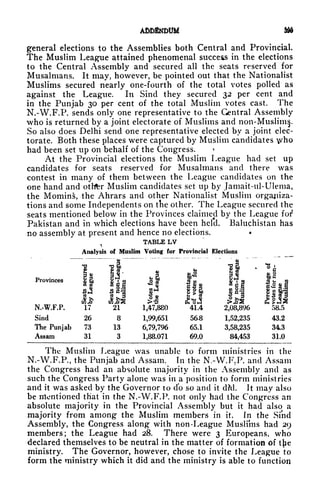
  • 254.
    228 INDIA DIVIDED parliamentaryGovernment in India/ 1 'Such, however, is the ignorance about Indian conditions among even the members of the British Parliament that in spite of all the experience of the past, it is even yet not realised that this form of Government is totally unsuited to India. Democratic sys- tems based on the concept of a homogeneous nation such as Eng- land are very definitely not applicable to heterogeneous countries such as India and this simple fact is the root cause of all of India's constitutional ills. . . . Western democracy is totally unsuited for India and its imposition on India is the disease in the body politic.' 2 , It is, therefore, necessary clearly to define the nature of the state so that people might judge and decide whether the form of Government envisaged is such as will be acceptable to them. It is as necessary for the minorities in the Muslim and non-Muslim zones as for the majorities to know, since Western democracy as ordinarily understood is unsuitable to India and unacceptable to the Muslim League, what other form or what modifications in the democratic conception of the West are acceptable to the League. The reason given by the protagonists of Pakistan for rejecting democ/^cy for India is that the population is not homogeneous in India where the Muslims constitute such a large proportion of the total population. This reason will not cease to operate after parti- tion in the Muslim zones, as the Hindus and other non-Muslims in those zones will not under any calculation be less in proportion of the total population of those areas than Muslims in India as a whole. The proportion of Muslims in British India is 26.83 per cent. The proportion of non-Muslims in the North-Western Zone will be 37.93 per cent if the entire Province of the Punjab is includ- ed, and 24.64 per cent if the Districts with non-Muslim majority are not included in the zone. Similarly, the proportion of non- Muslims in the Eastern Zone will be 48.31 pei cent and 30.58 per :ent according as districts with non-Muslim majorities are or are not included in it. It cannot be said with any consistency or show of reason and justice that democracy is unsuitable to India because the Muslims are in a minority, and that it becomes suitable when the position is reversed and they become the majority and non- Muslims the minority in the separated Muslim regions. It is there- fore not an unwarrantecHnference that when the President* of the League says that democracy is unsuitable to India, it is and will remain equally unsuitable to Pakistan and that therefore some other form of constitution is contemplated. Why should not a clear picture of that constitution be given to all concerned to enable them to judge it on its merits and accept it with their eyes open after full consideration? 1. Statement to the "Manchester Guardian" reproduced in "Recent Speeches and Writ-* ings of Mr Jinnah," p. 86. 2. Article in the "Time and Tide," Dtd. 19-lr40 reproduced in Do., pp. 111-13.
  • 255.
    RESOLUTION ANALYSED 32$ (c)What is the relation of these independent states going to be with the British Empire and the non-Muslim zone? It is clear that they will be independent of the non-Muslim zone, but it is not clear that they will be independent of the British Empire. If they are to be independent of the British Empire, there is no sense or meaning in asking or expecting the British Parliament to frame a ( constitution for them and for the rest of India. The third para- ' graph of part 3 clearly indicates that assumption of complete inde- pendence at the very outset is not contemplated but an interim period has to intervene during which powers relating to defence, external affairs, communications, customs, and such other matters will vest in some other authority. As the League has repudiated the idea of these powers being vested in any Indian body inasmuch as Hindus are bound to be in a majority in it, it follows that they can remain vested in the British Government during this interval,] The word 'Finally' in the third paragraph of part 3 of the Reso- lution makes it abundantly clear that the independence of these independent states will be of a limited character to begin with. The interval which must elapse between the establishment of the inde- pendent states and the assumption of full powers by them is not indicated and evidently will depend on circumstances which were considered incalculable at the time the resolution was framed. The position, thus, of the Muslim independent states in the beginning will be less than that of a Dominion of the British Commonwealth under the Statute of Westminster and it is not clear when, if ever, they are to be free of British control altogether. That the inter- pretation here put is not unwarranted is apparent from an interview which Mr Jinnah gave to the News Chronicle of London:8 4 Q. But surely there would be a civil war. You would be creat- ing an Indian Ulster which Hindus might one clay attack in the name of united India. Mr Jinnah : I do not agree but there would be under the new constitution a transitional period for settlement and adjustment during which time British authority, so far as armed forces and foreign affairs are concerned, would remain paramount. The length of the transitional period would depend on the speed with which the two peoples and Great Britain adjusted themselves to the new Constitution. Q. What if Britain then refused to leave India on grounds that relations between Hindustan and Pakistan were not good enough to live as neighbours? Mr Jinnah: That might happen but it is not likely. Even so we should enjoy a degree of autonomy which we do not possess today. As a separate nation and a Dominion we should at least be in a better position to deal with and possibly reach an agreement 3. Published in "The A. B. Patrika," 4-3-1944.
  • 256.
    230 INDIA DIVIDED withthe British Government which we are not able to do during the present deadlock,' It may be noted in passing that the use of the word 'Domi- nion' in the last sentence quoted above is inaccurate, because as regards armed forces and foreign affairs the British authority will remain paramount in Pakistan during the interval, whereas in a British Dominion British authority is not, and the Dominion Go- vernment is paramount even in respect of these matters. The use of the word 'independent' does not and cannot in the context mean even Dominion Status here and now, much less complete indepen- dence of British control or complete transfer of power to the people of the regions concerned. If the rest of India or any portion of it attains complete independence of British control, it will still have to deal with the British Government in these regions albeit with a majority of Muslims in them. They will constitute islands of the British Empire in an independent India. The independence con- templated is thus from the rest of India and not from the British Empire at all, at any rate in the early stages. I shall quote juSt one more passage from another statement of Mr Jinnah regarding the status of the new states to be created by partition. In a statement to the Press on the ist April 1940, imme- diately after the Lahore Resolution, we find the following: In regard to the relationship of the Muslim Homeland with Great Britain Mr Jinnah referred to the Lahore Resolution and said: 'As regards other zone or zones that may be constituted in the rest of India, our relationship will be of an international character. An example already exists in the relationship of India with Burma and Ceylon/ 4 Evidently then not only Pakistan but Hindustan also are contemplated as part and parcel of the British Empire and enjoying the same position which India, Burma and Ceylon have today vis-a-vis the British Government and also as between themselves. Again, Mr Jinnah in his interview referred only to armed forces and foreign affairs, whereas the Resolution mentions 'communica- tions, customs, and such other matters as may be necessary'. The rest of India will have no kind of authority in any matter whatso- ever and the Muslim zones also in the interval will not assume power in regard to these matters. The only conclusion possible is that the British authority will continue to be paramount in respect of 'communications, customs and such other matters as may be necessary 1 also. These indeed would cover a large field and it is not inconceivable that in some respects the powers of the Muslim zones may be even less than those of a Provincial Government under the Government of India Act of 1935. It has been said that the independent Muslim zones will enter 4. Mr M, R, T.: "India's Problem of her Future Constitution/' p. 31.
  • 257.
    RESOLUTION ANALYSED 23* intoa treaty with the rest of India as between two independent States. If the British authority is to be paramount in regard to foreign affairs in the Muslim zones, how can the Governments of such zones enter into a treaty with the rest of India? The treaty, if any, will therefore be between the rest of India and the British authority, or at most between the rest of India and the Muslim zones acting under the authority and instruction of the British Government in the same way as the Government of India today may enter into a treaty with an independent state like Afghanistan. (d) In case of breach of any of the mandatory safeguards for the protection of the minorities, how, by whom, and under what sanction are such safeguards to be enforced? The Muslim League Resolution is absolutely silent on this point. As the two -states the Muslim and the non-Muslim are to be independent of each other and not subject to any common central control of any kind whatsoever, there seems to be no authority that can enforce these mandatory provisions by any legal or admi- nistrative process. Any breach will have to be tfeated on the same basis as a hostile act of one State against another; and can^be set right, in the absence of an amicable settlement, through diplomatic channels or international arbitration by the methods known for settling international disputes. Is it possible or at any rate easy for minorities in one State to invoke the aid of their nationals in other independent States for such disputes? The new Muslim States carved out of India will not be the only Muslim States in the world. There are other Muslim States in close proximity to India. Has it been possible for the Muslim minority in India to invoke the aid of these Muslim States against the tyranny and oppression of non-Muslims? If the story of tyranny and oppres- sion by Congress ministries against Muslims has any truth and can at all furnish a justification for the creation of new Muslim States, it could furnish just grounds for protest through diplomatic chan- nels, if not intervention, by the existing Muslim States especially when Muslims no matter where they reside, irrespective of any other consideration, simply by reason of their religion, constitute one nation. Has any attempt been made by the Muslim minority of India to invoke such aid? Asjhe independent States will hav.e nothing in common between them, * Hindustan' will find it very, difficult if notJjoapjQ^ible tojntervene, if the non-Muslim minority is^oppressed in Pakistan, and vice versa Pakistan will find it equally difficult if not impossible to intervene in favour of the Muslim minority in Hindustan. It is worth while recording here the experience of minorities in Europe whose rights were safeguarded by the .Minority Treaties under the guarantee of the League of Nations. 'There have been

  • 258.
    232 INDIA DIVIDED laudableexceptions both in the new States and in the old; but generally speaking the fate of the minorities has been one of suffer- ing. Almost every State has committed, and every minority suffer- ed under, flagrant violations of the Minority Treaties. And these have been committed, to all intents and purposes, with impunity . . . But even with these qualifications, it is impossible honestly to deny that the League guarantee has proved but a broken reed to the minorities. The percentage of cases in which the League's intervention has been invoked with any real effect has been deplor- ably low and, even in those, considerations were generally at work other than the determination to obtain pure justice for the mino- rities/ 5 For a fair treatment of the minorities in the independent States of Pakistan and Hindustan, it has been suggested that k as a matter of fact the existence of minorities both in Hindu"India and Muslim States will make it possible for them to adopt a common line of action and to restore confidence among the minorities which will thus be finally reconciled to their lot.' 6 'The division of India will throw a great responsibility upon the majority in its respective zonps to create a real sense of security amongst the minorities and win their complete trust and confidence.' 7 Now, separation is not necessary for cheating a sense of responsibility in the majority to- wards the minorities and for winning their confidence. Indeed, unity provides a more favourable atmosphere for the growth of this sense of responsibility and it can be and should be cultivated whether there is division or not. What is really meant in the above extract is not so much a genuine sense of responsibility as a sense of fear in the majority in one state of the reaction of the majority in the other state. This can happen for one of two reasons. Each independent state may be apprehensive of active intervention by the other independent state and may thus be put on its behaviour. As shown above this is rarely, if at all, possible. The second way in which it may happen is that one independent State will not ill- treat its minority for fear that the other independent State may act similarly towards its minorities. In other words, the minorities will serve as hostages in the hands of their Government for the good conduct of the other Government. It is very doubtful if this can work in practice. The very idea of ill-treating people who have done nothing wrong and may for all practical purposes be the best of citizens in their own State, because some other independent Government with which they have no concern has misbehaved, is so repugnant to our sense of natural justice that it is inconceivable that either Pakistan or Hindustan will resort to reprisal against its own subjects for the act of an independent Government. If the 5. C. B. Macartney: "National States and National Minorities" (1934), p. 390. 6. Mr M. R. T.: op. cit., p. 41. 7. ibid., quoting Mr Jinnah at p. 30.
  • 259.
    RESOLUTION ANALYSED 233 storyof Congress tyranny has any foundation in fact, the Muslim Ministries in Muslim Provinces could have retaliated in their own Provinces, as the powers enjoyed by all Ministries were the same under the Government of India Act; and under the Act if Congress Ministries could oppress the Muslims, the Muslim Ministries could equally exercise the self-same powers and oppress the Hindu mino- rities under them. They could at any rate have put pressure on the Central Government to use such powers as it possessed through the Governors to protect the Muslim minorities. But nothing appears to have been done either by way of reprisal or by invoking the special powers of the Governors by the Muslim Ministries. Not that non-Muslim minorijties had no grievances against the Muslim Ministries. Xh?y."had serious grievances which were ventilated in the Legislatures and the public Press. But no one has asserted that the acts complained of were of a retaliatory nature done for pro- tecting Muslim minorities in other Provinces. All this can be explained only by the fact that the complaints about ^cts, of oppres- ion were not justified or at least not serious enough to induce Mus- lim Ministries to take any action although they now form one of the major grounds fgr claiming a division of India. Hcn^^U the position be any better if independent Muslim States are established in the North-Western and Eastern Regions of India where Muslim 1 Ministries have functioned all along during this period, of 'tyranny arid' oppression 1 ? If anything, their being* cut off altogether from tTTe"rest of India will act more as a handicap than help in this res- pect. The whole basis of the demand for separation is the appre- hension that the Hindu majority will .suppress and oppress the Muslim minority in India as a whole, (if the Hindu majority can do that with impunity when the Muslims form such a large propor- tion of the population of India there is no reasonable ground for hoping that it will -behave better when the Muslims come to be a much smaller community in Hindustan and consequently less capable of extorting fair treatment from an unjust majority. Inter- vention by the independent Muslim states being impossible, or at any rate difficult in most cases, any safeguards in the constitution of the independent States will prove effective only to the extent the majority is in a mood to respect them or the minority is in a position to enforce them. Ex hypothesi the Hindu majority cannot be depended upon to be just and fair. The Muslim minority in Hindustan will be weaker than it is today to enforce fair treatment. The safeguards, even though mandatory in their respective consti- tutions, will always be open to revision by the independent States, if they are really independent, and, even if they are allowed to remain in the constitution, will for the reasons given above prove illusory and afford no protection to the minority, as the experience of safeguards guaranteed even by the League of Nations shows.
  • 260.
    27. THE RESOLUTIONANALYSED (Contd.) DELIMITATION OF THE MUSLIM STATE (e) 1 What are the territories to be included in the Muslim State or States? TABLE vin opposite gives details of population by Communities of the Provinces of British India as given in the Census of India, 1941. A study of this table will prove of use in understanding fully the question of delimitation. The Resolution has not defined or delimited the territories, nor has any other authority of the League done so. But the Resolution has laid down the basic principle viz. that geographically conti- guous units are demarcated into regions which should be so consti- tuted, with such territorial readjustments as may b'e necessary, that the areas in which the Muslims are numerically in a majority as in the North- Western and Eastern zones of India should be grouped to constitute "Independent States' in which the constituent units shall be autonomous and sovereign. The tests that have to be applied in deciding^ whether any particular unit is to be included are: (i) Is the unit geographically contiguous , to another unit which is to be included in the Muslim state? (ii) Are the Muslims numerically in a majority in this unit? (iii) Is the necessary terri- torial readjustment possible, to make the unit fulfil the first two tests? Besides, each unit within the zone will be autonomous and sovereign. It has been authoritatively stated by the President of the Muslim League that the Lahore Resolution does not deal with Indian States. Dealing with the Indian States Mr Jinnah said: 'The only important states which matter are not in the Eastern but in the North-Western zone. They are Kashmir, Bahawalpur, Patiala, etc. If these States willingly agree to come into federation of Muslim Homeland we shall be g'lad to come to a reasonable and honourable settlement with them. We have, however, no desire to force them or coerce them in any way.' 2 Again, when Gandhiji wanted to know during his negotiations with him in September .1944, if in Pakistan Kashmir was included as in the original propo- sal, he said that now Pakistan refers only to the four Provinces of Sind, Baluchistan, the N.-W.F.P. and the Punjab. We have, there- fore, in demarcating the Muslim zones to leave the Indian States out of consideration. As regards the area to be included in the Muslim zone, the sentence is somewhat involved and the expressions used to denote 1. See p. 227. 2. Statement to Press, Dtd. 1st April 1940, printed in "India's Problem of her Future Constitution," p. 3D. '
  • 261.
    TABLE VIII Population byCommunities of Provinces of British India, with Percentages (Figures in lakhs; Percentages in brackets)
  • 262.
    236 INDIA DIVIDED whatis to be included in Pakistan are many and unknown to present-day constitutional and administrative language current in British Government documents. Thus the expressions used are 'units', 'regions', 'areas', and 'zones', none of whiqh is defined by the League and none of which is used in current administrative and constitutional literature. The current words are Province, District, Tahsil, Taluqa, Thana, etc. and it was easy enough to express the meaning of the resolution by using these current words, if the meaning was clear to the authors of the resolution and if they intended to make it clear to others Muslims and non-Muslims alike including the British Government. The use of ambiguous language and the reluctance to disclose the details of the proposal and clarify its implications have been to say the least, unfortupate. Not only have they prevented concentration of attention on the scheme and led to a crop of unauthorized interpretations thereof but have also created doubts in the minds of many people who have begun to put various questions some of which may be indicated. Why was such ambiguous language employed? Was it to leave undetermined the difference that existed among the protagonists of division, one set of whom insisted on homogeneous Muslim States in North- Western and Eastern India with large, if not over- whelming*, Muslim majorities, and the other was satisfied with small, if not bare, Muslim majorities, provided larger slices of the country came under Muslim Independent States? Or was it consi- dered inexpedient to expose the whole scheme to public view and public criticism? Why has there been such reluctance to specify what is to be included in the Muslim states and what is to be exclud- ed from them? Can it be that the whole thing is left vague and ambiguous so that in due time what was considered best and most expedient might be put forward? Can it be that when once the non- Muslims have agreed to the principle of division, they might be asked to agree to whatever the territories the League' demanded on pain of being charged with bad faith, if they raised any question at the time of demarcation of boundaries? Whatever may have been the intention or motive for using such ambiguous language avoiding current expressions, the attempt has not been successful and on a fair construction of the language used there can be but one meaning that can be gathered from the Reso- lution as a whole. As pointed out above there can be no doubt that no territory in which Muslims are not numerically in a majority can bejncluded in the Muslim state, and further, such territory has to be contiguous to other territory with similar Muslim majority. Let us apply these tests and see what areas can be included in the North-Western and Eastern zones which have to be constituted into independent States. Let us take each Province witH its Districts.
  • 263.
    I. The North-WesternZone Figures from Census of India, 1941, are given below (with per- centages in brackets ) : TABLE IX Population by Communities of Sind Dlatriots Pad* lydtrabad Karachi Urkana popUtn 7,370 3,89,380 Hindu11 58,372 3,29,991 (14.99) (84.74) 4,476 7,58,748 2,45,849 5,*07,620 (32.40) (66.90) 74 490 8f 357 7,13,900 2,22,597 4,57,035 11,310 (31.18) (64.00) 2,857 5,11,208 91,062 4,18,543 (17.8D (81.85) Nawabthah 3,908 $,84,178 1,40,428 4,36,414 (24.04) (74.72) Sukkur 5,550 6,92,556 1,95,4^8 4,91,634 (28.22) (70.98) Thar-Parkar 13,649 5, 81, 004 2,47,496/^92^025V ;^~ - ZZZ (42.58)( (50.26)0 (fpptr Sind ' -*^^ Frontier 1,969 3,04,034 28,664' 2,75,063 * (9.42) i (90.47) 49 277 800> total (0.26) (0.69) (4.80) Othtrt 154 7994 769 4,020 884 22,074 ~ 1,334 (0.3D 212 1,326 5,798 (1.25) (0.78) (7.14) If8ff36 ^i35,008 12, 29, 926 32,08,325 13,232 --.- -. -- -,__(27.12) (70.75)__ (2.13) 51 5,136 33,635 7,048 267 36,819 46,706 111 the above figures under the head 'Others' are included Sikhs 31,011 or 0.68 per cent; Christians (other than Indian Chris- tians) 6,977; Jains 3,687; Paris 3,838; Buddhists in; Jews 1,082; Total 46,706 who are not shown separately District by District. (Common percentage for last three columns taken to- gether). TABLE X Population by Communities of the N.-W.F.P. (91.79) ^ (2.26)
  • 264.
    238 INDIA DIVIDED "Others'in the above statement include 57,939 or 1.91 per cent Sikhs; 5463 Christians other than Indian Christians; 25 Buddhists; 71 Jews; i Jain; 24 Parsis Total 63,523. TABLE XI Population by Communities of Baluchistan District Area Total Indian (Sq.Milee) population Hindus Muslims Christian Others 1,56,289 28,629 1J3,288 2,296 12,076 (18.32) (72.48) (-- 9.19 Loralai 7,375 53,685 3,129 79,273 (3.7*O (94,73) Zhob 10,478 61,1*99 4,286 55,987 (6.97) (91.0*0 (- Bolaa 407 6,009 950 4>,812 (15.81) (80.08) t(~ Chagai 19,429 29,250 1,204 2?, 864 ( 4<|2) (95.26) ( Sibi 1^,457 1,64,899 6,425 1, 57,706 118 r ( 3.89) (95.63) (- total 5^,456 5,01,631 44,623 4,38,930 2,633 , , ( 8.89) (87.3D In the above under the head 'Others' are included 11,918 or 2.38 per cent Sikhs; 3,369 Christians other than Indian Chris- tians; 7 Jains; 75 Parsis; 43 Buddhists; 19 Jews and 14 others Total 15445. A glance at the tables will show that in none of the districts of Sincl are non-Muslims in a majority. On the other hand Muslims are in a majority in each and every district, their highest proportion being 90.47 per cent in the Upper-Sind Frontier District and the lowest being 50.26 per cent in Thar Parkar District. The com- munal proportion in the Province as a who'e is: Muslims 70.75 per cent, Hindus 27.12 per cent and others including Sikhs, Chris- tians, Jains, Buddhists, Jews and Tribes 2.13 per cent out of which Sikhs constitute 0.68 per cent of the total population. The Pro- vince as a whole is contiguous to Baluchistan, and the N.-W.F.P. and the western Punjab. Similarly in each and every district of the N.-W.F.P. the Muslims are in numerical majority, their highest proportion being 95.46 per cent in Mardan District and the lowest being 85.78 per cent in Dera Ismail Khan District. In the Province as a whole the Muslims constitute 91.79 per cent, the Hindus 5.94 per cent, the rest 2.26 per cent, including the Sikhs who are 1.91 per cent of the total population of the Province. The Province is contiguous to Baluchistan, Sind and western Punjab. Baluchistan likewise has a Muslim majority in each of its districts, their highest proportion being 95,63 per cent :n the Sibi
  • 265.
    RESOLUTION ANALYSED-DELJMITATION OFTHE MUSLIM STATE 239 District and their lowest being 72.48 per cent in Qnetta Pishin District. In the Province as a whole the Muslims constitute 87.51 per cent, the Hindus 8,89 per cent and others 3.60 per cent of the total population. Among the 'Others' are included Sikhs who form 2.38 per cent of the total population. This Province is also conti- guous to Sind, the N.-W.F.P. and the Punjab. Thus there can be no doubt that these three British Provinces fulfil the test laid down by the Lahore Resolution of the Muslim League for being included in the Muslim Independent State in the North-West of India. The position of the Punjab is different, as a reference to the table given below will show (Census, 1941). TABLE XII Population by Communities of the Punjab
  • 266.
  • 267.
    TABLE XIII Muslim andNon-Muslim Districts of the Punjab and their Population by Communities Total Non- Muslims 6,80,817 (14.48) 15,64,252 (24.57) 22,62,162 (38,98) 45,07,231 (26.71) 35,77,326 (71.93) 55,60,83? (65.47) 7,56,181 (53.48) 76,94,346 (66.63) Before analysing the figures given in the above table it is worth noting that under ' Others ' are included AdidhaVmis, Jains, Parsis, Jews and those who returned no specified religion or comwttity. Of these the most numerous are the Adidharmis, who according to the Census Commissioner though included in scheduled castes do not claim to be Hindus and are hence recorded separately not only from the Hindus but also from the scheduled castes. They number 343*685 or 1.21 per cent of the total population of the Punjab. They are concentrated very largely in the Jullunclar Division where their number is 2,50,267 or 4.60 per cent of the population of that Divi- sion. Their next largest concentrations are in the Multan Divi- sion and Lahore Division where they number 68,641 and 20,488 respectively. Their number is negligible in the Ambala and Rawal- pindi Divisions, being only 2,795 and 1,534 respectively. As has been pointed out in the Census Report of 1931 : ' The most notable feature of the present (1931) census from the stand-point of returns of religion has been the adoption of the term Adidharmi by nume- rous Chamars and Chuhras and other untouchables. At previous censuses Chuhras unless they returned some recognized religion were always included among Hindus/ s The 1941 Census Report also notes that all those who are recorded as Adidharmis belong to the scheduled castes but have not claimed to be Hindus. The last two censuses have thus succeeded in reducing the number of Hindus in the Province by excluding the Adidharmis from amongst ' them. Coming to a study of the census figures of the Punjab we find that unlike the other three Provinces of Sind, N.-W.F.P. and Balu- chistan where the Muslims are in overwhelming numerical majo- rity, being 70.75, 91.79, and 87.51 per cent respectively of the popu- lation, in the Punjab they constitute just a bare majority, being
  • 268.
    242 INDIA DIVIDED only57.06 per cent of the population. Again unlike in those Pro- vinces they are not in a majority in every Division or district of the Punjab. On the other hand there are districts and Divisions in which non-Muslims are in overwhelming majority. The expression used in the Lahore Resolution of the League is simply 'numerically in a majority' without any qualifying* word indicating the extent of the majority. It is therefore equally open to the interpretations lhat the majority should be an overwhelming majority or a bare majority. But when one considers the object and the reason for which partition is sought one cannot but come to the conclusion that the majority contemplated must be an overwhelming and not a bare majority. The object of the separation is to give the Mus- lims an opportunity to develop according to their own notions. The reason for it is that they constitute a separate nation and as such differ from all others inhabiting this country in culture, social life and outlook, a$id religion; and they should therefore have a separate homeland in which they would be supreme. Now with a bare majority the Muslims will not be able to develop according to their own notions when there will be a very strong minority not prepared to merge itself in them and in fact ever ready to assert its own inherent right to develop according to its oevn notions. If by reason of a separate religion and consequent separate culture, social life and outlook, a bare majority has a right to a separate homeland, a minority which is only just a minority cannot in justice and fairness be denied the same right. It should be noted also that the Lahore Resolution recognizing that there are differences among the four North-Western Provinces inter se lays down that the constituent units^of the independent State shall be autonomous and sovereign. Leaving out of consideration for the moment the question as to what extent and how a constituent unit of a larger state can be sovereign and^confining ourselves to the question of the relationship that will subsist as between the constituent units, there can be no doubt that each unit will have to depend upon itself for its' internal administration. In other words, if the constitution of the Indepen- dent Muslin^ States is to be of a democratic nature by which I mean a constitution which gives to the citizens of the State without distinction of caste, creed, or colour the right to choose their own rulers and^ enables them thereby to run the administration 'accord- ing to the ideas and wishes of those citizens then it will in practice be found to be most difficult, if not impossible, for a bare majority tp run the administration according to the notions of a bare nume- rical majority of Muslims in the State. It can, therefore, with perfect fairness and justice be claimed that the Province of the Punjab, as it is constituted today in which the Muslims form a bare numerical majority of 57 per cent, does not fulfil the test laid down by the Lahore Resolution and ?hould not and cannot be separated
  • 269.
    RESOLUTION ANALYSED-DELIMITATION OFTHE MUSLIM STATE 243 to become a constituent unit of the Independent Muslim State in the North-West. This result follows if we accept the proposition that in deciding what areas are to be separated we must take the whole Province as a unit of which the population has to be taken into consideration. It is, therefore, with good reason that ' A Pun- jabi ? in his book Confederacy of India and Mr M. R. T. in an article have not taken the Province of the Punjab as a whole for making this calculation and have excluded portions from it in which accord- ing to them the Muslims are in a minority, 1 If Ambala Division and Eastern Hindu and Sikh States are excluded from the Punjab, its population will be reduced from 28^ millions at present to 21 millions but the Muslim percentage will be raised from 55 per cent to 70. This Muslim percentage will fur- ther be raised if the entire Muslim North-West is taken together as a whole. With the eastern frontier modified as proposed, the North-West will have a total population of 35 millions of which Muslims will number 27 millions and non-Muslims 8 millions. The Muslim proportion of 77 per cent will be strong enough to ensure a permanent stable Government, and this result will be achieved without having recourse to any scheme of exchange of population.' 8 ' The question, of the eastern boundary of the Punjab constU tutes a matter of great importance and it is possible that Muslim opinion may, at some time, become divided over it : Some regarding! the River Jujmna or the Ridge separating the plain of the Jndusl from that of the Ganges as the natural boundary between this uniti of Indusstan and Hindu India in its east, and others believing thatj the said boundary should be so fixed as to exclude all the ^astern Hindu tracts of the Kangra district, some portions of the Hoshiar- pur district and the whole of the Ambala Division from the Punjab. Taking the former view first we can say that no doubt the River Jumna or the aforesai'd Ridge would form a geographically natural boundary between Hindu India and the Punjab unit of Indusstan but as the underlying motives of the formation of the Indus Re- gions 5 Federation are to reduce communalism by reducing the Hindu element in it and to safeguard the agricultural, industrial and cultural interests of the Muslims, the fixation of the easier* boundary at the River Jumna or the Ridge which runs in a soutlfi eastern ^direction parsing from Delhi to Aravali Parbat, will not help in the achievement of these objectives, for it would bring in oufr territories the overwhelmingly Hindu areas of the Chief Commis- sioner's Province of Delhi and the Ambala Division, etc.,* leading to the increase of the Hindu percentage in our population, a thing which will be detrimental to our own interests. Such a boundary will not allow us to seek cultural isolation from Hindu India. It will also increase our difficulties on account of th natural affinity of 3. " India's Problem of her Future Constitution*" m>. 33-4.
  • 270.
    244 INDIA DIVIDED alarge Hindu population within our territories with the Hindus,of the Hindu India. Their sympathies will always remain with their caste brethren of Hindu India. In view of this one weighty consi- deration it would be safer for us to accept the second opinion according to which no overwhelmingly Hindu tract should be in- cluded in our territories/ 4 ' The Muslims must, to begin with, press for the readjustment of the eastern boundary of the Punjab and stress the great need of excluding the aforesaid eastern Hindu tracts from it.' 5 Taking another line of argument it cannot be seriously con- I ended even by the most ardent protagonists of Pakistan that any area in which the Muslims are not numerically in a majority should in justice and fairness be included in Pakistan. Any such demand will be not only inconsistent with and contrary to the clear words of the Lahore Resolution' the areas in which the Muslims are numerically in a majority 'but also unjust to the non-Muslim majority of those r areas and cannot fail to be interpreted by non- Muslims as an attempt to force Muslim rule on non-Muslims. Dr Syed.Abdul Latif, who was the first in the field with a scheme for division of India into cultural zones and for constitutionally safe- guarding the rights and interests of Muslims, writing about the scheme which was prepared by Sir Abdullah Haroon's Committee and which included in the North-Western Muslim State not only the whole of the Punjab but also the Province of Delhi and a part of Aligarh District, wrote in 1941 : ' I am not satisfied with the demarcation of the North-West and North-East blocks as suggested in the Committee's Report. The Lahore Resolution aims at homogeneous and compact blocks or States with an overwhelming Muslim majority. But the Punjab and Aligarh members of your Committee through their imperia- listic designs over essentially non-Muslim areas would like to have a larger Punjab extending even to JUigarh covering all the non- Muslim states from Kashmir to Jaisalmir, which reduces the Mus- lim percentage to 55. In like manner they would include in the North-East block the whole of Bengal Assam and a district from Bihar which brings the percentage of MusaTmans down to 54. In my humble opinion this kind of demarcation is against the spirit and aim of the Lahore Resolution; because with 46 per cent non- Muslims in the North-East block and 42 per cent in the North-West block, you cannot call your states as Muslim States in any sense of llie term, nor style them as Muslim zones. I am not responsible for this demarcation as it was left entirely to the Punjab, Sind and U.P. , members. I would rather be content with smaller states where I can command at least an 80 per cent majority of Muslirns and call 4. "Confederacy of India," by 'A Punjabi', pp. 243-4. 5. ibid., p. 246. ^
  • 271.
    RESOLUTION ANALYSED-DELIMITATION OFTHfi MUSLIM STATE 245 those states my own/6 Although the Committee which had prepared this scheme ostensibly in accordance with the Lahore Resolution of the League had been formed by Haji Sir Abdullah Haroon, Kt, M.L.A., Chair- man, Foreign Sub-committee, All-India Muslim League, who had acted all through as its Chairman, and had formally submitted its report on the 23rdLE)ecember 1940, to the President of the League, the Committee and the scheme were repudiated by Mr Jinnah in a letter to Dr Latif dated I5th March 1941. Considered either from the point of view of Muslim interests as explained by Mr M. R. T. and ' A Punjabi ' in the quotations given above, or from the point of view of the non-Muslims who are in a majority in any areas sought to be included in the Muslim state, and who are bound to regard any such attempt as an impe- rialistic design of Muslims on essentially non-Muslim areas, the proposal for including any area with Muslims in a minority in it cannot justly and fairly be entertained or accepted, even if partition is conceded. Let us consider the position of the Punjab from this point of view which is essentially the point of view of the Lahore Reso- lution of the League. We find that the Multan Division of the Punjab which is contiguous to Sind and Baluchistan has a large Muslim majority of 75.41 per cent. The Muslims are in a majority in each district of this Division, their highest percentage in the population being 88.19 in the district of Dera Ghazikhan, if we leave out the Baluch Trans-Frontier Tract with a small total popu- lation of 40,246 of which 99.60 per cent are Muslims; and their lowest percentage in the population being 62.85 in Lyallpore district. Similarly in the Rawalpindi Division which is contiguous to the N.-W.F.P. the Muslims are in overwhelming majority, their percentage in the population being 85.52. Their highest percentage in the population of any single district of the Division is 90.42 in Attock district, and their lowest is 80.00 in Rawalpindi district. Thus if separation has to be effected, both these Divisions in their entirety can be claimed to come within the North-Western Muslim State on the basis of the Lahore Resolution. When we come to the Lahore Division the position becomes somewhat complicated. The percentage of Muslims in the popu- lation of the Division as a whole is only 58.18 which can by no means be called overwhelming and which hardly gives the Muslims the right to call it a Muslim zone. Further, they are actually in a minority in the district of Amritsar where they constitute only 46.52 per cent of the population and are more or less evenly balanced in Gurdaspur district with a Muslim population of 51.14 per cent. -Their highest population in that Division is 70.45 per 6. " The Pakistan Issue," pp. 98-9.
  • 272.
    246 INDIA DIVIDED centin the district of Gujranwala; and in the districts of Lahore, Sialkot and Sheikhupura, the Muslim percentage of the population is 60.62, 62,09 and 63.62 respectively. Applying the tests as dis- cussed above, Amritsar, with a Muslim minority, can under no circumstances be regarded as a Muslim zone. Similarly Gurdaspur can be claimed with as much justice by Muslims as by non-Muslims. If an overwhelming Muslim majority is not insisted upon then the other districts with Muslim majorities varying between 60 and 70 per cent of the total population may be claimed by the Muslim State, if numbers are the only criterion to be considered. The position of Jullundar Division is clear. Here the Muslims constitute only 34.53 per cent of the population and in none of its districts are they in a numerical majority, their highest percentage being 45.23 in the district of Jullundar, and the lowest being as low as 4.81 in the district of Kangra. As a single community the Hindus have a percentage of 35.87 as against 34.53 of the Muslims in the Division as a whole, though in two districts, Jullundar and Ferozpur, out of five in the Division, Muslims have the largest percentage in the population, viz. 45.23 and 45.07 respectively. But even in these districts they are in a minority. The Jullundar Divi- sion does not, therefore, satisfy the test laid down by the Lahore Resolution of the League and cannot go with the districts of the Multan and Rawalpindi Divisions from which they are also cut off by districts of the Lahore Division coming in between. In the Ambala Division the Muslims constitute only 28.07 Per cent of the population and in no district of the Division more than 33.56 per cent, which is their highest percentage in the district of Gurgaon. As against this the Hindus are 66.01 per cent in the Division, their highest percentage being 81.61 in the district of Rohtak and their lowest being 48.40 in the district of Ambala. It is thus clear that this Division or any of its districts cannot come within the North-Western Muslim Independent State, if. the test laid clown by the League itself is applied. We can now take the North-Western Zone as a whole. The position after excluding the areas which have to be excluded as shown above will be as given in Table xiv opposite. The position without excluding the predominantly non-Muslim areas of the Punjab will be that out of a total population of 3,64,93,525 in the North-Western Independent State, the Muslims will be ,2,26,53,294 or 62.07 per cent. It is a question whether such a zone with this small Muslim majority can really be called a Muslim Zone.
  • 273.
    RESOLUTION ANALYSED-DEUMITATION OFTHE MUSLIM STATE 247 TABLE XIV Population of Muslims in the N.-W. Zone from which Districts with non-Muslim Majorities are excluded Province Total Muslim Muslim Population Population Percentage Sind 45,35,oo8 32,08,325 70.75 N.-W.F.P. 30,38,067 27,88,797 91.79 Baluchistan 5,01,631 4>38,93O 87.51 Punjab (excluding the Ambala & Jullundar Divs. & Amritsar Dt. of Lahore Div.) 1,68,70,900 1,23,63,669 73.28 Total North- Western Zone 2,49,45,606 1,87,99,721 II. The Eastern Zone Let us now turn to the Eastern Zone. Let us take Bengal : A glance at Table xv overleaf shows that in Burdwan Division the Muslims are in a small minority, being no more than 13.90 per cent of the population of that Division and in no single district of that Division is the percentage of their population more than 27.41, their lowest percentage being as low as 4.31. All the districts of the Division are bounded on all sides by predominantly non-Muslim districts of Bihar, Bengal and Orissa except the districts of Bir- bhum and Burdwan, which have on one side Bengal districts with Muslim majority while they too have predominantly non-Muslim districts on other sides. This Division does not fulfil any of the conditions laid down by the Lahore Resolution and cannot in any case be claimed for the Eastern Muslim Zone. The Presidency Division including the City of Calcutta has a minority of Muslims, their percentage being only 44.56 as against 53.70 of the Hindus. But some of its districts have a Muslim majo- rity. These are Nadia, Murshidabad and Jessore where their per- centage in the population is 61.26, 56.55 and 60.21 respectively. In the other districts of 24-Parganas and Khulna their percentage is 32.47 and 49.36 as against 65.32 and 50.31 of the Hindus alone. In Calcutta the Muslims are only 23.59 per cent or less than one-fourth of the total population as against 72.62 per cent of the Hindus alone. On the score of population the Division as a whole cannot belong to the Muslim zone; and if one goes jby the districts even then 24-Parganas, Calcutta and Khulna cannot go to it. So far as Calcutta is concerned, it is bounded on all sides by areas which are
  • 274.
    TABLE XV Population byCommunities of Bengal
  • 275.
    TABLE XV (contd.) Divisionor Area Total Indian District (Sq, Miles) population Mas lime Hindus Chrstns, Tribes Dacca Div Others TABLE XVI Muslim and non-Muslim Districts of Bengal and their Population by Communities
  • 276.
    250 INDIA DIVIDED predominantlynon-Muslim and no adjustment of boundaries^ can convert it into a Muslim zone. All the districts of this Division touch non-Muslim districts and also touch districts with Muslim majorities with the exception of Calcutta which does not touch any Muslim area on any side of it. In the Rajshahi Division, Jalpaiguri and Darjeeling districts have a small minority of Muslims, their percentage in the popula- tion being 23.08 and 2.42; while the district of Dinajpur is on the border line, having a Muslim population of 50.19 per cent only. The other districts of the Division have Muslim majorities, their highest percentage in the population being 83.93 in the district of Bogra and the lowest 56.78 in the district of Malda. The districts of Jal- paiguri and Darjeeling with such small Muslim populations cannot in fairness be claimed as Muslim zones and even the district of Dinajpur with just 50 per cent of Muslims can hardly be described or claimed as a Muslim zone. The position of Dacca Division is different. Here the Muslims are 71.59 per cent' of the population and in each district in this Division they are in a majority, their highest percentage in the population being 77.44 in the district of Mymensingh and the lowest being 64.78 in the district of Faridpur. Similarly in the Chittagong Division the Muslims have a majority, their percentage in the population being 75.40, They are also in a majority in the districts of the Division except in the Chittagong Hill Tracts where they are only 2.94 per cent of the population. The majority in the Hill Tracts consists of Tribes who constitute 94.47 per cent of the population. If we take the Province of Bengal as a whole as it is at present constituted, consisting of the five Divisions of Burdwan, Presi- dency, Rajshahi, Dacca and Chittagong, the percentage of Muslims in the population of the Province is 54.73 which cannot fairly entitle Muslims to call it a Muslim zone and claim it for a separate Muslim Slate with independent status. No Government of a representative type can be stable in this Slate, and there is no reason why 54.73 per cent of the population should enforce their will on the rest in such a fundamental matter as the separation of the area from the rest of India of which it has been an integral part since as/ar back as the memory of man can reach. If we take the districts, then the districts of Burdwan Division have tb be excluded from the Muslim Zone and so also the districts of 24-Parganas, Khulna and Calcutta of the Presidency Division. The districts of Jalpaiguri and Darjeeling with large non-Muslim majorities have also to be excluded and the district of Dinajpur as stated above falling just on the boundary line may be claimed with equal justice by Muslims and non-Muslims alike. The other districts of the Rajshahi Divisfon as also the districts of Dacca and
  • 277.
    KESOLUTION ANALYSED-DELIMITATION OFTHE MUSLIM STATE 251 Chittagong Divisions with the exception of Chittagong Hill Tracts which have Muslim majorities may very well be claimed as falling within the Muslim Zone according to the Muslim League Reso- lution. Assigning the doubtful district of Dinajpur and the Chittagong Hill Tracts to the Muslim Zone the position in the Muslim and non- Muslim districts of Bengal will be as shown in Table XVI, p. 249. The position in both the zones will be changed to some extent if the districts of Dinajpur and the Chittagong Hill Tracts are excluded from the Muslim Zone. It will be noticed that in the Muslim zone as shown above the Muslims will constitute 70.09 per cent, the Hindus 27.79 Per cent, and the Tribes 1.72 per cent of the population. In the non-Muslim zone the Hindus will be 70.70 per cent or slightly, more than the Muslims in the Muslim zone; and the Muslims 22.21 per cent or much less than the Hindus in the Muslim zone and the Tribes con- stitute 6. 1 1 per cent of the population. The total population of the Tribes in the Province as a whole comes to 18,89,389 or 3.13 per cent of the total population. Their position has to be consider- ed separately and^I shall deal with it when dealing with the figures of Assam, as the problem arises there even more prominently than in Bengal and as the same principles govern it. We shall now consider the position in Assam. Looking at the tables given overleaf it is difficult to understand on what basis the Province of Assam is claimed as a Muslim zone. In the Province as 1 a whole the Muslims are only 33.73 per cent as against the Hindus who are 41.29 per cent of the population. If we take the districts, then Sylhet is the only district in which the Muslims are 60.71 per cent of the population. In no other district do they constitute a majority of the population although in the districts, of Cachar and Goalpara they are the most numerous as a single community, being 36.33 per cent and 46.23 per cent of the population respectively. The utmost that can b^ fairly claimed as a Muslim zone is the district of Sylhet, although a majority of 60.71 per cent can hardly be called an overwhelming majority. In some of the smaller districts the Tribes are in an overwhelming majority, while in others where the Hindus do not by themselves constitute a majority, the Tribes and the Hindus together constitute the majority. In eight out of fourteen districts of the Province the per- centage of Muslims is less than 5, in three less than I. As the claim of the Muslim League to any area is based on Muslims being numerically in a majority in that area, it cannot stand where they are not in such majority, although they may be the most numerous as a single' community in that area the majority being formed of a combination of other communities. No other community as such
  • 278.
    TABLE XVII Population byCommunities of Assam Division or Area Total Oil trie U (Sq, Miles) population Surma Valley & Hill Div. Muslim Hindus Chrstna. Tribea Other* TABLE XVIII Muslim and Non-Muslim Districts of Assam and their Population by Communities Div ia ions or Area Total Total Dietricts (Sq.Milee) population Mualime Hindus Chratna. Tribes Other* Non-Muslim* Maelim Majority Dts. Sylhet 5,4?8 31,16,602 18,92,11? 11,49,514 3,055 69,90? 2,009 12,24,485 Non-Muslim Majority Dta. ( 6o 7D (36.88) (0.09) (2.24) (0.06) (39.2?) Whole Aaaam txcluding 49,473 70,38,131 15,50,333 30,63,709 37.755 24,15,089 21,216 55,37,769 Sylhet " - - '>v,xvt% >vw,y, f v,7 /rfy> C-TjI^jW? fci,fciu SJtSftfV (21.8?) (43.22) (0.53) (34.0?) (0.30) (78.13)
  • 279.
    RESOLUTION ANALYSED-DELIMITATION OFTHE MUSLIM STATE 253 TABLE XIX Distribution of main Communities in Assam at the Censuses of 1901, 1911, 1921, 1931 and 1941 Total Number per 10,000 of the Population Province Pop jjj5 xon Hindua Muslims "*T?lbei '*H ' 191*1 1931 1921 1911 1901 19^1 1931 1921 1911 *901 19**1 1931 1921 1911 1901 Aeaa flh 1,02,04,733 ^29 5720 5'*33 5^18 5578 3373 3196 2896 2810 2689 2^35 825 1**79 1652 1652 Statea 7,25,655 ^516 4362 59V 5816 5996 ^36 393 *55 ^9 365 ^674 4^91 5^*33 3758 3632 ie!!* 1,09,30,388 M5^ 5628 5^1 5W 5598 3178 3007 2778 2693 2581 298^4 1073 1573 175? 1?W has claimed separation from the rest of India and as a matter of fact others have opposed the idea of such separation. It is therefore on the strength of the Muslim majority alone that the League can put forward such a claim. In this connexion it is necessary to consider the position of the Tribes. Table xix above will show how the number of Hindus in the Pjovince has been brought down by adopting the tribal origin instead of the religion of a large number of persons recorded under the head of Tribes as the basis for classification. We shall also see how the number of Muslims has increased in the Province. It will be noticed that the population of Hindus has dropped from 57.20 per cent in 1931 to 41.29 per cent in 1941 in British Assam and from 56.28 to 41.54 per cent in Assam as a whole includ- ing the states, while that of the Tribes has increased from 8.25 per cent to 24.35 Per cen* * n British Assam and from 10.73 Per cent to 25.84 per cent in Assam as a whole between the 1931 and 1941 censuses. This sudden and large discrepancy is explained by Mr K. W. P. Marar, I.C.S., Superintendent of Census Operations in Assam in '1941, as follows : ' The essential point is that the table shows the community origin, not the religious attribution. Hadjtjme andjfinaaces^er- other^details could have been gl^jx^ in this truncated census this was not possible. Community ion may seem to many as one and the same and insepa- rable, and are in fact so in most cases. But where there are tribes, community and religion need not always be the same and in the present census they have all been classified on the basis of com- munity and not of religion. Thus a Khasi returning himself as a Hindu, Christian, Muslim, or Animist at the last census would have been classified under any of those headings of religion according to the faith he professed or attributed to him, but this time he has been classified as a Khasi. This is the main reason for the great apparent fall in the proportion, in the whole population of Chris- tians and to a less extent of Hindus and Buddhists. At the same
  • 280.
    254 INDIA DIVIDED timethere is more than a corresponding increase in the proportion of the tribal people. ... If the figures be examined in the light of what is stated above they will be found to disclose no " alarming " tendencies. All the communities have shown natural increase in varying degrees and in no district have the pre-existing communal proportions been disturbed to any appreciable extent except by migration. 1 There is no question of removal of Hindus or of Christians. A separate note on Christians follows and Hindus are present in the same proportions as before; in the absence of caste or religion sorting the 1931 practice would have meant that no record of the number of persons of tribal origin, which is so important a matter in Assam and represents one of the reasons for the extensive re- served areas in that province, would have been forthcoming.' 7 One need not quarrel with the idea of recording persons of tribal origin in a separate column, if at the same time their religion was also recorded. As the Census Superintendent says, ' the Hindus are present in the same proportions as before ', but a glance at the tables showing their numbers and proportions gives an entirely wrong and misleading picture of the position. The Census Superintendent after giving the above, explanation re- garding the great fall in the number of Christians and Hindus has taken pains to ascertain, as far as he could even in the truncated census of 1941, the number of Christians. He gives the estimated number of Christians in Assam as a whole British and States to be 3,86,000, although the number recorded as Christians is no more than 67,184, the remaining 3,19,000 being only an estimate of tribal Christians prepared on the basis of the 1931 figures. Thus while a more or less accurate picture of the number of Christians in the Province is given in the Report, the reader is left to be content, with regard to the number of Hindus, with the vague proposition stated in a note that they ' are present in the same proportions as before/ ^Mr M. W. M. Yeatts, C.I.E., I.C.S., Census Commissioner for India in 1941, after explaining the necessity for the change intro- duced in the Census of 1941 of recording the tribal origin of persons as distinguished from the religion which they professed, goes on : ' The fact is of course that while between Islam or Christianity and other religions there exists as it wr ere a definite wall or fence over which or through which the convert must go, there is nothing be- tween what is usually though vaguely described as animism and the equally vague and embracing concept of Hinduism but a very wide no man's land; and the process by which a Tribesman is assimilated to a Hindu is not that of conversion or the acceptance of a particular creed or joining in a definitely marked out section of the population, 7. " Census of India," 1941, Volume I?C-' Assam,' Tables, pp. 21-2.
  • 281.
    RESOLUTION ANALYSED-DELIMITATION OFTHE MUSLIM STATE 255 but a more or less gradual traversing of this no man's land. The traverse may and generally does occupy more than one generation and it would take an expert to say at what period and in which generation more than half the no man's land had been crossed so that one could say that the assimilation was more than half com- pleted It is in this light therefore that the community tables and the subsidiaries which give ratios should be examined. Viewed thus, the position emerges that in British India 64^ per cent of the population are Hindus, 27 Muslims, i Indian Christians. Persons of tribal origin represent 5^2 per cent. Of this 5^2 per cent ap- proximately one-twentieth fall within the Christians on a religion basis. The remainder can be regarded as in greater or less degree of assimilation towards the Hindu majority. At one end there is in continued existence a tribal way of life. At the other there is more or less complete assimilation. In between there is every degree in the continuous process represented by the transition. The degree differs for each province and state and as I have stressed is a matter for local estimation/ 8 Again : ' Allowing for the tribal classification question there- fore one could say that the Hindu-Muslim proportions in 'Bengal are practically unaltered from 1931 . . .The Bihar, Central Provinces and Assam figures of course bring* in the tribal classification and assimilation question in a fairly marked degree, but if the religion allocations of 1931 were repeated as a basis for community classifi- cation the effect would be of a fractional drop in the percentage of Hindus/9 That the Tribes have more in common with Hindus than with any other religious group is the opinion of competent authorities, and the process of assimilation has been going on from time imme- morial. Assimilation of tribes to Hinduism has been achieved on a colossal scale in the centuries and millennia that have elapsed and that without any apparent or violent breach with their past. It is therefore only just that their number should be counted with the Hindus, at any rate, in the case of those who declare themselves as Hindus as used to be done in the censuses previous to 1941. Mr^Verrier Elwin, M.A. (Oxon),.F.R.A.L, F.N.I., who has been living among the tribes in the Central Province for years and studying them and their culture, was the President of the section of Anthropology and Archaeology at the thirty-first session of the Indian Science Congress which was held at Delhi in January 1944. He chose Truth in Anthropology' as the subject of his presidential address and laid stress on the very great need of a high standard of truth in all our field work in order that the science of Anthropology may be established in India. He says : * It is necessary to stress 8. " Census of India," 1941, Vol. I~< India/ pp. 28-9. 9. ibid., p. 30.
  • 282.
    256 INDIA DIVIDED this,for Anthropology is regarded with some suspicion in India. There are several reasons for this. The attempt of certain scholars and politicians to divide the aboriginal tribes from the Hindu com- munity at the time of census created the impression that science could be diverted to political and communal ends. In earlier years the census authorities tried to distinguish animism and Hinduism. Later the expression " Followers of Tribal Religions " was used. The test proposed was to ask a person whether he worshipped Hindu or tribal gods. This test was meaningless. The religion of the aboriginals in Peninsular India at least is obviously of the Hindu family, Hinduism itself having many elements which a theo- logian would call animistic. In the religious columns, therefore, the aboriginals should have been returned from the beginning as Hindus. Any other classification was worse than useless. It is very difficult even for a trained theologian to decide the exact des- cription of the religion of the various tribes. It is obviously im- possible for an illiterate and ignorant enumerator to do so. What we want to know is how many aboriginals there are in India so that we can insist that they have a square deal in the counsels of tlie country. But now we know accurately neither the religious nor racial situation, and the unfortunate fact that a number of an- thropologists interested themselves in the complicated business of deciding the exact way in which aboriginals should be distinguished from the Hindu religion has done our science harm in public esti- mation." The effect of all this mishandling by the census authorities has been, as admitted by them in the quotations given above, to reduce considerably the number of Hindus and their proportion in the population of some of the Provinces and States and of India as a whole. As pointed out by Mr Yeatts, the Census Commissioner of India : ' The Muslim figure can be regarded as practically un- affected by the tribal origin question and here we have the record of gradual increase which previous decades had already presented and for which the reasons have been discussed at some length in the reports of these years. The Bengal component is practically un- altered and the Punjab onejincreased by about y2 or i per cent. The most noticeable rise is in Assam and once again represents migra- tion from Mymensingh and East Bengal generally.' 11 Table xix on p. 253 shows the proportions of the important elements in the population of Assam. The sudden decrease in the number of Hindus has been explained above. It will be noticed that the proportion of Muslims has gone on steadily increasing. In 1901 they formed only 26.89 per cent of the population of British 10. "Proceedings of the Thirty-first Indian Science Congress, Delhi," 1944, p. 91. 11. " Census of India," 1941, Vol. I-' India/ Tables, p, 29.
  • 283.
    RESOLUTION ANALYSED-DELIMITATION OFTHE MUSLIM STATE 257 Assam while by 1941 their percentage had increased to 33.73. This increase is due to a large extent to immigration of Muslims from East Bengal, particularly from the district of Mymensingh to the districts of Assam. The Census Report of 1931 has devoted a whole chapter to the discussion of the question of immigration and has pointed out that there are three main currents of migration into Assam, viz.: (i) immigration to Assam tea gardens; (ii) immigra- tion of Eastern Bengal colonists; (iii) immigration of Nepalis. Mr C. S. Mullan, M.A., I.C.S., the Census Superintendent for < Assam, 1931, points out that 'at the present census however there has been a considerable change. From Bengal immigrants have continued to pour into Assam as in the previous decade but in the case of the cooly recruiting provinces the stream has not flowed at the old rate/ 12 It is necessary to give here a pretty long quotation from the Census Report of Assam regarding the immigration of Eastern Bengal colonists into Assam. ' Probably the most important event in the province during the last twenty- five years an event, moreover, which seems likely to alter permanently the whole future of Assam and to destroy more surely than did the Burmese invaders of 1820 the whole struct ure'of Assamese culture and civilization has been the invasion of a vast horde of land-hungry Bengali immigrants, mostly Muslims, from the districts of Eastern Bengal and in particular from Mymensingh. This invasion began some time before 1911, and the Census Report of that year is the first report which makes mention of the advanc- ing host. But, as we now know, the Bengali immigrants censused for the first time on the chur lands of Goalpara in 1911 were merely the advance guard or rather the Scouts of a huge army following closely at their heels. By 1921 the first army corps had passed into Assam and had practically conquered the district of Goalpara. The course of 'events between 1911 and 1921 has been described in the 1921 Census Report as follows : '"in 1911 few cultivators from Eastern Bengal had gone beyond Goalpara, those censused in the other districts of Assam Valley numbering only a few thousands and being mostly clerks, traders and professional men. In the last decade (1911-21) the movement has extended far up the Valley and the colonists now form an appreciable element in the population of all the four lower and central districts, the two upper districts (i.e. Sibsagar and Lakhimpur) are scarcely touched as yet. In Goalpara nearly 20 per cent of the population is made up of those settlers. The next favourite district is Nowgong where they form about 14 per cent of the whole population. In Kamrup waste lands are being taken up rapidly, specially in the Barpeta sub-division. In Darrang explo- ration an4 settlement by the colonists are in an earlier stage, they 12. "Census of India," 1931, Vol. Ill, ' Assafh Report,' Part I, p. 44. 17
  • 284.
    258 INDIA DIVIDED havenot yet penetrated far. from the banks of the Brahmaputra. . . Almost every train and steamer brings parties of those settlers and it seems likely that their march will extend further up the Valley and away from the river before long/' ' Let us now examine the progress of the invasion since 1921. It must in the first place be remembered that the children of the settlers born after their arrival in Assam have been recorded as Assam-born and hence do not appear in the figures and that the , table below shows the total number of the people born in Bengal and not the number of settlers only; still the figures give us a very good idea of what has been taking place during the last ten years : TABLE xx Number of Persons born in Bengal in each District of the Assam Valley in 1911, 1921 and 1931 (MS=Mymensingh District ; OOO's omitted) J Yar Goalpara Kamrup Darrang Nowgong Sibflagar Lakhinpur 1911 77(MS 3*0 *f(MS 1) 7(MS 1) *(MS 1) 1*f(MS Mil) 1t(MS Nil) . 1921 15KMS 78) <f<*(MS 30) 20(MS 12) 58(MS 52) 1MMS Nil) 1MMS Nil) 1931 170CMS 80) 13<f(MS 91) VI (MS 30) 120(MS 108) 12(MS Nil) 19(MS 2) ' In the above table the figures for Mymensingh district have been given in brackets as that district is the one which is chiefly responsible for the flood of immigrant settlers. ' These are startling figures and illustrate the wonderful rapi- dity with which the lower districts of the Assam Valley are becom- ing colonies of Mymensingh ... I have already remarked that by 1921 the first army corps of the invaders had conquered Goalpara. The second army corps which followed them in years 1921-31 has consolidated their position in that district and has also completed the conquest of Nowgong. The Barpeta sub-division of Kamrup has also fallen to their attack and Darrang is being invaded, Sibsagar has so far escaped completely but the few thousand My- mensinghias in North Lakhimpur are an outpost which may, during the next decade, prove to be a valuable basis of major operations.... ' The exact number of these Eastern Bengal settlers (including their children born in Assam), who are at present living in the Assam Valley is a difficult matter to estimate. Mr Lloyd in 1921 estimated that including children, born after their arrival in this province, the total number of settlers was at least 300,000 in that year. As far as I can judge the numbeer at present must be over half a million. The number of new immigrants from Mymensingh, alone, has been 140,000 and old settlers have undoubtedly been increasing and multiplying. As pointed out in the Census Report for 1921, the colonists have settled by families and not singly. This can be seen from the fact that out of the total of 338,000 persons
  • 285.
    RESOLUTION ANALYSED-DELIMITATION OFTHE MUSLIM STATE 259 born in Mymensingh and censused in Assam over 152,000 are vomen. What of the future? As far as can be foreseen the invasion is by no means complete ; there are still large areas of waste land in Assam particularly in the North Lakhimpur sub-division and Kamrup, in spite of the large number of immigrants, which it has absorbed during the last ten years, is capable of holding many more. The Mangladai sub-division is also capable of further development. Now that most of the waste lands of Goalpara and Nowgong have been taken up, the trend of immigration should, therefore, be more, and more towards Kamrup, Mangladai and North Lakhimpur. The latter sub-division should prove a veritable " El-Dorado ", if news of its empty spaces awaiting the hoe and plough of the colonists reaches the ears of the main body of trckkers. ' It is sad but by no means improbable that in another 30 years Sibsagar district will be the only part of Assam in which an Assa- mese will find himself at home/18 The Census Report of 1941 completes the story with a short but significant sentence quoted above ' The most noticeable rise [in the Muslim population] is in Assam and once again represents migration from Mymensingh and East Bengal generally/' 14 * This policy of colonization of Assam by the Muslims of Bengal was continued under the joint auspices of the Muslim League Ministries of Sir Saadullah in Assam and Sir Nazimuddin in Ben- gal, as the following Bengal Government communique published in the Press, in the last week of October 1944, shows : 4 The Government of Assam in their resolution dated the 2ist June 1940 prohibited settlement of land with persons coming from outside the province after the ist January, 1938. This decision affected the border districts like Mymensingh from where large numbers of agriculturists go to Assam in search of agricultural land on account of heavy pressure on such lands in this province. During the last session of the Bengal Legislative Council a motion was carried for presenting anTddress to His Excellency requesting him to urge upon the Government of India to take immediate steps so that all existing restrictions imposed by the Government of Assam orfcultivators from their province in getting settlement of land in the Assam Valley might be removed. Accordingly, the Govern- ment of Bengal requested the Government of Assam to withdraw or suspend the restrictions imposed by the said Resolution in the interest of inter-provincial amity and as a measure of relief to the distressed people of Bengal. ' The Government of Assam have stated in reply that the policy regarding settlement of lands with immigrants has since been libe- ralised and that they are trying their level best to accelerate the 13. "Census of India," 1931, Vol. Ill, "Assam Report," Pan I, pp. 49*52. 14. " Census of India," 1941, Vol. I-1 India,* Tables, p. 29.
  • 286.
    260 INDIA DIVIDED processby de-reserving surplus lands in the professional grazing reserves in certain districts. The Government of Assam are, how- ever, unable to abolish the restrictive measures wholly, particularly in areas where the tribal people are numerous, as these people are apprehensive of the near approach of immigrants as a result of which many of them suffered in the past, but that Government have given an assurance that they will continue the process of gradual abolition of the restrictions and to open up fresh areas for immi- v grant settlement as far as is consistent with the necessity for reser- vation of lands for indigenous people and protection of the tribal classes/ It is only necessary to make it clear that in doing so the Saa- dullah ministry went back on the decision of the late Governor of Assam, Sir Robert Reid, who after reviewing the land settlement policy had withdrawn a Development Scheme of Sir Saadullah's previous ministry. SiiJRobert Reid gays in a recent article : ' The indigenous Assam tribes who originally populated the area [Assam Valley] have been .largely reinforced, not to say overrun, by a stream of vigorous Muhammadan immigrants from Mymensingh in Bengal. This gives satisfaction to the Muslim, but not the Hindu community, for the more Muhammadans yen have in Assam, the "stronger the case for Pakistan/ 15 The attack now is not only on the land falling out of the line in the system popularly known as the Line System whereby immigrants were confined to areas where they would not disturb the interests of the established population but also on what are known as the professional grazing reserves, whose sanctity has remained inviolate until recently ever since the beginning of the British rule, by de-reserving portions of such Reserves. It ig in regard to these Reserves that the communique says that the Assam Government have given an assurance that they will continue the process of gradual abolition of restrictions and to open up fresh areas for immigrant settlement. There is.thus a pincer movement against the Hindus of Assam the significance of which cannot be lost aa, tke Hindus and Bribes alike one encouraging Muslims from Eastern Bengal, particularly ^Mymensingh district, to migrate into Assam and to take possession of land whicli the inhabitants of the areas concerned need for their own expansion and can ill-afford to lose ; arid the other separating the Tribes from the Hindus so as to reduce the number of the latter and thus convert them in course of time to a minority or at least to present a picture in which no single commu- nity can be said to constitute a majority in the Province as a whole. The irony of the situation is that the enumeration of Tribes sepa- rately is justified by Mr Yeatts, the Census Commissioner of 1941, the ' mmgra0n n -lished in
  • 287.
    RESOLUTION ANALYSED-DSUMITAttON OFTHE MtJSUM STATE 261 on the ground that it was necessary to obtain full figures of persons of tribal origin for whose benefit Sections 91 and 92 of the Govern- ment of India Act were enacted, and reserved or partially reserved areas'^ for which Governors had special responsibilities, were creat- ed. 16 How these special responsibilities are being given effect to in regard to lands in Assam is apparent from the following quota- lion from a Report of Mr S. P. Desai, an experienced l.C.S. Officer of Assam : * The Assam Land and Revenue Regulation is, so far as the immigrant encroachers are concerned, virtually non-existent. The immigrants openly claim to have short-circuited the local staff and officers. Every day new bamboo sheds and temporary huts are springing up in the reserves. I found that the immigrants abso- lutely ignored the local officers (from the Sub-divisional Officers downwards) so much so that they did not even answer questions put to them. The few Nepali graziers and Assamese Pamuas find- ing no protection from anywhere give " dohai " in the name of the King-Emperor. To this some of the thoughtless among the immi- grants are said to have replied that the immigrants themselves are the King. Verily the cup of humiliation for the Assamese is full. They feel that the law is meant for them and not for the immi- grants, that the Government which is the custodian and trustee of their interests has failed them. All sections of the local population are greatly perturbed and their talk exhibits deep-seated bitter- ness/ 17 Encouraged by the policy of the Muslim League Ministry and assisted by the immigrant members of the Legislative Assembly, these invading hordes of immigrants began to indulge in various acts of lawlessness and oppression such as maiming of cattle and buffaloes, riotous assaults on the graziers accompanied sometimes even by murder. This naturally raised resentment and indignation throughout the country. In the session of the Legislative Assembly held in November 1944, the Government was severely criti- cized by the Opposition party which appeared in the Legislature as a body for the first time after two and a half years with other coalitionists. A suggestion was thrown out to Sir Muhammad Saadullah to convene a conference where the whole question of Land Settlement might be considered and action might be taken by Government in order to remove the grave discontent among the people. The Governor himself addressed the Assembly on this subject, wishing peace and amity betwe'en the communities. Sir Muhammad accepted the offer of the opposition; and accordingly a conference was held in December 1944. In the conference the whole question of land settlement was examined in reference to 16. "Census of India," 1941, Vol. I, * India/ Tables, p. 28. 17. Quoted in ' The Background of Immigration into Assam ' published in the " Hindu- stan Standard," Dtd. 19th December 1944. '
  • 288.
    262 INDIA DIVIDED twomain points : (i) the adoption of a policy of planned settlement of waste lands with landless people of the soil along with the immi- grants, who were unduly favoured hitherto, and of protection to the Tribal people in belts to be specially reserved for them; and (ii) to maintain the integrity of the Grazing Reserves by eviction of trespassers therefrom. But the resolution which was adopted by Government in January 1945 after the conference did not include the safeguards agreed upon in the conference and in some particu- lars went against the fundamentals of the decisions of the confe- rence itself. For example, the decision of the conference was that the claim to waste land would be confined only to immigrants who came to Assam before 1938 ; but in the Government resolution exceptions were made in case of certain kinds of encroachers into the Grazing Reserves who came even after 1938, and wide discretion was given to the local officers ' to keep in possession encroachers who had been in occupation of and cultivating land in the grazing reserves over three years/ As regards settlement of waste land, any person having frve bighas of land was not considered entitled to any settlement; and as most of the indigenous cultivators had such "quantity of land but not enough for an economic holding, this clause operated as a serious disqualification to their getting settle- ment. Similarly the area which was to have been reserved for the Tribal people was not defined, leaving room for much uncertainty and confusion. The matter was again taken up by the Assembly in its Budget session in March 1945. By this time the Opposition had gained some strength and Sir Muhammad Saadullah, evidently afraid of a defeat and resignation, entered into an agreement with the Opposition. He agreed to remove his old Muslim League Revenue Minister, and actually took a nominee from the Opposition in his place. After the prorogation of the Assembly, however, Sir Saadullah instead of implementing the agreement as early as pos- sible took as much as three months' time merely to frame and publish the new resolution. The report now is that he and other Muslim League ministers of his cabinet are putting all manner of obstruction in the execution of the policy agreed to by him. It is also being reported that the Muslim League leader Mr Mohammad Ali Jinnah is issuing for adoption by the Cabinet instructions .which go against the basic policy of the agreement. In the meantime the dissolution of the Assembly is in sight, and there is no knowing how the whole situation will shape hereafter. 18 In spite of all this, however, the Hindus are still in larger numbers in the Province as a whole than the Muslims. If the Tribes are added to the Hindus, then, so combined they constitute' a larger majority. It may be noted that the League Resolution 18. It should be noted that this was written in the latter half of 1945.
  • 289.
    RESOLUTION ANALYSED-DELIMITATION OFTHE MUSLIM STATE 263 lays down that the constituent units of the two zones shall be auto- nomous and sovereign. It is unintelligible how Assam with a non* Muslim majority and with only 33.73 per cent Muslims in its popu- lation can be an ' autonomous and sovereign ' Muslim state. If anything it will be an autonomous and sovereign non-Muslim state in the Eastern zone. But if the Sylhet district with a Muslim majority is excluded the other districts of the Province and the district of Sylhet will stand as shown in Table XVIII on p. 252. But the ingenuity of the protagonists of Pakistan is in- exhaustible and Assam is claimed on various grounds. They are : (1) Because Assam is within the zone where Muslims are in a majority. (2) Because the majority of the non-Muslims in Assam are tribal people. * (3) Because the Muslims are in a majority in the Province. This conclusion is reached in the following manner. The Province of Assam has a population of one crore nine Ukhs, of whom only forty-five lakhs or 41.5 per cent are Hindus. The Hindus thus form a minority of the total population. Twenty-nine lakhs ot 26.7 'per cent of the total population are Tribal people who are unfit to live a civilized state life and in all constitutional discussion they have to be omitted. Constitutional rights, of minority, should belong to the civilized section of the population who are either Hindus or Muslims numbering eighty lakhs. In the tea gardens and oil mines of Assam a huge number of labour population is engaged ; but they are non-domiciled and migratory. This non-domiciled alien population should necessarily be omitted from constitutional consideration. Their total number is 15.2 lakhs. This number being deducted from the total, political rights are restricted to 65 lakhs of people only. Hence the Muslims numbering 34.75 lakhs constitute the majority in the Province. (4) Agriculturists from bordering districts of Bengal are migrating and settling down in the uncultivated parts of Upper Assam. These agriculturists are mainly Muslims. To finance and cater for their needs middle class members, who are Hindus, are also settling among them as shopkeepers, traders, mahajans, doc- tors, 'etc. In one word Eastern Bengal districts are literally ex- panding to Assam. (5) ' Not only in the Province as a whole but also division by division the Muslims are in a majority. In the Surma Valley divi- sion Muslims constitute 51 per cent of the total population. Minus the tribal people Muslims are clear over 65 per cent of the people entitled to political rights. In the Assam -Valley districts Hindus constitutg 47 per cent of the total population and are thus clearly in a minority. As the migratory labour populations are almost all
  • 290.
    264 INDIA DIVIDED workingin the Assam Valley and as they are all Hindus, the bona fide normal Hindu residents number only 12.98 lakhs. Here also Muslims form a majority of the total population who are entitled to political rights/ 19 (6) Because Eastern Pakistan must havejjyiflickatJad for its huge population and Assam will give it scope for expansion. (7) Because Assam has abundant forest and mineral resources, coal, petroleum, etc. and Eastern Pakistan must include Assam in order to be financially and economically strong. (8) BecaTirse in Assam the majority ofTHe people are Bengali- speaking. Now let us consider these grounds No. i One would have thought that a Muslim zone is that in which Muslims are in a majority. But it seems a Muslim zone is something different and includes also a Province hi which they are in a minority which has to be included in Pakistan because it falls within the Muslim zone. No. 2 Majority of non-Muslims in Assam are not the Tribal people but Hindus, assuming for the sake of argument buMiot by any meaus conceding, that the Tribal people are not Hindus. Nos. 3 and 5 Taking the figures given by Mr Mujibur Rah- man, we see how the Tribal-population numbering' 29 Jakhs is not only separated from the Hindus but declared unfit for * civilized state life ' so that the ' civilized section ' of the population may fee reduced from 109 lakhs to 80 lakhs. Even then the Hindus who are forty-five lakhs constitute an absolute majority and are cer- tainly more numerous than the Mttsalmans who are only 34.75 lakhs. The Hindus who work in tea gardens and oil mines num- bering 15.2 lakhs must further be deducted from the total, so that the Musalmans may be declared to constitute a majority. Assam is thus a province with a Muslim majority ! A more glaring jugglery of figures is difficult to imagine. The only fault in this reasoning is that if the same or a 'similar process of cutting down the number of Hindus is employed, the Hindus may be reduced to a minority in India as a whole, and thus the whole of India becomes Pakistan and no case is left for separat- ing the North-Western and 'North-Eastern zones from the rest of India and confining them to Pakistan. Nos. 4, 6 and 7 Assam has land and Musalmans need land. Assam has forests, mines, petroleum, coal and other natural re- sources and Pakistan needs them. Is not that enough ? Why should not Assam be included in Pakistan to satisfy the needs of Pakistan ? No Imperialist and colonial power has claimed domi- nation over other countries on any other ground. Why should 19. Mujibur Rahman : " Eastern Pakistan : Its Population, Delimitation and Economics," quoted by H. N. Barua in " Reflections on A^sam-cum-Pakistan," pp. 82-3.
  • 291.
    RESOLUTION ANALYSED-DELIMITATION OFTHE MUSLIM STATE 285 r"' Pakistan ? / We know further that India has not only to consent to a division hfiTalso to find and supply the wherewithal for the main- tenance of Pakistan] If as is now claimed the whole of the two British Provinces of Bengal and Assam are combined, the communal position in the Eastern Muslim zone will be as follows : TABLE XXI Population by Communities of the Eastern Muslim Zone including Districts with non-Muslims majorities If we take only the districts with Muslim majorities in the two Provinces, the communal position in the Eastern Muslim zone will be as fellows r TABLE XXII Population by Communities in the Eastern Muslim Zone excluding Districts with non-Muslims majorities The result thus of taking* the two Provinces of Bengal and As^am in their entirety is to reduce the already bare Muslim majo- rity of 54.73 per cent in Bengal into a nominal majority of 51.69 per cent while if the areas with non-Muslim majorities are separated, then tHe Muslim majority in Assam and Bengal, with each district having a Muslim majority, comes to 69.42. There is thus no Mus- lim Zone in the East properly so called if the two Provinces in their entirety are taken together, and in any case 69.42 per cent of Mus- lims in the Eastern Zone is much nearer the figure of, 75 percent mentioned by Mr Jinnah to Mr _ Chapman in the interview quoted above than 5i.69^jper"cent wKich will Be their percentage in the population if the two Provinces are taken in their entirety without excluding the portions with non-Muslim majorities.
  • 292.
    366 INDIA DIVIDED Tosum up the position disclosed by the census figures we find the following : (1) In the Provinces of Sind, N.-W.F., and Baluchistan the Muslims are in a numerical majority in each Province and in each district of every Province. (2) In the Punjab they are numerically in a majority in each district of the Rawalpindi and Multan Divisions and also conse- quently in each of the two Divisions which comprise 12 districts and if we count the Baluch Frontier tract also as a district, then in 13 districts. (3) In the Lahore Division they are numerically in a majority but they are in minority in the district of Amritsar, their population being 46.52 per cent, and only in nominal majority in the district of Gurdaspur. (4) In the Jullundar Division they are in ''a minority, being only 34.53 per cent of the population as against 35.87 per cent Hindus and 24.31 per cent Sikhs. The position of the Hindus v/ill be improved considerably if the Adidharmis who belong to the Scheduled Castes are counted with them. * * (5)* In the Ambala Division the Muslims are numerically in a minority, being only 28.07 per cent as against tfee Hindus who are OO.oi per cent. (6) If we take the North-Western Region to comprise the four Provinces of Sind, N.-W.F., Baluchistan and the Punjab in their entirety, then the Muslim percentage will be 62.07. (7) If the Ambala and Jullundar Divisions and the Amritsar district of the Lahore Division are excluded and the North-Western Zone comprises only the three Provinces of Sind, N.-W.F., Balu- chistan and only that portion of the Punjab in which Muslims are in a majority, viz. the Rawalpindi and Multan Divisions and the Lahore Division minus the district of Amritsar, then the 'percentage of Muslims will be 75.36. (8) In the Eastern Zone the Muslims are in a numerical mino- rity in the Province of Assam, their percentage being only 33.73 as against 41.29 of the Hindus and 24.35 f the Tribes, the percentage of the Hindus going much above 50, if even that portion of the Tribes who ai*e completely assimilated with and declare themselves to be Hindus is added. In the single district of Sylhet the 'Muslim percentage is 60.71 ; in every other district they are in a minority. (9) In Bengal as a whole the Muslim percentage is 54.73. (10) In the Divisions of Chittagong and Dacca the Muslims are in a majority and so also in each of the districts of those Divi- sions except the Chittagong Hill Tracts^ ( 1 1 ) In the Rajshahi Division as a whole they are in a majority but in the Jalpaiguri and Darjeeling districts of that Division they are in a minority, their percentage being 23.08 and 2.42 respectively
  • 293.
    RESOLUTION ANALYSED-DEL1MITATION OFTHE MUSLIM STATE 267 in those districts. In the district of Dinajpur they are on the border-line, being only 50.20 per cent. (12) In the Presidency Division as a whole including Calcutta they are in a minority, being only 44.56 per cent as against 53.70 per cent Hindus ; but in the districts of Nadia, Murshidabad and Jcssore they constitute a majority of the population, and are just less than half, being 49.36 per cent, in the district of Khulna. (13) If the Muslim zone in Bengal consists of only those dis- tricts in which the Muslims are in a majority, their percentage will be 70.09. (14) The percentage of Muslims in the districts in which they are in a minority will be 22.21. (15) If the two Provinces of Assam and Bengal in their en- tirety are combined to constitute the Eastern Zone, the Muslims will be 51.69 per cent of the population. (16) If the districts in which the Muslims are in a numerical minority are excluded from the Eastern Zone, then the percentage of Muslims in it will be 69.42. Separation is claimed on the ground that Muslims constitute a majority of the population in some regions of India. If India were to be taken as a whole as nature appears to have intended and history so far as known appears to have endorsed the population of Muslims in India as a whole including the States is 23.8 per cent and that of non-Muslims 76.2 per cent, while in British India ex- cluding the States the percentage of Muslims in the population is 26.8 and that of non-Muslims 73.2. If the non-Muslims who consti- tute 38 or 25 per cent of the population in the North-Western Re- gion and 48 or 32 per cent in the Eastern Region, according as the Muslim minority districts are included or excluded can be asked lo submit to separation of their respective regions from the rest of India, why cannot the Muslims who are only 23.8 per cent in India as a whole and 26.8 in British India be asked to remain within India as they have clone so long ? If the Muslims who constitute 75 per cent or even less of the population in some regions can justly and fairly demand and enforce separation from India of the regions where they predominate why cannot the* non-Muslims who are 76.2 per cem in India as a whole and 73.2 per cent in British India with equal justice and fairness refuse to submit to separation, particu- larly^ in view of long historical association in administration, if in nothing else ? In the foregoing pages I have tried to delimit the areas which will fall in the North-Western and Eastern Muslim Zones in ac- cordance with the terms laid down by the Lahore Resolution of the League in March 1940. I should not be understood as laying down
  • 294.
    208 INDIA DIVIDED anyboundary lines of my own conception. This can be done only if the residents of the areas sought to be separated agree to sepa- ration; and by residents must be understood not only the Muslims but also the non-Muslims of those areas. For the sake of argument I have assumed that a majority of the Muslims of those areas both in the North-West and East favour partition, and hence I have taken the Provinces of Sind, N.-W.F., and Baluchistan in their entirety and only the western districts of the Punjab, and the eastern and some northern districts of Bengal and the district of Sylhet in Assam as constituting the Muslim Zones. But unless their desire is expressed in favour of partition in an unequivocal and unquestionable manner by some device, it may be argued not without some reason and force that even a majority of the Musal- rnans of those areas may not favour partition. But leaving Musal- nians apart there are others who insist that they cannot be ignored. 28. PARTITION OF SIKHS AND BENGALIS Let us fake Sikhs who are concentrated in the British Punjab and the Punjab States. They have expressed hsir opposition to any scheme of separation of any portion of the Punjab fromlhc rest of India and proclaimed their determination to resist it at all costs. But in case partition and separation are forced by the Mus- lims, they insist that the areas in which their population resides and in which their religious shrines exist and with which they have religious and historical associations should be created into a sepa- rate state. This area, they claim, will spread to the river Chenab on the West and to the Jumna on the East, to the borders of Raj- putana in the South and to the State of Kashmir and the mountain regions on the North. Mr V. S. Bhatti in a pamphlet named Khdlistan regards this state which falls between Pakistan on the West and Hindustan on the East as a buffer state between the two and lays down its boundary. 4 The proposed Sikh state would be bounded North by Kashmir, North-West and West and Sonth- West by the river Chenab ^nd the Punjab behind Multan, South by Rajputana and the gulf of Cutch, and East by the Jumna: and in the North-East embrace the Simla Hill States and Kulu. As this Sikh State will be the abode of the Khalsa it would not be inappro- priate to call it Khalistan. It shoul<Tconsist roughlv of the Sikh States, Patiala, Nabha, Jhincl, Faridkot, Kapurthala, Kalsia, Maler- kotla, the Simla Hill States, and the Districls or Divisions of Ludhiana, Jullunclar, Kulu, Ambala, Ferozpur, Lahore, Amritsar, Lyallpur, Gujranwala, Sheikhupura, Montgomery, Hissar, Rohtak, Karnal, Multan and Delhi. And a corridor consisting of thin strips of Sind, Bahawalpur, and Rajputana enabling the Sikhs to have an
  • 295.
    RESOLUTION ANALYSED-PARTITION OFSIKHS AND BENGALIS 269 outlet to the gulf of Cutch, for without a seaport they will be bottled up and depend on others for their trade/ 1 Mr Saint Nihal Singh in an article in the Hindustan Review ' A project for partitioning the Punjab 'points out that the Sikhs insist that if there is to be Pakistan, then the Sikhs must have their Azad Punjab which according to its propounders would include 3,500,000 Sikhs of British India and more than 1,250,000 Sikhs re- siding in the States or nearly 4,800,000 Sikhs out of their total popu- lation of 5.10 millions according to the census of 1941. The bounda- ries of the Azad Punjab according to this scheme, although worked out in detail are still left fluid. ' The delimitation, it is proposed, should be entrusted to a commission composed of persons who can be expected to bring an impartial mind to bear upon the highly controversial issues with which they will have to deal. In an- nouncing this decision on the 5th June^1943, the sponsors of the scheme the Shiromam Akali Dal stipulated that in determining the limits, population, property, land revenue, cultural traditions and historical associations, must be duly pondered/ The scheme as propounded will comprise four commissionerships namely Multan (only a" part), Lahore, Jullundar and Ambala. The districts affected are : 9 Multan Division Multan (portion only), Montgomery, Lyall- pur, Jhang* and Muzaffargarh. Lahore Division Lahore, Sheikhupura, Gujranwala, Amrit- sar, Gurdaspur and Sialkot. Jullundar Division Ambala, Karnal, Hissar, Rohtak, Gurgaon and Ferozpur. Ambala Division Ambala, Karnal, Hissar, Rohtak, Gurgaon and Simla. The 2,00,00,000 persons (in round figures) living in Azad Punjab exclusive of the portion of the Multan district lying along- side the Montgomery district, would comprise : Sikhs .. .. .. .. 34,42,508 Muslims . . . . . . . . 91,91,608 All other Non-Muslims (mostly Hindus) 72,45,336 "Total 1,98,79,452 As*Mr Saint Nihal Singh has said : ' Mistrust of the Hindus poisoned the Muslim mind. " Pakistan " was projected. ' Mistrust of the Muslims poisoned the Sikh mind. A scheme for partitioning the Punjab is being pushed. The men behind it are^as determined as thy are possessed of political drive and orga- nising ability.' If therefore Pakistan is insisted upon, the Sikhs refuse to be ignored and insist on a partition on their own terrtis. 1. V. S. Bhatti : "Khalistan," p. 4.
  • 296.
    270 INDIA DIVIDED Itwill be recalled that in 1905 Lord Curzon partitioned Bengal and established two Provincial Governments one comprising Assam and the eastern and northern districts of Bengal proper, and the other the remaining districts of Bengal, and Bihar and Orissa, This partition was intensely resented by the Hindus of Bengal generally and some influential Musalmans as well and led to the great anti-partition agitation of the first decade of the present century which had far-reaching consequences in rousing national consciousness throughout the country and the inauguration of the movement of boycott of British goods and adoption of Swadeshi. The British Government ultimately cancelled the partition, al- though it had declared it to be a settled fact. This created dis- content among the Musalmans for whose benefit the partition, at one stage of the agitation against it, had been declared to have been made. The point that is sought to be made out here is that in the foregoing discussion on the basis of the Muslim League Resolution of March 1940, the area of Bengal which may be separated from the rest of it will correspond more or less to that of Eastern Bengal cf the partition of 1905. The Bengali Hindus who had that, partition annulled in 1911 by the intensity of their agitation are not likely to acquiesce in it now. Much less are they likely to acquiesce in Bengal being cut off altogether from India and in this they will have the support of the Hindus from other parts of India. I have therefore contented myself with pointing out the implications of the Lahore Resolution of the League.
  • 297.
    PART V RESOURCES OFTHE MUSLIM STATES
  • 299.
    2g. AGRICULTURE We mustnow consider the resources of the Muslim States. India is an agricultural country and by far the largest proportion of the population whether in the Muslim or in the non-Muslim zone depends upon agriculture for its support and sustenance. It is therefore necessary to take the agricultural resources of the two zones into consideration. I. Eastern Zone We shall take up the Eastern Zone first. This zone is fertile but very thickly populated, the population being 787 per sq. mile, and in spite of the richness of the soil it cannot produce enough food for its large population, as will be shown below. The total population of Bengal in 1941 was just over 6 crores and 3 lakhs and the total area in 1936-7 available for cultivation, after deducting forests and other non-cultivable area, was 3,5 1 ,07,049 acres. Out of this, 44,66,300 acres constituted the, net cropped area, leaving a balance of 1,06,40,749 acres which could be brought under the plough, if every bit of land which can bear culti- vation is cultivated. The cropped area per head of the population would be 0.40 acre and the additional land which could be cultivated would come to 0.17 acre per head of the population. Thus even when all the available land is cultivated, it cannot give more than 0.57 acre per head of the population according to the census of 1941. If we took the figures separately for the Muslim Zone and non-Muslim Zone as determined above, the position would be as follows; TABLE XXIII Population and Land in Muslim and non-Muslim Districts of Bengal Total Area available for cultivation Net Cropped Area tivated Culti- Culti Per head Per head Per head vatea vable (In Acres) (Acres) (In Acres) (Acres) (In Acres) (Acres) land land Mue Urn Zone 2,39,^62 0.53 1,78,55,600 0.<*5 6l,Hf,862 0.1** 7*M 25.6 Non-Muslim Zone 1,11,58,587 0.57 66,53,700 0.}4 ^5,25,887 0.25 59. <* *0,6 It thus appears that in the Muslim Zone and the non-Muslim Zone the area of cultivable land per head of the population is almost the same but that a greater proportion of the cultivable land is already cultivated in the Muslim Zone leaving only a smaller pro- portion awaiting cultivation, whereas in the non-Muslim Zone a somewhat larger area is still uncultivated. This is the position when we take the Chittagong Hill Tracts which are sparsely popu- lated and that almost entirely by Tribes and have' a larger surplus, 18
  • 300.
    274 INDIA DIVIDED comparativelyspeaking, of cultivable but uncultivated land, viz, 14,22,017 acres with a population of 2,47,053, giving additional 575 acres per head of the population of the district as against 0.14 acre available in the Muslim Zone. If this land is reserved for the Tribes, as is likely, the additional land per head of the population would be less than what is shown in the above statement. It must be borne in mind that the population has been increas- ing and the largest increase has been in the Eastern or the Muslim Zone of the Province. In districts most thickly populated like Dacca (1,542 per sq. mile), Mymensingh (979 per sq. mile), Faridpur ( 1,024 per sq. mile), Tipperah (1,525 per sq. mile), Noakhali (i,337 per sq. mile), the land already under crop in 1936-7 constituted 95.6 per cent, 84 per cent, 99 per cent, 93 per cent and 92 per cent res- pectively of the total cultivable land there. The increase in the population of the Dacca and Chittagong Divisicyis, which fall en- tirely within the Muslim Zone, between 1881 and 1931, was by 60 per cent and 88 per cent respectively; and that between 1931 and 1941 was 19.9 per cent and 25.2 per cent respectively. Similar increase in the Rajshahi Division which with the exception of two of its districts also falls within the Muslim Zone between 1881 and 1931 was 26 per cent and that between 1931 and 1941 only 12.8 per cent. Similar increase in the Presidency Division leaving* out Calcutta and 24-Parganas between 1931 and 1941 was 15.6 per cent. It is thus clear that in Bengal additional area available for cultivation is very limited, and that in the Muslim Zone is still more limited almost negligible and therefore expansion of agriculture cannot keep pace with natural increase of population. Leaving future increase of population out of consideration for the moment, let us see if the Province can support its present population with the food grown on its own soil. It has been shown below that Uengal is a deficit province in respect of its food and this fact was brought home in a most painful manner by the famitle of 1943. There were undoubtedly other causes of that tragedy but this cause cannot be ignored and should not be underestimated. As Sir Azizul Haque has pointed out in The Man behind the Plough: *Rice is the main diet of the people of the Province and for the cultivator, his chief food is rice and clal with very little of other dishes like vege- tables, fish, or meat. He takes rice for his breakfast, for his t lunch and for his dinner. For the Province the production of rice is* there- fore a matter of national health and safety and yet Bengal does not produce enough rice needed for her own domestic consumption/ 1 On the basis of the census of 1931 he has calculated that out of a total population of 5,18,73,436, over 4 crores will require full meals, if we deduct from the total the non-rice-eating community and reduce the numbers of those like children requiring less than 1. Sir Azizul Haque: "The Man behind the Plough," p. 51.
  • 301.
    RESOURCES OF MUSLIMSTATES AGRICULTURE 275 full meals to the level of those requiring full meals. Taking the daily requirement of rice at 14 chataks per day per adult, the total requirement comes to 319 million maunds of rice per annum.2 Even if the ration is taken at 12 chataks, the standard jail ration, the aggregate quantity needed is just a little over 273 million maunds of rice. Converted to paddy the figures on the H chatak basis come to 479 million maunds and on the 12 chatak basis to 410 million maunds of paddy/ 3 Add to this 2.2 crore maunds required for seed at the rate of i maund per acre for 2.2 crore acres sown in 1936-7. The total requirement of paddy will be 50.1 or 43.2 crore maunds according as we take 14 chataks or 12 chataks of rice as the daily requirement of each rice-eating adult in the Province. Taking the figures of production for ten years from 1927-8 to 1936-7 Sir Azizul Haque concludes that there has been an anjui^al average deficit of 1 6. T crore maunds or 9.3 crore maunds on fne basis of 14 chataks or 12 chataks respectively, Bengal is thus in annual deficit of her normal food requirements. If to the produce of the Province is added the net average available import of rice after deducting the re-exports, we get an additional 2 l /z lakh tons of rice equivalent to 3% lakh tons of paddy, which is equivalent roughly to i crore maunds of paddy. 'Against an average deficit of 161 million maunds, this addition of i million maunds does not substantially alter the position that the production of rice is much below the minimum requirements of the Province.' 4 Mr Kalicharan Ghosh in his Famines in Bengal, 17/01943, has calculated that Bengal needs 25.7 crore maunds or 93.70 lakh tons of nee, calculating 5.5 maunds as consumption per head of the population. In making this calculation he has taken into conside- ration and given deduction for children, widows and others requir- ing less than two full rice meals a day. Against this requirement there is the average available supply of 85 lakh tons, thus leaving a clear deficit of 13.46 lakh tons or about 3.67*crore maunds annually, 5 This is very much less than 16.1 or even 9.3 crore maunds calculated by Sir Azizul Haque. This is due to the very much smaller quan- tity allotted to each adult per day Sir Azizul Haque calculating at 14 chataks or 12 chataks, Mr Ghosh's calculation being at less 2. One ounce of rice gives 108 to 114 calories of heat, (vide R. 1^ Chopra: "Tropical Therapeutics," p. 1632). Taking an average of 111 calories for each ounce and 2.2 ounces to be equal to'l chatak, we get 244 calories for one chatak of rice. From 14 chataks we can get 3416 calories and from 12 chataks 2928 calories, provided every little bit is converted into heat which does not happen in actual practice. According to Col. R. N. Chopra, 'As a rule it is approximate to assume that a man or woman who leads a quiet life at home with little exercise requires about 2500 calories, that if he is engaged in a sedentary occupation 3000 calories are required, that if he engages in a moderate amount of exercise or is a labourer doing light work, he can get along on 3500 calories and that if he does hard work 4000 calories or even more are necessary/ (ibid., p. 153) 3. Haque, op. cit., p. 52. 4. ibid., pp. 55-6. There is an evident misprint here. We should read 10 million maunds instead of 1 million maunds. 5. K. C. Ghosh: "Famines in Bengal, 1770-1943," Appendix, pp. 193-4.
  • 302.
    276 INDIA DIVIDED than10 chataks a day. We have seen that increase in cultivation of fresh land does not and cannot keep pace with the increase of population in Bengal, particularly in the Muslim Zone of it. The only hope of making Bengal better supplied with food grown within its own boundaries lies not in increased or extensive cultivation but in intensive culti- vation. As things stand there is no facility for irrigation in the Muslim Zone by canal or otherwise, the two canals in the Province being in the districts of Burdwan and Midnapur of the Burdwan Division, and the Muslim Zone has to depend entirely on weather and rains for its crop. It is also doubtful if any artificial irrigation in the Eastern Muslim Zone is at all possible, and if such irrigation is likely to lead to any considerable improvement in the productive capacity of the land, which for the most part is ordinarily moist and subject more to flood and cyclone than to drought. It may be hoped, however, that it may not be beyond the resources of science to harness the big rivers and make them yield more food instead of the disaster which they periodically cause by flood to the people inhabiting those regions. Intensive cultivation also is not free from difficulty on account of the sfze of the holdings, and the constant sub-division even among the small existing holdings that is goin<> on. Sir Azizul Haque has calculated that the size of a standard holding of an agri- culturist family of 5 persons is 7 acres, of which 5.3 acres are culti- vated and 1.7 acres fallow; and taking into consideration the fact that a portion of the holding may have double crops, he roughly puts the gross area under cultivation per family to be 6.5 acres of which 5 acres may be taken to be sown with paddy, l / 2 acre with jute and i acre with other crops. 6 It is also worth noting that even though the holding of an agriculturist may consist of 7 acres, it may have many plots of tiny size, each separated from others by plots belonging to other agriculturists. Except for manuring it is diffi- cult to see how the productive capacity of these small bits of land can be increased to any considerable extent. With its heavy rain- fall washing away manure, and much of the land remaining for long periods under water, the scope for artificial manuring is also limited. Large-scale farming, assuming that it can give better results than intensive cultivation of small plots by agriculturists who but for the more or less fixed rent which they have to pay to the Zaniindar, are more or less in the position of peasant proprietors, is possible only if some sort of collective farming is introduced. This is by no means an easy matter, as the Indian peasant, whether Hindu or Muslim, is attached to his little plots of land and will not be easily persuaded or coerced to agree to their being merged with those of others. 6. Haque: op. cit, pp, 93-4,
  • 303.
    RESOURCES OF MUSLIMSTATES AGRICULTURE 277 It is enough just to refer to the position of other crops like sugarcane, pulses or oij-seeds, none of which is produced in suffi- ciently large quantities to supply the needs of the -Province, which has to depend upon imports of these articles or their products from elsewhere. Sugar is a very important item in the diet of the people and there was a time when Bengal used to produce large quantities of sugar. But the position is very much changedjiow. 'Of the total sugar manufactured and imported into India, Bengal consumes about 13 per cent. But her production is only 2.8 per cent of India's total output. In 1935-36 there was an import into this pro- vince of 20,79,494 maunds of gur and 29,43,311 maunds of white sugar. In 1936-37 Bengal produced 6,25,175 maunds but she con- sumed 35,39,250 tpaunds of white sugar/ 7 Qil is another item which is jgflualIYja_ece s sary for a balanced diet. Sir Azizul Haqtie says that 'Bengal still consumes the Jargest quantity of mustard oil. Yet the normal acreage in 1914-15 was 14,59,100 acres and it came down to 7,23,800 acres in 1934-35, being reduced by more than half in 20 years/ 8 No wonder that in 1930-^0 the total quantity of oil-seeds (linseed, sesamum, rape and mus- tard) produced ifl Bengal, according* to the Statistical Abstract of India* was only 2,05,000 tons or 55,96,500 maunds which converted into oil at the rate of 33.3 per cent gave only 18,65,500 maunds of oil or 1% seers per head of the population per year, thus leaving a deficit of at least 10 seers per head of the population, if we calculate the consumption of oil per head even at J /2 chatak a day which is less than the ration allowed in jails. In other words, Bengal produces only about n per cent of her oil requirements and has to import eight times as much edible oil as it produces. A rough calculation of the pulses will give a deficit of about 80 per cent of the requirements, anftthis has to be imported. If tlie famine of 1943 was instrumental in showing the preca- rious food position of Bengal, it also showed how India as a whole came to the help of Bengal, as it had done for Bihar at the time of the great Earthquake ten years earlier jn 1934. Only, the horrors of the Bengal famine with men and women and children dying in their lakhs like flies in the streets and bye-lanes of Calcutta and the lanes and fields of mufassil Bengal for months, were infinitely more indescribable and unbearable than those of the Earthquake which finished its work of destruction within a few short minutes, although its effects lasted for a long time. Bengal has not yet re- covered from the effects of this disaster which has a lesson of its own which we can ignore only at our peril. I do not know if there 7. Haque, *>p. cit, p. 91. 8. ibid., p. 39. 9. "Statistical Abstract of India/' 1930-31 to 1939-40, p. 556.
  • 304.
    278 INDIA DIVIDED areinstances of aid being rushed to an independent country even by its immediate neighbours, not to speak of aid from countries situat- ed a thousand or more miles away, in case of an emergency like this the sort of aid given to Bengal by Provincial and Central Governments and non-official relief organizations. In reply to questions in the Bengal Legislative Council, the Ilon'ble Mr Suhrawardy, minister, stated on 24th July 1944 thai between January and December 1943, the total quantity of rice and paddy imported into Bengal from all Provinces and places was 54,33,437 maunds and 5,27,934 maunds respectively. Of this amount no less than 26,18,009 maunds of rice and 3,38,532 maunds of paddy came from the Provinces of Bihar and Orissa. The value of food materials like rice, wheat, wheat products, jowar, bajra, maize, gram, pulses and barley imported into Bengal between April and December, 1943, came to Rs, 2 1,18,74,] 65. 10 The Food Member, Sir J. P. Srivastaxa, informed Mr A. N. Chattopadhyaya in the Central Assembly on 28th February 1945, that the total quantity of rice purchased by the Bengal Go eminent during 1944 was over a million tons and that the Government of India hdcl arranged the supply of 2,35,470 tons of rice between November 1943, and November 2nd 1944, and 4,69,127 tons of wheat between April ist 1943, and April 301 h T944. 11 Being a part of India and having a Central Government have proved of some value to Fieng-a! nt least in an emergency and may well do so in future. Bengal is however rich in respect of one crop viz. Jute, which is a money crop. Out of a total of 21,54,800 acres under' jute in BengalTn 1936-7 no less than 20,1 1,800 acres were cultivated in the Eastern and Northern districts which fall within the Muslim Zone. The total quantity of jute produced in 1936-7 was 104 'lakh bales of 400 Ibs each; 59 lakh bales were consumed by fnclian mills and 49 lakh bales were exported to foreign countries from Bengal. The average annual production during fifteen years ending 1936-7 was nearly 95 lakh bales and the consumption by mills and export to foreign countries was very, nearly the same, but the i^rice of jute within the saiiie period varied between Rs. 18-13-0 per niaiuid which was the highest, in 1925-6, and Rs. 3-8-0 which was the prevailing price in 1932-3, 1933-4, 1934-5. 1J Being the money crop which sup- plies the cultivator with the wherewithal to pay his rent for the land, to purchase his cloth and to meet his other cash requirements, it plays a very important part in the village economy. Its price, however, is liable to wide fluctuations not so much on account of the fluctuations in demand and supply of the article as on account of 10. "Hindustan Standard," Dtd. 26-7-44. 11. ibid., Dtd. 2-3-45. 12. Haque, op. cit,, pp. 66-8. v
  • 305.
    RESOURCES OF MUSLIMSTATESAGRICULTURE 270 trade manipulation. The mills in India and the foreign consumers are both in a position to dictate their own terms to the cultivator who is unable to hold his stock for higher prices and is compelled by his economic helplessness to sell it at whatever price the con- sumers decide to pay for it. It has thus become a most unsteady and uncertain source of supply of cash to the cultivators and can- not, at any rate in the existing circumstances, be depended upon to help the agriculturist to make up the deficiency in food to which he is subject as shown above. The consumers of jute the mills both Indian and foreign being outside the independent Muslim State in the Eastern Zone, it will be a question how far that State will be able to regulate its price and help the agriculturists even after its establishment on an autonomous and sovereign basis. Besides, jute is liable to be ousted on account of the sheer necessity of having to produce more food crops, unless the price it fetches is high enough to enable food to be purchased in larger quantities than what would be produced on the same land. Sir Azizul Haque has calculated that 4 jute is an unremunerativc pro- duce if the average harvest price [of jute] is less than Rs. 5 per maund under the present market conditions [ 1936-7], ' 18 aad ho has shown that between 1928-9 and 1934-5 the agriculturist on the whole was a great loser, Sylhet is^ the only district of Assam that falls within the Eastern Muslim Zone as shown above. It has an area of 5,478 sq. miles with a population of 31,16,602 or 569 per sq. mile, according to the census of 1941, the population per sq. mile in 1931 being 497 an increase of 14.4 per cent in ten years. The population of no other district in the Province exceeds 329 per sq. mile and its den- sity for the Province as a whole is 186 per sq. mile. It is thus clear that Sylhet like Bengal is a most densely populated area. The total area in the Province of Assam under food crops including rice, pulses ctnd other food grains in 1936-7 was 56,83,774 acres or 1.8 acres per head. The area'under food crops in the district of Sylhet in 1936-7 was 19,82,566 acres which works out at 0.63 acre per head of the population. If the produce is taken at the rate of 896 Ibs per acre which is the quinquennial average for 1936-7 for winter rice per acre, the rice per head will come to 564 Ibs per year, or just a little over 1.5 Ibs a clay. It should be rioted that we have taken all the land as being cultivated with paddy. Even this somewhat exaggerated figure is hardly sufficient to support a man in healthy condition. It is not necessary to give any other detailed figures except mentioning that this district unlike Muslim Bengal districts has a very small area under jute. This district alone is not likely to give any appreciable help in relieving the food shortage of Bengal. 13. Haque, op, cit, p, 62.
  • 306.
    280 INDIA DIVIDED Wehave seen in an earlier chapter how emigration has been going on for the last forty years or so on an extensive scale from Eastern Bengal to Assam. But this emigration, while it has added to the Muslim population of Assam, has not at all affected the food situation in Bengal; and it could not be expected to do so when we consider that in Bengal during the same period the population has increased by more than 181 lakhs and during the last decade (1931-41) by nearly 102 lakhs which is very nearly the entire popu- lation of Assam.14 Tea is an important commodity produced in Bengal and Assam. But the position of the Muslim districts of Bengal in this respect is not at all satisfactory. Out of a total area of 2,03,100 acres under tea in Bengal in 1936-7 only 7700 acres fall in the Muslim Zone, and the remaining 1,95,400 acres fall within the non-Muslim Zone, being confined to the districts of Jalpaiguri and Darjeeling. The position in Assam is better. Out of a total of 4,38,925 acres in the Province as a whole in 1930-7, 8,057 acres vere in the district of Sylhet which m^y fall within the Muslim Zone. Of the balance the most important districts for growing^tgii are Sibsagar, Lakhim- pui> Da^rang and Cachar all outside tlie Muslim Zone. IL North-Western Zone Turning to the North-Western Muslim Zone we find a better picture so far as agriculture and food crops are concerned. The population of the districts of the Punjab falling in the Muslim Zone is 1,68,900 and the area 63,775 scl- miles, or 264 per sq. mile. In the N.-W.F.P. the density of population is 213 per sq. mile, and that in Sincl and Baluchistan is 94 and 9 per sq. mile respectively. The density for the whole zone including parts of the Punjab, and the whole of the N.-W.F.R, Shut and Baluchistan is 138 per sq. mile as against 810 per sq. mile of the Muslihi Zone of Bengal and 569 of the district of Sylhet. The area actually sown in the North-Western Zone excluding Baluchistan is shown in Table xxiv opposite. It may be noted that in this table we have taken the figures of the whole of the Punjab and not only of the districts falling within the zone which I will do a little later. <- The figures e are for 1939-40. The position regarding the area per head of the population in the Muslim and non-Muslim zones of the Punjab according to the figures for 1937-8 given in Agricultural Statistics of India is given in Table xJcv on p. 282. It will thus be seen that in the Punjab, Sind and N.-W.F.P. not only is the area sown per head of the population larger than in Bengal but also the area available for expansion of agriculture is larger than that in Bengal. This is on account of the extensive 14. "Census of India," Vol. I, Tables, p. 62,
  • 307.
    * i .a 1 I * {jr .a i I ill H 8 8 81 8 8888 _ OC* JJ O CTs O Cv atf m ON O t- lf t- -a w>o5 r " , Sf $8 s$ 3 I rfgj'S 1 oVS3 OtC| * u> o r-?j al -jf * <M * CO * ^ r *n *-' KN Q aS^. d* - 3 ? 5 I * g S 8} S ON lals v> sags * * s cu z S _ Ifv RJ ^ 3J? S -. 0 O ^O *l * ; St n O (M V fl Vi O O O H o o t+ m t? * tJ *4 t9HO0Z | S J|? l|. ijrii *. fl t f> * >* O. 4 tt ft 2 ** ^ I 2 H
  • 308.
    282 INDIA DIVIDED TABLEXXV Area per head and under different crops in the Punjab, Sind and N.-W.F.P. in 1937-38 iirigation works in the Punjab and Sind. I have not been able to get all the figures for Baluchistan such as I have secured for other provinces, It appears that in 1933-4 the total area sown was 4,49,094 acres and the total area harvested was 273,872 acres, which works out at r.i acres sown and 0.7 acre harvested per head of the population as recorded in the Census of 1931, and at 0.81 acre sown and 0.54 acre harvested per head accord- ing to the Census of 1941. TheJJiinjab and^md are fortunate in having a very extensive system of irrigation by canals and it may be hoped that there is much room not only for further extending agriculture but also for intensive cultivation of the area already cultivated,
  • 309.
    RESOURCES OF MUSLIMSTATES AGRICULTURE 283 The following tables show the position of areas cropped and irrigated in 1939-40. TABLE XXVI Area cropped and irrigated in the N.-W. Zone Percentage of N.W. Zone to British India 15.6 61 .k Gross Receipts (Direct & Indirect) Rs. TABLE XXVI (contd.) Working Net Percentage Total Expenses Crops irrigated (Direct & Indirect) Rs. Revenue on Total Capital Outlay Rs v Value of Value of' Crops irrigated per head of population Rs. Rs. 7,10,90,1^8 1,68,61,293 23,22,557 3,94,540 Punjab W.W F.P. Baluchistan Total for N.W. Zone Total for Brxtieh India 14,60,42,127 Percentage of N.W. Zone to BriUefc India 62.4 1,53,98,222 5,56,91,926 68,85,554 99,75,739 9,80,071 13,42,486 2,55,955 1,38,585 9,06,68,538 2,35,19,802 6,71,48,736 ,56,93,471 10,05,48,656 51.4 66,9 14.19 so, 74,5*7,696 17- 3-0 3.32 11,02,12,677 24-5-0 0.42 ?,b6,82,912 3-12-0 95 4,48,398 0-14-0 9.03 64,48,01 ,f,?J> 17-10- } 6,52 1,36,29,03,373 3- 3-0
  • 310.
    284 INDIA DIVIDED Ifwe compare the area in the Muslim Zone of the Punjab with that in the non-Muslim Zone irrigated by Government canals as distinguished from other private sources of irrigation like wells, tanks, etc. we find the following: Total area irrigated Percentage of Govt by Govt. canals canal irrigated area to total similarly irrigated in the Provnce Muslim zone of the Punjab . . 87,08,089 acres 78 per cent Non-Muslim zone of the Punjab . . 24,95,199 acres 22 per cent Total Punjab 1,12,03,288 acres The Muslim Zone of the Punjab has thus the bulk of the area benefited by Government canals. It is thus cleftr that the N.-VV. Zone is in a very favourable situation so far as irrigation is concern- ed as compared with the whole of British India. The area sown in the N.-W. Zone is only 15.6 per cent of that sown in British India. But the area irrigateffis no less than 61.4 per cent of the total area irrigated in British India. Out of a total mileage of 74,911 of canals, their branches and tributaries in the whoje of BritisKTndia, no less than 31,044 or 41.4 per cent falls ithin the N.-W. Zone; and of the total outlay of capital of 153.89 crores no less than 73.88 crores or 47.9 per cent are invested in irrigation works in the N.-W. Zone alone. Of the total net revenue of 10.03 crores obtained from irrigation from the whole of British India no less than 6.71 crores or 66.9 per cent are raised in the N.-W. Zone; and the value of crops irrigated in the N.-W. Zone is 64.48 crores as against 136.29 crores or 47.3 per cent. Whereas the value of irrigated crop in the N.-W. Zone is Rs. 17-10 per head of the population, it is no more than Rs. 3-8 for British India. It may be noted that the revemie received from irrigation in the Punjab is no less than 42 per cent of the total ordinary revenue of the Province; 13.4 for Sincl and 7.5 for the N.-W.F.P. If we take the figures for Sind and the Punjab alone, they reveal a still more advantageous position for those Provinces. No less than 85.8 per cent of the total area sown in Sind is irrigated by canals and similarly no less than 62.5 per cent of the total sown in the Punjab is irrigated by canals. The area irrigated by canals in the N.-W. Zone is no less than 55.4 per cent of the total area sown as compared to only 13.4 per cent in the whole of British India, in- cluding'the N-W. Zone. If we compare the figures of N.-W. Zone with those of British. India excluding the N.-W. Zone, the result will be still more favourable to the N.-W. Zone for British India excluding the N.-W. Zone the area irrigated by canals comes to only 5.5 per cent of the area sown. With all this advantage, however, even the N.-W. Zbne cannot
  • 311.
    RESOURCES OF MUSLIMSTATES AGRICULTURE 285 be said to be a province which produced mfireL^ood thatijt requires. Whatever small surplus of any particular grain there may be is consumed in the neighbouring area. At the Crop Planning Confe- rence held at Simla in June 1934, the position of rice and wheat was described province by province by the Imperial Council of Agri- cultural Research. It was pointed out that the Punjab was not a producer or consumer of rice in considerable quantities. As regards wheat it was said that its production could not be termed excessive. Whatever surplus there was was easily exported to the adjoining provinces and Calcutta and that a real over-production might ensue when the maximum limit of 20 lakh acres under wheat was reached in Sind. 15 From the figures quoted above it will appear that the figure had not been reached in Sind till 1939-40. In January 1945 Sardar Baldev Singh, Development Minister of the Punjab, stated in Calcutta that although three years pre- viously the Punjab was a deficit Province in respect of rice, it had a surplus of rice in 1944-5 of 30 lakh tons. So both the Punjab and Sind have been expanding agriculture at a quick pace and may very welt be able soon to give a large surplus to other provinces of India. This sudden increase has undoubtedly been greatly stimulated by the War. "Calculating the consumption of food grains at the rate of 14 chataks or 12 chataks a day by each adult in the Punjab, Sind and N.-W.F.P., and taking 75 per cent of the entire population as equi- valent to the population requiring adult diet, we get the following results: TABLE XXVII Food position in the N.-W Zone 73* a* Consumption PfttmlatiAn ?*oduction @ 14 ch per $ 12 ch.per Population fESrr 11 per ytar day per Deficit day per Surplus adult diet) (In Mds) adult for (Md*> *dult for <Mdo) * the year the year (In Mda) (In Mda) Punjab 2,8M8,819 2,13,14,114 15,06,68,700 17,01,79,790 1,95,11,090 14,58,68,235 48,00,465 (11.42*) 0.29*) Sind 45,55,008 54,01,356 2,61,80,700 2,71,56,730 9,76,050 2,32,77,510 29,03,190 (3. 5956) (12.4755) WrW.f.P. 30,38,067 22,7$,550 1,59,15,900 1,81,92,695 22,76,795 1,55,93,895 3,22,005 (12.51*) (2.06$) In the N.-W. Zone also population has been increasing and at a higher rate than in any other province. The increase during the fifty years between 1891 and 1941 and during 1931-1941 is shown in Table xxviii overleaf. With the extensive canal system the production of food grains has increased and will expand still further. But it seems the expan- sion in agriculture cannot keep pace with that in the population 15. "Proceedings of th Crop Planning Conference" (Delhi, 1934), pp. 7*10, quoted by Professor Benoy Kumar Sarkar in "The Sociology of Population," pp. 38-9.
  • 312.
    INDIA DIVIDED TABLE XXVIII Increasein population in the N.-W. Zone Br> Indian Provinces 29,58,08,722 21,29,70,616 8,28,38,106 38.8 25, 67, 57, 81 8 3,90,50,904 15.2 which in the course of fifty years has risen by more than 52 per cent in the Punjab, by 57 per cent in Sind and by more than 63 per cent in the N.-W.F.P. This, however, is a problem which this area has to solve along* with the rest of the country and involving which it is perhaps better situated than any other province at present. Apart from food crops the N.-W. Zone, particularly the Punjab and Sind, have cotton cultivation on an extensive scale. Tn 1939-40 the Punjab produced 10,17,000 bales (400 Ibs each) of cotton, Sind 3,d(),ood bales and the N.-W.F.P 3,000 bales. The area under cotton in the three Provinces Aas 26,41,105, 54,390 and 17,351 acres respectively. 16 The importance of this crop which is a money crop will become apparent when it is remembered that out of a total 33,81,000 bales produced in British India no less than 13,29,000 bales or 39.3 per cent are produced in the N.-W. Zone and that the area under cultivation of cotton, particularly of superior quality, is in- creasing year by year in the Sukkur Barrage area of Sind it has increased from 3,42,860 acres in the pre-Barrage period of 1932-3 to 8,55,277 acres in 1939-40 as the result of assured perennial irri- gation. Moreover, the increased cultivation has been entirely under American cotton for which a better price is obtained. 17 Similar, though not to the same extent, is the case with the Punjab where also the area under improved varieties is increasing yea? by year. The mpney value calculated at the average price of cotton pre- vailing in 1939 at Rs. 105 per bale of 400 Ibs comes, for the Punjab, to nearly Rs. 9 crores and for Sind to Rs. 3.25 crorcs as against Rs. 35.50 crores for the whole country. The bulk of this cotton is exported either to other Provinces or to foreign countries, as the number of cotton textile mills in these Provinces is almost negligible, and hand-spinning, although popular in the Punjab, cannot consume any appreciable quantity of it. Of 380 cotton textile mills with over ten lakh spindles and over two lakh looms that were in existence in India in 1938-9 no more 16. "Statistical Abstract for British India/' 1930-31 to 1939-40, p. 554, 17. Annual Report of the Department of Agriculture of Sind, 1939-40, pp. 7-8.
  • 313.
    RESOURCES OF MUSLIMSTATES MINERALS 28T than 7 mills with about 72,000 spindles and less than 2,000 looms were in the Punjab and Sind, there being none in the N.-W.F.P. and Baluchistan. 18 In the above discussion the North-Western Zone means the three Provinces of the Punjab including" the districts with non- Muslim majorities, Sind and the N.-W.F. Province where non- Muslim districts of the Punjab are not specifically excluded. 30. MINERALS Charles H. Behrc, Professor of Geology, Columbia University,:, U.S.A., writing in Foreign Affairs says: 'India, exclusive of Burma, now is or promises soon to be important in world trade as a source of coal and petroleum, iron ore, manganese ore, chrome ore, gold, bauxite, salt, magiiesite, mica, jjypsum, various gemstones, niona- zite and certain refractory materials. 'Industrial power in the modern world is based on the trinity of coal, iron and oil. Together coal and iron are the foundations for industrialisation in our present age. They are to the develop- ment of the machine what oxygen and hydrogen are to the growth of the human body; they must be present in combination. Oil, though also valuable, is far less essential; in time of peace, a state rich in coal can do entirely without oil deposits, if exchange in mineral commodities is free. Even if it has no oil, it may convert its coal to liquid fuel as Germany docs. Oil is of little direct value in the making of steel, and cannot as yet be substituted for coal in the steel industry. Coal remains essential. 'Our first conclusion is apparent: India is not abundantly sup- plied with oil but she jjossei^sja^ of most important mdustna] ^minerals coalTlron, several of the ferroalloys which make good steel, and WrStlMdiary minerals in ample quantity to make Hera powerful and reasonably self-sufficient industrial nation. The per capita supply is relatively low in comparison with that of most of the great industrial nations, but per capita consumption could be materially raised without seriously endangering reserves of the more essential minerals in the reasonably hear future/ Let* us now see how these minerals are distributed over the country and what share of these valuable materials falls within the Muslim Zones in the North-Western and Eastern Regions as com- pared with that in the rest of the country. In Table xxix overleaf I have not included some minerals like salt (64,674 tons) produced entirely in the Western Punjab, bauxite (10,134 tons) produced entirely in the non-Muslim Zone 18. M. P. Gandhi: "Indian Textile Cotton Industry" (1939 Annual), p. 62 and Appendix I,
  • 314.
    288 INDIA DIVIDED andsome other less important minerals. Coal is easily and undoubtedly the most valuable mineral The whole of it falls outside the Muslim Zone with the exception of a small quantity that is raised in the Punjab and Baluchistan. The coal-fields of Bengal are all situated in the district of Burdwan which with a Muslim population of less than 18 per cent naturally falls outside the Muslim Zone. The oil-fields of Assam also fall outside the Muslim Zone. Mineral oil is to be found to some extent in the Punjab, N.-W.F.P. and Baluchistan. Dr J. Coggin Brown, Superintendent of the Geological Survey of India, in his book India s Mineral Wealth has given figures of average annual production of petroleum in India from 1900 to 1933 when Burma was included in India, The proportion in the period 1929-32 was: from Burma 81.4 per cent, from Assam 15.5 per cent and from the Punjab 3.1 per cent. He quotes Sir Edwin Pascoe: 'In many parts of the Punjab, however, and in the Baluchistan area the rock fields have been too deeply truncated by agents of denudation or have been dislocated by earth TABLE XXIX c l " Mineral production in the Muslim Zones, 1938 tfuAlia Btngal Punjab Sind N-tf.f.P. BaluehUtan Mineral Quantity Vslu* Quantity Value qi'intity Value quantity Value Quantity Value (te) (8s) Coal (ton*) - - 1,8*, 028 "0,20,656 - - ^,388 91 4 &12 Petroleum (gellona) - - .11, 13, '+30 >2,73,"5^> - - Chromite (tone) - ,. . , . 21,892 J,26,01* Copper Ore and" Matte (tone) _ __. iron Ore (tons) Manganese * (tone) Magueai te (ton*) TABLE XXX Mineral production in British India and Muslim and Non-Muslim Zones 67.17,037 15,38,50,3**
  • 315.
    RESOURCES OF MUSLIMSTATES-MINERALS 289 movements and much ofjhe original stores of oil have disappeared ; oiTse^a^T*a?F1common enoujpT, but most of them appear to be mere " shows ", not connected with reservoirs that can be tapped by artificial means/1 Some test drillings have proved unsuccessful, but the producing oil-field at Khaur is working successfully. The total value of mineral products of the whole of British India in 1938 was Rs. 15,38,50,000 out of which minerals worth only Rs. 76,17,000 or 4.3 per cent came from the North- Western Zone, the Eastern Zone contributing nothing. The position will be worse for the Muslim regions, if we take the figures of the Indian States along with those of British India. No wonder that^LQiss^or^Bchre. has come to the conclusion that ' India's minerals are so distributed between the parts of India in which Hindu and Muslim people preponderate that if India were divided on the basis of religious population the Hindu State w.oulcl ^be rich and the Muslim State would be conspicuously poor. This disproportion is sufficiently g r reat so that, speaking generally, it does not even seem to be can- celled out by differences in population density. I^ot only is this fact of Hjj&^ustan's relatively greater mineral wealthjrue for the pre- serfCas judged from a comparison of the minerals now produced, it wijL doubtless be an even more striking iaci of the future, as the industrialisation of India advances. The significant conclusion as to the question of Pakistan and Hindustan is corollary to this fact. Hindustan has great reserves of coal and iron; it has excellent reserves of the more important ferro-alloy metals (though these must be supplemented by the import of others) and of the non- metallic minerals and gold; it has considerable reserves of bauxite and some copper. Pakistan has a small amount of coal and iron; few ferro-alloys; and little bauxite. But Pakistan has as much of the ferro-alloys, other than manganese and chromium, as has Hin- dustan; it has adequate reserves of the other subsidiary minerals, except magnesite; and it has most of the oil. ' Our second conclusion, in short, is that the Hindu and Muslim areas of India are interdependent. Not only would Hindustan need some of the resources of Pakistan; for industrial life Pakistan would desperately need great quantities of the resources of Hindu- stan/ And Professor Behre concludes his survey with the follow- ing significant words : ' This report does not pretend to assess the responsibility for the delay in the settlement between India and Great Britain, any more than it wishes to belittle the importance to the peoples of India of their religious values. It notes merely that from the point of view of mineral resources dT^Hm^ ofJndia intimately intetgrbwii^are, also (jQteT^pen^^ It urges that political interdependence i_s,ajyise solution wjhere econo- 1. J. C. Brown : "Indies Mineral Wealth,"V 60- ~ ~ "
  • 316.
    290 INDIA DIVIDED micinterdependence is so intimate and so essential. It implies that the Muslim sections of India wouM have more to lose than the Hindu sectTons if a separation by "states on religious lines were car- ried out. And it suggests finally that the economy of India as a whole is interdependent with that of other parts of Asia.' A similar conclusion is reached by Sir Homi Mody and Dr Matthai who write : ' India satisfies the requirements of an optimum unit for econo- mic development in terms of area, population and resources more than any other single country in the world except the United States of America and Sqviet Russia. . . . Division of India would weaken both Pakistan and Hindustan but the former would suffer more than the latter. . .in respect of mineral resources, lacking coal and iron and ferro-alloys, the position of Pakistan in respect of both zones would be substantially weaker and she would lack the neces- sary mineral base for large-scale industrial development which is so essential for her future progress/ 2 * The Muslim zones have one great advantage. The hydro- electric survey of India shows the probable minimum continuous waf er-pcwer available in Pakistan to be 2877 thousand kilowatts; 1084 thousand in the Eastern Zone and 1793 thousand in the Western Zone; while in Hindustan it would be only 1343 thousand kilowatts/ 3 31. FORESTS Forests are regarded as a^great asset by all countries. In India they have not been fully developed and the revenue^derived from them is on the whole inconsiderable. It is thereTore not necessary to go into great detail here but the general psition may be briefly stated. In the Eastern Zone (i.e. Bengal) the Forest Department has divided the forests into two circles, the Northern and the Southern circles. The forests comprised in the Northern circle fall entirely within the non-Muslim portion of Bengal and of those in the Southern circle roughly two-thirds fall within the Muslim and one- third within the non-Muslim portion of Bengal. The net revenue in 1939-40 for the whole Province was Rs. 6,58,033 and taking the figures for the two portions separately on the basis of the division of the forests in the two parts the non-Muslim portion's share will be roughly Rs. 4.50 lakhs and that of the Muslim portion over Rs. 2 lakhs. 1 2. Sir Homi Mody and Dr Matthai : " A Memorandum on the Economic and Financial Aspects of Pakistan/ 1 pp. 25-26. 3. ibid., p. 16. 1. Based on the Report of the Forest Dept. of Bengal, 1939-40.
  • 317.
    > RESOURCES OFMUSLIM STATES-INDUSTRY 291 In the Punjab, out of a total area of 5,184 sq. miles of forest for the whole Province, the Eastern circle which falls outside the Muslim Zone has 3,877 sq. miles and the Western circle which falls within the Muslim Zone has 1,307 sq. miles. The total revenue for both the circles in 1937-8 was Rs. 23,60,192 and the expenditure was Rs. 22,85,007 leaving a negligible surplus of only Rs. 75,185 for the whole Province. 2 Sind in this respect is better situated. It has 1,134 sq. miles of forest with a revenue of Rs. 7,76,348 and expenditure of Rs. 3,62,741, leaving a surplus of Rs. 4,13,606 in 1939- I94O. 8 32. INDUSTRY Let us see the position of Industries now. In Table xxxi the figures for Bengal and the Punjab are for the whole provinces and not only for the portions falling within the Muslim Zone. They are therefore misleading and parti- cularly so in the case of Bengal as the industries in that Province are concentrated in and around Calcutta which falls outside the Muslim Zone. Jute is undoubtedly produced in the Muslim Zone but the jute mills arc almost all within a few miles of Calcutta on the banks of the Hooghly. Of^some 30^ cotton* textile mills in Bengal not more thanj^falljvithin the Muslim Zone, the rest being all in western Bengal outside the Muslim Zone. These have about j, 1 2,000 spindles and over 2,600 looms as against 10 lakh spindles and over 2 lakhs of looms in India. It is the jute mills which singly give employment to the largest number of men. Iron and steel works are all within the western non-Muslim districts. Similarly, all important industries are in and near about Calcutta, with the exception of rice mills and jute presses which are spread over the whole Province. Among the Government and Local Fund facto- ries the most important are the Ordnance Factories, Railway Workshops, Dockyards and Printing Presses. These also are con- centrated in Calcutta and its suburbs. It may thus safely be assert- ed that in spite of the fact that the figures for Bengal make a satisfactory show, so far as industries are concerned, they relate more by far to the non-Muslim Zone than to the Muslim Zone. Professor Coupland has put the position succinctly as follows: ' Bengal as it is now, with 20 per cent of the population of British India, possesses (on the basis of the average number of workers employed in factories) 33 per cent of its industry. In Eastern Bengal without Calcutta, the percentage of British Indian industry falls to 2.7/ 1 2. Based on the Report of the Forest Dept., Punjab, 1937-8. 1. R. Coupland : " Tha 3. Based oxi the Report of the Forest Dept. of Sind, 1939-40 * Future of India," p. 96.
  • 318.
    A Nuaber ofFactories. B * Average Daily Number of Workers Employed
  • 319.
    TABLE XXXI (contd.) Industries IIAll Other fact orle a
  • 320.
    TABLE XXXI (contd.) Industries A= Mumber of Factories. B * Average Daily Number of Workers Employed
  • 321.
    RESOURCES OF MUSLIMSTATES-INDUSTRY 295 The position of the Punjab is somewhat different. Lahore falls within the Muslim Zone and the industries that are working 'there'lall within that Zone. The figures of the Punjab may there- fore be taken roughly as showing with some exaggeration the posi- tion of the Muslim Zone. If, therefore, we leave the Bengal figures out of consideration and take those for the whole of the Punjab along with those of the N.-W.F.P., Sind and Baluchistan, we shall get a more or less correct appreciation of the industrial position of the Muslim Zones of India. The total number of factories in the Punjab, the N.-W.F.P., Sind and Baluchistan including factories and workshops belonging to the Government and Local Funds and those owned by others is 1,175; and they give employment to 1,06,588 persons. The size of the individual factories is small as compared with that of British India as a whole. The total number of factories in Bntisli.In.dia is 10,466 and they employ 17,5 1,13^ persons. Thus while the number of factories in the North-Western Provinces conies to 11.23 per cent of the factories in British India, the numbers employed by them come only to .1 per cent of the numbers employed by all the factories in BriVish India. In other words, the average number of employees in a factory in the N. *W. Provinces is 90 while that in British India is 167 per factory. Of these factories and workshops those owned and run by the Govern- ment and Local Funds in the N.-W. Provinces bear a large propor- tion to the total. Their number is gi and they employ 28,024 per- sons, which shows that while the number of factories is only 7.7 per cent the number of employees is 26.3 per cent; or in other words the larger factories are Government or Local Fund factories. Among the larger Government factories are the Ordnance Facto- ries and Railway Workshops. Among industries owned and run by private parties there is no single industry which gives employ- ment to as many persons as the Railway Workshops or Ordnance Factories except cotton ginning and baling which are the biggest single industry in the Punjab and Sind. It is thus .apparent that the North-Western Zone is not an industrially developed area, even as industrial development has taken place in British India, and the largest factories and work- shops belong to the State. If tor the reasons stated above we exclude the Bengal industries from our calculation as falling mostly outside the Muslim Zone of Bengal the industrial position of the N.-W. and Eastern ones as compared with British India as a whole appears to be still more un- satisfactory. The population of the Muslim Zones of Bengal and the Punjab, and of the N.-W.F.P., Sind and Baluchistan constitutes 26.7 per cent of the total population of British India, but the number of industrial establishments Government, Local Funds, and others is only 13.9 per cenf and the number employed by
  • 322.
    296 INDIA DIVIDED themis only 7.36 per cent of that of British India, and as stated above the larger ones are Ordnance Factories and Railway Work- shops. Among industries which absorb the bulk of the capital invested in India are Cotton Mills, Jute Mills and Sugar Mills. (Wjiile cotton is produced largely in the Punjab and Sind and jute in Eastern Bengal, thejrmlls which spin and weave them are mostly outside Muslim Zones in the N.-W. and in the East. I In 1939-40 Joint Stock Companies registered in India owning cotron mills had a paid up capital of Rs. 23-93 crores. To this must be added 271,778 being paid up capital of companies registered in foreign countries and owning cotton mills in India in 1938-9, Similarly, the paid up Indian capital of jute mills was Rs. 20.46 crores and 3,295,587. Sugar mills absorbed Rs. 10.97 crores and 306,656. The Muslim Zones have but a small share in these industries. So also the mining and quarrying companies have a paid up Indian capital of Rs. 19.98 crores and foreign capital of 111,056,444. The ^luslim Zones have no share at all in this enterprise as they have no mines of coal, ir,on, copper, etc., and have only a share in petroleum. The passage quoted above from the Report of Professor Charles H. Behre in Foreign Affairs is borne out by a study of these figures. It may be noted, however, in passing that Professor Behre's conclusions are based on the assumption that the whole of Bengal and Assam including the petroleum area which exists in the ex- treme north-east of Assam will be included in the Eastern Zone, which as we have shown earlier is not derivable from the League Resolution on the subject. Similarly, he also includes the whole of the Punjab in the N.-W. Region, His conclusions would have been even more emphatic against the proposal for a division of India on the basis of religion in the interest of the Muslim Zones themselves, if he had excluded from his consideration the western portion of Bengal where all the coal and most of the industrial establishments are concentrated, excluded the whole of Assam including the oil- fields minus'the district of Sylhet, and also the Eastern districts of the Punjab in some of which certain industries are concentrated. The position of Indian manufacturing industries is nicely sum* marized by Dr_A,^M. Lorenzo in his Atlas of India (Oxford Pamph- lets on Indian Affairs) : ' The proper view of industrial evolution and progress in India is physico-environmental. The principal industries of India tend to segregate in certain well-defined regions. The iron and steel in- dustry is localized in Bengal and Bihar near the coal and iron mines, the centres of production being Jamshedpur, Kulti, Burnpur, and Manoharpur; the cotton industry is centred in the province *of Bombay because of climatic (humidity) factors and the proximity
  • 323.
    RESOURCES OF MUSLIMSTATES-INDUSTRY 297 to raw materials, the centres of production being Bombay, Shola- pur, Hubli and Ahmedabad; jute mills cluster around Calcutta in Bengal ; sugar mills are dotted along the railway track among cane- producing regions in the U.P. and Bihar; cement is manufactured in the Central and Southern tableland near the sources of raw materials, e.g. limestone, gypsum and clays; paper mills are mainly in Bengal, Bombay and the U.P. ; leather in the U.P. and Madras; glass in the Central and Upper Ganges plain/ 2 One need only add to make the position further clear that none of the Provinces falling within the N.-W. Zone is even once mentioned, and the references to Bengal are practically all in respect of factories situated outside the Muslim Zone. What should be borne in mind is that the present conditions are likely to be further accentuated in the future. The physico- environmental conditions which have to a great extent determined the concentration of industries in particuar regions will not change, nor will the distribution of the mineral and other resources, by any political adjustment of boundaries or creation of separate indepen- dent states. Table xxxii overleaf gives the figures of the inland* trade in certain principal articles between the Provinces which will consti- tute the North-Western and North-Eastern Muslim Zones on the one hand and the rest of India on the other for the year 1939-40 in thousands of mauncls. Excess of imports over exports is repre- sented by a minus sign. Both the Zones have an excess of imports in respect of coal and coke, cotton piece goods, iron and steel and sugar; and excess of exports in respect of salt and grains including rice but excluding heat in the Eastern Zone. In raw cotton, wheat, and oil-seeds the North-Western Zone has an excess of exports over imports. These figures relate to the Provinces as a whole. If the districts with non-Muslim majorities are excluded then the position in respect of both coal and coke and iron and steel will become very much worse for the Eastern Zone, as the eastern and northern districts of Ben- gal with Muslim majorities will show practically no export of these articles and the western districts with non-Muslim majorities will practically show no imports of them and the net balance of imports against the Muslim Zone will be very much enhanced. On the same basis the position of the Eastern Muslim Zone will show an improvement in respect of jute. The excess of imporj: of jute implies that it is imported for export to foreign countries. This is because coal and coke and iron and steel are produced in the western non-Muslim districts and jute is produced very largely in the eastern Muslim districts. As regards wheat which is one of the principal exports from the Punjab it may be pointed out that 11011- 2. A. M. Lorenzo : " Atlas of India," sec. 8 '
  • 324.
  • 325.
    RESOURCES OF MUSLIMSTATES-REVENUE & EXPENDITURE 299 Muslim India will not have to be dependent on the Punjab for wheat in the way the Muslim Zones will have to be dependent on the non-Muslim Zones for coal and iron and steel, inasmuch as non-Muslim India produces almost as much wheat as it consumes at present. Punjab wheat has also to face heavy competition with Australian wheat vhose import into India increased from 13,000 tons in 1935-6 to 150,000 tons in 1938-9. When confronted with these problems on which depends the future well-being of the people inhabiting the regions proposed to be separated from the rest of India, Mr M. A. Jinnah is reported to have told Mr Herbert L. Mathews, in an interview appearing in the New York Times of September 21, 1942: 'Afghanistan is a poor country but it goes along; so does Iraq and that has only a small fraction of the 70 million inhabitants we would have. If we are willing to live sensibly and poorly so long as we have freedom, why should the Hindus object?. . .The economy will take care of itself/ This may furnish a good debating point but is hardly the way to deal with a question affecting the well-being* of 70 million Musal- mans and uprooting and demolishing in a cruel and unceremonious manner what has taken centuries to build up. 33. REVENUE AND EXPENDITURE We have next to consider how the two Muslim Zones will stand regarding their public revenue and expenditure. The League Reso- lution contemplates ' Independent States 1 in the North-Western and Eastern Zones of India with full control finally of Defence, Foreign Affairs, Communications, Customs, Currency and Ex- change, etc. The word 4 States ' is used in the plural in the Resolu- tion of the League as also by Mr Jinnah in his Presidential address at the Madras session of the League (1041 ) and it would seem that the two Sttes are to be independent not only of the rest of India but also of each other. It is also contemplated that the constituent units will be ' autonomous and sovereign J . It is not quite clear that there will be a Federation of autonomous and sovereign units. The omission to use the word Federation and the use of the word Sove- reign in regard to the units would indicate the contrary. But let us assume that a Federation of the units in each of the North- Western and Eastern zones is contemplated. Each Federation will have to maintain a Federal administration with all the departments and paraphernalia of an independent Federal State. The units will have, further, to maintain each its own administrative machinery. We shall have something corresponding to" the Central Govern- ment of India in each Federation and withirreach Federation there will be units corresponding to the Provinces of British India. We
  • 326.
    300 INDIA DIVIDED shallhave accordingly two sets of budgets of revenue and expendi- ture, viz. the Federal or Central Budget of each zone and the bud- get of each unit or the Provincial Budget. We know that each Provincial Government has its own revenues derived from various sources such as land revenue, provincial excise, etc. and has to maintain the Provincial administrative machinery as also what are called social services or nation-building departments, such as edu- cation, public health, etc. The Central Government has its own sources of revenue such as customs, and has to maintain its own administrative machinery to deal with the federal subjects among which the most important arc Defence and Foreign Affairs. It may be assumed that the units as also the Federal States will have machinery more or less similar to that of the Provincial Govern- ments and the Central Government of British India. The sources of revenue and items of expenditure will also be therefore similar and we can form some idea of their finances by considering the financial position of the Provinces which will fall within the zones and the proportion of the Central revenues and expenditure which will fall to the share of the separated zones. There are two difficul- ties,"however, in this connexion which have to be borne in mind. While it is easy to get the budget of each Province as a whole, we cannot get the figures district by district, so that if an entire Pro- vince does not fall within a Muslim zone but only some districts of it, others remaining outside the Muslim zone, it becomes very difficult if not impossible to get accurate figures of revenue and expenditure relating to that portion of a Province which falls with- in a Muslim zone. In the second place, so far as the Federal or Central figures are concerned the difficulty of allotting the revenue and expenditure to the separated zones is even greater than in the case of Provincial figures. It may also be noted that any conclusion or discussion regarding* the finances of the Units or the Federations can at best be only provisional. The War has created conditions and is going to bring into prominence problems which make any calculations ba^ed on past budgetary position extremely tentative. With these cautions in mind it will nevertheless be helpful to pro- ceed on data of current revenue and expenditure. I would accord- ingly deal with the Provincial budgets and the Federal budgets of the North-Western and Eastern Muslim Zones separately. I will first take the Provincial budgets. The years 1938-39 and 1939-40 arc the latest normal years before World War II and may be taken as furnishing safe data. A reference to Tables xxxiv & xxxv shows that the revenue and expenditure of each Province are balanced and if they are maintained at the same level after these Provinces are separated they will continue to balance each other. It may be noted, however,
  • 327.
    RESOURCES O MUSLIMSTAXES-REVENUE & EXPENDITURE 301 that Assam, N.-W.F.P. and Sind are able to balance their budgets with the subventions of 30 lakhs, i crore, and i crore 5 lakhs res- pectively from the Government of Tndia. Their own Provincial revenues were unable to meet their expenditure and but for this grant-in-aid they would have considerable deficits. 1 In the case of the Province of Assam the expenditure on social services was 71.41 lakhs and 73.86 lakhs in 1938-9 and 1939-40 respectively, and it is clear that but for this subvention the Province would be unable to meet nearly half the amount spent on social services. The position of the N.-W.F.P. would become jg-recarious without this subvention. It is unable to meet ^enJjie cost QJJi&jELdniirislration and in each of the two years there would have been a heavy defipit. of qvftt.2jJL25- lakhs and 28.50 lakhs respectively in the cost of administration alone.* The amount spent on social services and civil works would have to be entiroly cut down and these departments altogether shut up. Similarly in the case of Sind there would be a deficit; though somewhat smaller than in tneT"case of N.-W.F.P., In the cost of administration; and the social services and civil works would have to be stopped altogether if aid were not available from the Central Funds. Baluchistan is a responsibility of the Central Gavermmmt. Its revenues in 1932-3 came to 20.54 lakhs and the expenditure to 91.56 lakhs, thus" leaving a heavy de.ficjt.of over 71 lakhs to be met iTABLE XXXIII Subventions and other payments made by the Centre to the Provinces under the Government of India (Distribution of Revenues) Order as amended (In lakhs of Rupees) Income Tax Jute Duty Subventions Paid to 1938-9 19^5-6 1933-9 19^5-6 1933-9 19^5-6 Accounts Budget Accounts Budget Accounts Budget Bengal 30.00 ^65. 80 221. 27 121,22 ,, Bombay 30.00 1+65-80 Madras 22.^0 3^9-35 * U. P. 22.50 3^9-35 f 25.00 4. Punjab 12.00 186.32 t . , . C . P . 7 . 50 1 1 6 . ^5 * , Bihar 15.00 232.90 17.12 7.80 Assam 3-00 ^6.58 11.69 10.08 30.00 30.00 Orissa 3-00 <f6,58 0.92 0.90 ^.00 ^0.00 N.W.F.P. 1.50 23.29 .. t. 100.00 100.00 Sind 3.00 ^6.58 .. <t 105.00 ' .. It is not clear, from the text of the Lahore Resolution of 1940, whether the new States, formed out of the Northern and Western Provinces, and those on the East, with Muslim majorities, would federate amongst themselves, or remain each an independent sovereign state by itself. The actual wording of the resolution suggests the latter course. In that event, the incidence of the budgetary burdens would be much more heavy on the more backward or poorer provinces of Pakistan ; and there will be no Central Government of theirs to grant subventions such as are given to some of these units under the present Government of India. It may we noted, however, that Sind, having paid off its' debt, needs no subvention, which has accordingly been discontinued sinc^ 1943-4.
  • 330.
    304 INDIA DIVIDED bythe Central Government. We thus see that if Assam, N.-W.F.P., Sind and Baluchistan are separated, the Federal Governments of the two Zones will have to continue this jg^jdy. viz.jp lakhs in the case of the Eastern Mwsljrn Zone and 2.76 crores injTie case of NortK: Western Muslim Zone to enable th^'units to carry on their administration at the level of 1938-9, 1939-4- - It may be pointed out, however, that it would be impossible to maintain the expenditure on social services at that level for the simple reason that they were at a very low level, as the following table will show : TABLE XXXVII Expenditure on Social Services Average expenditure Average expenditure on Social services per head of the 1938-9 & 1939-40 population (in lakhs of Rs.) Rs. As. Ps. Bengal . . 316.48 085 Assam . . 72.63 oil 3 Punjab . . 324.86 i 2 3 N.-W.F.P. .. 37.46 i 3 8 , Sind ... 54.18 i 3 i Any increase of expenditure under these heads must necessa- rily mean addition to the revenue either by fresh taxation within the Province or a larger subvention from the Federal Government, It is difficult to contemplate any curtailment in the expenses of administration. These Provinces have given no indication so far except for a short time in the N.-W.F.P. that they consider the overhead charges excessive and as such requiring curtailment. It is generally said that the scale of^salaries of the higher posts is out of all proportion to the national income of the people of India and il was in the hope of emphasizing this fact, if not of actually bring- ing down the administrative expenses, that the Congress fixed the emoluments of ministers at a low figure. The Muslim League and its ministers have not accepted that position and thus given no indi- cation of anv intention of economizing expenditure under that head. In the absence of such economy in the case of the heads of the administration it would be futile to expect, if it is not wrong, to cut down the salaries of the lower paid staff. It is therefore not unrea- sonable to infer that economy in administrative expenditure to any considerable extent cannot be expected. So any increase in expen- diture on social services can only be either bjTif^^T^^1 ^011 within the Province or further grant from the Fet^al^GovenTmenlV " There is another point with regard to the Provincial budget which needs to be stated. In the tables given above as also in the discussion the Provinces of Bengal, Assam and the Punjab have been taken in their entirety as falling within the Muslim zones. In another chapter we have shown that only* portions of these Pro-
  • 331.
    RESOURCES OF MUSLIMSTATES-REVENUE & EXPENDITURE 305 vinces will fall within the Muslim zones. In that case the revenue as well as expenditure of these Provinces will be reduced, but to what extent it is difficult, if not impossible, to say accurately. The figures are not available district by district. At any rate it will involve a very complicated and prolonged investigation to get accu- rate figures district by district. A rough and ready method may be adopted, viz. the method of distributing the revenue and expen- diture of the Province between its Muslim and non-Muslim districts in proportion to the population of each. While this method may give a more or less correct idea of the revenue, side, it will give a wrong picture of the expenditure side. A Province or Federal Unit which is autonomous and sovereign has to maintain the various departments and the Head of the State with his staff for administrative purposes even though the unit be a small one. For example, if Bengal is split up into Muslim Bengal and non-Muslim Bengal, there will have to be two Heads of State with their respec- tive staffs instead of one, two Provincial Secretariats instead of one, and so on. The cost of district administration may continue as before but the cost of maintaining the Provincial Heads ?nd Secretariats will be very nearly doubled when the Province is divided into two units, one Muslim and the other non-Muslim. It is difficult to calculate what the actual expenditure will be, but it may be safely asserted that the Provincial administration will cost considerably more than what would be represented by a propor- tionate distribution of the present expenses on population basis as falling to the share of the Muslim districts of an existing Province. In taking therefore the expenditure of the Provinces of Bengal and the Punjab particularly we must be prepared for a heavier expendi- ture on the Provincial Head with his staff and the Provincial Secre- tariat than a mere proportionate share in the present expenditure on the population basis. The Province of Assam will not present the same difficulty as only one district of it, viz. Sylhet falls within the Muslim Zone and it will have to be tacked to Bengal and will not have to maintain a separate provincial administration. In other words, the budgets of the Punjab and Bengal which are 'shown as balanced budgets in Tables xxxiv & xtfxv will cease to be balanced budgets on the present basis of revenue when the non-Muslim districts are separated from them. The extent of the deficit cannot be calculated but that there will be a deficit which will not be incon- siderable there can be no doubt. This is borne out by the experience of provinces which have been carved out of other provinces. We have the recent_examles ofJSind^and Orissa. Each^of its^separaHionTias been una^eJojx^ Sinf to make ieavjj^^^ have seen thaFSiM^^ets i crore^ lakhs a yeaFatitf Unssa got 43 lakhs both in 1938-9 ind' in 1939-40. It is necessary to emphasize
  • 332.
    306 INDIA DIVIDED thisaspect of the provincial finances, since IVoi Cotj^land in his otherwise careful analysis of the fijianesjofJPaHst^ that * provincial finance would operate more or less as~it has donejn unjiMded India/ 2 a.ndj^a&ilfit^ jotojt at all- Sjr^HoElL^isdy and DJMrtthai in their memoran- dum toTfie Sajgru Committee have also omitted to mention tffis!) It is unnecessaTyTcTgive the figures of revenues and expndi- tures of the Muslim districts of Bengal, Assam and the Punjab calculated separately on the basis of their population. It may only be stated that the Copulation of the Muslim districts of these pro- vinces will be : Bengal 67.9 per cent, Assam 30.5 per cent and the Punjab 59.4 per cent of their total respective populations. It now remains to consider what proportion of the revenue and expenditure of the Central Government of India would be allotted to the North-Western and the Eastern Muslim Federations. As stated above the difficulty in obtaining exact figures is more or less insurmountable. Erof. Coupland in TheJFuture of India and Sir Homi Mody and Din^fTMr"Eave after coffipftcateH calculations arrived at certain figures which I shall adopt for my present pur- poses except where otherwise indicated. Prof. Coupland gives the figures for 1938-9. Sir Homi Mody and Dr Matthai, who have adopted the same method as Prof. Coupland with some modifica- tions, have calculated the figures for 1939-40. We have thus got the figures for the same two years as in the case of the provinces and these are given in Tables xxxviii & xxxix opposite. From these tables it will be noticed that the revenue from Railways shows a great difference as calculated by Prof. Coupland and Sir Homi Mody and Dr Matthai. Prof. Coupland has pointed out that ' thej&ailways in fakistaji territory worked in 1938-9 at a Hiet profit of 128 lakhs ojljjie commercial lines and a net loss of 182 lakhs on the strategic linesT^ Hef does not take into account the loss oh the strategTc IFffes as these are considered separately in connexion With defence. Even so the figure 150 lakhs would not be reached but he takes that figure on the basis of expected increase in the earnings by reason of enhancement of passenger freights. It is obvious that this method unjustifiably increases the revenue, which on Pr'of ;. . Coualand's own figures ought to be (128-182) =-54 lakhs ancTthe total_ revenue, for tJbeJNor^ I 938-9 would be 732.05 lakhs instead 01^936.05 lakhs. In calculating the ^xpenaiturF^foT^Cbupland has not taken into consideration several items which he has mentioned and it is feared generally that the expenditure of maintaining the parapher- nalia of an independent sovereign state would be very much higher than is estimated, inasmuch as in the case of an independent federal 2. R. Coupland ; " The Future of India * p. 91.
  • 333.
    TABLE XXXYIII3 Revenue (In lakhsof Rs.) Item Central TABLE XXXIX Expenditures (In lakhs of Rs.) 1938-39 * North-Western Item Zone 1939-^0 North-Western Zone Civil Administration 1**5.8 Debt Services 216. k Superannuation Allowances ^0.7 Granta-in-aid to Provinces 205.0 Other items 30.^4 Total " '638.3 Eastern Zone 203.1 65.5 30.0 *R. Coupland : " The Future of India^', p, 92, **Sir Homi Mody & Dr Matthai : " A Memorandum on the Economic an4 Financial Aspects of Pakistan ", p. 7. 3. The figures in the text are those of 1938-9 and 1939-40. Table XL overleaf gives them more uptodate, being taken from the Explanatory Memorandum accompanying the Budget of the Government of India for 1945-6. The figures for the Provinces are for all Provinces put together, and not for each Province separately. But the general trend remains unaffected by the War which has brought a temporary prosperity to the Punjab and Sind ; while the deficit in Bengal has been very much increased. Sind has paid, off its debt and needs no subvention, which is discontinued as from 1943-4. The subvention position remains un- changed in the N.-W.F.P. and Assam. (Vide Table XXXIII, p. 301)
  • 334.
    TABLE XL (Footnote 3on p. 307) India's Public Revenue, Expenditure and Debt since 1938-1939 (In lakhs of Rs.) 1958-9 1939-40 1944-5 Total 1939-40 1 945-6 (Revised) to 1944-5 (Budget) 3; Central Government Budget 1 Revenue 84.52 94.57 356.88 1,123.61 362.34 3 Expenditure c 85.15 94.57 512.65 1,599.55 517.63 3 Surplus(+) or Deficit(-) -0.63 .. -155-77 -476.94 -155-29 4 Percentage of (1) to (2) 99*3 100.0 69.7 70,2 70.0 II Total Governmental Outlays A On India's Account 85.15 94.57 572.06 1,478.93 " 535.39 r 1 Civil Expenditure >3.9? 45.03 115-42 132.22 123.40 2 Defence Expenditure 46.18 49.54 456.64 1,346. 71 411.99 (a) On Capital Account .. .. 59,41 -149.38 17.76 (b) On Revenue Account 46.18 49.54 397.2?. 1,197.33 394.23 (i) Basic normal budget 38.07 36.77 36.77^ 220.62 36.77 (ii) Rise in prices ,. 1.19 16.92 47.48 19.76 (iii) War Measures (net) ., 3.52 334.22 878. 46 328.51 (iv) Non-effective charges (net) 8.11 8.07 9.32 50.80 9-19 3 Percentage of Defence Expenditure (revenue account) to expenditure 54.2 52.4 77.5 74.9 76.2 B Recoverable War Expenditure .. 4.00 439.53 1,393.88 488.80 III Central Government Debt at end of year - Total interest-bearing obliga- tions (including unfunded debt and deposits) 1, 205.76 1,203.86 1,819.02 .., 2,180.57 IV provinces 1 Revenue {> 84.74 90.83 200.78 784.12 188.17 2 Expenditure 85.76 89.22 208.05 767.96 191.74 3 Surplu0(+) or'DeficitC-) ^.02 +1.61 -7.27 +16.16 -3.57 k Debt position "* (Groes Total Debts) 163.20 16?. 61 215.49 52.29 *Including new taxation, 'Includes (1) Permanent debt, (2) Floating debt, (3) Unfunded debt, and (4) Loans " from Central Government
  • 335.
    RESOURCES OF MUSLIMSTATES-REVENUE & EXPENDITURE 809 administration the same considerations will arise as have been indicated above in the case of a new provincial administration. But accepting the figures as they are we find that there will be a surplus of 93.02 lakhs in the North-West Zone on the basis of the figures~of i^3S^9*and of 238.5 lakhs on those of 1939-40- Thcost of defence has not been mHuxTed in the abqye^statements amTiFTiaS to be consI3ei : ed^whetTier this'small surplus wiTTbe " aBIeloTtneeYtBe cost of defence in the North-West Independent Muslim State. Prof. ^osesymjmt^ of view is ;hr^ieTfo^Fms^ book, comes fa {he^clear conclusion ffiaYfi - <- r L ' ' ,- _._. possible.Jpj^tfoe lifliJjaJ^^^ IHence! His conclusion may be stated in his own words : 4 It appears" then that the greatest diftkuHjjojM^kistan and its gravest risk lie in Defence. If the probabilities discussed above are really l57o5aBTe",Tt would have to face the prospect of defending the North- Western Frontier without the help of Hindu India; and to do that on anything like the same scale as it was done before the war, even without considering the increased cost of modern armament, would be far beyond its powers. Even to raise a substantial fraction of the money needed would require such extra taxation oft the ooe hand and such drastic cutting down of administrative cost and social services on the other as would greatly lower the general standard of living and not only render the backward masses of the people still more backward but doorh them to that state for years to come. And that might not be all. Might there not be some uji2detx_%s to thera s^etx,of,Paki&taja^ Eastern Frontier too? In the earlier part of this chapter an attempt was made to state the advan- tages of partition as objectively as possible, and the examination of its disadvantages must be no less objective. What, then, is the conclusion to which the facts or the reasonable probabilities point in this crucial matter of J^_enc ? Is it not clear beyond dispute that PakistaivwpuW aiot-b enable to maintain the .security it has hitherto iiioyed as part of India ? Even the minimum necessities' of defence would strain its resources to the utmost and, hold up the social advancement of its people. For the rest it would have to take the risk/ 4 In support of his views he has also quoted from a speech of Sir Sikandar Hayat Khan in the Punjab Legislative Assembly. Prof. Coupland has not dealt with the Eastern Zone nor has he dealt with the Muslim Zones excluding the non-Muslim Districts. Sir Hotni Mody and Dr Matthai have dealt with both. In the above statement the figures for the Eastern Zone, taking the two entire provinces of Bengal and Assam, are given. Table xli overleaf gives the net revenue and expenditure of the Eastern and North-Western Zones district-wise, i.e. excluding the non-MusHm districts : 4. Coupland, op. cit, pp. 95-6.
  • 336.
    310 INDIA DIVIDED TABLEXLI Revenue & Expenditure of Muslim Zones District-wise, 1939*1940* (In lakhs of Rs.) Net Item Customs Central *oia Corporation Tax Other Income-taxes Salt Posts & 5Jolegrapha Currency & Mint K*t Total Total It will appear that the surpluses will be reduced but not so the needs of Defence which may be considered from another point of view. It will not tie a correct approach to the problems of Defence to^allot the expenditure on it on the basis of the population in the two Zones. Both of them are on the frontier and they will have naturally to tieaif'fKe 'burden of defending the frontiers against foreign Invasion by land. The liability of the North-Western Fron- tier to such invasion has long been the accepted policy of rulers of India not only during the British period but also during the Muslim period ever since the early days of the Sultanate. The liability of the Eastern Frontier has become apparent in the course of World War II and cannot be ignored in the future. It is true that the coastline falling within the two Muslim Zones will' not be very extensive but they will have none the less to maintain adequate naval defence also. Taking the cost of Defence as it was before the War 'and dividing it on the basis of population, unsatisfactory and even misleading as that basis is, we get results as embodied in Table xlii opposite, showing a heavy deficit on account of Defence even though it does not take into account any increased expenditure on account of mechanized armaments which will be necessary in future. rt^'" There is another aspect of the question of Defence which can- not be ignored. When we have a separate independent Muslim State, it will have to maintain its own Defence forces drawn from among its own nationals and pay for them. The rest of India will have to maintain its own Defence services composed of its nationals and pay for them. The financial implications of this separation, so far as the Defence Services are concerned, will be whjghly disadvan- tageous to flie NortlP^esfMuslim State. Dr AmbedkaFhas ooint- *kodi ftlfotttudTop. cit, P- 9.
  • 337.
    RESOURCES OF MUSLIMSTATES-REVENUE & EXPENDITURE TABLE XLH Deficit on account of Defence Expenditure in Muslim Zones Eastern Zone (In lakhs of Rs.) On Provincial Basis On District Basis 1939-40 1938-39 J939-40 1044.9 93.02 238.5 _J<S fi 1197.8 152.9 Western Zone (In lakhs of Rs.) 642.01 548.99 619.76 381.26 164.5 ed out that the Indian Arnicas it was constituted in 1930 comprised 58.5 per cent of its personnel from among the inhabitants of the regions which fall within the North-Western Zone.5 The propor- tion of Musalmars in the Indian Army has been separately calculat- ed and Dr Ambedkar points out that they constitute 36 per cent of the Indian infantry and 30 per cent of the Indian cavalry and they come almost exclusively from the Punjab and the N.-W.F. Pro- vinces. With the separation of this Zone froYn the rest of India and its establishment as an independent state, the rest o/ India or Hindustan will naturally recruit its Defence Forces from among its own nationals and all those belonging to the North-Western Zone will be thrown out of the Defence Forces unless they are employed by the north-western independent State. The learned Doctor calculates that ' the Pakistan area which is the main recruit- ing ground of the present Indian Army contributes very little to the Central exchequer as will be seen from the following figures : TABLE XLIII Contributions to the Central Exchequer : Punjab . . . . Rs. 1,18,01,385 N.-W.F.P. . . ,, 9,28,294 Sind . . . . 5,86,46,915 Baluchistan . . Nil Total Rs. 7>i376,594 ' Against this the Provinces of Hindustan contribute as follows : 9,53,26,745 22,53,44,247 12,00,00,000- 4,05,53,000 Rs. Madras Bombay Bengal U. P. Bihar C. P. & Berar Assam Orissa Total Rs. 51,91,27,729 5. Dr B. H, Ambedkar: " Thoughts on Pakistan", p. 70. 6, ibid., pp. 76-7. -(only half revenue is shown because 1,54,37,742 nearly half popula- 31,42,682 tion is Hindu.) 1,87,55,967
  • 338.
    312 INDIA DIVIDED ' ThePakistan Provinces, it will be seen, contribute very little. The main contribution comes from the Provinces of Hindustan. In fact it is the money contributed by the Provinces of Hindustan which enables the Government of India to carry out its activities in the Pakistan Provinces. The PaJ^JLaaJEraYinces^ are a drain on the Provinces of Hindu^lir~lS] r ot only do they ''contribute very little to the Central Government but they receive a great deal from the Central Government. The revenue of the Central Government amounts to Rs. 126 crores. Of this about Rs. 52 crores are annually spent on the Arnf^T"^! what area is this 'amount spent ? Who pays the bulk of this amount of Rs. 52 crores ? The bulk of this amount of Rs. 52 crores which is spent on the Army is spent over the Muslim* Army drawn from the Pakistan arfea. Now the bulk of this amount of Rs. 52 crores is contributed by the Hindu Pro- vinces and is spent on an Army which for the most part consists of non-Hindus/ 7 It is thus clear that the North-Western Region will not only lose the benefit of the huge amount that the Central Government of India collects from the rest of India and spends within the N.-W. Region but will have to find money for supporting its forces. There wilt-be loSs of income which the people of that region derive through their employment in the Army and on top of that they will have tQ be taxed for maintaining their own Army. Mr K. T. Shah points out that this ' invisible tribute ' comes to a very tidy sum. He says : * Because tlie Indian Army used to be recruited in a very large proportion from the Punjab, the pay, pensions and all allow- ances of these officers and men, including camp followers as well as profits of contractors amount to a very tidy sum. At the lowest this would amount to an invisible tribute to the Punjab of over 10 crores per annum from the rest of India on the basis of pre-War expenditure on this head. The War, needless to add, has increased it beyond recognition. In the post- War world It cannot fall much short of 25 crores per annum/8 This anticipated loss to the Province must have been one of V U J!f J*n*l fx "IMJJfcfn^nlW <-"l* V the reasons wj^y Sir Sikandar Hayat Khan insisted that in case of any revision of boundaries or establishment of regional govern- ments as contemplated in hi k s scheme, the proportion of Muslims in the Army should not be less than what it was on the ist January 1937. During World War II also the North-Western Zone has furnished a large proportion olTpmbatants to the Indian Army and thus derived the benefits mentionedT>y Mr K. T. Shah. It was stated by the War Secretary in the Central Assembly in March 1945 in reply to a question that of the total enrolment, combatants, of the Indian Army the Punjab furnished 29.9 per cent, N.-W.F.P. 4 per cent and Sind 0.4 per cent, a total of^f.^ per cent in all. K Ambedkar, op. cit, ppT$6-7, 8. K. T. Shah : " Wfiy Mistan? Why Not? ", p. 164.
  • 339.
    Public Debt (1939-1940) Thepublic debt of the Central and Provincial Governments in India stood as follows at the close of 1939-1940 : TABLE XLIV Public Debt in 1939-1940 Central Government: In India Rs. 5,05,51,10,816 In England 329>328>394 Total 'Rs. 9,44,61,55,399 (on the basis of Rs. 13-1/3 per ) Provinces: Bengal Rs, 30,00,000 Assam 50,00,000 Punjab 34,05,50,515 N.-W.F.P. 57>24,900 f Total Rs. 63,19,52,167 Sind 23,56,76,752 Coorg 3,62,582 Madras 11,96,92,319 Bombay 31,18,72,720 U.P. 3i,i3,92,886 Bihar Nil C.P. & Berar * 4,88,40,863 Orissa Nil Total Rs. 1,43,21,12,937 Out of the total Public Debt of 143 crores wjiich the Provinces owe, the Governments of the Punjab, Sind, and N.-W.F.P. owe over Rs. 63 crores. Most of it, however, is invested in irrigation works which are a paying concern in the Punjab and bid fair to become so in Sind also. The Eastern Zone has no public debts worth the name. 9. The following table brings up to date the debt position in the Provinces collectively. TABLE XLV Debt Position of Provinces since 1936-37 (In crores of Rs.) A At the end of At the end of 1933-39 I Public Debt ; (a) Permanent Debt 15-07 50.92 (b) Floating Debt 1.50 68.23 (c) Loans from Central Government 123.2^ 66.57 H tfaf unded Debt 23-39 29.77 III Gross Total Debt (Total of I 8c II) 163.20 215.^9 IV Net Debt (Deducting out- i tanding loans and . , idvances made by >rovincial Governments) , 102.48 185-79
  • 340.
    314 INDIA DIVIDED Itwill, however, be a very complicated kind of accounting when the Public Debt of India has to be distributed between Muslim and non-Muslim Zones in case of separation. But there can be no doubt the North-West and Eastern Zones will have to bear their burden which will not be a light one. Besides, the public debt of the Central Government has increas- ed enormously during the war. Any calculation based on the figures of 1939-40 will be thoroughly misleading. It will be nearly 2,000 erores in place of 944^ crores in 1939-40 ; and even on the basis of a pro rata distribution according to the population of the Muslim districts in the two Zones, their share together with their own debts will come to something like 500 crores, the interest on which at 3 per cent will come to something like 15 crores a year which is nearly double of what the two Zones will have in hand after meeting the administrative expenses alovie exclusive of the cost of Defence. But as stated above the allotment of liabilities will not be so simple but a most taxing and complicated affair. Sir Ardeshir Dalai has pointed out : ' The economic and financial diffi- culties of splitting* up this unit [British India] into a number of fragments arc so great as to be well-nigh insuperable. The Rail- v?iys, Posts and Telegraphs, Irrigation and Water Works have to be cut up. Adequate adjustments with regard 'to the national debt incurred on all these projects will have to be broken up and created anew. The Army will similarly have to be broken up and past liabilities and future expenditure adjusted. A large sum of money has been spent out of the revenues of India on projects, such as the Sukkur Barrage in Sind. Payment will have to be made by Pakistan for tEIs'as well as for similar expenditure incurred by the Government of India for capital works inside Pakistan and counter- balanced against the Pakistan share of capital expenditure incurred by the Government of India in Hindustan. When all these compli- cated, difficult and heart-breaking processes have been gone through, if they can be gone throug'h without innumerable bicker- ings and trouble, Pakistan, will emerge out of it a comparatively souceless State. With innumerable problems immediately to be hajnidT^ a burden of debt difficult to repay, it will cut itself off from the, great economic and industrial future which a self- governing India may look forward to/ 10 10. Interest-bearing Obligations and Interest-yielding Assets ol the Government of India (Explanatory Memorandum) ' Table XLVI brings up to date the Debt position in detail. In considering this table it must be btfrne in mind that even if the estimate of the Debt Outstanding on 31-3-1946 is not reached, as given in the Budget for 1945-6, because of the War coming to an end earlier than anticipated, the actual debt has very substantially increased, it would be substantially over Hs. 2,000 crores, and the provincial share would be in proportion. (a) The outstandings at the end of each year are shown in the statement, (b) Sterling obligations have been converted into rupees at Is. 6d. per rupee. Provinces have already their own debt, not all of it covered by productive assets. The share of the Government of India debt, which on partition will fail to their 'iot, would be so
  • 341.
    Kailways TABLE XLVH Railways (1939*40)(In thousands of Rs.) much additional burden ; and there is a much greater proportion of unproducti'ie debt in the Central Government than in the Provincial account. The Assets listed, ar against the Debt, are, in several cases, of doubtful productive character, e.g. Sterling securities, or the Burma Debt. If any of these are unrealizable, or do not bear interest to support their own burden, the incidence will be pro rata greater on the Provinces individually. A close scrutiny of every asset would be necessary before final allo- cation is made. Non-effective charges of Pensions etc. are not yet settled, as regards the war expenditure directly chargeable to India's account, under the agreement of October, 1939. TABLE XLVI Explanatory Memorandum Budget 1945-6 Government of India Interest-bearing Obligations and Interest-yielding Assets of Government of India (In crores of Rupees) In India Public Debt Loans Treasuiy Bills and Ways and Means Advances 1938-9 (Pre-War year) 437. B7 46. K) Unfunded Debt Service Funds Post Office Savings Bank including Defence Savings Bank Post Office Cash and Defence Savings State Provident Funds National Savings Certificates Other Items Total Unfunded Debt Deposits Depreciation and Reserve Funds Other Deposits t Total - Obligations in- India (Continued overleaf) 484 . 1 7 1 .03 81.88 59.57 73.40 10.25 225.1 p ' ||f ' *" 1945-6 (Budget Estimate) 1 ,484.43 86.61 .7** 27.54 736.64 125.89 129.23 2,11*2.98
  • 342.
    316 INDIA DIVIDED Ofthese principal railways in British India, the Eastern Bengal Railway falls almost entirely arid ttrerA^saln Bengal partially with- in the Eastern Zone. The total capital investment on them comes to Rs. 79.55 crores and their net earnings to Rs. i crore 28.45 lakhs or at 1.6 per cent. The N.-W. Railway which falls almost entirely within the North-Western Zone has a total investment of Rs. 153.26 crores and earns a net profit of Rs. 4 crores 93.34 lakhs, which works out at 3.22 per cent on the investment. It will be seen that the net earnings of the railways falling within the two zones are lower than those of any other principal railway in British India, and in this respect ftlso the Muslim Zones are in a worse position than the other parts of British India. This aspect of railway finance has assumed larger importance now, inasmuch as most, if not all, of the principal railways are now State Railways and any profits that they can earn will go to the revenues of the various States, or else any loss on account of interest payable on the invest- ment which they may incur will have to be borne out of the reve- nues of the State to which they will belong. TABLE XLVI (Continued from p. 315, Footnote 10) IE. England Public Debt f Loans 396,50 1J.42 War Contribution " 20.62 20.62 Capital portion of annuities created in purchase of Railways Unfunded Debt Service Funds 4/18 3.55 Total obligations in England 469.12 63.60 Total interest-bearing obligations 1,205*76 2,206.58 Interest Yielding Assets Capital advanced to Railways 725.24 797.?8 Capital advsticed to other Commercial Departments 27.42 42.10 Capital advanced to Province* 123.28 76,97 Capital advanced to Indian States and other interest-bearing loans 20.71 18.65 Debt due from Burma ^9*73 48.15 Deposits with H.M.G, for redemption of Bailw&y liabilities .. 26.01 9^6.38 1,009.26 Cash securities held on treasury account 30,50 5^7.02 Balance of total interest-bearing obligations not covered by above assets 229.08 ' 650*30
  • 343.
    34- THE PROPOSALFOR PARTITION EXAMINED L Arguments for Partition We have discussed at length the fundamental basis of a claim for the division of India into Muslim and non-Muslim States, namely, that the Hindus and the Musalmans constitute two sepa- 'rate and independent nations. We have considered various schemes^ of division of India for cultural and political purposes and seen to what extent each of them conforms to or differs from the funda- mental basis laid down by the Resolution of the All-India Muslim League for creating independent Muslim Zoues in the North-West and East of India. The League has not given any detailed plan of partition and has contented itself with laying down in general terms the b^sis for division. We have had therefore to consider what areas in the light of the principles laid down by the League resolution can be constituted into such separate Zones and what the resources of such independent Muslim Zones are and are likely to be. We are now in a position to consider the proposal for parti- tion in a general way from the point of view of the separate Muslim Zones and the non-Muslim Zone and in the setting of international and world conditions as they are developing today. has summarized the argument for partition in a very cogent and forceful manner and I may not do better than quote him at length : '(r) In the first place the prospect of partition goes far to resolve that complex of pride and fear which has been the chief cause of the recent Deepening of the Hindu-Muslim schism. For more than half the Indian Muslims it eliminates t^e^yLiLa^a^Hindu Raj and^all it might mean for them immediately and ultimately7t>y ~cuHiftg them clear out of its ambit. And Partition ministers to their pride_by_cpjavorjtingjrtiem^rom^a minority in_oae ^reat State into aTTtiiajority in two smaller ones, and by rc^mz^^ al^irornferely a 'community Tn a coniposTF^Tiidiaji Nation But a n<itiQijJ?y themselves, entitled to its national independence in its national homelancls. Moreover it broadens their footing in the world. . . . Their States would stand side by side with the Muslim States of the Middle East. They would be more fullyconscious than they can be today that they belong to a great brotherhood whose homelands stretch far beyond the bounds of India. If, on the other hand, they turn their backs on the outer world, if they acquiesce in a permanent subjection to the Hindu ijiajority in an isolated fndia, they doom themselves to something like the fate of the minorities in Europe. ...
  • 344.
    318 INDIA DIVIDED '(2)Secondly, Pakistan, it is claimed, will siolve the minority Problem throughout India as nothing else can, Tf^aHopfrilie aTariC'e llTeory in a form in which alone it can be valid. Muslim States are balanced against one or more Hindu States, to which, whatever their size, they are equal in national status. There will still be minorities in them all. . . . But, though communal ^homoge- neity is an impracticable ideal, though there will be millions of Muslims in the Hindu States, not to mention other minorities, they will no longer constitute a serious problem, for the simple reason that the inter-communal struggle for power, precipitated by the mere approach of India's final liberation from neutral British control, will cease to exist in the Partition States. Coalition Go- vernments and other statutory safeguards for minorities are part of the League's programme for the Muslim States; but it will be recognized they are essentially Muslim States in which Muslim policy and culture will predominate, just as the Hin/u States will be essentially Hindu. Nor will their respective minorities be en- couraged any longer to keep up their quarrel with the majorities ... to ensure a communal ascendancy at the all-India centre. There wilfrbe no 1 such centre. . . . And the majorities, it is argued, are more likely to discharge this responsibility and the minorities similarly to become reconciled to their position because it will be under- stood on both sides that in the last resort the " hostage " principle can be brought into play more effectively between independent States than between Federated Provinces. '(3) Thirdly, it is claimed that Partition will ease tliQ problem of defence for all India. . . . The North-West Frontier will lose all importance"qpce.a Muslim state is established in the North-West. The tribesmen and the people beyond the frontier are all Muslims. They will lose all religious and political fervour for jehad against non-Muslims once they find that they have to reckon with their brothers in Islam. . . . The position could be stabilised, moreover, by non-aggression treaties of full-scale alliances between Pakistan and her Muslim Tiefgfibburs. Why should she not make a fifth subscriber to the Pad: of Saadabad which bound together Turkey, Iraq, Persia ar^d Afghanistan for mutual security in 1937 ? '(4) Fourthly, in an undivided India, when jniilitary. organi- zation is in Indian and mainly Hindu hands, the proportion of Muslims in thejfndian army islbound tpjbejediiged---- In the event tFe^propcftrbh "oTTSuslmf soldiers, which in 1939 was more than one-third and is now 30.8 per cent, would fall to less than one quarter. This would not only affect the standard of living in the Punjab, which, as has often been pointed out, owes so much to the pay andt pensions of^PuAJaM,troiOs. [It would" give ~~~~ '(5) Fifthy, by Partition and bnlv by Partition, it is said,
  • 345.
    PROPOSAL FOR PARTITIONEXAMINED 319 can In^aflJ^ tion. Hindu-Muslim antagonism has always had its economic side, and one of the cluelrjeaaans whyjjhjgj^ would give the Hindus to con- n tlielFeconpmic domination in all parts ofjndia. *K*fr . . . The virtual monopoly possessed by the Hindu shop-Keepers and money-lenders in retail trade and marketing even in an overwhelm- ingly Muslim countryside, the Hindu preponderance in the growth of urban life, in the new professional and commercial middle class, even in the Punjab or Sind all that was bad enough, but the rise of industrialism made matters worse. . . . The Nbrth-West Muslim homeland is overwhelmingly agrarian. Its population amounts to I2.3j)er cent of the population of British India, but so far as can be estimated, the proportion of its industries is only 5.1 per cent of those of British In'dia and that of it^njiner^ only 5.4 percent. Bengal as a whole is much more highly industrialized. irhas 2Oj>j2rjcent of the population of British India, and, to reckon by the number of workers employed in factories^ 33 er cent of its industry. IJutjthe industriaLarea is mainly that oFpieBominantly Hjindu Calcutta andj.ts, nejghb^iyyfhaod ; apart from Calcutta the Sorth-EastlTusTint homeland is even more dominantly agricultural than the North-West. Indian industry, in fact, is located mainly in Hindu areas; it is financed and owned mainly by Hindu capita- lists; it provides livelihood mainly for Hindu labour. . . . Pakistan at least could control its own economy. In the North-West, at any rate, it could establish and protect its own industries. Instead of sending its raw cotton to the mills of Bombay, it could build more mills of its own and protect their products with a tariff. And later on if capital were available, it could apply its great reserves of ^XSLtg^i^ further industrial development. Karachi, too, might be developed till it eclipsed Bombay as the port of entry for all North-West India . V.' 1 f II. Arguments for Partition Answered * Let us consider each of the points mentioned above. (i) It may be noted how difficult, if not impossible, it becomes to give^ cool and dispassionate consideration to such important matters' when prejudice and passion have been worked up to a high pitch. Ordinarily the comjglex^jLpiicIe ought to be an antidote to the conifilex_Qf. fear butff~Prof. Coupland's analysis is right, they both co-exist. What after all is the complex of fear due to ? Ever since the British acquired political power and took charge of the governance of India, it is they who have been governing and ruling the country. If Muslims have lost their position of advantage and superiorityjt is not on account of Hindus 6r other non-Muslims of 1. R. Coupland : "The Future of India", pp?>75~9.
  • 346.
    320 INDIA DIVIDED Indiaabusing their political power of which they were deprived just as the Muslims had been. It is a historical fact that in the earlier days of British rule, the Muslims were more suspect than the Hindus and it is also undeniable that for some y&ars they were oppressed and suppressed more than the Hindus. /But it is equally undeniable that when it was discovered that the* Hindus were beginning to challenge the authority of the British they decid- ed that the time, had arrived when the policy of patting the Hindus on the back should be changed and the Muslims given their due turn of receiving a patting. The result of this Change in British policy has undoubtedly been the.creatipn.^fjauip.icion. and. distrust among the Hindus and Muslims of each other, leaving the third party in the unmolested and undisturbed possession of power for the time being. A dispassionate study of events and an unpreju- diced consideration of the situation should have created distrust of the ttfird party's motives and activities but unfortunately a curious twist has been given. The backwardness of the Muslims cannot be attributed to anything that the Hindus were primarily respon- sible for, but to the policy of the British Government in whose h^nds all power has remained concentrated for more than 150 years. Such power as has been ostensibly transferred to Indian hands has been under the Acts of 1919 and 1935 f r the enactment of which also the entire responsibility rests with the British. Under the Act of 1935 the Muslims have been ruling in all the Provinces where they are in a majority and also in Assam where they are in a minority. Particularly in the two largest Provinces, the Punjab and Bengal, as also in Sind, Muslim rule has been uninterrupted since the inauguration of the Act in April 1937. The Central Go- vernment has all along remained British. Except for the brief period^ of 27 months the Hindu majority has had no chance of administering even the Provinces where the Muslims are in a mino- rity. If the Muslims have remained backward how can, the Hindu majority be blamed for it ? It has never had a chance in the Centre and but a short spell of a chance in the Hindu majority Provinces. What have the Muslim ministers done during the last eight years in the North-Western and. Eastern Zones foovercomertfieob'sfacles in the way of progress of Muslims ? Tf ifbe assiime?TKanKey were unable to effect any radical reforms because of the opposition of the Hindu minority in those Provinces a proposition which cannot be sustained by any evidence then^ may it not be legitimately ask- ed hp^the position^wilHmprove by an outright separation, if the minorities continue aslTiey^are^bdajT^^ they shall be deprived of all political rights and otherwise so suppressed and depressed as to be unable to offer even constitutional resistance to the majority ? It would be a different matter if thvi minorities were to be eliminated by son*e means or other from each of the
  • 347.
    PROPOSAL FOR PARTITIONEXAMINED 321 autonomous units of the independent Muslim States in the North- West and the East of India, and particularly from the Punjab and Bengal But that is not seriously suggested and it is clear, if what is stated in the League Resolution is accepted, that minorities will continue; and adequate, effective and mandatory safeguards shall be specifically provided in the constitutions for the prot^ption of their religious, cultural, economic, political, administrative, and other rights and interests in consultation with them on a basis of reciprocity with the non-Muslim State. As we have seen they will not be a small minority in the Punjab where the Muslims will be only 57 per cent, nor even in the North-Western Zone where the Muslims will be only 62 per cent, if the whcfle of the Punjab is included in it; and not more than 75 per cent if the predominantly non-Muslim areas are excluded from the Zone. Similarly in the Eastern Zone if the whole of Bengal and Assam are included in it the Muslim proportion will be something between 51 and 52 per cent of the population, and in no case more than 69 per cent if the predominantly non-Muslim areas are excluded. It is therefore diffi- cult to see how these zones can be said to constitute Muslim States which necessarily implies and requires an overwhelming population of Muslims in them. Of course the Muslims will have the satisfac- tion of being in a ,majority in two smaller states instead of being a minority in one big state. The point which the Muslims have to consider is whether it is worth while cultivating and satisfying this sense of pride in view of the sacrifices involved in it. As regards broadening their footing in the world, that too depends to a large extent on their being Muslim States. There is no country in the world which is being ruled by the Muslims today where npn^Musluns form such a big minority as they will do in the North-Western and Eastern zones of India.] For the rest, there is nothing to prevent Muslims of India having their sympathies with Muslims of other countries. Indeed, Hindus have never stood in their way, although they have naturally expected that the Muslims will pull cheir full weight in the trials and tribulations of India also. Not long ago the non-Muslims rose like one man witb>the Muslims in defence of the rights <?f Muslims in other parts of the world in the days of the Khilafat agitation and suffered and sacrificed with them as much for the protection of the* rights of the Khalifa of the Muslims as for redressing the grievances ^Indians Hindus, Mus- lims and Sikhs alike in the Punjab. The Hindus have done notfeiag against any Muslim country, anTT Tfiere is ITOn^ason to think why India should not join and be a signatory to a pact with the Muslim countries of the Middle East for mutual advantage! But after all is said and done it must be admitted that it is for-tfre Muslims to decide whether they will insist on a satisfaction of this pride in preference to their long- historical association and present .>< '
  • 348.
    322 INDIA DIVIDED andfuture advantages which a strong, united India can enjoy as compared to a small state which is bound to be weaker than India as a whole and equally bound to weaken the rest of India. This cannot and ought not of course to deprive the non-Muslims of the areas concerned of their say in a matter of such vital importance to thcm^particularly when the proposed division cuts right across the history of eight centuries. That the non-Muslims of the areas concerned as also of the rest of India should look askance at the proposal of partition is i erfectly understandable in view of the effect that such a proposal will have on them, as also in view of the declared though long- range intentions of the protagonists of partition. It cannot be denied that a divided India will be weaker and will not be able to command the same hearing in international counsels that a strong united India will have. It will not be able to secure the same terms from other countries in the matter of trade facilities, its own in- dustrial development, and in a hundred other ways. This will be so especially in the ease of the Muslim Zones which will be admit- tedly smaller than Hie rest of India. But the latter, too, will suffer and suffer grievously on account of this partition. Rut more than this there is a genuine fear generated by the declarations of the protagonists of partition. I will quote here some extracts which will show that the fear of an attempt to re- establish Muslim rule in the wake of separation is not unfounded. Mr F. K. Khan Durrani introduces his book The Meaning of Pakistan with a Preface written so late as the juib of November 1943, in which the following passage occurs: There is not an inch of the soil of India which our fathers did not once purchase with their blood. Wejcannot.bc false tojhe blood of our fathers, fndia, the whole of ft, is therefore our heritage, and it must be reconquered for Islam. Expansion in the spiritual sense is an inherent necessity of our faith and implies no hatred or enmity towards the Hindus. Rather the reverse. Our ultimate ideal should be the unification of India, spiritually as well as politically, under the banner^of Islam. The final political salvation of India is not otherwise possible?* ] 'It is necessary', says ^AJPunjabi', 'to make it clear thaFlEe separation of our regions frpm Hindu India isjnfitjan end in itself but only a means for the achievement of an ideal Islamic State. The proposed separation will undoubtedly lead to our emancipation from the economic slavery pttheJSindus. But as our objective is the establishment of an ideal Islamiclbtate, it also denotes complete independence. After independence has been achieved, it would be impossible for us to maintain for long, in an un-Islamic world, our ideal of an Islamic State. As such, we^ shall have to advocate a world revolution on Isjamic lines. Consequently, our ultimate , Khan Durrani: "The MeaniriJTo^ Pakistan," p. x.
  • 349.
    PROPOSAL FOR PARTITIONEXAMINED 323 ideal is a world revolution on purely Islamic lines. Separation, emancipation from economic slavery of the Hindus, and freedom from the constitutional slavery of the British are only some of the means for the achievement of our ultimate ideal of a world revo- lution on completely Islamic lines. 73 'Muslim minorities have lived in the past in various purUs of the woftcToh'thirtfirsrdf'terms witTi the inenvKefs r oTotHef " ve never accepted the role of a minority whenever, in of their numbers or physical strength, they felt themselves strong enough to form an independent Muslim State. . . ThisjnaYe- nient forjndegendcnt Muslim States in India v*ill give a tremen- clolls^encburagemenf to simiTar moveilients it! China" and Russia where Muslims have so far been assigned the status of minorities. ~~ Tn OnrtijaJLA"sia, Mitslims are a majority of 95 jxTr cent out of a population of 80^ millions and yet at present thfyTflRTJceffl under subjection by the ChinescL-ancl Soviet Governments, " 'IsTamlc'pblitical problems are everywhere of an allied nature. Liberation of one Muslim country will directly affect another. The tTffe of Muslims in India will have direct repercussions in other parts of the world, particularly in the Western Provinces of Chiya and Southern and Eastern parts of Russia where Muslims are in a majority. 'Acceptance of minority status within the sub-continent of India will besides sealing once for all the fate of qo million Muslims in India, lead to permanent enslavement of 30 millions j>f Muslims in Soviet Russia and $o millions in China. > v- *.' - "* r jt is quite natural to suppose that if India achieves inde- pendence as a united country under the aegis of the Congress, it will enter in future into permanent alliance with China and Russia so as to keep the Muslims in the latter three countries under perma- nent domination. The creation of an independent Muslim State in Central Asm will always be viewed with suspicion by the future Congress Government in India as this will lead to a movement for separation among the Muslims in India as well.' 4 T The desire of the Indian Muslims to have Muslim States of their own is a part of a movement for the irnrfka^ World (Silsila4-Jamia-Vahdat-Umam-hlam} started in ^jjjjce-y-during 'iKeTifetime and at the instance of the late AtatUKknfnder the patronage of the late Syed Jalil Ahmad Sinyush One of its aims is to create more Muslim republics in all those parts of the world which are predominantly Muslim, in addition to the Muslim States already functioning. Among the ten newly proposed republics one Is to consist of Muslim Bengal, another is to be constituted by the Muslim North-West India and the third bv the Hyderabad-State/ 3 3. "Confederacy of India," by 'A Punjabi', pp. 269-70. 4. Mr M. R. T. in "India's Problem of her Future Constitution," pp, 60*7, 5. Ansari: ''Pakistanthe Problem of India/' p M
  • 350.
    324 INDIA DIVIDED "' 111 view of these declarations no one can blame non-Muslims if they look upon the P^?aHor partition as the thin end of the wedge which in course w tune is Intended to^m&lete its work by reconquering India for Islam, by freeing the Muslims^ of Central Asia from the yoke of Chinajuid Russlajuid ultimately by bringing" afcout a world revolution on Islamic lines. The ambition of those who see these visions has (o be admired, even though they may have been seen in the background of suspicion and distrust of Hindus, Chinese and Russians, who are considered as having no other business than that of suppressing the Muslims for which there is no foundation. It may also be noted that this objective of the conquest of India and of the world for Islam belies the fear that the Hindu majority will oppress this virile Muslim minority with such high aspirations. (2) It is difficult to understand how the creation of two new Muslim States out of India will solve the minorities problem in India and in the new States. There is no country in the world which has a completely homogeneous population. In the very nature of things there are bound to be minorities in each country and India is no exception, nor will the Muslim and non-Muslim Zones of India after partition be exceptions. ** The expedient of doing away with the Muslim minority by exchange of population between the Muslim and non-Muslim Zones has been rightly ruled out as impracticable both on financial and human grounds. We have seen the size of minorities in the Muslim Zones. The non- Muslims in the North-West Zone will be 25 or 38 per cent of the population according as the predominantly non-Muslim districts of the Punjab are excluded from or included in the Muslim Zone. Similarly in the Eastern Zone the non-Muslims will constitute 31 or 48 per cent of the population according as the non-Muslim districts of Bengal and Assam are excluded from or included in the Eastern Zone. If we take the North-Western anrl Eastern Zones together, the Muslim population will be 71.56 or" 55.23 per cent according as we exclude or include the non-Muslim districts of the Punjab, Assam and Bengal. The Muslims left behind in the non-Muslim sone of British India will be only 10.75 Per cent of its total population if we exclude the whole of the Punjab and the whole of Assam and Bengal from the non-Muslim zone and 13.22 per cent if the non-Muslim districts are included in the non-Muslim zone and excluded from the Muslim zone; -" Out of a total population of 793.95 ^kh Muslims in British' India no less than 202.95 lakh (i.e. 25.59 per cent), or 299.94 lakh (i.e. 3777 per cent) Muslims will be left in the non-Muslim Zone, according as non-Muslim districts in Assam, Bengal and the Punjab are included in or excluded from the Muslim zones. Their
  • 351.
    TABLE XLVU1 Muslim Populationin Non-Muslim Provinces (a; If the whole o! the Punjab and Bengal and Assam are included in Muslim Zones - , ABLE IXL Muslim Population in Non-Muslim Provinces (b) If non-Muslim Districts of the Punjab, Bengal ad Assam are excluded from Muslim Zones
  • 352.
    326 INDIA DIVIDED percentagetrom Jfrovincc to Province will vary between 1.68 in Orissa and 15.30 in the U.P. and will be 33.22 in the small Province of Delhi. On the other hand the number of non-Muslims in the North- Western Zone will be 13840 lakhs or 61.46 lakhs and in the Eastern Zone 340.64 lakhs or 134.79 lakhs according as the non-Muslim districts are included in or excluded from the Muslim Zones. In other words, there will be no less than 4/9.04 lakhs or 196.25 lakhs of non-Muslims if the two Muslim Zones are taken together accord ing as non-Muslim districts are included in or excluded from them. Thus the total population of minorities Muslim and non-Muslim in the non-Muslim and Muslim Zones will be no less than 681.99 or 496.19 lakhs according as non-Muslim districts are included or not in the Muslim Zones. There will thus be formidable minorities, if numbers are con- sidered, in the Hindu and Muslim Zones. The non-Muslim mino- rities will be much greater than the Muslim minorities, being no less than 25 or 38 per cent in the North- Western Zone and 31 or 48 per cent in the Eastern Zone as against 13,22 per cent or 10,75 Per cent of Muslims in the non-Muslim Zones according as the predo- minantly non-Muslim districts are excluded from or included in the Muslim Zones. Thus while the Muslim minority in the non-Muslim Zone or Zones will be spread over a tremendously large area from the I lima layas to Cape ,Comorin and from Bengal to the Punjab, and so ineffective in any particular area, the non-Muslim minorities will be concentrated in the two Muslim Zones in a compact area and will be therefore quite effective as minorities in asserting their rights and demanding their privileges. Elimination of minorities Aould be possible only if there is an exchange of population on a vast scale. Exchange of population can be on a voluntary basis or compulsory. Voluntary migration of so many millions of Muslims and non-Muslims from the n<5n-Musliin and Muslin), Zones is inconceivable. The experience of voluntary migration for exchange of population in the Balkans was most disappointing for the simple reason that the people would not move of their own 'accord out of their old surroundings. In India the attachment to land of both Hindus and Muslims is so grat that it can be safely asserted that neither would care to leave the locality where they had been settled simply to become members of an- other State. Nor is the experience which the Muslims had at the time of the Khilafat movement of hijrat likely to encourage any large-scale movement of populations. Besides the distance, the difference in the environments, languages, climatic conditions, mode and methods of living of the population among which the emigrants will have to settle down will be such as not onlv to
  • 353.
    PROPOSAL FOR PARTITIONEXAMINED 32? discourage any such enterprise but altogether to rule it out. Then the cost of moving such large populations, uprooting them from where they have remained settled for generations and settling them in altogether new surroundings, and the loss of property involved in^ the process, even though compensation may be provided for, will impose a burden which neither the Muslim nor the non-Muslim States will be able to bear. The suffering will be immense and the scheme financially and administratively impossible of accomplish- ment; In case of compulsory exchange all these difficulties will be increased a hundred-fold, and to all the other difficulties will be added the difficulty of shifting the population under police and military guard which is unthinkable. Those who speak about the exchange of a few hundred thousands between Greece and Turkey ignore that in India it will involve 68 or at least 50 millions and the distances to be covered will be immense and the costs will be so tremendous that even if the slates are able to bear them, they will be crippled for a long time on account of this heavy burden which it will impose on them. The League Resolution suggests that adequate, effective and mandatory safeguards should be specifically provided for the pro- tection of their roligious, cultural, economic, political, administra- tive and other rights and interests in consultation with the mino- rities in the Muslim and non-Muslim zones. Now, if there are to be Muslim and non-Muslim independent States and if they have to frame their own constitutions how can any of such independent states be bound to provide such safe- guards? Supposing the independent states after their coming into existence refuse to make such provision in their respective Constitutions, how is any of them to be forced to do it ? Assuming that such safeguards are provided to begin with, but are altered to the disadvantage of the minorities or abrogated altogether, what is to be done to enforce the safeguards? Assuming they are allowed 10 remain a part of the Constitution but are not ffiven'cffect to or otherwise curtailed in their application, how is an independent state to enforce them in the other independent stale? It is of course presumed that the states will be independent and one will have no authority over the other nor will there be any central authority above both which may be charged with the duty of en forcing the provisions in the Constitutions. The use of the words mandatory and statutory will not improve matters, as there will be no authority to enforce the mandate and the states will be free to alter their statutes. Ttigje>Qenen^ t of minorities clauses of treaties vas guaranteed by the League oi Nations df oes not encourage the hope that any outside authority can be easily invoked to enforce tjictr observance ifi spite of such
  • 354.
    328 INDIA DIVIDED guarantee.The hostages theory cannot work in practice. One wrong cannot justify another. Even the old law of an eye for an eye and a tooth for a tooth did not provide for one man's eye or one man's tooth for the sin of another, nor did it justify the sin of one man being visited on another man; much less can any one justify on any human or moral principle the rule that one set of persons should be victimized or oppressed or tyrannized over for the fault of another set of men whom they do not know and to whose acts of commission or omis- sion they were not parties in even a remote manner and with whom they had nothing in common except that they both worshipped God in a particular way. To use the words of an eminent Musal- man, 'the hostage principle will not work, and if it does it will shift the basis of politics from civilization to barbarism.' 6 And despite what the protagonists of Pakistan may say I refuse to believe that the better mind of the Muslims or non-Muslims will ever consent to revert to this barbarism. The existence of separate and independent states makes it in- finitely more difficult for one state to enforce fair treatment of any grOup of its own citizens by another than if both were members of a federated state. There is only one peaceful method open to each in- dependent state in any such emergency, viz. diplomatic representa- tion. That failing, war is the only sanction left. It may be only eco- nomic war or it may take the shape of war with arms. It is not easy to have a war for even serious complaints unless the people on both sides are brought to a stage when no other alternative is left. It is certainly not possible for pin-pricks. No state will enibark on the hazards of a war unless it is seriously hit and the chances are that when it comes to deciding in favour of it or against it, the interests of the people of the state will weigh very heavily as against the interests of their co-religionist minority in a remote d'nd distant corner of the country. Nor is it all a theoretical discussion. in existence next door to India. They have never in historj^sp far gone To" waf "whjxJwtift -becaits eJ.h^MusInts_l}iere were ill-treated. Not a "ripple t vas noticed ,on the placid waters of those Muslim states when the so-called atrocities were perpetrated on Muslims in India either by the British during their long rule or 'by the Congress Governments during their short administration of 27 months. Not even did the Muslim League ministries in the Punjab or Bengal or Sind raise their little finger when the Congress minis- tries are said to have misbehaved. It is all moonshine to imagine that the creation of two new Muslim States vill alter the position to such an extent as to ensure and enforce fair treatment of Mus- t lims in the non-Muslim zones or vice versa. Minorities have in 6. Sir Sultan Ahmad- "A Treaty betv/fen India and the United Kingdom/' p. ft.
  • 355.
    PROPOSAL FOR PARTITIONEXAMINED 329 all cases to depend on the fundamentals of human nature and those universal moral and human rules which govern the conduct of all civilized persons, whatever their religion. It is no good insisting that the non-Muslims are incapable of having any other objective than that of oppressing and tyrannizing over the Muslims and that the non-Muslims at the same time must accept that the Muslims are incapable of doing an unjust or unfair thing towards non- Muslims. There is a certain naivete in the assertion openly made or the assumption tacitly madfc th&t the Muslims cannot trust the non-Muslims and cannot therefore subniitToa"Central Government ^ it's powers and however dfcumscriFed itsTunctions may be, and that at the same time the non-Muslims must trust the Muslims and accept their assurance that they will give them a fair deal. If Jtrust beget sjrust, distrust equally begets distrust, and if you clilnTlSirtlie non-Muslfms^and qlTestiorTTHeir"BonaTfTSe's at every step you have no rijghtMjOjgJ^pcct that the latter will not return the conigllment. The creation of indeperideliTstales does""not 5olve"Tlie minority problem. It makes it more difficult of soTuTion." Tt leaves the minorities, "wBether Muslim or non-Muslim, in the independent states morfi helpless, less capable of taking care of themselves, and worse situated in regard to the invocation of any outside authority for enforcing their rights. (3) & (4) Nor will Pakistan ease the problem of the defence of India either on the North-Western or Eastern Frontier of India. It is said that the tribesmen and people beyond the North-Western Frontier are all Muslims, and once a Muslim State is established there, they will lose all religious and political fervour for jehad against non-Muslims. This hope has no basis in fact and no warrant ift higtpjry. It will not be for the first time in Indian history tlraTTFiere will be a Muslim state in India. Indeed, right from the time wh&i Outbiuldin Aibak made himself the Sultan of Delhi clown to the tfiie when the Sikhs established themselves a% rulers in the North-Western corner of India there has always been a Muslim state. All the invasions of India from^that corner during this long period of more than 600 years were b^JMUjslims against^ Muslin) filler^ and not against Hindu rulers asTt^er^vSs flTTHmdu ruler then. Since as early TsnElTe"da}'s of Allauddin Khilji the Muslim Sultans of Delhi have had to combat tfie danger of ever.recurring raids from the North-West. Allauddin had effectively to garrison the frontier outposts of the kingdom, but Muslim raiders and in- vaders came again and again. And this remained the policy all through the period of Muslim rule. To mention only the most well known of the invasions it will suffice to say that the invasions of Timur* Rabar, Nadir Shah and.Ahmad Shah Abdali were all led
  • 356.
    330 INDIA DIVIDED byMuslims agaiiijLMu_slim king^of India and there is no warrant in history for the very facile and compTacent assumption that once a Muslim State is established in the North-West all danger of invasion will on that account cease to operate. An invasion in these days may notT5Feasy,~T)uf it will be for other reasons and not because there is a Muslim State on the North-Western Frontier that an invasion will not occur. It is not only against the Muslim rulers of India that other Muslims have led expeditions or vice versa. Musalmans have fought amongst themselves for power, forjthron&, and for kingdom. Islam, in spite of its' teaching that all differences of race and country should disappear the moment people adopt it, has not succeeded in preventing these wars between Muslim and Muslim any more than Christianity has succeeded in outlawing war even among Christians. Not to gx> very far into past history, 'vc know that the Arabs did not hesitate to fight the Turks during the first World War. When the Muslims of Hindustan were doing their best to help the Sultan of Turkey to maintain his power and prestige as KhalifajQl til? Musalmans, the Arabs vere revolting against him. IrTPersia Raza Shah Pahlavi, who is justly regarded as the maker of modern Persia, has had to vacate his throne jind spend his last days in exile on account of the intrigues and machinations of European powers helped and supported by Muslims of his own country. Between the First Great War and the Second, Afghani- stan has seen at least two revolutions King^ Anianullah being* re- placed by TSachchasakka and Bachcha^akka Being replaced by KadiT" Shahall Muslimsfitncloubtedly. Even today an attempt is beiii{4 made to bring nearer to each other the various Arab States leaving alone the Turks, the Persians and the Afghans. Islam has thus not been able to knit together all Muslims of different races and nationalities or even of the same country and while one hopes tha< not only Muslims but all nations will have the good sense and intelligence to learn to live together without war and bloodshed, it is no use pretending" that Muslim States are not capable oCentering upon an adventure of war against one another. This is so far as invasion from the North- West is concerned There is not e en this excuse available as regards the Eastern Fron- tier which is now no less exposed than the North- WjfsteniT^fon tier The only effect of the creation of an independent Muslim State on the East will be to deprive non-Muslim India of its natural defence without* any corresponding gain to the Muslim state of the sort pleaded in favour of the North-Western Muslim Zone. The argument, such as it is, is applicable only to the North- Western Muslim Zone. The very reason that it is put forward as an argument in favour of easing the problem of defence makes the question of defence of the non-Muslim zone more difficult. If there
  • 357.
    PKOPOSAL FOR PARTITIONEXAMINED ^ 331 is religious and political fervour for jeluid against a non-Muslim State of India, the same will become intensified by the creation of a Muslim State within the natural boundaries of India, when the strong natural defence offered by the mountains on the North-West of India is given up by non-Muslim India and it is left to defend its territory as best it can without the aid of such natural barriers, If there is any basis for this argument in favour of Pakistan, the non-Muslims will be perfectly justified in apprehending, particu- lajly after the declarations of the long-range objectives of the esta- blishment of Pakistan mentioned earlier, that the proposal to deprive them of the natural defence of the country has a sinister motive behind it, and this may induce them not t^TgroFTfr a" parH- tiorfih anyHcaser There may, however, be much to be said in favour jj>f Hr. Amhcdkar's thesis that 'asafe armv s bt^pi-than a safe border/7 The question of defence has to he considered m the light of the latest developments in the nature and form of armaments and the technique of strategy rendered necessary thereby. But even in view of the old technique there vxill be a considerable sea-coast left to be defended by the Muslim State both in the NortlvAVest and in the Eastern Zojie, apart from the enormous sea-coast left to be defended by the rest of India. All this at once raises the question of the resources, of .the Mu^sljiri^ancl non-Muslim States for purposes of defence. They will both have to provide not only for defence against aggressors from outside Jnclia but also as between the Muslim and non-Muslim States within the present boundaries of India." TPdoesTiot require any elaborate calculation to show that in case of partition while the resources of both the Muslim and non-Muslim States will be considerably reduced their defence re- quirements will enormously increase and it may well be that each by itself will find itself so crippled as to render effective defence beyond the means of any without unbearable hardship to the people at large 'inhabiting each zone. We have seen in the chapters on finance and industrial resources the position of the Muslim and non- Muslim States, and it can be safch asserted that both in respect of finance and industrial resources, while considerably crippled by separation, the non-Muslim zone wilPbe in a bcttcV and stronger position as compared with the Muslim States. The Muslim States will have neither the finance nor the material resources to equip themselves for defence. In any case 'it is a matter of vital impor- tance to all inhabitants of India that her defences do not become disorganized and many-sided, too elaborate to be effective and too expensive to be maintained; her position in the international world must be fully assured/ 8 7. Dr B. J&. Ambedkar: "Thoughts or, Pakistan " p 05. 8. Sultan Ahmad, op. cit, p. 87.
  • 358.
    332 INDIA DIVIDED Thereis another aspect of the question of defence to which reference is made by Prof. Coupland which has to be further consi- dered, particularly by the protagonists of Pakistan. If independent Muslim and non-Muslim States are established, each will undoubt- edly maintain its own army, navy and air-force, which will be com- posed naturally of its own nationals. This will have the effect of considerably changing the composition of the personnel of the Army. Dr Ambeclkar has pointed out that in 1856 just before the Mutiny the Indian infantry comprised not less than 90 per cent of its men from North-East India, U.P. and Bihar and less than 10 per cent from the North-Western Zone. In 1858 just after the Mutiny and as the result of change of policy due to it, the position was completely altered and the army consisted of 47 per cent from the North-Western Zone, 6 per cent from Nepal, Garhwal and Kumaon, and 47 per cent from North-East India 1 , U.P. and Bihar. 'The distinction between martial and non-martial classes which was put forth for the first time in 1879 as a matter of principle and which was later on .insisted upon as a matter of serious considera- tion by Lord Roberts and recognized by Lord Kitchener as a prin- ciple governing recruitment of the Indian Army had nothing to do with the origin of this preponderance of the pien of the North- West in the Indian Army.' It had resulted by 1930 in increasing the percentage of men from the North-Western zone to 58.5, from Nepal, Garhwal and Kumaon to 22, and reducing that of men from the North-East, U.P. and Bihar to 1 i, the remaining being contri- buted by South India 5.5 per cent and by Burma 3 per cent. 9 Table LI opposite taken from Dr Ambedkar's book shows in an unmistakable manner the fact that the communal composition of the Indian Army has been undergoing a profound change. 'The figures show a phenomenal rise in the strength of the Punjabi Musalman and the Pathan. They also show a substantial reduction of the Sikhs from the first to the third place; by the degradation of the Rajputs to the fourth place and by the closing of the ranks fto the U.P. Brahmins, the Madras! Musalmans and the Tamilians.' 10 Analysing the figures relating to the communal composition of the Indian Army in 1930, Dr Ambeclkar comes to the conclusion that the Musalmans were 36 per cent of the infantry, if we exclude the Gurkhas from the total, or 30 per cent if we include them, and they were 30 per cent of the Indian cavalry. With the exception of a negligible proportion of i per cent of the infantry that came from the neighbourhood of Delhi, all the remaining Musalmans in the infantry and over 19 per cent of the entire cavalry came from the Punjab and N.-W.F.P. 11 The figures for subsequent years were not disclosed by the Government in spite of several attempts made 9. Ambedkar, op. cit., p. 70. 10. ibid., p,,75. 11, ibid., p. 76.
  • 359.
    PROPOSAL FOR PARTITIONEXAMINED $33 TABLE LI Changes in the Communal Composition of the Indian Army Area & Conamnitiaa I The Punjab & H.-W.F.P. & Kashmir 1 Sikhs 2 Punjabi Muslifta 3 Pathana II t^pal, Kumaon Garhwal Gurkhas III Upper India 1 U. P. Rajputa 2 Hindustani Musalmanf 3 Brahmins IV South India 1 Marathas 2. Madras! Musalmana 3 Tamils V Burmans by the members <of the Central Assembly to get them in answer to questions. It was therefore with good reason that Sir Sikandar Hayat Khan as a Punjabi Musalman in the outlines of a scheme of Indian Federation insisted that the composition of the Indian Army as on January 1937, shall not be altered and in case of reduction, the communal proportion shall be maintained subject to relaxation only in case of war or other emergency. Besides the Musalmans, the Sikhs who constituted 13.58 per cent of the army in 1930 also came from the Punjab. One immediate and inevitable result of separation will be the demobilization of this large percentage of the personnel of the*Indian army from the army of the non-Muslim zone, leaving the Muslim state to absorb them, if it can, in its own army. *tt is true that in view of the insistent demand from all parts of India to do away with the artificial distinction between the martial and non-martial classes, which as we have seen was based on expediency more as a reward tq the Punjab^and a punish- ment to the U.P. and Bihar for the part played by the residents of those areas in the Mutiny than on any real or historical grounds, no national Government will be able to maintain "the proportions mentioned above and will have to ensure a fairer distribution as between the Provinces, even if no division takes place. Even so the break will not be so sudden or extensive as in the case of parti- tion and the establishment of independent states. Prof. Coupland has said that even a reduction of the Muslim proportion in the army which in s i939 was more than one-third and is now 30.8 per cenj,
  • 360.
    S34 INDIA DIVIDED toless than 25 per Cent would affect the standard of living in the Punjab which owes so much to the pay and pensions of Punjabi troops. 12 How much worse the situation will be when this avenue of employment in the Hindustan army is entirely closed on account of separation can well be imagined. Jt may be argued that those who arc now employed in the Indian army will be employed in the army of the separated Muslim State. This may happen, although it is difficult, if not impossible, for the~ small Muslim State to maintain an army on a scale big enough to employ the whole demobilized personnel. But even if it does employ theip all, the entire cost will have to be raised by the Muslim State from among its own people without any contri- bution from the rest of India. The non-Muslim zone will stand to ;*ain what the Muslim zone wilt lose, as the amount whatever it may be that will be spent by the former on its army will be spent among the people yho will contribute the revenue. (5) Ky partition and only by partition, it is said, can Indian Muslims acquire thf power of economic self-determination. There are two aspects of the economic question. One relates to the loaves and fishes of office. The Muslim /(Mies, if converted into indepen- dent states, can hardly improve the position of the Musalmans iii this respect in those areas. The percentage of public employment is already fixed for the various communities, and if it is considered inequitable or unjust in any particular it can be revised. But unless it is intended thai non-Muslims shall be practically excluded from State employment or reduced to a position of inferiority on account merely of their religion, it is difficult to understand how their pro- portion could be much altered. Besides, it should be remembered that it is in respect of employment by the State that any reciprocity between Muslims and non-Muslims in their respective states can best be given effect to without raising serious international compli- cations. With their larger proportion in the population in the Muslim states, the non-Muslims will always be in a stronger posi- tion than the rMuslims in non-Muslim states. It will be difficult, it not impossible, for Muslims in non-Muslim states, with a popula- tion of i to 13 per cent of Muslims, to claim the same proportion or weightage in services as the non-Muslims in the Muslim states with their population ranging between 25 and 48 per cent. The result is bound to be a reduction in the percentage of Muslim employees in the non-Muslim states without a corresponding re- duction in the number of non -Muslim employees in the Muslim states on the basis of fairness and reciprocity. Any agreement as regards weightage will be open to revision in case of separation, for the simple reason that such agreement did not contemplate $c~ 12. Coupland, op. cit, p. 77.
  • 361.
    PROPOSAL FOR PARTITIONEXAMINED 335 paration, and what may be conceded to members of the same state cannot and need not be conceded in case of out and out separation. The Muslims in Hindustan thus stand to lose in respect of stale employment without any corresponding' gain to Muslims in the Muslim states, even if it be assumed that larger employment to Muslims in the Muslim states will be any consolation or economic advantage to Muslims in Hindustan in the face of the loss of employment. The second aspect relates to economic improvement b> industrial expansion. Now it cannot be asserted that the dominant position which non-Muslims are said to occupy in industry in India is due to any political advantage that tTicy have enjoyed. Whatever political power there is or has been in the comitry*lKK> been^enjoyed neither by Hindus nor by Muslims but by the British, and if Hindus have attained a stronger position than Muslims, it is not due to their political dominance, which they have never en- joyed, but to their enterprise. If economic superiority were due to political dominance determined by th<jir proportion in their popu lation, the Parsjs would be nowhere in the picture, as they form an infinitesimal percentage of the population of India. Yet they hold and occupy a position which is inferior to none, if notsuperk>r even to that of the JHindus. No one grudges them their prosperity and they have never complained of being suppressed by the vast ocean of humanity of India which is not Parsi. There is therefore no point in saying that Hindus hold a dominant position. They can be reduced or degraded from that position only if the Muslim state uses its political power communally and not justly and fairly/ as among its nationals. In other words they cannot lose their posu tion unless they are discriminated against in the Muslim state, iji" that is the intention of the protagonists of Pakistan and there cajti be no other if what is claimed in favour of partition is to be accepte'd as giving the shape of things to comethey should not expect non- Muslims to accept that situation. The position would be different of course :f Hindus had political power and had used it to their own advantage and to the detriment of Muslims. But as tfatecl above they have never enjoyed any power in the Centre and whatever power they enjoyed in the Provinces for a short period of 27 months has been enjoyed by the Muslims in the Pakistan Provinces for at least 8 years without interruption and with the best of goodwill on the part of the British. It is also worth remembering in this connexion that some Hindus and Sikhs of the Punjab have esta- blished their industrial concerns even outside the Punjab by sheer dint of their ability and enterprise. The Hindus of Rajputana of Kathiawar and Gujerat and of Chettinad, like the Memons rind KJiojas among Musalmans, constitute the great commercial and industrial community in India. Thev have not attained their nosi-
  • 362.
    336 INDIA DIVIDED tiunby reason of any political dominance. Other Musalmans art not likely to improve their position unless they intend to suppress all others and this will hardly be fair to their non-Muslim nationals in the Muslim independent states. III. Arguments against Partition The grounds on which separation is claimed are thus either unsubstantial or such as are not likely to be accepted as a just and fair basis for separation. On the other hand there arc very sub- stantial reasons against separation. We may shortly indicate some of them here. % (1) The days of small independent states are numbered if not gone already. Recent experience has shown that no small state can preserve its independence. Even large states are hard put to it to preserve it. The natural tendency is in favour of combinations of states. Something in the nature of a Super-State even above the bigger states is not beyond the range of practical politics today. It would thereforeebe flying in the face of world forces to reduce the size and strength of India and establish in its stead a number of small states. It may well be that the spirit of separation may not end with the partition of the Muslim zones aivt once it begins to operate it may lead to a situation in which India may have to be cut up not only into Muslim and non-Muslim states but even the Muslim and non-Muslim states may be cut up into several smaller states apart from the states of the Princes. This will make India, if it ever attains independence after being thus cut up into numerous small principalities, a house divided against itself and exposed to intrigues by foreign powers. As a result all its component inde- pendent states will be weak, unable to protect themselves against foreign aggression, and liable to be played against one another. (2) The national resources of the country as a whole can be much better utilized to the benefit of all, if there is mutual accom- modation and agreed joint action, which will become impossible in case of independent states. The mere fact that two states are independent puts up a barrier against such mutual accommodation and joint action between them. Planning on a large scale becomes impossible in 1 case of small' states, all of which are not equally well endowed by nature and most of which have to be dependent on others for some very important article or other absolutely necessary for the welfare and protection of a modern state. The larger the area, the greater the variety, the wider the distribution of natural resources agricultural, mineral and power-producing the better the chances of a planned economy. India will have lost this advantage as a result of division, and in this respect the Muslim states on the North-West and East will be the worst sufferers, as
  • 363.
    PROPOSAL FOR PARTITIONEXAMINED 337 Has been indicated elsewhere in this book. We have seen how the Muslim states will not have the resources to run the administration and meet the cost of defence. (3) The crying need of India today is that the state should spend more and more on the nation-building departments. India has suffered immeasurably in the past under the British Govern- ment which has regarded itself more as a police state than anything else, neglecting and starving the nation-building departments. The whole country has a great lee-way to make up and the Muslim states will be no exception to this. Division of the country will inevitably lead to reduction of resources and lyake it difficult for each of the Muslim and non-Muslim zones to meet this growing demand. (4) The modern tendency even in Muslim countries is to base politics and economics more and more on other considerations than religion. Whatever the Muslim League and the protagonists of Pakistan may say, there is no doubt that the Muslim states of the world today are becoming if they have not become already secular states, just like the Christian countries' of Europe. The question is whether Indian Muslims will be able to turn, the tide of events and establish and maintain the state on any other basis in India. (5) It is well known that the proposal for partition has aroused strong opposition from alP non-Muslims and also from Muslims. It is not for me to say whether the Muslim League or those other groups like the Jamiat-ul-Ulema. the Jamiat-ul-Mominin, the Ahrars, the Nationalist Muslim organizations, the All-India Shia Conference and others represent the majority of Muslims. The fact remains that these latter have expressed their opposition to separation. Whatever the position may be so far as Muslims arc concerned, the Hindis and the Sikhs have declared their unequi- vocal determination to resist partition. This is bound to become more pronounced and more bitter with the persistence with which the proposal for division is pressed. It is difficult to forecast what shape this conflict may take in the future. One thing is certain: partition is not likely to be attained with the goodwill of those most concerned, and this illwill is bound to persist an both sides, even if the proposal succeeds, even after the separation is effected. Distrust which is the basis of the proposal is bound to grow and any hope that after separation things will settle down and the inde- pendent states vill soon become friendly will have been built on and. The chances are that bitterness and distrust will make mutual accommodation more difficult and necessitate the main- tenance of protection forces on both sides. Economic warfare is not beyond the range of possibility, even if nothing worse happens. (6) A1J this is bound tp make the position of minorities in the
  • 364.
    338 INDIA DIVIDED independentstates infinitely worse. As a result of this conflict between the majorities in the Muslim and non-Muslim Zones they will have lost what sympathy and goodwill they should have and their position will have become far worse than what is it today. For the minorities it will veritably be a case of jumping from the frying pan into the fire. The non-Muslim minorities will have the situation forced upon them, if the proposal succeeds. But the Muslim minority will have chosen it, worked for it and extorted it from the non-Muslims and could not blame any one else for it. Further, as explained elsewhere the minorities in the Muslim states will be better able, on account of their numbers and concen- tration, to protect themselves than the Muslim minorities in non- Muslim zones on account of their small size and because they are dispersed over a vast area. Nor will there be much chance of any reciprocity in regard to privileges and concessions for the simple reason that the Muslim states will not be in a position to reciprocate adequately and the non-Muslim state will have no adequate induce- ment for invoking reciprocity.
  • 365.
  • 367.
    35- THE CRIPPSPROPOSAL Since the Muslim League passed the Pakistan resolution at its Lahore session in March 1940, various schemes have been put forward with a view to meeting* the legitimate desires of the Mus- lims of India. These may be treated as alternatives to Pakistan/ The first and foremost place should be given to the Draft Declaration of the British War Cabinet which has become popu- larly known as the Cripps proposal on accoifnt of its being first made known to India by Sir Stafford Cripps. We are concerned here only with that part of it which deals with the nature of the Indian Union and the agency for drawing up a constitution for it, and not with the ad interim, arrangement proposed in it nor with the negotiations which Sir Stafford Cripps carried on and the ultimate outcome thereof. The Draft Declaration was intended 'to lay down in precise and clear terms the steps which they [His Majesty's Government] propose shall be taken for the earliest possible reali- zation of Self-Government in India. The object is the Creation of a new Indian Union which shall constitute a Dominion, associated with the United Kingdom and the other Dominions by a common allegiance to the Crown, but equal to them in every respect, in no way subordinate in any respect of its domestic or external affairs/ 'Immediately upon the cessation of hostilities steps shall be taken to set up in India, in the manner described hereafter, an elected body charged with the task of 1 raining a new Constitution for India/ with provision 'for the participation of the Indian States in the Constitution Making Body', and 4 His Majesty's Government undertake to accept and implement forthwith the Constitution so framed subject only to: '(i) the right of any Province of British India that is not prepared to accept the new Constitution to retain its present consti- tutional position, provision being made for its subsequent accession if it so decides. With such non-acceding Provinces, should they so desire, His Majesty's Government will be prepared to agree upon a new constitution, giving them'the same full status as the Indian Union, and arrived at by a procedure analogous to that here laid down. '(ii) the signing -of a Treaty which shall be negotiated between His Majesty's Government and the Constitution Making Body covering all necessary matters arising out of the complete transfer of responsibility from British to Indian hands and for the protection of racial and religious minorities; but will not impose any restriction on the power of the Indian , Union to decide in the future its relation to the other Mepiber States of the British Com-
  • 368.
    342 INDIA DIVIDED monwealth.The Constitution Making Body shall be composed as follows unless the leaders of Indian opinion in the principal commu- nities agree upon some other form before the end of hostilities. 'Immediately upon the result being known of the provincial elections which will be necessary at the end of hostilities, the entire membership of the Lower Houses of the Provincial Legislatures shall, as a single electoral college, proceed to the election of the Constitution Making Body by the system of proportional repre- sentation. This new body shall be in number about one-tenth of the number of the electoral college. Indian States shall be invited to appoint representatives in the same proportion to their total population as in the case of the representatives of British India as a whole, and with the same powers as the British Indian members/ It will appear from the summary given abo^e that the British Government proposed that steps should be taken on the cessation of hostilities to create a new Indian Union which would have the full status of a Dominion with the power to secede, if it so chose, from the British Cdmmonwealth. The new constitution was to be framed by a Constitution Making Body which was to be elected by the method of proportional representation by an electoraj college consisting of all the members of the Lower Ho&ses of the Provin- cial Legislatures for which fresh elections would have been held. It would also have representatives appointed by the Indian States who would bear the same proportion to the provincial representa- tion as their population bears to the population of the Provinces. The Constitution framed by the Constitution Making Body would be accepted and implemented by the British Government subject to the proviso that any Province which was not prepared to accept the new Constitution would be free not to accede to the Union and would be entitled to frame a constitution of, its own and to have the same status as the Indian Union. There would be a treaty negotiated between the British Government and the Constitution Making Body covering all matters arising out of a transfer of res- ponsibility a^id the protection of racial and religious minorities. It did^not start with separate independent States but with an Indian Union, leaving it to any Province which did not accept the Consti- tution not to accede to the Union and to have the same, status vis-a-vis the British Government as the Indian Union. In the words of Professor Coupland, 'the British Government had clearly stated its objective as a new Indian Union to form a Dominion under a new constitution for India. No one can read the Draft Declaration without recognising that the non-adherence provisions are intended only as a means of preventing in the last resort a break-down of the whole scheme for setting India free/ 1 It was principally for 1. R, Coupland: "Indian Politics." 1936-43, p. 276. i
  • 369.
    THE CRIPPS PROPOSAL343 t this reason that the Muslim League rejected the Draft Declaration in that it did not contain a definite pronouncement in favour of partition, and while it recognized Pakistan by implication, it rele- gated the creation of more than one Union to the realm of remote possibility. In his Presidential address at the Allahabad Session of the All- India Muslim League on April 4, 1942, and in a statement at a Press Conference on April 13, 1942, Mr Jinnah was quite clear and re- jected the scheme on the grounds (i) that its main objective was the creation of a new Indian Union ; the allegedf power of the mifto- rity in the matter of secession suggested in the document was illu- sory; (ii) that the Constitution Making Body would be a sovereign body, elected from amongst the members of the eleven Assemblies meeting together as one college by means of proportional repre- sentation, not separate electorates. Musalmans even by separate representation would not be more than 25 per cent in it but by the system of proportional representation they might be less in num- ber; its decisions would be taken by a bare majority and so it was a dead certainty that from it would emerge a constitution for an All-India Union; (Hi) that the most vital point was as to how a province or provinces would exercise their right not to accede that if a Province in the Legislative Assembly of the Province was in favour of accession by sixty per cent votes, then that would be the end of it; but if they got fifty-nine per cent and the minority happened to be forty-one per cent, then there would be a plebiscite of the people of the Province. Thus the entity and integrity of the Muslim nation had not been recognized; territorial entity of the provinces which are mere accidents of British policy was over- emphasized and the right of national self-determination of Mus- lims as distinguishedjrom that of the two nations put together was not unequivocally recognized. In the Legislative Assemblies of the Punjab and Bengal the two largest Muslim majority Pro- vinces, the Muslims were not in a majority and the Muslims would be at the mercy of the Hindu minority; and in the Nj-W.F.P. and Sind the weightage given to non-Muslims would make it extremely difficult for Muslims to realize their goal. + TJie scheme was thus not acceptable because Pakistan was not conceded unequivocally and the right of Muslim self-determination was denied, although the recognition given to the principle of partition was much appreciated. 2 2. "Some iRecent Speeches and Writings of Mr Jinnah/* pp. 350-364.
  • 370.
    36. PROF. COUPLAND'SREGIONAL SCHEME Prof. Reginald Coupland in The Future of India has put forward a scheme based on what he calls Regionalism. He takes the idea of Regionalism from the scheme of Indian Federation by Sir Sikandar Hayat Khan and adopts the scheme of regional delimitation con- ceived by Mr M. W. M. Yeatts, Census Commissioner of India, and advocated in his Introduction to the Census of India, 1941, for a fifty-year plan for the development of India's water-power re- sources. According to this scheme Northern India should be delimited into three river basins, viz.: '(i) the Indus basin stretch- ing from Kashmir to Karachi (corresponding in political terms to Pakistan), (ii) the basins of the Ganges and the Jamuna between the Punjab and Bengal (corresponding to Hindustan), and (iii) the basin of the Ganges and the Brahmaputra between Bihar and the eastern frontier (corresponding to North-East India). The bisec- tion of the Ganges basin accords with the physical facts. Soon after the Ganges bends southwards on the eastern border of Bihar to meet tne Brahmaputra some 150 miles away, the country begins to change its character. It is no longer the country of the northern plain; it is the country of the Great Delta. 31 (iv) The fourth Region corresponds roughly to the Great Peninsula. According to Prof. Coupland regional division by river basins corresponds with economic needs. The possibilities of economic welfare largely depend on the proper use of its vast water-power. Hydro- electric installations and full utilization of the rivers demand a long-range plan which cannot be carried out within separate areas or with separate resources of Provinces, and needs super-Provincial co-ordination and co-operation, and involves cost and control which can be produced only on a regional basis. India might be divided on this basis into four Regions as shown in TABLE LII opposite. * In calculating the proportion the learned Professor has made a small arithmetical error and I have put down the correct figure in this table arrived at on the basis of the figures of population given by him^which are quoted in the two Population columns. Regionalism differs, according to the Professor, on the one hand from Partition and on the other from Federation. It preserves the unity of India and* assumes the establishment of an inter- RegionaJ Centre, but a Centre of a new kind which would possess only those minimum powers which it must possess if the unity of India is to be preserved at all and it would exercise those powers not on the direct authority of an all-India electorate but as the joint instrument or agent of Regions. The minimum powers which any Indian Centre mjist possess 1. R. Coupland: "The Future of India, p. 120.
  • 371.
  • 372.
    34 INDIA DIVIDED wouldbe those which reflect the unity of India as seen from abroad, viz. (i) Foreign Affairs and Defence, (ii) External Trade or Tariff Policy, and (iii) Currency. Defence means the maintenance and control of only those armed forces including Air Force and Navy which are required for the defence of India against aggression from without. The control t of emigration and immigration as also naturaliza- tion are linked with Foreign Affairs and must be Central subjects, but that would not preclude a Region, if it so desired, from esta- blishing a second nationality of its own. The cost of staffing the Centre, of a diplomatic service, of collecting Customs and so forth would not be great. The only heavy item of expenditure would be Defence, and the cost of Indian defence before the present war was more or less evenly balanced by the yield of Customs revenue. It would be a matter for consi- deration whether the Centre should be authorized to levy direct taxation to meet a deficit or whether it should be met by contribu- tions from the Regions on a basis fixed in the Constitution. Similar constitutional provision mig'ht be made for the distribution of a potential surplus among the Regions. To these necessary minimum Central subjects, it might be more convenient and economical to add communications including railways, air services, coastal sea traffic, wireless, telephone, tele- graph and possibly postal services; but in normal times they are not a positive necessity for the inter-Regional Centre and the assumption of their control by the Centre in war time might be provided for in an emergency clause in the Constitution. Some other subjects also might more conveniently and economically be under Central control, e.g. Census, Scientific Survey; also Indus- trial Development, Regulation of Mines and Oil-fields, Control of major Ports and Navigation, Fire-arms, Explosives, etc.; but these lend themselves to regional decentralization. There may be a provision for Central legislation by request in regard to matters which require uniformity, which means that such Central legisla- tion will onty be by permission of the Regions. An inter-Regional Union might be described as a loose Fede- ration but it must be borne*in mind that Regionalism introduces a new idea or new logical sequence. It first divides India anto a number of great States which could be wholly independent but they decide to share their power for certain common purposes. All exist- ing Federations are so devised as to combine the principle of national unity with the principle of local autonomy. But there is no such dual principle in Regionalism. The Centre is a purely inter-Regional institution. It would be regarded as an agency: the members of its executive and legislature would act as agents of their Regions. It will differ, however, from a Confedeiacy which
  • 373.
    PROF. COUPtAND'S REGIONALSCHEME 34? is only a league, only a kind of alliance, which possesses no power or authority of its own, and whose decisions on which the units are agreed must be executed by the units at their expense. The inter- Regional Centre on the other hand would be a Government, give its own orders to its own soldiers and officials and pay its own way. In fact it would occupy a middle position it would be more than a Confederacy but less than a normal Federation. The legislature of the inter-Regional Centre unlike the Federal Legislature contemplated by the Act of 1935 will not reflect the strength and aspiration of Indian nationalism for the simple reason that the Regional idea recognizes that the idea] -of a single Indian nationhood has not been attained. It would reflect the separate nationalisms of the Regions represented in it. The number of its members should therefore be the same from each Region and should not exceecl the minimum required to give adequate repre- sentation to its component units. This should be so regardless of the size of the Regions and regardless of their population. The members should derive their authority from and be responsible to their Regions and they might be elected by the Regional legis- latures and on a system devised to secure that the Provinces and States were fairly represented. In case all or some of the Provinces and States comprised in the Ganges Basin and Deccan Regions do not agree to join Regions, and desire to continue as Provinces and States, then it would be necessary so to devise their repre- sentation at the inter-Regional Centre that the number of their representatives should be the same as if the non-Regional Provinces had in fact combined in Regions. In other words the two Muslim Regions, viz. the Indus Basin and the Delta Regions, will have the same number of representatives in the inter-Regional Central Legislature as the Ganges Basin and Deccan Regions, irrespective of the fact whether the latter have or have not formed themselves into Regions. ^The scope of the Centre being limited to the minimal three subjects and in view of the narrow field of business, four depart- mental ministers with one or two without portfolio would form the Cabinet. There should be a statutory coalition Government and up to a point the precedent of the Swiss Constitution would seem applicable. The Prime Minister and his colleagues might be elected by the Legislative Council to hold office for the same term of years as the Council. They would have to depend, like the Swiss Executive, on securing a majority in the Council tb carry a legislation but not be responsible to the Council for their admini- stration from day to day. On the Swiss model there should be an even distribution of executive posts among the Regions at least one post and not more than two to be allotted to each Region. The Provinces not constituting Regions should lie grouped as Regions
  • 374.
    348 INDIA DIVIDED forthis purpose also. The Prime Minister should be alternately a Hindu and a Muslim. The Powers of a Supreme Court would be similar to those of the existing Federal Court to interpret the law of the Constitution. It should be composed of one Judge from each Region, non- Regional Provinces being grouped as a Region for this purpose also. How would this new system affect the communal problem? Prof. Coupland thinks that the answer depends on the kind of cammunal balance established at the Centre. Under the Regional system there wouM be no national element in the process of the election of the inter-Regional legislature. The members would represent the Regions and the Regions only. They would in fact be delegates or agents of'the Regions under mandate from their Governments and Legislatures and would have to vote accordingly. Thus the communal balance in the Central Legislature would not be a balance between the opinions of individual members or parties but a balance between the policies of the Regions. This would give an opportunity to the representatives of the two major commu- nities of "working together day by day in the common service of India, and a time might come when Hindus and Muslitfis, while keeping their different characteristics as different Swiss or Cana- dian nationalities keep theirs, might become conscious of an Indian nationhood as real as that of Switzerland or Canada. He would therefore advise Hindus to accept a union on any terms now so that it might become ultimately possible. His appeal to the Muslims is that although his scheme does not concede full independence to the Muslim States it meets their claim on every other point and should therefore be accepted by them. It accepts the two-nations principle. It establishes the Indian Muslim nation in a national State or States. It recognizes that those States, whatever their size or population, are equal in status with the Hindu States, or groups of Provinces. It does not violate their independence, but it enables them, by means of their own chosen agents, to share their powers in a minimal field with other States. I have outlined Prof. Coupland's Regional scheme in his own words as far as possible. There can be no doubt, as has been* stated by the learned author himself, that it proceeds on the basis that there are two nations in India and that an Indian nation does not exist. He proceeds on this assumption to meet the Muslim League's claim for partition as far as he can go. And in doing this he has pressed into service Regionalism founded on geographical and economic unity to make out a case for autonomous Muslim States based on distribution of religious and communal population. *In the words of Dr Radha Kamal Mukerjee, 'it is a grievous error
  • 375.
    PROF. COUPLAND'S REGIONALSCHEME 349 in agricultural geography that underlies Professor Coupland's identification of regional division on economic principles with poli- tical demarcation of the Muslim homeland.52 % The scheme is further open to the very serious objection that it does not consistently and logically follow even Regionalism. He admits that a considerable portion of the Punjab falls really within the Ganges Basin but he has nevertheless included it in the Indus Basin. There is no geographical reason which can justify the tack- ing to this Region of nearly three-fourths of Rajputana, which, in the words of the Professor, 'has a marked physical and ethical character of its own.' And if for any reaspn this territory is to -be joined to the Indus River Basin, there appears to be no reason why the four Southern States which have no affinities with Gujerat should be joined with Gujerat in one Region and why Gujerat itself or at any rate its i^orthero half, which is watered in a great part by rivers arising in the Aravalli Hills and the heavy rains there, should not be allotted to this Region and should be relegated to the Deccan. Coming to the Ganges Basin we find that it is proposed to be formed equally arbitrarily out of territories cut out or tacked on in complete disregard of geographical and physical considerations. It is well known that many of the rivers which rise in the Himalayas have their source nd catchment areas outside British territories and considerable difficulty is experienced in British Provinces in dealing with them. The River Kosi which is responsible for so much havoc in North Bihar is one such and among others may be mentioned the Bagmati and the other rivers which some- times cause flood and havoc in the districts of Muzaffarpur and Darbhanga. The Sone and the Narbada have their source in the Amarkantak hills but they flow in opposite directions from the watershed. Heavy rains in the Amarkantak cause devastating floods in regions so fer apart from one another as the districts of Shahabad and Patna and sometimes also Saran in Bihar and the districts gf Jubbulpore, Hoshangabad and further down in the C.P., and also in parts of Gujerat. Prof. Coupland has mentioned at great length the Tennessee Valley Authority scheme of the U.S.A. and has suggested his river basins on its analogy. He has, howevejr, ignored one factor which is essejitial for the success of any such scheme. You canot cut up rivers arbitrarily and take them in parts for any scheme of develop- ment of the areas washed by their waters. The entire length of the river comprising its source, catchment and downward course right to the point where it joins either some other river or the sea has to be taken together. The Professor arbitrarily cuts the Ganges at a point where it takes a southward bend. If the appearance of the country and the nature of its soil are considered there is nothing & Dr ttafta Kamal Wfokerjee; "An JJconomtat Look* A Paklftan," p, tt,
  • 376.
    350 INDIA DIVIDED todistinguish the northern portion of Bihar the north-western and northern portion of Champaran and the northern portion of the districts of IVfuzaffarpur, Darbhanga, Monghyr, Bhagalpur and Purnea from the northern districts of Bengal and practically the whole of the Assam Valley. ^ Even if we cut the Ganges into two at the point suggested by the Professor, we have one branch of the Ganges known as Bhagirathi and later as the Hoogly which may be taken as washing the western districts of Bengal which go more with the districts of Bihar than with the land washed by the Meghna and the Padma in the east. Besides, there is the Damodar flowing from Chota Nagpiy through the districts of western Bengal where it causes such serious devastation on account of its floods. While these lines are being written a Conference is meeting under a mem- ber of the Government of India where representatives of the Gov- ernments of Bihar and Bengal are considering what should be clone to stop the devastation. The Regionalism of Prof. Coupland and the consequent division would require some ad hoc arrangement between the Ganges Basin and the Delta to deal with this problem and will not by itsfclf be able to solve it. The fact is that the divi- sion whiph the Professor suggests is wholly arbitrary and is in fact a travesty of Regionalism, which if applied in a reasonable and natural manner, will constitute altogether* different divisions and will not be able to match two Muslim zones against the rest of India on a footing of equality, which appears to be the sole object of the Professor in dividing the country into four Regions. This becomes still more apparent when we consider the fourth Region which covers the whole of the country minus the territories comprised in the three Regions of the North. If this vast tract of country about 1000 miles in length and abqut half of that in breadth can be made into one Region, there is no reason why the country as a whole should not be treated as one Region except tfrat division into four Regions and no more or no less is required to serve the objective of matching two Muslim Zones, which can under no circumstances be more than two, against two non-Muslim Zones. Prof. Coupland knows that there is no excuse of even a river basin for the demarcation of the Deccan Region which is frankly and obviously a cqjiglomeraticm of the Provinces and States which are left out after creating the other three Regions. The learned Professor has not taken into consideration any other matter in creating his Regions. Prof. Radha Kamal Mukerjee has pointed out that 'the notion of Regionalism in Re- gional Sociology stands for the unity and solidarity that a region's way of living,^occupation, language, folk tradition and culture re- present/ 'It is a travesty of the idea of Regionalism to discard linguistic and cultural facts/ 8 If India is not a nation because of 3. Mukerjee, op. cit,, p. 13.
  • 377.
    FROF. COUPLAND'S REGIONALSCHEME 351 these linguistic and cultural differences as prevalent in different parts of it, then each of the Regions will be an India in miniature with all these differences, and if the Regions with all their internal differences are expected to be able to carry on, there is no reason why India as a whole should not be able to carry on. In fact Prof. Coupland recognizes that his division into Regions not being based on any intelligible principle, the units within a Region may not agree to join that Region. He expects that the units of the Indus and Delta Regions will have no difficulty in coalescing into Regions* but he anticipates difficulty in the Ganges Basin and the Deccan Region. Once this difficulty appears, the matching of two Muslim against two non-Muslim Regions becomes impossible. But nothing daunted, the Professor proposes that the units of the latter twa Regions should be treated as constituting the two Regions, 'for the purpose of their representation in the inter-Regional Centre irres- pective of the fact whether they constitute such Regions or not. In constituting the four Regions he has also not taken into consideration either the extent of territory or the population. As TABLE LII given on p. 345 shows, the Indus Region with an area of 569.73 or 218.35 thousand sq. miles and the Delta with an area of only 156.96 or 132.39 thousand sq. miles according as Indian States arc included in th&m or not are matched against 311.80 and 539.25 or 208.20 and 302.79 thousand sq. miles according as the Indian States are included or not in the Ganges Basin and the Deccan. The difference in the population is even more marked. As against a population of 612.50 or 370.80 lakhs in the Indus Region and 735.0 or 705.10 in the Delta Region according as States are included or not, we have 1165.50 lakhs or 1000.90 lakhs in the Ganges Basin and 1368.20 or 871.80 lakhs in the Deccan according as States are included in them or not. If we take the proportion of Muslim and non-Muslim populations in the four Regions the position is no less remarkable. If we take British India and States the Muslims will be in the nominal majority of 52.0 and 50.1 per cent in the Indus and Delta Regions as against 48.0 and 49.9 per cent of non-Muslims in those Regions. If we take British India alone, theVMuslims will have a majority of 61.3 and 51.6 per cent in the Indus and Delta Regions as against 38.7 and 48.4 per cent of non-Muslims in them. As against this nominal majority of Muslims in the Muslim Regions, we have overwhelming non-Muslim majorities of 88.0 and 91.8 per cent against 12.0 and 8.2 per cent of Muslims in the Ganges and Deccan Regions comprising British India and States and 86.8 and 92.5 per cent in British India as against 13.2 and 7.5 per cent of Muslims in the aforesaid two Regions. All this anomaly, discrepancy and irregularity has to be quietly swallowed because two Muslim Regions have to be matched against two non-Muslim Regions. If that is 'the sole objective, it i$
  • 378.
    352 INDIA DIVIDED muchbetter, more straightforward and more honest to say that there should be equality of status and power, though not of respon- sibility and burden, between the Muslim and non-Muslim Provinces and States irrespective of any other consideration. The camouflage of Regionalism and economic convenience wears too thin to deceive any one, whether Muslim or non-Muslim. When we consider the constitution that is proposed by Prof. Coupland the position becomes amply clear. The inter-Regional Centre will have a Legislative Council whose members will have no independent status but will act only as delegates of their respec- tive Regions under their mandates. Not only the members of the Legislature but the' executive also will be under similar obligation. It does not strike the Professor that if any constitution can be framed which will lend itself most blatantly to deadlocks, it will be the constitution which he proposes. All other constitutions anticipate such deadlocks as may possibly arise*in their working and provide against them. Prof. Coupland's constitution not only opens the door wide for deadlocks but almost makes their non- occurrence an impossibility and yet suggests no means for dissolv- ing them. ,The hope that the experience of working together at the Centre will make the idea of unity possible is entirely unfounded, when care is taken to make it clear that those who are expected to work 'together have not to work and act according to what they consider best and right and just after consultation and discussion amongst themselves but according to what others, thousands of miles away from one another, having no opportunities of exchanging views and discussing- matters as they arise, decide to be best and right and just. There is no meaning in working together, when those who are together do not work but act as automatons, and those who really work do not meet but act through their automatons from a great distance. Moreover, what hope can thtfre be for any kind of unity emerging when all possible obstacles are put in its way by making the units feel and act as Muslim and non-Muslim Units, and nationalism i$ not allowed at any stage and in any corner to have so much as even a look in? It is unnecessary to notice any other aspect of the constitution beyond pointirfg out that it is intended to ensure equality of status and power to the Muslim Regions with the non-Muslim Rdgions. It is nowhere suggested in fact the contrary is assumed that this equality in status and power should also imply an equality in the burdens to be borne by the four Regions. It is said that the main- tenance of the inter-Regional Centre, apart from the department of Defence, will not be a very costly affair. The cost of Defence was more or less Balanced by the Revenue derived from Customs before World War II and if th^t ?ontjnu?s to b thp position
  • 379.
    SIR SULTAN AHMAD'SSCHEME 353 after the War, the question of ways and means, it is supposed, is easily solved. The learned Professor has not thought it worth while to point out in this connexion what the contribution of the four Regions to this Revenue has been in the past and is expected to be in the future. He thinks it enough to lay down the rule that the Muslim Regions will enjoy equality of power with the other Regions in spending the Revenue and the non-Muslim Regions will enjoy the sole privilege of having to contribute the bulk of it with- out having to share such a valuable privilege with the Muslim Regions. Unity is good but unity on any terms may be purchased at too high a price. 37. SIR SULTAN AHMAD'S SCHEME A third scheme has been proposed by Sir Sultan Ahmad in A Treaty between India and the United Kingdom. After considering the proposal for Pakistan he comes to the conclusion that 'if the North- West and North-East Pakistans are compfetely independent sovereign States, with no constitutional bond with the rest of India, they must fail as a practical proposition inasmuch as they will have no military security or economic stability, and also because they would not secure peace and justice to the Muslims in the rest of India. Other alternatives must therefore be found and considered. In doing so we must not forget that we have to satisfy the aggriev- ed Muslim of India who is afraid of Hindu domination in every walk of life/ 1 He puts forward his alternative scheme which he claims has the virtue of being practical and under the peculiar conditions of India of today not unreasonable. He bases it on the Draft Declaration of the British Government and calls it Union of India which will be composed of several units as so many sovereign federated States with a Centre. The frontiers of the units may be redrawn where necessary. The provinces in the North-West and the North-East will form two such units with altered frontiers, if desired, so that the Muslim majority might be substantially increas- ed therein. The units will be autonomous and sovereign, with full freedom in all internal affairs. The external freedom of the units will be subject only to the powers transferred to the Union by common agreement between the units. (i) Powers: The Centre will have power and authority over the following subjects: Defence, Foreign Relations, Currency, 'Customs, Broadcasting, Airways, Railways, Shipping, Post and Telegraph. Residuary powers will be vested in the units. (ii) Composition of the Federal Assembly will be as follows: Muslims 40 per cent, Hindus 40, Depressed,, Classes TO; the 1. Sir Sultan Ahmad: "A Treaty between India and tte United Kingdom " p. 88.
  • 380.
    354 INDIA DIVIDED suchas Indian Christians, Anglo-Indians, Sikhs, Parsees, Tribes, etc. 10. This would make the majority more fluid and dependent on lively combination of the various groups, giving an equally good chance of winning a majority to the Hindu and to the Muslim. Also the majority will be so narrow as to make it dependent on the good- will and support of the opposition. (iii) The Constitution Making Body should be formed as follows: .80 seats have been suggested above for the Muslims and the Hindus. These 80 seats should be filled up by 40 double constituencies, each constituency returning a Muslim and a Hindu member. Each of these constituencies should be divided into 500 circles. In each circle separate registers should be prepared of adult Muslims and adult Hindus who might be literate or own a house or pay any tax. In each circle such Muslims and Hindus should elect separately a Muslim and a Hindu representative. Thus in "each constituency there would be 500 Muslims and 500 Hindus elected by separate electorates. These 1000 persons would form a joint electorate and would elect one Muslim and one Hindu member. A similar suit- able method could be adopted for the Depressed Classes as well as for the others. Ten per cent or even five per cent of the Lower Houses so constituted might form the Constitution Makifig Body. (iv) The Executive: (a) The Cabinet wifl reflect the same 'communal ratio as the Assembly, (b) The Executive will be res- ponsible to the Legislature, (c) The Prime Minister will be alter- nately a Muslim and a non-Muslim, (d) The Deputy Prime Minister will be a Hindu when the Prime Minister is a Muslim and a Muslim when the Prime Minister is a Hindu, (e) The Defence Minister will be a Muslim if the Commander-in-Chief is a non- Muslim and vice versa, (f) Collective responsibility will be a matter of convention. This will act, apart from principle, also as a safeguard against any decision affecting a certain community with- out ascertaining its will ; for the ministers of the community con- cerned resigning, the Cabinet would break up. * (v) Civgl Services : As far as possible and subject to efficiency the same ratio will be reflected in the appointments for the civil services. Promotions would generally depend on efficiency and seniority. c (vi) Public Bodies: In all organizations of Locafc Self- Government, Corporations, Municipal Councils, various similar Boards and Commissions, the same ratio as above shall be reflected. (vii) Army Services: The composition of the Indian Fight-, ing Forces will be Muslims 50 per cent, non-Muslims 50 per cent. (viii) Clauses of the Safeguards: In this connexion reference may be made to the Declaration of Fundamental Rights and Mino- rity Rights issued by the Congress and Mr Jinnah's Fourteen 'Points which demanded safeguards (a) religious, social and cul-
  • 381.
    SIR SULTAN AHMAD'SSCHEME 355 tural, and (6) political and administrative. As regards (a) the Bandemataram song as now rid of its objectionable passages and Iqbal's song should be officially put together. Muslim insignia should be given a place on the Congress Flag. Cow sacrifice should be tolerated but performed without demonstration. Azan should present no difficulty and a lull in the music before a mosque should ensure that Hindu processions would not be disturbed. To avoid controversy the English language and the Roman script should be the language and script of the Centre. In the Provinces the use of local vernaculars might be permitted, (b) These relate to tejTi- torial redistribution affecting the Muslim majority in a Province; a statutory guarantee of the personal law and culture of the Mus- lims; a statutory enactment of the communal ratio in services under the State and local bodies. The first would not arise if Paki- stan were dropped. The others should be admitted. Other grievances which may have appeared in the meanwhile should be settled. (ix) Guarantee of Safeguards: The Draft Declaration favoui- cd the arrangement of retaining Britain's obligation in respect of minorities. India may not accept this position or any other foreign guarantee only if she has that respect for the sovereignty of the Union of India, tlfet faith in her full Dominion Status, which can effectively replace the guarantee vested in an outside authority. 4 If such be the case we shall place our trust in the Law of our Land and seek redress of our grievances by appeal to the Courts of the Units or the Supreme Court of the Union or finally to the Inter- national Court.' (x) Cultural Safeguards relating to Freedom of Faith, and Religious, Educational, and Charitable institutions might be given on the lines of the Estonian Cultural Autonomy Law; cultural councils might well -be set up in the units for the protection and administration of the religious, social and educational rights and institutions of the minorities. (xi) Political Safeguards: No bill may be proceeded with if it is considered by a community to affect it adversely,*unless three- fourths of the members of that community agree to it. (xii) Resolutions affecting the "Sikh community may be moved only in the Punjab Assembly and they would be subject to the safeguard in para (xi). (xiii) Resolutions affecting the Parsee community may be moved only in the Bombay Assembly and they would b'e subject to the safeguard in para (xi). The Units As regards representation in the Assemblies and the Execu- tive and Public Services of the federated States the following 1
  • 382.
    356 INDIA DIVIDED suggestionsmay be considered : (a) The minorities might retain separate electorates but should follow the method of representation suggested under the head 'Constitution Making Body' for the Centre. (b) The minorities might retain their present weightage except that in Bengal the weightage to the Europeans should be substantially reduced. (c) The boundaries of the Units might, if necessary, be alter- ed, but not in a manner which would convert a majority into a minority. (d) As far as possible and subject to efficiency the same com- munal proportion shall be reflected in the Executive and Public Services of the Units as in the Assemblies. (e) Provisions suggested in paragraphs (iv), (v), (vi), (viii), (ix), (x), (xi) and (xii) above would also apply, yhenever relevant, to the Units, specially the minority safeguards. Another alternative is suggested. Equality in the Centre may be managed by giving alternating absolute majority of 51 per cent to the Hindu and che Muslim. This would do away with vote- catching manoeuvres and would create an atmosphere increasingly congenial for understanding and joint action. The knowledge that the other party would before long have its turn at the helm of power and might pay back in the same coin would serve to maintain a salutary control over any perverse tendencies of either side. Its drawback is that it reduces to nonentity the other minorities which under the 40:40 per cent plan would hold the balance of power. The Scheme of Sir Sultan Ahmad outlined above has the merit of being straightforward and forthright. It says what it wants and makes no attempt to camouflage its real intention and objective under the cover of Regionalism or any othe,r -ism. It therefore requires to be carefully considered on its merits. No one in British India who is not committed to the view of the Muslim ^eague is opposed to Federation. The League is the only organization in the country whitfh has declared itself against Federation in any form, however attenuated, and under all circumstances. Nor will there be any insuperable difficulty in arriving at an agreement regarding the subjects which will be within the powers and authority of the Centre. The list given by Sir Sultan is fairly exhaustive and leaves out only one important subject about which a difference of opinion is likely and that is large-scale planning but it is not likely to be insuperable and unadjustable. No Congressman can raise any objection to the Residuary powers being vested in the Provinces after the resolution of the All-India Congress Committee passed in August 1942, which has come in for such bitter criticism at the Jiands of the Government and the President of the All-India
  • 383.
    SIR SlfLfAft AHMAtteSCHfiMf &J Muslim League, The rest of the scheme is based on certain assumptions. The fundamental assumption is that the Hindus, who constitute a majo- rity of the population, have been, are and will ever in future be acting in unison, with the object of oppressing the Muslims. It is therefore necessary to devise a constitutional scheme which will make any such action on their part impossible. The attack on the Hindus has been from three sides for which of course Sir Sultan Ahmad is not responsible. The first attempt is to disrupt the com- munity by treating the Scheduled Castes separately from Hindus, thus reducing the proportion of the Hindus in t^ie population. The second attack is by cutting away the Tribes from the Hindus who according to the best anthropological opinion as shown elsewhere ought to be counted with the Hindus, thus further reducing their proportion. The. last attempt is to deprive the Hindus still further of their legitimate representation even on this reduced basis in the Legislature and Executive and the Services of the Government by the Constitution. Sir Sultan Ahmad proposes that the Hindus, reduced as they will be in proportion to the Whole population to 51 per cent by cutting out the Scheduled Castes who constitute 13.5 per cent and the Tribes who are 5.65 per cent from them, should have 40 per cent representation at the Centre as against 40 per cent representation of the Muslims who constitute only 26.83 per cent of the population. Even the Scheduled Castes for whom the League professes so much concern have to get their representation reduced to 10 per cent. In this connexion it is worth while re- calling a bit of not very ancient history. The Lucknow Pact between the Indian National Congress and the All-India Muslim League provided for considerable weightage for Muslims in the Provinces where they were in a minority. Thus in the United Provinces and the Madras Presidency they got 30 and 15 per cent representation when their population was only 14 and 6.15 per cent respectively. In Bihar and Orissa they got a representation of 25 per cent for a population between 10 and IT per cent. But in the two Provinces of Bengal and the Punjab where tKfey were in a majority of 52.3 and 51 per cent they got a representation of 50 and 40 per cent respectively. This pact was accepted by the British Government and representation as agreed was given to the com- munities in the Constitution of 1920. The Musalmans, however, got dissatisfied with it and repudiated it. They contended that it was unjust because it reduced the proportion of Musalman repre- sentation in the Provinces where they were in a majority and they demanded that in no case should the representation be such as to reduce a majority to a minority or even to an equality. The tables are now completely turned and schemes reducing the large Hindu majority to the position of a helpless minority are being seriously
  • 384.
    358 INDIA DIVIDED putforward by those who sympathize with the Muslim League point of view. Rule by a majority is bad and condemnable where the Hindus, as in the whole of India, are in a majority, but it is quite right where the Muslims, as in the North-Western and Eastern Zones, are in a majority. Sir Sultan Ahmad's distribution of representation in the Centre is based on these considerations. The Hindu majority is reduced to 40 per cent to be on a basis of equality with the Muslim representation which is raised to 40 per ~ent. Sir Sultan claims it as a merit of his scheme that the balance of power as between the Hindus and the Muslims will be in the; hands of the minorities. Nor does this "balancing end with the Legislature. It goes right through the entire scheme of the appointment of the Execu- tive and the Services. In some respects it goes even further. It provides that the Prime Minister shall be alternately a Muslim and a non-Muslim. Non-Muslims include Christians, Sikhs, Parsis, Tribes, Scheduled Castes and all others who are not Muslims. It includes also the Hindus. The scheme ensures by a constitutional provision that the Muslims will have one of themselves as Prime Minister after a certain interval but the Hindus are left entirely in the lurch and, if the minorities including the Muslims combine, will never get the chance of having a Prime Minister. It may be said that it is unfair to assume that the minorities will combine to keep out the Hindu from the Prime Ministership. Is it any more unfair to assume this than to assume the contrary that the Hindus and other non-Muslims will combine to keep out the Muslim from the Prime Ministership? There is as much chance or likelihood, if not more, of Muslims and other minorities combining to keep the Hindu out as of the Hindus and other non-Muslims combining to keep the Muslim out. It is^well that Sir Sultan has not reserved the Prime Ministership for Hindus and Muslims alternately, keeping all others out. Similarly the Defence Minister will be a Muslim if the Com- mander-in-Chief is a non-Muslim and vice versa. The Hindu is excluded here also altogether from these two posts if only the Muslims and ^pthers combine. All this looks more like penalizing and depressing and suppressing the Hindu majority than safe- guarding and protecting the interests of the Muslim minority by constitutional devices. The provision regarding Public Bodies as embodied in* para- graph (vi) of Sir Sultan's scheme is unintelligible. Is it intended that the same proportion of 40 and 40 per cent as between Hindus and Muslims will be applicable to all Corporations, Municipal Councils, Local Boards, etc. irrespective of their proportion in, the population and in all the Provinces? The proposition would seem to be unstatable in any serious discussion of the question and I think Sir Sultan Ahmad has fallen into an error in putting it with-
  • 385.
    SIH ARDESHIR DALAL'SSCHEME 33$ out considering its implications. It is inconceivable that he should seriously suggest that Muslims should have a representation of 40 per cent in a Municipality or Local Board of Orissa where their population is not more than i or 1.5 per cent. The composition of the fighting forces of India will be Muslims 50 and non-Muslims 50 per cent which again may mean that it will not be unconstitutional or illegal under the Constitution if not a single Hindu is included in them. They may consist entirely, say, of Sikhs and Christians, besides Muslims. It may be said that this cannot obviously be what Sir Sultan Ahmad means. But I am only interpreting the language used by him and one is entitled to exfiect precise language from a person of the position of Sir Sultan, parti- cularly when his words do not suffer from any ambiguity where rights of Muslims are concerned. It is not necessary to go in detail into religious, social and cultural safeguards except to point out that under the scheme, while cow sacrifice and azan should not be interfered with, Hindu processions should purchase immunity from disturbance by observ- ing a lull in their music before a mosque. , He cuts the Gordian knot of controversy about language and script by adopting the English language and the Roman script for the Centre, leavinpr the Provinces to use the local languages. In pointing out what appear to be one-sided provisions in the scheme and unfairness and injustice they involve to the Hindus, I should not be understood as holding that there are no elements in it which may form the basis for discussion or that it is not capable of improvement, if the points raised are discussed in a calm atmo- sphere and free from prejudice and preconceived notions. 38. SIR ARDESHIR DALAL'S SCHEME In some articles which were published in the Press in May 1943, under the caption of 'An Alternative to Pakistan', Sir Arde- shir Dalai pointed out: 'India is not only a very, well-defined geographical unit with natural frontiers formed by the mountains and the sea, it has been from time immemorial a cultural and spiri- tual unit. That unity has been forged through countless ages by the culture, traditions and usages of the successive generations of men who have migrated or conquered, settled down and been absorbed through the predominant qualities of tolerance and adapt- ability which are the characteristics of Indian civilisation/ Pakistan involves disruption of this unity/ and can be considered only if no other alternative is possible. After briefly considering the impli- cations he comes to the conclusion that 'the consequences of Pakistan will be more disastrous to Musliips themselves than tp
  • 386.
    3d* INDIA others/ andthat 'the economic and financial difficulties of splitting up this unit [of India] into a number of fragments are so great as to be well-nigh insuperable/ 4 So long as political parties continue to be based on religious rather than political and economic issues, the Muslims feel that under the British parliamentary form of Government which is offered to them they would remain in a state of continued subjection and will never have the opportunity to govern as political parties do elsewhere. That is at the root of their objection to any Central Government under a united India. It is for the Hindus as the major political pafty in the country to offer to make all reasonable sacrifices in order to win confidence of the minorities which has been impaired.' It is in this light that he has presented his alternative to Pakistan and it is as follows. The future Constitution of India shall be of a federal and -rigid type with a parliamentary executive and a judiciary, as in common law states, subject to the rule of law with a Supreme Federal Court. Only the essential minimum of subjects shall be left to the Centre, all other subjects and all residuary powers to the federating units. Tfie Central Subjects shall be Defence ; Foreign Relations ; Cur- rency; Credit; Customs; Federal Taxes on Income; Immigration, Emigration and Naturalization; Railways; Post and Telegraph; Water-ways; and Development of Industries. , There should be no objection to a re-arrangement of boundaries for the federating states so as to allow Muslims in areas in which they form the majo- rity to constitute themselves into semi-autonomous units. There would be a Charter of Fundamental Rights guaranteeing the personal, civil and religious liberties of every individual on the following lines : All citizens of the Federation of India shall be equal before the law. Freedom of speech, of the press, and oft association shall be guaranteed. No person shall be tried or punished save by a competent court according to law. Every dwelling c shall be inviolable. No persqp shall suffer any disability on account of his reli- gion or faith or belonging to any particular race, caste, class, or creed. Liberty of religion, and conscience shall be guaranteed including libefty of belief, worship, observance, propaganda, association and education. All religions shall be equal before the law. The state will give full protection to minorities with regard to those interests which they regard as fundamental to their separate existence as minorities with special reference to educa- tion, language, religion and personal law. All minorities shall have equal right to establish, manage and control at their own expense charitable and religious institutions and schools and
  • 387.
    &ffi AftDiSHlft DALAL'SSCHEME 361 establishments for instruction and education with a right to use their own language and to exercise their own religion therein. In every village in which persons legally responsible for the education of at least fifty children of a minority community demanded it, a minority primary school shall be set up by the autho- rities concerned for instruction in its own language. All schools, colleges, and technical and o^her institutions established by the minorities, if complying with codes and regu- lations, shall be entitled to the same assistance from state and local funds and be subject to the same control, if any, as similar institutions for the general public or the majority community. The Electoral Franchise will have to be widened but communal electorates will have to be retained. The device of multiple member constituencies with reserved seats for minorities other than Mus- lims or even for Muslims, if they so desire, may be extended. In the case of local self-governing bodies, the principle of multiple member constituencies with reservation of seats may be adopted. The freightage assigned to the Muslims and Scheduled Castes in the different provincial legislatures under tlie Constitution of ] 93S shall be retained with the exception that for Bengal a.modificu- tion of the Poona Pact may be made by mutual arrangement, if possible. If bouncfciries of units are altered, the allocation of seats will of course have to be altered. In those reconstituted Units if Muslims are in a minority, the same weightage will be given as at present; but in the Units in which Hindus form a minority, they will also have to be given weightage. In Units with a preponderat- ing* Muslim population it would not be unfair if the general seats arc assigned to the Muslim majorities. In no Unit or State should the allocation of seats to minority communities be such as to reduce the majority to a minority. The Executive Government in the Federating States shall be formed by ministers chosen from among the elected representatives in the Legislature but they shall be coalition governments formed on the following basis: All minorities which constitute more than a mini- mum percentage of the population (to be fixed) shalf have a right to be represented in the cabinet, approximately in the same propor- tion as their total population bears to 'the total population of the State pr Province. An alternative would be for the minorities to be represented in the cabinet in the same proportion as in thjs Legislature. The exact number of Ministers will have to be laid down by a com- mission appointed for the purpose. The ministers representing each minority community should be selected by the representatives of the community in the legislature by a system of proportional representation. Nothing in the above shall prevent the Prime Minister ar other authority forming a cabinet from selecting a
  • 388.
    362 INDIA DIVIDED memberof a minority community to be a member of the executive government over and above the statutory minima assigned to minorities. The number of seats allocated to Muslims in the Central Legislature shall be one-third of the total number of seats, but the number of seats assigned to all the minority communities as distinguished from those assigned to women, or special interests such as labour, landholders, commerce, etc. shall not exceed half of the total /lumber of seats. The Executive Government at the Centre shall be a coalition Govern- meftt with not less than one-third Muslim personnel. The Muslim members of the executive government shall be elected by the Mus- lim representatives in the Legislature by the P. R. system. One representative of the Sikhs and one representative of the Scheduled Castes shall be elected in a similar manner by their elected repre- sentatives in the Legislature. The ministers representing the minority communities should not exceed fifty per cent of the total number of the cabinet. Nothing in the above shall prevent the Prime Minister from appointing a member of a minority commu- nity to the cabinet over and above the fixed statutory minima. The Government shall be responsible to the Legislature which may vote a resolution of lack of confidence. Such a resolution shall not be carried save by an absolute majority of the votes of the members of the legislature at a meeting at which not less than two-thirds of the members *shall be present. No Bill or Resolution or any part thereof shall be passed in any Legislature if it is opposed by three-fourths of the members of any community in that particular body on the ground that it will seriously damage the religious and cultural interests of that com- munity or is against the personal laws by which they have hitherto been governed. No community shall possess this right unless the number of its members on that legislature is at least 15 per cent of the total. In the event of a dispute as to whether any such bill or resolution falls or does not fall within the provisions of thus clause, the matter shall be referred to the Federal Court. The Federal Court shall be composed of five Judges, of whom two shall be IVfuslims. The percentage of Muslims in the Army shall in no case be less than that existing in 1938. * The existing provisions regarding communal representation in the Services as laid down in Government of India Resolution No. F 14)17-6 33 of the 4th July, 1934, shall be embodied by Statute in the Constitution with such minor modifications as may be necessary. No change shall be made in the Constitution without a two-thirds majority of the Central* Legislature sitting as one body for the
  • 389.
    SIR ARDESHIR DALAL'SSCHEME 363 purpose 2ind the consent by a bare majority of each of the legisla- tures of the federating units also sitting as one body, if the Legis- latures consist of a lower and upper House. The constitutionality of all measures will be subject to the final decision of the Federal Court. No suggestions have been made in the above proposals about the constitution of second chambers, concurrent and separate juris- diction and a number of other points which will arise in considering a constitution for India. These must be left to the bodies framing the Constitution. They do not affect the main issue, which is that of the provision of adequate safeguards for thet minorities. The Indian States had better be left out for the present. It is not claimed that the constitution sketched out above is ideal. l l regard the constitution of coalition governments as the very essence of these proposals.' The main features which ensure the safeguards for the minorities are that it is a written constitution only capable of being revised by a procedure which will ensure an adequate voice for the minorities, that it protects the religious and cultural autonomy of the minorities and ensures for them a fair share in the Services of the State including the Army. It provides for representation in the Legislatures with weightage to the mino- rities as well as a representation in the executive government both in the States as well as the Centre. It leaves the federating Units as autonomous as it is possible for any federation to do. Finally it provides a Federal Court with a final right to intervene if any of the provisions of the Constitution are infringed. The safeguards are not mere paper safeguards. They cannot be violated without completely breaking the Constitution and per- haps provoking a civil war. On the worst assumption it will only be an experiment for a period of ten years after which the Muslim minority, if it so choqses, will be free to seek and work out its own way. Besides, it must not be forgotten that at the end of the War an international body is bound to come into existence which will be more powerful than the League of Nations and will fee bound and able to afford a very real and genuine measure of protection to the minorities. Sir Ardeshir Dalai is a Parsi and has thus the advantage of being neither a Hindu nor a Muslim between whom the conflict for power largely arises. His scheme therefore may be treated as one -proceeding from an impartial and unprejudiced person who may not be even unconsciously biased in favour of one or the other of the two principal communities. He insists on coalition govern- ments both at the Centre and in the Provinces and fixes the propor- tion of Muslims in the legislature and in thfe cabinet in excess of,
  • 390.
    W INDIA 6IVIDED whattheir population would entitle them to, the only limit being 1 that the representatives of the minorities will not exceed fifty per cent of the total number. The representatives of minorities in the cabinet will be elected by the members representing them in the legislature by the method of proportional representation. It wtll be open to the Prime Minister to appoint a member of a minority community to t f he cabinet in excess of the number fixed for that community. It thus becomes possible for the minorities to have even more than 50 per cent of seats in the cabinet if they enjoy the confidence of the Prime Minister to such extent. 39. DR RADHA KUMUD MUKHERJFS NEW APPROACH TO THE COMMUNAL PROBLEM i Dr Radha Kumud Mukherji, in a pamphlet named A New Approach to the Communal Problem basing himself on the experience of the Minorities Treaties entered into by various countries of Europe after the fii'st World War under the auspices and guarantee of the League of Nations and on the Constitution of the Soviet Republics of Russia and its development, has come to certain con- clusions which are embodied in it and which are Summarized below. The communal problem is a universal problem, as it has been a physical impossibility that political and national frontiers should also coincide with racial, religious and social frontiers. Every State has to accommodate different elements and communities in its composition, and there is no State which has been able to elimi- nate a minority. It therefore becomes necessary to devise methods for dealing with them. Before the first Great War the Treaty of Paris of March 30, 1856, which followed the Crimean, War, laid down that in any country a class of subjects should not be recog- nized as inferior to other classes for either religious or racial rea- sons. After the first Great War a scheme was devised which was given legal tfalue in the form of Minorities Guarantee Treaties as international stipulations which were binding on the different member-States forming the* League of Nations which at one time comprised as many as 52 States of the world as its members. The differences between communities living under a common State may be brought under one or other of three categories: (i) Language, (ii) Race, (iii) Religion. A minority to claim special treatment must be numerically large enough to form, as is stated in the Turkish Constitution, 'a considerable proportion of the population' and this was agreed to be fixed at 20 per cent of the total population of the State, for special treatment was not econo- jnically and administratively feasible for a smaller minority
  • 391.
    DR RADHA KUMUDMUKHERJI'S APPROACH 965 The protection that was guaranteed to minorities was limited to differences of race, religion and language. Historic and cultural characteristics arising out of these alone were considered worthy of all respect and recognition so that the community might be enabled to progress along its own lines of evolution to make its contribution to the general culture of mankind. Therefore a com- munity was held entitled to the* cultivation of its own language and mother-tongue. Its children should be taught 5 in and through the medium of their mother-tongue and in its own script in the primary schools, and the State must establish minority schools on the basis of a minimum of pupils seeking such education, ihe number being fixed at 40 children within the same school district. Further, minorities should receive a share, proportionate to the number of their pupils, of the funds allowed for the budgets of the school districts for the maintenance of elementary schools apart from the general administration expenses and grants-in-aid. Racial protection was assured by declaring every community to be entitled to the preservation and expression of its racial inte- grity and individuality as reflected in its partioular manners, cus- toms, personal laws, the laws of marriage or inheritance, which are its sole concern. Similarly religious protection of a community has been long established in every civilized country. The provi- sions of the Turkish Constitution may be taken as a basis which laid down that 'all inhabitants shall be entitled to the free exercise, whether in public or in private, of any creed, religion, or belief, the observance of which shall not be incompatible with public order and good morals. Turkish nationals belonging to non-Muslim minorities shall enjoy the same treatment and security in law, and in fact, as other Turkish nationals. In particular they shall have an equal right to establish, manage and control at their own ex- pense any charitable, religious, and social institutions, any schools and other 'establishments for instruction and education, with the right to use their own language and to exercise their own religion therein. As regards the place of minorities in administration the Tur- kish Constitution lays down: 'Differences of religion, creed, or confession shall not prejudice any Turkish national in matters relating to the enjoyment of civil or political rights, as for instance, admission to public employments, functions, and honours, or the exercise of professions and industries. Turkish nationals belonging* to non-Muslim minorities shall enjoy the same civil and, political 'rights as Muslims. All the inhabitants of Turkey, without distinc- tion of religion, shall be equal before the law. All nationals shall be treated on a footing of equality as regards admission to public employments, functions, and honours, including military ranks, and to public establishments and as regards the granting of degree,
  • 392.
    366 INDIA DIVIDED distinctions,etc.' Thus the scheme offers positive protection to the minorities in certain matters and interests which are vital to their self-expression and gives them complete autonomy and independence in these respects. But there is a limit to minority protection, and that limit is the integrity lir the "State which all its communities must be Equally concerned to defend at all costs and which no community can be allowed 'to weaken in pursuit of its exaggerated and extra- vagant ideas tending towards disintegration of the State itself. The U.S.S.R. is carrying on with communal problems at their worst. The Union comprises: (i) a population of 17 crores, (ii) 180 different nationalities, (iii) 151 different languages, (iv)^ii "National Republics, and (v) 22 Autonomous Republics. The com- munal problem was bequeathed to it by the Tsarist regime and was bristling with difficulties of the first magnitude. The Tsarist regime was not interested in the unification of the various peoples inhabiting the vast territories and preferred them living on terms of great hostility with one another. The Empire was governed in the interests of the Great Russians to whom all other nationalities and peoples were held as inferior and subordinate, and a deliberate policy of* ruthless Russitication of all non-Russian nationalities dictated by an aggressive and. militant Russian nationalism was followed. This led to a reaction in the various nationalities and disintegrating tendencies were in full swing on all sides and receiv- ed added strength and emphasis from the slogan of self-determina- tion. When the .Bolsheviks came into power they reversed the Tsarist policy, and to counteract and check the disruptive tenden- cies they declared to the various communities like Muhammedans, Tatars, Turks, and Tartars, that their beliefs and customs, their national institutions ancfcuiture were thereafter free and inviolable and were under the powerful protection of <the Revolution, thus assuring self-determination to all the peoples inhabiting the terri- Tory of fRe iornTer ^iis~^air~1EmprfeT~ ~A~~ Soviet" Coiiiiiipnwealth was organize<TTiT~tfie foFm of a free Federation of Nationalities which was known under the Constitution of 1918 as the Russian Socialist^ Federative Soviet Republic (R.S.F.S.R.). The procla- mation fbrmecphe model for the other Socialist Republics establish- ed by the Bolsheviks Ukraine, White Russia, the Trans-Caucasian Federation and the Central Asiatic Republic. All these Soviet States were combined" into a larger Federation under a new name, the UnioiA of Socialist Soviet Republics (U.S.S.R.) from which the word Russian was dropped. The U.S.S.R. is federated in several superposed degrees, since many of its constitutive Units have themselves a federal structure. Thus the maximum of rights is enjoyed by the eleven National or Union Republics. They are possessed of complete autonomy and
  • 393.
    DR RADHA KUMUDMUKHERJI'S APPROACH 387 have share through their representatives in the joint direction of the U.S.S.R. They have also the right to 'dispose freely of themselves, even to the extent of seceding from The TJnion^coh- firmed by Article 17 of the Constitution of 1936,. The 22 Autono- mous Republics which are next in rank are not granted the right of self-determination to the point of secession but are only inde- pedenf in the management of local affairs. Lastly there is a third category of autonomous formations whose numfcer varies from time to time and whose autonomy is limited to local affairs and is subject to control of the particular Union Republic or Autonomous Republic ruling the territory in which their ^nclave is situated. The first step that the new Constitution had to take to form and stabilize itself was to reshape its physical basis by a new territorial division determined by the national principle 'supplemented by geographical an<i economic considerations, abolishing the old system under which each Province was the home of several races at constant conflict with one another. Broadly speaking the division of powers between the Centre and its constituent Units of different grades is that subjects like Foreign Policy, Defence, Transport, Post and Telegraplyire admi- nistered by the Union Government: Economic, Financial <md Labour Problems ure jointly administered by the Union Govern- ment and the member-States; while Law, Public Health, Welfare organization and Education are given over to the local control of fhe member-States and the Autonomous Republics and Regions. Thus these various Soviets are within these limits self-governing Units enjoying complete cultural autonomy. The new order stands for the principle of equality between the different races of Russia and steps are being taken for producing this equality by raising the cultural, intellectual and economic level of the backward regions and communities through self-government. Every community imparts instruction to its children in its own language. Where there were no alphabets they developed them, so that by 1934 they were able to endow 74 communities with alphabets. Tlle loclJiherty and self-determination of minorities is, how- ever, subject to limitations, so that they might not impair the strength of the Union as a whole. A^Vobserved Jby the Webbs: The State as a whole maintains its unity unimpaired and has even, like other federal States, increased 'its centralisation of authority! It is only in the U.S.S.R. that the centralisation involves no lessen- ing of the cultural autonomy of the minorities/ In practice the local autonomy is very much reduced by the system which is based on the overlapping of the various superposed administrative organs between whose different spheres of jurisdiction there is hardly any clear and defined living demarcation. A higher administrative body can supersede that just below it and take over its functions fop
  • 394.
    369 INDIA DIVIDED whichthe lower body is not made exclusively responsible the responsibility being shared by both. The fundamental fact must be borne in mind that the basis of the Constitution is its economic plan which comprehends within its all-embracing scope the entire life of the country and all its parts, and this economic plan falls exclusively within the sphere of the federal administration. Article 15, which seemingly limits federal powers, in practice only safe- guards the righ'ts of communities to cultural autonomy and espe- cially to the use of local languages. The right of secession is confiiied only to eleven National or Union Republics and not allowed as a general right to the numerous Autonomous Republics and 'Regions. In the words of Stalin, 'the attitude of the Communist Party towards the right of secession was determined by the concrete factors of the international situa- tion, by the interests of the Revolution. This is, wh;y jhejConijnth mstsJighH^^ of the cplomesTfrom the^Sen/e'biit Jhey must at the same dmFfi^^agaTnst^tEe~severance of border regions ^~ " T T1rfee^years~Fefore, Trf 1917, Stalin "stated: T Wfien We recognmf the right of oppressed peoples to secede, the right to determine their political destiny, we do not thereby settle the ques- tion whether particular nations should secede from the Russian State at a given moment .... Thus we are at liberty to agitate for or against the secession according to the interests of the proleta- riat, of the proletarian revolution.' During the Purge of 1937-8 there were several references in the Press to men who were accuse*! of plotting to bring about secession of some territory from the Union. There are three grounds for transferring an Autonomous Republic to the category of Union Republics which alone have the right of secession. These are: (i) The Republic in question must be a border Republic not surrounded on all sides by U.S.S.R. terri- tory so that they may have nowhere to go^to if they separate. (ii) The nationality which gives its name to the Republic must constitute a more or less compact majority within -it, sg> that no minority can be given the right to secede on behalf of the State to which it belongs, (iii) The Republic must not have too small a population, say, not less but more than a million at least. The U.S.S.R. had thus to form itself by giving the right to secede to its constituent Republics representing its nucleus tp rope them in. Being once in the Union they have no desire to vote them- selves out of it and are themselves making the Union more and more centralized. India asjm integral unity is not something that is in the process of'^malong. It "has been already jiiade and has been administered as &uch for over a century by the present Government of India. Instead of going back on it, efforts on the lines of the U.S.S.R. should be made for dealing with the conflicting view-points of those whg want independent Muslim states and those opposed
  • 395.
    COMMUNIST PARTY'S SUPPORTTO PAKISTAN 369 to it, by evolving a scheme of cultural autonomy of communities. The Muslims fear that a Union with a Hindu majority will over- ride the sovereignty of a Muslim state. A solution of this difficulty is quite^feasible within the Union and "wtttiout partitioning the parent State, in several ways : (i) The first is to so frame the sche- dules of Federal and Provincial subjects as to make the most of provincial autonomy and to render each Pakistan State a sovereign State for all practical purposes, (ii) The second solution is tq, guarantee to each community its cultural autonomy on the lines of the U.S.S.R. (iii) A third solution" may be to reconstitute the Provinces as linguistic Units, provided they are financially self- supporting. The objection to any such scheme in the words of Mr Jinnali is that ' the safeguards, constitutional or otherwise, will be of no use; so long as there is a communal Hindu majority at the Centre the safeguards will remain on paper/ The reply is that the rights of minorities under the scheme of cultural autonoxny of communities will be protected by law and the Constitution. The Constitution may set up a separate legal machinery to deal with and enforce the safeguards grant eel, to the minorities, like the Supreme Court to which an aggrieved community will be at liberty to take its grie- vances. The composition of such a Supreme Court need not be communal. The Indian Union having been created by an agree- ment between the parties concerned, it cannot cancel or abrogate the safeguards provided in the Constitution of the Union and the Supreme Court which will be non-communal will be able to enforce the safeguards. 40. 'THE CdMMUNIST PARTY'S SUPPORT TO PAKISTAN It ought not to surprise any one if the leaders ofcthe Commu- nist Party in India should seek to find justification for their support to the Pakistan demand of the All-India Muslim league in the Constitution of the U.S.S.R. arid the writings of M. Stalin. But it is really surprising that Dr Radha Kumud Mukherji, the President of the Akhand Hindustan Conference, should also find inspiration in the same sources and base his suggestions on the same model. It is therefore necessary to consider in some detail the view-point of M. Stalin which has been endorsed by the Communist Party and embodied in the Constitution of the U.S.S.R. as ii has developed since the October Revolution of 1917. M. Stalin defines : ' A nation is a historically evolved stable community of language, territory, ^economic life and psychological
  • 396.
    370 INDIA DIVIDED make-upmanifested in a community of culture/ 1 Like every otHer historical phenomenon it is ' subject to the law of change, has its history, its beginning and end. It must be emphasized that none of the above characteristics is by itself sufficient to define a nation. On the other hand it is sufficient for a single one of these characte- ristics to be absent and the nation ceases to be a nation.' 2 ^ ' Modern nations are a product of a definite epoch the epoch of rising capi- talism. The process of the abolition of feudalism and the develop- ment of capitalism was also the process of formation of people into nations. The British, French, Germans, and Italians formed into nations during the ^victorious march of capitalism and its triumph over feudal disunity. ' Where the formation of nations on the whole coincided in time with the formation of centralized states, the nations naturally became invested in a state integument and developed into indepen- dent" bourgeois national states. Such was the case with Great Britain (without Ireland), France and Italy. In Eastern Europe, on the other hand, the formation of centralized states, accelerated by the exigencies of self-defence (against the invasions of the Turks, Mon- gols and others), took place prior to the break-up of feudalism and therefore prior to the formation of nations. Here, as a result, the nations did not, and could not, develop into national states, but formed into several mixed, multinational, bourgeois states, consist- ing of one powerful, dominant nation and several weak, subject nations. Such are Austria, Hungary and Russia. ' National states, such as France and Italy, depending mainly on their own national forces, were generally speaking unacquainted with national oppression. In contradistinction, the multinational states, based as they are on the domination of one nation or rather of its ruling class over the other nations, were the original home and the chief scene of national oppression and national movements. The contradictions between the interests of the ruling nations and the interests of the subject nations are such that unless they are solved the stable existence of multinational states becomes impos- sible. The tragedy of the multinational bourgeois state is that it is unable to overcome these Contradictions and that every attempt it makes to " level " the nations and " protect " the national minorities while preserving private property and class inequality usually ends in a new failure and a further intensification of national hostilities. ' Thp subsequent growth of capitalism in^Europe, the need for new markets, the search for raw materials and fuel, and finally, the development of imperialism, the export of capital, and the necessity of protecting the great sea and rail routes have le'd, on the one hand, to the seizure of new territories by the old national states and 1. M. Stalin: "Marxism and the National and Colonial Question ", p. <J. 2. ibid,, p. 8.
  • 397.
    COMMUNIST PARTY'S SUPPORTTO PAKISTAN 371 the conversion of the latter into multinational (colonial) states with the national oppression and national conflicts characteristic of multinational states (Great Britain, France, Germany, Italy), and on the other hand, have intensified the strivings of the domi- nant nations in the old multinational states not merely to preserve the old state boundaries but to extend them and to subjugate new (weak) nationalities at the expense of neighbouring states: In this way the national problem was enlarged and finally, in the very course of events, became merged with the general problem of the colonies; while national oppression was transformed from an in- ternal question into an inter-state question, imo a question of con- flict (and war) between the " Great " imperialist Powers for the subjugation of weak and non-sovereign nationalities/ 3 The imperialist War (1914-18) led to an extreme aggravation of national conflicts within the victorious colonial States (Great Britain, France, Italy), to the complete disintegration of the defeat- ed former multinational states (Austria, Hungary, Russia in 1917), and finally to the formation of new bourgeois national states (Poland, Czecho-Slovakia, Yugoslavia, Finland, Georgia, Armenia, etc.), each with its own national minorities. The new national States based as they are on private property and class inequality cannot exist (i) without oppressing their own national minorities, (Poland, which oppresses the White Russians, Jews, Lithuanians and Ukrai- nians; Georgia which oppresses the Ossets, Abkhasians and Arme- nians; Yugoslavia which oppresses the Croats and Bosnians and others); (ii) without extending their territories at the expense of their neighbours which leads to conflict and war; and (iii) without becoming subject financially, economically and militarily to the ' Great ' imperialist Powers. This was inevitable as private property and capital inevitably disunite people, inflame national unity and intensify national oppression; and collective property and labour just as inevitably bring people closer, undermine national dissension and destroy national oppression. The existence of capitalism without national oppression is just as inconceivable as the existence of socialism without the emancipation of oppressed nations, without national freedom. Hence the triumph of the Soviet and the establishment of the dictatorship of the proletariat is a basic condition for the abolition of national oppression, the institution of national equality and the guarantee of the rights of national minorities. The esta- blishment of a Soviet system in Russia and the declaration of the right of nations to political secession have brought about a com- plete change in the relations between the toiling masses of the nationalities of Russia. In isolation the existence of the various <* 3. Resglution adopted by the Tenth Congress of the Russian Communist Party, Marcli 1921, reproduced in " Marxism and the National and Colonial Question", pp. 270-1.
  • 398.
    372 , INDIA DIVIDED SovietRepublics was uncertain and unstable because of the menace to their existence offered by the capitalist states. Their joint inte- rests in the matter of defence, a restoration of their productive forces shattered during the War, and the fact that those Soviet Republics which are rich in food must come to the aid of those which are poor in food, all imperatively dictated the political union of the various Republics as the only means of escaping imperialist ttondage and national oppression. 4 t "The above extract authoritatively lays down the principles as conceived by the Communist Party of Russia ; these principles have been explained at length by M. Stalin and others in their speeches and writings extending over a period from long before the Revolution of 1917 clown to the present day. Let us consider in the light of the above principles, as so explained*,' the claim of the Muslim League that the Musalmans of India constitute a nation -separate from the other nation or nations of India and as such arc entitled not only to*the right of secession but also to actual separa- tion here and now from India, of the areas in which they are numerically in a majority. If we apply the tests whereby it is to be. judged whether a community constitutes a nation or not according to the principles of the Communists, the Musalmans of India as a whole cannot be said to constitute a nation. They do not all speak one and the same language, which is different for different provinces and territories. In fact the Muslims of a particular province speak the language of the province to which they belong and which language is also spoken by the non-Muslim communities of that province and which differs from the language of other provinces. This is true not only of the distant provinces but also of contiguous provinces in the North-Western Region, where Baluchi, Sindhi, Pushto and Punjabi are spoken by the residents of the four provinces. Thpse differ from one another as much as they differ from say Hindi or Hindu- stani or Bengali and Gujerati. They cannot be said to inhabit the same Jterritory unless we take India as a whole constituting one territory. The territories in the North-Western and Eastern Regions of India where Musal- mans predominate in population are serrated from one another By nearly a thousand miles. Nor can it be said that the Musal- mans as^such have a separate economic life which distinguishes them from non-Muslims. Their economic life is the same as that of the non-Muslims in the area which they inhabit and is separate from that of Muslims and non-Muslims alike in other regions which di#er. It is noticeable that M. Stalin does not mention religion at all 4, Adapted from the same resolution, <?p, cit, pp. 273-4.^
  • 399.
    COMMUNIST PARTY'S SUPPORTTO PAKISTAN 373 as a basis for the foundation of a separate nation. In fact in several places in his writings he ridicules the idea that the Jews on the basis of their religion alone can be said to constitute a separate nation, But we may assume that what he calls ' psychological make-up manifested in a community of culture ' does include the influence of religion which undoubtedly plays an important part in the cul- tural development of a community. Despite what Islam may have taught, there is no doubt that Islamic culture in India as a whole is not uniform. It has indeed varied in its content and manifesta- tion in different parts and Musalmans present as variegated a kaleidoscope as any other community in this respect. The diffe- rence between Shias and Sunnis is practically s old as Islam itself. Then we have many groups of Musalmans who observe the Hindu law of succession and still maintain many of the customs of the Hindu community to which they originally belonged. We have also the recent sect of Qadianis. Many of these differences are about religious tenets and principles but they also pervade and permeate the social life of the Musalmans. It must be admitted, however, that despite these differences there is an overall Muslim culture which is common to all Musalmans. In that sense there is an overall Indian culture also which is common to Muslims and non-Muslims of India in spite of many differences among them. It thus follows that according to the Communist definition the Musalmans of India as a whole do not constitute a separate nation. The Indian Communists also recognize this. ' Gandhiji has the greatest objection to accepting religion as basis of nationhood. He is right in the sense that religion alone does not make a nation. It will be a digression here to discuss what part religion does play in influencing the*psychological make-up of a people and in mould- ing their national culture, both of which are among the attributes of a nation. It is enough for us to state that the Indian Muslims cannot be'regarded as a nation on the basis of their common reli- gion. But to say this alone is to state only half the truth/5 The^ ^kJl^^ India consti^ tutes a family r "~~ t The ^second poinFwhich requires consideration is the historical one of the growth of the question c of nationalities. M. Stalin divides this into three periods. ' The first period is the period which saw the break-up.of feudalism in the West and the triumph of capitalism. The formation of people into nations occurred dur- ing this period ' 6 in Great Britain (without Ireland), France and Italy. ' In Eastern Europe, on the contrary, the process of forma- tion of nationalities and the elimination of feudal disunity did not coincide in time with the process of formation of centralized States. . . . Mixed States arose, each made up of several nationalities which 5. P. C. oshi: " They must meet again ", p, 7. 6. Stalin, op. cit, p. 99,
  • 400.
    374 INDIA DIVIDED hadnot yet formed themselves into nations but which were already united in a common State These multinational States of the East were tlje birth-place of that national oppression which gave rise to national conflicts, national movements, the national problem and the various methods of solving that problem/ 7 Russia in the Tsarist Regime was one of these Eastern States of Europe where the question arose on account of the oppression of the border regions by the Grfcat Russians. ** ' The second period in Eastern Europe is marked by the Awakening and invigoration of subject nations (Czechs, Poles, Ukrainians) which, as a result of the imperialist War, led to the dissolution of the olcf bourgeois multinational States and the forma- tion of new national States enthralled to what are known as the Great Powers. ' The third period is the Soviet period, the period of the destruc- tion of capitalism and the abolition of national oppression/ 8 Now in India we have not had the same kind of development. We have undoubtedly one centralized State covering the whole of British India and exercising an overriding power over the Indian States. Bit in this centralized State Indians of no community or province have had any power. Whatever oppression nationalities have had to suffer has not been at the hands of ar.y Indian group or community exercising power in this Central State as was the case in Eastern Europe in Russia iii particular. All nationalities of India have been subject to the same Central power which is a foreign power. The problem that arises here is not of safeguarding the rights of nationalities inter se but against the common Central power which equally dominates each and all of such nationalities. The case of India therefore falls in the category not of European nationalities but of the colonial countries. Logically therefore the question which ought to demand and receive precedence i,s of attain- ing freedom from the imperialist domination of Great Britain and not separation of the oppressed nationalities from one canother. This is exactly what the Congress has been insisting upon. It may be^said, however/that the nationalities which constitute a minority should be assured that when freedom from imperialist domination and oppression te attained, they should not be exposed to the risk of similar domination by the majority which will come into power on the elimination of the imperialist power. This assurance can be given by recognizing the right of self-determina- tion or secession subject to certain self-evident and essential limi- tations similar to those which the U.S.S.R. Constitution imposes., ' The question of the right of nations freely to secede must not be^ confused with the question that a nation must necessarily secede at any given moment When we recognize the right of oppressed 7, Stalin, op, cit, pp. 99-100, 8. ibid,, pp, 100-101,
  • 401.
    COMMUNIST PARTY'S SUPPORTTO PAKISTAN 375 peoples to secede, the right to 'determine their political destiny, we do not thereby settle the question whether particular nations should secede from the Russian State at the given moment. I may recog- nize the right of a nation to secede, but that does not mean that I compel it to secede. A people has a right to secede, but it may or may not exercise that right, according to circumstances. Thus we are at liberty to agitate for or against secession, according to the interests of the proletariat, of the proletarian revolution. Hence the question of secession must be determined in each particular case independently, in accordance with existing circumstances, and for this reason the question of the recognition of the right to seces- sion must not be confused with the expediency of secession in any given circumstances/ 9 What is demanded in India is not merely the recognition of the right to secession but an actual secession here and now and before the country has been able to get rid of the dominant imperial power. It is thus apparent that M. Stalin and the Russian Communist Party do not insist on one uniform pattern of action to be adoptecj in all countries irrespective of their peculiar conditions. M. Stalin in particular emphasizes the differentiation between revolution in imperialist countries, countries that oppress other peoples, and revolution in colonial and dependent countries, countries that suffer from the imperialist oppression of other States; 10 and he quotes as authoritative the statement from a thesis of the Communist Inter- national that in countries like China and India ' foreign domination perpetually hinders the development of social life/ and that ( there- fore the first step of a revolution in the colonies must be to over- throw foreign capitalism.' 11 Is it not in keeping with this that in India the first step must be the ending of the foreign domination and not a division of the country ? It must also be noted that while the Communist Party adopted as its polity the right of nations to self-determination, the right of peoples to lead an independent political existence, tr^^ naHfliiaJiti emancipation without thQ^bolitipiij)f private ptopeCtyfand capital, establislLm It is therefore on the twin principles of the recognition oFthe right to secession of nationalities and of the establishment of a Soviet state and of the dictatorship of the proletariat that the fraterrfal collaboration of peoples within a single confederate State can be built upxlt will not do to take up one aspect, viz. the right of seces- sion and leave out the other, viz. the establishment of the dictator- ship of the proletariat. It is evident that a consistent adoption of both the aspects will create many difficulties, and those who support 9. Stalii^op. cit, p. 64, 10. ibid., p. 232. 11. ibid., p. 236.
  • 402.
    376 INDIA DIVIDED Pakistanas demanded by the Muslim League know this and are consequently vocal about the one but silent about the other in this context. It is not without reason also that Mr Jinnah and the Muslim League generally are cold, if not positively hostile, towards the support which the Communist Party of India is offering so effusively to the League proposa^ 41. SAPRU COMMITTEE'S PROPOSALS Some time ago a Committee consisting of persons who have held prominent positions in the public life and service of British India and Indian States was formed under the presidentship of Sir Tej Bahadur Sapru. It was claimed on behalf of the Committee that its members were not prominently associated with any com- munal group in the country and had not identificd'themselves with any proposal for the solution of the constitutional and communal problem in India; and it could therefore be expected to make sug- gestions which woujd not be partisan. The Committee has pub- lished its conclusions in two instalments the first dealing with an interim arrangement for the establishment of a national govern- ment at the Centre and the second with the future constitution of India. I shall deal here only with this second set of proposals. The Committee's published proposals do not contain any speci- fic recommendation on the question of the independence of India and its proposals are expected to be implemented by the British Parliament. The proposals, however, apart'from the implementing authority of the British Parliament, are consistent both with a Dominion Constitution and a Constitution for an independent India. The Constitution Making Body shall be constituted in the manner prescribed in clause D of the Draft Declaration brought by Sir Stafford Cripps, subject to the following modifications (i) The total strength of the Body shall be 160 distributed as follows : Special interests, viz. Commerce and Industry, Landholders, Uni- versities, Labour and Women 16; Hindus excluding Scheduled Castes 51; Muslims 51; Scheduled Castes 20; Indian Christians /; Sikhs 8; Backward areas and Tribes 3; Anglo-Indians 2; Euro- peans i ; Others i. The Committee fixes the number at 160 where- asHhe Cripps Proposals had stated it to be one-tenth of the number in the legislative assemblies, which also would work out at about the same figure. ItxS proposal in this respect differs from the Cripps Proposals in that it fixes the number of seats allotted to each inte- rest or community and in so doing has put the Muslims and Hindus other than those belonging to the Scheduled Castes on a basis of equality, whereas the Cripps Proposals had provided fov election
  • 403.
    SAPRU COMMITTEE'S PROPOSALS377 according to the method of proportional representation which would have enabled the different groups in the Legislatures to return only as many as and no more than their number justified, and thus the Muslim representation would be considerably less and the Hindu representation considerably more than what is proposed by the Committee. This modification the Committee has recommend- ed in the interests of communal unity. No decision of the Constitution Making B6dy will be valid unless it is supported by three-fourths of the members present and voting. His Majesty's Government shall enact the Constitution on the basis of the valid decisions of the Constitution Making Body supplemented whenever necessary by its own awards on matters in which the requisite majority for decision was not forthcoming. Division of India: The Committee is opposed to any -division of India into two or more separate independent sovereign States as endangering the peace and orderly progress of the whole country without any compensating advantage to any community. Indian States: Provision should be made for their accession as units of the Union on agreed terms but the establishment of the Union should not be contingent on the accession of all pr some or any of them. Non-accession ayd Secession: No Province of British India may elect not to accede to the Union nor may any unit whether a Province or a State which has acceded be entitled to secede there- from. The Committee considers it undcsiral^c to delay the new Con- stitution on account of any realignment of provincial boundaries on linguistic or cultural basis which should be left over for subse- quent treatment. The Committee makes certain recommendations for the Con- stitution Making Body. There shall be a Head of the State (i.e. Union in India) who shall be the repository of (a) all such powers and duties as may be conferred or imposed on him by or under the Constitution, and of (6) such other powers as are now vested in His Majesty the King of England including powers connected with the exercise of the functions of the Crown in its relation with Indian States. ^ The Head of the State shall hold office for 5 years and ordi- narily not for more than one term. The Head of the State (i) should be elected by an Electoral College composed of the members of the two Houses of the Union Legislature either without any restriction as to their choice or subject to their choice being confined to the Rulers of Indian States having a minimum population or revenfle or both; or (ii) shall be elected by the Rulers of the .Indian States referred to above from amongst themselves; or (iii) shall be appointed by the King or
  • 404.
    378 INDIA DIVIDED Englandon the advice of the Union Cabinet either without any restriction or subject to the choice being confined to the Rulers of the Indian States referred to above. Even if the third alternative is adopted and the link with the British Crown is maintained the post of Secretary of State for India and all control that he or the British Cabinet exercises over the Indian administration should be abolished. Tlie Head of a Unit other than an Indian State shall be appointed by the Head of the State on advice of the Union Cabinet. The Union Legislature shall consist of the Head of the State and two' Chambers the Union Assembly and the Council of Stale. The strength of the Union Assembly shall be so fixed that there shall be on the average one member for every million of the population. Ten per cent of the total strength shall be reserved for the repre- sentatives of special interests Landholders, Commerce and In- dustry, Labour, Women. The remaining seats sliall be distributed among the following communities: Hindus other than Scheduled Castes; Muslims; Scheduled Castes; Sikhs; Indian Christians; Anglo-Indians; Other Communities. In case the Muslim commu- nity agrees to the substitution throughout of joint electorates with reservation of seats for separate communal electorates, and in that case only, the Committee would recommend tha4 : in the interests of promoting communal harmony, the Hindu community should agree that in the strength of the Union Assembly, excluding the scats allotted to special interests, Muslim representation from British India shall be on a par Ajith the representation given to the Hindus (other than Scheduled Castes) in spite o'f the great disparity in their respective population strength. Should this recommendation be not implemented in its entirety the Hindu community should be at liberty not merely not to agree to parity of representation but also to ask *or a revision of the Communal Award. The representation given to the Sikhs and Scheduled Castes in the Government of India Act being inadequate and unjust should be increased, 1 the quantum being left to the Constitution Making Body to fix. For the Uviion Assembly there shall be adult franchise for seats other than those reserved for special interests. < Distribution of Power: The detailed drawing of lists shall be done by the Constitution Making Body. The Committee recom- mend the following principles for guiding that Body: The powers and functions assigned to the Centre should be as small in number as possible provided that they shall include (i) matters of common interest to India as a whole, such as Foreign Affairs, Defence, Relations with Indian States, inter-Unit Communications, Com- merce, Customs, Posts and Telegraphs; (ii) Settlement of inter-
  • 405.
    SAPRU COMMITTEES PROPOSALS379 Unit disputes; (iii) Co-ordination where necessary of the legisla- tion and administration of different Units; and (iv) Such other matters or action as may be required for ensuring the safety and tranquillity of India or any part thereof or for the maintenance of the political integrity and economic unity of India or for dealing vith emergencies. The Residuary Powers: Those not included in either of the two lists relating to the Union and the Units, shall vest in the Units. All customs barriers between one Unit and another shall tfe abolished provided that Units prejudicially affected shall be entitled* to compensation from the revenues of the Union. Union Executive: The Executive of the Union shall be a com- posite cabinet in the sense that the following communities shall be represented on it, viz. (i) Hindus, other than Scheduled Castes; (ii) Muslims; (iii) Scheduled Castes; (iv) Sikhs; (v) Indian Christians; and (vi) Anglo-Indians. The representation of these communities shall be as far as possible, a reflection of their strength in the Legislature. * The Cabinet shall be deemed to be duly constituted notwith- standing the absence of the representative of any conymmity on account of the refusal of the community to join it. The Cabinet skall be collectively responsible to the Legislature, and shall be led and held together by a Prime Minister who shall ordinarily be the leader of a party which by itself or in combination with other parties is able to command a stable majority in the Legislature. By convention the offices of Prime Minister and Deputy Prime Minister should not be monopolized by any one community. The other ministers shall be appointed on the advice of the Prime Minister; one of these ministers shall be designated Deputy Prime Minister. By* a standing rule the Deputy Prime Minister shall uot belong to the same community as the Prime Minister. An alternative to the above is suggested. The Cabinet whose composition shall be the same as above shall be elected by the Central Legislature in a joint session by the system' of the single transferable vote; the ministers shall hold office for the duration of the Legislature. The Legislature Shall elect frfem among the ministers a President and a Deputy President who shall not both belong to the same community. , Minister for Indian States: There shall be a minister in charge of the functions in relation to Indian States and with him shall be "associated a body of persons not fewer than three and not more than five in number who shall be called Indian States Advisers and who shall be chosen in the manner agreed upon with the Indian States. The minister shall consult the Indian States Advisers on all important -matters and obtain their concurrence in certain matter^
  • 406.
    380 INDIA DIVIDED specifiedin the Constitution Act. Judiciary: There shall be a Supreme Court for the Union and a High Court in each of the Units. The numbers and salary of the Judges shall initially be fixed by the Constitution Act and shall not be liable to modification except on the recommendation of the High Court, the* Government concerned and the Supreme Court and with the sanction of the Head of the State, provided that the salary of no Jud^e shall be varied to his disadvantage during his tfcrm of office. The Chief Justice of Ipclia shall be appointed by the Head of the 'State and the other Judges of the Supreme Court by him in consultation with the Chief Justice of India. The Chief Justice of a High Court shall be appointed by the Head of the State in con- sultation with the Head of the Unit and the Chief Justice of India. Other Judges of a High Court shall be appointed by the Head of the State in consultation with the Head of the* Unit, the Chief Justice of the High Court concerned and the Chief Justice of India. A Judge of the High Court or the Supreme Court shall be appointed for life subject to ait age limit prescribed by the Constitution Act. A Ju4ge of the High Court may be removed from office by the Head of the State on the ground of misbehaviour or infirmity of mind or body if on reference being made to- it by the Head of the State, the Supreme Court reports that the Judge ought on any such grounds to be removed. A Judge of the Supreme Court may be removed from office by the Head of the State on the same grounds if on reference being made to it a Special Tribunal appoint- ed for the purpose by him reports that the Judge ought to be removed. -Defence: There shall be a portfolio of Defence which should be held by a minister responsible to the Legislature but the actual control and discipline of the Army should be placed in the hands of a Commander-in-Chief. A national army shall be created and developed as i;apidly as possible. For the creation of such an army the Committee recom- mends as follows : (a) Such British units as may temporarily be required for the efficient defence of Indict and such officers as may be needed for officering the national army until an adequate number of Indian offi- cers becomes available, shall be obtained by a treaty or agreement between the Union Government and His Majesty's Government, (b) As sbon as the War is over all recruitment of British officers to the Indian forces should cease. British officers not belonging to the Indian ariny and not required for specific appointments should be reverted to the British army establishment. An institu- tion should be established for the training in sufficient numbers of ^officers of all the three arms Air, Land and Sea. Defects in the
  • 407.
    SAPRU COMMITTEE'S PROPOSALS381 present educational system should be removed. The University Officers Training Corps should be established where not existing, and expanded. Representation in Public Services: The orders now in force at the Centre regarding the representation of communities in public services may continue till the new Constitution comes into opera- tion. The Committee, however, recommend that ihe 8-1/3 per cent now allotted to the Sikhs, Indian Christians, Anglo-Indians aiM Parsis may be split up as follows : Sikhs 3^ per cent, Indian Christians 3 per cent, Anglo-Indians and Parsis 1-5/6 per cent; but the special provisions relating to Anglo-Indians in certain Services under Section 242 of the Government of India Act, 1935? are not affected by this recommendation. The Chairman and members of the Public Services Commission of the Union and Units shall be appointed by the Head of the State or the Head of the Unit in consultation with the Prime Minister of the Union or Unit concerned. * Fundamental Rights: A comprehensive Declaration of Funda- mental Rights should be incorporated in the Constitution assuring (a) liberties of the individual, (b) freedom of press and association, (c) equality of rights of citizenship of all nationals, (d) full religious toleration, (e) protection to language and culture of all communities and abolishing all disabilities imposed by tradition or custom on Scheduled Castes and safeguarding special religious customs like wearing of kirpans by Sikhs. Minorities Commission: There shall be an independent Mino- rities Commission at the Centre and in the Provinces composed of representatives of each community (but not necessarily a member of that community) represented in the legislature elected by mem- bers of the legislature belonging to that community. No member of the legislature shall be eligible for election and the term of office of the members of the Commission shall synchronize with that of the legislature. The function of the Commission shall be to keep a constant watch over the interests of minority communities, to call for such information as the Commission consider necessary; to review periodically the policy pursued in regard tothe implemen- tation of non-justiciable fundamental rights and to submit reports to the Prime Minister. The recommendations of the Commission shall be considered by the Cabinet and the Prime Minister shall place the report of the Commission with a full statement of action taken thereon before the legislature which shall have facilities pro- vided for a discussion thereon. Minorities in the Punjab: The Committee recommends the case of the Sikhs, Hindus and Indan Christians relating to their repre- sentation ; n the Punjab Legislature for careful examination and consideration by the Constitution Makingf Body.
  • 408.
    382 INDIA DIVIDED Amendmentof the Constitutions A motion for amendment of the Constitution shall not be moved in the Union Legislature before six months have expired from the publication thereof and shall not be deemed to have been approved unless it has secured the support in each of the two Chambers of a majority of not less than two- thirds of its sanctioned strength. Further, such amendments shall not have effect unless approved by the Legislatures of not less than ti/o-thirds of the Units. No amendment in respect of vital matters which shall be scheduled in the Constitution shall be made at all for five years from the coming int<5 force of the new Constitution. This scheme has been criticized by different persons from different points of view. What is considered to be a defect by one group of critics is regarded as a merit by another group and so many of the criticisms cancel one another. The faet that it does not adopt the extreme view-point of any particular group may be an argument in its favour. While it rejects the Muslim League's proposal for a division of India, it gives to Muslims parity with the caste Hindus in the Constitution Making Body as also in the Central Legislative Assembly and in the Union Cabinet. If it gives equality of votes to the Muslims with the caste Hindus in the Constitution Making Body, the Central Assembly and in the Central Cabinet, it makes such parity contingent on Muslims giving up separate electo- rates. It does not rule out independence but leaves the door for a Dominion constitution equally open. It makes the office of the Head of the State elective but restricts the choice of the electors to the order of Princes. It places relations with the Princes in the hands of the Cabinet of the Union but makes the Princes exclu- sively eligible for election to the office of the Head of the State. It limits the term of office of the Head of the State to five years but makes it possible for the office to go round in the group of the larger States. It makes the Cabinet responsible to the Legislature but it makes the Cabinet also composite, comprising representatives of all groups in Uie Legislature. It divides the Assembly into com- munal groups but makes the electorate joint, thus allowing all com- munities to influence the election of members of other groups. It aims at providing checks and balances so that no one communal group may dominate either the Constitution Making Body or the 1!?nion Assembly and Cabinet. The details of the Constitution are left to be worked out by the Constitution Making Body. Apart from any other criticism, there seems to be no reason for limiting the choice of the Head of the State from amongst some Princes and at the same time making no provision for transferring their power in their own States to the people. The Pnnces as a body have given no proof of their ability or willingness to function
  • 409.
    DR AMBEDKAR'S SCHEME383 in a democratic constitution and it is incongruous that instead of being asked to transfer their power in their own States to their people they should be promoted to a position of monopoly of the office of the Head of the State of not only their own respective States but of the whole country. 42. DR AMBEDKAR'S SCHEME Dr Ambedkar has recently put forward a new solution of , the communal problem which he claims to be batter than Pakistan. His solution is based mainly on the principle that a majority com- munity may be conceded a relative majority of representation but it can never claim an absolute majority. This principle is applied both to Provinces in which Hindus are in a majority and to Pro- vinces in which Muslims are in a majority. In either case the representation given to the majority does not exceed 40 per cent. Dr Ambedkar is emphatically opposed to the proposal of a Consti- tuent Assembly which he considers superfluous inasmuch as so much of the Constitution of India has been written tit in the Government of India Act, 1935, that it is an act of supererogation to appoint a Constituent Assembly to do the thing over again, when all that is necessary is to delete those sections of the Act which are inconsistent with Dominion Status. Dividing the communal problem into the three categories of representation in the Legislature, in the Executive and in the Ser- vices, Dr Ambedkar lays down the principles which should govern each. As regards the Services all that is necessary is to convert present administrative practice into statutory obligation. As re- gards representation in the Executive, the representation of the Hindus, the Muslims and the Scheduled Castes should be equal to the quantum of their representation in the Legislature. As regards other minorities a seat or two should be reserved for their repre- sentation and a convention established that they would get a fair portion of representation in the corps of parliamentary secretaries that would have to be raised. The Executive should cease to be a Committee of the majority party $n the Legislature but should be so constituted that it would have its mandate not only from the majority but also from tfee minorities in the Legislature. It should be non-parliamentary in 'the sense that it shall not be removable before the term of the Legislature and it should be parliamentary in the sense that the members of the Executive shall be chosen from the members of the Legislature and shall have the right to sit in the House, speak, vote and answer questions. The Prime Minister as the Executive Head of the Government
  • 410.
    384 INDIA DIVIDED shouldhave the confidence of the whole House; the person repre- senting a particular minority in the Cabinet should have the confi- dence of the members of the community in the Legislature. A member of the Cabinet shall not be liable to be removed except on impeachment by the House on the ground of corruption or treason. Following these principles, the Prime Minister and the members of the Cabinet from the majority community should be elected by the whole House by the single transferable vote and the representa- tives of the different minorities in the Cabinet shall be elected by the^ single transferable vote of the members of each minority com- munity in the Legislature. The following representation is proposed for the various com- munities : TABLE LIII Communal Representation proposed by Dr Ambedkar In the Central Assembly - Hindus who form 5k.6S% of the population should get 40* representation Muslims " " 28,5% " 32* Scheduled Castes " " 1^.3% " 20* Indian Christians " " 1.16* " 3* Sikhs " " 1.<f9fc " W Anglo-Indians " " 0.5* " ? 1* (Percentage of population is taken after deducting the number of aboriginal tribes from the census figures) In Bombay Hindus " " 76.426 " ^C* Muslims " " 9.98% 28* Scheduled Castes " " 9.64* " 28# Indian Christians " " 1.75*, " 2* Anglo- Indians " ft 0.07% " 1* Parsees " " O.W " 1* In the Punjab - Muslims " " 57.06* " 40fc Hindus " " 22.17* " 2 8* Sikhs " " 13.22* " 21* Scheduled Castes " " 4.39* " 9* Indian Christians " " 1.71% * 2* . The distribution is said to be made on the following principles: 1 i ) The majority rule is untenable in theory and unjustifiable in practice. (2) The relative majority of representation given to a majo- rity community in the Legislature should not be so large as to enable the majority to establish its rule with the help of the spiallest of minorities. * (3) The distribution of seats should be so made that a combi- nation of the majority and one of the major minorities should not give the combine such a majority as to make them impervious to the interests of the minorities. (4) The distribution should be so made that if all the mino- rities combine they could without depending on the majority form a Government of their own. < (5) The weightage takenfrom the majority should be distri-
  • 411.
    DR AMBEDKAR'S SCHEME385 buted among the minorities in inverse proportion to their social standing, economic position and educational conditions so that a minority which is large and which has a better social, educational and economic standing gets a lesser amount of weightage than a minority whose numbers are less and whose educational, economic and social position is inferior to that of the others* Dr Ambedkar claims that his scheme is better than Pakistan for Musalmans because in it ( i ) the danger of a eommunal majo- rity which is the basis of Pakistan is removed; (2) the weightags at present enjoyed by the Muslims is not disturbed; (3) the position of Muslims in the non-Pakistan Provinces is greatly strengthened by an increase in their representation which they may not get if Pakistan comes. Dr Ambedkar asks the Hindus to give up their insistence on the rule of majority which is responsible for much of the difficulty over the communal question and to be satisfied with relative majo- rity and satisfactory safeguards to the minorities as outlined by him. r| A little consideration of the principles enunciated by Dr Am- bedkar shows that he proceeds on the assumption that Hindus and Muslims shall, or rather should, never combine which is justified neither in theory nor by fact. It further shows that while he con- siders majority rule as also a rule by the majority in combination with what he calls the smallest minorities untenable in theory and unjustifiable in practice, he does not see any such difficulty in allowing a minority in combination with another minority to rule not only the majority by itself but also the majority combined with all the other minorities. From the figures given by him it appears that the representation that he is prepared to give to a majority, whatever its size, is only 40 per cent, the rest being divided among the minorities. It is therefore always possible for the minorities to exclude the majority altogether from ever getting a chance of forming k ministry. He has not applied the third principle enun- ciated by him to the Centre or the two Provinces wh$se figures he has worked out. It is possible on those figures not only for the majority and one of the major minorities in combination to com- mand a fairly comfortable majority but even for twb of the major minorhies in the Centre and Bombay to do so. His fifth principle is a novel one. But it seems it is intended to apply only to the Scheduled Castes and not to others. The Tribes are admittedly among the most backward people in the country educationally, economically and socially. But in the whole scheme there is no mention of them except for pointing out that in calculating the percentages of population of various communities, their number has been deducted from the census figures. In the
  • 412.
    386 INDIA DIVIDED totalpopulation of British India they constitute no less than 5.65 as against 13.50 per cent Scheduled Castes, 26.83 Muslims, 1.18 Christians and 1.41 Sikhs, all of whom get extra representation whereas the Tribes are ignored altogether. In some provinces they are more than the Scheduled Castes in numbers, e.g. in Assam they are 24.35 as against 6.63 per cent Scheduled Castes ; in Bihar they are 13.91 as against 11.94 per cent Scheduled Castes; and in Orissa they are 19.72 as against 14.19 per cent Scheduled Castes; in C.P. nnd Berar they are almost equal to the Scheduled Castes, being J 7-47 against 18.14 per cent Scheduled Castes, and in Bombay 7.74 as against 8.89 per cent Scheduled Castes. They are more than the Musalrnans in the ''population of the Provinces of Bihar, C.P. & Berar, and Orissa in which the Musalmans are only 12.98, 4.66, and 1.68 per cent respectively of the population. There seems to be very good reason for excluding the Tribes because their propor- tion in the population of India and of the provinces as shown above would place them above the Scheduled Castes in many provinces and above the Muslims in some. If the fifth principle of Dr Ambed- kar is applied they would be entitled to higher representation even than the Scheduled Castes on account of their backwardness and the whole scheme of dividing up power between the Scheduled Castes and the Musalmans would be upset. Apart from the principles which the learned Doctor has enun- ciated there are some others which are implicit in his proposals. In the election of the ministers, the minorities are entitled to have their representatives in the cabinet elected by themselves exclu- sively, while the representatives of the majority in the cabinet have to be elected by the whole House by the single transferable vote. This will result in the number of representatives of the majority community in the cabinet elected exclusively with the votes of the members of that community in the legislature being reduced to 40 per cent of 40 per cent, i.e. 16 per cent of the total, the rest, or a majority of them, being elected by the votes more or less exclu- sively of the minorities. The minorities will thus have not only their own representatives in the cabinet whose number shall bear the same ^ proportion to the total number of ministers as their numbers in the legislature jbear to its total number, but they can also, by combination, have their own nominees elected to a majority of places intended for the representatives of the majority commu- nity in the cabinet. Again, unless the Hindus and the Muslims combine they can- not form a government without the help of the Scheduled Castes but if any one of them combines with the Scheduled Castes it can establish its rule regardless of the other and of other minorities. Dr Ambedkar has worked out the figures for the Centre, Bom- bay and the Punjab only and not for the other provinces in the
  • 413.
    MR M. N.ROY'S DRAFT CONSTITUTION 387 scheme as published in newspapers. If the figures for all the pro- vinces are worked out it will be found that it is not possible to apply the principles laid down by him without exposing their absur- dity. As for example it is difficult to say how he would distribute 60 per cent of the seats among small minorities comprising in the aggregate only 8.21 per cent of the population in the N.-W.F.P. or amongst the Scheduled Castes (14*19 per cent), Muslims (1.68) and Christians (0.32) who in the aggregate constitute only 16.19 per cent in Orissa, apart from the Tribes who have been excludeo from calculation. 43. MR M. N. ROY'S DRAFT CONSTITUTION Mr M. N. Roy has published a Draft Constitution of India. It Meals with fundamental questions and controversial issues leaving details to be filled in at a later stage/ The fundamental questions are about (i) the procedure of the transfer of power, (ii) the struc- ' ture of the State, and (iii) the source of authority. The position of other communities such as the Depressed Classes has ajso been a matter of controversy. The draft seeks to answer the fundamental questions and meet? the controversial issues/ The basic assump- tion of this draft is that a democratic constitution presupposes transfer of power to the Indian people as a whole/ A Constituent Assembly being impracticable in the absence of a revolution, the transfer of power must take place on the initiative of the British Parliament which must in the first instance transfer power formally and legally to the Indian people, and in the second place create a constitutional authority in India to enable the people to exercise the right of sovereignty in practice. 'A Provisional Government is an indispensable necessity of the procedure of replacing one Constitution by another on the basis of a transfer of sovereignty/ This Provisional Government will be appointed by the British Par- liament just as executors are appointed by a testator. There will thus be a Bill of Succession which will transfer power y to the Indian people in respect of all territories in British India and in the Indian States, abrogate all treaties with the latter according to a previously concluded bilateral agreement, endorse the appended Constitution believing that it will establish democratic freedom, appoint the Governor-General who will appoint the Provisional Government. The Provisional Government, which will derive its authority from 'the Act and not be responsible to any elected body, will fix the territorial extent and population basis of People's Committees, delimit the areas of Indian Provinces on the basis of linguistic and cultural homogeneity and according to administrative convenience, conduct the elections of Provincial People's Councils and Provin-
  • 414.
    388 INDIA DIVIDED cialGovernors and constitute Provincial Governments, ascertain from the newly formed Provincial Governments whether any Pro- vince desires to remain out of the Federal Union of India, conduct the election of Governor-General and of the Deputies to the Federal Assembly and the nomination of the members of the Council of State and thus constitute the Supreme People's Council of the Federal Union of India and take similar measures in Provinces which may not join the Federal Union of India. It shall resign ipon the formation of the Provincial and Federal Executive Go- vernments. * The difficulty presented by the position of Princes is sought to be solved by asking the British Government to come to an under- standing with them leading to the liquidation of their rights of governance over Indian territory and fixing some monetary allowances to enable them to live with dignity. r The Constitution provides for a declaration of fundamental rights and fundamental principles among which there will be one <to the effect that 'the rights of minorities shall be protected by proportional representation through separate electorates on all elected public bodies/ In laying down the form and structure of the Federal Union the Constitution provides that 'no Province which desires to remain outside the Federal Union shall be a consti- tuent unit thereof/ Before the Federal Union of India is constituted the Provincial People's Councils elected under the Constitution shall have the right to entertain a proposal that the Province concerned may keep out of the Federal Union. If the proposal is passed by a majority, it shall be submitted to a referendum of the adult population of the Province. The proposal must be supported by a majority of voters in the Province in order to be effective. Provinces keeping out of the Federation shall be governed by the provisions of the Consti- tution in so far as they do not relate exclusively to the Federal structure and may constitute themselves into another Federation. The Federal Union of India will conclude a treaty of co-operation and mutual assistance with them on matters of mutual interest including customs, currency and railway administration. The Federal Unioncof India wilhbe a member of the larger Federation known as the British Commonwealth on terms and conditions stipu- lated in a treaty. After the Federal Union of India is constituted, the constituent units of the Federation shall retain the inherent right to secede from the Union. The proposal of secession must be submitted to a referendum by the Provincial Government and shall be effective if it receives the sanction of a majority of all the voters in the Province. I have not summarized the other parts of the Constitution dealing with the Federal Assembly, the Council of State, the
  • 415.
    EPILOGUE 3S3 Supreme People'sCouncil, the Governor-General, the Organs of Legislative Power, the Organs of Executive Power, the Provinces, the Economic Organization of Society, the Judiciary, and Local Self-Government, as they deal with matters not germane to our present discussion which is concerned only with the communal problem and its suggested solution by the establishment of Paki- stan. It would not be fair to deal with those important aspects as a side issue in this context, particularly when there is no special provision in them impinging on the communal problem as such. For his suggestion dealing with the communal problem stim- marized above Mr Roy claims that 'the Muslim League point of view has been fully met. The demand for the separation of certain regions before the transfer of power to the people of India as she is at present constituted, runs up against the problem of procedure. The draft eliminates that problem. Transfer of power takes place on the basis of treating India as a constitutional unit. Thereafter, provinces delimited by the Provincial Government, which will not be responsible to any Indian elected body, will be at liberty not to join the Federation. On the other hand, havfng made provision for separation of provinces desiring to separate, the draft provides for a Federal structure which leaves no room for fissiparous tenden- cies. Federalism nd Centralism are reconciled/ All that I need state here in this connexion is that the Muslim League does not seem prepared to leave the decision of the question of secession to the realm.of futurity and to the hazards of a referen- dum of all the adults in the Province, nor is it likely to agree to a redrawing of provincial boundaries on the basis of linguistic and cultural homogeneity which may not coincide with boundaries drawn on religious and communal basis, and that by an authority about whose constitution nothing definite is known except that it will be appointed by the Governor-General who in his turn will have beep appointed by Parliament. Nor is the provision for the protection of the rights of minorities by means of proportional representation through separate electorates on all elected public bodies likely to satisfy it. 44. EPILOGUE In the preceding pages I have given the various schenfles which have been proposed as alternatives to the proposal of the Muslim League for the establishment of independent Muslim States in the North-West and East of India, to enable the reader to consider them and form his own opinion on them. It is not necessary for me to give any concrete suggestions of my own. ' So~far as I am aware,
  • 416.
    390 INDIA DIVIDED thereis no communal group or organization other than the Muslim League which has put forward a proposal for the partition of India into Muslim and non-Muslim independent States. Even amongst Musalmans there are other organizations which have opposed the proposal. It is not for me to determine wfretfrer these other groups are entitled to speak for a majority of the Muslims or what propor- tion of them. Nor is it necessary to determine it, as we shall see hereafter, for my present purpose. Non-Muslim organizations have, I believe, without any exception, expressed their opposition to it. Those who are thus opposed to any scheme of partition can take up any of thesp schemes as basis for discussion and hammer out something which will be fair and just to all and will satisfy all parties. I do believe it is possible at a round table conference to evolve such a scheme and it will serve no useful purpose at any such conference to have one more scheme added to th9se detailed above and others which I have not seen or discussed. So far as the Muslim League is concerned it has expressed its decision through its presi- dent and other leaders that it is not prepared to discuss any scheme which does not stait with accepting the Lahore Resolution of the League. That must be accepted as a preliminary, as a condition precedent, to any further talk. It will not therefore require or discuss any scheme which does not proceed on tiiat basis. Not only that, it is not prepared to discuss any scheme which does not accept its own interpretation of that Resolution and at the same time it refuses to interpret it in concrete terms which may make the pic- ture clear and intelligible. The formula which Srijut C. Rajagopal- achari put forward is claimed by him to fulfil the Lahore Resolution of the League. It purports to put down in concrete form what the Resolution has laid down as a principle and in general terms. But the League President was not prepared even to discuss it and during the prolonged talks with Mahatma Gandhi he tried only to 'in- struct' him in the principles and policies underlying that Resolu- tion without coming to any details. Thus, no concrete scheme is required by the Muslim League. I have therefore after some deli- beration decided not to add to such schemes. Any scheme, how- ever, must fulfil two fundamental conditions. It must be fair and just to all communities. It must be more. It must also rise above the din and dust of present-day controversy and visualize for this country and for its millions something of which all may be proud ahd for which they can live, work and die. A man is member of a community; but he is also a man perhaps a man more than member of a community. No scheme, however elaborate, which satisfies all communal claims most meticulously but leaves man as man uncared and unprovided for, will be worth the paper it will be written on. That scheme alone will be worthy of the people of this great country which enables its humblest citizen to live a happier
  • 417.
    EPILOGUE 391 and noblerlife than it has been his lot to live in the past. " It is "really a question offering two alternatives before the people of India to make their choice. The choice has to be made between two alternative schemes one involving a division of the country and its people into separate zones and nationalities; the other maintaining the unity of the country and providing for the fullest possible development moral, intellectual and material of all groups, including the smallest, which inhabit it and removing all barriers social, political, or economic tending to bar or fette^ that development. The choice has to be made by the Muslims as much as by the Hindus and others who inhabit this country. The choice has to be made by them with their eye^ open, their minds informed and alert, after studying and considering all the pros and cons. There should be and can be no question of coercion or force. Nor should there be any question of overreaching the other party. It cannot be denied that the issues involved are of tremendous signi- ficance not only to this country but in the context of world affairs to millions living outside it also. We must be prepared to judge each question as it arises in cold reason and abqve all with intellec- tual integrity and with a determination to be just and fair to all. Given this determination to be just and fair, it is not impossible to find a solution acceptable to all. It is no use saying that attempts to reach a settlement have failed in the past. That would only indi- cate our weakness, prove our want of faith in ourselves. But for a discussion to be fruitful or even possible, we should give up issuing ultimatums, we should cease laying down conditions precedent to any discussion, we must stop laying down that as the minimum of our demand to be accepted prior to the opening of any discussion, which will be the maximum that can be claimed or conceded. Discussion, persuasion, give and take are the only methods open to us. What is more, they are the only civilized methods. We dare not think of any other method, even though the world may be witnessing its use on a gigantic scale by the civilized nations today. El Hamza has tried to show in his book by visual representation that Pakistan will be bigger in area and population than some of the smallest and smaller countries an4 nations of Europe. Why should we be content to be bigger than the smallest' or the smaller ones of Europe? Why should we not aim at an India that will be bigger than the biggest of Europe, bigger than the biggest of America, very nearly as big as the biggest of Asia? Is npt that an ambition worth living and dying for? Not that we want to be big to be able to suppress and oppress others who may be smaller and weaker. The long history of India mentions no instance of aggres- sion by her on any neighbouring or distant country. We want to be big to serve ourselves and serve others to serve the smallest
  • 418.
    392 INDIA DIVIDED amongourselves and the smallest among others. Remove all ob- stacles and hindrances in the way of this service by all means. Cut down ruthlessly all temptations and all encouragements to using the power that bigness confers for oppression or suppression by all means. But let us not give way to despair and seek a solution of despondency. There can be no doubt that partition is a solution of despair. It cannot solve *lhe problem of minorities, even if it does not aggra- vate it. My apprehension is that it will aggravate it. It is bound to leave behind a bitter legacy. Its enforcement is bound to be followed by ebullient, joyous exuberance on one side and sullen, smouldering resenfment on the other. It is of such stuff that fratri- cidal feuds and world-wide wars are made. We shall be wise not to underestimate them. We shall be wise also not to underestimate the fund of good will and fellow feeling that a thousand years of joint life and joint endeavour have given us, w^iich may yet lead to a satisfactory settlement. But and there is a but which cannot be ignored if all this has no appeal and partition there must be, we should be prepared for the aftermath and not hug the delusion that thereafter all will be plain sailing. It is at least as easy to visualize the disastrous concequences as it has been to paint the pleasant picture of it. In any case we should be prepared to be fair, honest and just, and if all of us are actually that in our life and our dealings, something may yet be done to mitigate the disaster and reduce the resultant bitterness. Ido not wish to end this book with a note of despair. I am not without hopes in the justice, fairness and commonsense of our people Hindus, Muslims, Sikhs, Christians, Parsis and others and feel that they will be able to evolve something that will be worthy and worthwhile, something- that our successors will be proud of, something that will place before a distracted world an ideal worthy of emulation. That can be achieved only if we march with truth as our light and non-violence as our support. We have seen within our own generation two devastating world wars. The experiment made after the first World War of solving the problem of nationalities by establishing national states has failed and resulted directly in a second and more wide-spread and more devastating World War. It may be that Europe has not profited by two such disasters and will still insist on maintaining peace in the world by standing guard on nationalities waiting for the change to fight one another. Can we not make our own contri- bution by setting up within our land a State which, despite al! differences and even bitter memories, if you please is able not only to protect but also to fulfil the highest aspirations of all its people? It does not mean denial of self-determination but the fulfilment of it. Only all have to choose it and work it with good will and integrity.
  • 419.
    ADDENDUM I carried thestory of the attempts to solve the Hindu-Muslim problem up to the Simla Conference in July 1945. "Since then some other developments have taken place which may be noted here to bring it up to date. We have seen that in the course of the discus- sions which Mahatma Gandhi had with Mr Jinnah in 1944? it emerged more or less clearly for the first time that in demarcating the areas which were to be included in the Muslim Zones, the units for considering whether they had a majority of Muslims in them were to be the Provinces and not Districts or any other smaller areas. The League and its leaders had persistently refused to give any indication of their mind on this point till Sri C. Rajagopal- achariar put forward hir formula providing that 'a commission shall be appointed for demarcating contiguous districts in the North-West and East of India, wherein the Muslim population is in absolute majority' and practically forced Mr Jinnah to state to the representative of the News Chronicle of London on 4th October 1944, that India should be divided into two sovereign parts of Pakistan and Hindustan 'by the recognition of the whole of the North-West Frontier Province, Baluchistan, Sind, Punjab, Bengal and Assam as sovereign Muslim territories as they now stand'. 1 In another interview to the Tepresentative of the Daily Worker of-Lon- don on 5th October 1944, he said: 'To understand the Pakistan demand in its full significance, it is to be borne in mind that the six Provinces, viz. the N.-W.F.P., Baluchistan, Sind, and the Punjab in the North-West, and Bengal and Assam in the North-East of this sub-continent, have a population of 70 million Muslims and the total population of Muslims would not be less than 70 per cent.' 2 At a Press Conference which he gave after the termination of the Gandhi-Jinnah talks 'Mr Jinnah referred a questioner ,to the Lahore Resolution which stated that the division should be on the basis of the present boundaries of the six Provinces, i.e. the N.-W.F.P.; the Punjab, Sind, Bengal, Assam and Baluchistan, subject to terr?* torial 'adjustments that might be necessary. He emphasised the words "subject to" and explained that territorial adjustments did not apply to one side only but to both sides, Hindustan and Paki- stan,' making it clear that 'the question of demarcating or defining the boundaries can be taken up later in the same way as the question of boundaries arising between two nations is solved.' 3 It is thus made clear that the units are to be the Provinces and not any smaller areas like the commissionerships or districts, taluks of 1. "Jinnah-GandW Talks", p. 75. 2. iUd., p.7& 3- ibid., p.72f
  • 420.
    394 INDIA DIVIDED sub-divisions.One point was still left vague, viz. the question of territorial adjustments. We shall see later how that is being inter- preted now. We may notice here Mr Jinnah's statement to the representa- tive of the Daily Worker that Pakistan so defined as to comprise the six Provinces mentioned above will have a population of 70 million Muslims and the total population of Muslims would not be less j^han 70 per cent. Mr Jinnah evidently does not believe in figures and seems to think that arithmetic no less than geography and th$, history of a thousand years can be controlled and altered by mere assertion of acpalpably untenable proposition. The tables of population given in another part of this book will show that the total population of the North-Western Zone comprising the four Provinces of the N.-W.F., Baluchistan, Sind and the Punjab would be 3,64,93,525 out of which the number of Muslims would be 2,26,53,294, or 62.07 per cent. Similarly the total population of the Eastern Zone comprising the Provinces of Assam and Bengal in their entirety will be 7,05,11,258 out of which the Muslims would be only 3,64,47,913,' or 51.60 per cent. If the two zones are taken together, their total population will come to 10,70,04,783 of which the Muslims would be 5,91,01,207, or 55.23 per cent. We see that the population of the Muslims in the two zone's taken together is only 59 millions and not 70 millions as stated by Mr Jinnah and that its proportion to the total population of the two Zones is only 55.23 per cent and not 70 per cent as claimed by him. Some clarification is now available af the 'territorial adjust- ments' referred to above. In an interview to Mr Donald Edwards of the B.B.C., Mr Jinnah was asked abtmt the difficulty of forming a Pakistan State out of the two areas, one in the North-East of India, one in the North-West, nearly a thousand miles apart, with a Hindu corridor dividing them. Mr Jinnih 'replied : '.When you travel from Britain to the other parts of the British Commonwealth, you pass through foreign territory Suez Canal, for instance. It is all done bv amicable arrangement. We travel from Muslim areas of the North-East to the Muslim areas of the North-West across this so-called Hindu corridor without any difficulty today. Why should that arrangement not continue? The Hindus must not be allowed to put difficulties in the way of a State that wants to bje their neighbour in a friendly way. They must not be allowed to close the doors of communication between the Muslims of North- West India and the Muslims of North*-East. This must be one o( the terms of the treaty.'* This statement, by the way, makes the two Zones in the North East and North-West of India into one single Muslim State. It would be recalled that the Lahore Resolution of the League passed <, 4. "Tte Dawn", cjtf. 3-4-',
  • 421.
    ADDENDUM 395 in March1940 said that the areas in which the Muslims are in a majority in the North-Western and Eastern Zones of India should be grouped to constitute 'Independent States' and not one single State. Mr Jinnah now claims that not only should the two Zones constitute one single State but that the Hindu State must also pro- vide a corridor of nearly a thousand miles between the two Muslim Zones. He'tnentions that there is free passage between the Eastern and the Western Zones today and asks why should that arrange- ment not continue? The simple answer to that question is that the two Zones and the intervening territory are today included in one single State and as such they have not only* a free passage as between them but are under one Central Government with its Head- quarters at Delhi. After separation the two States of Pakistan and Hindustan will be independent sovereign States and there can be no question of one independent State allowing passage through its territory to another independent State to enable the latter, to have a land route to one of its outlying parts. In the same interview Mr Jinnah was questioned as to why Assam with its huge Hindu population should be part of Pakistan. He replied: There is no other way of fitting Assam anywhere except in Pakistan/ Evidently Mr Jinnah thinks that if Bengal is included in Pakistan, Assam is cut off from the rest of India and it must therefore be included in the Eastern Zone of Pakistan. Now, Assam will be cut off from Hindustan only if the districts of Jalpai- guri and Darjeeling with a Muslim population of 23 per cent and 2.4 per cent respectively and the Hindu State of Cooch Bchar with 62 per cent Hindus in its population are included in the Muslim Zone. Logic and fairplay have no place when the question to be considered is which areas are to be included within the, sovereign Pakistan State. Districts with overwhelming Hindu population both in the JPunjab and in Bengal and Assam must be included within Pakistan because today they happen to be parts of Provinces which are* claimed to be Muslim Zones. Hindus must not be allowed to stand in the way of a corridor being provided between the two Muslim Zones. Assam should be included in the Eastern Zone because it is cut off from Hindustan. It must be cut off from Hindustan because no corridor can be alfowed by the Muslim State to join Assam with Hindustan through the districts which are over- whelmingly Hindu in population. Evidently it is a case of head we win, tails you lose. Another point has come out recently. Mr Suhrawardy, the Prime Minister of the League Ministry of Bengal, claims that not only the whole of Bengal and Assam but also the districts of Singh- bhum, Manbhum, Santhal Parganas and JPurnea of Bihar should be included within Pakistan. They will, of course, form part of the Eastern Zofae. Pakistan will then be in a position to say that most
  • 422.
    396 INDIA DIVIDED ofthe iron and copper ore, most of the coal and all the oil and many of the other metals that are to be found in India are within Pakistan. People have been at pains to point out that Pakistan will be lacking in most of these essential commodities which cannot be dispensed with in any independent State. Mr Suhrawardy answers by claiming that the areas which possess these commo- dities must be included within Pakistan. They will thus be made self-sufficient in this respect. It, of course, does not matter that they are not included within the Provinces claimed for Pakistan and the Muslim population in them is very small, only 18.12 per cent of the total population. TABLE LIV Muslim and non-Muslim population in the North-Western and Eastern Zones with four Districts of Bihar added North-Western Zone Bengal &nd Assam sa I I! g 3,64,93,525 2,26,53,294 6207 1,38,40,231 37.92 7,05,11,258 3,64,47,913 51.69 3,40,63,345 48.30 Total of N.-W. Zone and Bengal & Assam 10,70,04,783 5,91,01,207 55.23 4,79,03,576 44.76 Bihar Districts 23,90,105 9,76,OA8 40.84 14,14,057 59.16 Santhal Pargana Manbhum Singhbhum Total of Bihar Districts 78,01,465 14,14,351 18.12 63,87,114 81.87 Grand Total of N.-W. Zone, Bengal, Assam and four Districts ol Bihar 11,48,06,248 6,05,15,558 52.71 5,42,90,690 47.28 It may also be pointed out in passing that in the population of the Eastern Zone, as it will be when these districts are included within it, the Muslims will be actually in a minority of 48.34 per cent, and whatever justification there is for claiming a separate independent State of Muslims on the basis of their being in a majo-' rity in the population of an area ceases to exist after this territorial adjustment. Even if we take the total population of the two Zones together the proportion of the Muslim population will be reduced from S spiall majority of 55.23 per cent to a nominal majority of
  • 423.
    ADDENDUM 8 52.71 percent. Thus we now know what is meant by territorial adjustment which according to Mr Jinnah must be on both sides. Hindustan must give and Pakistan must take. Another question has been engaging public attention ever since the two nations theory was propounded. All Muslims being one nation by reason of their religion alone irrespective of any other consideration? like the territory they inhabit, the language they speak, etc., the question naturally arises what would be the position and status of the Muslims who will be left in Hindustan, which according to the League proposal will be a Hindu State. Mr Jinnah, on being asked what he proposed foMhose areas where the Muslims are in a minority replied in the course of the interview referred to above: 'Those areas, like Madras for instance, will have a Hindu Government and the Muslim minority there will have three courses open to them: they may accept citizenship of the State in which they are ; they can remain ^there as foreigners ; or they can come to Pakistan. I will welcome them. There is plenty of room. But it is for them to decide/ Mr Jinnah accepts the position that the Muslims who are citizens of 'India today will, after partition, cease to be citizens of Hindustan and therefore they will have three alternatives to choose from. Let us examine these three alternatives. The first alternative is that they may accept citizenship in the State in which they are. It may be pointed out that citizenship can be acquired by a foreigner in a State only under rules made for that purpose by the State concerned. It is open to any State which is independent to regulate and control its own population and to lay down restrictions on foreigners acquiring citizenship and even to prohibit it altogether. The history of the British Do- minions like South Africa, Canada and Australia, which are all members of the British Commonwealth and Empire, to which India also belongs, and which owe allegiance to the same King-Emperor to whom Tndians are in law required to owe allegiance, shows how they have successfully and effectively prevented Indians from acquiring the rights of citizenship. The United State* of America also regulates immigration and does not permit any and every foreigner to acquire the right of citizenship simply because the foreigner wishes to have that right. So if Hindustan is to be really a free and sovereign State, it will have the same right to regulate its citizenship and to lay down rules for and even to pro* hibit acquisition of the rights of citizenship by foreigners.* It will not lie with the Muslims left in Hindustan to become its citizens unless Hindustan permits it. Mr Jinnah, of course, assumes that Hindus must not be allowed to put difficulties in their way. The second alternative is that they can remain there as foreigners. Here again he makes the same assumption. Hindustan
  • 424.
    m INDIA DIVIDED likeany other independent State will not be bound to allow foreigners to remain on its territory, particularly when they happen to be in such large numbers as the Muslims will be. It is also worth remembering that an independent State may regulate and even prohibit the acquisition of property, particularly immovable property, by foreigners within its territory. We have the illustra- tion once again of South Africa before our eyes. The third alternative is that the Musalmans who will be left in Hindustan can go to Pakistan. This, of course, is legally pos- sible. Every foreigner is entitled to leave the foreign State and to go to his own State unless he is accused of a crime for which he is triable in thfi foreign State. The Musalmans of Hindustan can leave Hindustan if they so desire but they cannot carry away with them their lands and houses, even if they are allowed and are in a position to take away their movables like cash, jewellery, cattle and furniture, Hindustan will not be bound to give any compen- sation for what they leave behind. They will have migrated out of Hindustan of their own free will by reason of their having adopted a foreign nationality. It is difficult to believe that the Muslims of Hindustan will choose this alternative of emigration from Hindustan. Their attachment to their lands and homes will make any such break most difficult, if not Impracticable. The distance which they will, in many cases, have to travel before they can reach Pakistan will be immense and the consequent suffering will be 'unbearable. Last, though not least, the complete disloca- tion of their finances and economy which emigration will involve will effectively prohibit any such enterprise. They will have, there- fore, only the first two alternatives to choose from and there they will not be free to do so as the foreign State of Hindustan will have an effective and determining voice in the matter. All these considerations which arise out of the two nations theory do not appear to trouble the protagonists of Pakistan. Mr Jinnah now evidently accepts the position, which indeed cannot be questioned, that the Muslims in Hindustan will have the status of foreigners or aliens and will, therefore, be subject to the same dis- abilities that a foreigner suffers from. The same consideration might not apply to Hindus and non-Muslims who will be left in Pakistan, as they do not claim to be members of another nation and as such citizens of another State. But in any case even if they ?re treated as foreigners or aliens, the difference in their position will be that foreign citizenship will have been forced upon them against their will, while in the case of Muslims it will have been chosen by them of their own free will with their eyes open and indeed against the wishes and in face of the opposition of the Hin- dus and other non-Muslims. This addendum will not be complete without reference to
  • 425.
    ADDENDUM &9 general electionsto the Assemblies both Central and Provincial The Muslim League attained phenomenal succe&s in the elections to the Central Assembly and secured all the seats reserved for Musalmans. It may, however, be pointed out that the Nationalist Muslims secured nearly one-fourth of the total votes polled as against the League. In Sind they secured 32 per cent and in the Punjab 30 per cent of the total Muslim votes cast. The N.-W.F.P. sends only one representative to the Central Assembly who is returned by a joint electorate of Muslims and non-Musliniij. So also does Delhi send one representative elected by a joint elec- torate. Both these places were captured by Muslim candidates vho had been set up on behalf of the Congress. At the Provincial elections the Muslim League had set up candidates for seats reserved for Musalmans and there was contest in many of them between the League candidates on the one hand and othfer Muslim candidates set up by Jamait-ul-Ulema, the Momins, the Ahrars and other Nationalist Muslim orgajiiza- tions and some Independents on the other. The League secured the seats mentioned below in the Provinces claimed by the League for Pakistan and in which elections have been hefd. Baluchistan has no assembly at present and hence no elections. TABLE LV Analysis of Muslim Voting for Provincial Elections Provinces S .3 N.-W.F.P. 17 21 1,47,880 41.4 2,08,896 Sind 26 8 1,99,651 56.8 1,52,235 43.2 The Punjab 73 13 6,79,796 65.1 3,58,235 343 Assam 31 3 1,88.071 69.0 84,453 31.0 The Muslim League was unable to form ministries in the N.-W.F.P., the Punjab and Assam. In the N.-W.F.P. and Assam the Congress had an absolute majority in the Assembly and as such the Congress Party alone was in a position to form ministries and it was asked by the Governor to do so and it d?d. It may also be mentioned that in the N.-W.F.P. not only had the Congress an absolute majority in the Provincial Assembly but it had also a majority from among the Muslim members in it. In the Sind Assembly, the Congress along with non -League Muslims had 29 members; the League had 28. There were 3 Europeans, who declared themselves to be neutral in the matter of formation of tfje ministry. The Governor, however, chose to invite the League to form the ministry which it did and the ministry is able to function
  • 426.
    400 INDIA DIVIDED withthe help of the 3 European members. The only other Province where the League has been able to form a ministry is Bengal. The leaders of the League have, however, declared that they did not fight the elections with a view to forming ministries but for the larger and higher purpose of establishing Pakistan and they claim that the elections have fchown that Musalmans are over- whelmingly in favour of Pakistan. The figures given above, how- ever, show that <in the North-West Frontier Province a majority qf Musalmans is opposed to the Pakistan idea. In Sind no less -than 43 per cent and in the Punjab 34 per cent of Muslim voters are opposed to the League and Pakistan. In Assam, which is over- whelmingly non-Mtislim, 31 per cent even of the Muslims are opposed to it. The figures for Bengal are not given because they were not available at the time of writing this. It is unnecessary to go into the figures of the other Provinces which are not claimed by the League for Pakistan and the opinion of Musalmans there can have significance only as being a vote in favour of the Musalmans of those Provinses being regarded as foreigners there. It may also be pointed out that^ it would be most unfair not to recognize the right of non-Muslims of the areas sought to be separated to express themselves on the question of separation. If their votes at the elections are counted along with those of the Musalmans who are opposed to Pakistan, it will be clear that the Provinces as a whole are opposed to Pakistan and the results of the Assembly elections, far from being in favour of Pakistan, are opposed to it. While elections for the Provincial Legislatures were going on, Lord Pethick-Lawrence, then Secretary of State for India, macle an announcement in the House of Commons on February 19, 1946, in which he said that the British Government had, with the approval of His Majesty the King, decided -to send out to India a special mission of Cabinet Ministers, namely, Lord Pethick- Lawrence, Sir Stafford Cripps and Mr Albert V. Alexander, to act in association with the Viceroy and to hold preparatory discussions with elected representatives of British India and with the Indian States in order to secure the widest measure of agreement on (i) the method of framing constitution, (2) the setting up of a constitution-making body and (3) the bringing into being of an Executive Council having the support of the main Indian parties. f On March 15, 1946, on the eve of the departure of the Cabinet Mission, Mr Attlee, the Prime Minister, made another statement in the House of Commons, in which he made it clear that the Cabinet Mission was going out to India with the intention of using it utmost endeavours to help her to attain freedom. He said, 'India herself must choose as to what will be her future situation and her position in the world. Unity may come through the
  • 427.
    ADDENDUM 400A United Nationsor through the Commonwealth, but no great nation can stand alone by herself without sharing what is happen- ing in the world. I hope that India will elect to remain within the British Commonwealth. I am certain that she will find great advantage in doing so ; but if she ^does, she must do it of her own free will, for the British Commonwealth and Empire is not bound together by chains of external compulsion. It is a free association of free peoples. If, on the other hand, she elects for independence and in our view she has a right to do so it will be for us to help make the transition as smooth and easy as possible/ Referring to the minorities, he said, 'We are mindful of the rights of the mino- rities, and the minorities should be able to live free from fear. On the other hand, we cannot allow a minority to place their veto on the advance of a majority/ Regarding the Indian States, he said, *I am hoping that the statesmen of Britain and of Princely India will be able to work out a solution of the problem of bringing together in one great polity the various constituent parts, and there again we must see that the Indian States find their due place/ The Mission arrived in India towards the end of March, and set about its work in conjunction with Lord Wavefl in right earnest. It interviewed leaders of different groups, parties and communities, with a view to ascertaining their view points and, after some time, was able to arrange a conference between the representatives of the Congress and the All-India Muslim League on the one hand and themselves on the other. This conference met in Simla for several clays and, although no agreement could be reached, the view points of both the parties became clear. The Cabinet Mission and the Viceroy issued another statement on May 16, 1946, with the full approval of His Majesty's Government in the United Kingdom.* It said: 'Since no agreement has been reached, we feel that it is our duty to put forward what we consider are the best arrangements possible to ensure a speedy setting up of the new constitution We have accordingly decided that immediate arrangements should be made whereby Indians may decide the future constitution of India and an Interim Government may be set up at once to carry on the administration of British India until such time as a new constitution can be brought into being/ The statement, after examining the question of a sepa- rate and fully independent sovereign state of Pakistan as claimed by the Muslim League, came to the conclusion that 'the setting up of a separate sovereign state of Pakistan on the lines claimed by the Muslim League would not solve the communal minority pro- blem; nor can we see any justification for including within a sovereign Pakistan those districts of the Punjab and Bengal and Assam in which the population is predominantly non-Muslim/
  • 428.
    4ooa INDIA DIVIDED Theyconsidered, further, whether a smaller sovereign Pakistan, confined to the Muslim majority areas alone, might be a possible basis of compromise, but they felt 'forced to the conclusion that neither a larger nor a smaller sovereign state of Pakistan would provide an acceptable solution for the communal problem/ 'Apart from the great force of the foregoing arguments/ they declared, 'there are weighty administrative, economic and military consi- derations/ In the result they said: 'We are, therefore, unable to advise the British Government that the power which at present resides in British hands should be handed over to two entirely separate soverei