National Policy On Education-1986
(Objectives And Major
Recommendations)
1
Introduction to NPE 1986
NPE 1986: Overview
In 1985, the Government of India conducted a thorough examination of the
existing education system, culminating in the document “Challenge of Education:
A Policy Perspective.” The visionary National Policy on Education, launched by
former Prime Minister Rajiv Gandhi in May 1986, aimed to equip India for the
challenges of the 21st century.
2
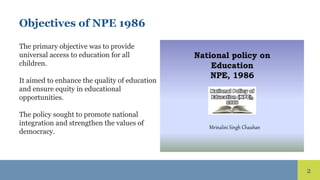
Objectives of NPE 1986
The primary objective was to provide
universal access to education for all
children.
It aimed to enhance the quality of education
and ensure equity in educational
opportunities.
The policy sought to promote national
integration and strengthen the values of
democracy.
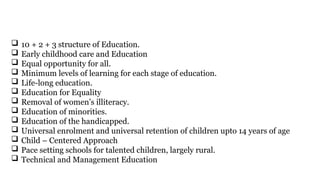
 10 + 2 + 3 structure of Education.
 Early childhood care and Education
 Equal opportunity for all.
 Minimum levels of learning for each stage of education.
 Life-long education.
 Education for Equality
 Removal of women’s illiteracy.
 Education of minorities.
 Education of the handicapped.
 Universal enrolment and universal retention of children upto 14 years of age
 Child – Centered Approach
 Pace setting schools for talented children, largely rural.
 Technical and Management Education
3
Focus on Elementary Education
NPE emphasized the importance of
elementary education as a foundation for
learning.
It aimed for the achievement of universal
elementary education by 1990.
The policy advocated for the improvement
of infrastructure and teacher training in
primary schools.
4
Secondary Education Goals
The policy aimed to make secondary education accessible to all children.
It proposed the introduction of vocational education at the secondary level.
A focus was placed on improving the quality of secondary education through better
syllabi and teaching methods.
5
Higher Education Reforms
NPE aimed to increase enrollment in higher
education institutions.
It recommended the establishment of new
universities and colleges to accommodate
growing demand.
The policy emphasized research and
innovation as key components of higher
education.
6
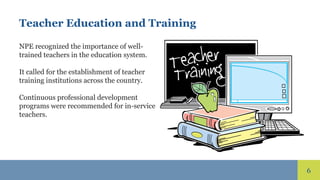
Teacher Education and Training
NPE recognized the importance of well-
trained teachers in the education system.
It called for the establishment of teacher
training institutions across the country.
Continuous professional development
programs were recommended for in-service
teachers.
7
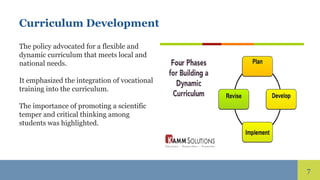
Curriculum Development
The policy advocated for a flexible and
dynamic curriculum that meets local and
national needs.
It emphasized the integration of vocational
training into the curriculum.
The importance of promoting a scientific
temper and critical thinking among
students was highlighted.
8
Educational Technology
NPE encouraged the use of technology to enhance the educational experience.
It recommended the establishment of educational broadcasting and multimedia
resources.
The policy aimed to bridge the gap between traditional learning and modern
educational tools.
9
Inclusive Education
NPE aimed to ensure that education is accessible to marginalized groups.
It recognized the need for special provisions for children with disabilities.
The policy promoted the inclusion of women and girls in all educational initiatives.
10
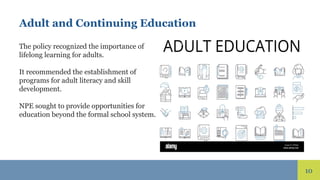
Adult and Continuing Education
The policy recognized the importance of
lifelong learning for adults.
It recommended the establishment of
programs for adult literacy and skill
development.
NPE sought to provide opportunities for
education beyond the formal school system.
11
Educational Management and Administration
NPE emphasized the need for effective management structures in education.
It recommended decentralization to empower local educational authorities.
The policy called for better coordination between different levels of government in
education.
12
Financing of Education
NPE proposed increased investment in
education from both public and private
sectors.
It recommended the establishment of a
National Education Fund to support
educational initiatives.
The policy aimed to promote greater
accountability and transparency in
educational financing.
13
Evaluation and Assessment
NPE stressed the need for regular
assessment of educational programs and
outcomes.
It called for the creation of standardized
assessment tools to measure student
performance.
The policy encouraged feedback
mechanisms for continuous improvement
in education.
14
Implementation Challenges
NPE faced challenges in terms of funding
and resource allocation.
There were difficulties in ensuring uniform
implementation across different states.
The policy required strong political will and
community involvement for successful
execution.
15
Conclusion
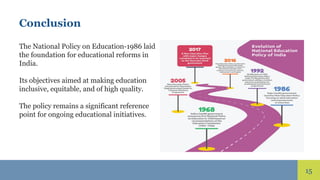
The National Policy on Education-1986 laid
the foundation for educational reforms in
India.
Its objectives aimed at making education
inclusive, equitable, and of high quality.
The policy remains a significant reference
point for ongoing educational initiatives.
16
References
Government of India. (1986). National Policy on Education.
Government of India. (1992). Programme of Action.
Various authors. (2020). Education in India: Policies and Perspectives.

National Policy On Education-1986 (Objectives And Major Recommendations).pptx

  • 1.
    National Policy OnEducation-1986 (Objectives And Major Recommendations)
  • 2.
    1 Introduction to NPE1986 NPE 1986: Overview In 1985, the Government of India conducted a thorough examination of the existing education system, culminating in the document “Challenge of Education: A Policy Perspective.” The visionary National Policy on Education, launched by former Prime Minister Rajiv Gandhi in May 1986, aimed to equip India for the challenges of the 21st century.
  • 3.
    2 Objectives of NPE1986 The primary objective was to provide universal access to education for all children. It aimed to enhance the quality of education and ensure equity in educational opportunities. The policy sought to promote national integration and strengthen the values of democracy.
  • 4.
     10 +2 + 3 structure of Education.  Early childhood care and Education  Equal opportunity for all.  Minimum levels of learning for each stage of education.  Life-long education.  Education for Equality  Removal of women’s illiteracy.  Education of minorities.  Education of the handicapped.  Universal enrolment and universal retention of children upto 14 years of age  Child – Centered Approach  Pace setting schools for talented children, largely rural.  Technical and Management Education
  • 5.
    3 Focus on ElementaryEducation NPE emphasized the importance of elementary education as a foundation for learning. It aimed for the achievement of universal elementary education by 1990. The policy advocated for the improvement of infrastructure and teacher training in primary schools.
  • 6.
    4 Secondary Education Goals Thepolicy aimed to make secondary education accessible to all children. It proposed the introduction of vocational education at the secondary level. A focus was placed on improving the quality of secondary education through better syllabi and teaching methods.
  • 7.
    5 Higher Education Reforms NPEaimed to increase enrollment in higher education institutions. It recommended the establishment of new universities and colleges to accommodate growing demand. The policy emphasized research and innovation as key components of higher education.
  • 8.
    6 Teacher Education andTraining NPE recognized the importance of well- trained teachers in the education system. It called for the establishment of teacher training institutions across the country. Continuous professional development programs were recommended for in-service teachers.
  • 9.
    7 Curriculum Development The policyadvocated for a flexible and dynamic curriculum that meets local and national needs. It emphasized the integration of vocational training into the curriculum. The importance of promoting a scientific temper and critical thinking among students was highlighted.
  • 10.
    8 Educational Technology NPE encouragedthe use of technology to enhance the educational experience. It recommended the establishment of educational broadcasting and multimedia resources. The policy aimed to bridge the gap between traditional learning and modern educational tools.
  • 11.
    9 Inclusive Education NPE aimedto ensure that education is accessible to marginalized groups. It recognized the need for special provisions for children with disabilities. The policy promoted the inclusion of women and girls in all educational initiatives.
  • 12.
    10 Adult and ContinuingEducation The policy recognized the importance of lifelong learning for adults. It recommended the establishment of programs for adult literacy and skill development. NPE sought to provide opportunities for education beyond the formal school system.
  • 13.
    11 Educational Management andAdministration NPE emphasized the need for effective management structures in education. It recommended decentralization to empower local educational authorities. The policy called for better coordination between different levels of government in education.
  • 14.
    12 Financing of Education NPEproposed increased investment in education from both public and private sectors. It recommended the establishment of a National Education Fund to support educational initiatives. The policy aimed to promote greater accountability and transparency in educational financing.
  • 15.
    13 Evaluation and Assessment NPEstressed the need for regular assessment of educational programs and outcomes. It called for the creation of standardized assessment tools to measure student performance. The policy encouraged feedback mechanisms for continuous improvement in education.
  • 16.
    14 Implementation Challenges NPE facedchallenges in terms of funding and resource allocation. There were difficulties in ensuring uniform implementation across different states. The policy required strong political will and community involvement for successful execution.
  • 17.
    15 Conclusion The National Policyon Education-1986 laid the foundation for educational reforms in India. Its objectives aimed at making education inclusive, equitable, and of high quality. The policy remains a significant reference point for ongoing educational initiatives.
  • 18.
    16 References Government of India.(1986). National Policy on Education. Government of India. (1992). Programme of Action. Various authors. (2020). Education in India: Policies and Perspectives.
Editor's Notes

  • #2 Image source: https://i1.rgstatic.net
  • #3 Image source: https://cdn.slidesharecdn.com
  • #5 Image source: https://teachers.institute
  • #6 Image source: https://www.slidemake.com
  • #7 Image source: https://i1.rgstatic.net
  • #8 Image source: https://diyaryomilenyonews.com
  • #9 Image source: https://kammsolutions.com
  • #10 Image source: https://www.slidemake.com
  • #11 Image source: https://i1.rgstatic.net
  • #12 Image source: https://c8.alamy.com
  • #13 Image source: https://www.slidemake.com
  • #14 Image source: https://image.slidesharecdn.com
  • #15 Image source: https://cdn.imgbin.com
  • #16 Image source: https://ubsapp.com
  • #17 Image source: https://www.indianera.com